Cheerleader Camp (1988)

Directed by John Quinn [Other horror films: The Secret Cellar (2003)]

Though certainly a flawed movie in some obvious ways, I found Cheerleader Camp (sometimes known as Bloody Pom Poms) an enjoyable experience, which I think is where this movie excels, though whether that makes up for the failures, well, that’s an interesting question.

The tone of this movie seems all over the place – the opening sequence is a dream, complete with a nice dream-like atmosphere and unique angles. It’s not a particularly silly dream either, but once the character awakens, and we meet the cast, there’s plenty of silly scenes to come. A few other dreams pop up throughout, to be sure, though I think they qualify as more ridiculous than they do atmospheric.

Betsy Russell made for an interesting lead. Russell (who later went on to play Jill Kramer in some of the Saw sequels) doesn’t really have a lot of agency herself, and generally reacts to her nightmares and the horrors surrounding her at camp without fighting back, but hey, she tries. I don’t know Lucinda Dickey (aside from this, she was only in five other films), but I did like her low-key style, and toward the finale, she became even more fun.

Leif Garrett (a singer that apparently my mother listened to in her youth) didn’t make much an impression. He did okay as a dickish character, I guess, but I preferred him in the underrated Peopletoys (better known as Devil Times Five). Lorie Griffin was fun as the sterotypically dumb blonde, Travis McKenna was extremely fun as the likable weighty boi, and George ‘Buck’ Flower (who has appeared in quite a handful of random horror films, such as Skeletons, Spontaneous Combustion, Pumpkinhead, and The Fog) got a bit more screen-time here than he usually does, and I enjoyed it. Lastly, while her character was #awful, Vickie Benson was decent.

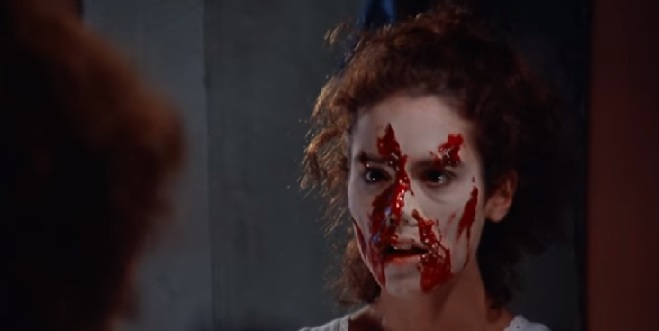
I called the conclusion pretty early on (and to be fair, I have seen this movie before, but it had been so long that most of the story and mystery was unfamiliar to be), but it was still an okay surprise, especially since a few red herrings were strewn throughout. On the flipside, the kills here are mostly weak (I think the best one was a pair of scissors stabbed through someone’s mouth), but if you’re having fun already, that may not make too much of a difference.

Personally, I don’t think Cheerleader Camp is great, and I definitely think the movie had potential to be more than what it ended up. That said, I did find Cheerleader Camp a pretty fun movie, and while I do think it ultimately ends up below average, it’s not a movie I’d consider an altogether bad time at all.

6.5/10

Bordello of Blood (1996)

Directed by Gilbert Adler [Other horror films: N/A]

For a long time, despite quite enjoying Demon Knight, I had a pretty bad feeling about Bordello of Blood. It just looked too goofy and generally didn’t interest me. After finally seeing it, I have to say that I was largely right, but the movie isn’t without a few strong points.

Chief among those strong points is Dennis Miller as private detective Rafe Guttman. Guttman is such a fun character, with so many amusing lines pretty much every time he’s on screen (“You’re reminding me why being married to you drove me to the brink of homosexuality” and the ever-classy “Sorry, Zeke – I’m just not in the mood for a blowjob,”) and I just dug his personality from beginning to end.

Miller was a lot of fun here, which is definitely good, because otherwise, I don’t think the film had a hell of a lot going for it. I mean, the whole vampire-ran brothel idea was done somewhat better in From Dusk Till Dawn, and while the special effects here are decent (save for some hideous mishaps during the “Ballroom Blitz” sequence), most of the story and many of the characters, save Miller’s, didn’t do much of anything for me.

I guess that Erika Eleniak was decent (though I will further say that I didn’t love the conclusion to this movie, and in relation, her character’s story), and Chris Sarandon (Fright Night and Child’s Play) grew on me over time (though his religious nonsense was hard to swallow). The other central performances, though, such as Angie Everhart, Corey Feldman (Gremlins, The Lost Boys), and Aubrey Morris failed to leave me with much in the way of a positive impression.

I think, though, the biggest issue in regards to my failed interest was the story, which was quite light-hearted and pretty ridiculous at times. Don’t get me wrong, I didn’t mind that much when Miller was on screen, but I didn’t much care for the tone at any other point, especially the framing of this movie, what with the Crypt Keeper presenting this as a story while playing a card game with a mummy. I mean, you can expect something campy and corny – look at the end of Demon Knight – but this just felt like too much.

Which is ultimately my problem with the film. It’s just too goofy, which sort of hinders the better portions of the film from fully taking control. And again, I find this quite sad, as I really did enjoy Dennis Miller here, and I feel like this could have been executed better, but as it stands, while watchable if only due to Miller, this wasn’t what I’d call a particularly good time, and it’s not a movie I could see myself going back to that often.

5.5/10

The Hills Have Eyes (1977)

Directed by Wes Craven [Other horror films: The Last House on the Left (1972), Stranger in Our House (1978), Deadly Blessing (1981), Swamp Thing (1982), Invitation to Hell (1984), The Hills Have Eyes Part II (1984), A Nightmare on Elm Street (1984), Chiller (1985), Deadly Friend (1986), The Serpent and the Rainbow (1988), Shocker (1989), The People Under the Stairs (1991), New Nightmare (1994), Vampire in Brooklyn (1995), Scream (1996), Scream 2 (1997), Scream 3 (2000), Cursed (2005), My Soul to Take (2010), Scream 4 (2011)]

I’ve not seen this one in a long while, and given that I’ve also only seen this one once, I was quite excited to watch The Hills Have Eyes again. It’s not the most gritty or violent horror film of the 1970’s, but even so, Wes Craven made a winner here following his success with The Last House on the Left.

In many ways, this feels reminiscent of The Texas Chain Saw Massacre, what with the desert and the cannibal family. Obviously this takes a different approach to things, which I believe works in it’s favor (and makes this a more enjoyable film than The Texas Chain Saw Massacre, on a side-note), but I just love how Craven paid homage to Hooper’s successful film – it’s nice to see these directors’ stuff from the 1970’s feel somewhat interconnected.

And no doubt, the setting here is great. Along with being quite isolating, it’s just nice to see the environment play a large part in the story, be it things like the heat, tarantulas (in a scene that I definitely could have done without), lack of food and intense heat. It gives a more realistic sense of danger even aside from the cannibal homebois in the hills, and I find that aspect enjoyable.

At first, I wasn’t going to spend that much time on the performances, and I probably still won’t, but I did want to say that pretty much everyone did well. Robert Houston had some shaky moments, and Susan Lanier did get to become a bit much as the movie went on, but given what her character went through, I can’t really blame her.

Martin Speer (Killer’s Delight) was decent toward the end, but it did take his character a little while to get there. Virginia Vincent really shined after her husband (played by Russ Grieve) got #barbecued. John Steadman and Dee Wallace (The Howling, Critters, and Cujo) both add some flavor. Of the cannibal family, it’s James Whitworth, Janus Blythe (Eaten Alive), and Michael Berryman (Deadly Blessing, Mask Maker, and Cut and Run) should get the most credit, but again, everyone does decently.

Like I said, this isn’t really that violent of a film. Sure, a dog attack leaves a man’s foot in a less-than-ideal condition, and another character is burned alive, but it’s more of an emotional scene than it is graphic. There is a painful stabbing also, but Last House on the Left, at least from what I remember, was more disturbing than this one was, and certainly the 2006 remake upped the violence too.

Some of this movie is pretty dark, as one could potentially expect from 70’s horror. It seems almost no one is spared from being killed off, and there are some pretty tense and moderately disturbing scenes here, which would probably be true of any horror film in which a character’s family was slowly being killed off around them. This movie, as I said, packs an emotional punch at times (even if the performances can’t necessarily carry that), so I appreciate that.

Really, there’s not much here that I didn’t care for. Sometimes the film focuses more on the point-of-views of the cannibal family (which I think is a good way to almost compare and contrast the two family units), which felt sort of jarring, but it didn’t happen often, and when it did, it sometimes led to quality canine attacks, so I can’t really complain about that.

Oh, and the final scene is quite sudden (and I mean sudden as though it was a 50’s monster movie), but it was sort of jarring, in that event horizon way, so that wasn’t much of an issue.

The Hills Have Eyes has a lot going for it. It doesn’t match the grittiness of The Texas Chain Saw Massacre at all, nor does it match the violence of many of the other horror films coming out around the mid-to-late 1970’s, but it does have a pretty good story with quality performances and a great sense of dread, so if this is a Craven movie you’ve been skipping, I’d ask that you perhaps reconsider. Either that, or I’ll eat the brains of your kids’ kids.

8.5/10

Frankenstein (1931)

Directed by James Whale [Other horror films: The Old Dark House (1932), The Invisible Man (1933), Bride of Frankenstein (1935)]

Perhaps one of the most beloved of the Universal classics, Frankenstein is undoubtedly a great film, and while it may not necessarily impress viewers of more modern-day movies, it really is a treat to see once again.

I can’t really fathom exactly how long it’s been since I’ve seen this one – I know it’s at least been seven years, but likely closer to ten. Regardless, this is one of the films that my parents owned on VHS when I was a kid, and as such, this probably went a long way into getting me into the genre to begin with (along with Dracula and The Wolf Man). I don’t doubt I have some strong nostalgia tied to this one, but if the overwhelming positive reaction to Frankenstein is to be believed, my kind opinions are not at all odd.

Of course, the story does deal a bit with a pet peeve of mine, being the same basic idea that Dr. Jekyll and Mr. Hyde presupposed – that man shouldn’t attempt to unlock the secrets of God. Science should, of course, be done carefully and with consideration of proper protocol, but the idea that certain ideas are too dangerous to be delved into just strikes me as ludicrous. As Dr. Frankenstein, Colin Clive probably took it a bit far, but even so, under the proper conditions, his experiment might have had better consequences.

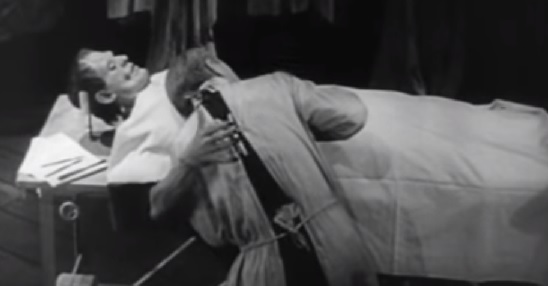
And on Clive, what a performance. He died young in 1937, having also been in Bride of Frankenstein and Mad Love, and this is clearly a strong performance. Just his emotion and dialogue alone during the famous “It’s alive!” scene are off-the-charts fun. “In the name of God, now I know what it feels like to be God!” Quality line – I use it twice a week at least.

Elsewise, everyone else puts in a great performance also. John Boles does sort of get lost in the crowd, but Edward Van Sloan (Van Helsing from Dracula, a fact I honestly didn’t know until today) was fantastic, and even after disavowing Frankenstein’s experiments, I deeply respected how he hung around and tried to help Frankenstein out. Frederick Kerr (just two years before his death in 1933) was great as Frankenstein’s father, and was a lot of fun whenever he was on-screen.

Lionel Belmore (The Vampire Bat) only had one scene of note, and Kerr sort of stole it, but regardless, he was still enjoyable. Mae Clarke was sort of trapped in the stereotypical role that women had in these movies, but with what little agency she had, I thought she was compelling. Dwight Frye (of both Dracula and The Vampire Bat) was great as Fritz, though we never do learn much about his character. As the Monster, Karloff is just amazing – he’s as much the victim as the antagonist (and actually, much more the victim), and his story here is just sad, especially as he never really had a chance to grow whatsoever.

The atmosphere of this one is quality, from the opening during the funeral service to the finale at the windmill – there’s just a lot here to look forward to. The famous “it’s alive!” scene is great, and so are many of the sequences here, such as Fritz breaking into the university to steal a brain, or the Creature’s tortuous shouts as it’s chained in Frankenstein’s cellar, or the Creature’s fateful meeting with Maria. Even the manhunt sequences at the end hold appeal, especially the mountain portions, as I couldn’t personally imagine trying to locate a murderer in such rocky and dangerous conditions.

As to the violence, honestly, for the time period, it’s not that bad. Just the idea of a body being made of bits and pieces of others, all stitched up, is gruesome enough, but you also have the tragic death of a young girl (and even better, the scene where her grief-stricken father is carrying her corpse through the village’s celebrations in silent shock) and a rather painful scene of a man hitting on of those windmill wind-thingys (predating the famous Titanic propeller blade scene by over 50 years).

I also love the beginning, which is warning from the movie-makers, telling us that it may thrill, shock, and horrify us, and indeed, subtly suggesting if someone can’t take the horrors in store, they may wish to leave the theater. It’s a wholly charming beginning, and I totes enjoy it brahs.

I grew up on this film, and that VHS tape that I mentioned earlier, I still have it. It’s a great movie, and while not my favorite of the time period, Frankenstein is definitely up there.

8.5/10

The Raven (1963)

Directed by Roger Corman [Other horror films: The Beast with a Million Eyes (1955), Day the World Ended (1955), It Conquered the World (1956), Not of This Earth (1957), Attack of the Crab Monsters (1957), The Undead (1957), War of the Satellites (1958), The Wasp Woman (1959), A Bucket of Blood (1959), House of Usher (1960), The Little Shop of Horrors (1960), Creature from the Haunted Sea (1961), The Pit and the Pendulum (1961), The Premature Burial (1962), Tales of Terror (1962), Tower of London (1962), The Terror (1963), X (1963), The Haunted Palace (1963), The Masque of the Red Death (1964), The Tomb of Ligeia (1964), Roger Corman’s Frankenstein Unbound (1990)]

For many, this is a classic film, an enjoyable blend of horror and comedy, but I have to admit that, despite the fantastic cast, this movie really didn’t do a thing for me.

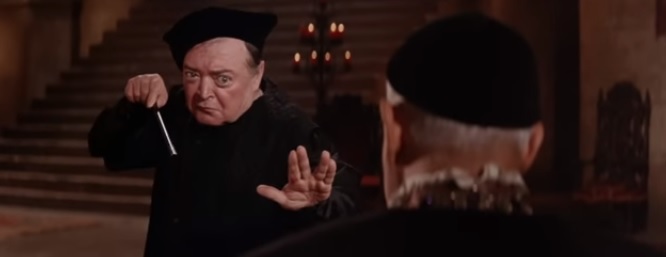
Which is a damn shame, as you can imagine. I mean, check out the cast – Vincent Price (House on Haunted Hill, The Haunted Palace, and Theatre of Blood), Boris Karloff (Frankenstein, The Black Cat, The Ghoul, and The Walking Dead), and Peter Lorre (Mad Love, The Beast with Five Fingers, and You’ll Find Out) are the central actors, and what a great mix it is. A young Jack Nicholson (The Shining and The Terror) appears throughout, and we also get some Hazel Court (The Premature Burial, Ghost Ship, The Masque of the Red Death, and The Curse of Frankenstein). All of these performances (and throw in Olive Sturgess for good measure) were solid.

I just don’t care for the story, though, which is very heavily entwined with comedy and fantasy. It started out strong, with some stanzas from Edgar Allan Poe’s classic poem being read by Price, but as soon as the raven (Lorre’s character who was transformed during a failed magical duel with Karloff’s sinister warlock character) flew in, I was just taken aback. Don’t get me wrong, I knew the film was partly comedy, but I didn’t quite realize it’d play so heavily a part, and some of the intended comedy just didn’t do much for me (such as Nicholson’s scene on the carriage).

And of course, this isn’t to take away from the performances, which were fantastic throughout, and they even managed a few pretty good scenes (I personally think the best one was Nicholson’s character traversing a ledge outside Karloff’s castle in order to get to another room, which held quality tension), but then there was a lengthy magical duel at the end between Price and Karloff which went on for at least six minutes with zero dialogue, and I can’t express how drowsy that made me.

Vincent Price is one of my personal favorite actors of the horror genre, being in multiple movies I absolutely love (such as the aforementioned House on Haunted Hill and Theatre of Blood), so it gives me no pleasure to admit that I didn’t care for this, especially because I also have a huge respect for Lorre and Karloff. The story just wasn’t my cup of tea, though, and I just did not derive much in the way of enjoyment from this whatsoever.

Most people enjoy this one, though, so if you’re into classic movies, by all means, give it a shot. Just know what you’re going into.

5/10

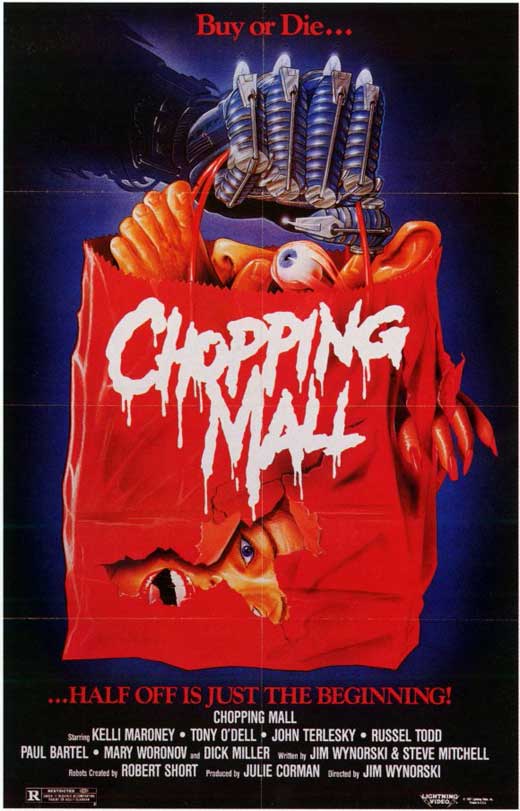
Chopping Mall (1986)

Directed by Jim Wynorski [Other horror films: Not of This Earth (1988), The Return of Swamp Thing (1989), Transylvania Twist (1989), The Haunting of Morella (1990), Sorority House Massacre II (1990), Hard to Die (1990), Scream Queen Hot Tub Party (1991), 976-Evil II (1991), Ghoulies IV (1994), Sorceress (1995), The Wasp Woman (1995), Vampirella (1996), Storm Trooper (1998), The Bare Wench Project (2000), Raptor (2001), The Bare Wench Project 2: Scared Topless (2001), Project Viper (2002), Wolfhound (2002), The Bare Wench Project 3: Nymphs of Mystery Mountain (2002), Cheerleader Massacre (2003), Bare Wench Project: Uncensored (2003), The Thing Below (2004), The Curse of the Komodo (2004), Gargoyle (2004), Komodo vs. Cobra (2005), The Witches of Breastwick (2005), The Witches of Breastwick 2 (2005), Bare Wench: The Final Chapter (2005), Cry of the Winged Serpent (2007), House on Hooter Hill (2007), Bone Eater (2007), Vampire in Vegas (2009), Cleavagefield (2009), The Hills Have Thighs (2010), Dinocroc vs. Supergator (2010), Camel Spiders (2011), Piranhaconda (2012), Gila! (2012), Scared Topless (2015), Sharkansas Women’s Prison Massacre (2015), Legend of the Naked Ghost (2017), CobraGator (2018)]

In many ways, Chopping Mall is a pretty simple movie, taking common elements and meshing them together decently well. It’s not special, and it’s not even particularly memorable, but it’s digestible fun, which counts in it’s favor.

Apparently far more based on Gog (1954) than it was Short Circuit (which came out a year before), the film follows security robots going awry and chasing down eight teens who stay after hours and party in a furniture store (a spiritual prequel to Hide and Go Shriek, some might say). The variety of the kills isn’t really that high, but you do get the ever-classic head being blown off by a laser, which was actually repeated during the beginning of the credits. The electrocutions were sort of cheesy, but still fun. Oh, and there was a slit throat, so there’s some “chopping” for you.

Kelli Maroney (Night of the Comet) was solid as a more-reserved teen who quickly became one of the best fighters this group of kids had. She was fun, occasionally adorable, and easy to root for. Few of the other seven teens stand out, though. Tony O’Dell was okay, Suzee Slater had quality breasts (and a fantastic death scene), and even Barbara Crampton (Re-Animator, From Beyond, and most famously, Beyond the Gates) was just eh. No one else stood out aside from Dick Miller, who had just a single scene, but as always with Miller, it was a lot of fun.

As one would hope, the soundtrack is pretty fun (albeit somewhat generic) 80’s synth, but even more fun were the multiple references to other movies. Obviously the posters of The Slumber Party Massacre, Galaxy of Terror, and Forbidden World were visible toward the beginning, but you have Miller’s character being named Walter Paisley (the same name of a character he played in A Bucket of Blood), and then there’s Roger’s Little Shop of Pets (of course referencing The Little Shop of Horrors). Some characters were watching Attack of the Crab Monsters (1957) early on before the fun with the robots began. They even threw in some characters from Eating Raoul (a movie I didn’t particularly like, but hey, whateves), so overall, this was fun and playful.

What wasn’t fun or playful was that scene in the pet shop, though – tarantulas probably have very good souls, but they terrify me (just as they did in Deadly Blessing), and that scene in which they’re crawling on Maroney’s arm just freaks me out. That was legit the hardest scene to watch in the film.

With plenty of fun lines, such as Maroney’s final one-liner, and a good, quick pace, Chopping Mall is a movie that got it’s job done and done well. Sure, there’s only one really memorable death scene, and few other scenes really stand out (though I do love the silhouette of the killbot snapping it’s pincers), but even knowing that, Chopping Mall is fun, and it has been since I first saw it years back.

Thank you. Have a nice day.

7.5/10

The Evil Dead (1981)

Directed by Sam Raimi [Other horror films: It’s Murder! (1977), Crimewave (1985), Evil Dead II (1987), Army of Darkness (1992), The Gift (2000), Drag Me to Hell (2009)]

Probably one of horror fandom’s more beloved movies, The Evil Dead succeeds in possessing a strong atmosphere and special effects that go beyond, far beyond, expectations. So of course, in typical Jiggy fashion, it’s never been a movie I’ve ever been overly fond of.

Which isn’t to say that it’s not okay. I could sort of see myself watching this one every couple of years (though at what point in my life I’ll be revisiting a movie that often, I really couldn’t say), and it definitely has enough going for it to be a movie that horror fans should at least give a shot once, but from the first time I saw it, it’s never been my particular cup of tea.

Part of this (and an admittedly small part) might be because, while I find Ash’s character development sort of interesting, he’s not a character that really stands out to me. Sure, he seems the everyman that you’d expect, sometimes too scared in tense situations to jump into action (I certainly can’t blame him there), but even when he really starts fighting back (about an hour or so into the movie), I just don’t feel much in the way of interest for him.

Another thing is that while this movie is primarily a dark story of demonic forces possessing and thus torturing the last remaining character, there are some occasional lighter elements thrown in (the demonic mocking, over-the-top violence at times). Now, this is upped to 11 in the second film, but the amusing thing is that it felt more consistent in the second movie, and I personally find myself gravitating more toward that one than I ever did this.

But like I said, none of this is to say the movie is by any means bad. It’s obviously a film that has a place in the heart of a lot of people, and I certainly respect what Raimi and Campbell were able to due with a limited budget (those gore scenes themselves, from the pencil stabbing to the epic finale, were well-worth watching the movie for), and again, the atmosphere is great.

As for the cast, the only name that really need be mentioned is Bruce Campbell, who starts off as a pretty unassuming character but, of course, over the course of the film becomes more willing to stand up and fight. Campbell was in a variety of films after this point (such as Maniac Cop, Moontrap, and Sundown: The Vampire in Retreat), and you can see why. If there was anyone else who might deserve a mention, it’d be Ellen Sandweiss, who was my personal favorite character, and it’s a shame she went the way she did (especially after that tree rape).

And speaking of that tree rape, what a disturbing scene. It’s not even all that explicit (though it does provide one of the two scenes of nudity in the film), but it is a scene that stands out and probably remains one of the more unforgettable sequences of the film.

I do admit to finding the ending a bit of a cop-out, but I won’t deny that it has an element of charm to it. Which can really be said for the whole of the film – though it’s not and never has been a movie I really cared for, it’s still charming, and it does enough right to merit it’s status. It’s just that The Evil Dead doesn’t do near as much for me as it does so many others.

6.5/10

The Stand (1994)

Directed by Mick Garris [Other horror films: Critters 2 (1988), Psycho IV: The Beginning (1990), Sleepwalkers (1992), The Nightmare Begins Again (1993), Quicksilver Highway (1997), The Shining (1997), Riding the Bullet (2004), Desperation (2006), Bag of Bones (2011), Nightmare Cinema (2018, segments ‘The Projectionist’ & ‘Dead’)]

This rather lengthy mini-series (four episodes, clocking in at a total of just over six hours) based on Stephen King’s longest novel is definitely something that you need to invest in, but I find it generally an awarding experience.

It’s also a mini-series that I’ve seen quite often as a child. While this didn’t leave near as much an impression as 1990’s It (also, of course, based on a Stephen King novel), I saw this plenty of times as a kid, and I remember my father requesting this one when we rented the VHS (which came with four tapes, of course) from Blockbuster, so it certainly holds good memories.

That said, until this recent rewatch, it’s been at least ten years since I’ve seen it, so I was curious as to whether it would hold up. What made the question more interesting was that this would be the first time since I’ve seen the mini-series since finally reading the novel, and I was also curious as to how close this adaptation was.

And you know what? For a television production (which is pretty noticeable at times, especially in regards to the special effects), not only does it follow the novel decently well (and certainly better than many, if not most, other King adaptations), it’s also pretty solid, and while I wouldn’t call it great, The Stand is a pretty good time.

Just now, I took a deep breath, and that’s because we need to talk about actors and actresses. And believe it or not, given the mini-series is about six hours long, there’s a lot of them. And what makes it even better, most of the central performances were damn good.

Let’s start with Gary Sinise (who I really don’t know outside of this mini-series, though he did have a long-running role on CSI: NY), who played Stu fantastically. He really felt like that generic all-American man, and Sinise pulled off the role as well as anyone could hope to. With a little more of a complex character, Adam Storke did well as Larry, and by the end, you likely couldn’t help but hope for the best.

Ray Walston (Galaxy of Terror) was one of the top-tier performances as Glen Bateman, though his somewhat more critical look at society (as a sociologist, who could blame him?) from the novel was toned down. Peter Van Norden as Ralph was good too, though like the novel, we’re not given too much insight into his character.

Others that definitely need to be mentioned include Molly Ringwald (Office Killer) as Frannie, who wasn’t great but wasn’t quite as bad as some others make her out to be, Ossie Davis (Bubba Ho-Tep) as the Judge was very solid, and one of the best smaller characters. There’s also Miguel Ferrer (The Night Flier) as Lloyd, who took a little to get there, but ended up a fine character. Corin Nemac as Harold also took time to grow, but his decently complex character turned out decent, I thought.

As the Trashcan Man, Matt Frewer was a sight to behold, especially toward the end with the special effects they had. Being mentally unstable, Frewer didn’t have that much to go on, but again, I definitely thought he did the character justice. Truth be told, Kellie Overby as Dayna is memorable for just a single sequence (her getting caught and brought to Flagg), but she was so badass that I had to at least mention her. Shawnee Smith’s (The Blob, Saw) character was memorably crazy, so there’s that.

Finally, let’s talk some of the most memorable performances.

Rob Lowe (The West Wing and 2004’s Salem’s Lot) did amazingly as Nick, a deaf-mute. Fantastic character and performance, Lowe really made Nick someone worth remembering. Jamey Sheridan as Randall Flagg was a sight to behold, fantastically hammy and always fun. Laura San Giacomo (Pretty Woman) as Nadine was an interesting performance, and I thought she definitely strutted her stuff come the finale of her character.

A lot also has to be said about Bill Fagerbakke’s Tom Cullen. Until this day (3/09/2021 should history ever be concerned), I had no idea that the guy who played Tom was the same guy who voiced Patrick on Spongebob Squarepants, and while I never watched a lot of Spongebob, as a 90’s kid who consumed both that cartoon and this movie, I feel it should have clicked before. Here, he has an amazingly solid performance, and as corny as some of his lines are (“M-O-O-N, that spells deaf and dumb”), he’s definitely a character with feeling.

The best performance overall has got to be, though, Ruby Dee as Mother Abagail. She’s quotable (“mayhap she is, mayhap she ain’t) and wholesome in every way. Now, as an atheist, I can do without her religious mumbo-jumbo (and it’s worse in the book), but even so, she’s just great in pretty much every scene she’s in.

Given that very little was changed, and almost none of it was dreadfully important, it’s hard to criticize this adaptation for leaving things out. Sure, I think the way Flagg was more interacting with some of the characters before his time (such as trolling Lloyd on the telephone pole) was a bit off, but like I said, it doesn’t really negatively impact the story, so I didn’t mind that much (though I do think the overly-dramatic scene about Mother Abagial’s departure – entirely unlike the novel’s approach – was somewhat laughable).

What is probably the biggest hurdle for modern-day audiences are the special effects, which become noticeably aged in the last two episodes (those face shifts of Randall Flagg a good case in point), and as even a fan of the mini-series, those instances of iffy effects do hurt, but I don’t think it’s an overly damning quality.

A few other things that can definitely be appreciated include the mini-series’ approach to horror and the soundtrack. Toward the end of the first episode, there’s a dream sequence in a cornfield with a quality scare. What made that really stand out to me was that there was no rising music to indicate tension – there was just a guy walking through a cornfield, and BOOM, his shoulder is grabbed by a demonic figure. It’s that low-key style that really stuck out to me.

The soundtrack too is good. Sure, it’s nice hearing “Eve of Destruction” and of course, “(Don’t Fear) The Reaper” by Blue Öyster Cult made for a fantastically memorable opening, but the rest of the score too really brings back memories, such as the music when Mother Abagail is walking away from the Free Zone. The music isn’t as good as, say, Storm of the Century’s score, but then again, little could be.

For being a television production, and definitely feeling tame in some aspects, I was pretty impressed revisiting this mini-series after reading the book, as they really did keep quite a bit of it as it was in the novel. The performances were pretty great overall (even if you consider Ringwald a weak spot, you have Ferrer, Fagerbakke, and Dee to make up for that), and while it’s not a short watch, I do find the experience worth it (corny Hand of God thing at the end notwithstanding).

8/10
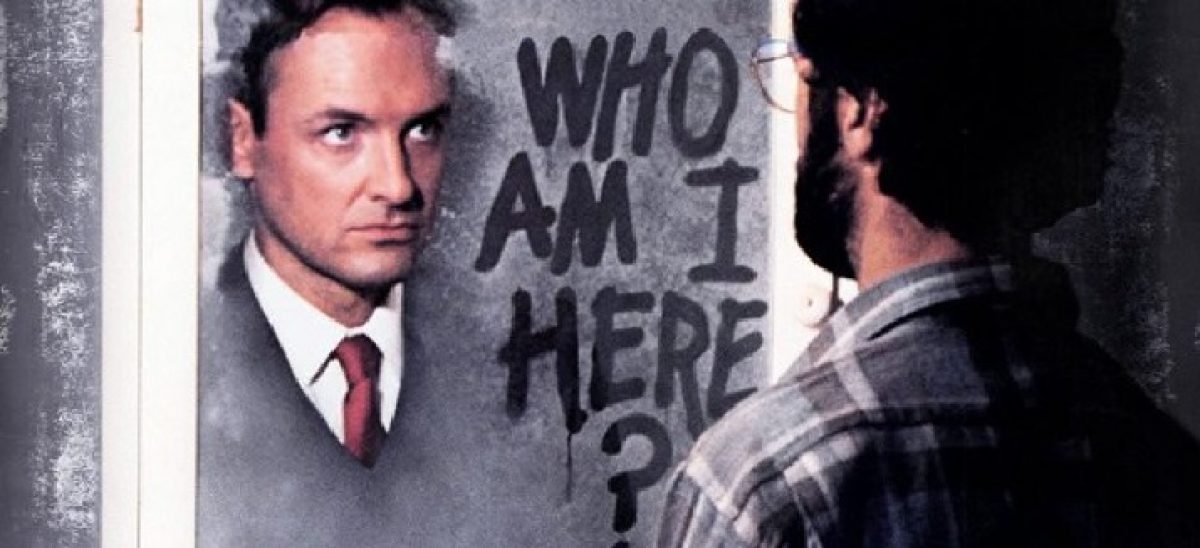
May (2002)

Directed by Lucky McKee [Other horror films: All Cheerleaders Die (2001), The Woods (2006), The Womasn (2011), All Cheerleaders Die (2013), Tales of Halloween (2015, segment ‘Ding Dong’), Kindred Spirits (2019), Deathcember (2019, segment ‘They Once Had Horses’)]

I don’t have a lot to say about May, because my feelings for this film, both the first time I saw it and just now, can be boiled down to the simple fact that I find the movie uncomfortable and don’t at all enjoy it.

Which isn’t to say the performances are bad – I think that Angela Bettis (who played Carrie in my favorite adaptation, the 2002 television movie) gave a great performance, and really sold May’s awkward tendencies. Jeremy Sisto (Wrong Turn, Hideaway, and Population 436) didn’t wow me, but Anna Faris (Scary Movie) was fun in her own way.

What’s not fun in it’s own way is the story, though, which I just find awkward. It’s uncomfortable and awkward for much of the running time, and when things that I’m more interested in finally get going (let’s say the final thirty minutes), it’s really already too late, because though the ending was much better than the first two-thirds, it wasn’t even all that great.

Certainly there are some scenes here that stick out a bit more, the sequence which most comes to my mind is the classroom scene with the blind children (I think what really elevates that sequence is the choral music in the background). Aside from that, everything else is awkward, uncomfortable, and I’m really not interested in seeing it. I already live an awkward and uncomfortable life – I don’t need to see it in a movie for pleasure.

And that doesn’t even need to be the case. Love Object (2003) had it’s own share of awkward moments, but was also a film that (while it took a few viewings) I legitimately enjoyed. Here, I’m just watching May’s uncomfortable life unfolding uncomfortably and wanting it to be over, deriving little to no pleasure from much of it.

May is a movie that has found a decent fanbase, and I have some friends in the horror community who quite enjoy this film. After seeing it again, though, I’ll just admit that it’s not for me, rate it lowly, and move on.

4/10

The Food of the Gods (1976)

Directed by Bert I. Gordon [Other horror films: Beginning of the End (1957), The Cyclops (1957), Attack of the Puppet People (1958), Earth vs the Spider (1958), War of the Colossal Beast (1958), Tormented (1960), Picture Mommy Dead (1966), Necromancy (1972), Empire of the Ants (1977), Burned at the Stake (1982), Satan’s Princess (1989), Secrets of a Psychopath (2015)]

For the longest time, this has been one of those films I’ve been aware of and have wanted to see. I didn’t have any delusions that, upon my finally watching it, I’d have discovered a forgotten classic, but I was always hoping for at least an enjoyable film, and I have to admit that I didn’t really get that.

I think this film highlights some of the biggest potential problems with movies from the 1970’s, specifically, in this case, just how dry some of them can be. Certainly other 70’s movies suffer the same problem (one that immediately comes to mind is It’s Alive!), but this is one of the worst cases I’ve seen.

With a plot about some mysterious natural growth serum causing insects and rats to enlarge, you might hope for a little bit of hokey fun, and while I won’t dispute that some of the action may well fall under the category of ‘hokey,’ I don’t think this film has a whole lot of fun ingrained within. Even similar films like Night of the Lepus (which also took itself too seriously) feel a little more enjoyable, and you’d sort of hope that any “nature gets revenge on humankind” movie would have more going for it.

Of course, that may just be my view, but this felt almost entirely dry from beginning to end. You maybe got a little fun out of Ida Lupino’s character, and maybe a pinch of laughs from Ralph Meeker’s insensitive actions, but that’s really all there is, and it’s definitely not enough to keep my interest.

In fact, I actually nodded off not once, but twice, and one of those times was during a giant rat attack (which, by the conclusion, felt far more repetitive as opposed to horrifying, not that they ever once felt horrifying). Perhaps admitting this says more about me and my consistent lack of sleep, but there you go.

I don’t think I really cared much for Marjoe Gortner (of Mausoleum fame) or Jon Cypher here. Neither one really had much feeling to them. It’s the same with Tom Stovall and Belinda Balaski (The Howling) – just more dull characters. Ida Lupino was only remarkable due to having such goofy, old-fashioned beliefs, and Ralph Meeker played a selfish dick, so he was sometimes a hoot. Perhaps best of the cast was Pamela Franklin (The Innocents and The Legend of Hell House), who’s character’s love interest in Gortner’s was just ridiculous but at least Franklin was almost sometimes okay.

Certainly the cast felt uninspired, but I think that has more to do with the film itself. Give these actors and actresses a good story, and I suspect most of them will give decent performances, that’s my motto. And that didn’t happen here, alas, which is more the shame, as this is based (loosely) on a 1904 novel by H. G. Lewis.

The special effects were laughable, but that’s okay, because anything to give this movie a little extra boost is always appreciated, even if it didn’t work. And I have to say, this movie really needed something, but The Food of the Gods never got it. I just didn’t have fun at all – it felt tedious and dry from beginning to end, and I just can’t see myself wanting to give this one another shot anytime soon.

4/10