Les yeux sans visage (1960)

Directed by Georges Franju [Other horror films: N/A]

This French film, commonly known as Eyes without a Face, is one of those classics that I don’t care for. More than anything, once you move past the okay story and occasionally compelling characters, I find the film somewhat ponderous.

Maybe that’s just how French cinema was at the time. I’ve not seen many from that time period, but both Diabolique (Les diaboliques) and Rififi (Du rififi chez les hommes) came out in 1955, and I had similar feelings about them. The story here is done in such a generally-safe manner (the only scene, throughout the whole film, that really stands out is the face-removal sequence) that it just feels as though it’s dragging.

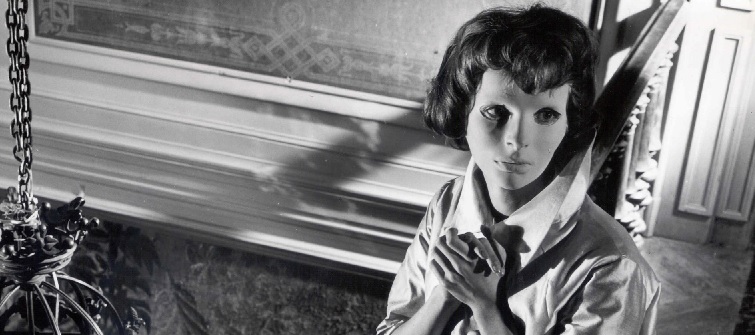
Pierre Brasseur does decent as a doctor who is trying to save his daughter, but I’m not able to really feel for him, especially as it’s clear his daughter would rather die than keep living as she is. Playing his daughter is Edith Scob, who doesn’t have much in the way of character or meaningful dialogue, but she wears a mask like no other. Alida Valli’s character has a chance to be interesting at times, but never actually becomes interesting, and as much as you’d think that François Guérin’s character would become relevant to the plot, he never really does.

That face-removal scene is pretty solid. It’s not too hard to sit through by any means (maybe partially because the film’s in black-and-white), and it’s done pretty tastefully (which could be said for the whole of the film), so though it’s gory (and the only gory scene in the movie, aside from maybe the ending if you stretch the definition of ‘gory’), it’s not enough to really boost the movie up.

I first saw this when I was much younger, and I got bored with it. I was a kid, though, and I don’t think most kids who were born in the early 1990’s could have sat through this movie without becoming restless. I’m 26 now, though, and guess what? I still became quite bored quite quickly. A few okay things happened, but this film took it’s time and I just don’t see it as worth it.

Obviously I’m in the minority, as the film is of course considered a French classic. Diabolique is a lot better, though, and I think the suspense there outdoes the somewhat tiring drama of this movie, face-removal scene or no.

5/10

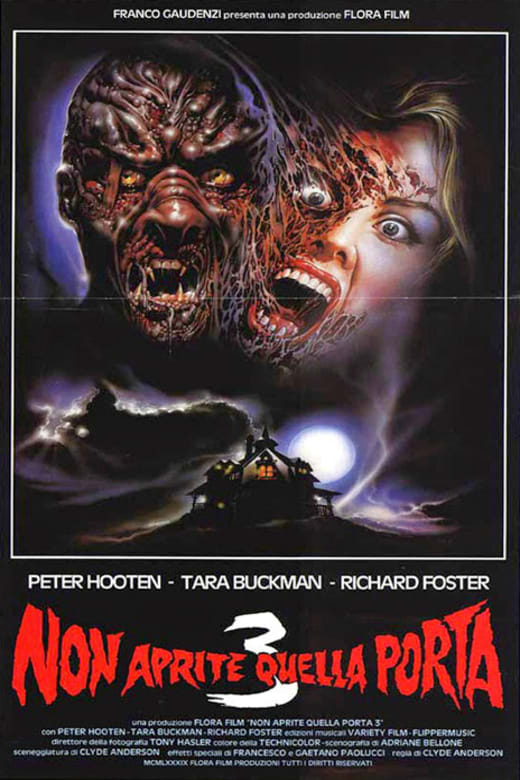
Non aprite quella porta 3 (1990)

Directed by Claudio Fragasso [Other horror films: Virus (1980), Rats – Notte di terrore (1984), Leviatán (1984), Zombi 3 (1988), After Death (Oltre la morte) (1989), La casa 5 (1990), Troll 2 (1990), Una notte da paura (2012), Italian horror stories (2021)] & Bruno Mattei [Other horror films: Casa privata per le SS (1977), KZ9 – Lager di sterminio (1977), Virus (1980), L’altro inferno (1981), Violenza in un carcere femminile (1982), Rats – Notte di terrore (1984), Zombi 3 (1988), Terminator II (1989), Occhi senza volto (1994), Cruel Jaws (1995), Snuff killer – La morte in diretta (2003), Mondo cannibale (2004), Nella terra dei cannibali (2004), La tomba (2006), L’isola dei morti viventi (2007), Zombi: La creazione (2007)]

This Italian film, originally titled Non aprite quella porta 3, was an occasionally fun, occasionally dry movie, but I don’t think many people could say that it wasn’t entertaining.

Once the film moves away from the random kills and starts focusing on a single woman (Tara Buckman) and her ordeal of being abducted by a mysterious man (Peter Hooten), I think the movie gets in a bit of a lull, but it really doesn’t stay there long, and even though the portions I could have done without, it doesn’t stay too dull.

I’d say that no one really went out of there way to give a great performance, but most of the main actors and actresses were fine, such as Tara Buckman and Peter Hooten (despite his somewhat questionable character). Mel Davis (the police officer) and Lee Lively (the doctor) made for an interesting pair when they were on screen, and I appreciated it. I don’t think we learned enough about Richard Foster’s character to really make a judgment one way or the other.

Being a slasher fan, I did enjoy most of the kills here. None of them are really amazing (most of them end with the killer ramming his razor-sharp claw-glove through women’s stomachs), but that opening scene had some quality suspense and even a painful-looking cut. As for the end – well, I appreciate them going outside the box a little (because if things had ended how it was setting up to, it would have been quite the lack-luster conclusion), but I’m not entirely buying it either.

The masked killer in Night Killer looks silly, but it does possess it’s hokey charm, and certainly if he’s raping and killing women, the silliness of his mask sort of declines over time. I don’t think this Italian movie was necessary, and I wish it felt more like a giallo than a third-rate slasher, but for the early 90’s, in a country where soon horror would be hard to come by, I can appreciate the film. I just don’t love it.

6.5/10

This is one of the films covered on Fight Evil’s podcast. If you’re interested in hearing what Chucky (@ChuckyFE) and I think about this Italian film, check it out, brahs.

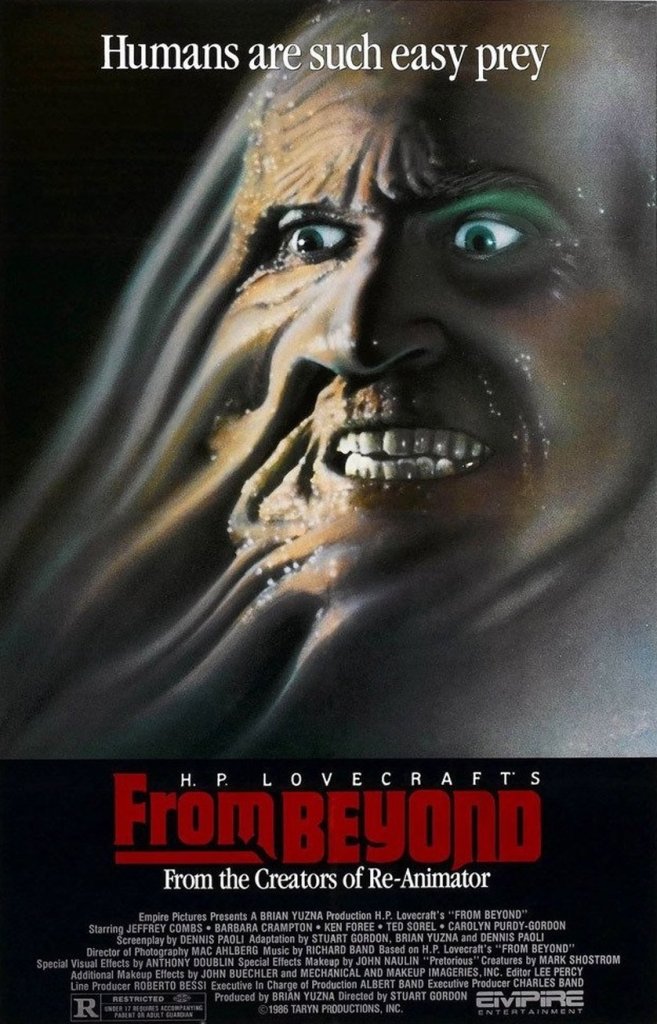
From Beyond (1986)

Directed by Stuart Gordon [Other horror films: Re-Animator (1985), Dolls (1986), Daughter of Darkness (1990), The Pit and the Pendulum (1991), Castle Freak (1995), Dagon (2001), Bunker of Blood: Chapter 5: Psycho Sideshow: Demon Freaks (2018)]

I have to admit that when I saw this film for the first time, it didn’t click. If you were to ask me what I didn’t like about it, I don’t know entirely if I would be able to give a great answer. The truth is I’m pretty sure I watched it on the same day I watch seven or eight other classic horror films, and this just got lost in the sauce, as Howie Hawkins (the presidential candidate I voted for in 2020) would often say.

So seeing it again was a nice surprise. I still can’t admit to loving it, because I don’t. I think the atmosphere is great, the main performances are solid, even the story is decently interesting (with elements of both Videodrome and a sprinkle of Prince of Darkness thrown in), but I lose interest in the last thirty minutes or so (once they leave the house and hit the mental institution). It’s not a bad direction, but I didn’t care much for it.

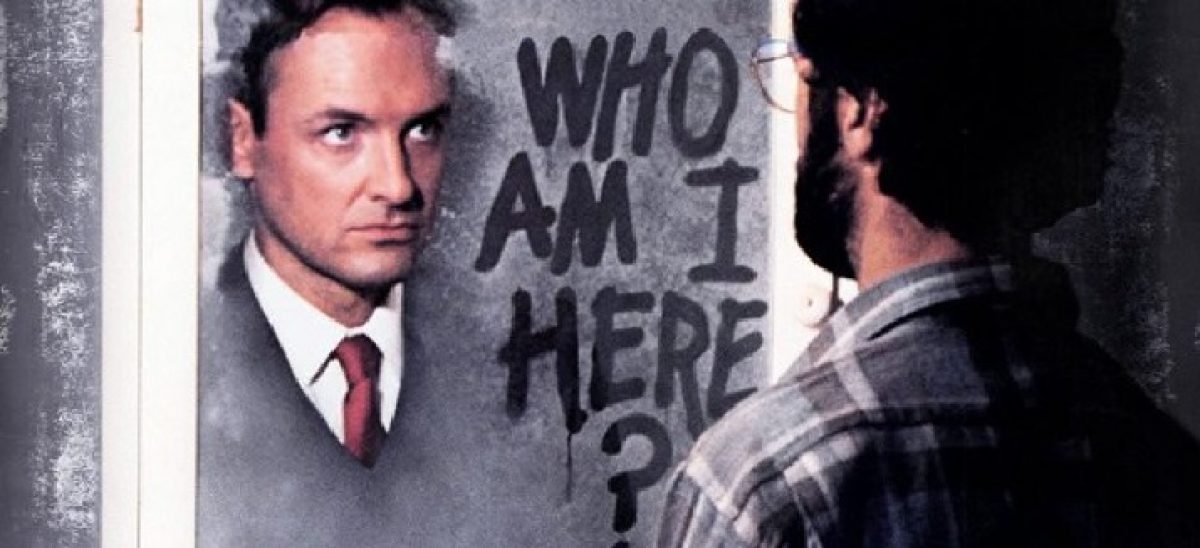
Of course, Jeffrey Combs (who I recently saw in The Attic Expeditions, and is most well-known for Re-Animator and voicing the Question in Justice League Unlimited) is a treat to see here, and there’s a  decent amount of sympathy felt for his character despite not really knowing much about him. Barbara Crampton (Re-Animator and Chopping Mall) was attractive here, especially in her glasses. Ken Foree (who, in fact, I forgot was in this – I loved him in Dawn of the Dead) was a lot of fun too.

Even with the strong cast and amazing special effects, the atmosphere doesn’t carry over to the mental institution, at least in my view. It’s still a good movie, but I’m rating it around average, and can only hope that I eventually grow to enjoy it as much as many other seem to.

7/10

Burnt Offerings (1976)

Directed by Dan Curtis [Other horror films: House of Dark Shadows (1970), Night of Dark Shadows (1971), The Night Strangler (1973), The Norliss Tapes (1973), The Invasion of Carol Enders (1973), Scream of the Wolf (1974), Dracula (1974), The Turn of the Screw (1974), Trilogy of Terror (1975), Dead of Night (1977), Curse of the Black Widow (1977), Intruders (1992), Trilogy of Terror II (1996)]

Ah, good ole’ Burnt Offerings.

I can imagine that to a modern-day audience, Burnt Offerings can come across as overly drawn out and unnecessarily lengthy. At almost two hours long, one could almost see their point, were it not for the fact that Burnt Offerings is fantastic from beginning to end.

Ever since I first saw this one, it stuck with me long after I saw it. To be sure, a large part of this was due almost singularly to the character of The Chauffeur (Anthony James), who has been my Twitter banner, and occasionally my avatar on various sites, since seeing this, but even ignoring what a great character James was, the story’s slow pacing and steadily increasing unease is some of the best slow-burn I’ve seen in a long time.

Another thing that can’t go unmentioned is the stellar cast. Karen Black and Oliver Reed (Paranoiac) do phenomenally, Reed in particular during the pool sequences. Of course, Burgess Meredith was nice to see in his brief scenes, and I’ll talk more about Anthony James’ performance shortly, but I think the real star here, once you get past Black and Reed, would be Bette Davis.

Though close to 70 at the time this movie came out, Davis was just fantastic as a strong, older woman full of energy only to find that, the longer she stayed at the house, the more she felt drained. She became forgetful and fearful, and her youthful exuberance dissipated almost entirely. The argument she had with Black’s character about whether or not she turned the heat on in the room of Black’s son was a tense one, and really showed the strength of both actresses present. Davis, of course, also starred in both What Ever Happened to Baby Jane? and Hush…Hush, Sweet Charlotte, both of which are very much classics themselves.

Anthony James’ The Chauffeur didn’t pop up that often, but pretty much every time he did, talk about tense scenes. It’s amazing that a character with no dialogue and so few on-screen sequences can make such an impression, but James managed it, and managed it beautifully. His scenes are great, and whenever he pops up, you’re in for a heart-racing time.

Are there some unexplained questions? Sure, and even the ending, while pretty solid, probably could have been cleaned up a little, but at the same time, I thought it gave a fantastic element of suspense, and though I didn’t end up loving the conclusion, I definitely felt that it was still worth the wait.

All-in-all, Burnt Offerings is probably one of my favorite of the more traditional haunted house films, beating out great films (The Innocents, though to be fair, this is more of a tie) and others (The Legend of Hell House, 1963’s The Haunting) to really stand out solidly for both the decade of the 1970’s and the genre overall.

8.5/10

This is one of the films covered by Fight Evil’s podcast. Listen below as Chucky (@ChuckyFE) and I review Burnt Offerings.

Crawlspace (1986)

Directed by David Schmoeller [Other horror films: Tourist Trap (1979), Catacombs (1988), Puppet Master (1989), The Arrival (1991), Netherworld (1992), Possessed (2005), Little Monsters (2012), Puppet Master: Blitzkrieg Massacre (2018), Death Heads: Brain Drain (2018), Carnage Collection – Puppet Master: Trunk Full of Terror (2022)]

Honestly, there’s not really a lot to Crawlspace. Oh, sure, it’s short, at only an hour and twenty minutes long, but more to the point, there’s not a whole lot of story here. Girl moves into an apartment building, girl hears strange noises, girl finds out landlord is a Nazi. I mean, we’ve all been there, right?

Well, perhaps not, but it is true that this movie doesn’t really feel that active. It’s not that there’s really a boring moment here, because I don’t think it drags at any point, it’s more that it just felt, for lack of a better adjective, shallow.

Respect where respect is due, Klaus Kinski gives a great performance (apparently he wasn’t that enjoyable off-camera, which was interesting to learn). It’s not that his character is filled with unique backstory or emotion, it’s just that he plays his role in a very creepy, yet subtle, style, and he’s pretty much all you’re watching when on-screen.

Problematically, he’s about one of the only reasons to go out of your way to watch this, though. It’s not that the other performances are bad, or even lacking (I personally enjoyed the main character, played by one Talia Balsam), it’s just that there’s not a lot to this movie, and Kinski’s character is pretty much the focus for a large portion of it.

Hell, most of the kills themselves aren’t exactly that memorable, save for maybe the chair scene, and while I’ll give credit to the ending for being somewhat suspenseful (a chase through air ducts being both claustrophobic and tense), along with the woman trapped in the cage added an additional uneasy vibe, I just couldn’t find it in me to call this an overly memorable movie.

I think I’ve seen this one maybe three times before, perhaps only two. No matter how many times I saw it before this most recent viewing, though, I don’t think I was ever amazed with it. No doubt that Crawlspace is competent, and occasionally compelling, but it’s certainly not much more than that. Not bad with a single watch, but I really don’t think multiple viewings does this one much good.

6.5/10

This is one of the films covered by Fight Evil’s podcast. Listen to the wonderful video below to hear Chucky (@ChuckyFE) and I discuss Crawlspace.

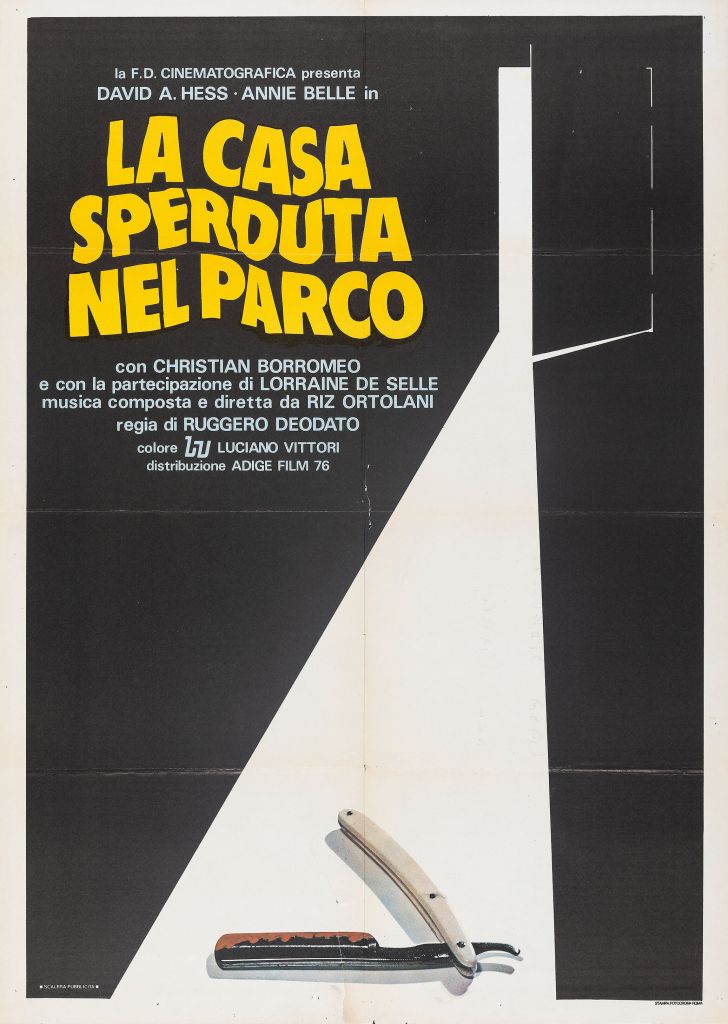
La casa sperduta nel parco (1980)

Directed by Ruggero Deodato [Other horror films: Ultimo mondo cannibale (1977), Cannibal Holocaust (1980), Inferno in diretta (1984), Camping del terrore (1986), Un delitto poco comune (1988), Minaccia d’amore (1988), Vortice mortale (1993), The Profane Exhibit (2013, segment ‘Bridge’), Ballad in Blood (2016), Deathcember (2019, segment ‘Casetta Sperduta in Campagna’)]

In many ways, this Italian movie (generally known under the title House on the Edge of the Park) is a by-the-numbers exploitation flick, and there’s not much here that’s overly surprising (even for a video nasty). At the same time, if you’re a fan of exploitation films, there’s no reason not to check this out, even if it is a little shallow.

For the majority of the film, some rich, rather snobby, people are humiliated, raped, and otherwise under attack from David Hess’ Alex and Giovanni Lombardo Radice’s Ricky. Hess, best known for The Last House on the Left, does a fantastic job, and for his role, Radice does pretty decent too. Few of the other characters really stood out, save Gabriele Di Giulio (who had The Purge’s Rhys Wakefield swag), Annie Belle, and Brigitte Petronio, but everyone did at least okay.

None of the rape sequences here were as revolting as the scenes from I Spit on Your Grave, but there’s an in-universe reason for that, as we find out toward the finale, so that’s probably not a problem (and certainly not something I’d complain about). Speaking of the end, it was nice for this movie to throw a little bit of a twist to us – it didn’t entirely make up for just how dull much of the previous time was spent, but it did throw a bit of meat into the story, and the ending itself was pretty decent.

That said, I just can’t see House on the Edge of the Park being a movie I go back to all that often. It’s well-made and well-acted for what it is, but what it is is a by-the-number exploitation film, and while maybe fun for drive-ins, and certainly possessing some foreign appeal (the soundtrack here was, as the kids say, dope af), it’s not something I particularly loved. It did get better toward the end (some solid nudity from the attractive Petronio helped), but I still think it’s a bit below average.

Certainly, though, if you’re into exploitation movies, and you’ve not yet seen this one, it’s worth a watch.

6/10

This is one of the films covered on Fight Evil’s podcast. If interested in hearing Chucky (@ChuckyFE) and I discuss House on the Edge of the Park, listen below.

Inferno in diretta (1984)

Directed by Ruggero Deodato [Other horror films: Ultimo mondo cannibale (1977), Cannibal Holocaust (1980), La casa sperduta nel parco (1980), Camping del terrore (1986), Un delitto poco comune (1988), Minaccia d’amore (1988), Vortice mortale (1993), The Profane Exhibit (2013, segment ‘Bridge’), Ballad in Blood (2016), Deathcember (2019, segment ‘Casetta Sperduta in Campagna’)]

Commonly known under the title Cut and Run, this Italian movie is somewhat styled after the cannibal movies popular five years prior. Ruggero Deodato directed two of them (Jungle Holocaust and, most famously, Cannibal Holocaust), and came back to do this one, but it’s a surprisingly tame affair.

Make no mistake, if you watch the uncut version of this one, you’re going to get a lot of solid gore (such as a quality decapitation and, perhaps the best scene, a man being pulled apart by the legs), but there’s no cannibalism whatsoever in the movie, and I can’t help but feel the movie’s not near as gritty as it should be.

That may not even be the biggest problem, though. Portions of the story were sort of interesting, but I have to admit to losing interest around halfway through, and Richard Lynch didn’t engage me in the least, especially during his inane philosophical ramblings toward the end. Lynch (who was far better in Bad Dreams) wasn’t a great antagonist, but even the best antagonist here (Michael Berryman) disappeared halfway through the film, and when he popped up again, it was somewhat pathetic.

I just didn’t care that much for the plot. I liked the attacks by the native tribes (that opening sequence was on point), and Berryman made for a very scary opponent (I last saw him in Deadly Blessing, but I’d put this performance perhaps second only to The Hills Have Eyes), but I didn’t much find interest in Willie Aames or Valentina Forte at all. Lisa Blount (Prince of Darkness) was fine, but I wasn’t impressed by Leonard Mann and definitely not by Karen Black.

The gore here was great (and, again, I highly recommend the uncut version), but that’s really all that was great. The jungle setting was good, but why watch a watered down movie like this when you can just go to Jungle Holocaust, Mountain of the Cannibal God, or hell, even Man from Deep River (which I didn’t even care that much for)?

Cut and Run is an okay movie. I think it’s certainly below average, but I’d still recommend it to fans of the classic Italian cannibal movies, even though, in my opinion, this couldn’t quite capture the same vibe of them.

6/10

This is one of the films covered by Fight Evil’s podcast. Listen below as Chucky (@ChuckyFE) and I discuss Cut and Run.

Hannibal Rising (2007)

Directed by Peter Webber [Other horror films: N/A]

While this isn’t really a horror movie, it’s in a series I generally consider horror, so I’ll just throw this one in, which is unfortunate, as I had to watch this pile of trash.

I’m not exactly sure what my biggest problem with this was. Partially, I suspect, my disdain is due to the fact that an origin story was entirely unnecessary. What doesn’t help is the fact that I couldn’t even once see this character as Hannibal Lecter. So he accidentally eats his sister, and then decides to be a cannibal? Oh, and a samurai? Love it.

To be fair, this movie had a decent kill every now and again. One was even actually good, and potentially memorable. It’s a shame that the same can’t be said for any of the characters (be it the generic serial killer lead or the pointless detective on his trail) or the movie as a whole.

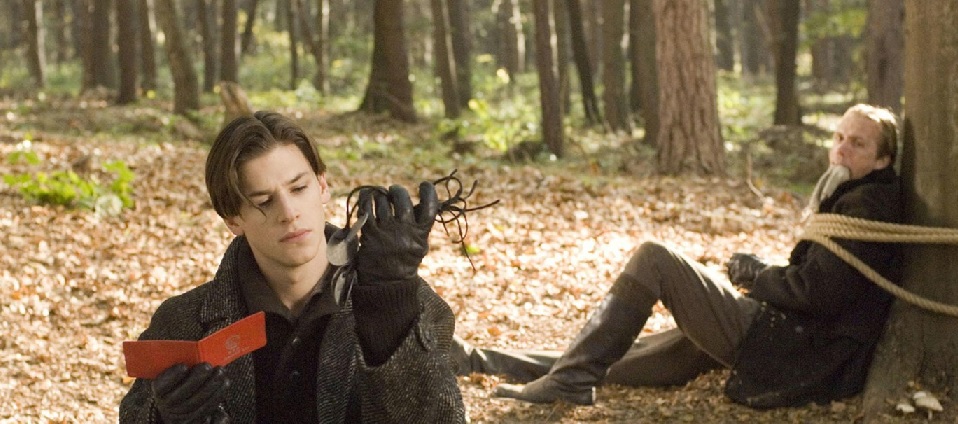
Gaspard Ulliel didn’t once remind me of Lecter, but I guess he was fine. Dominic West (The Wire) was pointless. I didn’t like Li Gong’s character whatsoever. And no one else was particularly memorable or good either.

A few good kills doesn’t make a movie good, especially when the movie is otherwise entirely generic and unnecessary. Truthfully, this was a struggle to get through, and I’d easily take Red Dragon or Hannibal twenty times over as opposed to ever having to watch this piece of trash again. I legitimately didn’t enjoy this. I did not have a good time. I was displeased.

3/10

Hannibal (2001)

Directed by Ridley Scott [Other horror films: Alien (1979), Alien: Covenant (2017)]

I can’t recall exactly how long it’s been since I’ve seen this movie in full, but I will say it’s been at least eight years. I remembered some of the scenes here, but not that many, so the film had a somewhat fresh feel to it. Also, it’s a decent amount more graphic than The Silence of the Lambs, which only works in it’s favor. Honestly, I enjoyed this one, and thought it a mostly fun romp.

The idea of a previous victim of Lecter’s seeking revenge against the good doctor is pretty fun, and it casts the victim, Verger, as both sympathetic, but also somewhat blood-thirsty (though certainly not without reason). Even before Lecter gets back to the USA, seeing him ingratiate himself in Italy is a lot of fun too, and in fact, the Italian portions of the film were perhaps the most interesting to me (it doesn’t hurt that the segment ended with a fantastic disembowelment).

Unlike some, I didn’t think Julianne Moore’s presence in lieu of Jodie Foster’s was that bad. Obviously, it would have been great to get Foster to reprise her role, but Moore did perfectly fine playing Clarice, and got on well with Sir Anthony Hopkins. Of course, Hopkins does fantastically as Lecter, and stole the show, especially in his Italian scenes, but really, throughout the film, he’s great. Gary Oldman, playing a rather disfigured victim of Lecter’s, does a great job, and his voice creeps me out as much today as it did when I was younger, watching the film. Other stand-outs include Giancarlo Giannini and Zeljko Ivanek. I didn’t particularly care for Ray Liotta’s performance, but that’s partially because his character was so over-the-top scummy that I didn’t have an ounce of sympathy for him at any point.

This movie isn’t particularly violent, but like The Silence of the Lambs, there are a few good scenes here, ranging from a previously-mentioned disembowelment to some solid pig action (and I don’t mean in a Wedding Trough fashion). There’s nothing that seems over-the-top in Hannibal, and the ending, which leans more toward disturbing than it does violent, was pretty solid.

Really, Hannibal’s gotten a decent amount of flak, which is a shame, as I think it’s a solid follow-up to one of the most classic films of the 1990’s. Truth be told, while I do enjoy The Silence of the Lambs, I think I prefer Hannibal, and a large part of that might be because this has a little more of the horror feeling than it’s predecessor does. I’d give them roughly the same score, but Hannibal was one that, surprisingly, I found I really enjoyed after revisiting.

8.5/10

Rats – Notte di terrore (1984)

Directed by Bruno Mattei [Other horror films: Casa privata per le SS (1977), KZ9 – Lager di sterminio (1977), Virus (1980), L’altro inferno (1981), Violenza in un carcere femminile (1982), Zombi 3 (1988), Terminator II (1989), Non aprite quella porta 3 (1990), Occhi senza volto (1994), Cruel Jaws (1995), Snuff killer – La morte in diretta (2003), Mondo cannibale (2004), Nella terra dei cannibali (2004), La tomba (2006), L’isola dei morti viventi (2007), Zombi: La creazione (2007)] & Claudio Fragasso [Other horror films: Virus (1980), Leviatán (1984), Zombi 3 (1988), After Death (Oltre la morte) (1989), La casa 5 (1990), Non aprite quella porta 3 (1990), Troll 2 (1990), Una notte da paura (2012), Italian horror stories (2021)]

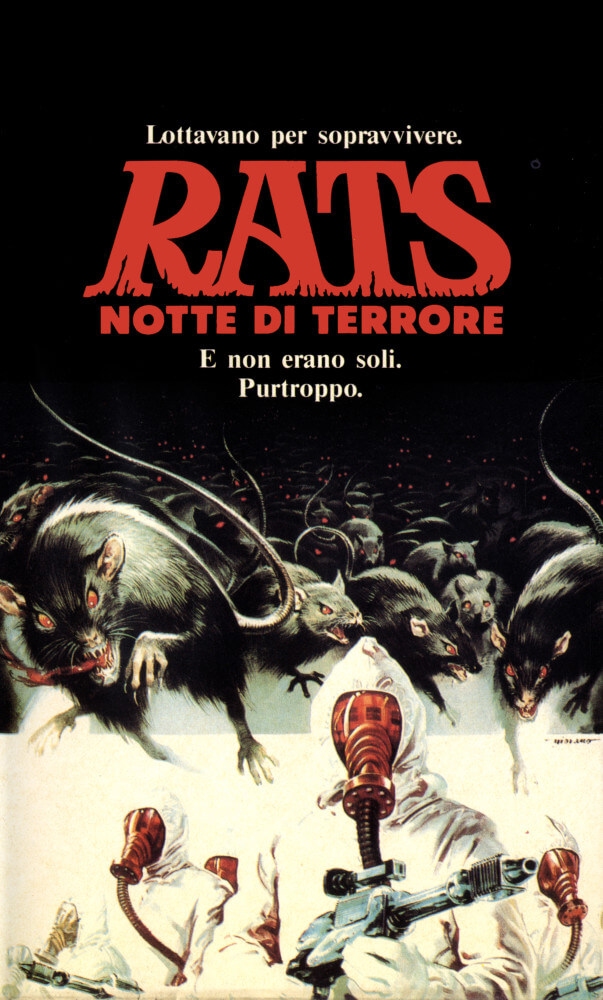
This Italian movie, most commonly known as Rats: Night of Terror, is one that I’ve wanted to see for quite some time. I can’t say I’m overly impressed with the film after seeing it, but I can admit that I was amused throughout a lot of it.

The version I watched was English-dubbed, which I think caused the film to come across as a lot more goofy than it originally probably was. Some of the dialogue here was just really bad, but in a somewhat hilarious way. Related, so much of the acting was over-the-top, and I don’t think that can be blamed simply on the poor dubbing job.

Playing the main character Kurt was Ottaviano Dell’Acqua, who had some of the more ridiculous acting portions. He was pretty fun, though, and I generally thought he was one of the few really stand-out characters. Fausto Lombardi fits that bill also, and he was certainly my favorite in the film. If there’s one character that I wish we got any background on, it’d be this guy. On the other side of things, Ann-Gisel Glass and Moune Duvivier were among the worst performances I’ve seen. Mercifully, Duvivier was one of the first ones dead, but we had to suffer through Glass’ melodramatic, overwrought performance throughout most of the film. Others did about as well, in a cheesy way, as you could expect.

I thought that there was some pretty decent gore here, though I’ll be honest and admit I was expecting a bit more in that department. Still, seeing rats crawl out of peoples’ mouths and jumping onto people was fun enough, so while the film didn’t shine insofar as the gore was concerned, I don’t think it was that big a problem.

How different this film would have been if I saw it in it’s original Italian, I don’t know. It wouldn’t have changed the bad acting, but it probably would have been a bit easier to take seriously. On the other hand, the ending is so ridiculous, it has to be seen to be believed. For a post-apocalyptic film, I didn’t have nearly as much fun as I did with 2019: After the Fall of New York, but Rats: Night of Terror was still a somewhat amusing film, and though it’s below average, I can see myself giving it another view in the future.

6/10