Flesh for Frankenstein (1973)

Directed by Paul Morrissey [Other horror films: Sangue per Dracula (1974), The Hound of the Baskervilles (1978)] & Antonio Margheriti [Other horror films: Il pianeta degli uomini spenti (1961), La vergine di Norimberga (1963), Danza macabra (1964), I lunghi capelli della morte (1964), Nude… si muore (1968), Schreie in der Nacht (1969), E Dio disse a Caino… (1970), Nella stretta morsa del ragno (1971), La morte negli occhi del gatto (1973), Killer Fish (1979), Apocalypse domani (1980), Alien degli abissi (1989)]

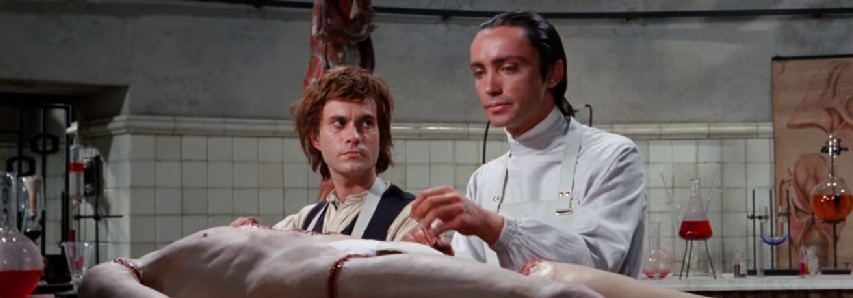
Flesh for Frankenstein, sometimes commonly known as Andy Warhol’s Frankenstein, isn’t a movie I enjoyed at all. It had some disgusting gore and sexual depravity, which is all good and well, but I personally found the acting quite horrid and the story rather meandering.

As it is, I’ve actually seen this film before. I can’t imagine under what circumstances, though – I couldn’t have been older than 14, as I barely remembered any of this. And in fact, the idea that I actually sat through this movie at that age, if accurate, is a testament to my devotion of the genre. Well, either that, or the idiocy of my youth.

Yes, that may well sound like a dig at the movie. I know it’s a film that some people do rather enjoy, and I can partially see why. The gory sequences are pretty solid, and even I will admit that the finale was overall enjoyable. Some of the dialogue is rather quotable (from “You filthy thing!” to the classic line “To know death, Otto, you have to fuck life in the gall bladder!”), and certainly the horrible acting can add to the charm, but even so, I generally found the film tedious.

Udo Kier (who I know from films such as Pray for Morning, Love Object, and Shadow of the Vampire) was just awful in this. Half the time, he literally reminded me of Tommy Wiseau, which was amusing, but probably not good. Just as good was Arno Jürging (Andy Warhol’s Dracula). Joe Dallesandro (The Gardener and Black Moon) was at least fine, and while I couldn’t stand her character, Monique van Vooren was serviceable, at least when she wasn’t sucking on someone’s arm (I’d say it makes sense in context, but I’m not sure that it does).

Certainly there are some WTF scenes, such as one where the Baron is rather involved with a corpse (after shouting at his assistant to look away, calling him a filthy thing), and that scene certainly is disturbing. It leads to the classic line about life and fucking gall bladders, so there you go. There’s certainly plenty of nudity and gore here, and while that might help in some cases, it doesn’t really impact things much here.

Don’t get me wrong – I liked seeing the gore, and it’s especially solid near the end, in which a door is slammed on a character’s hand, cutting it off (and that dismembered hand is later thrown at another character, amusingly enough). That was quality gore, as was an amusing decapitation early on in the film. The blood certainly runs free in the film, which is far from a bad thing.

The problem, though, is that much of the film, save the enjoyable finale and tense final minutes (which I rather enjoyed) feels like a soap opera. There’s a husband who has no time for his wife, who is a sex maniac, and thus seeks companionship elsewhere, such as farmhands. The farmhand in question has a friend who is considering becoming a monk, so he tries to get that friend laid in order to show him what he’ll be missing. Oh, and there are children mucking about also, but they aren’t really important until the final twenty minutes of the film.

Oh, also worth mentioning, the husband and wife are also brother and sister. I was confused at first, wondering if I was hearing that right, but it became obvious that I was indeed accurate in my hearing. Talk about a messed up family, what with some Targaryen shit going on here.

I can see why Flesh for Frankenstein would appeal to some people, but I just couldn’t get that much enjoyment out of it, save a few scenes. It’s not a movie I found utterly unredeemable, but I really didn’t care for a lot of it. I felt so much of it was tedious, and overall, it wasn’t what I’d personally call a good time.

5/10

3615 code Père Noël (1989)

Directed by René Manzor [Other horror films: N/A]

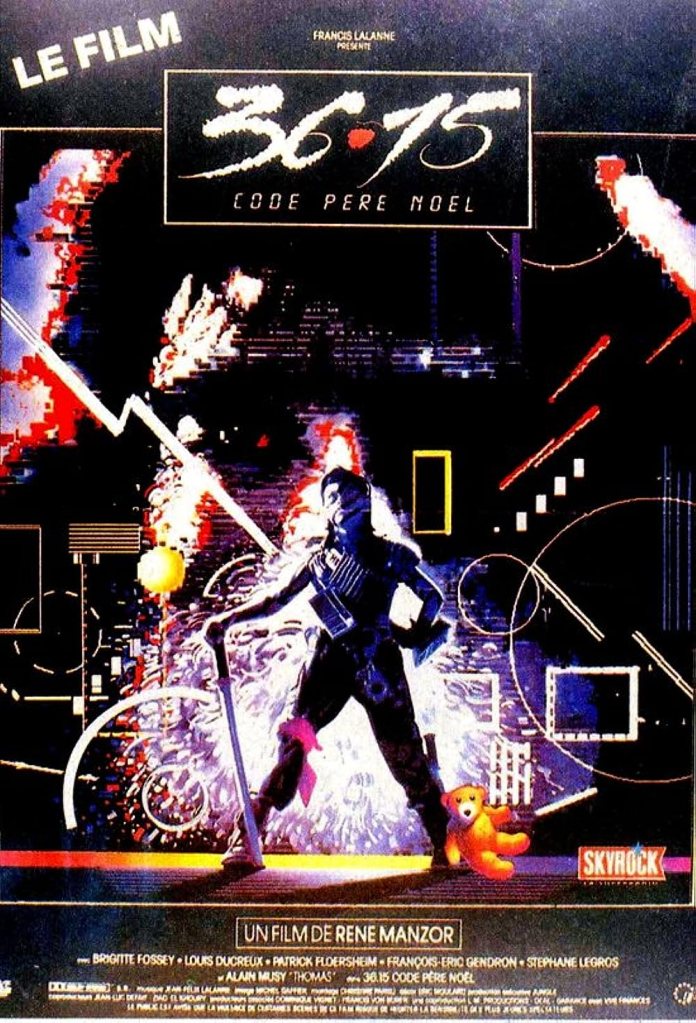
I’m not surprised this French horror film, known under various titles such as Dial Code Santa Claus, Game Over, and Deadly Games, is a good film, but I will say I’m surprised by how much I enjoyed it. 3615 code Père Noël is a pretty tense and thrilling film, and it’s certainly worth a watch.

The story here is pretty fun and original, in an early home invasion way. A precocious young kid has to defend himself and his grandfather from a madman stalking them around their house. It’s now you might think that a house isn’t big enough to last a movie, but by house, I mean mansion, because this kid is from a wealthy family, and their abode is quite humongous, complete with suits of armor and hidden passages (not to mention trapdoors – I told you, the kid is precocious).

In fact, it’s almost unbelievable, but I can buy that a kid who grew up with all the advantages this kid did would be more well-rounded in the ways of Rambo. When your mother gets you every expensive item on your Christmas wish list, not to mention additional presents, it’s not difficult at all for me to imagine this kid may be a bit more developed than others his age.

It’s not an overly violent film or anything, but once the action starts going, it’s rather tense. Partially it’s because the grandfather (played by Louis Ducreux)  is so vulnerable – not only is he older, and unable to move too quickly, but he needs insulin shots and has rather atrocious eyesight, and he’s such a good character too, playing Dungeons and Dragons with his much younger grandson. You don’t want to see him anywhere close to hurt, which ratchets up the tension.

Alain Lalanne is decent as the lead. I don’t generally care for kid actors, but Lalanne is quite believable. I do think that Louis Ducreux’s role as the grandfather humanizes him, though – giving him someone that he has to protect gives Lalanne a deeper character as opposed to having him just defend himself. We never learn too much about Patrick Floersheim’s character, but I really dug the opening scene with him in the snowball fight, and I think we learn all we need to about his mental state as the film goes on.

Among my favorite scenes in 3615 code Père Noël would be when Lalanne’s character tries to escape on the roof. This is a tall structure, and that scene was filmed quite well (think Halloween 4, only more intense), and again, it’s tense, as the roof is covered in snow, and the kid indeed does slip once. It’s a good time. There’s also a montage of a dog later on – it’s a small thing, but somewhat emotional, as the dog was another of my favorite characters.

This film has a lot of Christmas feeling to it, and now that I’ve seen it, it’s probably among one of my favorite Christmas horror films, which include Gremlins, To All a Goodnight, Don’t Open Till Christmas, and Santa’s Slay. 36.15 code Père Noël is a fantastic film, and while it might be low on bodycount, this French film isn’t low on suspense. Definitely worth seeing for fans of the genre.

8.5/10

Aux yeux des vivants (2014)

Directed by Alexandre Bustillo [Other horror films: À l’intérieur (2007), Livide (2011), ABCs of Death 2 (2014, segment ‘X is for Xylophone’), Leatherface (2017), Kandisha (2020), The Deep House (2021)] & Julien Maury [Other horror films: À l’intérieur (2007), Livide (2011), ABCs of Death 2 (2014, segment ‘X is for Xylophone’), Leatherface (2017), Kandisha (2020), The Deep House (2021)]

Likely best known as Among the Living, this French film isn’t without it’s merits, and it started out quite good, but the latter half of the film didn’t really satisfy me, and while I enjoyed the gore, I can’t say I loved this one as a whole.

It’s a shame, too, because the film really starts out strong, dealing with three kids (Théo Fernandez, Zacharie Chasseriaud, and Damien Ferdel) who happen across a guy in a clown mask abducting a woman. In a way, it reminded me of Summer Scars, a low-budget British movie which dealt with kids who skipped school running amok a deranged guy. That story’s a lot more simple, as the kids get away, only for the killer to come after them.

There’s more to it here – the film opens up with a bit of backstory that wasn’t entirely clear, but also involved a pregnant woman getting stabbed in the stomach, so it wasn’t all bad. The gore here can be pretty good, but it does take a bit to get there, and when it does, I think the story itself sort of falters, and the finale seemed a bit rushed and off to me.

The only performances I really wanted to touch on were the three kids. Zacharie Chasseriaud impressed me most – he seemed the oldest of the three, and had to deal with a physically abusive father, which were hard scenes to watch. Damien Ferdel never really gets a chance to shine, but I did like his interactions with his friends during the first thirty minutes or so, and while a bit generic in character, I can see why Théo Fernandez was made the focus.

In all fairness to the film, while lukewarm reviews do exist, I tend to see positive comments lobbied toward Among the Living, and while I personally don’t like where the story goes, I understand why others might find it a wild ride. Maybe it’s one of those things that will grow on me, and if I happen to watch this in the future, I’ll enjoy it a bit more. Not that it’s not a decent movie, but I was sort of expecting more than decent, as I try to pick my French films wisely.

When it comes down to it, Among the Living is a movie possibly worth seeing, and you may well enjoy it. I don’t personally love the route of the story, and portions of the second half seem rushed, but it did have a very strong opening, so this movie is really close to average for me. Doesn’t quite make it, though.

6.5/10

I tre volti della paura (1963)

Directed by Mario Bava [Other horror film: I vampiri (1957), Caltiki il mostro immortale (1959), La maschera del demonio (1960), Ercole al centro della Terra (1961), La ragazza che sapeva troppo (1963), La frusta e il corpo (1963), 6 donne per l’assassino (1964), Terrore nello spazio (1965), Operazione paura (1966), 5 bambole per la luna d’agosto (1970), Il rosso segno della follia (1970), Ecologia del delitto (1971), Gli orrori del castello di Norimberga (1972), Lisa e il diavolo (1973), The House of Exorcism (1975), Schock (1977)]

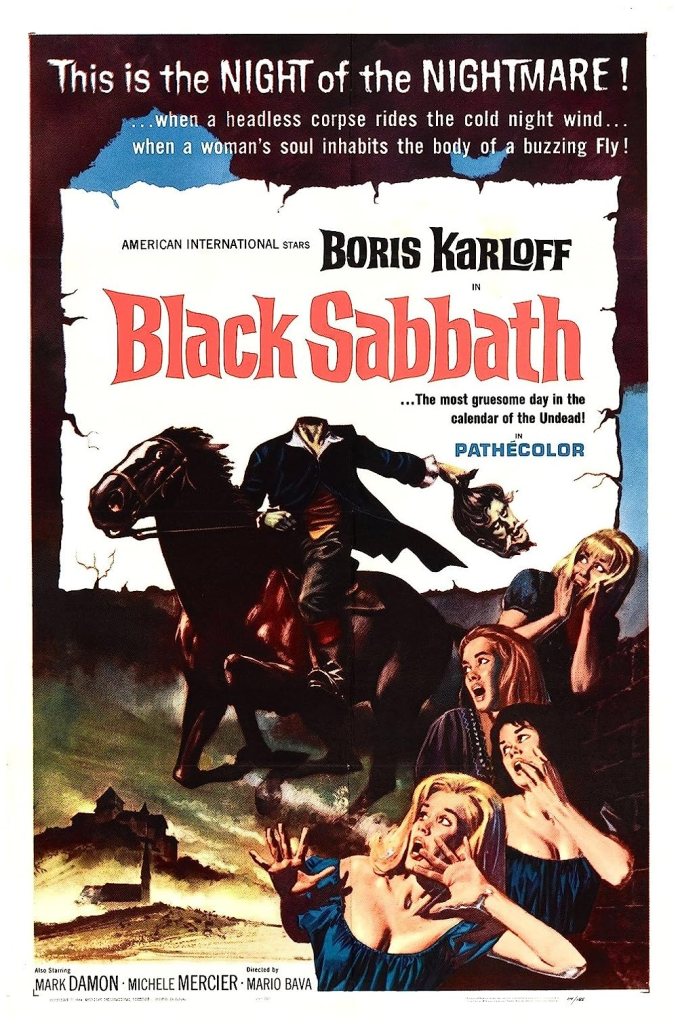
Infinitely better known under the title Black Sabbath, this Italian anthology has never really impressed me. Of course, I’ve only seen it twice now, so that may change with future viewings, but right now, it just doesn’t seem that great a movie.

What possibly might impact that conclusion is that I’ve seen only the American print. Both versions contain the three same stories – ‘The Telephone’, ‘The Wurdulak’, and ‘The Drop of Water’ – but the stories are in a different order in the American copy, along with edits being made to the stories, most prevalent in ‘The Telephone.’

I don’t know if I’d like the movie anymore with the original print, but I can say that as I believe ‘The Telephone’ is by far the weakest segment here, I’d definitely be open to seeing the story done differently. ‘The Wurdulak’, which is the final story in the American print, isn’t that bad, but it does run on a bit long, and possesses a bunch of annoying character mistakes that make it quite hard for me to sympathize with them, not to mention having somewhat melodramatic dialogue (“All I know is that I love you”).

The true winner of this film, as far as the segments go, is ‘The Drop of Water’, which is unfortunate, as it’s the segment that opens the American copy, meaning that after the story is done, there’s little to look forward to. ‘The Drop of Water’ is sweet and simple, and is a masterclass in suspense. From the moment we first see the dead body of the medium to the final scene, it’s a very thrilling story, and a pleasure to watch.

It’s also a pleasure to see Boris Karloff introduce the stories (though I would have liked it if he also had some closing dialogue), and not only that, but he was also in ‘The Wurdulak,’ playing a beautifully threatening role (though that one piece of dialogue – “Can’t I fondle my own grandson?” – was dated terribly). Jacqueline Pierreux was amazing in ‘The Drop of Water,’ and while some of his choices bothered me, I thought Mark Damon did decently in the final story. It may partially just be the story, but Michèle Mercier didn’t really impress me in ‘The Telephone.’

Obviously, Black Sabbath isn’t without it’s strengths, which is evident by the amount of people who call the film a classic. No doubt that it looks nice – the color is rather fresh for an early 1960’s movie, and the portions of the film that it gets right, it really gets right. It’s just that it doesn’t happen often, and though the film might be better in the original Italian print, I can’t imagine my views changing significantly.

In short, despite it’s classic status, it’s not really a film I enjoy save for ‘The Drop of Water,’ and there are so many other horror films from the 1960’s that I’d rather watch.

6/10

Il gatto a nove code (1971)

Directed by Dario Argento [Other horror films: L’uccello dalle piume di cristallo (1970), 4 mosche di velluto grigio (1971), Profondo rosso (1975), Suspiria (1977), Inferno (1980), Tenebre (1982), Phenomena (1985), Opera (1987), Due occhi diabolici (1990, segment ‘The Black Cat’), Trauma (1993), La sindrome di Stendhal (1996), Il fantasma dell’opera (1998), Non ho sonno (2001), Il cartaio (2003), Ti piace Hitchcock? (2005), La terza madre (2007), Giallo (2009), Dracula 3D (2012), Occhiali neri (2022)]

Known primarily under the title The Cat o’Nine Tails, I had to say that this Dario Argento film started out strong, and remained strong for a good portion of the hour and 50 minute runtime, but aspects of the finale just didn’t sit well with me.

It’s a mostly engaging mystery – I love how a newspaper reporter (James Franciscus) and a blind man (Karl Malden) were working together in order to solve some mysterious deaths. I liked the relationship of respect they had, and of course, having a blind character working as a detective is a unique choice, and he did fantastically.

Following up on the nine leads was somewhat less than satisfactory. I guess my main problem is that of the five scientists (played by Emilio Marchesini, Tom Felleghy, Aldo Reggiani, Horst Frank, and Tino Carraro), only a couple of them got any real focus, and without a clear distinction of character, which I’m not sure we got all that well, distinguishing between some of these individuals is a bit more difficult, and also lacks somewhat of a personal touch, given we don’t know all of them, at least to any real degree.

That’s not to say that the mystery wasn’t good, but I have to say, I don’t think it was near as engaging or interesting as what we get from films like The Black Belly of the Tarantula, Deep Red, or The Case of the Bloody Iris. It just lacked a bit of the personal touch, so while time mostly flew by (which is good, given the film’s runtime), I don’t know if the finale was entirely worth it.

Regardless, that doesn’t take away from both Karl Malden’s (Phantom of the Rue Morgue) and James Franciscus’ (The Last Jaws) performances. I thought the both of them did a great job, especially Malden. I liked what we got from Horst Frank (The Head, Eye in the Labyrinth) and Emilio Marchesini, but I don’t think either character was that fleshed out, and we only got surface level stuff. I wasn’t overly fond of Catherine Spaak’s character, but at least Franciscus’ character liked her.

Part of the mystery here involved some genetics testing regarding unusual chromosome distribution. I don’t know the modern-day science behind this – it sounds as though it’s something that was debunked years ago. The movie doesn’t spend too much time on this, but it’s part of solving the mystery, and it was definitely unique, so I thought I’d mention it.

I also wanted to say that the sequence in which both of the main characters were almost killed was pretty solid. Technically Malden’s was off-screen, and we only learn about it from a phone call, but Franciscus’ milk gets poisoned, and we’re treated to some solid tension as to whether or not he’ll figure that out before drinking it.

Few of the kills here really did that much for me, and that’s primarily because this film lacks the flair of later Argento works. Most of the kills are competent, but few really stand out (save for someone being pushed in front of a train and one of the final scenes in which someone falls down an elevator shaft). Many of them are done through first-person view, which does give a little something extra, but they’re not always the most exciting (some just consist of simple strangling).

When all is said and done, The Cat o’Nine Tails is an okay giallo, but compared to so many others (including some of Argento’s own films, such as Deep Red, Four Flies on Grey Velvet, and Phenomena) around the time, it just felt sort of weak.

7.5/10

La main du diable (1943)

Directed by Maurice Tourneur [Other horror films: While Paris Sleeps (1923)]

This will be a somewhat quick write-up, if for no other reason, I just don’t have too much to really say about this French classic.

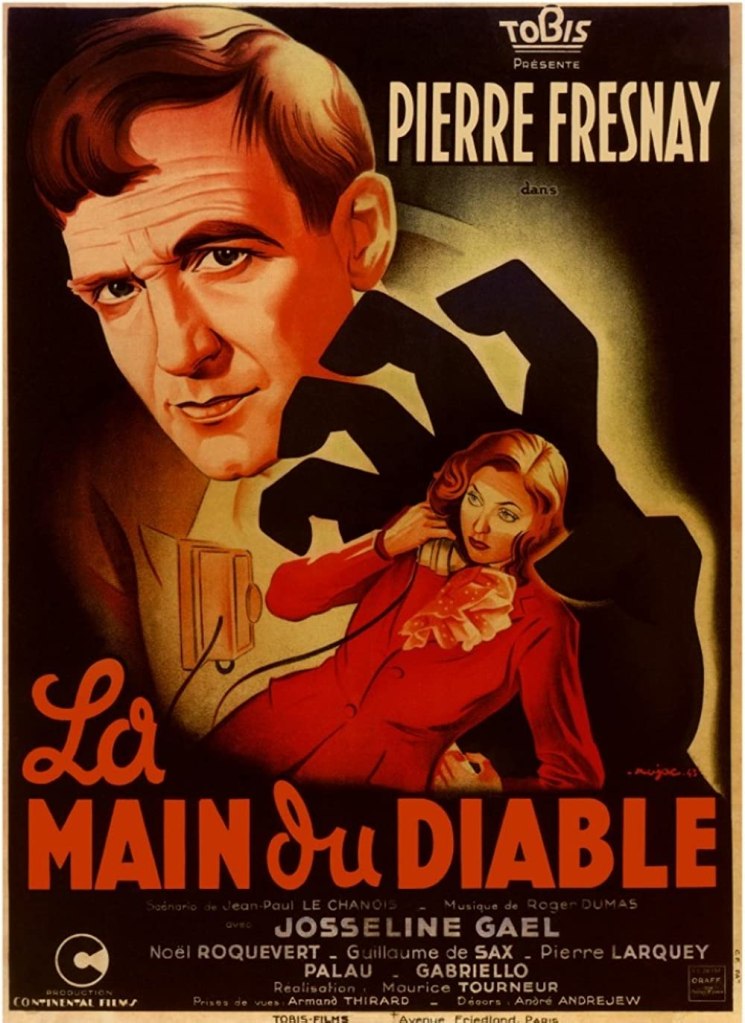
Sometimes known as Carnival of Sinners, this movie was another take on the whole deal-with-the-devil idea. As far back as Der Student von Prag, this has sometimes been an element in horror movies, so it’s not the most original content, but it is done quite well here, with a talisman being passed off from one person to another, and the central character here (Pierre Fresnay) tells the whole sordid story to a group at an inn.

To be fair, the movie feels more like a fantasy than it does a horror film for much of it, so it makes since that some of this wouldn’t be quite as interesting to me. To add to that, certainly that’s nothing to hold against the film – while I myself am not much a fantasy guy, plenty of people are, and given the rating this holds on IMDb (7.4/10), it’s fair to say I’m in the minority.

There are some clever things in the film, especially during a scene toward the end when we learn about each of the previous men who at one time possessed the talisman. Their origins are sort of told as though they’re plays, and it looked quite nifty, and the type of thing newer films wouldn’t really be able to replicate.

Pierre Fresnay was good as the lead, and Noël Roquevert (Diabolique) has some good scenes early on, but I think if there’s anyone who stands out, it’d have to be Palau, who played the Little Man (or, in terms more commonplace, the Devil). He had that charming personality that a Devil should have, and I think Palau had a good time playing the part.

With that in mind, La main du diable primarily felt, to me, like an extra long episode of The Twilight Zone. It just has that type of vibe, and while that’s not a bad thing, deal-with-the-devil stories aren’t really my preference, and so, while I appreciated plenty of technical aspect of the film, I can’t say it’s a French film I’d want to spend too much time with in the future.

I did think it was interesting, though, that this was directed by Maurice Tourneur, who is the father of Jacques Tourneur (the individual who directed classics such as Cat People, The Leopard Man, and I Walked with a Zombie), so while this isn’t a movie I was that fond of, I definitely appreciate other contributions his family made.

6/10

Les diaboliques (1955)

Directed by Henri-Georges Clouzot [Other horror films: N/A]

This French classic, widely known as Diabolique, has never been a particular favorite of mine. It’s a solid film, with a strong atmosphere permeating the whole product, and of course, the finale is pretty great, but at almost two hours long, every time I see this, I can’t help but feel as though it drags at points.

Obviously, this film has received critical acclaim, and later went on to inspire Psycho, so you know it’s heart’s in the right place, but on a personal level, I just can’t fully find it in me to love the movie. This isn’t to say I dislike it – like I said, Diabolique has a great atmosphere – but when it comes to classic horror films to watch, this wouldn’t really make my list, unless I was focused on French horror from the mid-1950’s.

None of this is supposed to sound harsh, and to spoil things, I’m giving this movie an average rating; I just feel as though I’m in the awkward position to defend an unpopular opinion on a movie that I don’t even dislike. I think Diabolique is an okay movie, and the finale obviously went on to influence hundreds of other films (and to be entirely fair, this film is based on a novel – Celle qui n’était plus, or She Who Was No More), but I personally find much of it a slough to get through.

Véra Clouzot (who died just five years later, at the age of 46) worked well with Simone Signoret. The pair of them made for good protagonists, and as the movie kept going, you could see the increased pressure they were under to try and figure out exactly what was going on. I found Clouzot’s character quite irksome at times – her ability to lie was worse than Janet Leigh’s character in Psycho – but her performance was sound. Paul Meurisse played a horribly unlikable man well, and I liked Charles Vanel’s gruff, yet paradoxically gentle, version of a private detective.

For a classic piece of cinema that inspired so many future films, Diabolique is definitely a movie worth seeing. It’s an atmospheric and moody film with beautiful cinematography and great tension. Of course, it’s also two hours long, and I just don’t know if there’s as much meat as I’d prefer. If you’re offended I’m not giving this a higher score, then worst case scenario, don’t listen to me, and ignore all my reviews. It’s the best I can say.

7/10

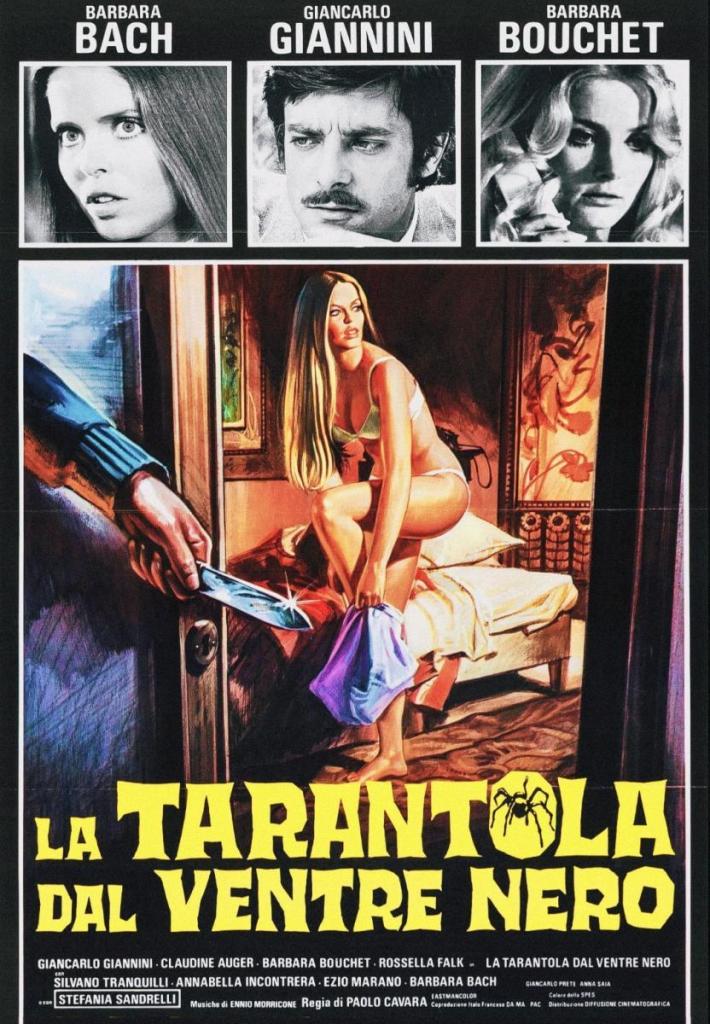
La tarantola dal ventre nero (1971)

Directed by Paolo Cavara [Other horror films: Mondo cane (1962), E tanta paura (1976)]

Giallo is one of those genres that I enjoy in small doses, and as such, there are still many quite well-known gialli that I’ve not yet seen. La tarantola dal ventre nero, better known as Black Belly of the Tarantula, is one such film, and I have to admit that, while it was decent, I was expecting a little more.

In part, I think this has to do with the lack of characterization some individuals get, not to mention a lack of as many suspects as one might hope for. There’s also elements that I don’t think are fully explained (what the link was between Giancarlo Prete’s character and Ezio Marano’s character, for instance), and the whole finale, while okay, was just that – okay, and largely unspectacular.

Admittedly this came as a surprise, as I have heard this is one of the more popular gialli out there, and perhaps one of the better ones not done by Mario Bava, Sergino Martino, Lucio Fulci, or Dario Argento. It’s a perfectly fine mystery, and the kills are decent, but even as a fan of these movies, I do feel that large portions were somewhat sluggish, and not getting the hang of the whole picture (at least as clearly as other films do, such as Deep Red) just made it feel weaker.

As far as the cast goes, the only ones who really stand out are Ezio Marano, Eugene Walter, and Giancarlo Giannini. I don’t think we really get that much information on Marano’s character, but he does well with the role. Eugene Walter had almost no relevance whatsoever to the plot, but his character appeared a few times, and he amused me. Giannini (who would pop up 30 years later as the Italian cop going after Lecter in Hannibal) was pretty solid as the lead, which is good, because otherwise, we wouldn’t have had much.

I’m always the type to enjoy mysteries mixed up with my murder, which is why giallo films appeal to me. They’re not always great (such as Mario Bava’s Five Dolls for an August Moon), but sometimes they can be quite good (Don’t Torture a Duckling and the aforementioned Deep Red). Black Belly of the Tarantula is an okay movie. It’s certainly not bad, even if it does perhaps drag a little. But there’s not enough here for me to think of the movie as necessarily good, and while I’ve wanted to see it for some time now, I can admit that it doesn’t do as much for me as I’d have hoped.

7/10

Die Hinrichtung (1976)

Directed by Denis Héroux [Other horror films: The Uncanny (1977)] & Géza von Radványi [Other horror films: N/A]

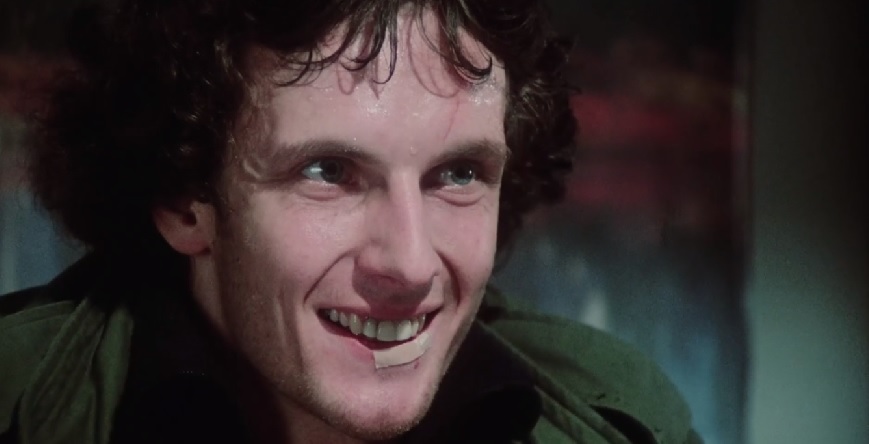
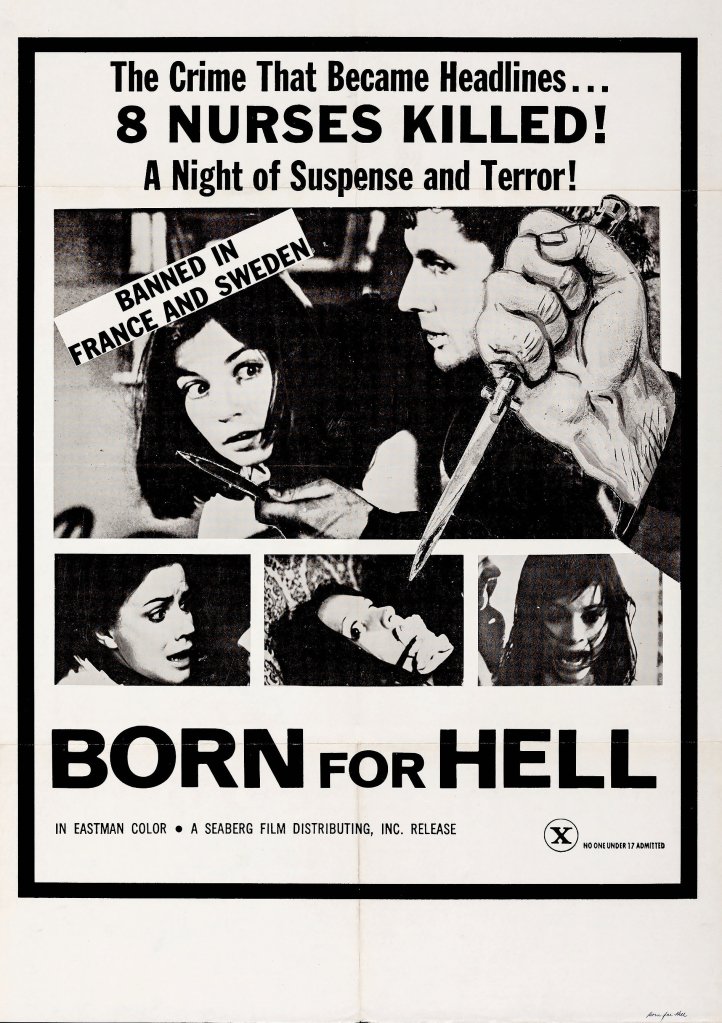
Known under such titles as Naked Massacre and Born for Hell (probably the best title for this one, if it were up to me), Die Hinrichtung is a gritty, raw experience. It’s not altogether exciting, but I do find the premise somewhat fascinating, and though the movie isn’t great, I do think there’s a little here to be interested in.

I first saw this film around ten years ago from a cheap print on the Mill Creek Entertainment’s Chilling Classics 50-movie pack. Honestly, while the print has issues, the audio quality is decent, and the movie is still certainly watchable (which is not something that can be said for all the movies in the same collection). I didn’t remember too much in way of specifics about the movie, which partially made this one a movie I was more interested in revisiting.

Following a disillusioned American who fought in Vietnam, and taking place during The Troubles in Belfast, there’s a lot of commentary on violence here. This American (played by Mathieu Carrière) has had a troubled life – a hard upbringing, a wife who left him, and some mental issues – and left one warzone for another. He doesn’t snap in a PTSD type of way – this isn’t Forced Entry (thank God). But he desperately wants to get home, and doesn’t have the money to do so. And what better way to get money than by trapping a house of nurses and torturing them?

Based partially off the Richard Speck murders, this movie has that gritty exploitation feel without really going out of the way to show too much explicit violence. The sexual violence, while definitely present, is toned down, and there’s not that much in the way of gore (and in fact, the bloodiest scene is a self-inflicted cut toward the finale of the film). It does have that gritty atmosphere, and of course a little nudity thrown in, but this movie isn’t really near as grueling as others from around the same time, such as I Spit on Your Grave, The Last House on the Left, or the aforementioned Forced Entry.

I don’t know Mathieu Carrière, but I thought he did a pretty fine job with his character. He’s occasionally charming, always desperate, and his performance is solid. None of the nurses stand out particularly well, but some, such as Carole Laure, Leonora Fani, and Christine Boisson all add a little oomph with their characters and traumatic predicaments.

The movie isn’t exactly quick-paced, but personally, I don’t think I ever really got bored. That said, I can certainly understand the somewhat lukewarm reception this has received (at the time of this writing, the movie possesses a 5.1/10 on IMDb with 696 votes). It’s probably worth seeing if you’re a fan of gritty 70’s exploitations, even if this is a bit tame, but for a casual horror fan, there may not be a lot here to really interest you. It’s worth mentioning that the version I saw was the same Mill Creek copy, though, so the uncut version likely has more to it.

As for me, I can say that I found the setting (Belfast) and the killer’s history interesting. I don’t think that made this a great movie, but I do think it felt substantially different from a more, shall we say, base exploitation flick, and though I do find the film below average (with the conclusion being perhaps one of my favorite portions), I definitely think I’d find it in me to watch again.

6.5/10

Martyrs (2008)

Directed by Pascal Laugier [Other horror films: Bonne Nuit (1999), Saint Ange (2004), The Tall Man (2012), Ghostland (2018)]

I’m not one of those who believes that a movie has to be enjoyable to be good, but I do maintain that if a movie is not a particularly enjoyable viewing experience, then those who dislike it have every right to do so. That’s clearly relevant to me here, because while Martyrs is a well-done movie in plenty of aspects, it’s a movie that I have a hard time with, and definitely don’t find that enjoyable.

Whereas other French horror films from the same time period share the same bleak feel this film possesses (such as Frontière(s) and Haute tension), they still have a bit more of a, shall we say, cinematic background, and by that, I mean that while they can be dark, I still find myself entertained, and that’s not something I can truthfully say about Martyrs.

No doubt the film is well-acted, though. Mylène Jampanoï and Morjana Alaoui make for a believable pair of friends, and Alaoui especially does well toward the second half of the film. Though a character of miserable intent, Catherine Bégin does a pretty good job, which might be helped by the fact she really only appears a handful of times.

There’s also no doubt that the special effects are amazing. Honestly, the movie isn’t quite a gory as people might think, but there are plenty of brutal scenes, and especially in the second half of the film, some hard-to-stomach sequences, so though it’s not a gorefest by any means (aside from perhaps the shotgun slaughter toward the beginning), there are some things here that probably won’t easily be forgotten.

Like I said, though, despite some positive and well-done elements, I just don’t enjoy the movie. It’s entirely possible that I liked this a little bit more than when I first saw it years back, but even then, it’s just a smidge. Part of it is the grueling scenes of torture that a character endears (and seems to last at least 15 solid minutes), and part of it is the story and the pseudo-philosophical ideas about the afterlife and forced martyrdom.

I did find myself enjoying the end (though I do quite want to know what was whispered in Bégin’s ear – not enough to go out, capture young women, and torture them into ectasy, of course – but I am definitely curious), but I don’t think it was entirely satisfying, which may well be the point, given the bleak feel that this movie has. The fact the finale is somewhat inconclusive makes the film darker still.

Martyrs is often rated quite highly, and I don’t want to take that perception away from people. I can only say that I personally didn’t love it, and though I can admit that there are elements that I could conceivably enjoy, it’s not a movie that I think I’ll go back to near as often as I would films like Haute tension. Take that how you will.

5.5/10