Firestarter: Rekindled (2002)

Directed by Robert Iscove [Other horror films: N/A]

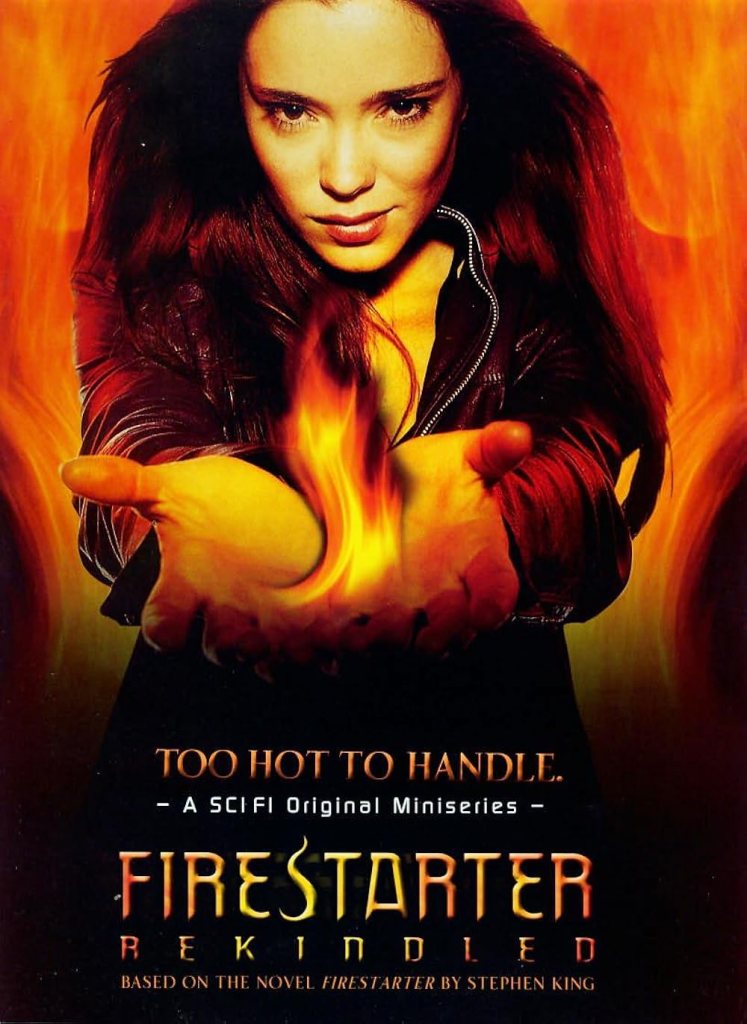
I didn’t have much in the way of positive expectations when it came to Firestarter: Rekindled. Not that I’d heard much about this one, but I knew it was a mini-series that got lukewarm reviews. Admittedly, I didn’t know it was a Sci-Fi mini-series, which gives it a bit more personal spice, but given I didn’t love the first Firestarter, I wasn’t sure how well a sequel would fare.

Well, as a sequel to the 1984 movie, Rekindled fails hard, and for a very specific reason: it’s impossible for this to be a sequel. See, this movie has flashbacks from events that happen in that movie, but they don’t use footage from the film (which is fine, as I sometimes find that type of thing stylistically off-putting), instead re-creating them with new performances.

The problem is, the scenes they recorded for the flashbacks don’t actually match up to what happened in the 1984 movie. For God’s sake, instead of Charlie’s father dying in a barn, he’s killed by Rainbird in a nondescript room with what seems to be a needle. The flashbacks don’t match up, and because of that, I don’t think this can even really be called a sequel. I choose to see it as a new adaptation of material used in the novel, because as a sequel, it doesn’t work.

Viewing it, though, the way I choose to, the mini-series isn’t that bad. Don’t get me wrong, it doesn’t come close to rivaling Storm of the Century or the 1997 The Shining, but it’s not that shabby. The biggest problems, discounting the idea that this is a sequel, would be that the performances are sometimes shaky, the special effects aren’t always that special, and there’s a handful of story elements I didn’t care for, but otherwise, it sort of has some charm to it.

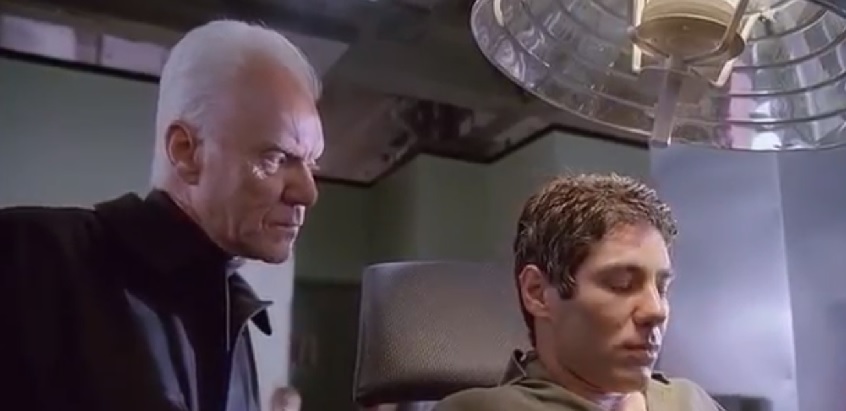
Generally speaking, I liked the cast of this one. Marguerite Moreau (The Uninvited, Queen of the Damned) made a decent adult Charlie. To be honest, I found her budding relationship with Danny Nucci’s character sort of cute, especially that scene in which they’re talking about kryptonite. Nucci is an actor I know from pretty random places (Titanic and an episode of House M.D.), and while he wasn’t amazing here, I dug his character. Oh, and Malcolm McDowell (Silent Night, Class of 1999, Cat People, Halloween) is here too, playing Rainbird, and he’s always a pleasure.

We also have Dennis Hopper (The Texas Chainsaw Massacre 2, House of 9, Land of the Dead, Night Tide) playing a somewhat interesting character. Portraying the young Charlie in flashbacks was Skye McCole Bartusiak (who I know as Pippa from Storm of the Century); she doesn’t have the character of Drew Barrymore, but she was nice to see. Also appearing are John Dennis Johnston (Communion), Darnell Williams, Travis Charitan, Dan Byrd (Salem’s Lot, Easy A), Ron Perkins (Storm of the Century, the 2002 Spider-Man), and Jeremy Hoop.

Like some of the performances, the special effects can be a bit touch-and-go. Some of them are decent; I tend to think the finale was mostly okay, aside from a scene involving Rainbird. Other times, well, the fire doesn’t look the greatest. Still, I don’t think the effects are terrible, and it’s certainly not much a hindrance to the story.

Speaking of the story, I have to say I didn’t care for the kids. See, part of this mini-series deals with Rainbird’s continuing Dr. Wanless’ experiments, and so he has a bunch of super-powered kids. One can sort of control people’s actions, another can read minds, one’s an energy sink, another has a sonic shout (similar to Banshee from Marvel Comics). These kids weren’t a big focus, and toward the end, they weren’t quite as prominent as I feared they were going to be, but it was still an element that didn’t do a lot for me when they did pop up.

Generally speaking, though, despite this being a combined 2 hours and 42 minutes, I had an okay time with Rekindled. I don’t think it’s a great mini-series, and it’s probably still weaker than average, but considering that I wasn’t expecting much from this at all, I can admit that this mini-series surprised me. I can also say that if you’re a fan of the 1984 movie, this one may disappoint, but if you can look at this as something other than an intended sequel, you may be in for perfectly fine time.

6.5/10

Hellraiser: Hellseeker (2002)

Directed by Rick Bota [Other horror films: Hellraiser: Deader (2005), Hellraiser: Hellworld (2005)]

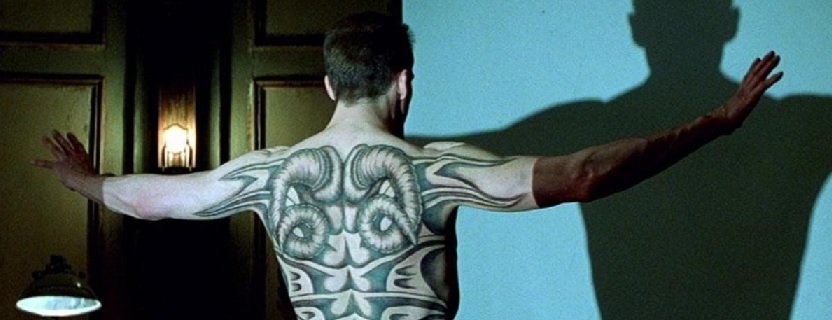
I’d say that largely, Hellseeker has the same appeal as Inferno did. I don’t think it’s as good, despite a surprise returning character, but it’s along the same psychological mold. There can be okay scenes, but the disjointed plot sometimes hinders enjoyment, and it’s never been a favorite of mine.

Unlike Inferno, which I had seen multiple times before finally writing up on it, Hellseeker is a movie that I may have only seen once before. I knew the basic gist going in, so nothing here surprised me (and on a similar note, if that ending surprised anyone, I’d be amazed, as it was about as shocking as my shoes), but it was interesting to watch this with somewhat fresh eyes.

In many ways, it really does seem similar to Inferno, which makes sense, as, like Inferno, the script here wasn’t initially a Hellraiser movie. It was refitted to make the Cenobites work into it, and they did as well as they probably could have. Honestly, I don’t mind the idea of the movie, but there’s the thing: when you have a character that has constant hallucinations, and from one second to the next he moves from hospital to office building without realizing it, you know that a lot of the stuff seen isn’t real, and hence, why bother caring?

It’s in the same vein of later movies like Delirium and Dry Blood. When there’s a hallucinating character who constantly sees things that aren’t there, how are you supposed to take any of the movie as real? Could not the whole thing be fake? Is that perhaps exactly what this movie does? Some say the journey is more important than the destination, but when the destination is so easy to see coming, and the journey is a hallucination-filled waste of time, it’s hard to care that much.

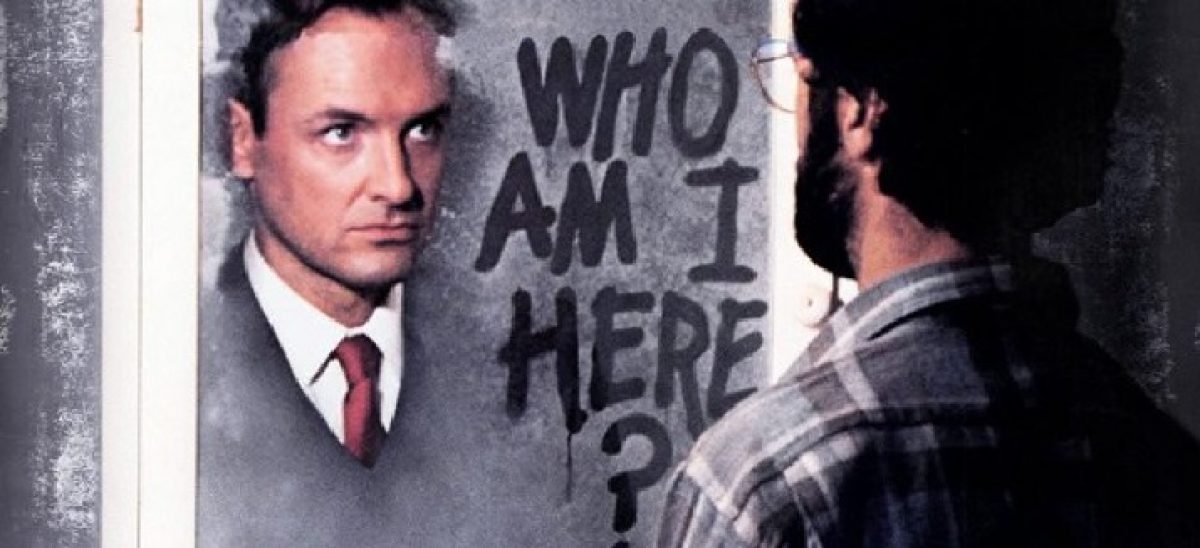
Which is where I think Inferno did a slightly better job. I think it had some creepier scenes, a marginally more interesting story, and things made a bit more sense in that movie. In this film, the lead character Trevor (Dean Winters) is bombarded with mental images of unsavory things he may have done before the amnesia hit – yet he keeps insisting he “wouldn’t do that,” as he “knows who he is.” If you have amnesia, at least to the extent this movie portrays it, you don’t know who you are, and you can’t keep insisting innocence when you have no idea.

Despite my issues with the story, Dean Winters was fine as the lead. In fact, most of the performances were okay, from Jody Thompson, Trevor White, and Kaaren de Zilva to William S. Taylor and Rachel Hayward. Ashley Laurence, returning as Kirsty from the first Hellraiser, was nice to see, but I don’t really think we saw enough of her to make a great impression, and while it’s always good to see Doug Bradley as Pinhead, he didn’t appear too often, and rarely had anything of interest to say.

At least he appeared, though. We do get small glimpses of other Cenobites, but nothing especially concrete. Even Inferno gave us a lot more when it came to Cenobite action, but aside from Pinhead, we get very little here. We saw what looked like Chatterer for a split second, so that was cool, but I would have loved less hallucinations and more Cenobites.

Hellseeker isn’t a good movie, and it’s definitely not a good Hellraiser movie. It’s also not as palatable as Inferno, which was already below average. For what it is, I guess it’s an okay way to spend your time – I don’t find the film entirely without merit. Even so, it’s not a good film, but at the very least, it’s better than Bloodline.

5.5/10

Honogurai mizu no soko kara (2002)

Directed by Hideo Nakata [Other horror films: Honto ni atta kowai hanashi: Jushiryou (1992), Joyû-rei (1996), Gakkô no kaidan F (1997), Ringu (1998), Ringu 2 (1999), Sotohiro (2000), The Ring Two (2005), Kaidan (2007), Chatroom (2010), Inshite miru: 7-kakan no desu gêmu (2010), Kuroyuri danchi (2013), Gekijô rei (2015), Satsujinki o kau onna (2019), Sadako (2019), Jiko Bukken: Kowai Madori (2020), Sore ga Iru Mori (2022)]

I can’t say for sure whether I saw the 2005 remake before this original Japanese version, but I can say that I’ve always loved the story in Dark Water. Honogurai mizu no soko kara may well be one of my favorite examples of J-horror, and it packs enough creepy and emotional scenes to make me happy.

As it is, I don’t have a lot of exposure to J-horror. I’ve never seen any of the Ringu movies (be it the 1995 TV movie, the 1998 Rasen, the 1998 Ringu, or the randomly South Korean Ling from 1999), I’ve not seen Pulse (or Kairo), I’ve not seen One Missed Call (or Chakushin ari), and it’s entirely possible I’ve never seen The Grudge (Ju-on, and to be specific, either the popular 2002 or the lesser-known 2000 movie). I’m not a big supernatural horror fan, so J-horror hasn’t been my go-to, but Dark Water definitely has a lot going for it, and it makes me rethink my attitude toward what Japan has to offer.

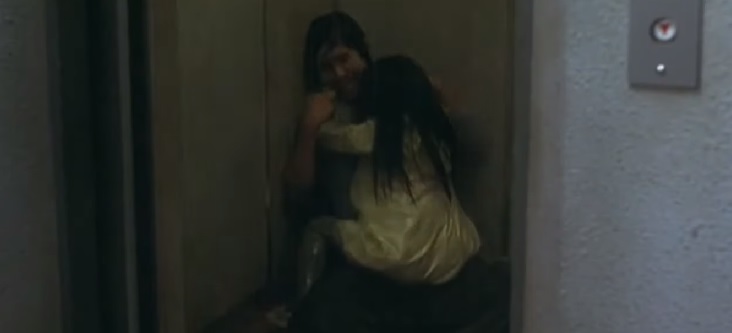
Taking place in perhaps the most depressing apartment complex I’ve ever seen in my life, the story is a simple one, with a struggling woman going through a divorce trying to give her young daughter a good life, in the face of potentially supernatural occurrences. It’s an easy plot to get into, there’s not many characters, and the apartment building is spooky enough even before the ghostly girl pops up, yellow raincoat and all.

In fact, it’s probably one of the best settings I’ve seen in a little while. It’s such a dark building, and whether the scene takes place in the elevators or the roof, it’s just creepy. That scene toward the end when the main character is climbing the water tower, for instance, is just a fantastic sequence, and I loved the whole set-up of this.

It’s also a bit of an emotional ride. The main character (played by Hitomi Kuroki) is going through a hard time, dealing with a lot of feelings of insecurity and a tough divorce. She’s close to an emotional break-down most of the time, and I can’t help but feel for her, especially in that dreary apartment she’s forced to raise her daughter in. It’s a gloomy situation all around, and the fantastically emotional final scene, a ten years later sequence, is just icing on the cake.

As such, Hitomi Kuroki did an amazing job with her character, and her portrayal of a mother going through hard times was fantastic. Playing her daughter was Rio Kanno, and she did quite well for a young actress. And though she really only gets one scene, Asami Mizukawa was stellar.

Because it’s a supernatural Japanese film, it’s not a gory movie, and it’s also not particularly rife with special effects. You see a ghostly girl a few times, but she never does any extreme acrobatics (à la The Ring). Even so, there’s plenty of low-key and subtly creepy scenes here, and despite not being a fan of supernatural films, I definitely thought this had enough going for it.

Also, the mystery here, dealing with the missing girl Mitsuko Kawai, was pretty good. I sort of wonder about one of the flashbacks – when she’s getting on an elevator – but it may have been an unintentional red herring. Still, the mystery is fun, and I love how things are slowly pieced together.

Dark Water is a film I’ve seen before, but I forgot how hard it hit you emotionally. In fact, the finale reminded me a bit of the 2007 Spanish film The Orphanage, and I wouldn’t be surprised if that film was moderately influenced by this one. Dark Water was definitely a great movie to see again – from the depressing opening to the ending credits, with the beautiful “Aozora” by Suga Shikaro – and it’s certainly worth seeing.

8.5/10

Survival Island (2002)

Directed by David Hillenbrand [Other horror films: King Cobra (1999), Game Box 1.0 (2004), Transylmania (2009), Grave Secrets (2013)] & Scott Hillenbrand [Other horror films: King Cobra (1999), Game Box 1.0 (2004), Transylmania (2009)]

This movie and I have a history. Known better under the title Piñata: Survival Island (which is how it aired on television), I saw this movie when I was quite young. It’s been a while since I’ve last seen it (understatement of the year), and though it’s a poor movie in many aspects, I find it more tolerable than plenty of more modern terrible films, in no small part due to nostalgic value.

Here’s the thing: I can’t remember if I’ve seen this film once or multiple times. If it was only once, it must have been a remarkably vivid experience, because it’s been around 16 years since I’ve seen it. It’s late 2021 when I’m writing this review – if I saw this past 2006, I’d be deeply surprised. I don’t know if it aired on AMC or Sci-Fi (as it was known as back then), but I know for a fact I saw it back in the day, so revisiting it was just an amazing feel.

The movie sucks. I mean, let’s not lie, brahs. At the time of this writing (10/18/2021), it has a 2.4/10 on IMDb, with 4,222 votes, which should give an indication of how it was received. And it’s certainly easy, when watching the film, to see where such a strong negative reaction is derived from, as Piñata: Survival Island has a lot of problems.

For one, there’s a killer piñata. As soon as you figure that out, it’s hard to improve upon the situation. If you’re wondering why there’s a killer piñata, then I’ve got great news for you: not only does the movie start off with a seven-minute origin of the creature (narrator and all), the story is later told (mercifully edited) by a character later in the film. All that really matters is that the sins of a tribal people were placed into the piñata; what took ten words takes seven minutes, plus an additional three or so later on, to explain, but that’s just the fun of the film.

Believe it or not, the piñata looks terrible. The CGI is as awful as you can imagine. Luckily for us, the creature actually has some different forms. Unluckily for us, these other guises are just as awful as the original one. There’s a giant, clunky piñata – it generally kills people by clubbing them to death with a stick or a shovel. Then it can elongate it’s arms and legs, and look like some hideous creature that moves quicker. Also, for some reason, it can turn into a floating thing with a tail (think Slimer from Ghostbusters, or if you’re a Pokémon fan, think Haunter). It makes sense, because that’s a well-known attribute of piñatas.

Related, we often get a POV of the piñata. It’s generally a red-tinted, triangular vision, and it gets old pretty quick. Most of the time, POV shots are used to increase the tension – look how close the killer is to the next victim – but here, it just feels jarring rather than suspenseful, and it happens a lot. I mean, a lot. I mean, more than you’d ever want, so you better get used to it.

I don’t actually mind the main plot – a group of students are on an island to celebrate Cinco de Mayo with a traditional scavenger hunt. At first, we are given a bunch of characters that are hard to keep straight – we have Kyle, Tina, Doug, Monica, Jake, Julie, Larry, Connie, Doug, Carmen, Bob, and Lisa. Luckily, most of these individuals are handcuffed together early on (it’s a partner-based scavenger hunt, so it makes sense), and that allows an easier identification process, which was a great idea with so many characters.

Of the performances, well, most weren’t great. I appreciated some of them – Garrett Wang (Star Trek: Voyager), Tressa DiFiglia, Casey Fallo (also in a film by the same directors titled King Cobra), Eugene Byrd (Anacondas: The Hunt for the Blood Orchid and 8 Mile), Jaime Pressly, and Nicholas Brendon (Psycho Beach Party) all did well. I don’t usually give worst performances a mention, but Lara Wickes certainly had her moments here that makes me rethink that.

Few of the kills are worth it – like I said, it’s not uncommon for the piñata to use a stick to beat someone to death, or perhaps strangle someone with vines. There was a rather amusing decapitation, someone got both their leg and arm broken (it wasn’t that violent, but it did look painful), and another got their head split open with a shovel (probably gave the most gore in the film), so it’s not as though we get nothing, but it’s probably not worth it.

If I had seen this for the first time, I can pretty much guarantee it’d get a lower rating, but seeing it again after as long as it’s been, I can’t pretend that it doesn’t impact how I view the film. There’s always been a charm to early 2000’s horror, at least to me – a lot of it might have to do with the fact that’s when I started watching the genre, and so terrible movies from the early 2000’s almost always feel better than terrible movies from anytime after 2005. Maybe that’s not fair, but that’s the Jiggy way.

It’s not true across the board – Killjoy and Seed of Chucky deserve the rating I gave them – but when it comes to movies you might have caught on Sci-Fi back in the early 2000’s (such as 2003’s Webs), it does play a part.

If you don’t have any type of nostalgic connection to Piñata: Survival Island, you probably won’t like the film. And I want to be clear – I don’t like the film. But I did find it a lot more tolerable than more modern-day horror that I hated, so that has to mean something.

5.5/10

Eight Legged Freaks (2002)

Directed by Ellory Elkayem [Other horror films: They Nest (2000), Return of the Living Dead: Necropolis (2005), Return of the Living Dead: Rave to the Grave (2005)]

While not necessarily an amazing movie, simply put, Eight Legged Freaks is a fun one. It’s a decent mixture of humor and suspense, and while there might be a couple of silly scenes, for the most part, they do a good job of trying to keep things even.

I think one reason this works would be the characters, many of which are quite good. Some movies give you protagonists that just don’t cut it, and may be difficult to connect with, but the characters here are mostly grounded enough, and some of them are more memorable, at least more memorable than what you might expect from a movie like this.

Kari Wuhrer (Hellraiser: Deader, Thinner, Final Examination) and David Arquette (Scream, Ravenous, Riding the Bullet) make good leads, Wuhrer’s character reminding me a bit of Elisabeth Shue from Piranha. Doug E. Doug’s character was a lot of fun, what with being a conspiracy theorist, and for a younger actor, I liked Scott Terra. Rick Overton had a bit of a rough start, being mainly comedic relief, but I grew to enjoy him, and of course, we have a younger Scarlett Johansson to keep things interesting.

Honestly, a lot of the CGI is quite iffy, but I don’t really think it takes much away from the film. Personally, I dug seeing the different types of spiders attack – who doesn’t like the trapdoor spiders taking out ostriches, or the hella cool motorbike chase with the jumping spiders? So if the effects have aged poorly at times, I don’t think that makes Eight Legged Freaks any less entertaining.

I also liked the background story about whether or not the townspeople should agree with selling their land, given the town’s desperate economic situation. It makes the final scene a bit more emotionally satisfying. The fact Leon Rippy’s character never got comeuppance (at least on screen – I like to think that he wasn’t re-elected as mayor) was sort of troublesome, but most of the finale was pretty solid and, again, fun.

And really, that’s what Eight Legged Freaks has to boast. It’s not a great movie, but if you’re looking for something that’s not too deep, it can be a pretty fun time. For a more comedic and less terrifying spider adventure than what you could get from Arachnophobia, this movie is worth it.

7.5/10

Nine Lives (2002)

Directed by Andrew Green [Other horror films: N/A]

So at the time of this writing (7/22/2021, should the reader be interested), Nine Lives has a rather poor rating on IMDb. Sporting a 2.3/10 with 3,372 total votes, Nine Lives is probably one of the worst received British horror movies ever made. I know when I first saw it, it didn’t do much for me.

Seeing it again, though, I personally think that maybe people are being a bit harsh.

Don’t get me wrong, this is certainly not a good movie in many senses (aside from the setting, which is pretty solid, and the occasional decent performance), but I found a lot of it moderately tolerable, and again, while it’s not good, I don’t really understand exactly why this has gotten such terrible ratings. I mean, yeah, it’s not great, but is it as awful as 2.3/10? Maybe to some people, but I don’t see it.

The biggest issue I have with this movie is how it just throws nine characters into our faces with little context, and it took about thirty minutes for me to really get the characters and their relationships down. True to the title, there are indeed nine lives, so look forward to meeting Emma, Jo, Laura, Pete, Tom, Tim, Andy, Lucy, and Damien.

Of these nine, I actually enjoyed four of them, being Amelia Warner (Laura), Patrick Kennedy (Tim), James Schlesinger (Damien), and David Nicolle (Pete). Warner was pretty cute here, and she had some strong scenes, but out of all of them, I think Nicolle stood out the most. A big part of this, I’ll be entirely honest, is that I liked his Scottish accent, and he reminded me of Iain De Caestecker (Agents of S.H.I.E.L.D.) consistently.

When it comes to the other five, none are terrible, but they don’t do anything for me. Lex Shrapnel (Tom) was fine, but didn’t do that much. Paris Hilton (House of Wax and Repo! The Genetic Opera) was playing the same character she always seems to, so yeah, that’s fun. Ben Peyton, Vivienne Harvey, and Rosie Fellner didn’t have much in the way of personality, but like I said, they’re not terrible.

The story is somewhat weak, what with a body-hopping spirit (?) going through a group of friends and killing them (with some weak-ass kills, such as simple stabbings that aren’t even on-screen), and while we get some backstory on this spirit, it just feels shallow a lot of the time. I think that part of it might be that Nine Lives is around 85 minutes, and just feels too long. If ten minutes, hell, even 15, were cut, I think it’d help things out.

Also worth mentioning is the final scene, following the chaos of the finale. We get some first-person narration from a survivor, and it’s just so damn dramatic that it’s legit funny. I mean, I laughed twice during it, and then rewatched it. It reminded me of the final scene from Bates Motel in just how corny it was, but like Bates Motel’s ending, I really enjoyed it. It was terrible, but it was funny, so no complaints.

Nine Lives isn’t a good movie, but honestly, I don’t get the hate. Personally, while I think it’s weak in plenty of aspects, I could easily see myself watching this in the future just for the entertainment value. It may put me in the unenviable position of having to give this one an almost okay score, but screw it; I’ll find a way to live.

6/10

Carrie (2002)

Directed by David Carson [Other horror films: N/A]

Among my more well-known eccentricities is that I’m not a giant fan of the classic Carrie. It wouldn’t make my top 25 horror films from the 1970’s, let alone my top ten, which is a hot take, believe it or not. An even hotter take is that I enjoy this television production more than the 1970’s classic, and while I am sure some might be aghast, I can’t say I feel much shame.

The cast here is spectacular. Angela Bettis (May and Toolbox Murders) was the perfect choice, as she really pulls off Carrie’s character and personality. Patricia Clarkson (who was in both Delirium and Easy A – completely similar movies) was a good fit for Carrie’s mother, and her back-and-forth with Carrie was always fun to watch. Kandyse McClure (of the 2009 version of Children of the Corn fame) was decent as Sue, and a bit snappier here (for good story reasons) than she elsewise generally is.

Emilie de Ravin (who I think I recognize best from Santa’s Slay, but have also seen in The Hills Have Eyes remake and the mystery Brick) gave a good performance as the ultra-bitchy Chris, and related, Katharine Isabelle (Ginger Snaps, Freddy vs. Jason, 13 Eerie) was great as her ultra-bitchy friend. Tobias Mehler stuck me as somewhat uninspired, but Rena Sofer and David Keith (Firestarter) were very good.

Though he only got one really stand-out scene, I also loved Laurie Murdoch, who played the principal, and though her character isn’t really relevant, I also wanted to mention Meghan Black, if only because I know her as the voice of Rogue in the cartoon X-Men: Evolution, which I watched the hell out of when I was a kid. Lastly, playing Carrie during a flashback, we have a young Jodelle Ferland (the kid in Silent Hill and later in movies such as The Unspoken and Neverknock).

So despite being a television movie, the cast did rather impress me. It’s true that there were obvious limitations in terms of special effects (which can likely most clearly be seen during the prom carnage and later the scene in which Carrie’s slowly walking and bringing the town down with her), but generally, I didn’t think this really harmed the story too much (I think the worst bit may have been the scene right before Carrie snaps – I just think it ran on a bit long).

The story itself takes some daring alterations in the finale, which I didn’t remember from my first-time viewing of this. While it’s true that how they ended this version isn’t novel accurate, I was never a giant fan of the novel, and the fact that this has a less down-beat ending actually sort of made me enjoy it a bit more.

Speaking of the novel, while neither the original 1976 version or the 2013 version did this, the novel has a lot of newspaper articles, journal entries, letters, and various things from Carrie’s life following the tragic event, split in between the telling of the central story. They don’t quite do that here, but the movie is framed during an interview by the police following the prom disaster, which I liked quite a bit, largely perhaps due to it giving David Keith time to have fun with his character.

With all of this said, what issues I have with the other adaptations are still true here – I just don’t love the story. However, because this version has a less depressing conclusion, I can dig it more. Sue me.

Much like how I enjoy the 1997 The Shining mini-series more than the 1980’s film, I enjoy this television production more than both the 1976 and 2013 versions. I’m an odd duck, but I can only say what I feel, and I truly enjoyed this one more. Good stuff, especially with the limitations they had.

7.5/10

May (2002)

Directed by Lucky McKee [Other horror films: All Cheerleaders Die (2001), The Woods (2006), The Womasn (2011), All Cheerleaders Die (2013), Tales of Halloween (2015, segment ‘Ding Dong’), Kindred Spirits (2019), Deathcember (2019, segment ‘They Once Had Horses’)]

I don’t have a lot to say about May, because my feelings for this film, both the first time I saw it and just now, can be boiled down to the simple fact that I find the movie uncomfortable and don’t at all enjoy it.

Which isn’t to say the performances are bad – I think that Angela Bettis (who played Carrie in my favorite adaptation, the 2002 television movie) gave a great performance, and really sold May’s awkward tendencies. Jeremy Sisto (Wrong Turn, Hideaway, and Population 436) didn’t wow me, but Anna Faris (Scary Movie) was fun in her own way.

What’s not fun in it’s own way is the story, though, which I just find awkward. It’s uncomfortable and awkward for much of the running time, and when things that I’m more interested in finally get going (let’s say the final thirty minutes), it’s really already too late, because though the ending was much better than the first two-thirds, it wasn’t even all that great.

Certainly there are some scenes here that stick out a bit more, the sequence which most comes to my mind is the classroom scene with the blind children (I think what really elevates that sequence is the choral music in the background). Aside from that, everything else is awkward, uncomfortable, and I’m really not interested in seeing it. I already live an awkward and uncomfortable life – I don’t need to see it in a movie for pleasure.

And that doesn’t even need to be the case. Love Object (2003) had it’s own share of awkward moments, but was also a film that (while it took a few viewings) I legitimately enjoyed. Here, I’m just watching May’s uncomfortable life unfolding uncomfortably and wanting it to be over, deriving little to no pleasure from much of it.

May is a movie that has found a decent fanbase, and I have some friends in the horror community who quite enjoy this film. After seeing it again, though, I’ll just admit that it’s not for me, rate it lowly, and move on.

4/10

28 Days Later… (2002)

Directed by Danny Boyle [Other horror films: N/A]

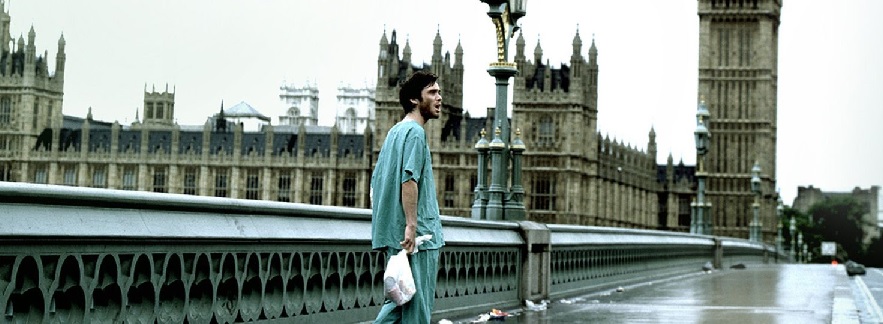
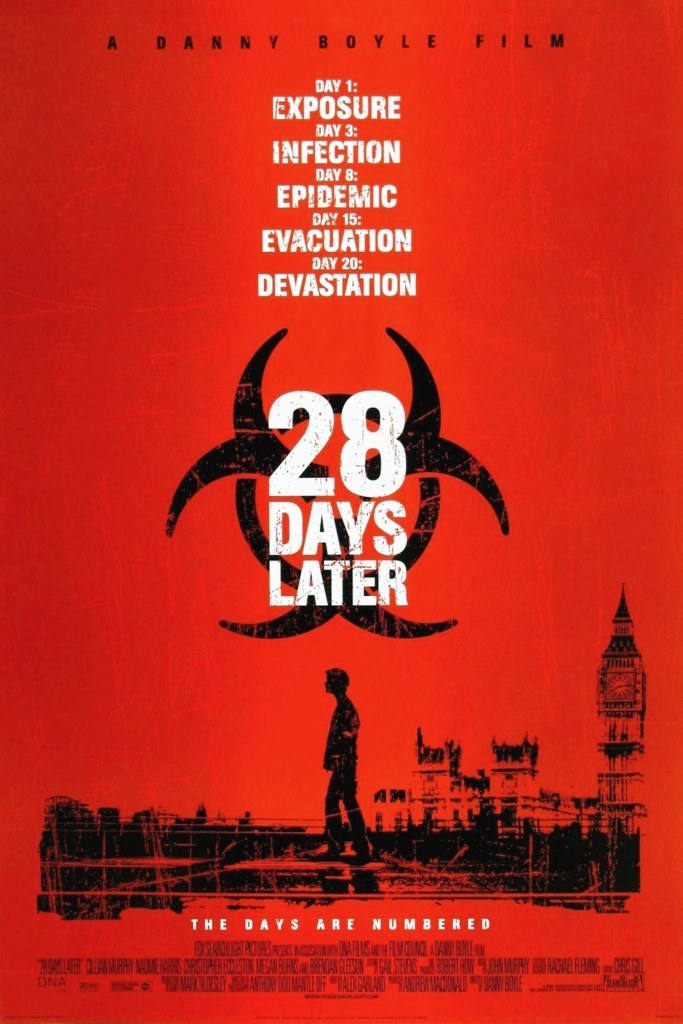
This is a movie I’ve not seen in quite some time, and it’s always refreshing when a rewatch is just as good as you’ll hope it’d be. 28 Days Later… is perhaps one of the most important zombie films of the modern era, and it’s certainly a well-made movie from the UK, and perhaps one of the UK’s best in the last twenty years.

Most of the main cast was great. Cillian Murphy (who I pretty much only know from Batman Begins) was good as the main character, as he doesn’t really seem the type. Naomie Harris is fun as an action, kick-ass gal. Brendan Gleeson (Lake Placid, fourth Harry Potter film, The Guard) and Megan Burns give the movie heart, whereas Christopher Eccleston (Doctor Who) gives it pragmatic brutality. Solid cast all around.

There’s a lot of feeling in this one. When I say that Gleeson and Burns really made an emotional impact on me, I’m not trying to exaggerate – that father-daughter combination was great, and much like how they brought Harris’ character some joy, they brought the viewer joy too, which makes the movie doubly impactful past a certain point.

Also, that score is damn phat. Really great score which helps the movie along, especially toward the end.

As far as zombie movies go, 28 Days Later is pretty damn important, and really brought back to life (see what I did there? :P) the dying (OMG HE GOES FOR A SECOND SHOT AND NAILS IT) subgenre of zombies. I mean, there were decent zombie movies in the late 1990’s (one that comes to mind is Bio Zombie, from Japan), but it was 28 Days Later that really made the genre profitable again, for better or worse.

I thoroughly enjoyed seeing this again, and I feel sort of bad for having waited as long as I did, as it’s a movie I suspect that one wouldn’t really get too tired of. I’d certainly recommend giving this one a look or a rewatch if you’ve not seen it in some time, as it’s great stuff.

8.5/10

Red Dragon (2002)

Directed by Brett Ratner [Other horror films: N/A]

I’ve not seen Manhunter, the 1986 movie which was the first to portray Hannibal Lecter. The film used to get a bit of a bad rap, but in recent years, I’ve heard pretty positive things about it, and when I do get to that one, I generally expect to enjoy it for what it is. Red Dragon is based off that same novel, though, and with strong star power and a decent story, the film stands out well in my opinion.

Admittedly, I like the story in 2001’s Hannibal more than the story here, but I think the cast for this one is of a higher caliber. Anthony Hopkins does well in his limited screen-time, but he’s not near as memorable here as The Silence of the Lambs. Edward Norton, an actor I enjoy in everything from The Incredible Hulk to Moonrise Kingdom, does great here, and it’s always fun to see Norton on-screen, even if he’s played a tortured FBI agent.

Ralph Fiennes (who played Voldemort in the Harry Potter films) does a fantastic job as the insane Dolarhyde. At times gentle, at times fierce, Fiennes really put a lot into his performance. Philip Seymour Hoffman isn’t a name I really know, but he stood out as a sleazy journalist. I didn’t like his character, but he did a solid job. Others who are worth a mention include Anthony Heald (from The Silence in the Lambs), Ken Leung (Saw, along with the ill-fated series Inhumans), Harvey Keitel (Pulp Fiction), Emily Watson (I don’t know her, but she is attractive, with a strong performance), and Mary-Louise Parker (a reoccurring character on The West Wing).

With as many solid cast members as there were, it’d be easy to think the story doesn’t matter, but of course it does. While I appreciated the story in Hannibal more, I did like Norton’s quest to catch the Tooth Fairy killer, and like I said, Fiennes did a great job with his role, especially around Watson’s character, who was an interesting addition.

I’d argue that, cast aside, and some story elements, the film’s not really that memorable, and it definitely doesn’t have memorable kills as Hannibal did (though the wheelchair on fire scene was pretty decent). Really, it’s an okay thriller, but since they went a slightly more psychological route, and didn’t really focus much on Lecter, I didn’t find myself enjoying it as much as I did when I’ve seen it before.

None of this means I find the film bad, as I don’t. I do think it’s closer to average than the series has come before, but I think Norton alone is able to help boost the movie up at least a point. I’d certainly recommend this, but I don’t think it’s really as good as Hannibal.

7.5/10