The Brood (1979)

Directed by David Cronenberg [Other horror films: Shivers (1975), Rabid (1977), Scanners (1981), Videodrome (1983), The Dead Zone (1983), The Fly (1986), Dead Ringers (1988), Naked Lunch (1991), eXistenZ (1999), Crimes of the Future (2022), The Shrouds (2024)]

I’ve seen this Cronenberg film once before, and it wasn’t quite my thing. That didn’t really surprise me, as I was similarly lukewarm toward Videodrome (despite it’s classic status). I’ve not yet seen many of Cronenberg’s other movies, but only one (Shivers, or They Come from Within) was something I actually liked.

All this said, I enjoyed The Brood a little bit more than when I first saw it. It still seems all over the place, and doesn’t quite get close to reaching an average rating from me, but it’s still an unique experience that’s perhaps worth seeing at least one time around.

At times, the story here seems muddled, and it’s not always clear where exactly the plot is going. At first, I thought there was going to be a big issue made of the grandmother abusing Frank’s (Art Hindle) daughter, but instead, the old woman gets killed by a mutant child, who then kills another character, and eventually kidnaps the daughter herself. All this is going on while Hindle’s character is investigating a controversial therapy method that his wife is undergoing, and it doesn’t necessarily seem to all fit together, even by the ending.

As far as the performances go, Art Hindle (Invasion of the Body Snatchers, Saint Sinner) is okay as the lead. I think that psychologist Oliver Reed (Burnt Offerings, The Curse of the Werewolf, Spasms, Paranoiac, Severed Ties, The Shuttered Room) made more an impression, but I wasn’t moved much by Samantha Eggar (The Dead Are Alive, Demonoid, A Name for Evil, Curtains, All the Kind Strangers) whatsoever (even during the somewhat surprising, not to mention bizarre, finale). Susan Hogan (Phobia) played a nice character addition, but aside from a solid death sequence, she wasn’t that relevant to the story.

I think a surprising stand-out, as far as performances go, is Henry Beckman. There’s a scene in which he’s drinking and reminiscing about his recently deceased ex-wife. That was somewhat emotional in itself, but the conclusion of that scene just ensures it’s one of the better sequences in the film.

There were some aspects I liked about this movie. Hindle’s character encounters a mutant child-type thing, and informs the police, who actually proceed to have an actual useful autopsy on it, which points out what an odd mutation this kid is. Just seeing the authorities actually having no choice but to believe a bizarre claim is a nice change of pace, though ultimately, I don’t think it really leads anywhere.

The conclusion itself is decently suspenseful, regardless of the fact I didn’t much care for where the story went. I wouldn’t go as far as to say the ending validates the rest of the movie, or makes it worth watching alone, but it’s solid. Even so, the whole of the movie doesn’t impress me (a big part of this, aside from the flaws in the story, stem from the fact I’m really not a fan of body horror), and while I did enjoy it more this time around, I doubt that I’ll grow much fonder of this one down the line.

6/10

This is one of the film’s covered on Fight Evil’s podcast. If you’re at all interested in the hidden mysteries of the world, listen below as Chucky (@ChuckyFE) and I discuss this film.

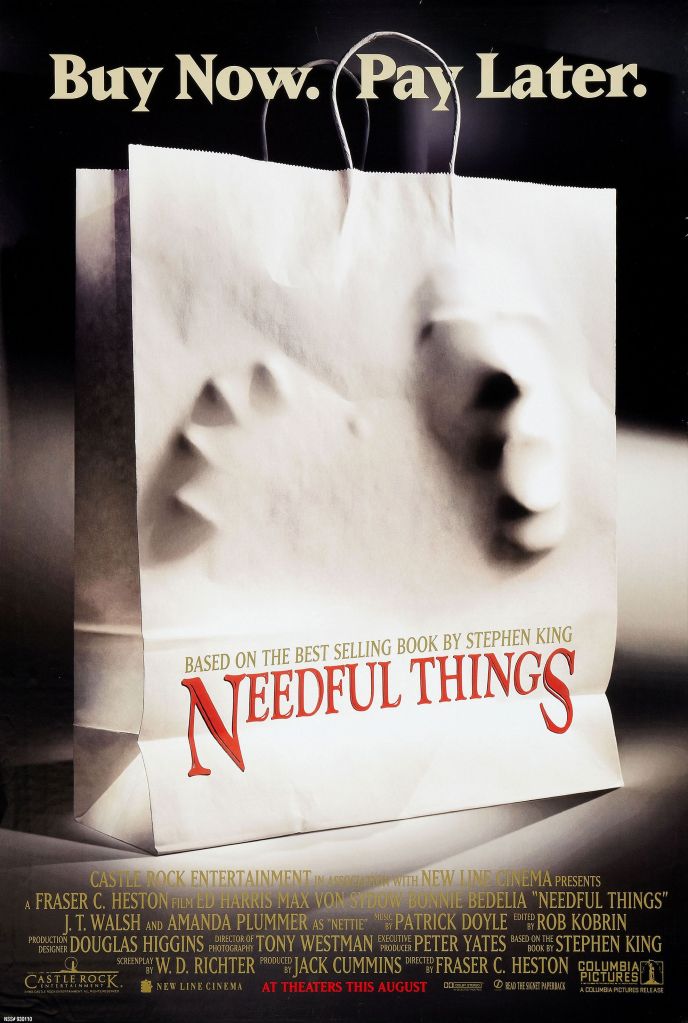
Needful Things (1993)

Directed by Fraser C. Heston [Other horror films: N/A]

Some Stephen King movies are hard to talk about because they may be competently-made for the time, and possess different stories, but the source novels are far superior. Needful Things is one of my favorite Stephen King books, and as such, this adaptation is one of the least enjoyable versions of a good story I’ve seen.

When watching this, my brother said that it was like the creators of the film read the dust-jacket plot and set out to make the film without reading the full book, and that seems apt. There are so, so many things left out or minimized, and some of it was just terrible to leave out, such as:

Pangborn’s wife and child having died, Brian’s suicide while his brother (completely omitted from the film) watched, Polly’s life in San Francisco, Norris Ridgewick’s fishing pole and helping defeat Gaunt, Ace and his assistance of Gaunt (again, entirely omitted), the majority of Cora Rusk’s story, Lester Pratt and Sally Radcliffe, toning down the Catholic vs. Baptist conflict, leaving out most of Frank Jewett and George Nelson’s conflict, the same with Sonny Jackett and Eddie Warburton, and entirely messing up the ending.

The book is a gourmet feast of characters and information, whereas the film is an unfulfilling cup of Ramen soup.

Leaving out Pangborn’s bout with depression following the death of his wife and child really strips the character of feeling, and taking out his amateur magician hobby strips him of life. In the movie, Pangborn (who was played by Ed Harris here, despite the fact that in the very same year, The Dark Half came out, which also had Pangborn, only played by Michael Rooker) just didn’t feel like the Pangborn I know at all. And in the novel, he didn’t meet Gaunt until the final 15 pages, whereas in the movie, he meets him something like twenty minutes in. It’s utterly ridiculous. Also, Pangborn doesn’t even defeat Gaunt here, that’s given to Buster Keeton, which is just terrible.

Now, before I go further, I do know that a three-hour version of this exists, a TV extension done by TNT. However, that’s never been put on DVD, and is somewhat difficult to find outside of torrents, so I watched the two-hour theatrical version. The extended version does, to its credit, add in Brian’s mother, Cora Rusk, and her own dealings with Gaunt, and likely some other stuff, but given that version is not commonly available, I can only go off what I saw.

There’s a whole point in the book about Polly’s past in San Francisco and the death of a young child, which later comes up as Gaunt’s messing with people’s relationships. In the movie, all of this is removed, and instead we get Polly thinking that Pangborn is involved in an embezzlement scheme with Keeton. They also left out the spider from the amulet, but of course they did.

Ace is a character that was used in the coming-of-age movie Stand By Me from 1986 (based off King’s novella The Body), and reappeared in a significant role in the novel Needful Things. Here, he’s not even on the radar, and the plan to blow up Castle Rock entirely abandoned.

One of my favorite portions in the book is the conflict between the Baptists and the Catholics, led by Reverend William Rose and Father Brigham. This involved twenty or so named characters, and ends in a massive and bloody brawl in the streets of Castle Rock during a rainstorm. The movie’s version in pitiful. Instead of a massive fight, William Rose and Father Meehan (he was renamed in the movie for God knows what reason) themselves punch each other out for a minute, and that’s it. Also worth noting, Nettie in the movie was apparently Baptist, when she had literally nothing to do with the conflict in the novel, nor would she have had been capable of dealing with such tension, so it was idiotic of the movie-makers to throw that in.

I will give the movie some credit for showing Frank Jewett, but for leaving out his story-line, along with the interesting triangle that was Sally Radcliffe, Lester Pratt, and John LaPointe (one of the officers), I condemn the lot of them. At least they kept in the conflict between Hugh Priest and Henry Beaufort, which was a surprise.

Brian’s story follows the novel decently well until the end. In the movie, after some cringe-worthy dialogue (‘I gotta go to Hell now’), he attempts suicide in front of Pangborn. In the book, he commits suicide in front of his little brother Sean. It’s when Pangborn interviews Sean in the novel that Pangborn finally pieces everything together, but who needs that when you eliminate Sean’s character? Also worth noting, the fight between Nettie and Wilma (which, in part, Brian was responsible for initiating) didn’t happen at Wilma’s house as in the movie, but in the streets, causing quite the scene and made for a memorable moment.

One last thing before I rate this abomination, what they do with Danforth ‘Buster’ Keeton’s character is despicable. In the movie, they make him out to be a hero, blowing himself and Gaunt up, finally killing him (it doesn’t work, but of course it doesn’t). Keeton’s no hero – he’s a paranoid and corrupt town selectman who, just hours before, killed his wife. His story in the book is a lot more fitting, and more so, the fact that they gave Keeton the final act of heroism against Gaunt as opposed to Pangborn (who just made a ridiculous speech in front of the town) was a kick in the face to fans of the novel.

Max von Sydow did decent as Gaunt. Not amazing by any means, but decent. I sort of like how they throw in an ability for him to see years in the future, but it doesn’t really add much aside from some cool lines at the end of the film.

If you’ve not read the novel, Needful Things might be a decent movie. If you have read the novel, though, and make it one of the books you read about once a year, this film feels utterly hollow and an insult to the source material. I didn’t like it much when I first saw it, and I’m bitter in my old age of 25 (at the time of this writing), so I hate it more now.

3/10

This is one of the films reviewed on Fight Evil’s podcast, so if at all interested, give a listen as Chucky (@ChuckyFE) and I discuss Needful Things.

Dorm of the Dead (2006)

Directed by Donald Farmer [Other horror films: Cannibal Hookers (1987), Demon Queen (1987), Scream Dream (1989), Invasion of the Scream Queens (1992), Savage Vengeance (1993), Red Lips (1995), Red Lips II (1996), An Erotic Vampire in Paris (2002), Red Lips: Eat the Living (2005), Chainsaw Cheerleaders (2008), Body Shop (2008), Hi-8 (Horror Independent 8) (2013, segment ‘Thicker than Water’), Shark Exorcist (2014), Grindsploitation (2016, segment ‘Dirty Cop: Simon Says!’), Cannibal Cop (2017), Vampire Cop (2017), Hooker with a Hacksaw (2017), Cannibal Hookers (2019), Catnado (2022), Visit to the Grave (2022), Debbie Does Demons (2023), Nundead (2023), Shark Exorcist 2: Unholy Waters (2024), Bigfoot Exorcist (2024)]

This movie is terrible in ways that few movies can compete with. It’s low-budget, sure, but the story is quite poor, the acting is laughable, and the amateurish nature of the film is overbearing. Even so, giving this one a second watch, I have to admit that it does possess just enough charm to ensure the movie’s not a complete waste (though make no mistake, it’s a close call).

No one in the cast does great, or even good (though certainly, some of the young women who get topless are rather scrumptious). However, I did derive some enjoyment from the main performances of Ciara Richards and Adrianna Eder. Both Richards and Eder are attractive in their own way, but I think Eder is the winner. Regardless, neither gives a great performance, but again, they bring some amusement to the film.

Jacky Hall, though, who played a bitchy Southern bully (she was born in Arkansas, and it shows) is the surprise star. Her performance is almost as terrible as the script (and that’s a hell of an accomplishment), and she brings some quotable lines to the forefront (‘Sit and spin, bitches’). Only two others are worth mentioning, including the science professor who had a vial of real Haitian zombie blood (Christopher Slade) and Kimberly L. Cole (‘Oh my God, is that a mouse? Oh, I think it’s a gerbil. Gerbils are so cute…’), who had a short, yet memorable, little scene.

By no means would I want to give off the impression that Dorm of the Dead is all sunshine and daisies, as some of this movie is really painful. The first ten minutes or so are focused purely on pointless characters who are all eventually killed by zombies. There’s a lesbian scene thrown in, so you get a bit more nudity, but neither of the women are at all important. After some credits, we’re gifted with what might be one of the worst scenes in cinematic history that I regret having watched (six, perhaps seven minutes of a guy telling a girl sexual innuendos and her being completely oblivious, only to be attacked by zombies at the end).

Also, the music here is terrible. It’s just random generic hard rock, none of it noteworthy in any way. As for the zombies? One randomly did a backflip early on, which didn’t much endear me to them. The effects, too, were poor, but given what had to be a very low budget, I’m guessing they did what they could. Also, while I’m grateful the movie ended (more than can be known), it was a very sudden conclusion.

The director of this movie, Donald Farmer, is somewhat a known quantity. Truth be told, I’ve not actually seen any of his movies beside this one (am I a lucky guy or what?), but I don’t think this was necessarily terrible. The script was, as I said, pretty atrocious – I really didn’t like the route this one took (one of the main characters got zombie blood poured down her throat, and is slowly beginning to crave human flesh, and eventually goes on a uber-scary rampage), which is probably the biggest issue I had with this one.

The thing is, as poor as many aspects of Dorm of the Dead are, the really terrible performances had me laughing, and while that by no means makes the movie a good one, having seen this one twice now, I admit that I could see myself giving this even another view in the future, for whatever that’s worth.

5.5/10

This film was discussed on Fight Evil’s podcast, so if interested, listen to Chucky (@ChuckyFE) and I talk this one over.

Blood Diner (1987)

Directed by Jackie Kong [Other horror films: The Being (1983)]

I wouldn’t go as far as to say this is the worst horror movie of the late 80’s (as there’s certainly competition, looking at films such as The Brainsucker, Slumber Party Massacre II, Hellgate, Things, The Stay Awake, and Nightmare Sisters), but it was a thoroughly unenjoyable time from start to finish.

Blood Diner’s over-the-top comedic style wasn’t my jam at all. Were a few lines and scenes here and there funny? Sure, but overall, the comedy was way too silly and stupid for me to ever be okay with, and what doesn’t help at all was that the story (which seems to be inspired partially by the far better film Blood Feast), which didn’t captivate nor interest me whatsoever.

Carl Crew and Rick Burks did okay playing brothers, though boy, did Crew’s behavior really get on my nerves. Burks was decent, though it didn’t really amount to much as the rest of the cast, not to mention movie as a whole, was poor.

If there’s one kind word I’ll throw to Blood Diner, it’s that the gore, while obviously low budget, was appreciated. Seeing multiple dismembered body parts does my heart well, and even though the scene in which a character gets both an arm and the opposite hand cut off was cheap, I still sort of liked that.

All things said, Blood Diner isn’t a movie I found myself enjoying whatsoever. I’ve actually seen it once before, but apparently I forgot just how much I didn’t care for this, or perhaps it’s just soured on me. I do like aspects of the special effects in the finale, but again, the final product doesn’t seem to be something I’d brag about.

4/10

This is one of the movies covered on Fight Evil’s podcast. If interested, listen below as Chucky (@ChuckyFE) and I discuss this.

Hausu (1977)

Directed by Nobuhiko Ôbayashi [Other horror films: Kawaii Akuma (1982), Reibyo densetsu (1983)]

This has got to be one of the craziest horror/comedies out there, and I’m not saying that simply because it’s Asian or slapstick. Hausu (or simply House) is a wild ride from beginning to end in so many different ways (filming techniques, animations, camera angles, music, etc.) that I don’t have the vocabulary to do the movie justice.

I won’t take too long on this, because I truly feel that this film is one that you have to see to experience. Even the best writers out there (of which I’m nowhere close to joining the ranks of) cannot properly explain what watching this movie feels like. It’s certainly a trippy flick, and occasionally silly, but it never once lets up on entertainment value.

Who doesn’t love the seven girls here? You have Gorgeous (Kimiko Ikegami), Kung Fu (Miki Jinbo), Fantasy (Kumiko Ohba), Prof (Ai Matsubara), Mac (Mieko Satô), Melody (Eriko Tanaka), and Sweet (Masayo Miyako), some of whom are forgettable, but as a package, they’re a lot of fun. Perhaps my favorite character was Prof (who actually had the most nudity in the film, which isn’t saying much, but came as a pleasant surprise), but I loved Kung Fu also (partially because she wore what looked like bikini bottoms for most of the movie). Fantasy was fun too, and Mac was always amusing.

It’s not really enough to call this an artsy film, because the style Hausu holds within goes beyond that. Again, it’s something I can’t personally put into words, but this whole movie, from beginning to the somewhat surprisingly somber end, was an experience in a way that few movies really are.

Of course, I’m not going to say the film is without flaws. It did get a bit too goofy for me a few times, such as the random banana scene, or perhaps the floating head. But at the same time, there were also some genuinely creepy scenes here, such as the moment when a woman walks into a refrigerator, or a scene too goofy to ever be condemned (the piano sequence, a true legend of cinema).

For some, perhaps this movie might be too zany and off-beat to leave a positive impression. I can certainly understand if some people walk away from Hausu with the belief that this tried too hard to be different. Personally, though, despite not being a fan of too much silliness, this movie has a perfect blend for my taste, and I’ve thoroughly enjoyed Hausu each time I’ve seen it.

8.5/10

This was covered on Fight Evil’s podcast. If interested, listen to Chucky (@ChuckyFE) and I discuss this one.

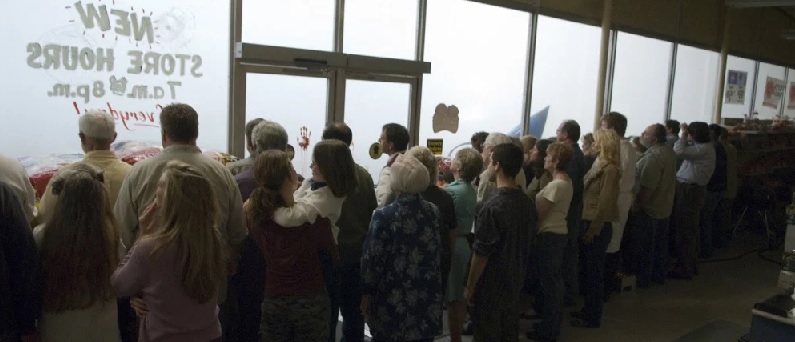
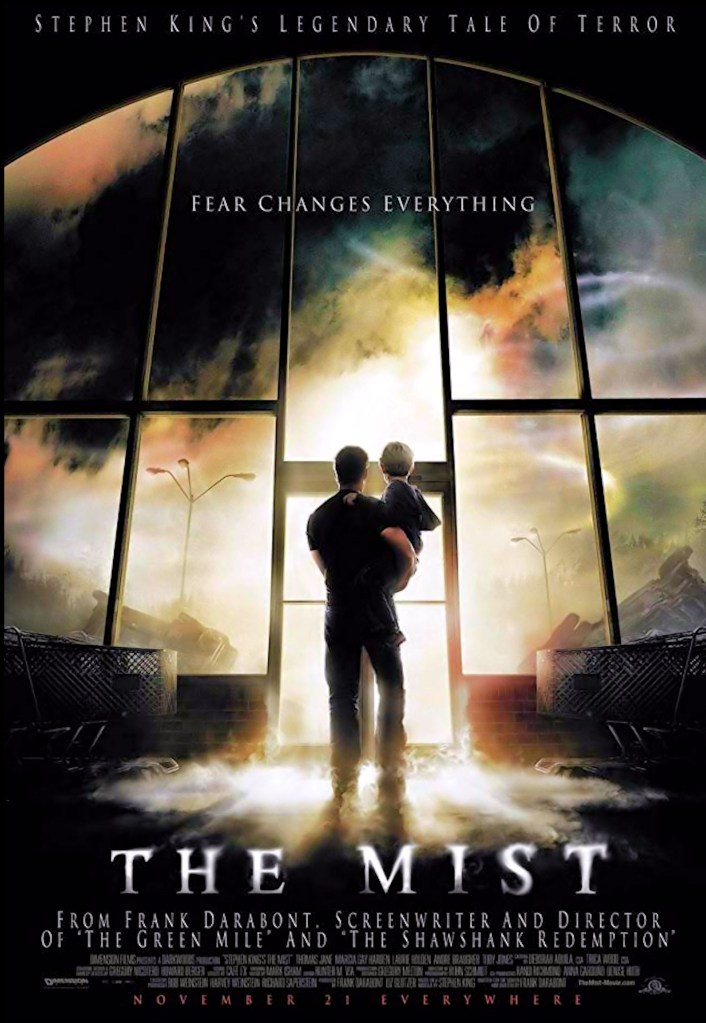
The Mist (2007)

Directed by Frank Darabont [Other horror films: Buried Alive (1990), Nightshift Collection (1994, segment ‘The Woman in the Room’)]

Very much a modern-day classic of the genre, The Mist is a rather solidly-made film with little in it too objectionable. You have a pretty good and, at times, claustrophobic story, a great cast with memorable characters, and enough monstery goodness to keep everyone happy, along with showing the dangers of religion, which is always a good touch.

There’s a lot of actors and actresses here I liked, such as William Sadler (The Shawshank Redemption), Marcia Gay Harden, Jeffrey DeMunn (Storm of the Century), Toby Jones (from an episode of Doctor Who and Berberian Sound Studio), Andre Braugher (of the emotional crime/fantasy flick Frequency from 2000), Thomas Jane, Frances Sternhagen, Robert C. Treveiler, and Buck Taylor.

Of these names, DeMunn, Jones, and Harden were perhaps the best in the film. DeMunn has always been a consistently fun actor, while Jones is another individual I like in pretty much anything I see him in. Harden isn’t a name I know, but she does a great job playing the dangerous Mrs. Carmody, a religious nutbag, in the film. I hated every second she was babbling on-screen, so her performance was on point.

The CGI was a little spotty at times, but honestly, it didn’t bother me here near as much as one might think. The special effects in general were pretty solid, and the creature design was great too (hard to choose a favorite, but the tall, tentacled one, along with the spiders, who dominated in the pharmacy scene, would be my top two picks).

A lot of the hate that I see coming to this film deals with the end, and I don’t personally get it. Is the end darker? Sure, but the situation was dark also, and there’s nothing about the conclusion that I dislike at all. I think it’s a perfectly acceptable ending, perfectly realistic, and I applaud a more mainstream horror film going out the way this one did.

Tackling the dangers of religion was a nice touch also. In a situation like this, people like Mrs. Carmody need to be shut up as soon as possible, or otherwise you have an illogical mob out for blood because they’ve been duped into believing in an unverifiable deity. Her character was utterly despicable, and I’m glad that Ollie took care of her the way he did. In many ways, what’s scarier in The Mist than the creatures is the religious mumbo-jumbo, which unfortunately isn’t something modern-day Americans are immune from.

The Mist pretty much hits the right spots. I’ve not read the novella this movie was based on, but for a Stephen King adaptation, The Mist is damn solid. Like I said, the cast is great, with a lot of familiar faces, the story is quite tense, and there’s a lot going for this flick.

9/10

This is one of the films discussed on Fight Evil’s podcast. If interested, listen to Chucky (@ChuckyFE) and I talk this one over below.

Sleepaway Camp (1983)

Directed by Robert Hiltzik [Other horror films: Return to Sleepaway Camp (2008)]

Of the classic slashers of the early 80’s, Sleepaway Camp has never been a favorite of mine. In my view, both Friday the 13th and The Burning are more enjoyable, and while this certainly stands out in some ways (including, of course, the finale), I still can’t bring myself to overly adore it.

Not that Sleepaway Camp is a bad movie. It’s, for lack of a better word, interesting, and some parts are really hard to take seriously, such as Desiree Gould’s Aunt Martha or Owen Hughes’ possibly pedophilic Artie (who had a solid almost-death scene, on a side-note). The tongue-in-cheek style isn’t too overbearing, but it certainly is noticeable at times (Mike Kellin as Mel is another somewhat over-the-top character), which gives the film a unique feeling, but doesn’t endear me too much to it.

As far as deaths go, though, the movie’s golden. The hair curler scene was solid, but even better (at least for me, being allergic) was the beehive in the bathroom, which was perhaps one of my favorite scenes in the movie. As aforementioned, Hughes’ character gets his head pushed into boiling water (think My Bloody Valentine, although arguably more violent), and that too stood out.

Acting’s a bit of a mixed bag (in part due to the fact that many of the extras were actually played by younger kids as opposed to established actors and actresses), but for a slasher, it’s not particularly noticeable. Felissa Rose was solid as Angela, and had that quiet, somewhat awkward teen style down. Jonathan Tiersten wasn’t great, but his exuberance was welcomed. Both Karen Fields and Katherine Kamhi (who popped up a year later in the forgotten slasher Silent Madness) did great as the bitchy girls you just want to see die, and Christopher Collet does okay as one of Angela’s anchors to happiness.

Overall, though, while the film is enjoyable enough, like I said, both Friday the 13th and The Burning come to mind first when thinking of solid camp-based slashers. Sleepaway Camp is certainly still worth a watch (if for anything, for the unexpected but solidly built-up conclusion), but I don’t know if it’s a movie that would otherwise blow you away. At least, it never did me.

7/10

This is one of the films discussed on Fight Evil’s podcast, so if you want to hear myself and Chucky (@ChuckyFE) talk about Sleepaway Camp, listen below.

End of the Line (2007)

Directed by Maurice Devereaux [Other horror films: Blood Symbol (1992), Lady of the Lake (1998), Maléfices (1998), Slashers (2001)]

I saw this flick many years ago when the Chiller channel was still a thing, and got a rather large kick out of it. Flash-forward five years, if not longer, and the film still stands out strong, despite the somewhat low-budget feel and unknown actors and actresses.

For what they were, most of these performances were decent. Main characters played by Ilona Elkin and Nicolas Wright do well together, and have decent chemistry. Emily Shelton was both cute and highly effective with weaponry, so she’s a keeper. Nina Fillis did well with her conflicted role, Neil Napier was decent, though I sort of wished he did a bit more, and Robin Wilcock was great as a scummy, religious, would-be rapist.

What really makes End of the Line transcend budgetary concerns is the frightening realism of the plot. Religion is still very much prevalent in the USA, and the idea of an insane religious cult with significant membership deciding to go on a killing spree to ‘save souls’ is not outside the realm of possibility. Religious beliefs on their own are questionable enough, but when religious beliefs hit this level of fundamentalism, it’s damned dangerous.

The cult, named Voice of Eternal Hope, is damn terrifying, as all these seemingly clean-cut men and women, not to mention indoctrinated children, brandish daggers in the shape of the cross in order to massacre those who don’t share the same faith (or even those in the same cult who’ve lost faith in the mission) mercilessly, singing hymns and smiling while doing so, are definitely creepy. Because of their insane bloodlust, there’s some decent gore in the film, and while that’s not really the focus or most interesting thing about End of the Line, it certainly does help on occasion.

Related, there are some very solid scares in the film. Some are are bit much, but I will admit that the first few scares in the film really got to me, and definitely helped set up a creepy and somewhat ominous feel to End of the Line.

Pretty much from beginning to end, the movie moves at an acceptably quick pace. There are some questionable dialogue pieces toward the beginning, and a few things aren’t necessarily made clear (especially regarding the reality of the ongoing situation, and whether or not the muffins alluded to were directly related to anything), but some of the confusion and uncertainty only makes sense in such a chaotic scenario.

End of the Line is a very acceptable movie, and there’s a lot going for it that allows it to stand out of the crowd of post-2005 low-budget horror flicks, many of which are decent, but a far larger number of which are around average to far below average. End of the Line isn’t by any means an amazing movie, but it does stand up to my rather appreciative memory of it, and I certainly recommend it to fans of slashers or films revolving around insane cults.

8/10

This is one of the films reviewed on Fight Evil’s podcast, so if interested, listen to Chucky (@ChuckyFE) and I discuss this one.

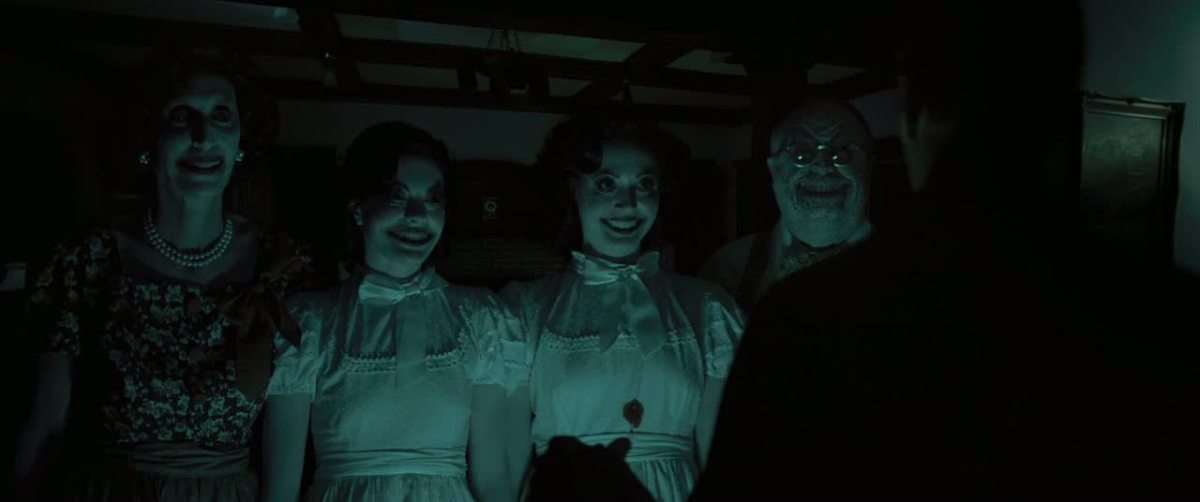
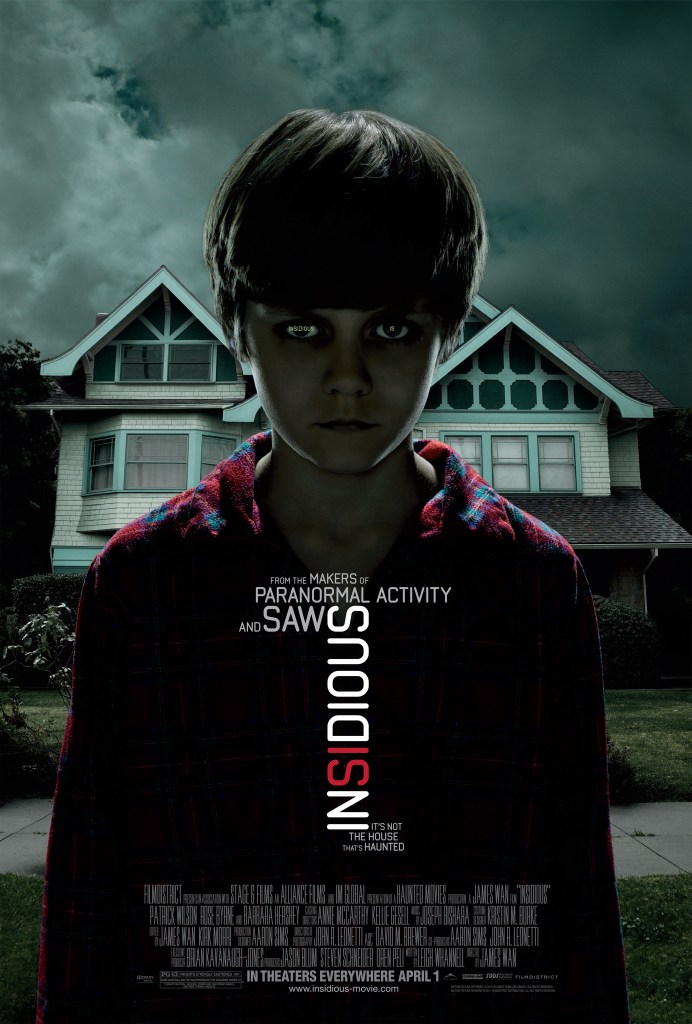
Insidious (2010)

Directed by James Wan [Other horror films: Stygian (2000), Saw (2004), Dead Silence (2007), The Conjuring (2013), Insidious: Chapter 2 (2013), The Conjuring 2 (2016), Malignant (2021)]

Well, at least there were some super scary jump scares, so I guess the movie’s not all a waste, right?

As it is, this is a film I had little interest in for quite some time, which is partially why it took nine years after it was released for me to actually watch it, and the sad thing is, even with that in mind, I still found the movie rather disappointing.

It’s not as though Insidious is an overly horrible film, though – I can certainly see why mainstream audiences might be enthralled by it. As for fans of the horror genre, though, I guess that I failed to see what’s so impressive about it. Jump scare after jump scare with ‘scary’ music to make the jump scares scarier and OMG another jump scare help me I’m scared

Obviously, this movie hit the right spots for some people, and I’ll certainly say that elements are pretty solid (such as the subtler approach to horror in a few scenes), and the plot itself is decently interesting. Even the end, when Patrick Wilson’s character goes into The Further, I was fine with it. I sort of liked the almost A Nightmare on Elm Street vibe of the Red-faced demon’s chamber, what with him sharpening his claws to Tiny Tim’s dulcet tones.

I saw (and I suspect it’s the same for most) the twist behind Wilson’s character a mile away, and the ending just didn’t impress me whatsoever. It felt so damn Hollywood, and didn’t do anything to at all to help end the film on a more positive note.

The principle cast is all fine. Patrick Wilson (of classics such as Hard Candy and The Conjuring) did pretty solidly, and everyone else, including Rose Byrne, Lin Shaye (who I amazingly still recognized from the 1984 aforementioned classic, A Nightmare on Elm Street, along with the more recent 2003 Dead End), and Barbara Hershey, did well also, though none of the three blew me away. Leigh Whannell (of Saw fame) was nice to see, but the brand of humor he and his cohort Angus Sampson brought to the film didn’t do it for me.

All-in-all, I’m not really surprised that Insidious didn’t impress me. In the past, I’ve heard it compared positively with Paranormal Activity, which is a film I utterly hated. I get how Insidious could impress some people, and obviously if it’s your type of film, by all means, enjoy it. I will admit it had potential with the story. But that ending was Hollywood tripe (and in fact, it’s not altogether removed from what you’d see on Syfy), and while I appreciate portions of the film, this isn’t one I plan on watching again for at least twenty years.

5.5/10

This is one of the films discussed on Fight Evil’s podcast. If interested in hearing Chucky (@ChuckyFE) and I talk this one over, look no further.

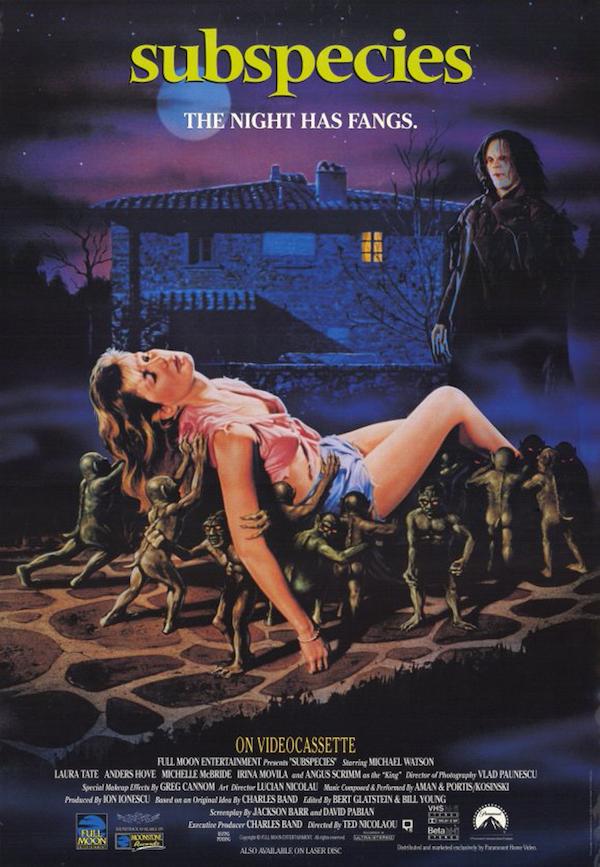
Subspecies (1991)

Directed by Ted Nicolaou [Other horror films: Ragewar (1984, segment ‘Desert Pursuit’), Savage Island (1985), TerrorVision (1986), Bad Channels (1992), Bloodstone: Subspecies II (1993), Bloodlust: Subspecies III (1994), Vampire Journals (1997), Subspecies: The Awakening (1998), Ragdoll (1999), Urban Evil (2000), The St. Francisville Experiment (2000), The Horrible Dr. Bones (2000), I, Vampire (2000, segments ‘Spawn of Hell’ & ‘Undead Evil’), Puppet Master vs Demonic Toys (2004), The Etruscan Mask (2007), DevilDolls (2012), Deadly Dolls: Deepest Cuts (2018), Vampire Slaughter: Eaten Alive (2018), Don’t Let Her In (2021)]

One of the first American films made in Romania, Subspecies has a very authentic feel to it, and while I don’t necessarily love the story, I do think that this movie has a lot going for it.

Full Moon Productions, who also brought to life the Puppet Master series, along with the enjoyable Castle Freak, did quite well with Subspecies, especially given the fact I’m not really much of a vampire fan. Here, the design of the antagonist Radu (played by Anders Hove) is pretty damn good, reminiscence of Orloc from Nosferatu with his abnormally long fingers. The vibe to the film is great, and any scene that took place in the Romanian woods, or near a castle, or even in the small village, had a lot of atmosphere.

Ivan J. Rado was perhaps my favorite performance from the film. He doesn’t shine from the beginning, but once things get going, he proves to be a very useful person to have on your side. Of course, Hove does fantastic as the villainous Radu, and has a very threatening feel to him. I wasn’t deeply enthralled with Michael Watson or his character, but it still worked out decently. Laura Mae Tate did great as the lead woman, though, and it’s a shame that she wasn’t really in many things aside from this (only thing of note was 1991’s Dead Space, a disappointing remake of 1982’s Forbidden World).

I don’t love a whole lot of vampire films, and I certainly wouldn’t say that I love Subspecies, but I did enjoy it a lot more this time around as opposed to when I first saw it. The story isn’t really what my go-to horror is, but given that the film carries with it such a solid vibe (filming in Romania really did a lot for this one, I think), I can forego any strong feelings of dislike concerning the story.

One small note – the stop-motion minions of Radu didn’t really look the best, and I don’t really think they were used enough to warrant their inclusion. Perhaps that changes as the series goes on (I’ve not seen, as of yet, any of the sequels), but here, they didn’t do that much, and looked somewhat goofy while not doing it.

There’s few vampire films that I really enjoy, but I do appreciate Subspecies, and I certainly think that the film isn’t anywhere near bad. It’s not my usual type of thing, but a lot is done right, and the vibe is to kill for. Definitely worth a look if you’re a fan of either vampires or other Full Moon Entertainment movies.

7.5/10

This was discussed on Fight Evil’s podcast. Check out Chucky (@ChuckyFE) and I discuss this if interested.