Non aprite quella porta 3 (1990)

Directed by Claudio Fragasso [Other horror films: Virus (1980), Rats – Notte di terrore (1984), Leviatán (1984), Zombi 3 (1988), After Death (Oltre la morte) (1989), La casa 5 (1990), Troll 2 (1990), Una notte da paura (2012), Italian horror stories (2021)] & Bruno Mattei [Other horror films: Casa privata per le SS (1977), KZ9 – Lager di sterminio (1977), Virus (1980), L’altro inferno (1981), Violenza in un carcere femminile (1982), Rats – Notte di terrore (1984), Zombi 3 (1988), Terminator II (1989), Occhi senza volto (1994), Cruel Jaws (1995), Snuff killer – La morte in diretta (2003), Mondo cannibale (2004), Nella terra dei cannibali (2004), La tomba (2006), L’isola dei morti viventi (2007), Zombi: La creazione (2007)]

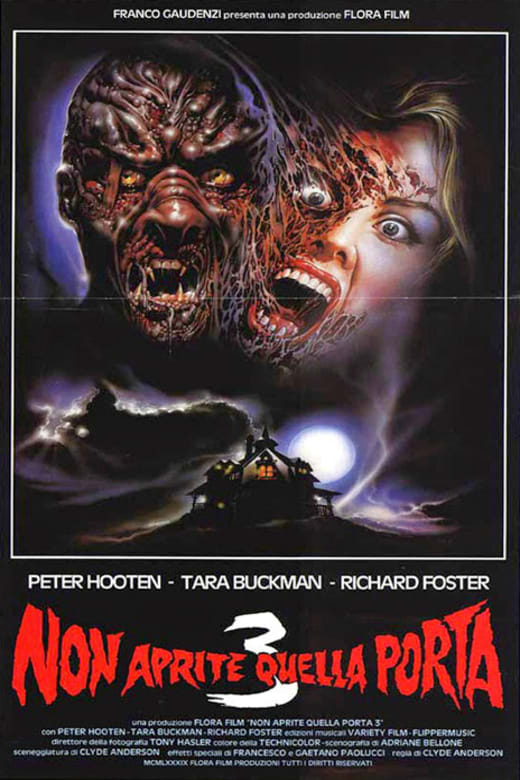
This Italian film, originally titled Non aprite quella porta 3, was an occasionally fun, occasionally dry movie, but I don’t think many people could say that it wasn’t entertaining.

Once the film moves away from the random kills and starts focusing on a single woman (Tara Buckman) and her ordeal of being abducted by a mysterious man (Peter Hooten), I think the movie gets in a bit of a lull, but it really doesn’t stay there long, and even though the portions I could have done without, it doesn’t stay too dull.

I’d say that no one really went out of there way to give a great performance, but most of the main actors and actresses were fine, such as Tara Buckman and Peter Hooten (despite his somewhat questionable character). Mel Davis (the police officer) and Lee Lively (the doctor) made for an interesting pair when they were on screen, and I appreciated it. I don’t think we learned enough about Richard Foster’s character to really make a judgment one way or the other.

Being a slasher fan, I did enjoy most of the kills here. None of them are really amazing (most of them end with the killer ramming his razor-sharp claw-glove through women’s stomachs), but that opening scene had some quality suspense and even a painful-looking cut. As for the end – well, I appreciate them going outside the box a little (because if things had ended how it was setting up to, it would have been quite the lack-luster conclusion), but I’m not entirely buying it either.

The masked killer in Night Killer looks silly, but it does possess it’s hokey charm, and certainly if he’s raping and killing women, the silliness of his mask sort of declines over time. I don’t think this Italian movie was necessary, and I wish it felt more like a giallo than a third-rate slasher, but for the early 90’s, in a country where soon horror would be hard to come by, I can appreciate the film. I just don’t love it.

6.5/10

This is one of the films covered on Fight Evil’s podcast. If you’re interested in hearing what Chucky (@ChuckyFE) and I think about this Italian film, check it out, brahs.
Malibu Shark Attack (2009)

Directed by David Lister [Other horror films: N/A]

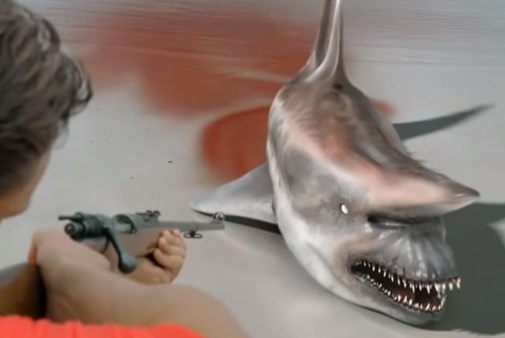
So I’m not going to claim that Malibu Shark Attack is a good movie, but I will say that, in some ways, it’s a refreshing one, because while it’s not a serious film at all times, this is before Syfy got stupid with their killer shark movies, and this one almost feels like an okay attempt at the sub-genre.

I enjoyed how the tsunami tied into the movie, because seeing those levels of destruction was pretty impressive, and what helped that were the newscasts seen throughout the film. What I liked about these newscasts was that they were appropriately somber and the exact type of thing you’d expect to see in a real situation like this, and it also helped that while the newscasts extensively followed the flooding, sharks never came up, which made it significantly more serious than any of the later shark movies (Sharknado and 2-Headed Shark Attack, I’m looking at you).

Most of the main cast here is fine. I mean, they’re generic, but they get the job done. Admittedly I couldn’t have cared less about Warren Christie’s character (a name you might recognize from Apollo 18), and there were a few others (Jeff Gannon, Sonya Salomaa, and Nicholas Cooper) that left no impression, but everyone else was fine.

Remi Broadway played a character not too different from Christie’s, but I liked Broadway’s story more, and, oddly enough, his budding romance with the irresponsible airhead played by Chelan Simmons (who, fun fact, played that little girl who was killed in the opening scene of the 1990 mini-series It). Simmons was also rather cute here, though for most of the film, her personality was atrocious. Peta Wilson didn’t have an atrocious personality, though – she was a strong character and perhaps one of the best in the movie, so kudos to her.

Now, sure, the special effects of the goblin sharks are horrible, but they’re not as obnoxiously horrible as later Syfy movies, so in a way, it gives this movie a bit of a pass on that. There was a pretty painful scene of a character getting their leg stitched up without anesthetics, and that cut did look gnarly, so that was fun. Overall, nothing in the special effects department ruined the film.

I’ve seen Malibu Shark Attack before, and when I came to watch it again, I wasn’t dreading it like I do some rewatches, and that’s partially because I had an okay time with it the first time around, and the same can be said today. It’s not a great shark movie, but it’s honestly, at least in my opinion, not terrible.

6/10

The Night Before Halloween (2016)

Directed by Sheldon Wilson [Other horror films: Shallow Ground (2004), Kaw (2007), Screamers: The Hunting (2009), Carny (2009), Mothman (2010), Red: Werewolf Hunter (2010), Killer Mountain (2011), Scarecrow (2013), Shark Killer (2015), The Unspoken (2015), The Hollow (2015), Neverknock (2017), Stickman (2017), Dead in the Water (2018)]

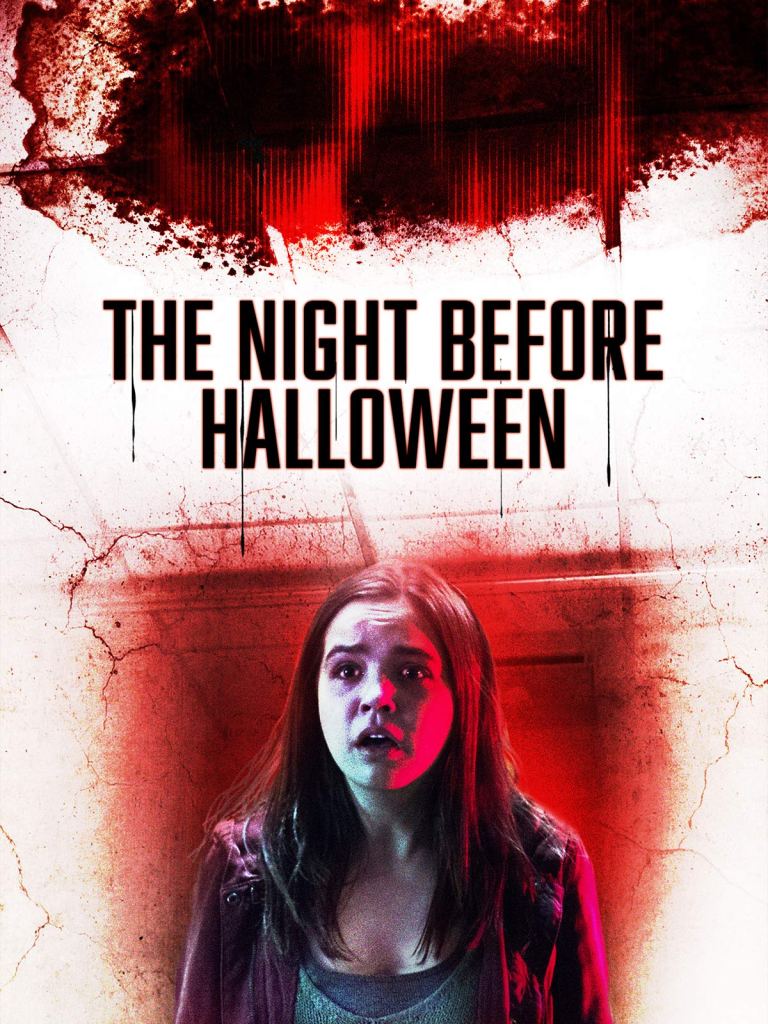
In some ways, this Syfy original feels likes a mixture between Sorority Row/Tamara and It Follows, with a group of friends covering up an accidental death and contending with some evil entity or something (and I do mean ‘or something’ – we never learn anything about this entity aside from the fact it takes the form of CGI flies). It’s not the worst Syfy original I’ve seen in my many years, but it’s far from the best.

One of the problems is a similar problem to what Sorority Row had – at the beginning of the film, five friends decide to cover up the circumstances of an accident (that in reality, only three of the friends were involved with), and they have the exact same conversation they had in Tamara and Sorority Row. “Oh, this will ruin our futures,” and “Fine, you can call the police if you want to spend the next 20 years in prison,” that tripe. I’m not saying this isn’t theoretically realistic, but I am saying that as soon as that deal is made, my sympathy for any of the characters, even the hesitant ones, is thrown out the window entirely.

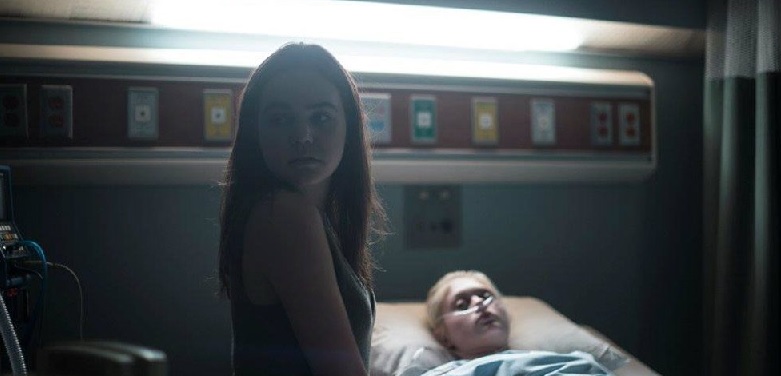
So when people start dying, be it the bitchy girl (Kiana Madeira) or the ‘nice girl’ (Bailee Madison), I don’t care, because these people are all horrible and whether they die or not is the least of my concerns. 

It doesn’t help that the entity isn’t made clear – apparently it can use cell phones (and it uses smileys when it texts, so yay for technological demons, I guess) – but we never learn anything about it’s origins, and we don’t even know if “the curse” that gets passed onto them is legit, because it seems that whether or not you complete it’s specifications (if those even are it’s specifications and not something previously -cursed people thought would help), you can be killed by it anyway.

None of this is the fault of the cast, who are all reasonably fine playing hateable characters. Kiana Maderia later showed up in one of Syfy’s better original movies, being Neverknock. Bailee Madison was sort of cute, but also played a horrible person. Anthony Lemke (American Psycho, of all places) played an almost-interesting but ultimately generic cop, so no award there.

When everything’s said-and-done, there are worse Syfy original movies out there (look at 2018’s Karma, which even had a similar idea to this), but there are plenty of better, more memorable films, and I’d probably say the only thing I’ll remember about this one was the okay twist. Otherwise, it’s just not a good movie.

5.5/10

Faust: Eine deutsche Volkssage (1926)

Directed by F.W. Murnau [Other horror films: Satanas (1920), Der Bucklige und die Tänzerin (1920), Der Januskopf (1920), Schloß Vogelöd (1921) Nosferatu, eine Symphonie des Grauens (1922)]

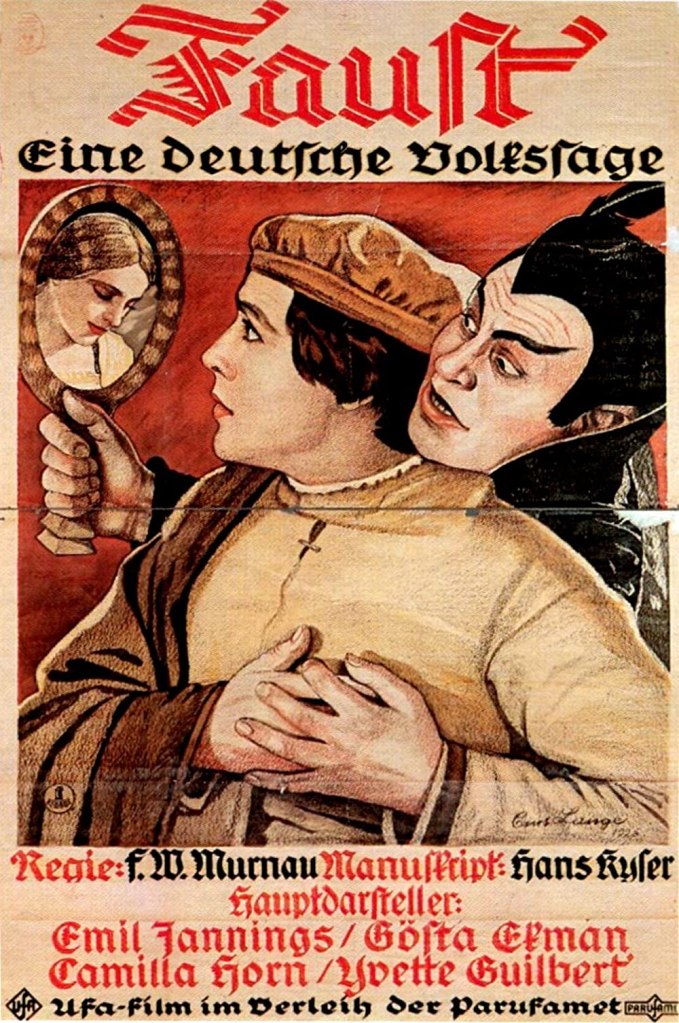
Obviously much more a drama than a horror, Faust: Eine deutsche Volkssage still has enough dark elements in it for it to clearly count as horror, which I’m grateful for, because otherwise, I’d probably never have seen this beautiful-looking movie.

The story here is one, of course, of a morality tale, in which Mephisto makes a wager with an angel that he can corrupt Faust, and the angel’s all like “Brah, men are too good to corrupt, I take your wager and if I lose, the world is yours.” And of course, through the tragedy and misery, the grace of God reigns supreme, and because of love, Mephisto’s wager fails.

Now, I can do without all of the religious bullshit, but I admit that I love how some movies back then had the cojones to work within such a strongly fantastical story. Morality tales were the basis of horror films (just look at 1913’s Der Student von Prag), and stories that took place primarily in Hell have too been done (Italy’s 1925 Maciste all’inferno), so a movie like this that deals with a theological wager between two high entities is certainly welcomed. And you know that, if a newer movie did this, it would just look ridiculous, but here, it doesn’t look too shabby at all.

The pleasure of watching silent films is seeing exactly how much they were able to do with the limitations they had, and there are plenty of scenes in this film that really look great, and in fact far more impressive than modern-day special effects. While I do wish the latter half of the story had had more carnage in it (aside from that provided by the religious bigots who were going to burn a woman to death for killing her child, but the only reason that child died was because the religious bigots considered the woman a ‘whore’ and thus she had no support system – just another reason to stand against religious beliefs, I feel), I cannot deny that the special effects here all look stupendous.

Emil Jannings (Die Augen der Mumie Ma and Das Wachsfigurenkabinett) was solid as Mephisto, though there were a few light-hearted scenes surrounding him and a woman who was chasing after him (played by Yvette Guilbert) that I could have done without. As Faust, Gösta Ekman had an expressive and expansive range, and came across very impressively. And as for Camilla Horn – well, let me put it this way: I’m not usually one to find women from older movies attractive, but her – hubba hubba. I mean, she was one smokin’ piece, as the kids say, and her performance too, once the story turned more tragic, was certainly admirable.

Valentin, played by William Dieterle (the aforementioned Das Washsfigurenkabinett being his only other venture into horror) was a solid character, big and strong, until he went after his sister’s lover (after saying, basically, that she should put herself out more) and then calling her a ‘whore’ and also calling for her death. So basically, fuck this guy.

So with a fine cast, amazing special effects, and an interesting set-up, Faust is definitely one of those German classics that people like me sometimes like to bring up. It’s a damn fine piece of cinema, and while it’s not a personal favorite from the silent era for me personally, it’s still very much worth seeing.

7.5/10

Doctor X (1932)

Directed by Michael Curtiz [Other horror films: Alraune (1919), The Mad Genius (1931), Mystery of the Wax Museum (1933), The Walking Dead (1936)]

This has long been a movie I’ve found interesting. The story in Doctor X itself isn’t amazingly before it’s time (though references to cannibalism are welcomed), but the fact that the movie’s in color – in 1932 – is very much a stand-out. I don’t think it necessarily needed to be in color – it’s not like it made a big difference in any way – but the film is probably easier to get into for those who shy away from older movies, and I’ve always found it a hoot.

Certainly the film is far from perfect, but I appreciate how the story focuses on a very human killer as opposed to a vampire, a monster made up from dead body parts, or a mummy. We have, like any quality horror movie from the golden years, a plethora of potential suspects, and of course, a wise-cracking newsman out to get a story.

Lee Tracy isn’t a big name in the genre, and as far as I’m aware, this was his only role in a horror film, which is a shame, as he does pretty decent here. Maybe he comes across a bit generically, and many people in the industry would have been able to take on this same role without problem, but Tracy does well nonetheless.

Lionel Atwill is no stranger to the genre, appearing in films such as The Vampire Bat, Murders in the Zoo, Son of Frankenstein, Secret of the Blue Room, Mystery of the Wax Museum, and Mark of the Vampire, among others, and does great here as one of the lead scientists. He’s just suspicious enough at times to make for a good suspect, and it’s nice seeing an old hand wear a new (and colored) glove.

Elsewise, we have Fay Wray (King Kong, The Vampire Bat, Mystery of the Wax Museum, and Black Moon), who plays the very attractive daughter of Atwill, and has some rather amusing lines as well, matching Tracy with ease. Preston Foster was the only other one who really stood out, and that’s more due to the fact he looked like a good lead man than anything else.

I always loved the opening atmosphere of Doctor X, taking place on the misty docks next to a morgue with an ambulance coming in. It’s a solid opening, and I think the story is pretty entertaining, especially once they move to the admittedly cliché castle. Still, it’s overall a decent movie.

7.5/10

The Beast with Five Fingers (1946)

Directed by Robert Florey [Other horror films: Murders in the Rue Morgue (1932)]

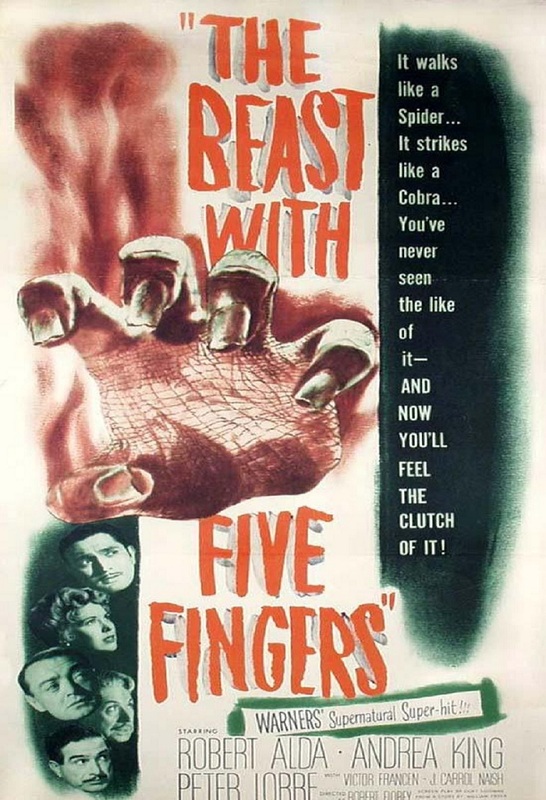
It’s been some years since I’ve last seen this one, and I have to admit that I didn’t find it as enjoyable this time around as I did the first time I saw it. It’s not that The Beast with Five Fingers is a bad movie, because it certainly has it’s charm, but I do think an argument could be made that it moderately overstays it’s welcome, and that goofy conclusion didn’t help much.

Of course, it’s great to see Peter Lorre focused on so heavily here. He’s not the main character, no, but he does have an important role, and given how fantastic he was in the eleven-year earlier Mad Love, it’s nice to see him being thrown a somewhat similar role. Robert Alda (who later starred in a forgettable horror film ironically titled The Devil’s Hand) was a decent lead, and with J. Carroll Naish (The Monster Maker), they were an interesting pair trying to figure out what was going on.

Even so, as fun as some of the movie was, it definitely felt like it was dragging past the half-way mark, and again, the final few moments throws in some goofy things that aren’t by any means deal-breakers, but at the same time, I wish they had at least kept it down to one goofy ending scene, as opposed to two.

Still, I’ll give this credit for it’s original idea (especially for a decade like the 1940’s) that predates The Hand by 35 years and Idle Hands by 53 years (these are the only three killer hand movies that I can think of, so take that as you will). I just wish it had cut a few things out. The Beast with Five Fingers isn’t a bad movie, but I do think it’s a bit below average, which is definitely not my view on it when I last saw it.

6/10

Sora no daikaijû Radon (1956)

Directed by Ishirô Honda [Other horror films: Gojira (1954), Gojira no gyakushû (1955), Jû jin yuki otoko (1955), Godzilla: King of the Monsters! (1956), Godzilla (1957), Tokyo 1960 (1957), Bijo to ekitai ningen (1958), Daikaijû Baran (1958), Half Human: The Story of the Abominable Snowman (1958), Gigantis: The Fire Monster (1959), Mosura (1961), Varan the Unbelievable (1962), King Kong vs. Godzilla (1963), Matango (1963), Mosura tai Gojira (1964), Uchû daikaijû Dogora (1964), War-Gods of the Deep (1965), Furankenshutain tai chitei kaijû Baragon (1965), Furankenshutain no kaijû: Sanda tai Gaira (1966), Gezora, Ganime, Kameba: Kessen! Nankai no daikaijû (1970), Gojira tai Hedora (1971), Godzilla (1977), Godzilla 1985 (1985), Gojira vs. Desutoroiâ (1995), Gojira tai Megagirasu: Jî shômetsu sakusen (2000)]

Released beautifully in color, this Japanese monster movie, a follow-up of sorts to the Godzilla movies, is a pretty fun film, and while, much like the recently-seen The Beast from 20,000 Fathoms, it isn’t my normal cup of tea, I can indulge in a sip or two.

What makes Rodan work is how the story unravels – it starts out with mysterious murders, and then it’s discovered those deaths are caused by a creature long-thought dead. And then we find out there are more of these creatures, and then there’s a giant egg, and then there’s two Rodans, so it’s all fun.

The design for Rodan isn’t the best, and the effects are questionable, especially since you can clearly scene the strings holding it up in multiple scenes, but I thought they were fun anyway. The fact that they flew at supersonic speed (and certainly had the sound effects to back that up) and caused utter destruction with their sound-waves was cool. One of the Rodans (or Rodani) just flew above a jeep, and utterly fucked it up, so when it happens to whole parts of the city, it’s hella fun.

I can’t say there’s much in the way of memorable characters here aside from maybe the lead, Kenji Sahara, and even he wasn’t amazing, but he did have cool hair. Really, in a movie like this, with so many moving parts, it’s not easy to have a plethora of important and interesting characters, so the fact that Sahara was about the only one that stuck out to me isn’t that much a deterrent.

Toho monster movies aren’t something I’ve a lot of experience with, but I’ve seen Rodan before, and it’s enough fun that I’m sure I’ll see it again. I don’t think it’s a special movie (though the color is smashing), but it is a decent one.

7/10

Dementia 13 (1963)

Directed by Francis Ford Coppola [Other horror films: The Terror (1963), Dracula (1992), Supernova (2000), Twixt (2011)]

This proto-slasher has always been interesting to me. I’ve never found it a great movie, and rarely have I found it good, but I do appreciate the combination of an old dark house mystery style of horror from the 1920’s and 1930’s with the emerging slasher (and arguably giallo) stories of the 1960’s. Dementia 13 isn’t a good movie, but I do think it’s one that’s certainly worth experiencing.

Obviously this isn’t H.G. Lewis – there’s no excessive gore here, and in fact, barely any gore at all. It’s also black-and-white, and focuses more on the atmosphere than it really does the kills. That said, we do get some okay kills here (by an unseen assailant with an ax), and some skin from Luana Anders (no nudity, of course, but solid, smooth skin), and the mystery is almost fun, so that helps also.

William Campbell and Bart Patton were decent as brothers, but I sort of wish we saw more of them actually acting like brothers as opposed to feeling like two people who live in the same house without ever seeing each other. Though now that I think about it, the house is certainly large enough to warrant that excuse. Either way, both were decent, but I don’t think either one was all that amazing.

Neither Mary Mitchel or Luana Anders were really all that special, either – Anders might get higher accolades, though, as her character actually did something. Patrick Magee (who’s been in quite a few horror films, Tales from the Crypt being the role I’m most familiar with) was okay, but he felt a bit over-the-top here, and almost intentionally sinister (and whether or not that’s a red herring, well, you’ll see).

It’s the atmosphere of this one I’ve always liked, and while the mystery is okay, I don’t know if the ending is entirely satisfying, and I wish maybe a few more twists were thrown in. It’s not too hard to figure out the one behind these things, and I wish it were more of a challenge. Even so, Dementia 13 is a proto-slasher that is at least worth one look, if for no other reason, to see how far slashers have come in the years following Psycho and this one.

6.5/10

It’s Alive (1974)

Directed by Larry Cohen [Other horror films: God Told Me To (1976), It Lives Again (1978), Full Moon High (1981), Q (1982), Special Effects (1984), The Stuff (1985), It’s Alive III: Island of the Alive (1987), A Return to Salem’s Lot (1987), Wicked Stepmother (1989), The Ambulance (1990)]

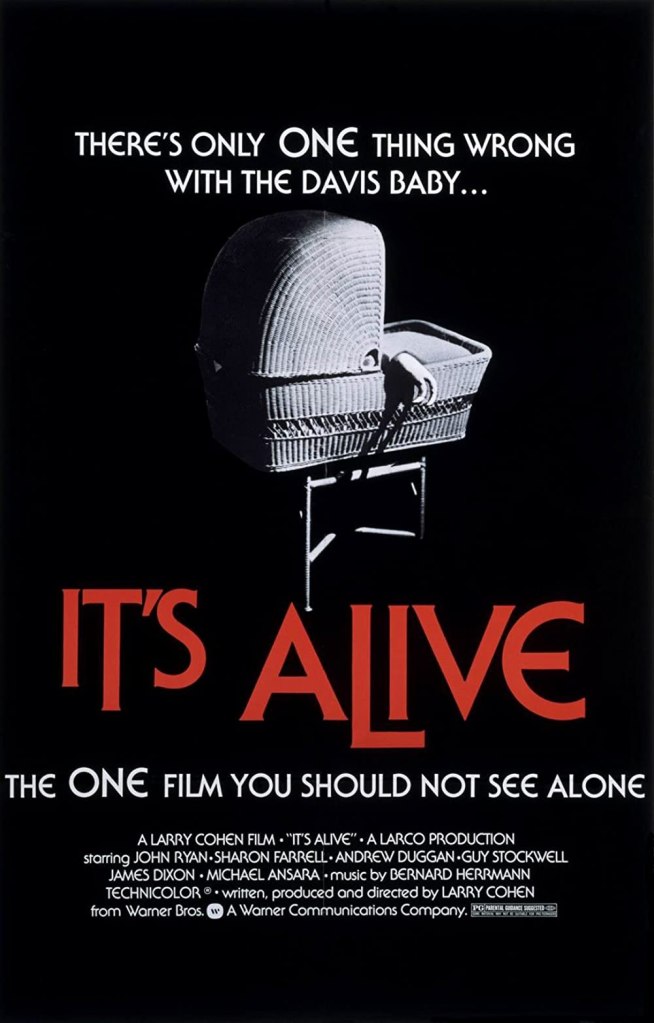
It’s Alive suffers from one of the most common problems that haunts 70’s movies, being that it’s dry. It doesn’t help that, like some of Cohen’s other movies (The Stuff and God Told Me To) it has a wider scope, so we’re dealing with more than just the husband and wife of a deadly and murderous mutated child. Because of that, a lot of the movie seems to drag, and doesn’t seem able to ever pull itself out of that.

I certainly enjoy aspects of the film fine, which is the same that I can say for most movies from the 1970’s – I like the vibes they had, and it always interests me to see how far we’ve come in terms of technology. During a scene, the main guy reaches into a refrigerator, and then once he closes the door, there’s what looks like another refrigerator right next to it (spoilers: it’s a freezer). That’s a small thing, and of no consequence whatsoever to the movie, but I like little things like that.

What I didn’t care for was much of It’s Alive, though. It could have ended around an hour and 12 minutes, and I think that would have been welcomed, but it keeps going for another twenty minutes, and I just don’t know why. It’s not like there’s that much here that’s overly interesting anyway, and like I said, it just felt like it was dragging for most of the film.

Never having seen this, I was sort of expecting something like I Don’t Want to Be Born, but you know, as bad a rep as that film has, I thought it was both a lot more fun and a lot more memorable than this one. Here, you have no performances at all that stand out, almost no scenes that stand out, and just an overall lack of interesting content. Maybe I’m missing something, but for the time being, this one just failed hard.

5/10

From Beyond (1986)

Directed by Stuart Gordon [Other horror films: Re-Animator (1985), Dolls (1986), Daughter of Darkness (1990), The Pit and the Pendulum (1991), Castle Freak (1995), Dagon (2001), Bunker of Blood: Chapter 5: Psycho Sideshow: Demon Freaks (2018)]

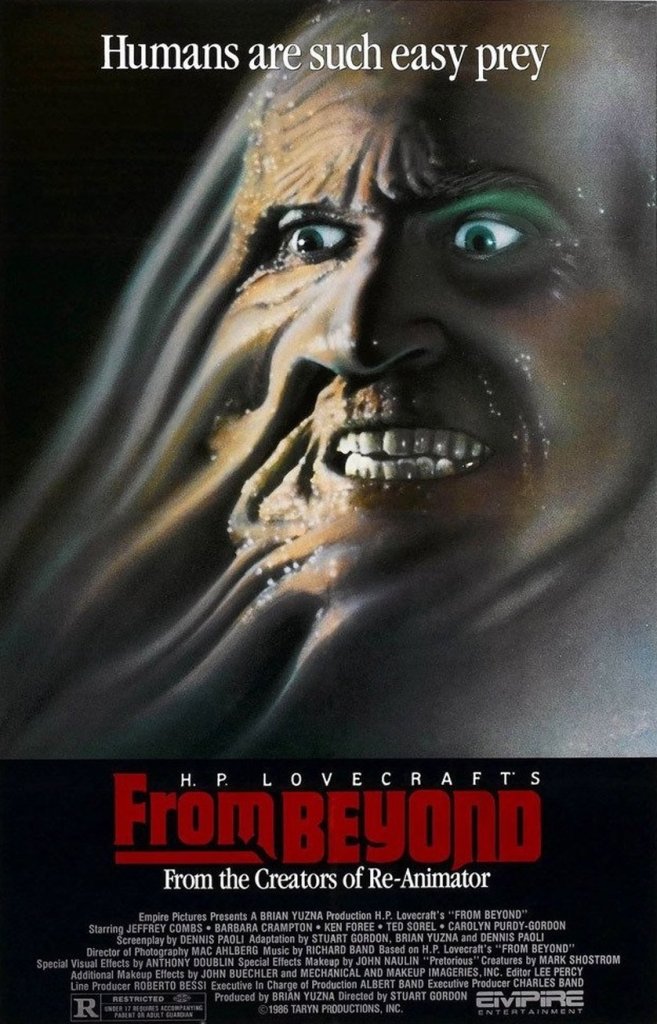
I have to admit that when I saw this film for the first time, it didn’t click. If you were to ask me what I didn’t like about it, I don’t know entirely if I would be able to give a great answer. The truth is I’m pretty sure I watched it on the same day I watch seven or eight other classic horror films, and this just got lost in the sauce, as Howie Hawkins (the presidential candidate I voted for in 2020) would often say.

So seeing it again was a nice surprise. I still can’t admit to loving it, because I don’t. I think the atmosphere is great, the main performances are solid, even the story is decently interesting (with elements of both Videodrome and a sprinkle of Prince of Darkness thrown in), but I lose interest in the last thirty minutes or so (once they leave the house and hit the mental institution). It’s not a bad direction, but I didn’t care much for it.

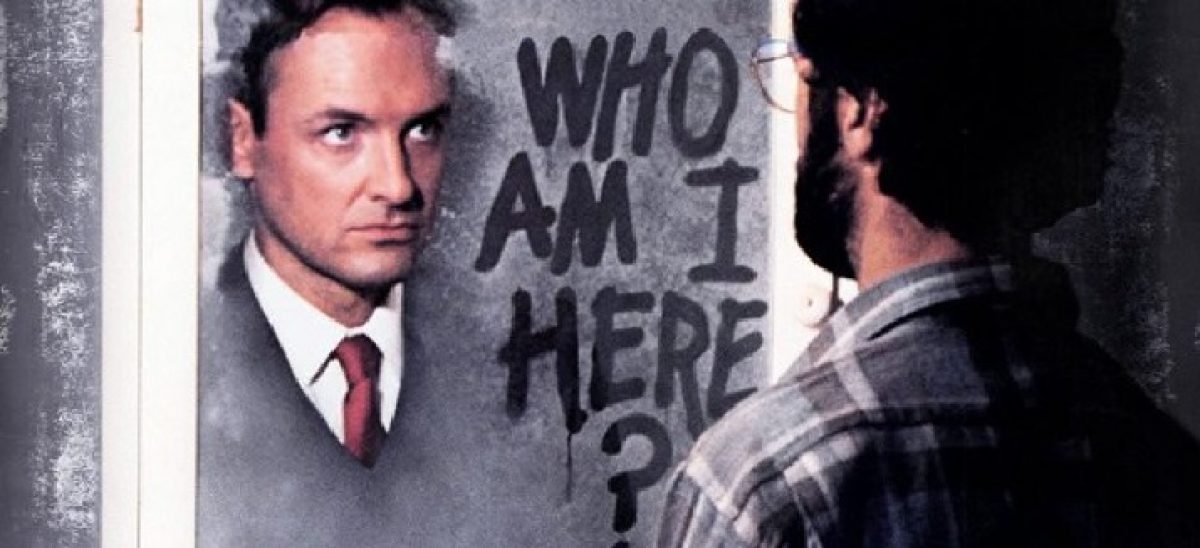
Of course, Jeffrey Combs (who I recently saw in The Attic Expeditions, and is most well-known for Re-Animator and voicing the Question in Justice League Unlimited) is a treat to see here, and there’s a  decent amount of sympathy felt for his character despite not really knowing much about him. Barbara Crampton (Re-Animator and Chopping Mall) was attractive here, especially in her glasses. Ken Foree (who, in fact, I forgot was in this – I loved him in Dawn of the Dead) was a lot of fun too.

Even with the strong cast and amazing special effects, the atmosphere doesn’t carry over to the mental institution, at least in my view. It’s still a good movie, but I’m rating it around average, and can only hope that I eventually grow to enjoy it as much as many other seem to.

7/10