Zombies of Mora Tau (1957)

Directed by Edward L. Cahn [Other horror films: Creature with the Atom Brain (1955), The She-Creature (1956), Voodoo Woman (1957), Invasion of the Saucer Men (1957), It! The Terror from Beyond Space (1958), Curse of the Faceless Man (1958), The Four Skulls of Jonathan Drake (1959), Invisible Invaders (1959), Beauty and the Beast (1962)]

I’ve seen this late 50’s zombie movie once before, and while I remember enjoying it a bit more that first time around, I still think it’s a decent little movie. Nothing stellar, and nothing to upend what we all consider the pre-Night of the Living Dead zombie classics, but a perfectly fine film.

Zombies of Mora Tau follows a group of people going after diamonds, but these diamonds have some undead protectors. Naturally, many in this group are largely skeptical, and if there’s one thing in the movie that bothered me, it’s how long many of these people just disbelieved the claims of those who’ve lived in this area for years out of hand, even after experiencing astonishing events, such as a man being stabbed without showing any pain.

That type of disbelief isn’t uncommon in horror, but after a few experiences, you’d think that something would give. Here, though, even the granddaughter (or great-granddaughter, I forget) of an older woman who’s known of zombies most of her life doesn’t seem to take her great-grandmother’s words seriously until the very end. It’s slightly off-putting.

The aquatic zombies here (for the diamonds are on a coast in a shipwreck) are fun, though I have to say that none of the underwater scenes really thrilled me. To be sure, few of the scenes that took place on land thrilled me either, but we’re talking about a pretty old zombie movie, and one that doesn’t exactly move with a brisk pace.

Something also has to be said about how weak the zombies were. Sure, if they get their hands on you, you might be screwed (though if you’re underwater, evidence shows that you’ll survive 90% of the time), but all you need is an open flame or a flare gun, and you’ll be golden. These mothas move slowly, and they’re not exactly what I would label as threatening.

Both Gregg Palmer (The Creature Walks Among Us) and Autumn Russell were fine, if not generic. Speaking of generic, Allison Hayes (The Unearthly, The Hypnotic Eye, The Disembodied, The Undead) had that annoying trait of fainting whenever she was scared. I don’t blame Hayes’ for it, and she did get one of my favorite lines in the film (“You’re already dead, you just don’t have the decency to lie down”), but neither of the women in this movie have the chance to give it their all.

Well, young women, that is, because I really liked Marjorie Eaton (Monstrosity, The Attic, Night Tide) here. She was a feisty woman, and pretty much in the right about everything. I would have liked to see her have a bit more to do, but in a way, she’s like the oracle who warns people off a path, only to know that they’ll do exactly what she says they shouldn’t. Morris Ankrum (Half Human: The Story of the Abominable Snowman, Giant from the Unknown, Beginning of the End, Earth vs. the Flying Saucers, The Giant Claw) and Joel Ashley both appeared, Ankrum being the more interesting of the two, but neither one really stood out that well to me.

I mean, Zombies of Mora Tau can be a bit sluggish, and I don’t think any part of the film comes close to being as enchanting as portions of I Walked with a Zombie did, but it’s not a bad way to spend an hour and ten minutes. It’s a digestible zombie movie that follows the expected path, and if you want a taste of some pre-Romero zombies, giving this a go isn’t likely to ruin your life.

7/10
Weekend of Fear (1966)

Directed by Joe Danford [Other horror films: N/A]

Okay, this is an interesting one.

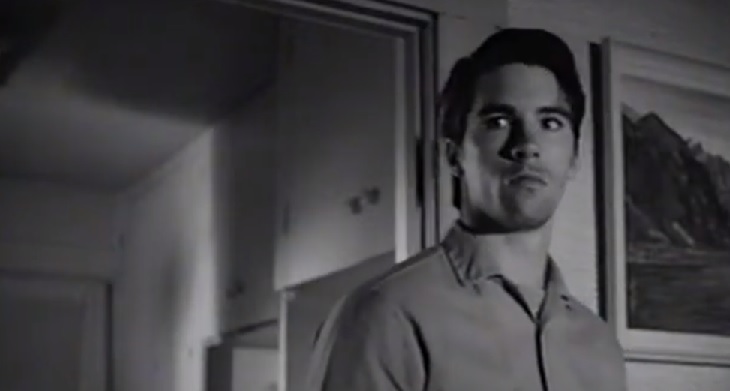
Weekend of Fear has a pretty generic plot – a young woman (Mikki Malone), following an argument with her fiancé (Tory Alburn), finds that she’s being stalked by a mysterious man (Kenneth Washman). And that’s it – it’s a short film, running at about 65 minutes, and much of it is Malone’s character trying to hide from Washman’s, all the while wondering what the threatening man wants.

Based on that plot, Weekend of Fear doesn’t have much going for it, that is, unless it was overly suspenseful, and I hate to say it wasn’t. It’s the execution of that plot that makes the movie stand out more. It doesn’t make the movie good – it just makes it noteworthy.

What’s also noteworthy is the fact that this was a lost film for a long time. I watched what seemed to be a VHS rip on YouTube, so how this was released on VHS at one point, yet was lost for decades, is beyond me, but there you go. So lost was this film that, even now, after it’s been unearthed since June 11th, 2021 (the date of said YouTube video), it has only 22 votes on IMDb, and watched by only 19 members of Letterboxd.

So we have a previously-lost black-and-white film with a somewhat basic plot, and the way they chose to do the dialogue gives it an extra notable feature. See, most of the dialogue here is first-person narration, being the thoughts of the main character (Mikki Malone). A couple of other characters have their thoughts examined, but it’s 98% Malone’s.

What dialogue isn’t first-person thoughts is obviously dubbed afterwards, and it’s always awkwardly done. There’s a “conversation” at the end of the film that doesn’t feel remotely like a real conversation because of this.

It’s an odd, clearly lower-budget film. I appreciate that it has a regional feel, and seems to have been filmed in California, but that doesn’t make the film itself any better. Even at 65 minutes, it felt like it was dragging, and the suspense definitely felt muted, partially, perhaps, because of the way they went with audio (not that there was much in the way of dialogue, and without first-person narration, this could have been a silent film).

Even another thing worth noting – while I do think this can classify as a horror film, it’s also very much a psychological thriller. Technically, I know there are people out there who don’t think Psycho is horror, which I think is a stretch, but this movie is one that I could see that case being made with better justification. I think some of the sequence with the woman hiding from the man, and portions mostly in the latter half of the film, can move the needle a bit toward horror, but as always, it’s up to each individual viewers (and for what it’s worth, IMDb currently labels this ‘horror,’ whereas Letterboxd labels it ‘thriller/mystery.’

And speaking of which, the mystery behind why this man is stalking the main character is laughably ridiculous. We find out toward the end of the film exactly what’s going on in a lengthy monologue by a character we didn’t even know up to that point, which is always a good sign. It just felt goofy, and even goofier is that final sequence, and a quick camera zoom and freeze-frame to play us out.

Mikki Malone (in her sole role before a string of pornos in the 1990s) does okay here. She certainly looks frightened at times. Other times, though, she looks bored, and if I had to read the script for this one multiple times, I can understand that. I’ll give it to Kenneth Washman that he looks threatening with a knife. Ruth Trent did add some amusement toward the end, but that’s not to say it was a great performance.

Weekend of Fear is a fascinating little movie, but I don’t think it’s a good one. To be fair to the film, I don’t hold it against them that they didn’t want to film a traditional people-talking-to-each-other movie, and veered in another direction, but it’s also fair to say that I don’t know if that was a stylistic choice or a choice made for them by some sort of budgetary constraints.

It doesn’t really matter – Weekend of Fear, even at it’s short runtime, just drags too much. It’s not exactly terrible, but I think calling it an underwhelming experience is more than fair.

5.5/10

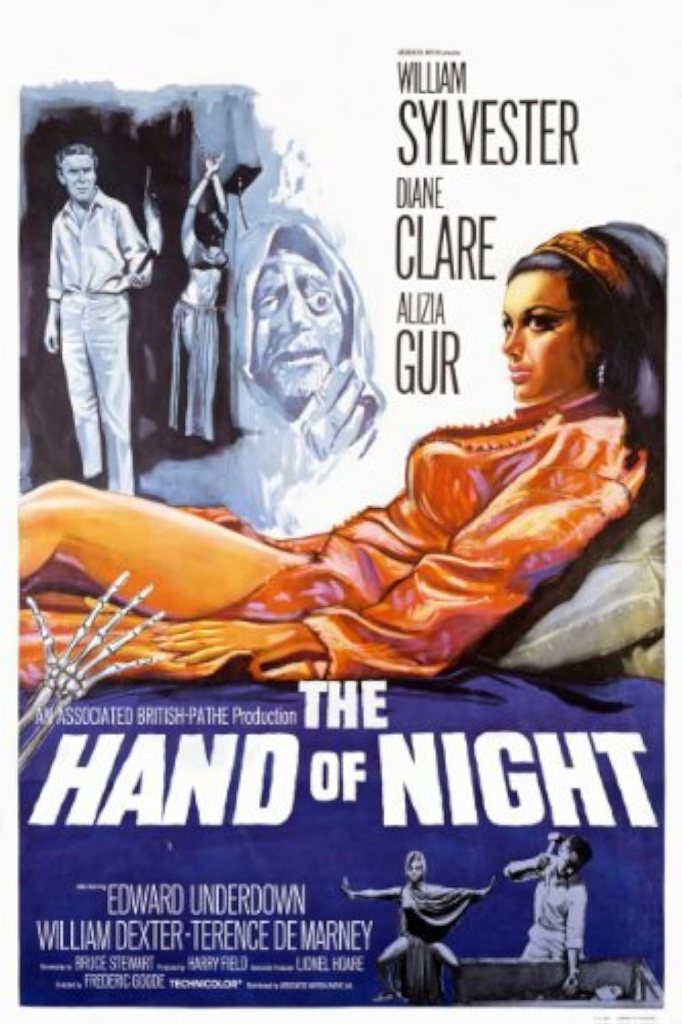
The Hand of Night (1968)

Directed by Frederic Goode [Other horror films: N/A]

I have to admit that I didn’t expect to care much for this one, but came out pleasantly surprised. While it’s not a great film, and perhaps ultimately just around average, I do think The Hand of Night is a decent little piece of forgotten cinema.

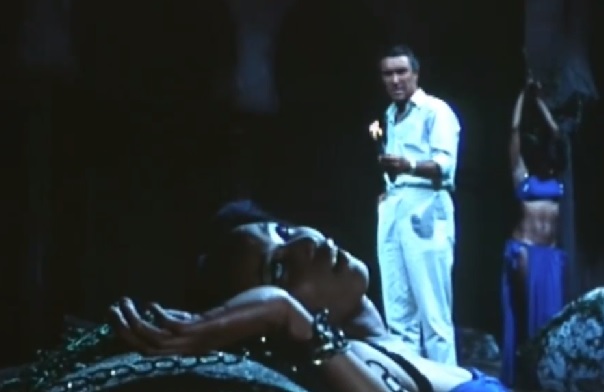
Taking place and filmed in Morocco (a county I know extraordinarily little about), The Hand of Night (or, alternatively, Beast of Morocco) follows a depressed man (William Sylvester) as he becomes enchanted by encounters of a mysterious woman (Aliza Gur) who is potentially a vampire, albeit not in the stereotypical sense. It’s a story that sounds simple, and I guess it is, but they approach it with good style.

The opening is particularly striking, and almost psychotronic, showing a bunch of random images that have no context (naturally, as the movie goes on, we learn more about what we see). I have to also add that I’m a big fan of the dialogue in this movie – plenty of the lines seemed snappy to me, like something I’d expect from films back in the 1930’s or 1940’s, giving this film sort of a classy feel.

Something also has to be said for the editing. The special effects here generally aren’t relevant (though there was a pretty cool bit near the end), but the shots and editing used did strike me as quite nice. This movie definitely had some production value behind it, and while some could argue that the movie isn’t exactly the most memorable film out there, it does seem a shame to me that many don’t seem to know this one at all.

As it is, I do think it lost a bit of steam near the finale. The last sequence I really enjoyed was Sylvester and Diane Clare’s characters running into William Dexter’s in a type of bazaar. Well, I guess that technically leads into another solid sequence, dealing with the history of the mysterious woman, but even so, the last ten minutes or so, sadly, feel the most pedestrian of the entire movie.

William Sylvester (Devils of Darkness, Devil Doll) was great here, as he had some emotional material to deal with, and he did so with heart. Diane Clare (The Haunting, The Plague of the Zombies, Witchcraft), in her final acting role, was solid too, and worked well with Sylvester. Edward Underdown had a lot of heart, and though he only had one scene of real import, William Dexter cracked me up in most of the scenes he appeared in. Technically, Aliza Gur is also here, but I honestly don’t think the story gave her enough to do to properly stand out.

It’s a real shame that the finale has such a familiar feel, because the rest of the movie, while not great, was generally engrossing. To be fair, The Hand of Night isn’t a movie that I’m likely to watch again soon, or even in the next ten years, but it was a very competent and surprisingly philosophical film at times, with some good dialogue and an interesting enough story.

Most horror fans might take a pass at this one, and I don’t even know how easy it is to find (I watched it from a shady Russian site, myself), but fans of classic horror, 60’s British horror, or Morocco, may find this one to be of interest.

7/10

Lemora: A Child’s Tale of the Supernatural (1973)

Directed by Richard Blackburn [Other horror films: N/A]

I’ve seen Lemora: A Child’s Tale of the Supernatural before, and I didn’t care for it. The fact that I was a teenager probably had something to do with that, and I likely wasn’t in a place where I could appreciate a slower, more sensitive movie like this one.

Well, after revisiting it, I have to say that I still don’t particularly care for it. It’s true that I can at least admit that I appreciate what it was going for, and certainly, I know the movie has its fans and generally positive reception (insofar as much as I hear this one being brought up), but I can’t say that I had a good time with it, because I didn’t.

Honestly, while the movie’s interesting, and the basic idea of a young girl going to a creepy town filled with vampires and seduction is one potentially worth exploring, I find much of the film so damn tedious. I wasn’t exactly falling asleep or nodding off, but more than once, I felt myself trailing off. That may say more about me than it does the film, but either way, this just isn’t my vibe.

I do like the end, though. To clarify, by end, I mean the final two sequences. That random all-out battle between the vampires and the werewolf/vampire things done in almost flash-freeze style was off-putting to the extreme, but afterwards, for the final couple of minutes I thought the movie showed promise that I’d not seen much of up to that point.

To be fair, I do think that Cheryl Smith (Laserblast) does a good job as a naive, religious kid. I certainly don’t fault her performance for my dislike of the film. I didn’t entirely care for Lesley Gilb, but that has far more to do with her character than it does her performance. The only other moderately relevant performance is that of Richard Blackburn’s (also the director of this film), and I think they could have done a bit more with his character had they wanted to.

There’s no doubt that this movie would definitely appeal to some. It’s not exactly a coming-of-age film, at least not in my mind, but it definitely has elements of that, and portions of the film can be quite creepy. The whole movie, in fact, feels dream-like, and the atmosphere is generally on point.

Despite all that, I keep going back to the fact I was bored for a lot of the film, and dangerously close to becoming disinterested. I can definitely understand why I didn’t care for the film the first time I saw it, as it’s an acquired taste, and after revisiting it with fresh eyes, I can say that it’s a taste I’ve still not acquired.

5/10

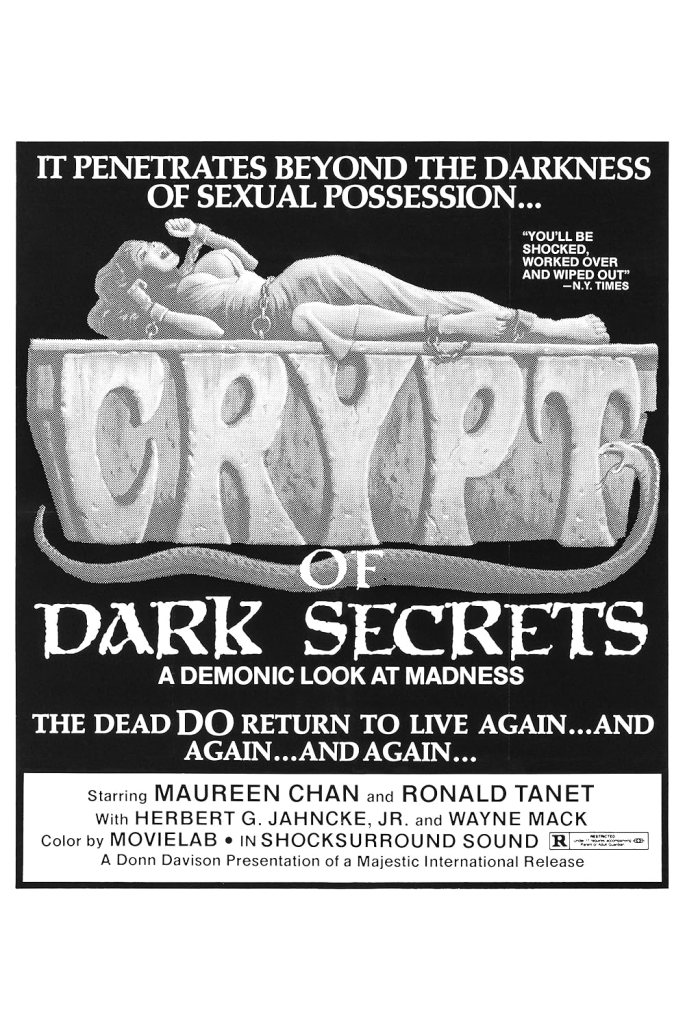
Crypt of Dark Secrets (1976)

Directed by Jack Weis [Other horror films: Mardi Gras Massacre (1978)]

I wanted to like Crypt of Dark Secrets, and aspects of it were decent, but large sections of the film were slow as all hell, and it was generally a bit of a slough to get through.

Here’s what I enjoyed, though, about the film: the setting, being the swamps of Louisiana, was great. I’ve said it before, and I’ll say it again – swamps are underutilized in horror. I imagine filming in a swamp would be a nightmare, but boy howdy, what beauty. Much of the film here takes place on a haunted island in the middle of a swamp, and if that doesn’t scream stellar setting, nothing else could.

I also appreciate how the basics of this film can’t help but remind me of “The Legend of Wooley Swamp” by the Charlie Daniels Band. See, in that song, an ornery old man, who had a bunch of money, lived alone in a swamp and was killed. Here, we have a younger man (though still with 15 years experience in the military, serving in both Korea and Vietnam), and when three people hear about the money he has stored up there, they go to kill him and take his riches. I’d argue that the song is a hell of a lot more fun, though.

At this juncture, I did want to briefly talk about one of the main characters, played by Ronald Tanet. As the guy living on a haunted island with a decent chunk of money, I was consistently amused by how little emotion this guy showed throughout the film. I sort of get it – if you’ve been a soldier for almost twenty years, I can imagine not having the capacity to care much about anything once you’re out, but this guy was like a blank slate. It may well have been intentional, but having a focal character with absolutely zero emotion was impressive.

Things take a turn in the second half of the film, though, after the three ne’er-do-wells (played by Butch Benit, Harry Uher, and Barbara Hagerty) successfully get the money they sought, and things slow to crawl. To be fair, it had been sluggish before, in the way that some 70’s films suffered from, but once we get the origin of the snake-woman Damballa (played by Maureen Ridley) in a drawn-out eight minute sequence, I was outtie.

Certainly some elements past that point are fine, but I have to admit I was a lot less invested, and it didn’t help that on two different occasions, we had scenes of a nude, or nearly nude, woman dancing for minutes on end. One of the final scenes was a three minute dance sequence, and I just didn’t really think that was necessary. I was painfully reminded of Snake People, and Snake People is a movie I try to think about as little as possible.

Wayne Mack was the closest thing to a traditional main character here, and I don’t really think he classifies. Still, his performance as a folksy police lieutenant was solid. I’ve already spoken a bit about Ronald Tanet; his performance was void of emotion, but that’s not all bad. I wasn’t wild about Maureen Ridley, but she could dance in the nude with the best of them. Really, the only other performance worth mentioning is that of Harry Uher’s, and it’s possible that Uher stood out solely for the fact that he’s Cajun, and had that Cajun accent I rarely hear in horror films.

It can also be fairly said that along with the movie being slow and occasionally torturous to get through, there’s not a ton of horror. There’s a lot of potential, of course – anytime you have a woman that can turn into a snake on a haunted island in the middle of a swamp, that’s called potential – but I don’t think the movie lived up to it at all, which was disappointing. There was some suspense toward the end, but much of the film seemed like conversation after conversation, and perhaps the best sequence was the literal blood money that briefly haunted the three punk bitches.

In summary, Crypt of Dark Secrets (which didn’t have a crypt in it, nor am I aware of what the dark secrets were, or who was keeping them) was a slow and tedious time with a handful of decent scenes. I do tend to think it’s better than Weis’ later film, Mardi Gras Massacre, but given the set-up, this is one that I wish I liked a lot more.

5.5/10

Victor Frankenstein (1977)

Directed by Calvin Floyd [Other horror films: Vem var Dracula? (1974), The Sleep of Death (1980)]

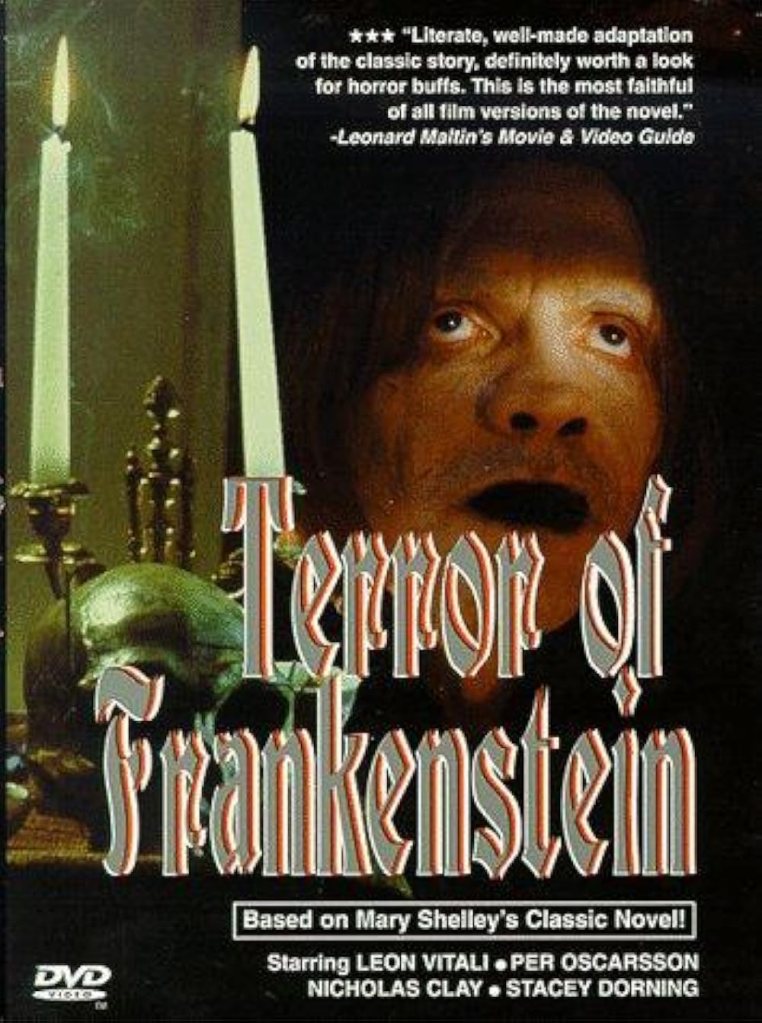
More than anything, Victor Frankenstein feels like a television movie, portraying the events of Mary Shelly’s novel as accurately as possible. Certainly that’s an admirable goal, but it’s also true that the movie just feels a tad too stagey to make a great impact.

I should note, though, that when I say Victor Frankenstein (or, as it’s sometimes better known, Terror of Frankenstein) attempts to accurately follow the original story, I’ve not actually read the original story. Bits and pieces, perhaps, but when it comes to early horror or gothic literature, I’m woefully ill-equipped. Still, I’ve heard that this is among one of the more accurate movies out there, and I’ll take their words for it.

If your only experience with Frankenstein is the 1931 Universal classic, or perhaps the 1957 Hammer edition, then I think you’ll find this quite a bit different. The structure is largely the same – a young man attempts to discover the secret of life, and his experiments go awry – but where the differences develop become clear in the Creature.

Here, Frankenstein’s Monster is capable of developed speech. He can hold conversations, hold awareness of his surroundings, and even plot revenge. In fact, there’s a sequence in the film where the Creature is explaining to Victor Frankenstein about his experiences after being brought to life. After the story (which is told in a 15 minutes or so flashback), he tells Frankenstein that he wants him to make him a woman, so he won’t be so lonely.

And here’s the kicker – the Creature straight-up blackmails Frankenstein. If Frankenstein doesn’t consent to make him a mate, the Creature says that he’ll kill all of Frankenstein’s family and friends, one-by-one. That is a promise that he holds onto pretty well, too.

So what we have is a Creature who generally seems pretty human-like. Sure, he has black lips and a dead face, but he can hold conversations, can plot revenge, can blackmail, and can generally tend to his needs. In fact, toward the end, he even gets a bit philosophical, in what has to be among the best lines of the film (“When the world was new to me, I would have wept to die. Now death is my only consolation, because in death, I cease to be a monster and a man.”)

Per Oscarsson (Traumstadt, The Night Visitor, The Sleep of Death) plays a fascinating version of the Creature. It’s not something I’m used to, but I can appreciate it here. Leon Vitali does great as Victor Frankenstein, an amoral young man far more interested in discovery than his love interest, played by Stacy Dorning. I also liked Nicholas Clay (The Night Digger) here, especially toward the beginning, where his friendship with Frankenstein was most fully on display.

In terms of scares, it probably doesn’t surprise many to learn that they’re somewhat scarce and spread out, when they do make an appearance. We see a young boy killed, but perhaps the best sequence is a somewhat tense scene focusing on a mountain climber who runs amok of the Creature.

I highly doubt Victor Frankenstein (or Terror of Frankenstein, should you prefer) will be long in my memory as a movie, but as a rendition of the Creature, I do think that this film will make a lasting impression. It wasn’t exactly a fun time, but I enjoyed how the story was framed. Still, it felt quite stagey, and while impressive on some levels, and certainly worth a look if you’re into the original novel, it wasn’t entirely my thing.

6/10

The Shining (1997)

Directed by Mick Garris [Other horror films: Critters 2 (1988), Psycho IV: The Beginning (1990), Sleepwalkers (1992), The Nightmare Begins Again (1993), The Stand (1994), Quicksilver Highway (1997), Riding the Bullet (2004), Desperation (2006), Bag of Bones (2011), Nightmare Cinema (2018, segments ‘The Projectionist’ & ‘Dead’)]

Ah, the smell of fresh anger in the air.

I’ve never cared for the 1980 rendition of the classic Stephen King novel. Sure, it’s one of the most well-known and highly-rated movies in the genre, but I never felt strongly about it. I don’t hate it, but if I were told I had to pick 500 horror movies to bring with me to a desert island, I’m not remotely joking when I say that Kubrick’s The Shining wouldn’t make the list.

This 1997 television mini-series perhaps would, though. Spread over three episodes (each one about an hour and a half, coming in at a total runtime of four hours and 32 minutes), The Shining is a story that takes it’s time to breath. It takes its time to work through the story, and touches on many of the elements that make the book a solid read.

I’m not going to harp on the 1980 movie – much like The Haunting, this isn’t a remake of the 1980 film, but another adaptation (and one that actually had the involvement of Mr. King). Comparing the two adaptations is pointless, and even a tad mean-spirted, and not something I have any interest in doing.

I also want to add that at the time I first saw the 1980 film, I had not read the novel. In fact, I’d seen the movie multiple times before I read the book, and the one time I’ve seen this mini-series was also before I read the book. And you know what? Even before reading the novel, I preferred this mini-series. It’s a better adaptation of the source material, no doubt, but the bigger point is that I have more fun with it, point blank.

Given that this is a mini-series that lasts over four hours, The Shining takes its time setting the characters and ideas up. Much of the action doesn’t really start until the second and third episodes, but I think that works out fine. Plenty of other Stephen King-based mini-series (Storm of the Century, The Stand) had similar routes, and I appreciate that they didn’t try to cram too much in, and didn’t rush things.

I thought Steven Weber (Crawlspace, Farm House, Desperation) did great in his role, as did Rebecca De Mornay (The Murders in the Rue Morgue, Mother’s Day). Surprisingly, even Courtland Mead did well, and I don’t generally care for child actors. My favorite performance might be that of Melvin Van Peebles (Jaws: The Revenge), though – not only is his portrayal of Hallorann great, but he comes across as so likable.

Other small performances did well too – Wil Horneff (Ghost in the Machine) often had an ethereal feel to him, and it worked well, along with Pat Hingle (Sweet, Sweet Rachel, Not of This World), despite just having two scenes of note, also making a good impression. Stanley Anderson had some good portions toward the end, and we even randomly got Shawnee Smith (The Blob, I Saw What You Did, Saw) popping up as a waitress. In fact, I was so surprised to see her that I didn’t immediately realize who it was – it was only as the credits ran that I realized, and then rewound the film to confirm.

It’s true that not everything’s amazing. Some of the CGI can look a bit off, such as those topiary animals. The first sequence, with Jack, wasn’t bad, because it was subtle, but once we actually see them on the prowl, the effects are questionable. Portions of the wasp nest sequence had the same feel. Hell, early on, we even see a boom mic in a window’s reflection, which is something I was surprised to see make it through.

None of that really impacts the mini-series much, though. The heavy focus on Jack’s alcoholism and his slowly deteriorating mindstate is far more important to me than the CGI flaws here and there. I’m just happy that there’s a version of this story that I actually enjoy, because – and this may surprise some – I’m not even a big fan of the novel. After watching this one again, though, perhaps I’m in due for a re-read.

I know that it’s an unpopular opinion, but it’s how I truly feel. I thoroughly enjoy this adaptation of the story more than the 1980 movie, and if you’re someone who just wants to see a solid mini-series, then I think this is well-worth checking out.

8/10

Next of Kin (1982)

Directed by Tony Williams [Other horror films: N/A]

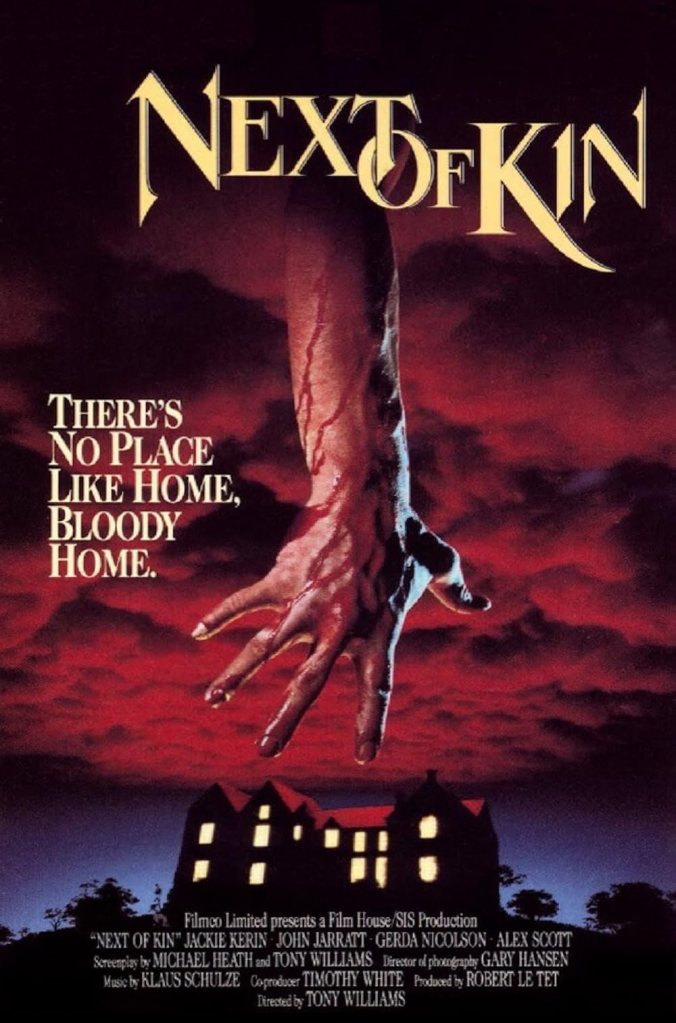
This Australian film is one that I’ve been vaguely aware about for many years now. I’ve heard that it’s a pretty solid movie, and many of the ratings I see online tend to back that up. I went in hoping for a good time, and I do generally think that I got one.

I was impressed by how nice the movie looked. This isn’t some gritty, outback movie – this had some production value behind it, and plenty of thought put into some camera shots and scenes. There were some visually striking potions here, and I can certainly understand how this one can get the label of ‘cult classic.’

The story’s pretty solid too, made all the better by the fact that it’s not quite clear where it’s going. A young woman (Jacki Kerin) inherits a retirement home following the death of her mother, and creepy things begin to happen. Whether these creepy things in question are of supernatural origin or not is part of the question, and the movie has a quality atmosphere and almost gothic feel to it at times to back the story up.

The finale is somewhat striking too – once we do figure out where this one’s going, we’re treated to a decently suspenseful finale, followed by a couple moments of quiet (in a very unexpected, yet subtly sorrowful, sequence), and then the action ramps up again. It was structured in a unique way, and part of me wondered if the film would just fade to black during that quiet sequence, before things unexpectedly picked up again.

Jacki Kerin hasn’t really been in much, which I find a shame, as I thought she did a great job here, even reminding me toward the end of Marilyn Burns in The Texas Chain Saw Massacre. A young John Jarratt (Wolf Creek, Dark Age, Rogue) was nice to see also. Charles McCallum played a nice, older man, Alex Scott (The Asphyx) a potentially shifty doctor, and Gerda Nicolson did well as an older woman hiding a secret or two.

Some of the cinematography here really is stunning – during a dream sequence, it appears that a man is swimming outside a young woman’s window – and it reminded me a bit of what we later see in Razorback. Nothing here is that otherworldly, but it’s the same idea, and I was surprised by how nice, and how fresh, this movie ended up looking.

I don’t think the film is without flaws (though it’s fair to say that no big flaws seem to rear their heads), but I do think it’s very much a movie that’s worth seeing. If you want some foreign flavor, Next of Kin may be your type of film.

7.5/10

In the Mouth of Madness (1994)

Directed by John Carpenter [Other horror films: Halloween (1978), Someone’s Watching Me! (1978), The Fog (1980), The Thing (1982), Christine (1983), Prince of Darkness (1987), They Live (1988), Body Bags (1993, segments ‘The Gas Station’ & ‘Hair’), Village of the Damned (1995), Vampires (1998), Ghosts of Mars (2001), The Ward (2010)]

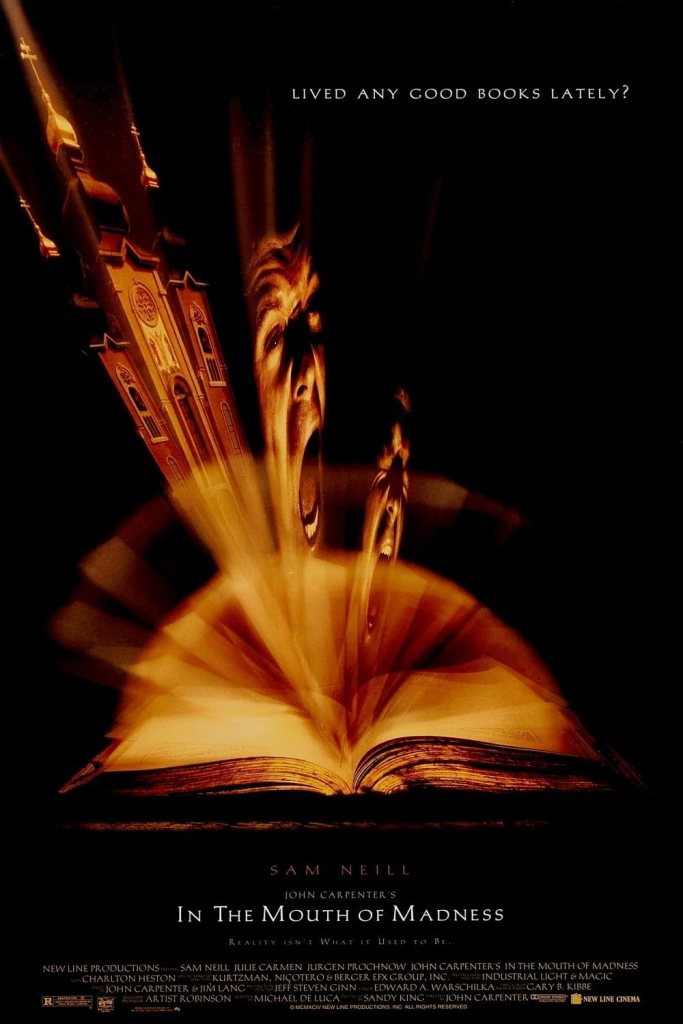
It’s not easy to figure out what to say about In the Mouth of Madness. The idea behind the film is quite interesting, and portions of this surreal story are definitely good, but despite really wishing otherwise, I can’t say I love the final product.

It’s a damn shame, too, because I’ve seen this one before, and had much the same impression. It’s been over ten years since I’ve last seen it, though, and I was hoping that with fresh eyes, the movie would do a bit more for me. Not that In the Mouth of Madness is a bad film, but I just have some issues comprehending the story, impacting my enjoyment level.

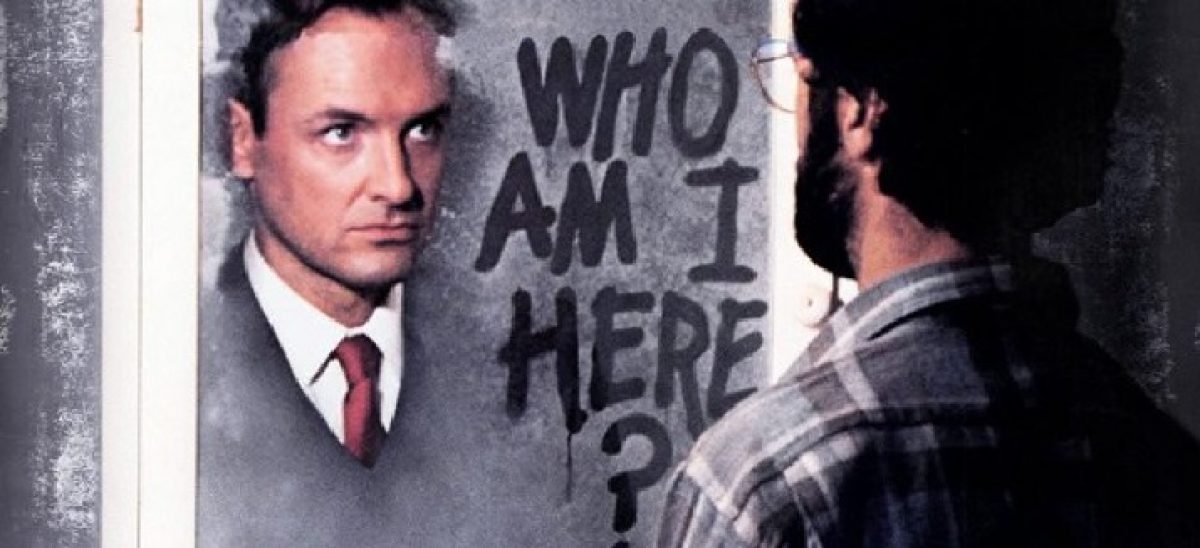
To be sure, given the film deals with topics both otherworldly and sometimes in a meta fashion, that may not be too surprising. Some of the revelations around Sam Neill’s character toward the end are difficult for me to swallow, and I also think that, as the ending indicates, that if the book had been released for six weeks already, society would have crumbled. And related, how could they make a movie based on a book, if that book caused anyone to read it to lose touch with reality?

It’s also possible that, given we see the movie we’ve been watching playing at a theater in the end, that the whole thing is just the adaptation of the book, with none of it being “real.” I don’t even know how to tackle that, or how to even begin to critique that, so I’ll just move on.

Certainly the movie does well with it’s surreal, atmospheric story. There are some legitimately unsettling scenes – the woman with a naked man chained to her ankles, that boy/man on a bike that they keep driving by, hell, even the idea of worldwide riots just because people read literature. There’s a lot of good ideas in the movie, which is why I wish I felt more enamored by it.

Sam Neill (Jurassic Park, Possession, Snow White: A Tale of Terror, Event Horizon, The Final Conflict) is solid in the role, though you could argue that if this whole thing is a meta movie within a movie type thing, then performances don’t matter, but that may be beside the point. Julie Carmen (Fright Night Part 2, Gargantua) was fun, but not too much a focal point save a few scenes.

Naturally, it was great seeing David Warner (The Secret of Crickley Hall, The Omen, Nightwing) here, even in his brief screen time. Jürgen Prochnow (Dark Asylum, The Seventh Sign, The Keep) was pretty solid also, John Glover (Gremlins 2: The New Batch, We Go On) amusing, and seeing Frances Bay (Happy Gilmore) came as a nice surprise, as I forgot she popped up in this movie.

The whole eldritch elements, and the H.P. Lovecraft ideas ingrained with, are fun, but I don’t know if those rubbery monsters toward the end was the best payoff we could hope for. Generally, I don’t really care for body horror to begin with, so the whole thing – with some people changing into monsters, reminding me of both The Void and From Beyond – wasn’t necessarily my cup of tea.

I know that In the Mouth of Madness has a high level of respect in the horror community, some considering it John Carpenter’s last great film. The thing is, I don’t even disagree that it’s a movie very much worth seeking out, and I think it’s decent, for what it’s worth. Having seen it twice now, though, despite truly thinking otherwise, I can’t honestly say I think much more about it. Fingers crossed that a third viewing in the future will do more for me.

7/10

Jigsaw (2017)

Directed by Michael Spierig [Other horror films: Undead (2003), Daybreakers (2009), Winchester (2018)] & Peter Spierig [Other horror films: Undead (2003), Daybreakers (2009), Winchester (2018)]

It’s a strange feeling watching an entirely new Saw movie, having no idea where it’s going or what the twist is beforehand. I last had this feeling watching Saw 3D in theaters, and while that film definitely has its problems, I thought that Jigsaw generally came out an okay film.

To be sure, being the first Saw movie in seven years, this does feel different than the previous films. Few previously-appearing characters are mentioned, the cast is almost entirely new, and the episodic feel of films IV through 3D is gone. John Kramer, by the point of this movie, has been dead ten years, and his games largely done shortly thereafter (once all of his accomplices got done bickering and butchering one another).

It’s a really odd feeling being thrown into another Saw film, but having almost no touchstones to previous events. To be clear, we do get a flashback with John Kramer – that shouldn’t really come as a surprise, and naturally, I was delighted by it. We also get even a little more backstory on John’s early days in his new vocation, which again, I sincerely enjoyed.

Still, almost all of the important characters here are new. We have two police detectives – Brad Halloran (Callum Keith Rennie) and Keith Hunt (Clé Bennett) – and two medical pathologists, Logan Nelson (Matt Passmore) and Eleanor Bonneville (Hannah Emily Anderson). It’s strange not having people like Hoffman, Rigg, and Perry slinking around, not to mention a complete absence of the FBI (which indeed makes sense, given how long it’s been since the last game).

The story is about what you’d expect. A group of five people – all with sins they must confess to – are dragged through traps in what appears to be a large barn. That location shift was fascinating, as we’re so used to these traps taking place in abandoned, industrial buildings. Here, at least the participants got some of that healthy country air.

Past a certain point, and even with a bit of wild guessing early on, one of the twists becomes almost a foregone conclusion. That’s not a bad thing, because I think the twist was done well, but I have to be honest and say that it’s the same type of twists we’ve seen a time or two before. Also, a lot of the suspense over who’s taking over John’s mantle – is it that suspicious Bonneville, who seems a Kramer fangirl, or Detective Halloran, who seems very quick to point the finger, or Nelson, who lost his wife some years back – seems almost too much, because really, as we don’t know these people, it could be any one of them (or any combination of them). When any answer is possible, the mystery almost feels like a joke.

Callum Keith Rennie (Case 39, eXistenZ) was a dick a lot of the time, but his performance was solid. Same can really be said for most of the main cast – I particularly liked Hannah Emily Anderson (Dark Nature, What Keeps You Alive, The Curse of Audrey Earnshaw), and Clé Bennett had a fresh feel to him. I feel like Matt Passmore’s character could have used a bit more depth, but it still worked.

Paul Braunstein (The Thing) could be amusing at times, so he was fun. Though Laura Vandervoort (Rabid) felt a little generic, she grew on me. I have to say, I did expect a little more from Mandela Van Peebles’ (Karma) character, but whateves.

The gore here did seem a bit downplayed. They were some painful-looking moments, such as someone’s leg gets severed from their body, or some spinning blades that didn’t look all that playful, along with falling knives and pitchforks and sawblades risking bodily injury, but honestly, the movie felt somewhat tame, which, when combined by how glossy and new-age it felt (Jigsaw had messages on computer chips and flat-screen TVs), it might turn some fans of the initial string of movies away.

Generally, I found it a decent time. I don’t think it matches with the best of the classics, but it was definitely a step up from Saw 3D, and if I’m being honest, that’s all I was looking for when I came into this one. I also feel, though, that a couple of story elements should have been cleared up a bit. Not a great film, but for a fan of the series, certainly serviceable.

7/10