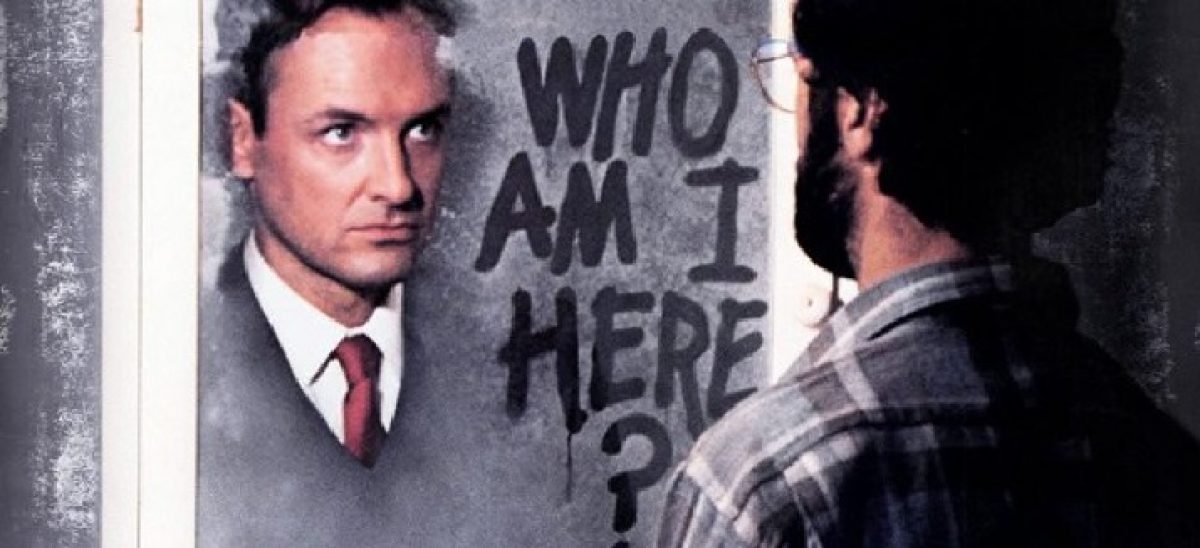
Route 666 (2001)

Directed by William Wesley [Other horror films: Scarecrows (1988)]

I have to say that Route 666 surprised me. Though by no means would I call the film good in a traditional sense, it can be oddly fun, and I think a lot of that comes from the performances involved here.

To be sure, I have seen Route 666 once before, though like many of the films I’ve watched recently (Swarmed and Hard Ride to Hell, for instance), it’s been so long that I only remembered the vaguest outline of this. In fact, I thought it was a zombie movie going in – which might be an easy mistake to make – only to be surprised that it’s more ghostly in nature.

While pleasant in some ways, which I’ll touch on shortly, it does fall flat in some areas, mostly the story. One of the characters here has a relationship with one of the ghosts, and late in the film, we have a situation where this ghost has to decide whether or not to turn on his ghostly hombres. That comes with the occasional psychic flash a character suffers, and while there’s not many of them, I wasn’t overly impressed with those sequences.

Also, a lot of the action here is quite jerky. I don’t know if I can explain it better than that – the ghosts move in jerky motions, and the action is often in the same vein. It’s not headache-inducing or anything, but it was notable, and not in a positive way, but an annoying one. Lastly, as far as complaints go, I felt some of the antagonists that pop up toward the end could have done with a bit more reasoning behind their actions, and what they were attempting to accomplish struck me as a bit extreme.

Those elements aside, Route 666 isn’t a bad slice of entertainment. A lot of this comes from the central performances of Lou Diamond Phillips, Steven Williams, and Lori Petty. Phillips (who I know from his recurring role on Numb3rs, along with the TV movie Hangman and films such as Bats and Carny) was a lot of fun in this action-oriented film, and worked great with Lori Petty (a couple of episodes of House and Bates Motel, randomly, is where I knew her best from) and Williams (from The X-Files and The Fear Chamber). All three of them were great – I loved Petty’s sassy attitude, and Williams was just fun – and really added a lot to this film.

Out of the rest of the cast, I guess it’s fair to say both Dale Midkiff and L.Q. Jones were decent. Midkiff (of Pet Sematary and Nightmare Weekend fame) took a bit to really stand out, but once he did, I enjoyed his character, and while I didn’t love where Jones’ (The Brotherhood of Satan, The Strange and Deadly Occurrence) story went, it was fine. I did love seeing a brief appearance of Dick Miller (The Howling, Gremlins, and many other films) at the beginning, and Mercedes Colon, who popped up much later in Malignant, appeared, which was sort of random.

If anything makes the movie work, it’s the performances, because the story, while okay, doesn’t entirely cut it, and the gore is pretty non-existent, even when they had a chance for some violent jackhammer action. Someone did get their hand slammed in a door, which did look reasonably painful, and there was some occasionally fun gun-play (many of the characters are in government agencies, so much of the beginning is more action-oriented), but it’s not at all what I’d describe as gory.

Even so, I can’t say that I didn’t find a lot of the movie serviceable. I definitely didn’t love the conclusion, and elements that came up every now and again were less interesting, but overall, I had a better time with that than I thought I was going to. Of course, it being so long, I can’t remember what I thought about Route 666 when I first saw it, but I am pretty sure I enjoyed it a bit more this time around.

Honestly, Route 666 is still below average, but if you want a movie to have a good time with, you could do a lot worse than this one.

6.5/10

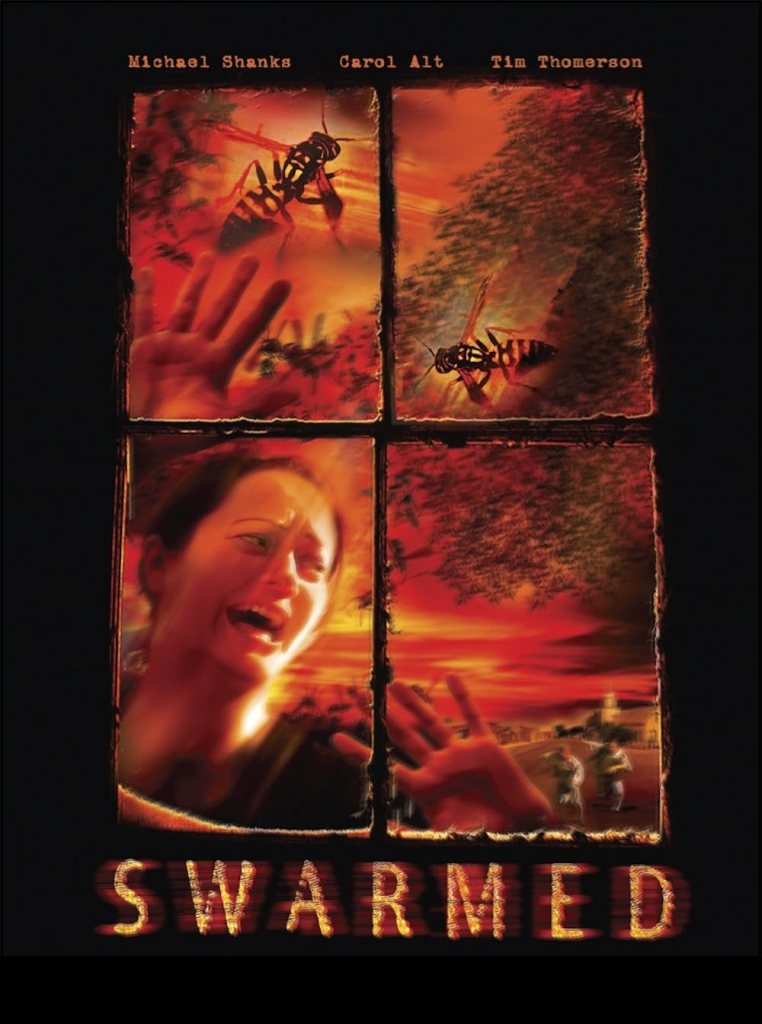
Swarmed (2005)

Directed by Paul Ziller [Other horror films: Pledge Night (1988), Snakehead Terror (2004), Beyond Loch Ness (2008), Yeti: Curse of the Snow Demon (2008), Troglodyte (2008), Ba’al (2008), Iron Invader (2011), Ghost Storm (2011)]

Swarmed is one of those films that I think will be largely forgettable. I have this on somewhat good authority, given I’ve seen it before, and most of the movie still felt new to me. It’s not an overly poor TV movie, though – it’s entertaining at times, and some performances are fine – but it’s not a film that I’m likely to ever watch again, either.

I can’t say when I first saw this movie. I know I watched it back on SyFy when they were still Sci-Fi, and I wasn’t any older than 14. Given I’m 28 at the time of this writing, it has been quite a long time. I’ll say that, in defense of the film, it’s a more enjoyable film than many post-2010 Syfy movies, which counts for something.

The story isn’t anything particularly interesting. Dealing with a pesticide that inadvertently improves the surviving wasps’ strength and venom accidentally unleashed on a small town, it’s the average fair when it comes to these types of films. There’s even a coroner who is exactly like Roy Brocksmith’s coroner from Arachnophobia – eating nonchalantly while dealing with corpses. So much of the film is stereotypical, and the ending is also exactly what you’d expect.

One thing I have to give the film minor props for, though, is the fact it takes place in southern Indiana. No doubt the town is fictional, and the movie is filmed in Canada, but an Indiana setting does warm my Hoosier heart, so though it doesn’t add much, it’s sort of fun seeing my state representin’.

None of the performances here are great, but I think some of the central performances were admirable enough. Michael Shanks (who is likely most recognizable as Dr. Daniel Jackson from Stargate SG-1, but also starred in Mega Snake) was decent. Richard Chevolleau’s character, despite his errors, ended up being pretty decent. Tim Thomerson (Unseen Evil and Fade to Black) was sort of funny (“How about them apples?”) in a generic way, and Carol Alt (Snakehead Terror) was serviceable.

On the flip-side, there was Ellen Dubin. I don’t blame the actress, but boy, her character went downhill quickly. Her boss is killed by a wasp, and she basically loses it. She attempts to kill the wasp with a shotgun, and even after she does that, she begins thinking that there are more wasps around, and drowns in paranoia. These portions weren’t particularly fun to me, and while they don’t last long, the performance was just painful.

As you might be able to imagine, the special effects here aren’t what people would generally describe as ‘stellar.’ Don’t get me wrong – they’re leagues above the atrocities you might see in films like Sharknado and 2-Headed Shark Attack – but they’re not great. There was a decent scene of a wasp stinging someone’s eye, and another had a wasp winding up in someone’s mouth, so there are occasional glimpses of something interesting, but for the most part, Swarmed doesn’t have a lot to boast about.

It’s not a movie that I had a terrible time with. It’s below average, of course, but it’s not nearly as bad as many other horror films can be, and though Swarmed isn’t going to be a movie that I’ll likely watch again, for some classic Sci-Fi, it’s not the worst time.

6/10

House of Wax (2005)

Directed by Jaume Collet-Serra [Other horror films: Orphan (2009), The Shallows (2016)]

It’s been a long time since I’ve seen House of Wax. If I had to guess, it’s been over ten years. So I was quite excited to see this one again, as I thought it was a pretty solid movie the first couple of times I saw it, and with fresh eyes, I can confirm this movie is quite solid.

A remake-in-name-only of 1953’s House of Wax (which is itself a remake of 1933’s Mystery of the Wax Museum), I can’t say exactly why it works. It’s a slasher movie, and not overly original, but I’m guessing that the whole wax element adds a lot. There’s not really much mystery, but that finale, which takes place in a melting literal house of wax, is one of the coolest things I’ve ever seen.

I think time has been somewhat kind to this one, because while I remember plenty of critiques when it came out, it’s not uncommon for me to hear positive things about it nowadays, and I can see why. It’s a bit generic insofar as the story goes – two killers are killing people – but it’s filled with fun ideas, a memorable setting, and some quality violence.

The best piece of violence would probably be a scene in which someone’s fingertip gets cut off with a wirecutter. That’s a scene that’s stuck with me ever since I first saw the movie – there’s a lot of blood, as you can imagine, and it looks so damn painful. Another individual is sprayed with hot wax. Someone else gets a pair of scissors to their Achilles’ Heel. An individual who has been covered in wax gets his face peeled off. Someone else get stabbed in the heel – it was quick, but #Painful. For a mid-2000’s slasher, House of Wax can be a violent film, which I definitely think works in it’s favor.

I also think the setting does a lot for the film. A largely abandoned small town with wax figures in every building, plus a house of wax made entirely of wax (which leads to the aformentioned fantastic melting finale, and digging through a wax wall for freedom), this movie just has a lot of great atmosphere. Even at the length of the film – an hour and 53 minutes – the setting and story keep things wonderfully engaging.

Chad Michael Murray (The Haunting in Connecticut 2: Ghosts of Georgia and Camp Cold Brook) was fantastic in this movie. I loved his character – he started out a bit of an asshole, but he quickly grows on me, and even without the violent attacks he’s trying to defend himself and his sister against, I was rooting for him. Elisha Cuthbert (Captivity) was quite good, and while he wasn’t around as long as you might expect, Jared Padalecki (Friday the 13th and Cry Wolf) was pretty solid. Paris Hilton (Nine Lives and Repo! The Genetic Opera) appeared for a bit, but not for long, so that’s fine.

I wasn’t surprised that I enjoyed House of Wax, given that, while it has been many a moon, I’ve enjoyed it before, but I was surprised that I enjoyed it as much as I did. This movie holds up quite well in my mind, and while I know the reception is more on the lukewarm side, I find this movie a hell of a lot of fun, and definitely recommend it.

8.5/10

Horrorvision (2001)

Directed by Danny Draven [Other horror films: Hell Asylum (2002), Cryptz (2002), Deathbed (2002), Dark Walker (2003), Urban Evil (2005), Tales from the Grave (2006, segment ‘Beyond Death’), I, Vampire (2006), Ghost Month (2009), Reel Evil (2012), The Dead Reborn (2013), Weedjies: Halloweed Night (2019)]

Horrorvision is perhaps one of the most dated films I’ve seen, and it wasn’t necessarily sensical at times, but it still has a bit of charm. It’s a Full Moon movie, and that certainly plays a part, but it’s also a somewhat interesting concept despite the rather poor execution.

I liked some portions of the plot, dealing with a website that, when seen, caused madness and mass murder. It featured early 2000’s technology – QuickTime was referenced, and someone boasted about hacking AOL and sending a virus through someone’s email – and it had that nostalgic charm.

To put a finer point on this, I was born in 1993, so I was pretty young in the early 2000’s, but I remember bits and pieces, especially post-9/11. Remember that site MadBlast? Or perhaps the game site PopCap, with games like PsychoBabble? Bonus.com, one of the best Flash game sites? The early 2000’s is my childhood, and a lot of movies from that time, despite not being good, do hold an appeal to me.

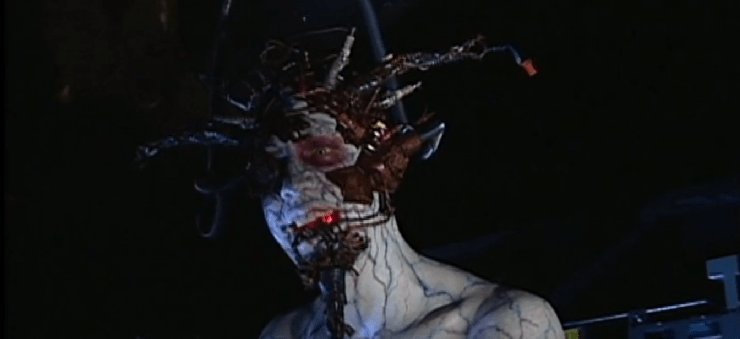
Horrorvision is a good example. It’s a poor film, and probably way too ambitious in it’s goals (it’s partially apocalyptic, which is seen primarily through news reports and via characters hearing about it), but seeing hideous technological monsters (which looked like cheap rejects from films like Hardware and Death Machine) pop out of technological devices (watches, beepers, that type of thing) and cause mayhem can be a decent amount of fun.

There’s also a sequence which features a creature/person called Wetwire that looked like some really bad Doctor Who antagonist. It looked ultra shitty, and I didn’t entirely get the point of this thing, but hey, it had heart. The special effects overall are quite poor, but if you find lower budget films from this time period charming, it might be worth it.

Len Cordova’s overacting at times was a bit much, but it was also funny at every turn, so I dug it. James Black (Zombie Cop) had a Morpheus from The Matrix thing going for him, and he was a fun character. Both Brinke Stevens (The Slumber Party Massacre, Nightmare Sisters, October Moon, and a hundred other movies) and Maggie Rose Fleck get a few good scenes in, especially Fleck, so they were reasonably enjoyable also.

[This is the paragraph where I would possibly compare this to Feardotcom, which has a similar idea, but I’ve not seen Feardotcom in over 15 years, so I’ll just leave this here to remind myself to watch it later on.]

Two more quick notes about Horrorvision: the runtime of this one is quite short, at around an hour and 12 minutes, and a good six minutes of that is traveling sequences (the one that takes place in a desert is the most unnecessary one), but it’s still a quick film, and also, the soundtrack of this was decent. It’s sort of a dark, electric rock type thing – “Strawberry Gashes” by Jack Off Jill played during the credits, which is a band I’ve not thought of in years, which was cool.

In many ways, Horrorvision is a bad movie, but I can’t say I didn’t occasionally feel a glimmer of enjoyment. It’s certainly below average, but I also think it’s somewhat certain I wouldn’t mind giving this another go in the future.

6/10

Katakuri-ke no kôfuku (2001)

Directed by Takashi Miike [Other horror films: Ôdishon (1999), Tennen shôjo Man next: Yokohama hyaku-ya hen (1999), Tajuu jinkaku tantei saiko – Amamiya Kazuhiko no kikan (2000), Bijitâ Q (2001), Koroshiya 1 (2001), Gokudô kyôfu dai-gekijô: Gozu (2003), Chakushin ari (2003), Sam gang 2 (2004, segment ‘Box’), Aku no kyôten (2012), Kuime (2014), Kamisama no iu tôri (2014), Gokudô daisensô (2015), Terra Formars (2016)]

Known as The Happiness of the Katakuris, Katakuri-ke no kôfuku is a movie I’ve long wanted to see. I’ve never been the biggest fan of Japanese cinema, but I thought this looked quite interesting from the first time I heard of it.

And certainly it is an interesting movie; a memorable one, too. Portions of the film were quite decent and occasionally innovate, but I can’t say I actually enjoy that film that much, truth be told.

I think the main reason for this is that the story is more steeped in comedy than I thought it would be. It’s not always over-the-top stuff, but there’s a lot more humor here than horror, and while there were some standout scenes and sequences, for the hour and 53 minute runtime, I don’t know if there were enough.

At times, it almost feels like an Indian movie, what with all the songs popping up. I liked the concept – there are plenty of Indian movies I enjoy – but here, a lot of the songs don’t strike me as that catchy. Some certainly are, such as the final song, but even that karaoke potion felt sort of weak, though again, I liked the idea.

So here’s a movie with many songs I don’t personally find catchy along with more comedy than I’d have liked, and the fact that it is as long as it is only stretched out my relative disinterest. It’s not fair to say I ever became disengaged – the story of the movie is interesting throughout – but past a certain point, I didn’t think the movie was able to truly capture my appreciation, and that happened something like halfway through once I got a better idea of what this film was.

The characters are all reasonably fun. My favorite performances are those of Tetsurô Tanba and Shinji Takeda, especially Takeda, who got some strong scenes near the end. I never really felt that Kenji Sawada’s character came into his own, but he still did fine, and the other central performances, from Keiko Matsuzaka to Naomi Nishida, were good. I can’t say Tamaki Miyazaki’s narration did that much for me – she barely had a role in the events of the film – but it was an interesting touch.

So too were the moderately hideous claymation portions. They were impressive, and I can imagine that it took a while to do, but boy, did they look ugly (I imagine partially by design). The opening claymation didn’t seem to mean too much, but the final use of the style was decent, and it had story relevance, so I can’t complain there.

I would imagine few people really know what they’re getting into when they start The Happiness of the Katakuris up. I was expecting the musical portions – in fact, looking forward to them – but the movie is so much more than that. It’s partially a drama, partially horror, largely comedic, occasionally tragic; it’s all over the map, and while a lot of people enjoy that, especially given Takashi Miike directed this, it wasn’t really my cup of tea.

By no means did I have a horrible time with the film, though. It kept me entertained, and I was consistently curious as to what would happen next. I just expected a little more from it, and while I appreciate some things about the film, it’s simply not as enjoyable as I wish it were.

5.5/10

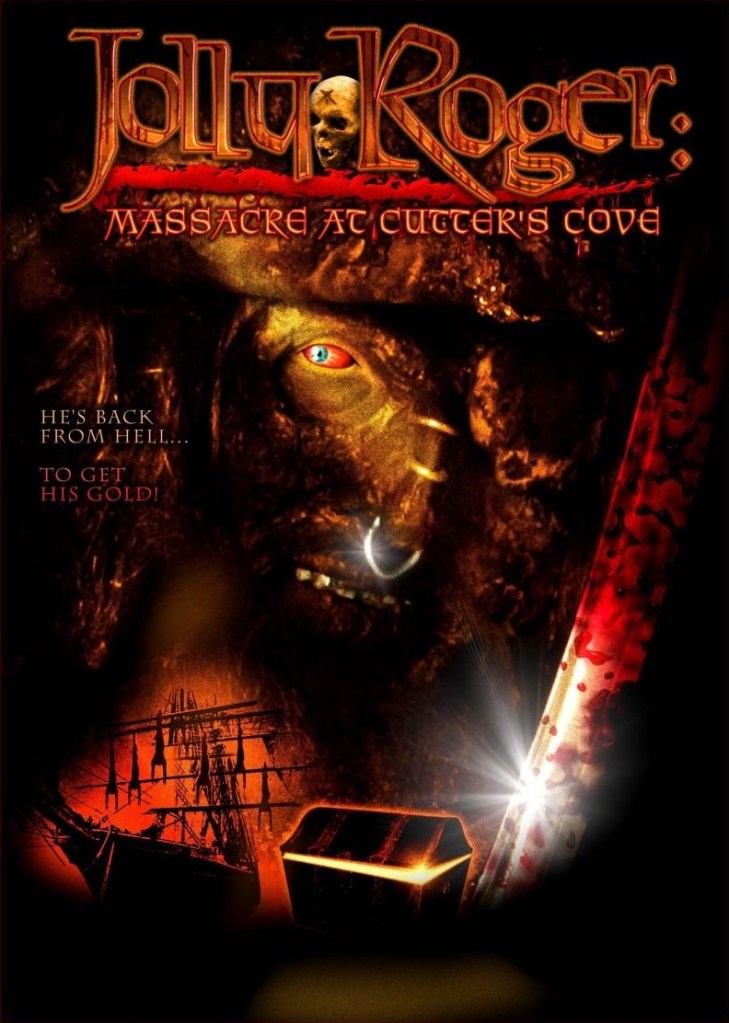
Jolly Roger: Massacre at Cutter’s Cove (2005)

Directed by Gary Jones [Other horror films: Mosquito (1994), Spiders (2000), Crocodile 2: Death Swamp (2002), Ghouls (2008), Boogeyman 3 (2008), Lightning Strikes (2009), Axe Giant: The Wrath of Paul Bunyan (2013)]

This film has always been a low-key guilty pleasure. I don’t think it’s a good movie, and it’s definitely not as fun rewatching as I’d hope it would be, but I’ve always had an okay time with it, and that has to count for something.

Many of the films I see coming from The Asylum are abysmal, but they sometimes get something close to right. The idea here – a pirate coming back from the dead to get revenge on the descendants of those who betrayed him – is at least worthwhile. It’s similar to The Fog, though with nowhere near the same level of class, charm, or atmosphere.

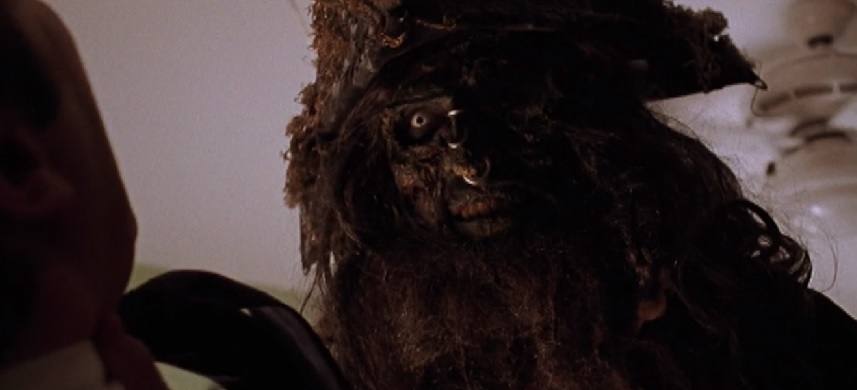
Actually, a better comparison might be Leprechaun, because like Leprechaun’s titular character, Jolly Roger is after not only revenge, and the heads of those who betrayed him, but the gold that was stolen from him. He also gets some one-liners every now and again, such as “Swab the decks in hell” and other pirate-themed humor like that.

Speaking of which, that joke that everyone knows about pirate-themed movies being rated arrgh – it’s in the opening scene of the movie, so check one for bad jokes brahs.

It’s not a terribly funny movie, though. There are some amusing sequences – such as Jolly Roger’s escapades in a strip joint (once informed they don’t have a license to sell liquor, he exclaims “I”ve never heard such an atrocity” and demanded to speak to the governor of the colony) and the mayor (played by Pamela Munro) attacking him – but overall, it can seem a bit dry, despite taking place in the coastal community of Cutter’s Cove.

I can’t say many of the performances were great. The two leads, Tom Nagel (The Beast of Bray Road, Hillside Cannibals, and The Butcher) and Kristina Korn, were okay, but neither one stellar. Thomas Downey (Frankenstein Reborn, Dracula’s Curse, Axe Giant: The Wrath of Paul Bunyan, and Sorority Party Massacre) was pretty generic, but Kim Little (Killers, Killers 2: The Beast, and Scarecrow Slayer) was decent. Jolly Roger was played by Rhett Giles (Way of the Vampire, Wraiths of Roanoke, The Fear Chamber, and Frankenstein Reborn), and he did pretty well. Also, while not a big role, I wanted to say I did like Megan Lee Ethridge (Alien Abduction) during the opening.

Most of the kills here are pretty terrible, as are the special effects, but at the very least, there was a guy who had his arm ripped off, and he was beaten to death with it, which has to count for something, I imagine. Overall, most of the kills are decapitations, one with a musket, and not many of them look that great.

Really, with a title like Jolly Roger: Massacre at Cutter’s Cove, the movie should have been a lot more fun. As it is, I’ve seen it a handful of times before, perhaps as many as three, and I’ve always enjoyed it for what it is. It’s not a movie I’d call good, but I do think, at least for me, it settles somewhere around average.

7/10

Kansen (2004)

Directed by Masayuki Ochiai [Other horror films: Yonimo kimyô na monogatari: Haru no tokubetsu hen (1991), Parasaito Ivu (1997), Yonimo kimyô na monogatari: ’97 haru no tokubetsu hen (1997, segment ‘Tobira no saki’), Saimin (1999), Yonimo kimyô na monogatari – Eiga no tokubetsu hen (2000, segment ‘Samurai Cellular’), Yonimo kimyô na monogatari: Haru no tokubetsu hen (2001, segment ‘Shinzô no omoide’), Yo nimo Kimyou na Monogatari: 2003 Spring Special (2003), Yo nimo Kimyou na Monogatari: 2003 Fall Special (2003), Suiyô puremia: sekai saikyô J horâ SP Nihon no kowai yoru (2004, segment ‘Yokan’), Shutter (2008), Gekijô-ban: Kaidan resutoran (2010), Gakkou no kaidan: Noroi no kotodama (2014), Ju-on: Owari no hajimari (2014), Ju-on: Za fainaru (2015)]

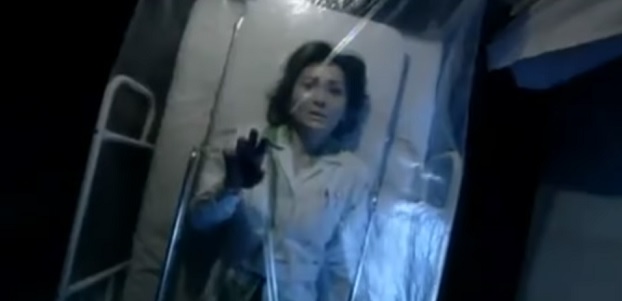
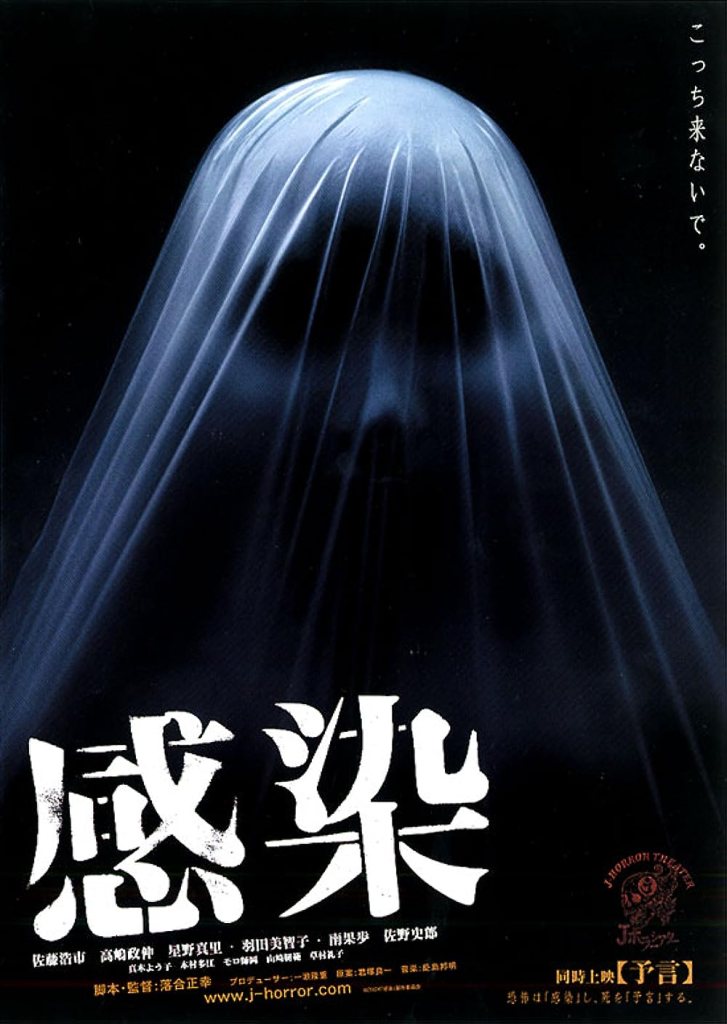
Known in the USA as Infection, this Japanese movie is a bit of a favorite of mine. I can’t say the finale entirely makes sense to me – a few things still aren’t quite clear – but the atmosphere and tense nature of the film make Kansen a movie definitely worth seeing.

The setting is great, taking place in an understaffed hospital with overworked doctors and nurses. They’ve stopped receiving pay, they’re running out of medical supplies, but they’re still trying their best to care for the patients they have. And during an overnight shift, more goes wrong than one could imagine.

Somewhat psychological in it’s approach, Kansen can definitely be a spooky movie. A dark hospital, limited staff, sick and dying patients, a deadly infection raging that liquifies organs, it’s not a good time. Of course, watching the film is a different matter, as it’s a lot of fun, even if some elements that come up at the end don’t seem entirely sensical. It’s definitely a movie that’ll have you reading theories after it concludes, which isn’t always a good thing, but here, I can make a slight exception.

Kôichi Satô and Masanobu Takashima make for fair leads here. Shirô Sano doesn’t have much in the way of personality, but that’s partially the point. Among those who played the nurses, I think both Kaho Minami and Mari Hoshino stood out the best. I also liked the elderly patient – she’s not credited on IMDb nor Wikipedia, but she was good, and it was amusing seeing Isao Yatsu pop up a bit, as I just saw him a few days back in Dark Water.

I wouldn’t say Kansen is an overly violent film, but it can be a bit gruesome at times. There’s an infection that, as I said earlier, liquifies the organs. We never see this in detail, but we do see plenty of green gloop (the remainder of the infected), which can be disgusting. There’s a few disturbing sequences – a woman plunges her hands into scalding hot water, and there’s a corpse rotting under intense heat (it makes sense in context), with bandages and I imagine skin sloughing off. All of this is to say it’s not an overly gory film, but it can be gruesome.

Again on the finale – when I first saw the film, I probably liked it a bit more. Maybe I was young and impressionable, but whatever the reason, it’s not quite as strong now. I don’t mind leaving a few things up to interpretation, and plenty of the film can make sense under a certain lens, but I just wish we got a little more explanation in the final ten minutes than what we did. Either way, the locker sequence at the end was quality, along with a fact we learn from a news report, so it’s not as if the finale doesn’t have something to appreciate.

Despite the fact that I don’t entirely love the conclusion to Kansen, I still think it’s quite a strong film, and it remains among my personal favorite Asian horror films. Hopefully future viewings will clear a few things up, but on the positive side, at least this is a film I would easily watch again in the future, which is definitely not true for many others.

8/10

Rats (2003)

Directed by Tibor Takács [Other horror films: The Gate (1987), I, Madman (1989), The Gate II: Trespassers (1990), Mansquito (2005), Kraken: Tentacles of the Deep (2006), Ice Spiders (2007), Mega Snake (2007), Spiders 3D (2013), Bunks (2013)]

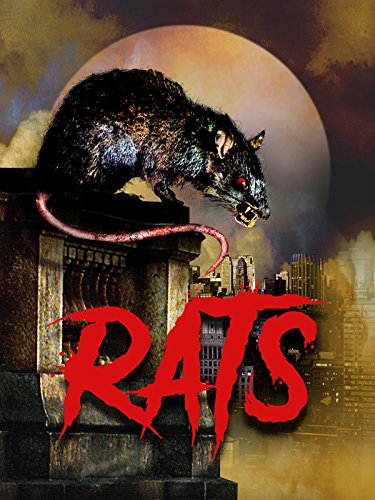
While Rats isn’t a good movie, it is a movie that could have been decent. If the plot had been tightened up a bit, and the special effects improved on, it might have been something that was sort of special.

As it is, I have some minor history with this film. Like movies such as Webs, How to Make a Monster, and Piñata: Survival Island, I saw Rats when I was rather young in life, so it does have a bit of a special place in my heart. That doesn’t save the movie – the poor special effects can’t be defended – but I can admit to enjoying this a smidge more because of my past with it.

Also, the story isn’t that bad. A female journalist goes undercover at a private psychiatric hospital to work on a story, and a guy who telepathically communicates with rats tries to hold back a massive rat attack. Okay, well, the first part of the movie (undercover at a mental institution) was a solid idea, in a Nellie Bly-type way. Admittedly, it goes off the rails once the giant rat comes in, but to all good things there must come an end.

The special effects are pretty horrendous. The 3D rats looked, as the kids say, quite shit, and they never really look good at any point. Even during a personal favorite scene in the film (and one that stuck with me the most from my childhood viewing of this movie), in which rats attack people locked up in isolation rooms, straight-jackets and all, show the rats entering the room with some of the worst special effects imaginable.

Sara Downing made a pretty decent lead. She occasionally reminded me of A.J. Cook, and that’s never a bad thing. Ron Perlman (Desperation, The Last Winter, and I Sell the Dead), an actor I can’t stand usually, is pretty tame and tolerable here. Denise Dowse’s character half the time was atrocious, but I liked her performance. On the more generic side, we have Bailey Chase, Michael Zelniker, and Michael Hagerty. The only performance I actively didn’t like was Zelniker’s, but that’s more due to his character than anything else.

Not to be confused with Rats (2000), The Rats (2002), or Rats: Night of Terror (1984), Rats isn’t terrible if you just want someone comfortable to snuggle up with, but if you’re looking for someone to hang onto for the rest of your life, I doubt Rats could do that for you.

5.5/10

Hellraiser: Hellseeker (2002)

Directed by Rick Bota [Other horror films: Hellraiser: Deader (2005), Hellraiser: Hellworld (2005)]

I’d say that largely, Hellseeker has the same appeal as Inferno did. I don’t think it’s as good, despite a surprise returning character, but it’s along the same psychological mold. There can be okay scenes, but the disjointed plot sometimes hinders enjoyment, and it’s never been a favorite of mine.

Unlike Inferno, which I had seen multiple times before finally writing up on it, Hellseeker is a movie that I may have only seen once before. I knew the basic gist going in, so nothing here surprised me (and on a similar note, if that ending surprised anyone, I’d be amazed, as it was about as shocking as my shoes), but it was interesting to watch this with somewhat fresh eyes.

In many ways, it really does seem similar to Inferno, which makes sense, as, like Inferno, the script here wasn’t initially a Hellraiser movie. It was refitted to make the Cenobites work into it, and they did as well as they probably could have. Honestly, I don’t mind the idea of the movie, but there’s the thing: when you have a character that has constant hallucinations, and from one second to the next he moves from hospital to office building without realizing it, you know that a lot of the stuff seen isn’t real, and hence, why bother caring?

It’s in the same vein of later movies like Delirium and Dry Blood. When there’s a hallucinating character who constantly sees things that aren’t there, how are you supposed to take any of the movie as real? Could not the whole thing be fake? Is that perhaps exactly what this movie does? Some say the journey is more important than the destination, but when the destination is so easy to see coming, and the journey is a hallucination-filled waste of time, it’s hard to care that much.

Which is where I think Inferno did a slightly better job. I think it had some creepier scenes, a marginally more interesting story, and things made a bit more sense in that movie. In this film, the lead character Trevor (Dean Winters) is bombarded with mental images of unsavory things he may have done before the amnesia hit – yet he keeps insisting he “wouldn’t do that,” as he “knows who he is.” If you have amnesia, at least to the extent this movie portrays it, you don’t know who you are, and you can’t keep insisting innocence when you have no idea.

Despite my issues with the story, Dean Winters was fine as the lead. In fact, most of the performances were okay, from Jody Thompson, Trevor White, and Kaaren de Zilva to William S. Taylor and Rachel Hayward. Ashley Laurence, returning as Kirsty from the first Hellraiser, was nice to see, but I don’t really think we saw enough of her to make a great impression, and while it’s always good to see Doug Bradley as Pinhead, he didn’t appear too often, and rarely had anything of interest to say.

At least he appeared, though. We do get small glimpses of other Cenobites, but nothing especially concrete. Even Inferno gave us a lot more when it came to Cenobite action, but aside from Pinhead, we get very little here. We saw what looked like Chatterer for a split second, so that was cool, but I would have loved less hallucinations and more Cenobites.

Hellseeker isn’t a good movie, and it’s definitely not a good Hellraiser movie. It’s also not as palatable as Inferno, which was already below average. For what it is, I guess it’s an okay way to spend your time – I don’t find the film entirely without merit. Even so, it’s not a good film, but at the very least, it’s better than Bloodline.

5.5/10

Honogurai mizu no soko kara (2002)

Directed by Hideo Nakata [Other horror films: Honto ni atta kowai hanashi: Jushiryou (1992), Joyû-rei (1996), Gakkô no kaidan F (1997), Ringu (1998), Ringu 2 (1999), Sotohiro (2000), The Ring Two (2005), Kaidan (2007), Chatroom (2010), Inshite miru: 7-kakan no desu gêmu (2010), Kuroyuri danchi (2013), Gekijô rei (2015), Satsujinki o kau onna (2019), Sadako (2019), Jiko Bukken: Kowai Madori (2020), Sore ga Iru Mori (2022)]

I can’t say for sure whether I saw the 2005 remake before this original Japanese version, but I can say that I’ve always loved the story in Dark Water. Honogurai mizu no soko kara may well be one of my favorite examples of J-horror, and it packs enough creepy and emotional scenes to make me happy.

As it is, I don’t have a lot of exposure to J-horror. I’ve never seen any of the Ringu movies (be it the 1995 TV movie, the 1998 Rasen, the 1998 Ringu, or the randomly South Korean Ling from 1999), I’ve not seen Pulse (or Kairo), I’ve not seen One Missed Call (or Chakushin ari), and it’s entirely possible I’ve never seen The Grudge (Ju-on, and to be specific, either the popular 2002 or the lesser-known 2000 movie). I’m not a big supernatural horror fan, so J-horror hasn’t been my go-to, but Dark Water definitely has a lot going for it, and it makes me rethink my attitude toward what Japan has to offer.

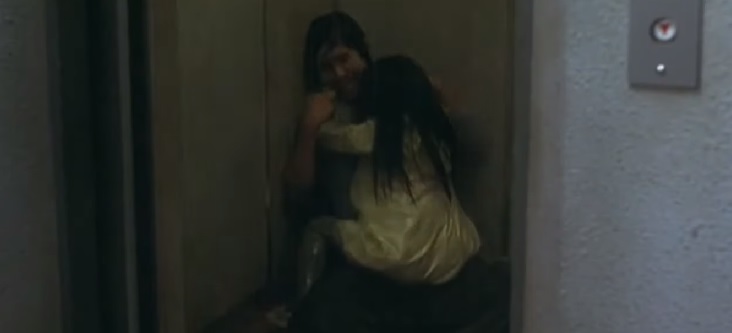
Taking place in perhaps the most depressing apartment complex I’ve ever seen in my life, the story is a simple one, with a struggling woman going through a divorce trying to give her young daughter a good life, in the face of potentially supernatural occurrences. It’s an easy plot to get into, there’s not many characters, and the apartment building is spooky enough even before the ghostly girl pops up, yellow raincoat and all.

In fact, it’s probably one of the best settings I’ve seen in a little while. It’s such a dark building, and whether the scene takes place in the elevators or the roof, it’s just creepy. That scene toward the end when the main character is climbing the water tower, for instance, is just a fantastic sequence, and I loved the whole set-up of this.

It’s also a bit of an emotional ride. The main character (played by Hitomi Kuroki) is going through a hard time, dealing with a lot of feelings of insecurity and a tough divorce. She’s close to an emotional break-down most of the time, and I can’t help but feel for her, especially in that dreary apartment she’s forced to raise her daughter in. It’s a gloomy situation all around, and the fantastically emotional final scene, a ten years later sequence, is just icing on the cake.

As such, Hitomi Kuroki did an amazing job with her character, and her portrayal of a mother going through hard times was fantastic. Playing her daughter was Rio Kanno, and she did quite well for a young actress. And though she really only gets one scene, Asami Mizukawa was stellar.

Because it’s a supernatural Japanese film, it’s not a gory movie, and it’s also not particularly rife with special effects. You see a ghostly girl a few times, but she never does any extreme acrobatics (à la The Ring). Even so, there’s plenty of low-key and subtly creepy scenes here, and despite not being a fan of supernatural films, I definitely thought this had enough going for it.

Also, the mystery here, dealing with the missing girl Mitsuko Kawai, was pretty good. I sort of wonder about one of the flashbacks – when she’s getting on an elevator – but it may have been an unintentional red herring. Still, the mystery is fun, and I love how things are slowly pieced together.

Dark Water is a film I’ve seen before, but I forgot how hard it hit you emotionally. In fact, the finale reminded me a bit of the 2007 Spanish film The Orphanage, and I wouldn’t be surprised if that film was moderately influenced by this one. Dark Water was definitely a great movie to see again – from the depressing opening to the ending credits, with the beautiful “Aozora” by Suga Shikaro – and it’s certainly worth seeing.

8.5/10