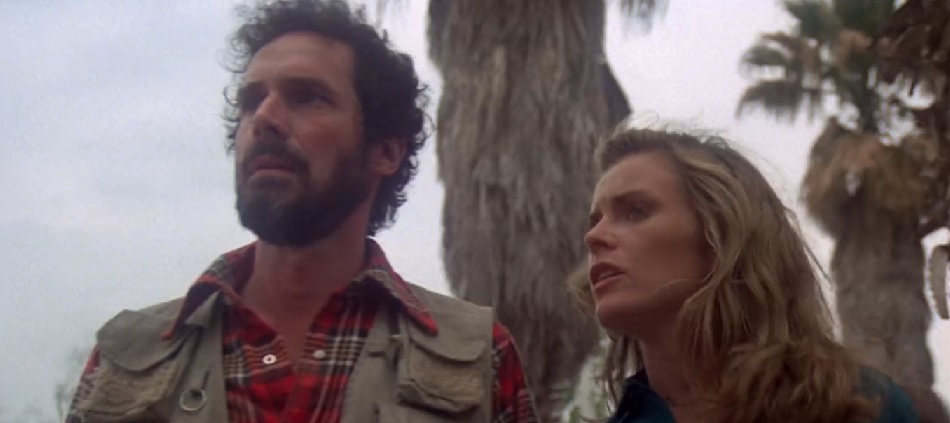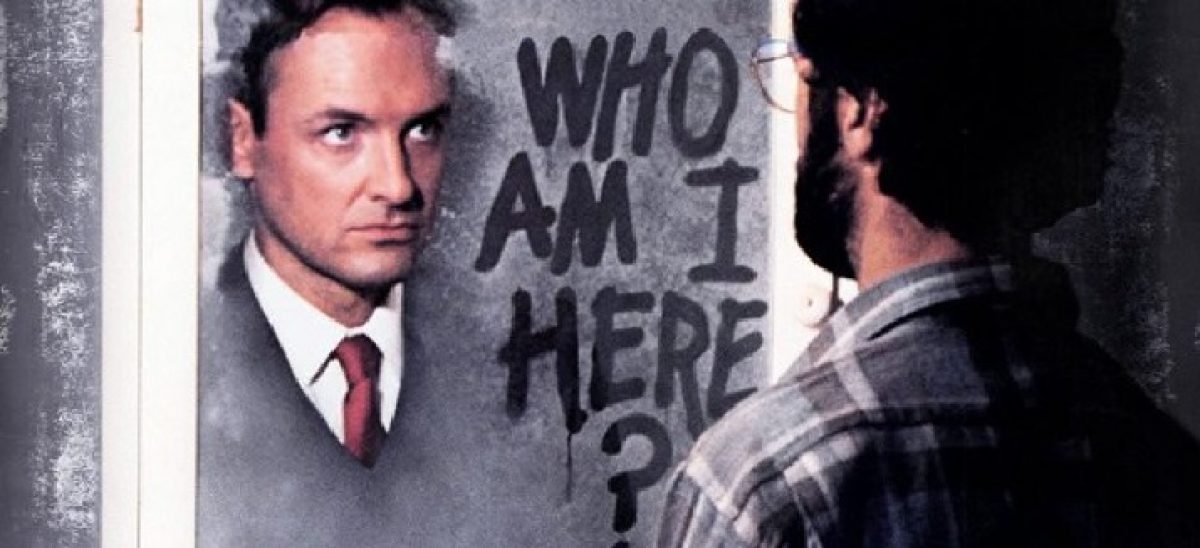
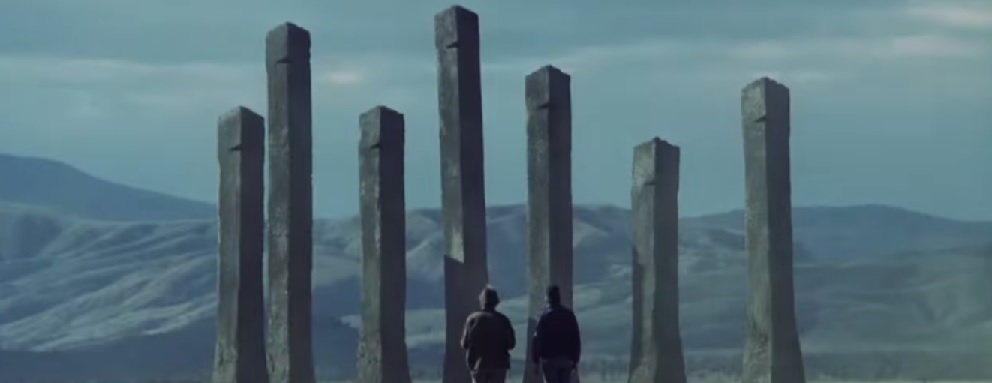
Phase IV (1974)

Directed by Saul Bass [Other horror films: N/A]

Phase IV is a film I’ve known about in a vague sense for a long time, but after seeing it, it’s fair to say that I probably didn’t really know a thing about it. Intensely interesting in the visual effects, the plot of Phase IV is sometimes questionable, but for a slice of 70’s science fiction/horror, you should definitely see this.

My expectations going into this were that it’s be a typical insect invasion movie (such as The Swarm or Kingdom of the Spiders), and while there is sort of an invasion, the movie is not at all typical in approach, which certainly gives the film a very unique look.

Most apparent in the style here is the insanely beautiful cinematography, especially close-ups. More often than not, you can see the hair on each individual ant, and there are scenes here, such as an ant crawling up someone’s shirt, that I have absolutely no idea how they shot. The cinematography was fascinating, and it often felt like a nature documentary. I liked a decent amount about the movie, but the cinematography is easily the best part.

The story feels a little aimless at parts, though perhaps a better description would be hopeless, as the characters probably don’t have much in terms of options, as they were caught in a scientific resort center, trapped by a few trillion ants (that number is an estimate, but it’s probably not far off). The ants don’t attack the people, though – they could, and one person does get bit in an accident; they instead use the people almost as experiments, a nice reversal of the norm.

Phase IV is not your typical movie. It’s nothing at all like The Swarm or Kingdom of the Spiders (and though I’ve seen neither of these movies, I suspect it’s nothing like Empire of the Ants or It Happened at Lakewood Manor either); it’s more philosophical in it’s execution. It’s certainly a horror film, but it feels more at times, and that’s what gives the film such a unique feeling.

Nigel Davenport (1974’s Dracula, 1977’s The Island of Dr. Moreau, 1973’s The Picture of Dorian Gray) played the scientifically-focused stereotype, not overly concerned with welfare if it’s likely to impact his experiment. Michael Murphy (Shocker, Count Yorga, Vampire) had a few moments where he annoyed me, but I enjoyed his more personable attitude, and while Lynne Frederick (Schizo) didn’t add a lot, she did give a fine performance.

This isn’t a movie to watch if you want to see ants swarm over people. Most of the ant action is more at the microscopic level, such as them working together to get a piece of poison to counteract it, or tricking a praying mantis into shorting out an air conditioner. There is a quality scene in which ants crawl out of a dead man’s hand, but most of the action here isn’t on a violent level.

I’ve not seen many films like Phase IV. I suspect if I watched science fiction, I probably would, but the only science fiction I watch tends to be infused with horror, so my exposure to straight science fiction is very limited. Phase IV had an interesting idea going for it, and the final scenes will probably give you something to think about. I can’t say I thought it was an amazing movie, but visually, I do think the film is fascinating, and very much worth approaching.

7.5/10

The Last House on Dead End Street (1973)

Directed by Roger Watkins [Other horror films: Shadows of the Mind (1980)]

This is one of those films that I’ve known about for a long time, and perhaps more than most films from the 1970’s, this one has reached a somewhat mythical status. There’s plenty in the film that scholars like to analyze, and perhaps it’s a slice of exploitation that plenty might end up having an okay time with, but I found the whole thing somewhat untenable.

I don’t have objections to the trashy, exploitative films of the 70’s – The Last House on the Left has a lot going for it, for instance. In this case, though, I have say that I found very little in The Last House on Dead End Street to enjoy, and in fact, if I’m being more honest, the movie just gave me a headache, and the fact I got through it actually surprises me.

Toward the end, there is a scene in which a woman is tied down on a table, and her face gets sliced at with knives, and it looks like both of her legs were cut off. It was probably the most striking gore in the film – we did see organs pulled out of someone earlier, but H.G. Lewis made The Wizard of Gore in 1970, and that actually did make me squeamish, whereas nothing here had that effect. If you want to see the movie for the gore, that’s fine, because you probably won’t be disappointed, but it’s definitely not the case in which the gore makes up for the rest of the film.

Amusingly, it’s a somewhat short movie (at least in the currently-existing copy – this was originally around three hours, but a lot of it is lost), running at 78 minutes, so it shouldn’t be too difficult to engage someone. Obviously, I can only speak for myself, but I found much of this so damn tedious, and not only that, but there’s little enjoyment in seeing anything in the film, which just made watching this such a struggle in a way that few movies tend to be for me, and in a way I find difficult to put into words.

I’m not saying that the movie isn’t without value, as most, if not all, movies have some value. It’s just that, on a personal level, The Last House on Dead End Street fundamentally disinterested me, and though it’s been on my radar of movies to keep an eye out for, I have to say that I didn’t have a good time whatsoever with this movie, and would simply recommend it for fans of exploitation.

3/10

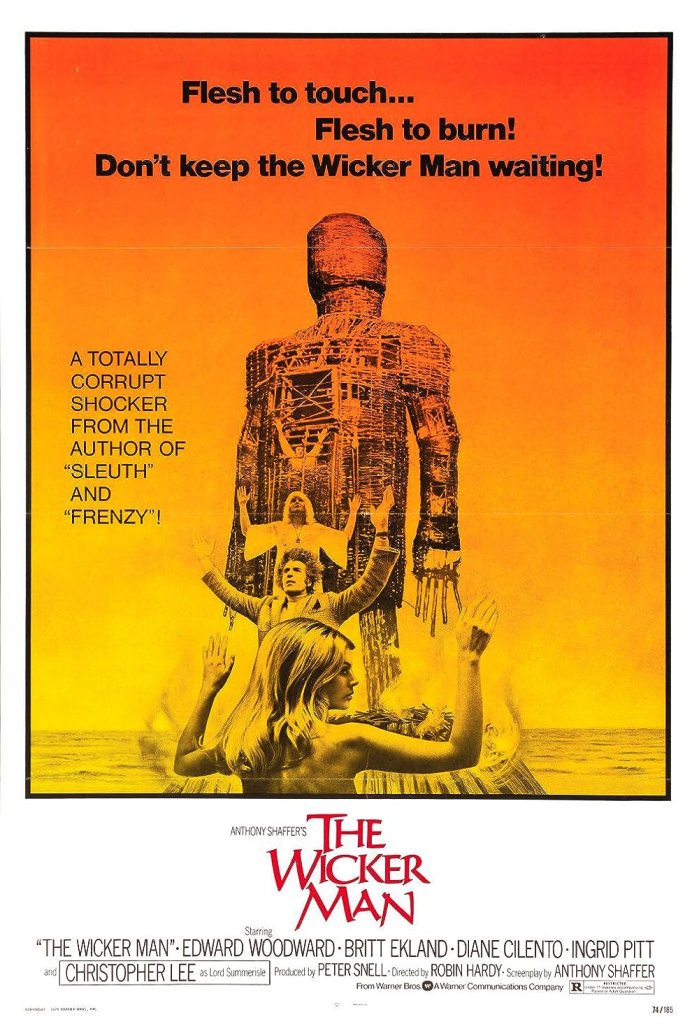
The Wicker Man (1973)

Directed by Robin Hardy [Other horror films: The Wicker Tree (2011)]

Perhaps not just one of the most unique horror films of the 1970’s, but of the genre as a whole, The Wicker Man is a highly entertaining and occasionally disturbing film, especially, I imagine, if you’re of a conservative religious bent. It’s a classic for good reason, and definitely a movie worth looking into.

Luckily, I don’t need to say that. Most horror fans at least know of the film, and while it may not be to everyone’s tastes (an online friend of mine complained about the music that permeated the first half), if you go in without knowing much, I doubt it’s a film that will easily be forgotten.

Personally, I’m a big fan of the story, and while some might not think much of the mystery here (if for no other reason, cultural osmosis), I find the film entertaining, especially on a sociological level. See, the main character, played by Edward Woodward, is a police officer, but more importantly, a devout Catholic, and when he investigates the disappearance of a girl on a small island, is rather turned off by the people’s religious beliefs, which he sees as pagan.

And to be sure, the islanders are of a Celtic pagan brand – they have far different views on love and sexuality, on death and rebirth, on what constitutes serving the gods they believe in. It’s a beautiful culture shock, seeing a very Catholic individual being faced with what he perceives as immodesty and sacrilegious beliefs (he even goes as far as to claim the beliefs of the islanders a “fake religion,” as if Christianity has any more basis in truth).

It’s here that I should state what I’ve likely mentioned before, as it’s relevant in this case. I’m pretty much a life-long atheist. I was raised Catholic in some manners, but the beliefs never stuck, and I’ve been one who thinks far higher of logical thought than words in old books. I definitely don’t care for the worldview of Woodward’s character, and I also don’t care for the worldview of the islanders.

The difference is, aside from some aspects of their worship (such as what is demonstrated during the fantastic finale of the film), I can fully see why the islanders would hold the beliefs they do. Their religious beliefs don’t seem to be oppressive (or anywhere near as oppressive as the Christian faith tends to be), and I appreciate how their society is sexually open, as that seems a far safer way to be than a society that advocates abstinence.

What I’m trying to say is that while I don’t hold to either belief system, I can see the appeal of the islanders, and I can’t fault them for any of their actions. It’s a fascinating topic to see tackled in a film, and it just gives the film such a unique and folksy feel.

Edward Woodward (Incense for the Damned, The Appointment) did amazing here, and I loved his discussions with Christopher Lee’s character. Lee (The Curse of Frankenstein, Dracula, Taste of Fear, The Creeping Flesh, The Skull, I, Monster) is of course great in most movies he’s in, but I’ve never seen him have as much fun as he does here. From beginning to end, he seems like he’s having a hoot, and who can blame him? I also enjoyed both Britt Ekland (Demon Rage and Endless Night) and Lindsay Kemp here.

One of the aspects that make The Wicker Man a memorable movie is the consistent use of music. A soft song titled “Corn Rigs” by Paul Giovanni plays a handful of times, which is a peaceful piece. A bawdy barroom song titled “The Landlord’s Daughter” was a hell of a lot of fun, and to celebrate the ever-important May Day, there’s the rather catchy “Maypole Song” (“and on that bed, there was a girl, and on that girl, there was a man”). I love the music here, and while I can imagine it might turn some people off (such as my aforementioned friend), it lends the movie such a quality atmosphere.

As my hombre Ser Bronn said in Game of Thrones, “it’s all about the ending.” Of course, that’s not accurate here, and the whole of the movie is engaging, but it’s the ending that has traumatized and shocked people. Most horror fans, if not most movie fans, probably know the ending even if they’ve not seen the film, but even so, it’s a fantastic finale and it knows what it’s doing.

For an added bonus, while I don’t usually mention other reviews, I did want to take a few moments to point out two other (more comprehensive) reviews for The Wicker Man, one from Mario Lanza, another from 1000 Misspent Hours (a site I often gravitate towards). Both of these reviews are well-worth reading, and they both do this movie justice.

Odd as it may be, The Wicker Man is one of my favorite 70’s horror films. I’ve only seen it twice, now, and I’ve not even seen the uncut version (which apparently runs 99 minutes, according to IMDb), but it’s such a striking and entertaining film that it’s a must-see for fans of the genre, and even if you’re one of the individuals who can’t get into it for some reason or another, at the very least, you have a great conclusion to look forward to.

9/10

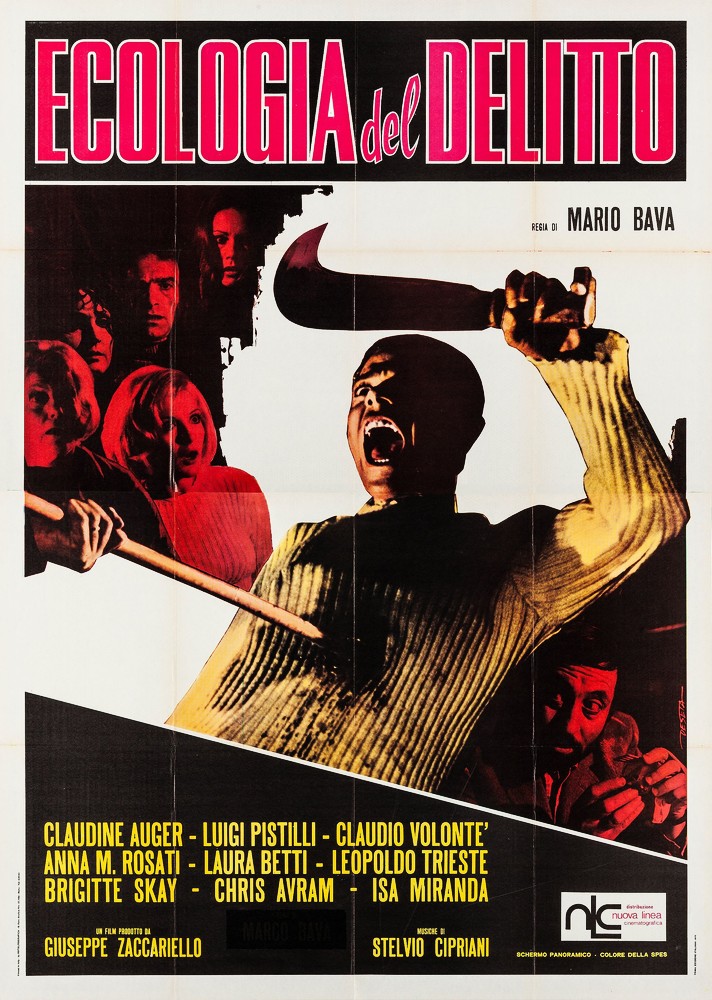
Ecologia del delitto (1971)

Directed by Mario Bava [Other horror film: I vampiri (1957), Caltiki il mostro immortale (1959), La maschera del demonio (1960), Ercole al centro della Terra (1961), La ragazza che sapeva troppo (1963), I tre volti della paura (1963), La frusta e il corpo (1963), 6 donne per l’assassino (1964), Terrore nello spazio (1965), Operazione paura (1966), 5 bambole per la luna d’agosto (1970), Il rosso segno della follia (1970), Gli orrori del castello di Norimberga (1972), Lisa e il diavolo (1973), The House of Exorcism (1975), Schock (1977)]

Likely better known under titles such as Bay of Blood and Twitch of the Death Nerve, this Mario Bava film has been a movie I’ve been wanting to see for a long time. I came into it trying to temper my expectations, because I didn’t want to be disappointed (and I’ve heard some less-than-stellar reviews of this one), and I came out quite fascinated.

My expectations were somewhat simple – a bloody giallo with a decent mystery. Well, I don’t know if the mystery itself is that great, but the approach to the story is what really sold it to me, and I don’t know how many movies I’ve seen that had such an interesting final thirty minutes.

It starts off normal enough, with some murders happening around a bay (a fantastic setting, but I’ll touch on that shortly), and we’re introduced to a lot of characters, each with their own objectives and goals, so it felt as most gialli do. Once we’re let in on some secrets in the final thirty minutes though, the whole film becomes quite kinetic in a way I’ve not seen before.

And what I mean by kinetic is this: there are a bunch of people at the bay – an insect lover (Paul) and his medium wife (Anna), another man (Albert) and wife (Rennie), a guy who lives in a shack on the bay (Simon), and another guy who has a house nearby (Frank) – and about halfway through, things start getting wild. Paul pops in on Albert’s car, asking where Anna went – his wife went down to the shack, to speak to Simon. Later, Albert sees Paul run out of a house where a body was, and Rennie was one of the potential victims.

Needless to say, I may not be able to explain things well, but the point is this: a lot of things are happening, and at that point in time, we keep switching to different characters, giving us different perspectives all in this very close-knit area (most of the film takes place very close together, and I loved that), and it just felt so energetic and fun.

It’s hard to talk about great performances, because I thought all of the central characters did well. My favorite two would have been Leopoldo Trieste and Claudio Camaso (who has an interesting, and rather tragic, personal history). Laura Betti (A Hatchet for the Honeymoon) struck me as a bit stereotypical in her medium role, but others, such as Chris Avram (The Killer Reserved Nine Seats, L’ossessa), Luigi Pistilli (The Iguana with the Tongue of Fire, Your Vice Is a Locked Room and Only I Have the Key, A White Dress for Marialé), and Claudine Auger (The Black Belly of the Tarantula) were all solid.

Naturally, a big talking point about the film would be the gore, and the gore is quite solid throughout. I loved the double impalement, along with some throat slittings and someone getting stabbed with a spear, but I think the finest moment was a beautifully-choreographed decapitation – I saw the set-up, and was quite happy with the follow-through. A Bay of Blood certainly has some fine violence in it, and I dug it.

This film isn’t really comparable to most gialli I’ve seen, as it’s shorter and a bit more base in it’s intent, feeling at times like a classic 80’s slasher. Flashbacks are used to great effect toward the finale, but the story still comes across less like The Case of the Bloody Iris and more like Friday the 13th, which isn’t a bad thing whatsoever, as I suspect this might be a more digestible film for those who don’t want to spend an hour and a half with a more complex story.

If I’m being honest, I sort of expected to be disappointed with A Bay of Blood, but I wasn’t. It started off a little shaky (as great as those first kills were, things felt a bit average for a period of time), but about halfway in, it really grabbed me, and I loved most things about the final thirty minutes (even the off-the-wall, hilariously random final sequence). Definitely a fun time.

8/10

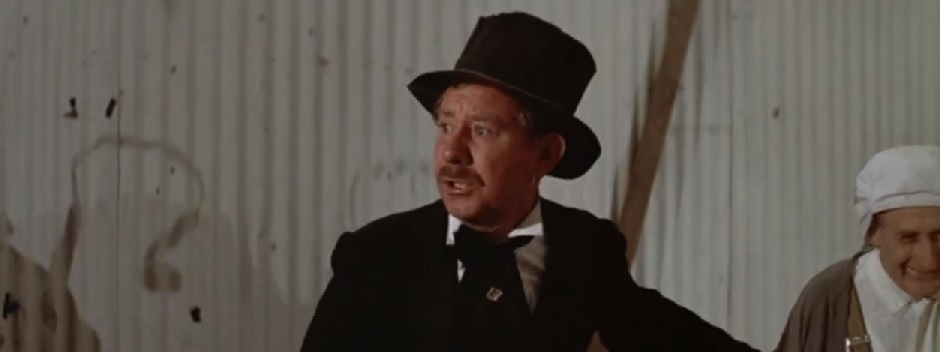
The Cars That Ate Paris (1974)

Directed by Peter Weir [Other horror films: Picnic at Hanging Rock (1975), The Plumber (1979)]

Sometimes known under the title The Cars That Ate People, this Australian film is just bizarre. When I first saw it rather young, I didn’t get it at all. While I understand the plot perfectly nowadays, I still don’t get it. It’s sort of a comedy-horror mix, but the comedy isn’t quite clear, and the horror is scarce.

Because of that, this is a hard movie to parse. The basic plot, which deals with a town that intentionally causes car crashes so they can salvage the wrecks (and help with their economy), is just so bizarre. There’s a doctor who does experiments on those caught in the wrecks – these experiments aren’t focused on near as much as you might expect, but that’s going on too. I don’t know. The movie makes sense, and the plot is coherent, but it’s such an odd film.

Truth be told, finding a normal horror film from Australia is always a tricky task. It seems that a lot of the horror movies I watch from that country are just off (Body Melt, Undead, Long Weekend, Razorback, Frenchman’s Farm), which is fine, because it gives them a unique feeling, but it’s always a bit of a challenge getting into them.

I liked John Meillon (Crocodile Dundee, Frenchman’s Farm) here, mostly because it was nice seeing a recognizable face. Terry Camilleri (who apparently played Napoleon in Bill & Ted’s Excellent Adventure, a fact that, now that I know it, I can actually see in the face) was fine, but his character honestly didn’t do much aside from experience the strangeness of the small Australian town of Paris along with the audience.

Plenty of interesting things happen throughout the film, but personally, I think by far the best portion is the finale, in which a bunch of the youth of Paris go on a rampage, and destroy a good portion of the town in their cars. Their cars are monstrosities – sure, some are just painted with shark mouths, but some have been modified (the most striking, a Volkswagen Beetle covered with impractical spikes), and they just rampage throughout the town. It’s not a long sequence, but it’s easily the most action-packed in the film.

When it comes down to it, though, The Cars That Ate Paris is just a bizarre movie. It’s an okay viewing experience, I guess, but it’s not one that I particularly enjoy, nor do I suspect it’s a film I’ll be seeing again anytime soon, if ever.

5/10

Il gatto a nove code (1971)

Directed by Dario Argento [Other horror films: L’uccello dalle piume di cristallo (1970), 4 mosche di velluto grigio (1971), Profondo rosso (1975), Suspiria (1977), Inferno (1980), Tenebre (1982), Phenomena (1985), Opera (1987), Due occhi diabolici (1990, segment ‘The Black Cat’), Trauma (1993), La sindrome di Stendhal (1996), Il fantasma dell’opera (1998), Non ho sonno (2001), Il cartaio (2003), Ti piace Hitchcock? (2005), La terza madre (2007), Giallo (2009), Dracula 3D (2012), Occhiali neri (2022)]

Known primarily under the title The Cat o’Nine Tails, I had to say that this Dario Argento film started out strong, and remained strong for a good portion of the hour and 50 minute runtime, but aspects of the finale just didn’t sit well with me.

It’s a mostly engaging mystery – I love how a newspaper reporter (James Franciscus) and a blind man (Karl Malden) were working together in order to solve some mysterious deaths. I liked the relationship of respect they had, and of course, having a blind character working as a detective is a unique choice, and he did fantastically.

Following up on the nine leads was somewhat less than satisfactory. I guess my main problem is that of the five scientists (played by Emilio Marchesini, Tom Felleghy, Aldo Reggiani, Horst Frank, and Tino Carraro), only a couple of them got any real focus, and without a clear distinction of character, which I’m not sure we got all that well, distinguishing between some of these individuals is a bit more difficult, and also lacks somewhat of a personal touch, given we don’t know all of them, at least to any real degree.

That’s not to say that the mystery wasn’t good, but I have to say, I don’t think it was near as engaging or interesting as what we get from films like The Black Belly of the Tarantula, Deep Red, or The Case of the Bloody Iris. It just lacked a bit of the personal touch, so while time mostly flew by (which is good, given the film’s runtime), I don’t know if the finale was entirely worth it.

Regardless, that doesn’t take away from both Karl Malden’s (Phantom of the Rue Morgue) and James Franciscus’ (The Last Jaws) performances. I thought the both of them did a great job, especially Malden. I liked what we got from Horst Frank (The Head, Eye in the Labyrinth) and Emilio Marchesini, but I don’t think either character was that fleshed out, and we only got surface level stuff. I wasn’t overly fond of Catherine Spaak’s character, but at least Franciscus’ character liked her.

Part of the mystery here involved some genetics testing regarding unusual chromosome distribution. I don’t know the modern-day science behind this – it sounds as though it’s something that was debunked years ago. The movie doesn’t spend too much time on this, but it’s part of solving the mystery, and it was definitely unique, so I thought I’d mention it.

I also wanted to say that the sequence in which both of the main characters were almost killed was pretty solid. Technically Malden’s was off-screen, and we only learn about it from a phone call, but Franciscus’ milk gets poisoned, and we’re treated to some solid tension as to whether or not he’ll figure that out before drinking it.

Few of the kills here really did that much for me, and that’s primarily because this film lacks the flair of later Argento works. Most of the kills are competent, but few really stand out (save for someone being pushed in front of a train and one of the final scenes in which someone falls down an elevator shaft). Many of them are done through first-person view, which does give a little something extra, but they’re not always the most exciting (some just consist of simple strangling).

When all is said and done, The Cat o’Nine Tails is an okay giallo, but compared to so many others (including some of Argento’s own films, such as Deep Red, Four Flies on Grey Velvet, and Phenomena) around the time, it just felt sort of weak.

7.5/10

La dama rossa uccide sette volte (1972)

Directed by Emilio Miraglia [Other horror films: La notte che Evelyn uscì dalla tomba (1971)]

Known under the evocative title The Red Queen Kills Seven Times, La dama rossa uccide sette volte is a giallo that has a decent amount going for it. Possessing a great mystery, fun plot, and memorable killer, it’s a very solid film, and one of the better gialli I’ve seen.

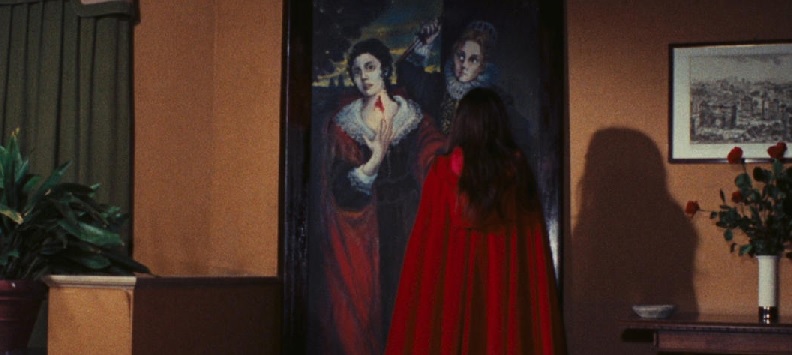
Firstly, I love the set up and the legend of the Red Queen, based on the painting seen in the opening. The Red Queen is killed by her sister, the Black Queen, and so the Red Queen returns from the dead to get her revenge, killing six innocent people, and for the seventh and final victim, the Black Queen, her sister. All of which is a long way to say that, indeed, The Red Queen Kills Seven Times.

It’s quite possibly among one of my favorite titles of a giallo.

In other news, the plot largely revolves around mysterious murders involving some sisters, a castle, a curse, a will, and some mixed-up identities, not to mention secret deaths and blackmail. It’s just a lot of fun all the way through, and like all great gialli, there’s a lot of viable suspects, and figuring out the mystery provides a good time. As it is, I don’t 100% love the finale – I wanted a little more oompf – but it was still quite well-done.

One thing this film succeeds in that few gialli really do is creating a memorable design of the killer. The Red Queen’s design is great – a woman in a red cape and hood, with a maniacal laugh every time she kills someone (and surprisingly, that laugh never once gets old). It’s a great killer, one that you’d expect from some 80’s slasher, and not that many gialli showcase great designs (as so many instead show black gloves and trenchcoats, which, to be fair, has it’s own charm).

Barbara Bouchet (The Black Belly of the Tarantula) made a solid lead, and had some great scenes, especially during her flashbacks. Really, though, most performances are solid, from Sybil Danning, Fabrizio Moresco, and Nino Korda to Ugo Pagliai, Marina Malfatti, and Pia Giancaro. Rudolf Schündler was nice to see, and while generic, Marino Masé (Contamination) certainly looked the part of a detective.

Directed by Emilio Miraglia (who also made the excellent The Night Evelyn Came Out of the Grave), The Red Queen Kills Seven Times isn’t a particularly gory giallo. There are some solid kills, such as a woman being tricked into climbing a fence, but then impaling herself on the spikes, or a good stabbing in the back of a van, but the kills here aren’t near as important as the mystery and occasional atmosphere, the same of which could fairly be said of The Night Evelyn Came Out of the Grave.

Also, portions here and there of the film take place in a castle. By no means is the castle necessarily central to the plot, but some of the better scenes take place in and around it, and it’s a very solid setting when it pops up, and gives the film a little Gothic spice, as Italian horror did often in the 1960’s.

The Red Queen Kills Seven Times was a pretty good movie. I don’t know if it’s good enough to make my top five gialli at the moment (with films like Deep Red, The Case of the Bloody Iris, and the early The Murder Clinic, it’s hard to crack the best of the subgenre), but it’s definitely a solid film, and with that great killer, isn’t a movie that’ll be forgotten.

7.5/10

Piranha (1978)

Directed by Joe Dante [Other horror films: The Howling (1981), Twilight Zone: The Movie (1983, segment ‘It’s a Good Life’), Gremlins (1984), The ‘Burbs (1989), Gremlins 2: The New Batch (1990), Trapped Ashes (2006, segment ‘Wraparound’), The Hole (2009), Burying the Ex (2014), Nightmare Cinema (2018, segment ‘Mirari’)]

Sometimes considered one of the better Jaws rip-offs, Piranha is a decently fun movie. It feels at times sluggish, and at times repetitive, but even with those mild drawbacks, there’s no doubt to me it’s an entertaining film with some good political messaging.

If anything, this film is further points out that we never should have gone to Vietnam. It was one of the biggest foreign policy atrocities in the history of the USA, and given the USA’s history, that’s certainly impressive. On August 4th, 1964, the USA claimed that North Vietnam attacked some US ships. It never happened, and led to a pointless war that killed millions of Vietnamese innocents, not to mention innocents from our own country, and why? Because communism was so scary to the USA that they had to attack those who preferred that system.

Wait, what? That might sound like a tangent, but it’s not. The fish in this film were made specifically to be dumped into North Vietnamese rivers in order to kill innocents and end a war the USA themselves started, and they wanted to kill these innocents (as they do to this day) all in the name of “defense.” Oh, and “the American way,” because the American way is to kill innocents, as both Republicans and Democrats have shown for the last hundred years.

To make my personal politics clear, I’m a socialist. I vote third party, and generally encourage others to look into doing the same. Most of the time, though, my politics don’t matter when it comes to horror. I might mention them every now and again, but horror films are generally about escapism, and Piranha is no doubt a largely fun movie.

But when you consider the origins of the fish to begin with, which sounds entirely inline with something the USA might do, it’s hard to laugh, especially as this abomination of a country has killed so many innocents abroad, and continue to do so to this day (our support of Israel, for instance, is disgusting).

This isn’t entirely about my politics, though – let’s talk some Piranha. Solid political messages aside, this film does take a little bit to get going. Things do pick up nicely around the halfway point, to be sure, but when they do, and the piranha begin attacking people in the lake, I can’t say it doesn’t feel a tiny bit repetitive. It’s all still fun, but even so, repetitive.

There are some great scenes – the raft scene early on is probably one of the more suspenseful raft scenes in horror (up there with The Burning and Creepshow 2), and it was well-done. Both the attack on the summer camp, as well as the water park, were great, and though we never really got too much in the way of gore, there was blood here and there, and you could see there were a hell of a lot of injuries from both attacks.

Bradford Dillman (Moon of the Wolf, The Mephisto Waltz, Fear No Evil) and Heather Menzies (Sssssss) make pretty solid leads. They’re entirely different people, but before long, they work together pretty well. Barbara Steele (Lo spettro, Nightmare Castle, Black Sunday) and Bruce Gordon make for good antagonists, and of course, you also get some appearances from familiar faces, such as Dick Miller (Gremlins, A Bucket of Blood), Belinda Balaski (The Howling), and Paul Bartel (Eating Raoul), all of whom add a little something.

Even with the fine performances and generally decent story, I can’t say Piranha has ever been a true favorite of mine. It’s a well-made movie, and things come the conclusion are pretty solid, but when it comes to the late 70’s, there’s so many other films I’d rather spend time with (Halloween, Phantasm, Alien, Orca, The Swarm, and Damien: Omen II all come immediately to mind).

Piranha is still a decent movie. It may even be a little above average, but it’s close. It’s a fun film, but being fun isn’t all a movie needs (at least in this case), and though it’s a film I definitely recommend, it’s not one I go back to all that often.

7/10

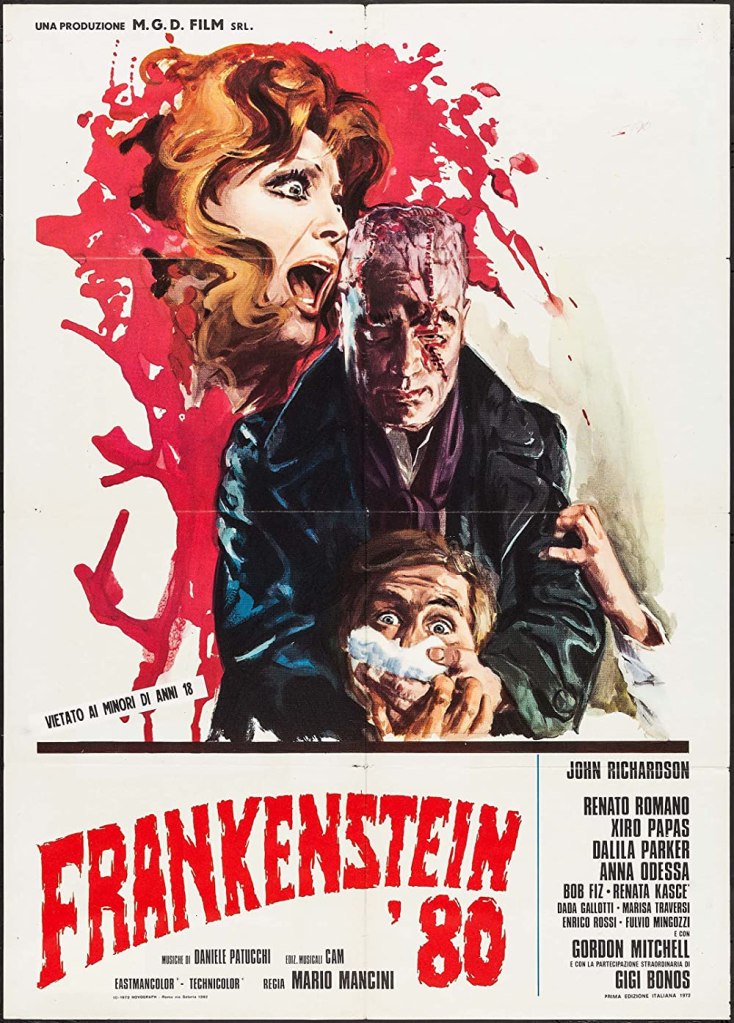
Frankenstein ’80 (1972)

Directed by Mario Mancini [Other horror films: N/A]

This Italian film isn’t really anything special, especially when you consider how rough the most common print of this film is. Even so, I’ve always found it on the more decent side of things, and though it probably doesn’t rise above average, Frankenstein ‘80 is a fun, trashy little movie.

Why it’s called Frankenstein ‘80, I don’t know. The ‘Frankenstein’ part makes sense – in the film a Dr. Otto Frankenstein creates a living being made of men, and christens it Mosaico (not a bad name, if I do say so myself). Where the ‘80 comes from, though, I’ve no idea. The body count is decent, but it’s not that high.

The print I own is from the Pure Terror 50 disc set from Mill Creek. It’s a rough print, as many of Mill Creek’s releases are – it’s sometimes blurry, the dubbing is so-so, and the aspect ratio may not be accurate (given the credits at the beginning of the film are cut off on both sides, which looks horrid). Even so, the nudity is intact, and the film itself isn’t too choppy, but this is a movie that might benefit from a higher definition release (and may already have one; I’m not exactly what you’d call up-to-date when it comes to Blu-ray releases).

Admittedly the story feels a little bit aimless for the final thirty minutes – at this point, Mosaico has escaped from the lab he was kept in and goes on a killing spree. Not that we don’t get kills throughout the movie, because we do, but it’s ramped up a bit, and throws in some more blood and nudity for good measure.

I liked John Richardson (Eyeball, Torso, and Black Sunday) as the lead, playing a reporter, and even more, I really liked how he was able to get the police chief, played by Renato Romano, on his side, and began working with him. Romano’s character even compliments him at the end of the film, which is a relationship I don’t see too often between police and reporters. Romano’s character was goofy at first, but I grew to like his irascible style, and I’m happy he finally got his cigarette in the final scene.

Gordon Mitchell (Dr. Frankenstein’s Castle of Freaks and Blood Delirium) did well as Frankenstein. We never really got much character from him, but we have enough background information to fill in the blanks. Playing the creature was Xiro Papas (The Beast in Heat, The Devil’s Wedding Night, and Sex, Demons and Death) who did a great job, especially given he wasn’t exactly the most emotive creature we’ve seen. Dalila Di Lazzaro (Flesh for Frankenstein) was probably the most generic of the main cast, but that’s mostly because at the end, her character annoyed me, as she was screaming as the monster was attacking a friend of hers, and instead of leaving the house to get help, she just stood there, screaming. Always a good use of one’s time in a situation like that.

None of the kills are the highest caliber, but for a Frankenstein movie, that can’t come as too much of a shock. Someone gets a hatchet to the face, others get strangled, someone gets their head bashed into a bathroom wall (which supplied some nice blood splatter), and another gets their throat slit. None of these are great scenes, but they’re mostly serviceable, and I can’t say any were bad.

That’s really how I feel about Frankenstein ‘80 as a whole. Even with the rough print, I enjoyed it the two times I’ve seen it, and though it’s by no means a stellar film, I do think it’s decent, and if you want an Italian horror from the early 1970’s that’s not a giallo, then check this one out.

7.5/10

The Pack (1977)

Directed by Robert Clouse [Other horror films: Deadly Eyes (1982)]

I don’t remember too much from the first time I saw this film, but revisiting it was quite the pleasant experience, as The Pack does pack a nice punch, and while dry at times, has some solid action come the final thirty minutes.

Based on a novel of the same name by David Fisher, the story is decently simple, and features a bunch of people on a small island trying to survive when a pack of wild dogs starts going after their previous best friends. Being a 70’s film, it can be dry at times, and it can be quite somber, but it’s actually not as hard to watch as other dog-related horror (White Dog is what immediately comes to mind), and the final scene is quite heart-warming (and it freezes on that frame as the credits start rolling).

The suspense is done quite well here, as are the multiple dog attacks. It’s not a violent film, but we do see the aftermath of one attack, in which a man loses all the fingers on one of his hands, most of the fingers on the other, and his eyesight. It’s pretty brutal, and I dug it. Also, while trying to avoid the pack, another individual takes a dive off a cliff, and though we don’t see the impact, we do see how successful the landing was, which also looked brutal.

Only a couple of performances really matter. Joe Don Baker (Wacko) makes a strong lead, and though I don’t really know the actor, I thought he definitely did well. Richard B. Shull has his moments, and R.G. Armstrong (who I recognized quickly from Children of the Corn) was a strong addition also.

Truth be told, there’s not too much to The Pack. It’s a solidly-made film, and though it takes a little bit to get going, it’s not near as dry as other films from the period can be (when I recalled it took place on an island, I got horrible flashbacks to The Food of the Gods, but luckily, The Pack is so much better).

With an exciting finale, plenty of good dog vs. human action, and quality suspense at times, The Pack has a decent amount going for it. It’s not an amazing movie, but it is pretty good, and certainly worth a watch.

7.5/10