Orca (1977)

Directed by Michael Anderson [Other horror films: Dominique (1979), Murder by Phone (1982)]

I’ve seen Orca once before, and found it a pretty solid experience. Seeing it again confirms that. While I wouldn’t call the movie great, I would argue it possesses a pretty solid story, and even more, a primal example of man versus nature.

Naturally, I have to applaud Richard Harris (Silent Tongue), who starts off as a rough, unlikable character, only to grow into a man accepting of his own fate. It’s a very solid transformation, and Harris does a great job with it. Doing some scant narration is Charlotte Rampling’s (Angel Heart, Asylum) character, which provides a good atmosphere for this. While admittedly a stereotypical portrayal of a Native American, Will Sampson (Poltergeist II: The Other Side) does well too, though I was somewhat surprised by his character near the end.

Smaller roles are provided by Peter Hooten (Night Killer), Robert Carradine (I Saw What You Did, Slumber Party Slaughter, 1996’s Humanoids from the Deep, Attack of the Sabretooth, Massacre at Central High), Bo Derek, and Keenan Wynn (The Devil’s Rain, Piranha, The Dark). Hooten probably stands out most among all of these performances, and he does become an intense character come the finale.

The story is one of pure revenge – off the coast of a small village in Nova Scotia, Harris’ character accidentally slaughters an orca’s mate and child, and because orcas have an intelligence near that of humans, it seeks it’s revenge. I don’t know the science behind that, but I do know the revenge was solid – the orca destroys other ships in the small, coastal town this takes place in, blows up what looks to be some type of power plant, even decimates Harris’ house and eats the leg off one of his subboardanants. It’s a quality time.

Actually, I forgot how long it took to get to the finale that I remembered – Harris’ character sailing north, following the Orca to the end of the earth (well, perhaps not that far, but there were plenty of icebergs in the water, and it sure looked mighty cold) – not that I’m complaining. The build-up was a bit slow, but all of it was fun. At least to watch, that is, as the movie had (as many 70’s movies do), a rather somber feel to it.

More than that, though, I was fascinated by the finale. I was when I first saw the movie, and I still am. Seemingly giving into the killer whale, Harris and his crew follow the whale as its leads them further and further north. Even the sequence they begin sailing out is great, as the townspeople are crowded on the docks, watching his boat sail off.

It has a really inevitable feeling to it. Ever since Harris truly understood the atrocity of his actions, I think he knew that he didn’t really have much of a choice but pit himself against the whale, especially given what we learn about his character’s background. In some ways, it’s a good character study, and though I’ve only seen this movie twice now, I doubt that I’ll ever forget the finale to this one.

Most of the violence is what you might expect from aquatic horror. A couple of people get consumed by a killer whale, a character gets one of their legs torn off, someone dies due to being buried by falling ice. Well, that last one might not be the first thing that comes to mind, but you get my drift. Sure, some people call this one of the many rip-offs following Jaws, but as I enjoy this more, and find it far more digestible, I can only say that the action here is all pretty top-notch.

I enjoyed Orca when I first saw it, and I enjoy it still. It’s not an overly special movie, but it is a very solid movie, and despite the reputation this has in some people’s minds, I personally think it has a lot to offer.

8/10
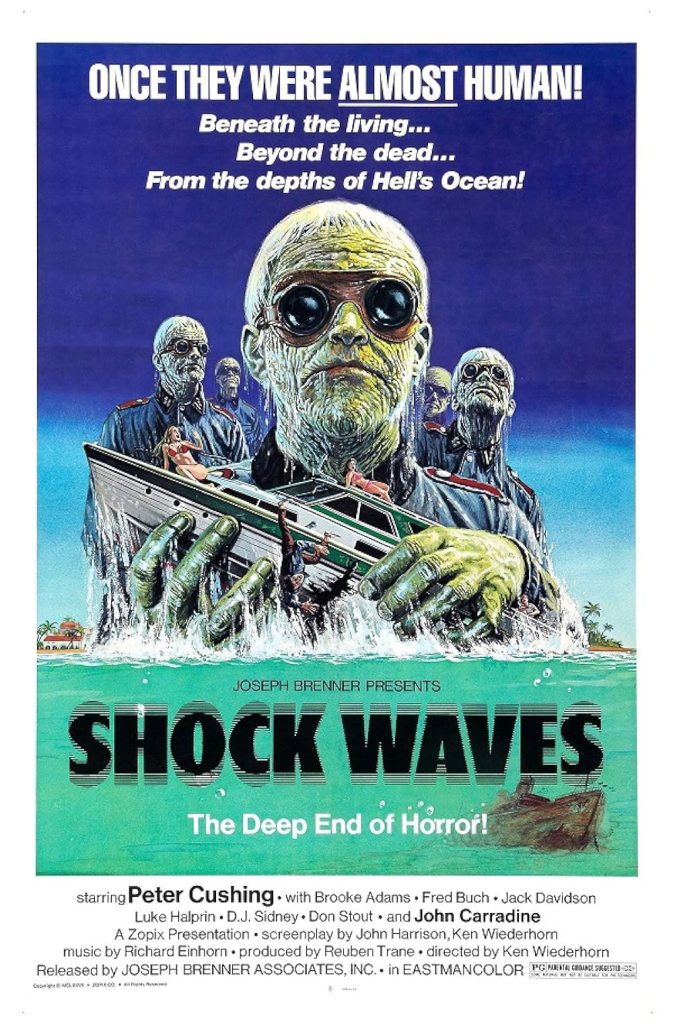
Shock Waves (1977)

Directed by Ken Wiederhorn [Other horror films: Eyes of a Stranger (1981), Dark Tower (1987), Return of the Living Dead: Part II (1988)]

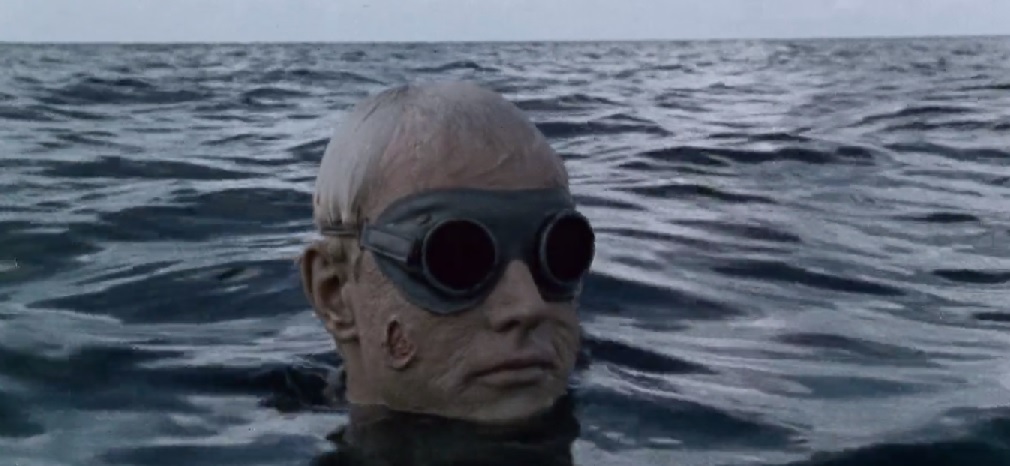
I’ve known about Shock Waves for over ten years now, and I’ve heard generally good things about it in that time. After seeing it, though, I think it’s at best okay, and I don’t personally know if it’s really a movie that will really stand out in the long run.

Like some 70’s movies, Shock Waves does move a bit sluggishly. That said, while most of the action isn’t going on until the final half hour, it’s a pretty atmospheric, and somewhat bleak, movie. It’s somber, and feels totally like the 1970’s atmosphere that I tend to expect.

Despite having Nazi zombies, I don’t think that this movie has quite the character of other 70’s zombie films, such as Tombs of the Blind Dead, Let Sleeping Corpses Lie/The Living Dead at the Manchester Morgue, and Sugar Hill. Certainly the movie does some things well, such as the atmosphere, but it just can’t pull everything past the finish line alone.

Neither Peter Cushing (The Gorgon, Scream and Scream Again, The Hound of the Baskervilles, Island of Terror, The Flesh and the Fiends, Night of the Big Heat, Dracula, The Creeping Flesh) nor John Carradine (Bluebeard, The Unearthly, House of Dracula, The Mummy and the Curse of the Jackals, Horror of the Blood Monsters) get a lot of screen-time, but obviously, both are icons of the genre, and as a personal fan of Peter Cushing, it’s always a pleasure to see him.

The real focal points are Brooke Adams (The Unborn, The Dead Zone, Sometimes They Come Back, Invasion of the Body Snatchers) and Luke Halpin, but unfortunately, neither one has much character. We literally learn nothing about either one of them; they’re just empty vessels being chased by zombies, and that’s it. Fred Buch did have character, and as such, was one of the more interesting characters, while Jack Davidson played one of the more annoying characters I’ve seen recently, but that’s not really enough to bring life to the film.

That might be the biggest issue – it’s a decent movie, but it’s just dry at times, reminding me of Death Ship every now and again, and when I’m reminded of Death Ship, that’s a problem. Most of the time, zombies just drown people, so it’s not some gore-fest like Zombi 2 either. It has atmosphere, and it’s somber, but that’s really all it has.

I’m not saying that Shock Waves is a bad film. I personally think it’s a bit below average, but it definitely has some charm. Others seem to enjoy it a bit more than I did, and I would say that if you’re into zombie movies, Shock Waves may be worth checking out, but it didn’t personally wow me by any stretch.

6/10

Rattlers (1976)

Directed by John McCauley [Other horror films: Deadly Intruder (1985)]

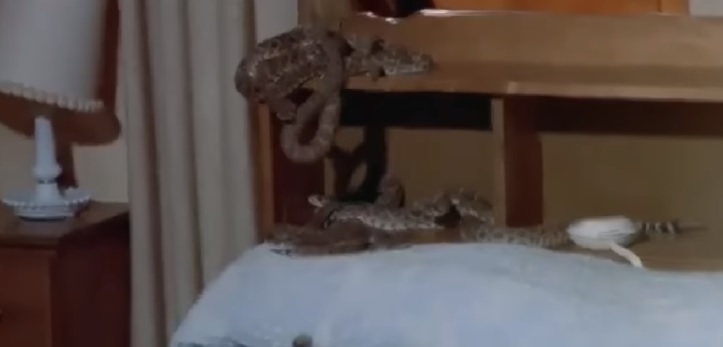
Certainly a movie with potential, Rattlers was an okay entry into the mid-1970’s. The finale is pretty sudden, and the overall story seems sort of lackluster, but I didn’t exactly have a terrible time watching it.

I do think it’s fair to say that, compared to other animals-gone-mad films from the 1970’s, that Rattlers is on the lower end. Sure, it’s better than The Food of the Gods and possibly more entertaining than Grizzly (though not a better film overall), but there are plenty of more enjoyable films, such as The Swarm, Phase IV, Squirm, Piranha, The Pack, Nightwing, Jaws 2, Stanley, Kingdom of the Spiders, Orca, Prophecy, Tentacles, hell, even Night of the Lepus.

My point is that though I don’t think Rattlers is awful, it’s certainly not a stand-out movie. The finale seems to pop up so suddenly, and I personally found it widely unsatisfactory, which isn’t helped any by the lack of good snake action in the last half hour.

In fact, many of the later snake attacks seem so weak. One of them happened in a mine, which might sound good, but it wasn’t executed very well. Another had two characters in a tent surrounded by snakes, but that didn’t even feel that action-packed either. I think there were some good snake attacks – a plumber getting bit while under a house, and a woman attacked in a bathtub as snakes slither through the pipes – but you can’t really tell that from the final half hour.

One thing I was mildly amused by was the small point of Elisabeth Chauvet’s being a woman photographer, which upset the patriarchy, in the form of lead Sam Chew Jr.. Chauvet’s character made good points about how there weren’t women holding high positions, and Chew Jr.’s character just waved the explanations off. This point is muddled by the fact that, of course, the two of them fall in love and engage in carnal activities and have an out-of-place date that lasts a minute in Las Vegas, but hey, it’s the 70’s, who needs equality, right?

There’s also a portion which deals with the mystery behind why the snakes here are so aggressive, which, of course, is all the fault of the Commies. See, Communists had a better political system than capitalists did, and the USA (capitalism’s #1 defender) lied about the Gulf of Tonkin to get young American boys killed in Vietnam. Naturally, biowarfare is the only way to defeat a better economic system, and so due to the Communists, the American military created deadly snakes.

Damn those Commies.

Actually, it’s somewhat amusing, because this same idea was also used in Piranha, which came out a couple of years later. In both, the military is so intent on killing innocent people in Vietnam that they wind up killing innocent people in the USA, but then again, that’s how the military do.

As a socialist, it’s always nice to see solid political messages come up (which is one of the reasons that Prophecy, from ‘79, is a personal favorite). It doesn’t play a huge part here, though it does lead into what truly is a weak finale.

Sam Chew Jr. (Time Walker) makes for an okay lead. Honestly, he never really came across as having that much in the way of character, but he had a good look to him. Elisabeth Chauvet was okay, but she never really added that much to the story, and was pretty forgotten by the end. Lastly, Dan Priest was, I guess, okay. I mean, he seemed pretty ridiculous toward the end, but I’m guessing his character had an off-screen mental breakdown, so it’s all cool.

The more I consider Rattlers, the weaker I think it is. For the first hour or so, it honestly wasn’t a bad time, but the last twenty minutes really dropped the ball. It’s definitely a below-average film, and though I maintain it’s still not terrible, I can’t blame others who tend to think it is.

5.5/10

Let’s Scare Jessica to Death (1971)

Directed by John D. Hancock [Other horror films: N/A]

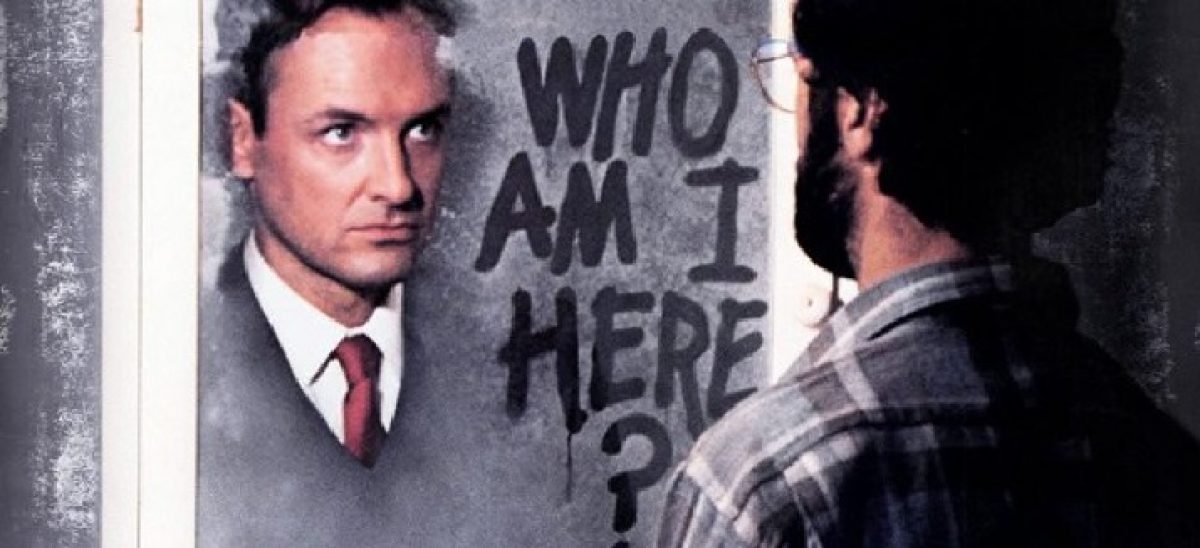
Though I’ve seen this cult classic before, it’s been quite some time, and truth be told, I didn’t recollect too much of it before going in. Let’s Scare Jessica to Death isn’t an easy movie to describe, and I’m not even sure if it’s fair to say I enjoy it, but I do think it’s a special little movie that may well be worth seeing.

In many ways, this movie really feels like a product of it’s time. It reminds me a bit of both Warlock Moon and Welcome to Arrow Beach, in that it just possesses the sensibilities of the early 1970’s. Now, true, I wasn’t born until 1993, so it’s quite possible I know little about the sensibilities of the early 70’s, but even so, this movie has it.

Honestly, though, this isn’t an easy film for me to write about. The story sort of feels free-form in some ways – the finale doesn’t explain much of what’s been going on – but in this case, I don’t think that’s a bad thing. In fact, I think it adds to the dreamy atmosphere of this one, and at times, I’m reminded a bit of Phantasm.

With that said, though, it’s more than that. This movie feels comforting, calming, relaxing. There are tense moments and uneasy scenes toward the finale, no doubt, but the overall aura of this one is almost soothing. Part of it has to do with the 70’s atmosphere of the film, some of it has to do with the way they approached the story, and some of it has to do with the soft, peaceful music that plays throughout; whatever combination of parts that makes this work, though, I just know it does, and I’ve rarely described a horror film as ‘peaceful,’ but I certainly am now.

And on that note, I’d argue it’s more the atmosphere and feeling of Let’s Scare Jessica to Death that causes it to stand out, as opposed to the story. The story is decently haunting at times (a few moments bring to mind Ghost Story), but it’s also true that it almost feels aimless, and it’s certainly slow. It doesn’t harm the film any, because it just adds to what ends up a rather soothing, captivating movie, but it is slow, and I sort of doubt those who are really into modern horror would fully understand the charm of this one.

In fact, I don’t fully understand the charm of this one. I just know I was engaged throughout the movie, and it had little to do with the performances, which I found somewhat average, or the story, which is never fully expanded on, or the first-person narration style the film’s presented in.

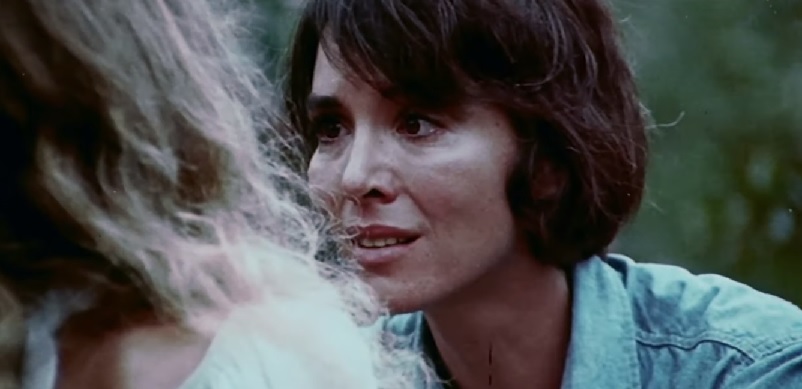
Zohra Lampert’s performance was okay. To be honest, it felt a bit shaky at times, but I think that has more to do with the fact I didn’t really get these characters rather than Lampert’s performance itself. Oh, and the fact her character was recently released from a psychiatric hospital may too play a part. Honestly, none of the other performances, be it Mariclare Costello, Barton Heyman, or Kevin O’Connor, did a lot for me, but again, I think it’s more the characters than anything else.

Another aspect that shouldn’t go overlooked is how Lampert’s character was dealing with some undefined mental illness, a fact that she thought about quite a lot during her narration. It’s possible that much of what we see and experience in the film isn’t actually what’s going on, and certainly her reaction at times does lend some potential credence to that idea, but it’s an ambiguous film, so if you’re expecting a clear-cut answer, you may want to look elsewhere.

This may be easy to tell, but this movie just sort of hits different. It’s vibe is something that I’ve rarely seen, and though I can’t say that I necessarily enjoyed the movie, I can say that it’s calming, soothing atmosphere was quite a balm in these trying days. Oh, and we got a little bit of blood toward the end, which was nice too.

Let’s Scare Jessica to Death isn’t an easy movie for me to write about, which may well be evidenced in my ramblings above. Like I said, I’ve seen it before, but it’s been a long while, so much of it felt new, and I definitely didn’t remember how unique the film felt. It’s not a movie that will work for everyone – aside from the story, it can be a bit slow and perhaps muddled – but I’ve not seen many movies that felt like this one, so that has to mean something.

7.5/10

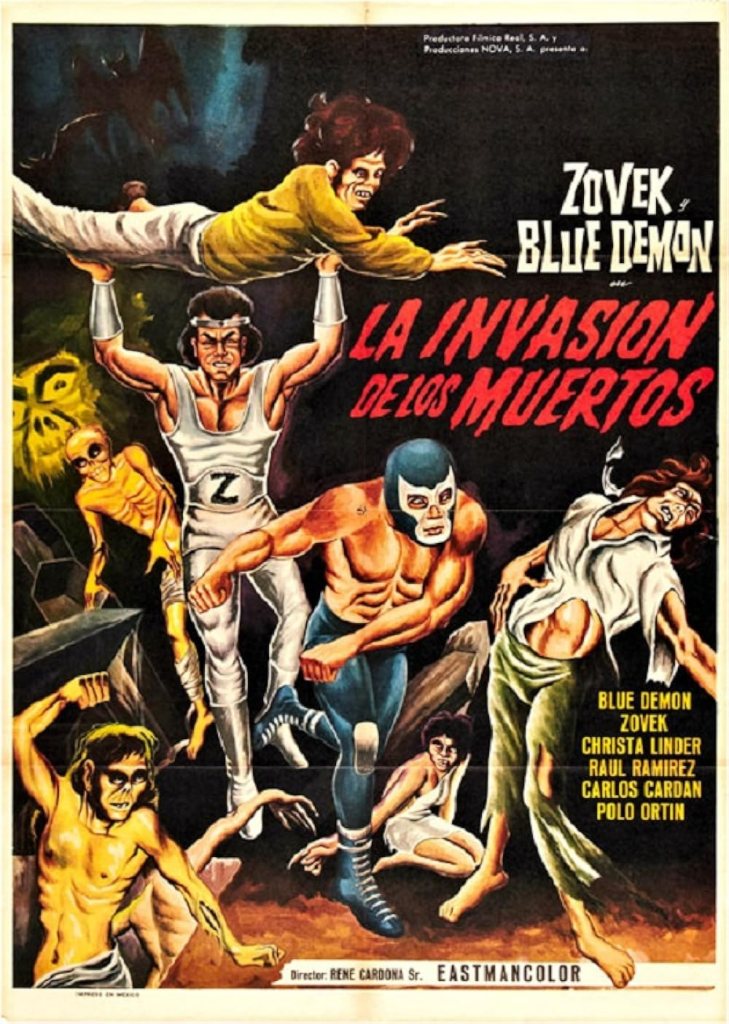
Blue Demon y Zovek en La invasión de los muertos (1973)

Directed by René Cardona [Other horror films: El espectro de la novia (1943), La mujer sin cabeza (1944), The Living Idol (1957), La Llorona (1960), Las luchadoras contra el médico asesino (1963), Las luchadoras contra la momia (1964), Santo vs el estrangulador (1965), Espectro del estrangulador (1966), Las mujeres panteras (1967), La mujer murcielago (1968), Las luchadoras vs el robot asesino (1969), La horripilante bestia humana (1969), Santo en El tesoro de Drácula (1969), Santo contra los jinetes del terror (1970), Santo en la venganza de la momia (1971), Capulina contra los vampiros (1971), El increíble profesor Zovek (1972)]

Known in the USA as The Invasion of the Dead, Blue Demon y Zovek en La invasión de los muertos is a movie that is utterly unlike most things I’ve watched. That alone doesn’t make it bad, but even so, this isn’t that good.

Now, I’ve seen it once before, but like two other Mexican horror films in the same vein I’ve seen (Santo contra la magia negra and Santo el enmascarado de plata y Blue Demon contra los monstruos), I saw this without subtitles, which, as you can guess, makes it rather hard to tell what’s really going on. This time around, I understood more. Well, sort of – whatever the Hell Zovek was rambling on about most of the time, I didn’t quite get – but otherwise, I certainly got more clarity.

If you don’t know either Blue Demon or Zovek, I couldn’t say I blame you. This is a luchador film – a film that stars Mexican wrestlers of the Lucha Libre variety. Blue Demon, or Alejandro Moreno, wears a mask throughout, and Zovek has a headband he rarely removes. As far as I can tell, at least from this film, Zovek is both a mentalist and an escape artist, along with being talented in hand-to-hand combat, while Blue Demon is a historian/scientist who runs some information agency, and also knows hand-to-hand combat.

Oh, it’s also worth mentioning that, as the film is known here as The Invasion of the Dead, this is a zombie movie. Sorry – when a film has random things like wrestlers going on, some of the more important pieces get pushed to the side of my mind.

The basic idea of the film is that an object is sent from alien beings to Earth, and this object (a sphere) brings the dead back to life. Apparently Professor Zovek (his full title) believes this to be due to an old calendar that predicts calamities. Oh, he also, toward the end, was attempting to contact the master who trained him telepathically, but his master couldn’t be reached, which would have been a good sequel hook, had Zovek not died in 1972 (at 31 years old) from a helicopter crash.

Actually, it’s on that note that I should also mention that, unlike what you might expect from the title, Zovek and Blue Demon get virtually no on-screen time together. This is perhaps because of Zovek’s untimely death, and Blue Demon being pulled in to finish up the movie. To be fair, the movie doesn’t feel too disjointed due to that unfortunate incident, but it does go a long way to explain that Blue Demon doesn’t have any action sequences until the final 15 minutes of the movie.

When it comes to the zombies, well, I had to admit I wasn’t impressed. For the most part, the only way one could tell they were zombies was due to either their blank stare or rigid way of walking. No make-up went to making any of them look particularly zombie-esque. Hell, even Sugar Hill threw cobwebs on their faces, but no luck here. Related, there’s about zero special effects, unless you want to count the occasional fire. That’s not that surprising, given this was a Mexican film, but even so, a zombie movie without any blood always struck me as sad.

As far as the performances go, it’s really hard to judge. I suspect that, for the most part, Blue Devil (or, again, Alejandro Moreno) and Professor Zovek just played themselves. Zovek got much more screen-time than did Blue Devil, which I’d say was a good thing, as Blue Devil had a subordinate who was used exclusively for ‘comedic effect’ (played by Polo Ortín), and he got old pretty quick. Speaking of pretty, Christa Linder (Night of 1000 Cats, The Incredible Invasion, and The Drifter in the Rain) didn’t have a lot to do, but she did wear some tight jeans and a tight shirt, so I had little to complain about.

Horror-wise, it’s rather hard to recommend the film. Sure, some of the sequences in the second half were fun, such as Zovek fighting off a zombie attack in a cave (twice, if not three times, he picks up a zombies and throws them back to the group), or Blue Demon fighting two random werewolf-type guys (don’t ask me where they came from – I honestly have no idea, they just popped up one scene), but those scenes struck me as more fun than horror. There was a cool scene of zombies slowly walking through a graveyard, but otherwise, this movie never felt all that spooky at all, which, while not necessarily surprising, was disappointing.

As it was, I was happy to see The Invasion of the Dead again, especially as I had subtitles this time around. I imagine some of you know how tedious it can be to watch a film in a different language with no subtitles, but if you don’t, I can personally attest to it rarely being a fun time. In this case, even with subtitles, the movie was hella slow, and I didn’t have that much fun with it, save a scene here or there.

If you’re interested in seeing Mexican horror films, or early post-Night of the Living Dead zombie films, this might be worth checking out, but otherwise, I wouldn’t really urge people to do so.

4.5/10

Flesh for Frankenstein (1973)

Directed by Paul Morrissey [Other horror films: Sangue per Dracula (1974), The Hound of the Baskervilles (1978)] & Antonio Margheriti [Other horror films: Il pianeta degli uomini spenti (1961), La vergine di Norimberga (1963), Danza macabra (1964), I lunghi capelli della morte (1964), Nude… si muore (1968), Schreie in der Nacht (1969), E Dio disse a Caino… (1970), Nella stretta morsa del ragno (1971), La morte negli occhi del gatto (1973), Killer Fish (1979), Apocalypse domani (1980), Alien degli abissi (1989)]

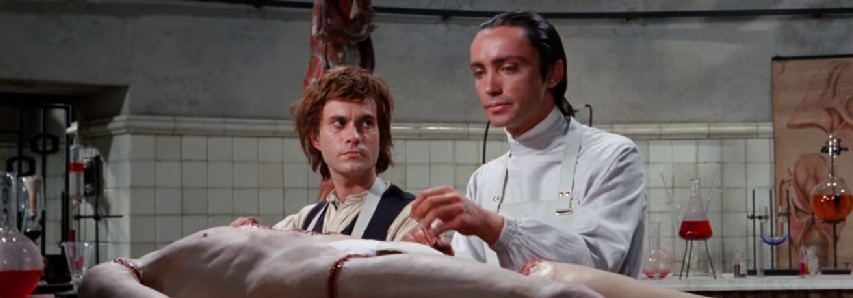
Flesh for Frankenstein, sometimes commonly known as Andy Warhol’s Frankenstein, isn’t a movie I enjoyed at all. It had some disgusting gore and sexual depravity, which is all good and well, but I personally found the acting quite horrid and the story rather meandering.

As it is, I’ve actually seen this film before. I can’t imagine under what circumstances, though – I couldn’t have been older than 14, as I barely remembered any of this. And in fact, the idea that I actually sat through this movie at that age, if accurate, is a testament to my devotion of the genre. Well, either that, or the idiocy of my youth.

Yes, that may well sound like a dig at the movie. I know it’s a film that some people do rather enjoy, and I can partially see why. The gory sequences are pretty solid, and even I will admit that the finale was overall enjoyable. Some of the dialogue is rather quotable (from “You filthy thing!” to the classic line “To know death, Otto, you have to fuck life in the gall bladder!”), and certainly the horrible acting can add to the charm, but even so, I generally found the film tedious.

Udo Kier (who I know from films such as Pray for Morning, Love Object, and Shadow of the Vampire) was just awful in this. Half the time, he literally reminded me of Tommy Wiseau, which was amusing, but probably not good. Just as good was Arno Jürging (Andy Warhol’s Dracula). Joe Dallesandro (The Gardener and Black Moon) was at least fine, and while I couldn’t stand her character, Monique van Vooren was serviceable, at least when she wasn’t sucking on someone’s arm (I’d say it makes sense in context, but I’m not sure that it does).

Certainly there are some WTF scenes, such as one where the Baron is rather involved with a corpse (after shouting at his assistant to look away, calling him a filthy thing), and that scene certainly is disturbing. It leads to the classic line about life and fucking gall bladders, so there you go. There’s certainly plenty of nudity and gore here, and while that might help in some cases, it doesn’t really impact things much here.

Don’t get me wrong – I liked seeing the gore, and it’s especially solid near the end, in which a door is slammed on a character’s hand, cutting it off (and that dismembered hand is later thrown at another character, amusingly enough). That was quality gore, as was an amusing decapitation early on in the film. The blood certainly runs free in the film, which is far from a bad thing.

The problem, though, is that much of the film, save the enjoyable finale and tense final minutes (which I rather enjoyed) feels like a soap opera. There’s a husband who has no time for his wife, who is a sex maniac, and thus seeks companionship elsewhere, such as farmhands. The farmhand in question has a friend who is considering becoming a monk, so he tries to get that friend laid in order to show him what he’ll be missing. Oh, and there are children mucking about also, but they aren’t really important until the final twenty minutes of the film.

Oh, also worth mentioning, the husband and wife are also brother and sister. I was confused at first, wondering if I was hearing that right, but it became obvious that I was indeed accurate in my hearing. Talk about a messed up family, what with some Targaryen shit going on here.

I can see why Flesh for Frankenstein would appeal to some people, but I just couldn’t get that much enjoyment out of it, save a few scenes. It’s not a movie I found utterly unredeemable, but I really didn’t care for a lot of it. I felt so much of it was tedious, and overall, it wasn’t what I’d personally call a good time.

5/10

The Crazies (1973)

Directed by George A. Romero [Other horror films: Night of the Living Dead (1968), Hungry Wives (1972), The Amusement Park (1975), Martin (1976), Dawn of the Dead (1978), Creepshow (1982), Day of the Dead (1985), Monkey Shines (1988), Due occhi diabolici (1990, segment ‘The Facts in the Case of Mr. Valdemar’), The Dark Half (1993), Bruiser (2000), Land of the Dead (2005), Diary of the Dead (2007), Survival of the Dead (2009)]

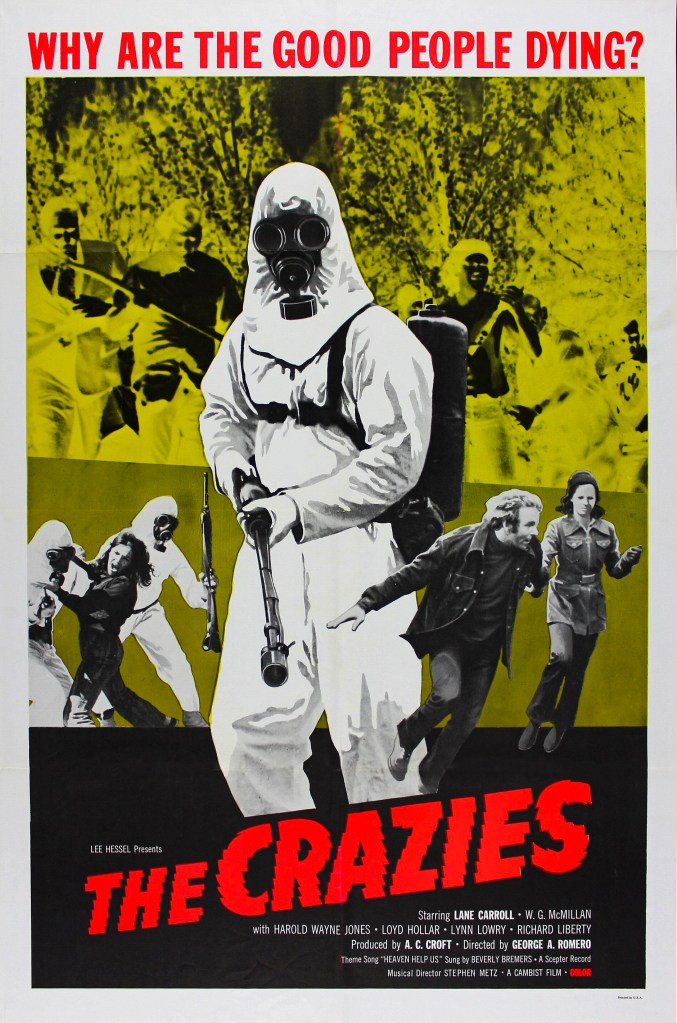
While The Crazies isn’t a favorite of mine, I always found it a unique take on a not too uncommon story, at least nowadays. It’s a bit meandering at times, but it’s overall solid, and has some strong elements.

It’s hard to pinpoint the antagonistic force here, which is partially why I find the film interesting. Certainly those infected with the virus would count, but the army invading a small Pennsylvania town would count also, and while they were following orders, they were also stealing money and other things (such as fishing poles) from private citizens, so the soldiers here are also sinister. So is the military sending the orders out – a plane crashed that had a bioweapon on it, and because of “national security” they need to round up American citizens like cattle.

Sometimes this is a frustrating movie to watch. It’s like a much more focused version of The Stand. I get needing to contain a virus, but of course if you don’t give adequate information to people, the people will fight back. Those soldiers who were killed throughout the film didn’t deserve that, but the higher ups in the military certainly did, and the fact that, as far as the film itself went, we never saw the story get out to the media about how a bioweapon created by the USA caused this, so appropriate blame could be placed on the American government, was sort of disheartening (not that you could expect anything less from the guy who ended Night of the Living Dead as he did).

My views on unjust military takeovers to cover their own mistakes aside, there are times when The Crazies doesn’t feel exactly well-written. We have our protagonists (Will MacMillan, Harold Wayne Jones, and Lane Carroll) and we have our insight into the military’s plans (mostly from Lloyd Hollar), but there are times when things don’t really feel focused. There’s action throughout, mostly revolving around the townspeople defending themselves from the invaders, but there’s still a bit of a dry aura at times here.

Few of the actors and actresses here stood out. I liked Will MacMillan as a lead, especially toward the end, and Harold Wayne Jones got some good scenes in, but it’s Lloyd Hollar’s role as the military colonel I found most interesting. I think he was trying his best with the situation thrown at him, but incompetence from the higher ups just made his job functionally impossible. I felt quite bad for Richard France’s character, and Lynn Lowry (one of the few to make a career of movies, as she was in films such as Beyond the Dunwich Horror, Shivers, and Basement Jack) had some solidly creepy moments.

It’s not at all a gory movie, and to be clear, it’s also rather low budget (though what George A. Romero was able to do with the budget, making a film with a rather fast-paced and tense plot, was impressive). There is a fun scene in which a bunch of townspeople attack the soldiers, one of them attacking with a pitchfork, stabbing a soldier’s wrist. In another scene, there’s a pretty solid headshot. Most of the violence here is due to gunfire, so there’s not many stand out scenes.

Which really applies to the movie as a whole. I’ve only seen it twice now, but despite it not being a great film, I also sort of liked it. It occasionally has a similar vibe to Night of the Living Dead, though as I said, this is significantly faster paced. Portions of the finale are quite tragic, but in a quiet way, and I think that, despite the best efforts of some involved, containing the biological weapon Trixie may not be something that’s even accomplishable.

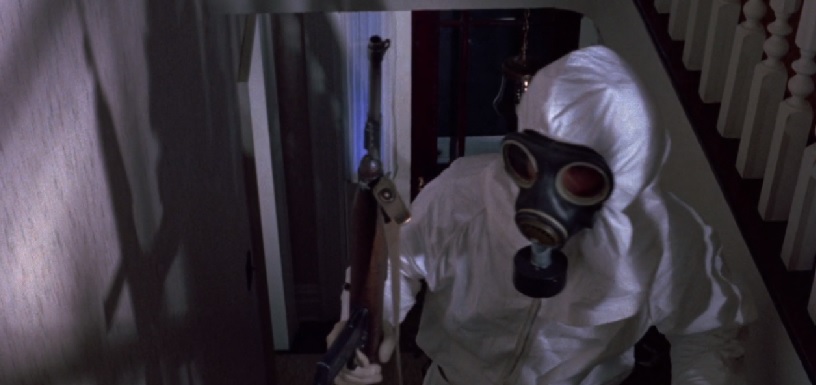
Definitely a lesser work by Romero, but one that does have some charm, I think The Crazies is really around average. I rate it a little higher, due to the rather creepy suits the soldiers wear throughout, but this certainly isn’t a masterpiece in my eyes.

7.5/10

Whiskey Mountain (1977)

Directed by William Grefé [Other horror films: Sting of Death (1966), Death Curse of Tartu (1966), Stanley (1972), Impulse (1974), Mako: The Jaws of Death (1976)]

Aside from some nice scenery and a rather disturbing rape sequence, Whiskey Mountain doesn’t really have a lot to offer. It’s an okay backwoods exploitation movie, but it’s rather short on the horror aspects, and I don’t know if the action during the end is really enough to boost this movie up.

It does look nice, though. Apparently filmed in North Carolina (at least according to IMDb, and who knows how accurate that is), the scenery is quite beautiful. We got a lot of shots of the mountain and the forests, lakes and rivers, and it looks quite peaceful, aside from the murdering and raping pot dealers and corrupt police force, but that’s just how it’s done in south, apparently.

If Whiskey Mountain tells you anything, it’s that we should just go ahead and legalize marijauna nationwide. We should have done it back in the 1950’s. If we did, then there would be no need for the marijuana growers in this film to take four people captive, as it could just legally be grown and sold. That’s what anti-marijuana laws get you, alas.

Seriously, though, Whiskey Mountain is a movie that I wish I liked more, and in fact, I did like more when I first saw it. It’s quite possible, though, that I was just so stoked to see it way back when I did (I’m pretty sure when I first saw this, Whiskey Mountain had under 60 votes on IMDb – now it has 265 and is widely available on Tubi), and didn’t pay attention to the actual movie. It’s even more likely that was in October, a month when I watch so many movies, it’s not always easy to get an honest and accurate reading on them in the moment.

The problem here is two-fold: for one, it’s a bit slow throughout, and when things to start going in a more action-oriented direction, I can’t say it’s the most exciting stuff (save for the motorcycle jump – that was pretty cool), and two, while I have no problem calling Whiskey Mountain horror, the horror elements are quite scarce. They pop up in a scene or two, but it’s by no means a strong part of the film.

Of course, it is always nice to see Christopher George (Grizzly, Day of the Animals, City of the Living Dead, Graduation Day, Pieces, and Mortuary), and he does well here, as do the other three central stars, being Preston Pierce, Linda Borgeson, and Roberta Collins. John Davis Chandler (Phantasm III: Lord of the Dead and Mako: The Jaws of Death) made for a solid antagonist, though I wish he had a better resolution.

They’re not the only stars, though. Y’all know Charlie Daniels, I’m betting. Well, the Charlie Daniels Band did the theme for this film, surprisingly titled “Whiskey Mountain.” It pops up during one of the scenic portions at the beginning, and again during the credits, and it’s not a bad song. Not as catchy as “The Legend of Wooley Swamp” or “The Devil Went Down to Georgia,” but then again, what is?

If there’s one thing that people are apt to remember about Whiskey Mountain, it would be the rape sequence. Mercifully, we don’t actually see anything, but what we do see is haunting in it’s own way. Pictures are being taken of the two women – polaroids that we see darken – and as the screams continue in the background, we see more pictures – forced kissing, then the women in their underwear, and then just a face in pain. The morning after the rapes is haunting too, and this whole sequence is probably the most striking in a movie that’s otherwise quite tame.

Whiskey Mountain is a movie that I wish I got more out of, but life doesn’t always give us those gifts. It’s not a bad movie for seeing motorcycles, mountains, and men with guns, but if you want some really good southern hospitality, check out Hunter’s Blood.

5.5/10

Non si sevizia un paperino (1972)

Directed by Lucio Fulci [Other horror films: Una lucertola con la pelle di donna (1971), Il cav. Costante Nicosia demoniaco, ovvero: Dracula in Brianza (1975), Sette note in nero (1977), Zombi 2 (1979), Paura nella città dei morti viventi (1980), Gatto nero (1981), …E tu vivrai nel terrore! L’aldilà (1981), Quella villa accanto al cimitero (1981), Lo squartatore di New York (1982), Manhattan Baby (1982), Murderock – Uccide a passo di danza (1984), Aenigma (1987), Zombi 3 (1988), Il fantasma di Sodoma (1988), Quando Alice ruppe lo specchio (1988), La casa nel tempo (1989), La dolce casa degli orrori (1989), Un gatto nel cervello (1990), Demonia (1990), Hansel e Gretel (1990), Voci dal profondo (1991), Le porte del silenzio (1992)]

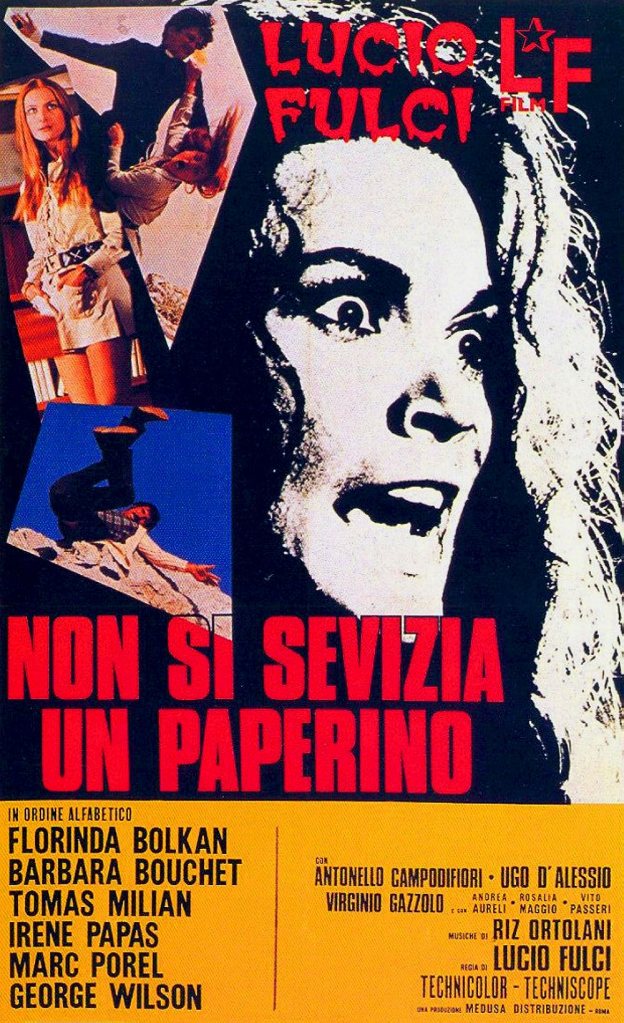
For a long time, Don’t Torture a Duckling (the well-known English title of this giallo) has been among my favorite Lucio Fulci films. That’s probably still true, as it’s a pretty solid giallo, and while not overly violent, has a decent amount going for it.

The story is fun, and somewhat atypical as far as gialli goes. The victims are almost exclusively young boys, and while their deaths aren’t violent (they mostly seem to be strangled or suffocated), there is a certain pleasure in seeing a younger victim range, as not too many films deal with dead kids.

I also love the setting, being a rather rural and small Italian town. It’s filled with superstitious people, which unfortunately plays a part later on in the film when some confessed killers come out of the woodworks. There’s a lot of mob mentality in the film, kept in check partially by the mostly logical police force.

Most of the central performances were pretty good. Tomas Milian was a bit generic, but he was more interesting once he began working with Barbara Bouchet’s (The Black Belly of the Tarantula, The Red Queen Kills Seven Times) character. The main faces we see from the police force were all fun – especially Virgilio Gazzolo, but both Antonello Campodifiori and Ugo D’Alessio were solid also. Marc Porel (who died at the young age of 34 in 1983) was great here, and Florinda Bolkan had quite the tragic story to her.

Unlike later Fulci films, this movie is pretty tame as far as the violence goes, with two exceptions. There’s a sequence in which a woman is beaten with a chain – if you remember the opening to The Beyond, it’s quite similar. It looks hella painful to get chain whipped across the face, so I may avoid that part of Italy. Also, there’s a character who falls off a mountain at the end, and their face bumps and scrapes against the mountain. The thing falling is obviously a dummy – it looks incredibly fake. Even so, the sequence is quite fun.

In fact, the finale is quite great overall. During the scene in which the character is falling to their death, we’re given flashbacks as to explain the reasoning behind the revealed killer’s actions, why they went out of their way to kill kids. It’s even a bit emotional, with soft music playing in the background, and it’s a finale, despite the dummy, that has always stuck with me.

Like I said, this has been my favorite Fulci film for a long time, and I think that’s still pretty true. I finally watched The New York Ripper earlier this month, and I quite liked it, and it might be fair to say that Don’t Torture a Duckling is on par with that one. Even so, I think this one is a bit better – the mystery is mildly more interesting, and the finale is definitely a bit stronger.

I don’t think Don’t Torture a Duckling is perfect. Unlike Dario Argentino with Deep Red, Fulci’s been unable to amaze me quite that much. Even so, Don’t Torture a Duckling is quite a good film, and definitely a giallo that’s worth seeing.

8/10

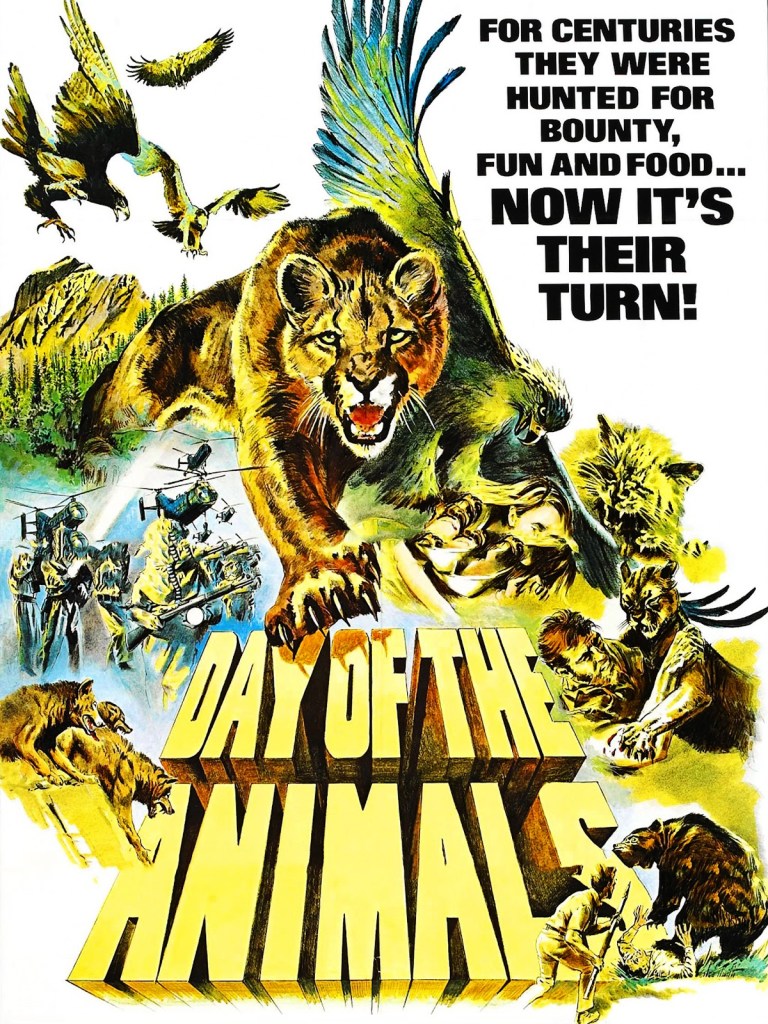
Day of the Animals (1977)

Directed by William Girdler [Other horror films: Three on a Meathook (1972), Asylum of Satan (1972), Abby (1974), Grizzly (1976), The Manitou (1978)]

I fundamentally think Day of the Animals is a fine movie. It’s not quite as action-packed as I personally would have hoped, and the build-up at the beginning takes a bit, but it’s an okay film. I don’t think it’s a necessarily good movie, but for what it is, it’s okay.

I think what really took a bit to get used to is that despite having a variety of animals going wild to a depletion of the ozone layer, there’s not really that many animal attacks. Sure, there’s a wolf, a bear, some snakes, big cats, and birds, but it’s not quite as quick-paced as you might hope. That might make sense, though, given William Girdler directed this one, and he was also behind Grizzly, which I also found a tad on the sluggish side.

The story’s not bad, with a bunch of people going on a guided hike and coming across the wild and dangerous behavior of the animals, which of course causes some dissent in the group in the form of Leslie Nielsen’s character. It’s almost sociological in it’s approach at times – if man loses all sense of law and order, what horrors might they commit? It’s not heavy in that type of thing, but from Nielsen’s character, is does come up.

I’ll say that Neilsen (Prom Night, Dark Intruder, Creepshow) played a horrible character pretty well, and when he got #mauled, I can’t say I wasn’t glad (though I do wish it were a lot more violent, with screaming and limbs being torn off in gory agony and the like). I think the best character here, without much hesitation, would be Michael Ansara (Abbott and Costello Meet the Mummy, The Manitou, Dear Dead Delilah), who is a great guy, and has to deal with racism (he’s Native American) along with the killer animals. Both Christopher George (Graduation Day, City of the Living Dead, Pieces) and Lynda Day George (Beyond Evil, It Happened at Lakewood Manor, Fear No Evil) were fine, but neither one was that memorable.

And despite the premise of the film, I don’t think many of the animal attacks were that memorable, either. You had the white water rafting with wolves (technically dogs, but I liked the alliteration I had going) at the finale, which was fun, and there was a good scene in which someone’s getting into a car without noticing the nest of snakes on the seat behind them, which was playful, but that’s virtually it. There was a bird attack early on – the victim fell to their death in amusingly fake fashion – and I guess that was okay, but overall, I was sort of expecting more.

Day of the Animals is a movie I’ve wanted to see for a while, and I’m happy I did, despite not having loved it. It’s certainly better than some other 70’s creature films, such as The Food of the Gods, but when movies like The Swarm and The Pack exist, it’s hard to really go out of my way to recommend this one.

6.5/10