The Innocents (1961)

Directed by Jack Clayton [Other horror films: Something Wicked This Way Comes (1983)]

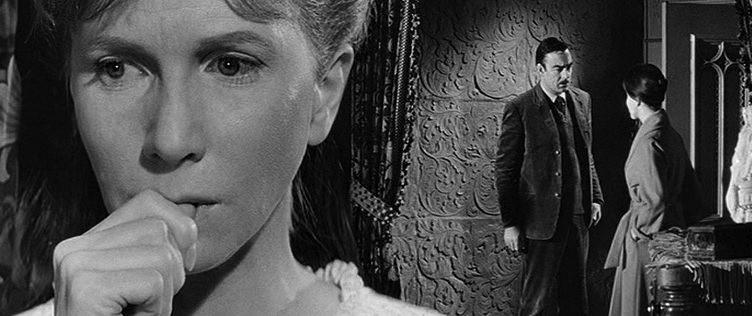
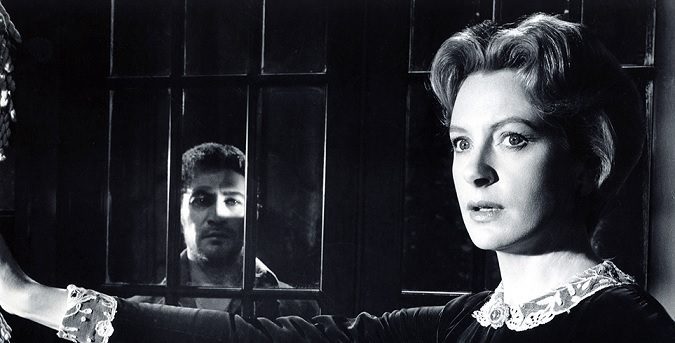
Very much a classic movie, The Innocents is a very interesting case, perhaps one of the best cases, of a horror film with an interpretative plot. The story’s simple, in which a governess is hired to watch over two children, but as things turn sour, are there supernatural spirits afoot, is the governess losing her mind, some combination of the two, or a simple case of possession?

The Innocents asks a lot of questions and doesn’t much give in the way of answers (The Turn of the Screw, the novel by Henry James which this story is based off of, is much in the same vein). In some cases, that bothers me, but here, I think it’s done really well. We’re sucked into the idea that Miles and Flora are being possessed, but there’s enough evidence to suggest a failing mental health is more the culprit. Fans of both psychological horror films, along with supernatural/ghost movies, should definitely give this a watch for this interpretation issue alone.

Personally, I’ve been of the mind that Deborah Kerr’s governess character, due to a lot of factors, is just losing it, and becoming a bigger danger to the kids (Pamela Franklin and Martin Stephens) as opposed to anything supernatural. That said, nothing’s written in stone, and there are scenes which lead credence to both possible solutions.

Deborah Kerr is fantastic here, and again, I think you can see her beginning to lose her grip clearly as the movie goes on. The two kids, being Pamela Franklin (who starred, 12 years later, in The Legend of Hell House) and Martin Stephens, both do beautifully, though boy, does Stephens’ Miles get annoying after a while. Lastly, as a housekeeper, Megs Jenkins too brings a lot, and it’s from her that Kerr’s character begins dwelling on the possibility of possession.

The Innocents has a very creepy vibe to it, which is bolstered by the large, Gothic mansion and the black-and-white cinematography, not to mention that dreary tune that pops up now and again. Oh, and the poem that Miles read during the party was also a nice touch, especially since no one but Kerr’s character seemed to find anything wrong with it.

I’ve only seen The Innocents twice now, but I do think it’s very much a classic that warrants looking into. Compared to many modern day horror movies, it may seem quite tame, but I think it holds it’s creepy vibe wonderfully, and with the fantastic setting and interpretation that will no doubt take place by the viewer, this one is a winner.

8.5/10
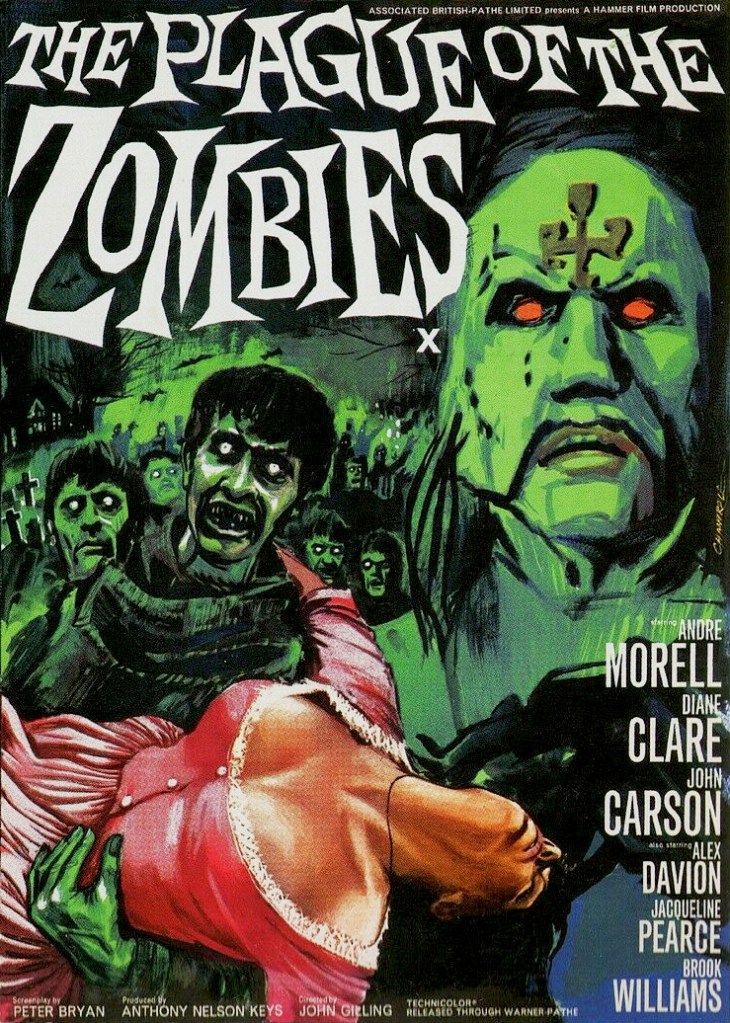
The Plague of the Zombies (1966)

Directed by John Gilling [Other horror films: Escape from Broadmoor (1938), Mother Riley Meets the Vampire (1952), The Gamma People (1956), The Flesh and the Fiends (1960), The Shadow of the Cat (1961), The Night Caller (1965), The Reptile (1966), The Mummy’s Shroud (1967), La cruz del diablo (1975)]

This Hammer film may be one of the last voodoo zombie films before Night of the Living Dead launches a new way forward for the zombie sub-genre, and it’s certainly the last big name zombie film before Romero’s classic. Being a Hammer movie (and being in color), The Plague of the Zombies isn’t too shabby, but it’s not a personal favorite of mine.

I enjoy the performances, though no one really blows me away. Perhaps my favorite here is André Morell, because seeing a slightly older man take the lead is a bit of a rarity, and his character is enjoyable, being a distinguished doctor, and yet partaking in robbing graves. He was just fun. Playing his daughter is Diane Clare, and she gets along quite well with Morell. Brook Williams, as a young doctor asking for Morell’s advice, is a bit generic, but he has his moments. John Carson did quite well here as a somewhat mad Cornish squire – much like Morell, he’s fun throughout, especially toward the end.

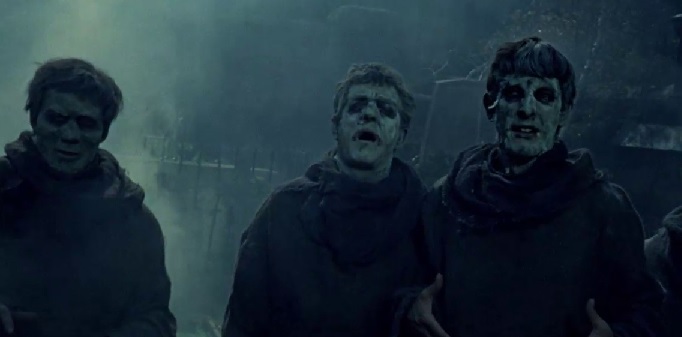
The atmosphere here is pretty solid, and there are some pretty solid scenes (perhaps my favorite is a dream sequence in which zombies rise from the grave, which looks quite beautiful in color), but as decent as the story was (in it’s average Hammer fair), trying to turn the same premise of White Zombie into a better-made version by throwing in color isn’t really my idea of a great time.

The Plague of the Zombies is a bit of a classic as Hammer horror is concerned, and for good reason (worth noting, many of the same sets are used in The Reptile, another Hammer film from the same year, which I like a bit more), but even as far as 1960’s horror goes, this doesn’t quite make my Top 10 list.

I’m not trying to throw The Plague of the Zombies under a bus – I think it’s a decent film, and I wouldn’t object to seeing it a few more times in the future. It’s just that I’ve seen it twice now, and as far as I’m concerned, it’s not the best the 1960’s has to offer.

7/10

The Gorgon (1964)

Directed by Terence Fisher [Other horror films: Three’s Company (1953, episodes ‘The Surgeon’ & ‘ Take a Number’), The Curse of Frankenstein (1957), Dracula (1958), The Revenge of Frankenstein (1958), The Hound of the Baskervilles (1959), The Man Who Could Cheat Death (1959), The Mummy (1959), The Stranglers of Bombay (1959), The Brides of Dracula (1960), The Two Faces of Dr. Jekyll (1960), The Curse of the Werewolf (1961), The Phantom of the Opera (1962), The Horror of It All (1964), The Earth Dies Screaming (1964), Dracula: Prince of Darkness (1966), Island of Terror (1966), Frankenstein Created Woman (1967), Night of the Big Heat (1967), The Devil Rides Out (1968), Frankenstein Must Be Destroyed (1969), Frankenstein and the Monster from Hell (1974)]

This Hammer film is a very worthwhile watch on many levels. Not only is the cast superb, but the story here is actually decently mysterious up to a point, and though the finale isn’t all that it could have been, the story here’s interesting and memorable.

Peter Cushing is one of the stars, playing  a tight-lipped medical examiner, and that alone is enough to push this movie in a positive direction, given Cushing is one of my favorite actors (after Vincent Price). What’s even better is that Christopher Lee eventually shows up, and the two of them together is great. Lee is always of good quality, and he’s best here during his heated conversation with Patrick Troughton. Horror fans might best remember Troughton from The Omen, and that was a solid role, but being a rather big fan of the science-fiction series Doctor Who, I know Troughton as the Second Doctor, perhaps one of my favorite incarnations of the character.

Seeing Cushing, Troughton, and Lee all in one movie is very much a treat. Lee has a very commanding presence here, and though Troughton is a bit brow-beaten, his situation doesn’t really do him any favors. Even without those stars, Barbara Shelley (who has a somewhat unique story arc here), Michael Goodliffe (though he gave one of the worst justifications for the belief in the supernatural that I have ever heard in my life), and Richard Pasco came to play. Goodliffe really carries the first half of the film, and has a somewhat touching last scene. With a cast like this, even an okay story can go a long way.

Luckily, The Gorgon has a somewhat interesting one, which deals with memory loss and people being turned to stone. Much like other Hammer films, this possesses a strong atmosphere, and while in my opinion the color somewhat mutes that, it’s still nice to see a classic story like this using the best of the techniques at the time.

I’ve seen The Gorgon a handful of times before, and I still find it an enjoyably solid movie with a pretty interesting (and somewhat surprising) finale. The only real flaw here is that the design of the Gorgon, when it fully appears, is somewhat laughable. Otherwise, this is an enjoyable slice of 1960’s British horror. Just look at that cast and say ‘yes.’

7.5/10

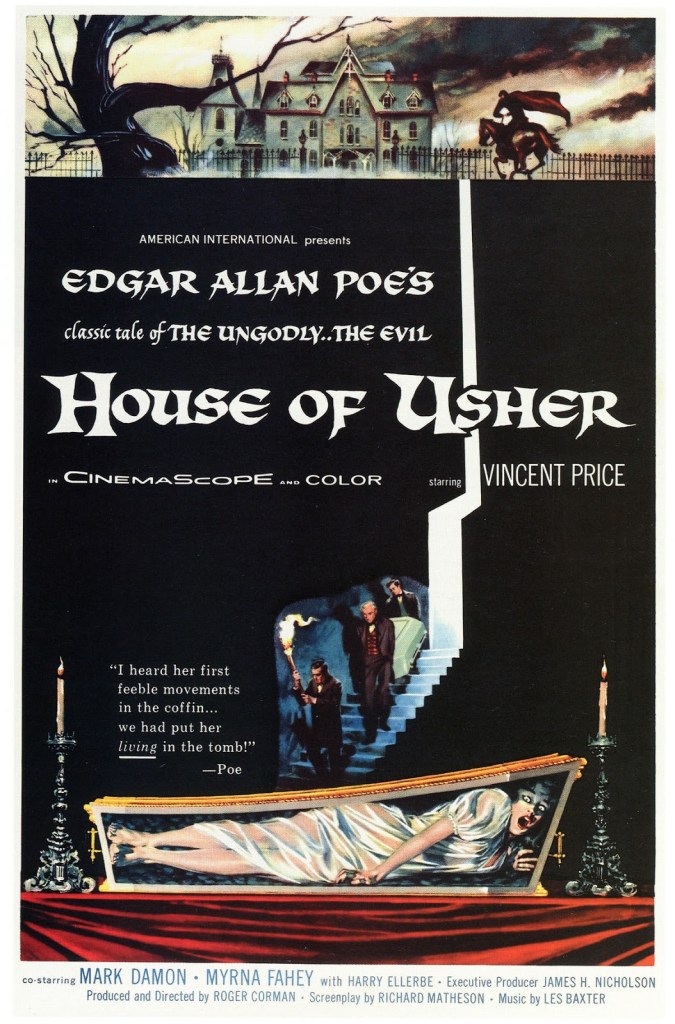
House of Usher (1960)

Directed by Roger Corman [Other horror films: The Beast with a Million Eyes (1955), Day the World Ended (1955), It Conquered the World (1956), Not of This Earth (1957), Attack of the Crab Monsters (1957), The Undead (1957), War of the Satellites (1958), The Wasp Woman (1959), A Bucket of Blood (1959), The Little Shop of Horrors (1960), Creature from the Haunted Sea (1961), The Pit and the Pendulum (1961), The Premature Burial (1962), Tales of Terror (1962), Tower of London (1962), The Raven (1963), The Terror (1963), X (1963), The Haunted Palace (1963), The Masque of the Red Death (1964), The Tomb of Ligeia (1964), Roger Corman’s Frankenstein Unbound (1990)]

This Roger Corman movie is one I’ve been wanting to see for some time now, and now that I finally have, I’m somewhat underwhelmed. Oh, House of Usher is solid enough, and possesses both great performances and an enjoyable atmosphere, not to mention a fantastic conclusion, but still, I couldn’t help but expect more from it.

Even with the slight disappointment, though, there’s no doubt that Vincent Price brings a hell of a lot to this film. His character, paranoid and somewhat of a bastard, is great, and his performance is up there with the best of his material (House on Haunted Hill and Theater of Blood among them). The delivery of his lines is fantastic, and he just works wonderfully here.

The others are decent, and somewhat amusingly, my second-favorite performance here is not Mark Damon nor Myrna Fahey, but the butler, played by Harry Ellerbe. His loyalty to the dying House of Usher, despite all of the decay that he’s witnessing first-hand, was quite admirable, and I enjoyed him throughout. Fahey was good also, though I felt she didn’t really reach her stride until the finale. Truthfully, while Mark Damon was okay, I think he was the least stellar of the cast.

Also worth mentioning is the beautiful setting, being a desolate, decrepit mansion in the middle of a foggy swamp. With a cast as small as House of Usher had, this location brought more character to the movie, and the fact that it was in color, though gloomy still, was a nice touch. Related, the coloring here was solid, and it really shows in the psychedelic dream sequence, one of the moments that stands out a bit more.

The finale is fantastic, what with the mad search for a woman buried alive, only to discover that the woman has escaped her coffin and went mad, her bleeding fingers leading a trail to a great confrontation. Of course, this truly is the end of the House of Usher, and that’s probably for the best, given Price’s very apparent unstable mind-set.

House of Usher is a classic, and I don’t have a problem saying that. I just wish that I liked it a bit more than I already do. Perhaps I was overselling it to myself before seeing it, but still, the movie is certainly above average, and boasts a very good atmosphere and, of course, Vincent Price near his best.

7.5/10

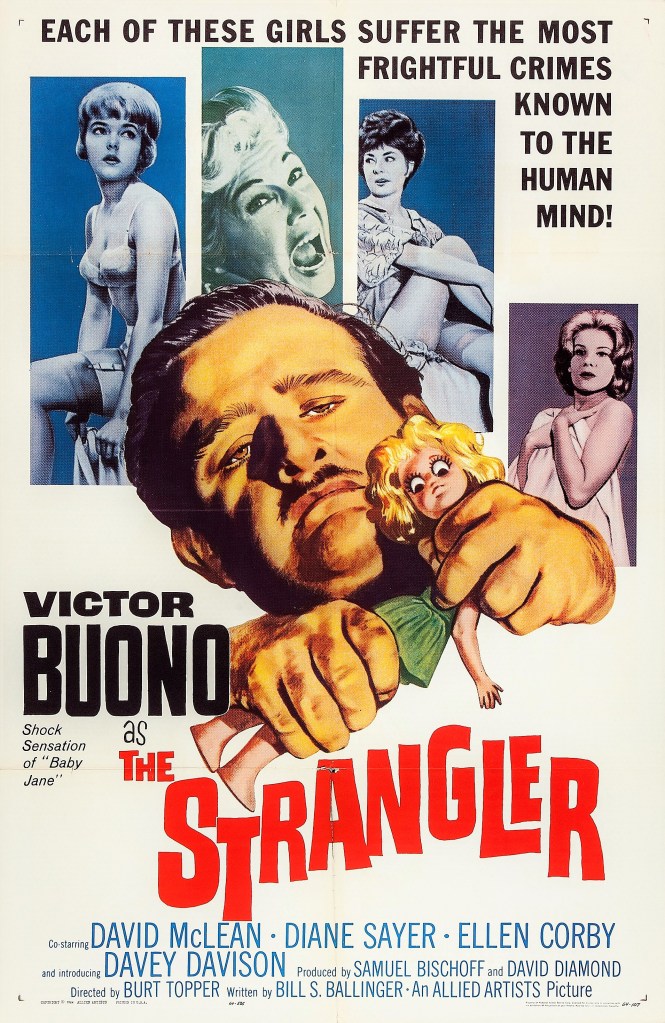
The Strangler (1964)

Directed by Burt Topper [Other horror films: N/A]

What makes The Strangler a movie worth remembering is the performance of Victor Buono. Sure, the crisp black-and-white looks nice, and it doesn’t feel too far removed from Psycho (which I’m sure influenced this), but Buono’s performance here is what makes it work.

Others in the film do fine, including his atrocious mother played by Ellen Corby, a detective played by David McLean, and two attractive young women Davey Davison and Diane Sayer, but no one stands out as well as Buono does, and truth be told, I wouldn’t have it any other way.

Before this, Buono had a quite a few small television roles, along with some uncredited movie roles, until he played a character in What Ever Happened to Baby Jane?, which was probably one of his first bigger roles. But The Strangler was one of his earliest starring roles, and boy, does it work for him.

While the kills are as tepid as you could expect from the 1960’s, the characterization Buono puts in is fantastic, and I personally can’t help but feel sympathetic for his character (especially after seeing what his mother puts him through). It’s just heartbreaking at times, and Victor Buono really shows it on his face and pained expressions.

The Strangler was a good movie when I first saw it some years back, and it’s still a movie very much worth watching. In many ways, I’m reminded of a movie I saw just some weeks ago called The Couch, which was also a 1960’s film focusing on an insane killer and his steady decline in a psychological manner. The Strangler is the better of the two, but I think both would fit well on a two-pack, but no matter what, definitely give this one a look if you’re a fan of 60’s horror.

8/10

Death Curse of Tartu (1966)

Directed by William Grefé [Other horror films: Sting of Death (1966), Stanley (1972), Impulse (1974), Mako: The Jaws of Death (1976), Whiskey Mountain (1977)]

To be honest, I wanted to like this one. I mean, a low-budget horror film made in Florida by Grefé (see resume above)? Sounds like it could be a lot of fun. Sadly, though, more than anything else, Death Curse of Tartu is pretty dull.

The best thing I can say about the performances is that Maurice Stewart and Mayra Gómez Kemp looked cute during the ridiculously groovy dance scene. Otherwise, Babette Sherrill and Fred Pinero, not to mention most everyone else (save perhaps Bill Marcus) were overly stilted and the dialogue generally just felt awkward.

Setting the story in a Florida swamp had potential, and even filming most everything during the day was a somewhat daring move, but due to the sluggish pace of the film, it doesn’t really help all that much.

See, the thing is, watching a snake chase someone for four minutes isn’t exciting, nor are most chase sequences in the film. The only exception that comes to mind is a scene toward the end with Tartu (Doug Hobart) chasing Sherrill’s character, and it was filmed in a pretty solid way. Everything else, though, just felt uninspired and quite dull.

Death Curse of Tartu could probably be a pretty cool movie had it been done entirely differently. The potential is there, but it just didn’t show at all, which wasn’t really surprising, but I will admit to being disappointed. For the 1960’s, the color here was nice, but it didn’t save the sluggish pace, and I can’t really see myself sitting through this one again sober.

5.5/10

The Couch (1962)

Directed by Owen Crump [Other horror films: N/A]

This is a pretty unassuming movie, and I can sort of see why I’ve never heard of this one before (aside from the fact that some refer to it as just a thriller), but it’s a relatively tight story, some solid suspense, and comes across as something of a rough gem. Before I go on, if you’re into 60’s horror and haven’t seen this, I’d recommend checking it out.

From the get-go, we know the killer is Grant Williams, and the film is really a psychological probe into his mental state (plot twist: he’s not particularly the picture of mental health), which is pretty fun, because his physique isn’t really what you’d expect. His killing style, a quick jab with an ice pick, is fun to watch. Just an average guy killing a random person in a crowded area, and you can see why he’d get away with it.

Williams here is great. I don’t really know him, but based off this performance, he might have been able to give a good Norman Bates performance a few years prior in Psycho. The others here, including Shirley Knight, Onslow Stevens, and William Leslie, all do well, but this is really the Grant Williams show, which worked fine for me.

As far as mentally unstable characters go, the one Williams plays is pretty fantastic. He’s completely detached from reality at times, and toward the end, he gives us a really stellar conclusion, and as I mentioned, pretty tense at times also.

Any black-and-white thriller/horror dealing with a psychopath made in the immediate years following Psycho would have a harder time gaining traction, but I’d still recommend giving this one a look. Sure, some aspects are rough, such as occasional camera-work, but The Couch was still a mostly solid film, and I’m glad I took the time with it.

7.5/10

Konchû daisensô (1968)

Directed by Kazui Nihonmatsu [Other horror films: Uchû daikaijû Girara (1967)]

I’ve not seen that many Japanese horror films from the 1960’s, so I wasn’t entirely sure what to expect from Konchû daisensô, better known as Genocide, but I was pretty happy with it come the conclusion.

The plot here isn’t really that stellar, but the consistent anti-war message throughout was certainly welcomed (and, from a post-World War II Japan, logical), and one of the characters references both the arms race between the U.S.S.R. and the U.S.A. as foolish, along with both the Superpowers being arrogant, which is a nice sentiment to see (and largely accurate).

With topics like this, not to mention the horrid experiences Jewish people, and others, went through in Germany, or issues of environmental concern, it’s probably not a surprise that Genocide (even the title’s invocative of a dismal story) has a somewhat nihilistic conclusion. Not that it’s entirely dark, but certainly it’s probably one of the more depressing endings I’ve seen in recent times.

The cast is generally solid, though not perfect. In particular, I think Kathy Horan was a bit over-the-top at times, which didn’t feel right for this movie. Most main performances, though, such as Emi Shindô, Yûsuke Kawazu, and Keisuke Sonoi, all do commendably enough.

Like I said, I’ve seen only a few Asian horror films from this time period, and to be honest, I was thinking that this would be a lot cornier than it even came close to being. I won’t go as far as to call the movie ‘amazing,’ but I had a fun time watching it, and would certainly recommend it, especially if they want a slice of horror that deals with more serious topics.

7.5/10

Queen of Blood (1966)

Directed by Curtis Harrington [Other horror films: Night Tide (1961), How Awful About Allan (1970), What’s the Matter with Helen? (1971), Whoever Slew Auntie Roo? (1972), The Killing Kind (1973), The Cat Creature (1973), Killer Bees (1974), The Dead Don’t Die (1975), Ruby (1977), Devil Dog: The Hound of Hell (1978), Usher (2000)]

A 1966 movie starring John Saxon, with appearances from Basil Rathbone and Dennis Hopper? Is this an undiscovered classic waiting to be unleashed from the vaults it so cruelly was forced into?

The answer, unfortunately, is no. Queen of Blood is, above all else, a rather dull affair, which is a damn shame, as the year previous brought forth a fantastic voyage into space horror, being Planet of the Vampires. What we have here feels not too far removed from Lifeforce, only this is lifeless.

It’s hard to say why the movie is as boring as it is – part of this is likely due to the fact that nothing much happens until the last thirty or so minutes of the film. Much of the movie is dry, but it doesn’t even really help build characterization or anything. It’s just dull and an exercise in tediousness.

Of course, Queen of Blood had potential. The ending is almost okay, but at the same time, it lacked any type of finale confrontation (I mean, technically, one was there, but it was so weak that it barely felt like it should count). A green, humanoid alien, passive 90% of the time, does not a great antagonist make.

Was John Saxon nice to see? Sure, and I got a blast out of that. But this movie just isn’t worth watching, and sitting through it once is difficult enough.

5/10

The Haunting (1963)

Directed by Robert Wise [Other horror films: The Curse of the Cat People (1944), The Body Snatcher (1945), Audrey Rose (1977)]

This is a classic I’ve seen only once before, and while I appreciated it, I didn’t particularly love it, and the same can be said with a rewatch.

What the movies does well is instill a strong feeling of paranoia into the viewer, and some of the camera views match the atmosphere with a very frantic style. Related, the atmosphere here is solidly dense, and especially toward the end, things get ratcheted up and the spiral staircase sequence – talk about intense.

My issue is that, as the movie’s almost two hours long, and much of the first hour-and-a-half is composed of character-building and somewhat annoying arguments between the women, I find myself somewhat disengaged. The story’s great, and the opening’s amazing (‘Whatever walked in Hill House, walked alone,’ followed by a charming history of the domicile), but the movie as a whole? It doesn’t cut it for me.

This shouldn’t take away anything from Julie Harris’ performance, which is fantastic, and toward the end, she really comes across as unhinged, so kudos there. I do think that some of her first-person narration got a bit hokey, but I suppose that’s part of the charm. Claire Bloom’s character started out decent, but boy, does her personality really grate on me at times. Also, and this may just be me, but I was getting somewhat lesbian vibes from her, which, if intended, adds a somewhat cool little subplot and extra reason for her character’s annoyance at Richard Johnson (who was decent, but not a stand-out).

As decent as parts of this movie are, it’s not a movie I could see myself watching that many times in a given five-year range. Once is probably enough, and while it’s possible that my appreciation of this one will grow with my age, for the time being, I’d still call it a classic, and a good movie, but not really a great one.

7/10