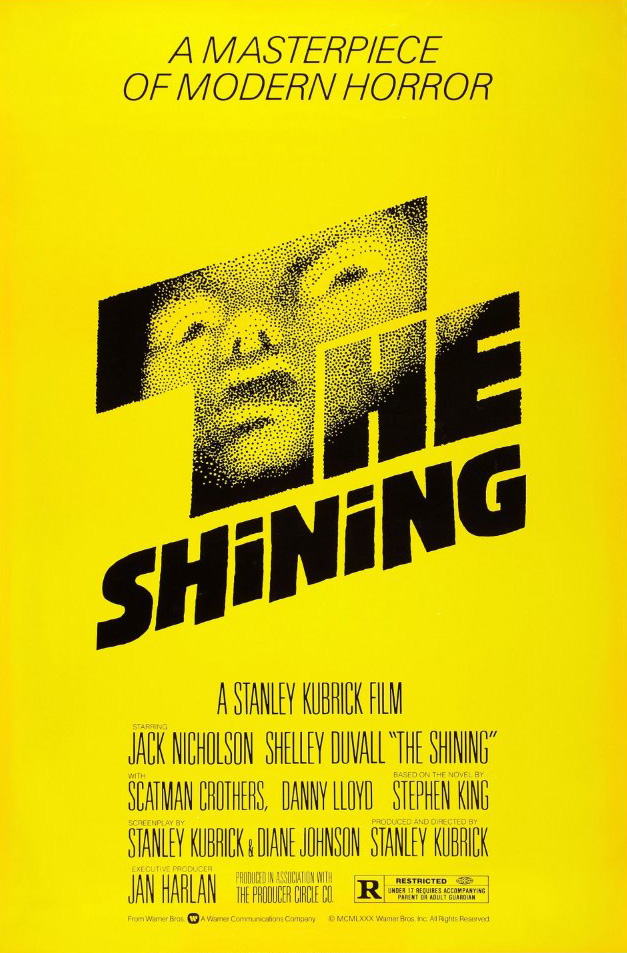
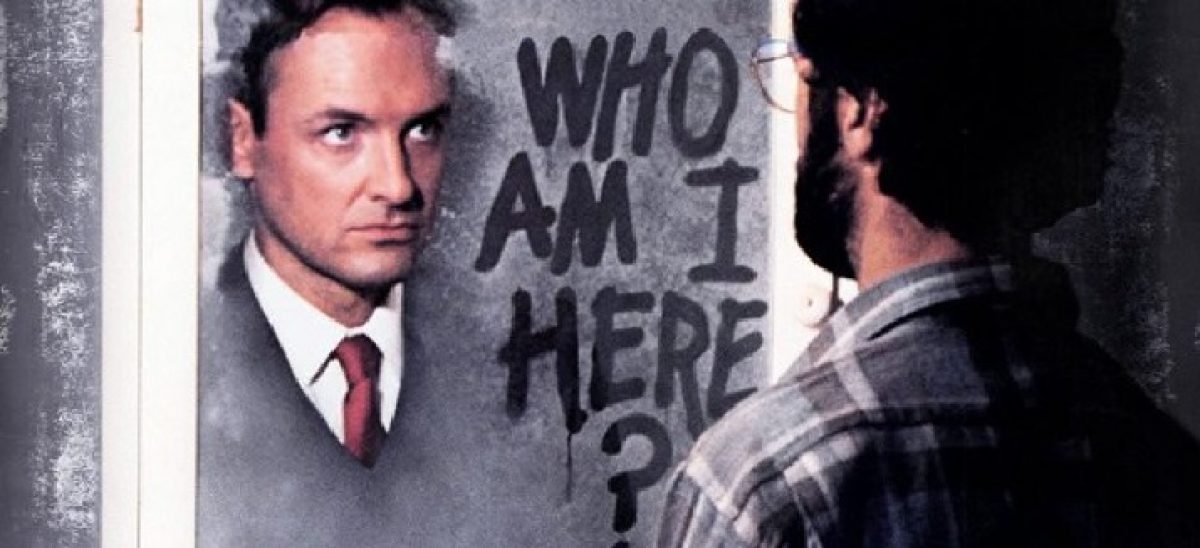
The Shining (1980)

Directed by Stanley Kubrick [Other horror films: N/A]

I don’t want to spend a long time on this. I just want to get in and get out, while still being 100% honest about my views.

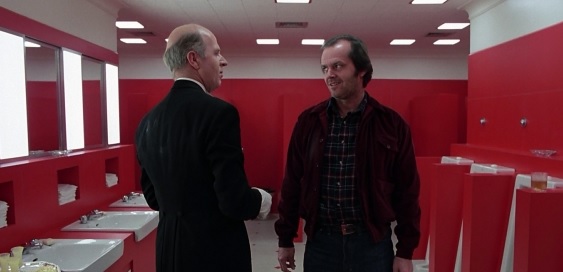
I don’t like the Shining. At all.

At best, I find the movie around a 5/10, certainly below average and definitely not a movie I’d want to watch too often. Now, to put my views in context, I don’t dislike the movie because it deviates from the novel. I’ve not read the novel as of yet, so unlike my views on the 1990 It mini-series, the book has nothing to do with it.

The concept in The Shining is interesting, but there are far too many unanswered questions come the end (Who was that old woman? Who was in that bear suit? Why was there a bear suit? Why was Torrence in that picture at the end? What was the use of ‘Tony’ at all? Why did Windy see those skeletons at the end, and that flood of blood meant what, exactly?) and I frankly didn’t enjoy much of this.

I’ll give it that Jack Nicholson does well here, though elements of his character bother me (such as the idea that he literally didn’t write a single word of his novel, and just automatically went into his “All work and no play makes Jack a dull boy” repetition). He did decent here. I didn’t like Shelley Duvall at all, though (she pretty much bothered me throughout the whole of the film), and Danny Lloyd did nothing for me (I don’t hold that against him, as he was a kid). And I gotta say, Scatman Crothers doesn’t do much for me either.

Both Philip Stone and Joe Turkel were good, but without an explanation as to exactly what they are (ghosts of previous people who do the hotel’s manipulation is my guess). Regardless, it goes back to unanswered questions, and while I know that the book might touch of some of these, the fact that the movie just doesn’t bother is something I find a problem with.

A lot of people love this movie. That’s cool. You do you. But I’ve seen this three, maybe four times now, and I never loved it, never liked it, never really enjoyed it. It’s a struggle to get through, and once I do, the best I can say about it is that it finally ended. The Shining isn’t a movie I enjoy.

And since I’ve probably pissed off some people already, let me just throw this in: the 1997 mini-series version of The Shining is a lot better in my eyes, and actually worth watching.

As for this one? Yeah, I can do without.

5/10

Broadcast Signal Intrusion (2021)

Directed by Jacob Gentry [Other horror films: The Signal (2007), My Super Psycho Sweet 16 (2009), My Super Psycho Sweet 16: Part 2 (2010), My Super Psycho Sweet 16: Part 3 (2012)]

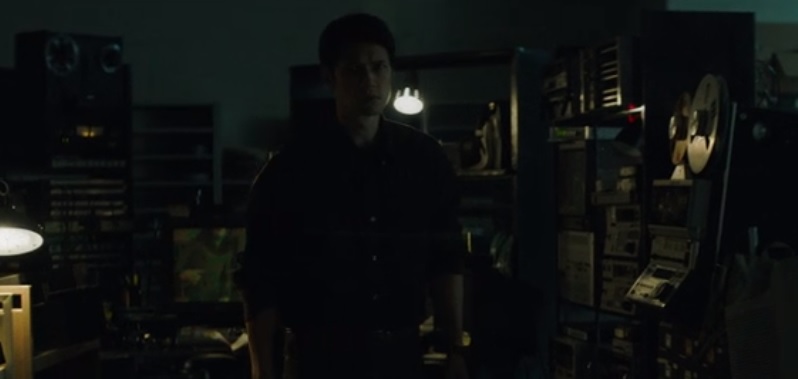
I had higher hopes for this film after I read the brief synopsis. It sounded like a potentially solid film, and I was more eager to see this one than I have been for many of the movies I’ve seen in the past week. As it is, I don’t think Broadcast Signal Intrusion is a terrible movie, and it will work for some people, but I was ultimately unsatisfied come the finale.

Certainly the movie had a very unique vibe. It felt like a new-age version of Videodrome, almost, with a sort of isolation prevalent throughout the film, and elements of obsession, and paranoia too, playing a part. It’s not even a disengaging story – I enjoyed aspects of what the movie was going for. But I don’t think the finale really did all of these elements justice.

Honestly, it’s not an easy film to discuss. I found the conclusion a bit of a mess, and I was definitely hoping for more, especially given the fact they knew what they were doing as far as production went, as the movie looks quite nice and has solid cinematography. Even so, for a movie that almost lasts an hour and 45 minutes, I was expecting a decent amount more.

Harry Shum Jr. pretty much carried the film. I don’t mean that in a negative sense – he’s the focal character, and appears far more than anyone else. I personally don’t understand elements of his character, but as the film said, grief touches people differently; either way, Shum Jr.’s performance was strong. I also liked both Kelley Mack and Steve Pringle, though neither one really had quite the impact or importance I was personally expecting.

And perhaps a lot of this is on me. I was eager to watch the movie, but I didn’t really know what to expect from it. It’s not that Broadcast Signal Intrusion is incoherent or anything, but it can feel oppressive at times, and while I wouldn’t describe it as ‘confusing’, it can be hectic and heavy. There seems to be a lot of moving pieces, and it’s hard to see where different characters are coming from (such as Kelly Mack’s character, who is a mystery throughout, or Madrid St. Angelo’s character, who I didn’t get at all).

The largest drawback is the ending, which isn’t only inconclusive, but it think it gives us more questions than anything in the film managed to answer. In a way, I sort of get it – we’re warned constantly to not go down a rabbit hole of a potential conspiracy, lest we lose our sense of reality, so maybe not everything has the answers that we might be looking for – but even so, I can’t say that the final few minutes weren’t deeply unsatisfactory.

It’s also worth mentioning that the horror here is a bit muted. I mean, it’s definitely a horror film, I don’t want to give off the impression that it’s not, but aside from a few creepy dream sequences, a rather jolting ending, and a scene of an individual slitting his throat, there’s not a lot of traditional horror here, which is where the oppressive atmosphere (again, think Videodrome) plays a large part.

Another thing has to be said about the nature of the story. It takes place in 1999, and I think it does a good job showing technology as it was back then, from old chat conversations online to clunky video cameras and the like. Also, delving into a mystery of unsolved broadcast signal intrusions (think the Max Headroom hijacking from 1987) is a fascinating idea, and the mystery itself wasn’t bad, save for the ending.

In the end, I think that Broadcast Signal Intrusion had a decent amount going for it, but it’s not an easy movie to really explain and an even more difficult movie to really recommend. It’s probably worth seeing just to feel the vibe of the film, which is increasingly uneasy as it seems that the central character keeps making a mistake in digging deeper into the mystery, but I don’t know if that really makes it an enjoyable experience.

By no means a bad film, ultimately, I do feel that this movie falls a bit below average. It wasn’t without promise, and it did do some things right, but I don’t really think it’s much more than that, as much as I might wish otherwise.

6/10

What Happens in the Mountains – Should Stay in the Mountains Part II (2021)

Directed by Stacey Alexander [Other horror films: What Happens in the Mountains – Should Stay in the Mountains (2018)]

I was somewhat surprised to see a sequel of the low-budget 2018 movie come out. I always figured it for one of those one-hit wonders, so when I was informed a new movie came out, I was eager to check it out, especially since it was a tad longer, running about an hour in length.

Overall, I’d say it’s a generally better film. I can’t swear that it’s more fun than the 2018 movie, but I can say it’s probably just as fun, so if you enjoyed What Happens in the Mountains – Should Stay in the Mountains, checking this one out might not be too shabby an idea.

Honestly, the film took a turn that I wasn’t quite expecting toward the final twenty minutes or so. Perhaps I should have been, as portions of the film had suggested it up to that point, but I was surprised nonetheless, which I appreciated. What I also appreciated was more of a story here – the first movie, while fun, wasn’t big on plot, so the fact this film had one was quite nice.

The story is moderately interesting at times. You have increased Bigfeet sightings around this mountain in Georgia, an aggressive police detective (played by Steve Pence) who believes Buck (Stacey Alexander) is responsible, a reporter (Sandy Walton) asking questions about John Tripwire’s character from the previous film, and throughout all of this, life seems more difficult for Buck, who even sees a therapist (Dave Weinthal), which goes about as well as you’d expect.

It’s not a movie with a complicated plot or anything, but it can sometimes feel busy, which I sort of liked, especially after the free-form feeling of the first movie. Naturally, there were some amusing lines, and it’s not easy to choose the funniest.

Of course, there’s the word association (a scene which probably went on too long) one that got me laughing: “Mountain.” “BIGFOOT!”. Or Buck’s character explaining that “Bigfoot raped me,” and when asked where it happens, he replies “It sure didn’t happen in Motel 6, I’ll tell you that.” And how can I not mention “Let’s talk about what’s bothering you, besides my wife drives a Porsche” and another Buck classic question, “Have you ever been tied to a tree in Chattooga County and raped by an inbred that just escaped from prison?”

On the whole, I would say that the movie probably has more humor in it than I’d prefer during certain scenes, but that doesn’t hurt quite as much as there’s also a decent amount more going on in the story, which can partially cover it. Some scenes, such as the conversation with the therapist, could have been cut a bit, but honestly, I don’t have complaints about much of the movie.

Naturally, I think Stacey Alexander’s wild performance is quite amusing. There’s a bit more to his character here too, and while I would have preferred if some of it had been delved into, I appreciate that they wanted to do a bit more with this. Others, such as Wade Ridley and Dave Weinthal, had some strong moments, though it’s important to note that neither is terribly important to the story. Steve Pence was solid also, and I enjoyed his staredown with Alexander’s Buck.

Being a lower-budget film, the kills are about what you’d expect. There was a decapitation, which was technically weak, but oddly fun. Really, that’s probably the most stand-out kill, as the others, while decent (especially the final kill of a man on a boat) didn’t have a lot to them. And I also mentioned this in my review of the first film, but I enjoyed the scenery here – filmed in Florida, Georgia, Tennessee, and Texas, there’s a decent amount of natural beauty to be found in the film.

What Happens in the Mountains – Should Stay in the Mountains Part II isn’t an amazing film, and if you come into this one without really knowing what you’re coming into, you may well find it’s not your type of film. The humor doesn’t always land, and it’s certainly not for everyone. Personally, while I think both films had their strong points (for instance, while the Bigfoot howl I love is in the film, it made far more appearances in the first movie), I think this movie is a bit better, though not amazingly so.

6.5/10

Wrong Turn (2003)

Directed by Rob Schmidt [Other horror films: The Alphabet Killer (2008)]

In some ways, I do view this one as a modern-day classic. It’s not amazing, by any means, but it’s consistently entertaining and solidly gruesome (though honestly, there’s not really a ton of onscreen onslaught), and had we not been over-inundated with sequels, I think this one would stand out more positively to a larger population of horror fans.

The story here is simple, and takes from such classics as The Texas Chain Saw Massacre or The Hills Have Eyes (and in fact, I wonder if this movie had anything to do with The Hills Have Eyes being remade just three years later), the only difference being that this movie feels more real than either of those two. Taking place in the dense forests of West Virginia (though filmed entirely in Canada), the setting was solid, and the plot, though simple, quite effective.

I think a lot of this comes from the fact that the characters here are mostly decent people. I think that Desmond Harrington’s (Love Object) performance is a little one-dimensional, but Eliza Dushku was great as a kick-ass female protagonist, and I really liked Jeremy Sisto (Population 436) here too. Emmanuelle Chriqui was the least-engaging of the four main characters, but Lindy Booth was attractive, so there you go.

The action here is also pretty top-notch, with a few chase scenes in tree-tops, and some bow and arrow action. Perhaps my favorite scene is when the three inbred killers are chopping up someone while the four characters are hiding in their shack. We never see much, but it has a gritty, brutal aura to it all the same. Even the conclusion was decently-believable action, and overall, I didn’t have a lot of complaints when it came to the action, or the various tense scenes here (the watchtower too being a scene worth mentioning).

Like I said, I don’t think the movie is necessarily special, and it’s somewhat bare-bones in it’s presentation (though I do think that works to it’s favor), but I’ve always enjoyed this one, and seeing it again after many years only confirms that. I’ve not seen all the sequels (the second, third, and fourth are all I’ve gotten around to, and none come close to this one), but I doubt any of them would be as solid as this one is.

8/10

This is one of the films covered by Fight Evil’s podcast. Listen below as Chucky (@ChuckyFE) and I discuss Wrong Turn.

The Incredible Melting Man (1977)

Directed by William Sachs [Other horror films: South of Hell Mountain (1971)]

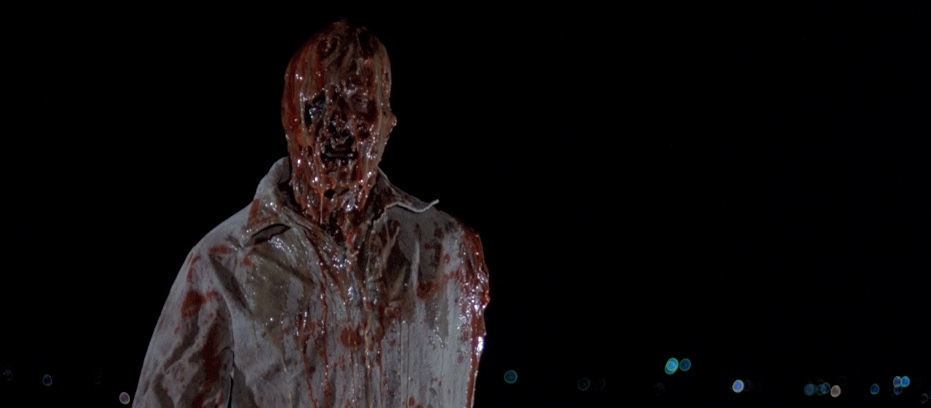
So I’ll give this movie an A+ insofar as the special effects are concerned. Very solid, gooey, slimey stuff. Beside that, though, this is an utterly dull movie with very little going for it.

Really, the title appropriately pulls you in, but the movie’s not necessarily schlocky or anything. It has that very serious 70’s tone (save for a little comedic relief thrown in by Edwin Max’s and Dorothy Love’s characters) that’s dry as all hell, and while I sometimes appreciate a somber atmosphere, I was more bored than anything. In fact, it reminded me slightly of the awful Another Son of Sam, though this wasn’t quite as bad.

It was still bad, though. Honestly, Edwin Max and Dorothy Love are the only two characters here with, well, character. Burr DeBenning, Myron Healey, Ann Sweeny, Michael Alldredge, Lisle Wilson – all boring as hell. I don’t know how much any of them can be blamed, but boy, talk about stilted performances. Cheryl Smith gave us a little nudity, though, so kudos to her.

Like I said, the special effects here are certainly worth seeing. Even the conclusion is more somber than you’d expect, so there’s a little here that almost make it worth the trouble, but that may be a bit generous. The special effects were great, but when the story’s so damn dull, it doesn’t really make a difference.

The Incredible Melting Man certainly had a melting man in it (and when he fully melts toward the end, again, it’s impressively depressing), but it’s not near as fun a story as you might hope. There were some unintentionally funny scenes (such as that slow-motion run near the beginning), but more often than not, it’s just an excruciatingly slow movie, and save the effects, really isn’t worth it.

4/10

This is one of the films covered by Fight Evil’s podcast. Listen below as Chucky (@ChuckyFE) and I discuss this one.

Wrong Turn (2021)

Directed by Mike P. Nelson [Other horror films: Summer School (2006), The Domestics (2018)]

Well, I had heard that this remake was quite different from the original, and boy, was it ever.

I thought there was a decent amount to like about Wrong Turn. Certainly there were problems – the film’s around an hour and 50 minutes, and it definitely feels like it at times. Many characters during the first third of the film make utterly idiotic decisions, something that also happens late into the movie with Cory Scott Allen’s character. Also, there’s a sequence during the finale that I disliked

Otherwise, though, I found the movie a pretty good experience.

There’s a bit to this one, given the length. The movie really feels like it has three separate parts, four, if you want to count the finale. It almost feels daunting at times, too, given the uncomfortable atmosphere during some of the scenes. The movie isn’t violent often, but when it veers that way, it can only increase the uneasiness one might feel while watching this.

I’m not entirely sure why they decided to create this film as a remake to Wrong Turn – elements are similar, I guess, though they randomly decide that Virginia is a more reasonable setting that West Virginia. It’s quite different though, and I suspect many who enjoy the Wrong Turn films might find the various alterations here somewhat difficult to swallow.

If I have one large problem with the movie, it’d be that I doubt how realistic some of the film is. There’s a small, secluded, separatist community in the film, one with rather a merciless and unbending moral code which applies even to outsiders, and while I can buy that perhaps this community can live side-by-side with the modern world, with little interaction, I have a harder time believing that, in the modern day, they would be able to get away with what they’re up to for long. It just takes a helicopter flying over their home, and it’s national news. In fact, I’d love a sequel in which the FBI swarm the community, and we get a Waco massacre situation.

Regardless of whether or not the community is realistic in the modern day, I was deeply interested in the foundation of this community, and the reason they separated themselves from the rest of society. I won’t spoil anything, but I personally thought it was a pretty cool idea, though it did lead to a somewhat predictable choice that Adain Bradley’s character makes.

And speaking of the cast, it’s pretty strong. The movie first focuses on six friends (Vardaan Arora, Charlotte Vega, Dylan McTee, Adrian Favela, Emma Dumont, and Adain Bradley), but really, out of these six, only Vega and Bradley are really important. I did sort of like Dumont’s (The Body Tree) character, but most of these individuals have obvious flaws, such as the aggression displayed by Dylan McTee’s (The Wind). Boy, did I feel bad for Adrian Favela’s character, though.

I can’t say Adain Bradley moved me much in any way, but I did find Charlotte Vega’s (The Lodgers) role quite strong. She did great, and had plenty of good moments throughout. Playing her father was Matthew Modine (47 Meters Down), who was great during all his scenes, and Tim DeZarn (The Cabin in the Woods and Grave Matters) had some layers to him. Bill Sage (American Psycho, Fender Bender, The Dinner Party, We Are What We Are, and Ascent to Hell) doesn’t play the nicest guy, but it was a pretty good performance.

Only a few other performances really made an impression. One of them was Cory Scott Allen, who unfortunately died December 13, 2021. I don’t think his character is used to great effect, but I liked the performance. Also, there’s Amy Warner, and again, I really think they could have done more with her character.

I mentioned briefly that there were a few violent scenes, and though they don’t pop up often, when they do, you notice. I think the most disturbing might revolve around burning people’s eyes out with a hot poker, but there was also someone who met the wrong end of a tree, and another who may have gotten their head bashed in. Other examples, such as people being stabbed or shot by arrows, aren’t usually graphic, but some scenes here are somewhat harrowing.

On the finale, while I mostly found it suitable, and in fact, I did love the final scene (which played as the credits began rolling, which I found a solid choice), there was a sequence which was purely a character’s imagination. It personally felt somewhat jarring, and I would have cut that. Otherwise, I dug the ending, especially with the slow rendition of “This Land Is Your Land”, performed by Ruby Modine (daughter of Matthew Modine, and also from Happy Death Day). It was a beautiful rendition, and I dug it’s inclusion.

Wrong Turn can be a challenging movie at times. I really wish it had been cut a little in places, as it’s not exactly approachable (nor do I find it quite as captivating as films like Apostle or The Wicker Man), but I did find it a good movie. Some scenes were creepy (such as the friends being stalked in the woods, along with the designs of the animal head costumes), the gore gruesome, and the ending actually decent. It won’t be for everyone, and it’s definitely different from the 2003 movie, but I think that this Wrong Turn works.

8/10

Spiders II: Breeding Ground (2001)

Directed by Sam Firstenberg [Other horror films: Ninja III: The Domination (1984)]

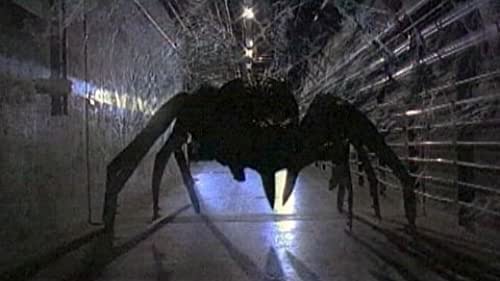
Pretty much a sequel-in-name-only to the previous year’s Spiders, Spiders II: Breeding Ground is about as terrible as you’d expect an early 2000’s Sci-Fi spider movie to be. Of course, it does possess a little charm, and some aspects are almost interesting, but overall, there’s not a whole lot here that makes the film worth seeing.

There’s only four performances worth noting, and none of them are really that stellar. Stephanie Niznik wasn’t great, but she was a lot more believable than Greg Cromer. Daniel Quinn was okay, though I really thought his character could have done with a bit more depth. The best here was probably Richard Moll (who I recently saw in House). His character was over-the-top evil scientist corny, but at least he knew what this movie was.

I mean, to be honest, the movie’s not exactly horrible if you know what it’s going to end up being anyway. The first Spiders was awful, but somewhat charming at the same time. While this definitely wasn’t as enjoyable, the setting (a run-down ship) was interesting, and there was occasionally an intriguing mystery.

Ultimately, though, there’s nothing special here, especially toward the end, in which we’re bombarded with really terrible CGI spiders. I mean, they’re really bad. It doesn’t help that by this point, most of the interesting story elements were thrown out the window. I guess I’ll give the movie some props insofar as the special effects with the spiders bursting from the bodies, but it really wasn’t anything all that original to begin with.

Spiders II is an early 2000’s Sci-Fi film, and that’s all it is. I don’t hold that against the movie too much, because I’d definitely take this over much of their post-2010 animal movies (such as the atrocious 2-Headed Shark Attack series). It doesn’t make it good, but there are far worse movies out there.

5.5/10

Candyman (2021)

Directed by Nia DaCosta [Other horror films: N/A]

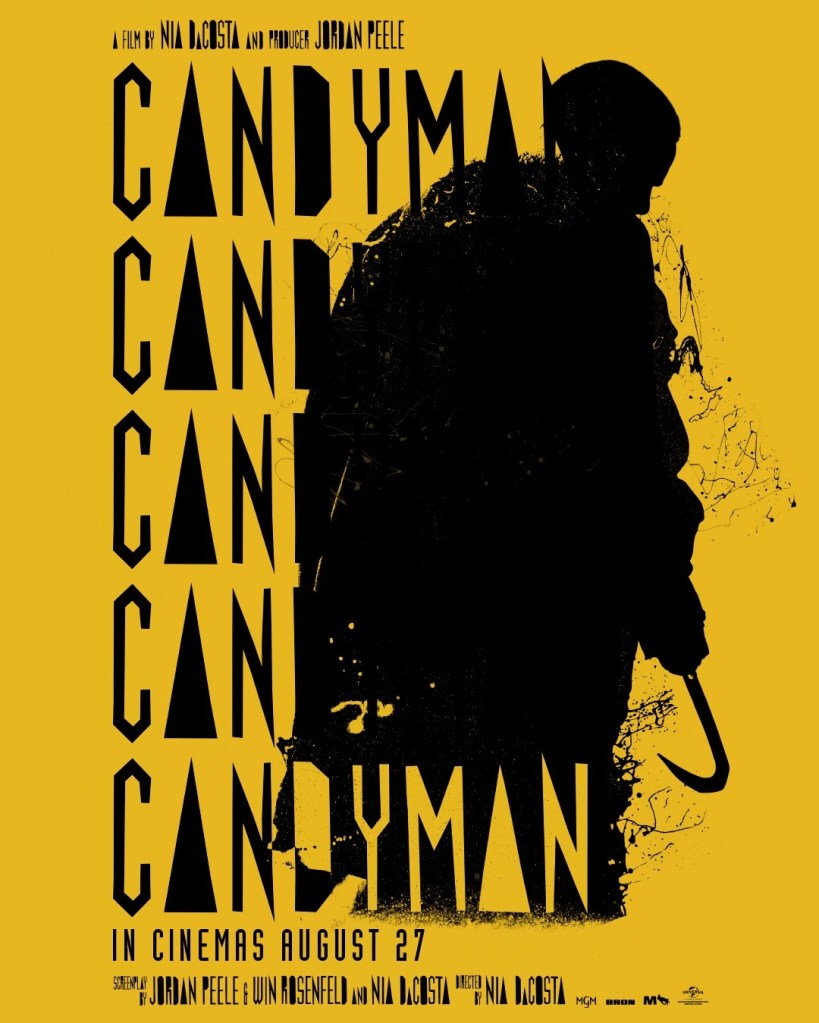
I can’t exactly say that I’m disappointed in Candyman, as I’ve consistently heard somewhat mixed reactions to this one, but I was personally hoping that it’d have done a bit more for me than it ultimately did.

Part of this is because I rather love the 1992 Candyman – I think it’s a fantastically strong movie with a lot going for it. This sequel, though certainly more enjoyable than something like Candyman: Day of the Dead, just didn’t have near the magic a story like this should have.

Now, I do think there were some strong elements. I love the more modern perspectives – there’s crucial plot points revolving around the violence committed against the black community by police officers, along with there being a rather fun gay couple in the film. It’s the type of movie that, because of some of the elements, certain segments might be turned away from.

Even without being a bigot or a racist, though, I don’t think it’s an unfair criticism to call the film a little bit of a mess. I don’t think it’s disastrous, and I did rather love how they tied this story into the 1992 classic, but I also found the finale a bit disappointing. I mean, I got it, and aspects worked (such as the continuation of the myth that is the Candyman, along with a brief Tony Todd appearance), but I just didn’t really care for Colman Domingo’s character.

Otherwise, it was a decent cast. Yahya Abdul-Mateen II was a pretty strong lead, though I can’t say I exactly love how his storyline goes. Teyonah Parris had some solid moments later on, and while never a crucial cast member, Nathan Stewart-Jarrett was pretty fun. Vanessa Williams also pops up, which is nice – the movie already had strong connections to the 1992 film, what with pictures of and references to Virginia Madsen’s Helen, but throwing in a returning character was a nice touch.

However, I don’t love the body horror. I never really did like body horror, of course, and I just personally didn’t see why they added it here. Especially when a character was able to pull one of their fingernails off, it felt like I was watching Cabin Fever 2: Spring Fever, and the less I’m reminded of that movie, the better, as far as I’m concerned.

I certainly thought the movie had a lot of potential going in. I loved the opening scene, and I love how it’s expanded on later to show it in a far more tragic light. I love them not pulling any punches when it comes to the abuses of the police department, and I naturally loved that minor massacre during the finale of the film.

Actually, while I think the overall movie is below average, most of the kills throughout are solid. There was a stylish scene of a woman being murdered, the audience seeing the violence through a window at a distance. There was a pretty solid double murder at an art gallery. Even better than the final massacre was a scene in a prep school, in which some young girls get #Candymanned, which I appreciated, and I felt was somewhat ballsy.

Also, I absolutely adored the use of shadow puppets during some flashback sequences. It had a very unique appearance, and I was never for a second disengaged when those scenes popped up, even during the credits. And on a side-note, I loved the variation of the original Candyman music used during the credits – certainly this version of the music is more subtle, but I noticed it almost immediately, and I loved hearing it again.

Even so, I found the experience ultimately lukewarm. Elements worked, and certainly other elements were appreciated, but on the whole, I can’t say that I thought Candyman was good. It’s certainly serviceable, and it’s quite possible that I’ll enjoy it the more I see it, but for the time being, I think it just missed it’s mark.

6.5/10

Jakob’s Wife (2021)

Directed by Travis Stevens [Other horror films: Girl on the Third Floor (2019), A Wounded Fawn (2022)]

This isn’t the easiest review I’ve had to write in recent times. Jakob’s Wife is a pretty well-made film, and I definitely see what they were going for, but it wouldn’t be truthful if I said I enjoyed it. On the surface, this may well sound rather tepid as far as criticisms go, but now is a good time to get into the psychology of Jiggy, so hold onto your hats.

I don’t like giving movies negative reviews. Even movies I personally hate, such as The Greasy Strangler and 1408; I know they may have their fans, and I don’t like possibly pissing people off. It’s especially bad for lower-budget movies – when a movie doesn’t have all the resources a higher-budget movie does, and I give it a low rating, I sometimes feel, as ridiculous as this may sound, a bad person.

It’s not just low-budget films, though, that I find hard to sometimes review with 100% honesty – when I get requests to watch films from those who made a movie, or just film recommendations from other fans, a large part of me wants to make them happy and perhaps bend my feelings a bit in a more positive light, which plays a mild part here, because someone requested I watch Jakob’s Wife, with the idea I’d enjoy it, and I just hate to say it wasn’t accurate.

Honestly, it’s not always easy giving my opinions on movies, especially movies that I know so many people love that I personally just don’t. Jakob’s Wife is a minor example – while many reviews have been positive, it has a more lukewarm overall reception. There are other films, like Halloween Kills, that I sometimes feel I may have put kiddie gloves on before reviewing, for these same concerns.

All I can say, before I get into my review proper of Jakob’s Wife, is that I do my best to be perfectly honest about my feelings. It’s worth noting that I am just a single guy from northeast Indiana, and I certainly don’t think my views on films supersede anyone else’s. I didn’t care for Jakob’s Wife, and that’s the simple truth.

Well, perhaps not that simple. I certainly thought the finale was pretty solid, almost emotional in a way, though I also think the final freeze frame was sort of disappointing. Not the song that popped up, being “Church” by Kitten (a song that will soon find it’s way onto my iTunes), but just the idea that as close as Jakob and his wife had become over the events of the movie, it might all have been for naught.

Before the finale, though, I was struggling, and most annoyingly, I can’t exactly explain why. Certainly the movie is primarily a horror film with occasional smatters of comedy thrown in, but not much of the comedy is overly goofy, so I don’t know if I can really blame the comedic undertones of some scenes on my overall feelings of the movie.

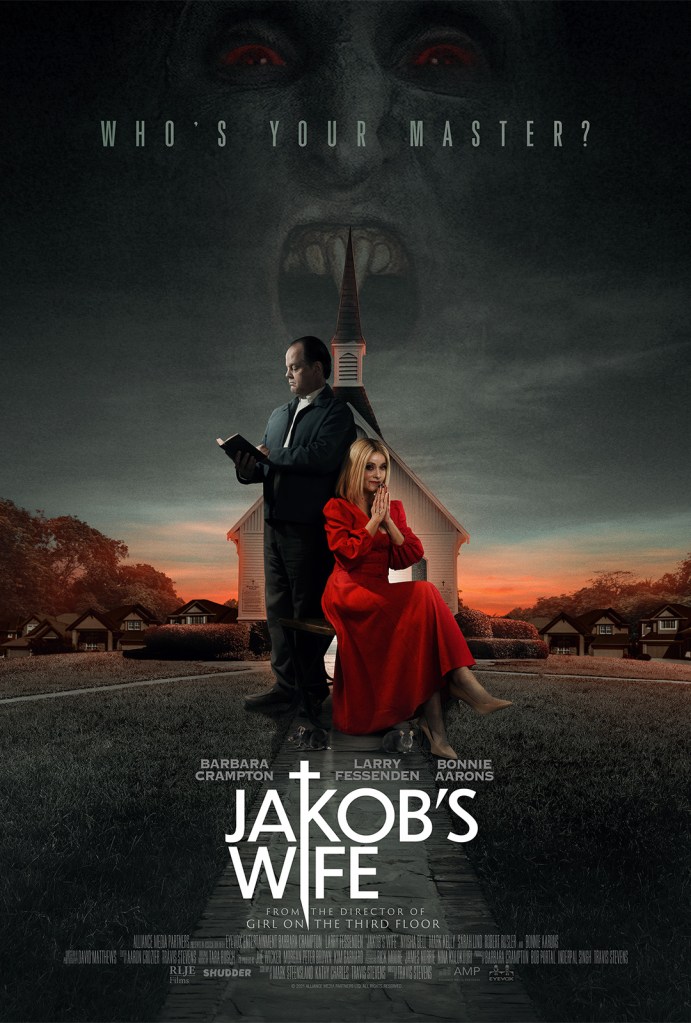
Perhaps it’s the somewhat aimless sense I got from it. Certainly there’s a plot – a somewhat mousy woman (played beautifully by horror icon Barbara Crampton) gets turned into a vampire, and has to figure out her life from that point forward. There’s a story, but it’s not always engaging, and while a couple of elements stood out, I can’t say I was really into the movie until the final thirty minutes or so.

Certainly the cast isn’t to be blamed for this. Barbara Crampton (From Beyond, Re-Animator, Castle Freak) did quite well, and Larry Fessenden (Habit, I Sell the Dead, We Are Still Here), while not a particularly enjoyable character, had a great performance. Though a smaller role, I liked Jay DeVon Johnson, and while she doesn’t get time to shine until the end, Bonnie Aarons (The Nun) had some strong elements.

When it comes to the positives, I’m pretty much stuck with two things. For one, I loved the gore – when people got bitten by a vampire, it wasn’t a small bite, these people literally got their necks ripped open, splatters of blood following. It was beautiful.

Secondly, the design of the lead vampire (played by Bonnie Aarons) was highly reminiscent of Nosferatu’s Count Orlok, with a bald head, freakishly long fingers, and to add to the effect, long fingernails. It was a great traditional look, and I loved it (at least from afar – up close, it felt sort of silly).

Otherwise, though, I found that much of the movie dragged, and when I said it was a struggle to get through this, I mean that. I kept pausing due to disinterest, and rather unlike me, it took three days to fully sit through Jakob’s Wife. I just wasn’t engaged at all save for the finale, and I can’t really put a finger onto why that was.

I imagine part of it is just the nature of the story. I don’t mind vampire movies, as there are some great ones out there – look at Fright Night, Sundown: The Vampire in Retreat, and John Carpenter’s Vampires, not to mention personal favorites like The Night Flier and Heartstopper (the 1989 movie) – but in Jakob’s Wife’s case, I just didn’t care for much of the story.

Ultimately, while I know this film has gotten a decent amount of praise among the horror community, I honestly just didn’t like it. I don’t think it was a particularly poor movie, and it was certainly filmed beautifully, but I can’t really see myself giving this another chance anytime in the next 15 years, which is a bit of a shame, especially given my mild hopes when starting the film up.

5.5/10
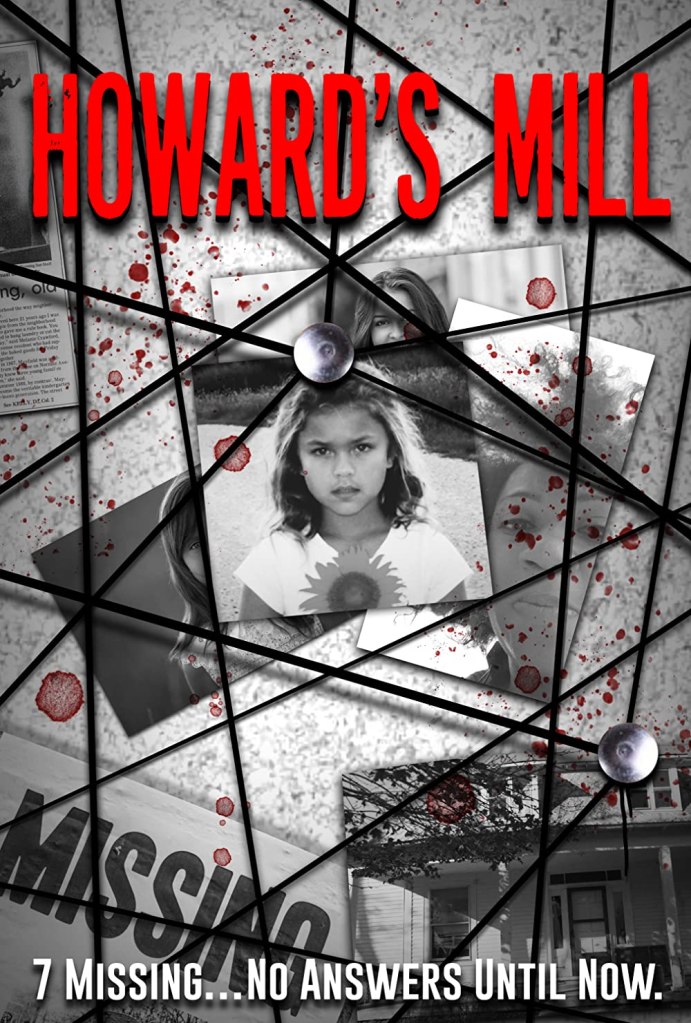
Howard’s Mill (2021)

Directed by Shannon Houchins [Other horror films: N/A]

So I will admit that I found Howard’s Mill a rather solid film for the type of movie it is.

Done in the vein of Hell House LLC, We Are the Missing, and The Poughkeepsie Tapes, Howard’s Mill plays itself up as a real documentary about multiple individuals who go missing over the course of a hundred years, starting off with just a single case, and turning quickly into a sprawling and rather mesmerizing film.

It has the same problems you might expect from films like The Poughkeepsie Tapes – occasionally some of the interviews don’t feel quite authentic, and we’re not really presented with a clear, concise answer come the finale (which is a similarity shared with We Are the Missing), but even with some small flaws, personally, I found myself really pulled into the mystery.

And it certainly goes all over the place. It’s pieced together realistically enough, slowly introducing new pieces, previously unknown history, different angles, all that jazz. Once some skeletal remains start showing up toward the latter half of the film, we even get an interview with a physicist talking about the possibility of time travel, and perhaps a hint of extraterrestrial activity even later on. And the best part of it is, all of it works, and I bought every moment.

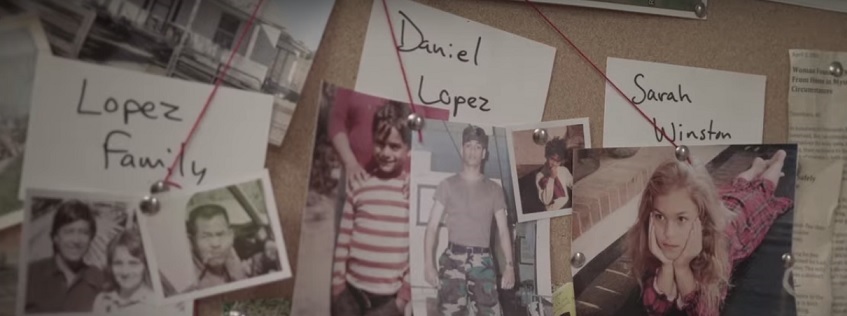
Part of the reason is that this isn’t explicitly supernatural, like We Are the Missing is. Sure, there’s some quotes about the lands that Howard Mill’s placed on as ‘taking people’, and there are certainly odd circumstances of lost time and memories for a few individuals, but more than anything, this is just a mystery that isn’t fully solved, and I really enjoyed how cemented in reality it was, especially the somewhat moving conclusion, as Dwight Nixon (played by Reegus Flenory) contemplates the fate of his missing wife, the disappearance of which he was initially blamed for, and what set up this whole documentary (in-universe, of course).

There’s not a full cast listing on IMDb, and the credits of the film just list the characters in the movie as if this were a real documentary, which makes sense, of course, but means I don’t have access to everyone in the cast.

Of those I can identify properly, I wanted to give a lot of props to the aforementioned Reegus Flenory, as he struck me as pretty believable. Josefina M Boneo isn’t always the best documentary host, but she had some strong moments. Others I can name include Jeremy Childs (The Dead Center), who shines toward the finale, Jessejames Locorriere, Ashley Shelton, Steve Wedan, and Danny Vinson.

Naturally, there are some smaller performances I wanted to point out – one is a character who appears briefly named Allison Steinquest, who reminds me oddly of Judy Greer. Another is a principal of the local high school, a character with a few great scenes named David Buchanan. A farmer near the questionable land named Ken Allen popped up throughout, and I dug his low-key style. Lastly, and I thought these two were perfect for the movie, we have an older couple named the Moody’s, who give us a little more insight into the strange goings-on.

Now, unlike Hell House LLC or The Poughkeepsie Tapes, there’s nothing overly shocking or scary in the movie. It’s more like building up to a better understanding of how so many people have gone missing, and what the time discrepancies that pop up actually mean. There are some more suspenseful moments – an older woman talking about mysterious figures she called ‘the Watchers’ or the discovery of a child skeleton in a hidden room, but Howard’s Mill is generally more subdued.

I think it works – Hell House LLC is a great movie, and I’d say it’s better than this, but this movie does amazing with the style and presentation of the topic, and I truly do applaud it.

Howard’s Mill surprised me. Only in rare cases do I get a lot out of faux-documentaries. The Poughkeepsie Tapes is okay, but not great, and some of the best ones, including Hell House LLC and Ghostwatch, are certainly the exception as opposed to the rule. I really enjoyed Howard’s Mill, and it may not be a movie for everyone, but I found it captivating and well-pieced together.

If you’re into these types of films, I’d highly recommend you give it a watch.

8/10