The Magician (1926)

Directed by Rex Ingram [Other horror films: Black Orchids (1917)]

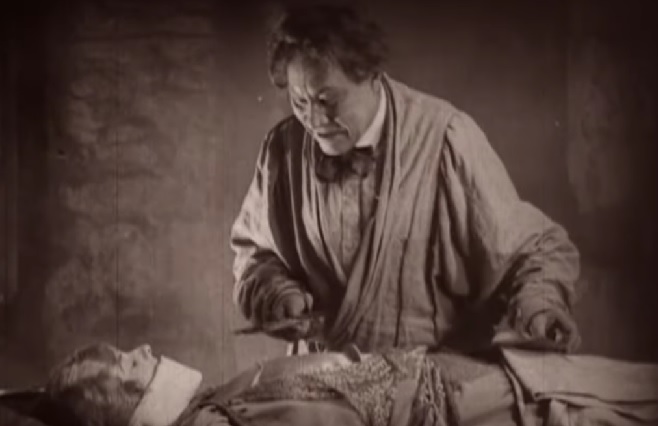
Ah, the good old days dealing with the horrors of hypnotism. The Magician is a pretty solid silent film, and while it’s a bit slow with the set-up, it’s quite a good experience come the finale, and overall is a good film.

Dealing with a somewhat mentally unhinged man who hypnotizes a woman to follow him (and eventually be his victim in a sacrifice to bring forth life with the black arts), The Magician does take a little bit to really get going, and the first thirty minutes or so can occasionally tend to be a bit sluggish.

Once you’re past the point, though, things fly by nicely. You have this crazy guy dragging a woman around (and of course, she has no will to fight back) and the woman’s fiance trying to save her. Toward the end, the magician takes her to an old sorcerer’s castle (which looks remarkably similar to the castle featured prominently in Frankenstein). There’s some thrilling scenes near the conclusion, and it’s a fun time.

The performances here are pretty good, especially Paul Wegener (The Golem), who does great as the evil magician Haddo. He has great facial expressions, and comes across as quite threatening. Alice Terry did well as his victim, and Iván Petrovich did well also as the love interest of Terry’s.

Oh, and I have to mention a title card that got me laughing. There’s a small sequence when, under the influence of the magician, Alice Terry’s character is playing roulette. Before that scene, we get this catching saying (definitely not at all written by the gambling establishment): “This is the song of the wheel that spins / Who loses To-day – To-morrow wins!” Just classy.

For a film that’s not quite as well known, the score of this was pretty good. There’s plenty of recognizable classical pieces here, most noticeably being Pyotr Ilyich Tchaikovsky’s Swan Lake. It’s peaceful and intense, and so works quite well in this film when it does pop up.

Hypnotism isn’t the most interesting subgenre of horror – movies like Svengali, while okay, aren’t particularly my cup of tea. Back then, though, this stuff was popular. The 1894 novel Trilby, written by George du Maurier, was quite well-known, and while nowhere near as well-known, the 1908 book The Magician, written by W. Somerset Maugham, was likely popular too. Early horror is always interesting – I’ve only seen hypnotism done in a horrific manner a handful of times, and this probably doesn’t count – even so, this is a pretty fun film.

When I first saw The Magician, I had a pretty solid time with it. Among other silent horror films, I don’t think this one is quite a classic, but if you’ve an interest in classic silent horror, then The Magician is well worth a look. With a great score, a nice-looking print, and an enjoyable story, then this film is something you should see.

7.5/10

Sweatshop (2009)

Directed by Stacy Davidson [Other horror films: Domain of the Damned (2007)]

I wasn’t impressed with Sweatshop the first time I saw it. Aside from the gore, it has nothing going for it. Seeing it again, well, I pretty much feel the same, and though I do think a bit more highly of it (Sweatshop has some really solid gore effects), I still don’t think it’s a particularly good movie.

Primarily this is due to the plot and characters. I don’t even have anything against the spirit of the plot, to be honest. It’s bare-bones, but that doesn’t matter near as much as the fact that there are no likable characters. Like, none. Literally zero. Some people might not care, as that means you can see people dispatched with gory glory and not shed a tear, but I still like to have someone to root for, and there was no one you could really do that for in this movie.

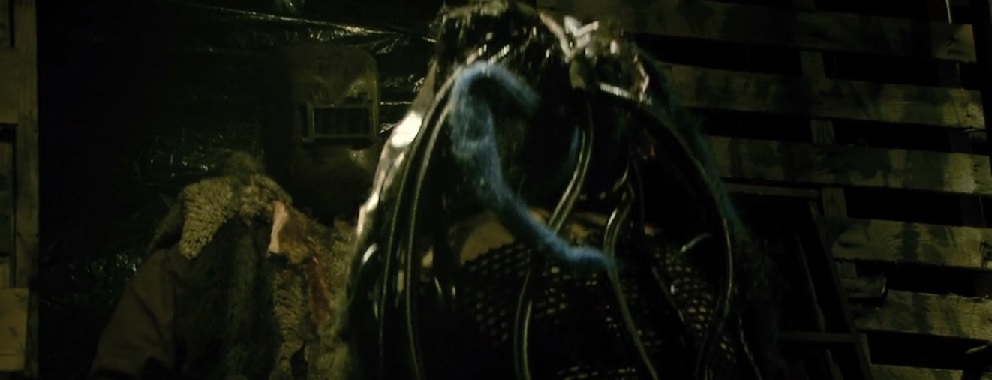
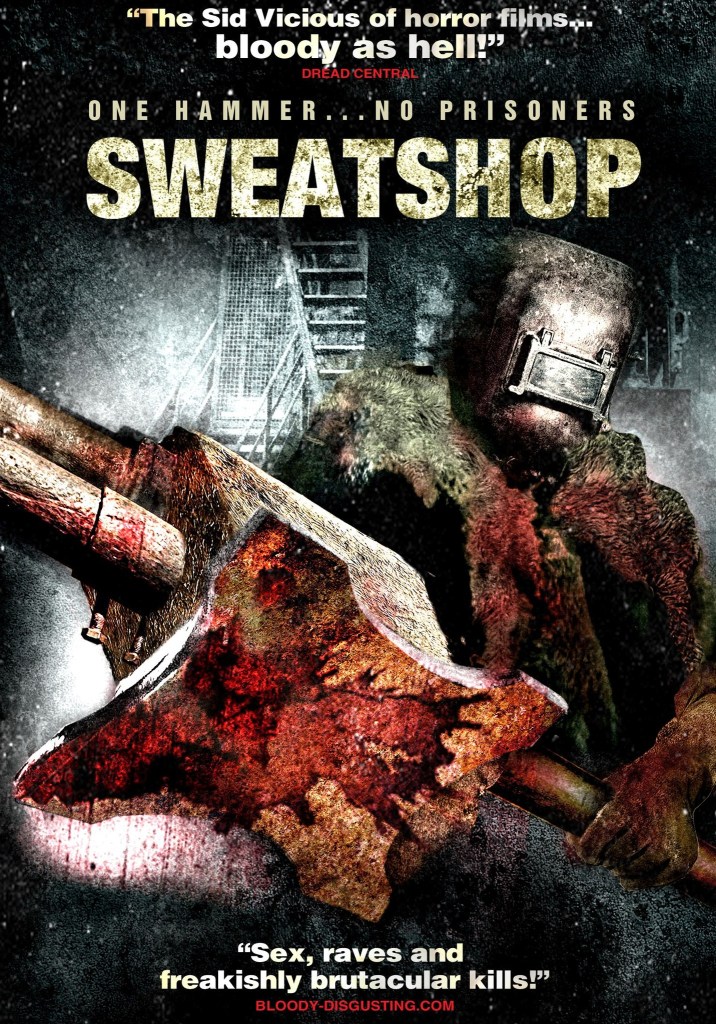
Also, I would have liked some backstory on the killers. There’s three or so – one is a huge, hulking hombre who wears a welder’s mask and carries around what I’ll call a hammer (it’s not a hammer, but I literally have no idea what it is, and so I’ll just refer to it as a hammer, as the poster does), and also some demons. I mean, they’re probably not demons. They’re disfigured women who act exactly like the possessed from The Evil Dead, so I’m guessing off-screen, someone read the Necronomicon Ex-Mortis.

I just wanted something. Even some half-assed scene where one of the characters finds a newspaper clipping about a giant kidnapping two girls 25 years ago would have been something. But we don’t get any explanation at all about the nature of these killers. If it was just the huge, hulking guy, I probably wouldn’t care that much, but adding in some supernatural elements with the demon girls demands some type of explanation, and it bothers me they didn’t even try.

As for the performances, well, given that none of the characters are likable, it’s not easy for individuals to stand out. Some did, of course, but I’ll preface this by saying their characters were mostly horrible. It’s Peyton Wetzel who made the biggest impression on me, and that’s largely because he looks very similar to Jensen Ackles’ character in Ten Inch Hero (among one of my favorite non-horror films). Naika Malveaux looked cool, Danielle Jones looked cute in glasses, and Brent Himes played a redneck with perfection. Melanie Donihoo was also okay.

It’s not the plot, characters, or performances that anyone is coming to Sweatshop for. It’s the gore. And for a lower-budget film, the gore is damn good. For a little taste, you have a couple of decapitations, people smashed with the hammer-thing, some impalement, a glowstick in the eye, some fingers cut off (one by one), and some legs being smashed with aforementioned hammer-thing. I think the best piece of gore here is someone’s jaw being ripped off. It showed great detail, and it doesn’t look fun.

There’s also a bit of a massacre at the finale. See, the primary group of characters were setting up for a rave party-thing, and the party does indeed occur. There’s another guest, though, being the hulking hombre, and so much like Jason introducing himself to the teens in Freddy vs. Jason, the hulking hombre (who is referred to as The Beast, but that doesn’t seem strong enough), just absolutely massacres them. A lot of great gore just in that scene alone, and it’s a good time.

Obviously, there’s a lot about Sweatshop I don’t like, and great gore can only do so much to improve the film’s disposition. If you want to see great gore, though, give Sweatshop a watch. If you want memorable characters or an interesting take on the horror genre (à la You Might Be the Killer or Hush), then look elsewhere.

6/10

The Pack (1977)

Directed by Robert Clouse [Other horror films: Deadly Eyes (1982)]

I don’t remember too much from the first time I saw this film, but revisiting it was quite the pleasant experience, as The Pack does pack a nice punch, and while dry at times, has some solid action come the final thirty minutes.

Based on a novel of the same name by David Fisher, the story is decently simple, and features a bunch of people on a small island trying to survive when a pack of wild dogs starts going after their previous best friends. Being a 70’s film, it can be dry at times, and it can be quite somber, but it’s actually not as hard to watch as other dog-related horror (White Dog is what immediately comes to mind), and the final scene is quite heart-warming (and it freezes on that frame as the credits start rolling).

The suspense is done quite well here, as are the multiple dog attacks. It’s not a violent film, but we do see the aftermath of one attack, in which a man loses all the fingers on one of his hands, most of the fingers on the other, and his eyesight. It’s pretty brutal, and I dug it. Also, while trying to avoid the pack, another individual takes a dive off a cliff, and though we don’t see the impact, we do see how successful the landing was, which also looked brutal.

Only a couple of performances really matter. Joe Don Baker (Wacko) makes a strong lead, and though I don’t really know the actor, I thought he definitely did well. Richard B. Shull has his moments, and R.G. Armstrong (who I recognized quickly from Children of the Corn) was a strong addition also.

Truth be told, there’s not too much to The Pack. It’s a solidly-made film, and though it takes a little bit to get going, it’s not near as dry as other films from the period can be (when I recalled it took place on an island, I got horrible flashbacks to The Food of the Gods, but luckily, The Pack is so much better).

With an exciting finale, plenty of good dog vs. human action, and quality suspense at times, The Pack has a decent amount going for it. It’s not an amazing movie, but it is pretty good, and certainly worth a watch.

7.5/10

Bride of Frankenstein (1935)

Directed by James Whale [Other horror films: Frankenstein (1931), The Old Dark House (1932), The Invisible Man (1933)]

There is a sizable constituency out there that believes Bride of Frankenstein to be one of the best sequels ever made, and not only that, but believes the film to be better than the 1931 classic. I never understood this. The movie is okay, but I don’t think it even cracks average. It’s not a bad film, but it pales in comparison to the first movie.

So with that blasphemy out of the way, I’ll try to explain why.

For one, the first forty or so minutes of the film feel quite aimless. Frankenstein’s monster survives being burned down in the windmill, travels the countryside, gets caught, escapes, and travels the countryside again, while Henry Frankenstein, healing from his injuries sustained at the end of the 1931 film, is goaded into working with Doctor Pretorius after the good doctor shows him some small people in jars.

It’s at that scene, I should add, that my disinstest grew. I understand the mechanics, however impossible, of Frankenstein’s creation – just stitch together body parts of multiple dead people, and add electricity to make the heart beat and the creature live. I get it. Apparently Pretorius used cultures from a seed to grow those small people (or homunculi).

Do those homunculi have any self-awareness or agency? The king was lusting after the queen, and the clergyman was chiding the king for doing such, but is that actually the extent to what those people are? Can they write books? I understand the science, such as it is, behind Frankenstein’s creation of the creature, but I don’t get Pretorius’ experiment at all. Where did he get the seed he used for the cultures from? I just didn’t see any relation between what he accomplished and what Frankenstein accomplished – they created two fundamentally different things.

Is that nitpicky? I don’t know, but I can’t take Pretorius’ character seriously as I fail to see the science in what he did. Overall, he’s a fun character, and I got a kick of his using Frankenstein’s creation against him, forcing the scientist to work with him, but those fantasy/comedy homunculi always felt so damn out of place to me, and took me away from the movie entirely.

Of course, things do pick up with the final twenty minutes. Really, the finale is strong, and we also finally get to see the titular character (for all of a minute or so) and her interactions with the creature. It’s tragic, and it leads to a good conclusion, but it’s not enough.

The only part of the film that I’d say was nailed would be the creature’s slowly becoming more humanized after being socialized by a blind hermit (O.P. Heggie). I thought those scenes were quite touching, and I got a kick out of the hermit teaching the creature to both smoke and drink. The hermit was such a good character, and I loved him and his sequences.

O.P. Heggie in fact is my favorite performance in the film. No doubt I think Boris Karloff did great, and though I didn’t get his character, Ernest Thesiger was solid as Pretorius. It was nice seeing both E.E. Clive (Dracula’s Daughter, The Invisible Man) and Una O’Connor (The Adventures of Robin Hood, The Invisible Man) not to mention Dwight Frye (The Vampire Bat, Dracula), but Valerie Hobson (replacing Mae Clarke as Elizabeth) and Colin Clive were just sort of there, and didn’t do much for me.

The 1931 Frankenstein is iconic in so many ways. Aside from the hermit and his growing connection with the creature, which was heart-warming, I don’t really see anything iconic here. I loved the design of the new female creature – those white stripes in the hair a nice choice – but she never got any time to really do anything aside from hiss and shriek, and overall, I can’t pretend I think this is anywhere near as good as the first movie.

6.5/10

Tremors 3: Back to Perfection (2001)

Directed by Brent Maddock [Other horror films: N/A]

While not as strong a sequel as Aftershocks was, the third film in the Tremors series is okay. It definitely feels more average than either of the previous films, but there are some strong portions also, and is still worth seeing if you’re a Graboid fan.

Personally, I loved seeing Perfection again, with old faces (Charlotte Stewart, Ariana Richards, Tony Genaro, and Robert Jayne) and references (to Nestor, Rhonda, and of course the picture of Walter Chang). The setting of Mexico was fine in Aftershocks, but it’s great to be back to where it all started, and to bring back so many of the classic faces.

It’s certainly a cheaper movie, but I don’t think that really does much harm. The special effects are as decent and gooey as ever (that scene in which Burt is cut out of the graboid is just slimy af, as the kids say), and the design for the new creature in the cycle (appropriately labeled Ass Blasters) is decent, though it’s not too far removed from the Shriekers.

Of course, Michael Gross coming back as Burt is a big win. Honestly, he’s not as memorable here as he has been in previous films, and doesn’t have any quips that come to mind as the first and second movies provided, but he’s still that anti-government right-wing gun-nut you know and love, and Gross does beautifully with it.

I liked Susan Chuang, and I thought her Jodi made a good new character, but I have to say that Shawn Christian was more on the generic side. I guess that Christian is okay, but I sort of wish they used Grady (Chris Gartin) from the second movie instead of throwing another new character in. Still, he did okay, but I don’t think he’s near as memorable as Kevin Bacon or Chris Gartin.

Others who are worth mentioning have mostly been mentioned. Reprising their roles from the first film are Charlotte Stewart (Nancy) and Ariana Richards (Mindy), and you know what, I’m surprised they used the same actress for Mindy. It’s just really nice seeing as many returning faces as we got, especially since Tony Genaro (Migeul) got more screen time. What they did to Robert Jayne (Melvin) was an interesting choice, but not everything can be on the side of angels.

I also enjoyed the ending to this one. Being stuck in a junkyard and having to defend yourself with makeshift weapons, I always thought that was a fun situation. Much like the first two movies, I saw this one when I was a kid, and I always got such a kick out of the finale, not to mention seeing the unfortunate and ironic demise of Burt’s home.

For as cheap as Tremors 3 is, it’s still Tremors done largely right. I enjoyed the character additions for the most part, and though I don’t think it’s near as strong as the second movie (I would have loved a quick Fred Ward cameo), it’s still a lot of fun, and I personally dig it.

7.5/10

Bachelor Party in the Bungalow of the Damned (2008)

Directed by Brian Thomson [Other horror films: N/A]

With a title like Bachelor Party in the Bungalow of the Damned, you’d hope the film would be more fun. Honestly, it’s not a terrible attempt with whatever budget they happened to possess, but the comedy here isn’t entirely to my taste, and I just found the film a bit rough and occasionally tedious.

The central story isn’t too bad, at least for a film of this caliber. And sure, there are some funny lines and a few okay scenes here and there. The credits can be pretty hilarious (I love the random “fuck you,” they give to George W. Bush for killing habeas corpus), and in fact might be the most consistently amusing thing about the film (“based on a true story. Not loosely, either; ask my brother-in-law”), because otherwise, this just felt too long-winded.

I did like Gregg Aaron Greenberg as the lead. Really, no other performances aside from maybe Joe Testa made any impression. Trina Analee got some funny lines, and Joseph Riker had his moments, but when it comes to the best performance, I’d have to give it to Greenberg.

The special effects weren’t bad (and that scene in which a character removes a splinter slowly was pretty gnarly), but so many of the scenes were dark and really limiting in what exactly you could see. Whether that was intentional or not, I don’t know, but it was pretty consistent throughout, and just added to the rough feel of the film.

Bachelor Party in the Bungalow of the Damned is a film I wish I liked a bit more, because I do think they tried as best they could. I just didn’t dig the story, and the comedy at times was a bit too goofy for me. I remember when I first saw this one, I felt pretty much the same, so though I do adore the title, and I think it was a decent attempt, it’s not personally a movie for me.

4.5/10

The Orphan (1979)

Directed by John Ballard [Other horror films: N/A]

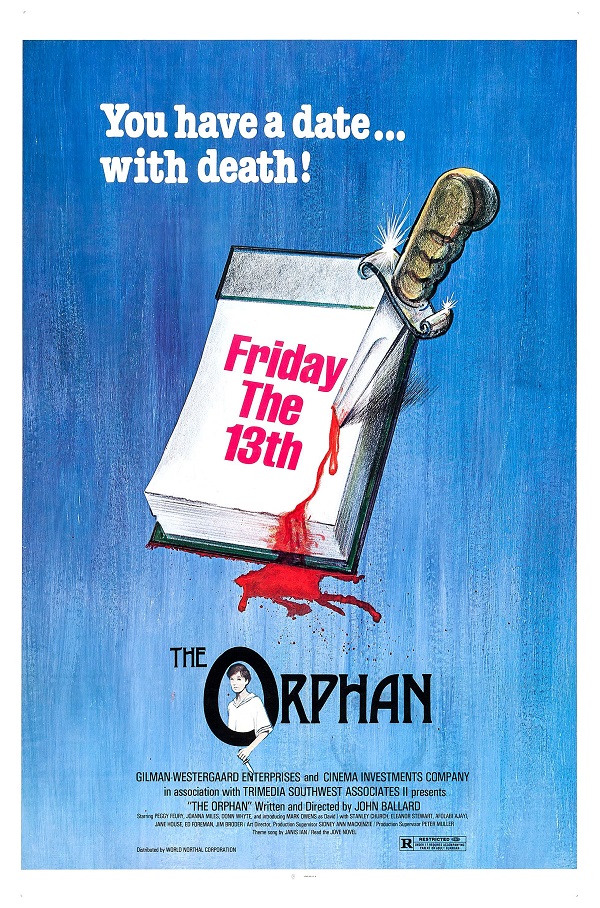
Sometimes known as, and perhaps only known as, Friday the 13th: The Orphan, this low budget movie from the late 70’s has it’s place. I don’t quite know where that place is, but providing it exists, well, this movie belongs there. The Orphan isn’t a bad film – there are some strong emotional portions and nice use of flashbacks and nightmares – but it’s far more a dry drama than a straight horror, and it doesn’t pick up near enough toward the end to help things out.

As such, the basic story is sort of interesting. A young boy David (Mark Owens) loses his mother and father, and so his aunt on his mother’s side (Peggy Feury) comes to care for him. She’s a strict woman, and also likely quite racist. See, David’s father went to Africa a lot, and brought back plenty of little African things, along with an African friend named Akin (Afolabi Ajayi).

Well, over the course of the first hour of the film, his aunt refers to his father as “bringing him up around filthy things” (Akin was literally standing right there), gets rid of Akin, tries to raise David “properly” (not speaking out of turn, going to church, that tripe). When the cook Mary (Eleanor Stewart) tries to help David, she’s yelled at for not knowing her place, and she’s also fired. Oh, and for good measure, the aunt kills David’s dog (it might have been an accident, but it was also entirely inexcusable).

You might be able to tell that so much of the film is drama. It’s not disengaging, but it is drama, and while you could say that around an hour in, it’s properly built up to something, I don’t really think the finale is grand enough to excuse how long it took to get there.

For a younger actor, Mark Owens does okay. But let’s be honest brahs – very few people here do well. The only performance I actually liked was Afolabi Ajayi, and that’s because I thought his character was dope. Peggy Feury played an uptight and atrocious woman well, I guess, and Eleanor Stewart had her moments, but really, Ajayi is where it’s at.

When it got to more horror-centric stuff, The Orphan wasn’t bad. David had a nightmare in which he’s brought into a really horrible orphanage and has his tongue cut out. Quality. A woman is covered up with a blanket and stabbed, and another person is attacked by a monkey and shot with an elephant gun. All of this is to say when the film veered in that direction, it could be rather entertaining.

Also, I wanted to give kudos to one of the songs that pops up three times throughout the film, being ‘I Need to Live Alone Again’ by Janis Ian. I’m not the biggest Janis Ian fan (I only know a handful of her songs, such as ‘At Seventeen,’ ‘Society’s Child (Baby I’ve Been Thinking),’ and ‘God & the FBI’), but she has a beautiful voice, and ‘I Need to Live Alone Again’ is a really peaceful song, perfect for a slow-moving drama as so much of The Orphan is.

I also want to add, though this has little relevance to anything, that I have seen The Orphan before, but under rather terrible circumstances. There was a video on YouTube of the film, but it was stuttering. It was like watching a flipbook moving quickly. Each image was still, and so movements were jerky. Truth be told, while I watched the whole thing, I got a terrible headache early on, and so remembered very little of it going into watching it this time around. It’s a good thing I didn’t remember, as it’s possible I would have waited longer to revisit this one.

And that might not be entirely fair, as The Orphan isn’t without it’s strong suits, but it really can be a dull film at times, and the finale isn’t near enough to make up for it. It’s worth seeing if you want to see a woman be racist and kill dogs (that was a harsh scene, on a side-note), but it’s not a film I could see myself watching again anytime soon.

5.5/10

Heavy Metal Massacre (1989)

Directed by Steven DeFalco [Other horror films: N/A] & Ron Ottaviano [Other horror films: N/A]

Well, this is about as inept as a movie can be. Heavy Metal Massacre is one of those SOV horror films that can be amusing, but ends up more tedious than anything else.

Part of it is a lack of story. No doubt, there is a story – there’s just not much of one. Some metalhead (played by David DeFalco, though credited as Bobbi Young) is killing women, and the police are looking for him. And that’s about it. There’s a little more, primarily revolving around two friends (played by Sami Plotkin and Michele De Santis) who run afoul of the killer, but really, there’s no conclusion to the story, and things just end.

That’s not exactly what makes Heavy Metal Massacre tedious, though. It’s more the constant dull heavy metal (many of the songs performed by an artist credited as The Electric After Burner Band) and really amateurish special effects. I don’t mean special effects as in CGI or anything, I mean in pointless aesthetics that can apparently be done with a video camera, such as changing the contrast or superimposing some scene on top of another, or even a corny blood dripping thing to convey a scene switch.

Really, I’m not a filmmaker, so I don’t have the vocabulary to describe exactly what they do here, but it’s something I’ve never seen in a movie before, and I don’t think it’s hard to figure out why after seeing this.

If I have to give credit for performances, I guess I can say that David DeFalco, despite a complete lack of character, did okay. I mean, he posed in his leather and spikes, staring into the camera with the best of them (that’s literally the first four minutes or so of this movie). Michele De Santis and John Thayer were okay, I suppose. Otherwise, there’s not a whole lot of strong points here.

Apparently filmed in Providence, Rhode Island (a fact you can tell by the police cars in the film), Heavy Metal Massacre isn’t a movie without charm, and if someone out there listed this as a guilty pleasure, I could sort of see it. Honestly, the kills weren’t awful – someone getting hit in slow motion with a giant sledgehammer was pretty decent (and in fact, this is the fate that befell two people), and another got #FuckedUp with a chainsaw, so that was all fine and well, but I don’t think that’s near enough to make this palatable.

For a long time, I knew this film would probably end up being a mess, and by all means, Heavy Metal Massacre is. The story is quite uninspired, and given there’s not really much of a conclusion, unsatisfactory. Maybe it’s worth a watch if you’re into SOV horror, but for most people, I think turning it off halfway through, if not sooner, is a more likely fate for this one.

4.5/10

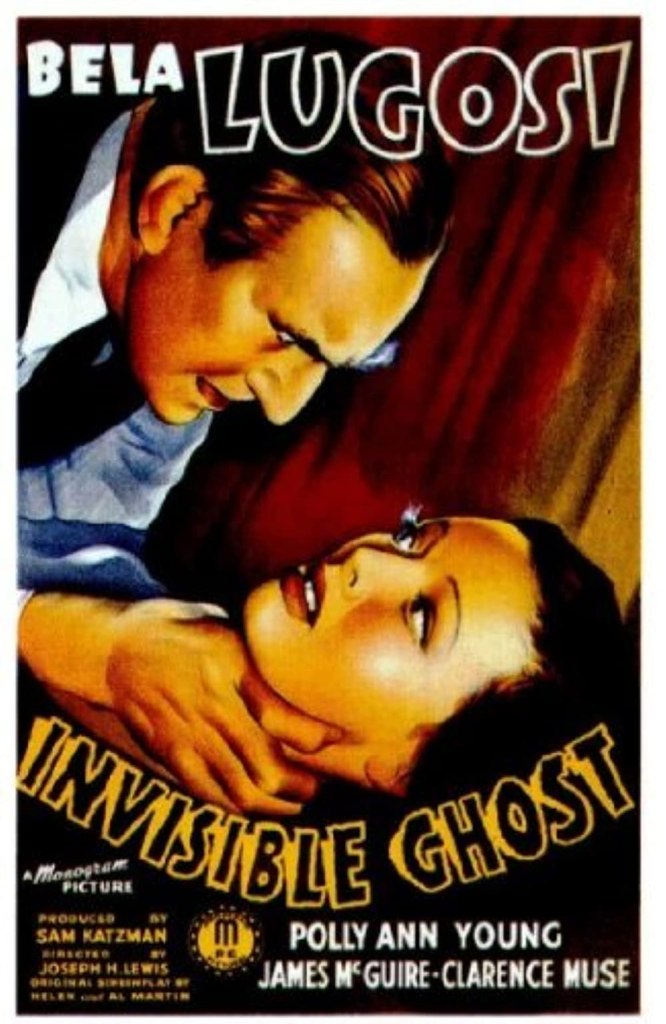
Invisible Ghost (1941)

Directed by Joseph H. Lewis [Other horror films: The Mad Doctor of Market Street (1942)]

I have a mildly fun story relating to this movie: I’ve seen Invisible Ghost once before (it’s even possible I’ve seen it twice, but I think it was just once), and the only thing I remembered about it was the opening. I mean, I remembered the opening with 100% clarity, but literally anything past that, I didn’t have an inkling.

To this day, I’m not sure why that was the case. Perhaps I fell asleep during my first viewing – it’s happened before, especially in October, when I can consume quite a bit of horror. Whatever the case, Invisible Ghost isn’t near as forgettable as my anecdote might make it sound. It’s not one of the classics, by any means, but it is a nicely serviceable film.

I appreciate how the film takes a somewhat psychological approach to the murders that are plaguing a household. I do wish that they added a little depth and explanation in the ending, as we’re not really told why the murderer is committing these murders, but either way, it is nice to have a different solution than so many other horror films from the same time period.

Bela Lugosi, of course, was a pleasure to see in this. Lugosi (The Devil Bat, Dracula, Night of Terror, and many others) did quite well, especially toward the end, as a somewhat tragic figure. Clarence Muse (White Zombie and Black Moon) is a strong runner-up – despite playing a servant (as so many black men had to do back then), I enjoyed his characterization as one of the thoroughly competent characters here. Polly Ann Young and John McGuire (in a dual role) both did decent, and McGuire had some strong moments, but I don’t know if he’ll end up being memorable.

Really, Invisible Ghost as a whole may not end up being that memorable, but I do think the story is decently strong, and as the film is just around an hour and change, it’s pretty digestible. I do enjoy the more suspenseful sequences, not to mention the answers presented, but I just wish they added a little more in the finale.

For a short and cheap film, Invisible Ghost is okay. It’s far from a classic, but it’s watchable, and though it may not stand out all that well, if you want a Bela Lugosi performance you’ve perhaps not yet bore witness to, you could certainly do worse than this.

6/10

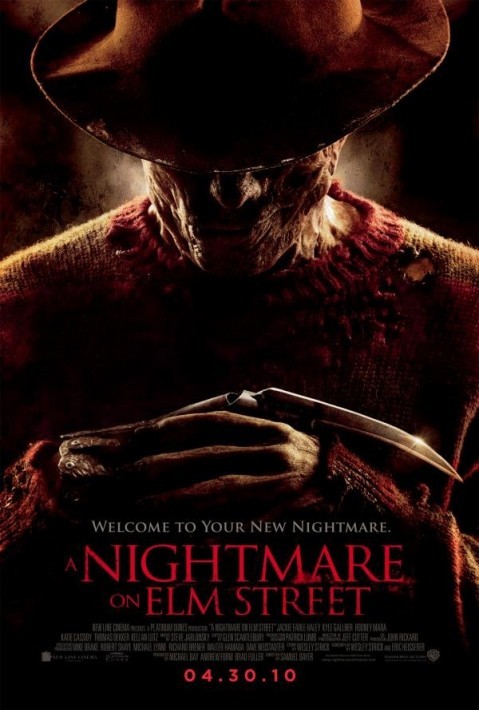
A Nightmare on Elm Street (2010)

Directed by Samuel Bayer [Other horror films: N/A]

Unlike some out there, I don’t hate this remake. I don’t think it’s a good movie, but I don’t hate it. What I feel is far more akin to disappointment, because while this rendition of A Nightmare on Elm Street wasn’t good, I will say that it really had potential.

To fully delve into this, I need to get into some spoilers. That’s something I try to avoid, because I like my reviews to be approachable even if the reader hasn’t seen the movie, but in this case, I have got to talk in detail about portions of this film, and so there will be spoilers in this review, starting with this next paragraph.

This film deals with teenagers who discover they have repressed memories about a preschool and a man named Freddy. Their parents refuse to tell them about it – when pressed, Nancy’s mother tells her that the kids said Freddy had abused them, and Freddy left town. During a dream sequence of Quentin’s, we see instead that the parents find Freddy on the outskirts of town, and angry that he may have abused their children, they burn his hiding place to the ground with him in it.

After Quentin sees this, it leads to what I find the most promising part of the film, in which Quentin and Nancy confront Quentin’s father about Freddy’s death. Nancy and Quentin wisely say that they were five at the time, and could have said anything – that there was no evidence Freddy was guilty, as the “secret cave” the kids mentioned was never even located, and that Freddy is seeking revenge on the kids who falsely accused him, which hurts all the more because Freddy loved the kids while he was a handyman at the preschool.

And you know what? If the film had continued to go this route, that would have been fantastic. Throughout the whole Freddy Kruger mythos, I don’t believe we’ve seen an innocent Freddy, and in this remake, they could have indeed made Freddy an innocent man who was killed due to false accusations of child abuse. The repressed memories of Quentin, Nancy, and company could have been Nancy, at five years old, deciding to play a joke and get her friends to accuse Freddy of things he didn’t do, and the finale could be her confronting her guilt, and an emotional scene of her apologizing to the innocent Freddy of her complicity in the events.

As you can probably tell, what with my hypotheticals, that didn’t happen. Upon exploring the old preschool, Nancy and Quentin come upon the aforementioned “secret cave,” and find photographic evidence that, indeed, Freddy Kruger was guilty. And everything that follows is just generic Nightmare on Elm Street stuff that you could get with a more classic feeling from almost any other film in the original series.

I think they blew a large opportunity to change the whole idea of Freddy, but instead of taking that leap, which might have been controversial, but would have been ballsy, they just keep with the “Oh, he’s just naturally evil, brahs,” stuff. I think this was a mistake, and instead of being an interesting movie, the finale of this remake is just generic and of about zero interest. Oh, and to make things better, they throw in a final scene that’s fucking awful. Even the ending of the original movie is better, and it’s not even close.

Perhaps it’s just me, but this pisses me off, because I really thought this film could have been something different. When I first saw this, I was really engaged in the story – was Freddy actually innocent? I thought it could have been so cool if they flipped the script. But they didn’t. And what was an okay movie (not great, but okay) just fell apart completely in the last twenty minutes, and I found it quite insulting, and again, a lost opportunity.

Rooney Mara (The Social Network) did pretty decent as Nancy, and Kyle Gallner (The Haunting in Connecticut) was good in the stoner-esque role. I thought the two worked well together as they were trying to figure out what their memories meant. Neither of the other teens, be it Katie Cassidy (Black Christmas, Wolves at the Door, and When a Stranger Calls) or Thomas Dekker, did much for me. Clancy Brown (The Shawshank Redemption and Pet Sematary II) was nice to see, but aside from one strong scene, he didn’t really add much.

When it comes to Freddy Kruger, I don’t think Jackie Earle Haley did terribly. I mean, let’s be honest – anyone who wasn’t Robert Englund would have a very difficult time getting praise. I don’t personally care for Freddy’s look here, but I also understand it’s more realistic as far as burn victims go, so that’s fine. More troublesome for me, though, is Freddy’s voice, which just grates. I could do without the one-liners (“I haven’t even cut you yet”), but what really takes me away is the voice. Honestly, maybe it would have been cooler if he didn’t talk, and was just a threatening figure slowly leading these kids to realize what a mistake they made in accusing him of a false crime.

Oh, wait. I’m sorry. I forget the movie wasn’t trying to be different, and so I momentarily forgot how cliché it was. My apologies.

The CGI was hideous most of the time. It’s funny that the scene in which Freddy is pushing himself out of the wall above the bed is done so much better in 1984, as well as the Tina-equivalent death scene. I did like the pool scene – when Quentin comes up from the pool and sees the flashback of Freddy’s origin take place – but otherwise, there’s nothing here that’s all that unique.

More than anything, I believe with all my heart that A Nightmare on Elm Street could have been a worthwhile remake if they had just changed the story up a little, and instead of making a generic horror movie, had gone with a more emotionally poignant ending about facing the consequences of your mistakes (the mistake being falsely accusing Kruger). Instead, you get a subpar movie that has it’s moments, and it has it’s potential, but is largely a waste of time.

5.5/10