Alien (1979)

Alien

Directed by Ridley Scott [Other horror films: Hannibal (2001), Alien: Covenant (2017)]

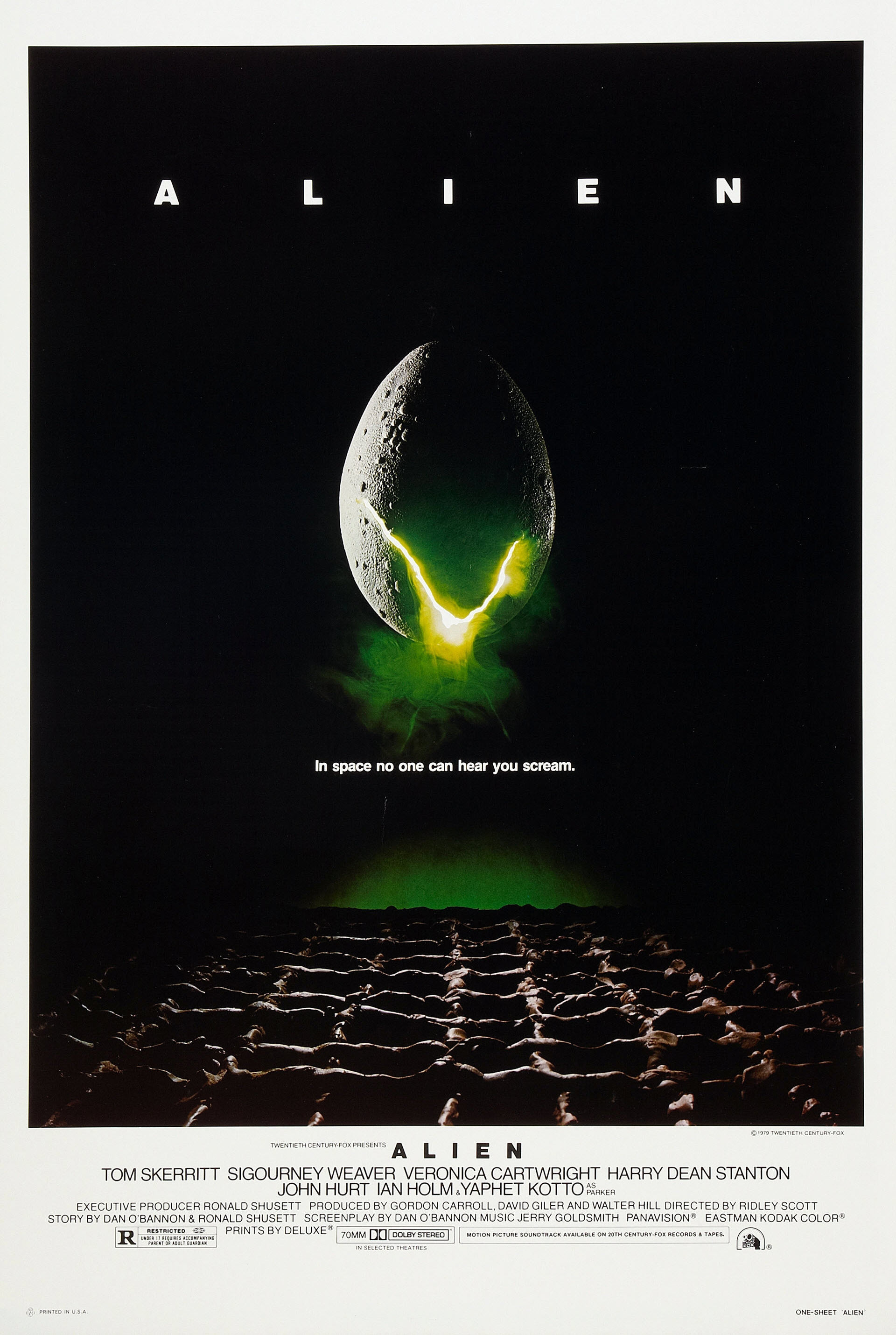
Perhaps one of the most popular horror films of all time, Alien is a very solid movie, perfectly capable of satisfying most viewers with it’s suspenseful and well-acted story.

It is a wee bit sluggish toward the beginning, but the story is set up nicely, which additionally works out due to the almost-entirely solid cast of the film (the only performance I didn’t love was Veronica Cartwright). The story is appropriately claustrophobic at times, and due to some good lighting and camera-work, there are some damn suspenseful scenes.

Like I said, pretty much every cast-member is worth watching. Ian Holm’s performance is perhaps my favorite of the bunch (especially given his interesting character), but Yaphet Kotto does great, as does John Hurt, Tom Skerritt, and Harry Dean Stanton. Sigourney Weaver, despite being the cast-member with the least acting experience (if you discount Bolaji Badejo, who played the alien), gave the strongest performance, and became a character (Ripley) that is well-respected inside and outside the horror community.

Another reason why this movie really worked would be the special effects, which were amazing. The titular alien really did seem a nightmarish organism at certain times (especially during both the air duct scene and the finale), and even the alien planet the crew landed on possessed a creepy vibe to it. And the face-hugger, with the acidic blood? Fantastic stuff.

All this said, unlike other classics of the genre, Alien isn’t a movie I really grew up on. I’ve seen it only once before, and back then, I didn’t even care much for it. Now, having seen it a second time, I definitely got a lot more enjoyment out of the film, but it comes nowhere close to movies such as Halloween or A Nightmare on Elm Street to me.

Still, this is a classic of the genre, and while nowhere near the first science-fiction/horror hybrid (It! The Terror from Beyond Space from 1958 comes to mind, and Invasion of the Body Snatchers two years before it), it’s definitely one of the most memorable, and is certainly worth a watch.

8.5/10

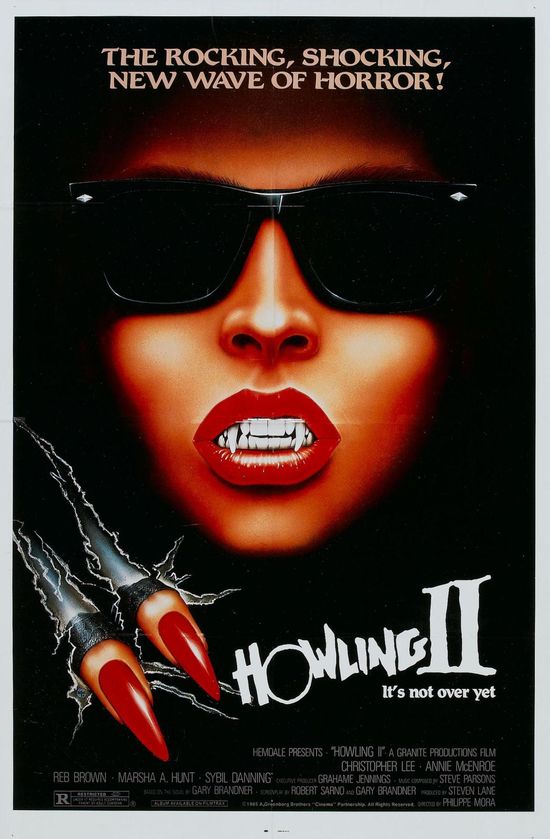
Howling II: Stirba – Werewolf Bitch (1985)

Howling II

Directed by Philippe Mora [Other horror films: The Beast Within (1982), Howling III (1987), Communion (1989), I was a Communist Werewolf (2021)]

The first sequel to the 1981 film, commonly known as Howling II: Your Sister is a Werewolf (which, believe it or not, is actually more ridiculous than Stirba – Werewolf Bitch), has little value, but still provides silly entertainment. It’s not a movie that I’d want to see again any time soon, but it does possess a bit of charm.

I don’t want to give off the false impression, though, that the movie’s good. Were it not for Christopher Lee’s presence, I sort of doubt this movie would be worth mentioning at all. It’s interesting that Lee plays his character so straight in a movie that’s this wacky. That said, the movie’s not necessarily overtly comedic – I’m not entirely sure the funniest scene (the hotel check-in) was even meant to be a joke.

Which says quite a lot about this. The tone is far more hammy than the first movie (which, to remind you, I wasn’t a fan of either), and the spectacularly bad special effects during some of the scenes really make this one of those bad 80’s movies a group of friends might watch for the sole purpose of making fun of.

There were some special effects worth noting, though, mostly when it came to the gore – there were occasionally some good stabbings and the like, and a memorable scene in which a character’s eyes, under the evil influences of a wolf goddess, pop out. I’ll admit, I sort of thought that was cool.

The tone and occasionally-goofy effects aside, though, what hurts the movie most is the story. The idea of hunting down an evil leader of a werewolf group seems, to me, a close-to-impossible story to actually do well. Much of the movie was filmed in Czechoslovakia, which gives a more authentic feel to the film, but ultimately couldn’t improve the plot any.

As stated, Christopher Lee is about the only performance here of worth. I sort of liked Annie McEnroe, but her character made far too many idiotic mistakes. Still, she’s probably the second-best performance here. As for Reb Brown, Marsha Hunt, and Sybil Danning, they provide nothing but generally unnecessary nudity.

A few final notes – those cuts, those very comic book, silly cuts, seemed pretty pointless, as they added nothing to the movie but an additional negative quirk for people to smile in a befuddled manner at. And that song, seemingly one of the only songs they had (“In the pale, pale light/pale, pale, light of the moonglow”) started out being rather annoying, but honestly, after it was played for the third time, began growing on me.

The second Howling film is definitely worse than the first, which is a shame, as the first itself is below average. If you’re into ‘so-bad-it’s-good’ cinema, this movie may well appeal to you. I first saw this many years back (five, if not more), and I thought it was goofy then. I feel much the same now, and honestly, despite occasional hokey charm, I don’t know if this movie is worth it.

5/10

Apostle (2018)

Apostle

Directed by Gareth Evans [Other horror films: Footsteps (2006), V/H/S/2 (2013, segment ‘Safe Haven’)]

This one caught me a bit by surprise. While I expected it to be an above-average movie based on the plot alone, I wasn’t quite expecting something of this high quality.

In many ways, this feels a bit like an updated version of The Wicker Man (a comparison that many others have made, it seems), only this takes place in the early 1900’s. There’s some amazing suspense and a somewhat layered story here, and combine that with both the quality performances and heavy quantities of gore, you have a solid movie here.

One factor that might initially seem detrimental to enjoyment may be the run-time, Apostle being a two hour and ten minute movie. That said, the film didn’t feel that long, and never really seemed to drag, which is somewhat of a feat in itself. I’d just say to not let the length deter you from giving the film a chance.

The cast makes the film better even if you think it’s on the sluggish side. I’m not familiar with any of these names, but Dan Stevens does great as the main character, and Michael Sheen was rather charismatic as Prophet Malcolm. Bill Milner did okay in his role, but his love interest Kristine Froseth did better. Lucy Boynton has a fiery nature about her, and Mark Lewis Jones really shone here, especially nearing the conclusion, which held a few surprises for us.

Possessing an unexpected brutality, Apostle had great gore. Multiple slit throats, a few torture scenes, impalement by spears, some mangled fingers, and my favorite scene, a disembowelment. I was pretty much thinking the movie would be an atmospheric slow-burn, and it sort of is, but the gore they had was top-notch, and like I alluded to, took me by surprise.

Apostle’s not a movie likely to appeal to everyone, especially given the run-time. If you’re a fan of The Wicker Man, though, this might be worth looking for. The gore would likely satisfy the slasher fans, and the suspense and pretty lush story and characterization would please those looking for something a little deeper. This is a movie that I can’t easily classify, but it’s all the better for it, and I think it was really a treat to see.

9/10

The Terror (1938)

The Terror

Directed by Richard Bird [Other horror films: N/A]

This British adaptation of an Edgar Wallace play has many of the elements you would hope from an old dark house mystery, but falls just a bit flat due to some comprehension issues.

The story starts out more a crime movie than many other examples of the subgenre, what with a clever robbery of a rather large shipment of gold. Before long, though, we meet a large cast of characters, each one somewhat suspicious, including a drunkard who seems to have quite an interest in the grounds of an inn, a butler who seems to know far more than he says, and a parson who definitely doesn’t seem what he is, along with others.

It’s a good story with multiple red herrings and an enjoyable mystery, while also throwing in some delightful wit (much of it rather amusing) and characters that are rather memorable, such as Bernard Lee’s inept drunkard.

In fact, Bernard Lee, while being far from the main star, was probably my favorite performance of the bunch. Linden Travers did pretty good, but much of the time fell into the generic ‘hysterical woman’ that these movies always seemed to rely on. Wilfred Lawson didn’t make much an of impression until the end, and Arthur Wontner never really does. Iris Hoey’s character was pretty funny at times, but is representative of my main issue with the film.

Beforehand, I want to state that I know this may not be a necessarily fair criticism, but it was still a prevalent issue. Being a British movie of not the highest quality, some of the dialogue was hard to follow, especially from Hoey’s character, who had a rather rapid-fire delivery. I caught most of what Lee’s character said, slurred as it almost always was, but some character’s accents, mixed with the audio present, led to more than a few incomprehensible lines of dialogue. I still caught most of the story, but I know I missed some amusing quips, and even once, a whole conversation went over my head.

It didn’t help any that this movie had a rather staged feel, partially, I suspect, because it’s based off a play. A lot of conversations with different characters lead to increased opportunities of missed snatches of conversation, which happened multiple times. It’s not the fault of the movie, but it still impacted how I felt about it toward the end.

Otherwise, this is a delightful little film. I liked the ghostly monk, and his ghoulish chuckles, though he should have appeared more. The creepy organ music of mysterious origin was fun, and there were some desolate ruins too that played a part. Generally-speaking, the setting was pretty solid, as were the characters. It’s just the language barrier, as it was, that presented a problem.

I first saw this film some years back, though I don’t remember much about how much I enjoyed it. It probably came across as a somewhat generic old dark house mystery, which I guess it sort of is. Still, re-watching it certainly increased my appreciation of it, and were it not for the problem I had with it, I think it’d be getting a higher rating easily.

There was an American version of this play made in 1928, but unfortunately, it’s lost. It was apparently one of the earliest horror talkies, which makes it all the more a shame that it can no longer be seen. Elements of the film were then used in Return of the Terror, which came out in 1934. While this film does survive, it can only been seen from the Library of Congress, and as such, hasn’t had many words said about it.

As for the 1938 version, though, it certainly has it’s charm, much of it coming from the wit throughout, and if you’re a bit better at catching some fast-moving dialogue, you’ll probably get a bit more from the movie out of me. Still, by no means a bad movie, The Terror is an enjoyable late 30’s mystery/horror hybrid during a time when horror films were rather hard to come by.

6.5/10

The Strangers: Prey at Night (2018)

Strangers

Directed by Johannes Roberts [Other horror films: Sanitarium (2001), Hellbreeder (2004), Darkhunters (2004), Forest of the Damned (2005), When Evil Calls (2006), F (2010), Roadkill (2011), Storage 24 (2012), The Other Side of the Door (2016), 47 Meters Down (2017), 47 Meters Down: Uncaged (2019), Resident Evil: Welcome to Raccoon City (2021)]

To be honest, I wasn’t expecting to enjoy this one. The first movie was the very definition of blah, and though I heard some positive things about this (along with quite a bit of negatives, to be sure), I didn’t think it’d be something that worked for me. Boy, was I wrong.

The movie has a strong retro feeling, and you can tell by the title screen, the score (both song-wise and movie-wise), and the general vibe. It worked well with the cinematography to create an enjoyable and suspenseful movie. Just check out the pool sequence – absolutely loved what they did with the color scheme and sound.

As far as how the movie’s better than the first, aesthetics aside, there are two important factors. For one, the setting is a lot more open (instead of just a house and the immediate vicinity, here we have a whole campgrounds), which really upped the game of cat and mouse. Instead of running room to room, there are tons of places both inside and out that can be the stage of a battleground or a makeshift hiding place.

Secondly, and I can’t imagine this point would get much contention (though that shows I may not have met the internet), the characters are much more sympathetic. This is true, by-and-large, because they’re a family. A dysfunctional, messed-up family, but a family all the same. The chemistry between the brother and sister felt pretty real to me, and generally, I cared far more about the fate of those involved here than I did from the first movie eight years ago.

I don’t know any of these actors or actresses, but it was mostly solid performances throughout. Perhaps the weakest was Christina Hendricks (the mother), but at the same time, her character was going through a difficult time, so the lack of feeling she portrayed makes some sense. Martin Henderson was moderately generic, but tolerable enough. While at first Lewis Pullman wasn’t working for me as the brother, he did start to grow on me, and ended up a good character.

Lastly is Bailee Madison – I really loved her character. Reminiscence of Anya-Taylor Joy’s character in Split and Kiara Glasco’s from The Devil’s Candy, I thought that Madison had a lot of spunk here. She had the tough-girl look, but you know that she was just reacting to the struggles of being a teen. Her character was by far the best, and I’m glad the movie shines a light on her.

The gore here is pretty top-notch. It’s not really the focus of the film (that’d instead be suspense), but it didn’t shy away from some pretty gruesome sequences. Perhaps the bathroom death was the most shocking, but the pool scene, not to mention the finale, were both solid also.

I can’t think of any major complaints about this flick, to be honest, which is odd, as it’s a sequel to a very subpar film. I am a bit annoyed that they threw in the “this is based on a true story” tripe at the beginning, but otherwise, you have an atmospheric flick with a delightfully retro soundtrack (Kim Wilde, Bonnie Tyler, and Air Supply) and great aesthetics.

While it’s a surprise to say, this film really took me for a ride, and though I was hesitant of watching it, it won me over.

9/10

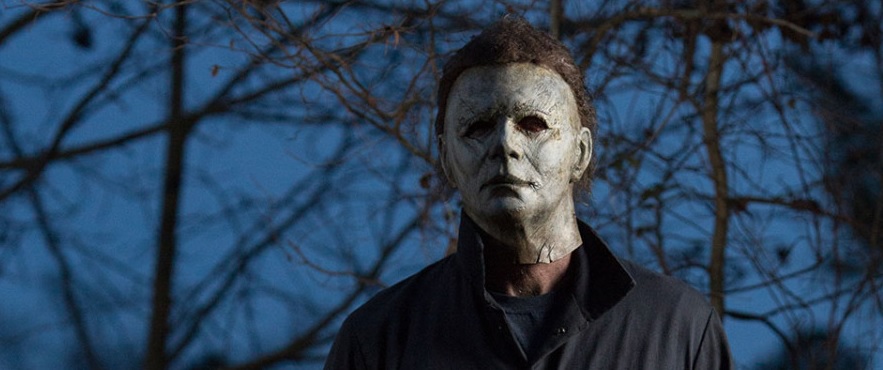
Halloween (2018)

Halloween

Directed by David Gordon Green [Other horror films: Halloween Kills (2021), Halloween Ends (2022), The Exorcist: Believer (2023)]

Disregarding everything but the first Halloween from 1978, the newest addition to the Myers mythology is pretty solid, though I don’t know if it’s overly special, and it certainly doesn’t possess the same charm of the original.

Story-wise, everything’s basically fine. The idea of an uber-prepared Laurie just waiting for Michael to come back seems a bit much, but Curtis gave a good performance, so I can live with that. Admittedly, I didn’t care much for the whole Sartain sub-plot, because it didn’t really go anywhere or add anything to the movie aside from a small twist (which is rendered ineffective just minutes later).

Overall, though, the story’s good. I was a bit bothered by the fact that they felt the need to add as much gore as they did. Make no mistake, the gore’s well-done, and there are some rather brutal kills here, but at the same time, the original managed to become a classic without gore, by-and-large, and given this one has that almost-retro feel (just look at the opening credits), it’s just somewhat disappointing they went the route they did.

Like I said, Jamie Lee Curtis’ performance here is pretty good, and I’ve nothing to complain about regarding Will Patton or Haluk Bilginer (despite not personally caring for where the movie took him). Judy Greer (who, believe it or not, I know best from the charming romantic fantasy 13 Going on 30) and Andi Matichak, who played Curtis’ daughter and granddaughter, didn’t really add all that much, in my opinion. Neither was particularly important toward the end, and it just felt somewhat wasted. Dylan Arnold, who played Matichak’s boyfriend, just disappeared half-way through the film (though there were reasons), and I was sort of expecting him to pop up again, but to no avail.

There are plenty of positive things about the movie. The gore, though I personally thought they should have tried without, was pretty solid. I also liked the sequences focusing on Curtis’ life after the 1978 original, and there was a bit of psychology involved with her character (naturally so). More so, there were a decent number of more subtle, creepy scenes (I liked the jack-o-lantern head, along with Michael’s walk to grab the hammer) that added a more traditional feel to the movie.

I guess my biggest problem is with Bilginer’s character (who played the Loomis-type doctor in the movie). His actions just didn’t really change anything, and they didn’t really add anything. It just seemed sort of pointless. If they had changed that up a bit, I could see myself giving the movie a better rating.

As it is, if you’re a fan of the Halloween franchise, I think you’ll enjoy this addition, as there’s plenty here to be happy with. A few mishaps aside, this is a good slasher with an occasionally pretty retro feel, and is generally enjoyable. It’s just not quite amazing.

8/10

Tales from the Crypt (1972)

Tales

Directed by Freddie Francis [Other horror films: The Brain (1962), The Day of the Triffids (1963), Paranoiac (1963), Nightmare (1964), The Evil of Frankenstein (1964), Dr. Terror’s House of Horrors (1965), The Skull (1965), The Psychopath (1966), The Deadly Bees (1966), They Came from Beyond Space (1967), Torture Garden (1967), Dracula Has Risen from the Grave (1968), Mumsy, Nanny, Sonny & Girly (1970), Trog (1970), Gebissen wird nur nachts – das Happening der Vampire (1971), The Creeping Flesh (1973), Son of Dracula (1973), Tales That Witness Madness (1973), Craze (1974), Legend of the Werewolf (1975), The Ghoul (1975), The Doctor and the Devils (1985), Dark Tower (1987)]

This horror film by Amicus is one of the better examples of a solid anthology. Well-known for their various anthology films (including The House That Dripped Blood, Asylum, and The Vault of Horror), Tales from the Crypt is probably one of Amicus’ best, and ends up a rather classic film.

With five tales throughout, only one is particularly weak, being the second story, or ‘Reflection of Death.’ You can see the twist from miles away, and it’s just not all that good. While the fourth story, or ‘Wish You Were Here,’ isn’t that strong, it at least can boast a pretty shocking ending.

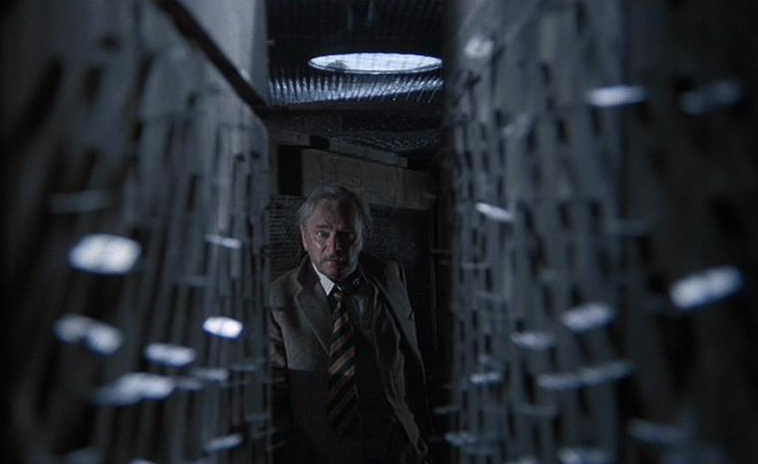
Without a doubt, the two best stories are the third and fifth, being ‘Poetic Justice’ and ‘Blind Alleys.’ The third story works amazingly well due to the sympathy that can easily be felt for the character Grimsdyke (played spectacularly by Peter Cushing). The performance Cushing gives is utterly heartbreaking, and he plays such a likable guy. ‘Blind Alleys’ on the flip-side is notable for it’s pretty solid gore (while there’s not much on-screen, that razor-blade wall just looks hella lethal), and shows a desperate revenge by the downtrodden.

Peter Cushing gave the best performance here, but he was far from alone. Joan Collins was pretty good in ‘…And All Through the House’ (while a good story with a fun conclusion, it doesn’t stack up to the better stories presented), if not a little stilted. Nigel Patrick and Patrick Magee, both of whom were in ‘Blind Alleys,’ really worked well off each other, Patrick able to really pull off an intolerable military-minded individual, and Magee the righteous fury that one would feel in his situation. Ralph Richardson pulls it all together playing the enigmatic Crypt Keeper (in a far more somber tone than the character would later be known for).

All the actors in the film have a wide-range of additions of the horror genre (Cushing is, in fact, one of my favorite actors), appearing in films from Dementia 13 (Magee), The Black Castle (Richard Greene, from ‘Wish You Were Here’), Repulsion (Ian Hendry from ‘Reflection of Death’) to The House That Dripped Blood (Chloe Franks from the first story). There’s a lot of quality here, even with the actors and actresses who didn’t do as much for me. Certainly a cast worth watching.

Tales from the Crypt might come across as a bit slow, perhaps dry, in a way that one might expect from 1970’s British movies, and maybe somewhat generic to the modern-day viewer (and there’s no denying it’s not as fun as Creepshow). Personally, it’s a film I’ve seen many times and always loved, despite the failings of a few of the stories. ‘Blind Alleys’ and ‘Poetic Justice’ alone make this movie worth watching, though, so if you’ve passed this up because early 70’s British horror doesn’t do it for you, I’d recommend reconsidering.

8.5/10

Whistle and I’ll Come to You (2010)

Directed by Andy De Emmony [Other horror films: Love Bite (2012)]

A BBC television production based on a classic story by M.R. James, this short feature is both somewhat sluggish but ultimately a spooky adaptation.

The story is pretty simple, partially because it’s an adaptation, and partly because it’s only about fifty minutes long. There’s a good moody, atmospheric feeling to this film, and it works well, but at the same time, I think it lacks a bit of meat.

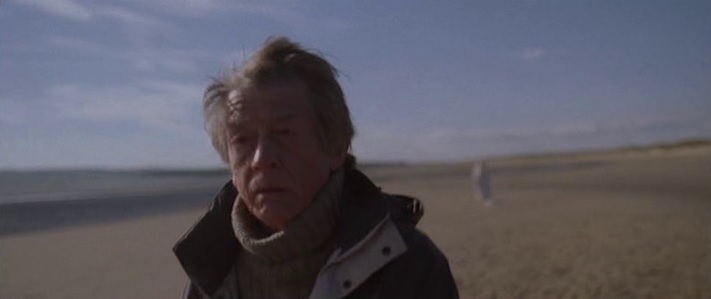
No disappointments from the cast, though. John Hurt does a fantastic job as a depressed man who just put his wife into a nursing home. Hurt really brought a lot of feeling to this, and is probably the best reason to watch this. The rest of the admittedly small cast worked out also, what with Gemma Jones (Pomfrey from a few of the Harry Potter films), Lesley Sharp (who was in a Doctor Who episode titled ‘Midnight’), and Sophie Thompson.

What works best about this movie is the downbeat, depressing aura, along with the pretty suspenseful scenes at the end. Even the spectral figure on the deserted beach was a nice touch (the setting as a whole, an almost-empty hotel near the sea, was beautiful). This said, I felt that this was lacking something. Not enough to make it anywhere near a bad film, but still, not something I’d eagerly watch again in the future. As decent as some scenes were, I’d rate this around average.

7/10

The Void (2016)

Void

Directed by Jeremy Gillespie [Other horror films: Father’s Day (2011)] & Steven Kostanski [Other horror films: Father’s Day (2011), ABCs of Death 2 (2014, segment ‘W is for Wish’), Leprechaun Returns (2018), Psycho Goreman (2020), V/H/S/94 (2021, segment ‘The Veggie Masher‘)]

Generally well-liked by many in the horror community, The Void does a good job of standing out as a different class of film, but at the same time, certain elements are a bit hard to enjoy here.

The story and plot overall are both pretty interesting, in a rather H.P. Lovecraftian way. At the same time, my biggest gripe comes from the fact that much of what actually happens in the film isn’t really explained. Personally, I loved the ending, but I just wanted to understand more of what was going on. The movie certainly keeps the audience engaged, but instead of answering just a few of these questions (where did all of those cult members come from, for instance), we don’t really get much aside from the rambling of a mad man.

One of my favorite things about this film, though, is how suddenly the story picks up. Five minutes into the film, you know you’re in for an exciting ride, and past a certain point, there’s almost no reprieve whatsoever. In some ways, this can sort of make the movie feel as though it’s dragging, but generally, I thought they did well trying to balance out the panicked action with a few ‘taking a breather’ moments.

Of course, the special effects in this film are most of what people talk about. Done with very little CGI, the body horror in this film is pretty high intensity. It’s a bit downplayed in that it’s sometimes difficult, by virtue of lighting, to see exactly what some of these creatures look like, but also keep in mind that in some ways, that could make the situation even worse. Regardless, the body mutations in this movie were appropriately freaky, and certainly the highlight of the film. Also, the costume design of the cultists was simple yet highly effective. I sort of wish they did more in the film than just stand outside the hospital and look menacing, but they had a solid presence all the same.

I’ve seen the movie twice now, and while I do have an appreciation for it, I still don’t love it. If a few more questions were answered, I think I’d have an easier time with the film. Like I said, I thought the ending was pretty decent, not to mention cool, and though the sub-basement sequences at times got a bit much (with multiple hallucinations and the like), I think most people going into this will appreciate the retro feel this sometimes possesses (it sort of reminds me a bit of Prince of Darkness at points). Definitely a movie to give a chance, and certainly a movie that’s above average, but it didn’t utterly blow me away.

7.5/10

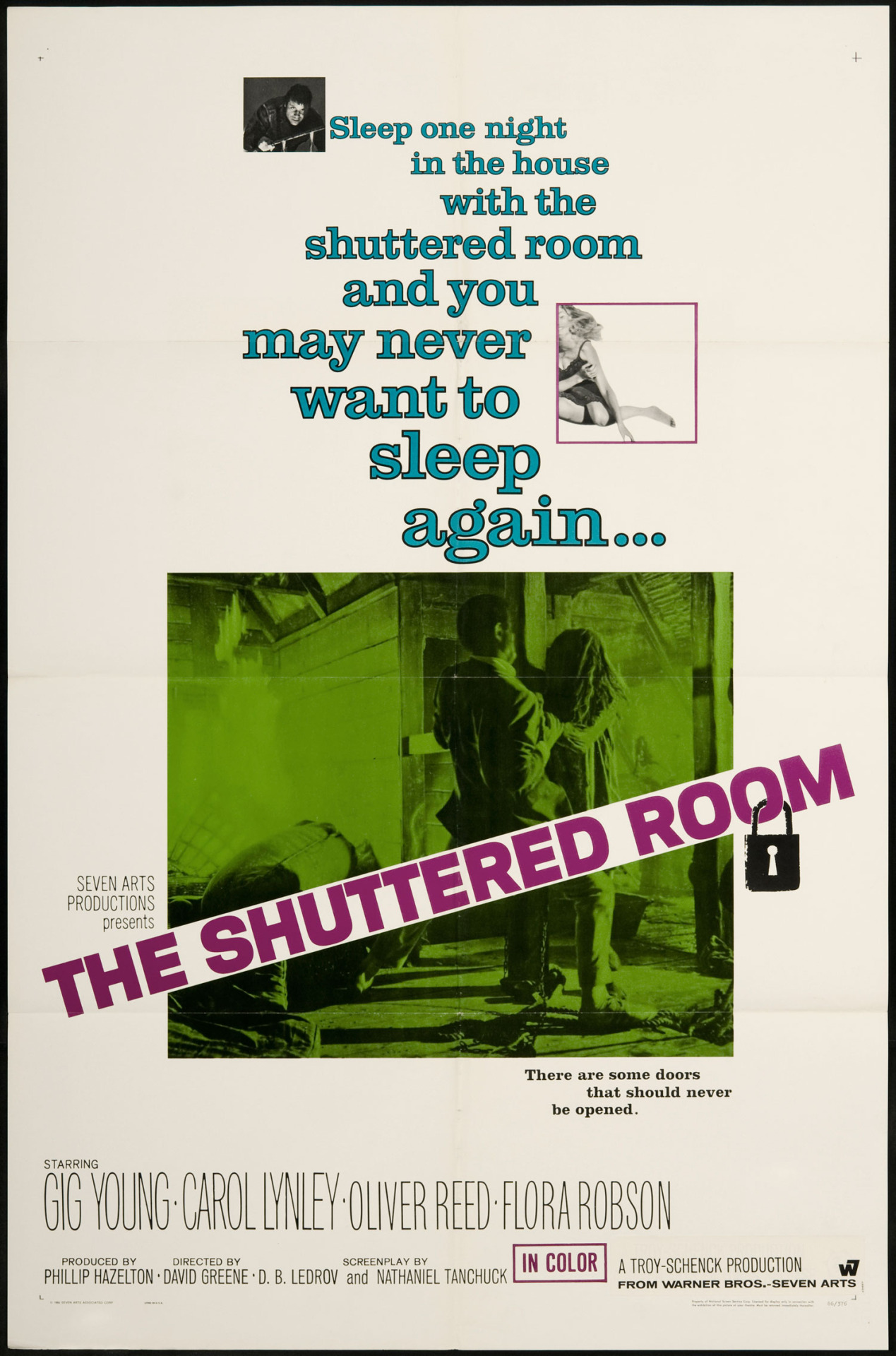
The Shuttered Room (1967)

Shuttered Room

Directed by David Greene [Other horror films: What Ever Happened to Baby Jane? (1991)]

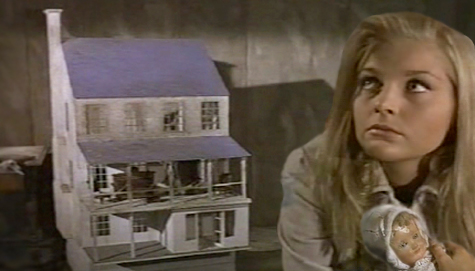
This was a pretty solid watch for the most part, with good atmosphere and suspense, though a bit lighter on horror than I’d have preferred, especially for a movie over an hour and a half long.

The plot is fun, made additionally enjoyable by the setting. Not only are the two main characters on an island off the coast of an undisclosed state (though this is a British film, it takes place in the USA), the focus of the horrors take place in an abandoned mill, which was suitably creepy and run-down.

Unfortunately, there weren’t as many kills as I was hoping. The opening scene was rather engrossing, and so indeed was the rest of the film, but none of the death scenes really grabbed me all that much. The small amount of blood seen was a welcome sight, and occasionally there was a sense of brutality that was never really touched on, as necessary as I thought it was (more on this shortly). It’s really the atmosphere, the moody and ominous feeling throughout, that allows this movie a higher rating than the kill scenes themselves.

Now, this next part was something I wasn’t initially going to speak about, but it was a prevalent theme throughout the film, so if this seems out of place, I apologize.

Taking place on a moderately small and out-of-touch island, some of the male locals have rather backwards views on appropriate behavior and actions toward women they’re unfamiliar with. Multiple times throughout the movie, these men chase and sexually harass, with the intent to rape, Carol Lynley’s character. Of course, being the inbred pieces of trash they are, as soon as she rejects their affection or tries to defend herself against the unwelcomed touches, they get angry at her, only making them want to mess with her more. It’s sexist male entitlement at it’s finest, and I’ve rarely seen locals as undeserving as life as these assholes, especially with their actions toward the end of the film.

The point that’s more important to the movie is that only one of the five of the characters displaying these sickening and backwards actions (which far too many of my male peers would see little problem with) ends up dying. The movie had a solid opportunity to dispatch, with as much brutality as legal in the UK at the time, these utterly unlikable characters. But only one of them dies, and it was too quick to bring much pleasure. Talk about a wasted potential.

Gig Young and Carol Lynley’s characters both were done well. I loved Young’s brawling sequences, defending his young wife against the rapists that populate the island, and they struck me as more authentic than I’d have expected. Lynley, while her character was certainly afraid, never really fell into the whole ‘hysterical woman’ trope, which I appreciated.

Oliver Reed’s character was detestable, and he did quite well in that roll. It may be worth mentioning, too, that Reed has probably done the most for the genre, starring in such horror films as The Curse of the Werewolf (1961), Captain Clegg (1962), Paranoiac (1963), Blue Blood (1974), Burnt Offerings (1976), The Brood (1979), Venom (1981), Spasms (1983), Alan Birkinshaw’s The House of Usher (1989), and Severed Ties (1992), along with having smaller roles in a handful of other flicks. It’s an impressive horror resume, and if his acting in this film is any indication, it’s clear to see how he attained these many roles.

My biggest gripe with The Shuttered Room, despite all that is does right, is the lack of kills, instead focusing on the rapey locals. Certainly, that’s a horror in itself, but I’d have preferred more about the mysterious figure killing people at the mill as opposed to seeing Lynley’s character being continually assaulted. Still, the movie has a great moody feel, and the color is pretty crisp, which is a plus for a film from a decade that hadn’t fully embraced color yet. A solid 60’s flick, this is one that I would tepidly recommend.

8/10