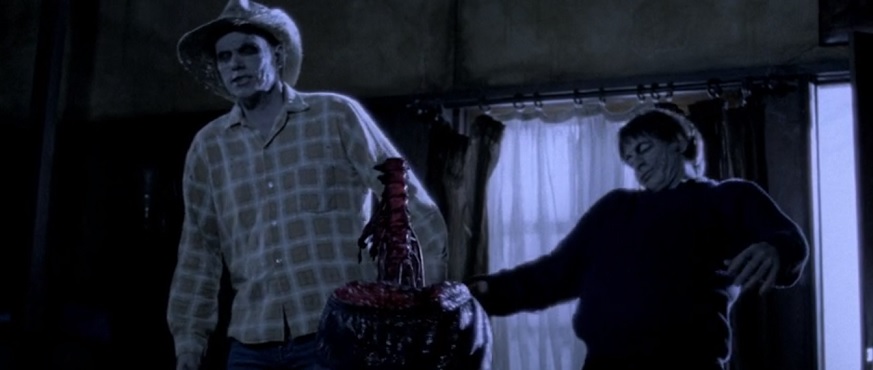
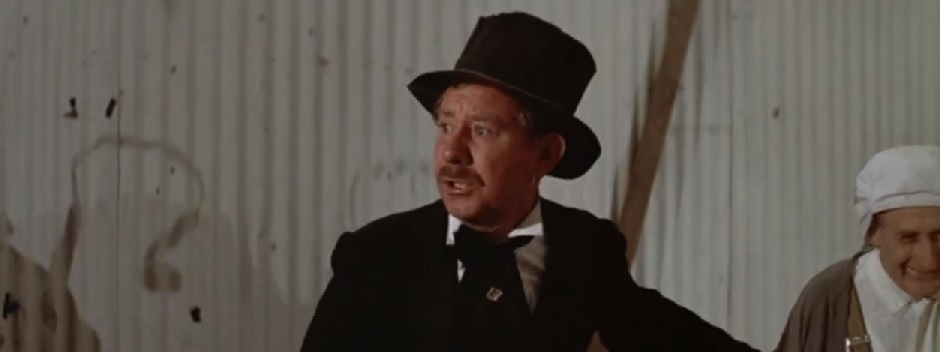
Next of Kin (1982)

Directed by Tony Williams [Other horror films: N/A]

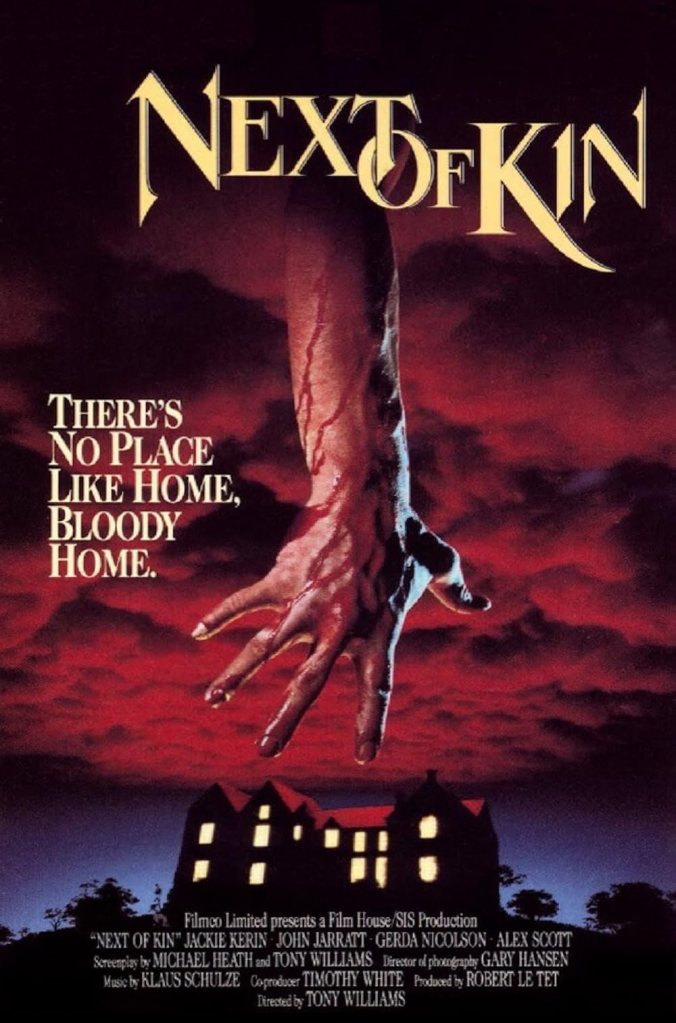
This Australian film is one that I’ve been vaguely aware about for many years now. I’ve heard that it’s a pretty solid movie, and many of the ratings I see online tend to back that up. I went in hoping for a good time, and I do generally think that I got one.

I was impressed by how nice the movie looked. This isn’t some gritty, outback movie – this had some production value behind it, and plenty of thought put into some camera shots and scenes. There were some visually striking potions here, and I can certainly understand how this one can get the label of ‘cult classic.’

The story’s pretty solid too, made all the better by the fact that it’s not quite clear where it’s going. A young woman (Jacki Kerin) inherits a retirement home following the death of her mother, and creepy things begin to happen. Whether these creepy things in question are of supernatural origin or not is part of the question, and the movie has a quality atmosphere and almost gothic feel to it at times to back the story up.

The finale is somewhat striking too – once we do figure out where this one’s going, we’re treated to a decently suspenseful finale, followed by a couple moments of quiet (in a very unexpected, yet subtly sorrowful, sequence), and then the action ramps up again. It was structured in a unique way, and part of me wondered if the film would just fade to black during that quiet sequence, before things unexpectedly picked up again.

Jacki Kerin hasn’t really been in much, which I find a shame, as I thought she did a great job here, even reminding me toward the end of Marilyn Burns in The Texas Chain Saw Massacre. A young John Jarratt (Wolf Creek, Dark Age, Rogue) was nice to see also. Charles McCallum played a nice, older man, Alex Scott (The Asphyx) a potentially shifty doctor, and Gerda Nicolson did well as an older woman hiding a secret or two.

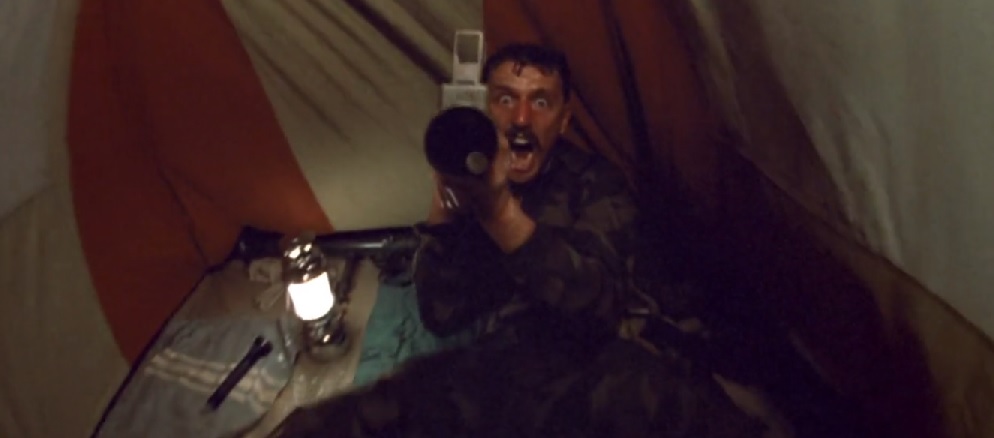
Some of the cinematography here really is stunning – during a dream sequence, it appears that a man is swimming outside a young woman’s window – and it reminded me a bit of what we later see in Razorback. Nothing here is that otherworldly, but it’s the same idea, and I was surprised by how nice, and how fresh, this movie ended up looking.

I don’t think the film is without flaws (though it’s fair to say that no big flaws seem to rear their heads), but I do think it’s very much a movie that’s worth seeing. If you want some foreign flavor, Next of Kin may be your type of film.

7.5/10

Saw VI (2009)

Directed by Kevin Greutert [Other horror films: Saw 3D (2010), Jessabelle (2014), Visions (2015), Jackals (2017), Saw X (2023)]

In my review for the film, I said that Saw V felt largely like set-up for the following film, and while I didn’t hate it, it wasn’t quite up to the Saw standard I look for. I have to say, though, after revisiting this one, if that is indeed accurate, then perhaps some sins can be forgiven, as I found Saw VI a wholly delightful experience.

Before touching on character motivations or the politics clearly on display here, I wanted to talk about the gore. I thought the fifth film largely felt lacking insofar as the gore and traps went. To be clear, the gore itself isn’t necessary – the first film took a far more psychological approach to the story, and it remains my favorite of the franchise – but the fact that the traps in the previous film felt weak was distasteful, to me.

That’s not the case here. An insurance executive (Peter Outerbridge) is forced through a series of traps because of the fact he’s a piece of shit, and he’s forced again and again to make difficult choices and face pain that, if he attempted to get insurance, would be classified as a pre-existing condition. And the traps, and effects, are great here.

Many of the traps are themed around his atrocious existence – at first, he’s pitted against someone, and whoever takes the most breaths gets their sides crushed in. It wasn’t pleasant. He then has to choose whether or not an older woman or younger man live – based on his company’s policy, he should go with the healthy young man. The steamy feelings he has toward his company’s lawyer (Caroline Cave) get personified by the steam of a boiler room, in a painful-looking time.

The carousel, which is perhaps one of the more memorable ideas in the film, isn’t overly gory, but it’s a great concept. Six employees are spinning around, and he has to choose two that live. Enter all the arguing and bickering that’d you’d expect. By this point, Outerbridge’s character is beyond broken, and it’s great to see him get a taste of his own medicine (medicine that he doesn’t have to worry about being denied coverage on).

Oh, and the opening is one of the strongest in the series – two predatory lenders are forced to give their pound of flesh. Whichever one of them gives the most flesh survives. It’s a bloody, painful sequence, as a more robust man begins carving off his stomach while a petite woman attempts to hack her arm off. It was a delightfully gory opening.

As you can tell by the targets in this film – predatory lenders and those who work in the sickening insurance industry – the politics of Mr. Kramer aren’t hard to see. In fact, we get some more flashbacks of John’s life, as he’s denied coverage on an experimental treatment that could have helped him, and was warned that going out-of-system would cause the company to drop him entirely. That, in fact, leads to this great line: “You think it’s the living who will have ultimate judgment over you because the dead will have no claim over your soul. But you may be mistaken.”

As someone who despises the American healthcare industry and people who get rich by giving people loans they can never possibly repay, it was great to see victims of these traps who legitimately deserved it. And given that the traps here were some of the bloodiest, it makes it all the more playful.

Lastly, on gore, there’s a death toward the end that just has to be seen. It involves a body getting injected with flesh-eating acid, and it – well, just watch it for yourself. That was a damn good sequence, and gooey to boot.

Saw V spent a lot of time on the cat-and-mouse game between Mark Hoffman (Costas Mandylor) and Agent Peter Strahm (Scott Patterson). Throughout that film, Hoffman was attempting to frame Strahm for Hoffman’s actions, and aggravatingly, it seemed to have worked to an extent. Well, this movie gives us some new insight into that, including a surprise return of a character, and leads to some beautifully tense scenes.

See, the FBI has concerns about Strahm being one of John’s successors, and they’re looking deeper into it. They have some old voice recordings they’re trying to unscramble, and at the audio lab, we’re given a hell of a tense scene between Hoffman and two FBI agents who clearly suspect his involvement. It’s a great sequence, and one I remember fondly from when I first saw this in theaters.

Costas Mandylor is great here. His character got some additional depth in the previous film, but this movie really shows how far he’ll go in order to survive. Mark Rolston (Scanner Cop, the ’96 Humanoids from the Deep) annoyed me in the fifth movie, but he comes in clutch here. Tobin Bell is back with some great insights into his philosophy, and I love seeing it.

Betsy Russell (who first appeared as an unnamed vision in Saw III) plays a larger part in this film than she has previously. In the fifth film, we see her get a large box from John’s will, and here, we finally see what’s in it. Oh, speaking of drawn out revelations – remember that scene in Saw III where Amanda’s reading a letter addressed to her and crying? Well, that’s finally explained in this movie, so buckle up, bois.

Otherwise, Peter Outerbridge (Haunter) was great in his role. Despite despising his character and everything he stands for, I do think he brought some good emotion to the role, and I can’t help but feel bad for the guy at times. Samantha Lemole (who first appeared, unnamed, in the fifth movie) had a good scene or two, and Devon Bostick (Dead Before Dawn 3D), despite limited screen time, kinda goes hard though.

There’s a lot in Saw VI to like. A few sequences are odd – such as the brief sequence early on showing a blurry Amanda and Cecil driving (which may only be in the unrated cut) – but overall, the movie is quite strong. The twists here are mostly decent, and the gore is certainly worth it. I really believe this to be among one of the best movies in the first seven of the series.

8/10
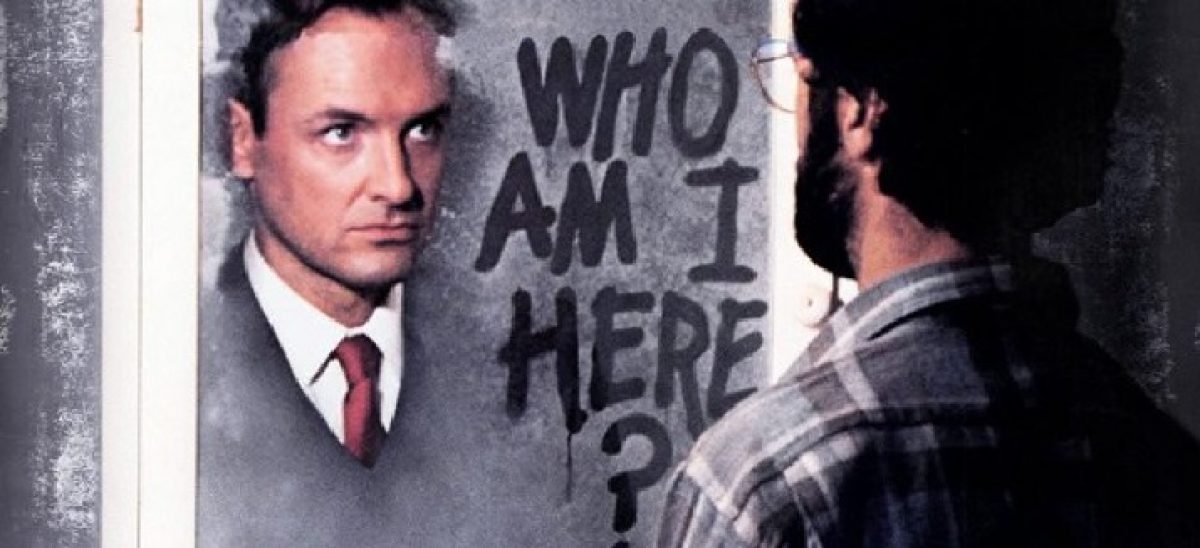
Howling III (1987)

Directed by Philippe Mora [Other horror films: The Beast Within (1982), Howling II: Stirba – Werewolf Bitch (1985), Communion (1989), I was a Communist Werewolf (2021)]

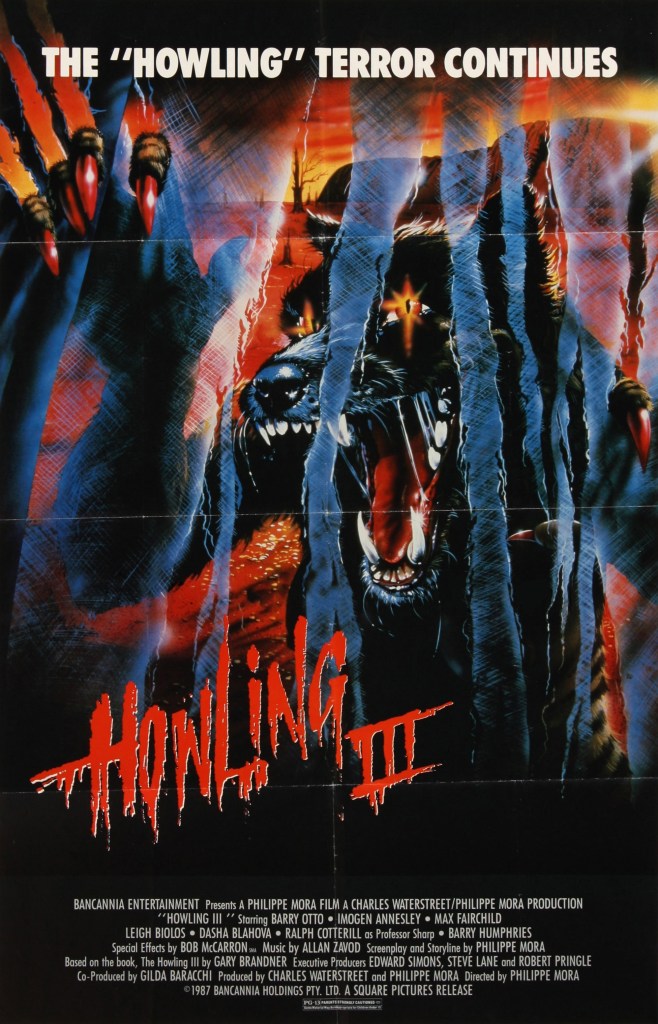
For the first ten minutes or so, I found Howling III a mess. Not that portions past the first ten minutes weren’t messy, but things did stabilize a bit. Even so, while this movie certainly had some interesting ideas, along with a couple of strong elements, I can’t say that I necessarily found it all that enjoyable.

It’s such a wild story, though. You have werewolves in Australia, a Russian werewolf ballerina defecting to Australia, a young woman wanting to escape her life in her Australian werewolf tribe, and falling in love with a human, all while an American is coming over to Australia to find evidence of the existence of werewolves.

First off, this has nothing to do with the first two movies of the series. There is a reference made by one of the werewolves of a possible group of Lycanthropes in California, but that’s as close as this movie gets to making a connection. Thematically, the final scene is quite similar to how the first movie ended, so there’s that, but for this most part, this is very much a stand alone sequel.

As stated, the story is wild enough, but what’s really interesting is the approach they take to the werewolves in the film. At first, as expected, they’re generally an antagonistic force, but as the main character (Barry Otto) is an anthropologist, he’s interested in purely studying these creatures as opposed to causing them harm, putting him in conflict with the military. It doesn’t help matters that he falls in love with a half-human/half-werewolf, and that’s when things get more fascinating.

Obviously, I don’t want to divulge the end of this one, but it’s just odd. The final 15 minutes took me on a trip I really didn’t expect, and, save a single scene, it’s almost entirely void of what people would generally call ‘horror.’ We follow the lives of four characters, and their offspring, as they live for 15+ years in the wilderness, eventually being found out and brought back into the modern world. It was such an odd, and oddly wholesome, finale, and that final scene in Otto’s classroom was almost emotional.

I don’t know Barry Otto, but I pretty much liked his character from beginning to end. Imogen Annesley was solid, reminding me personality-wise of Louise Jameson’s Leela from Doctor Who. Though his character had his ups and downs, Ralph Cotterill (The Survivor) turned out a solid performance also. Lee Biolos was an oddly decent, upstanding character, and Frank Thring was the MVP. He didn’t get a lot of screen-time, and he wasn’t important to the plot, but I loved his fun character.

Burnham Burnham (Dark Age) was decent, though I wish his character had a bit more to do. Max Fairchild’s character has an interesting route – you sort of expect him to be the main antagonist, especially toward the finale, but that never really happens. His character arc just strikes me as odd. The only main performance to not really leave an impression on me was Dagmar Bláhová’s, though toward the end, I could at least appreciate her.

Though the movie is almost an hour and 40 minutes long, I don’t know if I’d go as far as to say it ever dragged. It’s not a conventional werewolf movie, in many aspects, plus it’s Australian, so it does have an odd vibe to it, but boring isn’t one of the sins Howling III commits.

I do think I could have done without some of the more humorous portions. There’s not a lot, but toward the end, for instance, with the three werewolf nuns watching the television program – that’s something I didn’t need. I also could have done without some of the body-horror elements, such as that kangaroo-like pouch. I get the point, but I didn’t enjoy those portions at all.

In the end, though, Howling III is a very flawed film. I do think it’s better than the atrocious second movie, though – it may be low praise, but it’s what I’ve got. Certainly the finale of this one did carry with it some decent emotion, save the final scene, and if they had been able to expand that to the rest of the film, perhaps the final product would have been better. It might not have been horror – more a wholesome day-in-the-life of a werewolf community – but at least more consistent.

Really, it’s an odd movie. It can be entertaining, and it does have some strong portions, but I still find Howling III a decent bit below average. That said, this is one that I’ll ruminate on, as it does have the potential to move up, I think.

5.5/10

The Ruins (2008)

Directed by Carter Smith [Other horror films: Swallowed (2022)]

It’s been some time since I’ve seen this film. If I had to guess, I’d say around ten years or so. I can’t remember if I’ve seen it once or twice, but I do remember enjoying it whenever it was I last saw it, and I can say that, after seeing it again with fresh eyes, that’s largely still true.

Based on a novel of the same title by Scott Smith (a novel I’ve not read, but am interested in possibly reading in the future), the idea is pretty simple – six unfortunate souls in Mexico decided to go to a ruin that’s not good for their health, largely out of their control. It’s a somewhat bleak film, as there’s very little within their control in the situation they find themselves in, and it’s done pretty well.

The cast is solid – the six performances really worth mentioning would be Jonathan Tucker, Shawn Ashmore, Jena Malone, Laura Ramsey, Joe Anderson, and Sergio Calderón. It’s true that Calderón doesn’t have a lot to do aside from look threatening, but he does it well. Ashmore (who I know as Bobby Drake from the X-Men films, but has also been in Mother’s Day, Devil’s Gate, Wolf Girl, The Day, and Solstice) is more likable than Tucker (The Texas Chainsaw Massacre), but Tucker’s character is pretty good.

Jena Malone (Antebellum) reminded me of an actress on the tip of my tongue, but I can’t place her. Either way, Malone was pretty solid, and more stable than Laura Ramsey (Cruel World). I was hoping that Joe Anderson (The Crazies, Abattoir, The Reckoning) would have a bit more to do than he did, as I rather enjoyed his character, but it wasn’t to be.

The gore here can be pretty grisly. See, plants that grow around this ruin can get into your body if you have an open wound, and this happens to a couple of people. Not only does someone have their body cut in multiple places to pull out weeds, another individual has their legs cut off. That particular scene wasn’t too gory, but there’s a later one in which someone, under heavy mental stress, takes a knife to themselves in order to rid their body of the parasitic weeds, and that one can be trying.

It’s at this juncture that I should profess an odd love of plant-based horror. There’s not too many examples that come to mind, but those that do (including the somewhat awful Revenge of Doctor X) are films I have somewhat of an affinity for. I’ve always found malicious plant-life (or not even malicious – it’s just how they evolved) an interesting idea in horror. I have to imagine it comes from my love of Goosebumps as a child – Stay Out of the Basement, both the book and the two-part episode, are favorites of mine.

And on that note, I do wish we had some opportunity in this movie to learn more about these plants. Sure, the terror is in not knowing or understanding what exactly the characters are facing, but even so, it’d have been nice to have a biologist’s perspective, or even one of the Mayans who could perhaps manage some broken English.

Related, I understand where the Mayans are coming from, but wouldn’t it have been better to have a constant guard around the ruins as opposed to just trying to contain the problem after it was too late? Preventative measures, and all that.

I am aware that certainly they tried, but the problem is that the Mayans speak, well, Mayan, and can’t effectively communicate with people who don’t speak Mayan. If you’re trying to prevent people from going near this particular ruin, it might benefit them to at least learn Spanish, as many of those who approach the ruins could at least effectively be warned away.

Oh, and one last thing – did it never occur to any of the characters to possibly burn the plants? Sure, it might have been suicide, but I’d have definitely tried to light the plants on fire as opposed to starving to death with roots and weeds growing inside of me.

Despite those small issues, The Ruins is a well-made film. I don’t know what was changed from the novel, if anything, but it’s a high-budget film that’s somewhat dreary at times (and definitely could have done with an ending packing a bit more of a punch), plenty gory, and an overall enjoyable watch. It’s not stellar, but it is good.

7.5/10

Threads (1984)

Directed by Mick Jackson [Other horror films: Demons (2007)]

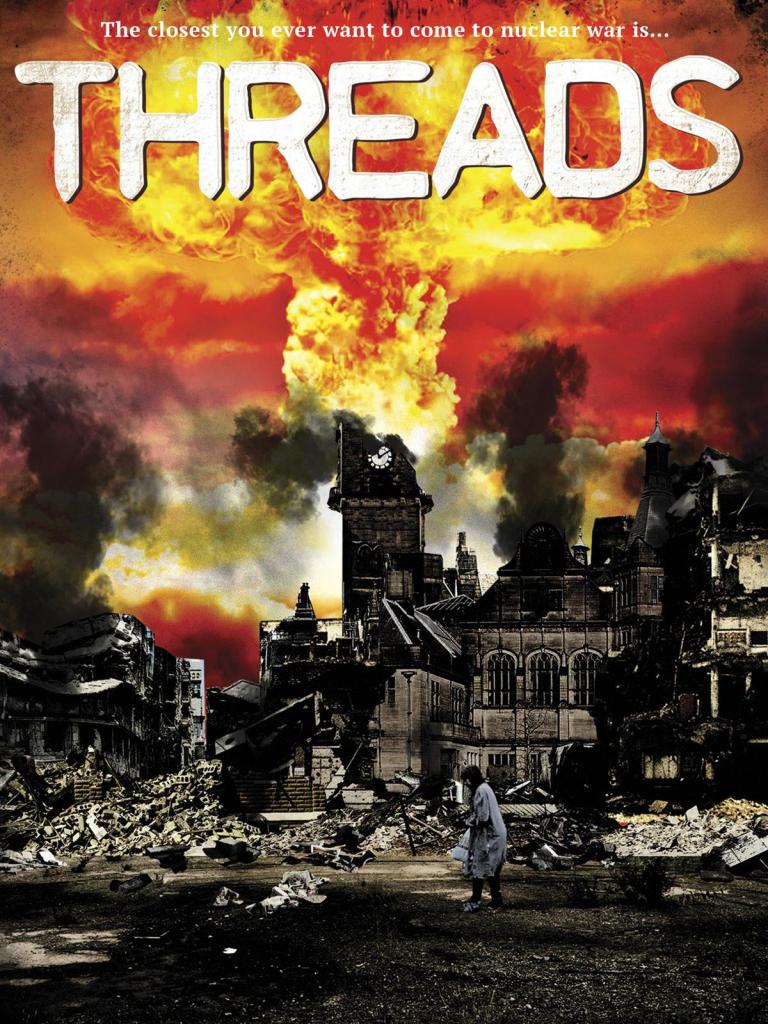
In a conventional sense, referring to this classic television movie as a horror film may not strictly be accurate. At the same time, there are few movies I’ve personally seen that feel quite as stark, bleak, and devastating as Threads does, so counting it as one seems rather fair to me.

To be sure, there have been plenty of films that touched on the horrors of nuclear weaponry, such as Godzilla and Genocide; the difference is that Threads takes a realistic approach to the idea, and instead of causing a monster to roam the countryside, we have widespread starvation, death, looting, radiation sickness, deformities, and atrocities committed by the military. This movie is not for the light-hearted, and with as much an impact it made on me, I can only imagine the impact it made back during the Cold War.

In a way, it’s hard to take a step back. The film feels like a documentary, with some somber narration by Paul Vaughan, slowly showing the audience the build-up to the bombs being dropped, and the horrific aftermath, not just days and weeks, but the widespread effects up to 13 years following the attacks (including a rise in leukemia and cataracts, due to the increased UV rays).

The despair is made all the worse because the characters the film focuses on, primarily a working class couple from Sheffield, have absolutely no way to prevent any of this; like most people on the planet, we live our lives and try to get by, and if a nuclear war should break out between multiple countries, we don’t have a say whatsoever, and so we’re doomed to starve to death (and that’s if we survive the initial blast and the fallout) as crops won’t grow and babies are born dead and deformed.

What’s interesting is that the stark nature present in this film doesn’t end with the final shot (a fantastic final shot, I should add); there’s two minutes of credits, but while the names are coming on the screen (including many scientists who helped with the authenticity, including Carl Sagan), there’s no music. It’s just silence during the credits, and I have to imagine that was done to give people some time to sit, think, and take in what they witnessed.

Aside from Paul Vaughan (the narrator), there’s not too many important cast members. Karen Meagher and Reece Dinsdale felt authentic in their roles, and Harry Beety, while it’s slightly more difficult to feel bad for him given his powers under the Emergency Powers Act, did quite well too. That said, none of the three are really what I’d call the focal point – it’s true we spend a lot of time with Meagher’s character, but the overall picture of a pre-bomb and post-bomb Sheffield is far more important than any individual person.

It’s also worth mentioning that while this film is close to two hours long, and the first bomb doesn’t fall until about 48 minutes in, it never feels dull. In fact, I was captivated through the build-up, what with the USSR and the USA’s conflicts pushing into Iran, tensions growing, all leading to the devastation we soon see. For someone who has long held an interest in politics, I was tuned in from the beginning, and as depressing as the movie was, I did find it rather worth watching.

That said, this is not always an easy movie to get through, especially once the bombs drop and the after-effects are fully realized. There’s plenty of rather disturbing imagery and scenes, such as an older woman who is embarrassed at having made a mess in her bed to a middle-aged woman holding the burned-out husk of what we could imagine was her child. People are shot for looting, locked in make-shift prisons, others are starved and count themselves lucky to be eating rat or possibly radiated sheep.

Threads is a stark and somber film of what nuclear weapons could lead to. Many extras involved in this film were also involved in the Campaign for Nuclear Disarmament, and I’ve long thought it wise to remove these types of weapons from the possible arsenal of any country. After watching a movie like this, no matter how alarmist it might seem to some, I find it difficult to believe many would walk away with a different take on the viability of a weapon that could cause effects even half as atrocious as shown here.

Again, this isn’t a conventional horror film, but I definitely think it counts; it’s more than that too, though, and as disturbing as the film is, I think it’s definitely one of the highlights of the 1980’s. I may not want to watch it again any time soon, and it may not be that enjoyable an experience, but I can’t deny it was a solidly-made film and certainly eye-opening insofar as the horrors of nuclear warfare are concerned.

8/10

Undead (2003)

Directed by Michael Spierig [Other horror films: Daybreakers (2009), Jigsaw (2017), Winchester (2018)] & Peter Spierig [Other horror films: Daybreakers (2009), Jigsaw (2017), Winchester (2018)]

I want to be as fair as possible, so I need to first say that as I write this, I am both sick and tired – I don’t mean figuratively, I mean I am literally sick and extraordinarily tired. I don’t really feel that bad – my throat is a bit rough, but otherwise, I’m okay. Still, I’m exhausted, and just wasn’t in the mood for this movie at all.

Undead is a lower-budget zombie science-fiction comedy movie. It has interesting ideas, I guess, but I hated the comedy, so I really can’t find it in me to care that much. Certainly zombie comedies can be done right – even ignoring larger budget films, check out New Zealand’s Last of the Living, which was pretty okay. The comedy here, though, wasn’t at all something I cared for in the least.

Also, while I can’t describe this fairly, the music was horrible. I can’t explain why. It sounded cheap and silly. That’s the best I can do. It was just shitty throughout, and that alone cost the movie something like two points. Godawful.

Look, the idea was interesting – instead of a generic zombie movie, Undead tried to do something new by throwing in acid rain, aliens, and giant walls made of metal. Even come the end, I didn’t really get what they were going for, and the story still confuses me, but I can appreciate that they tried to do something new with a sub-genre that’s overwrought with repetition.

I respect it, but I just can’t like it.

Only one performance did anything for me, being Mungo McKay’s. I didn’t get his character, but I didn’t get any of the characters, many of whom were over-the-top in their silliness, which of course makes me rather dispositioned to despise them.

Also loved all the ammunition wasting. It wasn’t until 40 minutes into the movie that they discovered they should aim for the heads. It made me think that zombies weren’t something people in this universe had a concept of. As it turns out, they did – later on, one of the characters admits that the people walking around are zombies. If they had a concept of zombies beforehand, why didn’t they just immediately try and focus on headshots?

Some people might call that a small nitpick, but that type of thing really annoys me, and it just gave me cause to dislike this movie more.

Even so, Undead, at the time of this writing (March 11th, 2022), has a 5.4/10 on IMDb (with 14,188 votes). Enough people found it decent enough to rate it above a 5/10, which personally amazes me. I get it – throwing in aliens and acid rain was a neat idea, and if it landed for some people, then glory be to God.

I’m just tired and bitter. I didn’t care for the comedy of this movie at all, nor most of the characters, and as interesting as some of the concepts here are, I don’t think they were explained all that well. I didn’t have a good time at all with this, but if it sounds like your type of thing, it may be worth a watch.

3.5/10

Razorback (1984)

Directed by Russell Mulcahy [Other horror films: Tale of the Mummy (1998), Resurrection (1999), The Curse of King Tut’s Tomb (2006), Resident Evil: Extinction (2007)]

I’m never quite sure what to make of many of the Australian horror films I’ve seen. While some can be perfectly normal, so much of the output I’ve seen from Australia tends to be, for lack of a better word, odd.

Certainly that could be a label placed on Razorback also, but I think in this case, that’s not at all a problem.

To be clear, I can’t honestly say I enjoyed Razorback in a traditional sense – it’s quite a dusty, dirty movie, sometimes rather bleak, and portions don’t always enthrall me. That said, I did rather appreciate a lot of it, and though it’s not a film I personally enjoyed a whole lot, it’s definitely a movie that’s worth seeing, and I can understand why I see primarily positive posts about the film.

One thing really allows the movie to stand out, which is the occasionally stellar cinematography. There are two sequences in particular that – after I saw them – I immediately rewatched, one being a dream sequence, the other, shots of a man lost and potentially delirious in the middle of the Outback. Captivating doesn’t begin to describe just how stellar that second sequence was, and I truly thought it possessed some of the most beautiful and desolate scenery I’ve seen in a horror film in recent times.

There’s also a surprisingly shocking dream jump scare at one point – I wasn’t at all expecting it, and I’m not too proud to admit I jumped a bit, so kudos to that scene.

As for the story, it’s not overly original – it’s a giant animal that’s going around killing people, and some characters hunt it down – but the approach taken here does lend a certain je ne sais quoi to the final product. Maybe it’s the scenery – the Australian location is used wonderfully throughout. Maybe it’s the aforementioned dusty and desolation, sometimes grimey, feel. Whatever it is, Razorback does have some feeling to it, and I don’t think it’s a movie, as generic as the plot may sound, that’ll easily be forgotten and discarded.

At first, I thought Judy Morris (The Plumber) was going to have a more central role, but that wasn’t quite to be. She did well early on, though, and when Gregory Harrison (1996’s Summer of Fear) takes the reins, he’s pretty compelling. I can’t say I loved Arkie Whiteley’s character, but Bill Kerr (House of Mortal Sin) has that Australian ruggedness I’ve come to appreciate. David Argue and Chris Haywood (Sweet River and The Tale of Ruby Rose) did well with two rather atrocious characters.

One thing that might be worth knowing before going into Razorback is that an uncut version with a bit more brutality exists. Now, I happened to watch the most-commonly available cut version, but found the missing scenes elsewhere online after I finished the film. Unlike movies such as Cut and Run, I don’t think missing the uncut version of this would be a disaster, but it is something that you may want to watch out for.

I’ve known about Razorback for a long time, and while I’ve always been mildly interested, it’s never been a movie that I’ve been dying to see. After having finally seen it, I can say that I wasn’t blown away by the overall product, but the scenes which did bring something special, being the two sequences I refer to above, are utterly stellar, and I don’t say that lightly. I don’t think Razorback is above average – if it is, it’s not by a lot. Even so, it’s certainly worth seeing, especially for Australian horror.

7/10

House of Wax (2005)

Directed by Jaume Collet-Serra [Other horror films: Orphan (2009), The Shallows (2016)]

It’s been a long time since I’ve seen House of Wax. If I had to guess, it’s been over ten years. So I was quite excited to see this one again, as I thought it was a pretty solid movie the first couple of times I saw it, and with fresh eyes, I can confirm this movie is quite solid.

A remake-in-name-only of 1953’s House of Wax (which is itself a remake of 1933’s Mystery of the Wax Museum), I can’t say exactly why it works. It’s a slasher movie, and not overly original, but I’m guessing that the whole wax element adds a lot. There’s not really much mystery, but that finale, which takes place in a melting literal house of wax, is one of the coolest things I’ve ever seen.

I think time has been somewhat kind to this one, because while I remember plenty of critiques when it came out, it’s not uncommon for me to hear positive things about it nowadays, and I can see why. It’s a bit generic insofar as the story goes – two killers are killing people – but it’s filled with fun ideas, a memorable setting, and some quality violence.

The best piece of violence would probably be a scene in which someone’s fingertip gets cut off with a wirecutter. That’s a scene that’s stuck with me ever since I first saw the movie – there’s a lot of blood, as you can imagine, and it looks so damn painful. Another individual is sprayed with hot wax. Someone else gets a pair of scissors to their Achilles’ Heel. An individual who has been covered in wax gets his face peeled off. Someone else get stabbed in the heel – it was quick, but #Painful. For a mid-2000’s slasher, House of Wax can be a violent film, which I definitely think works in it’s favor.

I also think the setting does a lot for the film. A largely abandoned small town with wax figures in every building, plus a house of wax made entirely of wax (which leads to the aformentioned fantastic melting finale, and digging through a wax wall for freedom), this movie just has a lot of great atmosphere. Even at the length of the film – an hour and 53 minutes – the setting and story keep things wonderfully engaging.

Chad Michael Murray (The Haunting in Connecticut 2: Ghosts of Georgia and Camp Cold Brook) was fantastic in this movie. I loved his character – he started out a bit of an asshole, but he quickly grows on me, and even without the violent attacks he’s trying to defend himself and his sister against, I was rooting for him. Elisha Cuthbert (Captivity) was quite good, and while he wasn’t around as long as you might expect, Jared Padalecki (Friday the 13th and Cry Wolf) was pretty solid. Paris Hilton (Nine Lives and Repo! The Genetic Opera) appeared for a bit, but not for long, so that’s fine.

I wasn’t surprised that I enjoyed House of Wax, given that, while it has been many a moon, I’ve enjoyed it before, but I was surprised that I enjoyed it as much as I did. This movie holds up quite well in my mind, and while I know the reception is more on the lukewarm side, I find this movie a hell of a lot of fun, and definitely recommend it.

8.5/10

The Cars That Ate Paris (1974)

Directed by Peter Weir [Other horror films: Picnic at Hanging Rock (1975), The Plumber (1979)]

Sometimes known under the title The Cars That Ate People, this Australian film is just bizarre. When I first saw it rather young, I didn’t get it at all. While I understand the plot perfectly nowadays, I still don’t get it. It’s sort of a comedy-horror mix, but the comedy isn’t quite clear, and the horror is scarce.

Because of that, this is a hard movie to parse. The basic plot, which deals with a town that intentionally causes car crashes so they can salvage the wrecks (and help with their economy), is just so bizarre. There’s a doctor who does experiments on those caught in the wrecks – these experiments aren’t focused on near as much as you might expect, but that’s going on too. I don’t know. The movie makes sense, and the plot is coherent, but it’s such an odd film.

Truth be told, finding a normal horror film from Australia is always a tricky task. It seems that a lot of the horror movies I watch from that country are just off (Body Melt, Undead, Long Weekend, Razorback, Frenchman’s Farm), which is fine, because it gives them a unique feeling, but it’s always a bit of a challenge getting into them.

I liked John Meillon (Crocodile Dundee, Frenchman’s Farm) here, mostly because it was nice seeing a recognizable face. Terry Camilleri (who apparently played Napoleon in Bill & Ted’s Excellent Adventure, a fact that, now that I know it, I can actually see in the face) was fine, but his character honestly didn’t do much aside from experience the strangeness of the small Australian town of Paris along with the audience.

Plenty of interesting things happen throughout the film, but personally, I think by far the best portion is the finale, in which a bunch of the youth of Paris go on a rampage, and destroy a good portion of the town in their cars. Their cars are monstrosities – sure, some are just painted with shark mouths, but some have been modified (the most striking, a Volkswagen Beetle covered with impractical spikes), and they just rampage throughout the town. It’s not a long sequence, but it’s easily the most action-packed in the film.

When it comes down to it, though, The Cars That Ate Paris is just a bizarre movie. It’s an okay viewing experience, I guess, but it’s not one that I particularly enjoy, nor do I suspect it’s a film I’ll be seeing again anytime soon, if ever.

5/10

The Babadook (2014)

Directed by Jennifer Kent [Other horror films: N/A]

This Australian film is one that I have enjoyed in the past, though that was just with a single watch. Seeing it again, though, I have to say that I didn’t care for it nearly as much this time around. Perhaps I enjoyed the allegorical and interpretative nature of the film more in my youth, because while The Babadook isn’t without value, I just couldn’t really get into it.

Part of it is that I do find the story a bit annoying past a certain part. When it becomes clear to the mother (played by Essie Davis) that she’s not able to care for her son (Noah Wiseman) as well as she should be, she should have immediately checked herself into some type of treatment. Sure, they set up a therapist for the son (though that should have been done long before the time-frame of the movie), but when she’s barely able to get any sleep for days on end, instead of being sensible, she just – stays home and continues to fall apart.

I just found elements here more than a bit annoying. Her son clearly had behavioral issues, but instead of dealing with it in any positive fashion, she ignored it, despite clearly knowing her son wasn’t “normal” (which was made clear during her outbursts throughout the film). Though I can understand it’s a straining time for the pair of them (coming up to an anniversary of her husband’s death), the lack of thought she put into trying to do right by her kid drove me up the wall.

I’ll give the movie kudos for having a cool book, though – that Babadook book was beautifully-made (and from my interpretation, probably made by the mother, if the book was ever really there at all), and I’d definitely want a copy of that in my house. Also, the design of the Badadook was decent, though it’s rare in the film that we really get a prolonged great look at it – I know some may prefer it that way, but decisions like that, while they make sense, can sometimes feel a bit lacking.

My largest problem, though, tends to be just how interpretative the movie is. Some say that it’s an allegory on depression/sleep deprivation, which is certainly possible. I do tend to think that the Babadook isn’t a real entity, and that the mother is just utterly insane, but really, with a movie like this, any point of view is perfectly valid. I’d personally like a few more concrete answers, but that may just be me expecting the unnecessary from movie-makers.

The Babadook isn’t without value, which is clear to me, as I’ve enjoyed the movie in the past. It’s also possible that upon a future viewing of this movie, I’ll gain back some of the enjoyment I lost with this run through. As it stands now, though, while portions of the film were impressive, more often than not, it was filled with awkward conversations and felt like Baby Blues for the final thirty or so minutes.

I’m hoping that I’ll enjoy this more in the future, but for the time being, I don’t really think it’s that great.

6/10