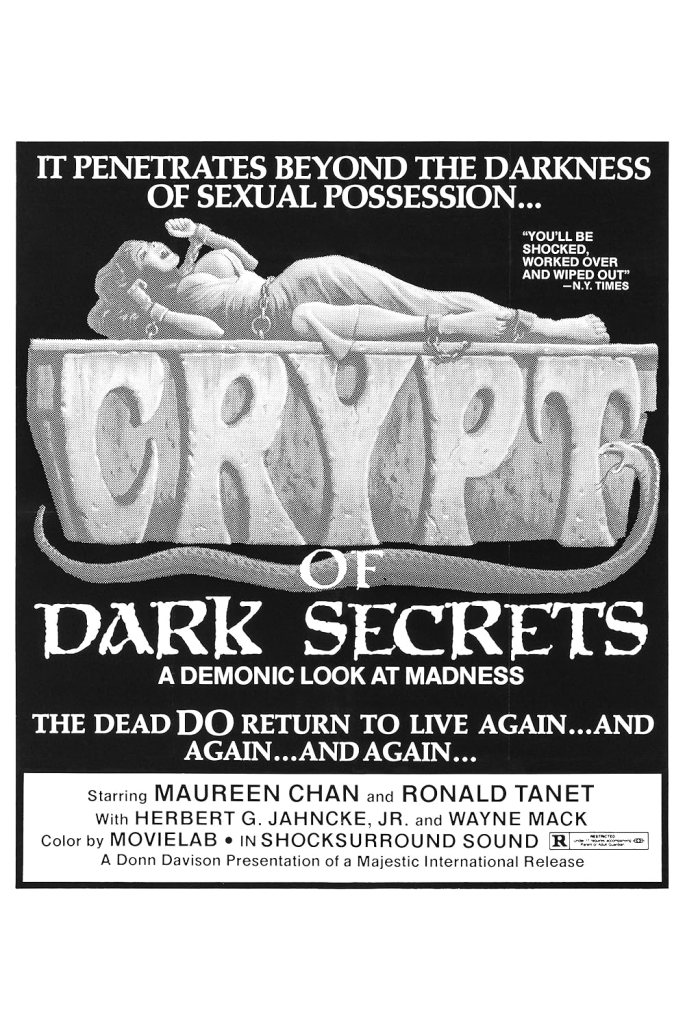
Crypt of Dark Secrets (1976)

Directed by Jack Weis [Other horror films: Mardi Gras Massacre (1978)]

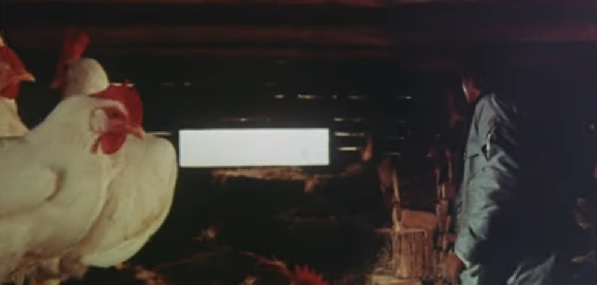
I wanted to like Crypt of Dark Secrets, and aspects of it were decent, but large sections of the film were slow as all hell, and it was generally a bit of a slough to get through.

Here’s what I enjoyed, though, about the film: the setting, being the swamps of Louisiana, was great. I’ve said it before, and I’ll say it again – swamps are underutilized in horror. I imagine filming in a swamp would be a nightmare, but boy howdy, what beauty. Much of the film here takes place on a haunted island in the middle of a swamp, and if that doesn’t scream stellar setting, nothing else could.

I also appreciate how the basics of this film can’t help but remind me of “The Legend of Wooley Swamp” by the Charlie Daniels Band. See, in that song, an ornery old man, who had a bunch of money, lived alone in a swamp and was killed. Here, we have a younger man (though still with 15 years experience in the military, serving in both Korea and Vietnam), and when three people hear about the money he has stored up there, they go to kill him and take his riches. I’d argue that the song is a hell of a lot more fun, though.

At this juncture, I did want to briefly talk about one of the main characters, played by Ronald Tanet. As the guy living on a haunted island with a decent chunk of money, I was consistently amused by how little emotion this guy showed throughout the film. I sort of get it – if you’ve been a soldier for almost twenty years, I can imagine not having the capacity to care much about anything once you’re out, but this guy was like a blank slate. It may well have been intentional, but having a focal character with absolutely zero emotion was impressive.

Things take a turn in the second half of the film, though, after the three ne’er-do-wells (played by Butch Benit, Harry Uher, and Barbara Hagerty) successfully get the money they sought, and things slow to crawl. To be fair, it had been sluggish before, in the way that some 70’s films suffered from, but once we get the origin of the snake-woman Damballa (played by Maureen Ridley) in a drawn-out eight minute sequence, I was outtie.

Certainly some elements past that point are fine, but I have to admit I was a lot less invested, and it didn’t help that on two different occasions, we had scenes of a nude, or nearly nude, woman dancing for minutes on end. One of the final scenes was a three minute dance sequence, and I just didn’t really think that was necessary. I was painfully reminded of Snake People, and Snake People is a movie I try to think about as little as possible.

Wayne Mack was the closest thing to a traditional main character here, and I don’t really think he classifies. Still, his performance as a folksy police lieutenant was solid. I’ve already spoken a bit about Ronald Tanet; his performance was void of emotion, but that’s not all bad. I wasn’t wild about Maureen Ridley, but she could dance in the nude with the best of them. Really, the only other performance worth mentioning is that of Harry Uher’s, and it’s possible that Uher stood out solely for the fact that he’s Cajun, and had that Cajun accent I rarely hear in horror films.

It can also be fairly said that along with the movie being slow and occasionally torturous to get through, there’s not a ton of horror. There’s a lot of potential, of course – anytime you have a woman that can turn into a snake on a haunted island in the middle of a swamp, that’s called potential – but I don’t think the movie lived up to it at all, which was disappointing. There was some suspense toward the end, but much of the film seemed like conversation after conversation, and perhaps the best sequence was the literal blood money that briefly haunted the three punk bitches.

In summary, Crypt of Dark Secrets (which didn’t have a crypt in it, nor am I aware of what the dark secrets were, or who was keeping them) was a slow and tedious time with a handful of decent scenes. I do tend to think it’s better than Weis’ later film, Mardi Gras Massacre, but given the set-up, this is one that I wish I liked a lot more.

5.5/10

La casa dalle finestre che ridono (1976)

Directed by Pupi Avati [Other horror films: Balsamus l’uomo di Satana (1970), Thomas… …gli indemoniati (1970), Tutti defunti… tranne i morti (1977), Zeder (1983), L’amico d’infanzia (1994), L’arcano incantatore (1996), Il nascondiglio (2007), Il signor Diavolo (2019), L’orto americano (2024)]

I have to admit that, though I expected a decent amount from this giallo, given the positive reception I’ve heard as long as I’ve known about the movie, La casa dalle finestre che ridono struck me as more than a little disappointing.

Commonly known as The House with Laughing Windows, this Italian movie definitely had some charm to it, not to mention tension and a pretty foreboding atmosphere, but I also don’t know if they explained everything as well as they could have.

And I don’t like saying this, either. The movie currently has a 7/10 on IMDb (with 5,394 votes), and since finishing it, I’ve read theories and ideas on some of the things in the film, such as how it’s a take on Italy’s cowardice during Mussolini’s reign. A lot of these ideas are interesting, but I usually expect gialli to lay at least a decent amount of it out, and that’s not what happened here.

Sure, there’s a shocking scene at the end. Anyone who’s seen this movie knows the scene I’m talking about. But what does it mean? I have no trouble buying that there’s a mass culture of silence in the community (as it’s pretty clearly stated in the movie), but there’s so many unanswered questions that, no matter how atmospheric and oppressive the movie is, I’m bothered by it.

The performances weren’t the issue here – Lino Capolicchio (Il signor Diavolo) made for a perfectly fair lead, Francesca Marciano an acceptable love interest, Giulio Pizzirani was good while he appeared, and Pietro Brambilla, while odd, was okay. Vanna Busoni’s character appears for five minutes, but then entirely disappears, which was an interesting choice.

The red herrings throughout weren’t bad ideas, but some of them (such as the watch Fransesca Marciano’s character has) seem to be set up, only to never be mentioned again. The whole movie, on a side-note, seems to move pretty quickly, but there were times when I was wondering what exactly was worrying the characters, as little we’d seen up to that point really seemed worth being frightened over.

Not everyone needs answers, and obviously, plenty of people enjoyed this one quite a bit. I was hoping to be one of them, but I just can’t. Maybe I can grow to appreciate this one with future watches, but the fact that so much is left unclear rubs me the wrong way. If I wanted an artistic allegory about post-fascist Italy, I wouldn’t be a horror fan, and this one, while it has it’s strong elements, just felt off to me.

6/10

Rattlers (1976)

Directed by John McCauley [Other horror films: Deadly Intruder (1985)]

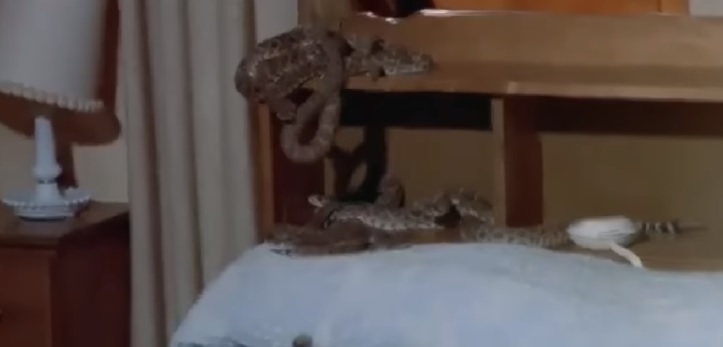
Certainly a movie with potential, Rattlers was an okay entry into the mid-1970’s. The finale is pretty sudden, and the overall story seems sort of lackluster, but I didn’t exactly have a terrible time watching it.

I do think it’s fair to say that, compared to other animals-gone-mad films from the 1970’s, that Rattlers is on the lower end. Sure, it’s better than The Food of the Gods and possibly more entertaining than Grizzly (though not a better film overall), but there are plenty of more enjoyable films, such as The Swarm, Phase IV, Squirm, Piranha, The Pack, Nightwing, Jaws 2, Stanley, Kingdom of the Spiders, Orca, Prophecy, Tentacles, hell, even Night of the Lepus.

My point is that though I don’t think Rattlers is awful, it’s certainly not a stand-out movie. The finale seems to pop up so suddenly, and I personally found it widely unsatisfactory, which isn’t helped any by the lack of good snake action in the last half hour.

In fact, many of the later snake attacks seem so weak. One of them happened in a mine, which might sound good, but it wasn’t executed very well. Another had two characters in a tent surrounded by snakes, but that didn’t even feel that action-packed either. I think there were some good snake attacks – a plumber getting bit while under a house, and a woman attacked in a bathtub as snakes slither through the pipes – but you can’t really tell that from the final half hour.

One thing I was mildly amused by was the small point of Elisabeth Chauvet’s being a woman photographer, which upset the patriarchy, in the form of lead Sam Chew Jr.. Chauvet’s character made good points about how there weren’t women holding high positions, and Chew Jr.’s character just waved the explanations off. This point is muddled by the fact that, of course, the two of them fall in love and engage in carnal activities and have an out-of-place date that lasts a minute in Las Vegas, but hey, it’s the 70’s, who needs equality, right?

There’s also a portion which deals with the mystery behind why the snakes here are so aggressive, which, of course, is all the fault of the Commies. See, Communists had a better political system than capitalists did, and the USA (capitalism’s #1 defender) lied about the Gulf of Tonkin to get young American boys killed in Vietnam. Naturally, biowarfare is the only way to defeat a better economic system, and so due to the Communists, the American military created deadly snakes.

Damn those Commies.

Actually, it’s somewhat amusing, because this same idea was also used in Piranha, which came out a couple of years later. In both, the military is so intent on killing innocent people in Vietnam that they wind up killing innocent people in the USA, but then again, that’s how the military do.

As a socialist, it’s always nice to see solid political messages come up (which is one of the reasons that Prophecy, from ‘79, is a personal favorite). It doesn’t play a huge part here, though it does lead into what truly is a weak finale.

Sam Chew Jr. (Time Walker) makes for an okay lead. Honestly, he never really came across as having that much in the way of character, but he had a good look to him. Elisabeth Chauvet was okay, but she never really added that much to the story, and was pretty forgotten by the end. Lastly, Dan Priest was, I guess, okay. I mean, he seemed pretty ridiculous toward the end, but I’m guessing his character had an off-screen mental breakdown, so it’s all cool.

The more I consider Rattlers, the weaker I think it is. For the first hour or so, it honestly wasn’t a bad time, but the last twenty minutes really dropped the ball. It’s definitely a below-average film, and though I maintain it’s still not terrible, I can’t blame others who tend to think it is.

5.5/10

The Omen (1976)

Directed by Richard Donner [Other horror films: Two-Fisted Tales (1992, segment ‘Showdown’)]

Though not a movie I consider amazing, I always have thought The Omen was pretty good. It has a decently compelling story, made all the better by the mystery of Damien’s birth, and plenty of solid performances. It might be occasionally dry, but I do think it’s very much a classic.

Not being a religious individual myself, I don’t personally buy into any of the religious ramblings about the Antichrist, but unlike many exorcism films, I find that I can get into this movie far better, and it’s not all that trying. I think part of it is the fact I did first see this (or pieces of it) when I was quite young, and coupling that with the presence of a few familiar faces and classic scenes, despite not believing in the premise, I still have quite a good time.

I mean, just look at the kills here. From a woman hanging herself at a birthday party to a priest being impaled in front of a church, not to mention someone getting decapitated by a pane of glass and another individual getting pushed out a window of a hospital, there’s a lot to be found here if you’re primary concern is interesting deaths. In fact, the glass pane decapitation looks like it could be pulled out of any Final Destination movie, and while simpler in concept, the same could be said for the impalement.

Of course, it’s not only the deaths that stand out. There are a lot of great sequences, such as some characters being chased by rabid dogs in an old, dilapidated cemetery, or perhaps the baboon attack that Damien and his mother go through at the safari park. Even the finale is pretty solid all around, save for maybe the cheesiness of the final shot.

Gregory Peck (who I know best from the 1962 classic Cape Fear) was great as the lead, not buying into the Antichrist business at first (who can blame him – Patrick Troughton was a horrible messenger) but slowly figuring out the mystery and learning more about Damien’s origins. David Warner (Nightwing and a couple of other films) worked well with Peck, and the two of them scouring the Rome countryside, from monastery to cemetery, provided some of my favorite sequences in the film.

Patrick Troughton (not only one of my favorite Doctors from Doctor Who, but also The Gorgon) was a terrible messenger, but he did amazing as a religiously-inclined individual. He only got a few minutes of screen-time overall, but he dominated what he got with personality. Billie Whitelaw (Night Watch and Murder Elite) was somewhat similar, possessing a strong sinister aura. Leo McKern was a strong one-scene wonder, Lee Remick had her moments, and for a child actor, Harvey Stephens can smile with the best of them.

Overall, The Omen may not appeal to fans of more modern horror, as some of the film can feel a bit on the sluggish side. I wouldn’t call it a slow-burn – we get plenty of death throughout the whole of the movie – but it can be slow, and since it’s around an hour and 50 minutes, you might feel it. That said, I’ve always thought it hit most of the right spots, and like I said at the beginning, though I don’t find it amazing, I do think The Omen is pretty good.

7.5/10

Die Hinrichtung (1976)

Directed by Denis Héroux [Other horror films: The Uncanny (1977)] & Géza von Radványi [Other horror films: N/A]

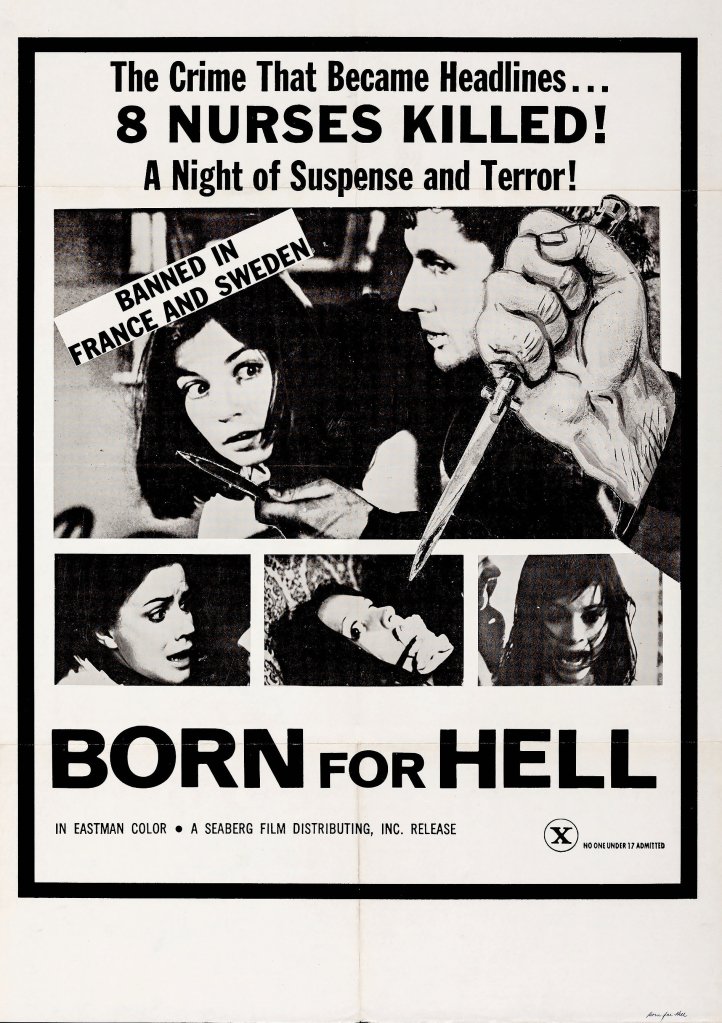
Known under such titles as Naked Massacre and Born for Hell (probably the best title for this one, if it were up to me), Die Hinrichtung is a gritty, raw experience. It’s not altogether exciting, but I do find the premise somewhat fascinating, and though the movie isn’t great, I do think there’s a little here to be interested in.

I first saw this film around ten years ago from a cheap print on the Mill Creek Entertainment’s Chilling Classics 50-movie pack. Honestly, while the print has issues, the audio quality is decent, and the movie is still certainly watchable (which is not something that can be said for all the movies in the same collection). I didn’t remember too much in way of specifics about the movie, which partially made this one a movie I was more interested in revisiting.

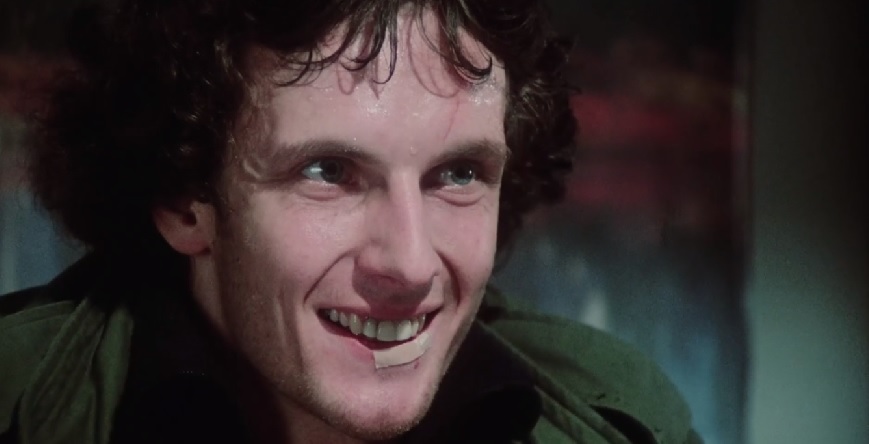
Following a disillusioned American who fought in Vietnam, and taking place during The Troubles in Belfast, there’s a lot of commentary on violence here. This American (played by Mathieu Carrière) has had a troubled life – a hard upbringing, a wife who left him, and some mental issues – and left one warzone for another. He doesn’t snap in a PTSD type of way – this isn’t Forced Entry (thank God). But he desperately wants to get home, and doesn’t have the money to do so. And what better way to get money than by trapping a house of nurses and torturing them?

Based partially off the Richard Speck murders, this movie has that gritty exploitation feel without really going out of the way to show too much explicit violence. The sexual violence, while definitely present, is toned down, and there’s not that much in the way of gore (and in fact, the bloodiest scene is a self-inflicted cut toward the finale of the film). It does have that gritty atmosphere, and of course a little nudity thrown in, but this movie isn’t really near as grueling as others from around the same time, such as I Spit on Your Grave, The Last House on the Left, or the aforementioned Forced Entry.

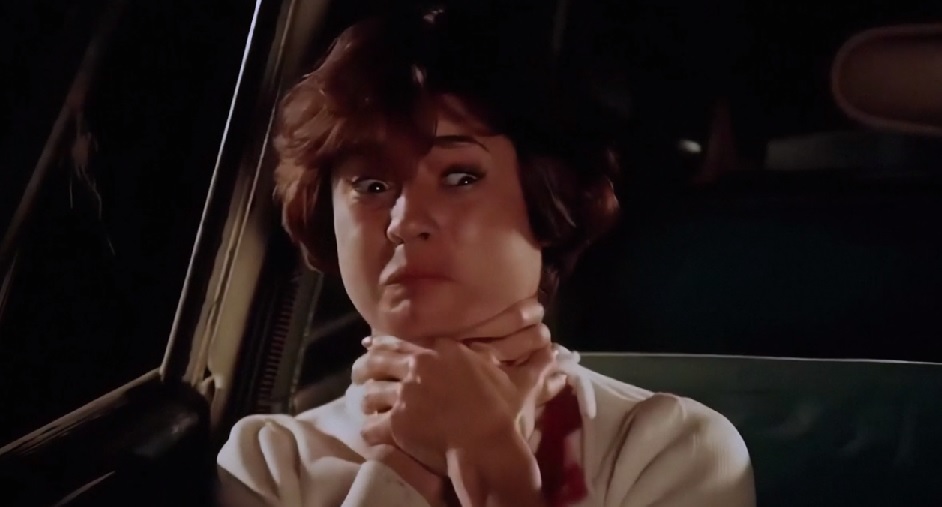
I don’t know Mathieu Carrière, but I thought he did a pretty fine job with his character. He’s occasionally charming, always desperate, and his performance is solid. None of the nurses stand out particularly well, but some, such as Carole Laure, Leonora Fani, and Christine Boisson all add a little oomph with their characters and traumatic predicaments.

The movie isn’t exactly quick-paced, but personally, I don’t think I ever really got bored. That said, I can certainly understand the somewhat lukewarm reception this has received (at the time of this writing, the movie possesses a 5.1/10 on IMDb with 696 votes). It’s probably worth seeing if you’re a fan of gritty 70’s exploitations, even if this is a bit tame, but for a casual horror fan, there may not be a lot here to really interest you. It’s worth mentioning that the version I saw was the same Mill Creek copy, though, so the uncut version likely has more to it.

As for me, I can say that I found the setting (Belfast) and the killer’s history interesting. I don’t think that made this a great movie, but I do think it felt substantially different from a more, shall we say, base exploitation flick, and though I do find the film below average (with the conclusion being perhaps one of my favorite portions), I definitely think I’d find it in me to watch again.

6.5/10

Drive In Massacre (1976)

Directed by Stu Segall [Other horror films: N/A]

I promise I’m not crazy, but this movie is decent. Well, actually, I can’t promise that my sanity is entirely intact, but I can promise that I have seen this movie four times now, and each and every time has been a blast.

In many ways, no doubt, Drive In Massacre is pretty bad. Part of it has to do with the commonly-available print, which has quite a muddled audio quality along with iffy lighting at times. Even without those issues, the story itself is pretty weak, the conclusion somewhat ridiculous, and though it only runs for around 75 minutes, it can feel boring.

All of that said, though, like I said, I’ve seen it four times now, and I really do find a good amount of this movie a hoot. Though not a horror-comedy in a traditional sense, the scene in which the two main detectives are undercover as a couple at a drive-in (one of the detectives being dressed as a woman) had plenty of lines in it alone that were laugh-worthy (“Kiss me, you fool” / “I hope so, we don’t need anymore of that” / “My God, married only two hours and you don’t want anything to do with me”), so it’s not as though the film is void of charm.

Honestly, both of the central detectives, played by John F. Goff (The Fog, Alligator) and Bruce Kimball (An Eye for an Eye, Snakes), were pretty interchangeable, and while they had some funny dialogue now and again, neither one stood out. Robert E. Pearson’s performance as the somewhat sleazy drive-in manager (as one character describes him, “He’s what you would call your perfect asshole”) was a lot of fun, and I definitely find his character a memorable one.

Douglas Gudbye’s performance as a mentally-challenged character was one of the strongest in the film, and I really felt for him at times. Lastly, though he was utterly added in only for padding, George ‘Buck’ Flower (Maniac Cop, Wishmaster, Pumpkinhead, Cheerleader Camp) was fun to see.

For a proto-slasher, there wasn’t much in the way of slashing. The best kill is easily the opening decapitation, but there was also a woman stabbed through her neck and the aftermath of a few other killings. Nothing amazing, but at least the opening kill could theoretically hook someone in.

I certainly understand why many people don’t care for this movie, and some find it laughably bad (at the moment of this writing, Drive In Massacre sports a 3.5/10 on IMDb with 1674 votes), but it’s a movie I personally dig. It’s far from a movie without flaws, but coming from a guy who willingly watched this four times, it’s #golden.

7/10

The Food of the Gods (1976)

Directed by Bert I. Gordon [Other horror films: Beginning of the End (1957), The Cyclops (1957), Attack of the Puppet People (1958), Earth vs the Spider (1958), War of the Colossal Beast (1958), Tormented (1960), Picture Mommy Dead (1966), Necromancy (1972), Empire of the Ants (1977), Burned at the Stake (1982), Satan’s Princess (1989), Secrets of a Psychopath (2015)]

For the longest time, this has been one of those films I’ve been aware of and have wanted to see. I didn’t have any delusions that, upon my finally watching it, I’d have discovered a forgotten classic, but I was always hoping for at least an enjoyable film, and I have to admit that I didn’t really get that.

I think this film highlights some of the biggest potential problems with movies from the 1970’s, specifically, in this case, just how dry some of them can be. Certainly other 70’s movies suffer the same problem (one that immediately comes to mind is It’s Alive!), but this is one of the worst cases I’ve seen.

With a plot about some mysterious natural growth serum causing insects and rats to enlarge, you might hope for a little bit of hokey fun, and while I won’t dispute that some of the action may well fall under the category of ‘hokey,’ I don’t think this film has a whole lot of fun ingrained within. Even similar films like Night of the Lepus (which also took itself too seriously) feel a little more enjoyable, and you’d sort of hope that any “nature gets revenge on humankind” movie would have more going for it.

Of course, that may just be my view, but this felt almost entirely dry from beginning to end. You maybe got a little fun out of Ida Lupino’s character, and maybe a pinch of laughs from Ralph Meeker’s insensitive actions, but that’s really all there is, and it’s definitely not enough to keep my interest.

In fact, I actually nodded off not once, but twice, and one of those times was during a giant rat attack (which, by the conclusion, felt far more repetitive as opposed to horrifying, not that they ever once felt horrifying). Perhaps admitting this says more about me and my consistent lack of sleep, but there you go.

I don’t think I really cared much for Marjoe Gortner (of Mausoleum fame) or Jon Cypher here. Neither one really had much feeling to them. It’s the same with Tom Stovall and Belinda Balaski (The Howling) – just more dull characters. Ida Lupino was only remarkable due to having such goofy, old-fashioned beliefs, and Ralph Meeker played a selfish dick, so he was sometimes a hoot. Perhaps best of the cast was Pamela Franklin (The Innocents and The Legend of Hell House), who’s character’s love interest in Gortner’s was just ridiculous but at least Franklin was almost sometimes okay.

Certainly the cast felt uninspired, but I think that has more to do with the film itself. Give these actors and actresses a good story, and I suspect most of them will give decent performances, that’s my motto. And that didn’t happen here, alas, which is more the shame, as this is based (loosely) on a 1904 novel by H. G. Lewis.

The special effects were laughable, but that’s okay, because anything to give this movie a little extra boost is always appreciated, even if it didn’t work. And I have to say, this movie really needed something, but The Food of the Gods never got it. I just didn’t have fun at all – it felt tedious and dry from beginning to end, and I just can’t see myself wanting to give this one another shot anytime soon.

4/10

Martin (1976)

Directed by George A. Romero [Other horror films: Night of the Living Dead (1968), Hungry Wives (1972), The Crazies (1973), The Amusement Park (1975), Dawn of the Dead (1978), Creepshow (1982), Day of the Dead (1985), Monkey Shines (1988), Due occhi diabolici (1990, segment ‘The Facts in the Case of Mr. Valdemar’), The Dark Half (1993), Bruiser (2000), Land of the Dead (2005), Diary of the Dead (2007), Survival of the Dead (2009)]

Easily one of George A. Romero’s most well-known films I’ve not seen until now, I felt somewhat mixed about Martin come the credits. On one hand, it’s a pretty engaging look into potential mental illness with an interesting backdrop and occasionally solid scenes, but on the other, it’s drenched in the almost hopeless, gritty aura that 70’s films are so good at as to almost take any fun out of the experience.

Certainly I think the movie does some things really well. The attacks Martin perpetuates against multiple individuals throughout are all decent, the opening train attack being wonderfully claustrophobic, the later murders being good also. There was just enough gore to get the point across, and even more note-worthy would be the setting, a rather poor-looking city in bad condition (much of this was filmed in Braddock, Pennsylvania, which has suffered greatly since the steel industry disappeared in the 1970’s). Though never the focal point, I think the decaying city added something a little special to the film.

John Amplas (who played Martin) did a fantastic job with his role. He was often awkward, but given what his character’s gone through, that can be expected. Aside from Amplas, it’s hard to really pin-point other great performances – I think that Lincoln Maazel had potential, but I don’t really feel like we get a good enough grasp on him. The same is true for both Christine Forrest and Tom Savini (making this Savini’s earliest work with Romero).

To be sure, the focus of the film is Martin, so the fact that no one else really stands out doesn’t really hurt the film. I did enjoy Martin at least trying to experience a normal relationship with Elyane Nadeau’s character, and that little story had a pretty sudden and somewhat surprising conclusion, which is also true for the movie itself. It’s not as though it comes out of nowhere, but the build-up wasn’t really all that (which, it can fairly be said, makes the ending all the more sudden).

From my point-of-view, I think it’s fair to say that Martin dealt with a lot of mental illnesses, which wasn’t at all helped by the religious mania that seemed to surround him much of his life. Certainly Martin was sympathetic, and those segments which he’s speaking to a radio host on a call-in show really give him additional depth that I found welcomed. Being a 70’s film, there’s no hope for cooler and saner heads to prevail, though, and pretty much from the beginning, everyone in this film was screwed.

Martin makes for a pretty interesting movie, some of the more memorable scenes (such as the creepy foggy playground sequence with Maazel or Nadeau’s final on-screen appearance) coming across as really striking, but at the same time, I can’t really say I had an enjoyable time with this (in a somewhat similar way that I experience The Texas Chain Saw Massacre).

I don’t doubt that, for the smaller budget they had, Romero did a pretty good job with a story that goes beyond what the average vampire movie might attempt, and I think both the setting and aura goes to help with that, but it’s not a movie I wholly loved. I’d recommend it still, but for my personal take, I think there are plenty of other 70’s films I’d rather watch.

6.5/10

I didn’t love Martin, but I did talk about it on the Fight Evil podcast. How’s that for a segue? Listen below as Chucky (@ChuckyFE) and I discuss Martin.

Communion (1976)

Directed by Alfred Sole [Other horror films: Pandemonium (1982)]

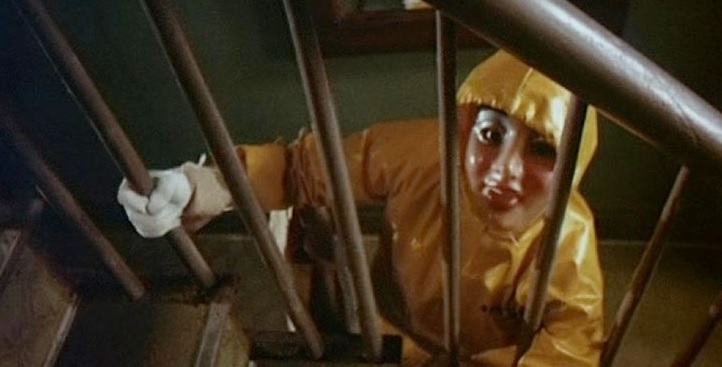
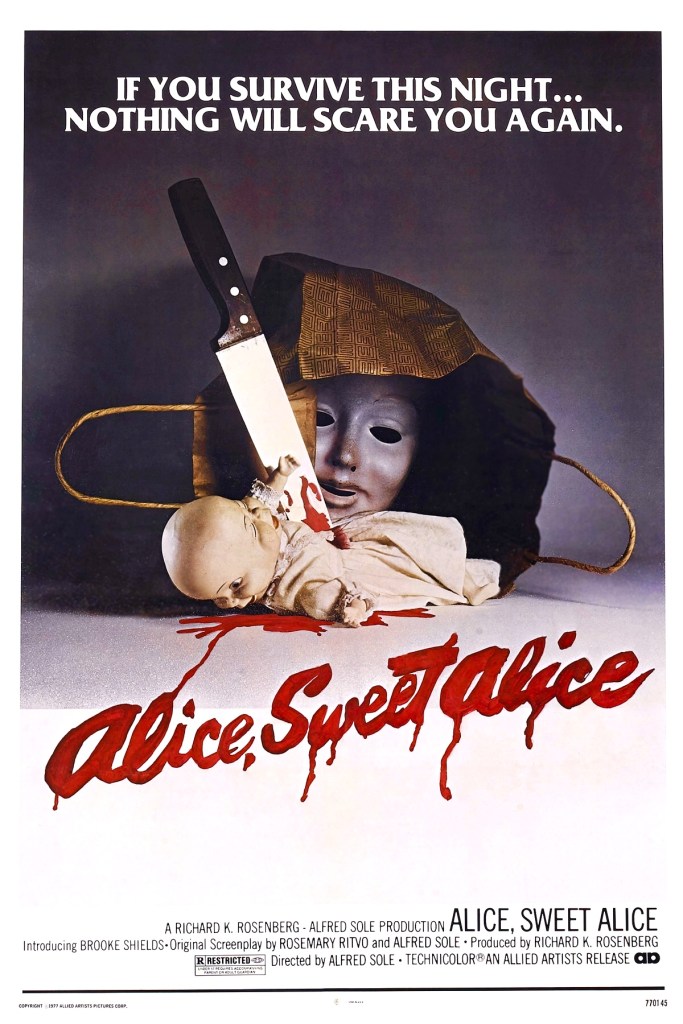
Certainly a proto-slasher classic, at times almost feeling like an American giallo, Communion (more commonly known as Alice, Sweet Alice) is definitely a worthwhile and interesting film, and worth the watch if you’ve not yet seen it.

Like many 70’s films, there is a chance some of the material could come across as dry, but personally, I think the story here was interesting enough to combat some of those inclinations. It also helps that the mystery of the killer is an engaging one, and though we happen to find out who the killer is with around thirty minutes left to go, the mystery still holds up.

Another aspect that I can’t help but give kudos to is the gritty setting. This isn’t a high-budget film, and it really shines due to it. The broken down city, what with empty factories and other industrial constructs, really gives the movie additional feeling. Assisting with the gloom is the heavy rainfall, and I think it does wonders to the atmosphere of the film.

With plenty of competent and compelling performances all around, it’s hard to point to any one actor or actress as the best here. Certainly Linda Miller and Rudolph Willrich work well together, and Willrich’s scenes with Niles McMaster (of The Incredible Torture Show) positively stand out. Mildred Clinton gives a great performance of a character with quite a lot of emotional punch, and you can’t forget Alphonso DeNoble, who’s atypical physical appearance and sleazy behavior really allows him to stand out.

Oh, and of course, playing Alice, there’s Paula E. Sheppard, who, amazingly, despite playing a 12-year old girl, celebrated her 19th birthday during the shooting of the film. She certainly doesn’t look it, and I think she gives off a great performance, especially early on when there’s still some mystery surrounding the mysterious deaths of those around her.

Of course, what would a review of Communion be without talking about the deeply religious nature of the film? I was raised Roman Catholic, and though much of that is far behind me, I did enjoy seeing much of this carnage play out around parishioners of the Catholic church. Some see this film partially as an attack of the church, but that needn’t be the case. Some of the mayhem occurred due to religious reasons, to be sure, but there are good and bad people throughout the film with Catholic leanings, so I think some calling this an indictment upon the church may be over-reacting.

Like I relayed in my review of Children of the Corn, among other films, religious mania, leading to violence, is especially horrifying because, at least in the USA, it’s very much a possibility. In Children of the Corn, Isaac and his peeps thought age inevitably led to moral corruption, and so logically made the move to kill them before reaching that age. Here, the killer has a perfectly logical reason, at least in regards to their beliefs, for the actions they take, and when such atrocities can be defended due to religious beliefs, and there’s no chance to possibly break through to them, that’s a good show of the real world coming into the film.

Communion, or Alice, Sweet Alice, isn’t a perfect film, but I do think it’s an exceptionally strong one, and really fits in with the gritty and serious nature of 70’s horror. In fact, had this been made even five years later, I think it would have been a significantly different film, so I’m happy that this was made when it was, as it encapsulates much of what I love about that time period. The kills aren’t the focus, but they’re solid when they pop up, and I love the mystery here. Definitely a classic that’s worth a watch.

8/10

This is one of the films covered by Fight Evil’s podcast. Listen below as Chucky (@ChuckyFE) and I discuss Alice, Sweet Alice (or Communion, if you’re partial to original titles, brah).

Burnt Offerings (1976)

Directed by Dan Curtis [Other horror films: House of Dark Shadows (1970), Night of Dark Shadows (1971), The Night Strangler (1973), The Norliss Tapes (1973), The Invasion of Carol Enders (1973), Scream of the Wolf (1974), Dracula (1974), The Turn of the Screw (1974), Trilogy of Terror (1975), Dead of Night (1977), Curse of the Black Widow (1977), Intruders (1992), Trilogy of Terror II (1996)]

Ah, good ole’ Burnt Offerings.

I can imagine that to a modern-day audience, Burnt Offerings can come across as overly drawn out and unnecessarily lengthy. At almost two hours long, one could almost see their point, were it not for the fact that Burnt Offerings is fantastic from beginning to end.

Ever since I first saw this one, it stuck with me long after I saw it. To be sure, a large part of this was due almost singularly to the character of The Chauffeur (Anthony James), who has been my Twitter banner, and occasionally my avatar on various sites, since seeing this, but even ignoring what a great character James was, the story’s slow pacing and steadily increasing unease is some of the best slow-burn I’ve seen in a long time.

Another thing that can’t go unmentioned is the stellar cast. Karen Black and Oliver Reed (Paranoiac) do phenomenally, Reed in particular during the pool sequences. Of course, Burgess Meredith was nice to see in his brief scenes, and I’ll talk more about Anthony James’ performance shortly, but I think the real star here, once you get past Black and Reed, would be Bette Davis.

Though close to 70 at the time this movie came out, Davis was just fantastic as a strong, older woman full of energy only to find that, the longer she stayed at the house, the more she felt drained. She became forgetful and fearful, and her youthful exuberance dissipated almost entirely. The argument she had with Black’s character about whether or not she turned the heat on in the room of Black’s son was a tense one, and really showed the strength of both actresses present. Davis, of course, also starred in both What Ever Happened to Baby Jane? and Hush…Hush, Sweet Charlotte, both of which are very much classics themselves.

Anthony James’ The Chauffeur didn’t pop up that often, but pretty much every time he did, talk about tense scenes. It’s amazing that a character with no dialogue and so few on-screen sequences can make such an impression, but James managed it, and managed it beautifully. His scenes are great, and whenever he pops up, you’re in for a heart-racing time.

Are there some unexplained questions? Sure, and even the ending, while pretty solid, probably could have been cleaned up a little, but at the same time, I thought it gave a fantastic element of suspense, and though I didn’t end up loving the conclusion, I definitely felt that it was still worth the wait.

All-in-all, Burnt Offerings is probably one of my favorite of the more traditional haunted house films, beating out great films (The Innocents, though to be fair, this is more of a tie) and others (The Legend of Hell House, 1963’s The Haunting) to really stand out solidly for both the decade of the 1970’s and the genre overall.

8.5/10

This is one of the films covered by Fight Evil’s podcast. Listen below as Chucky (@ChuckyFE) and I review Burnt Offerings.