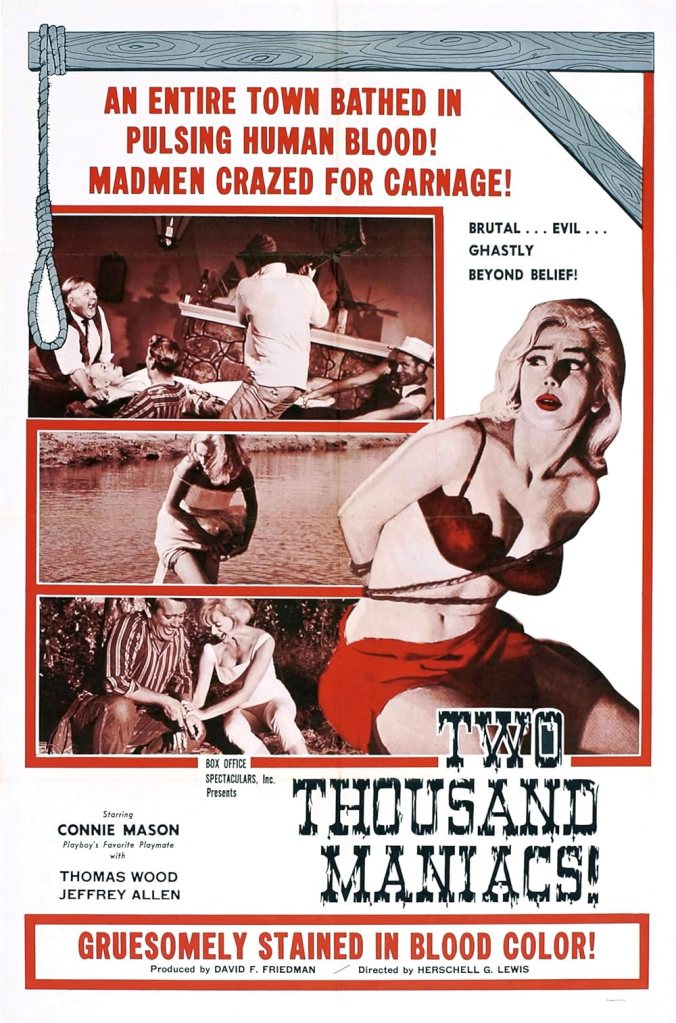
Two Thousand Maniacs! (1964)

Directed by Herschell Gordon Lewis [Other horror films: Blood Feast (1963), Monster a-Go Go (1965), Color Me Blood Red (1965), A Taste of Blood (1967), The Gruesome Twosome (1967), Something Weird (1967), The Wizard of Gore (1970), The Gore Gore Girls (1972), Blood Feast 2: All U Can Eat (2002), The Uh-Oh Show (2009), Herschell Gordon Lewis’ BloodMania (2017, segments ‘Gory Story’ and ‘The Night Hag’]

A couple of days ago, I revisited the 2005 film 2001 Maniacs, and as it’s been a while since I’ve seen the original film, I wanted to come back to this one and see how the story was originally portrayed. And I have to say, I’m impressed by some aspects here, especially the finale, and I can now say for a certainty I enjoy this film over the 2005 remake.

It’s been so long since I’ve seen this, I entirely forgot how this one ended. I said in my review of 2001 Maniacs that the supernatural ending they threw on (though I was coy with the term ‘supernatural,’) was solid, but I believe they do a better job here. They give the finale more time to breathe, along with giving the characters a sympathetic police officer and an overall somber tone. We even see a bit of perspective from the townsfolk of Pleasant Valley, so this finale was rather impressive in my view, especially coming from H.G. Lewis, who I don’t generally associate with stellar story-telling.

Naturally, when people hear H.G. Lewis, they generally think gore, given, of course, that Lewis is the Godfather of Gore. And the gore here is solid. I don’t think it’s great – there’s no doubt in my mind that his later effort, The Wizard of Gore, was far more extreme – but it is pretty fun.

You have a woman getting their arm cut off (and that’s after she gets her thumb cut off), a giant rock smashing a woman, horses pulling someone apart (which is a death recreated in the remake), and perhaps most subtly, the barrel roll, in which someone’s thrown into a barrel, nails are hammered into it, and they roll the barrel down a hill. It’s not a very bloody death, but it is the one I remember best. Because the film’s in color, that goes a long way to allowing the gory scenes to stand out.

I was also impressed by a few performances and characters. Jeffrey Allen as the mayor was a fantastically fun character. Allen (who’s only other horror film appearance was Something Weird) felt exactly like how I’d expect an old-time southern mayor to feel, and I loved it. William Kerwin (Blood Feast, God’s Bloody Acre, A Taste of Blood) was solid too, and actually had a good head on his shoulders. Not only did he realize something was odd in the town early on, but when he was attempting to call a friend for more information, he disguises his voice in order to throw off anyone listening in. Fun character, and good performance.

Honestly, the people here were far more in-the-know when it comes to the potential danger of the town. Michael Korb’s character was no fool, and playing his wife was Yvonne Gilbert, who said, “There’s something so unwholesome about this centennial.” Compared to the characters in the 2005 remake, these people had some actual brains, which was nice to see.

I’ll fully admit that Gary Bakeman was a bit much for me. He was just way too goofy, and his antics, I could have done without. I did really like Stanley Dyrector, who had that Southern good-ole boy feel to him. Connie Mason (Blood Feast) was solid, Andy Wilson surprisingly decent in his limited role, and both Jerome Eden and Shelby Livingston had something going for them too.

It should be mentioned that this came out in 1964, during the time of the Civil Rights movement. Unlike the remake, there’s absolutely nothing in this movie that deals with, or even references, race. Even so, highlighting a southern town that kills Yankees due to actions committed during the Civil War still seems, to me, liable to hit a few nerves. From the little I read, this film did decently in the south, though, so perhaps they enjoyed their vicarious revenge. No matter what, I find the plot a fascinating one, and so along with the characters and the effects, the story too really does this one justice.

Despite not having seen this in a long while now, when it comes to H.G. Lewis movies, I’ve always placed Two Thousand Maniacs! near the top. The Wizard of Gore is gorier, but I also think it’s a bit of a mess, plot-wise, and because of that, nothing quite competes. Sure, Blood Feast is a solid film for its type, but Two Thousand Maniacs! does far more, and I think it does it better.

Honestly, I enjoyed revisiting this one more than I thought I would. It’s sometimes too goofy, and the quality of the film is rough at points, but if you want a solid slice of 60’s horror, and you’ve not seen this one, I’d recommend you check it out.

8/10
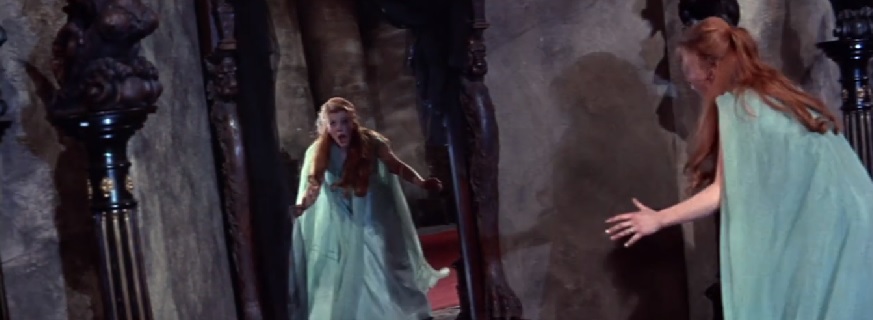
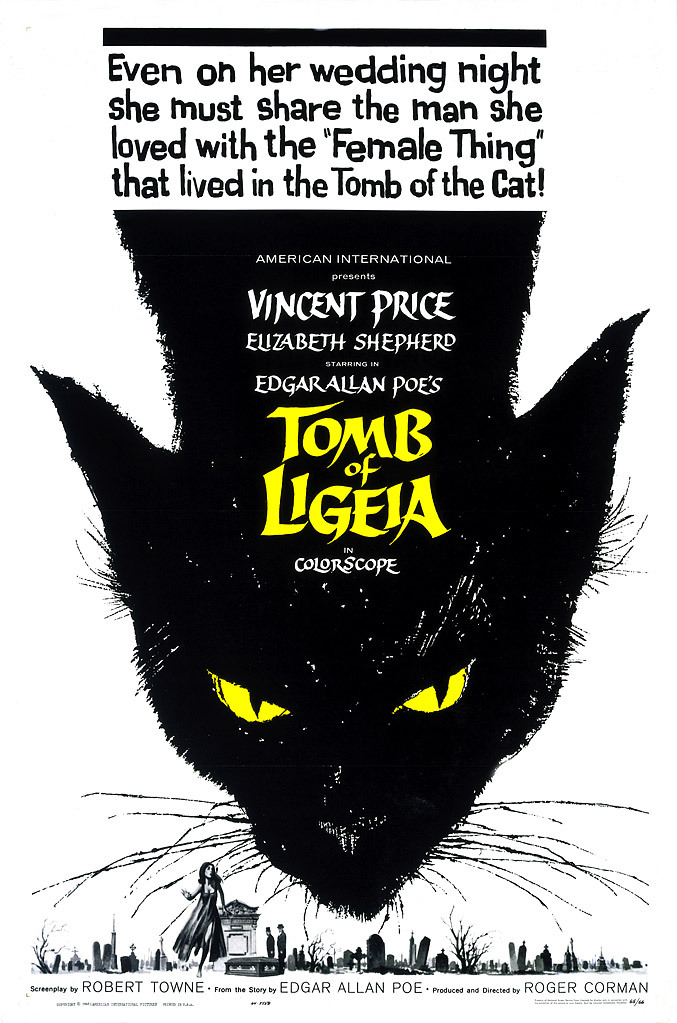
The Tomb of Ligeia (1964)

Directed by Roger Corman [Other horror films: The Beast with a Million Eyes (1955), Day the World Ended (1955), It Conquered the World (1956), Not of This Earth (1957), Attack of the Crab Monsters (1957), The Undead (1957), War of the Satellites (1958), The Wasp Woman (1959), A Bucket of Blood (1959), House of Usher (1960), The Little Shop of Horrors (1960), Creature from the Haunted Sea (1961), The Pit and the Pendulum (1961), The Premature Burial (1962), Tales of Terror (1962), Tower of London (1962), The Raven (1963), The Terror (1963), X (1963), The Haunted Palace (1963), The Masque of the Red Death (1964), Roger Corman’s Frankenstein Unbound (1990)]

I was rather surprised by The Tomb of Ligeia. When it comes to Roger Corman/Vincent Price movies, I generally enjoy them, but I rarely love them. The Haunted Palace, House of Usher, and The Raven are all varying levels of okay; The Tomb of Ligeia, however, really is a stellar film.

What really worked for me was the story. Based on Edgar Allan Poe’s short story ‘Ligeia,’ this was a wild ride. The last Roger Corman-Edgar Allan Poe combination (following films such as House of Usher, The Pit and the Pendulum, Premature Burial, Tales of Terror, The Raven, The Haunted Palace, and The Masque of the Red Death), I didn’t know what to expect, but I loved the mystery throughout the film, and come the finale, there are some big twists and turns I didn’t see coming at all.

It’s even better, though, because these twists didn’t come out of nowhere – we’re given multiple clues as to what’s going on, and though I didn’t catch on, I loved it all the more for that.

Vincent Price’s character throughout the film was so melodramatically maudlin. I mean, he’s dramatic in a lot of his films, such as the similarly stellar The Pit and the Pendulum, but it’s turned up to eleven here, and I loved it. Price has long been one of my favorite actors of the genre, and among films such as House on Haunted Hill and Theatre of Blood, this is certainly now a favorite of his performances.

Aside from Price, we have Elizabeth Shepherd (Damien: Omen II), Oliver Johnston (It!), John Westbrook, and Derek Francis. Westbrook didn’t really make too much of an impression, but everyone else, especially both Shepherd and Johnston did stellar. Playing a manservant, Johnston’s character would seem limited, but I think he really adds a lot to the film, especially more toward the finale.

It’s not just the wild plot and twists, or performances, that make this work though. The cinematography seems oddly dynamic for the time period, with some quick-moving camera action. Not only that, but there’s a dream sequence in the film that really captures the atmosphere of a dream, and I dug it.

Like I said, going into The Tomb of Ligeia, I expected to like the movie, because there’s very few movies with Price that I end up disliking. What I didn’t anticipate was coming out rather loving the movie. It’s not quite as good as The Pit and the Pendulum, but it’s still a very solid movie, and if you’re a Vincent Price fan and haven’t yet seen this, I recommend it highly.

8.5/10

Strait-Jacket (1964)

Copyright HAG ©2009

Directed by William Castle [Other horror films: Macabre (1958), House on Haunted Hill (1959), The Tingler (1959), 13 Ghosts (1960), Homicidal (1961), Mr. Sardonicus (1961), The Old Dark House (1963), The Night Walker (1964), I Saw What You Did (1965), Let’s Kill Uncle (1966), The Spirit Is Willing (1967), Shanks (1974)]

I’ve not seen Strait-Jacket in some time, and it was an enjoyable movie to revisit. Admittedly, if not for Joan Crawford’s stellar performance, this might be a more generic William Castle fair, but because of Crawford, and some other factors, it turns out quite a solid film.

A lot of the ideas in this one seem similar to Castle’s Homicidal. Honestly, I think I enjoy the both of them equally, though in a somewhat interesting fashion, this movie doesn’t necessarily feel quite as campy as some of Castle’s previous films (such as House on Haunted Hill and The Tingler).

I did like the plot here, though, with a woman twenty years in a mental institution being released, only to possibly be facing a relapse. It’s nothing that’s quite new, and the finale felt rather like the end of Psycho, but the performances and occasionally tense story allow it to work well.

Naturally, Joan Crawford (What Ever Happened to Baby Jane?, Trog, Berserk) did great here, and you can really see the emotional range she has throughout the film. Admittedly, Diane Baker (The Ghost of Sierra de Cobre) isn’t a name I know that well, but she did a great job also, especially toward the finale. The last individual to really make an impression was Leif Erickson (I Saw What You Did, Invaders from Mars, Night Monster), who played a pretty gentle individual.

Others aren’t bad, though – George Kennedy (Death Ship, Wacko, Creepshow 2, Uninvited, Demonwarp, Just Before Dawn) had some good scenes, reminding me a little of Henry Jones’ role in The Bad Seed. A couple of other performances – John Anthony Hayes, Rochelle Hudson (Gallery of Horror), Howard St. John, Edith Atwater (Die Sister, Die!, The Body Snatcher), and Mitchell Cox (who wasn’t even an actor, but did just fine) – didn’t really have enough room to breathe, which isn’t a surprise, given this is largely the Crawford show.

A few other notes – I enjoyed the decapitations we get. The first pair was shown in the shadows, which had a nice vibe to it, but we do get an on-screen decapitation, and while it doesn’t look amazing, nor is it gory whatsoever, it was fun to see. Also, the finale does feel a little silly, mainly around the mask we’re shown, but as much as it feels like Psycho, I still found it fun.

Strait-Jacket isn’t a movie I think is amazing, but it’s a solid movie, and a quality entry in William Castle’s filmography.

8/10

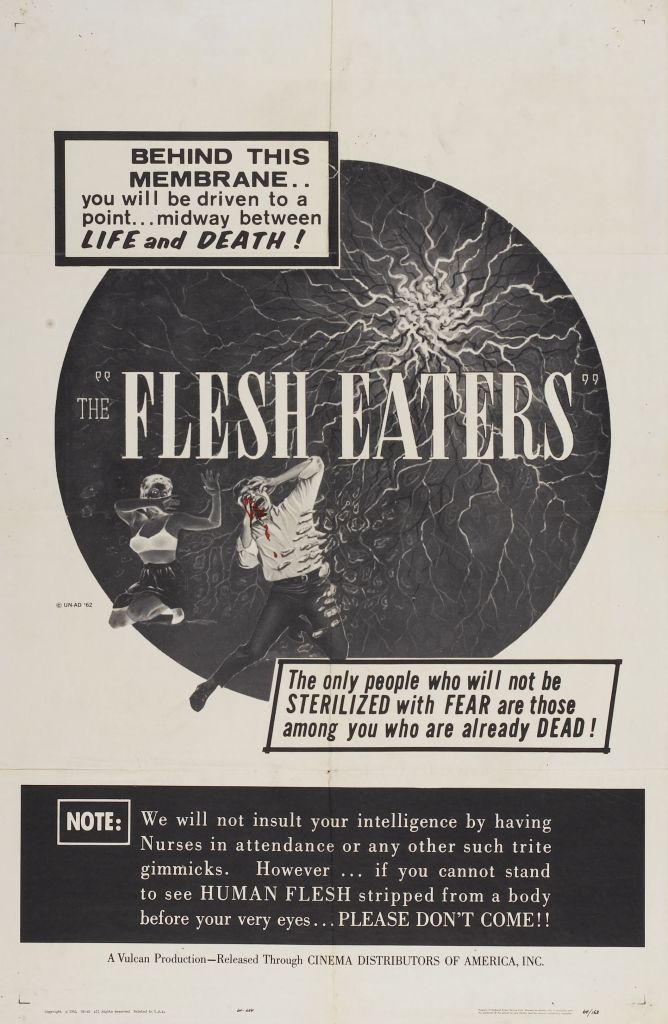
The Flesh Eaters (1964)

Directed by Jack Curtis [Other horror films: N/A]

Though it pains me to say it, I don’t think The Flesh Eaters is a great film. It’s certainly notable in some aspects, and it can be reasonably fun, but the final third of the film never did much for me, and portions do drag. Even so, it’s worth seeing at least once for the special effects.

I have a little history with the film. Way back in the day, I saw this multiple times playing on AMC – I probably watched this two times, perhaps three, so it was a bit of an odd favorite. It’s not been unpleasant revisiting it, by any means, but I definitely don’t think it’s as strong as I used to.

I love the plot, though, dealing with glowing organisms in the water that can strip flesh to the bone, and people trapped on an island having to contend with the microscopic entities. This movie’s surprisingly gory at times – it’s in black-and-white, but even so, it can provide a good time.

During the pre-credit opening (definitely an earlier example of this), a couple goes for a swim that doesn’t end well. That’s a tame opening, but it’s a good portent of what’s to come. A man in a motorboat gets some water splashed on him, and his face rather melts, and there’s also a scene in which someone drinks a beverage with the microscopic organisms in it, and it eats out of him from his stomach, in beautifully gory fashion. Earlier films did have more gore than you might expect – look at Fiend Without a Face – but The Flesh Eaters is a surprisingly bloody film at times.

Otherwise, the special effects aren’t great, but that has more to do with the route of the story than anything else. See, for the first two-thirds of the film, the microscopic glowing organisms are all they have to deal with, but events occur that create a giant monster out of the organisms, so instead of millions of small things, there’s one large monster (technically, two, but I wanted to simplify things), and at that point, things feel a bit more on the generic side.

Byron Sanders made a solid lead, and he had that typical strongman physique. In fact, I’m sort of surprised he wasn’t a bigger name, as he had great looks. Barbara Wilkin made for a decent, inoffensive love interest, Rita Morley had some great scenes as her character was an alcoholic (in fact, Morley might be one of the strongest performances here), and as an antagonist force, Martin Kosleck (The Frozen Ghost and House of Horrors) was a bit generic, but overall decent.

Funnily enough, it’s the one with the least acting experience that I dug the most. Ray Tudor plays this random beatnik who rafts onto the island halfway through the film, and he has the kookiest dialogue, man. I mean, he speaks the word, man, about the power of love. You speaking my language, Max? That character was a hoot, and Ray Tudor did a great job with it.

Despite my nostalgia at seeing the movie again for the first time in a long time (for detailed context, I watched this on October 25th, 2021, and last saw it around 2010, if not earlier), I don’t think The Flesh Eaters is a great film. It’s decent, but it’s a bit slow at times, and the finale is a lot more generic than anything previous in the film. I think it evens out to about average, but I know plenty out there enjoy it more than I do, so if you’re into 60’s horror, this is definitely a movie to look into.

7/10

The Earth Dies Screaming (1964)

Directed by Terence Fisher [Other horror films: Three’s Company (1953, episodes ‘The Surgeon’ & ‘ Take a Number’), The Curse of Frankenstein (1957), Dracula (1958), The Revenge of Frankenstein (1958), The Hound of the Baskervilles (1959), The Man Who Could Cheat Death (1959), The Mummy (1959), The Stranglers of Bombay (1959), The Brides of Dracula (1960), The Two Faces of Dr. Jekyll (1960), The Curse of the Werewolf (1961), The Phantom of the Opera (1962), The Horror of It All (1964), The Gorgon (1964), Dracula: Prince of Darkness (1966), Island of Terror (1966), Frankenstein Created Woman (1967), Night of the Big Heat (1967), The Devil Rides Out (1968), Frankenstein Must Be Destroyed (1969), Frankenstein and the Monster from Hell (1974)]

In many ways, The Earth Dies Screaming is a decent movie, and reminiscent of later films (such as Night of the Living Dead). It’s a short film, running at just over an hour, and as such, quite digestible. I don’t think The Earth Dies Screaming is a movie I’d watch too often, and I don’t have a lot to say about it, but the movie is perfectly solid.

The film moves quite quickly – it has to, given how short it is. Most of civilization dies in a matter of a couple of minutes due to a gas attack, aside from a handful of people (reminding me of Corman’s Last Woman on Earth) who survived, such as a pilot. They then fight off zombie-esque controlled human beings and giant space robots.

It’s a quick, fun movie, with not really that much to it – there’s some conflict in the group of survivors (there always tends to be), and there’s naturally conflict against the alien menace. They discover a way to defeat, at least partially, the alien menace, and they make an attempt to do so. It’s simple and effective, just as you’d expect from the British.

Willard Parker, is his second-to-last film, made for a good and strong lead. He had that typical strong man feel to him, and I enjoyed him here. Dennis Price (The Haunted House of Horror and The Horror of It All) made for a fine human antagonist, though he got on my nerves quick. No other performances really stood out, aside from Thorley Walters (Frankenstein Created Woman), who had strong scene near the end.

The director of this one was Terence Fisher (and as you can see above, he has quite the filmography), which is partially why this film works as well as it does for so simple a story. There were some suspenseful scenes, and utilizing corpses as something that can be controlled by the soon-to-be robot overlords was a nice touch.

All-in-all, I don’t think The Earth Dies Screaming is an amazing movie, but it does what it needs to and does it quickly, and while it’s not one I think I’d watch too often in the future, I did think it was decent, and at least worth seeing once.

7/10

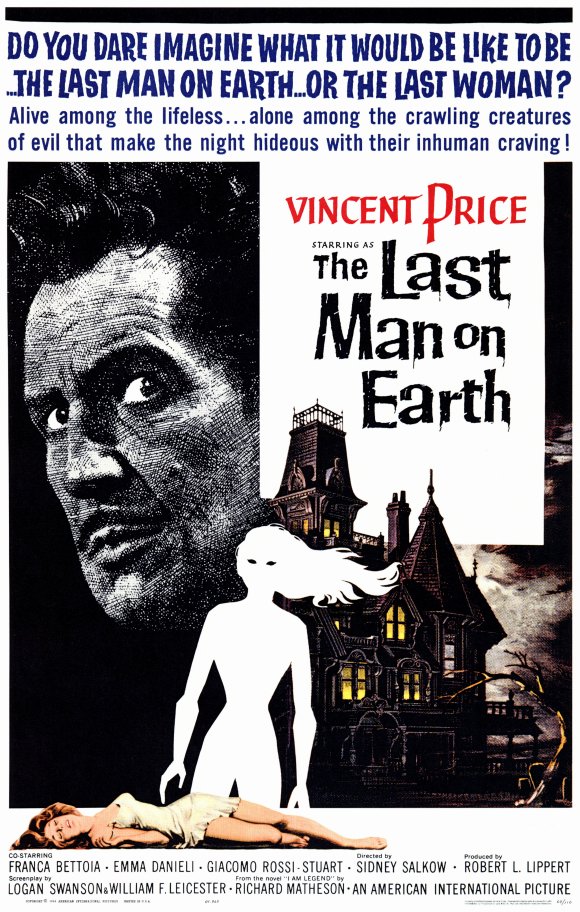
The Last Man on Earth (1964)

Directed by Ubaldo Ragona [Other horror films: N/A] & Sidney Salkow [Other horror films: Twice-Told Tales (1963)]

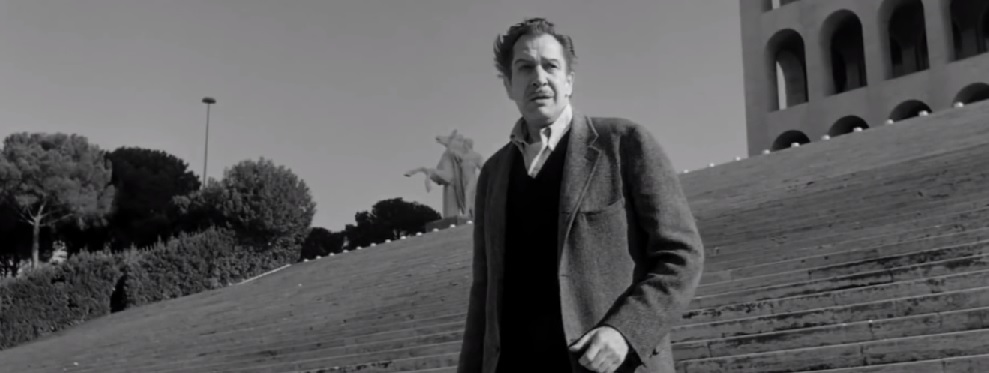
As many of you may know, Vincent Price is one of my favorite actors in the horror genre. It’s hard to imagine not liking one of his movies, and The Last Man on Earth, based on the Richard Matheson novel I Am Legend, is not only a quality movie, but one of the finest of the 1960’s.

Not only that, but it has to stand out as one of the most dismal. True, I think the ending of Night of the Living Dead is ultimately more depressing, but the tone of this film throughout is just one of hopelessness and solitude. It has a fantastic aura – the city void of any living beings, which just looked amazing – and for some quality atmosphere, you need search no further.

Of course, Vincent Price is great here. In fact, this is probably one of his best performances (at least out of the movies I’ve seen), and his internal monologue (with perhaps some of the best first-person narration in horror) was just depressing. There’s a scene where he’s watching some old home videos of his now-deceased family, and begins wildly laughing, only to soon turn into uncontrollable sobbing. A damn strong and emotional performance here, Vincent Price knocks this out of the fucking park.

Also worth mentioning is how the story is told. For the first 28 minutes, we get a look into Price’s current life, and how he fills his days (throwing bodies into a burning pit, getting some fresh garlic, searching for the hidden vampires to put a stake through their hearts – all that monotonous fun), and then we’re given a 24-minute flashback as to how the world got to the deserted husk we’ve been seeing. Once the flashback’s done, we come back to the present-day, and Price learns that he may not be as alone as he thought.

None of this is necessarily groundbreaking in terms of story-telling, but I did think that it worked out really well, and just gives a little more flavor to this movie (as though it really needed any).

Another unique aspect of the film is the nature of the antagonists. Technically, they’re vampires, and share many of the traits (can’t stand their reflection in a mirror, unable to operate in daylight, rather dislike garlic, need to be staked through the heart), but really, these things feel a bit more like Romero zombies (and as it’s four years before Night of the Living Dead is released, that is impressive). One thing I personally don’t care for is how these vampires can talk – one just bangs on a door all night and screams at Price’s character. It’s sort of funny, but the idea that this has been going on every night for three years borders on ridiculous.

There’s also something of a twist revealed in the last quarter of the movie, and while I didn’t necessarily love where the movie went afterward, the twist itself was fantastically dark and demoralizing. It’s something that Price’s character doesn’t have a lot of time to dwell on at the time, but it’s such a kick in the face, and I love it (and following the kick in the face that I didn’t love, being the dog, I appreciated it).

I don’t love how the movie ends, which is a shame, as I utterly adored most of what came before. Once Franca Bettoia’s character shows up, while it brings with it the aforementioned twist I love, along with some interesting ideas, I just don’t dig the movie as much, probably because Price is no longer the sole focus, and the sense of isolation (especially in the last 15 minutes) is entirely gone.

One last note is that I really enjoyed the conversations Price had in the flashbacks with Giacomo Rossi Stuart’s character – both are scientists, but Stuart’s character is more willing to believe fantastic theories and in fact, uses garlic and mirrors to repel the vampires before it became fashionable. I wish we had seen a bit more of that guy, because I enjoyed his chemistry with Price.

Were it not for the fact that I don’t love the finale (and never have – this is probably the third time I’ve seen this, if not fourth, and I never cared much for the last twenty or so minutes), this movie would be close-to-perfect. As it stands, it’s still a very strong movie, and I have a hard time imagining any top 15 horror films of the 1960’s not having this smuggled somewhere within it.

8.5/10

Children of the Damned (1964)

Directed by Anton Leader [Other horror films: N/A]

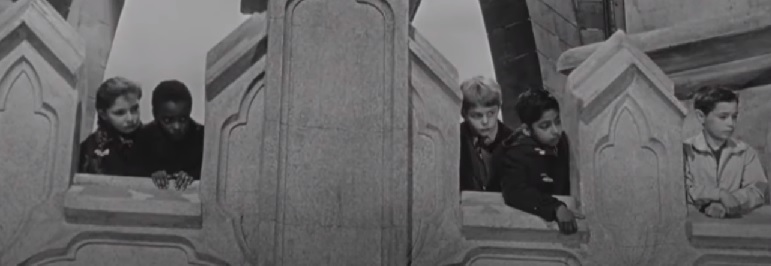
Yeah, this didn’t do it for me. It’s a shame, because after revisiting the 1960 Village of the Damned, I was moderately happy, but this one was just lacking something that made that first film special. Not that Children of the Damned is a bad film, necessarily, and not that I particularly enjoyed Village of the Damned, because I didn’t, but Children of the Damned is not a film that I really got much out of whatsoever.

I’ll give it moderate props for looking at the children through the lens of the arms’ race (each of the six children are from different countries, so for instance, obviously the USSR wouldn’t want their ‘weapon’ being taught in the UK), and it lent a somewhat unique political climate to the film (which was partially played with in the first movie, but this is far more explicit), but it didn’t make for an exciting time.

That’s honestly my main problem. A few of the scenes were a little creepy, but once the children got together in an abandoned church and held off the military with their super intellect and by virtue of holding a woman captive, I pretty much tuned out. I mean, I wasn’t in the least bit interested, and nothing past that point, be it the arguments as to whether or not the kids should be destroyed to the finale, made any impact whatsoever.

I wouldn’t say that Alan Badel or Ian Hendry stood out (because even now, reading the characters names, I forget who’s who despite just having finished this), but they probably made more of an impression than anyone else, which isn’t saying much.

Honestly, I don’t have anything else. Maybe I just wasn’t in the right mood for this. Maybe it’s something that I’ll grow to appreciate the next time I see it, if I ever do. Whatever the reason, while enjoying revisiting Village of the Damned, this one fell flat for me.

5/10

The Gorgon (1964)

Directed by Terence Fisher [Other horror films: Three’s Company (1953, episodes ‘The Surgeon’ & ‘ Take a Number’), The Curse of Frankenstein (1957), Dracula (1958), The Revenge of Frankenstein (1958), The Hound of the Baskervilles (1959), The Man Who Could Cheat Death (1959), The Mummy (1959), The Stranglers of Bombay (1959), The Brides of Dracula (1960), The Two Faces of Dr. Jekyll (1960), The Curse of the Werewolf (1961), The Phantom of the Opera (1962), The Horror of It All (1964), The Earth Dies Screaming (1964), Dracula: Prince of Darkness (1966), Island of Terror (1966), Frankenstein Created Woman (1967), Night of the Big Heat (1967), The Devil Rides Out (1968), Frankenstein Must Be Destroyed (1969), Frankenstein and the Monster from Hell (1974)]

This Hammer film is a very worthwhile watch on many levels. Not only is the cast superb, but the story here is actually decently mysterious up to a point, and though the finale isn’t all that it could have been, the story here’s interesting and memorable.

Peter Cushing is one of the stars, playing  a tight-lipped medical examiner, and that alone is enough to push this movie in a positive direction, given Cushing is one of my favorite actors (after Vincent Price). What’s even better is that Christopher Lee eventually shows up, and the two of them together is great. Lee is always of good quality, and he’s best here during his heated conversation with Patrick Troughton. Horror fans might best remember Troughton from The Omen, and that was a solid role, but being a rather big fan of the science-fiction series Doctor Who, I know Troughton as the Second Doctor, perhaps one of my favorite incarnations of the character.

Seeing Cushing, Troughton, and Lee all in one movie is very much a treat. Lee has a very commanding presence here, and though Troughton is a bit brow-beaten, his situation doesn’t really do him any favors. Even without those stars, Barbara Shelley (who has a somewhat unique story arc here), Michael Goodliffe (though he gave one of the worst justifications for the belief in the supernatural that I have ever heard in my life), and Richard Pasco came to play. Goodliffe really carries the first half of the film, and has a somewhat touching last scene. With a cast like this, even an okay story can go a long way.

Luckily, The Gorgon has a somewhat interesting one, which deals with memory loss and people being turned to stone. Much like other Hammer films, this possesses a strong atmosphere, and while in my opinion the color somewhat mutes that, it’s still nice to see a classic story like this using the best of the techniques at the time.

I’ve seen The Gorgon a handful of times before, and I still find it an enjoyably solid movie with a pretty interesting (and somewhat surprising) finale. The only real flaw here is that the design of the Gorgon, when it fully appears, is somewhat laughable. Otherwise, this is an enjoyable slice of 1960’s British horror. Just look at that cast and say ‘yes.’

7.5/10

The Strangler (1964)

Directed by Burt Topper [Other horror films: N/A]

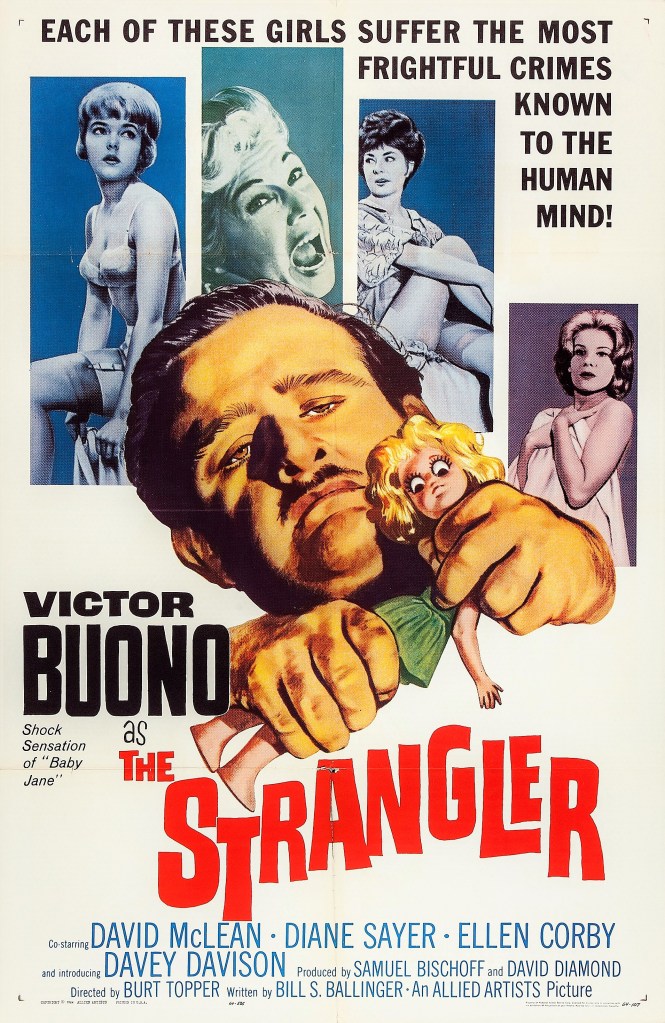
What makes The Strangler a movie worth remembering is the performance of Victor Buono. Sure, the crisp black-and-white looks nice, and it doesn’t feel too far removed from Psycho (which I’m sure influenced this), but Buono’s performance here is what makes it work.

Others in the film do fine, including his atrocious mother played by Ellen Corby, a detective played by David McLean, and two attractive young women Davey Davison and Diane Sayer, but no one stands out as well as Buono does, and truth be told, I wouldn’t have it any other way.

Before this, Buono had a quite a few small television roles, along with some uncredited movie roles, until he played a character in What Ever Happened to Baby Jane?, which was probably one of his first bigger roles. But The Strangler was one of his earliest starring roles, and boy, does it work for him.

While the kills are as tepid as you could expect from the 1960’s, the characterization Buono puts in is fantastic, and I personally can’t help but feel sympathetic for his character (especially after seeing what his mother puts him through). It’s just heartbreaking at times, and Victor Buono really shows it on his face and pained expressions.

The Strangler was a good movie when I first saw it some years back, and it’s still a movie very much worth watching. In many ways, I’m reminded of a movie I saw just some weeks ago called The Couch, which was also a 1960’s film focusing on an insane killer and his steady decline in a psychological manner. The Strangler is the better of the two, but I think both would fit well on a two-pack, but no matter what, definitely give this one a look if you’re a fan of 60’s horror.

8/10

Witchcraft (1964)

witch

Directed by Don Sharp [Other horror films: The Kiss of the Vampire (1963), Curse of the Fly (1965), The Face of Fu Manchu (1965), Rasputin: The Mad Monk (1966), The Brides of Fu Manchu (1966), Psychomania (1973), Dark Places (1974), To the Devil a Daughter (1976), What Waits Below (1984)]

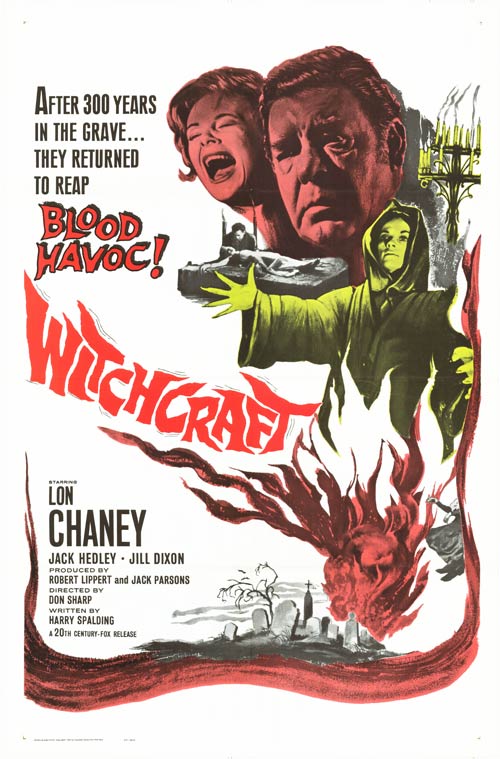
This is a moderately fun black-and-white British production, but I couldn’t help but feel as though something was missing.

The story’s set-up, being a long-standing family feud, was pretty good, and generally, the story was perfectly fine, though I thought it went down a really expected path past a certain point. The crisp black-and-white rendered some of the sequences rather creepy, especially the graveyard scene near the beginning.

As far as the performances go, most of the fun comes from Lon Chaney – though it’s over twenty years since he graced the screen as The Wolf Man, he stills does a good job playing a menacing character. As a lead, Jack Hedley does a fine job also, though he’s not near as mesmerizing as Chaney is. Most others are somewhat pedestrian.

Like I said, though, the story goes down a somewhat predictable path, and while I wasn’t expecting a twist, or anything like that, I was sort of hoping they’d eschew expectations somehow. The whole “this family is good, the other is bad” doesn’t make for an overly-captivating family feud film, in my view.

There are still some creepy scenes through, not to mention some rather suspenseful ones (I rather liked some of the driving sequences – I thought they did that pretty well), but for a flick from the classic decade that is the 1960’s, I expected a bit more out of it. If anything, see it for Lon Chaney. Otherwise, you’re not missing much.

6/10