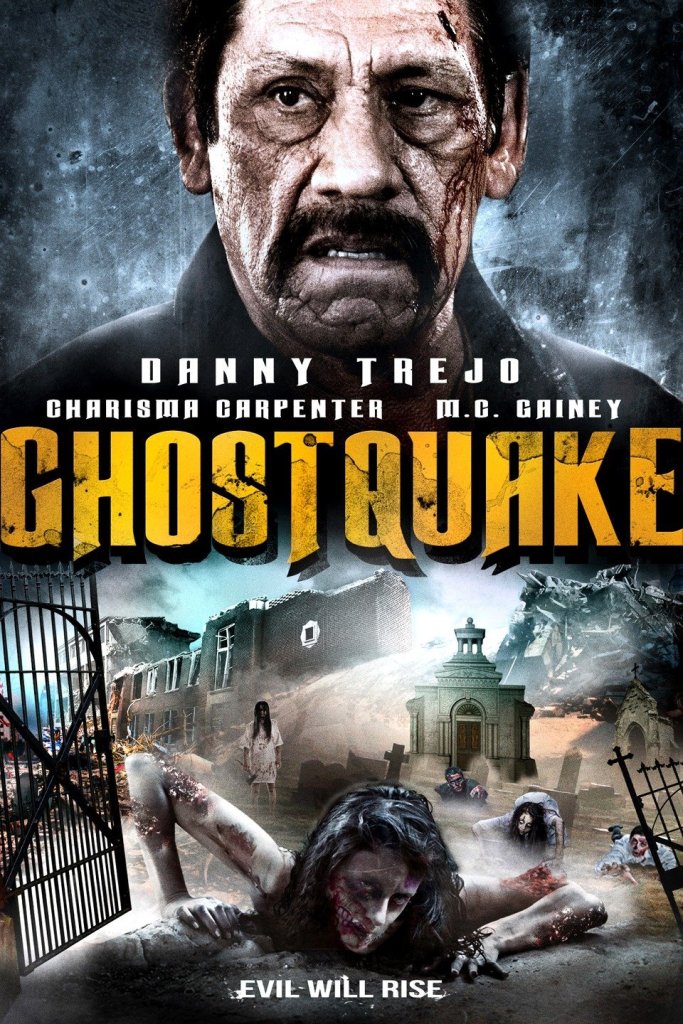
Haunted High (2012)

Directed by Jeffery Scott Lando [Other horror films: Savage Island (2004), Insecticidal (2005), Alien Incursion (2006), Decoys 2: Alien Seduction (2007), House of Bones (2010), Thirst (2010), Goblin (2010), Boogeyman (2012), Roboshark (2015), Suspension (2015)]

I saw this one once before shortly after it came out, back in October of 2012. As is the case with many Syfy movies, I thought it was rather awful. Seeing it again with a larger frame of reference though (American Horror House came out the same year, for example, and was quite a bit worse than this one), I can accept that while rather poor, I did glean some amusement from this.

Let’s be honest here: the special effects are almost uniformly terrible, the antagonist is pretty awful (though M.C. Gainey is at least having fun), and it fails on most levels, but with at least some of the corniness and characters, it’s possible to have a fun time.

Most of the acting is about as iffy as you might expect. I certainly liked a few of the actors and actresses here, such as Lauren Pennington, Shawn C. Phillips (who has appeared in many a low-budget horror film), Jonathan Baron, Marc Donato, Danielle Greenup (who also stood out as the most attractive cast-member, in my view), and M.C. Gainey (who was hamming it up at every opportunity, which is a move I don’t think makes sense character-wise, but after reading the script, I can see why Gainey went that way).

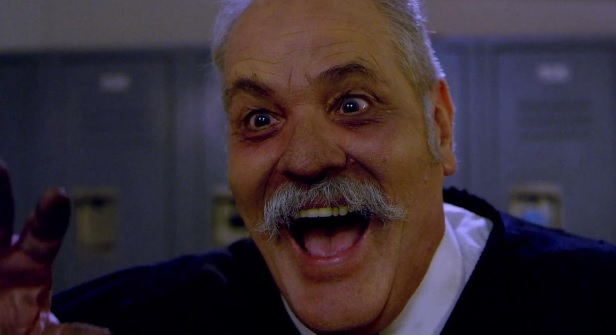
The elephant in the room is Danny Trejo, who plays the janitor of this private school, and also knows all about the sinister and Satanic acts going on. Because of course he does. That’s how Trejo do – his character is often just important enough for him to get top billing, and it worked again. Do I have anything against Trejo’s performance here? Not at all. But seeing Trejo pop-up in ridiculous low-budget movies, be it this, 3-Headed Shark Attack, or On Bloody Sunday, just rubs me the wrong way. It doesn’t help that his story here is perhaps the most generic aspect of the movie.

Haunted High, known also as Ghostquake (which I regret to inform you is a term dropped in the movie at one point) is a terrible film, but like some other terrible films, such as the Satan’s School for Girls remake, it can be sort of fun. This is nowhere near as good as Satan’s School for Girls, no matter how much Gainey tries, but I did like it more this time around than when I first saw it, so hey, I guess that counts for something.

6/10

The Couch (1962)

Directed by Owen Crump [Other horror films: N/A]

This is a pretty unassuming movie, and I can sort of see why I’ve never heard of this one before (aside from the fact that some refer to it as just a thriller), but it’s a relatively tight story, some solid suspense, and comes across as something of a rough gem. Before I go on, if you’re into 60’s horror and haven’t seen this, I’d recommend checking it out.

From the get-go, we know the killer is Grant Williams, and the film is really a psychological probe into his mental state (plot twist: he’s not particularly the picture of mental health), which is pretty fun, because his physique isn’t really what you’d expect. His killing style, a quick jab with an ice pick, is fun to watch. Just an average guy killing a random person in a crowded area, and you can see why he’d get away with it.

Williams here is great. I don’t really know him, but based off this performance, he might have been able to give a good Norman Bates performance a few years prior in Psycho. The others here, including Shirley Knight, Onslow Stevens, and William Leslie, all do well, but this is really the Grant Williams show, which worked fine for me.

As far as mentally unstable characters go, the one Williams plays is pretty fantastic. He’s completely detached from reality at times, and toward the end, he gives us a really stellar conclusion, and as I mentioned, pretty tense at times also.

Any black-and-white thriller/horror dealing with a psychopath made in the immediate years following Psycho would have a harder time gaining traction, but I’d still recommend giving this one a look. Sure, some aspects are rough, such as occasional camera-work, but The Couch was still a mostly solid film, and I’m glad I took the time with it.

7.5/10

Identity (2003)

Directed by James Mangold [Other horror films: N/A]

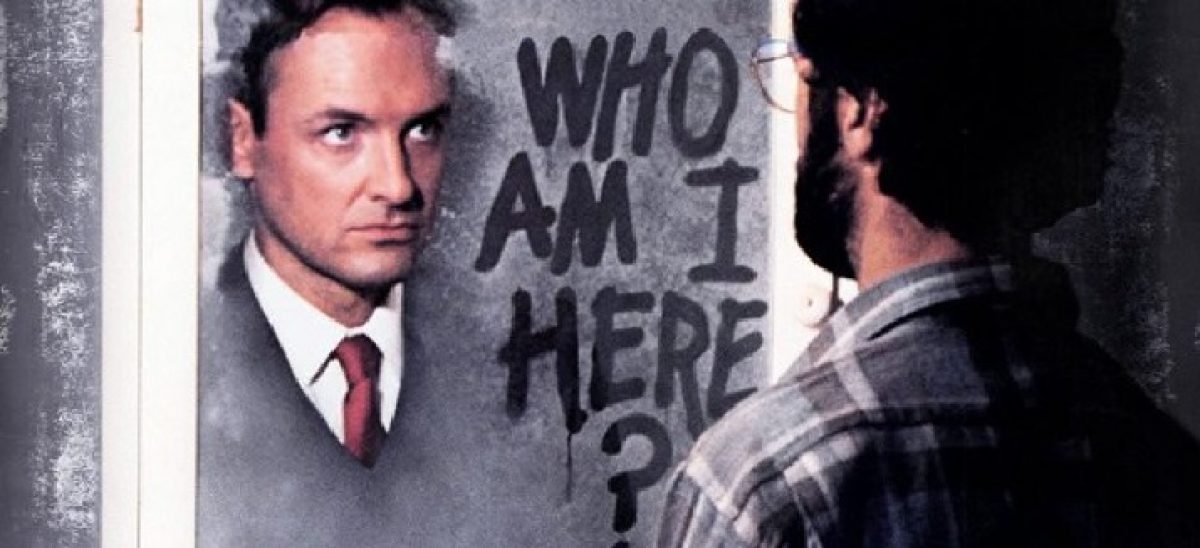
This mystery/horror film has been a favorite of mine since I first saw it. The story’s great, with many decent performances, and the twists and turns here are just fantastic. Identity’s a pretty popular film, but if you’ve not seen, I’d do yourself a favor and give it a view.

Performance-wise, there’s little to nothing to really complain about. John Cusack is great, as are Amanda Peet, Clea DuVall (who was in some films, horror and non-horror, I enjoy, such as 2001’s How to Make a Monster and 2007’s Ten Inch Hero), Pruitt Taylor Vince (The Devil’s Candy), John C. McGinley (who played an entirely different type of character in The Belko Experiment), Holmes Osborne, Alfred Molina, and Ray Liotta (Hannibal). Liotta’s character has a twist up his sleeves, and while I sometimes think Liotta overacts, but he’s still solid.

It’s the twists and turns Identity takes that really makes it memorable. I remembered a couple of them, but even though I’ve seen it before, there were still a few surprises for me. It helps that the characters here, while not all likable, are all somewhat interesting, and we’re drawn into the mystery just as much as they are.

As far as the deaths go, there’s nothing really amazing, which I think can be excused as the story’s focused far more on the mystery than any other aspect. There are a few somewhat shocking deaths, though, so don’t think there’s nothing here to interest you if that’s your main point of interest.

Identity’s a movie I don’t really have any complaints with. The whole premise might sound generic (a killer knocking off people at a motel), but it’s done brilliantly, and is very much worth a watch, and with as popular as the film is, maybe you’ve already seen that to be true.

9/10

Private Parts (1972)

Directed by Paul Bartel [Other horror films: Eating Raoul (1982)]

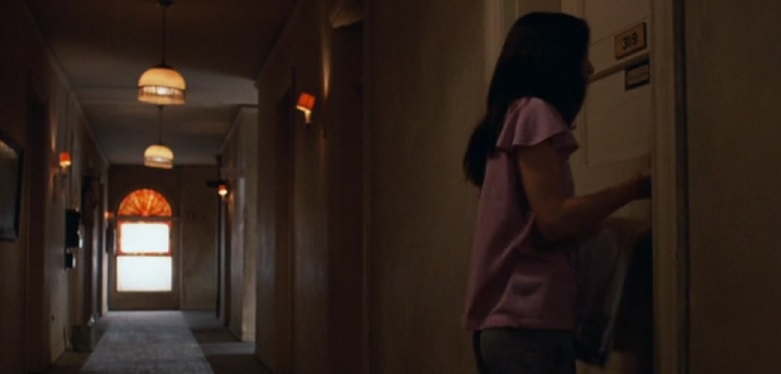
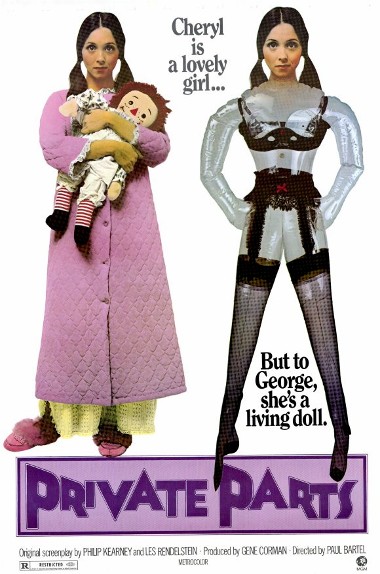
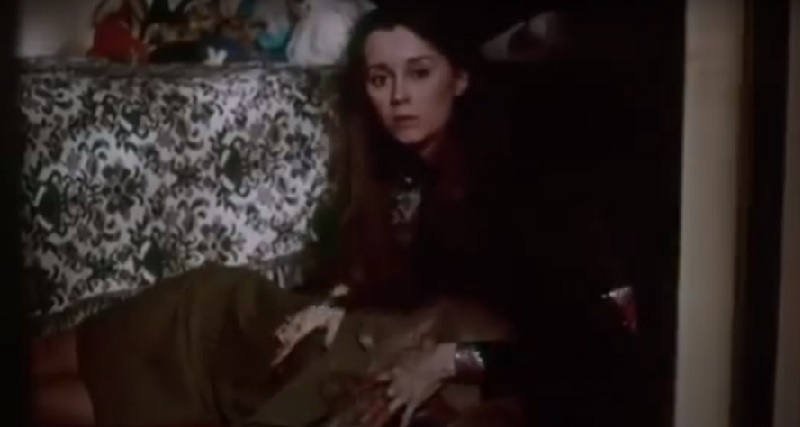
I knew next to nothing when I started this one, and it ended up being a fairly odd film. The atmosphere was generally good, and I’d even say Private Parts can certainly be memorable, but I didn’t really enjoy a lot of it, and I’d place this below average.

The general story in Private Parts is decent, and at the very least, even if you don’t like the route it takes, you can tell it has potential. Ayn Ruymen did well playing a somewhat naïve young woman, but some of the things she does in the latter half of the movie sort of bother me. Lucille Benson did decent in her role, and was certainly threatening enough, and while Laurie Main didn’t really add that much to the movie, I did love every time his goofy character (a gay priest) was on-screen.

Problematically, John Ventantonio wasn’t memorable whatsoever, even with the surprising ending, which hurts as he’s the main antagonist in the film (if you don’t count Benson and her often standoffish behavior). Is he suitably creepy at times? Sure, but Ruymen’s character goes for him despite that (which is one of her decisions that rather bugs me), and I wasn’t really satisfied with where things went from there.

It could fairly be said that a lot of the plot happened due to sexual repression, and if some characters had been able to more appropriately express their sexual interests, none of this would have happened. I don’t think Private Parts was going all out in trying to make this a main message, but it’s something I certainly noticed.

All-in-all, Private Parts is okay, and for the early 70’s, it’s certainly an interesting entry to the genre. I didn’t love it, though, and while the atmosphere and setting (an old hotel with quite a few screwball characters) were solid, elements of the story, and the route they took in the conclusion, didn’t much endear me to the film.

6/10

Konchû daisensô (1968)

Directed by Kazui Nihonmatsu [Other horror films: Uchû daikaijû Girara (1967)]

I’ve not seen that many Japanese horror films from the 1960’s, so I wasn’t entirely sure what to expect from Konchû daisensô, better known as Genocide, but I was pretty happy with it come the conclusion.

The plot here isn’t really that stellar, but the consistent anti-war message throughout was certainly welcomed (and, from a post-World War II Japan, logical), and one of the characters references both the arms race between the U.S.S.R. and the U.S.A. as foolish, along with both the Superpowers being arrogant, which is a nice sentiment to see (and largely accurate).

With topics like this, not to mention the horrid experiences Jewish people, and others, went through in Germany, or issues of environmental concern, it’s probably not a surprise that Genocide (even the title’s invocative of a dismal story) has a somewhat nihilistic conclusion. Not that it’s entirely dark, but certainly it’s probably one of the more depressing endings I’ve seen in recent times.

The cast is generally solid, though not perfect. In particular, I think Kathy Horan was a bit over-the-top at times, which didn’t feel right for this movie. Most main performances, though, such as Emi Shindô, Yûsuke Kawazu, and Keisuke Sonoi, all do commendably enough.

Like I said, I’ve seen only a few Asian horror films from this time period, and to be honest, I was thinking that this would be a lot cornier than it even came close to being. I won’t go as far as to call the movie ‘amazing,’ but I had a fun time watching it, and would certainly recommend it, especially if they want a slice of horror that deals with more serious topics.

7.5/10

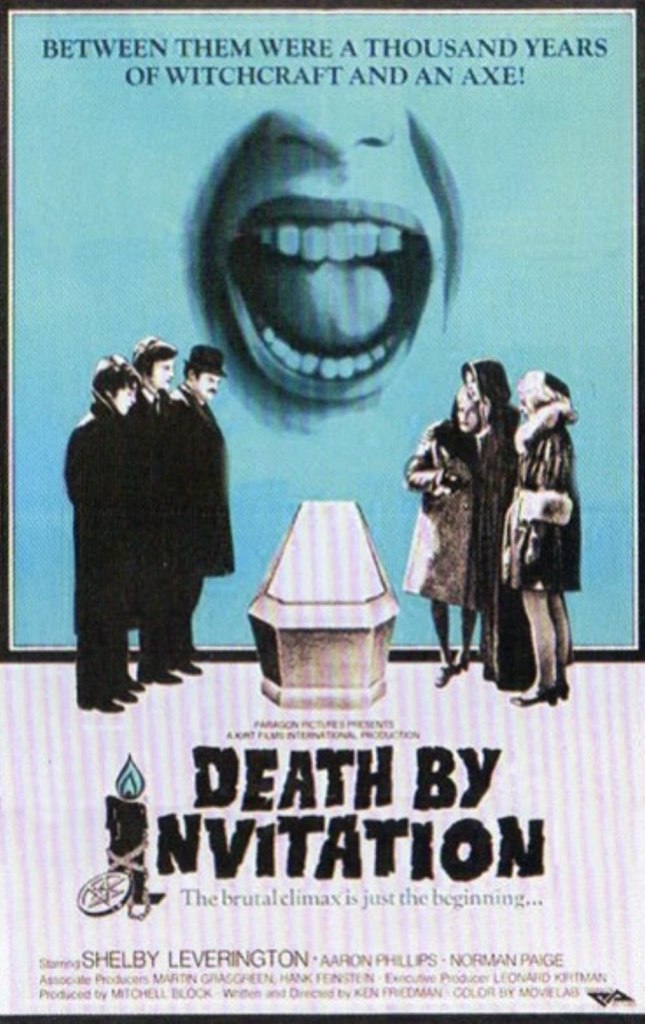
Death by Invitation (1971)

Directed by Ken Friedman [Other horror films: N/A]

Every Christmas season, you can find a Yule Log channel or video, with some solid crackling and dancing flames, to give you a feel of an authentic fireplace. I never really understood the appeal, but after seeing Death by Invitation, I think that’d easily be a more enjoyable alternative.

Could Death by Invitation have worked? It’s certainly possible, and I won’t take away from the potential the story had, if only the execution had been better. What we got here instead was just dull and tedious, with really boring conversations and not much else.

Well, in the movie’s defense, there was one solid scene, in which a character cuts off the head of another character and holds it up to a younger sister, appropriately startling her. But that was something like an hour into the movie, and that was the only scene to me that was worth seeing. Unless, of course, you like hearing a young woman talk about some Native American tribe where the women did the hunting and the men greased the women up, but they had to be on their knees, so the women… (This story is luckily only told once, which is good, as it was just six minutes of a woman talking slowly while a man watched her, expression either astonished, aroused, or afraid – I could never tell which – but it was threatened to be told again toward the end, and I legitimately groaned at the time).

The movie eventually connects the death of the witch at the beginning of the film to the events that befall an unfortunate family in present day, but it was never clear to me that it clicked to any of the characters, and while there were a bunch of three-second flashbacks to the judgment and execution of the suspected witch, I think that was more for the audience than the characters, which is ultimately a bad choice, as the audience didn’t really need nor want it.

Was Shelby Leverington attractive? Indeed she was. Was there ever any nudity, despite the fact her character seduced two men? Not once. And this is the 1970’s we’re talking about. ‘Tis shameful, as is the movie as a whole. Even worse, it’s just so damn dull.

3/10

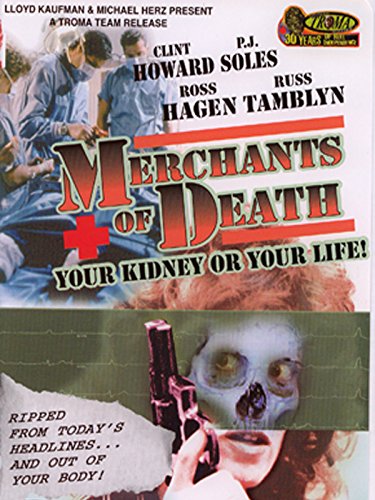
B.O.R.N. (1989)

Directed by Ross Hagen [Other horror films: Reel Horror (1985), Click: The Calendar Girl Killer (1990)]

I wasn’t really expecting that much from this movie, mainly because I thought that if it had been one of the unsung films of the 1980’s, I’d have heard about it by now. Well, either I’m listening in the wrong places, or I got a lot more out of B.O.R.N. than others did, because I found this movie superb.

Better known as Merchants of Death (which is the title it can most commonly be found under, it seems), B.O.R.N. (which stands for Body Organ Replacement Network) is a pretty damn dark movie for being a Troma release. When I heard that Troma jingle at the beginning, I was batting down the hatches for another Frostbiter or Blades, but instead, we have a pretty somber movie, with the appropriate soundtrack to boot.

For a movie that’s as low-budget as this one, the soundtrack is really impressive. It beautifully encapsulates the 1980’s, and helps the movie push a darker feel. The one vocal track in the film, a song by Jenifer Smith Meisner called ‘How Do You Begin,’ is a depressing ballad which first plays as a father muses over his three recently-abducted daughters, and boy, is it effective.

Obviously, the story itself isn’t really special, what with a father and a retired police detective trying to track down some missing girls, who were kidnapped by a black market organ syndicate, and you can sort of tell some things were rushed, but the performances here really pull a lot of it together.

I’ll get this out of the way first, though, because I hate to say it: Of all the performances, the one that did the most damage was P.J. Soles (of Halloween fame, totally), because of all the characters here, she felt the most overly and unforgivably evil, not to mention hammy. If we had maybe gotten a little background on her, it might of helped, but no such luck.

Everyone else was generally commendable, though. Playing the bereft father, Ross Hagen was great, and you really felt for his character as he was put through the wringer (and then some). Hoke Howell, who played the aforementioned retired detective, didn’t move me at first, but over the course of the film, I grew to appreciate him.

As much as I liked Hagen, it’s Russ Tamblyn’s character who really got to me. Much like Soles, his character is a bit over-the-top in his sinister nature, and he does abominable stuff in the film, but toward the end, when another character is beating him, he sort of breaks down, though he doesn’t cry, because his father didn’t want him to cry when he beat him. God, for a movie like this, you wouldn’t expect an emotional suckerpunch like that, but we got one.

Two others I wanted to briefly mention are William Smith and Clint Howard. William Smith is a big name, and his IMDb credits boasts nearly 300 appearances, and while this certainly isn’t one that he’ll be remembered for, playing the black market doctor, Smith is decently fun, though he doesn’t matter quite as much as many other characters. Related, while it was nice to see Clint Howard (Ice Cream Man has long been what I’ve best known him for), his character didn’t add much to the film, though had the story went a different route, he could have.

B.O.R.N. is a hell of a lot more somber than I ever expected, and there are some surprising and heart-wrenching deaths and scenes in this film that seem entirely inappropriate for a movie made on as small a budget as this was. I loved the whole vibe of this one, and while I wish there were a few changes, I think to Tamblyn and Hagen’s performances, and I forget them. Maybe it’s just me, but this was very much worth watching, and I’d definitely do so again.

9/10

The Strange World of Planet X (1958)

Directed by Gilbert Gunn [Other horror films: N/A]

I’ve seen this British science-fiction/horror movie once before, and as it turns out, I remembered it a bit more fondly than it really deserves. The movie’s not bad, but it does drag quite a bit at the beginning, and save for one scene of note, the special effects were poor (especially coming out four years after Them!), and there wasn’t really enough meat to really keep me occupied.

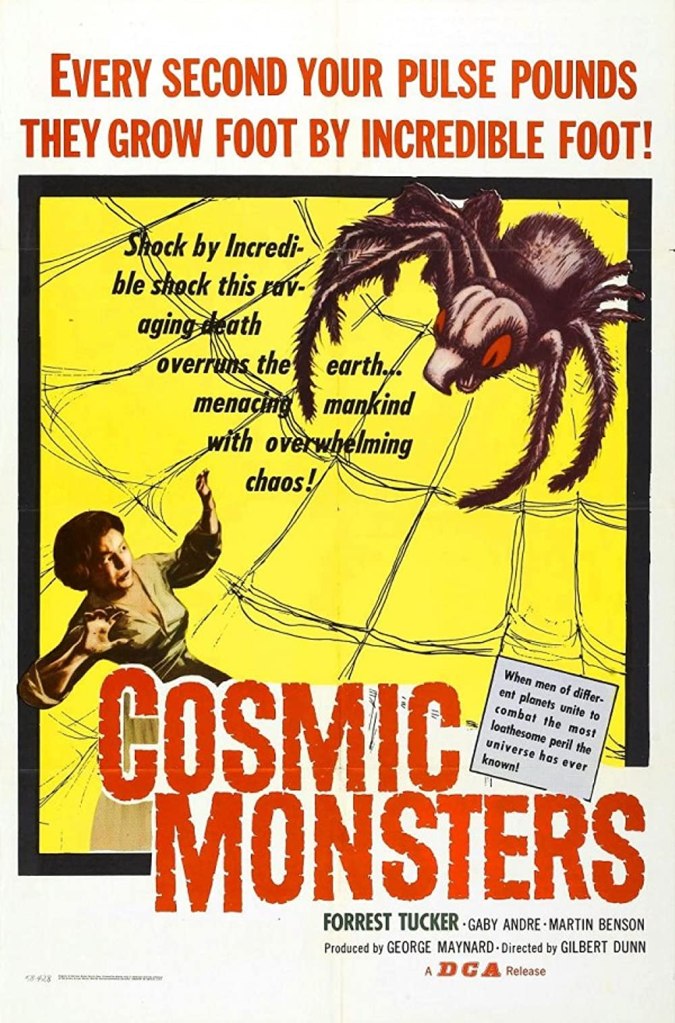
Sometimes known under the title Cosmic Monsters (as the poster above attests to), The Strange World of Planet X had potential that the film didn’t really reach. Many of the performances were decent (including, in no particular order, Wyndham Goldie, Martin Benson, Alec Mango, Geoffrey Chater, and Forrest Tucker), but the only one that I really loved was that of Mango’s mad scientist.

The story, too, was decently solid, but in a movie that’s barely over an hour and ten minutes, having the first real action start up forty minutes in seems an unwise choice. Additionally, throwing in a more science-fiction subplot didn’t bother me that much, but it was just a bit corny.

When the action does start, we’re treated to mostly unspectacular effects. Insects increase in size, and by that, they’re enlarged image is superimposed over the screen, so about none of the insects look particularly convincing (though the millipedes got the closest). One highlight of the film, though, was what looked like a cricket chewing on a man’s face. It wasn’t really bloody (this is black-and-white, be reasonable), but it was a tad more violent than I’d have otherwise expected.

The Strange World of Planet X is worth at least a single watch if you’re a fan of giant bug movies, but it really doesn’t compare with other classics such as Them! or Earth vs the Spider (which I know is almost universally bashed, but I enjoyed it). Still, this British addition to the genre is watchable, and occasionally enjoyable, though I do wish they sped up a bit to the action.

7/10

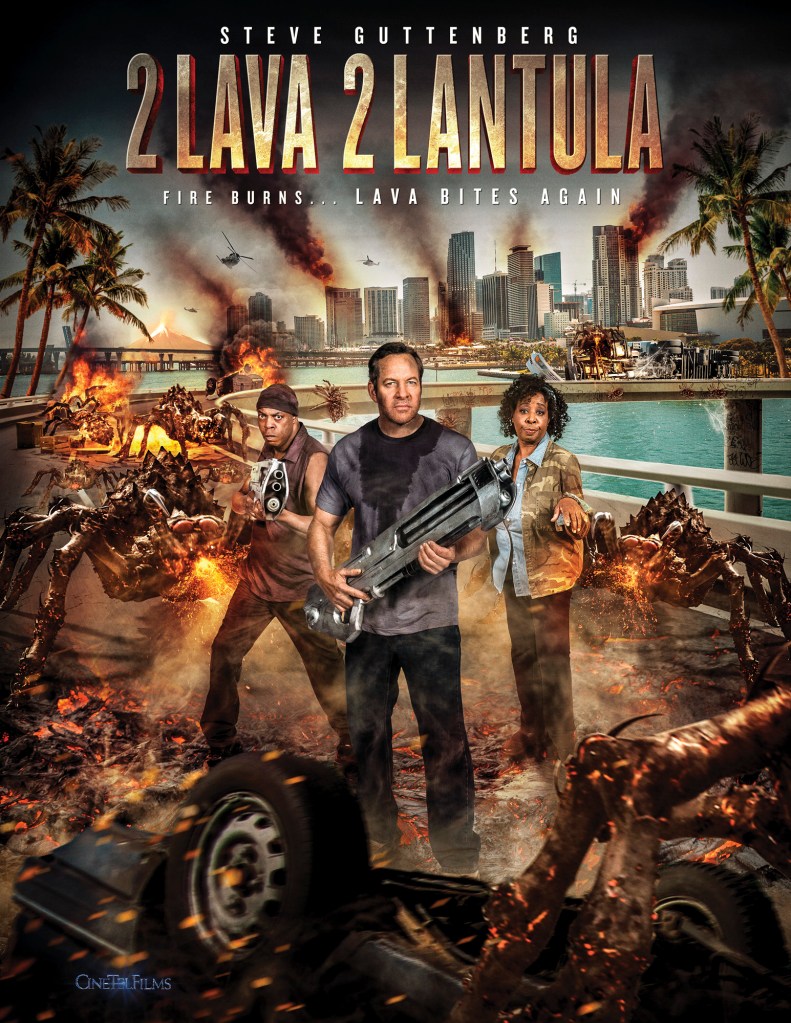
2 Lava 2 Lantula! (2016)

Directed by Nick Simon [Other horror films: Removal (2010), The Girl in the Photographs (2015), Truth or Dare (2017), Karma (2018), Untitled Horror Movie (2021)]

I gave the first movie a decent amount of praise, but this ridiculously-titled sequel is just a bit much. The first movie was just stupid fun, but as this virtually repeats that movie, there’s not really much point to it, and what was amusing in the first movie becomes old with this one.

Again, we get a lot of references to other movies (among them Scarface, Deliverance, Dr. Strangelove, Indiana Jones’ films, Crocodile Dundee, Die Hard, and Jurassic Park), but it didn’t feel nearly as fun as it did the first time around, and really, many times it felt a lot sillier. The Jurassic Park kitchen reference started out okay, but then it kept going, and toward the end of the scene, a banner falls down, just throwing the fact it’s a reference in our face, which we didn’t need.

Steve Guttenberg was, of course, nice to see, but I already saw him in the first movie, so the charm of seeing him again has worn off, especially when not much of the story has changed. Michael Winslow did as much for me here as he did in the first one, which isn’t really a positive. Michele Weaver did pretty okay, but Martin Kove (famous for The Karate Kid) didn’t wow me, quite possibly because his character was just too ridiculous for me.

I mean, don’t get me wrong, the first movie was ridiculous too (it’s called Lavalantula, for God’s sake), but as a one-shot wonder, it came across somewhat fresh. As little here was changed (aside from the fact that some lavalantulas can shoot spikes), the movie strikes me as somewhat pointless. Were there a few worthwhile scenes? A handful, but overall, I didn’t care for this one nearly as much as I did the first.

5/10

Fear Street: 1666 (2021)

Directed by Leigh Janiak [Other horror films: Honeymoon (2014), Fear Street: 1994 (2021), Fear Street: 1978 (2021)]

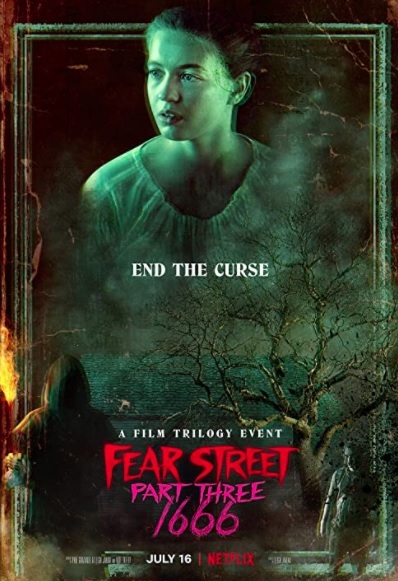
I will admit to being surprised by how well I felt this film closed the Fear Street series. No doubt I was expecting a decent movie, but this borders on spectacular. While it’s not a perfect film, this was a highly satisfying movie, and a great conclusion for Fear Street.

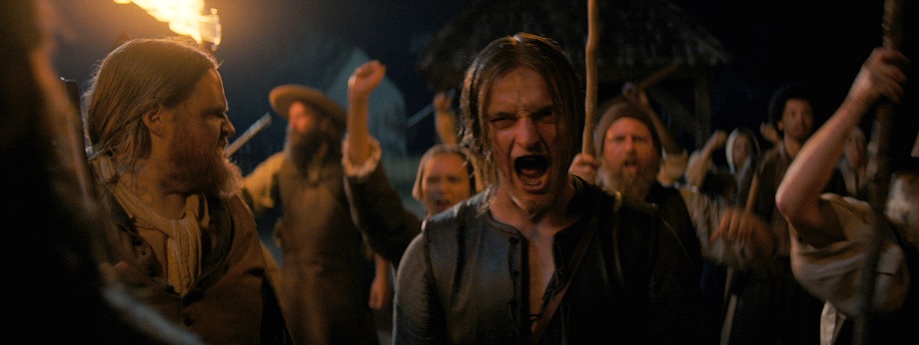
In some ways, this really feels like two movies (and in fact, is sort of treated like it) – the first half shows us the true tragic story of Sarah Fier, and the second transports us back to 1994 as Deena and her clan attempt to end the evil for good. It’s a simple story-telling technique, but it was done fantastically, and the movie never once feels like it’s running on too long (despite totaling an hour and 52 minute runtime).

Of course, I love movies that show the dangers of religious extremism (such as Apostle, End of the Line, The Mist, and The VVitch), and so the first half of this film, after Sarah was accused of being a witch, deeply appealed to me. I don’t know how realistic a potential lesbian relationship would have been in a close-knit community in 1666, but I felt they did a good job mixing real emotional drama with the religious hysteria that always seems to follow.

What’s even better is what this portion of the film reveals about the Goode and Fier families. It’s nothing that would likely blow anyone away, but I do think they did a great job handling some of these surprises, and while the finale of the film may not feel quite as amazing, the story the first half tells is just stellar, with amazing performances throughout.

Because of the nature of the film (the first half uses actors from the present-day 1994 story as characters in 1666), a lot of the big players here did double duty, and I think that it solidifies Kiana Madeira as a damn good actress. She was good throughout the film, but really shined in the first half, and especially the conclusion of the first half, dealing with a lot of emotional material, and making it damn convincing.

Others who stood out include Benjamin Flores Jr. (who didn’t really do that much during the first half, but really won me over by the finale), Olivia Scott Welch (sort of a vice-versa situation, as she didn’t do that much in the second half, but shined beautifully in the first half), and Sadie Sink and Emily Rudd (just seeing the pair of them again, even in smaller roles than what they had in 1978, was great).

I want to give a special mention to Ashley Zukerman, who played Solomon Goode and Nick Goode. While I didn’t love Nick Goode’s characterization, I thought that Solomon Goode was one of the most fascinating characters I’ve seen in recent times. I can’t get into anything specific without potentially spoiling something, but I just thought Zukerman was fantastic as Solomon, and I’d easily watch this one again just for him.

Michael Chandler did well as a one-scene wonder (he had more scenes than one, but I think the horrors of the meeting house really showed his menace), as did Rachel Doman, who played a character hinted at back in 1994 (and I thought would be more important to the story), but I still loved how she eventually popped up toward the end.

It’s not just about a solid story and great performances, though. Let’s talk horror, brahs. Perhaps one of the best scenes in this movie, and perhaps of the series as a whole, would be the meeting house murders, done by a pastor who lost his way. It’s not in-your-face brutal like the bread-slicer scene from 1994, but it was well-shot, and led to a great shot of bodies laid out in front of the building (the same kind of shot we saw in 1978, of course).

There’s also quite a few painful injuries, the worst being a hand rather mutilated by a blade. That did not at all look fun, but it was damn good special effects. Other scenes that warrant a mention include an eye-stab toward the finale and a brawl between the multiple killers (which seemed a little silly, but not so much that it took away from the movie). While the violence here probably won’t be noted near as much as the brutality of the finale of 1978, or the soon-to-be-famous bread-slicer scene from 1994, this movie still came to play.

Like I said at the beginning, I was surprised by how good this was. To be honest, I was expecting to be underwhelmed (I was hoping I wouldn’t be, but I knew it was certainly possible), but I was definitely mistaken in that assumption, because 1666 not only stands out as a better movie than both of the previous Fear Streets, but one of the strongest horror movies I’ve seen from the last couple of years.

9/10