The Blood on Satan’s Claw (1971)

Directed by Piers Haggard [Other horror films: Venom (1981)]

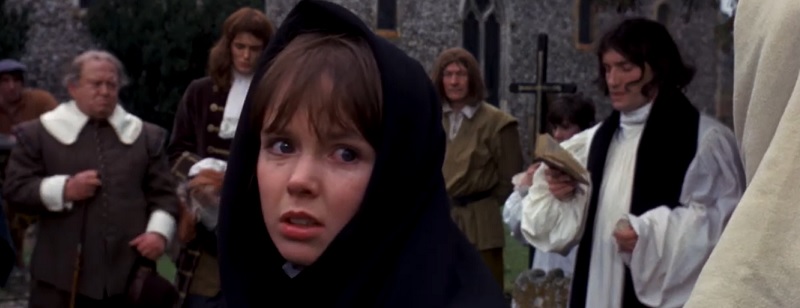
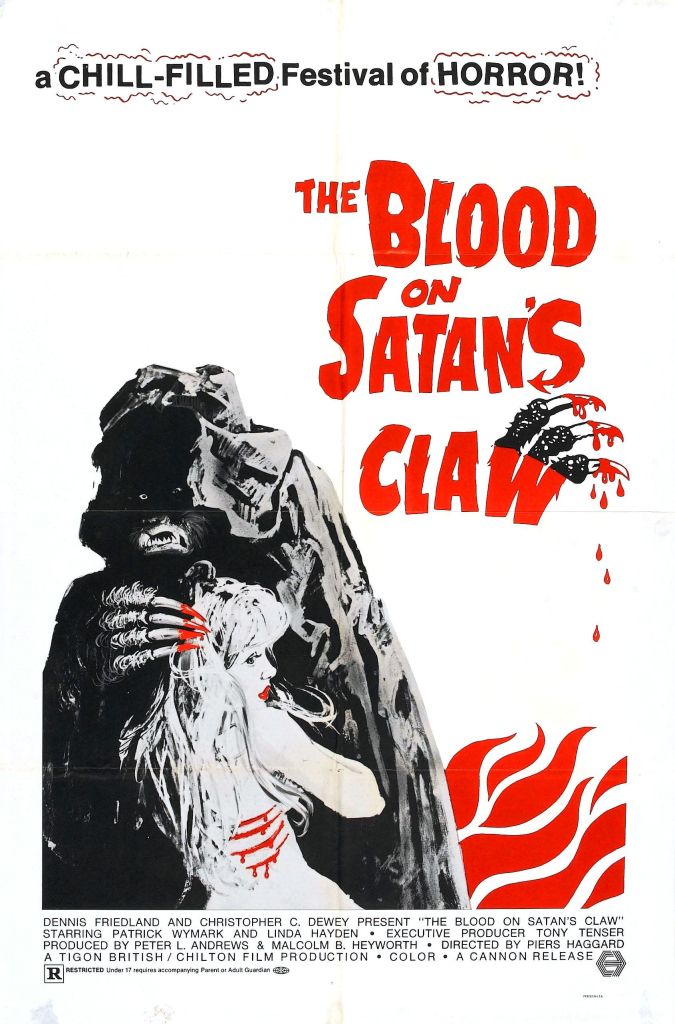
While this British film certainly possesses some elements that are, on the whole, enjoyable, after seeing it twice, I have to admit that it feels somewhat aimless in it’s goal, and though I do enjoy good portions of this, overall, I’m not sure it’s as strong as it could have been.

The rather small setting – a little hamlet in jolly Olde England – works well with this story, and the production is decent enough to give everything a viable enough feeling of that time period. That doesn’t help the movie feel any more focused, but it does ring true, and that counts for a lot given this is a period piece.

I think much of the meandering tone can be best explained by the fact that originally, the movie was supposed to be three separate stories, an idea that was dropped to just a singular story, but I get the sense that, while things are still connected, they didn’t entirely lose that original mindset. And in a way, this is sort of unique, but even so, it doesn’t always make for the most enjoyable viewing experience.

Patrick Wymark (The Skull and The Psychopath) takes a little to grow on me, but he eventually does, especially when he comes back toward the finale. Linda Hayden (of Taste the Blood of Dracula and Madhouse) was fun to see anytime she was on-screen. Not too many others stood out, though, aside from perhaps Simon Williams (of Remembrance of the Daleks, perhaps on of Sylvester McCoy’s most memorable stories during his stint as the Doctor) and James Hayter.

The special effects, when they pop up, are decent. You get some quality claws, a dismembered hand, and a few other surprises, but despite the title of the film, it’s not as though there’s a lot of gore to be had here. Think any average Hammer movie, and that’s pretty much what you’re in for (though to be clear, this is from Tigon).

The Blood on Satan’s Claw isn’t a bad movie, and those in the horror community know that it’s generally well-respected. It’s a movie I’ve seen twice now, though, and as much as I wish I could like it more, elements just fall flat for me, and the quasi-disjointed nature of the story irks me. It’s not bad for a watch every five years, maybe, but it’s far from a preferred 70’s film of mine.

6/10

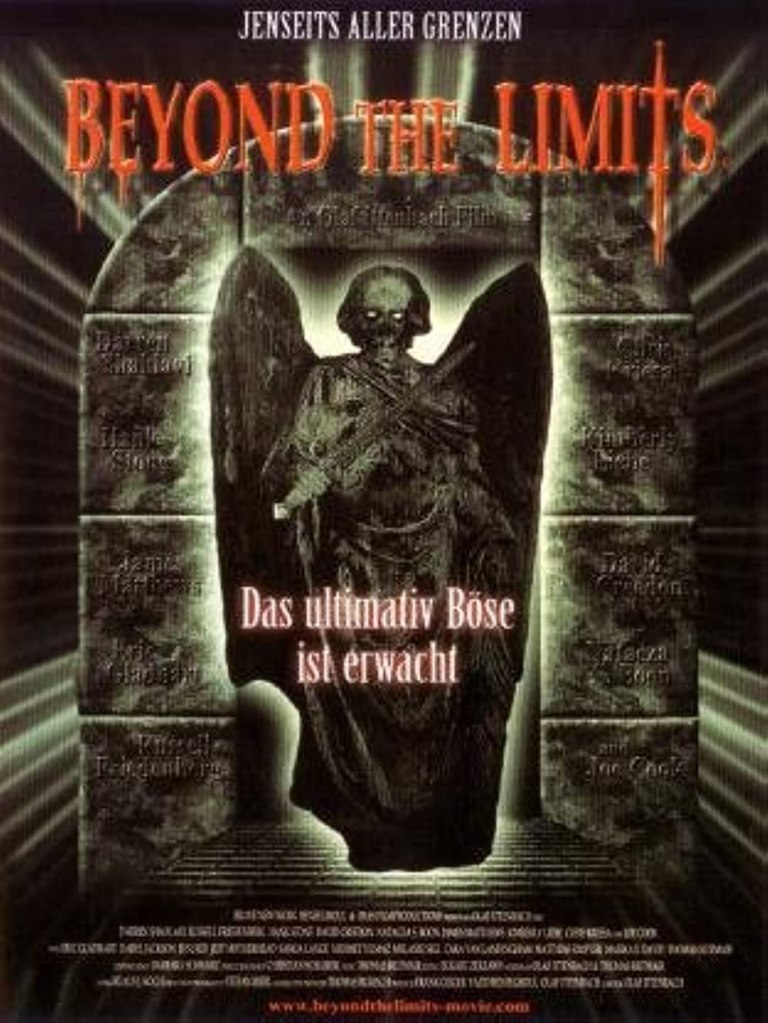
Beyond the Limits (2003)

Directed by Olaf Ittenbach [Other horror films: Black Past (1989), The Burning Moon (1992), Premutos – Der gefallene Engel (1997), Legion of the Dead (2001), Riverplay (2001), Evil Rising (2002), Garden of Love (2003), Familienradgeber (2006), Chain Reaction (2006), Dard Divorce (2007), No Reason (2010), Legend of Hell (2012), Savage Love (2012), 5 Seasons (2015), Olaf Ittenbach’s Colourman (2017), Garden of Love II (2017)]

I knew very little about this going in, which was, in this case, a positive thing, because if I had known it was an anthology movie with only two stories, each one taking approximately 50 minutes, I would have gone the other way. As it was, Beyond the Limits wasn’t terrible, and it has it’s place, but it’s certainly not a movie I’d expect too many people to enjoy or want to sit through.

Before anything else, though, I want to give credit to the gore. Director Olaf Ittenbach is somewhat well-known for his gorier films (though I’ve not personally seen any aside from this one), and this one is no different, with some quality decapitations, someone being garroted, a young kid taking a sledgehammer to the face, and other goodies. It’s a solid example of lower-budget gore being done right, so if you’re into this type of thing, this movie might be looking up.

Otherwise, I just don’t think it’s really a great movie. I’ve not seen that many anthology films which feature just two stories, but those that I have (such as Two Evil Eyes and 2009’s Late Fee) haven’t been that good. Part of the reason being, the stories are obviously too short to be full-length movies, but are also too long to be digestible, easy-to-view segments you’d expect from any decent anthology, be it Tales from the Crypt or Creepshow.

It also doesn’t help that neither story here, not to mention the framing sequence (which started out fine, but by the end just seemed terrible) made a positive impression on me. I’d say the first story – a bunch of people are tortured by a sadistic guy in relation to a gangland incident – was the better of the two, as it’s pretty much, past a certain point, a low-budget Hostel. The second story, a period piece about the torture of the Inquisition on religious folk, felt more like a bloodier The Bloody Judge than anything really worth getting into.

I didn’t hate any of the acting (though I will say that Simon Newby was a bit campier than I’d have personally preferred), but few people here really wowed me. From the first story, even with his flaws, Simon Newby was probably the best there. Thomas Reitmair (who I couldn’t help but see as a blonde Alan Rickman) needed a bit more character, and Daryl Jackson was too much a mystery to really get a hang on.

From the second story, while Darren Shahlavi could have been an okay protagonist, he really didn’t end up that memorable. Russell Friedenberg was delightfully evil, albeit maybe a bit over-the-top, but the real over-the-top performance award goes to David Creedon, who was just ridiculously campy (perhaps even rivaling Newby). There are some quality medieval set pieces and sword fights, but you can see it done decently better in the early episodes of Game of Thrones.

Honestly, Beyond the Limits is far from a terrible film. It’s competent in what it was aiming for, and save for a few really bad effects (such as a woman being thrown out of a building in the first story) and that rather awful and expected conclusion, it might be worth watching if you’re already familiar with Olaf Ittenbach or into low-budget horror. It’s just really not my type of thing.

5/10

Opera (1987)

Directed by Dario Argento [Other horror films: L’uccello dalle piume di cristallo (1970), Il gatto a nove code (1971), 4 mosche di velluto grigio (1971), Profondo rosso (1975), Suspiria (1977), Inferno (1980), Tenebre (1982), Phenomena (1985), Due occhi diabolici (1990, segment ‘The Black Cat’), Trauma (1993), La sindrome di Stendhal (1996), Il fantasma dell’opera (1998), Non ho sonno (2001), Il cartaio (2003), Ti piace Hitchcock? (2005), La terza madre (2007), Giallo (2009), Dracula 3D (2012), Occhiali neri (2022)]

Sometimes considered one of the last great Argento films, Opera is a movie that I’ve long been aware of, and given my love of some of his previous work, a movie I’ve wanted to see for some time, and overall, while I thought a few changes here and there might have worked, I found the film quite solid.

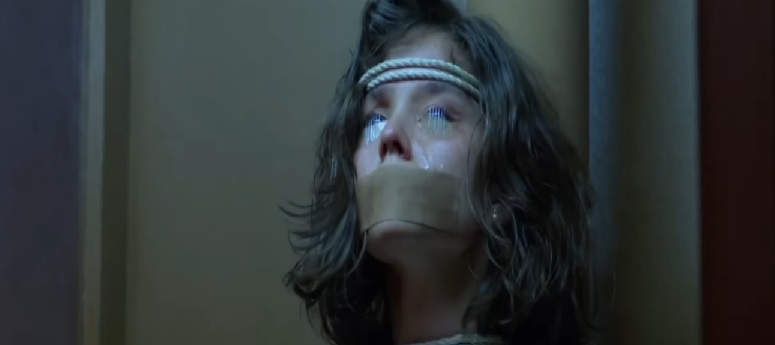
A big part of this would be the gore and quality special effects throughout the film, and there are some really spectacular scenes here. Perhaps the most remarkable would be the slow-motion headshot sequence, in which a bullet exits the gun, shoots through the peep-hole, and, as one can imagine, pierces a poor soul in the head. Also quite solid is a kill with a knife through the jar, and a woman forced to watch lest she lose her eyebrows via needles taped near her eyes (as the poster demonstrates).

For a late 80’s giallo, over ten years since the heyday of the sub-genre, Opera did a pretty good job as far as the gore goes. The mystery isn’t quite great, but you’re left wondering who exactly is committing the crimes, the answer for which isn’t entirely satisfactory, but the showdown between the mysterious killer and Cristina Marsillach is pretty solid. I don’t love the final scene – I can see why some wanted it removed for the US release – but that’s not too much a deterrent.

Cristina Marsillach isn’t the best lead I’ve seen, because her character (and this isn’t just her – this could be applied to multiple characters throughout the movie) made her fair share of somewhat questionable decisions. Ian Charleson was a character I wanted to like more, as he struck me as potentially interesting, but I felt he wasn’t entirely fleshed out.

In fact, I think this is a complaint I have with most of the characters, so not only do many of them make some foolish decisions (Marsillach not going to the police after witnessing the murder, or Coralina Cataldi-Tassoni not getting help for Marsillach as soon as she saw her in the glass, etc.), but they make those bad decisions while feeling like somewhat shallow characters, and though that didn’t make the film terrible, by any means, I definitely noticed it.

Of course, I did enjoy seeing the occasional Argento addition of odd lighting at times (the two women being trapped in the apartment may have been the best example of that), but the film, as far as stylistic endeavors went, seemed quite a bit more tame than Argento’s previous works. I also could have done without the somewhat jarring heavy metal music during the kills, but I can understand why they’re there.

So though the mystery wasn’t great, and honestly, the characters weren’t great (Urbano Barberini being one of the few shining lights, as far as dim shining lights go), the kills were pretty solid, and I can say that I did enjoy the film. I just didn’t enjoy it as much as Deep Red or even Suspiria.

7.5/10

The Werewolf (1956)

Directed by Fred F. Sears [Other horror films: Earth vs. the Flying Saucers (1956), The Giant Claw (1957)]

This mid-50’s film wasn’t what I’d call a bad film, because The Werewolf did have some quality ideas here and there, but I have to admit to finding a decent amount of it a bit dry and sometimes more melodramatic than I’d have hoped.

I’ll give the movie props for the setting, being a small mountain town named Mountaincrest – I liked the feel of the small town, and the townsfolk all knowing each other is quaint. So that’s all fine and well, but otherwise, not much else here really did that much for me.

Let’s start with the werewolf himself – the special effects during the transformation scenes weren’t abominably bad, so I don’t think that was much of a problem, but the character (played by Steven Ritch) didn’t really interest me, and while I did feel quite bad for the man, I just found that I had a hard time caring much beyond that.

I also can’t help but hating the lead, being the sheriff (Don Megowan) – he starts out by wanting to purely kill the werewolf, than he decides to soften his stance and take the werewolf alive, and then after the werewolf escapes from jail (entirely out of the werewolf’s control), he goes back to pure bloodlust entirely without good reason. Megowan gave a fine, if generic, performance, but boy, his character was pretty awful.

Better were Joyce Holden and Ken Christy, or at least their characters were better. Let’s be honest – no performance in this movie is really stellar aside from maybe Steven Ritch, and like I said before, he didn’t do it for me. Harry Lauter was an okay side-character, S. John Launer and George Lynn made for okay antagonists, but again, nothing stellar.

Whatever the case was with this one, The Werewolf really didn’t impress me much. It started out decently, but I just found my interest waning pretty quickly into the film, and at no point did it really pick up for me. It’s an older werewolf film that might be worth looking into if werewolf movies are your thing, but that’s the best I can say about it.

5.5/10

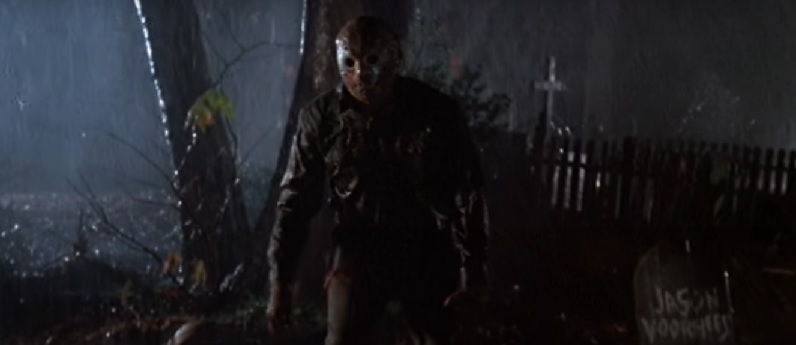
Friday the 13th: A New Beginning (1985)

Directed by Danny Steinmann [Other horror films: The Unseen (1980)]

By-and-large, I feel that this film’s been unfairly maligned since it’s release. Some of my feelings stem from nostalgia, no doubt, but even so, I have always found this a very solid and definitely acceptable entry into the series. Also, I should say that, unlike most of my reviews, there are spoilers here, so be warned.

I mean, look at how many memorable characters are here.

Who can forget Demon (Miguel A. Núñez) and his enchiladas? Joey (Dominick Brascia) and his love of chocolate bars? Reggie (Shavar Ross) and his recklessness? Roy (Dick Wieand) and his son? Violet (Tiffany Helm) and her dancing? Robin (Juliette Cummins) and her breasts, and related, Jake (Jerry Pavlon) and his amazing come-on? Ethel (Carol Locatell) and her stew?

See, I remember all of this stuff, and most of them I’ve remembered since childhood. And none of that even includes the plethora of great kills, such as a guy impaled by a pole or someone’s skull getting crushed by the tightening of a belt. Slit throats, gut stabs, even a solid axe murder to open things up – this movie has both the memorable characters and the gore to back it up.

John Shepard (who plays Tommy years after the events of The Final Chapter) was interesting in that, while he was one of the main protagonists, he rarely felt like it, given the fact he had very few lines and didn’t pop up in a significant way until the finale of the film. He knew how to fight, though, I’ll give him that. Melanie Kinnaman was more an action-oriented woman toward the end, but I sort of thought she never got the character that many of the others got, so I can’t say I found her entirely satisfying.

Otherwise, you have a strong and memorable cast here. Miguel A. Núñez (who, along with Mark Venturini, was also in The Return of the Living Dead) was fun for his short screen-time, and of course Shavar Ross was great as Reggie, as we don’t often see younger kids go against Jason* (aside from Tommy, of course). I sort of wanted to see more of both Tiffany Helm and Juliette Cummins, but even with what we got, they were good characters.

And who doesn’t want to see more of Carol Locatell calling her mentally-challenged son a dildo?

*And as for the final twenty minutes, I can agree that some of it, I didn’t care for, whereas other portions I thought were entirely fine. Spoilers are in these upcoming lines, to be clear: the fact that Jason wasn’t actually Jason but someone using the legend in order to get revenge wasn’t something I found problematic at all. If anything, I thought it was a novel use of how scared the community still was of Jason, and that even a normal individual could use the legend for his own benefit.

[Still spoilers here] The thing I didn’t care for was Tommy’s ascension at the end to seemingly becoming a killer in his own right – no, luckily, this wasn’t carried on into the following film, but it just rubbed me the wrong way, and I wish that, after his dream sequence, he’d have woken up and been done with the troubles Jason caused him his whole life.

Aside from that, this is a hard movie for me to dislike, and in fact, I couldn’t ever imagine giving this lower than a least an 8/10, especially given the fact I’ve seen it so often and enjoy so much of it. You have great kills, some great breasts, great music (Violet’s dancing to “His Eyes” by Pseudo Echo was beautiful – and also beautiful is the chorus to that song, going “There is a man with no life in his eyes,” which is perfect for a Friday the 13th movie), and overall a great atmosphere.

The ending could have used a different direction as far as Tommy’s character went, but if I’m being honest with you, and I see no reason not to be, that’s really my only problem with this one. Otherwise, it’s a fantastic entry into the series, and is about as good as Part 2 and The Final Chapter.

8.5/10

Black Zoo (1963)

Directed by Robert Gordon [Other horror films: It Came from Beneath the Sea (1955)]

Maybe I was expecting too much, but I left Black Zoo feeling somewhat underwhelmed. The movie wasn’t poor, by any means, and there were some amusing scenes, along with performances worth noting, but a few elements of the story tasted funny, and I think the film, for me, ends up around average, if not a little lower.

I did appreciate the first 12 minutes of the film, though, wherein a tour bus of, well, tourists, comes to a zoo, and are taken through a tour by the head of the zoo, played by Michael Gough, and it’s just a nice, pleasant trip through the zoo, almost like one of those science documentaries my people sometimes watched in school when we had a substitute teacher. It was a charming opening, and I enjoyed it.

Also worth mentioning, Black Zoo is in color, which I didn’t know beforehand (and certainly wasn’t a given during this period of cinema). I don’t know if it really mattered in the end, but it was sort of nice to see.

Of course, Michael Gough is best known for playing Alfred in the Batman movies, though he has done plenty of horror (the 1962 Phantom of the Opera, Horrors of the Black Museum, Berserk, What a Carve Up!, Trog), and he gives a solid performance here, occasionally hammy, but enjoyable throughout. I was indifferent on Jeanne Cooper, who played Gough’s wife, but both Rod Lauren (The Crawling Hand, Terrified) and Elisha Cook Jr. (House on Haunted Hill) were solid, though I admit I didn’t care entirely for Lauren’s story.

On that note, there’s a bit of a twist at the end regarding Rod Lauren’s character, but I really didn’t find myself caring that much about it, because it didn’t really make a difference as far as I could tell. Also, while I understand the concept, that one crazy animal cult (they basically believe that the souls of recently-deceased animals can enter a new animal and live again) was just a bit too silly, and Michael Gough’s character didn’t strike me as someone who’d want to mix-in with a lot like that.

Points are given, though, for the murders that Gough’s character plans. Who doesn’t like him taking revenge on people with the help of his lions, tigers, and gorillas? There’s even an emotional scene, of sorts, where one of his animals is killed by Cook Jr. and, in a rage, Gough takes him out (honestly, I can’t blame him at all for that, as Cook Jr.’s character was the one that was begging to be attacked).

Overall, though, Black Zoo was just an okay movie. I didn’t have a terrible time with it, but I definitely think it could have been better in some ways. It’s worth a watch just for something different (how many zoo-based horror films even are there, aside from this and Murders in the Zoo?), but it’s not an amazing film.

6/10

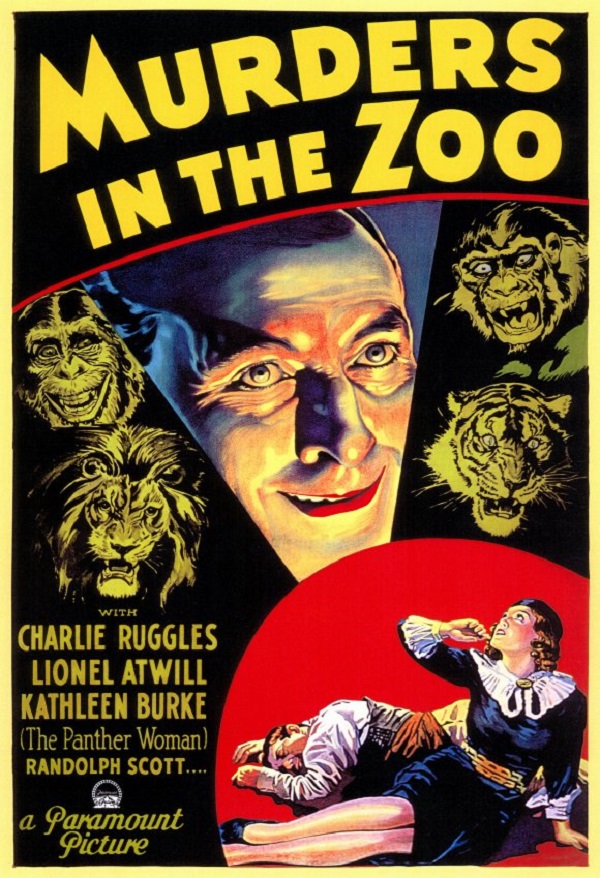
Murders in the Zoo (1933)

Directed by A. Edward Sutherland [Other horror films: The Invisible Woman (1940)]

This is one of those classics that I’ve been wanting to see for quite some time, and I’m decently happy with how this one ended up, especially given that it came not from Universal, whose dominance in horror at the time was unparalleled, but Paramount (Island of Lost Souls, from the previous year, being a big hit for them). Murders in the Zoo isn’t amazing, but it was a pretty good film.

What helps is the somewhat more violent scenes we got occasionally, such as a man getting his lips sewn shut in the opening (a very strong opening, I thought, and I can imagine audiences back in the day finding that distasteful) and a man pushing a woman into water teeming with crocodiles (alas, we don’t see the scaly bois feast, but I liked the idea).

I don’t think that Charles Ruggles made for a great lead (he was generally a comedy lead, and in fact, this was his sole horror film), because that whole scared-of-every-single-animal trait got a bit old. I don’t hold that against him – he had to follow the script as to his character – but I don’t think he was the best lead possible. Luckily, the other lead, Lionel Atwill, is a horse of a different color.

Atwill, who has been in quite a few horror films (such as Doctor X, Mystery of the Wax Museum, The Vampire Bat, The Gorilla, Mark of the Vampire, Secret of the Blue Room, among others) was pretty great here, and really had a menacing and occasionally mad aura. He made for a strong antagonist, and I enjoyed his creative ways at getting revenge.

In other news, Randolph Scott (this and Supernatural, from the same year, made up the sum of his horror appearances) made for one of those characters you wish you’d see more of, the same which could be said of both Gail Patrick and John Lodge. Kathleen Burke (most famous for the aforementioned Island of Lost Souls) was pretty good also, and while a woman in a time where strong women weren’t common in horror, she did well for herself (although I would have advised against telling Atwill’s character that she’d tell everything she knows – that never works out well).

Given that this film is just over an hour, there’s not necessarily a whole lot to digest here, and you never really have time to feel bored, or that the film’s dragging. High-lights for me include the quality opening of the film, along with the dinner held at the zoo and the woman being thrown to the crocodiles. I must admit the ending too was of good stock – saving himself from the lions and tigers only to meet a slithery boi – so no complaints there.

Murders in the Zoo is a pretty strong movie, and one of those horror classics I think has largely been overlooked, which is a shame given the somewhat darker tone of the film along with Atwill’s performance. If you’re into black-and-white horror, and this is at your disposal, go for it.

8/10

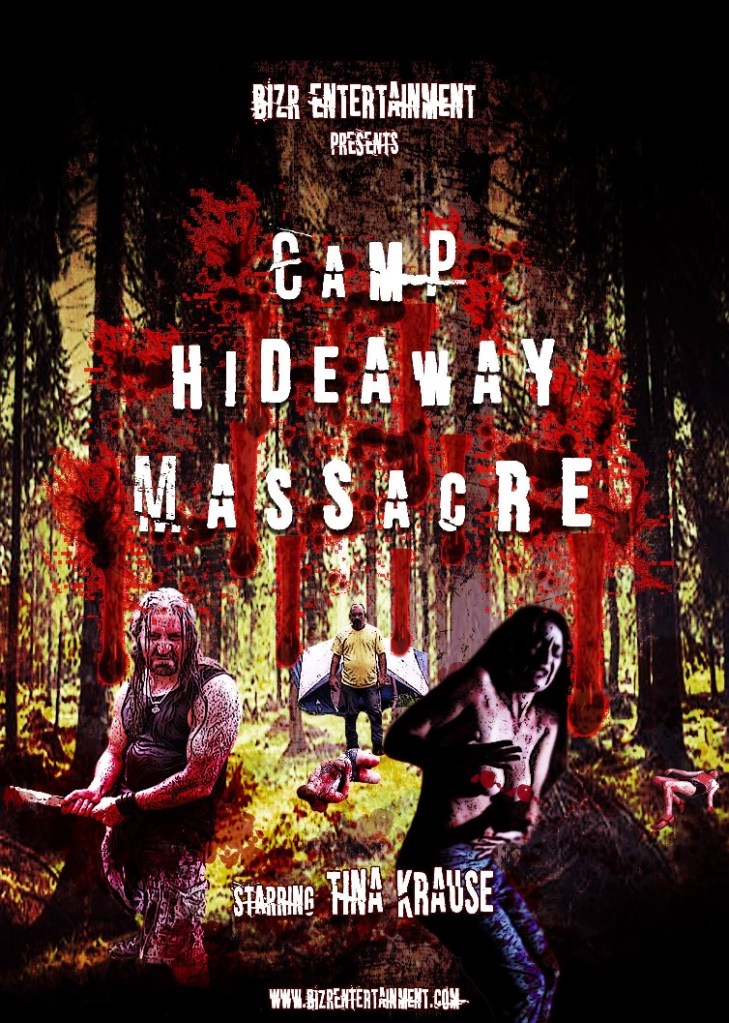
Camp Hideaway Massacre (2018)

Directed by Skip Bizr [Other horror films: N/A] & Ted Moehring [Other horror films: Bloodbath in the House of Knives (2010), Invasion of the Reptoids (2011), Camp Blood 666 (2016), Revenge of the Devil Bat (2020)]

For being a low-budget slasher, Camp Hideaway Massacre is almost okay. It’s not a good movie, but it was close to passable. The main problem, though, was that the film was so repetitive, and while occasionally things got shaken up a little, I can’t say I wasn’t somewhat bored (as bored as one can be watching a low-budget film, anyways) at times throughout the movie.

I’m not sure if this was filmed in Pennsylvania (I know the setting definitely is, and I wouldn’t be surprised if it was filmed there), but I do enjoy the lush look the local environment has, and while the campgrounds themselves are rather pathetic, it was still what I know people refer to as nature.

As far as the special effects go, low-budget films always get a bit of a pass from me. Jockstrap Slaughterhouse, for instance, had horrible effects, but had a lot of heart. This film has okay effects – one of the decapitations looked a bit weak – and the kills were mostly fine, so I don’t have too much to complain about there.

The issue is the story, though, in which new people get to the campground, and are killed shortly thereafter, rinse and repeat. We go through a lot of characters, and in fact, somewhat interestingly, the main characters could really be the killers (primarily Gutrot Layton and his posse) as opposed to any one victim (the best choice would be Tina Krause, who actually appears for more than a handful of scenes), but that doesn’t really help the overall narrative structure.

Probably as one can imagine, the acting is mostly poor. I noticed that, looking through the cast, it looks like characters who were mother and daughter in the film were played by actual mothers and daughters, which I thought was cool (and certainly shows a strong localized production). Not that, of course, either of these pairs (Jessica and Haley Dittrich along with Danielle and Kanyon Fassler) had much of a chance to shine, but it is nice to see.

Tina Krause is a big name in lower-budget horror, having been in quite a few films (such as Female Mercenaries on Zombie Island and Dead Students Society), and while I’ve not personally seen her in anything until now, she did well. She also had a lengthy shower scene, so no complaints there. I think, aside from her, John Young was probably the best performance, but Gutrot Layton (and I sort of doubt, on a side-note, that’s his real name) had some charm too.

The dialogue was pretty awful at times, and like I said earlier, the largest issue was the repetitive nature of the story. None of that makes Camp Hideaway Massacre awful, and for a lower-budget movie, I definitely think that, in some aspects, they did well (such as most of the kills and skirting on an interesting story), and if it had been cleaned up a little, I think this could have been more a contender than what I thought it ended up being. Right now, though, I don’t think it’s that great.

5.5/10

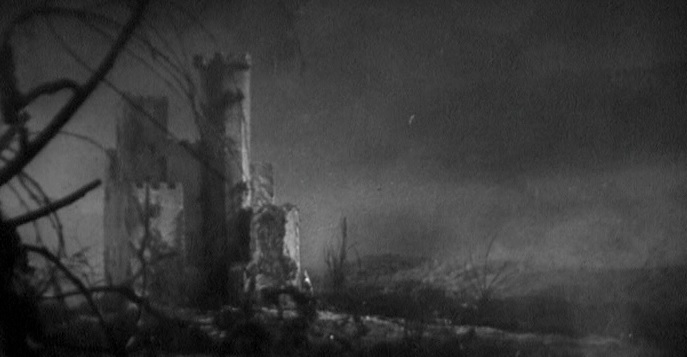
La chute de la maison Usher (1928)

Directed by Jean Epstein [Other horror films: L’auberge rouge (1923)]

This is one of the few remaining silent horror films that I needed to see, and the reason why I hadn’t seen it up until this point was that this French movie (known as The Fall of the House of Usher, based off an Edgar Allan Poe story) is easy to find in it’s native language, but not so much in English.

After finally seeing it – well, let me get something really important out of the way first.

I am delighted that I got to see a version which I could actually read the inter-titles to, but this print was beyond rough. It wasn’t tinted, which wasn’t a big deal (I didn’t even notice until halfway through the movie), but it was extraordinarily blurry, and the English translations weren’t captioned at the bottom, as usual, but superimposed over the existing French inter-titles, which, while functional, was not aesthetically pleasing whatsoever. In fact, it may be one of the roughest silent prints I’ve seen, and you’re reading a guy who sat through Malombra.

Adding to that, the plot here isn’t always clear-cut, and the dubious nature of the print makes quite a bit of this even more difficult to fully grasp. Luckily, while I’ve not read the story in some time, I have seen the 1960 Corman version of the Poe classic, and thus got a bit more out of this than I would have gotten had I gone in not knowing how the story went.

Certainly there are some captivating uses of cinematography here, perhaps the one that comes to mind quickest the seemingly first-person view from the ground to indicate – – – something, I suppose. I didn’t exactly follow that part, but that’s the nature of some 80 year old films.

Even had the print been better, a decent amount of this film felt off. I wouldn’t go as far as to say it was experimental, but I do think they didn’t want to go a more traditional route as far as story structure was concerned. As such, no one performance really stuck out to me (Jean Debucourt would be the only one to come close, and he didn’t come that close), and overall, while I would definitely like to give this movie another go with a cleaner print, I had to say that this silent film didn’t really impress me.

Kudos to it being the oldest French horror film I’ve seen, though, so that’s cool. Otherwise, though, even as a fan of silent horror, this didn’t do that much for me at all.

5/10

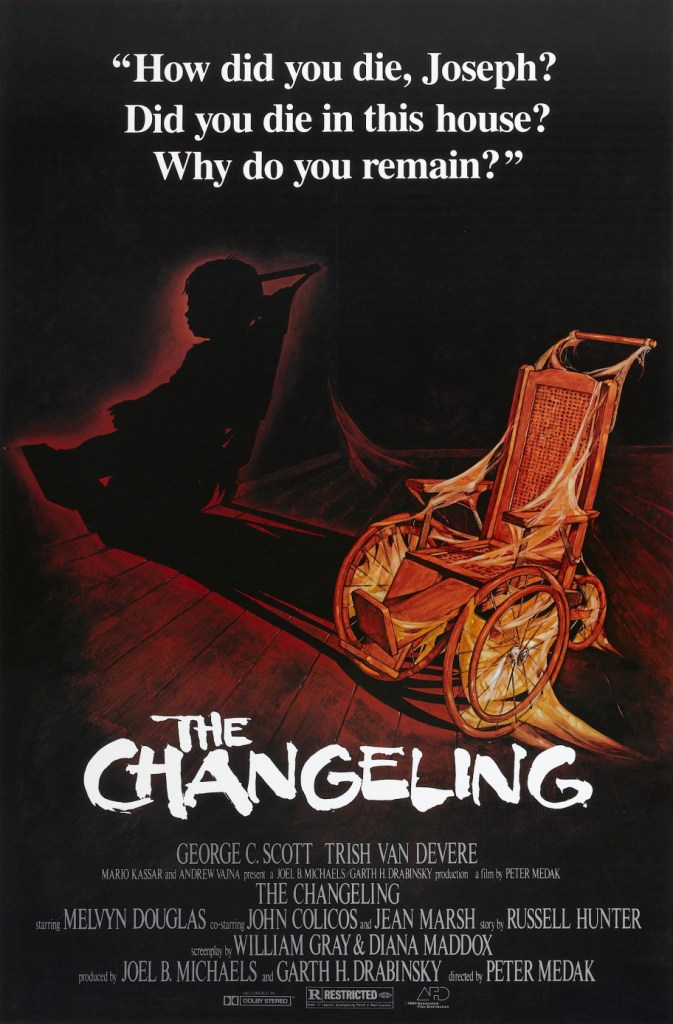
The Changeling (1980)

Directed by Peter Medak [Other horror films: Cry for the Strangers (1982), Species II (1998)]

Often quite atmospheric and somber by the very nature of the focal character’s background, The Changeling is a fantastically done ghost movie with an engrossing mystery and stellar cast. While not often outright frightening, it can get pretty unsettling, and the aforementioned mystery was on point.

That’s not quite what I thought about it when I first saw the film, but the important addendum there is that I was pretty young then, surely no older than 16. My tastes in horror probably haven’t changed significantly since that age (I loved slashers then, and I love slashers now), but my appreciation for some movies have definitely grown, and The Changeling is a good example of that.

Set in the beautiful city of Seattle (I’ve never been there, but I have had a life-long desire to move to Washington state), it follows a man haunted by the recent deaths of his wife and daughter, and upon moving into a Victorian house, has to deal with the inexplicable things people deal with when they move into houses that might be haunted.

For one thing, this can be an emotional ride following just George C. Scott’s character himself. Due to the recent death of his loved ones, there are some really touching scenes here, such as him finding the ball his daughter used to play with, or him sobbing in bed, probably with little will to go on. He definitely sold it, and though his character was one of maybe questionable motives, Melvyn Douglas really brought a lot of emotion to the final twenty minutes of the film also, especially during his face-off with Scott’s character.

George C. Scott is a familiar name, but I can’t really say I’ve seen much with him in it, which is a shame, as he does a fantastic job here, especially since it’s not too common for horror films to focus on solo older individuals. That might partially be why Trish Van Devere (who starred in The Hearse, which came out the same year but to much less fanfare, as deserved) was here – not that her character wasn’t welcome at times, but she wasn’t near as good as Scott or Douglass. And Melvyn Douglas (The Vampire Bat and, in 1981, Ghost Story, his final film before his death) – what a performance he put in at the end. Very moving and definitely worth it.

What really makes this movie work is the mystery of the ghost, and some of my favorite scenes are those of Scott’s and Devere’s characters trying to dig up as much information as they can, from reading microfilm of old newspapers at the library to going through land charts to figure out what piece of land has a well on it, it’s just a fun bunch of sequences leading to them going to some random house and, after some ghostly apparitions, finding bones in an old well. Just stellar.

Though almost an hour-and-fifty-minutes, I wouldn’t really classify this as a slow-burn, as enough of interest occurs throughout the film. I think some of the best parts are in the second half, to be sure, but there’s plenty of stuff throughout (including some delightful overextension of political purviews) that makes The Changeling a ghost film that is definitely worth seeing.

8/10

This is one of the films covered by Fight Evil’s podcast. Listen below as Chucky (@ChuckyFE) and I discuss this classic film.