Spiker (2007)

Directed by Frank Zagarino [Other horror films: N/A]

The last time I saw this one, which was also the first time, it was on the now-defunct Chiller channel. Occasionally Chiller played decent films, but Spiker shouldn’t be confused with one of those, and is really quite a poor film.

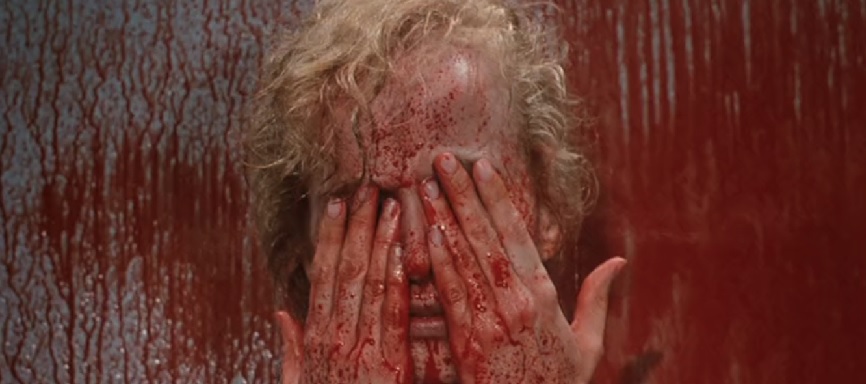
In this film’s defense, the kills aren’t bad. The killer uses railroad spikes (hence being known as the ‘Spiker’), and he stabs people through the throat, in the back, in the head, all that fine stuff. He’s also gifted at spike-throwing, and manages to throw quite well from a good distance and impale people from afar, which would make a quality addition to the Summer Olympics.

As far as positive elements go, if I’m being honest, that’s about it.

The story here just isn’t good. I get the sense that maybe there’s supposed to be a bit more to it (they make a little deal out of the fact one of the girls looks just like her aunt, and I’m guessing that she was supposed to be the daughter of the Spiker, but they just didn’t want to film it or something). The plot is just generic and weak with little going for it.

Of the six main teens (Giselle Rodriguez, Matt Jared, Ginger Kroll, Josh Folan, Elena Tover, and Adam Shonkwiler), the only performance I actually liked was Tover’s. She was sort of the generic spiritual, goth-ish girl, but she at least had personality, which was far better than the lead, Rodriguez, who I admit I thought was actively bad. Frank Zagarino (who also directed this film) looked unique, but I can’t say he’s that memorable, and the groundskeeper, played by David ‘Shark’ Fralick (Uncle Sam) was okay, I guess, if it was his idea to play a character that was functionally pointless.

In fact, the whole ending was somewhat pointless, and if you think you’re watching a movie that’s going to have any type of normal conclusion or closure of any type, boy, are you in for a fun time. Spiker’s ending was somewhat ballsy, as I don’t know many directors who’d want to end a film in such a shitty manner. Maybe if it had been executed differently, it could have worked, but the way they did it here just seemed more than a little lacking.

Spiker isn’t a film I have fond recollections of from the first time I saw it, and seeing it again, I can fairly say this movie isn’t good. At the time of this writing, it sports a 2.4/10 (with 459 votes), and though I don’t think it’s that bad, I get why many do. It’s not a good movie, and I’d not personally recommend it.

4.5/10

Lucifer (1987)

Directed by John Eyres [Other horror films: Project Shadowchaser III (1995), Judge and Jury (1996), Octopus (2000), Ripper (2001)]

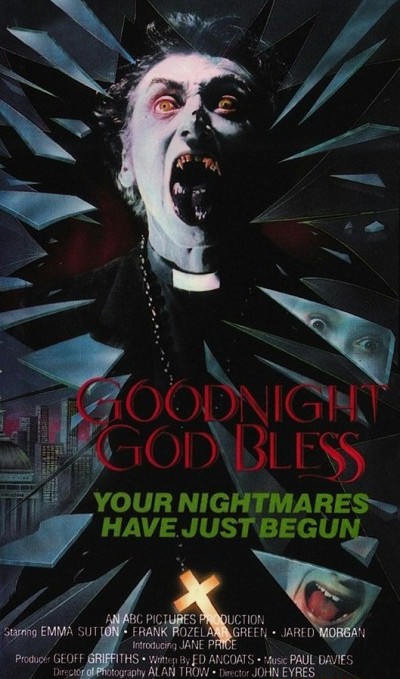
This is a bit of an odd film. Lucifer (which was apparently released under the much catchier title Goodnight, God Bless later on) is a slasher with a fantastic opening, but very little past that point really makes an impact.

I have to first say, though, that I don’t quite know the origins of this one. It’s filmed in London, and multiple reviewers call it a British movie, which makes sense, but then IMDb lists the country of origin as Canada, so I don’t know what that’s about. I’ll just assume it’s a Canadian film made in London for some reason, as that’s really all I have to work on.

No matter where it’s from, though, that opening is strong. It’s also sort of sad, because nothing else in the movie comes even close to matching it, but hey, I guess if you start off strong, then that’s the risk you have to run.

A man dressed as a priest approaches a schoolyard – kids are frollicking and playing as kids do, and being watched over by a teacher. The priest enters the yard, and the teacher walks up to him. It’s a short conversation, though, as he pulls out a knife and stabs her. He then pulls a handgun out and shoots the kids. He doesn’t kill all of them – only five children die in the opening (we see their body bags a little later on) but one of the girls he does attempt to kill gets lucky, and becomes the focus of his obsession throughout the film.

Not too many horror films deal with the death of kids in a senseless act of violence like this, and I definitely appreciated how this film ignored convention and began with five young kids getting shot in a schoolyard. Masterful opening, definitely memorable, and it’s a shame little else in the film does much.

Which isn’t to say the other kills are bad – there was an okay one dealing with a police officer falling prey to a spike-trap of sorts, which was sort of fun. There was an almost suspenseful scene in a movie theater in which the priest stabbed a knife through the chair in front of him, which would have killed the target had they not dropped something and was leaning forward to pick it up. Even so, for a slasher film, Lucifer just doesn’t have enough pop, and feels far more sluggish than one would hope.

Frank Rozelaar-Green wasn’t a very interesting lead, but then again, Emma Burdon-Sutton wasn’t particularly noteworthy either, but I guess Jane Price did well as a young kid who almost gets killed multiple times throughout the movie. Really, there’s no great performances here, and that coupled with the sluggish nature of the film, not to mention bloodless kills, is a disappointment.

Oh, I should mention a couple of more things. We never find out the killer’s identity – despite the fact we never see his face and it just seems that his identity might be important, I guess we were misled (which is a mild shame, because while simple in design, I did like the killer’s priest look). Also, the final scene, in which there’s a confession given, strikes me as nonsensical, unnecessary, and somewhat ridiculous.

Lucifer (or as I prefer, Goodnight, God Bless) is a dull film with not much aside from the opening truly going for it. For a late 80’s British/Canadian slasher, I’m guessing there’s not a lot of choices out there, so if you’re desperate, give this a watch. Otherwise, this isn’t a great film, nor a good one, and though I recommend watching the first five minutes, most of this film isn’t worth it.

5.5/10

C.H.U.D. (1984)

Directed by Douglas Cheek [Other horror films: N/A]

Some movies hit the right spots. Some movies do very little wrong, and get as much appreciation as possible. Some movies are Gods among cinema.

And C.H.U.D. is one of them.

Dramatic, to be sure, but true. C.H.U.D. is an almost perfect movie in every way. The story is quite good and possesses a true organic feel. The characters and plotlines are great, and how some characters don’t even meet others when investigating the same mystery is a wonderful touch. Everything fits together nicely, and it’s just a wonder to behold.

There’s so much to enjoy about the story. Four of the bigger characters, being the photographer (John Heard), the soup kitchen guy (Daniel Stern), the freelance reporter (J.C. Quinn), and the police captain (Christopher Curry) all have tangential connections – Curry and Heard don’t even meet up until the final three minutes of the film, and Heard had little idea of who Stern was when he ran into him in the sewers, and I doubt that either Stern or Curry had any idea that it was Quinn’s character who helped get Heard to start investigating it.

The story is just very well done. Heard’s wife (played by Kim Greist) doesn’t have a lot to do to start off with, but by the final thirty minutes of the film, she has her own subplot as she has to deal with some cannibalistic humanoid underground dwellers who are forcing their way into her apartment while her husband is trying to avoid the same things beneath the streets.

I just love this story. The movie doesn’t waste any time. Even the very first scene – which some movies would just use to show a random, unimportant victim, getting killed – is deeply crucial to the film, as that individual is a relation to one of the main characters, and is in fact one of the reasons these disappearances have been taken more seriously by police.

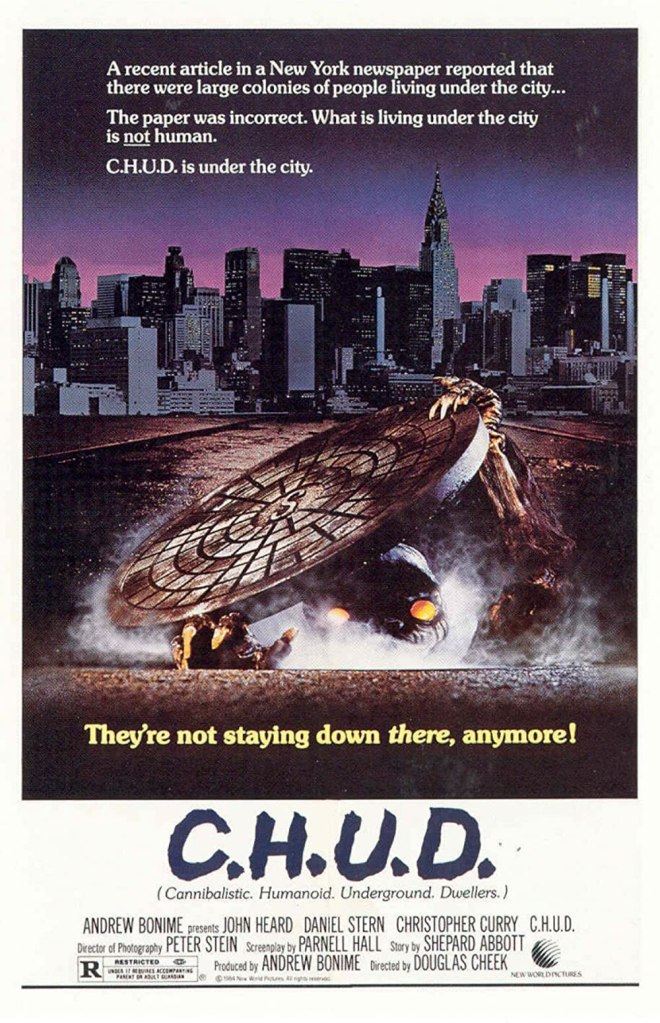
Not to mention the acronym C.H.U.D., which means multiple things (it’s a good thing that waste created what could be described as cannibalistic humanoid underground dwellers, or they would have had to scramble for new matching words), and I just love the sequence where we find out the true meaning, and it shows just how sinister George Martin’s character really is.

Christopher Curry is great, and when he was finally able to punch out the antagonist of the film, that was quality fun. Curry isn’t an actor I know, but he did really well, and I quite liked his emotional scene in the bar. John Heard (Cat People and Locusts) isn’t an actor I generally notice, but he did quite good here, and I just wish his character had more time to work with Curry’s. Playing Heard’s wife was Kim Greist (Manhunter), and when things started going down in her apartment building, she knew how to handle business.

Daniel Stern I know only from Home Alone and Leviathan, but he did fantastic, and I loved his growing working relationship with Curry’s character. J.C. Quinn was used well to move the plot a bit, and George Martin played a horrible, despicable character with great talent. We also get a small appearance from Frankie Faison (The Silence of the Lambs and Hannibal) and a longer appearance by John Goodman (Red State, Arachnophobia, 10 Cloverfield Lane, and the series Roseanne), an actor I love in pretty much anything. The first time I saw this film, I’m guessing Goodman’s appearance went right over my head, so noticing him here out of the blue was a beautiful moment for me.

The design of the cannibalistic hombres is great, particularly the glowing eyes (and at times, they reminded me of The Mole People). I enjoyed how they didn’t show us much of them – just the clawed hands popping out of the sewers every now and again – until late in the film, when we can experience them to our glory. Oh, and the soundtrack is fantastic. It’s subtle, but it’s fantastic, especially during the apartment attack.

Some movies just work. I enjoyed C.H.U.D. when I first saw it, and I enjoyed it immensely with this revisit of it. It’s a great 80’s movie, has a nice New York City vibe (as it was filmed in and under the city), and just works in ways that not too many horror films can. Highly recommended piece of 80’s cinema.

9/10

Kurutta ippêji (1926)

Directed by Teinosuke Kinugasa [Other horror films: N/A]

I’m a decently consistent guy, or at least I feel like I am. I’m not a fan of experimental films, and never really have been. Kurutta ippêji, better known as A Page of Madness, is certainly experimental, and despite perhaps being an important film, I find it a struggle to get into, and personally just can’t recommend whatsoever.

When it comes to silent films, I have a decent track record of enjoying many of them, and even the ones that are a bit light on traditional horror elements (such as Pikovaya dama), I can give a good shake. There are some experimental silent films I have struggled with – the two that come to mind are La chute de la maison Usher and Schatten – Eine nächtliche Halluzination. I could sort of get into Warning Shadows, because at least I could follow the story, but The Fall of the House of Usher wasn’t easy for me.

And unfortunately, this Japanese film is worse. Part of the problem is that the film doesn’t use intertitles. The aforementioned Warning Shadows didn’t either, but that story was easier to follow, whereas A Page of Madness, while somewhat simple in plot, just felt muddled and confused. To be sure, it was apparently not uncommon for Japanese silent films to eschew the use of intertitles (in Japan, there would have been live narration provided in the theaters by a benshi, or storyteller), but that doesn’t make modern-day consumption of this movie any easier.

Does the film occasionally have striking visuals and interesting use of avant-garde style? Very much so. Even more, Masuo Inoue gave what I imagine to be quite a good performance, despite the fact I didn’t really follow along with the story.

If I’m being honest, though, this was one of the hardest movies I’ve tried to sit through in the last couple of months. It’s perhaps not fair, but it’s true. A Page for Madness is only around an hour and ten minutes, but it felt like three hours, and when I say I almost dozed off at one point, I’m simply relaying facts, not trying to be cruel.

A Page for Madness is worth seeing if you want to see a classic piece of avant-garde, experimental cinema from Asia. I’ve always had a difficult time with experimental films, though – I despise Eraserhead, and always have – and though I’ve seen this Japanese film once and I don’t remember having that bad a time with it, this time around, I just couldn’t do it, fair or not.

3/10

The Beast in the Cellar (1971)

Directed by James Kelley [Other horror films: La tua presenza nuda! (1972)]

This is a somewhat hard film to get a gauge on. It’s true that much of the film was a bit dry and dull, but there was a bit of charm to be had in this British movie. Even so, I need to err on the side of caution, and say this isn’t really a good film.

I did find the story somewhat interesting, despite the oft-dry tone. There’s a little mystery, some okay atmosphere, and a nice setting, so by no means is it the case the movie that has nothing to offer. Problematically, though, while we do see a couple of murders, saying The Beast in the Cellar picks up speed at any point is a hard case to make.

In the final thirty minutes, we get a lengthy story from Beryl Reid’s character that lasts a good portion of that thirty minutes. It’s told well, with plenty of emotion, and during this, we do see people out searching for the animal-like man that’s been out killing soldiers. But it’s hard to say that there’s any real tension save for perhaps the final five minutes, when the killer comes to the house in the pouring rain (which was nicely atmospheric, to be sure).

Beryl Reid (who I mostly know from Entertaining Mr. Sloane) gave the best performance of the film, and she worked beautifully with Flora Robson (The Shuttered Room), who played her sister. The two of them did great, though Reid gave the lengthy confession toward the end, and got some more emotional scenes in. Smaller roles, such as those provided by John Hamill and Tessa Wyatt, were perfectly good, but as Reid and Robson were the sole focus, no one else had a chance to really stand out.

The print I watched was a bit rough, I admit. I imagine it was a VHS rip, as it was quite scratchy and very dark during night sequences. I don’t think this negatively impacted the film aside from making some things a bit harder to discern (the kills were especially somewhat rough), and it could be said the print maybe even helped give the film a bit more of a grindhouse feel.

Produced by Tigon (who were also behind producing such films as Curse of the Crimson Altar, Witchfinder General, Virgin Witch, The Blood on Satan’s Claw, and The Haunted House of Horror), The Beast in the Cellar is an okay piece of lower budget British horror. It is quite dry, but the performances are compelling even if some of the finale isn’t. It’s not a good movie, but I can’t help but see the charm this one possesses.

6/10

Tribal Get Out Alive (2020)

Directed by Matt Routledge [Other horror films: N/A]

I didn’t have great hopes when I started this British film, and those doubts were somewhat well-founded. Certainly Tribal Get Out Alive (quality title – next time, invest in some colons on IMDb) is action-packed at times, and does have fun fighting sequences, but the plot isn’t something I care for, and while okay at times, overall, it’s not a film I think I can say I liked.

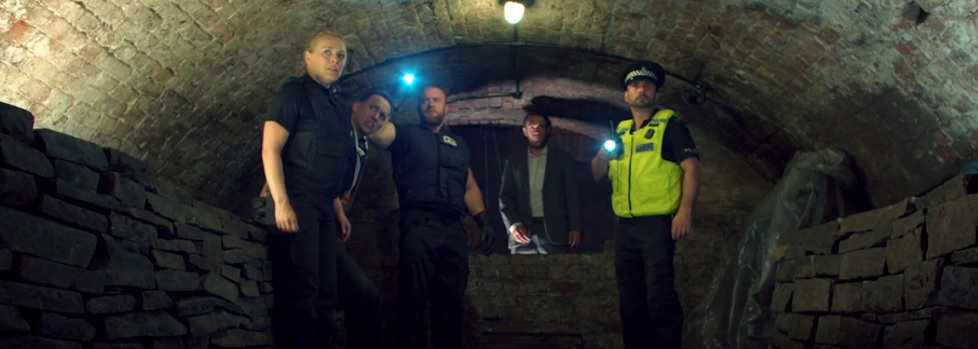
A big reason for that is the plot. It starts out okay – a bunch of private security individuals (bailiffs, they refer to themselves as) go help clear out a farm for a client. Soon, though, they run amok of someone killing their people, and before long, we learn there’s a bunch of mutated homeless people living in tunnels and they all fight with machetes and have enhanced strength and speed and there’s between forty and eighty of them and the leader has more muscles than Schwarzenegger in his prime.

Yeah, once the plot delves into a large mass of mutated people with super strength going after people with machetes, all because of a serum made by a mad scientist, I had to mentally check out of the story. It gets even worse when one of the characters we’ve been following decides to take the serum, and becomes a Final Antagonist and it was just awful.

The action is fun, though. I suspect this is because one of the two leads, Zara Phythian, has a background in martial arts. If IMDb trivia is to be believed, she is the first British martial artist to be inducted into the International Karate & Kickboxing Hall of Fame (and if you look at the list of inductees, Chuck Norris is also there, which is fun). Phythian kicks ass in this film, and it’s fun to see her fight, especially when she’s rocking a machete and slitting throats. Good times.

In fact, I do think Phythian (who has also been in The Hike from 2011 and Cannibals and Carpet Fitters from 2017) makes a solid lead. We never learn that much about her character, but the performance is pretty solid, and she brings in good credentials when it comes to the action. Ross O’Hennessy was a lot of fun too – quite a strong-looking man with a good personality, I thought he worked well with Phythian (which might be because the two worked together before, such as in the films Knights of the Damned and Dragon Kingdom).

[It’s at this juncture that I should mention Phythian, in 2022, was sentenced to eight years in prison for her role in the sexual abuse of a 13-year old girl with her husband. This happened after my review was written, and so wasn’t referenced elsewhere, but it does seem something worth knowing.]

Aside from Phythian and O’Hennessy, we don’t really have any noteworthy performances. The only other really central characters were performed by Valerie Thomas (who wasn’t really the best actress I’ve seen in recent times) and Thomas Dodd (who wasn’t the best actor I’ve seen in recent times). Luckily, most of the time is spent with Phythain and O’Hennessy, but the fact that these are the only two good performances is a bit disheartening.

The biggest problem is the plot, though. Some scenes were pretty good, such as the action-oriented ones, and there was a good scene that was perhaps ripped from Wrong Turn (two women are hiding in a cabinet while a group of mutants throw their friend on a table, rip flesh off his arm, and eat it), but a lot of the stuff in the film strikes me as uninspired and generic.

Even so, I don’t doubt that Tribal Get Out Alive can be an okay viewing experience. It has that British flair and good action, so even though it is below average, I don’t think this movie is necessarily a disaster. It’s just a far step from really standing out.

5.5/10

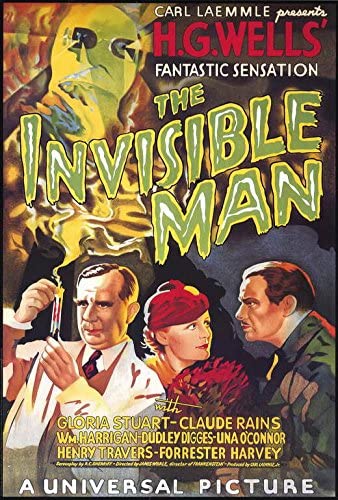
The Invisible Man (1933)

Directed by James Whale [Other horror films: Frankenstein (1931), The Old Dark House (1932), Bride of Frankenstein (1935)]

As far as Universal horror goes, The Invisible Man stands tall as a strong film. In fact, I think it’s one of the best – the story is quick-paced, the special effects are amazing even to this day, and the movie is just so damn fun.

It’s amazing just how much personality Claude Rains puts into his character of the Invisible Man. One of the drugs that allows him to become invisible also chips away at his sanity, and when he’s screaming about creating invisible armies after selling his secrets to the highest bidder, or robbing banks and throwing the money around (Money Money Money Money Money!) or causing train derailments just because he can, you know he’s lost it, and Rains gives the character so much, which is a big reason why the film is stellar.

Another is simply the design – obviously, when he’s invisible, there’s not much design there (though I’ll touch on the special effects in a second), but during the opening, when he’s in the hat and long-coat, wrapped with surgical bandages and wearing those glasses, it’s such an iconic look. The opening as a whole is A+ material – a lively inn going quiet as a mysterious bandaged fellow comes in from the snow. Great look, great opening.

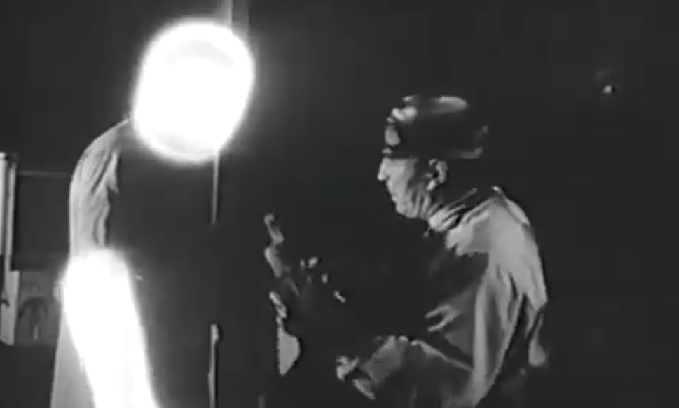
And those special effects. I’m a big movie fan (which may go without saying), but when it comes to how films are made, I’ve got nothing. I don’t know much about how some effects are done, how some shots are filmed, any of that stuff. I’m not a big behind-the-scenes guy, in short. All I can say for certainty is that the effects in this film from 1933 amaze me – it looks so damn good throughout the whole film. Every time I see this movie, I’m so impressed by what a movie of this age was able to do.

I said before Claude Rains did a fantastic job, and he really did – it’s no doubt in my mind that Rains’ performance is one of the reasons I think the movie is as good as it is. He played a character losing his sanity fantastically, and I just loved it. We only see his face for a couple of seconds, but he made this movie his bitch, as the kids say.

Others have to be mentioned, though. It’s not even the larger characters, such as those played by Gloria Stuart (The Old Dark House, Secret of the Blue Room, and Titanic), William Harrigan, and Henry Travers. They all do fine, sure, but it’s performances by Una O’Conner and E.E. Clive that gave this movie more spirit. E.E. Clive (Bride of Frankenstein and Dracula’s Daughter) is a classic, and his line “He’s all eaten away,” comes to mind often, as does the shrieks of Una O’Connor, which always gets me cracking up. While she’s been in plenty of other films, I see her face and hear her voice and immediately remember her role in The Adventures of Robin Hood (1938), which is one of the best non-horror films in history.

Because of it’s quick pace and lack of any tedious portions (which is something that, as good as they are, movies like Frankenstein and Dracula can’t honestly boast), The Invisible Man is a fantastically digestible and fun movie. I’ve loved it ever since I first saw it, and I find the Invisible Man an iconic character with an iconic design, and I really find this movie pretty much perfect.

10/10

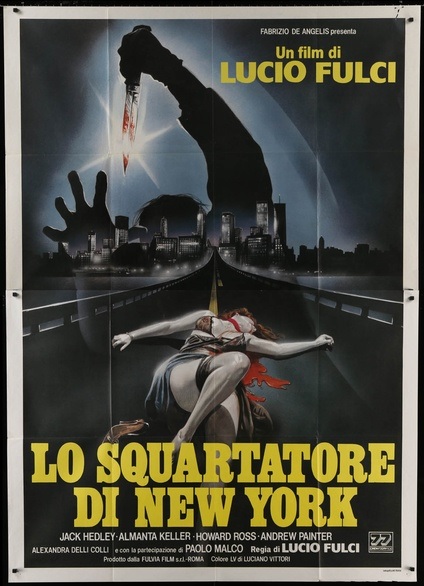
Lo squartatore di New York (1982)

Directed by Lucio Fulci [Other horror films: Una lucertola con la pelle di donna (1971), Non si sevizia un paperino (1972), Il cav. Costante Nicosia demoniaco, ovvero: Dracula in Brianza (1975), Sette note in nero (1977), Zombi 2 (1979), Paura nella città dei morti viventi (1980), Gatto nero (1981), …E tu vivrai nel terrore! L’aldilà (1981), Quella villa accanto al cimitero (1981), Manhattan Baby (1982), Murderock – Uccide a passo di danza (1984), Aenigma (1987), Zombi 3 (1988), Il fantasma di Sodoma (1988), Quando Alice ruppe lo specchio (1988), La casa nel tempo (1989), La dolce casa degli orrori (1989), Un gatto nel cervello (1990), Demonia (1990), Hansel e Gretel (1990), Voci dal profondo (1991), Le porte del silenzio (1992)]

When it comes to Lucio Fulci’s work, I’ve seen a fair amount of his better-known output. The New York Ripper, or it’s funner original title, Lo squartatore di New York, is one that I just hadn’t gotten to before. Finally taking the time to watch it, I can say I had a great time with it.

It’s a sleazy, grimy movie, with a lot of sexual situations and violence. It’s not playing for laughs (unless you, like me, cracked up during the shrieks of quacking the killer let out), and it can sometimes feel a bit bleak and occasionally almost aimless. In other words, it’s gritty fun.

Not that there’s not a story, because I actually think this has a decent plot, but it’s hard to pin-point a main character (characters played by Jack Hedley and Almanta Suska fit the bill), and there are some random side-steps (such as dealing with a woman named Jane who gets into more than a few sexual situations) that just give an interesting flow to the movie.

Most of the main performances here were decent. It’s true that some, such as Almanta Suska, Howard Ross (Five Dolls for an August Moon), and Jack Hedley (Witchcraft), failed to make a big impression on me, but I did like both Paolo Malco (The House by the Cemetery and You’ll Die at Midnight) and Andrea Occhipinti (who starred in A Blade in the Dark the following year). Occhipinti doesn’t peak until later on in the movie, but Malco, whose character we never really get too much information on, is fun as a straight-laced psychologist with fun magazine habits.

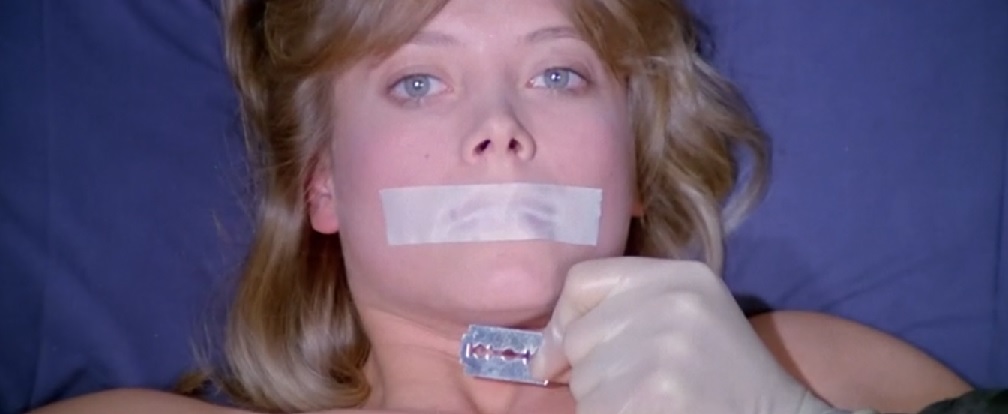
Being a Lucio Fulci film, what many may find of paramount importance is the gore, and I have to say I did love the kills in this film. You had a broken bottle stab an unfortunate woman’s vagina. And that wasn’t even the most violent scene, as we also see someone’s nipple get cut in half (in a close-up), along with someone’s eye and eye-socket come in contact with a razer-blade. This movie wasn’t playing around, and I dug the gore throughout.

Among the work of Fulci I’ve seen, I do think I enjoyed this a bit more than Zombi 2, if only because I enjoy slashers on average more than zombie movies. It’s been so long since I’ve seen The Beyond and City of the Living Dead, I can’t accurately rate either one, but I can say that with as much fun as I had with The New York Ripper, I think Don’t Torture a Duckling is still better (and for those wondering where The House By the Cemetary fits in, well, it’s not among his higher-caliber works).

I’ve wanted to see The New York Ripper for a long time, and having finally done so, I found it quite a gritty and gory film. It’s not Fulci’s best, but it is a pretty solid time, and I’d definitely recommend it to horror fans of all stripes.

8/10

Murderlust (1985)

Directed by Donald M. Jones [Other horror films: Deadly Sunday (1982), Project Nightmare (1987), Evil Acts (2015)]

Murderlust isn’t a movie that I think about often, and it’s not really worth more than a couple views in my estimation. Even so, it’s not a bad film, though it does tend to be a bit dry at times, and almost feels more like a 70’s film than one from the mid-80’s.

One strong point in this movie’s favor is the setting. Filmed partially in the Mojave Desert (in fact, the killer in the film, played by Eli Rich, is dubbed the Mojave Murderer), this has a great deserty feel. The setting is quite beautiful, and even in suburban areas, when you see more sand than grass, it just feels different than so many other films. Mikey had the same thing, but unlike Mikey, the desert plays a big part of this film (that’s where Rich’s character hides the bodies), and it just gives Murderlust a bit more feeling.

Which was badly needed, I hate to say. The story here follows Eli Rich’s character as he goes through his day-to-day life, from being a Sunday school teacher to his failed attempts to hold down other jobs, from a watch guard to a janitor. In his spare time, he kills women by strangulation, primarily ladies of the night. That is, when he’s not arguing with his bosses or his cousin and drama-like things of that sort. This movie can be quite dry, and the fact it runs for an hour and 38 minutes doesn’t help matters.

I’ll give Murderlust props for Eli Rich, though. I think he makes quite a strong lead, and has a very good, strong look (that moustache occasionally reminds me of John Ashton’s Taggart). He can go from kind and sweet to menacing and deadly quite well, and his performance does lend this one a lot of weight. Others in the film, such as Rochelle Taylor and Dennis Gannon, are fine, but it’s really Rich who is the focal point of most of this.

None of the kills are overly shocking, but they’re mostly filmed well (when they’re filmed at all – a couple are just off-screen) and they get the job done. As it is, Rich’s character has a pretty decent body count, and he does have some rather young victims (one of whom he forces into pleasuring him), so if they focused a little more on the kills than his day-in-the-life drama, he could be a quality threatening force.

As decent as the central performance is though, Murderlust is still a bit dry. It’s luckily not that bleak – Rich’s character has a bit of a cavalier attitude when it comes to his personal and business relationships, which does lead to some amusing scenes – but it can be as arid as the desert they filmed this in. It’s still worth catching at least once, but I have to say, now that I’ve seen it twice, I don’t know if it’s a film I’d want to see again anytime soon.

6.5/10

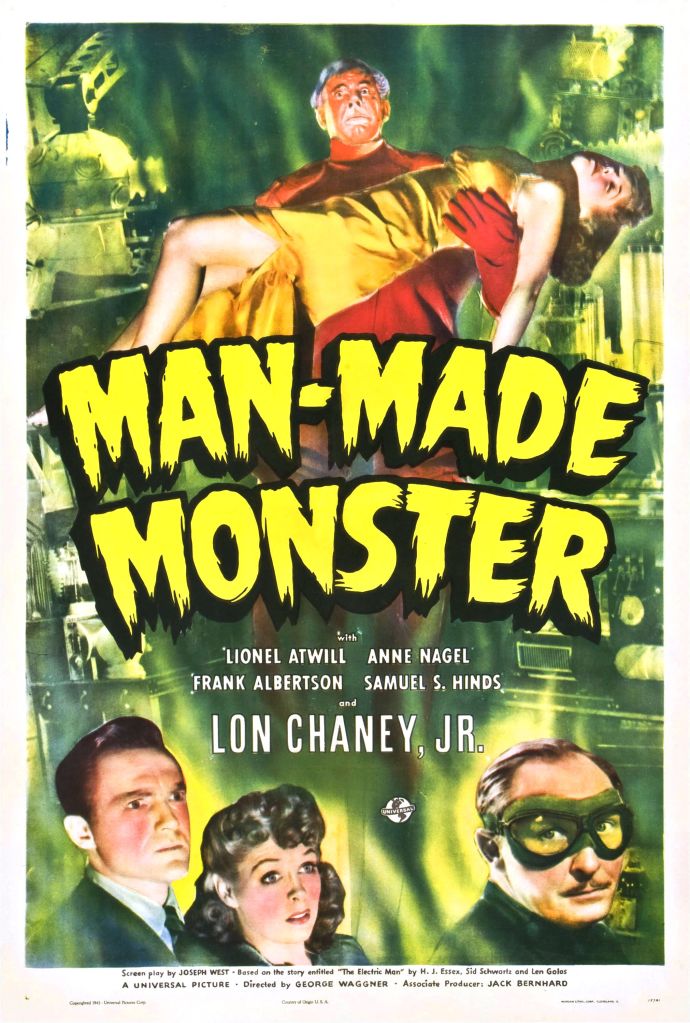
Man-Made Monster (1941)

Directed by George Waggner [Other horror films: Horror Island (1941), The Wolf Man (1941), The Climax (1944), Jack the Ripper (1958), Destination Nightmare (1958), The Veil (1958)]

This is like so many horror films from the 1940’s – a perfectly fun and competent attempt, but ultimately just around average. The story isn’t that shabby, and there are some nifty effects to be sure, but Man-Made Monster isn’t exactly what I’d call memorable.

If those in the horror community hear about this one at all, it may be due to it being the first horror appearance of Lon Chaney Jr. (he of course later starred in The Wolf Man, and went on to appear in such films as The Ghost of Frankenstein, Son of Dracula, and a personal favorite, Indestructible Man), and he does a fantastic job playing a folksy country boy. He is pretty damn sympathetic because he’s such a nice guy, and when he’s used in some experiments by a mad scientist and starts killing people, that can’t be a fun time for his character.

Even without Chaney Jr., though, the cast here is strong. Lionel Atwill (of plenty of films, such as Mystery of the Wax Museum, Murders in the Zoo, Secret of the Blue Room, and Doctor X) was great as a mad scientist who wanted to use those he considers useless as electrical zombies. Others, such as Samuel S. Hinds (The Strange Case of Doctor Rx) and Anne Nagel (Black Friday, The Mad Doctor of Market Street, and The Mad Monster) bring a little bit to the film also.

The story is somewhat similar to The Walking Dead, only Boris Karloff was probably quite a bit more sympathetic there than Lon Chaney Jr. is here. Either way, it’s a tragic tale of an innocent man being misused by science, and in this case, Chaney Jr. is given high doses of electricity, and becomes a glowing danger to all around him. The effects looks pretty awesome – just imagine a flashing outline of electricity surrounding someone – and for being a somewhat cheaper Universal movie, they did a good job.

I have to say, though, I abhor the ending. After everything goes down, Atwill’s complicity is never examined. Oh, a few characters know that he administered the experiments on Chaney Jr., and they have proof in the form of his notes. But instead of clearing Chaney Jr.’s name (as he murdered multiple people while under Atwill’s control), because they’re scared the experiments could be repeated, they chuck the notebook into the fire. I found that abhorrent, and I condemn the both of them, or as much as I can condemn fictional characters from a horror movie from the early 1940’s.

Otherwise, Man-Made Monster is pretty good. I enjoy the different time lapses, and I think Lon Chaney Jr. does a real swell job. For a first-time horror role, you definitely root for his character. The movie may not be great, but it’s a solid watch if you’re into classic horror.

7/10