Rabid (1977)

Directed by David Cronenberg [Other horror films: Shivers (1975), The Brood (1979), Scanners (1981), Videodrome (1983), The Dead Zone (1983), The Fly (1986), Dead Ringers (1988), Naked Lunch (1991), eXistenZ (1999), Crimes of the Future (2022), The Shrouds (2024)]

Given this was a David Cronenberg film, I went in with mild apprehension. I’ve not seen a ton of his films, but out of the ones I have seen (Videodrome, The Brood, The Fly, and Shivers), I’ve only really liked Shivers. Rabid isn’t quite as enjoyable as Shivers is, but I did find it a pretty satisfying and almost time-relevant film.

It took a little while to get going, and at first I thought that most of the mayhem would be centered around the plastic surgery clinic in a localized fashion, but as the movie went on, the battleground against a mysterious virus became the whole of the city of Montreal, which I thought led to some pretty tense scenes. Just seeing multiple scenes of a city under martial law in order to combat the growing virus was great, and gave a great sense of urgency, and it was all so natural in the film.

Perhaps one of my favorite scenes is earlier on, though, right after one of the characters goes crazy at the plastic surgery clinic, and police are investigating the crime. There’s something about it that seems real, organic, with a lot of moving people and some characters walking in and out without even being stopped by police, getting separated and seeing the extent of the craziness.

I have to admit that the two main performances, those of Frank Moore and Marilyn Chambers, left something to be desired. Certainly toward the end, Chambers had some good moments, but neither of the two really did that much for me. Joe Silver (who was also in Shivers, but I forget to what extent) played a fantastically nice guy, and we got our eye candy with Susan Roman (most people would think that Chambers, who has a handful of nude scenes was more attractive, but Roman and the glasses she wears does something to me). No one else in the cast stands out one way or the other.

Like I said, Rabid started out a bit slow to begin with, and it does deal with body horror which is a sub-genre I’ve never much cared for, but during the second half of the film, the larger focus seems to be on the pandemic spreading across Montreal, and the horrors it brings (armed guards standing around the mall, innumerable garbage trucks to pick up dead bodies, people forced to wear Ids identifying them as getting a preventative vaccine), and it just hits harder given that I’m writing this in October of 2020, with COVID still very much a concern to most people.

This movie isn’t at all perfect, but for a Cronernberg movie, I enjoyed it far more than I’d have expected, and it’s definitely worth checking out if you’ve not already.

7.5/10
The Toolbox Murders (1978)

Directed by Dennis Donnelly [Other horror films: N/A]

Certainly a movie that’s steeped in the 1970’s, The Toolbox Murders has a pretty fun idea and I think it does an okay job with it, but it’s possibly not the type of movie that people might be expecting.

At first, much of the film follows a standard slasher route, what with a  killer dispatching multiple women in bloody ways. The killer’s wearing a ski mask, and it almost seems a mystery as to who he is. But The Toolbox Murders isn’t that type of movie, and before long, we find out who the killer is and why they do the killing, with the rest of the film being a brother investigating the disappearance of his sister.

That might not sound like a great tonal shift, but honestly, I think it works out fine. We got some pretty solid kills in the first thirty minutes or so, so when it switched over to a girl being held captive by the killer, it felt natural enough. The killer was certainly pretty well-acted, and his religious mania was nicely laid out (in fact, he has a five minute dialogue – just him rambling on – which really shows where his mind’s at).

Not all of the acting is that great, though. I thought that Nicolas Beauvy and Wesley Eure were reasonable, and Eure added something a bit unique toward the end of the film, but neither were going to win awards over this. Cameron Mitchell (who starred in many horror films, such as Blood and Black Lace, Haunts, and The Demon) was pretty solid throughout, of course, but playing the abducted woman, Pamelyn Ferdin didn’t really feel alive until the finale.

The finale itself was interesting, though, with a few story shifts added in. I wouldn’t call any of them terribly shocking, but it did give the movie a bit of a jolt following twenty or so minutes of somewhat dry drama. Certainly, being this is a 70’s film, everything here is played straight, even the sillier stuff in the end that maybe shouldn’t haven been, but you have to appreciate the decade for sticking to it’s guns.

One notable thing I really liked here was the music, much of it of the country vein, but still pretty good. “Pretty Lady”, a duet sung by George Deaton and an unidentified woman, worked beautifully during a scene in which a woman was about to be killed off. It lent the film something special, especially given how cheap much of the movie feels anyway.

I know that some people out there find The Toolbox Murders a classic, and though I wouldn’t go that far, I do think it’s a pretty good movie, and it stands up about as well as it did the first time I saw it years back. Some quality gore, an interesting conclusion (and in fact, that lengthy, final shot of someone walking was actually quite moving in a way, believe it or not), nice music – I’m definitely a fan.

7.5/10

This is one of the films covered by Fight Evil’s podcast. Listen below as Chucky (@ChuckyFE) and I discuss The Toolbox Murders.

Communion (1976)

Directed by Alfred Sole [Other horror films: Pandemonium (1982)]

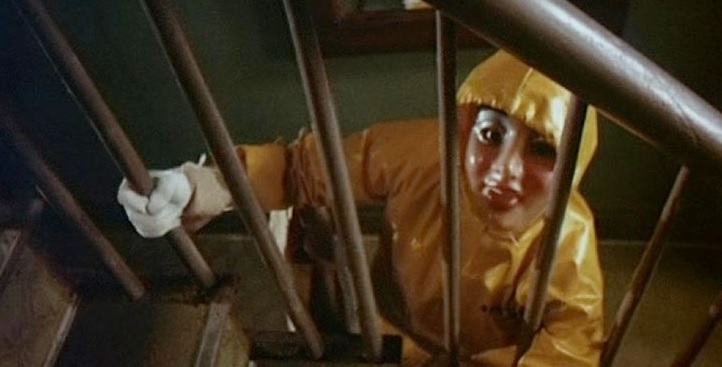
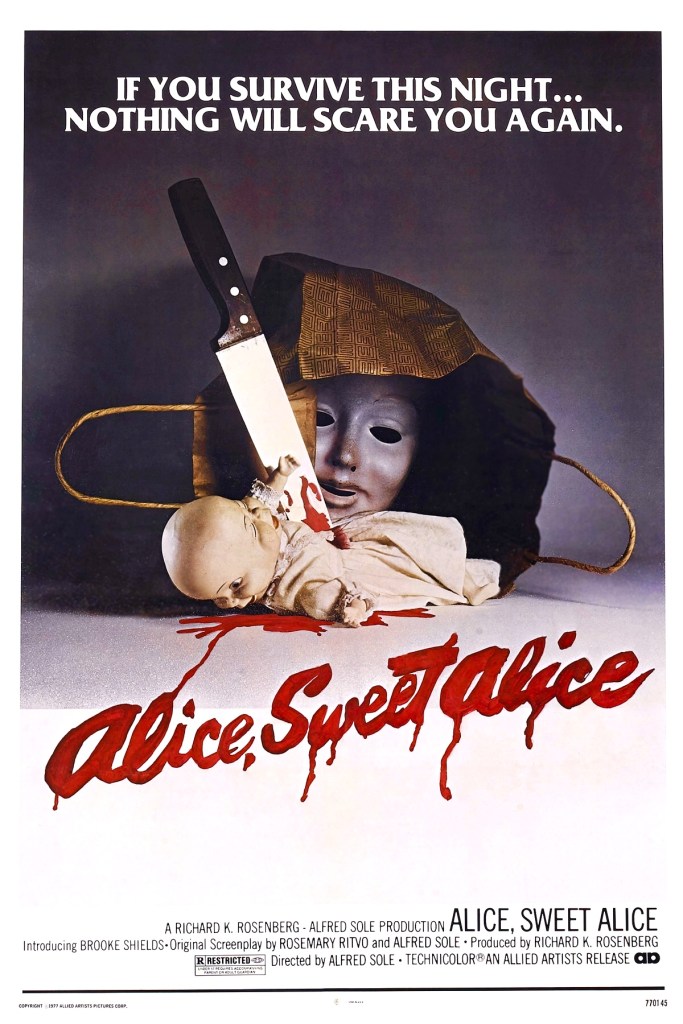
Certainly a proto-slasher classic, at times almost feeling like an American giallo, Communion (more commonly known as Alice, Sweet Alice) is definitely a worthwhile and interesting film, and worth the watch if you’ve not yet seen it.

Like many 70’s films, there is a chance some of the material could come across as dry, but personally, I think the story here was interesting enough to combat some of those inclinations. It also helps that the mystery of the killer is an engaging one, and though we happen to find out who the killer is with around thirty minutes left to go, the mystery still holds up.

Another aspect that I can’t help but give kudos to is the gritty setting. This isn’t a high-budget film, and it really shines due to it. The broken down city, what with empty factories and other industrial constructs, really gives the movie additional feeling. Assisting with the gloom is the heavy rainfall, and I think it does wonders to the atmosphere of the film.

With plenty of competent and compelling performances all around, it’s hard to point to any one actor or actress as the best here. Certainly Linda Miller and Rudolph Willrich work well together, and Willrich’s scenes with Niles McMaster (of The Incredible Torture Show) positively stand out. Mildred Clinton gives a great performance of a character with quite a lot of emotional punch, and you can’t forget Alphonso DeNoble, who’s atypical physical appearance and sleazy behavior really allows him to stand out.

Oh, and of course, playing Alice, there’s Paula E. Sheppard, who, amazingly, despite playing a 12-year old girl, celebrated her 19th birthday during the shooting of the film. She certainly doesn’t look it, and I think she gives off a great performance, especially early on when there’s still some mystery surrounding the mysterious deaths of those around her.

Of course, what would a review of Communion be without talking about the deeply religious nature of the film? I was raised Roman Catholic, and though much of that is far behind me, I did enjoy seeing much of this carnage play out around parishioners of the Catholic church. Some see this film partially as an attack of the church, but that needn’t be the case. Some of the mayhem occurred due to religious reasons, to be sure, but there are good and bad people throughout the film with Catholic leanings, so I think some calling this an indictment upon the church may be over-reacting.

Like I relayed in my review of Children of the Corn, among other films, religious mania, leading to violence, is especially horrifying because, at least in the USA, it’s very much a possibility. In Children of the Corn, Isaac and his peeps thought age inevitably led to moral corruption, and so logically made the move to kill them before reaching that age. Here, the killer has a perfectly logical reason, at least in regards to their beliefs, for the actions they take, and when such atrocities can be defended due to religious beliefs, and there’s no chance to possibly break through to them, that’s a good show of the real world coming into the film.

Communion, or Alice, Sweet Alice, isn’t a perfect film, but I do think it’s an exceptionally strong one, and really fits in with the gritty and serious nature of 70’s horror. In fact, had this been made even five years later, I think it would have been a significantly different film, so I’m happy that this was made when it was, as it encapsulates much of what I love about that time period. The kills aren’t the focus, but they’re solid when they pop up, and I love the mystery here. Definitely a classic that’s worth a watch.

8/10

This is one of the films covered by Fight Evil’s podcast. Listen below as Chucky (@ChuckyFE) and I discuss Alice, Sweet Alice (or Communion, if you’re partial to original titles, brah).

Burnt Offerings (1976)

Directed by Dan Curtis [Other horror films: House of Dark Shadows (1970), Night of Dark Shadows (1971), The Night Strangler (1973), The Norliss Tapes (1973), The Invasion of Carol Enders (1973), Scream of the Wolf (1974), Dracula (1974), The Turn of the Screw (1974), Trilogy of Terror (1975), Dead of Night (1977), Curse of the Black Widow (1977), Intruders (1992), Trilogy of Terror II (1996)]

Ah, good ole’ Burnt Offerings.

I can imagine that to a modern-day audience, Burnt Offerings can come across as overly drawn out and unnecessarily lengthy. At almost two hours long, one could almost see their point, were it not for the fact that Burnt Offerings is fantastic from beginning to end.

Ever since I first saw this one, it stuck with me long after I saw it. To be sure, a large part of this was due almost singularly to the character of The Chauffeur (Anthony James), who has been my Twitter banner, and occasionally my avatar on various sites, since seeing this, but even ignoring what a great character James was, the story’s slow pacing and steadily increasing unease is some of the best slow-burn I’ve seen in a long time.

Another thing that can’t go unmentioned is the stellar cast. Karen Black and Oliver Reed (Paranoiac) do phenomenally, Reed in particular during the pool sequences. Of course, Burgess Meredith was nice to see in his brief scenes, and I’ll talk more about Anthony James’ performance shortly, but I think the real star here, once you get past Black and Reed, would be Bette Davis.

Though close to 70 at the time this movie came out, Davis was just fantastic as a strong, older woman full of energy only to find that, the longer she stayed at the house, the more she felt drained. She became forgetful and fearful, and her youthful exuberance dissipated almost entirely. The argument she had with Black’s character about whether or not she turned the heat on in the room of Black’s son was a tense one, and really showed the strength of both actresses present. Davis, of course, also starred in both What Ever Happened to Baby Jane? and Hush…Hush, Sweet Charlotte, both of which are very much classics themselves.

Anthony James’ The Chauffeur didn’t pop up that often, but pretty much every time he did, talk about tense scenes. It’s amazing that a character with no dialogue and so few on-screen sequences can make such an impression, but James managed it, and managed it beautifully. His scenes are great, and whenever he pops up, you’re in for a heart-racing time.

Are there some unexplained questions? Sure, and even the ending, while pretty solid, probably could have been cleaned up a little, but at the same time, I thought it gave a fantastic element of suspense, and though I didn’t end up loving the conclusion, I definitely felt that it was still worth the wait.

All-in-all, Burnt Offerings is probably one of my favorite of the more traditional haunted house films, beating out great films (The Innocents, though to be fair, this is more of a tie) and others (The Legend of Hell House, 1963’s The Haunting) to really stand out solidly for both the decade of the 1970’s and the genre overall.

8.5/10

This is one of the films covered by Fight Evil’s podcast. Listen below as Chucky (@ChuckyFE) and I review Burnt Offerings.

The Incredible Melting Man (1977)

Directed by William Sachs [Other horror films: South of Hell Mountain (1971)]

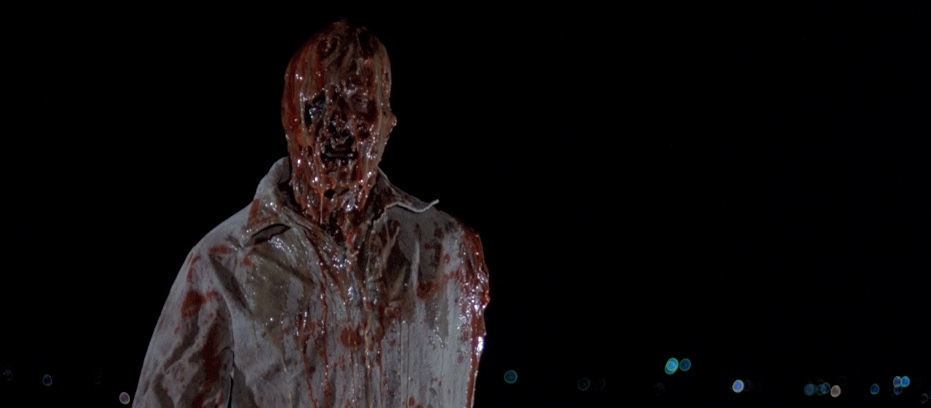
So I’ll give this movie an A+ insofar as the special effects are concerned. Very solid, gooey, slimey stuff. Beside that, though, this is an utterly dull movie with very little going for it.

Really, the title appropriately pulls you in, but the movie’s not necessarily schlocky or anything. It has that very serious 70’s tone (save for a little comedic relief thrown in by Edwin Max’s and Dorothy Love’s characters) that’s dry as all hell, and while I sometimes appreciate a somber atmosphere, I was more bored than anything. In fact, it reminded me slightly of the awful Another Son of Sam, though this wasn’t quite as bad.

It was still bad, though. Honestly, Edwin Max and Dorothy Love are the only two characters here with, well, character. Burr DeBenning, Myron Healey, Ann Sweeny, Michael Alldredge, Lisle Wilson – all boring as hell. I don’t know how much any of them can be blamed, but boy, talk about stilted performances. Cheryl Smith gave us a little nudity, though, so kudos to her.

Like I said, the special effects here are certainly worth seeing. Even the conclusion is more somber than you’d expect, so there’s a little here that almost make it worth the trouble, but that may be a bit generous. The special effects were great, but when the story’s so damn dull, it doesn’t really make a difference.

The Incredible Melting Man certainly had a melting man in it (and when he fully melts toward the end, again, it’s impressively depressing), but it’s not near as fun a story as you might hope. There were some unintentionally funny scenes (such as that slow-motion run near the beginning), but more often than not, it’s just an excruciatingly slow movie, and save the effects, really isn’t worth it.

4/10

This is one of the films covered by Fight Evil’s podcast. Listen below as Chucky (@ChuckyFE) and I discuss this one.

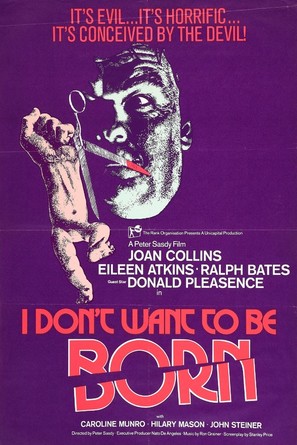
I Don’t Want to Be Born (1975)

Directed by Peter Sasdy [Other horror films: Journey Into Darkness (1968, segment ‘The New People’), Taste the Blood of Dracula (1970), Countess Dracula (1971), Hands of the Ripper (1971), Doomwatch (1972), The Stone Tape (1972), Nothing But the Night (1973), Witchcraft (1992)]

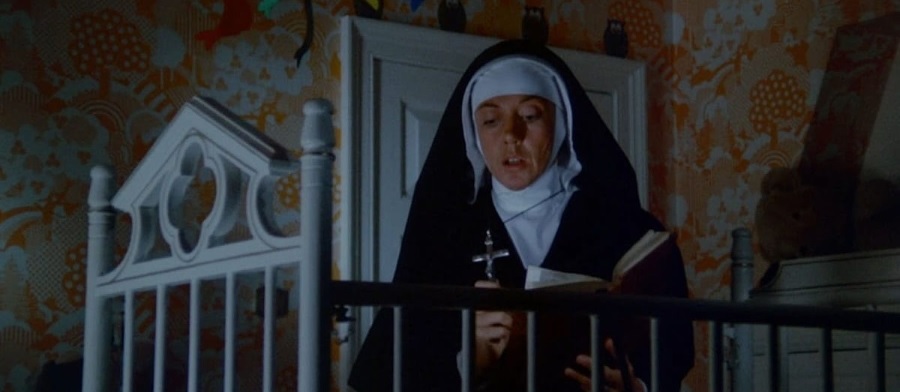
Known under various titles (among them The Devil Within Her and, most mystifying, Sharon’s Baby), I Don’t Want to Be Born isn’t among the highlights of British output in the 1970’s. I think the movie’s moderately enjoyable, truth be told, but it’s not exactly good, and I think many would be able to see the shortcomings the film possesses.

Chief among them, in my view, is the lack of cohesion. A dwarf puts a curse on a woman’s baby, but aside from that single scene (and in fact, it happens before the woman in question is even pregnant), we get nothing more. Yet come the end, it seems as though the baby and the dwarf are inexplicably connected. We’d only seen this dwarf character (played by George Claydon) a handful of times, and for the most part, he seems a normal guy.

In a way, though, I can let it go. I wish we got a bit more information, but it’s not something that dramatically decreased my enjoyment. There was still a high enough body count and decent enough performances to keep me reasonably entertained.

Of anyone, Donald Pleasence was the nicest to see. He didn’t have the biggest role, but I enjoyed his screen presence, especially his conversations with Eileen Atkins, who was my second favorite here. I don’t know the actress, but for a nun, I found her fun. This isn’t to take away from Joan Collins (Tales from the Crypt), who did a pretty good job, or Hilary Mason (Dolls and Meridian), but Pleasence and Atkins stood out the most.

Many of the kills here weren’t that strong, but a few were solid in ways reminiscence almost of The Omen (which this movie predates by a year), such as a woman hitting her head and drowning or a guy getting hung from a tree. The best death, by far, was a decapitation toward the conclusion. It wasn’t particularly gory, but the scene was fun.

Nowadays, despite the fact that this film (again, like many movies from the 1970’s) was played straight, I Don’t Want to Be Born can come across as both a little silly and sometimes overly dramatic. The ending lacks the pizazz you’d hope for, but even if it was tidied up a bit nicer, the film still would have been on the lower-end of British cinema.

That said, I did like it more this time around as opposed to when I first saw it. I don’t think it’s significantly better, but there was charm in seeing the bustling London streets, and in a film with an evil baby a year previous to The Omen (at the time of this writing, I’ve not yet seen It’s Alive from ’74 – edit; I have), it was nice to see most of the cast being on the same page about the nature of the baby.

Is the film still below average? Yeah, I’d say so, but I can also see myself watching this a third time without much consternation, so that must mean something.

6/10

This is one of the films that has been covered on Fight Evil’s podcast. If you want to hear Chucky (@ChuckyFE) and I discuss I Don’t Want to Be Born/Sharon’s Baby/The Devil Within Her, look no further, brahs.

Black Christmas (1974)

Directed by Bob Clark [Other horror films: Children Shouldn’t Play with Dead Things (1972), Dead of Night (1974), Murder by Decree (1979)]

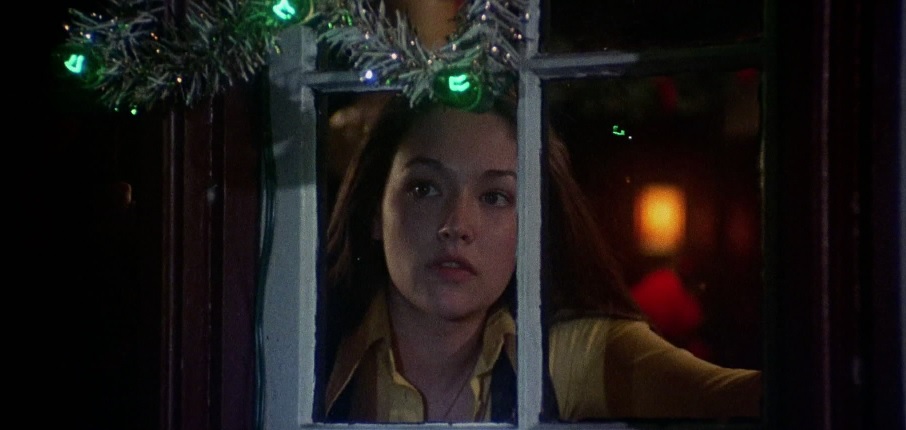
This is a true classic of the genre, and one of the first real slashers, coming out four years before Halloween. It’s a movie that, to be honest, I’ve only seen once before sitting down and revisiting it, but that doesn’t mean I don’t adore Black Christmas and the approach the movie took.

While it could perhaps rightfully be said that the plot here isn’t anything to celebrate that heavily, Black Christmas was one of the first movies to really throw together your typical slasher situation. Sure, a few movies prior had similar ideas (such as the British oddity The Haunted House of Horror, also known as Horror House), but this one cemented many of the core elements (including the final girl finding bodies of deceased friends and a first person point-of-view from the killer). The plot may not read like anything special, but it really is.

And taking a step back from the importance of the movie itself, the cast here holds some rather interesting faces, among them Olivia Hussey and John Saxon. Hussey, I won’t lie, I know purely from the 1990 mini-series It, but she looks pretty much the same, and I just loved seeing her here. Saxon’s been in quite a few horror films, A Nightmare on Elm Street being the finest, and he too brought a lot to the film, though he was far from a central character.

Lynne Griffin was one of the earlier casualties in the film, but given she played one of the main characters of the slasher Curtains nine years later, it was, much like Hussey, fun to see her. Both Margot Kidder and Marian Waldman were solid in this too, though Waldman’s character was mainly for comic relief, which, while funny, did feel off at times.

It is true that there’s not many great kills here – the best one, and I think this is beyond dispute, would be the stabbing with the glass unicorn, which was well-done due to it being spliced in with Christmas carolers blocking out the screams. The death wasn’t amazing, but I think it was still solid. What’s more effective is how an early victim in the film would keep popping up, just a body on a rocking chair with her head wrapped in plastic (which, if it sounds familiar, I’d recommend you check the poster). Not sure why, but that just had a creepy aura to it.

Another aspect that certainly merits mention is the somber finale. It’s not entirely dreary, but it is definitely downbeat, and I think that final scene is one of the more memorable things about the movie. It’s a good cherry on top of an already delicious dessert.

I said at the beginning, though, that Black Christmas isn’t perfect. When I think of 70’s horror I love, Black Christmas doesn’t often make my top ten or fifteen. No doubt it’s a good movie, not to mention an important one, but it’s never been my go-to. That said, if you’ve not yet seen this one, I highly recommend giving it a watch, because it’s well-regarded by many for good reason.

8/10

This is one of the films covered on Fight Evil’s podcast. Listen below as Chucky (@ChuckyFE) and I discuss this one.

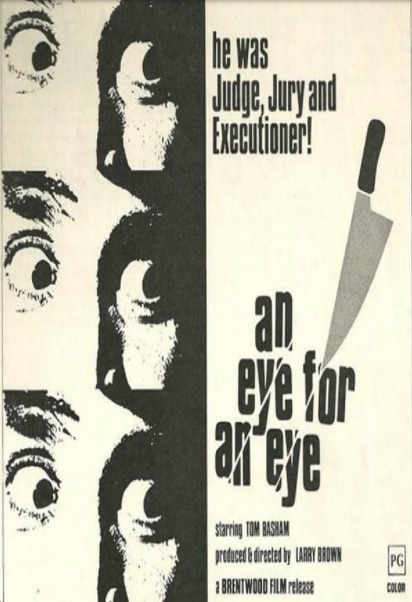
An Eye for an Eye (1973)

Directed by Larry G. Brown [Other horror films: N/A]

Ever since I first heard the plot to this one (from IMDb: A children’s television show host stalks and murders abusive parents), An Eye for an Eye was an obscure flick I rather wanted to see. Finally having done so, I can’t say that much about the movie surprises or amazes me, but it’s a tolerably dreary, pretty somber film, and definitely a product of the 1970’s.

Sometimes known under the title The Psychopath (not to be confused with the 1966 Amicus movie), An Eye for an Eye isn’t a well-known film, which is a bit of a shame, because I think the idea here is a good one. It’s not a great movie, but I definitely appreciate the atmosphere of the film, so it has to get some credit.

The biggest disappointment here are the kills. I guess more specifically, the lack of gore, because some of the kills themselves are decent. However, when a woman gets ran over by a lawnmower, you sort of expect to see something, but no such luck. Another abusive parent got her back massacred by multiple swings of a hatchet, but again, no blood. This isn’t deeply detrimental, especially given the available print (with, for some reason, Greek subtitles) is already rather shoddy, but still, it stuck out to me.

On a positive note, Tom Basham’s performance as the host going after abusive parents was spectacular. Playing a character with some type of developmental disability, he really connected with kids (and often spoke in much the same way), and he had a good heart, and really, his show (which included puppet shows) was probably quite fun for kids. When he finds out that some kids are abused by their parents, he becomes reasonably upset, and goes after them, which I thought was a positive move.

Being a 70’s movie, An Eye for an Eye takes child abuse very seriously, and there’s a scene in which a nurse is showing a detective the impact of abuse that was really pretty touching (as it so happened, Basham’s character was in earshot of this conversation, which spring-boarded his revenge scheme). What’s more, because abuse is cyclical in many cases, the ending of the film goes a very somber, totally 70’s route, which, had the movie been more well-known, would probably come across as controversial.

Unfortunately this movie’s not that well-known, and it seems that those who seek this out tend to do it due to the fact it’s John Ashton’s first movie. Ashton, of course, is best-remembered for his role in the Beverly Hills Cop movies, and somewhat amusingly, though this came out 11 years before the first movie, he looks pretty much the same here (and also does a few things that, as a police officer, should definitely have got him fired), It’s interesting to see him here, but I don’t know if it’s worth seeking out just for his relatively small role.

As decent as aspects of An Eye for an Eye are, it does begin to drag a bit toward the end. There was a scene I enjoyed, in which a father is about to be killed, but then reveals that he’s definitely not okay with child abuse, and so Bashman’s character lets him live (he may have been mentally unstable, but at least he was consistent). Overall, I wouldn’t say the movie is that great, but it is a nice example of the 1970’s style of horror, and if the plot tickles your fancy, there’s no reason not to throw this one more attention.

6/10

Blacula (1972)

Directed by William Crain [Other horror films: Dr. Black, Mr. Hyde (1976)]

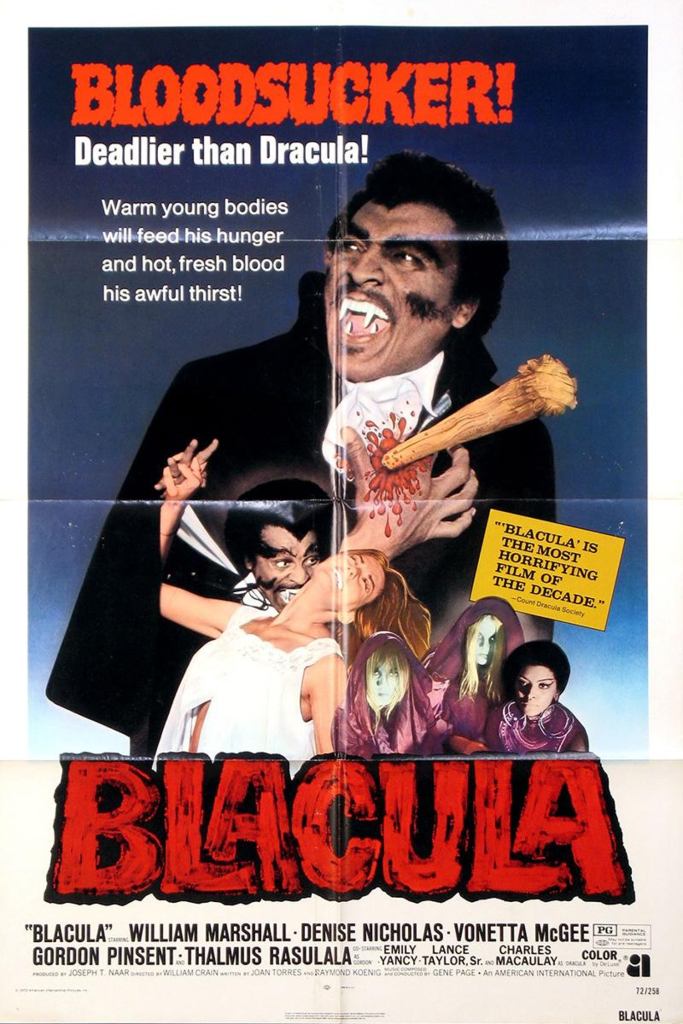
Despite the ridiculous title, Blacula plays itself as straight as any other 70’s horror, and while the movie’s not great, it’s okay, and if you’re into vampire films and have overlooked this one, I’d recommend another look.

The story here is pretty interesting, and casts a very sympathetic light on William Marshall’s vampiric character. Attempting to stop the trade of Africans, William Marshall plays an African Prince who speaks to Count Dracula, who refuses and turns the Prince into a vampire. He returns 200 years later, and the snazzily-dressed Marshall goes after a woman who reminds him of his late wife.

Blacula, as it was shot on location in L.A., really has that 70’s feeling that I appreciate. There’s some socially conscious dialogue I appreciated (such as Rasulala’s mentioning that crimes against African-Americans aren’t focused on near as much as crimes against whites), though their depiction of a homosexual couple (which was progressive for the time, to be sure) was certainly cringe-worthy. Still, credit to Ted Harris and Rick Metzler for playing (however stereotypically) a biracial gay couple.

William Marshall does quite well as a vampire here. Like I said, you can sort of feel for his character, and while he does cause multiple deaths throughout the film, you can’t help but feel just a bit sorry for him, because you can tell from the beginning of the movie that he’s a good person. Marshall had a strong personality here, and it did wonders for the film.

Also doing wonders was the main protagonist, played by Thalmus Rasulala. A pathologist for the police department, his character really commanded his screen-time, and much like how you couldn’t help but feel bad for Marshall, I couldn’t have stopped myself from cheering for Rasulala for anything. He kicked ass, sucker-punched some vampires, and really put in his all.

While it’s true that the presence of Gordon Pinsent, Denise Nicholas, and Vonetta McGee are appreciated, the only other actor that stands out here is Elisha Cook. When I first saw this film, I immediately recognized him as Pritchard from House on Haunted Hill. He definitely looks a bit older here, but he has the same face, so it was sort of nice to see him 15 years older than I usually do.

I think that, if Blacula has a main problem, it’s the lack of scares. There was a pretty good graveyard sequence, and also a scene that took place in a warehouse in which twenty or so vampires jump the main characters, but otherwise, I didn’t really get a big feeling of dread here.

Even so, there’s some funky music here (just look at that animated title screen), and the songs we heard at the club (‘There He Is Again‘ and ‘I’m Gonna Catch You‘ are both performed by The Hues Corporation, a soul trio from the 1970’s) were just really catchy, despite it not really being the type of music I generally gravitate toward at all.

All-in-all, Blacula’s not a great movie, but it can be fun, and it gets the job done competently enough, along with possessing an interesting story. As far as blaxploitation horror goes, I have to suspect this is one of the better ones, and may well be worth a watch in spite of it’s flaws.

7/10

The Evil (1978)

Directed by Gus Trikonis [Other horror films: The Darker Side of Terror (1979), She’s Dressed to Kill (1979), Dance of the Dwarfs (1983)]

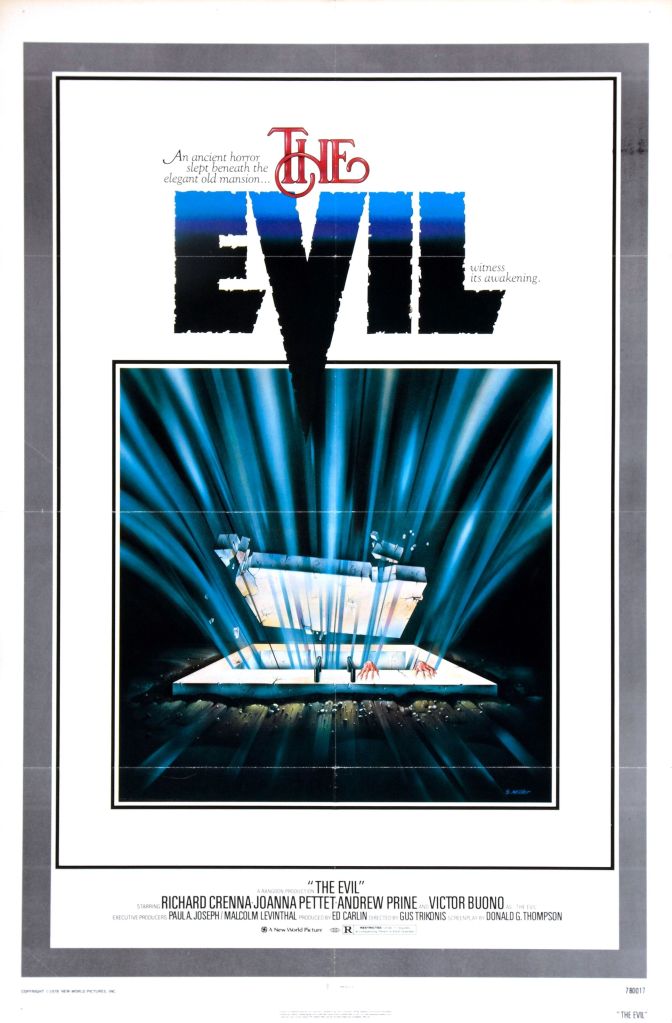
I’ve seen The Evil once before, but to be entirely honest, it’s been so long that almost all of this seemed new to me. There was only a single scene I even marginally remembered, which was perhaps one of the better scenes in the film, but otherwise, I don’t think The Evil really turned out that great a movie.

The main problem here was that the film was rather dry and none too exciting. I liked the idea behind the plot (as generic as haunted houses tend to be), but when the excitement starts up, very little of it really makes that much of an impact on me. I think that without the saw blade scene and the finale, this would be a lot more forgettable, but even with those two sequences representing, there’s not a whole lot going here.

Victor Buono makes a small appearance toward the end, and I sort of liked him here, but given the short amount of time we spend with him, he can’t lift the whole of the film up. Richard Crenna (who also starred in the similarly dry Death Ship) reminded me of John Ritter throughout the movie, which was nice, but otherwise, I didn’t find him that engaging a main character. Both Joanna Pettet and Mary Louise Weller stood out decently, Pettet playing a strong female lead, and Weller being the eye candy (especially in that red shirt).

Otherwise, there’s a bunch of people here who make virtually no impression, and we don’t really get to learn that much about any of these people. If you can keep their names straight, more power to you, but as most of them die throughout the film (and the exact people you expect to survive do so), I don’t know if that really accomplishes much.

I wish I remembered my feelings toward this one when I first saw it. Personally, I’d guess that I probably found it worse this time around, as the story and setting (a creepy, rather large mansion) do possess a small amount of charm, but I was pretty bored during this one. The Evil had potential, and I think that the film could have been good, but this final product is very much a lackluster one, no matter how fun Buono or the saw blade scenes are.

5.5/10

This is one of the films covered on the Fight Evil podcast. If you want to hear Chucky (@ChuckyFE) and I discuss this one, look no further: