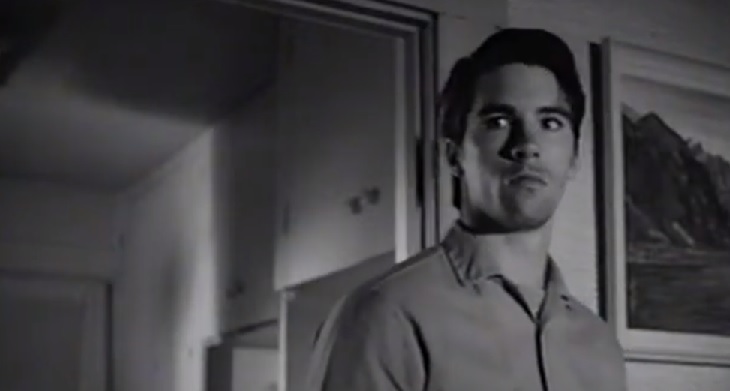
Weekend of Fear (1966)

Directed by Joe Danford [Other horror films: N/A]

Okay, this is an interesting one.

Weekend of Fear has a pretty generic plot – a young woman (Mikki Malone), following an argument with her fiancé (Tory Alburn), finds that she’s being stalked by a mysterious man (Kenneth Washman). And that’s it – it’s a short film, running at about 65 minutes, and much of it is Malone’s character trying to hide from Washman’s, all the while wondering what the threatening man wants.

Based on that plot, Weekend of Fear doesn’t have much going for it, that is, unless it was overly suspenseful, and I hate to say it wasn’t. It’s the execution of that plot that makes the movie stand out more. It doesn’t make the movie good – it just makes it noteworthy.

What’s also noteworthy is the fact that this was a lost film for a long time. I watched what seemed to be a VHS rip on YouTube, so how this was released on VHS at one point, yet was lost for decades, is beyond me, but there you go. So lost was this film that, even now, after it’s been unearthed since June 11th, 2021 (the date of said YouTube video), it has only 22 votes on IMDb, and watched by only 19 members of Letterboxd.

So we have a previously-lost black-and-white film with a somewhat basic plot, and the way they chose to do the dialogue gives it an extra notable feature. See, most of the dialogue here is first-person narration, being the thoughts of the main character (Mikki Malone). A couple of other characters have their thoughts examined, but it’s 98% Malone’s.

What dialogue isn’t first-person thoughts is obviously dubbed afterwards, and it’s always awkwardly done. There’s a “conversation” at the end of the film that doesn’t feel remotely like a real conversation because of this.

It’s an odd, clearly lower-budget film. I appreciate that it has a regional feel, and seems to have been filmed in California, but that doesn’t make the film itself any better. Even at 65 minutes, it felt like it was dragging, and the suspense definitely felt muted, partially, perhaps, because of the way they went with audio (not that there was much in the way of dialogue, and without first-person narration, this could have been a silent film).

Even another thing worth noting – while I do think this can classify as a horror film, it’s also very much a psychological thriller. Technically, I know there are people out there who don’t think Psycho is horror, which I think is a stretch, but this movie is one that I could see that case being made with better justification. I think some of the sequence with the woman hiding from the man, and portions mostly in the latter half of the film, can move the needle a bit toward horror, but as always, it’s up to each individual viewers (and for what it’s worth, IMDb currently labels this ‘horror,’ whereas Letterboxd labels it ‘thriller/mystery.’

And speaking of which, the mystery behind why this man is stalking the main character is laughably ridiculous. We find out toward the end of the film exactly what’s going on in a lengthy monologue by a character we didn’t even know up to that point, which is always a good sign. It just felt goofy, and even goofier is that final sequence, and a quick camera zoom and freeze-frame to play us out.

Mikki Malone (in her sole role before a string of pornos in the 1990s) does okay here. She certainly looks frightened at times. Other times, though, she looks bored, and if I had to read the script for this one multiple times, I can understand that. I’ll give it to Kenneth Washman that he looks threatening with a knife. Ruth Trent did add some amusement toward the end, but that’s not to say it was a great performance.

Weekend of Fear is a fascinating little movie, but I don’t think it’s a good one. To be fair to the film, I don’t hold it against them that they didn’t want to film a traditional people-talking-to-each-other movie, and veered in another direction, but it’s also fair to say that I don’t know if that was a stylistic choice or a choice made for them by some sort of budgetary constraints.

It doesn’t really matter – Weekend of Fear, even at it’s short runtime, just drags too much. It’s not exactly terrible, but I think calling it an underwhelming experience is more than fair.

5.5/10
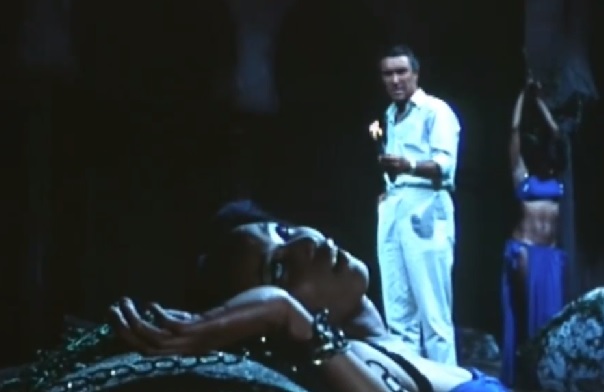
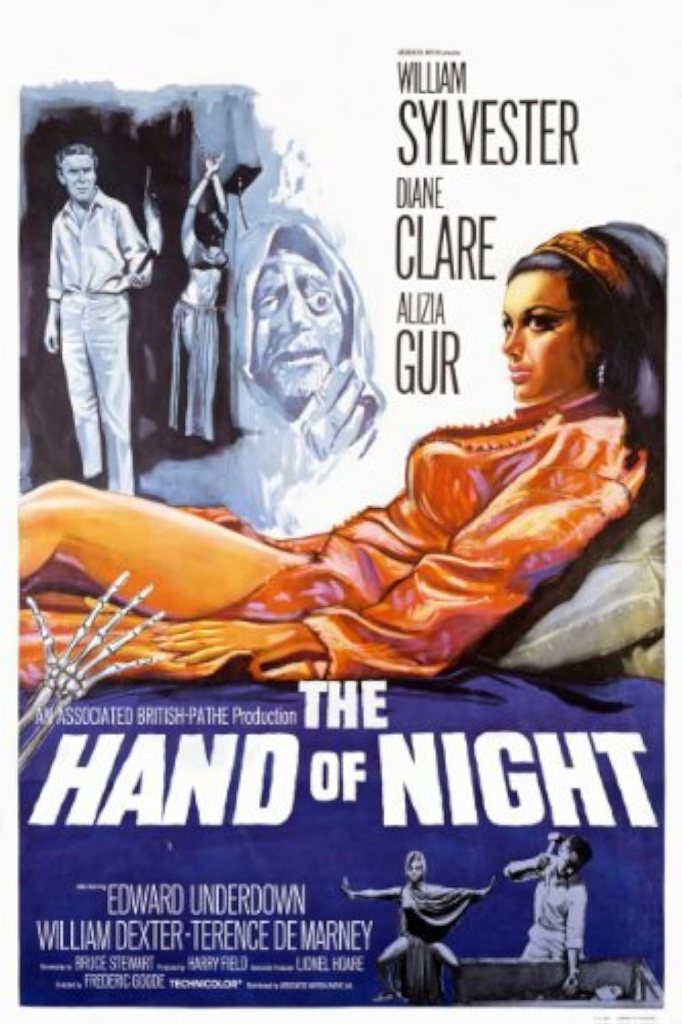
The Hand of Night (1968)

Directed by Frederic Goode [Other horror films: N/A]

I have to admit that I didn’t expect to care much for this one, but came out pleasantly surprised. While it’s not a great film, and perhaps ultimately just around average, I do think The Hand of Night is a decent little piece of forgotten cinema.

Taking place and filmed in Morocco (a county I know extraordinarily little about), The Hand of Night (or, alternatively, Beast of Morocco) follows a depressed man (William Sylvester) as he becomes enchanted by encounters of a mysterious woman (Aliza Gur) who is potentially a vampire, albeit not in the stereotypical sense. It’s a story that sounds simple, and I guess it is, but they approach it with good style.

The opening is particularly striking, and almost psychotronic, showing a bunch of random images that have no context (naturally, as the movie goes on, we learn more about what we see). I have to also add that I’m a big fan of the dialogue in this movie – plenty of the lines seemed snappy to me, like something I’d expect from films back in the 1930’s or 1940’s, giving this film sort of a classy feel.

Something also has to be said for the editing. The special effects here generally aren’t relevant (though there was a pretty cool bit near the end), but the shots and editing used did strike me as quite nice. This movie definitely had some production value behind it, and while some could argue that the movie isn’t exactly the most memorable film out there, it does seem a shame to me that many don’t seem to know this one at all.

As it is, I do think it lost a bit of steam near the finale. The last sequence I really enjoyed was Sylvester and Diane Clare’s characters running into William Dexter’s in a type of bazaar. Well, I guess that technically leads into another solid sequence, dealing with the history of the mysterious woman, but even so, the last ten minutes or so, sadly, feel the most pedestrian of the entire movie.

William Sylvester (Devils of Darkness, Devil Doll) was great here, as he had some emotional material to deal with, and he did so with heart. Diane Clare (The Haunting, The Plague of the Zombies, Witchcraft), in her final acting role, was solid too, and worked well with Sylvester. Edward Underdown had a lot of heart, and though he only had one scene of real import, William Dexter cracked me up in most of the scenes he appeared in. Technically, Aliza Gur is also here, but I honestly don’t think the story gave her enough to do to properly stand out.

It’s a real shame that the finale has such a familiar feel, because the rest of the movie, while not great, was generally engrossing. To be fair, The Hand of Night isn’t a movie that I’m likely to watch again soon, or even in the next ten years, but it was a very competent and surprisingly philosophical film at times, with some good dialogue and an interesting enough story.

Most horror fans might take a pass at this one, and I don’t even know how easy it is to find (I watched it from a shady Russian site, myself), but fans of classic horror, 60’s British horror, or Morocco, may find this one to be of interest.

7/10

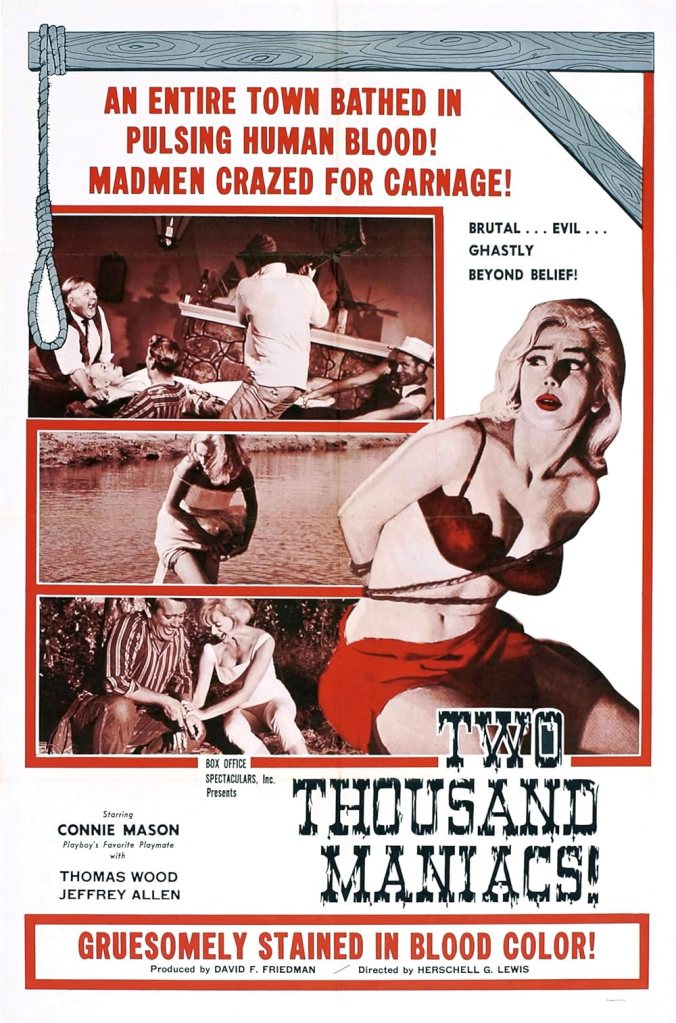
Two Thousand Maniacs! (1964)

Directed by Herschell Gordon Lewis [Other horror films: Blood Feast (1963), Monster a-Go Go (1965), Color Me Blood Red (1965), A Taste of Blood (1967), The Gruesome Twosome (1967), Something Weird (1967), The Wizard of Gore (1970), The Gore Gore Girls (1972), Blood Feast 2: All U Can Eat (2002), The Uh-Oh Show (2009), Herschell Gordon Lewis’ BloodMania (2017, segments ‘Gory Story’ and ‘The Night Hag’]

A couple of days ago, I revisited the 2005 film 2001 Maniacs, and as it’s been a while since I’ve seen the original film, I wanted to come back to this one and see how the story was originally portrayed. And I have to say, I’m impressed by some aspects here, especially the finale, and I can now say for a certainty I enjoy this film over the 2005 remake.

It’s been so long since I’ve seen this, I entirely forgot how this one ended. I said in my review of 2001 Maniacs that the supernatural ending they threw on (though I was coy with the term ‘supernatural,’) was solid, but I believe they do a better job here. They give the finale more time to breathe, along with giving the characters a sympathetic police officer and an overall somber tone. We even see a bit of perspective from the townsfolk of Pleasant Valley, so this finale was rather impressive in my view, especially coming from H.G. Lewis, who I don’t generally associate with stellar story-telling.

Naturally, when people hear H.G. Lewis, they generally think gore, given, of course, that Lewis is the Godfather of Gore. And the gore here is solid. I don’t think it’s great – there’s no doubt in my mind that his later effort, The Wizard of Gore, was far more extreme – but it is pretty fun.

You have a woman getting their arm cut off (and that’s after she gets her thumb cut off), a giant rock smashing a woman, horses pulling someone apart (which is a death recreated in the remake), and perhaps most subtly, the barrel roll, in which someone’s thrown into a barrel, nails are hammered into it, and they roll the barrel down a hill. It’s not a very bloody death, but it is the one I remember best. Because the film’s in color, that goes a long way to allowing the gory scenes to stand out.

I was also impressed by a few performances and characters. Jeffrey Allen as the mayor was a fantastically fun character. Allen (who’s only other horror film appearance was Something Weird) felt exactly like how I’d expect an old-time southern mayor to feel, and I loved it. William Kerwin (Blood Feast, God’s Bloody Acre, A Taste of Blood) was solid too, and actually had a good head on his shoulders. Not only did he realize something was odd in the town early on, but when he was attempting to call a friend for more information, he disguises his voice in order to throw off anyone listening in. Fun character, and good performance.

Honestly, the people here were far more in-the-know when it comes to the potential danger of the town. Michael Korb’s character was no fool, and playing his wife was Yvonne Gilbert, who said, “There’s something so unwholesome about this centennial.” Compared to the characters in the 2005 remake, these people had some actual brains, which was nice to see.

I’ll fully admit that Gary Bakeman was a bit much for me. He was just way too goofy, and his antics, I could have done without. I did really like Stanley Dyrector, who had that Southern good-ole boy feel to him. Connie Mason (Blood Feast) was solid, Andy Wilson surprisingly decent in his limited role, and both Jerome Eden and Shelby Livingston had something going for them too.

It should be mentioned that this came out in 1964, during the time of the Civil Rights movement. Unlike the remake, there’s absolutely nothing in this movie that deals with, or even references, race. Even so, highlighting a southern town that kills Yankees due to actions committed during the Civil War still seems, to me, liable to hit a few nerves. From the little I read, this film did decently in the south, though, so perhaps they enjoyed their vicarious revenge. No matter what, I find the plot a fascinating one, and so along with the characters and the effects, the story too really does this one justice.

Despite not having seen this in a long while now, when it comes to H.G. Lewis movies, I’ve always placed Two Thousand Maniacs! near the top. The Wizard of Gore is gorier, but I also think it’s a bit of a mess, plot-wise, and because of that, nothing quite competes. Sure, Blood Feast is a solid film for its type, but Two Thousand Maniacs! does far more, and I think it does it better.

Honestly, I enjoyed revisiting this one more than I thought I would. It’s sometimes too goofy, and the quality of the film is rough at points, but if you want a solid slice of 60’s horror, and you’ve not seen this one, I’d recommend you check it out.

8/10

Spider Baby or, the Maddest Story Ever Told (1967)

Directed by Jack Hill [Other horror films: The Terror (1963), Blood Bath (1966), Mondo Keyhole (1966), Fear Chamber (1968), House of Evil (1968), La muerte viviente (1971), The Incredible Invasion (1971)]

This is a pretty well-known movie, and while I’d consistently heard decent things about it, it’s never been one I’ve really been dying to check out. Because of it being labeled a horror-comedy mix, I didn’t know if it would be my type of thing. After seeing it, it’s true that the movie isn’t really my type of movie, but even with that caveat, I think it was pretty decent.

The story is certainly interesting, dealing with three siblings of subnormal mental status and their caretaker having to contend with the intrusion of distant relatives into their lives. Actually, I briefly thought that this movie is what House of 1000 Corpses would have been if it were made in the 1960’s (even more so because Sid Haig is here). It’s not really my idea of a fun story, but it’s done pretty well.

It also moves at quite a decent pace. It’s not a long movie to begin with, and while there are portions in which the action is less prevalent, Spider Baby keeps us engaged pretty well. No doubt the solid performances help a lot in that aspect.

Lon Chaney Jr. (La casa del terror, The Wolf Man, House of the Black Death, Pillow of Death, Son of Dracula) gave a great performance. He never stood out to me as much as Bela Lugosi, Boris Karloffe, or Peter Lorre, but Chaney Jr. here did really well, and even threw an emotional scene in. Beverly Washburn and Jill Banner also stand out as solid with their performances.

Because of the nature of his character, Sid Haig (Galaxy of Terror, A Dead Calling, Brotherhood of Blood, The Aftermath, Hanukkah) doesn’t have much personality, but he was fun to see. Karl Schanzer, Mary Mitchel (Panic in Year Zero!, Dementia 13), and Quinn K. Redeker all had their moments, and it was nice to see both Carol Ohmart (House on Haunted Hill) and Mantan Moreland (King of the Zombies).

There is a bit of proto-slasher attitude in this one – in the opening, someone is stabbed multiple times, and though it’s off-screen, it looks painful. Someone was about to have their foot cut off, had another character not intervened. It’s not much – this isn’t H.G. Lewis, and related, this was in black-and-white – but there’s a bit here that was encouraging.

Like I said, the story wasn’t really for me, but I did sort of like the vibe of this one. It felt a decent amount different from many other films I’ve seen in the late 1960’s, and again, the addition of some emotional material from Chaney Jr.’s character was a pleasant surprise.

I don’t think Spider Baby or, the Maddest Story Ever Told is ever a movie I will love, but it is a decent movie, and is worth watching for something a bit different.

7.5/10

Creature from the Haunted Sea (1961)

Directed by Roger Corman [Other horror films: The Beast with a Million Eyes (1955), Day the World Ended (1955), It Conquered the World (1956), Not of This Earth (1957), Attack of the Crab Monsters (1957), The Undead (1957), War of the Satellites (1958), The Wasp Woman (1959), A Bucket of Blood (1959), House of Usher (1960), The Little Shop of Horrors (1960), The Pit and the Pendulum (1961), The Premature Burial (1962), Tales of Terror (1962), Tower of London (1962), The Raven (1963), The Terror (1963), X (1963), The Haunted Palace (1963), The Masque of the Red Death (1964), The Tomb of Ligeia (1964), Roger Corman’s Frankenstein Unbound (1990)]

I can’t imagine this will take that long to explain, because there’s not really that much here.

We have a story of Cubans trying to steal money from Cuba after the revolution (on a side note, the best part of this movie is being reminded of the Cuban Revolution – throwing off the USA-backed government and creating a socialist system) and then being killed by fake and real monsters. I was going to try to describe the film better, but I realized that if they didn’t put that much effort into making this movie, I’m not going to put much effort in reviewing it.

The idea of killing off people and claiming it was done by a sea monster is at least a little interesting, but you have to understand that this film is a comedy/horror mix (as evidenced from the very beginning, during the opening animated credits), and the comedy is generally awful, and none of the characters (and I mean none) are of any interest whatsoever.

You have Robert Towne playing a clueless American spy who narrates the movie (‘It was dusk. I could tell because the sun was going down’ is the pinnacle of his humor), Beach Dickerson, who can imitate animal sounds (and by ‘imitate,’ I mean he opens his mouth and the roar of a lion is dubbed over), which is great, because he meets a woman (Blanquita Romero) who can do the same thing, and they make animal sounds together because it’s love and I hate this fucking movie.

Other people who appear include Antony Carbone (A Bucket of Blood), Betsy Jones-Moreland, Esther Sandoval, and Sonia Noemí González. It doesn’t matter, as none of them do anything to make the movie any more bearable, but they do indeed appear.

Here’s the thing – this is not my type of comedy. There was one amusing line in the movie, and that’s it. Everything else was just awful. And what makes this worse is that Creature from the Haunted Sea is a short movie – the version I saw was an hour and three minutes. Despite that, it was still a struggle to get through. It’s a painful movie, and not one I have any fun with.

Some people can probably get a kick out of this movie. I’ve enjoyed plenty of Roger Corman movies, even loved a few (The Pit and the Pendulum and The Tomb of Ligeia, for instance), but Creature from the Haunted Sea is just a bad time.

3/10

She Freak (1967)

Directed by Byron Mabe [Other horror films: The Bushwhacker (1968), Mystic Mountain Massacre (1971)] & Donn Davison [Other horror films: Honey Britches (1971), The Legend of McCullough’s Mountain (1975)]

Do you all remember Freaks? It’s a pretty classic movie with a generally solid story and a shocking finale for the time. It’s not a personal favorite of mine, but it’s a pretty solid movie.

As for She Freak, though, which is largely based around the same idea, the best word to describe it is ‘ghastly.’

Quite similar to Freaks in multiple ways, it follows one of the most unlikable protagonists in the history of cinema as she leaves her boring life as a waitress to join a carnival, and try to find her riches there. She’s a terrible character – not only is she okay with getting married to a guy just because he’s rich, and then cheating on him multiple times, but she also has zero sympathy for those in the carnival’s ‘freak show,’ and just sets herself up as a terrible person.

To be fair, Claire Brennen does fine in the role. Lee Raymond doesn’t have much in the way of character aside from being eye candy for the ladies, but Bill McKinney actually had some depth to him (though it took a while to find that out). Felix Silla (Cousin Itt from the classic Addams Family and the Polka Dotted Horse from H.R. Pufnstuf) only has a couple of scenes, but I liked him. Lastly, there’s Lynn Courtney, who wasn’t really relevant whatsoever, but she existed, at least.

If you’re wondering why I found this abysmal, though, it doesn’t have much to do with the likability of Brennen’s character. I mean, it wasn’t ideal, but by far the largest problem here is how insanely dull the movie is. It’s not until the final five minutes that we really feel much in the way of tension, and to be honest, tension is a bit strong.

A lot of the film seems to be devoted to showing off the carnival – not only customers walking by or riding the rides, but also setting up and taking down the carnival. Don’t get me wrong – I’m insanely impressed by traveling carnivals, and how they can do that set-up in the time they have – but it doesn’t make for an interesting horror movie. Might make a good documentary, though.

She Freak is a very boring movie. It’s dull, and the characters don’t generally help that much. The ending (which is completely taken from Freaks) isn’t worth the build-up, and the whole of the film is likely to send you into a stupor unless you’re of strong will-power.

There were two scenes I thought were good – in one, there’s a scuffle between two characters, and one of them gets stabbed in the hand with a screwdriver (providing the only blood in the movie). In the other scene, filmed in what I imagine was a helicopter, we get an overhead view of the carnival at nighttime – the neon lights on the rides, just the atmosphere of a busy carnival season – it looked quite beautiful. Honestly, if it weren’t for that scene, they could have just released this in black-and-white, because nowhere else does the addition of color do the movie wonders.

I can sit here and call the movie boring, but unless you see it, you probably won’t fully grasp just how dull so much of this is. And I certainly wouldn’t recommend you do so, but if you enjoy carnival-based horror, maybe this is worth a shot. It’s not remotely a good movie, though, and I’d just stick with Freaks were I you.

3.5/10

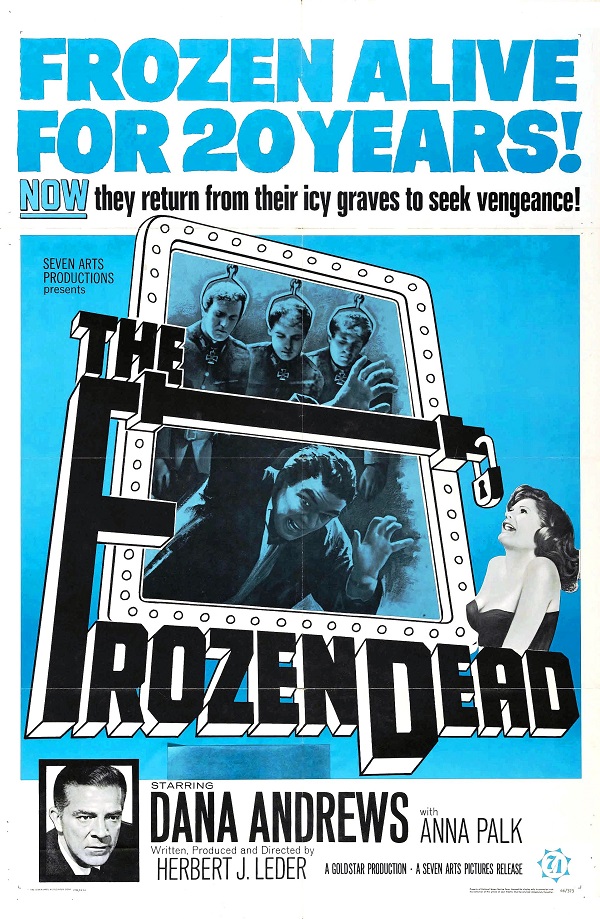
The Frozen Dead (1966)

LEAD Technologies Inc. V1.01 Sized3000

Directed by Herbert J. Leder [Other horror films: It! (1967)]

More than anything, while I wouldn’t say The Frozen Dead was a dry film, or even a bad film, I just didn’t care for the story. It doesn’t help that far more important to the movie than the titular frozen dead is a decapitated head kept alive, and that’s simply not where my interest lies.

Dealing with a Nazi scientiest twenty years following the fall of Nazi Germany attempting to revive frozen Nazi soldiers, there’s some okay Nazi action going on here. Some solid loyalty to the party, some nice German accents, and a scheme to, I guess, get into another war after reviving around 1500 soldiers. I don’t know how exactly they expected that to work, but I guess kudos for the optimism.

Some story elements didn’t seem entirely delved into, such as Dr. Norberg’s (Dana Andrews) connection with Mrs. Smith/Schmidt (Ann Tirard), or what happened with Basil Henson’s character, who just seems to disappear after an attempted murder. I doubt an answer to either one would change my overall perception on this one, but it’s just small things I noticed. Oh, speaking of which, I did enjoy seeing a crew member clearly on screen during one of the final scenes of the film. Looked totes professional.

Related, this was apparently released to American theaters (it’s a British movie) in black-and-white, though the print I saw on TCM was in color. I sort of wonder if perhaps seeing the movie in black-and-white would have increased the atmosphere at all, but at the same time, even if I had seen it in that form, it wouldn’t have made the story here any more enjoyable.

For what his character is, Dana Andrews (Night of the Demon) is fine. I’d have like to see him wrestle between the love of his niece and his loyalty to the Nazi Party, but whateves. Anna Palk (Tower of Evil) was okay, but didn’t strike me as memorable. Honestly, while Basil Henson was fun as a Nazi who likes to inflict pain, and Karel Stepanek made for a decent former Nazi general, that seemed to be all there was to their characters. It may come as little surprise that Alan Tilvern was likewise unspectacular.

At least Philip Gilbert’s character was sort of interesting. True, he was the expected generic love interest of Palk’s, but his character, an American scientist, actually takes an active part in Andrews’ unethical science experiments, and it’s not until things get worse that he decides to take a step back. It’s not much, but it at least added some flavor.

Elsewise, there’s not a whole lot here. I would have likely enjoyed it more if it actually dealt with the frozen dead, but they play very little part in the movie. Even toward the finale, when it seems like their focus could deepen, it doesn’t. The wall of arms (which, by the way, was hella creepy) got more action than the frozen dead, and it’s just a disappointment.

Even so, I don’t think it’s a terrible movie. If it’s the type of horror you’re into, then got for it. I’d never say The Frozen Dead doesn’t have some okay ideas, but generally, I just didn’t enjoy this one, and I doubt that seeing it again in the future will change that.

5/10

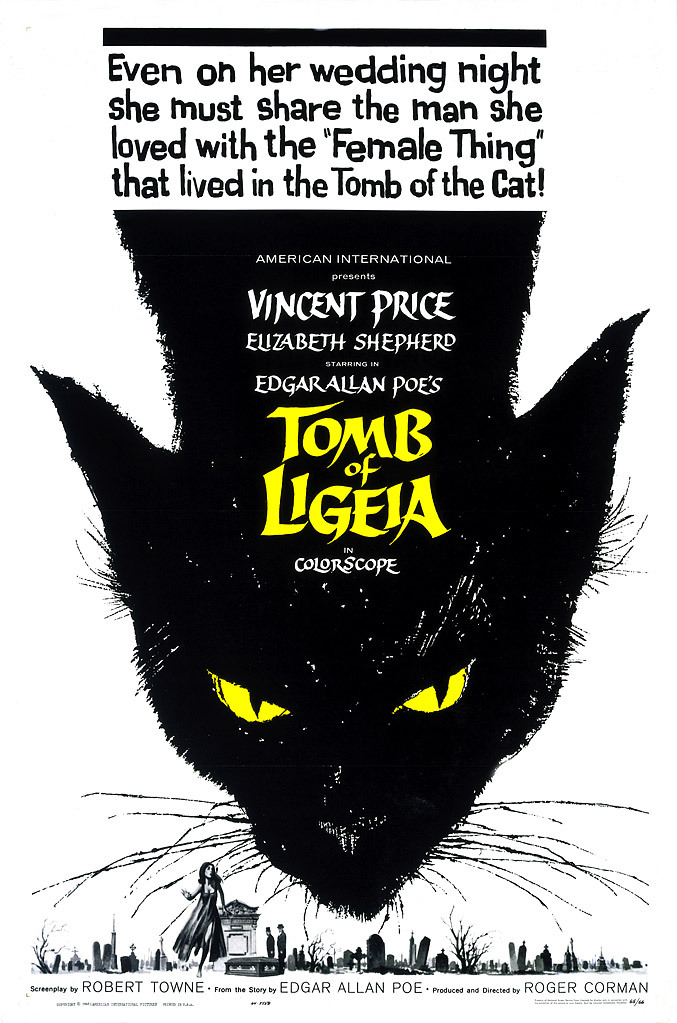
The Tomb of Ligeia (1964)

Directed by Roger Corman [Other horror films: The Beast with a Million Eyes (1955), Day the World Ended (1955), It Conquered the World (1956), Not of This Earth (1957), Attack of the Crab Monsters (1957), The Undead (1957), War of the Satellites (1958), The Wasp Woman (1959), A Bucket of Blood (1959), House of Usher (1960), The Little Shop of Horrors (1960), Creature from the Haunted Sea (1961), The Pit and the Pendulum (1961), The Premature Burial (1962), Tales of Terror (1962), Tower of London (1962), The Raven (1963), The Terror (1963), X (1963), The Haunted Palace (1963), The Masque of the Red Death (1964), Roger Corman’s Frankenstein Unbound (1990)]

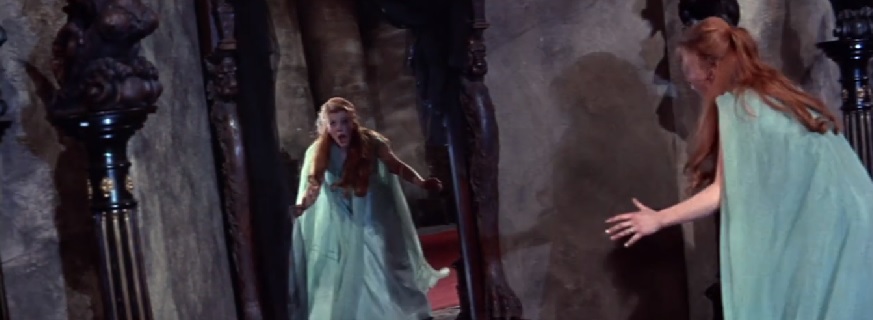
I was rather surprised by The Tomb of Ligeia. When it comes to Roger Corman/Vincent Price movies, I generally enjoy them, but I rarely love them. The Haunted Palace, House of Usher, and The Raven are all varying levels of okay; The Tomb of Ligeia, however, really is a stellar film.

What really worked for me was the story. Based on Edgar Allan Poe’s short story ‘Ligeia,’ this was a wild ride. The last Roger Corman-Edgar Allan Poe combination (following films such as House of Usher, The Pit and the Pendulum, Premature Burial, Tales of Terror, The Raven, The Haunted Palace, and The Masque of the Red Death), I didn’t know what to expect, but I loved the mystery throughout the film, and come the finale, there are some big twists and turns I didn’t see coming at all.

It’s even better, though, because these twists didn’t come out of nowhere – we’re given multiple clues as to what’s going on, and though I didn’t catch on, I loved it all the more for that.

Vincent Price’s character throughout the film was so melodramatically maudlin. I mean, he’s dramatic in a lot of his films, such as the similarly stellar The Pit and the Pendulum, but it’s turned up to eleven here, and I loved it. Price has long been one of my favorite actors of the genre, and among films such as House on Haunted Hill and Theatre of Blood, this is certainly now a favorite of his performances.

Aside from Price, we have Elizabeth Shepherd (Damien: Omen II), Oliver Johnston (It!), John Westbrook, and Derek Francis. Westbrook didn’t really make too much of an impression, but everyone else, especially both Shepherd and Johnston did stellar. Playing a manservant, Johnston’s character would seem limited, but I think he really adds a lot to the film, especially more toward the finale.

It’s not just the wild plot and twists, or performances, that make this work though. The cinematography seems oddly dynamic for the time period, with some quick-moving camera action. Not only that, but there’s a dream sequence in the film that really captures the atmosphere of a dream, and I dug it.

Like I said, going into The Tomb of Ligeia, I expected to like the movie, because there’s very few movies with Price that I end up disliking. What I didn’t anticipate was coming out rather loving the movie. It’s not quite as good as The Pit and the Pendulum, but it’s still a very solid movie, and if you’re a Vincent Price fan and haven’t yet seen this, I recommend it highly.

8.5/10

Strait-Jacket (1964)

Copyright HAG ©2009

Directed by William Castle [Other horror films: Macabre (1958), House on Haunted Hill (1959), The Tingler (1959), 13 Ghosts (1960), Homicidal (1961), Mr. Sardonicus (1961), The Old Dark House (1963), The Night Walker (1964), I Saw What You Did (1965), Let’s Kill Uncle (1966), The Spirit Is Willing (1967), Shanks (1974)]

I’ve not seen Strait-Jacket in some time, and it was an enjoyable movie to revisit. Admittedly, if not for Joan Crawford’s stellar performance, this might be a more generic William Castle fair, but because of Crawford, and some other factors, it turns out quite a solid film.

A lot of the ideas in this one seem similar to Castle’s Homicidal. Honestly, I think I enjoy the both of them equally, though in a somewhat interesting fashion, this movie doesn’t necessarily feel quite as campy as some of Castle’s previous films (such as House on Haunted Hill and The Tingler).

I did like the plot here, though, with a woman twenty years in a mental institution being released, only to possibly be facing a relapse. It’s nothing that’s quite new, and the finale felt rather like the end of Psycho, but the performances and occasionally tense story allow it to work well.

Naturally, Joan Crawford (What Ever Happened to Baby Jane?, Trog, Berserk) did great here, and you can really see the emotional range she has throughout the film. Admittedly, Diane Baker (The Ghost of Sierra de Cobre) isn’t a name I know that well, but she did a great job also, especially toward the finale. The last individual to really make an impression was Leif Erickson (I Saw What You Did, Invaders from Mars, Night Monster), who played a pretty gentle individual.

Others aren’t bad, though – George Kennedy (Death Ship, Wacko, Creepshow 2, Uninvited, Demonwarp, Just Before Dawn) had some good scenes, reminding me a little of Henry Jones’ role in The Bad Seed. A couple of other performances – John Anthony Hayes, Rochelle Hudson (Gallery of Horror), Howard St. John, Edith Atwater (Die Sister, Die!, The Body Snatcher), and Mitchell Cox (who wasn’t even an actor, but did just fine) – didn’t really have enough room to breathe, which isn’t a surprise, given this is largely the Crawford show.

A few other notes – I enjoyed the decapitations we get. The first pair was shown in the shadows, which had a nice vibe to it, but we do get an on-screen decapitation, and while it doesn’t look amazing, nor is it gory whatsoever, it was fun to see. Also, the finale does feel a little silly, mainly around the mask we’re shown, but as much as it feels like Psycho, I still found it fun.

Strait-Jacket isn’t a movie I think is amazing, but it’s a solid movie, and a quality entry in William Castle’s filmography.

8/10

Picture Mommy Dead (1966)

Directed by Bert I. Gordon [Other horror films: Beginning of the End (1957), The Cyclops (1957), Attack of the Puppet People (1958), Earth vs the Spider (1958), War of the Colossal Beast (1958), Tormented (1960), Necromancy (1972), The Food of the Gods (1976), Empire of the Ants (1977), Burned at the Stake (1982), Satan’s Princess (1989), Secrets of a Psychopath (2015)]

I have a bit of a mixed-to-negative record with Bert Gordon’s movies – I enjoy Earth vs the Spider well enough, but some of his other films, such as The Food of the Gods, Tormented, and Attack of the Puppet People, have failed to leave much of an impression on me.

Though I’m loath to say it, given the promise this movie held, I think the same fate befalls Picture Mommy Dead.

And it is a shame, because the story here is pretty close to those old dark house horror movies I enjoy so much, such as The Cat and the Canary, The Bat, and The Monster Walks. The only difference here is that, instead of a young woman forced to deal with multiple characters due to the reading of a will, we have a teenage girl. Otherwise, it’s pretty similar to plenty of previous films of the genre, which in part may explain how this feels somewhat been-there, done-that.

It’s not a bad movie, though; I think it’s worst sin is that it’s just somewhat uninspired. Don’t get me wrong, films like Lo spettro, The Screaming Skull, Dominique, etc., all have their charm, but the idea of someone being driven insane to further the financial causes of another is nothing new. It’s often a decent watch, but it’s not new.

Things are shaken up a bit here, though, in regards to the mysterious death of a woman three years before the bulk of the movie. There are multiple suspects, as usual, and plenty of reasonable solutions to the mystery. The one we got was decent, and it led to an interesting finale – I’m not sure if the ending is actually good, but it was somewhat striking (and almost reminiscence of Mark of the Vampire in some ways).

Susan Gordon (the daughter of Bert Gordon, the director) did pretty well in her role. She did succumb at times to hysteria, but then again, her character suffered a traumatic event and spent three years in a psychiatric asylum, so she can’t be blamed for that. In fact, I think she did well with the arrested development of her character. The performances of both Don Ameche and Martha Hyer were okay, but neither did much for me.

I did like Maxwell Reed (Daughter of Darkness) – his character wasn’t always easy to get a read on, but he was one of the more interesting cast members. I don’t know what Wendell Corey’s (Astro-Zombies) accent was, but his one-scene appearance was memorable. Zsa Zsa Gabor also makes an appearance, but given her character was unlikable as Hyer’s was, I can’t say it moved me.

Though I don’t think it made much an impact for this movie, Picture Mommy Dead is in color. There’s a scene or two with a bit of blood, but naturally, this isn’t a H.G. Lewis affair, so everything is pretty light. The movie’s more psychological in focus anyway, and it probably could have gotten away with being in black-and-white had it wanted to (as it is, the coloring seemed almost faded on the print I saw).

Honestly, there’s nothing terrible about the film. It feels like plenty of other movies I’ve seen, but it’s still generally an okay watch. That said, while there’s a few plot elements of interest, Picture Mommy Dead doesn’t really do anything special. It might be worth a watch or two, but it’s not the type of movie that I think would particularly stand out to too many people.

6/10