Drive In Massacre (1976)

Directed by Stu Segall [Other horror films: N/A]

I promise I’m not crazy, but this movie is decent. Well, actually, I can’t promise that my sanity is entirely intact, but I can promise that I have seen this movie four times now, and each and every time has been a blast.

In many ways, no doubt, Drive In Massacre is pretty bad. Part of it has to do with the commonly-available print, which has quite a muddled audio quality along with iffy lighting at times. Even without those issues, the story itself is pretty weak, the conclusion somewhat ridiculous, and though it only runs for around 75 minutes, it can feel boring.

All of that said, though, like I said, I’ve seen it four times now, and I really do find a good amount of this movie a hoot. Though not a horror-comedy in a traditional sense, the scene in which the two main detectives are undercover as a couple at a drive-in (one of the detectives being dressed as a woman) had plenty of lines in it alone that were laugh-worthy (“Kiss me, you fool” / “I hope so, we don’t need anymore of that” / “My God, married only two hours and you don’t want anything to do with me”), so it’s not as though the film is void of charm.

Honestly, both of the central detectives, played by John F. Goff (The Fog, Alligator) and Bruce Kimball (An Eye for an Eye, Snakes), were pretty interchangeable, and while they had some funny dialogue now and again, neither one stood out. Robert E. Pearson’s performance as the somewhat sleazy drive-in manager (as one character describes him, “He’s what you would call your perfect asshole”) was a lot of fun, and I definitely find his character a memorable one.

Douglas Gudbye’s performance as a mentally-challenged character was one of the strongest in the film, and I really felt for him at times. Lastly, though he was utterly added in only for padding, George ‘Buck’ Flower (Maniac Cop, Wishmaster, Pumpkinhead, Cheerleader Camp) was fun to see.

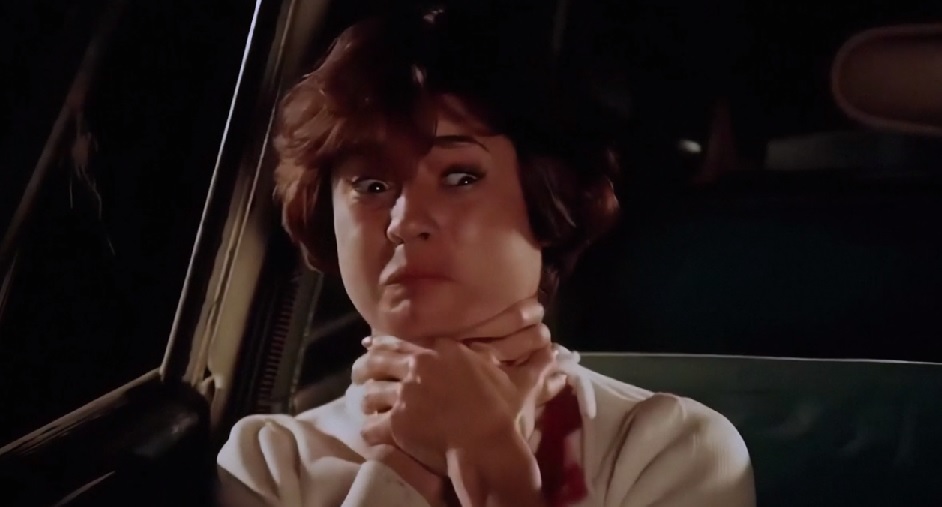
For a proto-slasher, there wasn’t much in the way of slashing. The best kill is easily the opening decapitation, but there was also a woman stabbed through her neck and the aftermath of a few other killings. Nothing amazing, but at least the opening kill could theoretically hook someone in.

I certainly understand why many people don’t care for this movie, and some find it laughably bad (at the moment of this writing, Drive In Massacre sports a 3.5/10 on IMDb with 1674 votes), but it’s a movie I personally dig. It’s far from a movie without flaws, but coming from a guy who willingly watched this four times, it’s #golden.

7/10

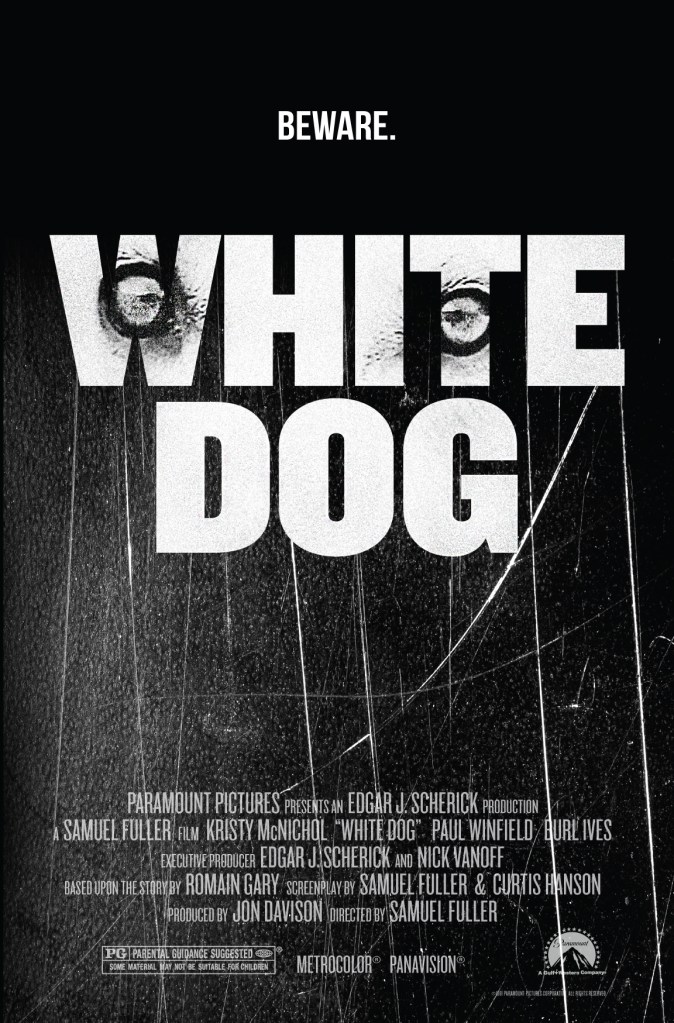
White Dog (1982)

Directed by Samuel Fuller [Other horror films: N/A]

There are some movies that you just know aren’t going to have happy endings, and while that doesn’t make the movie bad, it can impact your willingness to sit through it. This never bothered me that much – I still cry during the end of Titanic, and probably always will, but still find the film worth watching. White Dog is too a film worth watching, but it’s not one that I would say has much in the way of rewatchability.

Dealing with a pretty obscure topic (at least as far as my education was concerned) about dogs trained specifically to attack black people, it should go without saying that racism is very prevalent in this movie. Almost none of the on-screen characters are racist (save for one that shows up toward the end), but that a dog was “trained” (or beaten, depending on whether or not you’re a piece of trash who condones animal abuse) by a racist into a savage monster is just damn disheartening.

I don’t always like touching on racism, on a side-note. Partially, it’s due to the fact that I’m a white guy from Indiana who didn’t really know any black people until college, and it’s just not a comfortable topic for me. No doubt that comes from a place of privilege, and it’s just awful how backwards the USA still is when it comes to race. Still, it’s a necessary conversation, and I think this movie, which got some hate after it was released, does good with the topic.

The main character, played by Kristy McNichol (from Little Darlings, a movie I’ve not personally seen but my mother was a big fan of, so wanted to throw it a mention) strikes me as naive about some things, but really turns into a strong character, and when she confronts a racist man toward the end, it was great to see. Her performance here is pretty solid, especially during the first half as she’s learning to care about and love the dog.

McNichol isn’t the best performance though – that accolade goes to Paul Winfield. Though not an actor I’m that familiar with (I have seen him in both The Serpent and the Rainbow and The Horror at 37,000 Feet), Winfield does great here. I love his goal of attempting to recondition the dog in order to discourage racists from using them for their racist ends. About an hour in, he really goes out of his way to recondition this dog (even after the mild disagreement from McNichol’s character), and I love him for it, no matter how it ended.

Aside from these two, the only other person that really stands out is Burl Ives, who is a character that takes a little to get used to, but I did end up rather liking him. Dick Miller also pops up for a single scene, which was random but fun, and toward the conclusion, we get a little Parley Baer, playing a rather despicable character pretty well with the short screen-time he had.

It’s also worth noting that, while I have no problem with the horror label being thrown onto this movie, much of the violence is shown in a more dramatic and heart-breaking light. Sure, the movie is a downer by it’s subject itself, but aside from the second attack (of the street sweeper, played by Tony Brubaker), most of the kills don’t really feel like what you’d expect in a horror movie. That doesn’t downplay the horror of a humongous dog rushing someone down, but if someone went away from this finding it far more a drama, I couldn’t say I’d much blame them.

White Dog is a movie I’ve seen before, but like many of the movies I’ve seen in years past, I didn’t have a great memory of this one. It’s no doubt a well-made film, and is one that should be checked out if it sounds of interest, but it’s not a movie I think I’d go back to that often, and it’s definitely not what I’d call a fun viewing.

7/10

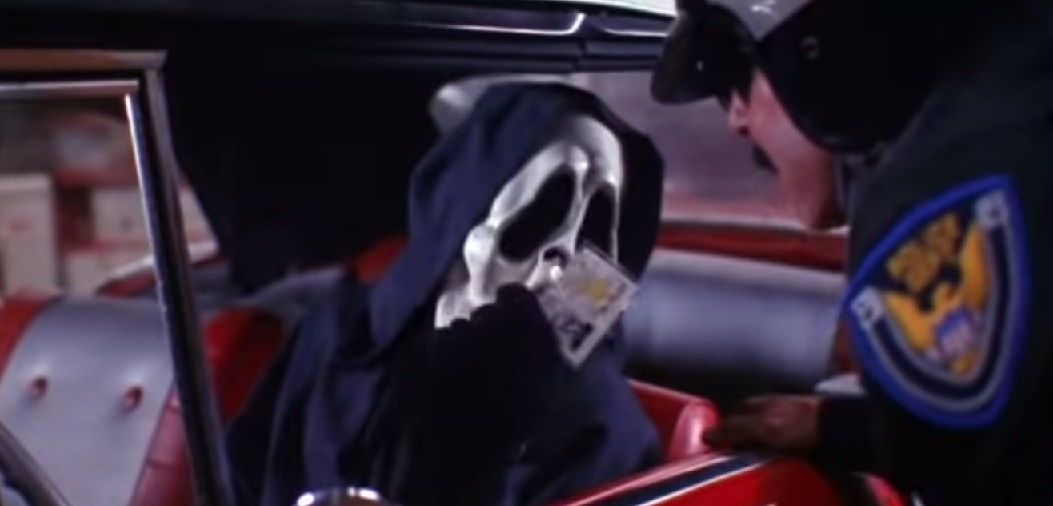
Shriek If You Know What I Did Last Friday the Thirteenth (2000)

Directed by John Blanchard [Other horror films: N/A]

I have to admit that I didn’t go into this one with the best mindset. Though I’ve seen this parody movie before, it’s been a hell of a long time, and never having been much a fan of the comedy from Scary Movie, I didn’t think this rewatch would go that well.

And of course, surprising me, I found that I enjoyed this one a bit more than I thought. By no means is Shriek If You Know What I Did Last Friday the Thirteenth a great movie, but it did have it’s amusing portions, and I will fully fess up to laughing a decent amount throughout the film, and more so, it parodies films such as Scream and I Know What You Did Last Summer generally well.

Just to spout off a few of these, a girl calls her brother (this film’s answer to Dewey) a “dork,” to which he replies, “dyke.” Cue another girl (who is suspected to be a lesbian) to ask, her voice interested, “What?” It’s quick, it’s simple, but it still cracks me up. Or how we get multiple flashbacks from different perspectives of what each of the central characters are hiding (“Seems gene splicing is all the rage”), which was sort of clever.

Some of the humor shines through simple quotes (such as “24 Hour Pizza – if we’re not here in 24 hours, we’re not coming” and a student overhearing a teacher ask “Do you know where I can get an unregistered handgun?”), while others from just wacky scenarios (such as the Mentos parody, complete with the cheesy music, or the race between the killer and Majandra Delfino’s character). I think what got me the most was, during a “Greased Lightnin’” parody (“Greased Frightnin’” should you be curious), a stupid fucking dance this guy was doing. It was just so goofy.

So sure, maybe the humor here isn’t sophisticated (that German Club “Seig Heil” for instance), but about 45% of the time, it works. That doesn’t mean the other 55% isn’t without merit – it’s still a goofy, watchable parody, as I suspect most of the Scary Movie sequels tend to be (I have actually seen the second, third, and fourth, though I barely remember a thing about any of these).

As far as performances go, I only really want to bring up Majandra Delfino because she rocked the short hair look (and actually, briefly reminded me of Brittany Murphy in Cherry Falls). The others were decent – Harley Cross was sort of generic, but Simon Rex was fun, and Danny Strong was certainly something – but no one stood out like Delfino. Tom Arnold was sort of painful, as was Tiffani Thiessen, but that’s just the nature of over-the-top parody characters, so I don’t fault them for this.

And while I generally found the final twenty minutes the least engaging in the film, I did rather dig the song that played during a chase scene, being “Pretty in Pink” by The Grown Ups (a cover of the Psychedelic Furs song). This sequence was, I’m guessing, a parody of some video pop-up-facts-type thing from MTV, and was generally amusing (“The actor playing Dawson is afraid of heights. The director got him drunk and dared him to do the scene,” is one that I laughed at).

This isn’t my type of movie, and I definitely found some portions trying and not particularly amusing. All-in-all, though, it wasn’t a bad watch, and though I found it below average, I honestly sort of found some of this worth it.

6/10

Don’t Go in the House (1979)

Directed by Joseph Ellison [Other horror films: N/A]

This is a movie that I’ve now seen around four times. It’s consistently a decent watch, though always tends to hover around average. Likely worth a watch if you’re a fan of 70’s horror, Don’t Go in the House is a rather dark film, and while I never loved it, it’s not without it’s strong points.

Though this has somewhat of a reputation for being overly violent, anyone who has seen this movie can attest to the fact that, for the most part, it’s pretty tame. Of course it does deal with some heavy topics, such as child abuse and the mental instability that it could lead to, but the violence itself is pretty much restricted to a single scene, which is probably one of the stand-out moments of the movie.

Which isn’t to say, of course, that the rest of the movie wasn’t good. In fact, I think that this rewatch has given me a bit more appreciation for the film than I generally have. It’s not that I ever disliked this one, but as a kid, I will admit that I probably found segments of this one a bit dull. Even now, some scenes dealing with Grimaldi feel more uncomfortable than anything else, but the same could be said for Perkins in Psycho, which this movie seemed to be influenced by, so it’s not that big a deal. It’s just fair to say that, even though many of the non-action sequences possess some charm (such as that classy disco scene), this isn’t the most action-packed movie.

With a few exceptions, most of the cast members who stood out never did much else in movies. Of course Dan Grimaldi later went on to be in The Sopranos (a show that I’ve not personally seen, but generally have heard solid things about), and he does reasonably well here playing a socially awkward character. Energetically fun Robert Carnegie (who also apparently popped up in Mother’s Day a year later) was, as stated, fun. His character seemed a legitimately decent guy (infidelity aside), and I dug all of his scenes.

Others who deserve a quick mention include the priest, played by Ralph D. Bowman, a stylish salesman played by David McComb, a heavily intoxicated woman played by O’Mara Leary (her constant slurring cracked me up), and lastly, Johanna Brushay, who was the controversial death somewhat early on in the movie (and also the only one here to throw any nudity our way, for whatever that might be worth). None of these people had much of a career past this film, but they definitely add something here, especially Bowman, who’s character is one that, for some reason or another, has always stuck with me.

Special effects don’t really play that heavily into this one. Sure, we see someone set on fire, which at times looks okay, other times shoddy, and we get some pretty basic corpses, but nothing really stands out much in this department. Far more important, or at least more indicative of the time period, was the funky soundtrack.

Early on, Grimaldi’s character listens to some disco, and then some funk rock piece. Both of these were decent, but we get the best music during the disco sequence, which was just fun overall. Personally, I enjoy some Bee Gees and KC and the Sunshine Band (“I Betcha Didn’t Know That” just slaps), and the music here, with songs such as “Struck By Boogie Lightning” (L’Ectrique) and “Late Night Surrender” (Jeree Palmer) are pretty damn catchy. Legit adding some of these tracks to my iTunes.

That some of this can come across as a time capsule really does give this movie a bit of a boost. It doesn’t make the movie that good, in my view, but it does give us a little bit more than just a gritty, late 70’s outing. Don’t Go in the House isn’t one of those films I go out of my way to watch (evidenced, I’m sure, by the fact I’ve seen this only four times in 15 years), but it’s not a bad time. It just fails to stand out near as much as I’d hope.

7/10

All Through the House (2015)

Directed by Todd Nunes [Other horror films: Scary Larry (2014)]

I have to say that I found this Christmas-themed slasher disappointing, but I also have to admit that I’m not surprised, given the generally lukewarm reception I’ve heard from this one.

And it’s a shame, too, because I suspect that, more than most people, I was looking forward to this one. Why? Because back in 2011, the director of this film, Todd Nunes, directed a 13-minute short titled Here Comes Santa. This is a short which I reviewed on my now-defunct Beyond the Darkened Door, a horror blog I was trying to run for a short and inconsistent time in my college days.

To keep things short, I found Here Comes Santa a pretty well-made short. I gave it a glowing review, and definitely saw potential should the director attempt a full-length version of the story.

But to all hope comes death, as the poets say, and the final product here just felt more hollow than anything. Which isn’t to say that the movie doesn’t have strong points, but really, aside from gore, what does All Through the House really have going for it?

I will say that I like the base idea of the film – three young women terrorized by a killer wearing Santa garb while helping to decorate a large house – but the story beyond this, what with the mystery of the focal character’s mother and another character’s missing daughter just sort of fell off the rails.

Again, I have to mention the failed potential here, because while neither of these mysteries were up there with those seen in classic giallos, it still brought a little additional element to the movie, but come the finale, the answers we get aren’t really that satisfying to me.

For what it’s worth, I thought most of the marginally more important performances were decent. It’s not likely that many would be blown away by Ashley Mary Nunes, Melynda Kiring, Jason Ray Schumacher, or Natalie Montera, but they all do fine enough with what little character they get to play around with.

That’s part of the problem, really. Most of these characters just seem shallow, and I don’t think we even get to know the main character of Rachel (Nunes) all that well. More than anything, this movie feels like an excuse to show off decent gore effects, which, while certainly appreciated, isn’t enough to keep interest in a story going. Had the mystery here been handled a bit differently, then maybe we’re talking another story, but with what we got, it just didn’t do it.

There’s also something that should be said about the editing. I don’t think I’m the guy to say it, because I’m not a film-maker, and I have literally no idea what goes into production and post-production of films, and thus lack the vocabulary to explain my problem, but the editing here just felt off at times. I sensed it from the very beginning, and though I can’t put a finger on why things felt off, I know that, to me, they did.

Overall, you have some impressive gory scenes here, but once you get past that, I don’t think there’s a lot holding this one up, and as far as Christmas-themed horror films go, I think that All Through the House will end up in the forgotten category more so than anything else. Definitely not a great experience, and a film I found rather below average.

5/10

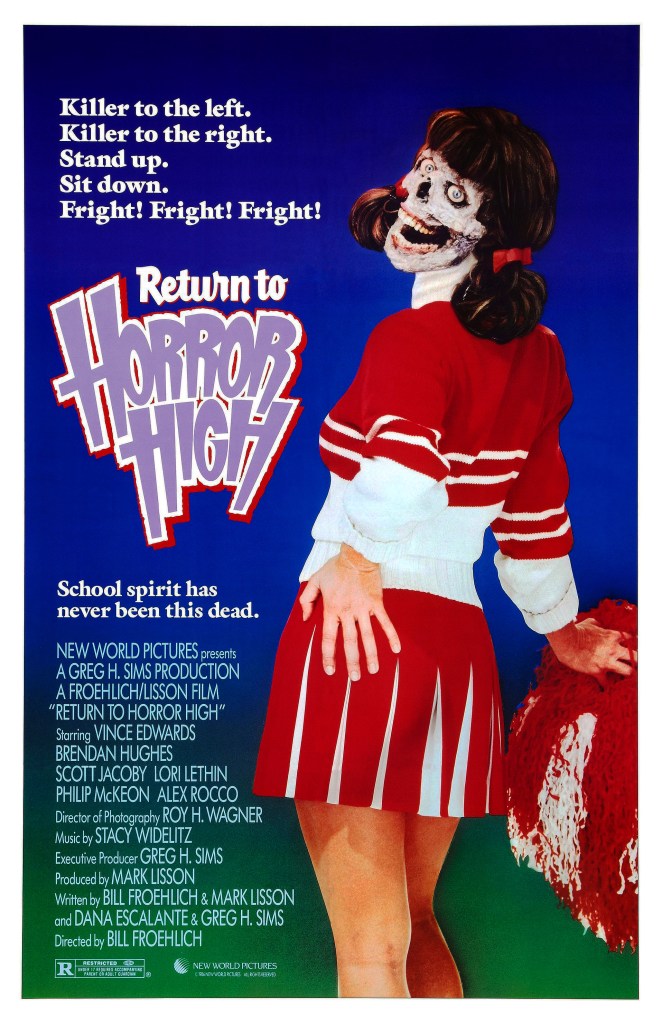
Return to Horror High (1987)

Directed by Bill Froehlich [Other horror films: N/A]

In all honesty, Return to Horror High could have been something special. I don’t know what it would have needed to get there – maybe better direction, a more serious approach, something else – but with the meta nature of the film, along with the nonlinear plot (not to mention the plot twists), this had potential. The problem is it didn’t land at all.

And I don’t just mean the finale – I mean all of it. Certain scenes were interesting – the first time they had a scene break for us only to discover it was part of the filming threw me for a loop (I honestly thought it was a flashback), and there were a few decently artistic scenes (such as the love-making sequence, what with flashing lights from welding outside and the 80’s styles of Wendy Fraser’s “Man for Me”), but for the most part, very little in this film made an impact on me.

When I first saw this years ago, I suspect I might have found it somewhat convoluted, and while things generally make more sense this time around (aside from the “Daddy” ending), that cohesion doesn’t really benefit my views on this much. I just found it an interesting concept that was executed somewhat woefully, and not much in the way of performances save it.

Many might mention George Clooney when bringing this one up, and I guess I have also, but even knowing he was in this, I didn’t recognize his face (it doesn’t help that I know very little from Clooney – I’ve only seen two films with him in it, being Batman & Robin and From Dusk Till Dawn). More noticeable by far were Maureen McCormick (who was one of the few elements of comedy I consistently appreciated), Alex Rocco, Brendan Hughes (Howling VI: The Freaks), and Lori Lethin (who had three separate roles here).

There wasn’t much in the way of kills whatsoever. Pretty much all of them are weak save for perhaps the take on a human dissection. Everything else was forgettable, though, but that’s okay, because it fits well with the rest of the movie.

Which may have come out more unkindly than necessary, but Return to Horror High, like I said, had potential. Almost none of it really did anything for me though – not even the mystery of the killer, and that usually at least garners some mild interest from me. I found this utterly underwhelming, and despite some potentially clever ideas, I don’t think I’m going to give this one a third viewing.

5/10

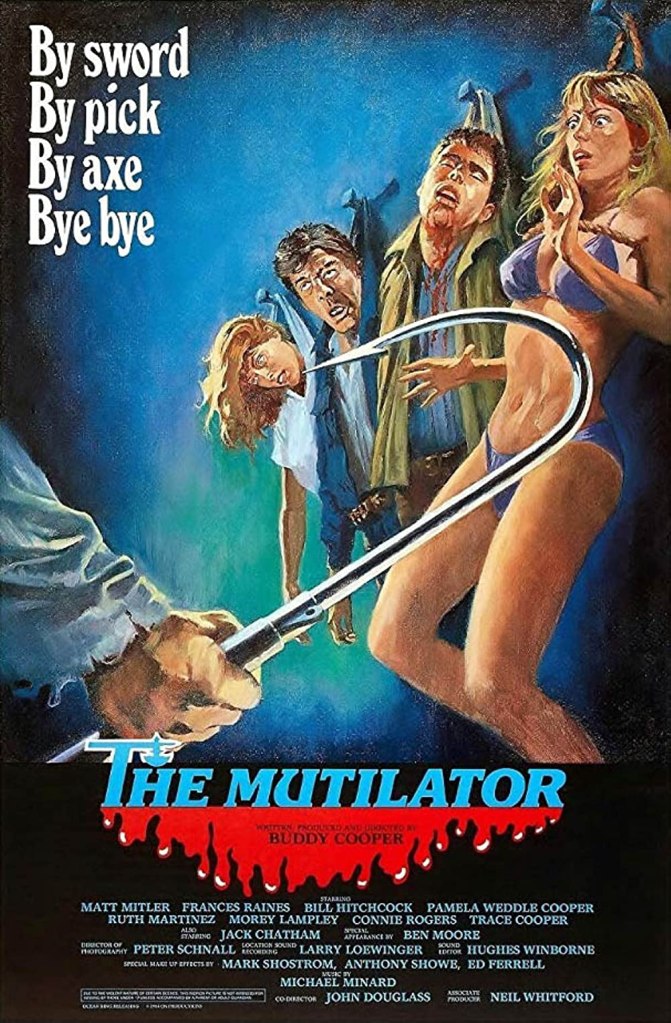
The Mutilator (1984)

Directed by Buddy Cooper [Other horror films: N/A] & John Douglass [Other horror films: N/A]

You know, I have to admit that my recollection of this movie may not have done it proper justice. I saw The Mutilator once many years ago, and ever since, I’ve been telling people about how underwhelming I found the film. Seeing it again with fresh eyes, though, I didn’t feel underwhelmed at all. 

It could fairly be said that neither Morey Lampley nor Frances Raines (Disconnected and Breeders) did much for me, but the other four central characters were pretty good. Bill Hitchcock and Connie Rogers struck me as a realistic couple, Hitchcock’s character even occasionally amusing me. Matt Mitler was strong, and making for a quality final girl was Ruth Martinez, who I really liked here.

Pulling all of this together is the fact that I really got the sense that these were friends just hanging out, so even during the moments void of murder, it was fun just seeing this group of friends chilling (and playing Blind Man’s Bluff, a game that doesn’t look remotely fun).

What adds a little bit to the performances, by the way, is the fact that this was filmed in North Carolina, and most of the actors and actresses have that southern twang in their accents which just gives the movie a little more regional flavor, something that I quite appreciated. 

Of course, what really adds to the film is the quality gore, which is something I perhaps missed the first time I saw The Mutilator. With such classy kills as a character getting stabbed with a piece of wood through the throat and thusly decapitated and another guy’s chest getting all ripped up with an outboard motor (which isn’t necessarily clear during the scene, at least to me, but the impact is most definitely worth it), this movie doesn’t slouch off in that department. There might be a weak kill or two (such as the character who was drowned), but that strong finale, with some dismemberment and someone being cut in half by a car, is enough to cancel those out.

While a small point, I wanted to mention the song that sandwiches the film (plays both at the beginning and the ending during the credits) titled “Fall Break” (on a side-note, Fall Break is an alternative title to this movie, and in fact, the print of the film that I saw had this title as opposed to The Mutilator). The song is a bit too jaunty for me at times, but I did think it was a lot of fun, and it’s one of those songs that’ll end up on my iTunes (the same fate which befell “Fade to Black” from Prom Night).

Oh, and another thing that I found a pleasant surprise – unlike many horror films, The Mutilator didn’t go for some final scene jump scare, which surprised me as it sort of felt like they were moving in that direction. Luckily, it was just a little somber scene in a hospital, which I definitely appreciated.

There’s no doubt that this film is somewhat run-of-the-mill, and given that the killer wasn’t particularly distinctive in any way whatsoever, it makes sense to me that for some, this might just not cut it. And to be fair, like I said, the same could have been said of me prior to this rewatch. Seeing it again, though, opened my eyes, and while it’s not a great slasher, I did have quite a bit of fun with it.

7.5/10

The House That Cried Murder (1973)

Directed by Jean-Marie Pélissié [Other horror films: N/A]

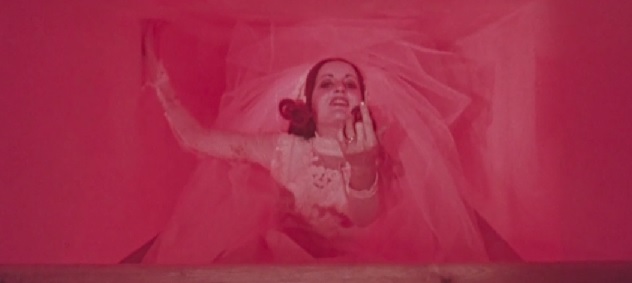
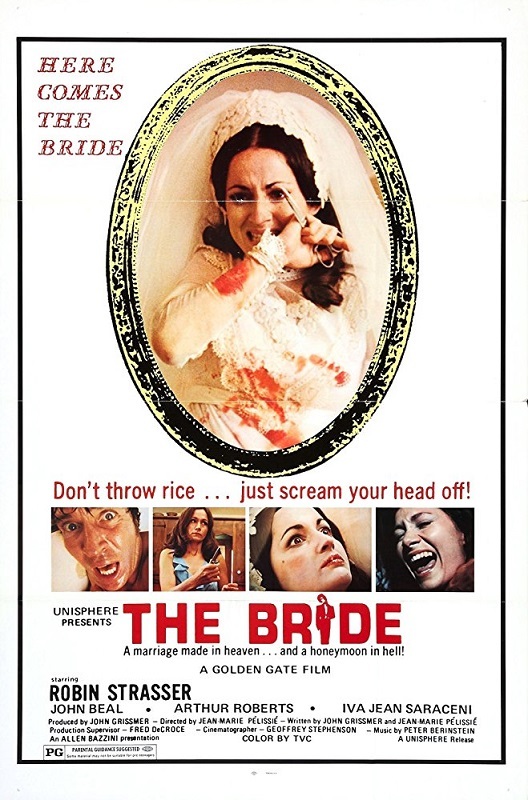
Known under alternative titles such as The Bride and The Last House on Massacre Street, The House That Cried Murder was a film that I didn’t really know much about going into. I may have vaguely heard the title before (or at least one of them), but I didn’t know anything about it, and though the movie wasn’t really good in most conventional senses, I did think there was occasional charm to be had here.

Some of this, perhaps even a lot of it, has to do with the final twenty minutes, in which the film subverted expectations I held from the very beginning of the movie, which both surprised and impressed me. I really wasn’t expecting to be surprised by some low-budget 70’s movie with less than 300 votes on IMDb at the time of this writing, but here I am, so credit where credit’s due.

Really, the route this story took was sort of different. It possessed those quality 70’s sensibilities, and even the fact that the print I viewed was quite far away from stellar probably helped the vibe of The House That Cried Murder. Also moderately working in it’s favor is the fact the film is pretty short, lasting a mere 75 minutes (which at times still feels long, but more on that shortly). None of this is to say the movie is great, or even good, but like I said, it can be charming.

The unfortunate thing is, though, save the final twenty minutes (and if we’re being generous, final thirty minutes), there’s not really that much here to applaud. The rest of the film is rather dry (a fate that’s not entirely uncommon of movies from this time period), and while not painfully dull, there certainly wasn’t much to really help keep your attention. It picks up nicely, no doubt, but like Demented, getting there might be more of a hassle than you’d hope.

Arthur Roberts did okay as a rather unlikable character. I mean, he didn’t do great, but I don’t think most central performances here were that striking, so I wouldn’t take offense to that. And related to that sentiment, Iva Jean Saraceni’s short screen-time didn’t do that much to endear me to her character. Robin Strasser (the Bride in the film) was shaky too, but given what we learn about her character, I don’t really mind that. Out of everyone, I think John Beal (who played Strasser’s father, and starred in 1957’s The Vampire and 1939’s The Cat and the Canary) did the best, and was actually a character you could sympathize with.

There were some okay scares toward the latter half of the film, such as a nice surprise left in someone’s refrigerator and a tense walk up the stairs, but the movie never really gives us too much in that department. What’s more memorable, really, are the final five minutes or so, which seemed almost ahead of it’s time. I don’t personally know if I loved that ending, but it was at least unique, so again, credit where credit’s due.

As okay as the finale was, though, I don’t think credit is due that often. I certainly found The House That Cried Murder watchable enough, and occasionally enjoyable enough, but it’s sluggish pace during the first half is pretty damaging, and I just don’t know if the conclusion really saves it. It may well be worth at least one watch, but I don’t see this becoming a favorite of too many people.

5.5/10

The Strange Case of Doctor Rx (1942)

Directed by William Nigh [Other horror films: The House of Mystery (1934), The Ape (1940), The Ghost and the Guest (1943)]

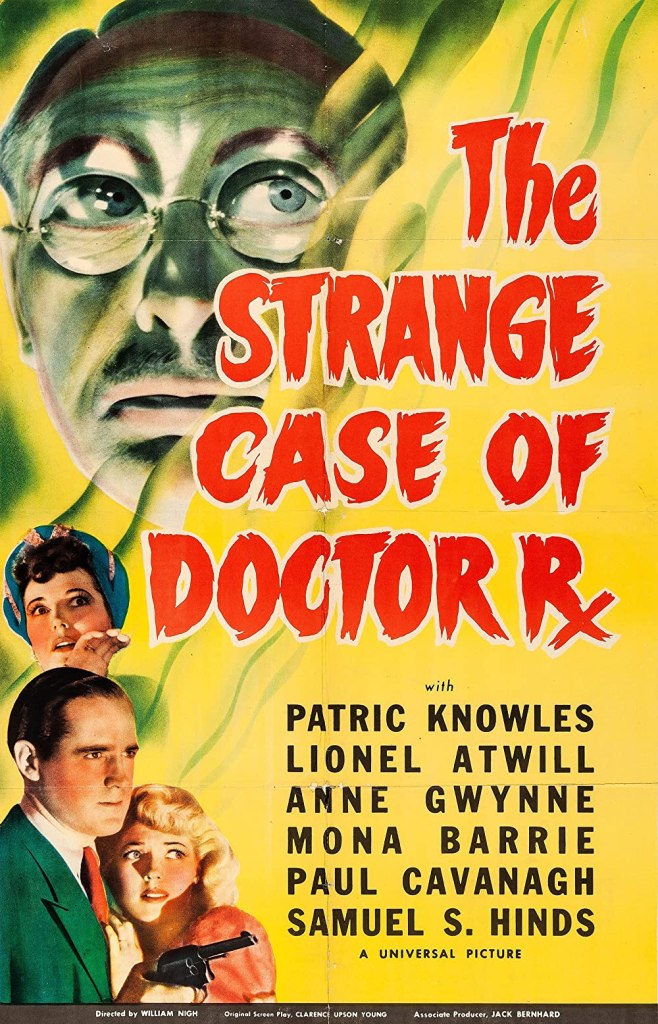
This is another one of those movies that I’ve seen the title of quite a bit but never took the time to check out until now. I generally found this little movie enjoyable, but it’s quite typical of the time (or more specifically, of the 1930’s), and I don’t know if it’ll really end up that memorable a film.

Certainly the central plot is interesting, what with a serial killer going around and killing seemingly-guilty men who were found not guilty by the court system. There’s not really a lot of playing around with the vigilante aspect, but I did find the idea itself worth it.

Not that the film doesn’t play around a bit. There’s a fair amount of comedy thrown in (though this is never really an outright horror-comedy unless Moreland’s character is on screen), and despite the short run-time, there is a bit of focus on arguably more unnecessary scenes (such as one toward the end in which a gorilla randomly popped up).

Patric Knowles made for a decent and witty lead. He’s not a name I necessarily know (though he was in one of my favorite classic films, The Adventures of Robin Hood from 1938, along with appearing in The Wolf Man and Frankenstein Meets the Wolf Man), but while not spectacular, he did good here. Anne Gwynne (The Black Cat from 1941, House of Frankenstein and Weird Woman) was also fine, but I can’t say that, at times, her character did rather annoy me.

Few others really merit a mention – I enjoyed Lionel Atwill in movies such as Doctor X, Murders in the Zoo, and The Vampire Bat, but here, he doesn’t really do all that much, nor make much an impression. Edmund MacDonald’s character annoyed me more than anything, and Shemp Howard had potential, but was used primarily for failed comedic relief.

And to an extent, the same could be said of Mantan Moreland, a rather well-known African-American actor (and who I personally love in King of the Zombies), but half of Moreland’s dialogue was actually somewhat amusing (“I forgot to remember to get it”) in that horribly antiquated racist way. And of course, his cowardly antics here (which was a must for black actors in this time period, apparently) got old quick, but that’s no fault of Moreland.

I did like portions of the mystery here, and though he was only really in a single sequence, Doctor Rx did look pretty cool (he wore a hood, not too unlike The Town That Dreaded Sundown’s mysterious killer). I just wish he had more to do in terms of action than he did. And while his identity was decent, I just can’t help but feel the mystery was missing something.

Little in The Strange Case of Doctor Rx is that memorable, and that’s the biggest issue. I don’t doubt it’s largely watchable, and maybe even to an extent, enjoyable, but ultimately, I just don’t think it amounts to much.

6/10

Storm of the Century (1999)

Directed by Craig R. Baxley [Other horror films: Dark Angel (1990), A Family Torn Apart (1993), Rose Red (2002), The Glow (2002), The Diary of Ellen Rimbauer (2003)]

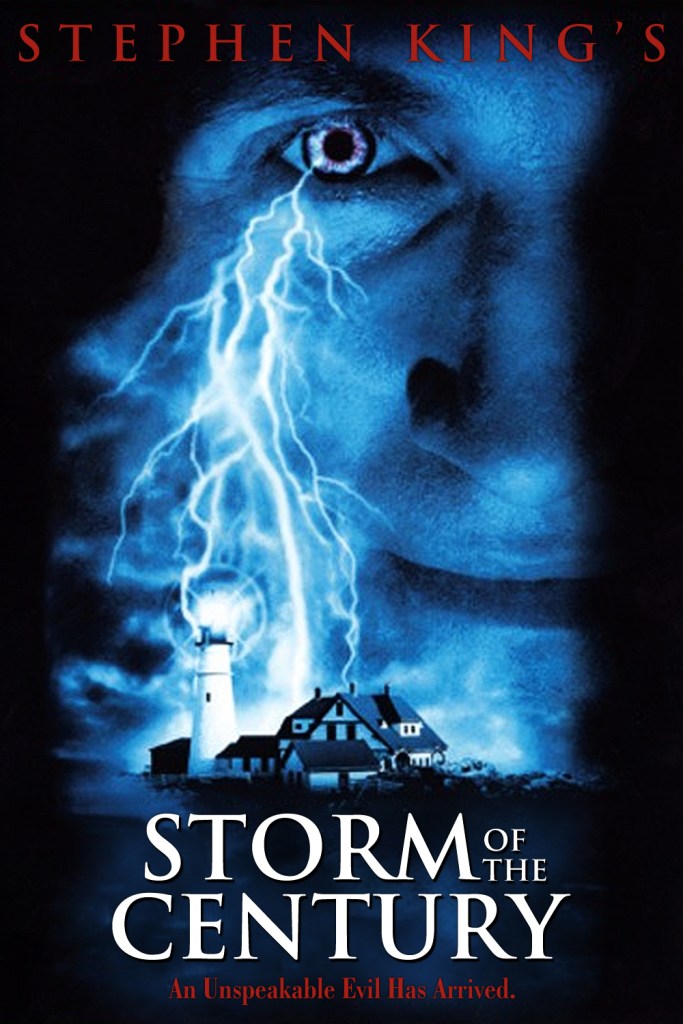
This mini-series, written by Stephen King (and mercifully not based on a novel) is perhaps, aside from his book It, one of the finest things he’s ever done, and it stands as my all-time favorite mini-series, and in fact, one of my favorite pieces of television that I’ve ever witnessed.

I can’t say when I first saw this – I doubt it was when it originally aired over three nights, but I do know I was pretty young, and given I would have been around six years old when this came out (I was born 1993), it’s not out of the question I saw pieces of this when my parents watched it. What I do know is that I did see a lot of this when I was quite young, and that only enhances my pleasure of it now.

With a mini-series like this, it’s hard to know where to start. Storm of the Century possesses three episodes and totals 4 hours and 17 minutes. Out of these four hours and 17 minutes, there’s only one thing I don’t care much for. Otherwise, this is outright perfection in a way that no mini-series has ever come close to matching.

There’s virtually nothing I don’t like about this – the story is fantastic. The setting is fantastic. The performances – almost every single one (and this is a big cast) – fantastic. The moral quandary the characters find themselves in, the mystery, the suspense, the music (oh, the music), the opening and closing narratives, the imagery, the atmosphere, the emotional gut-punches – all fantastic.

A mysterious man comes onto an island off the coast of Maine right before a storm (the titular storm of the century) hits hard, and this man, one André Linoge (Colm Feore), kills a woman and starts off a chain of events I daren’t reveal, because if this is a mini-series you haven’t seen yet, it would be a disservice to dig too deep into the story.

What I can say is that the story is fantastic (and given that I’ve already said such, that may be self-apparent), the mystery behind what Linoge wants (for, as he repeats, if he’s given what he wants, he’ll go away) is fantastic, and the atmosphere, which is already great due to the storm and isolated island setting, is quality dread.

I’ve never seen an island setting put to such great use. The whole theme of how island folk look after their own, and more so, known how to keep a secret, is embedded in the viewers from the beginning, and it only solidifies the longer each episode goes on. It’s a great look at island life (or what I imagine island life is like, given I’ve never set foot on an island in my life), and I love it.

There are a lot of great performances here, central among them Colm Feore and Tim Daly. I could watch Colm Feore walk through a crowd of people and pontificate on their dirty deeds all day, and his performance here is just masterful. Same with Daly – his utterly straight-laced attitude works well given he’s the town constable, and more so, he works great as a moral center and the central character, especially toward the somewhat depressing conclusion. Daly was also in both Spellbinder and The Skeptic.

Who else stands out? Well, who doesn’t? There’s Jeffrey DeMunn (The Blob, The Mist, The Green Mile) as the town manager that few people like. There’s Becky Ann Baker (Freaks and Geeks) with her quality accent, and Torri Higginson with an even better one. I absolutely adore Julianne Nicholson as Kat (“She’s your wife, Mike. How would I know where she’s hot?”), and though she got only two scenes of note, Myra Carter as the elderly Cora stole each of them.

An affable counterpart to Daly was Casey Siemaszko as Hatch, and playing Daly’s wife was Debrah Farentino, who did great despite the maddening choices she made toward the end (but really, it’s pretty hard to blame these people given the dire circumstances they were in). Ron Perkins was great as Peter, same with Steve Rankin as Jack. Denis Forest popped up here and then, and he was always a nice face to see (and his secret was one of the most tragic).

Who couldn’t feel bad for Nada Despotovich as she discusses leaving DeMunn’s Robbie or Adam LeFevre running and screaming in fear after finding a dear friend dead. Kathleen Chalfant was great (especially with her back-and-forth with Myra Carter’s irascible character) and most of the child actors and actresses were acceptable.

Once we figure out exactly what Linoge is after, the characters are thrown into quite a fun moral quandary (and of course, I mean fun for us, the audience, and not fun for them), made all-the-better by the fact that while I fully, 100% agreed with Daly’s vote more, given what the townspeople had been to up to that point, I don’t think it’s out of the question for the vast majority to take the opposite choice (and some try to play both sides, such as Daly’s wife).

They never really needed that many special effects aside from the constant storm raging on. The silver wolf cane did look a little janky at times, but I thought the sequence with the kids in flight looked reasonably decent, and even a better example, the dream in which the townspeople walked off a pier into the ocean really came across well.

I mentioned there’s one thing I didn’t care for, though, and now seems a good time to point it out. Every now and again, Linoge growls at the camera, baring vampire-like teeth. He doesn’t do this to anybody in the mini-series – just us, the audience. Now, something like that happens in the final scene of the mini-series, witnessed by an actual character, which was fine, but otherwise, this technique just struck me as somewhat out of place. I get it, they need to cut to commercial, but they can do that without a toothy growl.

Aside from that, though, like I said – perfection.

And speaking of perfection, that score. This video is a little piece of the score. Throughout the mini-series, it really packs a punch, and there’s plenty of atmosphere and emotion resonating from just the score alone, which is impressive, and, on a personal note, it’s not that common that a score is as consistently moving as this one is.

Storm of the Century may seem like quite an undertaking, given it’s over four hours long, but it’s a journey well-worth it, and if you’re one that’s skeptical of King-related mini-series, I can’t say I blame you, but I’d ask you at least give this one a chance, as this most definitely stands out as a solid work.

Born in sin? Come on it, as my pappy always said.

10/10