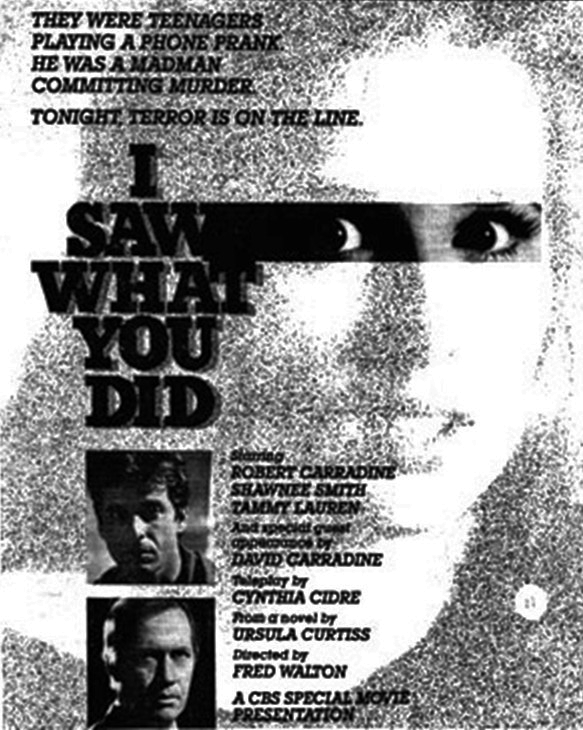
I Saw What You Did (1988)

Directed by Fred Walton [Other horror films: When a Stranger Calls (1979), April Fool’s Day (1986), Trapped (1989), Homewrecker (1992), When a Stranger Calls Back (1993)]

This television movie, a remake of a 1965 William Castle movie of the same name, is surprisingly decent. Television horror films can be a mixed bag, especially outside of the early 70’s, but this one is quite solid, and though maybe the build-up does take a bit of time, I was quite satisfied come the conclusion.

Now, I have seen this one once before, but like other films I’ve seen recently, it’s been a long-ass time. If I had to guess, it’s been at least eight years since I’ve seen I Saw What You Did, but twelve years certainly isn’t out of the question. All of this is to show that while I had some vague recollections of this one, I didn’t know exactly just how enjoyable I’d find this one.

A large part of my enjoyment has to come from the performances, especially those of Shawnee Smith and Tammy Lauren. Smith (The Blob and Saw) was fantastic as the goody two-shoes type, and playing the opposite personality was Lauren (who pops up nine years later to star in Wishmaster), who also does a fantastic job. I really liked the growing relationship between these two, and though I’d have liked a bit more on their friendship at the end, I still dug it. Also, as far as Shawnee Smith is concerned, I loved her facial expressions in this film. When surprised or shocked, her eyes and mouth really sell it, and her expressions alone were enough to crack me up at times.

Playing Smith’s little sister was Candace Cameron (now Candace Cameron Bure), who many might recognize as D.J. from Full House. Now, I’ve never watched Full House, but I guess I caught an episode or something once, because I also thought Cameron looked familiar. She’s a little sister, so she is sometimes annoying, but she’s got some amusing zingers and emotional lines in there.

The antagonist here is played by Robert Carradine, and he does a pretty good job playing a character with undefined mental issues (I think it’s some form of schizophrenia), and I definitely felt for him. Playing his brother was his actual older step-brother David Carradine (of Children of the Corn V: Fields of Terror and Sundown: The Vampire in Retreat fame – oh, and Kill Bill), and he also did well as a concerned brother. I bought their relationship, though the final scene was a little silly.

Quality performances aside, I also felt that the dialogue in the television movie was pretty tight. Dialogue isn’t something I notice all that often (unless there’s a lack of variety, such as Gutterballs), but here, it seemed pretty snappy. I loved the teacher’s pompous statement early in the film (his exact quote being: “You are a distinguished addition to our school, Miss Fielding; however, when you shine you expose the dullness of the rest of the students. Like Gatsby’s sight across the bay, a shrill reminder of our own mediocrity”), and there’s a decent amount of lines that I found quite amusing (such as “I hope you liked it,” and “He had teeth, Julia”). Just made for a funner experience.

Being a TV movie, there’s not much in the way of violence or special effects here. Some of the attacks are decent – the first slow-motion one perhaps more amusing than anything else – but this isn’t the movie to go to for that type of stuff. There was a fire toward the end, but this movie is more the set-up than the action.

Which I can imagine wouldn’t enamor some people, and I couldn’t blame them if they left this one feeling disappointed. For me, though, given I loved the central performances, I can’t really complain about too much here. I’m not saying that this remake is amazing (and to be fair, I’ve not even seen the original Castle version as of yet), but I did really get a kick out of a lot of it, and that’s all that matters to me.

8/10
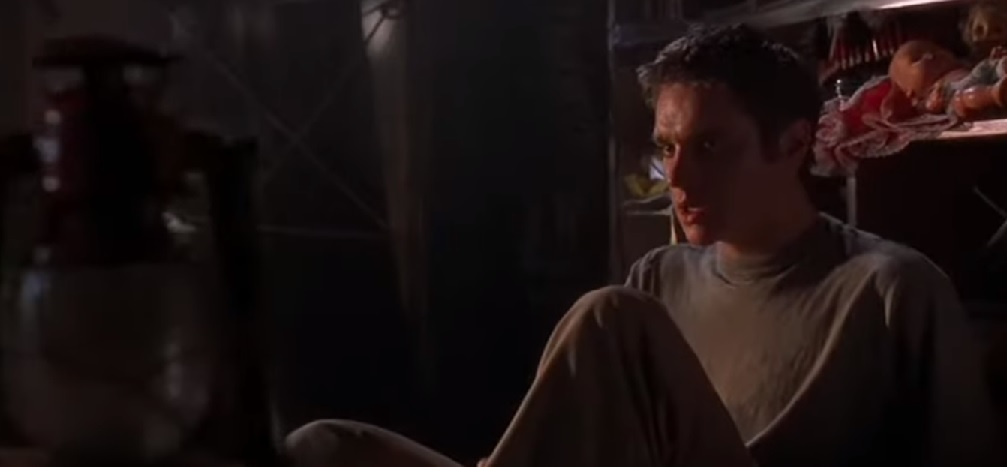
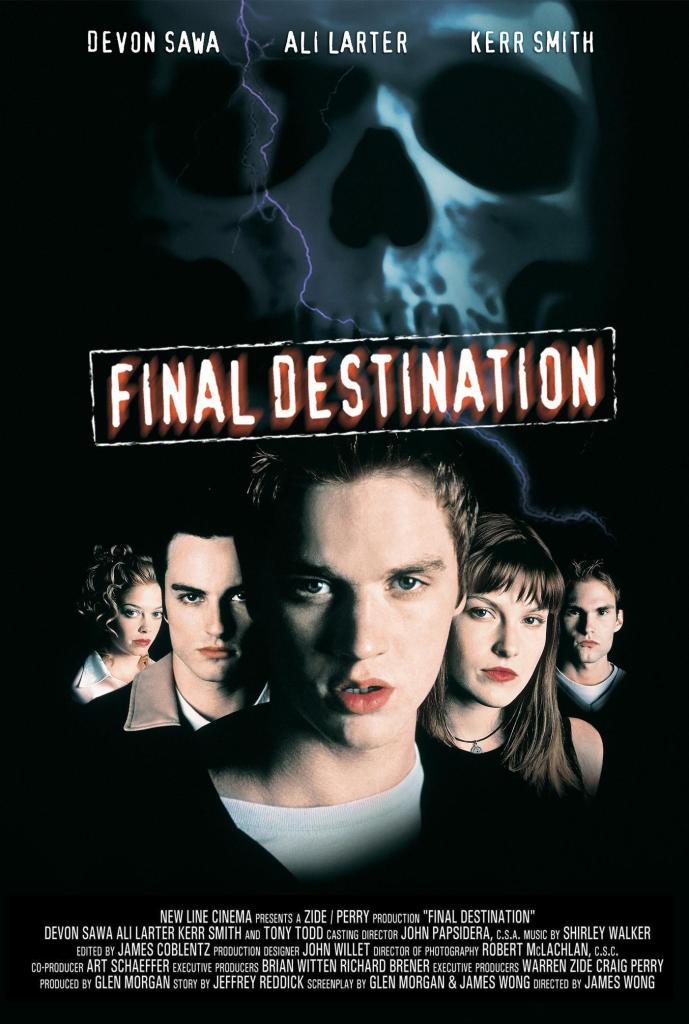
Final Destination (2000)

Directed by James Wong [Other horror films: Final Destination 3 (2006)]

While I’ve never had it in me to find Final Destination an amazing movie, I have always held to the opinion that it’s both pretty fresh, in terms of plot, and generally a solid movie. It’s not great, but Final Destination has a lot going for it, and is worth giving a shot.

If there’s any flaw, it could be said that some of the performances aren’t great. Though most of them are okay most of the time, lead Devon Sawa (of Idle Hands fame) was occasionally shaky. That may partially be due to the fact his character was somewhat illogical during portions of the film, so that may just be on me. Others that do well include Ali Larter (House on Haunted Hill), Chad Donella, Kerr Smith (My Bloody Valentine), and Tony Todd (Candyman). Though his character wasn’t that memorable, I also enjoyed seeing Seann William Scott (American Pie) throughout.

The idea of death as an antagonistic force works pretty well here. It seems quite innovative, and definitely something that hasn’t really been seen before. It also makes things tougher for these characters – while it’s not easy, one could feasibly avoid Jason or Freddy, but to avoid death, the lengths one has to take would be quite trying.

I do sort of wish we got more information on Tony Todd’s character, but for a single scene appearance, I guess I was okay with the information that he gave. Well, that and he was also quite quotable (“…and you don’t even want to fuck with that Mack Daddy”), so while I wish we knew more, it’s not all bad.

The elaborate death scenes were all reasonably fun, the most enjoyable probably being the broken mug/alcohol dripping into a computer/computer blowing up/things get fucked sequence about halfway through. Earlier, when someone gets a wire wrapped around their neck and struggles for footing was pretty solid too. Can’t complain about that decapitation; the most shocking, though, has to be the quick hit-by-a-bus scene. Beautifully done.

Also worth mentioning, the opening disaster (being an airplane crash) takes only a handful of minutes, somewhat unlike later films that would add a bit more detail in. The vision of the crash still looks great, and wonderfully frantic and horrifying, but I even noticed when watching it that it didn’t quite feel as involved as later opening disasters did.

One last note, I sort of like the different variations of “Rocky Mountain High” that pop up right before an unfortunate accident befalls someone. It’s a catchy song anyway, and the fact that Death apparently listens to John Denver is okay by me.

Final Destination has never been a movie I utterly loved, but I have always liked them trying something new, and by-and-large, and I think that it worked out well.

7.5/10

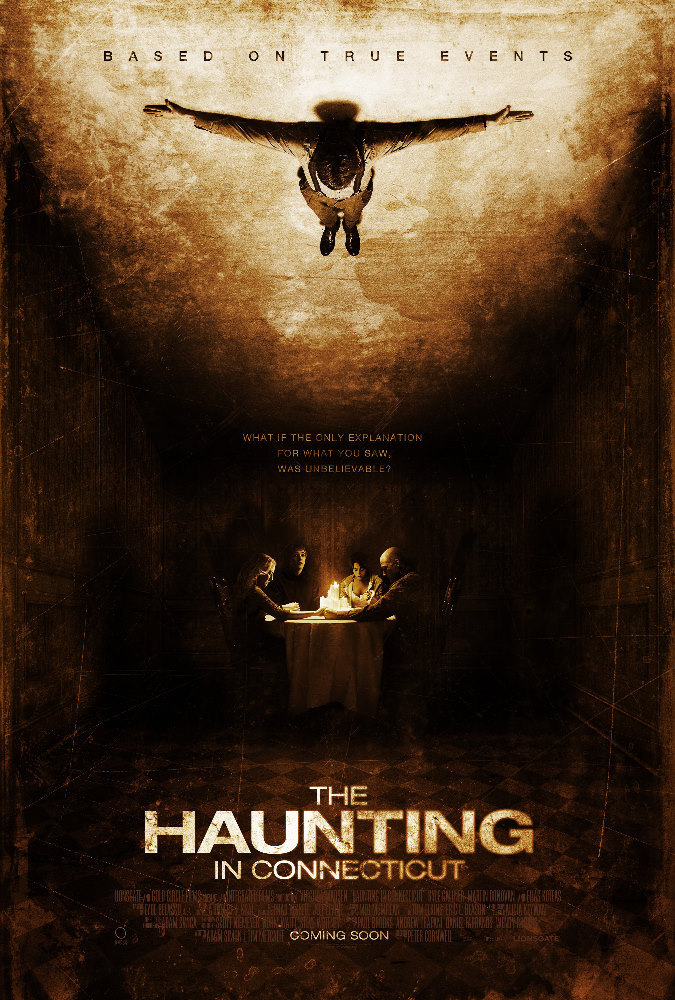
The Haunting in Connecticut (2009)

Directed by Peter Cornwell [Other horror films: Mercy (2014)]

When I first saw The Haunting in Connecticut, I got the sense I enjoyed it. I didn’t think it was great or anything, but I remember having a pretty okay time with it, and that surprised me, as I usually don’t enjoy Hollywood ghost movies. Well, now I wish I could go back to those more innocent times, as I really didn’t care for this at all the second time around.

First off, and if you know me, this may not come as a surprise, I have to mention how this movie claims to be “based on a true story.” It’s not. Throughout the whole history of the entire world, not a single ghost or supernatural event has ever been scientifically proven. To our current understanding, there are no ghosts, no demons, no supernatural occurrences (for if they occurred in nature, they’d be natural occurrences), and no God or gods.

Even more so, this particular story seems to have been entirely debunked. So for trying to pass this off as a true story to increase fear, this movie automatically lost three points. It pisses me off when movies do this (found footage are the worst offenders, as you can imagine), and this was no different.

Prove the existence of ghosts first, and then you can say these stories are based on true events. Until then, shove it.

What this movie has going for it is really quick flashes of Hollywood scares and a disjointed origin story that’s told in music-video style flashes. I think the origin is sort of interesting, at least as far as the necromancy aspect goes, but if that’s all a movie has going for it, and it’s not even told in a particularly enjoyable way, that may not mean much.

To be sure, Kyle Gallner (of the remake of A Nightmare on Elm Street) did decently, and Virginia Madsen (Candyman) worked well with him to make plenty of emotional scenes. Elias Koteas was okay, though his character was too religious to much care for. Amanda Crew (Final Destination 3) never really got that much time to make any impact, but her one research scene was fine, and she was cute, so whateves.

Of course, the estimated budget of this movie is $10 million dollars, so the fact that some of the performances are decent shouldn’t come as a surprise, and more to the point, it doesn’t really elevate the movie much.

I liked aspects of the origin story, but aside from this, this felt like complete Hollywood clichéd drivel. I’m not sure where I derived my enjoyment from the first time I saw this, but after watching it with fresh eyes, it’s just a waste with very little going for it. I imagine some people out there would enjoy this one, but it’s just not my idea of a good time.

4.5/10

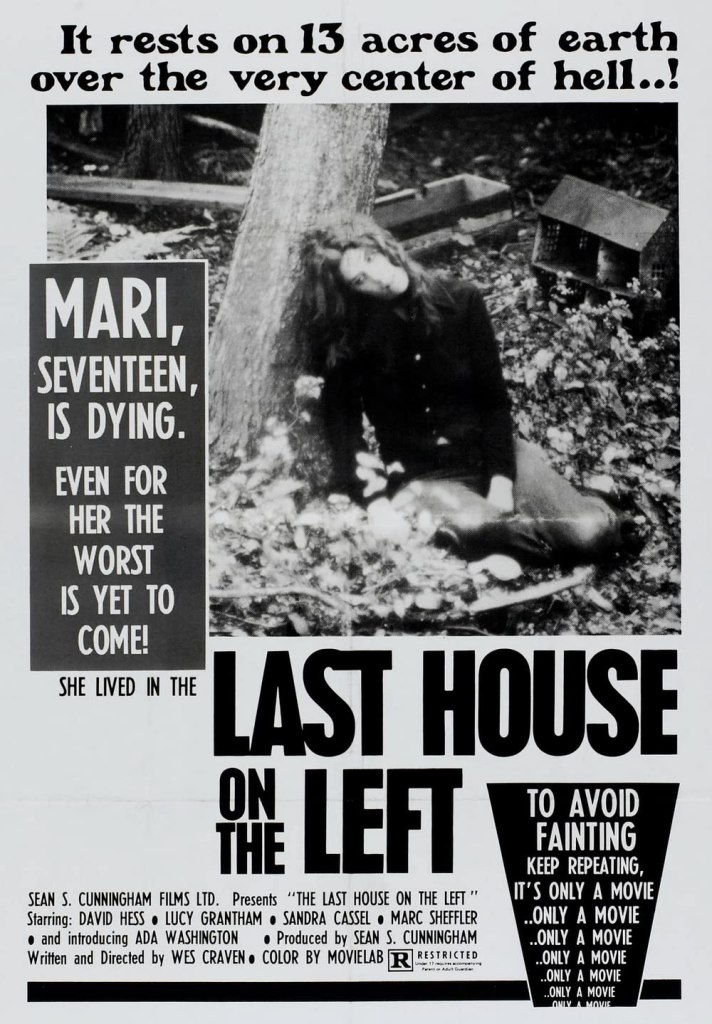
The Last House on the Left (1972)

Directed by Wes Craven [Other horror films: The Hills Have Eyes (1977), Stranger in Our House (1978), Deadly Blessing (1981), Swamp Thing (1982), Invitation to Hell (1984), The Hills Have Eyes Part II (1984), A Nightmare on Elm Street (1984), Chiller (1985), Deadly Friend (1986), The Serpent and the Rainbow (1988), Shocker (1989), The People Under the Stairs (1991), New Nightmare (1994), Vampire in Brooklyn (1995), Scream (1996), Scream 2 (1997), Scream 3 (2000), Cursed (2005), My Soul to Take (2010), Scream 4 (2011)]

No doubt a gritty and occasionally disturbing debut from Wes Craven, The Last House on the Left isn’t necessarily an easy movie to like, what with the occasional inappropriate comedic influences throughout, for instance, but I think that I tend to enjoy this more than I used to.

For most of the film, it’s not that violent. Though the rape and murder of the two young women is certainly disturbing, this isn’t I Spit on Your Grave, and while watching the two of them get dehumanized by Krug and his compatriots isn’t a walk in the park, it’s not near as bad as some later movies might be. Toward the end, we do get some increased violence, but it’s generally the type we can root for, which gives it a far more palatable taste.

The music throughout the movie sometimes feels a bit out of place, and part of that is due to the comedic influences with the two police officers trying to get to a soon-to-be crime scene, but most of the music works pretty well. The recurring “The Road Leads to Nowhere” is a perfect song for the movie, and during a death scene, we’re treated with “Now You’re All Alone,” a somewhat haunting melody (especially given the placement). David Hess (Krug) performed the music here, which shows a soft side to a rather brutish individual.

For the story, it’s pretty simple, but I do find it effective (and, on a side-note, a bit more relatable to the modern audience than 1960’s The Virgin Spring), and not only that, but I find it generally more enjoyable than what we might see from either I Spit on Your Grave or The Texas Chain Saw Massacre. Sure, watching Sandra Peabody’s and Lucy Grantham’s characters’ grueling torture isn’t fun, but knowing where it leads does take a small amount of the punch out.

Personally, I love the finale. In some ways, the reaction of the parents (Richard Towers and Cynthia Carr) might seem a bit sudden, but I think it makes for a quality final 15 minutes. Really, the two of them didn’t have a whole lot to do before then, so I think going the direction they did makes the film a bit more special.

Of course, I’d be amiss without mentioning what a quality scumbag David Hess plays. He’s popped up in later films, from House on the Edge of the Park to Body Count, but it’s this role that I think really shows his talents. This is the only role I know of Fred J. Lincoln, but I also found him somewhat fascinating. Neither Jeramie Rain (Sadie) nor Marc Sheffler (Junior) amazed me, but I did think Junior’s regret over the incident was close to touching.

The Last House on the Left isn’t what I’d call an amazing film, but I do think it’s a solid slice of exploitation, and I generally find that I enjoy it a smidge more than Texas Chain Saw Massacre (which may place me in the minority, but I’m used to it). It’s rough, it’s gritty, and it’s amateurish in some ways, especially in regards to that misplaced comedy, but it’s still worth seeing if 70’s horror is your thing.

7.5/10

Cat’s Eye (1985)

Directed by Lewis Teague [Other horror films: Alligator (1980), Cujo (1983), The Triangle (2001)]

This is either the second or third time I’ve seen this King-based anthology, and I’m not any more fond of it now than I was the first time I saw it. Cat’s Eye isn’t without promise, and I appreciate they decided to adapt some of King’s lesser known stories, but the movie is too comedic for me to really fully care for.

The first two stories here (all connected, as the title implies, by being witnessed by a cat) are based off short stories written by Stephen King, “Quitters, Inc.” and “The Ledge,” both published in King’s first collection of stories, Night Shift (a copy of which I’ve owned for years, and as such, it’s quite threadbare, really on it’s last legs). If you’ve read early Stephen King, you know that his writing style, especially in his short stories, can come across as clinical, very matter-of-fact. Not dry, but almost reminiscence of 70’s horror – bleak and without much in the way of hope.

Cat’s Eye throws that out the window and instead brings a lot of comedic influences into both of these stories. For ‘Quitters, Inc.,” we get an utterly ridiculous hallucination sequence with cigarettes (and quality singing from Alan King’s character), and for “The Ledge,” Kenneth McMillan’s Cressner is a lot goofier, almost a spoof of a classic mob boss.

It’s also worth mentioning that the conclusion of “The Ledge” was far better in the short story than it was in this adaptation, and that’s even discounting the dodgy special effects.

My disappointment with how they choose to adapt these stories notwithstanding, I think most of the main cast was okay. Not great – no one here really stands out exceptionally well, aside from maybe, and I say maybe, Alan King – but passable. James Woods (Videodrome) was a bit dicey, but likely did the best with the role he had. Robert Hays felt a bit uninspired as the lead in “The Ledge,” and Kenneth McMillan had potential. I was sort of surprised to see a young James Rebhorn (The Game and Independence Day), but his character didn’t really do anything, so it doesn’t really warrant this mention.

The third story, about a girl and her troubles with one trolly boi, wasn’t based off a King short story. As far as the special effects went, especially concerning the troll, it was probably the best of the three, but I also felt that it really went on too long. Candy Clark was pretty decent as a somewhat hateable mother, and Drew Barrymore (previously in Firestarter) was okay, but I didn’t care for the story.

Honestly, that sums this up. We get three stories here spanning an hour and a half, and while I like the source material for the first two, I just didn’t enjoy how they brought them to the silver screen. Also, while some might find such references cute, the opening which winked at both Cujo and Christine made me groan. It just felt forced, similar to the reference of Pinhead in Bride of Chucky.

Cat’s Eye has it’s place, and the movie certainly has it’s fans, but I can’t say I’ve ever been one, and I doubt the style they go for here will ever really work for me.

5/10

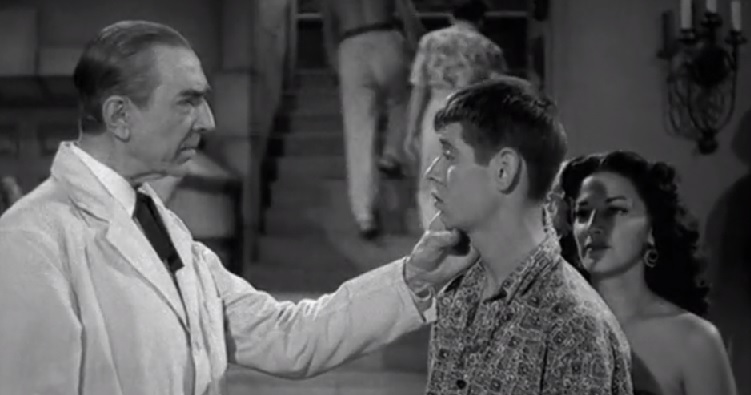
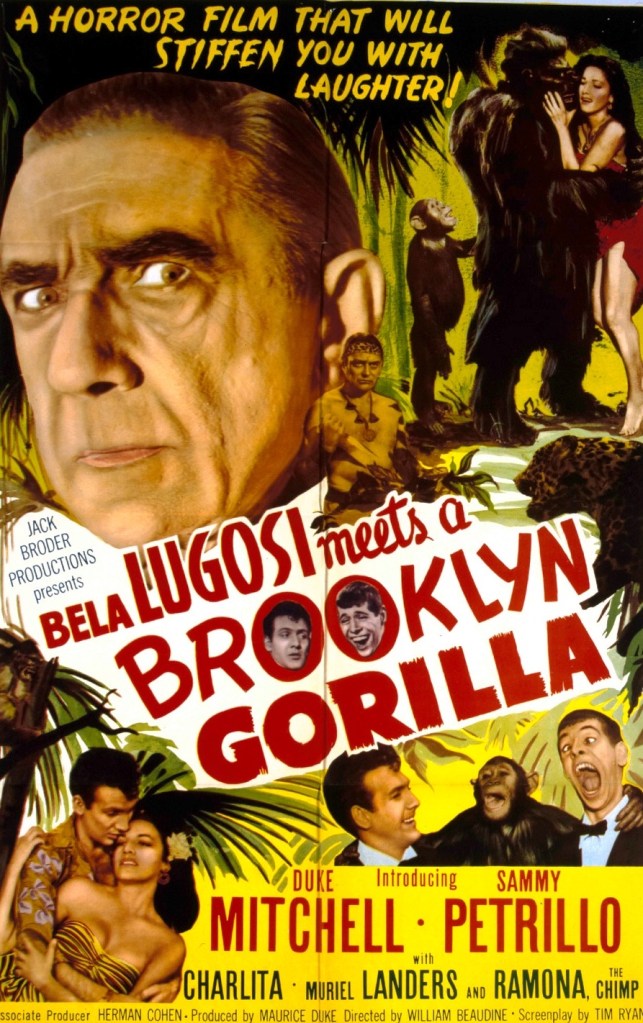
Bela Lugosi Meets a Brooklyn Gorilla (1952)

Directed by William Beaudine [Other horror films: Four Shall Die (1940), Lucky Ghost (1942), The Living Ghost (1942), The Ape Man (1943), Ghosts on the Loose (1943), Voodoo Man (1944), Crazy Knights (1944), The Face of Marble (1946), Spook Busters (1946), The Feathered Serpent (1948), Billy the Kid Versus Dracula (1966), Jesse James Meets Frankenstein’s Daughter (1966)]

With a title like this, one could be excused for thinking that the film sounds bad. Of course, given that the movie is legit terrible, that is an assumption that is well-founded.

I can live with horror comedies from the bygone eras. Movies like One Body Too Many and You’ll Find Out both had their strong points, and while this one came out later, I was hoping that maybe something here would work to it’s benefit.

Which didn’t really happen whatsoever.

I’ll give credit to both Duke Mitchell and Charlita, who have a decent chemistry together, and even mild props to Bela Lugosi. Lugosi wasn’t really good in this movie, but with the story they had to work with, he probably did the best with the material that he’d have been able to. Muriel Landers was an okay character, but with as often as she was being fat-shamed (which must be the height of comedy in 1952), it’s not easy for her to really stand out positively.

The fly in the ointment (and to be fair, the whole of the movie may be a fly, but that’s neither here nor there) is Sammy Petrillo. I don’t know Petrillo (apparently he was a stand-up comedian in the vein of Jerry Lewis), and I’m sure he was a good guy, but here, he has to be one of the most obnoxious creatures in existence. From his annoying laugh to shrill voice, not to mention pretty unimpressive lines to work with, Petrillo really tested my patience, and I think that was a test that I failed, though you may be hard-pressed to find many with a passing grade.

As one can imagine, the story here wasn’t really that interesting. Lugosi played a scientist doing experiments on evolution (so basically a rehash of his Murders in the Rue Morgue role), and he eventually turns one of the characters here into a gorilla, who then begins to sing. I was already deeply disinterested when this scene came around, so when the gorilla began singing one of the two uninspired songs in the movie, I was pretty much done.

I don’t dispute that someone somewhere out there could enjoy this for some reason. Maybe the atrocious conclusion felt innovative to them, or maybe they liked the hammy nature of the terrible humor. If someone got more out of this than me, that’s great. For me, I just couldn’t get into this at all, nor did I find most of this particularly good in any way.

2.5/10

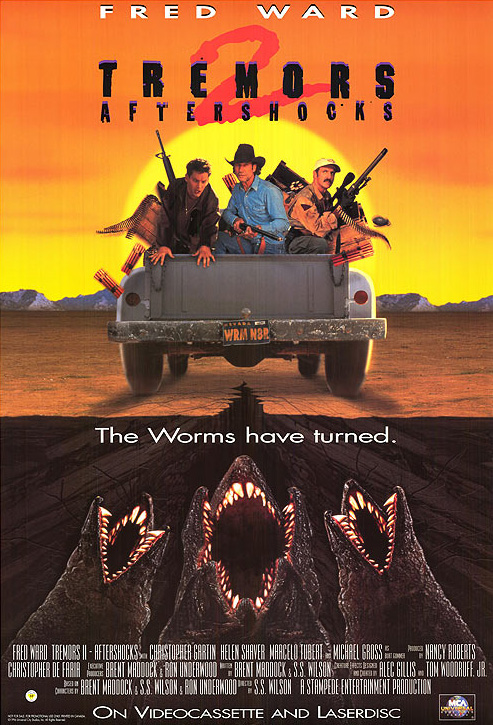
Tremors II: Aftershocks (1996)

Directed by S.S. Wilson [Other horror films: Tremors 4: The Legend Begins (2004)]

The first Tremors is a fantastic movie that I watched a lot growing up, and the same can be said here. While not quite as good as the first movie, Aftershocks still has a nice blend of humor and horror, and that, combined with Michael Gross, makes for a quality experience.

Kevin Bacon’s absence makes sense, but for what he was, Chris Gartin was a good replacement, and though he didn’t really have the same chemistry with Fred Ward as Bacon did, I think he did admirably. Ward himself was nice to see as a returning face, and he did work well with Helen Shaver (who herself was somewhat weak in comparison to Finn Carter’s character, but she had her moments).

Really, though, it’s Michael Gross who really makes the movie.

Burt has so many great scenes and lines that it’s hard to imagine what this movie would have been like if they couldn’t get him back. Bacon, I think they could afford to lose, but Gross? Forget it. With fantastic dialogue (“I am completely out of ammo,” “You know, as I lie here, I can’t help but notice…,” “I was denied critical, need-to-know, information,” and of course, “It’s gonna be BIG!”) and just an overall fun character, Gross is fantastic here, and really adds a lot to the movie.

Otherwise, while the movie does feel noticeably cheaper than the first film (losing two of the biggest cast names, Bacon and Reba McEntire, and being made as a straight-to-video film can do that), it still possesses a decent amount of fun moments, along with a clever way to invigorate the story.

Having the Graboids produce Shriekers was a clever idea, as it keeps things fresh and allows them to play with new ideas. I’m sure that, had the Graboids remained Graboids, they probably could have made a perfectly fine movie, but instead, like the underground monstrosities, they evolved, and I really appreciate that about this series (the third movie also has a quality evolution).

Special effects are pretty decent here. There’s not much in the way of gore, of course, but there are plenty of Shriekers getting shot or blown up (or in cases of running into Burt, both), and when others run into the carcass of a dead Graboid, it was disgustingly well done.

It’s also pretty well-paced. The film runs an hour and forty minutes, but it never feels like it’s dragging, and there’s a pretty good mixture between the suspenseful sequences and the humor. The finale was pretty fun (from Burt’s powerful gun ruining their escape plans to using a fire extinguisher to hide from the heat-seeking Shriekers), and that final explosion (as Burt said, “it’s gonna be BIG!”) was on point.

Tremors II: Aftershocks may be a step down from the first movie, but people should feel no shame in enjoying this. It’s a pretty well-made movie for the restrictive budget they had to go on, and I really think it holds up well, and given how many times I saw this as a kid, I can truthfully say that this provided a fun time back then, and still does today.

7.5/10

Carrie (2002)

Directed by David Carson [Other horror films: N/A]

Among my more well-known eccentricities is that I’m not a giant fan of the classic Carrie. It wouldn’t make my top 25 horror films from the 1970’s, let alone my top ten, which is a hot take, believe it or not. An even hotter take is that I enjoy this television production more than the 1970’s classic, and while I am sure some might be aghast, I can’t say I feel much shame.

The cast here is spectacular. Angela Bettis (May and Toolbox Murders) was the perfect choice, as she really pulls off Carrie’s character and personality. Patricia Clarkson (who was in both Delirium and Easy A – completely similar movies) was a good fit for Carrie’s mother, and her back-and-forth with Carrie was always fun to watch. Kandyse McClure (of the 2009 version of Children of the Corn fame) was decent as Sue, and a bit snappier here (for good story reasons) than she elsewise generally is.

Emilie de Ravin (who I think I recognize best from Santa’s Slay, but have also seen in The Hills Have Eyes remake and the mystery Brick) gave a good performance as the ultra-bitchy Chris, and related, Katharine Isabelle (Ginger Snaps, Freddy vs. Jason, 13 Eerie) was great as her ultra-bitchy friend. Tobias Mehler stuck me as somewhat uninspired, but Rena Sofer and David Keith (Firestarter) were very good.

Though he only got one really stand-out scene, I also loved Laurie Murdoch, who played the principal, and though her character isn’t really relevant, I also wanted to mention Meghan Black, if only because I know her as the voice of Rogue in the cartoon X-Men: Evolution, which I watched the hell out of when I was a kid. Lastly, playing Carrie during a flashback, we have a young Jodelle Ferland (the kid in Silent Hill and later in movies such as The Unspoken and Neverknock).

So despite being a television movie, the cast did rather impress me. It’s true that there were obvious limitations in terms of special effects (which can likely most clearly be seen during the prom carnage and later the scene in which Carrie’s slowly walking and bringing the town down with her), but generally, I didn’t think this really harmed the story too much (I think the worst bit may have been the scene right before Carrie snaps – I just think it ran on a bit long).

The story itself takes some daring alterations in the finale, which I didn’t remember from my first-time viewing of this. While it’s true that how they ended this version isn’t novel accurate, I was never a giant fan of the novel, and the fact that this has a less down-beat ending actually sort of made me enjoy it a bit more.

Speaking of the novel, while neither the original 1976 version or the 2013 version did this, the novel has a lot of newspaper articles, journal entries, letters, and various things from Carrie’s life following the tragic event, split in between the telling of the central story. They don’t quite do that here, but the movie is framed during an interview by the police following the prom disaster, which I liked quite a bit, largely perhaps due to it giving David Keith time to have fun with his character.

With all of this said, what issues I have with the other adaptations are still true here – I just don’t love the story. However, because this version has a less depressing conclusion, I can dig it more. Sue me.

Much like how I enjoy the 1997 The Shining mini-series more than the 1980’s film, I enjoy this television production more than both the 1976 and 2013 versions. I’m an odd duck, but I can only say what I feel, and I truly enjoyed this one more. Good stuff, especially with the limitations they had.

7.5/10

Homicidal (1961)

Directed by William Castle [Other horror films: Macabre (1958), House on Haunted Hill (1959), The Tingler (1959), 13 Ghosts (1960), Mr. Sardonicus (1961), The Old Dark House (1963), Strait-Jacket (1964), The Night Walker (1964), I Saw What You Did (1965), Let’s Kill Uncle (1966), The Spirit Is Willing (1967), Shanks (1974)]

William Castle is probably one of my personal favorite directors when it comes to pre-1970’s horror. His campy style never fails to entertain, and though his movies may rarely be necessarily special (with the exception of House on Haunted Hill, which is definitely special, and perhaps Mr. Sardonicus), they’re almost always entertaining, and Homicidal is no different.

Partially influenced by the success of Psycho from a year previous, Homicidal gives us a story filled with different characters and plenty of mystery, along with a conclusion of which the influence of Psycho can clearly be gleaned. Just because the film shares some elements with it’s better doesn’t mean Homicidal is without credit, though, because this movie has a lot going for it.

The cast throughout is stellar. It’s true that Joan Marshall gives one hell of a performance, and though maybe a little over-the-top at times, it’s a Castle movie, so I don’t imagine many could hold that against her. What’s even more impressive, though, is the performance given by Eugenie Leontovich, who plays a mute character, and must express herself solely via facial expressions. The terror that her character felt in certain scenes was palatable, and I loved it.

Patricia Breslin (who also popped up in Castle’s I Saw What You Did) was pretty good as the focal character past a certain point, and though she wasn’t really near as stellar as others, I definitely appreciated her presence. Somewhat similar is Glenn Corbett – he was perfectly fine in his role, but he didn’t stand out quite as much as other cast members.

Being a movie from the early 60’s, and also being black-and-white, Homicidal doesn’t have a lot to offer in terms of gore (though there are two scenes of note – one a multiple gut-stab, the other the results of a decapitation – that are worth seeing), but it does give us a decent little mystery with a really fun finale (following Castle’s corny Fright Break, of course, which allowed theater-goers 45 seconds to leave prior to the film’s conclusion).

Since I’ve seen this once or twice before, I obviously knew how the film was going to end, and I suspect that most modern-day audiences, hard-wired to see plot twists coming from a mile away, will spot this one from, well, miles away, but that doesn’t, in my mind, make the conclusion any less stellar. It may well be obvious to new-time viewers, but I recall being surprised the first time I saw this, and while that may just mean I’m gullible, I still felt appreciation for that.

What I also appreciated was the opening to this film, which had director William Castle speaking to the audience, referencing previous works (Macabre, House on Haunted Hill, The Tingler, and 13 Ghosts) and having a jolly time with it. It reminded me a bit of Edward Van Sloan’s speech which opened up Frankenstein. It’s corny, but it’s fun, which I think Castle excelled at.

Homicidal may not be my favorite work from Castle, but I do think it’s a pretty good movie, and I definitely recommend it to fans of the classics the genre has to offer.

8/10

Dead & Breakfast (2004)

Directed by Matthew Leutwyler [Other horror films: Unearthed (2007), Uncanny (2015)]

This zombie comedy is a film that I’ve not seen in quite some time, and by “quite some time,” I mean at least 12 years. I saw this one when I was between the ages of 11 and 15, if I had to guess, and I’ve only seen it once, so I was interested in revisiting it and seeing if I liked it any more than I did back then.

Unfortunately, my reasons for not really caring for it back then are still applicable to today – I find the film too silly to really get into, and while I sort of like some aspects (such as the special effects and idea of the lyrical segues and recaps), overall, there are far better zombie comedies out there, such as Shaun of the Dead, Last of the Living, and Doghouse (and of course, you could argue that this isn’t even a zombie movie, as these are more people being possessed by an evil spirit, but given the film is called Dead & Breakfast, I don’t personally feel all that guilty labeling it as such).

For a lower budget movie, the special effects are decent. It comes with its downsides, such as a scene in which blood splatters onto the camera (which is something I have always hated when it pops up in horror films), but from a purely technical standpoint, the gore effects here are impressive.

Even elements of the cast are decent. Jeremy Sisto (Wrong Turn, May, Population 436) was okay, though wasn’t that important. In a similar vein, Erik Palladino (Return to House on Haunted Hill) was fine, but I never really cared for his character. I liked both Gina Philips (Jeepers Creepers) and Ever Carradine (who I recognized from Runaways), but I admit I’m sort of sick seeing David Carradine (who is Ever’s uncle, as it turns out) pop up in small roles. It just gets old.

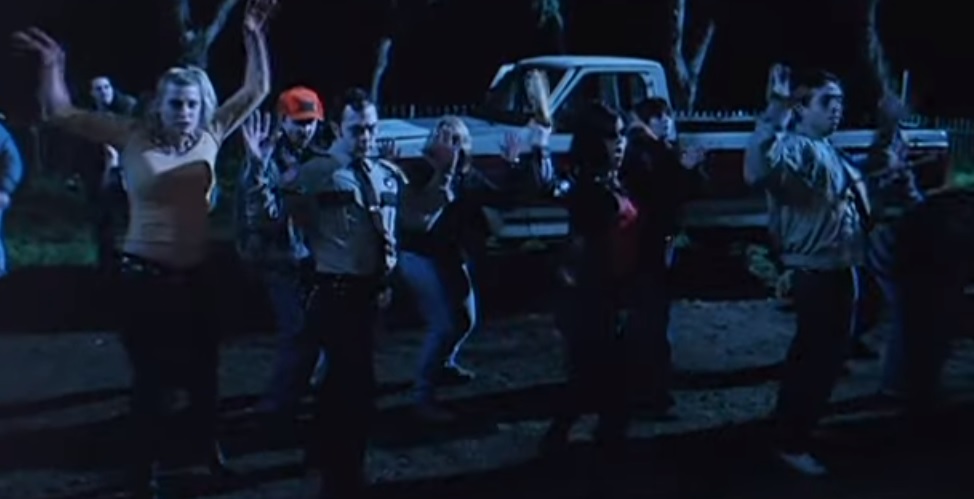
For the most part, though, the central cast is stable, or at least unobtrusive enough as to not cause any problems. What bothered me more than a couple of uninteresting characters was the humor here. There might be a few funny lines, or an amusing scene, but overall, I thought a lot of the jokes here sort of fell flat. I also didn’t care, on a side-note, for the zombies dancing. Again, that felt more ridiculous than anything.

What was more grating than cute was those musical segments that recap the story (“But the only way to truly stop these drones is to dig up Mr. Wise’s bones / So that’s why the sheriff, drifter, and Melody took Doc down to the cemetery / To carve the bones into sharp stakes, one thrust to the heart is all it takes / Can’t kill them with guns and no strangulation, just good, old-fashioned decapitation”), and though maybe a couple of these peppered in would be okay, I just felt they popped in too often, especially given a whole song is sung during the credits which covered the whole of the movie.

Dead & Breakfast isn’t a terrible movie, and though I don’t often hear people talk about it, it does sport a perfectly decent rating on IMDb (5.8/10 with 5,784 votes as of this writing). It’s not my type of comedy, though, and overall, I just found the movie somewhat sluggish and wholly lackluster. I don’t think this is one that I’ll be looking to watch again anytime in the next twenty years, but some people out there will enjoy it just fine.

5/10