Streets of Death (1988)

Directed by Jeff Hathcock [Other horror films: Victims! (1985), Night Ripper! (1986), Fertilize the Blaspheming Bombshell (1992)]

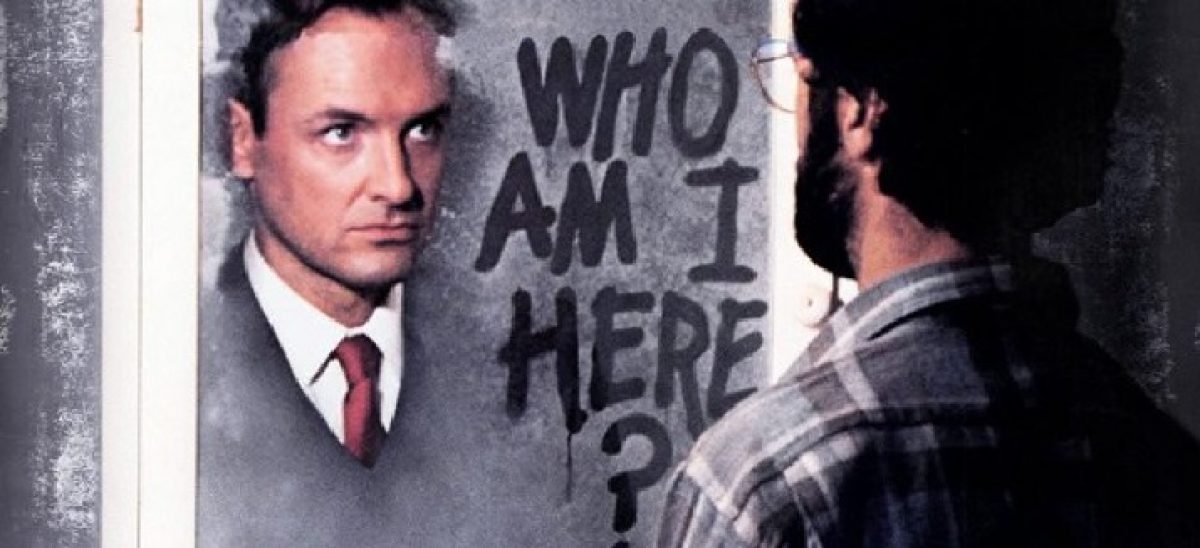
Another of the many SOV horror films churned out in the 1980’s, Streets of Death may be among the most palatable of them. It’s not a half-bad story, and while I still think it’s a little below average, it’s a movie worth seeing if you’re into shot-on-video horror.

The plot is like a mix of Stripped to Kill and The Last House on Dead End Street, with prostitutes being killed by a serial killer for snuff movies, and so there’s a cop who goes undercover as a sex worker in hopes of drawing the killer out. So the plot’s not the most original material, but throw in some fun performances, and I think the film goes down somewhat easily.

For a low budget picture, I didn’t mind most of the performances. Both Guy Ecker and Larry Thomas (Terror on Tour, Night Ripper!, Doctor Spine, and Untitled Horror Comedy) worked great with their somewhat manic, somewhat suave, personalities. I didn’t love portions of Susanne Smith’s story, and how she fell for Lawrence Scott’s (Night Ripper!) character, but she was good. Simon de Soto (Night Ripper!) had some strong moments, and I especially liked his scenes with Tommy Kirk (The Ghost in the Invisible Bikini, ‘It’s Alive!’, and Blood of Ghastly Horror), who had a surprisingly decent character arc.

I was sort of hoping the gore would be better here. We got a few good scenes – a woman was killed by a drill, a few people got stabbed with a knife, and someone got their throat slit – but for the most part, these were all pretty tame. There was someone who had their body dismembered – we do see a dismembered hand for a little – but that’s entirely off screen. The concept is playful, though.

Some of the film was decently amusing, such as a portion when the killer is dumping a body, but has to kill not just one, but two people who happen upon the scene, and another has a prostitute saying one of the more classy lines I’ve heard in a while: “Let’s discuss it over a cocktail. Your cock, and my tail.” I laughed at that.

There is a small area of the film that bothered me. It was partially amusing, to be sure, but it still felt problematic. While going undercover as a prostitute, the officer makes some arrests on those who proposition her (which seems to me like entrapment, but I may be wrong). Now, it’s funny to see an older, naked man (still wearing a hat) being chased down by some cops, but I don’t have a problem with prostitution, and arresting people who are interested in some intimacy just rubs me the wrong way. Legalize prostitution, please, and give sex workers a safer environment, and I’d be a happier guy.

Overall, though, Streets of Death is a much better film than I honestly thought it would be. It was directed by Jeff Hathcock, who directed some other SOV films (though I’ve only seen one, Night Ripper!, which was decent), and I think this was quite good for a SOV entry. It’s not a movie I’d watch often, but I do think it deserves some respect.

6.5/10
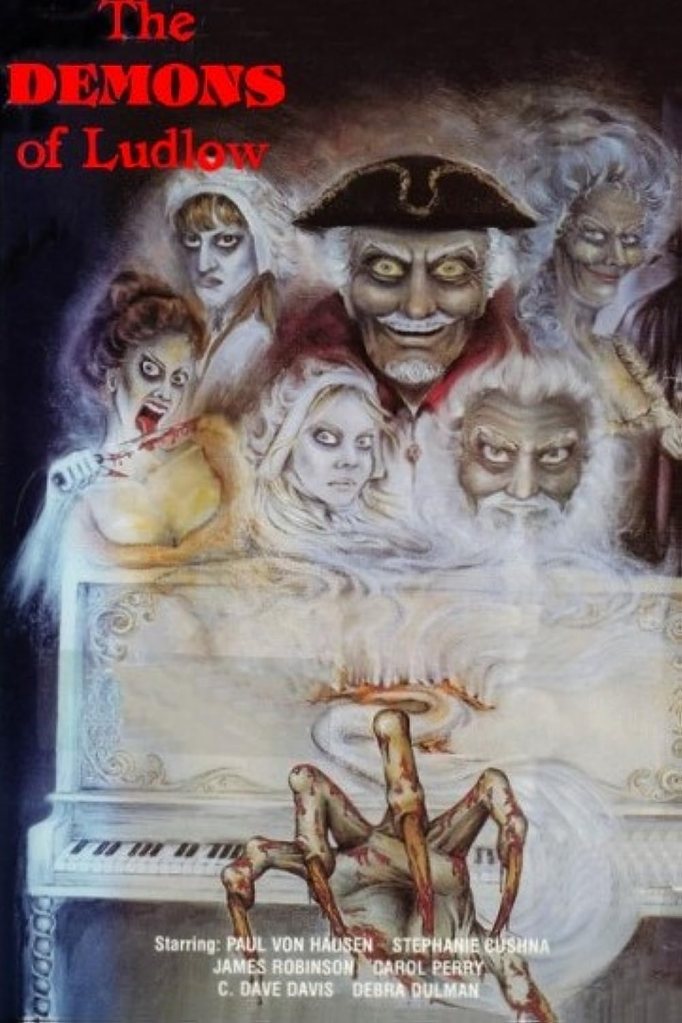
The Demons of Ludlow (1983)

Directed by Bill Rebane [Other horror films: Monster a Go-Go (1965), Invasion from Inner Earth (1974), The Giant Spider Invasion (1975), The Alpha Incident (1978), The Capture of Bigfoot (1979), Rana: The Legend of Shadow Lake (1980), The Game (1984), Blood Harvest (1987)]

I’ve always had a soft spot for this rather low budget film. It’s a bit choppy at times, to be sure, but The Demons of Ludlow can be a decent amount of fun, and I rather like the story.

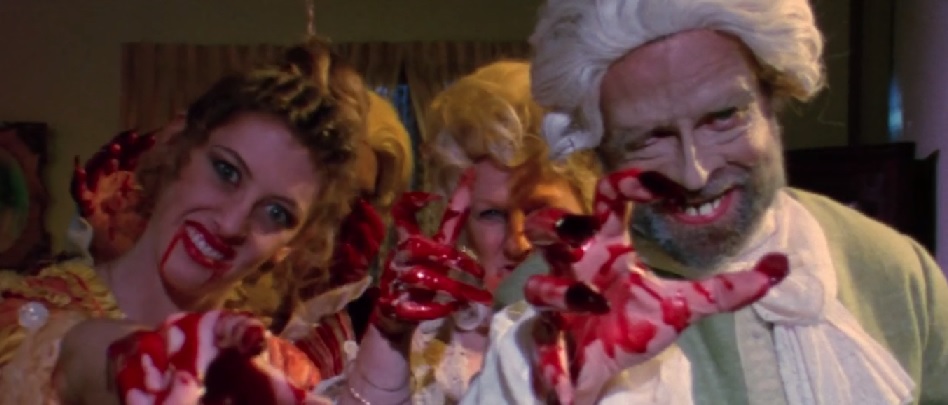
Taking place in a small town (and to specify, by small, I mean the population is a mere 47 people), the story revolves around a bicentennial celebration, town secrets long-thought forgotten, and a demon-possessed piano. It sounds wild, and it certainly can be once the action starts up.

And the action is fun, also. A couple who are enjoying each other’s company in a barn run amok of glowing green hands, and the same hands tear a hole through a woman’s ceiling later on and hang her. There are ghosts dressed as pilgrims that come around toward the end, and they wonderfully decapitate someone with a sword, and for another poor hombre, they cut both of his hands off.

Certainly the movie is a lower-budget production. If you’re familiar with director Bill Rebane (who, among other things, was behind The Cold, or The Game, The Giant Spider Invasion, and Blood Harvest), this may not come as a surprise. Related, the movie was filmed entirely in Wisconsin in the small, unincorporated community of Gleason. This northern Wisconsin community is also where films such as The Devonsville Terror, The Giant Spider Invasion, and Blood Harvest were made, and for good reason.

I love the small town feel of the movie. Only having a population of 47 people is just amazing, and I dig the vibe of the setting. In fact, it leads to a somewhat amusing line toward the end – the lead character (Stephanie Cushna) says to her work acquaintance (James R. Robinson) that it seems dead outside; that the town feels like a ghost town. I can’t imagine the night life of a community of only 47 souls ever seems overly excited, so every time I hear this line, it cracks me up. Also, being a northern Wisconsin community, there’s so much snow around town. It looks a dreadfully cold place to live.

And I have seen this movie more than a couple of times. This might only be my third viewing of the film, but given the generally negative reception the film has (when it has reaction at all – I tend to feel most people forget this movie exists), this goes a long way to show my differences of opinion with others. It reminds me of Drive-In Massacre, a film I rather adore, but is also somewhat of a terrible movie. I guess I’m odd that way.

As for the performances, I thought that Stephanie Cushna and Paul Bentzen (Invasion from Inner Earth and The Alpha Incident) were pretty good, especially once they got together near the end to work on figuring out the curse that Ludlow has fallen under. I also think that James R. Robinson should have a bit more to do with the finale, but he does good with what he has. Playing the mayor is C. Dave Davis, who does great with the small-town mayor aura, and playing a young woman with some mental health issues, I thought that Patricia J. Statz did fantastic. One a tragic note, this is the sole film Statz was in, and she later was killed on September 11th, 2001, as she was working at the Pentagon when the attack occurred.

Obviously, I probably enjoy The Demons of Ludlow a great deal more than is usual. I don’t know why this happens to be the case – even since I first saw it, I’ve always felt an odd affinity to it. It’s not a great movie – the finale is oddly rushed, and I’d have liked a bit more detail about exactly how things went wrong in Ludlow 200 years previous (the basis of the town’s curse), but even with those deficiencies, I’ve always enjoyed the vibe of this one.

It may just be me, and that’s fine, but I rather love The Demons of Ludlow, and I don’t think that will change anytime soon. I’ve seen it three times now, and still consistently have found it above average, and if it’s strange that I enjoy this far more then classic like Carrie and The Shining, so be it.

8/10

Dark Night of the Scarecrow (1981)

Directed by Frank De Felitta [Other horror films: Trapped (1973)]

Easily among one of the finest made-for-television horror movies I’ve seen, Dark Night of the Scarecrow has a strong reputation, and for good reason, as it’s a fantastically-made and suspenseful film.

Not only that, but it’s rather emotional, in a tragic way. In fact, the first 25 minutes of the film have to be among the most emotional sequences in a movie, as a mentally-challenged man is killed by four vigilantes, but these good ole’ boys lie about the circumstances, and in an affront to justice, are released from police custody.

Luckily, the movie becomes far more wholesome from there, as they start being killed off in mysterious circumstances, possibly by a charming scarecrow chap.

The casting of this movie is great. Playing the four murderers are Charles Durning (Sisters and When a Stranger Calls), Robert F. Lyons (The Strange Possession of Mrs. Oliver), Lane Smith (Prison), and Claude Earl Jones (Bride of Re-Animator), and all four do a great job. I don’t think Lane Smith gets a whole lot of time to make an impression, but he does well with what time he has, and the other three, especially both Jones and Durning, were a lot of fun.

Larry Drake (Dr. Giggles) did an amazing job playing Bubba, the mentally-handicapped man killed at the beginning. He was a likable character, and it was just depressing to see him killed how he was, especially since he was innocent of any wrong-doing whatsoever. Playing his mother was Jocelyn Brando, who did a fantastic job with an emotional role. Tonya Crowe, who played a friend of Bubba’s, did really well also, which is something I don’t generally say when it comes to younger performances.

Being a television movie, there’s nothing in the way of gore, but the suspense makes it so that such doesn’t matter. The way some of these individuals die is gruesome enough even without seeing the aftermath – one guy falls into woodchipper, another drowns in grain in a silo (worst hiding place ever, on a side-note), and another almost gets ran down by a plowing machine, only to run into the business end of a pitchfork.

Oh, as for the scarecrow? This is the first scarecrow-centric horror film, but the scarecrow barely appears at all, save for the final minute or so. Personally, I’ve never minded this, as it gives a sort of psychological feeling to the movie – are the men really being killed by a scarecrow, or is it related to a manifestation of the guilt they feel? – though I, of course, love the final scene. Another favorite scarecrow film of mine, Scarecrows, certainly makes up for the perceived lack of straw bois in this one, should that be a concern.

Dark Night of the Scarecrow is a classic, and I think that most in the horror community know that. I know that in the past, I’ve thought the movie was a bit sluggish, but seeing it again, I was enjoying every moment, so if you want an idea of made-for-TV horror done right, then this is a movie I highly recommend you view.

8/10

The Last House on Dead End Street (1973)

Directed by Roger Watkins [Other horror films: Shadows of the Mind (1980)]

This is one of those films that I’ve known about for a long time, and perhaps more than most films from the 1970’s, this one has reached a somewhat mythical status. There’s plenty in the film that scholars like to analyze, and perhaps it’s a slice of exploitation that plenty might end up having an okay time with, but I found the whole thing somewhat untenable.

I don’t have objections to the trashy, exploitative films of the 70’s – The Last House on the Left has a lot going for it, for instance. In this case, though, I have say that I found very little in The Last House on Dead End Street to enjoy, and in fact, if I’m being more honest, the movie just gave me a headache, and the fact I got through it actually surprises me.

Toward the end, there is a scene in which a woman is tied down on a table, and her face gets sliced at with knives, and it looks like both of her legs were cut off. It was probably the most striking gore in the film – we did see organs pulled out of someone earlier, but H.G. Lewis made The Wizard of Gore in 1970, and that actually did make me squeamish, whereas nothing here had that effect. If you want to see the movie for the gore, that’s fine, because you probably won’t be disappointed, but it’s definitely not the case in which the gore makes up for the rest of the film.

Amusingly, it’s a somewhat short movie (at least in the currently-existing copy – this was originally around three hours, but a lot of it is lost), running at 78 minutes, so it shouldn’t be too difficult to engage someone. Obviously, I can only speak for myself, but I found much of this so damn tedious, and not only that, but there’s little enjoyment in seeing anything in the film, which just made watching this such a struggle in a way that few movies tend to be for me, and in a way I find difficult to put into words.

I’m not saying that the movie isn’t without value, as most, if not all, movies have some value. It’s just that, on a personal level, The Last House on Dead End Street fundamentally disinterested me, and though it’s been on my radar of movies to keep an eye out for, I have to say that I didn’t have a good time whatsoever with this movie, and would simply recommend it for fans of exploitation.

3/10

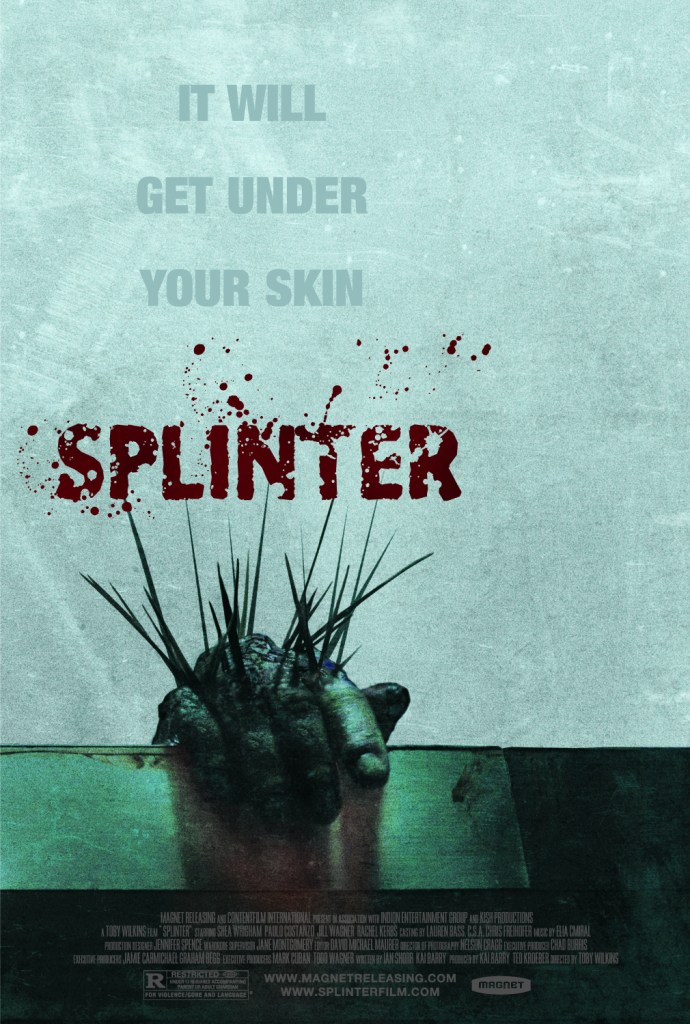
Splinter (2008)

Directed by Toby Wilkins [Other horror films: The Grudge 3 (2009)]

I don’t think Splinter’s necessarily a great movie, but I do think it’s tightly paced and possesses some solid special effects.

I love how simple the film keeps things – there’s four characters, very quickly brought down to three, stuck in a gas station with some spiky fungus making their lives unpleasant, and they have to find a way to survive. And that’s pretty much it. Sure, we get a little time to meet the characters, but once they get to that gas station shortly into the film, it’s that gas station which they’ll stay at. The use of a smaller setting never feels limited, though, and the story works great.

Personally, I love one of the characters, as I did the first time I saw this. Seth (Paulo Costanzo) doesn’t seem like much at the start of the film – he’s somewhat weak, and has a sort of geeky persona. He’s smart, though – he’s going for a PhD in biology, and it’s him who figures out what the mysterious organism is, and also a theoretical way to defeat it. It’s fun seeing him turning into a force to be reckoned with, and I quite like his character.

Of course, all three of the central performances were great. Paulo Costanzo was fun, but Shea Whigham had that attitude to him, and especially in the final thirty minutes, his character is fleshed out nicely. And as is commented a couple of times throughout the film, Jill Wagner was a firecracker, and despite their different personalities, she went well with Costanzo.

The creature here isn’t really seen too clearly too often, primarily because it’s an organism that uses living creatures as it’s host (be it a dog, person, what-have-you), and it has rather jerky movements. It definitely looks creepy, though, with splinterly spikes growing from it, and if it happens to jab you, even if you survive, woe betide you brahs.

One character found that out, to his displeasure. He got a small splinter in a finger, and four hours later, his arm had to be amputated with a boxcutter and a cinder block. Yes, that is as painful as it sounds (though amazingly, not that gory a sequence).

Splinter’s a simple movie of man vs. perceived monster (as the organism wasn’t malicious, and just trying to survive in it’s own, special way), and there’s not much past that. It’s a good way to spend your time, though; just be sure you don’t go in hoping to be blown away.

7.5/10

The Forest (1982)

Directed by Don Jones [Other horror films: Schoolgirls in Chains (1973), The Love Butcher (1975), Molly and the Ghost (1991)]

While in some aspects The Forest is an interesting ride, I personally found a lot of the movie somewhat tedious, and though I know it has it’s fans, I can’t say I’m one of them.

The story here was somewhat atypical in it’s approach – we have four characters (two married couples) and they go camping in a forest, but they go separately, with the women going first, and the men planning to meet up with them later. Well, I know what I was expecting, but I’ll just say things don’t necessarily go as planned.

What threw me off more than anything is the addition of ghost children. There’s also a ghost woman, but she only gets three scenes or so, whereas the ghost children actively take part in the story, helping people escape the crazed knife of their cannibalistic father. I would have been okay with the kids had they been some sort mental breakdown the father was having, and only he could see them, but like I said, these ghost kids actively help characters out, and it’s just so damn stupid.

The slasher aspect of the film isn’t near as good as even the opening might lead you to believe. There is an okay scene toward the finale, but most of the movie is rather tedious, and aside from the beautiful setting (this was filmed, in fact, in Sequoia National Park), it’s not an easy movie to recommend.

I thought Dean Russell was decent. At least he had that moustached, macho man look I appreciate from the 1980’s. John Batis’ character was a sexist piece of shit (in fact, he was a “proud chauvinist”), so I couldn’t care for him. Neither Tomi Barrett nor Ann Wilkinson did much for me, and as the killer, I just couldn’t get into Gary Kent (of classics such as Satan’s Sadists and Sinthia: The Devil’s Doll).

Worth mentioning, though, are two okay songs that pop up, one titled ‘The Dark Side of the Forest,’ sung by David Somerville, and during the credits, we got ‘The Edge of Forever,’ by Carol Browning. If you’re one who has only a limited interest, give “The Dark Side of the Forest” a listen, as it’s probably one of the better things about the film.

Certainly the movie isn’t without value, but The Forest often felt way too tedious to really enjoy, and while I personally wouldn’t call it awful, I would call it quite subpar, even as a fan of 80’s slashers.

5.5/10

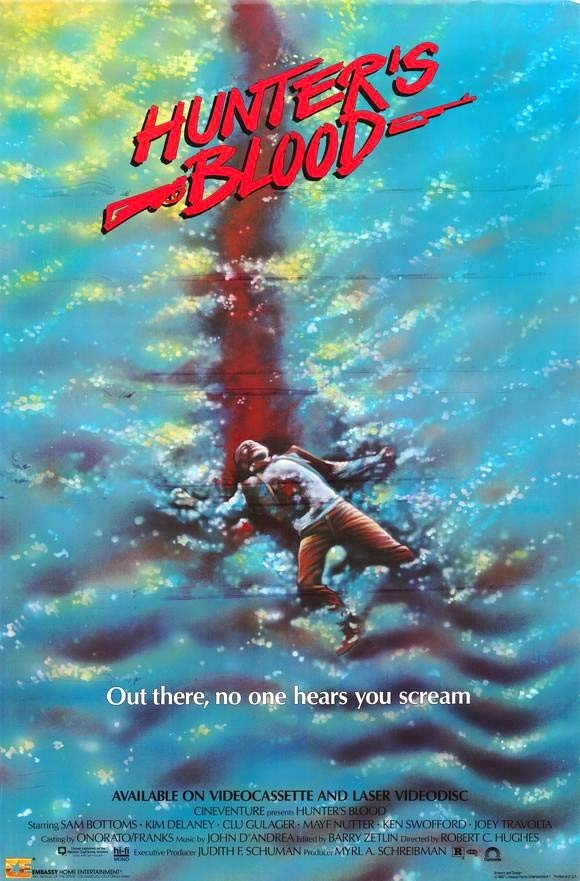
Hunter’s Blood (1986)

Directed by Robert Hughes [Other horror films: Hunter’s Blood (1986), Memorial Valley Massacre (1989)]

There aren’t many movies out there like Hunter’s Blood, which is a shame, because I’ve seen it twice now, and it’s a pretty damn fun movie.

Many compare it to Deliverance, which is likely a fair comparison. I’ve only seen Deliverance once (and I probably wasn’t older than 11), so I can’t say, but I can say it’s not too dissimilar from films like Whiskey Mountain or Rituals, the difference being Hunter’s Blood is a bit more action-packed as opposed to suspenseful. To be sure, there’s suspense here, but it’s not often the focus.

In the film, five city folk go hunting deep in the woods of Arkansas, and run into some poachers, who aren’t keen on outside folk poking around their business. There’s a bit of build-up before things really get going – before any violence rears it’s head, there’s some conflicts of culture (one of the city folk, a guy named Marty, has apparently never been to the south before, and can’t resist doing and saying stupid things), but once things blast off, they blast off hard.

This is a pretty violent film once the violence starts up. Among the most disturbing scenes is the body of a man who’s been half skinned, and people also stumble upon a decapitated head (not unlike the scene in Rituals). There’s a shotgun blast that blows someone’s head off – even I was surprised by how violent the aftermath of that was. Someone gets a knife right through the jaw, which was a fun scene. It’s an action-packed film, and has the violence to attest to that.

It’s also a beautiful setting. I’m not much of an outdoorsy type – I’ve never been fishing, let alone hunting, and I don’t believe I’ve ever been camping in my life. If I were to, though, I would hope it’s be as pleasant-looking as the location in the film. IMDb states, without detail, that the movie was filmed in California – whether that’s true or not, I don’t know, but wherever this was filmed, it really does look quite nice.

Sam Bottoms isn’t a name I really know, though he was also in Up from the Depths. He’s a great lead, and though I wasn’t fond of his wife, played by Kim Delaney (Project: Metalbeast), she did decent during the finale. Joey Travolta (brother of John Travolta) played such an annoying character, but he eventually grew on me. Mayf Nutter and Ken Swofford were both good, especially Swofford, but it’s really Clu Gulager (A Nightmare on Elm Street Part II: Freddy’s Revenge) who pulled everything together wonderfully, and though he’s incapacitated during the latter half of the movie, his character was one of my favorites.

Among the many antagonists, there’s plenty of good performances, but I think the leader, played by Lee de Broux, was easily the most threatening. He had a great aura about him, and he definitely seemed like a tough customer. Others that may be recognizable include Charles Cyphers (Halloween), Mickey Jones (Penny Dreadful), Bruce Glover (Night of the Scarecrow), and Billy Bob Thorton (in his first acting role).

Hunter’s Blood might not seem like a good movie, and it’s definitely atypical compared to other horror films from the 1980’s, but it’s a rewarding experience, and I’d recommend it to anyone who wants a nice slice of culture conflicts.

8/10

Sledgehammer (1983)

Directed by David A. Prior [Other horror films: Killer Workout (1987), Night Wars (1988), The Lost Platoon (1990), Night Trap (1993), Mutant Species (1995), Zombie Wars (2007), Night Claws (2012)]

I’m a simple man, and I didn’t have too many expectations going into Sledgehammer. I knew it’d be cheap – I’m no stranger to SOV horror – and as long as it had a guy killing people with a sledgehammer, I’d be happy.

Well, I’m not sure if I am happy, but there certainly was a man killing people with a sledgehammer. It was often in excruciatingly slow motion, but so was a good third of the film, so maybe that’s not a problem. Okay, it is a problem – I’ve never seen this much slow motion in one movie, and I sort of wonder if they had used the technique more sparingly, whether the movie be more around the 50-minute range as opposed to 85 minutes.

Of course, Sledgehammer is a bit of a classic, at least as far as shot-on-video horror goes, as it’s among the first ones made. And you can tell it’s rough – one of the stars, Ted Prior, is the brother of director David A. Prior (responsible for later films such as The Lost Platoon, Killer Workout, and Night Trap), and if IMDb trivia is to be believed, most of this movie was filmed in his apartment. If you’re watching this film, you probably went in knowing a lot of this, so it shouldn’t come off as too much a shock.

As such, a lot of the movie is tedious in ways that some SOV films tend to be. Luckily it’s nowhere near as bad as Blood Cult or Heavy Metal Massacre, but boy, all of those slow-motion portions are painful, and there’s so damn many. The kills aren’t terrible – ironically, one of the best ones might be a knife going through someone’s throat – but save for the opening scene (which, if you missed, is played again later during a retelling of the horrors of the house), there’s not really any great sledgehammer action. There is a terribly unappealing food fight, though.

If you’re familiar with SOV horror, you’ll probably know that performances aren’t often the highlight, and that holds true for this movie also. If I had to give a shoutout, it’d be to John Eastman, who at least looked different (that mustache was the bomb). Ted Prior didn’t really seem to have that much character, and while I wanted to root for Linda McGill (who was also in a film called Shape-Up for Sensational Sex, which sounds classy), it wasn’t an easy task.

Most people who come into Sledgehammer know full well what the movie is. It’s sort of fun at times – I actually rather like the heavy synth score that permeates the film – and it has that 80’s SOV nostalgic value, but it’s not a film I could see myself watching again anytime soon, and I’d really only recommend it to the horror fans who have likely already seen it.

5/10

13 Hours in a Warehouse (2008)

Directed by Dav Kaufman [Other horror films: N/A]

Though certainly a low budget film, and a bit derivative of other movies, I think that 13 Hours in a Warehouse is a pretty solid attempt. The story is decently tight, the mystery behind the ghostly figures is sort of fun, and the film is somewhat enjoyable.

I’m guessing that Reservoir Dogs was a big influence on Dav Kaufman, the director. Most of the film takes place in a warehouse following a robbery. There’s some conversation about popular culture (this one robber is a large fan of Robin Williams, praising films such as Mrs. Doubtfire, One Hour Photo, and Good Morning, Vietnam) and betrayal. Admittedly, Reservoir Dogs didn’t have videotape ghosts trying to kill people, but the basics are there.

Actually, I’m a fan of the ghost designs. You remember the movie Thir13en Ghosts? It’s that film that had some cool looking ghosts, but never bothered to give origins for them or their appearances, because nothing’s better than out-of-context disfigured ghosts. Here, we see why the ghosts look the way they do, and more so, the wavering lines through the ghosts (as though they’re projections from a video camera) is a nice effect.

I thought all of the main performances were fine. I mean, none of the performances are great – I think that Chars Bonin came the closest, as he had a somewhat emotional scene in there – but all of them did competently, and during their Robin Williams conversation, it seemed pretty casual. Cody Lyman, Paul Cram (Dawning), Carson Lee, Chars Bonin, Daniel Jay Salmen, and Meisha Johnson were all solid.

None of the kills are really great. There was a guy who seemed to have his penis torn off, and then his neck snapped on a toilet seat, which wasn’t bad, and another was attacked with a saw blade, but most of the carnage is either off-screen or mere gunshot wounds. For the budget, it was probably fine, but it’s not a movie to go to if you want something gory.

When it comes to real problems I had, only two things really come to mind. One, I think the ending could have done with a bit more oompf. It wasn’t a bad ending, but I think a little more punch could have been thrown somewhere in there. Also, while the movie doesn’t really drag, I do think they could have trimmed a few scenes, especially in the final twenty minutes. The movie is around an hour and a half, and I think that the same story could have been told in ten less minutes. It’s not a long film by any means, but I do think portions could have been cut a little.

Filmed in Minneapolis, Minnesota, this may be a low budget movie, but I think 13 Hours in a Warehouse has a lot of promise. I dug the ghosts, their designs, and their repetition of the number 32362 (which ties into the mystery, of course), and much like the first time I saw this film some years back, it’s solid for a lower budget film.

7.5/10

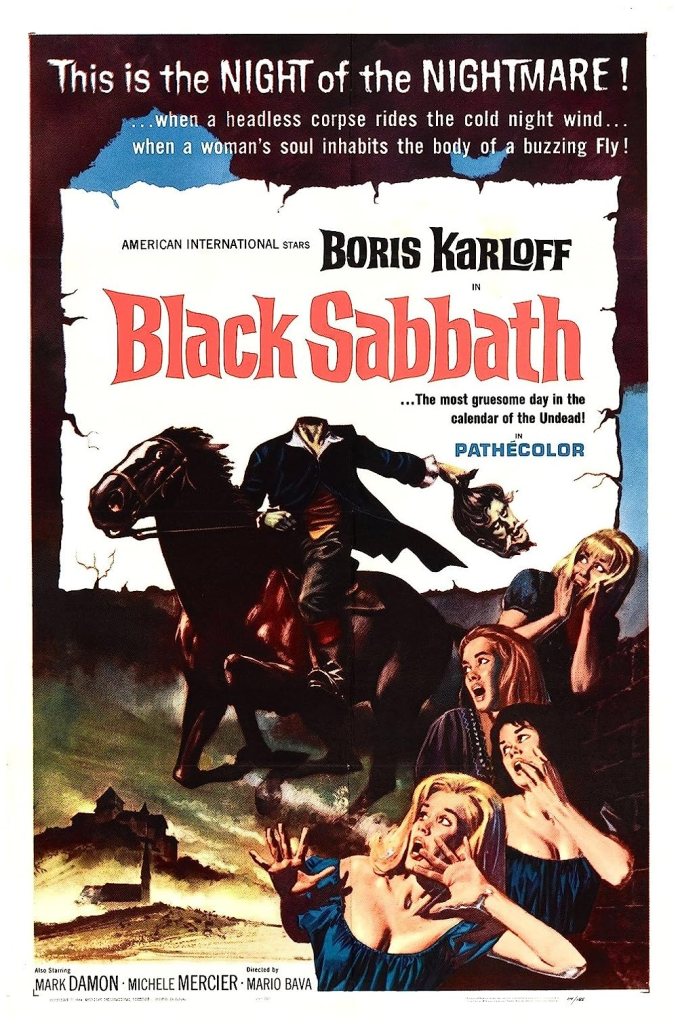
I tre volti della paura (1963)

Directed by Mario Bava [Other horror film: I vampiri (1957), Caltiki il mostro immortale (1959), La maschera del demonio (1960), Ercole al centro della Terra (1961), La ragazza che sapeva troppo (1963), La frusta e il corpo (1963), 6 donne per l’assassino (1964), Terrore nello spazio (1965), Operazione paura (1966), 5 bambole per la luna d’agosto (1970), Il rosso segno della follia (1970), Ecologia del delitto (1971), Gli orrori del castello di Norimberga (1972), Lisa e il diavolo (1973), The House of Exorcism (1975), Schock (1977)]

Infinitely better known under the title Black Sabbath, this Italian anthology has never really impressed me. Of course, I’ve only seen it twice now, so that may change with future viewings, but right now, it just doesn’t seem that great a movie.

What possibly might impact that conclusion is that I’ve seen only the American print. Both versions contain the three same stories – ‘The Telephone’, ‘The Wurdulak’, and ‘The Drop of Water’ – but the stories are in a different order in the American copy, along with edits being made to the stories, most prevalent in ‘The Telephone.’

I don’t know if I’d like the movie anymore with the original print, but I can say that as I believe ‘The Telephone’ is by far the weakest segment here, I’d definitely be open to seeing the story done differently. ‘The Wurdulak’, which is the final story in the American print, isn’t that bad, but it does run on a bit long, and possesses a bunch of annoying character mistakes that make it quite hard for me to sympathize with them, not to mention having somewhat melodramatic dialogue (“All I know is that I love you”).

The true winner of this film, as far as the segments go, is ‘The Drop of Water’, which is unfortunate, as it’s the segment that opens the American copy, meaning that after the story is done, there’s little to look forward to. ‘The Drop of Water’ is sweet and simple, and is a masterclass in suspense. From the moment we first see the dead body of the medium to the final scene, it’s a very thrilling story, and a pleasure to watch.

It’s also a pleasure to see Boris Karloff introduce the stories (though I would have liked it if he also had some closing dialogue), and not only that, but he was also in ‘The Wurdulak,’ playing a beautifully threatening role (though that one piece of dialogue – “Can’t I fondle my own grandson?” – was dated terribly). Jacqueline Pierreux was amazing in ‘The Drop of Water,’ and while some of his choices bothered me, I thought Mark Damon did decently in the final story. It may partially just be the story, but Michèle Mercier didn’t really impress me in ‘The Telephone.’

Obviously, Black Sabbath isn’t without it’s strengths, which is evident by the amount of people who call the film a classic. No doubt that it looks nice – the color is rather fresh for an early 1960’s movie, and the portions of the film that it gets right, it really gets right. It’s just that it doesn’t happen often, and though the film might be better in the original Italian print, I can’t imagine my views changing significantly.

In short, despite it’s classic status, it’s not really a film I enjoy save for ‘The Drop of Water,’ and there are so many other horror films from the 1960’s that I’d rather watch.

6/10