The Innocents (1961)

Directed by Jack Clayton [Other horror films: Something Wicked This Way Comes (1983)]

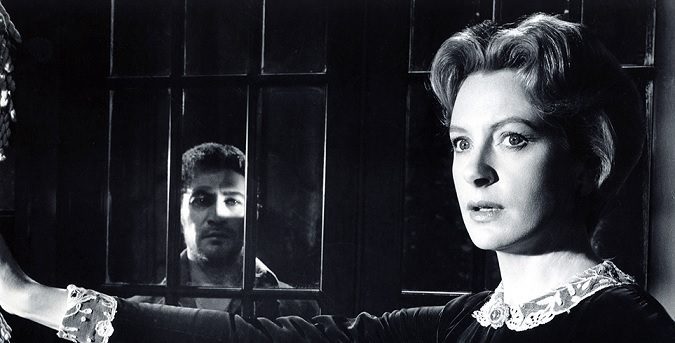
Very much a classic movie, The Innocents is a very interesting case, perhaps one of the best cases, of a horror film with an interpretative plot. The story’s simple, in which a governess is hired to watch over two children, but as things turn sour, are there supernatural spirits afoot, is the governess losing her mind, some combination of the two, or a simple case of possession?

The Innocents asks a lot of questions and doesn’t much give in the way of answers (The Turn of the Screw, the novel by Henry James which this story is based off of, is much in the same vein). In some cases, that bothers me, but here, I think it’s done really well. We’re sucked into the idea that Miles and Flora are being possessed, but there’s enough evidence to suggest a failing mental health is more the culprit. Fans of both psychological horror films, along with supernatural/ghost movies, should definitely give this a watch for this interpretation issue alone.

Personally, I’ve been of the mind that Deborah Kerr’s governess character, due to a lot of factors, is just losing it, and becoming a bigger danger to the kids (Pamela Franklin and Martin Stephens) as opposed to anything supernatural. That said, nothing’s written in stone, and there are scenes which lead credence to both possible solutions.

Deborah Kerr is fantastic here, and again, I think you can see her beginning to lose her grip clearly as the movie goes on. The two kids, being Pamela Franklin (who starred, 12 years later, in The Legend of Hell House) and Martin Stephens, both do beautifully, though boy, does Stephens’ Miles get annoying after a while. Lastly, as a housekeeper, Megs Jenkins too brings a lot, and it’s from her that Kerr’s character begins dwelling on the possibility of possession.

The Innocents has a very creepy vibe to it, which is bolstered by the large, Gothic mansion and the black-and-white cinematography, not to mention that dreary tune that pops up now and again. Oh, and the poem that Miles read during the party was also a nice touch, especially since no one but Kerr’s character seemed to find anything wrong with it.

I’ve only seen The Innocents twice now, but I do think it’s very much a classic that warrants looking into. Compared to many modern day horror movies, it may seem quite tame, but I think it holds it’s creepy vibe wonderfully, and with the fantastic setting and interpretation that will no doubt take place by the viewer, this one is a winner.

8.5/10

Robert (2015)

Directed by Andrew Jones [Other horror films: The Amityville Asylum (2013), The Midnight Horror Show (2014), Valley of the Witch (2014), The Last House on Cemetery Lane (2015), A Haunting at the Rectory (2015), Poltergeist Activity (2015), The Exorcism of Anna Ecklund (2016), The Curse of Robert the Doll (2016), Cabin 28 (2017), The Toymaker (2017), Werewolves of the Third Reich (2017), The Legend of Robert the Doll (2018), The Legend of Halloween Jack (2018), Robert Reborn (2019), The Manson Family Massacre (2019), The Utah Cabin Murders (2019), The Curse of Halloween Jack (2019), The Jonestown Haunting (2020), The Haunting of Margam Castle (2020)]

More than anything, the problem with Robert is that it’s really dry. It’s definitely a bad story, don’t get me wrong, but if there was a little more pep here, maybe some of that could have been heightened a bit. But no, Robert’s just dry, and almost entirely void of any positive aspects worth mentioning. I’ll try to think of something as I carry on though – maybe something will pop up.

Seeing an evil doll wreck havoc on an already dysfunctional family (seriously, the macho husband, who’s scared of his son playing with dolls, was unbearable) didn’t really make for an engaging film, especially given how amateurish some of the scenes and cuts were. I did find it somewhat hilarious that this doll was given to the kid by an elderly maid unable to do her job, who then gets fired. In a petty fashion, she just hoists an evil doll onto the family, and the rest is history.

Well, history is a strong word, because though this is about a killer doll, the most interesting thing about Robert by far is that it’s British. The kills here were weak, the suspense close to non-existent, the acting sub-par (neither leads Suzie Frances Garton or Lee Bane made any impression whatsoever), and everything else pointless.

I’m not giving Robert an extremely low rating, though. Why? Because while much of the movie is poor, it was still palatable in a very bare bones, ultra dry way. Elements of the movie were almost okay, and maybe if a better creative team had been behind this, a bit more life would have been apparent in the film. Robert’s not the worst of the worst. It’s just entirely unremarkable, I certainly wouldn’t recommend this.

4/10

This is one of the films covered on the Fight Evil podcast. To listen to Chucky (@ChuckyFE) and I discuss Robert, check the video out below.

The Plague of the Zombies (1966)

Directed by John Gilling [Other horror films: Escape from Broadmoor (1938), Mother Riley Meets the Vampire (1952), The Gamma People (1956), The Flesh and the Fiends (1960), The Shadow of the Cat (1961), The Night Caller (1965), The Reptile (1966), The Mummy’s Shroud (1967), La cruz del diablo (1975)]

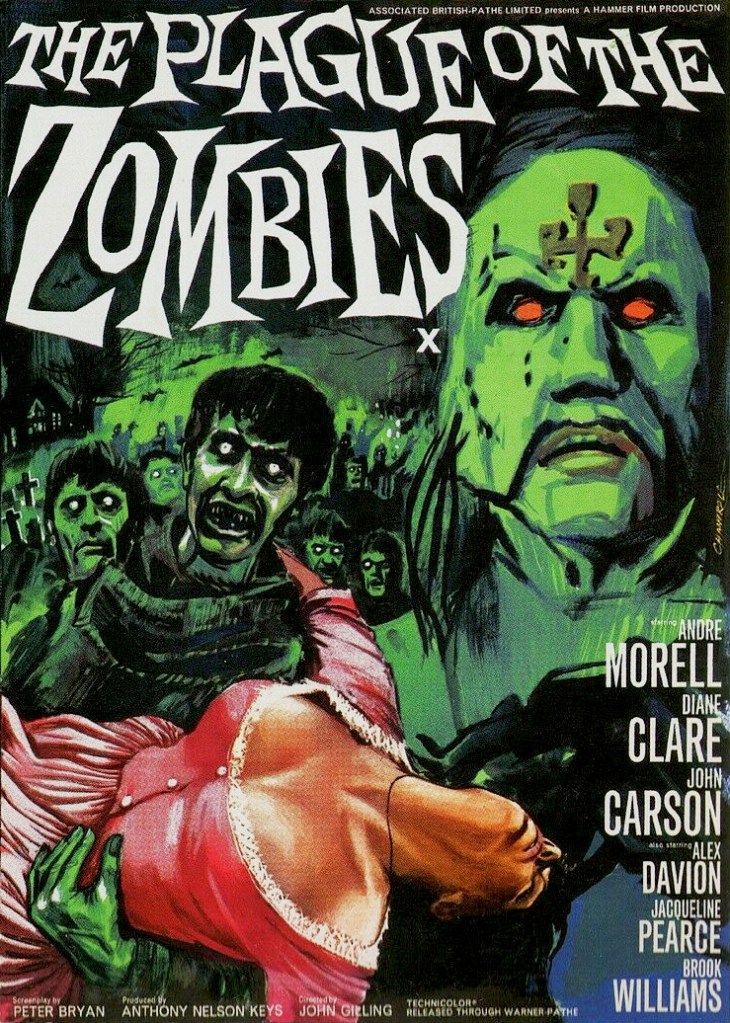
This Hammer film may be one of the last voodoo zombie films before Night of the Living Dead launches a new way forward for the zombie sub-genre, and it’s certainly the last big name zombie film before Romero’s classic. Being a Hammer movie (and being in color), The Plague of the Zombies isn’t too shabby, but it’s not a personal favorite of mine.

I enjoy the performances, though no one really blows me away. Perhaps my favorite here is André Morell, because seeing a slightly older man take the lead is a bit of a rarity, and his character is enjoyable, being a distinguished doctor, and yet partaking in robbing graves. He was just fun. Playing his daughter is Diane Clare, and she gets along quite well with Morell. Brook Williams, as a young doctor asking for Morell’s advice, is a bit generic, but he has his moments. John Carson did quite well here as a somewhat mad Cornish squire – much like Morell, he’s fun throughout, especially toward the end.

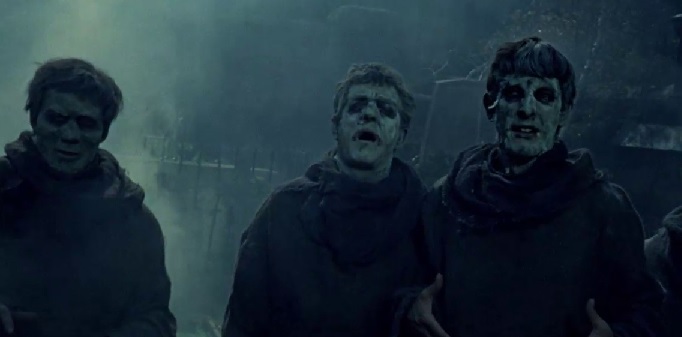
The atmosphere here is pretty solid, and there are some pretty solid scenes (perhaps my favorite is a dream sequence in which zombies rise from the grave, which looks quite beautiful in color), but as decent as the story was (in it’s average Hammer fair), trying to turn the same premise of White Zombie into a better-made version by throwing in color isn’t really my idea of a great time.

The Plague of the Zombies is a bit of a classic as Hammer horror is concerned, and for good reason (worth noting, many of the same sets are used in The Reptile, another Hammer film from the same year, which I like a bit more), but even as far as 1960’s horror goes, this doesn’t quite make my Top 10 list.

I’m not trying to throw The Plague of the Zombies under a bus – I think it’s a decent film, and I wouldn’t object to seeing it a few more times in the future. It’s just that I’ve seen it twice now, and as far as I’m concerned, it’s not the best the 1960’s has to offer.

7/10

The Gorgon (1964)

Directed by Terence Fisher [Other horror films: Three’s Company (1953, episodes ‘The Surgeon’ & ‘ Take a Number’), The Curse of Frankenstein (1957), Dracula (1958), The Revenge of Frankenstein (1958), The Hound of the Baskervilles (1959), The Man Who Could Cheat Death (1959), The Mummy (1959), The Stranglers of Bombay (1959), The Brides of Dracula (1960), The Two Faces of Dr. Jekyll (1960), The Curse of the Werewolf (1961), The Phantom of the Opera (1962), The Horror of It All (1964), The Earth Dies Screaming (1964), Dracula: Prince of Darkness (1966), Island of Terror (1966), Frankenstein Created Woman (1967), Night of the Big Heat (1967), The Devil Rides Out (1968), Frankenstein Must Be Destroyed (1969), Frankenstein and the Monster from Hell (1974)]

This Hammer film is a very worthwhile watch on many levels. Not only is the cast superb, but the story here is actually decently mysterious up to a point, and though the finale isn’t all that it could have been, the story here’s interesting and memorable.

Peter Cushing is one of the stars, playing  a tight-lipped medical examiner, and that alone is enough to push this movie in a positive direction, given Cushing is one of my favorite actors (after Vincent Price). What’s even better is that Christopher Lee eventually shows up, and the two of them together is great. Lee is always of good quality, and he’s best here during his heated conversation with Patrick Troughton. Horror fans might best remember Troughton from The Omen, and that was a solid role, but being a rather big fan of the science-fiction series Doctor Who, I know Troughton as the Second Doctor, perhaps one of my favorite incarnations of the character.

Seeing Cushing, Troughton, and Lee all in one movie is very much a treat. Lee has a very commanding presence here, and though Troughton is a bit brow-beaten, his situation doesn’t really do him any favors. Even without those stars, Barbara Shelley (who has a somewhat unique story arc here), Michael Goodliffe (though he gave one of the worst justifications for the belief in the supernatural that I have ever heard in my life), and Richard Pasco came to play. Goodliffe really carries the first half of the film, and has a somewhat touching last scene. With a cast like this, even an okay story can go a long way.

Luckily, The Gorgon has a somewhat interesting one, which deals with memory loss and people being turned to stone. Much like other Hammer films, this possesses a strong atmosphere, and while in my opinion the color somewhat mutes that, it’s still nice to see a classic story like this using the best of the techniques at the time.

I’ve seen The Gorgon a handful of times before, and I still find it an enjoyably solid movie with a pretty interesting (and somewhat surprising) finale. The only real flaw here is that the design of the Gorgon, when it fully appears, is somewhat laughable. Otherwise, this is an enjoyable slice of 1960’s British horror. Just look at that cast and say ‘yes.’

7.5/10

Alien³ (1992)

Directed by David Fincher [Other horror films: Se7en (1995)]

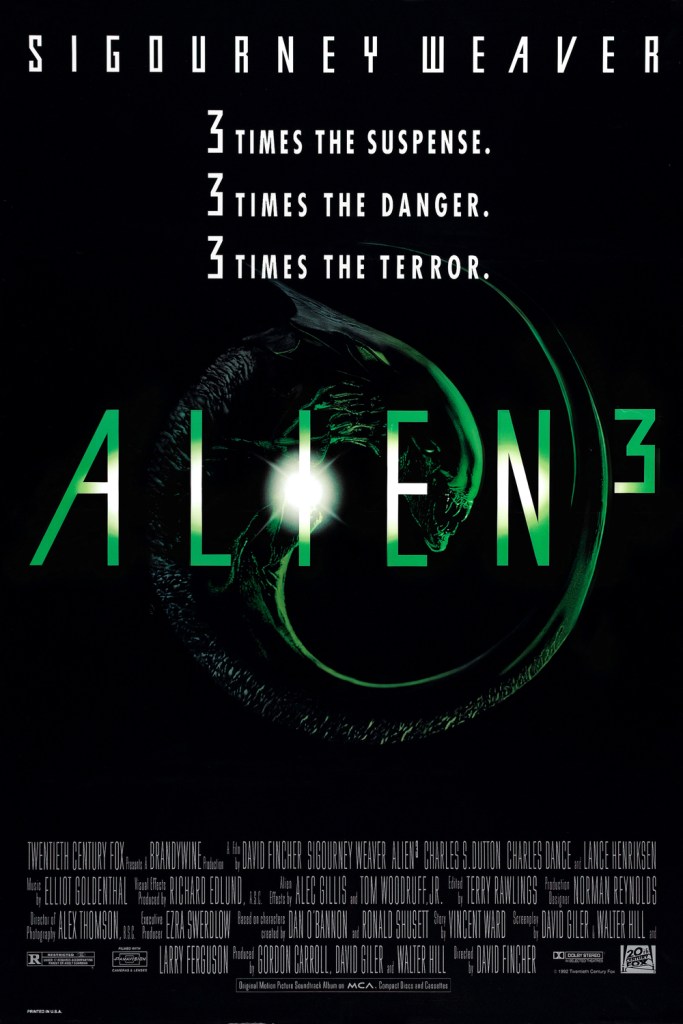
So, while I’d seen the first two movies (Alien and Aliens), I never voyaged past the second one, so I was sort of surprised to find that I enjoyed this a bit more than expected. Oh, it’s not a great movie, nowhere near as good as the first two, but some strong performances and a decent story pull it up.

I find it somewhat funny, though, that the only surviving character from the second movie is Ripley. Just a bit of a suckerpunch, given all she did to try and save others. Still, for the story, being that their ship crash-landed on a prison planet, it worked. The story, though, loses something after they all decide to work together and trap the alien – it was still okay, but it felt so much more average than the first half of the film.

What cannot be denied, on a personal level, is the impact Charles Dance had early on. I pretty much only know Dance from his role on Game of Thrones, and he looked much the same here, but he really brought a lot to the film. One of the few characters I legit liked, it was a shame to see that he doesn’t make it near as far as you’d hope, but I still really liked seeing him regardless.

It’s not as though without Dance, the cast is void of big names and solid performances, but I do think that Dance was definitely one of the best here. Otherwise, we have Charles S. Dutton (Gothika), who does okay with his character, the same of which could be said of Pete Postlethwaite. Both Brian Glover and Ralph Brown did well as ineffectual authority characters, and seeing Lance Henriksen come back (in a limited capacity) was a pleasure also.

The problem here is that, as I mentioned, past a certain point in the story, the events begin feeling much more generic. I do personally quite like the end of this film, but getting there is a bit of an unmemorable journey, which wasn’t necessarily a surprise, but it was disappointing.

Alien³ is an okay movie. It’s a large drop-off from the first two, but I think this straddles the average rating. I think compared to the first two movies, it’s definitely much worse, but as a movie standing alone, Alien³’s okay. It’s nothing special aside from Sigourney Weaver and Charles Dance, but it’s by no means the worst movie of the 1990’s.

7/10

Aliens (1986)

Directed by James Cameron [Other horror films: Piranha Part Two: The Spawning (1981)]

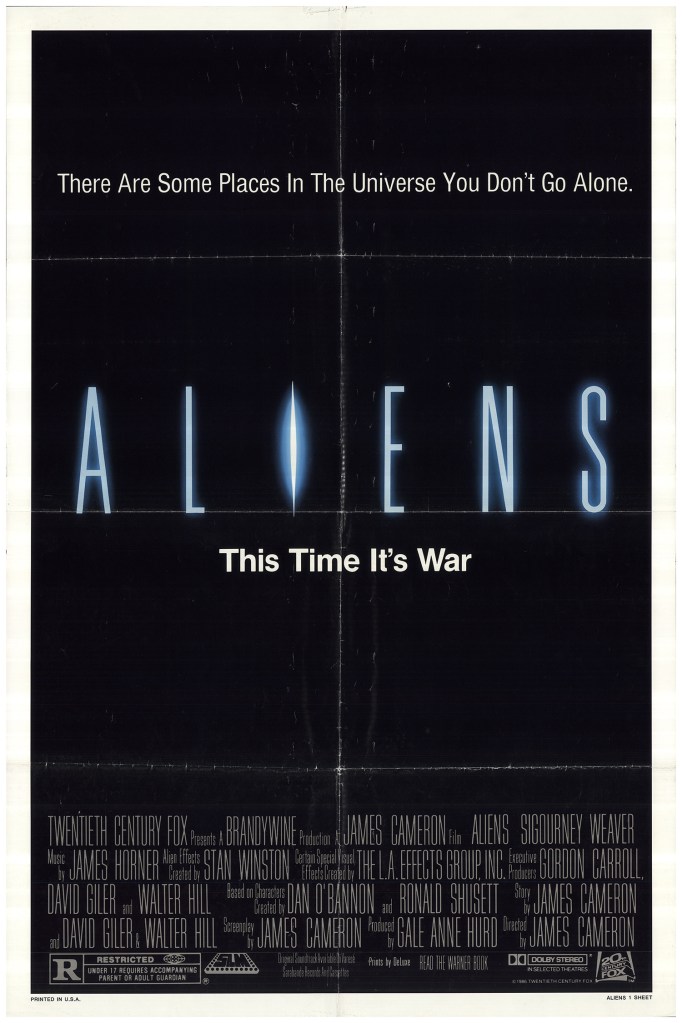
While it’s true that it took me until my most-recent viewing of Alien to fully appreciate it, Aliens is a movie I loved from ‘hello,’ and it’s probably the best horror/action/science fiction movie in the history of the moving pictures.

Let’s dispense with the problems first, though:

With that out of the way, let’s talk about the myriad of great performances (it’d almost be easier to talk about those who didn’t make a positive impression, but that didn’t strike me as fair).

I loved Sigourney Weaver in the first movie, but she’s even better here. Once she takes control, she really takes control (the scene in which Ripley usurps Gorman is fantastic), and though she’s all bad-ass, she still has a sensitive side, as seen when dealing with Newt (Carrie Henn) and Hudson (Bill Paxton). She is the exact right person in that situation, and I enjoyed watching her kick ass throughout (especially in regards to Paul Reiser’s character).

And speaking of Reiser, boy, does he cause some whiplash. At first, he seems a decent guy, one of the few trying to back-up Ripley’s experience and get her back into a suitable profession, but then we find out something later on that shines a whole new light on him, and he quickly becomes one of the most hated characters in the whole of cinema (perhaps an overstatement, but man, I utterly abhor this guy, and I definitely thought he should have been killed just as soon as his secret and actions were discovered). Reiser does a great job playing a terrible character, so kudos.

It’s Gorman, played by William Hope, who at first seems to be the main antagonist. Very quickly, though, we find out that he’s not so much a bad man as he is just under-experienced. He certainly thought he had control of the situation, but when Ripley shoves him aside, he takes it gracefully, and I always low-key appreciated him for that. Another individual who takes a little while to really make a place for themselves is Hicks, played by Michael Biehn. To be honest, I barely noticed him until he retained command, but I loved him as soon as he sided with Ripley, and from there on out, he gave it his best to protect everyone.

Others who merit a positive mention are probably obvious, being Lance Henriksen, Jenette Goldstein, Bill Paxton, Mark Rolston, and Al Matthews. Henriksen as the android Bishop really did well here. Being an android, he didn’t need to have much in the way of emotions, so Henriksen was a perfect fit, and I definitely enjoyed him throughout (especially towards the end). Goldstein kicked ass about as much as Weaver, and her comeback to Hudson near the beginning was cuttingly brutal.

Paxton’s Hudson lost control past a certain point, but he was still a solid character to the end, and though Rolston’s Drake didn’t last near as long as I was hoping, he too was a character I really found myself enjoying. Of everyone, though, it’s Al Matthews, who, as soon as he awakens from cryofreeze, the very second, he has a cigar in his mouth. Love that guy’s dedication. I also rather liked Colette Hiller, though she appeared for only a short time.

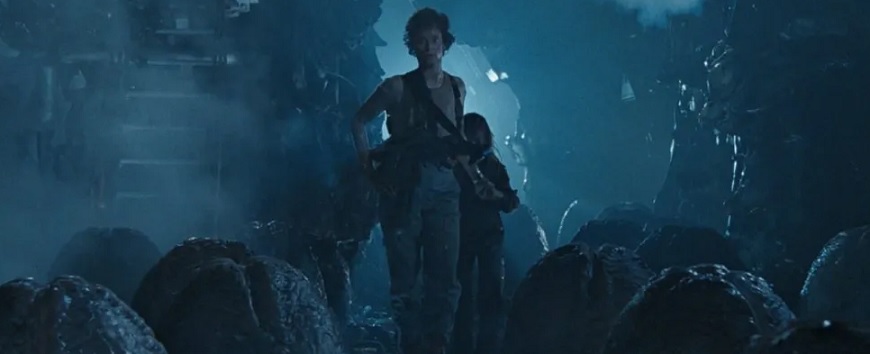
As far as the special effects go, everything here looks great, and though at first glance it might look like the movie runs a little long (as it’s around two-and-a-half hours), I think everything feels smooth and well-paced throughout the film. The setting is a nicely deserted alien world, and there are some absolutely fantastic scenes of suspense here (such as Ripley and the kid being trapped in the room with the facehuggers).

Let’s face it – Aliens is a fantastic movie, and this is probably one of my least controversial movie opinions of all time. The movie currently sits in IMDb’s top 100 movies, and I’m very much mistaken if I think that’s going to change anytime soon. It’s an action-packed ride with with a ton of suspense, scares (that locked room with Ripley and Newt gets my heart racing every time), action, and I can’t recommend the movie enough.

10/10

The Curse of Frankenstein (1957)

Directed by Terence Fisher [Other horror films: Three’s Company (1953, episodes ‘The Surgeon’ & ‘ Take a Number’), Dracula (1958), The Revenge of Frankenstein (1958), The Hound of the Baskervilles (1959), The Man Who Could Cheat Death (1959), The Mummy (1959), The Stranglers of Bombay (1959), The Brides of Dracula (1960), The Two Faces of Dr. Jekyll (1960), The Curse of the Werewolf (1961), The Phantom of the Opera (1962), The Horror of It All (1964), The Gorgon (1964), The Earth Dies Screaming (1964), Dracula: Prince of Darkness (1966), Island of Terror (1966), Frankenstein Created Woman (1967), Night of the Big Heat (1967), The Devil Rides Out (1968), Frankenstein Must Be Destroyed (1969), Frankenstein and the Monster from Hell (1974)]

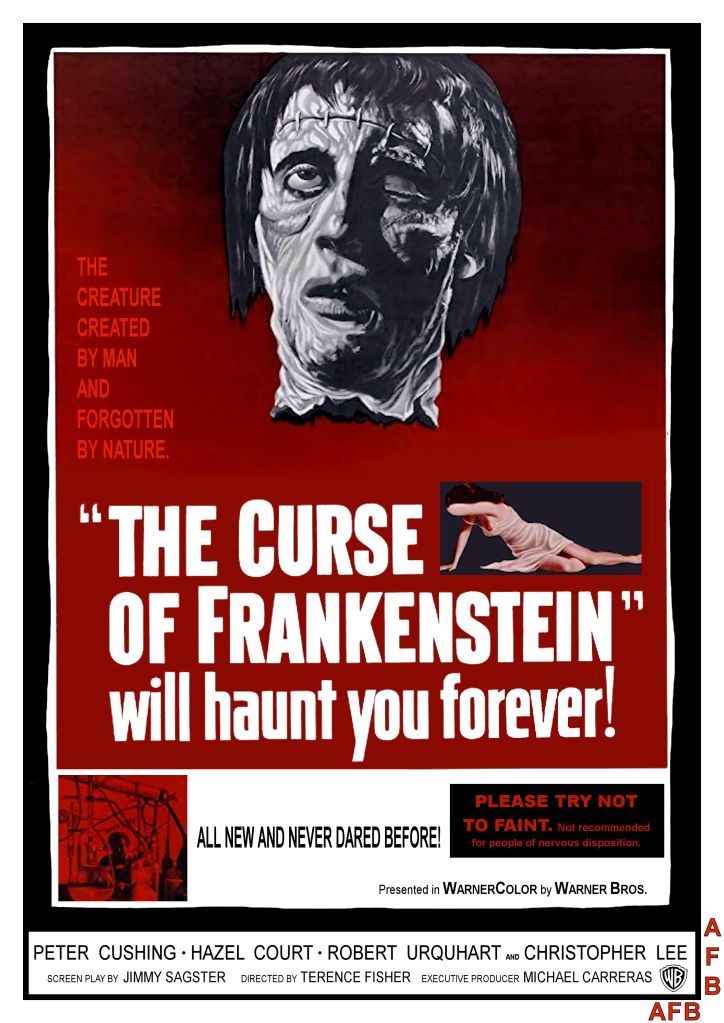
The Curse of Frankenstein is a classic that I don’t really have that much to say about. It’s not as classic a movie as 1931’s Frankenstein, but this Hammer production is still one of the best renditions of the story.

A large part of this is the very solid cast, and who could expect differently coming from a Hammer movie. Peter Cushing is a favorite of mine, and he’s been in so many movies of the genre that it’s really hard to narrow down his best performances. Playing Frankenstein here, Cushing was fantastic, and his sole focus on his work (at the expense of his fiancé, Hazel Court) was, as always, fun to watch.

Playing his long-time mentor and eventual foe, Robert Urquhart did a great job, and during their many arguments about the morality of Frankenstein’s experiments, Urquhart and Cushing really get into it, and you can really see his disappointment in Frankenstein toward the end of the film. These two are easily the most important, but Christopher Lee brings a lot as the Creature, playing a very different version than Karloff did, and Hazel Court too was a nice, although somewhat unimportant, addition.

I also really liked the layout of the story, with the bulk of the horrors occurring via flashback told by a condemned Cushing. The ending was somber, and truthfully I felt pretty bad for Frankenstein, though I certainly think he had his problems when it came to approaching his experiment (though the base of the experiment, I thought, was perfectly valid).

This is a Hammer classic, and I enjoy it more than the following year’s Horror of Dracula. Both are good movies, quality re-imaginings of classics, and I’d easily recommend the both of them to fans of classic horror.

8/10

Halloween Kills (2021)

Directed by David Gordon Green [Other horror films: Halloween (2018), Halloween Ends (2022), The Exorcist: Believer (2023)]

Perhaps one of the most-hyped horror films in the last couple of years, I have to say that I wasn’t one of those all that excited for this. I think I was probably correct in that stance, because while parts of Halloween Kills are fun, a lot of it just feels like filler.

The 2018 Halloween was a movie I thought was okay. Sure, I have it rated an 8/10 on here, but if I’m being honest, that’s probably too high. I’ve only seen the 2018 movie once, and I thought it was good, but it’s one of those films that, having seen once, I was in no real desire to see it again anytime soon.

I considered refreshing my memory before getting into Halloween Kills by revisiting the 2018 movie, but I opted out. I doubt that made much of an impact – most of the characters introduced in the 2018 movie came back to me without too much difficulty. Even so, I just don’t know if the story in this film was really all that interesting.

Aimless isn’t really the word I’d use to describe the film, though I suspect some people would. To me, it just felt primarily like filler for the upcoming Halloween Ends. That’s not to say there weren’t some good scenes, because of course there were, but for a movie that’s an hour and 45 minutes, it’s oddly difficult to list what actually happened in the film, because the status quo didn’t change much from the end of the 2018 movie to the end of this one. In fact, I don’t think anything changed, aside from more people in Haddonfield being deceased.

I appreciated the flashbacks they gave that took place in 1978, especially the ones that had Loomis (played by Tom Jones Jr.), as they got a guy who looked pretty much just like him. Those flashbacks, at least the ones focused around the Myers house, were sort of fun, but I can’t say any of the Lonnie stuff interested me.

For performances, I don’t even know what to say. Most of the central cast (Jamie Lee Curtis, Judy Greer, Andi Matichak, Will Patton, and Anthony Michael Hall) were fine, but as for their characters, I feel like a lot of foolish mistakes were made, and those foolish mistakes sometimes made it quite difficult for me to really care about their characters.

Far more noteworthy to me are Kyle Richards, Nancy Stephens, and especially Charles Cyphers, all three of whom are returning characters from the 1978 classic (and seeing Cyphers back really brought a smile to my face). Two other characters were brought back (Lonnie and Tommy), but the original actors, Brent Le Page and Brian Andrews, were replaced by Robert Longstreet and Anthony Michael Hall. Well, I guess three out of five ain’t bad.

Oh, and though these characters weren’t even close to important, I liked Scott MacArthur and Michael McDonald in their roles as a gay couple living in what used to be the Myers house. They were at least somewhat fun.

I don’t mind that they brought back the characters they did – Marion (the nurse that Myers stole a car from) was sort of random, but the fact they brought back three old faces was nice, especially Charles Cyphers as Brackett (and I liked him a lot in this movie). At the same time, I don’t know if any of these characters were really utilized that well, and aside from bringing back familiar faces, I don’t know if it really made a difference whatsoever.

One of my main complaints about the 2018 movie was the gore. I don’t have a problem with gore, of course – H.G. Lewis and Nathan Schiff are, as the kids say, the shit. It’s just that the 2018 movie had a retro thing going for it, and I was hoping they’d focus more on suspense and creepy scenes (as the original Halloween did) as opposed to violence, but of course they didn’t.

This movie is much the same. I love the slaughtering that takes place here, but I also can’t help but wish they had gone for a classier aesthetic. I loved the opening to this film, which maintained a retro aura, but when you go from that to slaughtering a group of firefighters, it sort of loses me. Trying to please both crowds isn’t going to work, because it doesn’t feel genuine, at least not to me.

Look, I had a good time watching Myers go berserk on the firefighters – it was a lot of fun. And there’s a scene toward the end where a similar situation occurs, and I enjoyed that too. A lot of the violence here, such as the fluorescent light in the throat, or the guy who had his head banged against the stairwell until he was likely paralyzed (not that it mattered for long), was fun. The violence looked great, but I still personally would have preferred a different approach.

There’s a large portion of the film that deals with the horrors of a mob mentality. It’s like Halloween 4: The Return of Michael Myers on steroids, because instead of a group of drunk guys with shotguns in trucks (which made pretty good sense to me), you have pretty much the whole town bloodthirsty, and chasing down people who may or may not be Myers because of a couple of speeches. I’m not saying those scenes in the hospital didn’t have their moments, but the whole situation personally felt a little ridiculous.

Also, I’ve got to mention a small scene that bothered me. Toward the finale of the film, three individuals are under the impression that Myers went back to his old house, and go there after him. Despite being in contact with other characters who expressed interest in hunting Myers down, they didn’t tell anyone they were going to the house. I can’t say just how stupid I thought that set-up was – why wouldn’t they just call or text other people? They really thought three people – two of whom were quite young – could take on Myers after he destroyed the Haddonfield fire department? It was so fucking stupid, and it didn’t make a lick of sense to me.

It might sound as though I had a bad time with Halloween Kills, but that’s not accurate. I was entertained throughout, despite feeling that much of the film just felt like filler. I didn’t love a lot of it, but it was an entertaining time. Maybe once I watch this again, I can re-evaluate some of it, but for now, I’ll just say the film is somewhere pretty close to average.

7/10
Night of the Demon (1957)

Directed by Jacques Tourneur [Other horror films: Cat People (1942), I Walked with a Zombie (1943), The Leopard Man (1943), The Comedy of Terrors (1963), War-Gods of the Deep (1965)]

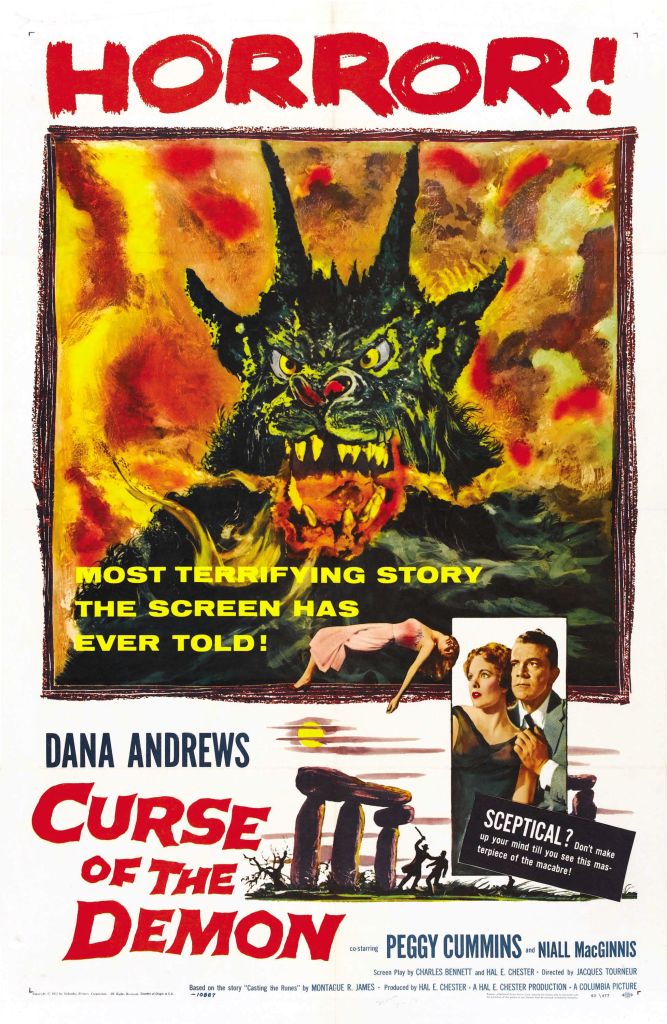
It’s twice now I’ve seen this one, and maybe it’s me, but I don’t think it’s that great. Night of the Demon (or Curse of the Demon, depending on your location) is good, and it has a solid atmosphere, but I don’t see it as much more.

What I like about this one (which, by the way, is based off an M.R. James story) is the undeniably dense atmosphere. It’s a black-and-white film, which goes a long way to allow some scenes to work really well, especially during the fog-drenched sequences, which were very appealing. The titular demon doesn’t pop up that often, but that also had charm (despite the fact the demon doesn’t necessarily look amazing).

Dana Andrews does decently well here, though the skepticism he portrays is a bit much. I’m an atheist, but when presented with evidence of a God or gods, I’d be willing to believe. But no matter how much Andrews’ character sees, it takes him a long time to make that leap. Any skeptic worth his or her salt would, upon receiving evidence, accept a claim. I don’t blame him for mocking the seance (that was not a controlled experiment whatsoever, and as such, of course a man of scientific learning shouldn’t be expected to buy that), but past a certain point, he should have been more willing to accept that something’s going on.

Peggy Cummins and Niall MacGinnis are both good additions, especially MacGinnis. I don’t think I’d go as far as to call him amazing, but I really did like what he brought to the film (though of course, I don’t see why Satanists are portrayed in such a negative light as they generally have a peaceful religion). Others who I enjoyed, though neither one was that important, include Liam Redmond and Peter Elliott.

If there’s one thing about the movie I think is close to flawless, it’d be the finale, which takes place on a train. Talk about tense – that moment was very much the engaging story I wish the first eighty minutes had been. Not that the story here wasn’t worth it, but it really shined during the conclusion in a way it didn’t for me leading up to it.

Night of the Demon isn’t a movie I love, but I do like some things about it. Ultimately, I’d place it around average, and though I don’t personally like it near as much as many others tend to, I’d still suggest it for those looking for a piece of 50’s British horror that might make an impact.

7/10

28 Days Later… (2002)

Directed by Danny Boyle [Other horror films: N/A]

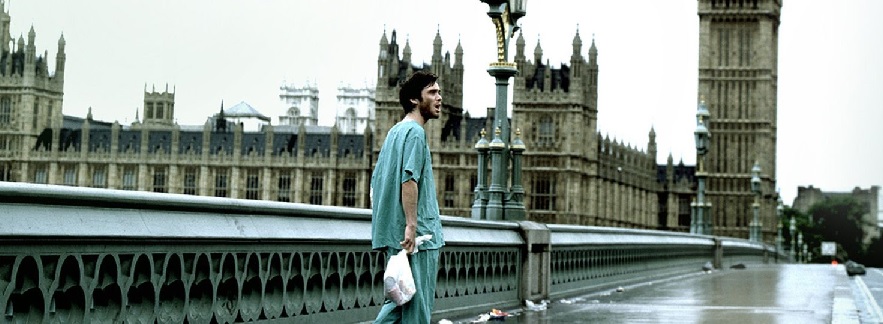
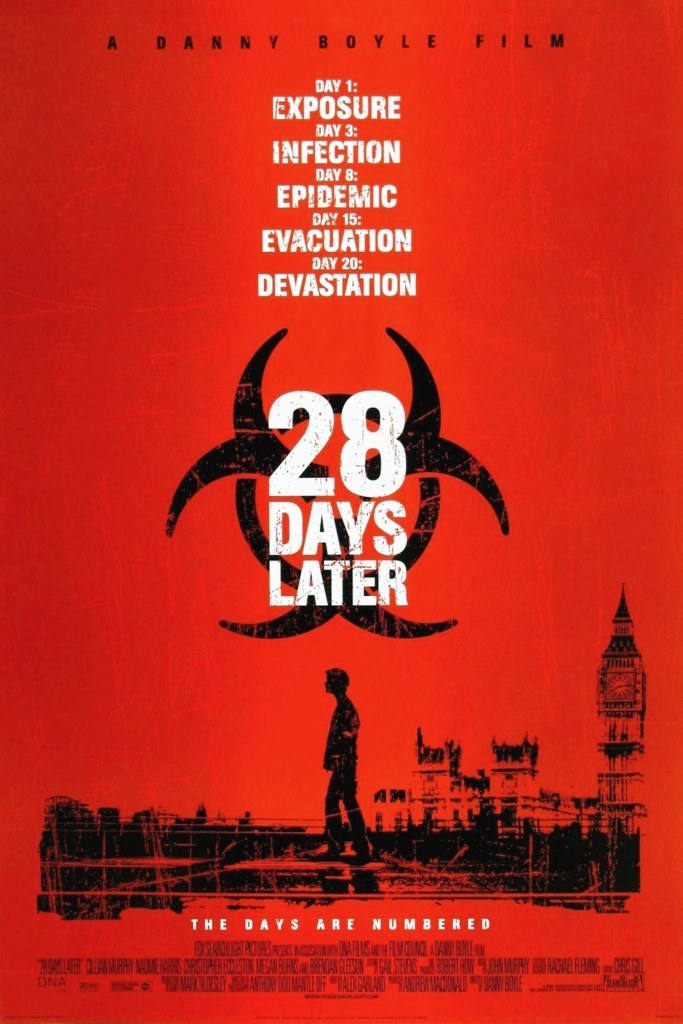
This is a movie I’ve not seen in quite some time, and it’s always refreshing when a rewatch is just as good as you’ll hope it’d be. 28 Days Later… is perhaps one of the most important zombie films of the modern era, and it’s certainly a well-made movie from the UK, and perhaps one of the UK’s best in the last twenty years.

Most of the main cast was great. Cillian Murphy (who I pretty much only know from Batman Begins) was good as the main character, as he doesn’t really seem the type. Naomie Harris is fun as an action, kick-ass gal. Brendan Gleeson (Lake Placid, fourth Harry Potter film, The Guard) and Megan Burns give the movie heart, whereas Christopher Eccleston (Doctor Who) gives it pragmatic brutality. Solid cast all around.

There’s a lot of feeling in this one. When I say that Gleeson and Burns really made an emotional impact on me, I’m not trying to exaggerate – that father-daughter combination was great, and much like how they brought Harris’ character some joy, they brought the viewer joy too, which makes the movie doubly impactful past a certain point.

Also, that score is damn phat. Really great score which helps the movie along, especially toward the end.

As far as zombie movies go, 28 Days Later is pretty damn important, and really brought back to life (see what I did there? :P) the dying (OMG HE GOES FOR A SECOND SHOT AND NAILS IT) subgenre of zombies. I mean, there were decent zombie movies in the late 1990’s (one that comes to mind is Bio Zombie, from Japan), but it was 28 Days Later that really made the genre profitable again, for better or worse.

I thoroughly enjoyed seeing this again, and I feel sort of bad for having waited as long as I did, as it’s a movie I suspect that one wouldn’t really get too tired of. I’d certainly recommend giving this one a look or a rewatch if you’ve not seen it in some time, as it’s great stuff.

8.5/10