Eden Lake (2008)

Directed by James Watkins [Other horror films: The Woman in Black (2012)]

The thing about Eden Lake is that it’s a well-made movie with an interesting premise, but it’s utterly demoralizing. It’s not a happy movie, and it’s not something you walk away from without being partially disturbed. That makes for a good movie, but not necessarily a good time.

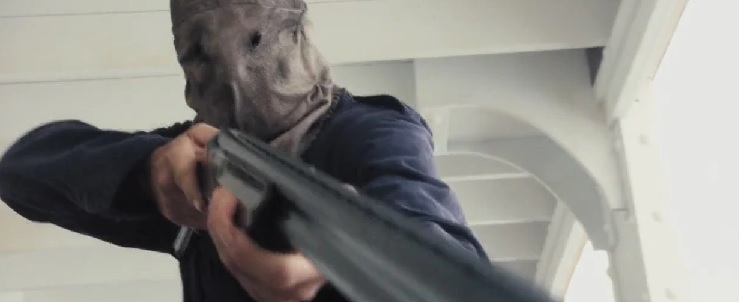
Like I said, though, it’s certainly well-made. The rising tension and growing escalation between the main characters and a bunch of thug kids is certainly on point. What makes it slightly more interesting is that it’s a scenario that’s somewhat thought provoking in spite of the brutality. Much of this is due to Kelly Reilly’s character being a teacher, and the situation she and Michael Fassbender find themselves in, and she has to defend herself, going on the offensive, against the kids.

And speaking of which, I want to speak a bit on Fassbender’s character. He didn’t seem to have a problem with the kids bullying another kid early in the film. Why? It’s just ‘boys being boys.’ When it personally impacts him and his enjoyment of the day, though, he takes issue, because of course he does.

I don’t mind him asking the kids to turn the music down. I don’t mind him looking out for the kids in town once they cause one of his tires to deflate. But entering another person’s house without permission in order to confront them? Dawg, let it go. But he didn’t, and after his car was stolen, well, we see what happens. Really, past that point, both he and his girlfriend were screwed.

Eden Lake doesn’t take long to get brutal. There’s a bit of build-up, sure, but once the damn breaks, it breaks hard. Some painful scenes throughout assault the two protagonists, from very painful cuts from a box-cutter to someone’s foot being impaled by a rather sharp stick. When said character is pushing that stick out, I cringed. Likewise, when one badly injured character is struggling to keep consciousness, knowing that they are likely to die no matter how quickly help can be brought, it’s pretty dismal.

As is the movie as a whole, to be fair. Like I said, it’s a well-made film, but this is not an enjoyable romp. It’s dark and depressing, and very often more distressing than not. Seemingly good characters turn out to be a bit more ambiguous, and those who move toward a more positive side are killed in generally terrible ways.

To put it as simply as possible, if you had a Baby Blues and Eden Lake double feature, invest in some therapy afterward in order to get through the depression, as both of these are gloomy as all hell.

Certainly, though, Eden Lake is worth seeing. It’s a simple premise, but it’s done fantastically, and as much as a downer portions can be (such as that ending, which just leaves you a mixture of angry and discontent), it’s a great film, and probably one of the better British films in recent times.

8/10

This is one of the films covered by Fight Evil’s podcast. Listen below as Chucky (@ChuckyFE) and I discuss Eden Lake. It’s dope, yo.
There’s Something in the Shadows (2021)

Directed by John Williams [Other horror films: The Mothertown (2014), The Slayers (2015), Crispy’s Curse (2017), Tales of the Creeping Death (2022), Watch Me Sleep (2023)]

I’m not unsympathetic toward the plight of found footage movies. Personally, I feel it’s an issue of oversaturation that makes it hard to really stand out. But there are certain pet peeves I have when it comes to this style of movie-making, and There’s Something in the Shadows pretty much check marks everyone.

First of all, I quote:

“On the 16th of September 2020, amatuer Paranormal investigation team ‘Theres Something in the shadows’ set off to the Scottish highlands to record the third episode of the popular YouTube series. / After a couple of unusual live social media feeds from the group leader Jon Farmer, concerns were raised. This would be the last time any of the group members would be seen alive. / In early December, several cameras were found by a Group of hikers. Despite not being able to contact any of the group, the footage was considered to be a hoax. The group have not been heard of since that last live broadcast.”

Putting aside some confusing grammar choices (‘the group have’, really?), I probably don’t have to point out that this isn’t true. I don’t know why those who make found footage films insist on these inserts. We know it’s fake. Just start the damn movie. I certainly understand how saying things like ‘the police don’t know what to make of the video’ and ‘this was uploaded to the deep web’ might make people feel there’s additional nuance, but it never did much for me, and personally, it comes across as silly.

Related, late in the movie, the police are contacted, and presumably sent out to look for these lost individuals. Certainly the GPS location they were given was wrong, but it strikes me as odd that the search was apparently given up so quickly, and it took a group of hikers two months later to find the footage (but no blood, I guess, which I also find odd).

I also shouldn’t need to point this out, but I will: nothing supernatural has ever been demonstrated scientifically before. No ghosts, no extraterrestrial beings on earth, no Bigfoot, no sasquatch, no God, no demons, no miracles, nothing. I’ve never seen a show along the lines of Ghost Hunters, but I can imagine it’s the closet thing there is to what Hell would theoretically feel like.

There are many things said in this film that are problematic, and I’ll point out a few, because I’m just in that type of mood.

A character suggests that, after hearing an odd whooping, a Bigfoot may be near (he also suggests perhaps it’s the spirits replying to an earlier action). When asked, “Bigfoot?”, he replies, “Yeah, what else could it be?”

I present to you a logical fallacy. Until such evidence is presented that the whooping is indeed caused by Bigfoot, you cannot presume that the whooping is caused by Bigfoot. Once you have that evidence, then you are welcome to your truth claim.

It’s also said later that if skeptics saw a video of aliens landing and chasing the crew around, they wouldn’t believe it, instead insisting it’s something like CGI or puppets. Certainly I would hope so – no one should believe anything by simply seeing a video – and yet, this seems to be presented by this individual negatively. He also says that until skeptics “see it with their own eyes”, they’ll go on not believing.

As a skeptic, that’s not true. If I saw something with my own eyes that I couldn’t explain, I wouldn’t immediately think “Hey, that’s a supernatural event.” I would think “Hey, that’s unexplained, I wonder what that was.” It should also be said that personal experience wouldn’t be enough, as it could be a hallucination or a trip or something along those lines. What I would need is scientific evidence, and then I would be able to accept that evidence, should it be credible.

I’m taking way too long on this. My point is that shows like what There’s Something in the Shadow are mimicking are beyond ridiculous. Is it possible one of those shows could find evidence of ghosts? Sure, if they’re conducted scientifically, it’s possible. Of course, if they could be demonstrated, they wouldn’t be supernatural, but that’s just semantics, I suppose.

When it comes to this actual movie, things don’t really pick up until the final ten minutes. Sure, we hear what could be footsteps outside of someone’s tent. We hear what could be whooping. We hear what could be screaming. Someone goes missing, but as they’ve done so before during previous episode filming (as stated by the characters), that’s nothing immediately relevant either. But things do pick up toward the end.

It’s because of that fact that I didn’t absolutely despise the film. Look at a movie like Wolfwood – it’s another British found footage film, but in that case, it was way too bogged down when it came to a convoluted story. In this movie’s case, while the story isn’t good, at least it keeps things simple. It’s boring a lot of the time, and I don’t buy the chemistry between the actors (unlike The Land of Blue Lakes), but at least it doesn’t try to be more than it is.

To be honest, I don’t even like harping on this film. It has a beautiful setting at times, being filmed in the United Kingdom (and though the credits don’t say, I imagine this was indeed filmed in Scotland, where the movie takes place), but I can’t stand the characters, their complete lack of scientific mindset (the main character stated that he’d been possessed almost 50 times, and was a self-professed cryptozoologist – yeah, like I can get behind this guy), and even the ending, though it was marginally more entertaining, didn’t really do much at all for me.

Maybe people who enjoy found footage as a whole will get more out of There’s Something in the Shadows than I did. I think there are fantastic found footage films (Hell House LLC, Ghostwatch, hell, even The Blair Witch Project), but this one just didn’t cut it at all for me.

2.5/10

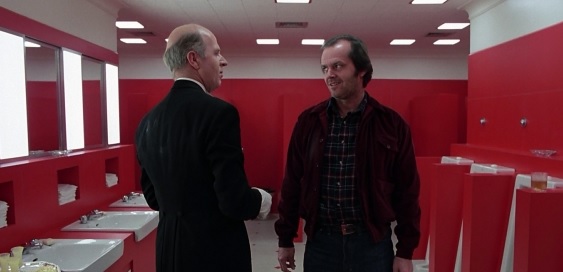
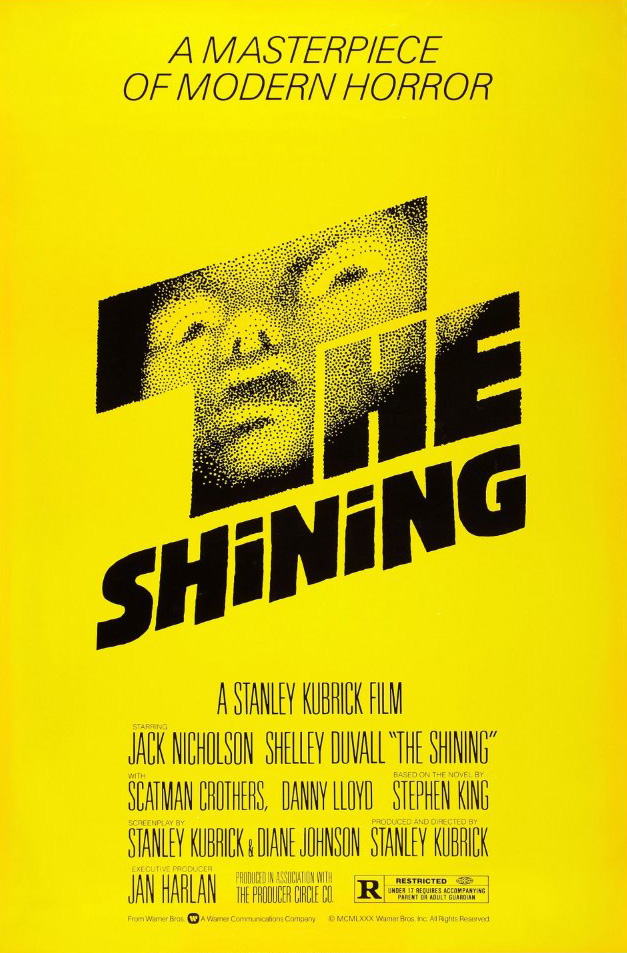
The Shining (1980)

Directed by Stanley Kubrick [Other horror films: N/A]

I don’t want to spend a long time on this. I just want to get in and get out, while still being 100% honest about my views.

I don’t like the Shining. At all.

At best, I find the movie around a 5/10, certainly below average and definitely not a movie I’d want to watch too often. Now, to put my views in context, I don’t dislike the movie because it deviates from the novel. I’ve not read the novel as of yet, so unlike my views on the 1990 It mini-series, the book has nothing to do with it.

The concept in The Shining is interesting, but there are far too many unanswered questions come the end (Who was that old woman? Who was in that bear suit? Why was there a bear suit? Why was Torrence in that picture at the end? What was the use of ‘Tony’ at all? Why did Windy see those skeletons at the end, and that flood of blood meant what, exactly?) and I frankly didn’t enjoy much of this.

I’ll give it that Jack Nicholson does well here, though elements of his character bother me (such as the idea that he literally didn’t write a single word of his novel, and just automatically went into his “All work and no play makes Jack a dull boy” repetition). He did decent here. I didn’t like Shelley Duvall at all, though (she pretty much bothered me throughout the whole of the film), and Danny Lloyd did nothing for me (I don’t hold that against him, as he was a kid). And I gotta say, Scatman Crothers doesn’t do much for me either.

Both Philip Stone and Joe Turkel were good, but without an explanation as to exactly what they are (ghosts of previous people who do the hotel’s manipulation is my guess). Regardless, it goes back to unanswered questions, and while I know that the book might touch of some of these, the fact that the movie just doesn’t bother is something I find a problem with.

A lot of people love this movie. That’s cool. You do you. But I’ve seen this three, maybe four times now, and I never loved it, never liked it, never really enjoyed it. It’s a struggle to get through, and once I do, the best I can say about it is that it finally ended. The Shining isn’t a movie I enjoy.

And since I’ve probably pissed off some people already, let me just throw this in: the 1997 mini-series version of The Shining is a lot better in my eyes, and actually worth watching.

As for this one? Yeah, I can do without.

5/10

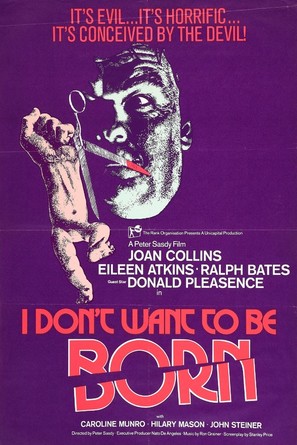
I Don’t Want to Be Born (1975)

Directed by Peter Sasdy [Other horror films: Journey Into Darkness (1968, segment ‘The New People’), Taste the Blood of Dracula (1970), Countess Dracula (1971), Hands of the Ripper (1971), Doomwatch (1972), The Stone Tape (1972), Nothing But the Night (1973), Witchcraft (1992)]

Known under various titles (among them The Devil Within Her and, most mystifying, Sharon’s Baby), I Don’t Want to Be Born isn’t among the highlights of British output in the 1970’s. I think the movie’s moderately enjoyable, truth be told, but it’s not exactly good, and I think many would be able to see the shortcomings the film possesses.

Chief among them, in my view, is the lack of cohesion. A dwarf puts a curse on a woman’s baby, but aside from that single scene (and in fact, it happens before the woman in question is even pregnant), we get nothing more. Yet come the end, it seems as though the baby and the dwarf are inexplicably connected. We’d only seen this dwarf character (played by George Claydon) a handful of times, and for the most part, he seems a normal guy.

In a way, though, I can let it go. I wish we got a bit more information, but it’s not something that dramatically decreased my enjoyment. There was still a high enough body count and decent enough performances to keep me reasonably entertained.

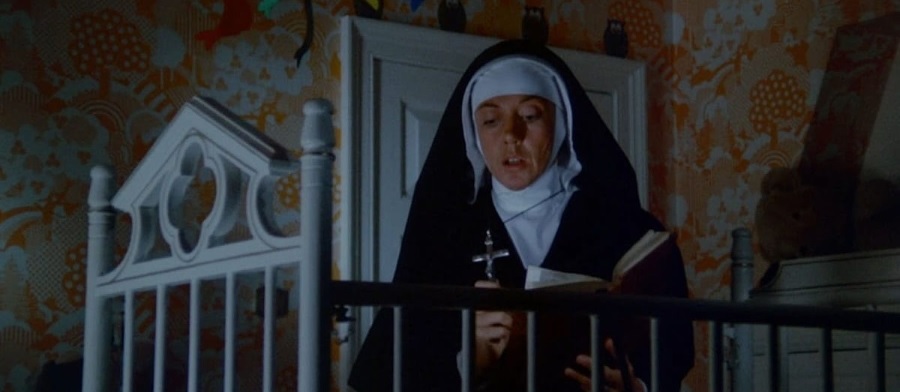
Of anyone, Donald Pleasence was the nicest to see. He didn’t have the biggest role, but I enjoyed his screen presence, especially his conversations with Eileen Atkins, who was my second favorite here. I don’t know the actress, but for a nun, I found her fun. This isn’t to take away from Joan Collins (Tales from the Crypt), who did a pretty good job, or Hilary Mason (Dolls and Meridian), but Pleasence and Atkins stood out the most.

Many of the kills here weren’t that strong, but a few were solid in ways reminiscence almost of The Omen (which this movie predates by a year), such as a woman hitting her head and drowning or a guy getting hung from a tree. The best death, by far, was a decapitation toward the conclusion. It wasn’t particularly gory, but the scene was fun.

Nowadays, despite the fact that this film (again, like many movies from the 1970’s) was played straight, I Don’t Want to Be Born can come across as both a little silly and sometimes overly dramatic. The ending lacks the pizazz you’d hope for, but even if it was tidied up a bit nicer, the film still would have been on the lower-end of British cinema.

That said, I did like it more this time around as opposed to when I first saw it. I don’t think it’s significantly better, but there was charm in seeing the bustling London streets, and in a film with an evil baby a year previous to The Omen (at the time of this writing, I’ve not yet seen It’s Alive from ’74 – edit; I have), it was nice to see most of the cast being on the same page about the nature of the baby.

Is the film still below average? Yeah, I’d say so, but I can also see myself watching this a third time without much consternation, so that must mean something.

6/10

This is one of the films that has been covered on Fight Evil’s podcast. If you want to hear Chucky (@ChuckyFE) and I discuss I Don’t Want to Be Born/Sharon’s Baby/The Devil Within Her, look no further, brahs.

Peeping Tom (1960)

Directed by Michael Powell [Other horror films: N/A]

Often considered a proto-slasher, Peeping Tom is a horror classic that I’ve wanted to see for a really long time, but I have to admit to being disappointed after having finally accomplished that goal.

It’s not as though the movie’s bad, though. Peeping Tom is a very solid psychoanalytic look into a crazed killer, from the killer’s perspective (think movies like The Couch or The Strangler, both of which came out a few years later). I just didn’t find much of the movie enjoyable, and more so, found the stilted and almost inhuman conversations more awkward than anything.

While the film got terribly skewered upon it’s original release, from a modern-day standpoint, it’s hard to see almost anything in Peeping Tom that comes across as too obscene or ghastly. In fact, there’s almost no on-screen murders, and while there’s passing nudity, again, we’re talking very tame, muted stuff. What some critics saw in this movie back then, I don’t know, but I don’t see it now.

German actor Karlheinz Böhm did fantastic as the main character, a seemingly-mild but quite demented, socially-awkward killer. There’s a decent amount of character building in regards to his father and what made him into the man he is, but I definitely get the sense that more was left unsaid than what was discovered. His love interest, played by Anna Massey, was good also, but I didn’t fully understand her character (why she was so insistent on staying around Mark even after she discovered his homicidal activities was beyond me), and her blind mother, played by Maxine Audley, confused me more.

One thing I’ll say as far as surprises go, I honestly didn’t know until I started the movie up that Peeping Tom was in color, and not only that, but it looked pretty good. I’ve sometimes heard this compared to Psycho, and I guess I just mentally imagined this as a black-and-white film, but no, it’s in gorgeous color, which was nice. I just wish there was more in it worth seeing in color.

For what Peeping Tom is, I think the movie’s decent, and to a certain extent, I can understand it’s inclusion in many proto-slasher lists, but I honestly didn’t enjoy the movie near as much as I was hoping for, and given all that I’ve heard about it, I was hoping for a bit more violence and less awkward conversations. Still worth a watch, if only because it’s one of the more-commonly referenced British horror films, but it’s not one I can imagine keeping in my rotation.

6/10

This is one of the films covered on Fight Evil’s podcast. Listen below as Chucky (@ChuckyFE) and I discuss this one.

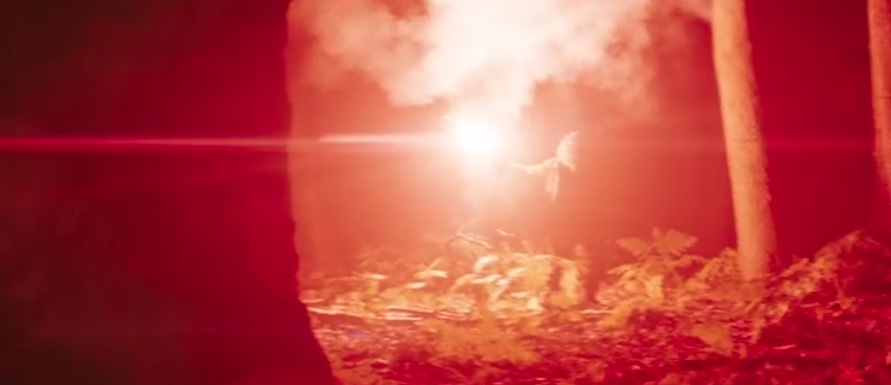
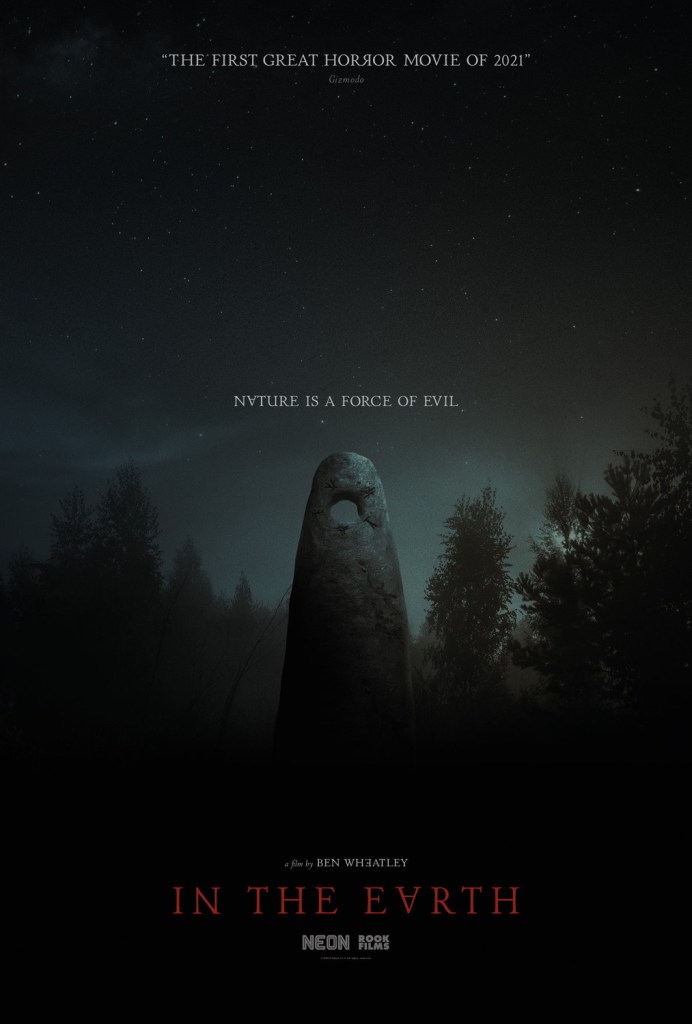
In the Earth (2021)

Directed by Ben Wheatley [Other horror films: Kill List (2011), The ABCs of Death (2012, segment ‘U Is for Unearthed’), A Field in England (2013), Meg 2: The Trench (2023)]

There are times when a movie is less a movie and more of an experience, and I think that In the Earth might qualify for that.

Not too dissimilar from films like Midsommar and Apostle, In the Earth is a folk horror which largely defies description. It starts off innocently enough, but by the thirty minute mark, you can sort of tell you’re in for a ride.

Now, personally, I didn’t think the ride was that enjoyable. For one, the movie is an hour and 47 minutes, and the last forty or so had semi-constant strobe lighting and discordant sounds, making for a singularly unpleasant viewing experience. The film can also be quite trippy during the latter half – there’s a charm to it, and it fits with the story, but it also lacks what I’d consider a good conclusion.

It’s sort of hard, really, to express my feelings. I love the idea of the film – individuals sort of stuck in a forested area by some sort of Mother Gaia-type organism/standing stone – and I can’t even fault the execution, as the movie looks beautiful as far as the cinematography goes. Portions may not be enjoyable to watch, but I suspect that’s rather the point.

At this juncture, it’s worth mentioning that In the Earth is directed by Ben Wheatley, and if that name sounds familiar, he’s also the one who directed Kill List, from 2011. Kill List is a movie that has a very odd vibe to it, and while I found In the Earth even odder, it’s not hard to imagine that the same mind was behind both projects.

Joel Fry (who I know from a brief role in Game of Thrones) and Ellora Torchia (who was actually in Midsommar) were solid as the leads, despite their many stilted conversations. It was harder to get into Hayley Squires’ and Reece Shearsmith’s performances, as their characters were rather out there, but it’s partially the point. Squires felt a little over-the-top at points, and the same could be said for Shearsmith (The Cottage, some episodes of P.R.O.B.E.), but given their situations, I rather think that can be excused.

Like both Apostle and Midsommar, there are also a few rather violent scenes in the film, especially if you enjoy feet. One individual gets a gnarly gash on their foot, and it’s rather inexpertly sewn up later on. Also, some toes get cut off with an ax, a wound that later has to be cauterized (the cauterization isn’t too bad, but the scene in which the toes are cut off is, as the kids say, tense as fuck).

Violence, though, takes a backseat to whatever the hell the rest of the movie was. Really, it was all types of odd. I loved portions of it – the appearance of the Malleus Maleficarum (or Hammer of Witches), the idea that the local folklore of Parnag Fegg being more a process than a being, and even whatever the hell mycorrhiza is added something interesting. It’s a bizarre film, and it does get sluggish, but I can appreciate the ideas they were playing around with.

If you look at the title screen, which screams 1970’s, or how the credits are displayed at the end, you can see that In the Earth has a very specific, sometimes bleak, style and presentation to it. It’s not an easy movie to enjoy, in my view, but it’s definitely a movie that will have some fans for the themes it deals with, esoteric as they may well be.

I can easily imagine divided reaction to this one. I wish I personally liked it more, but some movies just aren’t easy to enjoy. Aspects of this one are great, but overall, I might need to let some other elements, along with the somewhat lackluster conclusion (beast trippy sequence aside) sink in a bit.

6/10

The Power (2021)

Directed by Corinna Faith [Other horror films: N/A]

I went into this British movie pretty blind, fingers, of course, crossed that it’d be decent. As it is, The Power is an okay film, but given the themes they were working with, not to mention the pretty solid production quality the movie had, I personally sort of hoped it would have made a bit more of an impression.

From the first five, perhaps ten, minutes of the movie, it’s not too difficult to see where the movie’s going. It throws in a few turns here and there, such as potential possession and other supernatural goodness, but for the most part, I think a lot of people could tell exactly how the movie would play out.

Certainly I did appreciate how the final twenty minutes sort of dealt with the aftermath of the main action, taking place the morning after. Little in that twenty minutes surprised me, and I’m somewhat lukewarm about the finale as it was executed, but I did appreciate it, at the very least.

The central cast were all pretty solid. Rose Williams had some solid sympathy behind her at times and Charlie Carrick (Trench 11), for his short screen-time, had some good charisma. Playing a character you can’t help but hate at first, Diveen Henry had some strong moments. Young actress Shakira Rahman got some time to shine come the final twenty minutes or so, and while she was never the most important performance, I did rather enjoy Gbemisola Ikumelo here.

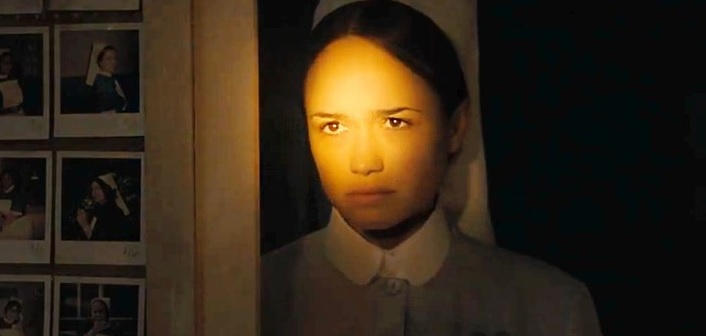
Also, a lot has to be said for the atmosphere. The movie is set in 1974, during the power blackouts in the United Kingdom, giving the film a good reason to drench characters in almost utter darkness, with only weak lanterns to help light their ways. The Power knows what it’s doing with the cinematography, and it looked nice throughout. On the surface, the movie might seem a bit light insofar as the plot is concerned, but it definitely had some strong elements.

Most of my personal pet-peeves comes from the story, specifically the more supernatural elements (if they were indeed supernatural elements – a case could be made that much of what seemed supernatural would have a natural explanation). A lot of this happens in the middle portion of the film (after the first third of the film gets going after a slow crawl), and it had a character blacking out multiple times, and dreams/visions/confusing images were the masters of creation. The story itself wasn’t bad, but I would have preferred a cleaner execution.

And again, I feel like the finale had a problem here and there also. I largely enjoyed it – especially since it gave Diveen Henry’s character a strong scene – but elements just didn’t sit well with me, and seemed largely open to interpretation, something I don’t think the film really had to do.

Thematically, I think it’s easy early on to tell where the movie is going, and I certainly think they hit hard on what they were aiming for. Elements could have been more clear-cut, to be sure, but the themes aren’t in any question once the credits start rolling, and I rather dug both what this moving was tackling, along with the double meaning of the title.

Even so, I found The Power ultimately serviceable. As strong as some characters and scenes were, I don’t think the movie ever quite felt great at any point in time. I don’t think it’s a bad movie, of course, but I did find it a little bit below average. It looked nice, and it might have some things going for it upon a future rewatch, but for now, it just wasn’t stellar.

6.5/10

Triangle (2009)

Directed by Christopher Smith [Other horror films: Creep (2004), Severance (2006), Black Death (2010), The Banishing (2020), Consecration (2023)]

I’ve seen this one twice now, and while I appreciate what the movie’s going for, I can’t say that I’ve been particularly impressed either time. Mostly this comes from the fact that the story’s a bit too confusing to fully wrap my head around, which, while it may be on me, still stains the film.

If there’s a time loop, and you know you’re stuck in a time loop, trying to break out of a time loop isn’t going to work as you’re already in the time loop. And if there’s three other versions of you in the same (but different) time loops, and three other other’s in other time loops (or dimensions), and the loop’s divided by an additional sea, is the time loop a circle or oval?

False, triangle.

Triangle’s interesting, and I think the movie looks really nice. The story, though, just isn’t my cup of tea. Jess trying to get home to her son to kill her original (or is that another loop version #2?) self to become a better mother only to loop again because loop loops loop.

On a serious note, when there is something like a time loop, in this case, and there are multiple versions of the same character floating around, it’s really hard for any impact to be felt when they’re killed. Because, well, you know they might have died, but there’s two other ‘theys’ around, and while they might also die, hey, look, another one. So how is anyone supposed to get pulled into the suspense at all if everything’s circular?

I’m sorry if I’m coming across as some uneducated philistine. It just doesn’t make sense to me. The whole point of a loop is that there’s no ending (or beginning), so no way to escape it. When Jess kills another version of herself, before that other version dies, she states that the only way to ‘break the loop’ is to kill the others on board. I don’t know if she meant just one group of the others or all the others, but it doesn’t matter, because it isn’t logical.

Not that our character of Jess (played by the only noteworthy performance, Melissa George) is particularly logical, so I can excuse that, but come on, did anyone not almost immediately guess purgatory? As soon as Sisyphus was mentioned, who didn’t see it coming?

I may be in the minority here. Triangle is generally well-respected, and has a solid rating on IMDb. And to be fair, maybe the movie makes sense outside of logic, or maybe I’m not understanding something entirely. This is entirely plausible, and I won’t hold that against the film. To be fair, maybe Triangle is a movie that should be seen more than twice in ten years to fully comprehend, but for the time being, I found this movie a nice-looking film but lacking in substance.

5.5/10

This is one of the films covered by Fight Evil’s podcast. Listen below as Chucky (@ChuckyFE) and I discuss this one.

Dracula (1958)

Directed by Terence Fisher [Other horror films: Three’s Company (1953, episodes ‘The Surgeon’ & ‘ Take a Number’), The Curse of Frankenstein (1957), The Revenge of Frankenstein (1958), The Hound of the Baskervilles (1959), The Man Who Could Cheat Death (1959), The Mummy (1959), The Stranglers of Bombay (1959), The Brides of Dracula (1960), The Two Faces of Dr. Jekyll (1960), The Curse of the Werewolf (1961), The Phantom of the Opera (1962), The Horror of It All (1964), The Gorgon (1964), The Earth Dies Screaming (1964), Dracula: Prince of Darkness (1966), Island of Terror (1966), Frankenstein Created Woman (1967), Night of the Big Heat (1967), The Devil Rides Out (1968), Frankenstein Must Be Destroyed (1969), Frankenstein and the Monster from Hell (1974)]

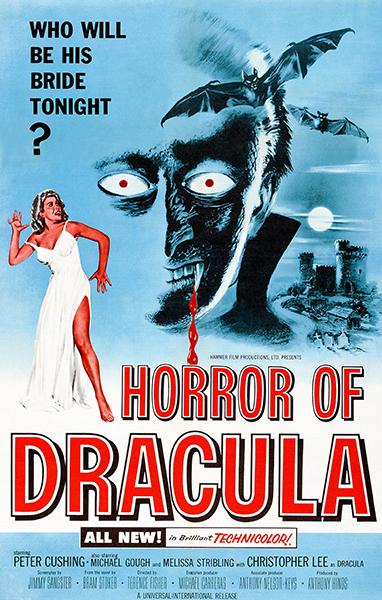
Horror of Dracula, sometimes known as just Dracula, is one of Hammer’s earlier ventures into horror, following both The Curse of Frankenstein and The Quatermass Xperiment. It’s a decent film with some great performances, but it’s never been a favorite of mine.

Part of it may have to do with the fact I grew up on the 1931 Universal classic version of this story, and so even to this day, when I hear ‘Dracula,’ I immediately think ‘Bela Lugosi.’ Maybe that’s not fair, but it is true. Christopher Lee, of course, is a great actor, but when it comes to Dracula, he never really possessed the suave, almost je ne sais quoi, quality that Lugosi did. Lee is perhaps more frightening, and certainly more action-packed, but I’ve always been on Team Lugosi.

Even so, I’m not blind to the flaws of the 1931 film. I do tend to prefer it – while it may feel far more stagey than Horror of Dracula, I think it has far more classic scenes and lines which this version lacks – but at the same time, I don’t think it’s vastly superior to this movie. In fact, the story here is probably a bit more crisp and tragic, with some occasionally creepy vibes (such as a vampire leading a young girl through a forest at night), and of course, the fact that this movie’s in color helps out a bit.

It’s by no means a bloody film. There is one decent scene of a stake being driven into someone that looks good, but there’s no splatter whatsoever. Late in the film, we do see some quality special effects – think the conclusion of Fright Night only done 27 years prior – but on a whole, I think The Curse of Frankenstein probably stands out a bit more than this one in terms of pushing the boundaries.

I’ve always been a huge Peter Cushing fan. From his wide horror catalogue (The Hound of the Baskervilles, The Gorgon, The Curse of Frankenstein, The Mummy, and The Abominable Snowman), he’s never failed to entertain me, and I quite enjoy his serious character here. I especially enjoy seeing him work side-by-side with Michael Gough (who I know as Alfred from the Batman movies, but he was also in Horrors of the Black Museum, Curse of the Crimson Altar, Berserk, Black Zoo, and Trog), who perhaps plays the most tragic character of the film.

We get a good twenty or so minutes with Jonathan Harker, played here by John Van Eyssen. He’s not that memorable, but I rather liked the approach to setting the story up. Neither Carol Marsh nor Melissa Stribling did much to leave an impression, but the more humorously-inclined scenes with George Benson were fun at times.

As far as Christopher Lee goes, his performance as Dracula is fine. Like I said, I personally prefer Lugosi, but both bring something different to the role. Lee (The Wicker Man, The City of the Dead, and I, Monster) is a great actor, and though he doesn’t have a lot of screen-time here, he does make a solid and threatening impression when he does pop up, and I certainly can’t find fault in that.

I think my biggest issue with the film – which may be overstating it, as I don’t think the film is bad whatsoever – is that I’m just so familiar with the Universal classic. The story here may be better, like I said, but it doesn’t feel anywhere near as classic to me. There’s no scenes that stand out as great, no quotes that stand out as stellar, and aside from Gough and Cushing, no performances which blow me away. I’ve always found Horror of Dracula a perfectly fine movie, but really, no more than that.

None of this should take anything away from the film. If I had seen this before the 1931 version, I’d likely enjoy this one more. It’s a good way to spend your time, and things pick up very nicely come the finale, which includes some solid special effects, but when it comes to classic Hammer horror, I’d personally prefer spending my time with The Curse of Frankenstein or The Mummy.

7/10

Witchboard (1986)

Directed by Kevin Tenney [Other horror films: Night of the Demons (1988), The Cellar (1988), Witchtrap (1989), Witchboard 2: The Devil’s Doorway (1993), Pinocchio’s Revenge (1996), The Second Arrival (1998), Endangered Species (2002), Brain Dead (2007)]

I’ll be honest, this was a bit of a disappointing rewatch. I saw this film once before quite some time back, and I remembered having a good enough time with it. Seeing it again, though, I struggle to exactly capture why I felt that before. Some of the movie was interesting, but overall, I can’t help but see Witchboard as moderately underwhelming.

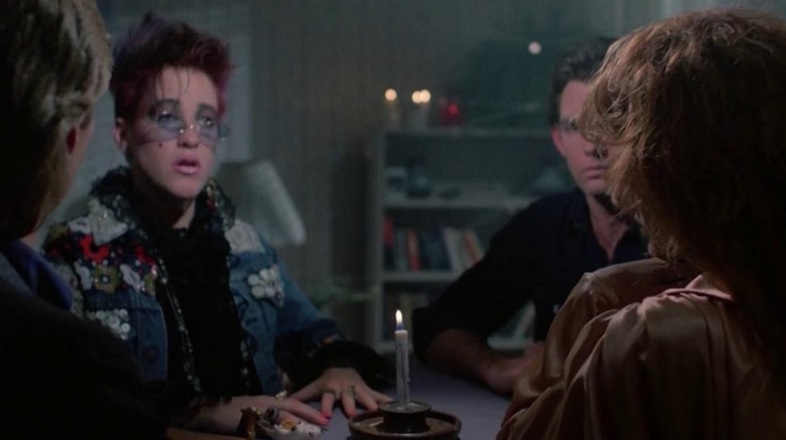
As far as leads go, Tawny Kitaen, Todd Allen, and Stephen Nichols are fine. Both Nichols’ and Allen’s characters can be dicks, but hey, it’s the manly competition to get the girl, so why not? As it is, their story is decent, as they used to be friends, fell apart, and through the course of the film, begin to again get on friendly terms. If there’s any performance here that’s really memorable, though, it’s Kathleen Wilhoite as a medium Zarabeth, who’s wacky but decently entertaining.

Some of the creepy scenes here, including dream sequences, are solid, and the special effects throughout, while nothing amazing, are still certainly decent. It’s just that the story isn’t necessarily my favorite thing, and though elements are sort of interesting (such as the mystery behind the spirit that’s going after Kitaen’s character), all pulled together, it doesn’t do a lot for me.

Witchboard isn’t as good as I remember, which is a shame, because, as I said, I recall having a solid time with this one. It’s still an okay movie, and for a supernatural flick from the latter half of the 1980’s, it’s decent, but unless my view drastically changes the next time I chance this one, Witchboard, for what it does right, is probably a bit below average.

6/10