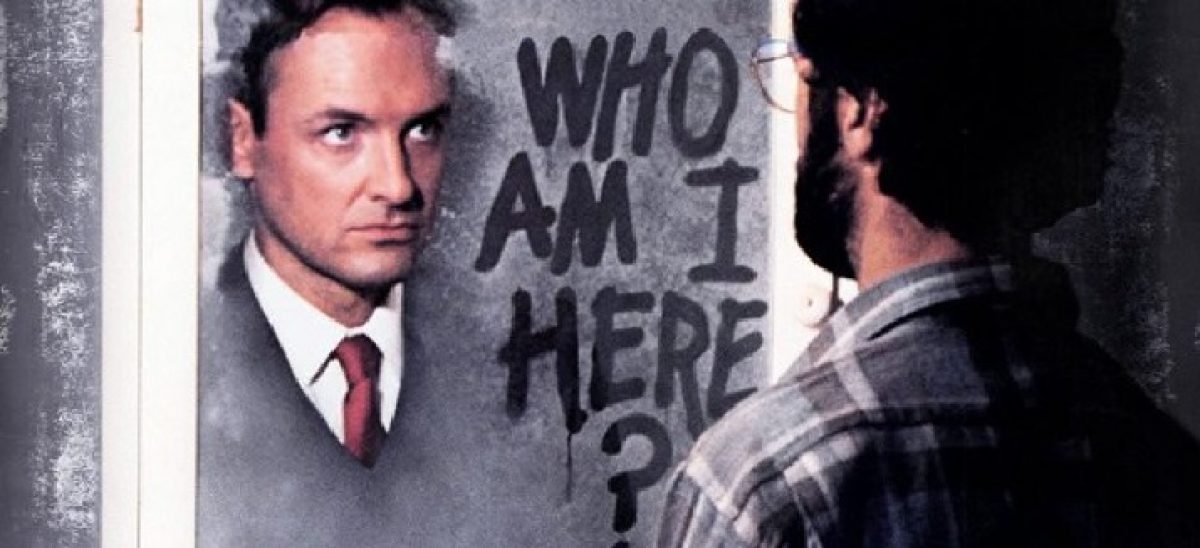
The Omen (1976)

Directed by Richard Donner [Other horror films: Two-Fisted Tales (1992, segment ‘Showdown’)]

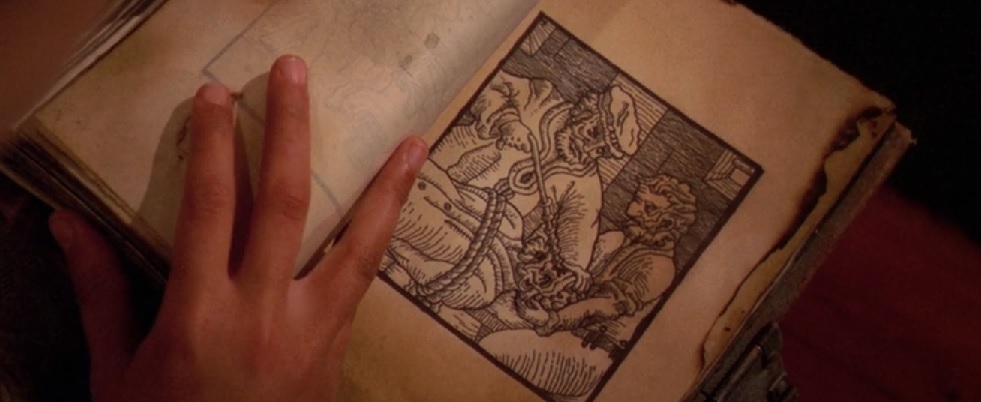
Though not a movie I consider amazing, I always have thought The Omen was pretty good. It has a decently compelling story, made all the better by the mystery of Damien’s birth, and plenty of solid performances. It might be occasionally dry, but I do think it’s very much a classic.

Not being a religious individual myself, I don’t personally buy into any of the religious ramblings about the Antichrist, but unlike many exorcism films, I find that I can get into this movie far better, and it’s not all that trying. I think part of it is the fact I did first see this (or pieces of it) when I was quite young, and coupling that with the presence of a few familiar faces and classic scenes, despite not believing in the premise, I still have quite a good time.

I mean, just look at the kills here. From a woman hanging herself at a birthday party to a priest being impaled in front of a church, not to mention someone getting decapitated by a pane of glass and another individual getting pushed out a window of a hospital, there’s a lot to be found here if you’re primary concern is interesting deaths. In fact, the glass pane decapitation looks like it could be pulled out of any Final Destination movie, and while simpler in concept, the same could be said for the impalement.

Of course, it’s not only the deaths that stand out. There are a lot of great sequences, such as some characters being chased by rabid dogs in an old, dilapidated cemetery, or perhaps the baboon attack that Damien and his mother go through at the safari park. Even the finale is pretty solid all around, save for maybe the cheesiness of the final shot.

Gregory Peck (who I know best from the 1962 classic Cape Fear) was great as the lead, not buying into the Antichrist business at first (who can blame him – Patrick Troughton was a horrible messenger) but slowly figuring out the mystery and learning more about Damien’s origins. David Warner (Nightwing and a couple of other films) worked well with Peck, and the two of them scouring the Rome countryside, from monastery to cemetery, provided some of my favorite sequences in the film.

Patrick Troughton (not only one of my favorite Doctors from Doctor Who, but also The Gorgon) was a terrible messenger, but he did amazing as a religiously-inclined individual. He only got a few minutes of screen-time overall, but he dominated what he got with personality. Billie Whitelaw (Night Watch and Murder Elite) was somewhat similar, possessing a strong sinister aura. Leo McKern was a strong one-scene wonder, Lee Remick had her moments, and for a child actor, Harvey Stephens can smile with the best of them.

Overall, The Omen may not appeal to fans of more modern horror, as some of the film can feel a bit on the sluggish side. I wouldn’t call it a slow-burn – we get plenty of death throughout the whole of the movie – but it can be slow, and since it’s around an hour and 50 minutes, you might feel it. That said, I’ve always thought it hit most of the right spots, and like I said at the beginning, though I don’t find it amazing, I do think The Omen is pretty good.

7.5/10

Wild Country (2005)

Directed by Craig Strachan [Other horror films: N/A]

As far as I can tell, there’s only a few things going for Wild Country, and none of them are enough to pull the movie up above average, or even anywhere close.

For one, I do appreciate the fact it’s a Scottish movie – gives it a bit more flavor, and though the accents take a bit to get used to, subtitles were in the copy I watched, so it was never too difficult to decipher the conversations. Related, this was filmed somewhat near Glasgow, and the fields and such did look quite beautiful and pastoral.

The special effects are pretty good here, especially for a lower-budget picture. It’s never the main focus, but you do see throats ripped out, a guy almost chomped in half (with some ribcage showing), and a few gory aftermaths here and there. Again, it’s never the focus, but for what they had, the special effects weren’t shabby at all. The werewolf design, though, is a different question.

Lastly, and this might be what draws most people to this film, you have about 15 minutes of Peter Capaldi. I know Capaldi best from his run as The Doctor on Doctor Who – I always felt he was an underrated Doctor who was dealt iffy stories. Seeing him here was sort of amusing (and it’s worth mentioning that while I have seen this before, when I first saw it, I didn’t know who Capaldi was), but he only pops up at the beginning and the final ten minutes minutes, so he doesn’t really add that much aside from the value of seeing a familiar face.

Samantha Shields did pretty good as the lead, and though she didn’t have much experience, her performance here was quite decent. She worked well with Martin Compston, who also stood out positively. As for the other three central performances, being Nicola Muldoon, Kevin Quinn, and Jamie Quinn, I had no great issues with them, but they didn’t really add a whole lot to the movie.

Being a lower-budget werewolf movie, I can appreciate that it didn’t try to overstay it’s welcome, as the film runs at an hour and 13 minutes. Funnily enough, I still think it runs a bit long, but that’s just due to not caring for some of the pacing here.

And related to that, the ending of this film was somewhat abysmal. It didn’t come as a surprise – somewhat early on, once the action gets going, you can sort of see where it’s going. Even so,it just struck me as a bit ridiculous, and just didn’t really do much to make me care for the movie any more.

Overall, some aspects of Wild Country are worthy of respect, such as some of the performances and special effects. At the same time, it’s not a movie that I enjoy too much, and while it might be worth a single watch, it’s not something that would likely make someone’s top werewolf outings.

5/10

Nine Lives (2002)

Directed by Andrew Green [Other horror films: N/A]

So at the time of this writing (7/22/2021, should the reader be interested), Nine Lives has a rather poor rating on IMDb. Sporting a 2.3/10 with 3,372 total votes, Nine Lives is probably one of the worst received British horror movies ever made. I know when I first saw it, it didn’t do much for me.

Seeing it again, though, I personally think that maybe people are being a bit harsh.

Don’t get me wrong, this is certainly not a good movie in many senses (aside from the setting, which is pretty solid, and the occasional decent performance), but I found a lot of it moderately tolerable, and again, while it’s not good, I don’t really understand exactly why this has gotten such terrible ratings. I mean, yeah, it’s not great, but is it as awful as 2.3/10? Maybe to some people, but I don’t see it.

The biggest issue I have with this movie is how it just throws nine characters into our faces with little context, and it took about thirty minutes for me to really get the characters and their relationships down. True to the title, there are indeed nine lives, so look forward to meeting Emma, Jo, Laura, Pete, Tom, Tim, Andy, Lucy, and Damien.

Of these nine, I actually enjoyed four of them, being Amelia Warner (Laura), Patrick Kennedy (Tim), James Schlesinger (Damien), and David Nicolle (Pete). Warner was pretty cute here, and she had some strong scenes, but out of all of them, I think Nicolle stood out the most. A big part of this, I’ll be entirely honest, is that I liked his Scottish accent, and he reminded me of Iain De Caestecker (Agents of S.H.I.E.L.D.) consistently.

When it comes to the other five, none are terrible, but they don’t do anything for me. Lex Shrapnel (Tom) was fine, but didn’t do that much. Paris Hilton (House of Wax and Repo! The Genetic Opera) was playing the same character she always seems to, so yeah, that’s fun. Ben Peyton, Vivienne Harvey, and Rosie Fellner didn’t have much in the way of personality, but like I said, they’re not terrible.

The story is somewhat weak, what with a body-hopping spirit (?) going through a group of friends and killing them (with some weak-ass kills, such as simple stabbings that aren’t even on-screen), and while we get some backstory on this spirit, it just feels shallow a lot of the time. I think that part of it might be that Nine Lives is around 85 minutes, and just feels too long. If ten minutes, hell, even 15, were cut, I think it’d help things out.

Also worth mentioning is the final scene, following the chaos of the finale. We get some first-person narration from a survivor, and it’s just so damn dramatic that it’s legit funny. I mean, I laughed twice during it, and then rewatched it. It reminded me of the final scene from Bates Motel in just how corny it was, but like Bates Motel’s ending, I really enjoyed it. It was terrible, but it was funny, so no complaints.

Nine Lives isn’t a good movie, but honestly, I don’t get the hate. Personally, while I think it’s weak in plenty of aspects, I could easily see myself watching this in the future just for the entertainment value. It may put me in the unenviable position of having to give this one an almost okay score, but screw it; I’ll find a way to live.

6/10

The Door with Seven Locks (1940)

Directed by Norman Lee [Other horror films: The Monkey’s Paw (1948)]

Based on an Edgar Wallace novel by the same name, this is a movie that I’ve been wanting to see for some time now. Sometimes known under the title Chamber of Horrors, The Door with Seven Locks is a quality dark house mystery movie, and while it may not be special in many ways, I do adore much of the film.

Lilli Palmer isn’t a name I actively know, but she did a pretty good job as a strong female lead, and worked well with Romilly Lunge. Of course, Leslie Banks (Zaroff from The Most Dangerous Game) comes hard with a very sinister presence, and his gang of criminals (none of whom were that memorable) was occasionally fun to watch scheming. I could have done without Gina Malo, who was used primarily for comedic effect, but David Horne had some strong moments here.

What really makes this movie work, and work better, in my opinion, than The Dark Eyes of London (which was also based off an Edgar Wallace novel), is the strong and engaging mystery. There are a decent amount of moving parts you have to pay attention to, but I don’t think it even gets too bogged down or convoluted, and I think the answers we get toward the end were, while perhaps not too surprising, perfectly welcomed.

The action sequences, from a fist-fight between a masked man and a police officer to a criminal literally getting a rug pulled out from under him (such a classy move), were all pretty solid. Even toward the end, when the last antagonist standing gets trapped in the oddest iron maiden (“Iron Maiden? Excellent!”), there were some pretty tense moments.

While it’s unlikely to become a favorite unless you’ve some nostalgic connection to it, The Door with Seven Locks still hits many of the right spots, and if you’re a fan of these types of movies, it may be worth checking out.

7/10

Sea Fever (2019)

Directed by Neasa Hardiman [Other horror films: N/A]

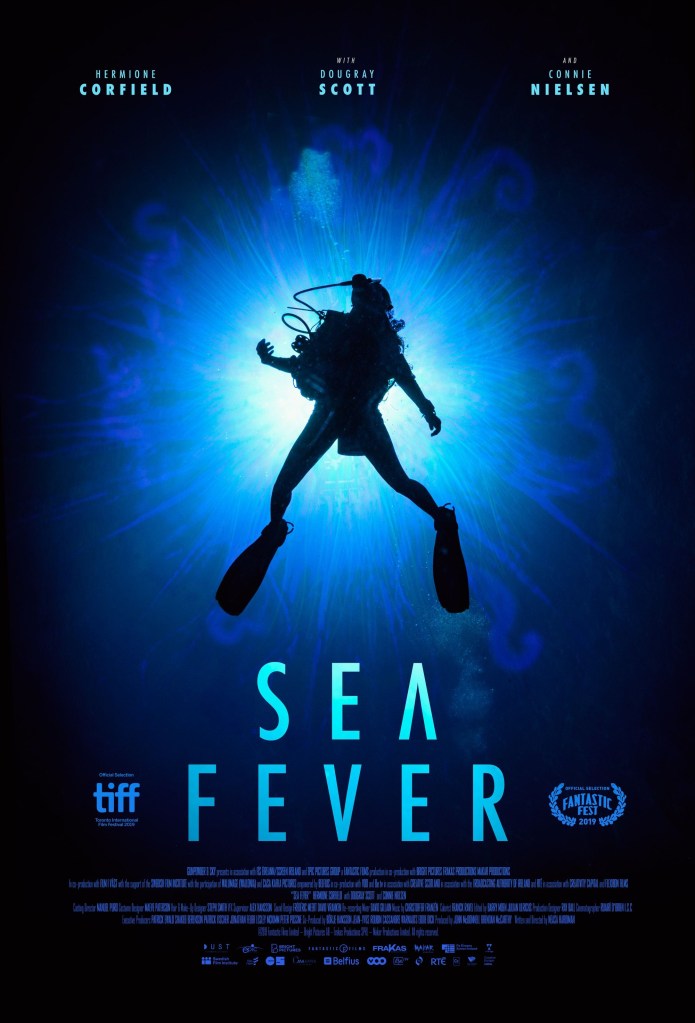
I forget when I first heard about Sea Fever, but from the beginning, I was intrigued. It was partially the poster, partially the title font, and of course, the plot sounded like it had potential. Well, the movie isn’t amazing, but I did find it quite decent, and personally, I found a mostly solid movie.

Never having heard of any of the actors or actresses here, I was impressed by just how quality some of them were, especially Hermione Corfield. She may be younger than me by a month and a half, but boy, what a stellar performance. I actually rather liked her anti-social character, and got a kick out of her being thrown in a situation where she had to interact with others, despite her utter disinterest in doing so.

Of course, most of the cast is strong – though I don’t know the names, the performances by individuals such as Jack Hickey, Dougray Scott, Connie Nielsen, Ardalan Esmaili, and Olwen Fouéré were all worth seeing. It’s also nice that we got a decent amount of personality from each of these characters, which isn’t always a given with movies featuring a smaller cast.

It is true that the story itself isn’t altogether that amazing, but I do think aspects here are there are well-done, such as Corfield’s character diving beneath the trawler and seeing quite a terrifying creature (one of only two full appearances, which is something else I appreciated – they didn’t overdo it), or the argument her character gets in with the others about quarantining themselves off.

As far as violence goes, there’s really only one scene that’s worth talking about, but I think it’s quite a great scene. Of course, any scene that has eyes bursting has to be quality, so I think I’ll leave it at that.

Oh, and during the ending credits, they played a totally thematically appropriate song titled “Shallows” by Daughter. I know Daughter only from a Sound Melody remix of the song “Medicine,” so I’m not really familiar with their untouched music, but this song was a fantastic way to close out the movie, and it’s somber and dark sound fit really well with the conclusion here.

For a movie that doesn’t possess a whole lot of originality, Sea Fever had a strong presence. Partially it’s from the fleshed out characters, and partially it’s due to really nice cinematography and a unique setting, and though it’s not a great movie, and maybe you can see the ending coming long before the movie ends, it was still a pretty fun ride, and I’d suggest giving it a chance if it sounds like it could be your type of thing.

7.5/10

The Dark Eyes of London (1939)

Directed by Walter Summers [Other horror films: Chamber of Horrors (1929)]

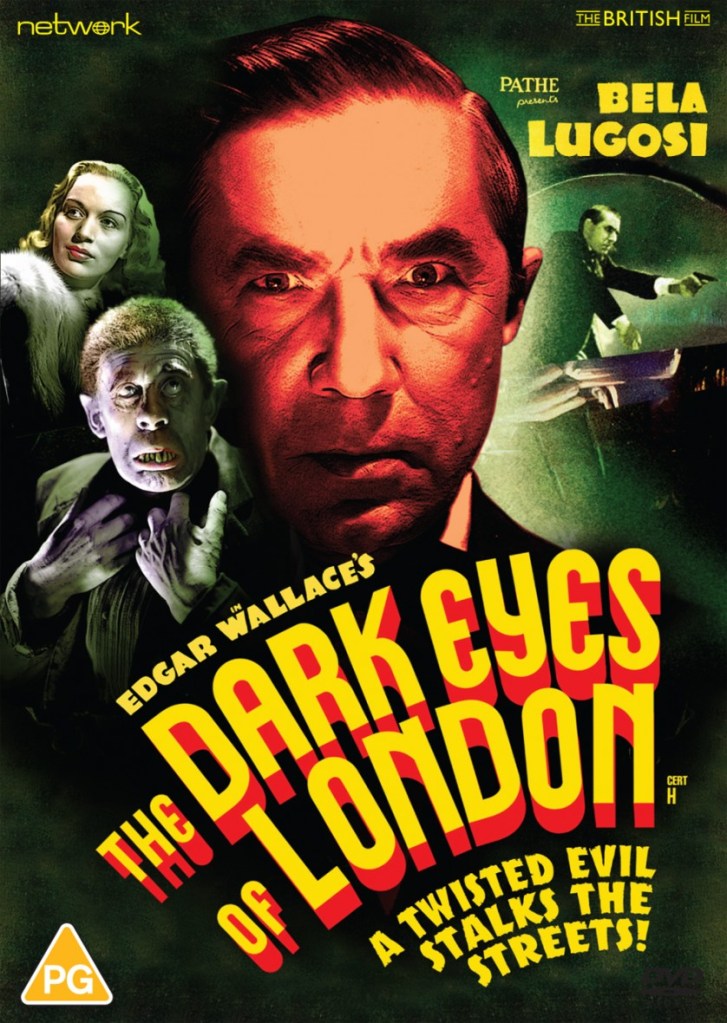
Perhaps better known under the title The Human Monster, this British horror film from the late 1930’s certainly possesses some interesting ideas, and even a few decently thrilling scenes, but I don’t think it’s enough to really stand out amongst the other films that were coming out around the same time.

Certainly Bela Lugosi (Dracula, Mark of the Vampire, The Devil Bat) gave a great performance, and his character Dr. Orloff even had a sort of surprising development toward the end, but his good performance, and the solid performances of others, wasn’t really enough to pull the story past the finish line.

Hugh Williams made for a somewhat generic lead. I didn’t have an issue with him, but he struck me as somewhat uninspired. That’s not quite as bad as Edmond Ryan’s character, though, who was pretty much only here to crack jokes, which has it’s place, but I never felt his character really deserved to be there. Greta Gynt was as solid as any other leading actress of the time, and Wilfred Walter was pretty good as a hulking, deformed menace.

At times, the plot does seem a bit muddled, what with a bunch of insurance policies, underwriters, and potential forgeries going on, but once the movie got going, it got going, and we got some good scenes, such as a man being drowned in his bathtub, another man getting electrodes shoved into his ears (this was off-screen, of course, but we did hear the scream), and a great donnybrook at the end with deadly consequences.

The movie isn’t without it’s charm. A lot of this comes from Lugosi, who is just fun here, and some of it comes from the fact the film’s British (a scene toward the end, with a police car racing to help a damsel in distress, was cool, as it was a first-person view, swerving in-and-out of double-decker buses), but the charm alone, even with the memorable scenes, don’t save it.

I still think that, if you’re a fan of classic horror, The Dark Eyes of London is worth a shot, but I do think there are better movies from around the same time, such as The Face at the Window or The Devil Bat, and this just ends up rather forgettable.

6/10

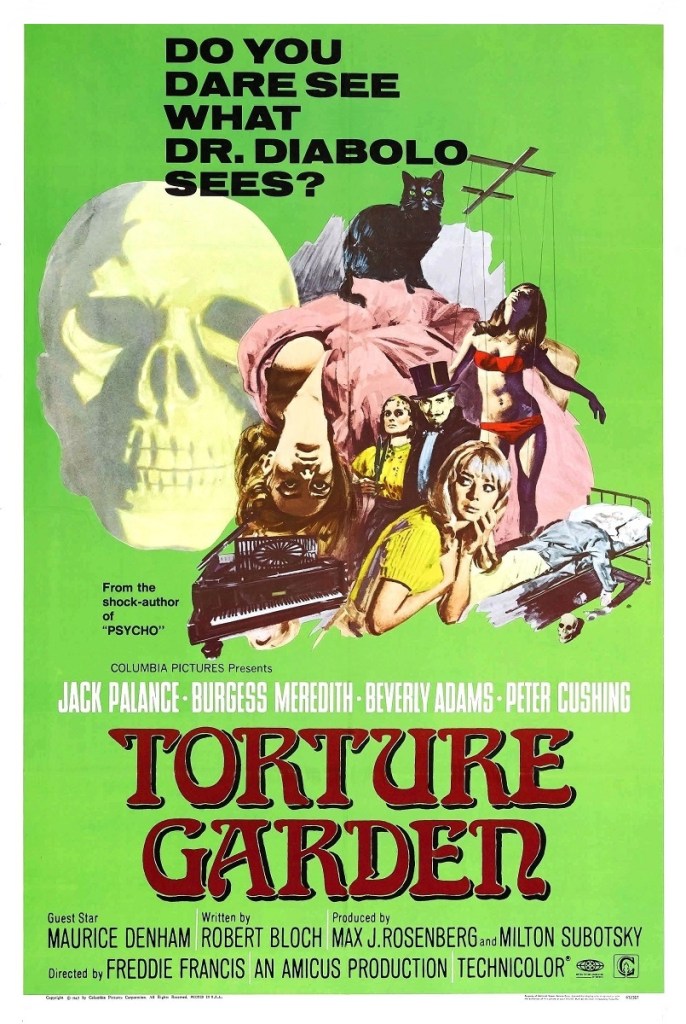
Torture Garden (1967)

Directed by Freddie Francis [Other horror films: The Brain (1962), The Day of the Triffids (1963), Paranoiac (1963), Nightmare (1964), The Evil of Frankenstein (1964), Dr. Terror’s House of Horrors (1965), Hysteria (1965), The Skull (1965), The Psychopath (1966), The Deadly Bees (1966), They Came from Beyond Space (1967), Dracula Has Risen from the Grave (1968), Mumsy, Nanny, Sonny & Girly (1970), Trog (1970), Gebissen wird nur nachts – das Happening der Vampire (1971), Tales from the Crypt (1972), The Creeping Flesh (1973), Son of Dracula (1973), Tales That Witness Madness (1973), Craze (1974), Legend of the Werewolf (1975), The Ghoul (1975), The Doctor and the Devils (1985), Dark Tower (1987)]

Amicus’ second anthology horror film (following 1965’s Dr. Terror’s House of Horrors), Torture Garden is a film I’ve seen once before, but didn’t particularly care for. Seeing it again does confirm, to me, at least, that it’s one of the weakest of Amicus’ anthologies that I’ve seen.

I find the framing story as fun as any other, and the route it takes, while predictable, is still fun, but none of the four stories throughout the film really interest me. No doubt that two of them (‘Terror Over Hollywood’ and ‘The Man Who Collected Poe’) had potential, but I don’t feel either one was necessarily executed that well. Of the four, I guess I’d say that ‘The Man Who Collected Poe’ was the best, but really, all four of these felt somewhat underwhelming, especially compared to Amicus’ later entities, such as Tales from the Crypt and The Vault of Horror.

The first and third stories (‘Enoch’ and ‘Mr. Steinway,’ respectively) had their own issues – for ‘Enoch,’ it just felt sort of been-there done-that, and ‘Mr. Steinway’ felt undercooked (and that ridiculous ending, while almost fun, just felt, well, ridiculous), and while some performances stood out in each (Michael Bryant, who later starred in The Stone Tape, for ‘Enoch,’ and John Standing, later in Nightflyers, for ‘Mr. Steinway’), these stories felt weak in ways that reminded me of another weak Amicus outing, being their final anthology, From Beyond the Grave.

Good performances are common throughout the film, of course. Jack Palance (Man in the Attic, Alone in the Dark, and Without Warning) was somewhat enjoyable, though his character’s personality threw me off. Of course, Peter Cushing is always a joy to see, no matter how flawed the particular story was. Others that are worth a mention include Robert Hutton (The Slime People), John Phillips (The Mummy’s Shroud), Michael Ripper (who was in The Mummy along with quite a few other Hammer outings), and of course the enjoyably hammy Burgess Meredith (who I primarily know from the Batman series, but was also in Burnt Offerings and Magic).

Of course, worth-while performances can only go so far if their stories don’t do them justice, and I don’t think any of these really did, aside from maybe Meredith’s role in the framing story (though even that edit cut toward the end just felt poorly done). Little in any of the stories aside from wasted potential stuck me as memorable (especially ‘Terror Over Hollywood,’ which I really think could have been interesting in a Michael Crichton way), but aside from the framing story, which threw in a surprise or two, nothing here is going to stick with me.

Naturally, being a big fan of some of Amicus’ later work, this doesn’t give me pleasure to admit, but I found this even weaker than the aforementioned From Beyond the Grave, if only because one of those stories was actually about average. As of this writing, the only Amicus anthology I’ve not seen is Dr. Terror’s House of Horrors, but as that’s the first of this kind, I’m definitely hoping for a little more out of that one. As for Torture Garden, despite some quality performances (Meredith, Cushing, and Palance alone had quality star power), I just don’t think it did that much right.

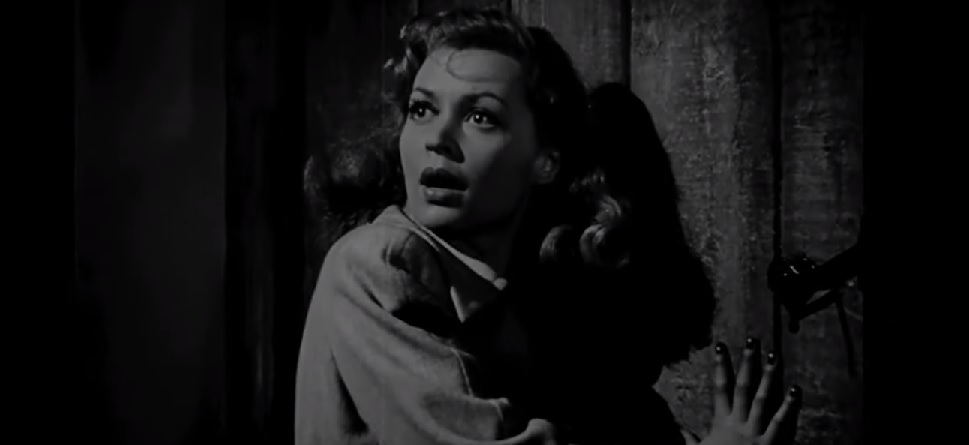
5/10

Nothing But the Night (1973)

Directed by Peter Sasdy [Other horror films: Journey Into Darkness (1968, segment ‘The New People’), Taste the Blood of Dracula (1970), Countess Dracula (1971), Hands of the Ripper (1971), Doomwatch (1972), The Stone Tape (1972), I Don’t Want to Be Born (1975), Witchcraft (1992)]

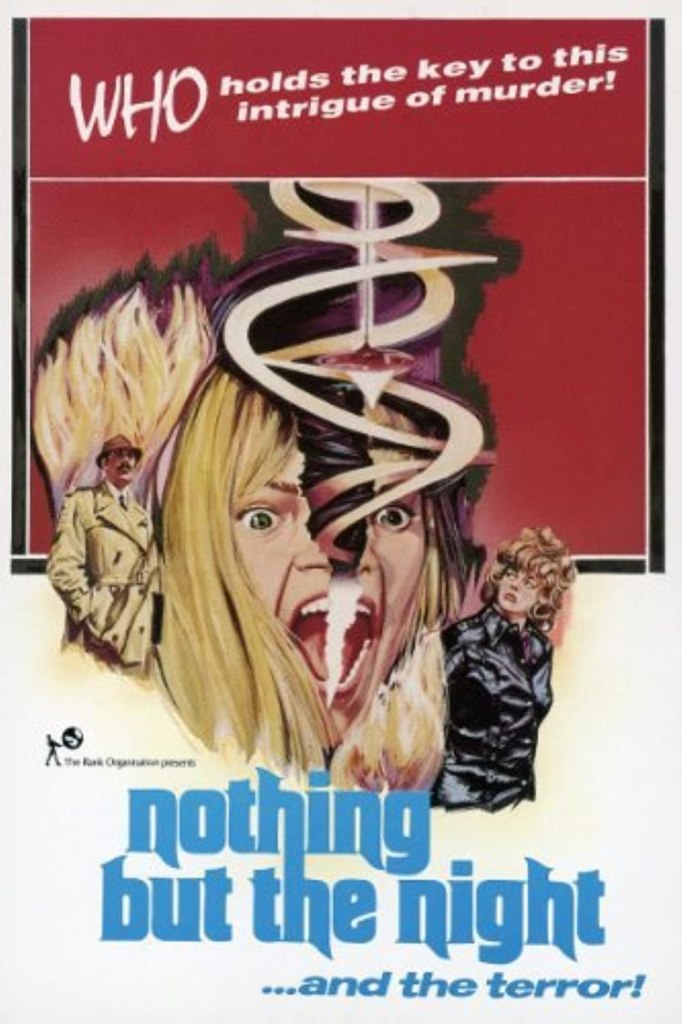
Based on the 1968 novel of the same name by John Blackburn, this British film can be quite engaging at times, but I think that some elements hold it back, such as the conclusion and the eventual answer to some of the questions the ongoings in the movie put forward.

Certainly anytime that Christopher Lee and Peter Cushing share a scene, it’s a good time (previous to this film, they appeared together in movies such as The Curse of Frankenstein, Dracula, The Hound of the Baskervilles, The Mummy, The Gorgon, Night of the Big Heat, I, Monster, Dracula A.D. 1972, and Horror Express), and that’s no different here. I’ve always personally preferred Cushing, but both of these actors put in great performances here, story issues aside.

Save those two, it’s hard to really point to anyone else that stands out. Georgia Brown (who later appeared in a segment of Tales That Witness Madness) was decent, but I didn’t think the finale really gave her character a lot to do. I didn’t love Diana Dors (Craze and Berserk) character, but she also did okay. Despite his short time on-screen, Keith Barron was reasonably solid, and of mild interest, though he’s difficult to pick out, Michael Gambon appears in a few scenes also.

If the movie could survive from solid performances alone, we might be talking about an early 70’s classic, but unfortunately some story elements suffer here. I definitely enjoyed the mystery that they had going on, and I did enjoy some things about the finale (which almost felt like The Wicker Man, though nowhere near as epic or memorable), but the solution to the mystery just didn’t interest me that much, and there’s also a bit of over-explanation toward the end by an antagonist, and it just felt off. One of the final scenes is great, but it’s not a flawless ride getting there.

Of course, being the sheltered American lad that I am, I enjoyed the British and Scottish accents and countryside, and though I didn’t care that much for the film overall (which is, on a side-note, about the same reaction I had to this one the first time I saw it some years ago), it still has that British charm to it, which may not amount to much when it comes to rating, but it was something that I appreciated.

Generally, I think that Nothing But the Night is okay. Below average, no doubt, but still worth seeking out if, at the very least, you’re a fan of Cushing or Lee (or the pair of them together). For me, I didn’t dig where the story went, and I think to an extent, things fell apart a little toward the end, but it’s not a movie that I’d never give another chance to, if only for the names involved.

6/10

Scream for Help (1984)

Directed by Michael Winner [Other horror films: The Nightcomers (1971), The Sentinel (1977)]

Scream for Help is a movie that I’ve only seen once before, and honestly, a movie that I remembered very little of. Pretty much when it came to mind, I just thought of it as the spiritual prequel to The Stepfather (not unlike how I think of 1985’s Blackout). In truth, this really can stand up on its own, because while it’s not an amazing movie, I definitely think a lot was done well.

Problematically, much of the first half deals with a lot of melodrama, what with a step-father’s affair being found out by his step-daughter, and while I can get the emotional upheaval this would cause the family, it’s not always the most engrossing stuff.

Again, though, there’s still decent scenes here, such as the somewhat surprising and intense hit and run that happens quite early into the film. No doubt too there’s tension at different portions of the opening, and while things don’t really pick up until the final thirty minutes, there’s plenty of things going on that are likely to keep your interest.

What sort of interested me was how the story also largely dealt with a teen girl’s coming-of-age, in a way. Over the course of the film, she experiences her first love and experiences her first love-making, and of course love saves them all in the end. Of course, it also led to most of their problems in the first place, but like most teenagers, it’s a confusing time for us all.

Rachel Kelly was pretty convincing as a teenager naive in the ways of lust. I mean, no doubt was her character occasionally ridiculously melodramatic, but she was pretty fun, and she possessed quality strength. Her mother, played by Marie Masters, didn’t interest me as much, but she still did decent enough. Forgettable also was Corey Parker, but I loved how his character, the very day after his girlfriend dies, gets with the girlfriend’s best friend, so a quality example of man.

Speaking of which, while his girlfriend, played by Sandra Clark, didn’t last that long, she was still pretty decent, which was a bit of a surprise given that this was her sole role in anything. David Allen Brooks (who pops up much later in Jack Frost 2) was pretty good here, and Rocco Sisto was even better, but Lolita Lesheim (who provided a bit of nudity) was just okay. Still, decent performances from most of the central cast, especially Rachel Kelly.

While traditional horror scenes were a bit light at times (and the finale felt far more thriller than it did horror), there were a few here and there, and like I said, plenty of tension throughout the whole of the film. Also, there was a kick-ass explosion at the end, which was pretty cool, and while the electrocution wasn’t up to par, it was still fun given the character in question who was electrocuted deserved it.

A lot could be said for the idea that this movie feels far more like a coming-of-age thriller than it does the pure horror movie that you might hope it’d be, and I can certainly see it, to an extent, but no matter what Scream for Help is classified as, I think it’s a movie that has a decent amount going for it, and if you’ve not yet seen it, it may be worth it, even if it’s not amazing.

7/10

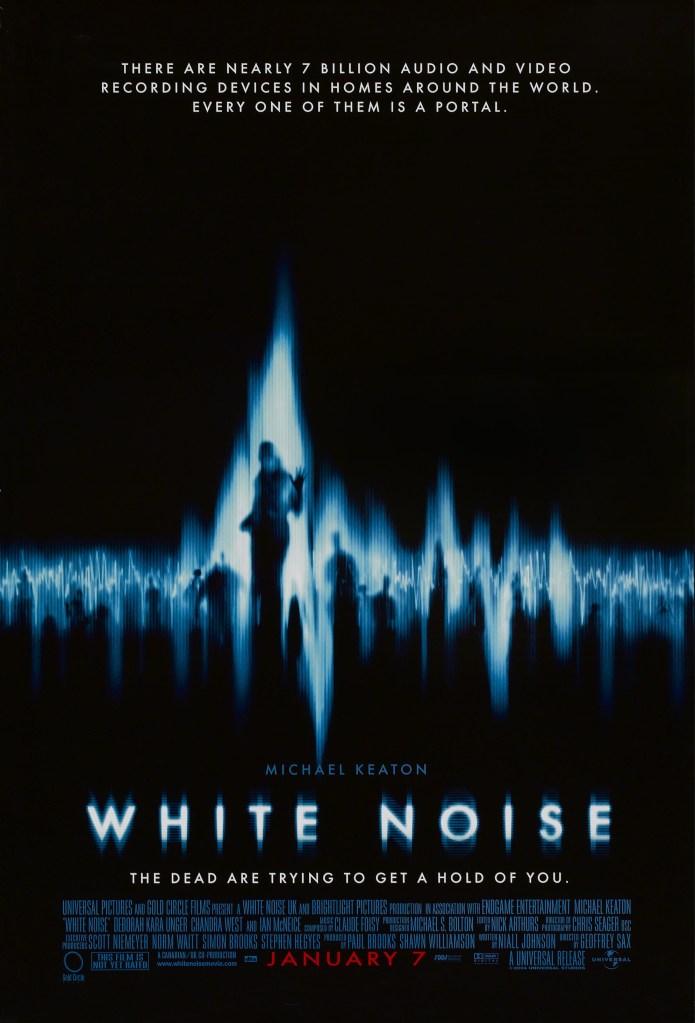
White Noise (2005)

Directed by Geoffrey Sax [Other horror films: N/A]

This is a somewhat more-popular film, partially because it stars Michael Keaton, and as such, much like movies such as Hide and Seek (starring Robert De Niro), What Lies Beneath (Harrison Ford) and D-Tox/Eye See You (with Sylvester Stallone), it’s generally forgotten by the horror community nowadays, and for, I think, pretty good reason.

Not that the movie is an extraordinarily poor one – it’s not memorable enough for that. It’s a pretty high-budget film, as you’d imagine (or at least, as you’d imagine as soon as you see that Keaton’s in it), and there’s no doubt that it’s competently-made, but there’s just not enough here to really make it anywhere near a standout film.

Some of this is because the horror is a bit on the lighter side. It’s there, don’t worry about that, but it’s there in the What Lies Beneath-way, and just feels so incredibly safe and tame. On a related note, this film is PG-13, which isn’t by any means damning, but it does show that this wasn’t going to really turn any heads at any point, and it really doesn’t.

I’ll give it credit for Ian McNeice (who in fact reminded me of another actor that I can’t yet place), who give a pretty enjoyable performance in his limited time, and Deborah Kara Unger. I don’t think Unger did a fantastic job here, but I do know her from The Game (1997), so that’s something. Keaton I really only know from the 1989 Batman, and I’m much more a Christian Bale-type of guy, so I couldn’t really care much about Keaton here. His performance is okay, but it’s far from great, which is fine, because the movie doesn’t warrant A+ acting anyway.

Not that the movie is without strong points. While I really don’t care for 90% of the final thirty minutes, I did like the three silhouettes of the evil ghosts (or whatever they were – that’s one of the things I wish they touched on more), and that final setting (a dilapidated factory, with giant holes and rain falling freely into the structure) was on point. Maybe a few other scenes were cool, but as I try to focus in on one, I just hear white noise and can’t complete my thought.

Also, those final three seconds were terrible. Just entirely unnecessary, which is probably intentional, as I feel that a lot of what they did with Unger’s character throughout the film was unnecessary. And speaking of unnecessary, I didn’t much care for that final message from Keaton’s character to his family. It felt like something out of a touching family drama, and a bit out of place.

White Noise isn’t a terrible movie, and I don’t want to give anyone the impression that I think it is. It’s far from a good movie, but it probably accomplishes a lot of what it set out to accomplish. It just wasn’t the type of movie I enjoy, and much of it fell flat for it.

5.5/10

This is one of the films covered by Fight Evil’s podcast. Listen below as Chucky (@ChuckyFE) and I discuss White Noises.