Funny Man (1994)

Directed by Simon Sprackling [Other horror films: N/A]

For the right audience, Funny Man could be quite the enjoyable experience. It has a good sense of humor, and is overall quite a unique experience. Personally, the movie is too goofy for me – it’s just too over-the-top for me to get into. If you’re into the type of humor Funny Man focuses on, though, it’s perhaps worth seeing.

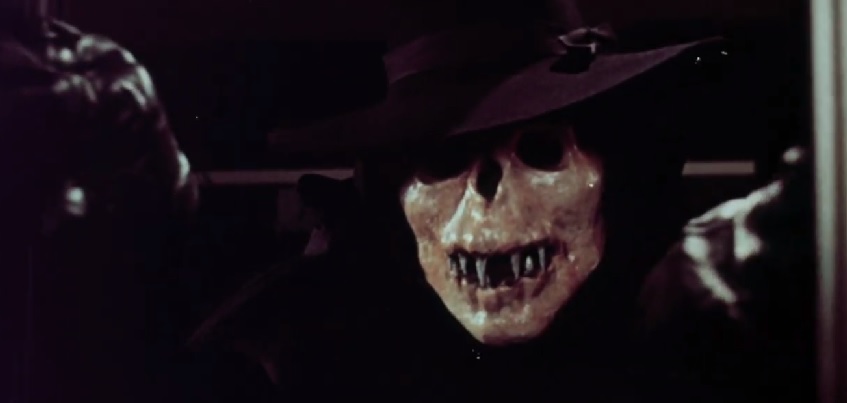
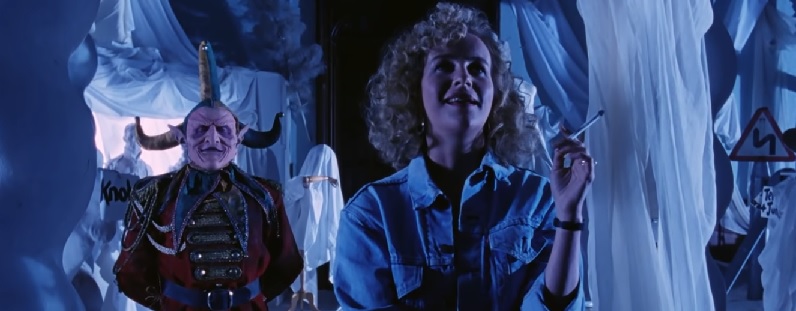
The story is marginally interesting, and there are a few standout scenes. After a man wins an ancestral home in a card game, he checks the place out, and shortly thereafter, he and his family are stalked by a jester-demon. It’s somewhat similar to Leprechaun, as this jester (called Funny Man, hence the title) makes a lot of one-liners, but it’s also fundamentally different, as this movie is rather silly, and oftentimes, the Funny Man will look directly into the camera, addressing the audience.

It’s that breaking of the fourth wall that’s partially my issue. If it were only that, it might be okay, but some of the scenes here are just way too silly for me, such as the Funny Man having a gun showdown with one character (the character in question is somehow just using her hand as a gun – no idea how an injection can do that), or doing a strip show for another victim, or having a guy try on a bunch of wigs that each play a different style of music. Oh, and a guy becomes a star or something. It’s just too goofy, and you add that to the breaking of the fourth wall, and it’s really not my thing.

As I said, though, the film isn’t without a few decent scenes and ideas. A fortune-teller character finds a spiral staircase that winds down and down (and sideways, so I don’t know if that’s the safest staircase I’ve ever seen) which leads down to a small village called Sod’s Law (population: 1). I guess this is where the Funny Man usually lives when he’s not mucking about the castle above, and it’s sort of a cool visual.

There’s a kill in which the Funny Man is doing a bit of a ballet dance beforehand – it’s silly, like most of the other death scenes, but it was shorter and more to the point, and while the kill itself (electrocution) wasn’t stellar, the set-up was more fun. Lastly, the final shot is somewhat haunting, so that’s another plus.

Only two performances really stood out, one being the titular Funny Man, played by Tim James. I didn’t care for his humor most of the time, but he did well with the character he was supposed to play. The film also has Christopher Lee (The Gorgon, Horror Express, Nothing But the Night), and he’s occasionally fun. Oh, there’s also a character named Themla, played by Rhona Cameron, who dresses up in a skirt, an orange turtleneck, glasses, and has a cropped haircut. She doesn’t do that much, like many of the other characters, but that distinctive look (almost, just almost, like they were mimicking Scooby-Doo’s Velma) was fun.

For the right audience, this British film might be a lot of fun. It also might help if said audience was either high or drunk, as I imagine if I had seen it in that frame of mind either time I’ve watched this, it would have made for a better experience. The movie isn’t without promise, but personally, it’s just too goofy for me, and that’s what it really comes down to.

5/10

Behemoth the Sea Monster (1959)

Directed by Eugène Lourié [Other horror films: The Beast from 20,000 Fathoms (1953), The Colossus of New York (1958), Gorgo (1961)]

I have to say, I forgot how decent portions of this film are. Better known by the title The Giant Behemoth, Behemoth the Sea Monster is a decent film. I don’t think it necessarily stands out among other giant creature movies from the late 1950’s, but it is decent.

Personally, I love how hard they hit on the dangers of radiation from atomic testing in the beginning, having a marine scientist (Gene Evans’ character) warn of the dangers, which was nice, and I only wish people listened and dismantled the bombs back then instead of going through the Cold War for thirty more years. Like Godzilla did before, this film is a nice argument against atomic weaponry, and I appreciated it.

Things moved pretty quick for most of the film. I will admit that toward the final twenty minutes, during the beast’s attacks in London and the commission trying to come up with some way to defeat it, I did feel it dragged a bit. Partially, I think, because, as fun as the scenes of the rampaging behemoth were, some of them were a bit on the repetitive side.

Of note-worthy performances, there’s really only three, and even though they did well, it’s not as though any of the three were exceptionally memorable. Gene Evans (Peopletoys) and André Morell (The Plague of the Zombies, The Hound of the Baskervilles, The Mummy’s Shroud, The Shadow of the Cat) worked well together, especially during the first half of the film when they still had some disagreements, and though he really only got one scene, I loved Jack MacGowran’s (Dance of the Vampires) exuberance.

Admittedly, but unsurprisingly, the behemoth was a bit on the hokey side, but if I’m being honest, I found it more charming than anything else. Seeing it flipping over a ferry or destroying a helicopter, not to mention all of the cars it smashed, was a decent amount of fun, and though, as I said, I do think some of the attacks toward the end were a bit longer than need be, I still appreciated the creature.

If I’m being honest, I wasn’t looking forward to revisiting this one. All I remember from my first time seeing this is thinking that it was a poor man’s Beast from 20,000 Fathoms. It’s actually decent fun, at least near the beginning, but I do think it tapers off a little. Ultimately, I think it falls somewhere around average, but if you’re a fan of late 50’s horror, it’s worth seeing.

7/10

Dead of Night (1945)

Directed by Alberto Cavalcanti [Other horror films: The Halfway House (1944), Dead of Night (1945)], Charles Crichton [Other horror films: N/A], Basil Dearden [Other horror films: N/A], & Robert Hamer [Other horror films: N/A]

While a classic of both British horror and anthology horror, I have to admit that Dead of Night has never been a film I think about too often. It’s a decent film, and possesses both a solid framing sequence and a few solid stories, but overall, I think the movie is just okay.

It’s not the first anthology horror, of course – even if you’re hesitant about counting Waxworks (which I could understand), there’s the 1919 German film Unheimliche Geschichten (or Eerie Tales). Like many anthology films, it’s uneven, much like Dead of Night tends to be, but there is plenty to appreciate about this one.

The framing sequence is pretty good, and even a bit more involved than many framing stories you’d later see in Amicus films (Tales from the Crypt, Torture Garden, The Vault of Horror). It’s a good framing sequence with a fun conclusion and decent ideas, which is definitely not something you see in every anthology (though I like the film overall more, compare the framing story of Screamtime to this one).

Of the five stories (‘The Hearse Driver’, ‘The Christmas Party’, ‘The Haunted Mirror’, ‘The Golfer’s Story’, and ‘The Ventriloquist’s Dummy’), I’d say only two are quite good, being ‘The Hearse Driver’ and ‘The Ventriloquist’s Dummy.’ ‘The Hearse Driver’ is really simple, but I enjoyed how it went, and it had a great Twilight Zone vibe to it. ‘The Ventriloquist’s Dummy’ is a longer story, but the ending to it, reminiscent of both Psycho and Pin, was quality.

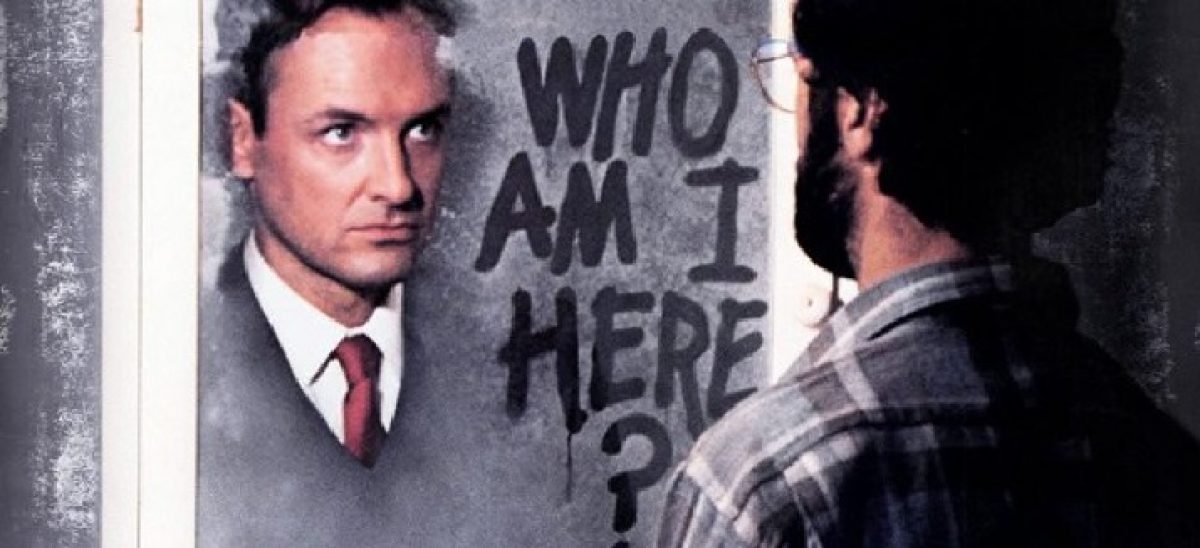
And to be fair, ‘The Haunted Mirror’ isn’t shabby. It’s just that I wanted a bit more meat. I don’t know where the additional protein would have been derived from, but it was a solid story, and I just wanted a bit more. It’s also within reason to say ‘The Christmas Party’ is okay, though it’s somewhat derivative and more spooky than scary, and I feel like the story’s been done better.

‘The Golfer’s Story’ isn’t without potential, but as anyone who has seen the movie knows, it leans toward a more comic tone. There’s a ghost who can’t properly disappear, and he and the man he’s haunting have to try and make the best of the awkward situation, especially as the man is getting married, and doesn’t want to make sweet love to his new wife in front of a ghost. We’ve all been there, guys. For a comedy story, I guess it’s okay, but I didn’t care for it, as I’m not one who wants silly stories mixed up with his horror.

Somewhat amusingly, there’s no performances, save Michael Redgrave’s, that really stood out. Redgrave did great in ‘The Ventriloquist’s Dummy’, and it’s probably a big part as to why that story is one of the most memorable things of the film. Frederick Valk and Sally Ann Howes are decent, but when it comes to great performances, it’s really just Redgrave and maybe Miles “‘Just room for one inside, sir,’” Malleson.

Anthology horror films are hard to get right, because so often, there’s a story or two that just cut it. It’s the same with Dead of Night – the framing story is solid, and it does possess some good segments – but overall, Dead of Night is just okay. I thought it the first time I saw it, and I’ve thought it each time I’ve seen it since.

6/10

Curse of the Crimson Altar (1968)

Directed by Vernon Sewell [Other horror films: Ghost Ship (1952), House of Mystery (1961), The Blood Beast Terror (1968), Burke & Hare (1972)]

One of the many cult-themed horror films from the late 1960’s, Curse of the Crimson Altar is an okay film with a decent amount of classic faces involved.

The story is about what one might expect, following a man (Mark Eden) attempting to locate his missing brother, tracking him to Craxted Lodge in the small village of Greymarsh. It’s a classy set-up, and the mystery, though perhaps not surprising, is pretty solid. I probably could have done without some of the more trippy elements (such as the silly looking Satanic stuff that pops up a few times – luckily it’s nowhere near as ridiculous or constant as The Witches), but overall, the story is quite crisp.

What makes it crispier are the recognizable individuals involved. While I could take or leave Barbara Steele (Castle of Blood, Nightmare Castle, Terror-Creatures from the Grave, and The Pit and the Pendulum), you have some great performances from Christopher Lee (The Wicker Man), Michael Gough (Trog), and one of the last roles of Boris Karloff (The Walking Dead). Mark Eden did well as the lead, and Virginia Wetherell provided some somewhat surprising nudity, so that can’t be bad.

There are perhaps times when I think the film was running a bit long, as the pace is occasionally slow, but for the most part, Curse of the Crimson Altar had a good head on it’s shoulders, and given it’s a Tigon movie (The Beast in the Cellar and Witchfinder General), that might not be a surprise.

I definitely enjoyed this a bit more than I sort of thought I would going in. That said, it’s far from great. I don’t think it’s a bad piece of Satanic flavor, but it’s likely just below average.

6.5/10

The Earth Dies Screaming (1964)

Directed by Terence Fisher [Other horror films: Three’s Company (1953, episodes ‘The Surgeon’ & ‘ Take a Number’), The Curse of Frankenstein (1957), Dracula (1958), The Revenge of Frankenstein (1958), The Hound of the Baskervilles (1959), The Man Who Could Cheat Death (1959), The Mummy (1959), The Stranglers of Bombay (1959), The Brides of Dracula (1960), The Two Faces of Dr. Jekyll (1960), The Curse of the Werewolf (1961), The Phantom of the Opera (1962), The Horror of It All (1964), The Gorgon (1964), Dracula: Prince of Darkness (1966), Island of Terror (1966), Frankenstein Created Woman (1967), Night of the Big Heat (1967), The Devil Rides Out (1968), Frankenstein Must Be Destroyed (1969), Frankenstein and the Monster from Hell (1974)]

In many ways, The Earth Dies Screaming is a decent movie, and reminiscent of later films (such as Night of the Living Dead). It’s a short film, running at just over an hour, and as such, quite digestible. I don’t think The Earth Dies Screaming is a movie I’d watch too often, and I don’t have a lot to say about it, but the movie is perfectly solid.

The film moves quite quickly – it has to, given how short it is. Most of civilization dies in a matter of a couple of minutes due to a gas attack, aside from a handful of people (reminding me of Corman’s Last Woman on Earth) who survived, such as a pilot. They then fight off zombie-esque controlled human beings and giant space robots.

It’s a quick, fun movie, with not really that much to it – there’s some conflict in the group of survivors (there always tends to be), and there’s naturally conflict against the alien menace. They discover a way to defeat, at least partially, the alien menace, and they make an attempt to do so. It’s simple and effective, just as you’d expect from the British.

Willard Parker, is his second-to-last film, made for a good and strong lead. He had that typical strong man feel to him, and I enjoyed him here. Dennis Price (The Haunted House of Horror and The Horror of It All) made for a fine human antagonist, though he got on my nerves quick. No other performances really stood out, aside from Thorley Walters (Frankenstein Created Woman), who had strong scene near the end.

The director of this one was Terence Fisher (and as you can see above, he has quite the filmography), which is partially why this film works as well as it does for so simple a story. There were some suspenseful scenes, and utilizing corpses as something that can be controlled by the soon-to-be robot overlords was a nice touch.

All-in-all, I don’t think The Earth Dies Screaming is an amazing movie, but it does what it needs to and does it quickly, and while it’s not one I think I’d watch too often in the future, I did think it was decent, and at least worth seeing once.

7/10

Screamtime (1983)

Directed by Michael Armstrong [Other horror films: The Haunted House of Horror (1969), Hexen bis aufs Blut gequält (1970)] & Stanley A. Long [Other horror films: N/A]

This British anthology horror film may be cheap, but I think it has a lot of heart and occasional originality. It’s not the most polished movie, but Screamtime does have a decent amount going for it.

I’ve seen this one before, and I remembered a good portion of it (being the framing story, along with two of the three tales here). I remembered that I thought it was decent, but not great. That assessment is spot on, but that’s not at all damning. All three of the stories here are, at the very least, good, and when all the stories in an anthology horror film are good (which doesn’t happen very often), then you know you’re doing something right.

To be sure, the framing story here is laughably weak. It’s not as bad as Slices, but then again, what is? Here, two guys steal some videotapes from a store, and go to a friend’s apartment to watch them. Those tapes make up each of the three stories, being ‘That’s the Way to Do It,’ ‘Dreamhouse,’ and ‘Do You Believe in Fairies?’. Obviously, the set-up is utter weaksauce, but because I sort of like the movie, it doesn’t lose anything because of that.

Of the three stories, the one that comes closest to great is the last one, ‘Do You Believe in Fairies?’, This is partially due to quite an original story dealing with gnomes and fairies, and it’s just a lot of fun, especially with the performances of Jean Anderson and Dora Bryan. Both of the others are pretty fun too – ‘Dreamhouse’ is more a slow-burn about a woman seeing visions in her house, whereas ‘That’s the Way to Do It’ is decently solid throughout, about an older gentleman being put down by his family for running a Punch and Judy puppet show.

There are good performances in all of the stories (aside from the framing sequence, that is), which is nice. From the first segment, there’s Robin Bailey (See No Evil), whose performance reminds me a decent amount of Peter Cushing from his segment in Tales from the Crypt. Yvonne Nicholson wears the biggest pair of glasses I’ve ever seen in ‘Dreamhouse,’ and she’s believable throughout. And from the final story, as I mentioned you have the pair Dora Bryan and Jean Anderson. Both played the sweet older women nicely, and Jean Andersone reminded me of a mixture between Frances Bay (Happy Gilmore) and Myra Carter (Storm of the Century).

No doubt Screamtime is a cheap film. There’s not much in the way of special effects, and the framing sequence is never great (though I do love the utterly ridiculous ending). Even so, Screamtime has a lot of heart and originality, and I deeply applaud this British film for that. If you want an anthology horror film that’s worth seeing, give Screamtime a chance.

7.5/10

Madhouse (1974)

Directed by Jim Clark [Other horror films: N/A]

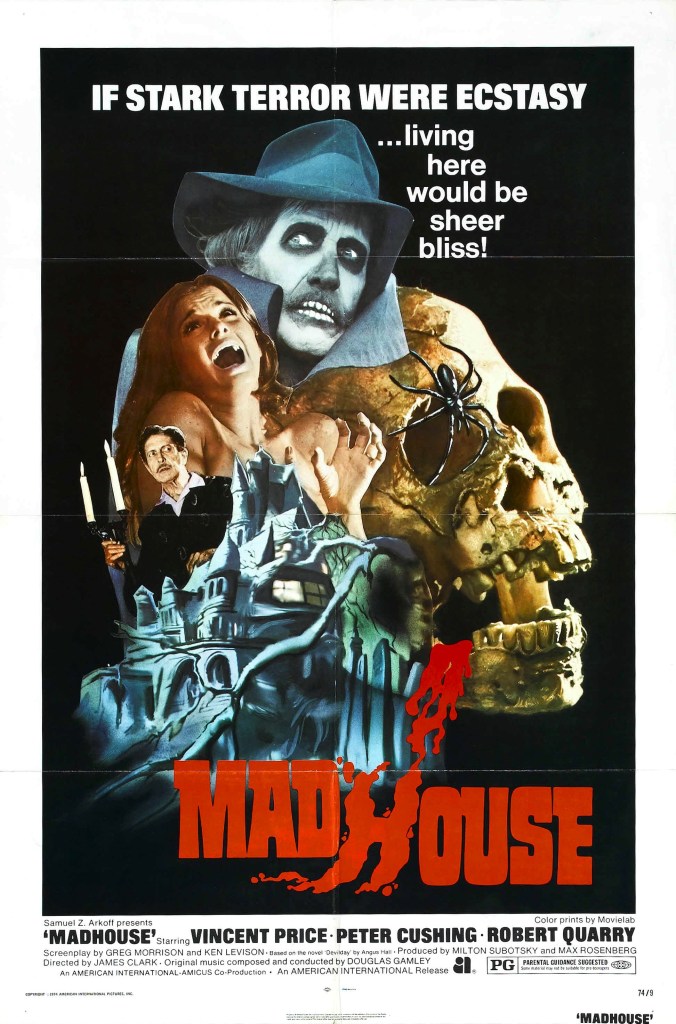
Madhouse isn’t the greatest movie I’ve ever seen. No doubt it’s a fun film – what more could you expect from a movie starring Vincent Price and Peter Cushing? – but it’s not necessarily the most original film, and while I certainly had a good time with it, I’m not sure it will stand the test of time like many of the films each have otherwise been involved in.

Of course, the story is decent, albeit in a been-there, done-it way, as Price’s character has to decide whether someone is trying to frame him for the murders going on around him or he’s having a mental break-down, as he has in the past. We’ve all seen films like this before, and to be sure, it was based on a novel titled Devilday, written by Angus Hall, so it’s not entirely the film’s fault, but given the fact Price and Cushing are here, I’d have hoped for a more original story.

Even so, they work decently well with what they have. I don’t think the finale is great, and I pretty much suspected who was behind the killing somewhat early on, but at the very least, the film is quite serviceable, and though it may not be as memorable as something like The Abominable Dr. Phibes or Theatre of Blood, it’s not a shabby film.

Vincent Price, as readers may know, is perhaps one of my favorite actors, and there are plenty of clips in this movie of his past works (among them, House of Usher, The Pit and the Pendulum, The Raven, and The Haunted Palace), and there’s even a joke made in-movie about him previously playing the Invisible Man (as he did in both The Invisible Man Returns and the ending of Abbott and Costello Meet Frankenstein). Price is a lot of fun here, as he always is, and seeing him with Cushing is a treat.

And speaking about Peter Cushing, he’s another actor of whom I have a deep appreciation for. He appeared in a ton of horror films, including, but not at all limited to, The Abominable Snowman, The Mummy, Dracula, The Flesh and the Fiends, The Skull, Horror Express, Incense for the Damned, and Night of the Big Heat. Cushing was quite solid, and though there are times when he doesn’t appear too often on screen, you alway know he’s lurking about, which is good enough for me.

Others here obviously have difficulty standing out, but they still did well, all things considered. Natasha Pyne, Robert Quarry (Count Yorga, Vampire, Moon in Scorpio, Deathmaster), Linda Hayden (Taste the Blood of Dracula, The Blood on Satan’s Claw), and Ian Thompson were all pretty solid, though I will say, both Catherine Willmer and Ellis Dale felt way, way too goofy with their characters.

The kills here weren’t what I’d call great. You did see a double impalement on a sword, and a woman stabbed with a pitchfork, but being a mid-70’s British film, they’re just quick sequences with little to them, so though this may well be an interesting proto-slasher, it’s not always the most engaging when it comes to the death sequences (though there is the after-effects of a decapitation near the beginning which wasn’t half bad).

Madhouse is a decent movie, but given the names involved, I was sort of expecting more than decent. Maybe that’s on me – God knows it’s not the first movie I went into with possibly unrealistic expectations. As it is, I found the movie a decent and fun watch, but ultimately, I do think it rests somewhere around average.

7/10

The Beast in the Cellar (1971)

Directed by James Kelley [Other horror films: La tua presenza nuda! (1972)]

This is a somewhat hard film to get a gauge on. It’s true that much of the film was a bit dry and dull, but there was a bit of charm to be had in this British movie. Even so, I need to err on the side of caution, and say this isn’t really a good film.

I did find the story somewhat interesting, despite the oft-dry tone. There’s a little mystery, some okay atmosphere, and a nice setting, so by no means is it the case the movie that has nothing to offer. Problematically, though, while we do see a couple of murders, saying The Beast in the Cellar picks up speed at any point is a hard case to make.

In the final thirty minutes, we get a lengthy story from Beryl Reid’s character that lasts a good portion of that thirty minutes. It’s told well, with plenty of emotion, and during this, we do see people out searching for the animal-like man that’s been out killing soldiers. But it’s hard to say that there’s any real tension save for perhaps the final five minutes, when the killer comes to the house in the pouring rain (which was nicely atmospheric, to be sure).

Beryl Reid (who I mostly know from Entertaining Mr. Sloane) gave the best performance of the film, and she worked beautifully with Flora Robson (The Shuttered Room), who played her sister. The two of them did great, though Reid gave the lengthy confession toward the end, and got some more emotional scenes in. Smaller roles, such as those provided by John Hamill and Tessa Wyatt, were perfectly good, but as Reid and Robson were the sole focus, no one else had a chance to really stand out.

The print I watched was a bit rough, I admit. I imagine it was a VHS rip, as it was quite scratchy and very dark during night sequences. I don’t think this negatively impacted the film aside from making some things a bit harder to discern (the kills were especially somewhat rough), and it could be said the print maybe even helped give the film a bit more of a grindhouse feel.

Produced by Tigon (who were also behind producing such films as Curse of the Crimson Altar, Witchfinder General, Virgin Witch, The Blood on Satan’s Claw, and The Haunted House of Horror), The Beast in the Cellar is an okay piece of lower budget British horror. It is quite dry, but the performances are compelling even if some of the finale isn’t. It’s not a good movie, but I can’t help but see the charm this one possesses.

6/10

Tribal Get Out Alive (2020)

Directed by Matt Routledge [Other horror films: N/A]

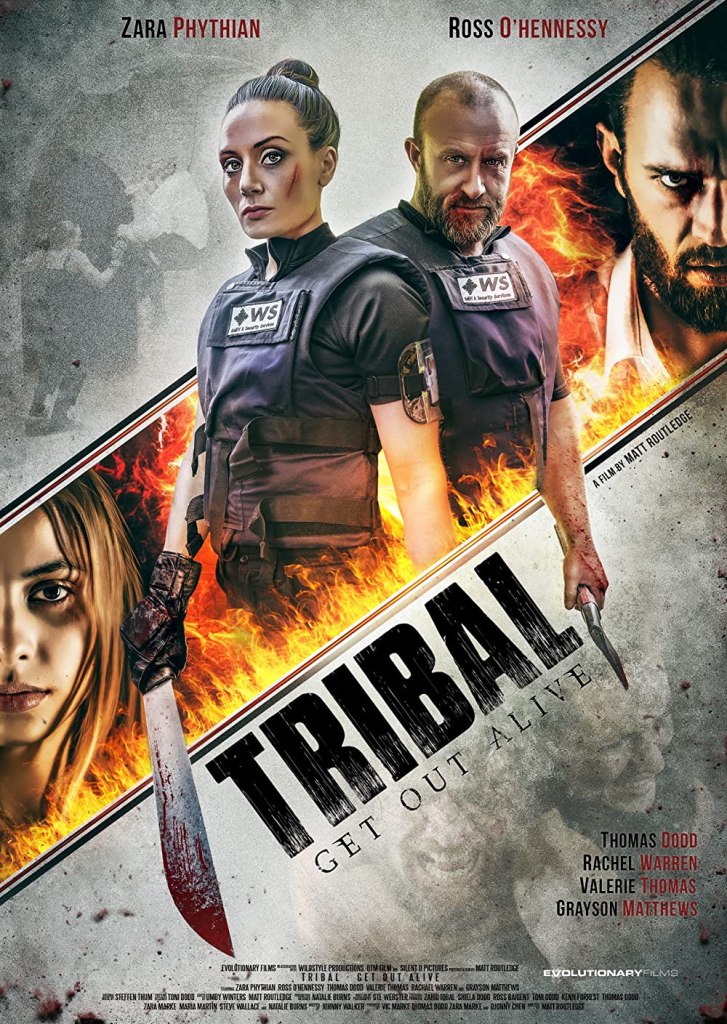
I didn’t have great hopes when I started this British film, and those doubts were somewhat well-founded. Certainly Tribal Get Out Alive (quality title – next time, invest in some colons on IMDb) is action-packed at times, and does have fun fighting sequences, but the plot isn’t something I care for, and while okay at times, overall, it’s not a film I think I can say I liked.

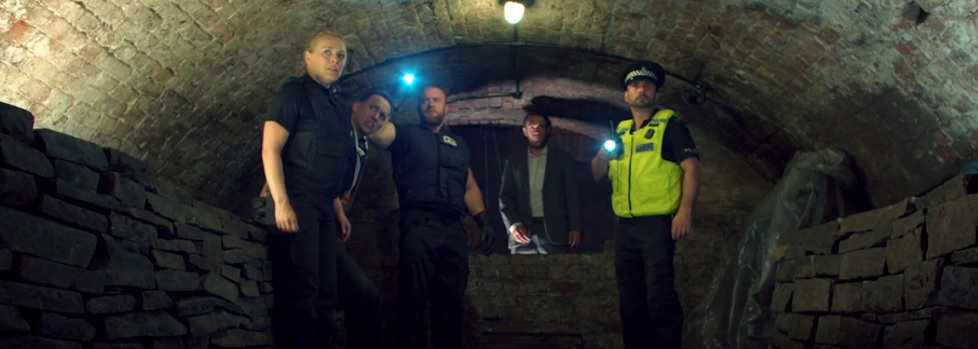
A big reason for that is the plot. It starts out okay – a bunch of private security individuals (bailiffs, they refer to themselves as) go help clear out a farm for a client. Soon, though, they run amok of someone killing their people, and before long, we learn there’s a bunch of mutated homeless people living in tunnels and they all fight with machetes and have enhanced strength and speed and there’s between forty and eighty of them and the leader has more muscles than Schwarzenegger in his prime.

Yeah, once the plot delves into a large mass of mutated people with super strength going after people with machetes, all because of a serum made by a mad scientist, I had to mentally check out of the story. It gets even worse when one of the characters we’ve been following decides to take the serum, and becomes a Final Antagonist and it was just awful.

The action is fun, though. I suspect this is because one of the two leads, Zara Phythian, has a background in martial arts. If IMDb trivia is to be believed, she is the first British martial artist to be inducted into the International Karate & Kickboxing Hall of Fame (and if you look at the list of inductees, Chuck Norris is also there, which is fun). Phythian kicks ass in this film, and it’s fun to see her fight, especially when she’s rocking a machete and slitting throats. Good times.

In fact, I do think Phythian (who has also been in The Hike from 2011 and Cannibals and Carpet Fitters from 2017) makes a solid lead. We never learn that much about her character, but the performance is pretty solid, and she brings in good credentials when it comes to the action. Ross O’Hennessy was a lot of fun too – quite a strong-looking man with a good personality, I thought he worked well with Phythian (which might be because the two worked together before, such as in the films Knights of the Damned and Dragon Kingdom).

[It’s at this juncture that I should mention Phythian, in 2022, was sentenced to eight years in prison for her role in the sexual abuse of a 13-year old girl with her husband. This happened after my review was written, and so wasn’t referenced elsewhere, but it does seem something worth knowing.]

Aside from Phythian and O’Hennessy, we don’t really have any noteworthy performances. The only other really central characters were performed by Valerie Thomas (who wasn’t really the best actress I’ve seen in recent times) and Thomas Dodd (who wasn’t the best actor I’ve seen in recent times). Luckily, most of the time is spent with Phythain and O’Hennessy, but the fact that these are the only two good performances is a bit disheartening.

The biggest problem is the plot, though. Some scenes were pretty good, such as the action-oriented ones, and there was a good scene that was perhaps ripped from Wrong Turn (two women are hiding in a cabinet while a group of mutants throw their friend on a table, rip flesh off his arm, and eat it), but a lot of the stuff in the film strikes me as uninspired and generic.

Even so, I don’t doubt that Tribal Get Out Alive can be an okay viewing experience. It has that British flair and good action, so even though it is below average, I don’t think this movie is necessarily a disaster. It’s just a far step from really standing out.

5.5/10

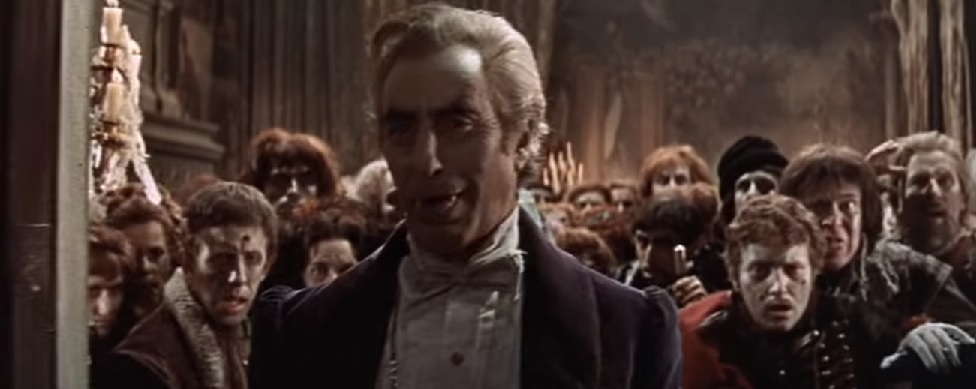
Dance of the Vampires (1967)

Directed by Roman Polanski [Other horror films: Repulsion (1965), Rosemary’s Baby (1968), The Ninth Gate (1999)]

Roman Polanski is a director that I have very limited experience with. Perhaps his most well-known film, Rosemary’s Baby, is a movie I’ve not yet seen, and honestly don’t have that strong an urge to do so. Of the few films of him I have seen, the only one I actually liked was The Ninth Gate, and after watching this film, that hasn’t changed.

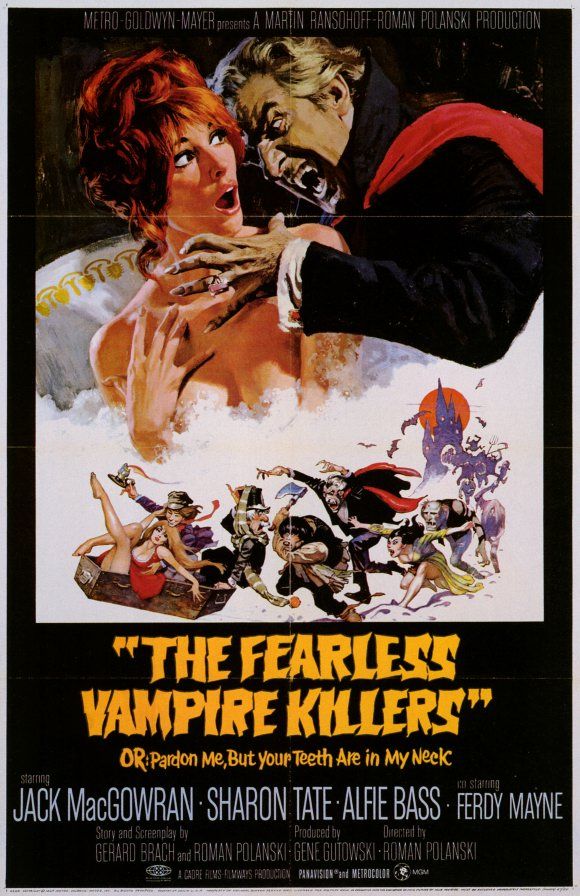
I can’t say what went wrong here with strong certainty. Dance of the Vampires (or to American audiences, The Fearless Vampire Killers) is a film that had potential, but I couldn’t get into it at all. I didn’t care for the style of the movie, I didn’t care for the characters, and I definitely didn’t care for the fact it ran for an hour and 48 minutes.

To be honest, this movie was a struggle to sit through. I was consistently frustrated with character decisions (especially those from Alfred, portrayed by director Roman Polanski), and I became actively annoyed the longer the film went on. It reminded me of two movies, both of which are well-respected, being Eraserhead and Multiple Maniacs. Both have quite high ratings, yet despite that, I utterly hated the both of them. Dance of the Vampires isn’t nearly as experimental as either of those two, but in much the same way, this seems to be a well-respected film, and I just couldn’t stand it.

Of all the performances, the only one I cared much for was Ferdy Mayne (who I know best from Frightmare). Mayne had that classy vampire appearance, and I could get behind it. Sharon Tate (Eye of the Devil) played a character I felt was pointless, Roman Polanski played the most aggravating character I could imagine, and while Jack MacGowran had a few okay moments, his absent-mindedness got old quickly.

There were some solid sequences. When MacGowran and Polanski are using the roofs of the castle to get around, with the mountain scenery in the background, that looked quite nice. The titular dance of the vampires was an okay sequence, and provided some of the only humor I really found amusing, being some characters trying to hold a conversation while dancing. It wasn’t laugh out loud funny – that’s not the type of humor this movie has – but it was mildly amusing.

Otherwise, Dance of the Vampires drags from beginning to end. It’s an hour and 48 minutes, so that’s a lot of dragging. If the type of humor this film possesses appeals to you, then you may be in for a good time, but like I said, I didn’t care for this humor, and so it was just painful throughout.

No doubt this is a classic comedy-horror mix. I hated it, though, and that’s all she wrote (the ‘she’ being me, in this case).

4/10