The Tomb of Ligeia (1964)

Directed by Roger Corman [Other horror films: The Beast with a Million Eyes (1955), Day the World Ended (1955), It Conquered the World (1956), Not of This Earth (1957), Attack of the Crab Monsters (1957), The Undead (1957), War of the Satellites (1958), The Wasp Woman (1959), A Bucket of Blood (1959), House of Usher (1960), The Little Shop of Horrors (1960), Creature from the Haunted Sea (1961), The Pit and the Pendulum (1961), The Premature Burial (1962), Tales of Terror (1962), Tower of London (1962), The Raven (1963), The Terror (1963), X (1963), The Haunted Palace (1963), The Masque of the Red Death (1964), Roger Corman’s Frankenstein Unbound (1990)]

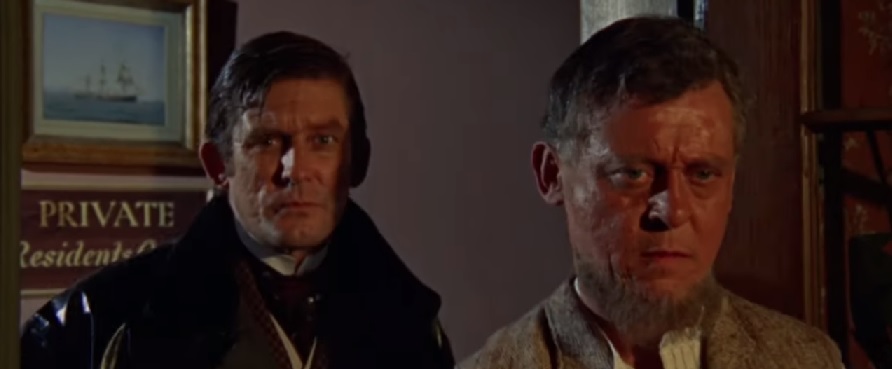
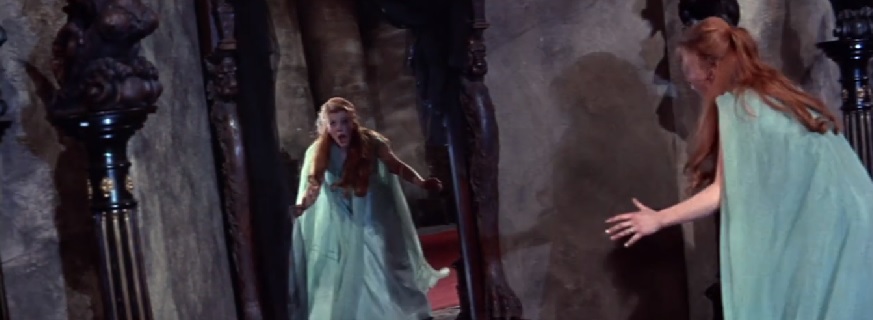
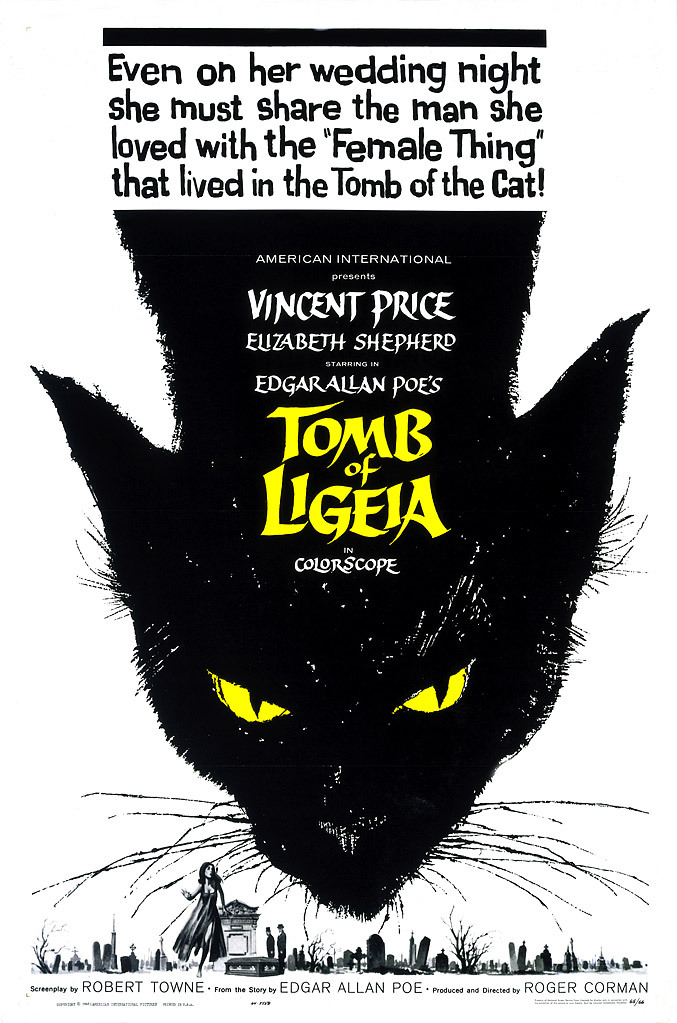
I was rather surprised by The Tomb of Ligeia. When it comes to Roger Corman/Vincent Price movies, I generally enjoy them, but I rarely love them. The Haunted Palace, House of Usher, and The Raven are all varying levels of okay; The Tomb of Ligeia, however, really is a stellar film.

What really worked for me was the story. Based on Edgar Allan Poe’s short story ‘Ligeia,’ this was a wild ride. The last Roger Corman-Edgar Allan Poe combination (following films such as House of Usher, The Pit and the Pendulum, Premature Burial, Tales of Terror, The Raven, The Haunted Palace, and The Masque of the Red Death), I didn’t know what to expect, but I loved the mystery throughout the film, and come the finale, there are some big twists and turns I didn’t see coming at all.

It’s even better, though, because these twists didn’t come out of nowhere – we’re given multiple clues as to what’s going on, and though I didn’t catch on, I loved it all the more for that.

Vincent Price’s character throughout the film was so melodramatically maudlin. I mean, he’s dramatic in a lot of his films, such as the similarly stellar The Pit and the Pendulum, but it’s turned up to eleven here, and I loved it. Price has long been one of my favorite actors of the genre, and among films such as House on Haunted Hill and Theatre of Blood, this is certainly now a favorite of his performances.

Aside from Price, we have Elizabeth Shepherd (Damien: Omen II), Oliver Johnston (It!), John Westbrook, and Derek Francis. Westbrook didn’t really make too much of an impression, but everyone else, especially both Shepherd and Johnston did stellar. Playing a manservant, Johnston’s character would seem limited, but I think he really adds a lot to the film, especially more toward the finale.

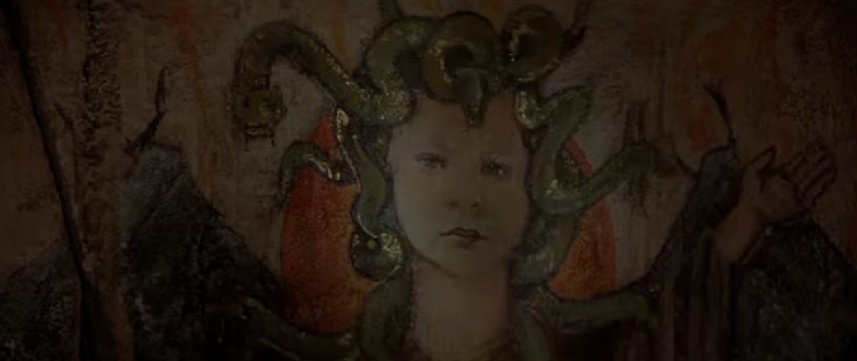
It’s not just the wild plot and twists, or performances, that make this work though. The cinematography seems oddly dynamic for the time period, with some quick-moving camera action. Not only that, but there’s a dream sequence in the film that really captures the atmosphere of a dream, and I dug it.

Like I said, going into The Tomb of Ligeia, I expected to like the movie, because there’s very few movies with Price that I end up disliking. What I didn’t anticipate was coming out rather loving the movie. It’s not quite as good as The Pit and the Pendulum, but it’s still a very solid movie, and if you’re a Vincent Price fan and haven’t yet seen this, I recommend it highly.

8.5/10
Damien: Omen II (1978)

Directed by Don Taylor [Other horror films: The Island of Dr. Moreau (1977)] & Mike Hodges [Other horror films: The Terminal Man (1974), Black Rainbow (1989)]

Much like the first movie, Damien: Omen II is a film I saw bits and pieces of quite often in my childhood. I can’t swear I sat through the whole thing, and if I did, I doubt I understood some of the subplots, but it’s a movie I always enjoyed, and actually tend to like more than the first movie.

A large part of that is because of the pacing. The first movie was a bit slow at times, which is amazing, as this movie, at an hour and 47 minutes, is only a little shorter than the first movie’s hour and 51 minute run-time, and yet, this one just seems to move quicker. There’s also the fact Damien is 12 years old, and has a decent amount more agency than he did in the first movie, including control of his awesome abilities.

I also love a lot of the deaths in this movie. I don’t think any match the glass plate decapitation in the first film, but there’s a lot of memorable sequences here. I think the most striking may be the elevator scene, in which someone’s body gets severed in half. A woman gets her eyes slashed at by a raven, and blindly runs into the road, getting hit by a semi. Some people drown in falling sand – an opening scene which I’ve never forgotten. And though not at all gory, someone gets impaled by a train. Even the guy drowning beneath the ice was A+ material. Plenty of quality scenes in this one.

Performances are solid too. Even smaller roles, such as those by Elizabeth Shepherd (The Tomb of Ligeia), Sylvia Sidney (God Told Me To, Death at Love House, Snowbeast, Beetlejuice), Meshach Taylor (Hyenas), Leo McKern (X the Unknown, along with being the only returning face from the first movie), Lew Ayres (She Waits, Donovan’s Brain, Salem’s Lot), and Nicholas Pryor (Brain Dead), all did reasonably well, and though some didn’t have much time to make an impression, I think most were able to do so.

At times, Jonathan Scott-Taylor seemed a little melodramatic as Damien, and Lucas Donat occasionally had the same problem, but for younger actors, I thought they worked well together. Lance Henriksen (Mansion of the Doomed, In the Spider’s Web, The Invitation, The Pit and the Pendulum, The Mangler 2) wasn’t really in the spotlight, but he was quality when he popped up. Robert Foxworth (It Happened at Lakewood Manor, Prophecy, Deathmoon, The Devil’s Daughter) had a good, dark aura to him.

William Holden made for an engaging character, and I could buy him as Gregory Peck’s brother. Especially toward the end, as he was learning more and more about Damien’s backstory, he really had time to shine. Likewise, while Lee Grant (The Spell, Visiting Hours) doesn’t make much of an impression until the finale, she really does make an impression come the finale, and even has a somewhat surprising story arc.

Again, I really liked the performances in this movie. It’s a fun story with plenty of interesting deaths and a solid finale, all with quality performances and moving at a quick pace. Admittedly, I’m probably one of the few who enjoys it more than the first movie, but I do, and though I don’t think it’s a significantly better film, it is one that I’ll never have a problem revisiting.

8/10

Night Watch (1973)

Directed by Brian G. Hutton [Other horror films: N/A]

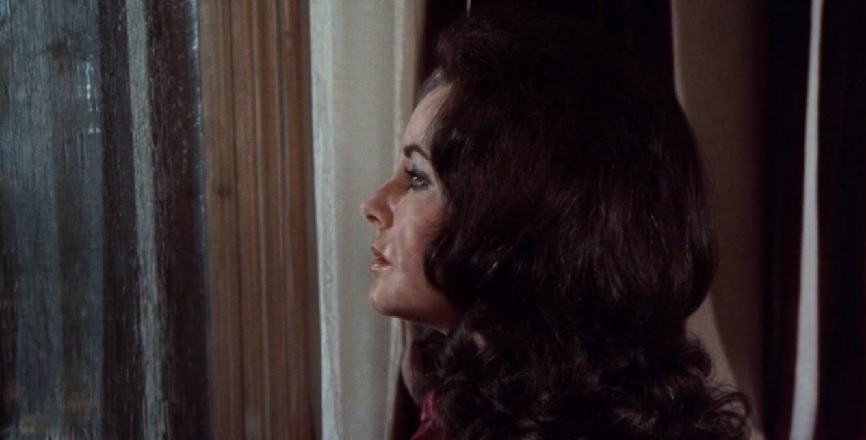
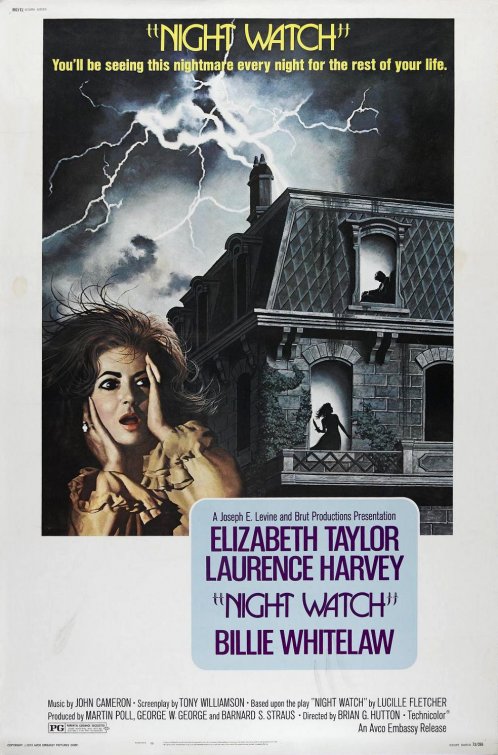
A nice take on what could have been a rather unoriginal story, Night Watch is a movie with a lot going for it. You have an interesting mystery, some stand-out performances, a killer finale, and the joys of British weather. It’s not an amazing movie, but I’ve always liked it.

And when I say ‘always,’ I mean I’ve just seen it twice, but I found it a decent watch. I think I liked it a bit more this time around, perhaps because, while I’ve seen it before, I actually forgot how the film ended, and seeing the movie with more mature eyes probably led to a deeper enjoyment.

Even so, I don’t think the movie’s perfect, by any means. The film does well at building up the tension Elizabeth Taylor’s character faces after witnessing a murder, yet having no one – her husband, her friend, the police – believe her. It’s good, slow tension. The movie is about an hour and 40 minutes, though, and while it shines during the finale, getting there can be a bit of a drag.

Elizabeth Taylor (Doctor Faustus, Who’s Afraid of Virginia Woolf?) did pretty well in her role. There are a few moments when I’m not sure her acting entirely nails it, but overall, she does quite well. Laurence Harvey (Welcome to Arrow Beach, House of Darkness) had a suave, debonair aura to him, and he was quite fun.

Billie Whitelaw (The Omen, The Flesh and the Fiends, Murder Elite) was never quite trustworthy, but a solid character nonetheless. Others who warrant a brief mention include Bill Dean, Tony Britton, and Robert Lang.

Most of this movie is mystery and build-up, but during the finale, there is a solid murder or two by stabbing, which I appreciated. It’s a short scene, and a small part of what is a very solid finale, but certainly worth it.

All of this said, I don’t think that Night Watch is a movie I’d consider that great. It’s still above average, but because of how long the film sometimes feels, it’s not one I imagine I’d revisit all that often, especially when other movies of a similar nature, such as Endless Night, are a bit more enjoyable.

It’s a good movie, worth a watch or two, but it’s not a movie I personally consider too special.

7.5/10

Threads (1984)

Directed by Mick Jackson [Other horror films: Demons (2007)]

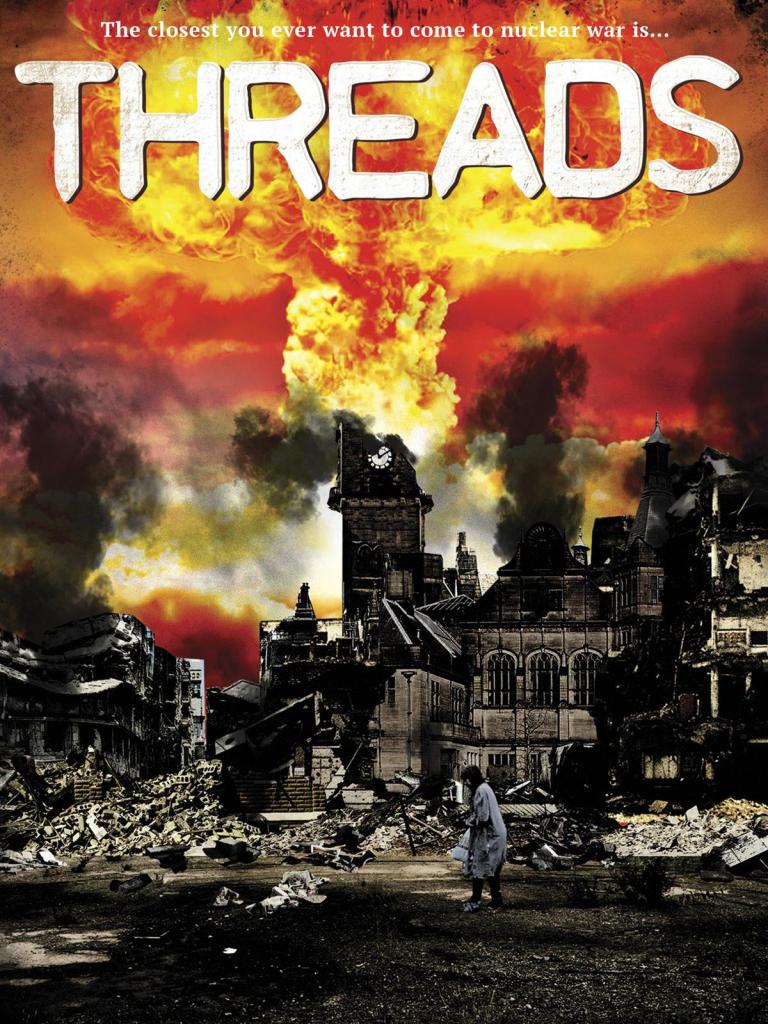
In a conventional sense, referring to this classic television movie as a horror film may not strictly be accurate. At the same time, there are few movies I’ve personally seen that feel quite as stark, bleak, and devastating as Threads does, so counting it as one seems rather fair to me.

To be sure, there have been plenty of films that touched on the horrors of nuclear weaponry, such as Godzilla and Genocide; the difference is that Threads takes a realistic approach to the idea, and instead of causing a monster to roam the countryside, we have widespread starvation, death, looting, radiation sickness, deformities, and atrocities committed by the military. This movie is not for the light-hearted, and with as much an impact it made on me, I can only imagine the impact it made back during the Cold War.

In a way, it’s hard to take a step back. The film feels like a documentary, with some somber narration by Paul Vaughan, slowly showing the audience the build-up to the bombs being dropped, and the horrific aftermath, not just days and weeks, but the widespread effects up to 13 years following the attacks (including a rise in leukemia and cataracts, due to the increased UV rays).

The despair is made all the worse because the characters the film focuses on, primarily a working class couple from Sheffield, have absolutely no way to prevent any of this; like most people on the planet, we live our lives and try to get by, and if a nuclear war should break out between multiple countries, we don’t have a say whatsoever, and so we’re doomed to starve to death (and that’s if we survive the initial blast and the fallout) as crops won’t grow and babies are born dead and deformed.

What’s interesting is that the stark nature present in this film doesn’t end with the final shot (a fantastic final shot, I should add); there’s two minutes of credits, but while the names are coming on the screen (including many scientists who helped with the authenticity, including Carl Sagan), there’s no music. It’s just silence during the credits, and I have to imagine that was done to give people some time to sit, think, and take in what they witnessed.

Aside from Paul Vaughan (the narrator), there’s not too many important cast members. Karen Meagher and Reece Dinsdale felt authentic in their roles, and Harry Beety, while it’s slightly more difficult to feel bad for him given his powers under the Emergency Powers Act, did quite well too. That said, none of the three are really what I’d call the focal point – it’s true we spend a lot of time with Meagher’s character, but the overall picture of a pre-bomb and post-bomb Sheffield is far more important than any individual person.

It’s also worth mentioning that while this film is close to two hours long, and the first bomb doesn’t fall until about 48 minutes in, it never feels dull. In fact, I was captivated through the build-up, what with the USSR and the USA’s conflicts pushing into Iran, tensions growing, all leading to the devastation we soon see. For someone who has long held an interest in politics, I was tuned in from the beginning, and as depressing as the movie was, I did find it rather worth watching.

That said, this is not always an easy movie to get through, especially once the bombs drop and the after-effects are fully realized. There’s plenty of rather disturbing imagery and scenes, such as an older woman who is embarrassed at having made a mess in her bed to a middle-aged woman holding the burned-out husk of what we could imagine was her child. People are shot for looting, locked in make-shift prisons, others are starved and count themselves lucky to be eating rat or possibly radiated sheep.

Threads is a stark and somber film of what nuclear weapons could lead to. Many extras involved in this film were also involved in the Campaign for Nuclear Disarmament, and I’ve long thought it wise to remove these types of weapons from the possible arsenal of any country. After watching a movie like this, no matter how alarmist it might seem to some, I find it difficult to believe many would walk away with a different take on the viability of a weapon that could cause effects even half as atrocious as shown here.

Again, this isn’t a conventional horror film, but I definitely think it counts; it’s more than that too, though, and as disturbing as the film is, I think it’s definitely one of the highlights of the 1980’s. I may not want to watch it again any time soon, and it may not be that enjoyable an experience, but I can’t deny it was a solidly-made film and certainly eye-opening insofar as the horrors of nuclear warfare are concerned.

8/10

Invitation to Hell (1982)

Directed by Michael J. Murphy [Other horror films: The Last Night (1983), The Hereafter (1983), Bloodstream (1985), Death Run (1987), Moonchild (1989), The Rite of Spring (1995), Skare (2007), Zk3 (2013), Nekros (2015)]

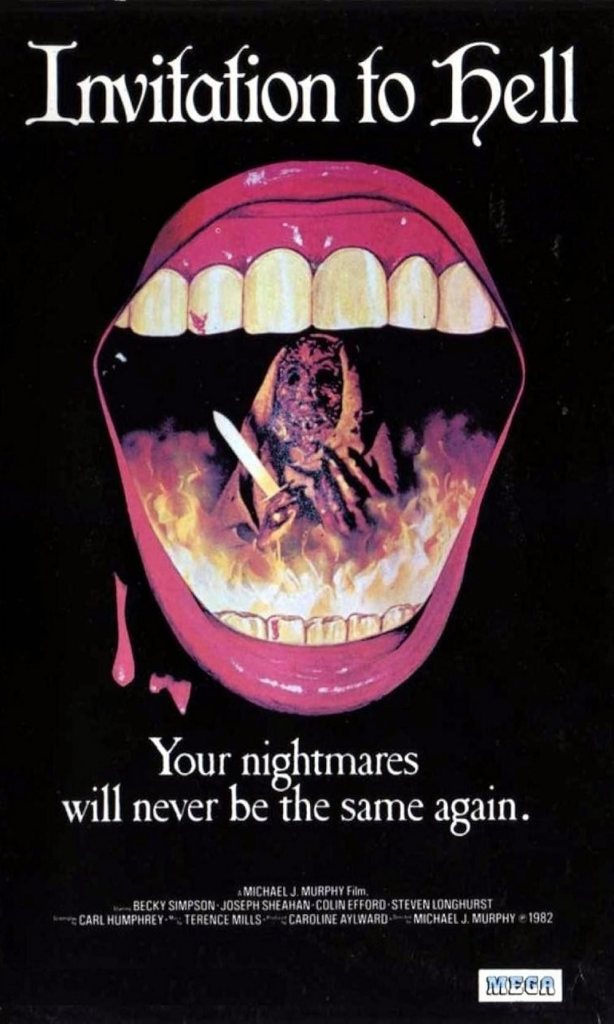
Not to be confused with the Wes Craven film of the same name, Invitation to Hell is a short film coming to us from the United Kingdom, and a low-budget short film at that.

In fact, this is perhaps one of the roughest movies I’ve seen since Blood Cult, and if you’ve seen Blood Cult, then you know the comparison is a damning one. Now, to be sure, given this is a short film (about 41 minutes), it’s not quite as much suffering, but from the questionable audio quality to the blurry and difficult-to-decipher scenes, Invitation to Hell has it’s own issues.

There’s actually a short sequence in which a woman is being chased by someone at night. My television screen, when the screen gets too dark, sort of turns off – not completely, but if it registers what it perceives as darkness on screen, it goes black. This scene had such bad lighting that my TV screen was constantly flashing between ‘active’ and ‘black’. It only happened that once, and I found it more amusing than anything, but it’s a good testament to the type of quality that I’m talking about.

Plot-wise, well, there were some problems. The basic idea is that Jacky (Becky Simpson) is invited to the country home of a school friend, Laura (Catherine Rolands); the problem is, Jacky is a virgin. Now, I don’t know how Laura and company knew, but they do, and so they want to give Jacky to the Devil for a bride. Well, ‘want’ is a strong word, but they opened the wrong book, and the Devil has power to sort of possess those on the lands, so they don’t see as they have a choice.

It’s not really that shabby an idea. I mean, don’t get me wrong, I don’t think it’s good, if for no other reason I have zero theological beliefs, and stories about how scary the Devil is never did much for me. The problem is that the execution is rather shabby, the performances ultimately feckless, and overall, there’s not a ton going on to save this.

If I can give Invitation to Hell some credit, it did have a pretty solid kill toward the ending, in which a character got stabbed through the neck and both hands, effectively being crucified. It wasn’t overly gory or anything, but it did look pretty decent, and I dug it. There was also an earlier scene in which someone was stabbed through the neck. Of course, that woman being chased that I referenced earlier was killed too, but I couldn’t see how – she was either strangled or hit over the head, but it was too dark to tell.

Ah, well, you can’t win them all.

Of all the performances, I think the best comes from Colin Efford (who was also in another short horror film by the same director of this one, titled The Last Night). Efford played a mute farmhand who was often possessed by the Devil in order to do his dirty deeds. He was far from exceptional, but I thought his stoic and, more importantly, dialogue-free, performance suited him. I mean, compared to the others, even the lead Becky Simpson, he was a superstar. Most performances were just so dull and flat, making what should be dramatic moments somewhat laughable.

I don’t hold that against any of the actors or actresses, though – this was clearly a low budget film, and I highly doubt anyone involved were what we’d traditionally call professionals. I certainly don’t fault them for their performances, and the bigger problem is the somewhat awful presentation, or perhaps more importantly, the quality of the existing print.

Oh, and that ending, while not surprising in any way, was sort of awful. It doesn’t ruin the experience, as the experience was already shaky, but I thought it was worth mentioning.

Invitation to Hell isn’t without some charm to the right groups of horror fans. I can say for a certainty that it’s better than plenty of other films, be it Death by Invitation or Fist of the Vampire. The fact it’s only 41 minutes does help, and there’s also a sprinkle of potential throughout the film. It’s still far from good, though, and only if you’re a die-hard fan of horror would I truly recommend you take the time to watch this one.

4/10

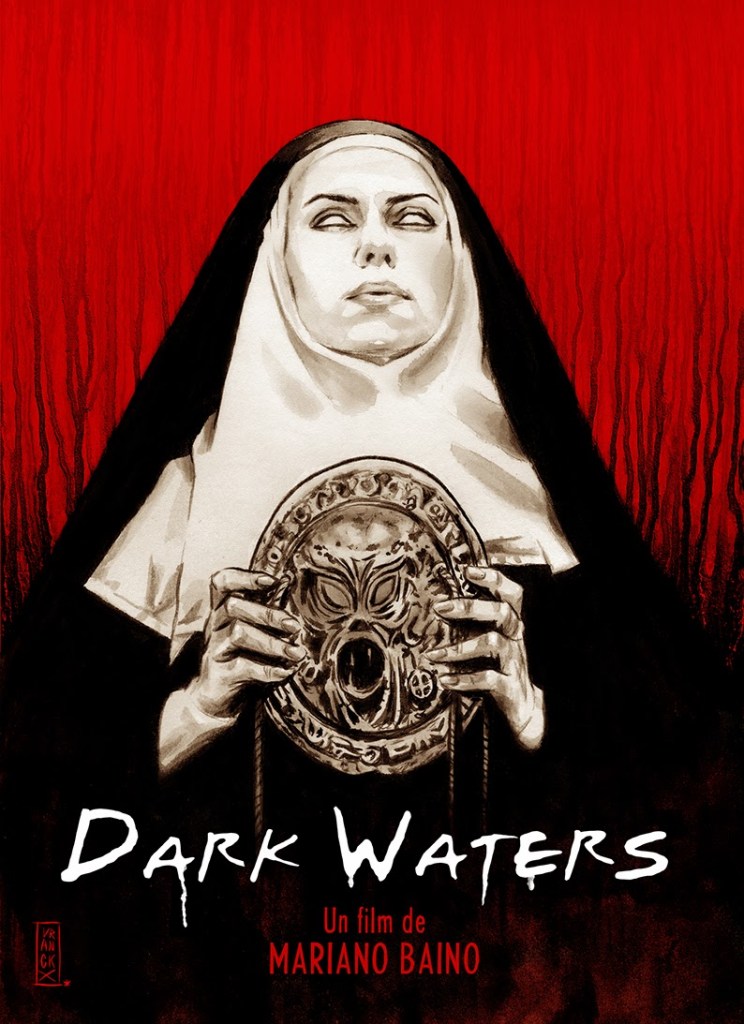
Dark Waters (1993)

Directed by Mariano Baino [Other horror films: The Trinity of Darkness (2014)]

I went into Dark Waters not knowing much at all, and while I was initially impressed, and am generally still impressed, I do wish the final product had been a bit more sensible. Certainly Dark Waters is a film that has some strong elements, but I can’t say I overall enjoyed it.

The basic story is on point – a woman goes to an island run by a religious covenant in order to speak to a friend and in the meanwhile, figure out her mysterious connection to the island. It actually reminded me of Apostle (had Apostle been made 25 years earlier) and a 1988 movie called Catacombs. Unfortunately, I didn’t enjoy Dark Waters as much as either of these films, but the potential was there.

It should be said, though, that the movie isn’t without some impressive elements, mostly being, to me, the atmosphere and occasionally quality cinematography (which I think can mostly be seen during the opening of the film, but pops up throughout). The atmosphere is due to the creepy setting (it’s not stated in the movie, but the island appears to be off the coast of Russia, as this was filmed primarily in Ukraine and Russia) and the never-ending sense of death, as these nuns don’t appear to want our main character (played by Louise Salter) to enjoy her stay.

Speaking of Salter, I can’t say that I adored her performance, but she did okay. I think the biggest issue here is that, given the story leaves out some background information (I don’t need everything tied up in a bright bow, but I do like some explanation here and there), her character isn’t easy to latch onto. It’s even harder for Venera Simmons’ character, who I suspected from the beginning of being something more. The acting is fine, but the story, while not disjointed, exactly, doesn’t always lend much focus to the performances.

Certainly the term ‘surreal’ could be used to describe some of this film, which isn’t a word I’m particularly keen on using in this case (make no mistake – this film makes 150% more sense than Eraserhead ever did), but does fit at times. I think the basics are sort of revealed, but I would have liked something more, especially given the somewhat weak and almost anticlimactic finale, which I don’t think did the previously built up tension any justice.

There was a few solid scenes, such as the death of a woman caught snooping where apparently she wasn’t supposed to, and she got #StabbedInTheBack like ten times, which was a very solid kill. Otherwise, though, there aren’t really that many kills worth noting – someone got thrown out a window, but that was more accidental than anything. As for the special effects, well, they mostly become prominent toward the finale, and since I didn’t particularly dig the finale that much, I can’t say it made too much of an impression on me.

Dark Waters isn’t a movie that I hated, but I was disappointed, especially after the eight-minute opening (all done with about no dialogue), which impressed the hell out of me. The rest of the movie didn’t really have that much to offer aside from the skeleton outline of an okay story, but I just wasn’t that enamored with where the story went, and because of that, I do feel the movie ends up below average.

5.5/10

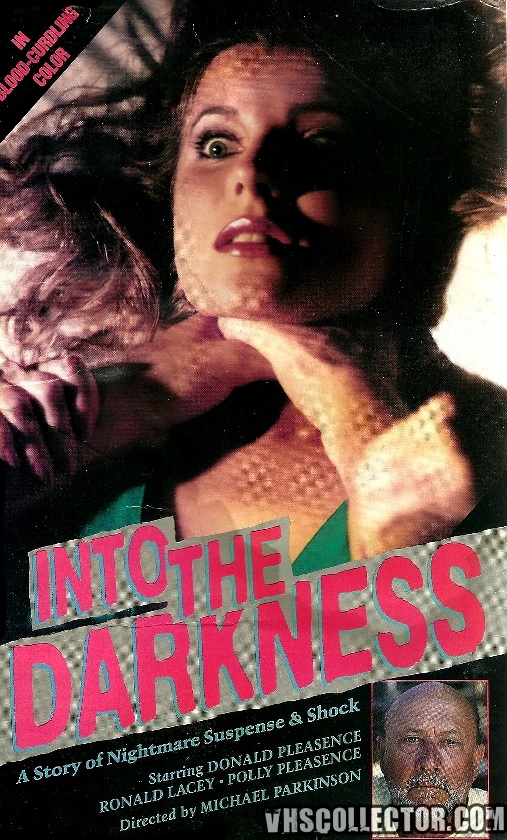
Into the Darkness (1986)

Directed by David Kent-Watson [Other horror films: The Eye of Satan (1992)]

This is a relatively obscure British SOV film, and there’s probably a good reason for that. It’s not entirely without merit – large portions took place, and were shot in, Malta, giving it a Mediterranean feeling – but it’s quite weak in most aspects, and it’s probably not a film that many horror fans would go out of their way to watch.

In fact, if anyone is cognizant of this movie, it’s likely because Donald Pleasence appears. He’s not the star – in fact, he doesn’t say anything until 51 minutes into the movie – but he does make some appearances, and if I’m being honest, he may even be the most enjoyable cast member of the movie.

To be fair, John Saint Ryan’s not bad. I actually think he made for a decent lead. Brett Sinclair had some strong moments, and Paul Flanagan was okay, but Pleasence was definitely where most of the enjoyment came from. The four central women – Heather Alexander, Sara Hollamby, Jadie Rivas, and Jeanette Driver – all felt somewhat interchangeable, and I’m only mentioning Polly Jo Pleasence’s short appearance out of deep respect for her father, Donald Pleasance. John Saint Ryan, Brett Sinclair, and mostly Pleasance make this movie work, as far as the performances can.

Which isn’t easy, because the story, while serviceable, is quite basic. During a photo shoot in Malta, a killer bumps off those related to the shoot. Not in exciting ways, either – in fact, most of the kills are off-screen, and what kills we do see, well, it doesn’t make an impact whatsoever.

What gives the film a bit more oompf is the Malta location – filmed in the Jerma Palace Hotel (now closed, but it was once one of the finest hotels in Marsaskala, Malta) and the city of Naxxar, Into the Darkness definitely can boast a unique location. There’s a fun scene in some catacombs, another in some old ruins. It can’t make up for how stale a lot of the film feels, but it is a fresh sight.

Even so, a lot of the film is quite dull, which can’t be a surprise, as the kills aren’t good, and while the performances can be okay, we don’t get Donald Pleasence until 50 minutes in, and it’s a bit of a drag to get there. The finale is pretty decent – we get plenty of red herrings throughout the film, and while the killer’s motive is no surprise, the identity is decently well-hidden – and perhaps the best part of the film.

The one gripe I do have about the finale is this – a woman is being chased by someone, a chase that began in a hotel room. Logically, I’d think that she would leave the hotel room and go to the hotel lobby, but what actually happens is that she leaves the hotel room, and we cut to her running outside in the deserted streets. I’m not sure how she got outside – did she run past the lobby, waving off the people with concern on their faces, so her chase could be more dramatic? I don’t know, but that scene felt so damn stupid.

Small thing though it may be, I also wanted to mention the soundtrack, filled with songs from Chris Rea. It’s not a name I actively knew before the film, but apparently he was somewhat well-known, and his music here isn’t shabby. I think the best song might be “Out of the Darkness”, but there’s another called “Love’s Strange Ways” that has a soft, atmospheric vibe to it. Definitely not a bad soundtrack, for whatever that’s worth.

Overall, though, Into the Darkness is what it is. It’s by no means a terrible movie. 80’s slashers from the United Kingdom are somewhat hard to come by (Don’t Open Till Christmas and Goodnight, God Bless are the first two that come to mind), and slashers using Malta as the prime location even rarer. Into the Darkness has some good flavor, but I honestly think it’d only attract either slasher completionists or Donald Pleasence fans.

6/10

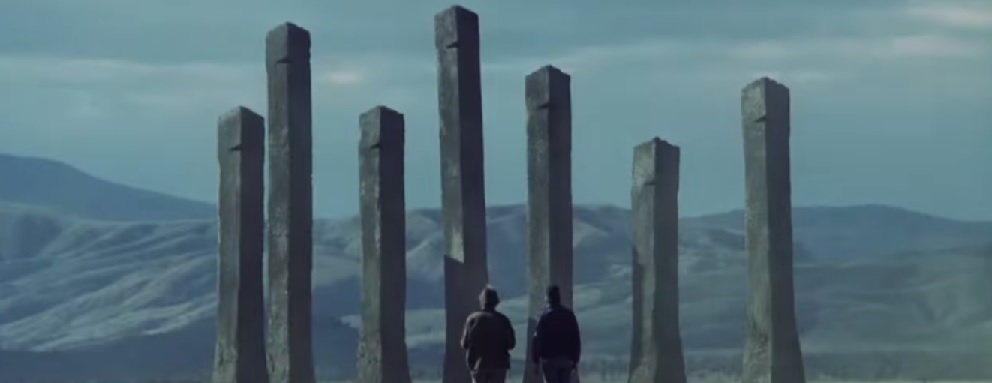
Phase IV (1974)

Directed by Saul Bass [Other horror films: N/A]

Phase IV is a film I’ve known about in a vague sense for a long time, but after seeing it, it’s fair to say that I probably didn’t really know a thing about it. Intensely interesting in the visual effects, the plot of Phase IV is sometimes questionable, but for a slice of 70’s science fiction/horror, you should definitely see this.

My expectations going into this were that it’s be a typical insect invasion movie (such as The Swarm or Kingdom of the Spiders), and while there is sort of an invasion, the movie is not at all typical in approach, which certainly gives the film a very unique look.

Most apparent in the style here is the insanely beautiful cinematography, especially close-ups. More often than not, you can see the hair on each individual ant, and there are scenes here, such as an ant crawling up someone’s shirt, that I have absolutely no idea how they shot. The cinematography was fascinating, and it often felt like a nature documentary. I liked a decent amount about the movie, but the cinematography is easily the best part.

The story feels a little aimless at parts, though perhaps a better description would be hopeless, as the characters probably don’t have much in terms of options, as they were caught in a scientific resort center, trapped by a few trillion ants (that number is an estimate, but it’s probably not far off). The ants don’t attack the people, though – they could, and one person does get bit in an accident; they instead use the people almost as experiments, a nice reversal of the norm.

Phase IV is not your typical movie. It’s nothing at all like The Swarm or Kingdom of the Spiders (and though I’ve seen neither of these movies, I suspect it’s nothing like Empire of the Ants or It Happened at Lakewood Manor either); it’s more philosophical in it’s execution. It’s certainly a horror film, but it feels more at times, and that’s what gives the film such a unique feeling.

Nigel Davenport (1974’s Dracula, 1977’s The Island of Dr. Moreau, 1973’s The Picture of Dorian Gray) played the scientifically-focused stereotype, not overly concerned with welfare if it’s likely to impact his experiment. Michael Murphy (Shocker, Count Yorga, Vampire) had a few moments where he annoyed me, but I enjoyed his more personable attitude, and while Lynne Frederick (Schizo) didn’t add a lot, she did give a fine performance.

This isn’t a movie to watch if you want to see ants swarm over people. Most of the ant action is more at the microscopic level, such as them working together to get a piece of poison to counteract it, or tricking a praying mantis into shorting out an air conditioner. There is a quality scene in which ants crawl out of a dead man’s hand, but most of the action here isn’t on a violent level.

I’ve not seen many films like Phase IV. I suspect if I watched science fiction, I probably would, but the only science fiction I watch tends to be infused with horror, so my exposure to straight science fiction is very limited. Phase IV had an interesting idea going for it, and the final scenes will probably give you something to think about. I can’t say I thought it was an amazing movie, but visually, I do think the film is fascinating, and very much worth approaching.

7.5/10

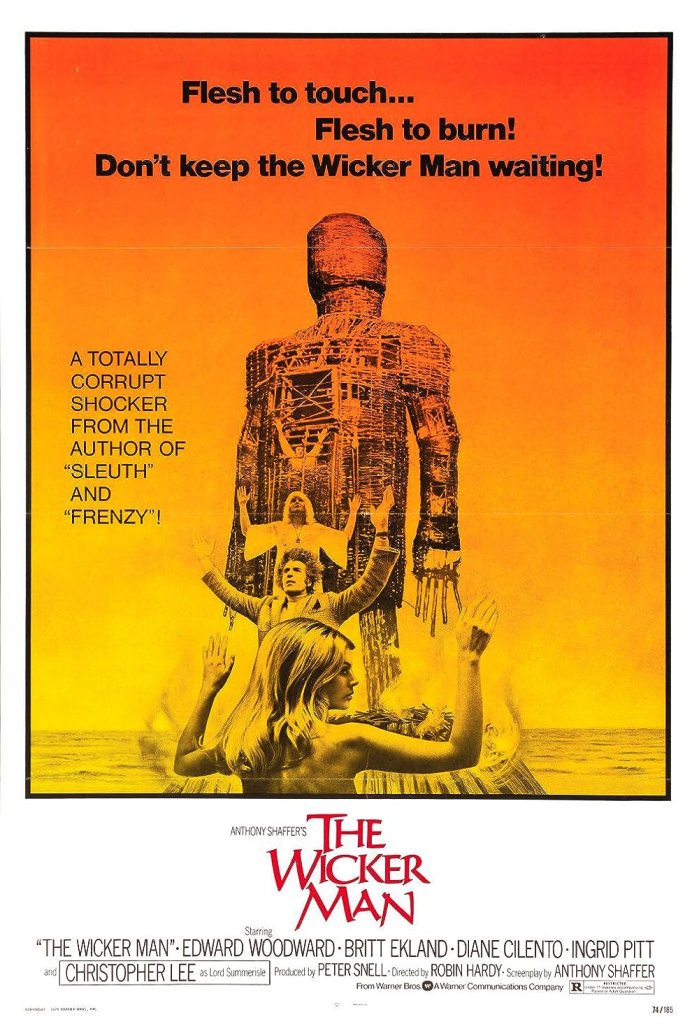
The Wicker Man (1973)

Directed by Robin Hardy [Other horror films: The Wicker Tree (2011)]

Perhaps not just one of the most unique horror films of the 1970’s, but of the genre as a whole, The Wicker Man is a highly entertaining and occasionally disturbing film, especially, I imagine, if you’re of a conservative religious bent. It’s a classic for good reason, and definitely a movie worth looking into.

Luckily, I don’t need to say that. Most horror fans at least know of the film, and while it may not be to everyone’s tastes (an online friend of mine complained about the music that permeated the first half), if you go in without knowing much, I doubt it’s a film that will easily be forgotten.

Personally, I’m a big fan of the story, and while some might not think much of the mystery here (if for no other reason, cultural osmosis), I find the film entertaining, especially on a sociological level. See, the main character, played by Edward Woodward, is a police officer, but more importantly, a devout Catholic, and when he investigates the disappearance of a girl on a small island, is rather turned off by the people’s religious beliefs, which he sees as pagan.

And to be sure, the islanders are of a Celtic pagan brand – they have far different views on love and sexuality, on death and rebirth, on what constitutes serving the gods they believe in. It’s a beautiful culture shock, seeing a very Catholic individual being faced with what he perceives as immodesty and sacrilegious beliefs (he even goes as far as to claim the beliefs of the islanders a “fake religion,” as if Christianity has any more basis in truth).

It’s here that I should state what I’ve likely mentioned before, as it’s relevant in this case. I’m pretty much a life-long atheist. I was raised Catholic in some manners, but the beliefs never stuck, and I’ve been one who thinks far higher of logical thought than words in old books. I definitely don’t care for the worldview of Woodward’s character, and I also don’t care for the worldview of the islanders.

The difference is, aside from some aspects of their worship (such as what is demonstrated during the fantastic finale of the film), I can fully see why the islanders would hold the beliefs they do. Their religious beliefs don’t seem to be oppressive (or anywhere near as oppressive as the Christian faith tends to be), and I appreciate how their society is sexually open, as that seems a far safer way to be than a society that advocates abstinence.

What I’m trying to say is that while I don’t hold to either belief system, I can see the appeal of the islanders, and I can’t fault them for any of their actions. It’s a fascinating topic to see tackled in a film, and it just gives the film such a unique and folksy feel.

Edward Woodward (Incense for the Damned, The Appointment) did amazing here, and I loved his discussions with Christopher Lee’s character. Lee (The Curse of Frankenstein, Dracula, Taste of Fear, The Creeping Flesh, The Skull, I, Monster) is of course great in most movies he’s in, but I’ve never seen him have as much fun as he does here. From beginning to end, he seems like he’s having a hoot, and who can blame him? I also enjoyed both Britt Ekland (Demon Rage and Endless Night) and Lindsay Kemp here.

One of the aspects that make The Wicker Man a memorable movie is the consistent use of music. A soft song titled “Corn Rigs” by Paul Giovanni plays a handful of times, which is a peaceful piece. A bawdy barroom song titled “The Landlord’s Daughter” was a hell of a lot of fun, and to celebrate the ever-important May Day, there’s the rather catchy “Maypole Song” (“and on that bed, there was a girl, and on that girl, there was a man”). I love the music here, and while I can imagine it might turn some people off (such as my aforementioned friend), it lends the movie such a quality atmosphere.

As my hombre Ser Bronn said in Game of Thrones, “it’s all about the ending.” Of course, that’s not accurate here, and the whole of the movie is engaging, but it’s the ending that has traumatized and shocked people. Most horror fans, if not most movie fans, probably know the ending even if they’ve not seen the film, but even so, it’s a fantastic finale and it knows what it’s doing.

For an added bonus, while I don’t usually mention other reviews, I did want to take a few moments to point out two other (more comprehensive) reviews for The Wicker Man, one from Mario Lanza, another from 1000 Misspent Hours (a site I often gravitate towards). Both of these reviews are well-worth reading, and they both do this movie justice.

Odd as it may be, The Wicker Man is one of my favorite 70’s horror films. I’ve only seen it twice, now, and I’ve not even seen the uncut version (which apparently runs 99 minutes, according to IMDb), but it’s such a striking and entertaining film that it’s a must-see for fans of the genre, and even if you’re one of the individuals who can’t get into it for some reason or another, at the very least, you have a great conclusion to look forward to.

9/10

The Reptile (1966)

Directed by John Gilling [Other horror films: Escape from Broadmoor (1938), Mother Riley Meets the Vampire (1952), The Gamma People (1956), The Flesh and the Fiends (1960), The Shadow of the Cat (1961), The Night Caller (1965), The Plague of the Zombies (1966), The Mummy’s Shroud (1967), La cruz del diablo (1975)]

This Hammer film does quite a lot right, and though sometimes compared to films such as The Gorgon, I’ve always tended to find this film a wee bit better.

Filmed back-to-back with The Plague of the Zombies (which explains why so much of the setting is familiar), the story here is quite fun. Once we find out exactly what’s going on in this small Cornish village, it’s not that much a surprise, but the story and mystery are still pretty decent, and also has good suspense here and there.

Personally, I think one of the biggest drawing points would be the engaging characters. Dr. Franklyn (played by Noel Willman) was such a complex and interesting individual, and I sort of wish he had a bit more time toward the end to fully explain his part in things. Playing his daughter Anna was Jacqueline Pearce, who had some mystery behind her. The barkeep, an individual named Tom (Michael Ripper), has to be one of my favorite sidekick characters, and though he’s rather gruff at first, ends up being quite lovable.

Of course, the characters wouldn’t matter much without the performances. Ray Barrett made a solid lead character, and his investigations into his brother’s death, with the help of Jennifer Daniel (his wife) and the aforementioned Michael Ripper. I loved Ripper (The Mummy’s Shroud) in the film; even better was Noel Willman, who isn’t an actor I really know (both he and Jennifer Daniel also appeared in The Kiss of the Vampire), but his performance was great. Marne Maitland, John Laurie, and Jacqueline Pearce were limited in how much they contributed, but they still did well.

Unlike The Gorgon, I thought the effects here were decent, especially the make-up on the snake-like antagonist. It had a similar vibe to Cult of the Cobra – what with a secret group of snake people tying into the plot – but The Reptile had a pretty scary design for their makeup, and being in color, it looked all the better. Well, that, and it wasn’t near as dull.

Really, it’s quite a solid movie. There’s a decent amount of mystery, suspense, and atmosphere (that sequence in which Ripper and Barrett were digging up bodies in the rain comes to mind), making The Reptile very much a film that fans of classic horror, and Hammer horror, may want to take a look at.

8/10