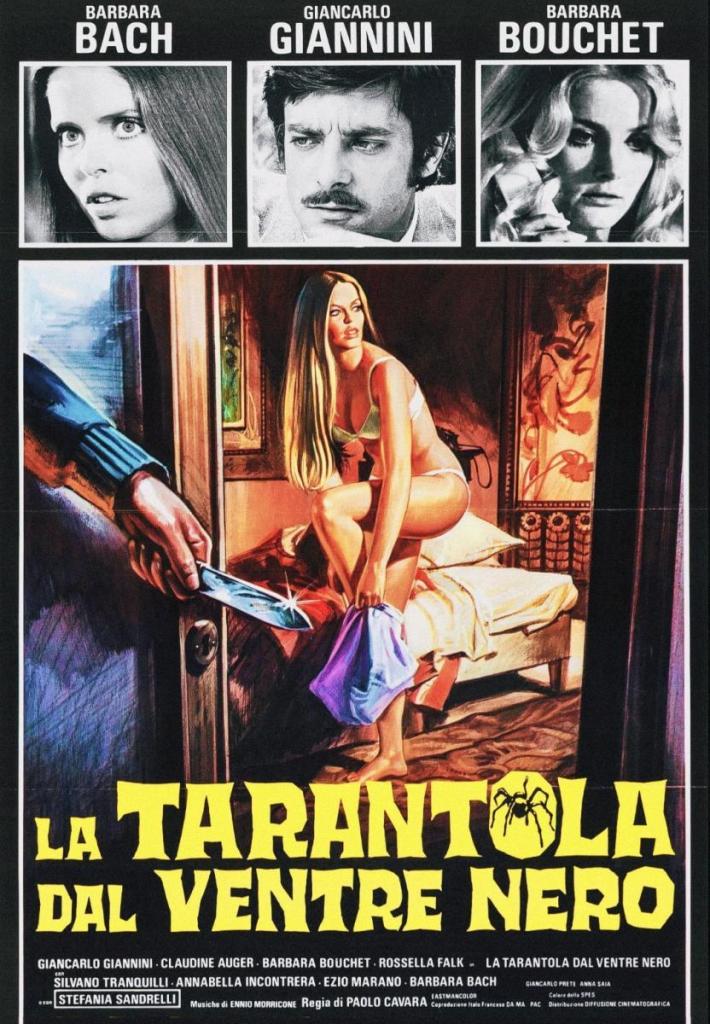
La tarantola dal ventre nero (1971)

Directed by Paolo Cavara [Other horror films: Mondo cane (1962), E tanta paura (1976)]

Giallo is one of those genres that I enjoy in small doses, and as such, there are still many quite well-known gialli that I’ve not yet seen. La tarantola dal ventre nero, better known as Black Belly of the Tarantula, is one such film, and I have to admit that, while it was decent, I was expecting a little more.

In part, I think this has to do with the lack of characterization some individuals get, not to mention a lack of as many suspects as one might hope for. There’s also elements that I don’t think are fully explained (what the link was between Giancarlo Prete’s character and Ezio Marano’s character, for instance), and the whole finale, while okay, was just that – okay, and largely unspectacular.

Admittedly this came as a surprise, as I have heard this is one of the more popular gialli out there, and perhaps one of the better ones not done by Mario Bava, Sergino Martino, Lucio Fulci, or Dario Argento. It’s a perfectly fine mystery, and the kills are decent, but even as a fan of these movies, I do feel that large portions were somewhat sluggish, and not getting the hang of the whole picture (at least as clearly as other films do, such as Deep Red) just made it feel weaker.

As far as the cast goes, the only ones who really stand out are Ezio Marano, Eugene Walter, and Giancarlo Giannini. I don’t think we really get that much information on Marano’s character, but he does well with the role. Eugene Walter had almost no relevance whatsoever to the plot, but his character appeared a few times, and he amused me. Giannini (who would pop up 30 years later as the Italian cop going after Lecter in Hannibal) was pretty solid as the lead, which is good, because otherwise, we wouldn’t have had much.

I’m always the type to enjoy mysteries mixed up with my murder, which is why giallo films appeal to me. They’re not always great (such as Mario Bava’s Five Dolls for an August Moon), but sometimes they can be quite good (Don’t Torture a Duckling and the aforementioned Deep Red). Black Belly of the Tarantula is an okay movie. It’s certainly not bad, even if it does perhaps drag a little. But there’s not enough here for me to think of the movie as necessarily good, and while I’ve wanted to see it for some time now, I can admit that it doesn’t do as much for me as I’d have hoped.

7/10

La notte che Evelyn uscì dalla tomba (1971)

Directed by Emilio Miraglia [Other horror films: La dama rossa uccide sette volte (1972)]

Commonly known as The Night Evelyn Came Out of the Grave, this Italian giallo is a very solid movie, providing you have the right print. It’s a movie I’ve seen before, but it didn’t make much of an impression, so seeing it again, in a quality copy, really allowed the film to shine.

I was first exposed to this film via the Mill Creek 50-movie pack titled Pure Terror – while the copy there is perhaps serviceable (I don’t remember much from my first viewing, but I didn’t hate it, at least), it’s video quality is quite bad, and the film’s dubbed. With this new viewing, I caught it on Shudder – I can’t express how much better the film looks. Also, the Shudder version is Italian with English subtitles, which is always my preference. Definitely makes a rewatch for this one worth it.

The story isn’t anything mind-blowingly new, and if anyone is familiar with the tenets of both Italian giallo and gothic movies, maybe some of the elements here will feel pedestrian, but I think everything blended together beautifully and made The Night Evelyn Came Out of the Grave work very well.

I’ve always loved gialli, and I think the reason is easy to understand – I also loved those old dark house horror films of the 1920’s and 1930’s (The Last Warning, The Cat and the Canary, The Monster Walks, and The Bat Whispers, for instance). I love mystery mixed in with my horror, and when we’re thrown multiple suspects, as many gialli do, I have a great time trying to figure out who the killer is, and why they’re committing these crimes. And it’s no different with this movie.

At times, I will admit it felt a bit like films such as The Screaming Skull and Diabolique, and it’s pretty clear early on that there’s no true supernatural elements here, and that a plot is afoot. The question then becomes who is the plot aimed at, who’s doing the plotting, and why is the plotting being done, and as with all great gialli (though to be sure, this film is moderately unique in that it throws in a supernatural facade for the giallo-centric murders), there’s a lot of possible combinations that make perfect sense.

The best part about all of this? It’s been so long since I’ve seen this movie, I completely blanked on the finale, and so when we got to the final 15 minutes, where we get a lot of revelations, I was overjoyed and having the blast of my life.

I can’t say that anyone in the cast stood out, but pretty much everyone did a good job. Anthony Steffen made for a solid lead, and Enzo Tarascio probably played one of the more interesting characters, but the rest, from Marina Malfatti, Roberto Maldera, and Giacomo Rossi Stuart to Umberto Raho, Joan C. Davis, Erika Blanc, all performed well.

If I did have one complaint, and to be sure, it’s a mild one at that, but the fact that the central character’s wife’s infidelity didn’t play into the film. We saw the flashback of his wife and a mysterious man making love in a garden, and I was guessing that the man would somehow matter later on, but it just didn’t swing that way. I can’t tell if that’s just me seeing too much from the flashback, or an intentional red herring, but I did find it a little annoying.

Other than that, The Night Evelyn Came Out of the Grave is a very solid movie, and if you have access to a quality print of it, it’s an Italian movie that’s certainly worth seeing, especially if Italian horror from the 1970’s is a preference of yours.

8.5/10

Castle Freak (1995)

Directed by Stuart Gordon [Other horror films: Re-Animator (1985), From Beyond (1986), Dolls (1986), Daughter of Darkness (1990), The Pit and the Pendulum (1991), Dagon (2001), Bunker of Blood: Chapter 5: Psycho Sideshow: Demon Freaks (2018)]

Castle Freak is a movie that I’ve long heard about from friends in the horror community, but didn’t see until October 2017. I enjoyed it quite a bit, and seeing it for the second time, I’m pretty certain this would be in my top 20 horror films from the 1990’s.

Possessing quite a dark atmosphere, complete with tackling topics such as alcoholism, child abuse, the loss of a child, and extreme guilt, Castle Freak isn’t one of those fun and light-hearted horror flicks from the 1980’s. There might be a lighter scene or two, but unlike some of Stuart Gordon’s past films, such as Re-Animator, this has an almost singularly serious aura, and at times feels downright tragic, almost depressingly so.

Jeffrey Combs and Barbara Crampton (both of whom starred in Re-Animator and also From Beyond) were great here, Combs really giving a fantastically dramatic performance. Crampton’s character did bother me at times, but then again, we’re talking about characters who were in quite a difficult position, so I can’t fault them for that. Though she hasn’t done much else, Jessica Dollarhide really pulls everything together as the blind daughter of Combs’ and Cramptons’ characters. She shines beautifully toward the end, and the performances here just work.

But of course, most things here work. The film isn’t too grisly as far as the gore goes, but we do get some disturbing scenes, from a woman beating her son with a whip to sexual assault (including mutitilation, as a woman gets her nipples bitten off). None of this is played lightly – like I said, Castle Freak is a dark and dismal film, which I think works very well in it’s credit.

Also, it’s worth mentioning is that while the film does have a low-fi feel to it (it almost looks like an 80’s movie at times, despite being filmed 1994), the castle looked quite impressive, and the setting in a small Italian village was quite nice (and reminded me a bit of a personal favorite Mario Bava film of mine, being Baron Blood). It was a lower-budget film, to be sure, but never once did that negatively impact anything here.

Castle Freak’s title almost does a disservice to the movie, and may even be why I avoided it for so long. Just by the title, it seemed like a goofy film. There’s nothing goofy about the movie, though; Castle Freak has a quality dark atmosphere with a decent amount of tragedy and suspenseful sequences, and if you’ve not yet seen this one, from one horror fan to another, I’d recommend you do so.

8.5/10

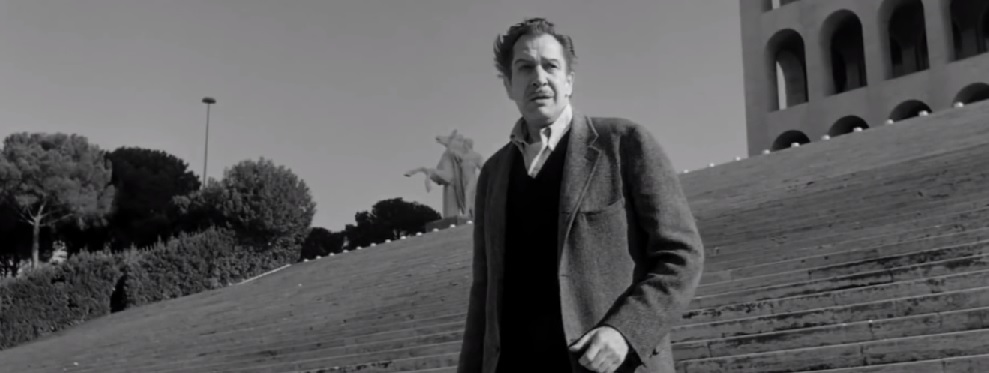
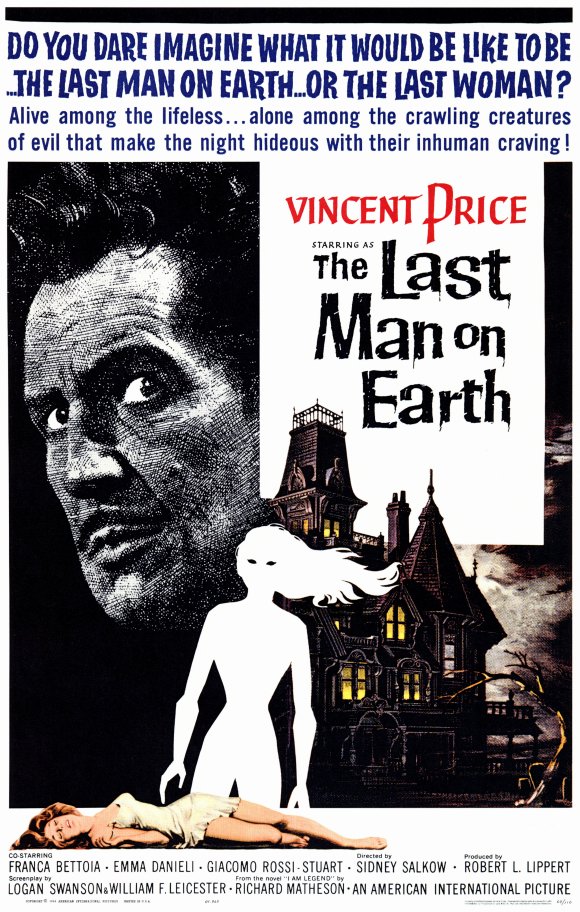
The Last Man on Earth (1964)

Directed by Ubaldo Ragona [Other horror films: N/A] & Sidney Salkow [Other horror films: Twice-Told Tales (1963)]

As many of you may know, Vincent Price is one of my favorite actors in the horror genre. It’s hard to imagine not liking one of his movies, and The Last Man on Earth, based on the Richard Matheson novel I Am Legend, is not only a quality movie, but one of the finest of the 1960’s.

Not only that, but it has to stand out as one of the most dismal. True, I think the ending of Night of the Living Dead is ultimately more depressing, but the tone of this film throughout is just one of hopelessness and solitude. It has a fantastic aura – the city void of any living beings, which just looked amazing – and for some quality atmosphere, you need search no further.

Of course, Vincent Price is great here. In fact, this is probably one of his best performances (at least out of the movies I’ve seen), and his internal monologue (with perhaps some of the best first-person narration in horror) was just depressing. There’s a scene where he’s watching some old home videos of his now-deceased family, and begins wildly laughing, only to soon turn into uncontrollable sobbing. A damn strong and emotional performance here, Vincent Price knocks this out of the fucking park.

Also worth mentioning is how the story is told. For the first 28 minutes, we get a look into Price’s current life, and how he fills his days (throwing bodies into a burning pit, getting some fresh garlic, searching for the hidden vampires to put a stake through their hearts – all that monotonous fun), and then we’re given a 24-minute flashback as to how the world got to the deserted husk we’ve been seeing. Once the flashback’s done, we come back to the present-day, and Price learns that he may not be as alone as he thought.

None of this is necessarily groundbreaking in terms of story-telling, but I did think that it worked out really well, and just gives a little more flavor to this movie (as though it really needed any).

Another unique aspect of the film is the nature of the antagonists. Technically, they’re vampires, and share many of the traits (can’t stand their reflection in a mirror, unable to operate in daylight, rather dislike garlic, need to be staked through the heart), but really, these things feel a bit more like Romero zombies (and as it’s four years before Night of the Living Dead is released, that is impressive). One thing I personally don’t care for is how these vampires can talk – one just bangs on a door all night and screams at Price’s character. It’s sort of funny, but the idea that this has been going on every night for three years borders on ridiculous.

There’s also something of a twist revealed in the last quarter of the movie, and while I didn’t necessarily love where the movie went afterward, the twist itself was fantastically dark and demoralizing. It’s something that Price’s character doesn’t have a lot of time to dwell on at the time, but it’s such a kick in the face, and I love it (and following the kick in the face that I didn’t love, being the dog, I appreciated it).

I don’t love how the movie ends, which is a shame, as I utterly adored most of what came before. Once Franca Bettoia’s character shows up, while it brings with it the aforementioned twist I love, along with some interesting ideas, I just don’t dig the movie as much, probably because Price is no longer the sole focus, and the sense of isolation (especially in the last 15 minutes) is entirely gone.

One last note is that I really enjoyed the conversations Price had in the flashbacks with Giacomo Rossi Stuart’s character – both are scientists, but Stuart’s character is more willing to believe fantastic theories and in fact, uses garlic and mirrors to repel the vampires before it became fashionable. I wish we had seen a bit more of that guy, because I enjoyed his chemistry with Price.

Were it not for the fact that I don’t love the finale (and never have – this is probably the third time I’ve seen this, if not fourth, and I never cared much for the last twenty or so minutes), this movie would be close-to-perfect. As it stands, it’s still a very strong movie, and I have a hard time imagining any top 15 horror films of the 1960’s not having this smuggled somewhere within it.

8.5/10

Die Hinrichtung (1976)

Directed by Denis Héroux [Other horror films: The Uncanny (1977)] & Géza von Radványi [Other horror films: N/A]

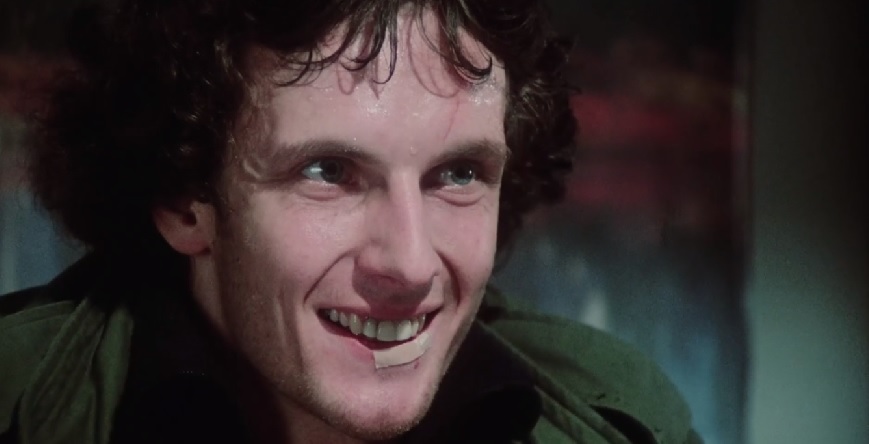
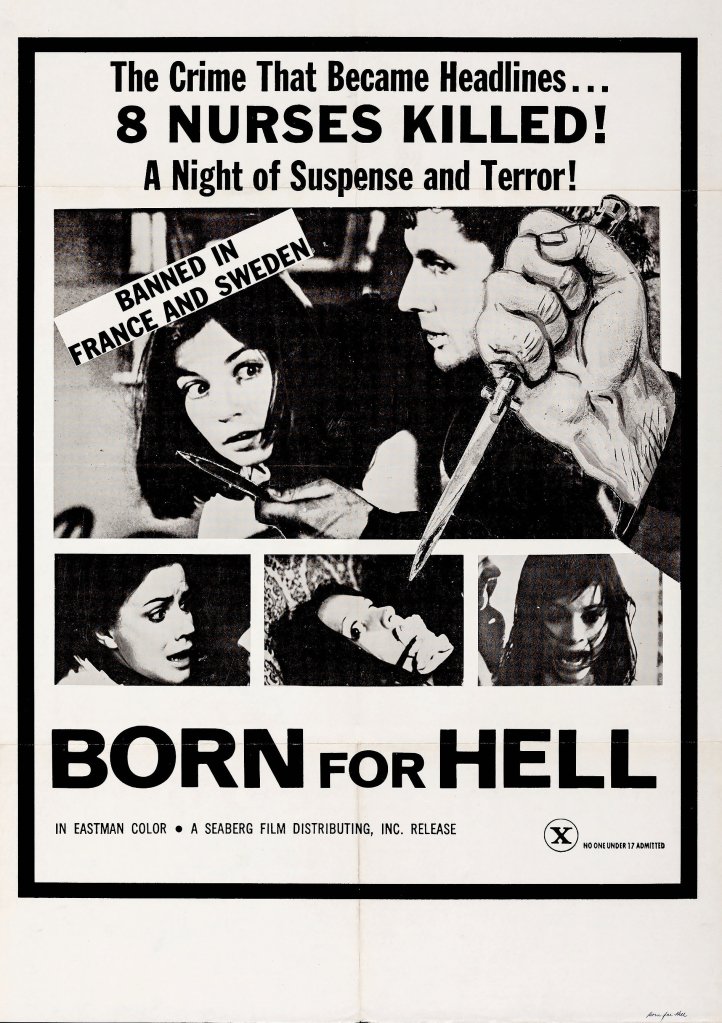
Known under such titles as Naked Massacre and Born for Hell (probably the best title for this one, if it were up to me), Die Hinrichtung is a gritty, raw experience. It’s not altogether exciting, but I do find the premise somewhat fascinating, and though the movie isn’t great, I do think there’s a little here to be interested in.

I first saw this film around ten years ago from a cheap print on the Mill Creek Entertainment’s Chilling Classics 50-movie pack. Honestly, while the print has issues, the audio quality is decent, and the movie is still certainly watchable (which is not something that can be said for all the movies in the same collection). I didn’t remember too much in way of specifics about the movie, which partially made this one a movie I was more interested in revisiting.

Following a disillusioned American who fought in Vietnam, and taking place during The Troubles in Belfast, there’s a lot of commentary on violence here. This American (played by Mathieu Carrière) has had a troubled life – a hard upbringing, a wife who left him, and some mental issues – and left one warzone for another. He doesn’t snap in a PTSD type of way – this isn’t Forced Entry (thank God). But he desperately wants to get home, and doesn’t have the money to do so. And what better way to get money than by trapping a house of nurses and torturing them?

Based partially off the Richard Speck murders, this movie has that gritty exploitation feel without really going out of the way to show too much explicit violence. The sexual violence, while definitely present, is toned down, and there’s not that much in the way of gore (and in fact, the bloodiest scene is a self-inflicted cut toward the finale of the film). It does have that gritty atmosphere, and of course a little nudity thrown in, but this movie isn’t really near as grueling as others from around the same time, such as I Spit on Your Grave, The Last House on the Left, or the aforementioned Forced Entry.

I don’t know Mathieu Carrière, but I thought he did a pretty fine job with his character. He’s occasionally charming, always desperate, and his performance is solid. None of the nurses stand out particularly well, but some, such as Carole Laure, Leonora Fani, and Christine Boisson all add a little oomph with their characters and traumatic predicaments.

The movie isn’t exactly quick-paced, but personally, I don’t think I ever really got bored. That said, I can certainly understand the somewhat lukewarm reception this has received (at the time of this writing, the movie possesses a 5.1/10 on IMDb with 696 votes). It’s probably worth seeing if you’re a fan of gritty 70’s exploitations, even if this is a bit tame, but for a casual horror fan, there may not be a lot here to really interest you. It’s worth mentioning that the version I saw was the same Mill Creek copy, though, so the uncut version likely has more to it.

As for me, I can say that I found the setting (Belfast) and the killer’s history interesting. I don’t think that made this a great movie, but I do think it felt substantially different from a more, shall we say, base exploitation flick, and though I do find the film below average (with the conclusion being perhaps one of my favorite portions), I definitely think I’d find it in me to watch again.

6.5/10

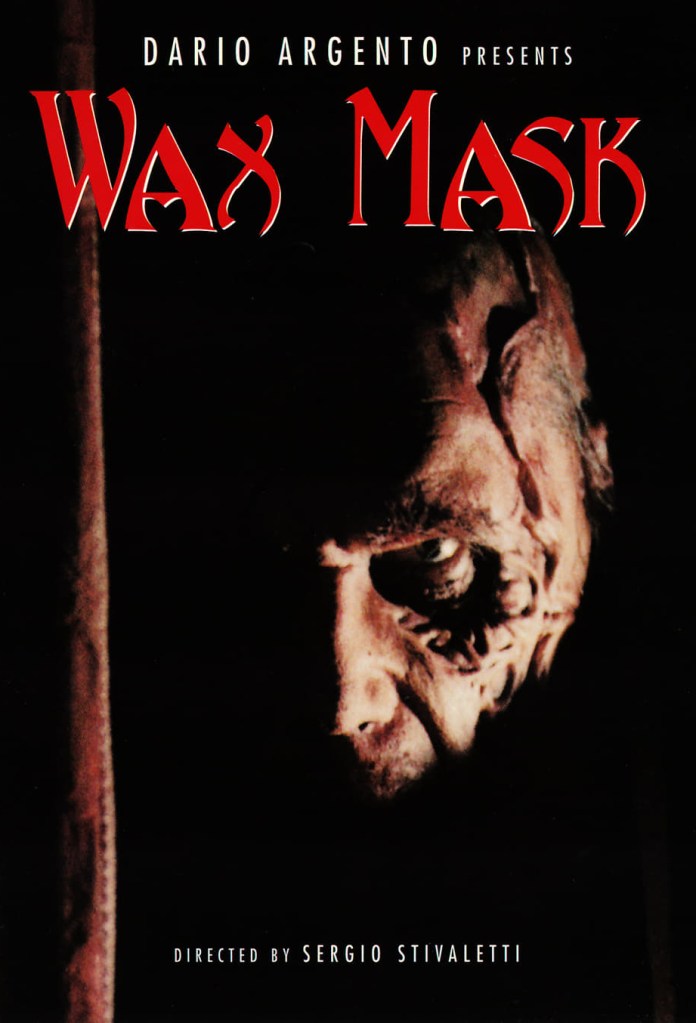
M.D.C. – Maschera di cera (1997)

Directed by Sergio Stivaletti [Other horror films: I tre volti del terrore (2004), Rabbia furiosa (2018), The Profane Exhibit (2018, segment ‘Tophet Quorom’)]

This late 1990’s Italian movie, commonly known as Wax Mask, was a movie I’ve been looking forward to watching ever since I first heard about it. Part of it was because a giallo from that time period would be interesting to begin with, but a bigger draw was simply the fact that I’ve seen very few Italian horror movies from the 1990’s, and virtually none from the late 1990’s (though let’s be honest, aside from Argeto’s 1998 Phantom of the Opera, are there any Italian horror films from the late 1990’s?), and so I was intrigued.

After seeing it, though, more than anything, I thought it was failed potential and a little bit of a mess.

Certainly there were some behind-the-scenes factors that led to such a product. Lucio Fulci was intended to direct this, but he died shortly before filming, so it was given over to Sergio Stivaletti (who had done a lot of special effects works for Italian horror, but hadn’t directed up to that point). Even before then, I’ve heard it said that Argento (who pitched the idea to Fulci to begin with) and Fulci had different visions of the movie, so even if Fulci had directed it, it may not have been much better (especially given that great plots aren’t really Fulci’s strong point).

No matter what happened leading up to the movie, though, the final product is what we have to judge, and though it’s gotten decent reception, and I personally wanted to enjoy it far more than I did, I found it quite underwhelming.

Without a doubt, there were some really strong points here – heck, even re-imaging Mystery of the Wax Museum/House of Wax in an Italian giallo setting was laudable. The gore and special effects throughout are fantastic (and the idea that the figures are still alive behind the wax somewhat terrifying). Well, mostly fantastic – when the museum is on fire at the end, it looks pretty damn amateur. The opening was pretty strong. There were even some fine character-driven moments, and elements of the ending were welcome, at least in the context of the story.

Even at an hour and 40 minutes, though, I felt Wax Mask was missing something, that spark that makes it a fully enjoyable watch. Not that it wasn’t competent enough to get something out of, but the ending, for instance, left something to be desired, along with the whole backstory behind the killer. Also, and it may not come as a big surprise that I took issue with this, the whole metal skeleton thing just felt too fantastic and almost gaudy, especially from a movie I was thinking would be in the purely realistic realm.

Performances here are a mixed bag. I do sort of like both Robert Hossein and Umberto Balli. Aldo Massasso I definitely enjoyed, as his character was one of the few characters that actually seemed like an all-around solid guy. Romina Mondello I’m more torn on – at times, she felt like a throwback to the period of horror where women were portrayed more weakly, and I don’t know if I really felt satisfied with her. Riccardo Serventi Longhi was never great either, though I wonder if the horrible dubbing job has more to do with my perception of his performance than his actual performance. Either way, that was hideous dubbing.

Wax Mask was an okay movie, but something just didn’t fully jibe with me, and while I never had a horrible time with it, it never got to the point where I was really engaged and into the film. Having seen it only once, it’s possible that I’ll grow to appreciate this more with future viewings, but for the time, I found it below average, though clearly possessing the potential to do more.

6/10

Opera (1987)

Directed by Dario Argento [Other horror films: L’uccello dalle piume di cristallo (1970), Il gatto a nove code (1971), 4 mosche di velluto grigio (1971), Profondo rosso (1975), Suspiria (1977), Inferno (1980), Tenebre (1982), Phenomena (1985), Due occhi diabolici (1990, segment ‘The Black Cat’), Trauma (1993), La sindrome di Stendhal (1996), Il fantasma dell’opera (1998), Non ho sonno (2001), Il cartaio (2003), Ti piace Hitchcock? (2005), La terza madre (2007), Giallo (2009), Dracula 3D (2012), Occhiali neri (2022)]

Sometimes considered one of the last great Argento films, Opera is a movie that I’ve long been aware of, and given my love of some of his previous work, a movie I’ve wanted to see for some time, and overall, while I thought a few changes here and there might have worked, I found the film quite solid.

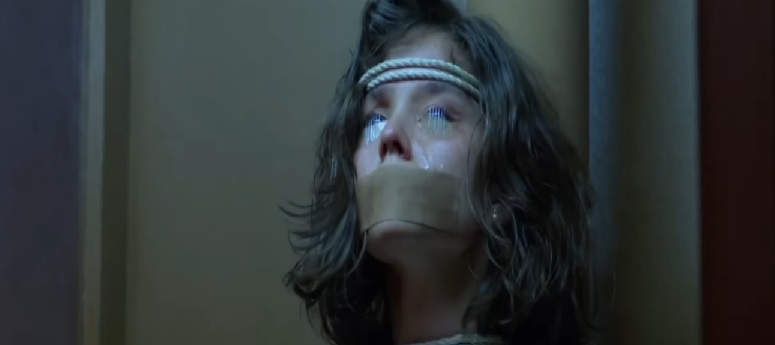
A big part of this would be the gore and quality special effects throughout the film, and there are some really spectacular scenes here. Perhaps the most remarkable would be the slow-motion headshot sequence, in which a bullet exits the gun, shoots through the peep-hole, and, as one can imagine, pierces a poor soul in the head. Also quite solid is a kill with a knife through the jar, and a woman forced to watch lest she lose her eyebrows via needles taped near her eyes (as the poster demonstrates).

For a late 80’s giallo, over ten years since the heyday of the sub-genre, Opera did a pretty good job as far as the gore goes. The mystery isn’t quite great, but you’re left wondering who exactly is committing the crimes, the answer for which isn’t entirely satisfactory, but the showdown between the mysterious killer and Cristina Marsillach is pretty solid. I don’t love the final scene – I can see why some wanted it removed for the US release – but that’s not too much a deterrent.

Cristina Marsillach isn’t the best lead I’ve seen, because her character (and this isn’t just her – this could be applied to multiple characters throughout the movie) made her fair share of somewhat questionable decisions. Ian Charleson was a character I wanted to like more, as he struck me as potentially interesting, but I felt he wasn’t entirely fleshed out.

In fact, I think this is a complaint I have with most of the characters, so not only do many of them make some foolish decisions (Marsillach not going to the police after witnessing the murder, or Coralina Cataldi-Tassoni not getting help for Marsillach as soon as she saw her in the glass, etc.), but they make those bad decisions while feeling like somewhat shallow characters, and though that didn’t make the film terrible, by any means, I definitely noticed it.

Of course, I did enjoy seeing the occasional Argento addition of odd lighting at times (the two women being trapped in the apartment may have been the best example of that), but the film, as far as stylistic endeavors went, seemed quite a bit more tame than Argento’s previous works. I also could have done without the somewhat jarring heavy metal music during the kills, but I can understand why they’re there.

So though the mystery wasn’t great, and honestly, the characters weren’t great (Urbano Barberini being one of the few shining lights, as far as dim shining lights go), the kills were pretty solid, and I can say that I did enjoy the film. I just didn’t enjoy it as much as Deep Red or even Suspiria.

7.5/10

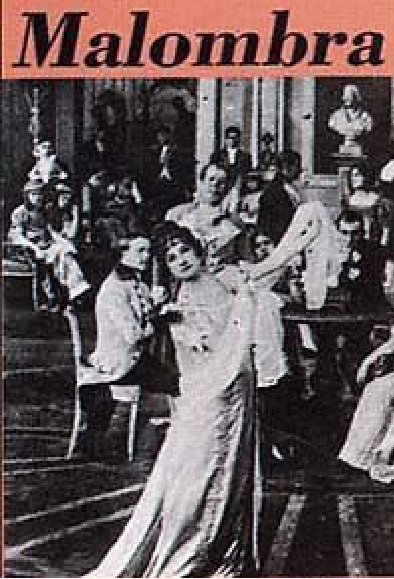
Malombra (1917)

Directed by Carmine Gallone [Other horror films: N/A]

I can’t say that I knew anything about this film before watching it, but I was vaguely aware of it’s existence. I didn’t know it was Italian, and I certainly didn’t know the plot or anything else about Malombra, but it was in a list of mine of every cataloged horror film, so I had apparently ran into it at some point.

For the longest time, I’ll admit that I thought the 1925 Maciste all’inferno was the oldest-existing Italian horror film, but I was mistaken, at least in my view. Though more primarily a dark melodrama (to be fair, what horror films from the 1910’s weren’t?), there are some interesting things in this early and admittedly muddled movie.

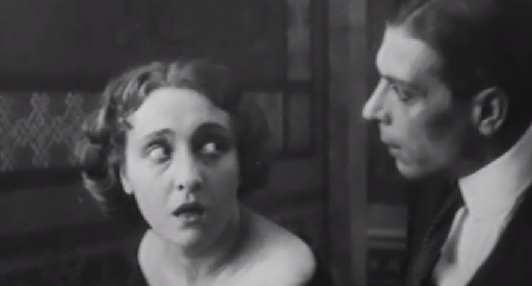
One of the primary themes is revenge after a young woman (played by Lyda Borelli) reads about the abuse another took from her uncle. That desire for revenge takes some time to reach its boiling point (it’s not entirely clear as the story sometimes moves at a quick pace, but I believe the ending takes place years after the initial reading of the diary), but happen it does, and there’s even a question as to whether or not Marina was possessed when engaging in said revenge (she called herself by another name multiple times, and as she wasn’t the most mentally-stable, it could go either way).

Borelli was as decent as you could expect from a rough movie like this. I certainly thought she showed a solid emotional range, though I do wish some aspects of her character had been expanded on. Same with Augusto Mastripietri, as I think there’s some questions as to exactly why he mistreated Cicelia, the woman who wrote the diary, to begin with. I don’t know if Amedeo Ciaffi’s character was that relevant, or that of his daughter’s, Consuelo Spada, but Amleto Novelli did have an aura to him (though again, I didn’t understand why things didn’t work out between him and Marina).

Through little fault of it’s own, Malombra’s preservation has suffered through some rough degradation. According to my understanding, a little bit of the story is missing, and you can sort of tell, as portions of the story seem somewhat ill-explained (for instance, I don’t know who called off Marina’s wedding, and why that’d cause her to snap, as she didn’t want to get married to the guy anyway), and I’m guessing some of that could be explained in a fuller version of the film.

It’s of little matter, though – even if such a version existed, Malombra would still be more a depressing melodrama with some dark ideas and ill intent thrown in before all else. I’m just personally glad that a version with the original Italian intertitled, and subtitled in English, exists, because otherwise, this obscure silent film would probably have never been seen by my eyes.

This isn’t the most interesting silent horror I’ve seen, but I deeply appreciate having seen it, as it showed me, personally, that Italy was playing around with the genre before I suspected, no matter how muddled this product turned out.

5.5/10

The Night Flier (1997)

Directed by Mark Pavia [Other horror films: Fender Bender (2016)]

I have a bit of a history with this movie, which I’ll get into in detail shortly, but for now, I’ll suffice it by saying that I think The Night Flier is a deeply underrated film, and it’s probably one of the creepiest and best vampire films of the 1990’s, and one of my personal favorite vampire movies of all time (even beating out Fright Night).

Before I go onto the aspects of the film, though, that make this so, let me tell you a story of a young boy named Michael. And for those who don’t know, Michael is my actual name.

Back when I was a kid, my family briefly lived in a small village in New York (the village being Penn Yenn, though that’s neither here nor there as far as the story goes). It was a decently nice house, with both a cellar and an attic, and it seemed large. From the foot of the stairs, you could crouch down and see the television screen clearly, which I did a few times.

And one of the times I did this, my parents were watching The Night Flier (which, if you don’t know, is based off a short story by none other than Stephen King). My parents owned this on VHS, were up late watching it, and I happened to catch some snippets of it.

And it fucking terrified me.

I don’t know all of what I saw when I was a kid. Did I get to the ending and see the vampire in full? I don’t really know. I remember a few scenes I saw (such as the woman getting a perm and watching her husband being killed with a faraway look on her face), but whatever I saw frightened me, so much so that, after my family moved to Indiana, I actually threw the VHS tape down into the basement of the new house, destroying it (which I obviously deeply regret to this day, not only because it’s embarrassing to admit, but because this movie doesn’t have many cheap releases).

So in short, I have a bit of a history with this movie. And sure, that nostalgic value does add a little something to my love of this film, but I like to think that even if I didn’t have experience with this movie while I was a kid, I’d still love it.

First off, that music is amazing. It’s very somber, almost peacefully so, and it lends the film a very dark feel that I think the atmosphere delivers on. This movie has a few funny lines, but there’s very little camp here (which isn’t something that can be said about many King adaptations from the 1990’s), and the atmosphere as a whole is stark and bleak, which of course works well with the conclusion of the film (a conclusion I rather adore).

There’s only four cast members that really matter, being Miguel Ferrer, Julie Entwisle, Dan Monahan, and Michael H. Moss. Ferrer (who had previously been in the mini-series The Stand) did great as the do-anything-for-a-story character, and he was a dick through-and-through, and also, because of that, often entertaining. Entwisle (who was only in a single other film, and married Mark Pavia, the director of this movie) was great as the young, optimistic journalist that gets her spirits crushed entirely. You can’t help but root for her in some form.

Many people can do sleazy, and Monahan (who hasn’t done much in the movie industry past this) does a great job with an upbeat, slimy guy. He plays Ferrer off Entwisle, Entwisle off Ferrer, and doesn’t care as long as he gets that story. He’s also hella entertaining to watch. And though Moss, who plays the killer named ‘The Night Flier’ (which is such a cool name), doesn’t appear until the end, he most definitely leaves his mark.

I also can’t get enough of how The Night Flier was structured narratively. Many of the kills are seen via flashback when Ferrer’s character is interviewing someone, which really helps with the idea that as we’re learning about the gruesome and mysterious crimes as the audience, Ferrer’s character is hearing it for the first time also. There’s even a few dreamy sequences, the most notable one being in the spectacular finale, but another one appears during one of the many flashbacks.

Some of my love for this movie is no doubt nostalgia, but I’ve seen it multiple times in the last few years, and I think it’s a legitimately good movie on it’s own merits, nostalgia be damned. A fantastic film, and one of the most underrated horror films in the history of the whole genre.

But that’s just the humble opinion of a small boy who was frightened by this movie.

10/10

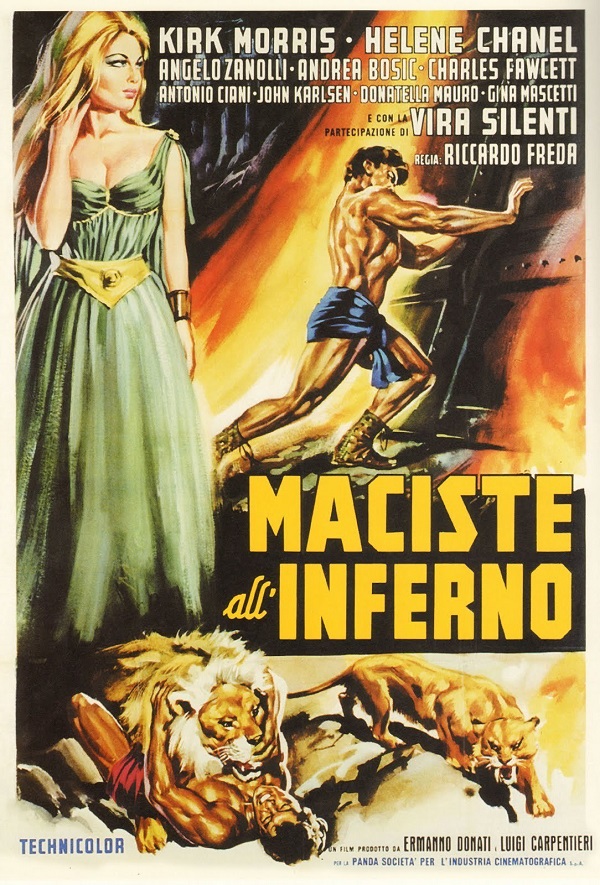
Maciste all’inferno (1962)

Directed by Riccardo Freda [Other horror films: I vampiri (1957), Caltiki il mostro immortale (1959), L’orribile segreto del Dr. Hichcock (1962), Lo spettro (1963), L’iguana dalla lingua di fuoco (1971), Estratto dagli archivi segreti della polizia di una capitale europea (1972), Murder Obsession (1981)]

Known sometimes as The Witch’s Curse, this Italian production isn’t a bad film, but is can be somewhat tedious, so ends up in the middle of the road.

I’ve seen this story done before in the 1925 Italian movie of the same name – in both, strongman Maciste goes down to Hell, and must defeat evil and resist temptation before coming back to the over-world. Though I like the somewhat intense framing for the reasoning Maciste went into Hell in this movie more, I’ll say that the 1925 version is a lot more fun.

There’s a Corman-Price movie from 1963 titled The Haunted Palace, which I recently revisited, and what struck me as amusing was how the first 15 minutes of this film follows that beginning of The Haunted Palace almost exactly – a witch/warlock is burned to death and puts a curse on the village, years later an ancestor of that witch/warlock moves back into the castle to the horror of the superstitious townspeople, and instantly the the townspeople want to rush to the castle and set the ancestor to the flame.

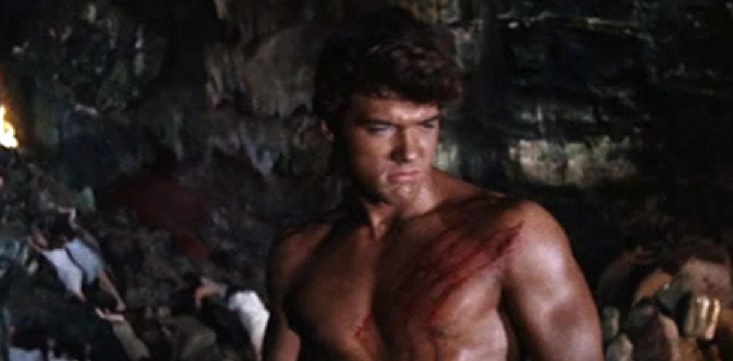
In The Haunted Palace, though, the townspeople hold off a bit. Here, though, on the first night that the ancestor and husband get there, they rush the castle with torches and pitchforks, and drag the woman out to be slain. All hope looks lost until the shirtless Maciste comes forth to save the innocent woman, and enters hell to do so.

From a modern, American viewpoint, Maciste is pretty much Superman. He’s an embodiment of all that’s right and good, strong and virtuous, and even when he gets into Hell, he tried to help some of the people suffering, which shows strong character. In relation, I did think Hell looked better in the 1925 version of this story, but here it’s in proper color, and doesn’t look all too shabby.

Kirk Morris is the handsome feller who played Maciste, and I think he did a pretty fair job. Any time he struggled to lift something (which was about half of what he spent time doing), he did a fair job acting like what he was trying to lift was actually heavy. Vira Silenti did pretty good – it was tense that, while Maciste was slowly trying to through Hell to find the witch, that Silenti’s character was getting closer and closer to being burned to death. And playing her husband, Angelo Zanolli did great showing his devotion, perhaps foolishly so, to his wife.

Believe it or not, I wasn’t a young boy in Italy back in the 1960’s, but if I were, I would think that I’d find The Witch’s Curse a moderately fun romp. I don’t personally think this is a great film, but I am somewhat surprised by how it has only a 5.1/10 on IMDb as of this writing. The film has it’s charm, and for a pre-giallo Italian horror/fantasy/adventure film, I think it’s decent.

6.5/10