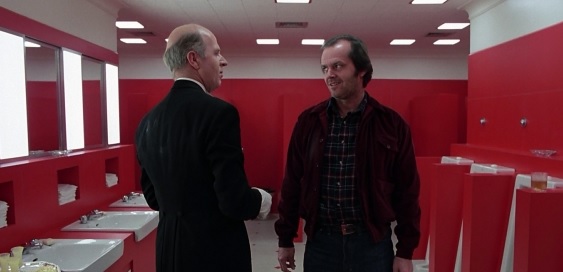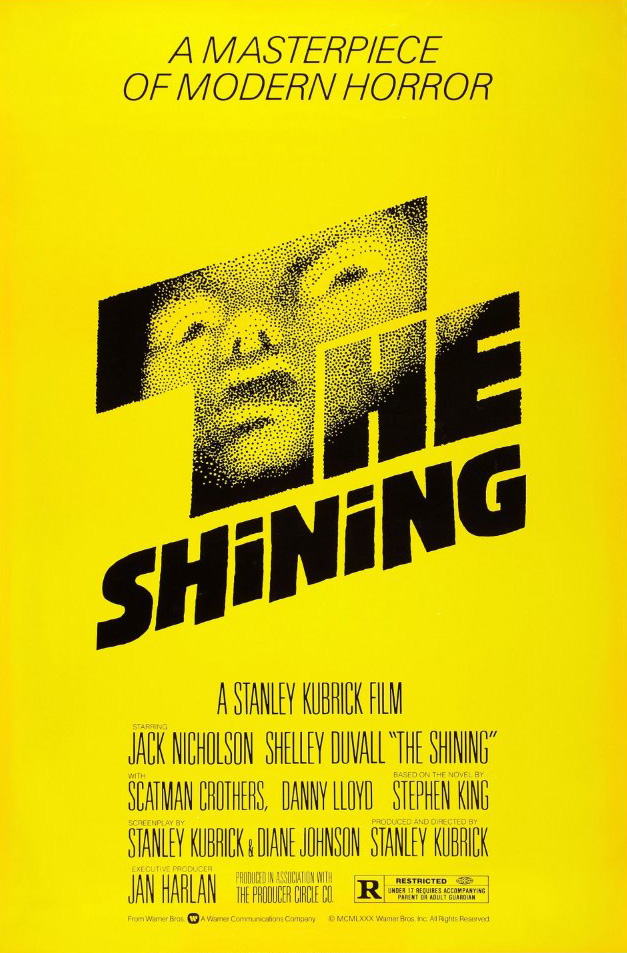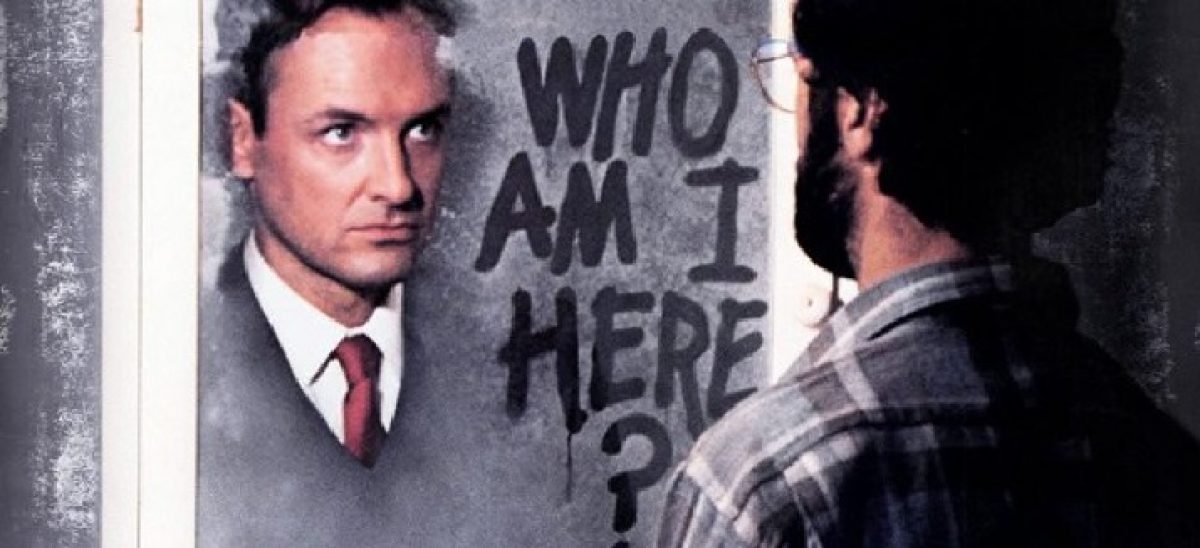
Alligator (1980)

Directed by Lewis Teague [Other horror films: Cujo (1983), Cat’s Eye (1985), The Triangle (2001)]

Honestly, I don’t have a lot to say about this one. I wasn’t really that impressed with Alligator when I first saw it, and while I can see some decent portions with this recent rewatch, it’s still not really my type of movie.

When it comes to giant monster movies, I’ve never been a big fan. Admittedly, given this movie is from the 1980’s, it does feel different than the movies from the late 50’s. Even so, the story sort of follows the exact same route – a guy has an experience with a giant alligator, and shortly afterward, the military, police, and everyone else is watching out for the creature while it causes havoc.

It’s not even the first killer alligator/crocodile movie – in 1979, we had both Thailand’s Chorakhe (Crocodile) and Italy’s Il fiume del grande caimano (The Great Alligator), and in 1978, the South Korean Agowa gongpo (Crocodile Fangs). Now, I’ve not seen any of these three, but I am sort of curious if they’re similar in story and idea to this movie, and I imagine all of them possess an interesting foreign flavor that obviously this one couldn’t compete with.

No doubt it’s nice to see Robert Forster as the lead. When I first saw this movie, I probably didn’t know who he was, but having seen Breaking Bad and El Camino, even this young, he has a familiar face (also in The Wolf of Snow Hollow, The Darker Side of Terror, and Satan’s Princess). Honestly, I didn’t love his character here, but he was a nice face to see. Robin Riker (Stepmonster) isn’t a name I know, but though I didn’t care for her romantic interest in Forster’s character, she did decent.

Honestly, those two are the only ones that really matter. Sure, Henry Silva (Thirst) appears for a bit, Dean Jagger (X the Unknown, Revolt of the Zombies, So Sad About Gloria) seems to be set up as a human antagonist, but it never really goes anywhere, and while Michael V. Gazzo (The Godfather Part II) appears throughout the film, we never get a good feel for him.

Some of the special effects look decent. It’s not a particularly gory movie or anything, but the titular alligator gets a few tasty bites in. I think my bigger issue is that it’s hard for me to watch this and not think of Lake Placid, which is a movie I find so much more enjoyable than this one, and actually, I think it’s fair to say that this feels more like a 70’s product than it does one of the 1980’s, given it’s somewhat dry feel.

I’ve only seen Alligator twice now, and both times, while I can’t say I’ve been let down, I can say that neither viewing has done much for me. It’s not a bad movie, but it’s not one that I really care for, at least for the time being.

6/10
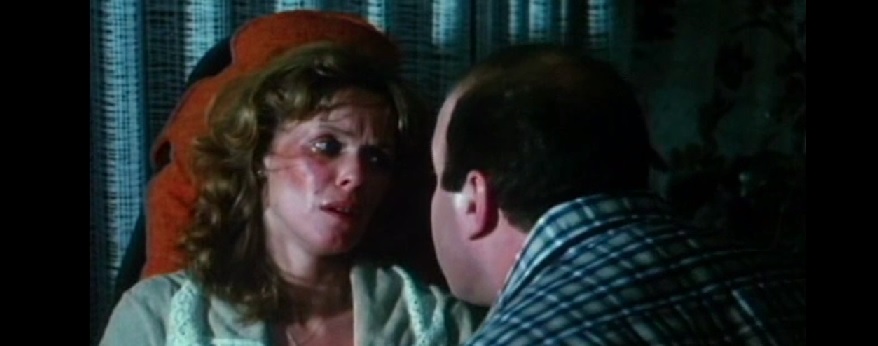
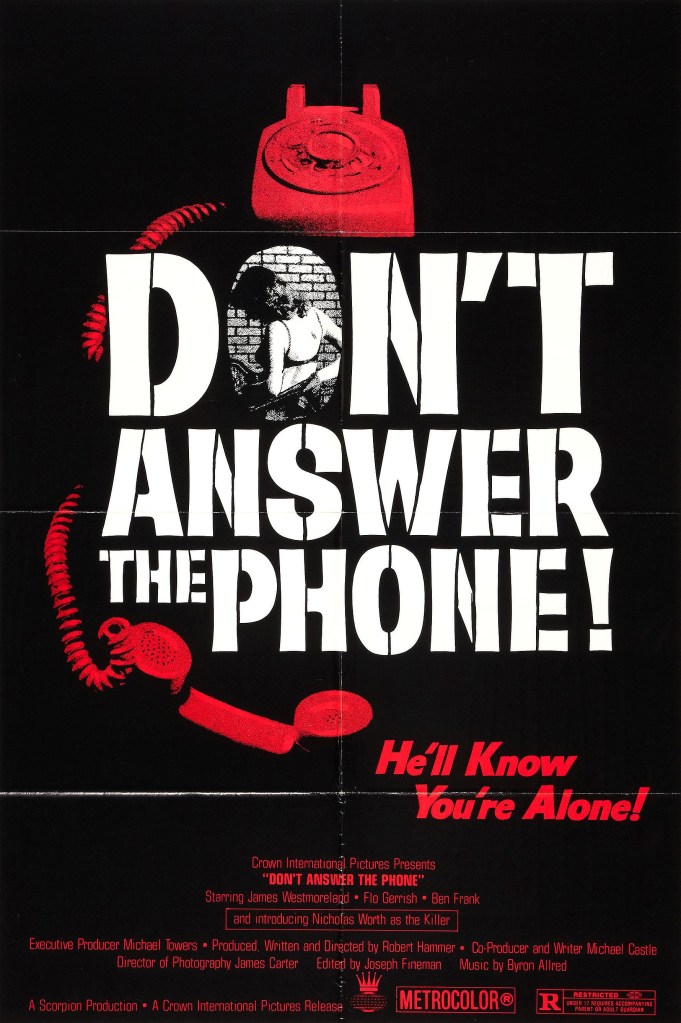
Don’t Answer the Phone! (1980)

Directed by Robert Hammer [Other horror films: N/A]

This isn’t the easiest movie to examine. In some ways, Don’t Answer the Phone! is definitely generic and underwhelming, but it’s also occasionally competent trash, and that has to count for something, whatever that may be.

To preface this review, I have to say that I didn’t watch this under ideal circumstances, and by that, I mean I own it on a 50-movie pack, specifically Mill Creek’s Pure Terror release. The quality isn’t that poor, but I know the film came out on Blu-Ray in 2017, so I can’t say that this copy isn’t possibly missing something.

As it stands, the movie isn’t a violent one, at least not with the print I have – plenty of women get strangled, and to add to the spiciness, many of these women are topless – but it’s not at all gory, and while I couldn’t go as far as to call it dull, I will admit a lot of this feels familiar.

I think that’s one of the bigger problems, if I’m being honest. Films such as City in Panic, Naked Massacre, Murderlust, and even Forced Entry all have similar elements – granted, two of those films came out after this one, but even so, we’re not talking ground-breaking entertainment here. It’s competent for what it does – if you like seeing topless women strangled, I’d recommend you look no further – but it’s definitely not a film that’s all too memorable.

I can personally attest to that, as I’ve seen it previously, and came into this viewing with very little memory of what I’d seen before. As far as I can tell, the most memorable part of the film is Nicholas Worth’s role as the killer. Not that his performance is good; in fact, at times, it’s somewhat laughable. But whether laughable or not, I can’t say that he’s not captivating when on-screen, which has to count for something.

Otherwise, it’s hard to say that others stand out. The two central police officers, played by James Westmoreland and Ben Frank, were both okay, and they had some solid scenes (such as the rather amusing visit to a brothel disguised as a health spa), but not overly relevant. The same is true of Flo Lawrence (Schizoid), who seems important at first, but fades into the background, only to sort of come back into prominence toward the finale.

A few others are worth mentioning, though to be sure, none of the characters they played were important. Chris Wallace (who you might recognize from New Year’s Evil) had an amusing sequence as a psychic. Playing an amusingly sleazy magazine owner was Chuck Mitchell, and there was also a pimp played by Stan Haze who had a moment to shine during the aforementioned brothel sequence.

Really, Don’t Answer the Phone! isn’t without a few strong points. The nudity throughout doesn’t go amiss, and there can be an amusing scene or two. I didn’t care whatsoever about the romantic subplot thrown in, and the finale wasn’t that great, but there are moments when the film almost seems like it’s worth watching.

Even so, I wouldn’t go as far as to call it a good film. It’s not terrible, at least not in my eyes. But it’s also one that I don’t suspect I’ll watch again any time soon, and if it sticks with me better this time around, that’s probably the best the movie can hope to ask for.

6/10

Paura nella città dei morti viventi (1980)

Directed by Lucio Fulci [Other horror films: Una lucertola con la pelle di donna (1971), Non si sevizia un paperino (1972), Il cav. Costante Nicosia demoniaco, ovvero: Dracula in Brianza (1975), Sette note in nero (1977), Zombi 2 (1979), Gatto nero (1981), …E tu vivrai nel terrore! L’aldilà (1981), Quella villa accanto al cimitero (1981), Lo squartatore di New York (1982), Manhattan Baby (1982), Murderock – Uccide a passo di danza (1984), Aenigma (1987), Zombi 3 (1988), Il fantasma di Sodoma (1988), Quando Alice ruppe lo specchio (1988), La casa nel tempo (1989), La dolce casa degli orrori (1989), Un gatto nel cervello (1990), Demonia (1990), Hansel e Gretel (1990), Voci dal profondo (1991), Le porte del silenzio (1992)]

Known best as City of the Living Dead, this Lucio Fulci film is one that I’ve been looking forward to for a while. I’ve only seen it once, and it’s been over ten years since that occasion, so this is one I definitely wanted to revisit. As it stands, though, I think the movie is just okay.

Lucio Fulci is a director that I appreciate, but a lot of the work I’ve seen from him doesn’t generally impress me too much. I quite enjoy The Beyond, and both Don’t Torture a Duckling and The New York Ripper are hella fun, but sometimes his films don’t hit the right spots, and while I enjoyed bits and pieces of City of the Living Dead, this is a good example of that.

Overall, it’s probably more cohesive in my view than The House by the Cemetery, which is a positive. I sort of liked the final ten minutes – the final scene leaves quite a bit up to interpretation, but given this is the first of the Gates of Hell trilogy, I can dance to that tune. The base story isn’t bad, and I did like how it took an hour for Carlo De Mejo and Christopher George to finally meet up.

It’s the gore here that’s of primary interest. There are a few disturbing scenes here, but the sequence in which a poor woman regurgitates her organs has to be one of the most sickening scenes I’ve seen in recent times. The special effects are decent – sometimes the brains look a bit bleh, and the power drill scene seemed a bit janky, but City of the Living Dead did have enough gore to keep things moderately interesting, not to mention the maggot showers.

Also, despite the name, it’s sort of hard for me to see this as a zombie movie. Sure, zombies appear, but it’s nothing at all like Zombi 2 – here, the zombies teleport, crush someone’s skull, take some of their brain matter, and move on. It’s a much more supernatural take on zombies, which fits in with the tone of the movie, and definitely felt unique, but it’s sort of hard for me to fully enjoy it.

One thing I did enjoy was the sequence in which a woman wakes up in a casket after having been buried. People thought she was dead, of course – they weren’t being dicks. It’s a tense moment, as another character is slowly walking out of the cemetery, occasionally stopping, as he thinks he hears banging and screaming from a grave behind him. It’s stretched out wonderfully – at times, it feels like he’s actually leaving the cemetery, and the buried character, behind. That was a quality tense sequence.

Christopher George (Whiskey Mountain, Graduation Day, Day of the Animals, Mortuary, Pieces, and Grizzly) was okay, but I can’t say I thought he had a lot of character. In fact, I think that holds true for a lot of the performances here – Carlo De Mejo, Janet Agren (Rat Man, Eaten Alive, and Panic), Catriona MacColl (The Beyond and The House by the Cemetery) and Giovanni Lombardo Radice (Cannibal Ferox, Cannibal Apocalypse, and House on the Edge of the Park) were all fine, but none felt well-developed, especially in Radice’s case, as he felt like such a random character.

Obviously, different people have different takes on Fulci films. I know some people who rather love this particular movie. For my part, though, it feels somewhat confused, the plot not particularly well thought out, the finale somewhat impressive, but again, nowhere near as great as The Beyond. I still enjoy this more than The House by the Cemetery, but I do feel it’s a bit below average, at least with having seen it twice.

6.5/10

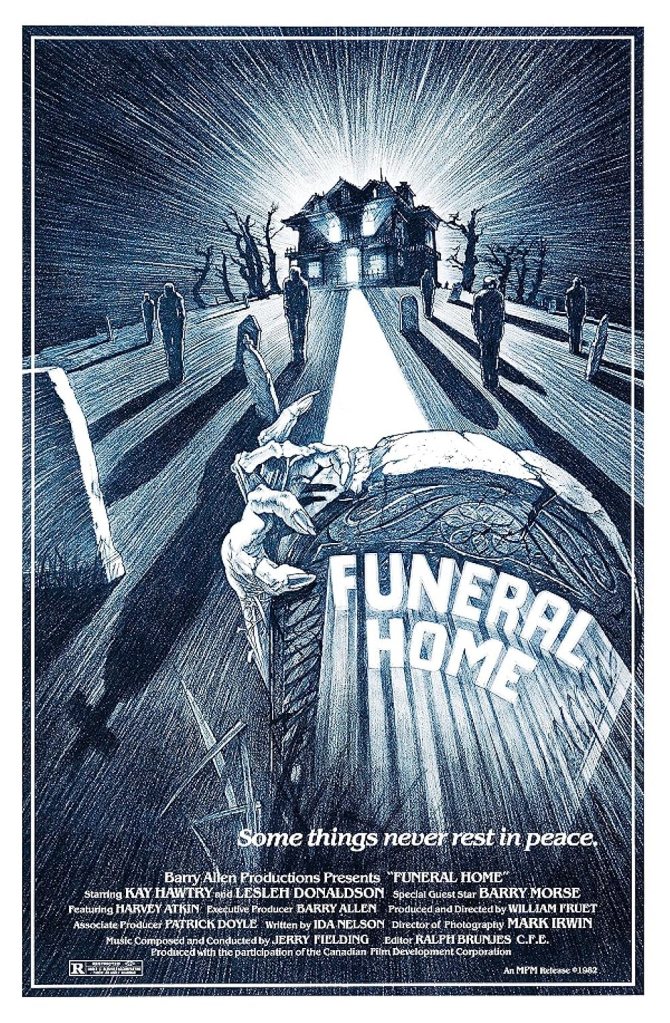
Cries in the Night (1980)

Directed by William Fruet [Other horror films: Death Weekend (1976), Spasms (1983), Killer Party (1986), Blue Monkey (1987)]

Though the print I possess is of dubious quality, I’ve consistently found this Canadian movie pretty decent. Sure, the print is rough, but the atmosphere is on point, and while elements may not be the most original, Cries in the Night is worth seeing.

Of course, you probably won’t see it under the name Cries in the Night, as it was retitled Funeral Home (which I tend to think is a better name). The print I own (from Mill Creeks 50-disc set Creepy Classics) is rough – the audio is occasionally a bit garbled, and visually, some scenes can be dim, others blurry. In a way, it’s a testament of my feelings on the film that despite this, I’ve watched the film twice, and had fun each time.

It’s largely the story, revolving around a young woman staying at her grandmother’s bed-and-breakfast inn (which was previously – you guessed it – a funeral home), that helps the film out. Guests seem to disappear without warning, voices tend to come from the cellar (which is kept locked), and the mystery around her grandfather’s departure is still unsolved. Funeral Home can be quite atmospheric, and the big old house helps with that vibe.

Another thing I rather liked is the use of flashbacks – three different flackbacks pop up throughout the film, all of which add a little something (one that involved two boys sneaking around the funeral home was pretty solid stuff). The movie isn’t really that emotionally-charged, and I sometimes wonder if they were going for a more somber vibe, but it’s still quite nice.

All of the central performances, I thought, were solid. Lesleh Donaldson (Curtains) felt a little weak as the lead at times, but I enjoyed her character well enough. Kay Hawtrey did quite well as a grandmother potentially hiding some secrets. Stephen E. Miller impressed me, Alf Humphreys (Howard from My Bloody Valentine) amused me, Barry Morse intrigued me, and Harvey Atkin also amused me. Dean Garbett was decent, and for extra points, we got Jack Van Evera in a flashback (who played Happy the bartender in My Bloody Valentine).

There’s no gore here, at least not in the version I’ve seen. Someone gets stabbed in the back with some funeral home implement, and a couple had their car shoved into a lake, but for the most part, the film’s not overly violent. In fact, some people may feel the movie is slow, as the body count is quite low. Even so, I can say that while that’s true, I personally never reached the point where the story disengaged me.

I wouldn’t mind seeing a higher quality print of Funeral Home, but even if the only print I see is the one I own, that’s fine, because the movie is still pretty solid. It has a great atmosphere, and though I don’t think it’s an unsung classic, I’ve always personally enjoyed it.

7.5/10

Motel Hell (1980)

Directed by Kevin Connor [Other horror films: From Beyond the Grave (1974), The House Where Evil Dwells (1982), Frankenstein (2004)]

When I say it’s been a while since I’ve last seen Motel Hell, I don’t mean it’s been a couple of years, five years, or even ten years. It’s been at least 15 years since I’ve seen Motel Hell – so much so that aside from the most striking and memorable portions, everything felt new. It was a good experience, because while Motel Hell can sometimes be a bit much, it’s quite a solid film, and I dig it.

Which isn’t exactly what I was expecting when I revisited this one. As any reader of mine may know, when there’s too much of a comedic infusion into the horror, I check out. Given this film is often described as a black comedy, I was worried that it might be too goofy and offset the otherwise creepy and occasionally unsettling ideas in the film.

Luckily, that’s not the case. This is one sequence that strikes me as being a bit much – the two swingers – but for the most part, it wasn’t that silly. I mean, it’s sort of silly that Nina Axelrod’s character would fall for Rory Calhoun’s, but then again, the heart wants what the heart wants, and Farmer Vincent is a pretty suave character with folksy charm.

Seeing this originally when I was quite young, there are some seriously creepy images here, primarily the field of bags (and of course, under the bags are the heads of living people). Just the idea of keeping someone buried, their head above ground so you can keep them alive by force feeding them, and then killing them off for smoked meats, well, that’s a classy business plan. It’s done pretty well, because while the film does have some comedy, those scenes don’t become any less unsettling.

Rory Calhoun (Night of the Lepus) does great as Farmer Vincent, and you can sort of tell early on he’s destined as a cult classic character (“It takes all kinds of critters to make Farmer Vincent’s Fritters”). He has a fun personality, and I really dig him. Nancy Parsons and Paul Linke I felt more lukewarm toward, but Nina Axelrod (Critters 3 and Time Walker) did pretty good most of the time.

Motel Hell isn’t a violent movie whatsoever, and given it involves cannibalism and the occasional chainsaw, this might surprise people. What it has instead is a pretty good atmosphere, as I said earlier, and some of the sequences can be pretty foreboding (such as the routine Vincent and Ida have before pulling their livestock out of the ground).

Truth be told, I was surprised by how much I enjoyed a lot of this. The humor is all pretty decent save a scene or two, and the unsettling scenes are just quality. Add in Farmer Vincent’s fun character, and you have a pretty solid movie. Nothing stellar, but solid.

7.5/10

Island Claws (1980)

Directed by Hernan Cardenas [Other horror films: N/A]

There are some movies that I just wish were better, either because I think the concept is pretty cool or the film has a lot of potential. Island Claws is one of them. While it could have been a nice little treat from the early 80’s, instead it’s just mostly slow and really doesn’t have much in the way of reward.

A small part of this perception may be the print I watch, which was likely a VHS rip, and as such, was quite low in quality. Specifically, sequences that took place at night were quite difficult to decipher, and though I doubt my rating would change much had it been Blu-ray quality, that is worth taking note of.

Either way, it’s no doubt a slow movie, with it’s plot just crawling along and rarely doing much to pull the audience back in. There were a few good sequences – a man who lived in an old bus (not typical living quarters, but it looked comfortable) gets attacked by crabs, and the bus catches fire and blows up. And now that I think about it, that might be the only sequence I think of as actually good.

There were only five performances of note, and that’s being generous. Robert Lansing (Empire of the Ants, 4D Man, and The Nest) was pretty decent as one of the leads, working well with Steve Hanks (12/12/12) and Jo McDonnell. Barry Nelson (who some may recognize from The Shining) was good also, though he didn’t stand out as much as I’d have liked. Tony Rigo (who reminded me a little of Dick Miller) had his moments also.

Even so, the story here was just so slow, and even the occasionally interesting elements thrown in (such as some racism toward Haitians who are hiding out on the island) just didn’t amount to much in the end, especially when the final battle against the sole giant crab was so damn luckluster. I mean, I guess the crab looked okay, but when you have a choice between a film like this and Corman’s Attack of the Crab Monsters, and you’re leaning Corman, you know the movie has a problem.

Certainly there is a little charm to be had here. I personally liked the small-town feel, especially a scene early on in a rambunctious bar where everyone knew everyone. It was nice and homey. That doesn’t make the film worth seeing though, and despite hoping that I could like this (and I gave it two chances – I first saw this one some years back), it’s just really not that good.

5.5/10

Demented (1980)

Directed by Arthur Jeffreys [Other horror films: N/A]

I didn’t really know anything about this before jumping into it, and in fact I described it to my rabid Twitter followers as a “rape-revenge” film, which Demented really isn’t. I don’t know if Demented is a terrible movie, but it’s definitely a film I have mixed feelings on.

Firstly, the rape takes place a minute and a half into the film, and luckily, it’s not too explicit. I Spit on Your Grave didn’t spare the audience anything, but this one is done and over with in about a minute, which I was definitely okay with. What I was less than thrilled about was the drama that followed.

Not that it’s the worst idea in the world, following a woman who suffered a gang-rape after she’s released from a psychiatric hospital, and it’s not without a few “scary” moments (those hallucinations and night prowlers), but I wasn’t exactly excited by the content, and though I was still marginally invested, I can’t say that I wasn’t bored at times.

Things really pick up toward the final thirty minutes once the woman, for lack of a better word, snaps, and started going after some night prowlers as though they were the men who raped her (as she’s insane at the time, and more so, has every right to defend herself in her own home, I can’t say that I once felt any sympathy for any of these assholes). We get some good scenes, and the acting strikes me as better. I just wish they had gone a different direction, but whateves.

Sallee Young takes on a complex role and does fine. I think her performance is definitely shaky at points, almost laughably so, but after her character is gang-raped, who’s to say how she should act, and I can’t hold any of it against her. Playing her husband, Harry Reems (who was in the unpleasantly hairy Forced Entry) was fine as a very assholeish guy, cheating on his wife with Kathryn Clayton’s character. I did legitimately enjoy Bryan Charles’ doctor character, but he didn’t have any screen-time toward the end, which was a shame.

Demented isn’t a film I liked, but I do think that it got better toward the end, which certainly still possesses it’s fair share of somewhat silly, if not downright offensive, scenes of Young’s character turning the tables on her would-be rapists and seducing them, to their confusion. She even ties one down and has a lengthy, rather distracted and manic conversation with, much to the young man’s displeasure.

Before that point, though, I think the film bordered on boring for a pretty long time, and though I enjoyed aspects of the conclusion, I don’t know if it warrants the first hour of the film, and so I’d say that if you want to see a slightly different take on rape/revenge, Demented might be worth considering, but I don’t think this will ever top anyone’s list.

5.5/10

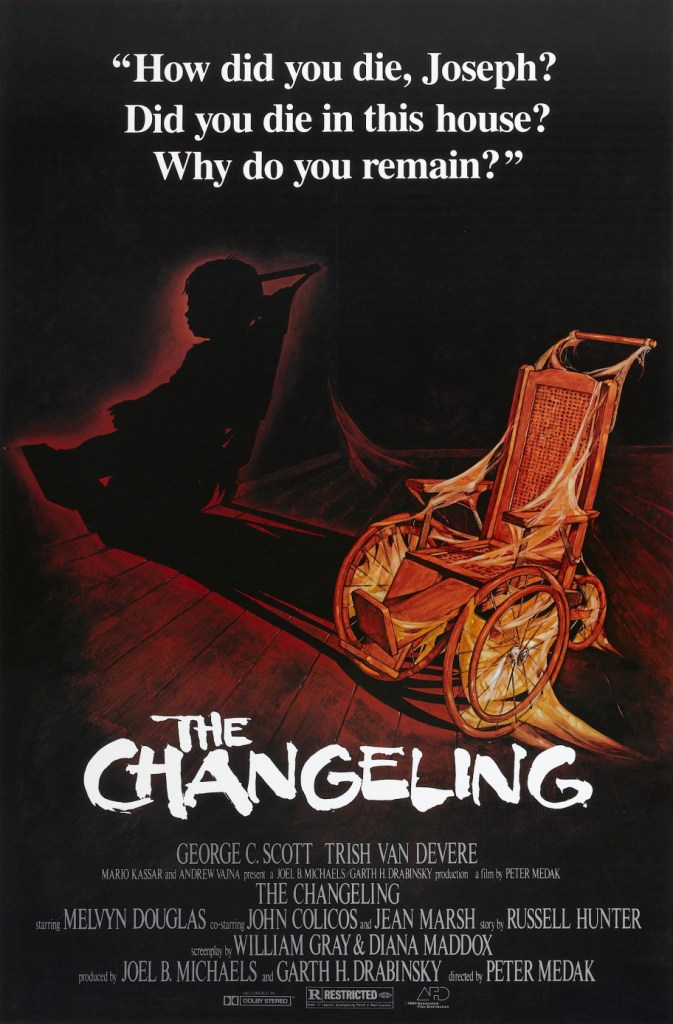
The Changeling (1980)

Directed by Peter Medak [Other horror films: Cry for the Strangers (1982), Species II (1998)]

Often quite atmospheric and somber by the very nature of the focal character’s background, The Changeling is a fantastically done ghost movie with an engrossing mystery and stellar cast. While not often outright frightening, it can get pretty unsettling, and the aforementioned mystery was on point.

That’s not quite what I thought about it when I first saw the film, but the important addendum there is that I was pretty young then, surely no older than 16. My tastes in horror probably haven’t changed significantly since that age (I loved slashers then, and I love slashers now), but my appreciation for some movies have definitely grown, and The Changeling is a good example of that.

Set in the beautiful city of Seattle (I’ve never been there, but I have had a life-long desire to move to Washington state), it follows a man haunted by the recent deaths of his wife and daughter, and upon moving into a Victorian house, has to deal with the inexplicable things people deal with when they move into houses that might be haunted.

For one thing, this can be an emotional ride following just George C. Scott’s character himself. Due to the recent death of his loved ones, there are some really touching scenes here, such as him finding the ball his daughter used to play with, or him sobbing in bed, probably with little will to go on. He definitely sold it, and though his character was one of maybe questionable motives, Melvyn Douglas really brought a lot of emotion to the final twenty minutes of the film also, especially during his face-off with Scott’s character.

George C. Scott is a familiar name, but I can’t really say I’ve seen much with him in it, which is a shame, as he does a fantastic job here, especially since it’s not too common for horror films to focus on solo older individuals. That might partially be why Trish Van Devere (who starred in The Hearse, which came out the same year but to much less fanfare, as deserved) was here – not that her character wasn’t welcome at times, but she wasn’t near as good as Scott or Douglass. And Melvyn Douglas (The Vampire Bat and, in 1981, Ghost Story, his final film before his death) – what a performance he put in at the end. Very moving and definitely worth it.

What really makes this movie work is the mystery of the ghost, and some of my favorite scenes are those of Scott’s and Devere’s characters trying to dig up as much information as they can, from reading microfilm of old newspapers at the library to going through land charts to figure out what piece of land has a well on it, it’s just a fun bunch of sequences leading to them going to some random house and, after some ghostly apparitions, finding bones in an old well. Just stellar.

Though almost an hour-and-fifty-minutes, I wouldn’t really classify this as a slow-burn, as enough of interest occurs throughout the film. I think some of the best parts are in the second half, to be sure, but there’s plenty of stuff throughout (including some delightful overextension of political purviews) that makes The Changeling a ghost film that is definitely worth seeing.

8/10

This is one of the films covered by Fight Evil’s podcast. Listen below as Chucky (@ChuckyFE) and I discuss this classic film.

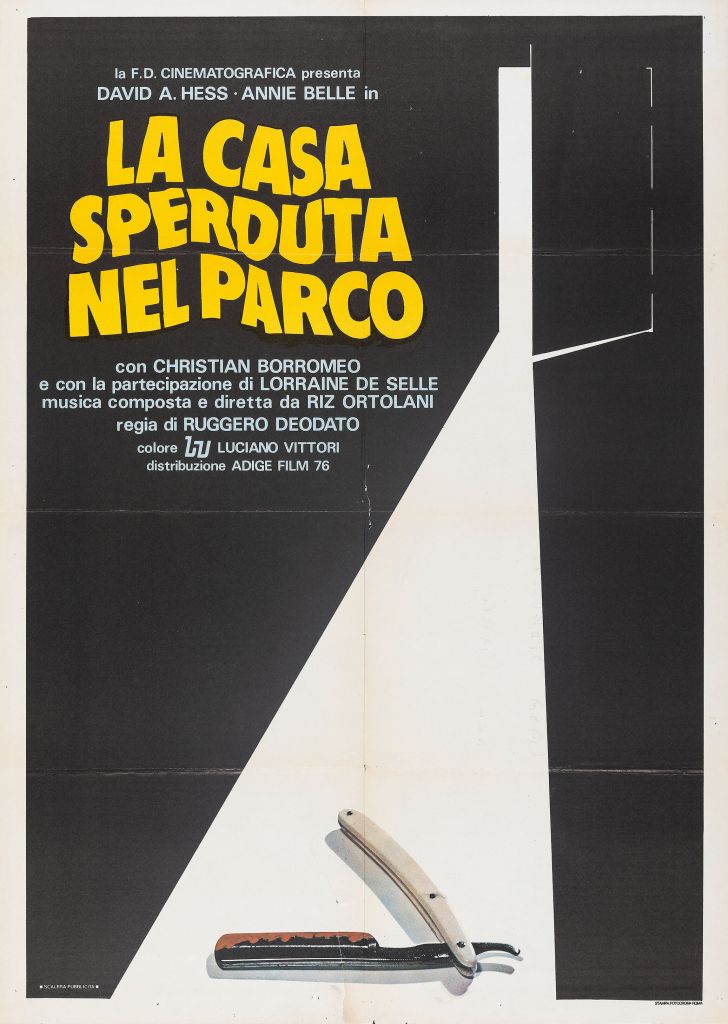
La casa sperduta nel parco (1980)

Directed by Ruggero Deodato [Other horror films: Ultimo mondo cannibale (1977), Cannibal Holocaust (1980), Inferno in diretta (1984), Camping del terrore (1986), Un delitto poco comune (1988), Minaccia d’amore (1988), Vortice mortale (1993), The Profane Exhibit (2013, segment ‘Bridge’), Ballad in Blood (2016), Deathcember (2019, segment ‘Casetta Sperduta in Campagna’)]

In many ways, this Italian movie (generally known under the title House on the Edge of the Park) is a by-the-numbers exploitation flick, and there’s not much here that’s overly surprising (even for a video nasty). At the same time, if you’re a fan of exploitation films, there’s no reason not to check this out, even if it is a little shallow.

For the majority of the film, some rich, rather snobby, people are humiliated, raped, and otherwise under attack from David Hess’ Alex and Giovanni Lombardo Radice’s Ricky. Hess, best known for The Last House on the Left, does a fantastic job, and for his role, Radice does pretty decent too. Few of the other characters really stood out, save Gabriele Di Giulio (who had The Purge’s Rhys Wakefield swag), Annie Belle, and Brigitte Petronio, but everyone did at least okay.

None of the rape sequences here were as revolting as the scenes from I Spit on Your Grave, but there’s an in-universe reason for that, as we find out toward the finale, so that’s probably not a problem (and certainly not something I’d complain about). Speaking of the end, it was nice for this movie to throw a little bit of a twist to us – it didn’t entirely make up for just how dull much of the previous time was spent, but it did throw a bit of meat into the story, and the ending itself was pretty decent.

That said, I just can’t see House on the Edge of the Park being a movie I go back to all that often. It’s well-made and well-acted for what it is, but what it is is a by-the-number exploitation film, and while maybe fun for drive-ins, and certainly possessing some foreign appeal (the soundtrack here was, as the kids say, dope af), it’s not something I particularly loved. It did get better toward the end (some solid nudity from the attractive Petronio helped), but I still think it’s a bit below average.

Certainly, though, if you’re into exploitation movies, and you’ve not yet seen this one, it’s worth a watch.

6/10

This is one of the films covered on Fight Evil’s podcast. If interested in hearing Chucky (@ChuckyFE) and I discuss House on the Edge of the Park, listen below.

The Shining (1980)

Directed by Stanley Kubrick [Other horror films: N/A]

I don’t want to spend a long time on this. I just want to get in and get out, while still being 100% honest about my views.

I don’t like the Shining. At all.

At best, I find the movie around a 5/10, certainly below average and definitely not a movie I’d want to watch too often. Now, to put my views in context, I don’t dislike the movie because it deviates from the novel. I’ve not read the novel as of yet, so unlike my views on the 1990 It mini-series, the book has nothing to do with it.

The concept in The Shining is interesting, but there are far too many unanswered questions come the end (Who was that old woman? Who was in that bear suit? Why was there a bear suit? Why was Torrence in that picture at the end? What was the use of ‘Tony’ at all? Why did Windy see those skeletons at the end, and that flood of blood meant what, exactly?) and I frankly didn’t enjoy much of this.

I’ll give it that Jack Nicholson does well here, though elements of his character bother me (such as the idea that he literally didn’t write a single word of his novel, and just automatically went into his “All work and no play makes Jack a dull boy” repetition). He did decent here. I didn’t like Shelley Duvall at all, though (she pretty much bothered me throughout the whole of the film), and Danny Lloyd did nothing for me (I don’t hold that against him, as he was a kid). And I gotta say, Scatman Crothers doesn’t do much for me either.

Both Philip Stone and Joe Turkel were good, but without an explanation as to exactly what they are (ghosts of previous people who do the hotel’s manipulation is my guess). Regardless, it goes back to unanswered questions, and while I know that the book might touch of some of these, the fact that the movie just doesn’t bother is something I find a problem with.

A lot of people love this movie. That’s cool. You do you. But I’ve seen this three, maybe four times now, and I never loved it, never liked it, never really enjoyed it. It’s a struggle to get through, and once I do, the best I can say about it is that it finally ended. The Shining isn’t a movie I enjoy.

And since I’ve probably pissed off some people already, let me just throw this in: the 1997 mini-series version of The Shining is a lot better in my eyes, and actually worth watching.

As for this one? Yeah, I can do without.

5/10