Lemora: A Child’s Tale of the Supernatural (1973)

Directed by Richard Blackburn [Other horror films: N/A]

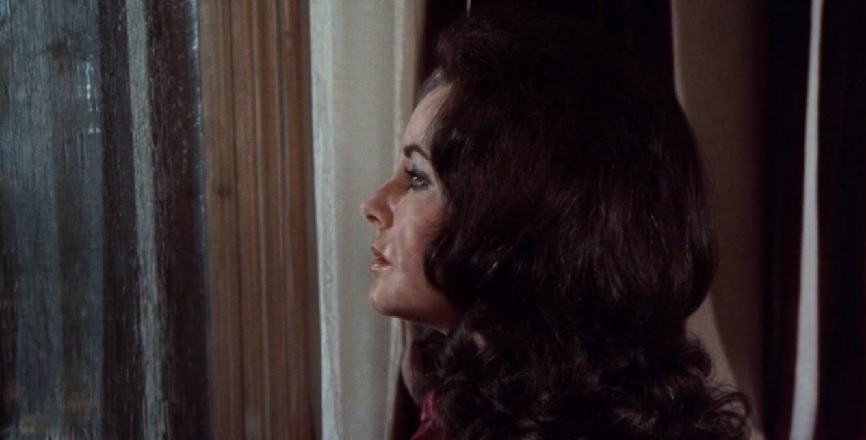
I’ve seen Lemora: A Child’s Tale of the Supernatural before, and I didn’t care for it. The fact that I was a teenager probably had something to do with that, and I likely wasn’t in a place where I could appreciate a slower, more sensitive movie like this one.

Well, after revisiting it, I have to say that I still don’t particularly care for it. It’s true that I can at least admit that I appreciate what it was going for, and certainly, I know the movie has its fans and generally positive reception (insofar as much as I hear this one being brought up), but I can’t say that I had a good time with it, because I didn’t.

Honestly, while the movie’s interesting, and the basic idea of a young girl going to a creepy town filled with vampires and seduction is one potentially worth exploring, I find much of the film so damn tedious. I wasn’t exactly falling asleep or nodding off, but more than once, I felt myself trailing off. That may say more about me than it does the film, but either way, this just isn’t my vibe.

I do like the end, though. To clarify, by end, I mean the final two sequences. That random all-out battle between the vampires and the werewolf/vampire things done in almost flash-freeze style was off-putting to the extreme, but afterwards, for the final couple of minutes I thought the movie showed promise that I’d not seen much of up to that point.

To be fair, I do think that Cheryl Smith (Laserblast) does a good job as a naive, religious kid. I certainly don’t fault her performance for my dislike of the film. I didn’t entirely care for Lesley Gilb, but that has far more to do with her character than it does her performance. The only other moderately relevant performance is that of Richard Blackburn’s (also the director of this film), and I think they could have done a bit more with his character had they wanted to.

There’s no doubt that this movie would definitely appeal to some. It’s not exactly a coming-of-age film, at least not in my mind, but it definitely has elements of that, and portions of the film can be quite creepy. The whole movie, in fact, feels dream-like, and the atmosphere is generally on point.

Despite all that, I keep going back to the fact I was bored for a lot of the film, and dangerously close to becoming disinterested. I can definitely understand why I didn’t care for the film the first time I saw it, as it’s an acquired taste, and after revisiting it with fresh eyes, I can say that it’s a taste I’ve still not acquired.

5/10

Night Watch (1973)

Directed by Brian G. Hutton [Other horror films: N/A]

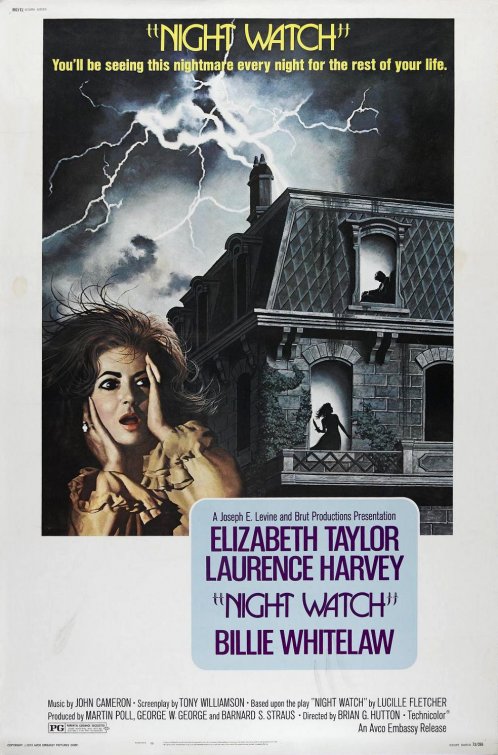
A nice take on what could have been a rather unoriginal story, Night Watch is a movie with a lot going for it. You have an interesting mystery, some stand-out performances, a killer finale, and the joys of British weather. It’s not an amazing movie, but I’ve always liked it.

And when I say ‘always,’ I mean I’ve just seen it twice, but I found it a decent watch. I think I liked it a bit more this time around, perhaps because, while I’ve seen it before, I actually forgot how the film ended, and seeing the movie with more mature eyes probably led to a deeper enjoyment.

Even so, I don’t think the movie’s perfect, by any means. The film does well at building up the tension Elizabeth Taylor’s character faces after witnessing a murder, yet having no one – her husband, her friend, the police – believe her. It’s good, slow tension. The movie is about an hour and 40 minutes, though, and while it shines during the finale, getting there can be a bit of a drag.

Elizabeth Taylor (Doctor Faustus, Who’s Afraid of Virginia Woolf?) did pretty well in her role. There are a few moments when I’m not sure her acting entirely nails it, but overall, she does quite well. Laurence Harvey (Welcome to Arrow Beach, House of Darkness) had a suave, debonair aura to him, and he was quite fun.

Billie Whitelaw (The Omen, The Flesh and the Fiends, Murder Elite) was never quite trustworthy, but a solid character nonetheless. Others who warrant a brief mention include Bill Dean, Tony Britton, and Robert Lang.

Most of this movie is mystery and build-up, but during the finale, there is a solid murder or two by stabbing, which I appreciated. It’s a short scene, and a small part of what is a very solid finale, but certainly worth it.

All of this said, I don’t think that Night Watch is a movie I’d consider that great. It’s still above average, but because of how long the film sometimes feels, it’s not one I imagine I’d revisit all that often, especially when other movies of a similar nature, such as Endless Night, are a bit more enjoyable.

It’s a good movie, worth a watch or two, but it’s not a movie I personally consider too special.

7.5/10

Blue Demon y Zovek en La invasión de los muertos (1973)

Directed by René Cardona [Other horror films: El espectro de la novia (1943), La mujer sin cabeza (1944), The Living Idol (1957), La Llorona (1960), Las luchadoras contra el médico asesino (1963), Las luchadoras contra la momia (1964), Santo vs el estrangulador (1965), Espectro del estrangulador (1966), Las mujeres panteras (1967), La mujer murcielago (1968), Las luchadoras vs el robot asesino (1969), La horripilante bestia humana (1969), Santo en El tesoro de Drácula (1969), Santo contra los jinetes del terror (1970), Santo en la venganza de la momia (1971), Capulina contra los vampiros (1971), El increíble profesor Zovek (1972)]

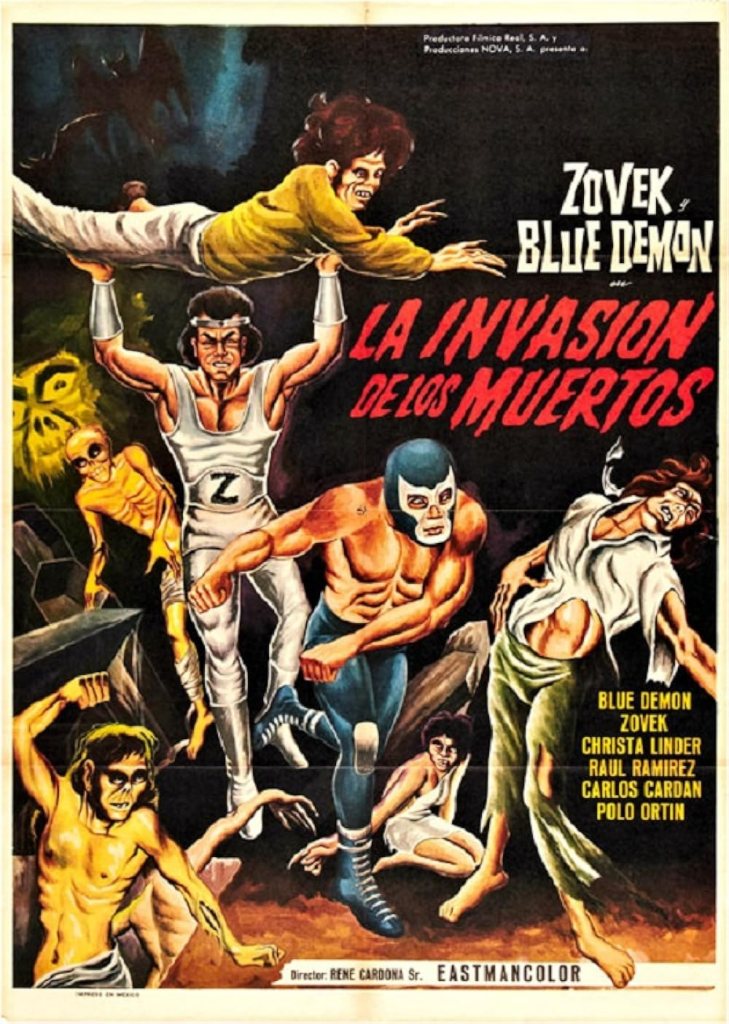
Known in the USA as The Invasion of the Dead, Blue Demon y Zovek en La invasión de los muertos is a movie that is utterly unlike most things I’ve watched. That alone doesn’t make it bad, but even so, this isn’t that good.

Now, I’ve seen it once before, but like two other Mexican horror films in the same vein I’ve seen (Santo contra la magia negra and Santo el enmascarado de plata y Blue Demon contra los monstruos), I saw this without subtitles, which, as you can guess, makes it rather hard to tell what’s really going on. This time around, I understood more. Well, sort of – whatever the Hell Zovek was rambling on about most of the time, I didn’t quite get – but otherwise, I certainly got more clarity.

If you don’t know either Blue Demon or Zovek, I couldn’t say I blame you. This is a luchador film – a film that stars Mexican wrestlers of the Lucha Libre variety. Blue Demon, or Alejandro Moreno, wears a mask throughout, and Zovek has a headband he rarely removes. As far as I can tell, at least from this film, Zovek is both a mentalist and an escape artist, along with being talented in hand-to-hand combat, while Blue Demon is a historian/scientist who runs some information agency, and also knows hand-to-hand combat.

Oh, it’s also worth mentioning that, as the film is known here as The Invasion of the Dead, this is a zombie movie. Sorry – when a film has random things like wrestlers going on, some of the more important pieces get pushed to the side of my mind.

The basic idea of the film is that an object is sent from alien beings to Earth, and this object (a sphere) brings the dead back to life. Apparently Professor Zovek (his full title) believes this to be due to an old calendar that predicts calamities. Oh, he also, toward the end, was attempting to contact the master who trained him telepathically, but his master couldn’t be reached, which would have been a good sequel hook, had Zovek not died in 1972 (at 31 years old) from a helicopter crash.

Actually, it’s on that note that I should also mention that, unlike what you might expect from the title, Zovek and Blue Demon get virtually no on-screen time together. This is perhaps because of Zovek’s untimely death, and Blue Demon being pulled in to finish up the movie. To be fair, the movie doesn’t feel too disjointed due to that unfortunate incident, but it does go a long way to explain that Blue Demon doesn’t have any action sequences until the final 15 minutes of the movie.

When it comes to the zombies, well, I had to admit I wasn’t impressed. For the most part, the only way one could tell they were zombies was due to either their blank stare or rigid way of walking. No make-up went to making any of them look particularly zombie-esque. Hell, even Sugar Hill threw cobwebs on their faces, but no luck here. Related, there’s about zero special effects, unless you want to count the occasional fire. That’s not that surprising, given this was a Mexican film, but even so, a zombie movie without any blood always struck me as sad.

As far as the performances go, it’s really hard to judge. I suspect that, for the most part, Blue Devil (or, again, Alejandro Moreno) and Professor Zovek just played themselves. Zovek got much more screen-time than did Blue Devil, which I’d say was a good thing, as Blue Devil had a subordinate who was used exclusively for ‘comedic effect’ (played by Polo Ortín), and he got old pretty quick. Speaking of pretty, Christa Linder (Night of 1000 Cats, The Incredible Invasion, and The Drifter in the Rain) didn’t have a lot to do, but she did wear some tight jeans and a tight shirt, so I had little to complain about.

Horror-wise, it’s rather hard to recommend the film. Sure, some of the sequences in the second half were fun, such as Zovek fighting off a zombie attack in a cave (twice, if not three times, he picks up a zombies and throws them back to the group), or Blue Demon fighting two random werewolf-type guys (don’t ask me where they came from – I honestly have no idea, they just popped up one scene), but those scenes struck me as more fun than horror. There was a cool scene of zombies slowly walking through a graveyard, but otherwise, this movie never felt all that spooky at all, which, while not necessarily surprising, was disappointing.

As it was, I was happy to see The Invasion of the Dead again, especially as I had subtitles this time around. I imagine some of you know how tedious it can be to watch a film in a different language with no subtitles, but if you don’t, I can personally attest to it rarely being a fun time. In this case, even with subtitles, the movie was hella slow, and I didn’t have that much fun with it, save a scene here or there.

If you’re interested in seeing Mexican horror films, or early post-Night of the Living Dead zombie films, this might be worth checking out, but otherwise, I wouldn’t really urge people to do so.

4.5/10
Flesh for Frankenstein (1973)

Directed by Paul Morrissey [Other horror films: Sangue per Dracula (1974), The Hound of the Baskervilles (1978)] & Antonio Margheriti [Other horror films: Il pianeta degli uomini spenti (1961), La vergine di Norimberga (1963), Danza macabra (1964), I lunghi capelli della morte (1964), Nude… si muore (1968), Schreie in der Nacht (1969), E Dio disse a Caino… (1970), Nella stretta morsa del ragno (1971), La morte negli occhi del gatto (1973), Killer Fish (1979), Apocalypse domani (1980), Alien degli abissi (1989)]

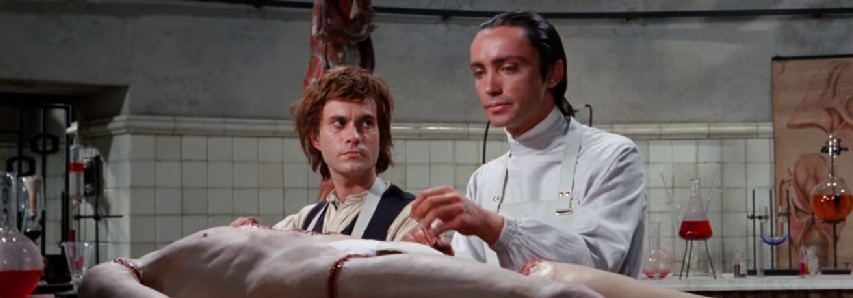
Flesh for Frankenstein, sometimes commonly known as Andy Warhol’s Frankenstein, isn’t a movie I enjoyed at all. It had some disgusting gore and sexual depravity, which is all good and well, but I personally found the acting quite horrid and the story rather meandering.

As it is, I’ve actually seen this film before. I can’t imagine under what circumstances, though – I couldn’t have been older than 14, as I barely remembered any of this. And in fact, the idea that I actually sat through this movie at that age, if accurate, is a testament to my devotion of the genre. Well, either that, or the idiocy of my youth.

Yes, that may well sound like a dig at the movie. I know it’s a film that some people do rather enjoy, and I can partially see why. The gory sequences are pretty solid, and even I will admit that the finale was overall enjoyable. Some of the dialogue is rather quotable (from “You filthy thing!” to the classic line “To know death, Otto, you have to fuck life in the gall bladder!”), and certainly the horrible acting can add to the charm, but even so, I generally found the film tedious.

Udo Kier (who I know from films such as Pray for Morning, Love Object, and Shadow of the Vampire) was just awful in this. Half the time, he literally reminded me of Tommy Wiseau, which was amusing, but probably not good. Just as good was Arno Jürging (Andy Warhol’s Dracula). Joe Dallesandro (The Gardener and Black Moon) was at least fine, and while I couldn’t stand her character, Monique van Vooren was serviceable, at least when she wasn’t sucking on someone’s arm (I’d say it makes sense in context, but I’m not sure that it does).

Certainly there are some WTF scenes, such as one where the Baron is rather involved with a corpse (after shouting at his assistant to look away, calling him a filthy thing), and that scene certainly is disturbing. It leads to the classic line about life and fucking gall bladders, so there you go. There’s certainly plenty of nudity and gore here, and while that might help in some cases, it doesn’t really impact things much here.

Don’t get me wrong – I liked seeing the gore, and it’s especially solid near the end, in which a door is slammed on a character’s hand, cutting it off (and that dismembered hand is later thrown at another character, amusingly enough). That was quality gore, as was an amusing decapitation early on in the film. The blood certainly runs free in the film, which is far from a bad thing.

The problem, though, is that much of the film, save the enjoyable finale and tense final minutes (which I rather enjoyed) feels like a soap opera. There’s a husband who has no time for his wife, who is a sex maniac, and thus seeks companionship elsewhere, such as farmhands. The farmhand in question has a friend who is considering becoming a monk, so he tries to get that friend laid in order to show him what he’ll be missing. Oh, and there are children mucking about also, but they aren’t really important until the final twenty minutes of the film.

Oh, also worth mentioning, the husband and wife are also brother and sister. I was confused at first, wondering if I was hearing that right, but it became obvious that I was indeed accurate in my hearing. Talk about a messed up family, what with some Targaryen shit going on here.

I can see why Flesh for Frankenstein would appeal to some people, but I just couldn’t get that much enjoyment out of it, save a few scenes. It’s not a movie I found utterly unredeemable, but I really didn’t care for a lot of it. I felt so much of it was tedious, and overall, it wasn’t what I’d personally call a good time.

5/10

The Crazies (1973)

Directed by George A. Romero [Other horror films: Night of the Living Dead (1968), Hungry Wives (1972), The Amusement Park (1975), Martin (1976), Dawn of the Dead (1978), Creepshow (1982), Day of the Dead (1985), Monkey Shines (1988), Due occhi diabolici (1990, segment ‘The Facts in the Case of Mr. Valdemar’), The Dark Half (1993), Bruiser (2000), Land of the Dead (2005), Diary of the Dead (2007), Survival of the Dead (2009)]

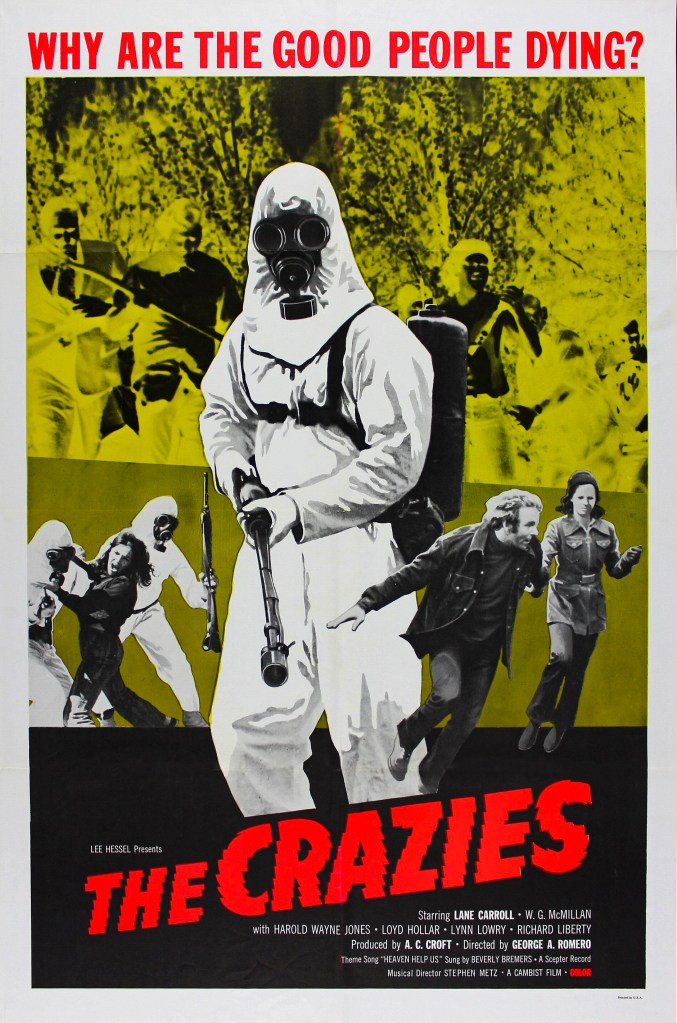
While The Crazies isn’t a favorite of mine, I always found it a unique take on a not too uncommon story, at least nowadays. It’s a bit meandering at times, but it’s overall solid, and has some strong elements.

It’s hard to pinpoint the antagonistic force here, which is partially why I find the film interesting. Certainly those infected with the virus would count, but the army invading a small Pennsylvania town would count also, and while they were following orders, they were also stealing money and other things (such as fishing poles) from private citizens, so the soldiers here are also sinister. So is the military sending the orders out – a plane crashed that had a bioweapon on it, and because of “national security” they need to round up American citizens like cattle.

Sometimes this is a frustrating movie to watch. It’s like a much more focused version of The Stand. I get needing to contain a virus, but of course if you don’t give adequate information to people, the people will fight back. Those soldiers who were killed throughout the film didn’t deserve that, but the higher ups in the military certainly did, and the fact that, as far as the film itself went, we never saw the story get out to the media about how a bioweapon created by the USA caused this, so appropriate blame could be placed on the American government, was sort of disheartening (not that you could expect anything less from the guy who ended Night of the Living Dead as he did).

My views on unjust military takeovers to cover their own mistakes aside, there are times when The Crazies doesn’t feel exactly well-written. We have our protagonists (Will MacMillan, Harold Wayne Jones, and Lane Carroll) and we have our insight into the military’s plans (mostly from Lloyd Hollar), but there are times when things don’t really feel focused. There’s action throughout, mostly revolving around the townspeople defending themselves from the invaders, but there’s still a bit of a dry aura at times here.

Few of the actors and actresses here stood out. I liked Will MacMillan as a lead, especially toward the end, and Harold Wayne Jones got some good scenes in, but it’s Lloyd Hollar’s role as the military colonel I found most interesting. I think he was trying his best with the situation thrown at him, but incompetence from the higher ups just made his job functionally impossible. I felt quite bad for Richard France’s character, and Lynn Lowry (one of the few to make a career of movies, as she was in films such as Beyond the Dunwich Horror, Shivers, and Basement Jack) had some solidly creepy moments.

It’s not at all a gory movie, and to be clear, it’s also rather low budget (though what George A. Romero was able to do with the budget, making a film with a rather fast-paced and tense plot, was impressive). There is a fun scene in which a bunch of townspeople attack the soldiers, one of them attacking with a pitchfork, stabbing a soldier’s wrist. In another scene, there’s a pretty solid headshot. Most of the violence here is due to gunfire, so there’s not many stand out scenes.

Which really applies to the movie as a whole. I’ve only seen it twice now, but despite it not being a great film, I also sort of liked it. It occasionally has a similar vibe to Night of the Living Dead, though as I said, this is significantly faster paced. Portions of the finale are quite tragic, but in a quiet way, and I think that, despite the best efforts of some involved, containing the biological weapon Trixie may not be something that’s even accomplishable.

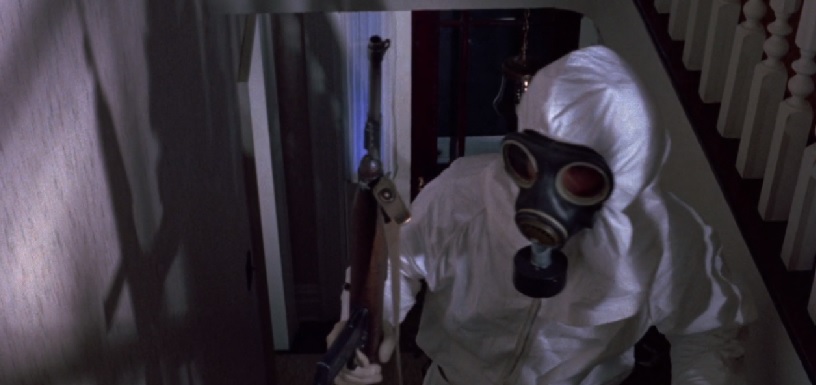
Definitely a lesser work by Romero, but one that does have some charm, I think The Crazies is really around average. I rate it a little higher, due to the rather creepy suits the soldiers wear throughout, but this certainly isn’t a masterpiece in my eyes.

7.5/10

The Last House on Dead End Street (1973)

Directed by Roger Watkins [Other horror films: Shadows of the Mind (1980)]

This is one of those films that I’ve known about for a long time, and perhaps more than most films from the 1970’s, this one has reached a somewhat mythical status. There’s plenty in the film that scholars like to analyze, and perhaps it’s a slice of exploitation that plenty might end up having an okay time with, but I found the whole thing somewhat untenable.

I don’t have objections to the trashy, exploitative films of the 70’s – The Last House on the Left has a lot going for it, for instance. In this case, though, I have say that I found very little in The Last House on Dead End Street to enjoy, and in fact, if I’m being more honest, the movie just gave me a headache, and the fact I got through it actually surprises me.

Toward the end, there is a scene in which a woman is tied down on a table, and her face gets sliced at with knives, and it looks like both of her legs were cut off. It was probably the most striking gore in the film – we did see organs pulled out of someone earlier, but H.G. Lewis made The Wizard of Gore in 1970, and that actually did make me squeamish, whereas nothing here had that effect. If you want to see the movie for the gore, that’s fine, because you probably won’t be disappointed, but it’s definitely not the case in which the gore makes up for the rest of the film.

Amusingly, it’s a somewhat short movie (at least in the currently-existing copy – this was originally around three hours, but a lot of it is lost), running at 78 minutes, so it shouldn’t be too difficult to engage someone. Obviously, I can only speak for myself, but I found much of this so damn tedious, and not only that, but there’s little enjoyment in seeing anything in the film, which just made watching this such a struggle in a way that few movies tend to be for me, and in a way I find difficult to put into words.

I’m not saying that the movie isn’t without value, as most, if not all, movies have some value. It’s just that, on a personal level, The Last House on Dead End Street fundamentally disinterested me, and though it’s been on my radar of movies to keep an eye out for, I have to say that I didn’t have a good time whatsoever with this movie, and would simply recommend it for fans of exploitation.

3/10

The Wicker Man (1973)

Directed by Robin Hardy [Other horror films: The Wicker Tree (2011)]

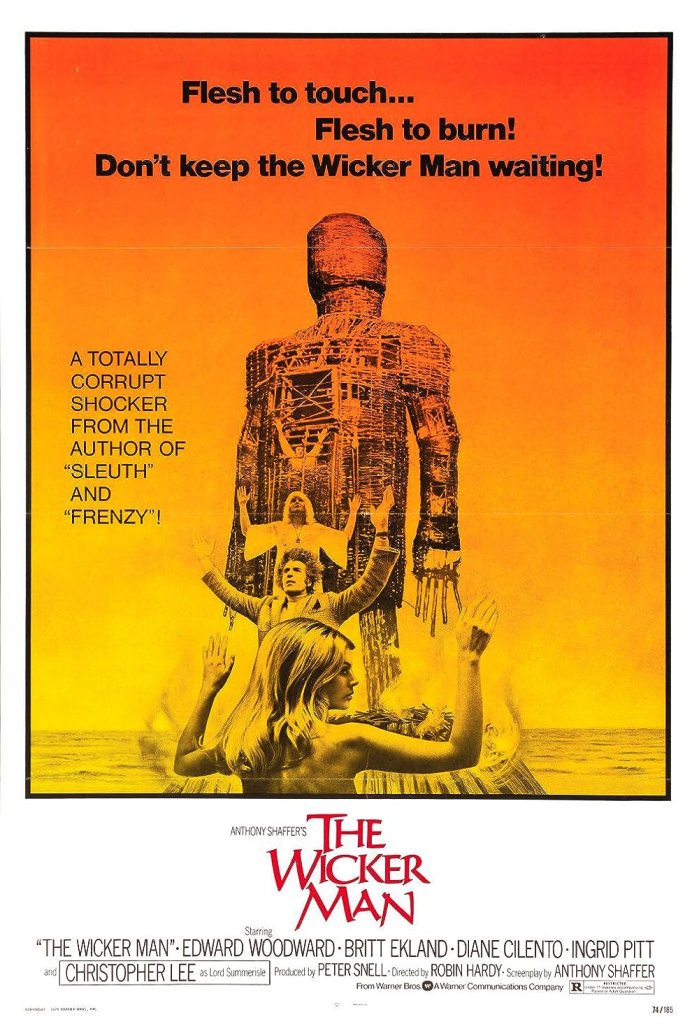
Perhaps not just one of the most unique horror films of the 1970’s, but of the genre as a whole, The Wicker Man is a highly entertaining and occasionally disturbing film, especially, I imagine, if you’re of a conservative religious bent. It’s a classic for good reason, and definitely a movie worth looking into.

Luckily, I don’t need to say that. Most horror fans at least know of the film, and while it may not be to everyone’s tastes (an online friend of mine complained about the music that permeated the first half), if you go in without knowing much, I doubt it’s a film that will easily be forgotten.

Personally, I’m a big fan of the story, and while some might not think much of the mystery here (if for no other reason, cultural osmosis), I find the film entertaining, especially on a sociological level. See, the main character, played by Edward Woodward, is a police officer, but more importantly, a devout Catholic, and when he investigates the disappearance of a girl on a small island, is rather turned off by the people’s religious beliefs, which he sees as pagan.

And to be sure, the islanders are of a Celtic pagan brand – they have far different views on love and sexuality, on death and rebirth, on what constitutes serving the gods they believe in. It’s a beautiful culture shock, seeing a very Catholic individual being faced with what he perceives as immodesty and sacrilegious beliefs (he even goes as far as to claim the beliefs of the islanders a “fake religion,” as if Christianity has any more basis in truth).

It’s here that I should state what I’ve likely mentioned before, as it’s relevant in this case. I’m pretty much a life-long atheist. I was raised Catholic in some manners, but the beliefs never stuck, and I’ve been one who thinks far higher of logical thought than words in old books. I definitely don’t care for the worldview of Woodward’s character, and I also don’t care for the worldview of the islanders.

The difference is, aside from some aspects of their worship (such as what is demonstrated during the fantastic finale of the film), I can fully see why the islanders would hold the beliefs they do. Their religious beliefs don’t seem to be oppressive (or anywhere near as oppressive as the Christian faith tends to be), and I appreciate how their society is sexually open, as that seems a far safer way to be than a society that advocates abstinence.

What I’m trying to say is that while I don’t hold to either belief system, I can see the appeal of the islanders, and I can’t fault them for any of their actions. It’s a fascinating topic to see tackled in a film, and it just gives the film such a unique and folksy feel.

Edward Woodward (Incense for the Damned, The Appointment) did amazing here, and I loved his discussions with Christopher Lee’s character. Lee (The Curse of Frankenstein, Dracula, Taste of Fear, The Creeping Flesh, The Skull, I, Monster) is of course great in most movies he’s in, but I’ve never seen him have as much fun as he does here. From beginning to end, he seems like he’s having a hoot, and who can blame him? I also enjoyed both Britt Ekland (Demon Rage and Endless Night) and Lindsay Kemp here.

One of the aspects that make The Wicker Man a memorable movie is the consistent use of music. A soft song titled “Corn Rigs” by Paul Giovanni plays a handful of times, which is a peaceful piece. A bawdy barroom song titled “The Landlord’s Daughter” was a hell of a lot of fun, and to celebrate the ever-important May Day, there’s the rather catchy “Maypole Song” (“and on that bed, there was a girl, and on that girl, there was a man”). I love the music here, and while I can imagine it might turn some people off (such as my aforementioned friend), it lends the movie such a quality atmosphere.

As my hombre Ser Bronn said in Game of Thrones, “it’s all about the ending.” Of course, that’s not accurate here, and the whole of the movie is engaging, but it’s the ending that has traumatized and shocked people. Most horror fans, if not most movie fans, probably know the ending even if they’ve not seen the film, but even so, it’s a fantastic finale and it knows what it’s doing.

For an added bonus, while I don’t usually mention other reviews, I did want to take a few moments to point out two other (more comprehensive) reviews for The Wicker Man, one from Mario Lanza, another from 1000 Misspent Hours (a site I often gravitate towards). Both of these reviews are well-worth reading, and they both do this movie justice.

Odd as it may be, The Wicker Man is one of my favorite 70’s horror films. I’ve only seen it twice, now, and I’ve not even seen the uncut version (which apparently runs 99 minutes, according to IMDb), but it’s such a striking and entertaining film that it’s a must-see for fans of the genre, and even if you’re one of the individuals who can’t get into it for some reason or another, at the very least, you have a great conclusion to look forward to.

9/10

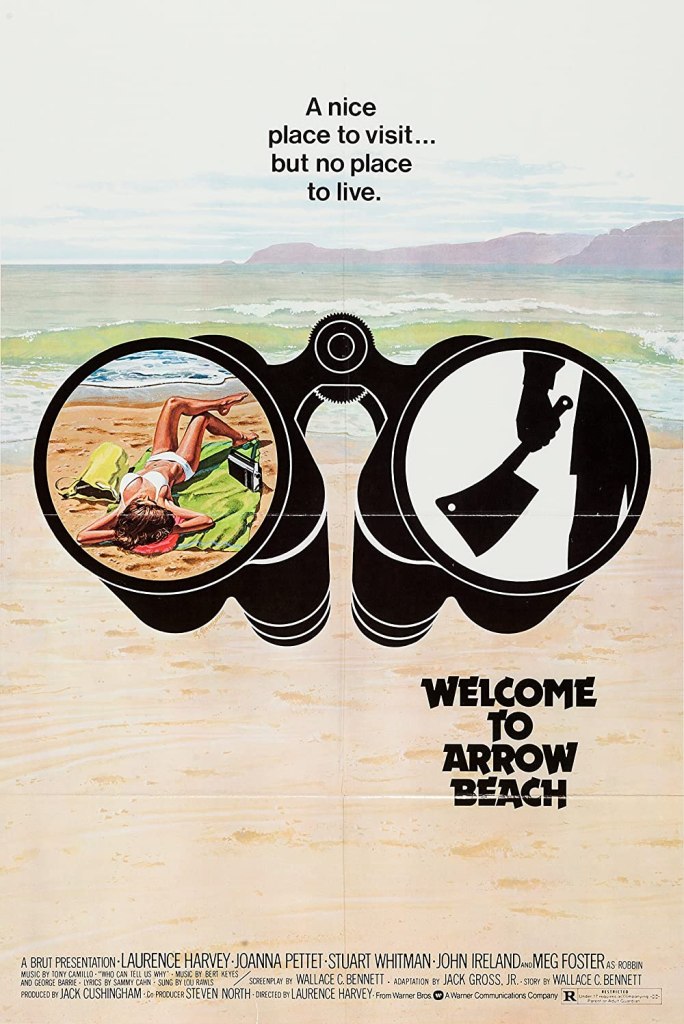
Welcome to Arrow Beach (1973)

Directed by Laurence Harvey [Other horror films: N/A]

I didn’t really know anything about what to expect going into Welcome to Arrow Beach, and now that I’ve seen it, I’m having somewhat of a difficult time deciding how I feel. On the one hand, the film is a bit slow, and I don’t know if the three-minute finale makes up for the sluggish nature of the first hour and a half. On the other, I did sort of dig the story and what they were going for.

Honestly, it reminded me a bit of two other films from the first half of the 1970’s, being Terror House and Warlock Moon. Both were a bit slow, both possessed a very 70’s free vibe, and both dealt with young women getting into a situation that’s not easy to escape from, if escape even is possible. Welcome to Arrow Beach fits that perfectly.

The story is simple enough – a hitch-hiking young woman stays over at someone’s beachside house, and finds out that the owner isn’t the most pleasant individual. But when she escapes and tells the police, because she’s a free-love hippie type, credibility isn’t her high point (it doesn’t help that drugs are planted on her). And after a few more things happen, and she decides to go back to the house to get some proof.

Really, for as much time is spent on somewhat tedious scenes (for instance, Stuart Whitman as the deputy is beginning to believe the hippie girl’s story, but that subplot never goes anywhere), I shouldn’t feel as defensive as I do about the film. There’s only three action-packed sequences, and while they’re all good, I don’t know if it’s enough.

Meg Foster did a great job as the main character. Foster (The Legend of Sleepy Hollow, The Wind, They Live, Stepfather II, and The Lords of Salem) really has that free-love spirit I associate with the hippie subculture, and her referring to her breasts as “secondary sexual characteristics” pegged her for an amusing sort. This film is pretty early in her career, and I think for a younger actress she did really well here.

Laurence Harvey (who died in late 1973, and also appeared in Night Watch) played a cool cat out to make a killing (for any fans of the DC comic book series The Atom, specifically the 1960’s series, #27, you might catch that highly obscure reference), and Harvey did a good job, though I wish we got a bit more backstory on him. Ditto Joanna Pettet (The Evil and Double Exposure), who played Harvey’s sister.

I like the two main cops – John Ireland and Stuart Whitman. Ireland (I Saw What You Did, Miami Golem, Satan’s Cheerleaders, Day of the Nightmare, Terror Night, The House of Seven Corpses, and The Graveyard Story) was fun with his rugged, conservative cop route (in fact, he’s running for re-election as sheriff, and gets asked by a student paper his political beliefs – anti-porn, anti-abortion, anti-fun), and with more humanity, there’s Whitman (Revenge!, Vultures, Eaten Alive, and Night of the Lepus), who does pretty well, but again, his story doesn’t really go anywhere. Two others, being Janear Hines and David Macklin, stood out as well.

Welcome to Arrow Beach did do a few interesting things. One of the kills was during a photo shoot, and in little flashes, it goes from a woman being photographed to being chopped apart (we don’t see the extent of the damage, but there is definitely dismemberment involved). Another character opens a refrigerator, and seeing a bag of hamburger, has a flashback-type thing – this flashback isn’t the whole screen, though, it’s superimposed on the hamburger. It’s not amazing, but it did give this film a few unique portions.

This is a really hard film to get a grasp on. I liked a decent amount about it, and it was mostly engaging, but at the same time, I really think there should have been more meat to the story, Some background on Harvey’s character would have been nice (all we get were a few disjointed flashbacks), but even so, if you liked the vibe of films like Warlock Moon and Terror House, this is worth seeing.

7/10

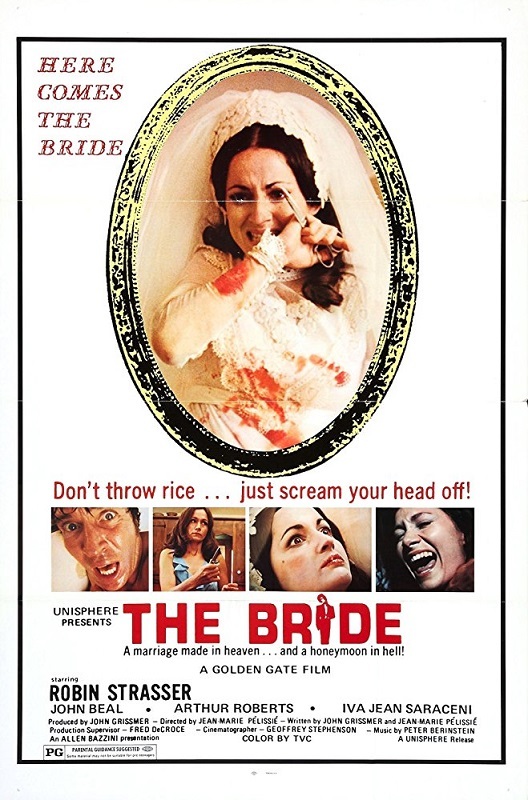
The House That Cried Murder (1973)

Directed by Jean-Marie Pélissié [Other horror films: N/A]

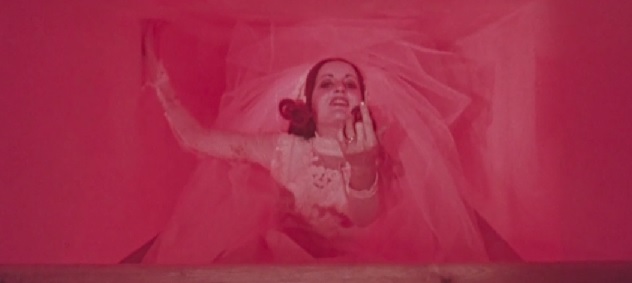
Known under alternative titles such as The Bride and The Last House on Massacre Street, The House That Cried Murder was a film that I didn’t really know much about going into. I may have vaguely heard the title before (or at least one of them), but I didn’t know anything about it, and though the movie wasn’t really good in most conventional senses, I did think there was occasional charm to be had here.

Some of this, perhaps even a lot of it, has to do with the final twenty minutes, in which the film subverted expectations I held from the very beginning of the movie, which both surprised and impressed me. I really wasn’t expecting to be surprised by some low-budget 70’s movie with less than 300 votes on IMDb at the time of this writing, but here I am, so credit where credit’s due.

Really, the route this story took was sort of different. It possessed those quality 70’s sensibilities, and even the fact that the print I viewed was quite far away from stellar probably helped the vibe of The House That Cried Murder. Also moderately working in it’s favor is the fact the film is pretty short, lasting a mere 75 minutes (which at times still feels long, but more on that shortly). None of this is to say the movie is great, or even good, but like I said, it can be charming.

The unfortunate thing is, though, save the final twenty minutes (and if we’re being generous, final thirty minutes), there’s not really that much here to applaud. The rest of the film is rather dry (a fate that’s not entirely uncommon of movies from this time period), and while not painfully dull, there certainly wasn’t much to really help keep your attention. It picks up nicely, no doubt, but like Demented, getting there might be more of a hassle than you’d hope.

Arthur Roberts did okay as a rather unlikable character. I mean, he didn’t do great, but I don’t think most central performances here were that striking, so I wouldn’t take offense to that. And related to that sentiment, Iva Jean Saraceni’s short screen-time didn’t do that much to endear me to her character. Robin Strasser (the Bride in the film) was shaky too, but given what we learn about her character, I don’t really mind that. Out of everyone, I think John Beal (who played Strasser’s father, and starred in 1957’s The Vampire and 1939’s The Cat and the Canary) did the best, and was actually a character you could sympathize with.

There were some okay scares toward the latter half of the film, such as a nice surprise left in someone’s refrigerator and a tense walk up the stairs, but the movie never really gives us too much in that department. What’s more memorable, really, are the final five minutes or so, which seemed almost ahead of it’s time. I don’t personally know if I loved that ending, but it was at least unique, so again, credit where credit’s due.

As okay as the finale was, though, I don’t think credit is due that often. I certainly found The House That Cried Murder watchable enough, and occasionally enjoyable enough, but it’s sluggish pace during the first half is pretty damaging, and I just don’t know if the conclusion really saves it. It may well be worth at least one watch, but I don’t see this becoming a favorite of too many people.

5.5/10

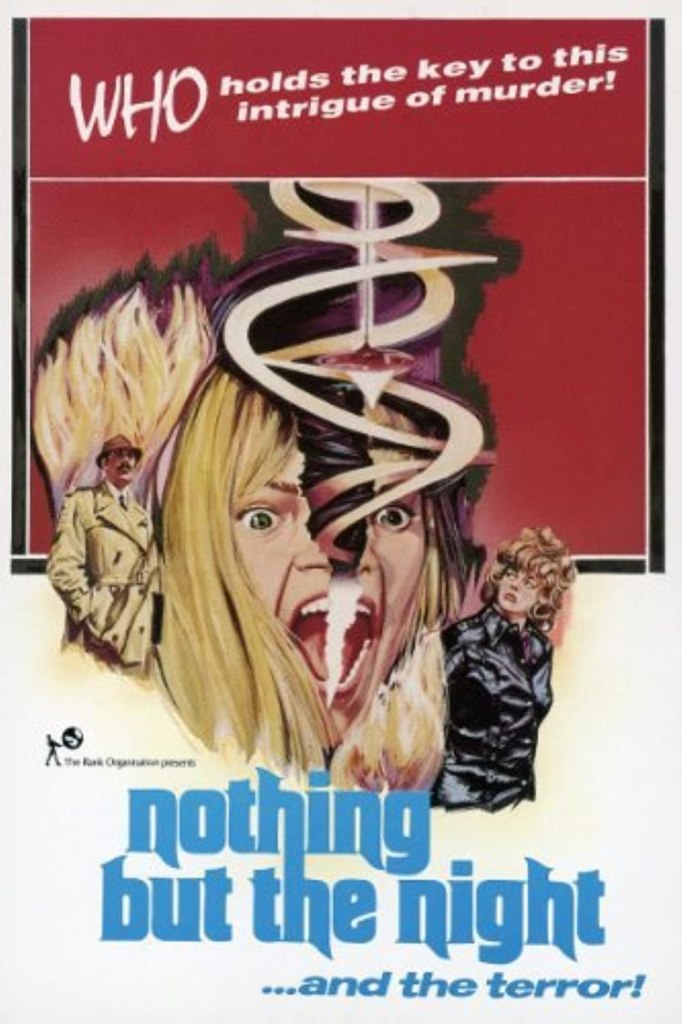
Nothing But the Night (1973)

Directed by Peter Sasdy [Other horror films: Journey Into Darkness (1968, segment ‘The New People’), Taste the Blood of Dracula (1970), Countess Dracula (1971), Hands of the Ripper (1971), Doomwatch (1972), The Stone Tape (1972), I Don’t Want to Be Born (1975), Witchcraft (1992)]

Based on the 1968 novel of the same name by John Blackburn, this British film can be quite engaging at times, but I think that some elements hold it back, such as the conclusion and the eventual answer to some of the questions the ongoings in the movie put forward.

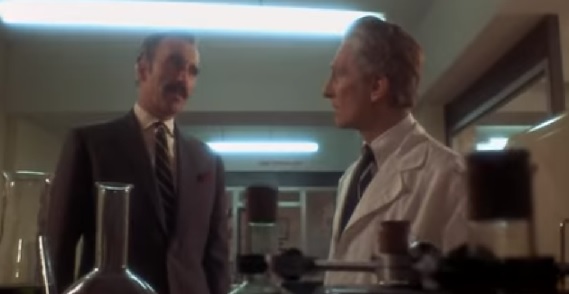
Certainly anytime that Christopher Lee and Peter Cushing share a scene, it’s a good time (previous to this film, they appeared together in movies such as The Curse of Frankenstein, Dracula, The Hound of the Baskervilles, The Mummy, The Gorgon, Night of the Big Heat, I, Monster, Dracula A.D. 1972, and Horror Express), and that’s no different here. I’ve always personally preferred Cushing, but both of these actors put in great performances here, story issues aside.

Save those two, it’s hard to really point to anyone else that stands out. Georgia Brown (who later appeared in a segment of Tales That Witness Madness) was decent, but I didn’t think the finale really gave her character a lot to do. I didn’t love Diana Dors (Craze and Berserk) character, but she also did okay. Despite his short time on-screen, Keith Barron was reasonably solid, and of mild interest, though he’s difficult to pick out, Michael Gambon appears in a few scenes also.

If the movie could survive from solid performances alone, we might be talking about an early 70’s classic, but unfortunately some story elements suffer here. I definitely enjoyed the mystery that they had going on, and I did enjoy some things about the finale (which almost felt like The Wicker Man, though nowhere near as epic or memorable), but the solution to the mystery just didn’t interest me that much, and there’s also a bit of over-explanation toward the end by an antagonist, and it just felt off. One of the final scenes is great, but it’s not a flawless ride getting there.

Of course, being the sheltered American lad that I am, I enjoyed the British and Scottish accents and countryside, and though I didn’t care that much for the film overall (which is, on a side-note, about the same reaction I had to this one the first time I saw it some years ago), it still has that British charm to it, which may not amount to much when it comes to rating, but it was something that I appreciated.

Generally, I think that Nothing But the Night is okay. Below average, no doubt, but still worth seeking out if, at the very least, you’re a fan of Cushing or Lee (or the pair of them together). For me, I didn’t dig where the story went, and I think to an extent, things fell apart a little toward the end, but it’s not a movie that I’d never give another chance to, if only for the names involved.

6/10