Weekend of Fear (1966)

Directed by Joe Danford [Other horror films: N/A]

Okay, this is an interesting one.

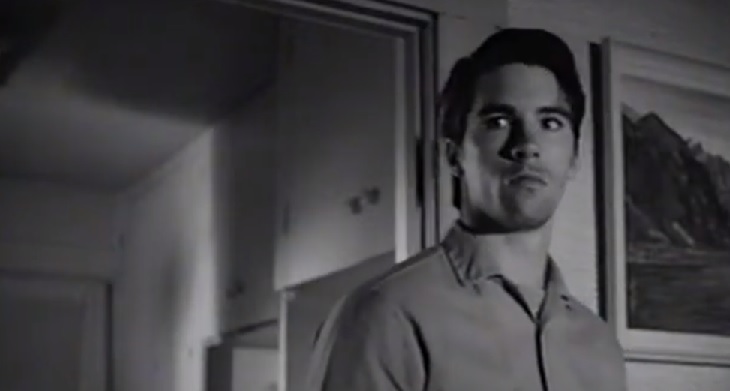
Weekend of Fear has a pretty generic plot – a young woman (Mikki Malone), following an argument with her fiancé (Tory Alburn), finds that she’s being stalked by a mysterious man (Kenneth Washman). And that’s it – it’s a short film, running at about 65 minutes, and much of it is Malone’s character trying to hide from Washman’s, all the while wondering what the threatening man wants.

Based on that plot, Weekend of Fear doesn’t have much going for it, that is, unless it was overly suspenseful, and I hate to say it wasn’t. It’s the execution of that plot that makes the movie stand out more. It doesn’t make the movie good – it just makes it noteworthy.

What’s also noteworthy is the fact that this was a lost film for a long time. I watched what seemed to be a VHS rip on YouTube, so how this was released on VHS at one point, yet was lost for decades, is beyond me, but there you go. So lost was this film that, even now, after it’s been unearthed since June 11th, 2021 (the date of said YouTube video), it has only 22 votes on IMDb, and watched by only 19 members of Letterboxd.

So we have a previously-lost black-and-white film with a somewhat basic plot, and the way they chose to do the dialogue gives it an extra notable feature. See, most of the dialogue here is first-person narration, being the thoughts of the main character (Mikki Malone). A couple of other characters have their thoughts examined, but it’s 98% Malone’s.

What dialogue isn’t first-person thoughts is obviously dubbed afterwards, and it’s always awkwardly done. There’s a “conversation” at the end of the film that doesn’t feel remotely like a real conversation because of this.

It’s an odd, clearly lower-budget film. I appreciate that it has a regional feel, and seems to have been filmed in California, but that doesn’t make the film itself any better. Even at 65 minutes, it felt like it was dragging, and the suspense definitely felt muted, partially, perhaps, because of the way they went with audio (not that there was much in the way of dialogue, and without first-person narration, this could have been a silent film).

Even another thing worth noting – while I do think this can classify as a horror film, it’s also very much a psychological thriller. Technically, I know there are people out there who don’t think Psycho is horror, which I think is a stretch, but this movie is one that I could see that case being made with better justification. I think some of the sequence with the woman hiding from the man, and portions mostly in the latter half of the film, can move the needle a bit toward horror, but as always, it’s up to each individual viewers (and for what it’s worth, IMDb currently labels this ‘horror,’ whereas Letterboxd labels it ‘thriller/mystery.’

And speaking of which, the mystery behind why this man is stalking the main character is laughably ridiculous. We find out toward the end of the film exactly what’s going on in a lengthy monologue by a character we didn’t even know up to that point, which is always a good sign. It just felt goofy, and even goofier is that final sequence, and a quick camera zoom and freeze-frame to play us out.

Mikki Malone (in her sole role before a string of pornos in the 1990s) does okay here. She certainly looks frightened at times. Other times, though, she looks bored, and if I had to read the script for this one multiple times, I can understand that. I’ll give it to Kenneth Washman that he looks threatening with a knife. Ruth Trent did add some amusement toward the end, but that’s not to say it was a great performance.

Weekend of Fear is a fascinating little movie, but I don’t think it’s a good one. To be fair to the film, I don’t hold it against them that they didn’t want to film a traditional people-talking-to-each-other movie, and veered in another direction, but it’s also fair to say that I don’t know if that was a stylistic choice or a choice made for them by some sort of budgetary constraints.

It doesn’t really matter – Weekend of Fear, even at it’s short runtime, just drags too much. It’s not exactly terrible, but I think calling it an underwhelming experience is more than fair.

5.5/10

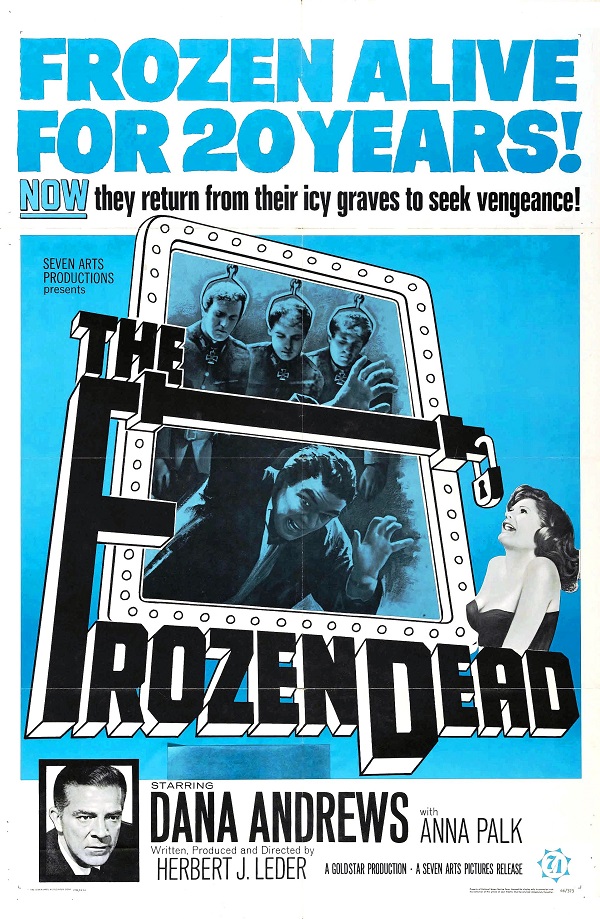
The Frozen Dead (1966)

LEAD Technologies Inc. V1.01 Sized3000

Directed by Herbert J. Leder [Other horror films: It! (1967)]

More than anything, while I wouldn’t say The Frozen Dead was a dry film, or even a bad film, I just didn’t care for the story. It doesn’t help that far more important to the movie than the titular frozen dead is a decapitated head kept alive, and that’s simply not where my interest lies.

Dealing with a Nazi scientiest twenty years following the fall of Nazi Germany attempting to revive frozen Nazi soldiers, there’s some okay Nazi action going on here. Some solid loyalty to the party, some nice German accents, and a scheme to, I guess, get into another war after reviving around 1500 soldiers. I don’t know how exactly they expected that to work, but I guess kudos for the optimism.

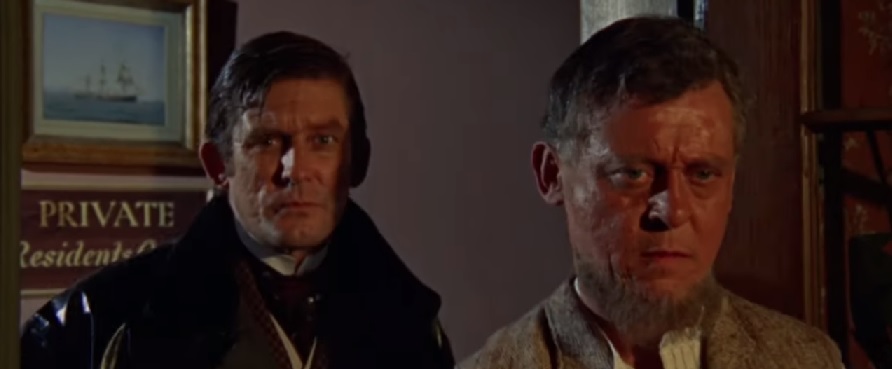
Some story elements didn’t seem entirely delved into, such as Dr. Norberg’s (Dana Andrews) connection with Mrs. Smith/Schmidt (Ann Tirard), or what happened with Basil Henson’s character, who just seems to disappear after an attempted murder. I doubt an answer to either one would change my overall perception on this one, but it’s just small things I noticed. Oh, speaking of which, I did enjoy seeing a crew member clearly on screen during one of the final scenes of the film. Looked totes professional.

Related, this was apparently released to American theaters (it’s a British movie) in black-and-white, though the print I saw on TCM was in color. I sort of wonder if perhaps seeing the movie in black-and-white would have increased the atmosphere at all, but at the same time, even if I had seen it in that form, it wouldn’t have made the story here any more enjoyable.

For what his character is, Dana Andrews (Night of the Demon) is fine. I’d have like to see him wrestle between the love of his niece and his loyalty to the Nazi Party, but whateves. Anna Palk (Tower of Evil) was okay, but didn’t strike me as memorable. Honestly, while Basil Henson was fun as a Nazi who likes to inflict pain, and Karel Stepanek made for a decent former Nazi general, that seemed to be all there was to their characters. It may come as little surprise that Alan Tilvern was likewise unspectacular.

At least Philip Gilbert’s character was sort of interesting. True, he was the expected generic love interest of Palk’s, but his character, an American scientist, actually takes an active part in Andrews’ unethical science experiments, and it’s not until things get worse that he decides to take a step back. It’s not much, but it at least added some flavor.

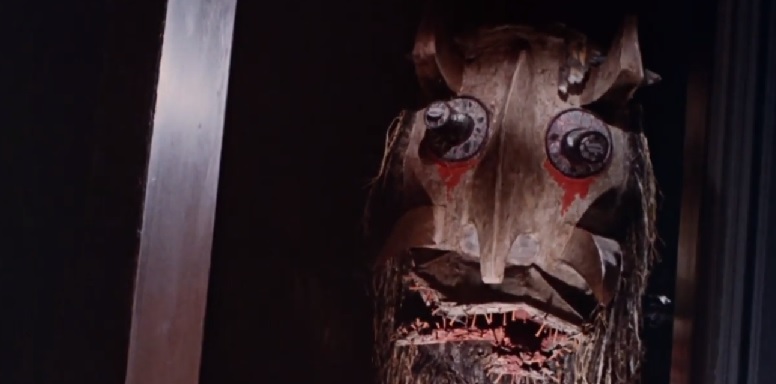
Elsewise, there’s not a whole lot here. I would have likely enjoyed it more if it actually dealt with the frozen dead, but they play very little part in the movie. Even toward the finale, when it seems like their focus could deepen, it doesn’t. The wall of arms (which, by the way, was hella creepy) got more action than the frozen dead, and it’s just a disappointment.

Even so, I don’t think it’s a terrible movie. If it’s the type of horror you’re into, then got for it. I’d never say The Frozen Dead doesn’t have some okay ideas, but generally, I just didn’t enjoy this one, and I doubt that seeing it again in the future will change that.

5/10

Picture Mommy Dead (1966)

Directed by Bert I. Gordon [Other horror films: Beginning of the End (1957), The Cyclops (1957), Attack of the Puppet People (1958), Earth vs the Spider (1958), War of the Colossal Beast (1958), Tormented (1960), Necromancy (1972), The Food of the Gods (1976), Empire of the Ants (1977), Burned at the Stake (1982), Satan’s Princess (1989), Secrets of a Psychopath (2015)]

I have a bit of a mixed-to-negative record with Bert Gordon’s movies – I enjoy Earth vs the Spider well enough, but some of his other films, such as The Food of the Gods, Tormented, and Attack of the Puppet People, have failed to leave much of an impression on me.

Though I’m loath to say it, given the promise this movie held, I think the same fate befalls Picture Mommy Dead.

And it is a shame, because the story here is pretty close to those old dark house horror movies I enjoy so much, such as The Cat and the Canary, The Bat, and The Monster Walks. The only difference here is that, instead of a young woman forced to deal with multiple characters due to the reading of a will, we have a teenage girl. Otherwise, it’s pretty similar to plenty of previous films of the genre, which in part may explain how this feels somewhat been-there, done-that.

It’s not a bad movie, though; I think it’s worst sin is that it’s just somewhat uninspired. Don’t get me wrong, films like Lo spettro, The Screaming Skull, Dominique, etc., all have their charm, but the idea of someone being driven insane to further the financial causes of another is nothing new. It’s often a decent watch, but it’s not new.

Things are shaken up a bit here, though, in regards to the mysterious death of a woman three years before the bulk of the movie. There are multiple suspects, as usual, and plenty of reasonable solutions to the mystery. The one we got was decent, and it led to an interesting finale – I’m not sure if the ending is actually good, but it was somewhat striking (and almost reminiscence of Mark of the Vampire in some ways).

Susan Gordon (the daughter of Bert Gordon, the director) did pretty well in her role. She did succumb at times to hysteria, but then again, her character suffered a traumatic event and spent three years in a psychiatric asylum, so she can’t be blamed for that. In fact, I think she did well with the arrested development of her character. The performances of both Don Ameche and Martha Hyer were okay, but neither did much for me.

I did like Maxwell Reed (Daughter of Darkness) – his character wasn’t always easy to get a read on, but he was one of the more interesting cast members. I don’t know what Wendell Corey’s (Astro-Zombies) accent was, but his one-scene appearance was memorable. Zsa Zsa Gabor also makes an appearance, but given her character was unlikable as Hyer’s was, I can’t say it moved me.

Though I don’t think it made much an impact for this movie, Picture Mommy Dead is in color. There’s a scene or two with a bit of blood, but naturally, this isn’t a H.G. Lewis affair, so everything is pretty light. The movie’s more psychological in focus anyway, and it probably could have gotten away with being in black-and-white had it wanted to (as it is, the coloring seemed almost faded on the print I saw).

Honestly, there’s nothing terrible about the film. It feels like plenty of other movies I’ve seen, but it’s still generally an okay watch. That said, while there’s a few plot elements of interest, Picture Mommy Dead doesn’t really do anything special. It might be worth a watch or two, but it’s not the type of movie that I think would particularly stand out to too many people.

6/10

The Reptile (1966)

Directed by John Gilling [Other horror films: Escape from Broadmoor (1938), Mother Riley Meets the Vampire (1952), The Gamma People (1956), The Flesh and the Fiends (1960), The Shadow of the Cat (1961), The Night Caller (1965), The Plague of the Zombies (1966), The Mummy’s Shroud (1967), La cruz del diablo (1975)]

This Hammer film does quite a lot right, and though sometimes compared to films such as The Gorgon, I’ve always tended to find this film a wee bit better.

Filmed back-to-back with The Plague of the Zombies (which explains why so much of the setting is familiar), the story here is quite fun. Once we find out exactly what’s going on in this small Cornish village, it’s not that much a surprise, but the story and mystery are still pretty decent, and also has good suspense here and there.

Personally, I think one of the biggest drawing points would be the engaging characters. Dr. Franklyn (played by Noel Willman) was such a complex and interesting individual, and I sort of wish he had a bit more time toward the end to fully explain his part in things. Playing his daughter Anna was Jacqueline Pearce, who had some mystery behind her. The barkeep, an individual named Tom (Michael Ripper), has to be one of my favorite sidekick characters, and though he’s rather gruff at first, ends up being quite lovable.

Of course, the characters wouldn’t matter much without the performances. Ray Barrett made a solid lead character, and his investigations into his brother’s death, with the help of Jennifer Daniel (his wife) and the aforementioned Michael Ripper. I loved Ripper (The Mummy’s Shroud) in the film; even better was Noel Willman, who isn’t an actor I really know (both he and Jennifer Daniel also appeared in The Kiss of the Vampire), but his performance was great. Marne Maitland, John Laurie, and Jacqueline Pearce were limited in how much they contributed, but they still did well.

Unlike The Gorgon, I thought the effects here were decent, especially the make-up on the snake-like antagonist. It had a similar vibe to Cult of the Cobra – what with a secret group of snake people tying into the plot – but The Reptile had a pretty scary design for their makeup, and being in color, it looked all the better. Well, that, and it wasn’t near as dull.

Really, it’s quite a solid movie. There’s a decent amount of mystery, suspense, and atmosphere (that sequence in which Ripper and Barrett were digging up bodies in the rain comes to mind), making The Reptile very much a film that fans of classic horror, and Hammer horror, may want to take a look at.

8/10

The Witches (1966)

Directed by Cyril Frankel [Other horror films: Never Take Sweets from a Stranger (1960)]

Known as The Devil’s Own in the USA, Hammer’s foray into witches was okay. It was far from great, and I think the ending could have used a hell of a lot of work, but it was watchable, albeit it in a below average way. It just wasn’t much more.

What I can say for The Witches is that it lays out a somewhat engrossing mystery in a small English village, but by the final twenty minutes, when everything is laid out and we see that extraordinarily goofy (and lengthy) Satanic ritual, my interest has pretty much disappeared entirely.

And let me talk about that stupid ritual for a second. Getting a majority of a small village to join a Satanic cult might be possible, but if they knew how goofy they’d have to act during the rituals, how over-exaggerated and silly they’d look, I think it’d lose most of the potential members. It just didn’t seem realistic at all to me.

I also felt somewhat torn about the time-lapse about halfway through. Even after that, though, I can admit the movie had a decent atmosphere and I was still engaged with the story. But that stupid fucking ritual. That just really killed what little interest I had left at that point completely.

I’m not familiar with Joan Fontaine, but she was okay here. I appreciated how she wasn’t the typical young woman (not that she looked old here, by any means – she just looked quite a bit more mature), and I liked the nightmarish scenario she had in Africa. Alec McCowen was decent, though ultimately, pretty pointless, as he played zero part in the conclusion (surprisingly so). I started out liking Kay Walsh, but by the end, I just found her overly illogical and goofy.

The Witches had a good atmosphere at times, and it has that small village feel that I enjoy from films around the same time period (such as The Reptile and The Gorgon), but that final act wasn’t the way to go. I can understand how this one isn’t one of the more celebrated Hammer films, because it just sort of falls apart, and ends up a movie with potential, but ultimately disappointing.

5.5/10

Chamber of Horrors (1966)

Directed by Hy Averback [Other horror films: N/A]

I don’t know how well-known this film is, but I think it was aiming to be another one of those gimmicky movies from the 1960’s in the vein of William Castle that people would look back fondly on. Certainly some people do look upon this film with joy, and while I generally find it a decent movie, I was not a fan of the “horror horn” or the “fear flasher”.

“Horror horn?” I hear you cry in astonishment. “Fear flasher?” I hear shouts in the street, amazed.

See, the beginning of this film begins with a warning about the “supreme scenes of fright” and how the creators would safe-guard us against them. Flashing lights on the screen would warn us along with a horn, that frightful, terrifying-to-the-soul scenes would soon be on screen.

I don’t mind a good gimmick. I love William Castle movies. Even that timer in The Beast Must Die that allowed the audience time to guess who the werewolf would be was sort of charming. The “fear flasher” and “horror horn” could have been the same, hokey fun, even if it was such a foolish over-hype of the “supreme scenes of fright.”

There’s barely any blood in the film, though. If they had gone an H.G. Lewis route and made the dismemberments gory, or at least shown actual dismemberments, it might have been worth it. But what they do is show a flashing screen and then a blade slicing through the air and – cut scene. We see no body parts get chopped off. We see no gore of any sort (and this movie was in color, so if they had wanted to copy what Lewis was doing so well at the time, even more tastefully, they damn well could have), and really, no fright.

None of my complaints about those gimmicks are to say the rest of the movie’s bad. It has a vibe somewhat similar to House of Wax (a comparison I can’t resist given that a house of wax is one of the main locations in this film, albeit utilized in a different way), and it can still be fun, but “supreme scenes of fright?” This movie may not be a comedy, but that must be a joke.

Patrick O’Neil made for a decent Vincent Price-clone (I don’t know if that was intentional, but I got the vibe that’s what O’Neil was aiming for). His revenge was fun, but not gory enough. A dwarf named José René Ruiz (but credited as Tun Tun) played a pretty fun character, and he got in some good lines. Laura Devon was quite beautiful, and has an unique story arc.

Most fun were Wilfrid Hyde-White and Cesare Danova, who were partners at the wax museum and also were amateur detectives, possessing a Holmes and Watson relationship. Amusingly enough, at the end of the film, both of them discover another murder, and set out to investigate, so they easy could have made a sequel called The Mystery of the Iron Maiden Murder or something like that, and I would have been all in, because I thought this pair was pretty good together.

Chamber of Horrors isn’t a great film, but it’s okay. I think it would have greatly benefited from either getting rid of the gimmick or actually making the gimmick mean something by adding in gore, but it’s still an okay film. I didn’t care for it when I was younger, but I can appreciate it more now. I just wish it was better.

6.5/10

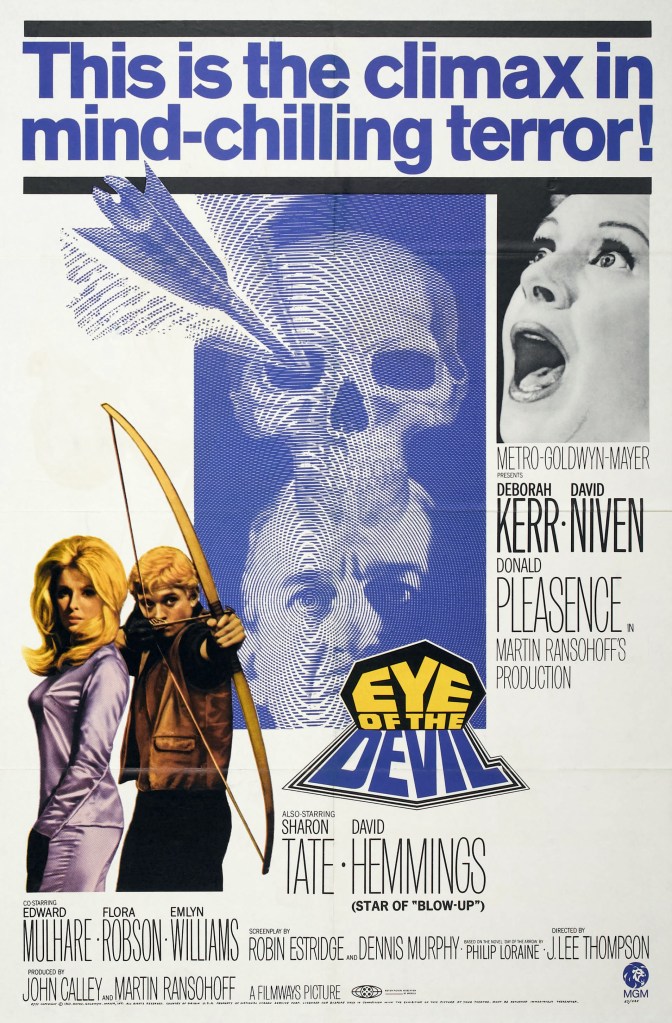
Eye of the Devil (1966)

Directed by J. Lee Thompson [Other horror films: The Reincarnation of Peter Proud (1975), Happy Birthday to Me (1981)]

So I didn’t really know what to expect going into this one, and to be entirely honest, I wasn’t really anticipating that I’d enjoy it, which goes to show (not that this needs any additional examples) of how wrong I can be.

Eye of the Devil is far from your typical Satanist movie, even for the time period. I was expecting something along the lines of The Devil Rides Out, which seemed a fair basis of comparison since that’s also a British Satanist film from the latter half of the 1960’s, but again, I was far, far mistaken.

I wouldn’t go as far as to say that Eye of the Devil’s horror is subtle, but I think it’s fair to say that there’s far more uneasiness and unsettling situations than there is outright horror. Certainly there are some tense scenes (two of my favorites being the children playing on the roof and the main actress being chased through the woods by robed cultists), and I think they work beautifully in the movie, but it’s not a thrill-ride from beginning to end.

Another somewhat surprising aspect about this film is the fact it’s in black-and-white. By the mid-1960’s, most movies had made the full transition over to color (Night of the Living Dead being the most famous exception, but other cases of black-and-white movies post-1965 include Hour of the Wolf, Blood Bath, Ghosts of Hanley House, The Living Skeleton, Confessions of a Psycho Cat, Zinda Laash, and A Thousand Pleasures), so the fact they filmed this in black-and-white was a bit of a surprise. That said, I do think it worked wonderfully with the story (especially during the scene when Deborah Kerr is being chased by the cultists).

Kerr (The Innocents) here is great in her leading role, as she is well aware something sinister is going on around the castle and surrounding village, but she can’t ascertain as to exactly what it is (and it doesn’t help when everyone who knows something has exactly zero intention on letting her in on it). Playing her husband, David Niven (who has an extraordinarily familiar face, but aside from the murder mystery spoof Murder by Death, I haven’t seen anything else with him it in) does a great job too, especially as his somewhat tragic tale unfolds. I often wonder if he is seeking, or the one being sought.

Of most interest to me, of course, is Donald Pleasence (most famously Halloween, though he also really stood out in 1960’s The Flesh and the Fiends), who played a priest here. He was pretty much as you’d expect, speaking in soft tones (it’s hard for me to even hear him speak without immediately thinking about The Spirit of Dark and Lonely Water), so that was fun. David Hemmings isn’t a name I know, but he was also great (and that scene where he pops up blowing that horn just randomly amusing), and brought a fantastically tense character. Others who stand out here include Sharon Tate (yes, that Sharon Tate), Edward Mulhare, and Flora Robson.

What really sets Eye of the Devil apart from many of it’s contemporaries is the atypical cinematography, some of which is really quite smashing, as my homeboi Nigel would say (90’s kids what’s up!). Seriously, some of the camera-work here is fantastic, and much before it’s time. Even if the story isn’t up your alley (and it should be, because there’s some solid uncertainty and a great feeling of dread of the unknown), you should probably watch this just to see how it was filmed.

Like I said at the beginning, I didn’t really expect to like this film, but I was quite mistaken. I’ve not honestly seen that many 1960’s horror (at most recent count, only about 148 total films for the decade), but I can say that I think Eye of the Devil would be in my personal top 20 list for the decade, and it’s a movie I’m sorry I waited so long to see.

8.5/10

The Plague of the Zombies (1966)

Directed by John Gilling [Other horror films: Escape from Broadmoor (1938), Mother Riley Meets the Vampire (1952), The Gamma People (1956), The Flesh and the Fiends (1960), The Shadow of the Cat (1961), The Night Caller (1965), The Reptile (1966), The Mummy’s Shroud (1967), La cruz del diablo (1975)]

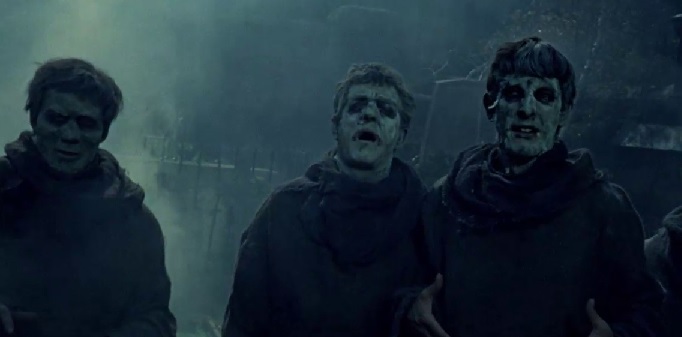
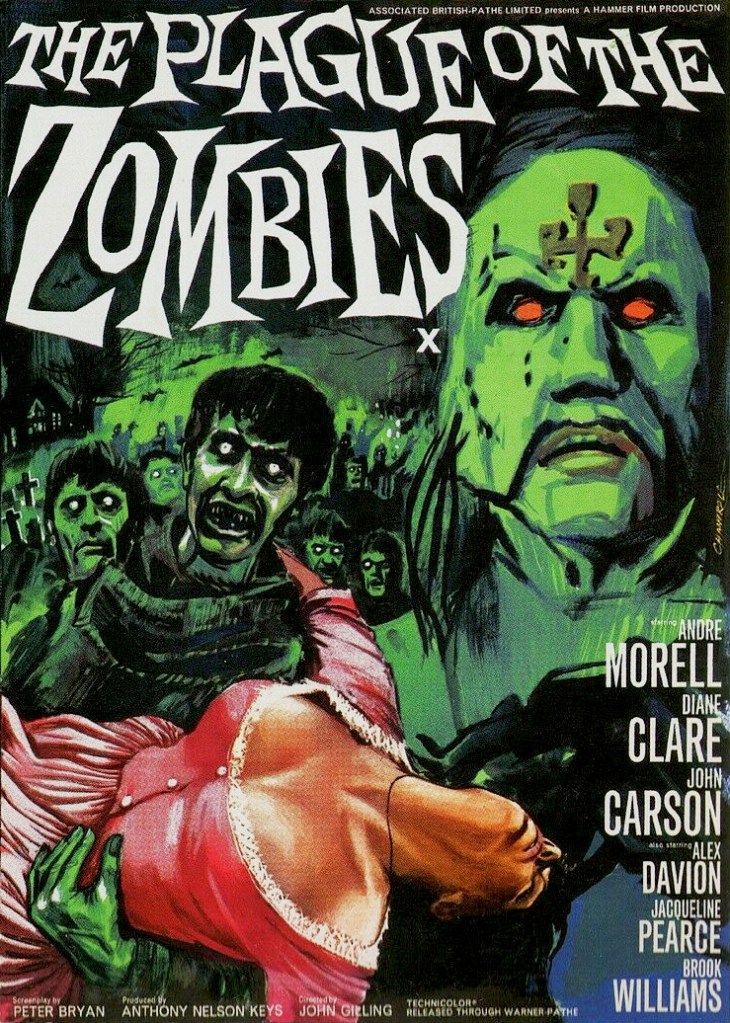
This Hammer film may be one of the last voodoo zombie films before Night of the Living Dead launches a new way forward for the zombie sub-genre, and it’s certainly the last big name zombie film before Romero’s classic. Being a Hammer movie (and being in color), The Plague of the Zombies isn’t too shabby, but it’s not a personal favorite of mine.

I enjoy the performances, though no one really blows me away. Perhaps my favorite here is André Morell, because seeing a slightly older man take the lead is a bit of a rarity, and his character is enjoyable, being a distinguished doctor, and yet partaking in robbing graves. He was just fun. Playing his daughter is Diane Clare, and she gets along quite well with Morell. Brook Williams, as a young doctor asking for Morell’s advice, is a bit generic, but he has his moments. John Carson did quite well here as a somewhat mad Cornish squire – much like Morell, he’s fun throughout, especially toward the end.

The atmosphere here is pretty solid, and there are some pretty solid scenes (perhaps my favorite is a dream sequence in which zombies rise from the grave, which looks quite beautiful in color), but as decent as the story was (in it’s average Hammer fair), trying to turn the same premise of White Zombie into a better-made version by throwing in color isn’t really my idea of a great time.

The Plague of the Zombies is a bit of a classic as Hammer horror is concerned, and for good reason (worth noting, many of the same sets are used in The Reptile, another Hammer film from the same year, which I like a bit more), but even as far as 1960’s horror goes, this doesn’t quite make my Top 10 list.

I’m not trying to throw The Plague of the Zombies under a bus – I think it’s a decent film, and I wouldn’t object to seeing it a few more times in the future. It’s just that I’ve seen it twice now, and as far as I’m concerned, it’s not the best the 1960’s has to offer.

7/10

Death Curse of Tartu (1966)

Directed by William Grefé [Other horror films: Sting of Death (1966), Stanley (1972), Impulse (1974), Mako: The Jaws of Death (1976), Whiskey Mountain (1977)]

To be honest, I wanted to like this one. I mean, a low-budget horror film made in Florida by Grefé (see resume above)? Sounds like it could be a lot of fun. Sadly, though, more than anything else, Death Curse of Tartu is pretty dull.

The best thing I can say about the performances is that Maurice Stewart and Mayra Gómez Kemp looked cute during the ridiculously groovy dance scene. Otherwise, Babette Sherrill and Fred Pinero, not to mention most everyone else (save perhaps Bill Marcus) were overly stilted and the dialogue generally just felt awkward.

Setting the story in a Florida swamp had potential, and even filming most everything during the day was a somewhat daring move, but due to the sluggish pace of the film, it doesn’t really help all that much.

See, the thing is, watching a snake chase someone for four minutes isn’t exciting, nor are most chase sequences in the film. The only exception that comes to mind is a scene toward the end with Tartu (Doug Hobart) chasing Sherrill’s character, and it was filmed in a pretty solid way. Everything else, though, just felt uninspired and quite dull.

Death Curse of Tartu could probably be a pretty cool movie had it been done entirely differently. The potential is there, but it just didn’t show at all, which wasn’t really surprising, but I will admit to being disappointed. For the 1960’s, the color here was nice, but it didn’t save the sluggish pace, and I can’t really see myself sitting through this one again sober.

5.5/10

Queen of Blood (1966)

Directed by Curtis Harrington [Other horror films: Night Tide (1961), How Awful About Allan (1970), What’s the Matter with Helen? (1971), Whoever Slew Auntie Roo? (1972), The Killing Kind (1973), The Cat Creature (1973), Killer Bees (1974), The Dead Don’t Die (1975), Ruby (1977), Devil Dog: The Hound of Hell (1978), Usher (2000)]

A 1966 movie starring John Saxon, with appearances from Basil Rathbone and Dennis Hopper? Is this an undiscovered classic waiting to be unleashed from the vaults it so cruelly was forced into?

The answer, unfortunately, is no. Queen of Blood is, above all else, a rather dull affair, which is a damn shame, as the year previous brought forth a fantastic voyage into space horror, being Planet of the Vampires. What we have here feels not too far removed from Lifeforce, only this is lifeless.

It’s hard to say why the movie is as boring as it is – part of this is likely due to the fact that nothing much happens until the last thirty or so minutes of the film. Much of the movie is dry, but it doesn’t even really help build characterization or anything. It’s just dull and an exercise in tediousness.

Of course, Queen of Blood had potential. The ending is almost okay, but at the same time, it lacked any type of finale confrontation (I mean, technically, one was there, but it was so weak that it barely felt like it should count). A green, humanoid alien, passive 90% of the time, does not a great antagonist make.

Was John Saxon nice to see? Sure, and I got a blast out of that. But this movie just isn’t worth watching, and sitting through it once is difficult enough.

5/10