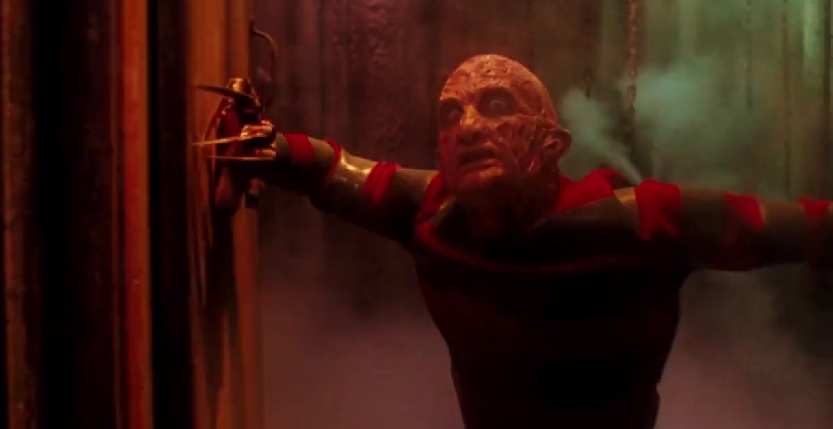
A Nightmare on Elm Street: The Dream Child (1989)

Directed by Stephen Hopkins [Other horror films: Dangerous Game (1988), Predator 2 (1990), The Ghost and the Darkness (1996), The Reaping (2007)]

I’ve said before that The Dream Master is where A Nightmare on Elm Street, as a series, started going downhill. Certainly The Dream Master has some flaws, but compared to The Dream Child, it’s a fucking masterpiece.

Ever since I first saw The Dream Child, I’ve been of the opinion that it’s easily the worst in the series. And yes, for those of you keeping track, that includes Freddy’s Dead. Freddy’s Dead is a poor movie in many aspects, but at least it’s fun, whereas The Dream Child is drab and disappointing throughout.

There’s a lot that I could say, but I guess I should start with the fact I have no idea what’s going on. I get that Freddy is using the dreams of Alice’s fetus to reach out and impact the real world, but how did Freddy come back? Well, he says early on that he brought his mother (Amanda) back, so he could be born again. Now, I don’t know how you can bring something back if you’re no longer existing, which is only one of my problems.

Another is that, once he’s back (he was back before, apparently, but not back enough, or whatever), he uses Jacob’s dreams, which is whatever, but what’s his plan? Once he kills off all of Alice’s friends, he pretty much would have to leave Alice alone until she gives birth, so what’s he plan on doing in the meantime? Or, related, was he planning on possessing Alice – explaining why and how he was ‘hiding’ in her, as Jacob tells Alice toward the end of the film?

I have absolutely no idea. I also rather disliked the end – even aside from that utterly stupid baby Freddy look that Jacob briefly rocked, apparently Jacob was given a power by Freddy to destroy Freddy – it didn’t; it just took the souls of Alice’s friends and turned Freddy into a child, which Amanda (again, Freddy’s mother) then took into herself, and held him for all of three seconds.

Beyond whatever else could be said about The Dream Child, this movie is an utter mess. It’s a shame, because it might have had something to it, what with exploring Amanda a bit more (I’m sure most remember that she mysteriously popped up in Dream Warriors, mocked science, and left). In fact, we even saw a portrayal of Amanda being accidentally locked in the asylum with the 100 maniacs, which I thought was pretty nice (though having Robert Englund play one of the maniacs didn’t do much for me).

Actually, it’s that subplot, what with Yvonne and Alice needing to find the body of Amanda, that I thought the film showed the most potential. However, that brings up another question – Mark said that they thought Amanda killed herself (via hanging), but there was no body.

So let me get this straight – they find an empty room, an absence of Sister Amanda, and just assume she killed herself?

Again, this movie is a mess. The point was, though, that the deserted asylum looked rather cool both when Alice first encounters it in her dream and when Yvonne goes there in reality. It was dark, gritty, and a rather menacing building, and it was one of the stronger elements of the film.

One of the weakest elements, though, are the kills. I’d say this movie has some of the worst kills in the series. The ‘bon appétit, bitch’ kill was dreadful, but easily worse was the ‘need for speed’ kill, in which a character gets into his truck, gets attacked, wakes up (???????), looks at his truck, then steals (???) a motorcycle, becomes a motorcycle, gets injected with fuel, becomes a mutant, and rams his truck (???????) into an on-coming 18-wheeler.

My problem with that kill, believe it or not, is that I don’t know what’s going on. Dan gets the call from Alice and leaves immediately, meaning that first time he got into his truck would be the ‘reality.’ He’s then attacked in his truck by Freddy, gets his shirt shredded, and gets thrown out the window of his truck back toward the pool. He then runs out and almost gets in his truck again – but wait. Are we supposed to think that he fell asleep before getting into his truck? It looks like he dozed off before hitting the 18-wheeler, but it seems to me that there’d be no reason for Freddy to corral him to the motorcycle.

Again, this movie is a mess.

Now, admittedly, the Super Freddy death always sort of amused me. It starts out strong – a colorful guy (literally) is walking through a black-and-white factory. Of course, then Freddy starts riding a skateboard, and everything goes downhill, but even toward the end, when Super Freddy is shredding the paper guy, I can dig it. It’s horrible, but at least it’s sort of entertaining, in a way that neither the ‘need for speed’ nor the ‘bon appétit, bitch’ deaths were.

Lisa Wilcox (The Church, Dark Ritual, Savage, and Watchers Reborn) was okay here. I didn’t particularly care about her character one way or the other, really. Same with Danny Hassel’s Dan – I don’t get much in the way of emotion about him. Her friend group, though, was decently solid, what with Erika Anderson, Joe Seely, and Kelly Jo Minter. Now, it did take Minter a bit to really grow on me, but she eventually did, and Anderson didn’t really have that much to do during her appearances, but I still thought she did decent in her brief screen-time with Joe Seely.

Naturally, Robert Englund is always fun, but he’s rather goofy in this film, which isn’t itself necessarily damning, but given that this film feels like it was supposed to be a bit darker and grittier, I definitely could have done without. Nick Mele, who played Alice’s father, got a few decent scenes in there, and Beatrice Beopple, playing Amanda, was almost fine. I don’t have much to say about Whitby Hertford other than that he has a familiar face, and I’m sorry that he had to be in such a shitty movie at such a young age.

It might come as no surprise that I don’t care for The Dream Child, and I never have. It’s probably the movie I’ve spent the least amount of time with, as far as this series goes, and it just doesn’t have much I care for. Certainly, I feel it had potential – a really dark story could have been made about Alice, with the help of ghostly Amanda, trying to protect her fetus – but the execution here was abysmally weak. To quote Shuffle T during his bad bars battle with Marlo, “It’s like I’m the opposite of an industrial cooling system – not a big fan.”

5/10

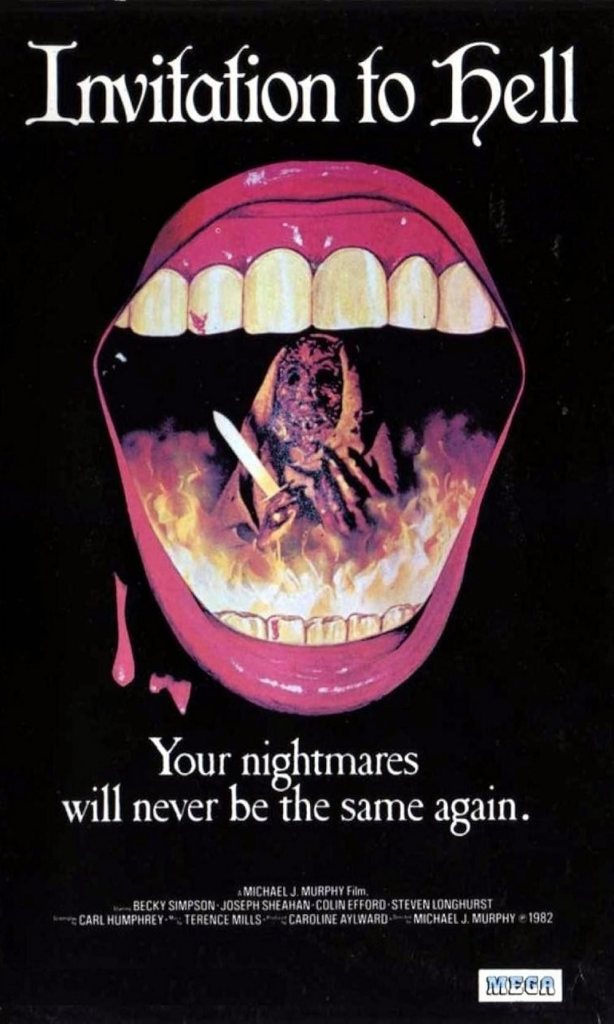
Invitation to Hell (1982)

Directed by Michael J. Murphy [Other horror films: The Last Night (1983), The Hereafter (1983), Bloodstream (1985), Death Run (1987), Moonchild (1989), The Rite of Spring (1995), Skare (2007), Zk3 (2013), Nekros (2015)]

Not to be confused with the Wes Craven film of the same name, Invitation to Hell is a short film coming to us from the United Kingdom, and a low-budget short film at that.

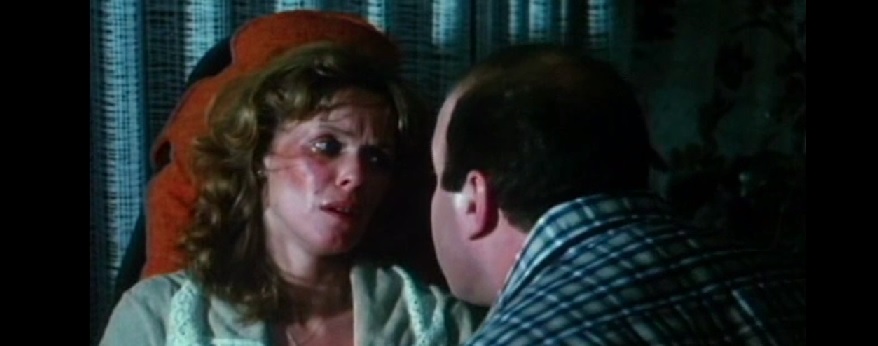
In fact, this is perhaps one of the roughest movies I’ve seen since Blood Cult, and if you’ve seen Blood Cult, then you know the comparison is a damning one. Now, to be sure, given this is a short film (about 41 minutes), it’s not quite as much suffering, but from the questionable audio quality to the blurry and difficult-to-decipher scenes, Invitation to Hell has it’s own issues.

There’s actually a short sequence in which a woman is being chased by someone at night. My television screen, when the screen gets too dark, sort of turns off – not completely, but if it registers what it perceives as darkness on screen, it goes black. This scene had such bad lighting that my TV screen was constantly flashing between ‘active’ and ‘black’. It only happened that once, and I found it more amusing than anything, but it’s a good testament to the type of quality that I’m talking about.

Plot-wise, well, there were some problems. The basic idea is that Jacky (Becky Simpson) is invited to the country home of a school friend, Laura (Catherine Rolands); the problem is, Jacky is a virgin. Now, I don’t know how Laura and company knew, but they do, and so they want to give Jacky to the Devil for a bride. Well, ‘want’ is a strong word, but they opened the wrong book, and the Devil has power to sort of possess those on the lands, so they don’t see as they have a choice.

It’s not really that shabby an idea. I mean, don’t get me wrong, I don’t think it’s good, if for no other reason I have zero theological beliefs, and stories about how scary the Devil is never did much for me. The problem is that the execution is rather shabby, the performances ultimately feckless, and overall, there’s not a ton going on to save this.

If I can give Invitation to Hell some credit, it did have a pretty solid kill toward the ending, in which a character got stabbed through the neck and both hands, effectively being crucified. It wasn’t overly gory or anything, but it did look pretty decent, and I dug it. There was also an earlier scene in which someone was stabbed through the neck. Of course, that woman being chased that I referenced earlier was killed too, but I couldn’t see how – she was either strangled or hit over the head, but it was too dark to tell.

Ah, well, you can’t win them all.

Of all the performances, I think the best comes from Colin Efford (who was also in another short horror film by the same director of this one, titled The Last Night). Efford played a mute farmhand who was often possessed by the Devil in order to do his dirty deeds. He was far from exceptional, but I thought his stoic and, more importantly, dialogue-free, performance suited him. I mean, compared to the others, even the lead Becky Simpson, he was a superstar. Most performances were just so dull and flat, making what should be dramatic moments somewhat laughable.

I don’t hold that against any of the actors or actresses, though – this was clearly a low budget film, and I highly doubt anyone involved were what we’d traditionally call professionals. I certainly don’t fault them for their performances, and the bigger problem is the somewhat awful presentation, or perhaps more importantly, the quality of the existing print.

Oh, and that ending, while not surprising in any way, was sort of awful. It doesn’t ruin the experience, as the experience was already shaky, but I thought it was worth mentioning.

Invitation to Hell isn’t without some charm to the right groups of horror fans. I can say for a certainty that it’s better than plenty of other films, be it Death by Invitation or Fist of the Vampire. The fact it’s only 41 minutes does help, and there’s also a sprinkle of potential throughout the film. It’s still far from good, though, and only if you’re a die-hard fan of horror would I truly recommend you take the time to watch this one.

4/10

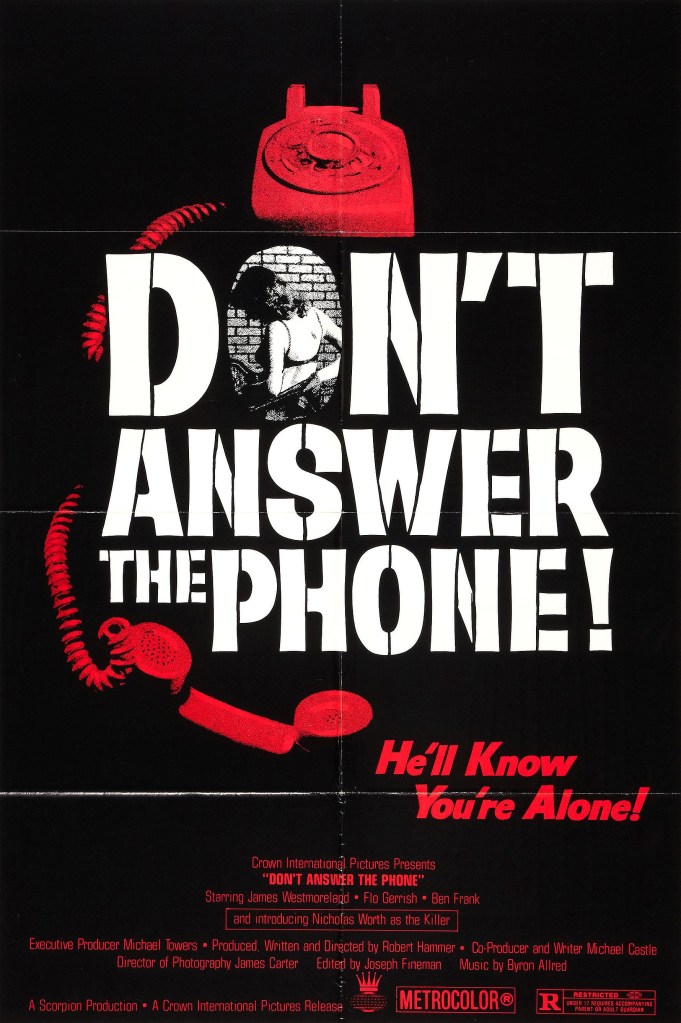
Don’t Answer the Phone! (1980)

Directed by Robert Hammer [Other horror films: N/A]

This isn’t the easiest movie to examine. In some ways, Don’t Answer the Phone! is definitely generic and underwhelming, but it’s also occasionally competent trash, and that has to count for something, whatever that may be.

To preface this review, I have to say that I didn’t watch this under ideal circumstances, and by that, I mean I own it on a 50-movie pack, specifically Mill Creek’s Pure Terror release. The quality isn’t that poor, but I know the film came out on Blu-Ray in 2017, so I can’t say that this copy isn’t possibly missing something.

As it stands, the movie isn’t a violent one, at least not with the print I have – plenty of women get strangled, and to add to the spiciness, many of these women are topless – but it’s not at all gory, and while I couldn’t go as far as to call it dull, I will admit a lot of this feels familiar.

I think that’s one of the bigger problems, if I’m being honest. Films such as City in Panic, Naked Massacre, Murderlust, and even Forced Entry all have similar elements – granted, two of those films came out after this one, but even so, we’re not talking ground-breaking entertainment here. It’s competent for what it does – if you like seeing topless women strangled, I’d recommend you look no further – but it’s definitely not a film that’s all too memorable.

I can personally attest to that, as I’ve seen it previously, and came into this viewing with very little memory of what I’d seen before. As far as I can tell, the most memorable part of the film is Nicholas Worth’s role as the killer. Not that his performance is good; in fact, at times, it’s somewhat laughable. But whether laughable or not, I can’t say that he’s not captivating when on-screen, which has to count for something.

Otherwise, it’s hard to say that others stand out. The two central police officers, played by James Westmoreland and Ben Frank, were both okay, and they had some solid scenes (such as the rather amusing visit to a brothel disguised as a health spa), but not overly relevant. The same is true of Flo Lawrence (Schizoid), who seems important at first, but fades into the background, only to sort of come back into prominence toward the finale.

A few others are worth mentioning, though to be sure, none of the characters they played were important. Chris Wallace (who you might recognize from New Year’s Evil) had an amusing sequence as a psychic. Playing an amusingly sleazy magazine owner was Chuck Mitchell, and there was also a pimp played by Stan Haze who had a moment to shine during the aforementioned brothel sequence.

Really, Don’t Answer the Phone! isn’t without a few strong points. The nudity throughout doesn’t go amiss, and there can be an amusing scene or two. I didn’t care whatsoever about the romantic subplot thrown in, and the finale wasn’t that great, but there are moments when the film almost seems like it’s worth watching.

Even so, I wouldn’t go as far as to call it a good film. It’s not terrible, at least not in my eyes. But it’s also one that I don’t suspect I’ll watch again any time soon, and if it sticks with me better this time around, that’s probably the best the movie can hope to ask for.

6/10

Razorback (1984)

Directed by Russell Mulcahy [Other horror films: Tale of the Mummy (1998), Resurrection (1999), The Curse of King Tut’s Tomb (2006), Resident Evil: Extinction (2007)]

I’m never quite sure what to make of many of the Australian horror films I’ve seen. While some can be perfectly normal, so much of the output I’ve seen from Australia tends to be, for lack of a better word, odd.

Certainly that could be a label placed on Razorback also, but I think in this case, that’s not at all a problem.

To be clear, I can’t honestly say I enjoyed Razorback in a traditional sense – it’s quite a dusty, dirty movie, sometimes rather bleak, and portions don’t always enthrall me. That said, I did rather appreciate a lot of it, and though it’s not a film I personally enjoyed a whole lot, it’s definitely a movie that’s worth seeing, and I can understand why I see primarily positive posts about the film.

One thing really allows the movie to stand out, which is the occasionally stellar cinematography. There are two sequences in particular that – after I saw them – I immediately rewatched, one being a dream sequence, the other, shots of a man lost and potentially delirious in the middle of the Outback. Captivating doesn’t begin to describe just how stellar that second sequence was, and I truly thought it possessed some of the most beautiful and desolate scenery I’ve seen in a horror film in recent times.

There’s also a surprisingly shocking dream jump scare at one point – I wasn’t at all expecting it, and I’m not too proud to admit I jumped a bit, so kudos to that scene.

As for the story, it’s not overly original – it’s a giant animal that’s going around killing people, and some characters hunt it down – but the approach taken here does lend a certain je ne sais quoi to the final product. Maybe it’s the scenery – the Australian location is used wonderfully throughout. Maybe it’s the aforementioned dusty and desolation, sometimes grimey, feel. Whatever it is, Razorback does have some feeling to it, and I don’t think it’s a movie, as generic as the plot may sound, that’ll easily be forgotten and discarded.

At first, I thought Judy Morris (The Plumber) was going to have a more central role, but that wasn’t quite to be. She did well early on, though, and when Gregory Harrison (1996’s Summer of Fear) takes the reins, he’s pretty compelling. I can’t say I loved Arkie Whiteley’s character, but Bill Kerr (House of Mortal Sin) has that Australian ruggedness I’ve come to appreciate. David Argue and Chris Haywood (Sweet River and The Tale of Ruby Rose) did well with two rather atrocious characters.

One thing that might be worth knowing before going into Razorback is that an uncut version with a bit more brutality exists. Now, I happened to watch the most-commonly available cut version, but found the missing scenes elsewhere online after I finished the film. Unlike movies such as Cut and Run, I don’t think missing the uncut version of this would be a disaster, but it is something that you may want to watch out for.

I’ve known about Razorback for a long time, and while I’ve always been mildly interested, it’s never been a movie that I’ve been dying to see. After having finally seen it, I can say that I wasn’t blown away by the overall product, but the scenes which did bring something special, being the two sequences I refer to above, are utterly stellar, and I don’t say that lightly. I don’t think Razorback is above average – if it is, it’s not by a lot. Even so, it’s certainly worth seeing, especially for Australian horror.

7/10

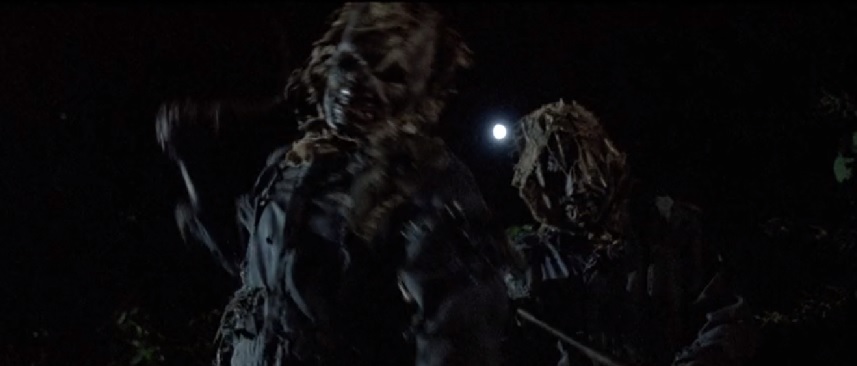
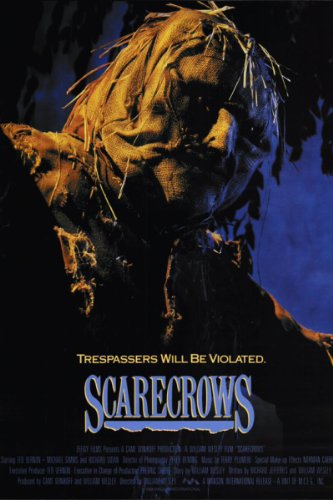
Scarecrows (1988)

Directed by William Wesley [Other horror films: Route 666 (2001)]

So I have two things to say about Scarecrows before writing this review out: for one, Scarecrows is perhaps one of my favorite scarecrow horror films, and two, I am highly intoxicated at the moment.

This is the 155th movie I’ve seen in October of 2021, which is when this is being written. It’s been a long month, and I thought I might celebrate with some Jack Daniels whiskey that I had in my freezer for over a year. I don’t drink often, but I thought tonight might make a good occasion, and so I did.

I’ll say that Scarecrows is a decent movie, though it does possess some elements I can’t say I care for that much, such as how the scarecrows can somehow mimic other people that their victims know. It reminds me of the plants in The Ruins that mimicked cell phones – I didn’t mind it too much in The Ruins, but here, it felt sort of strange giving scarecrows some type of psychic power.

Even with that minor complaint in mind, I always appreciated the gore of this film. It’s not an overly gory film, but there are some solid moments, such as a scarecrow cutting a character;s hand off, and then stabbing his face after covering it with a burlap sack. That as perhaps the best scene, but you also someone who had their organs removed and replaced with only straw and money, which was relatively gruesome, along with someone who was stabbed through the hand with a pitchfork.

Only a couple performances really stand out here, being Michael David Simms, Ted Vernon (Zombie Infection and Bikini Swamp Girl Massacre), and Victoria Christian. Truth be told, Christian was somewhat generic, but I really liked Vernon here, as he was someone who actively partook in abducting people, but seemed to have a decent moral compass (as he took time to bury someone, and tried his hardest to help Christian’s character). Michael David Simms over-acted horribly at times, and I absolutely loved it.

Richard Vidan (also in the obscure Zombie Infection) is somewhat like Vernon’s character, only he doesn’t last near as long. Others, such as Kristina Sanborn and B.J. Turner, had their moments, but overall, it’s hard to say they really stood out all that well.

To be honest, Scarecrows isn’t a great movie. I talk a bit in my Scarecrow County review about the sad state of scarecrow horror films, so I won’t repeat it here, but there’s so few decent scarecrow horror films that a movie like Scarecrows, which definitely has some holes in it’s plot, can stand out positively.

And I think that stands true. Dark Night of the Scarecrow is perhaps a better example of the suspense that can be created within the framework of a scarecrow movie, but Scarecrows demonstrates the type of gore that could make the topic one worth exploring with a more serious attitude.

7.5/10

Night of the Demons (1988)

Directed by Kevin Tenney [Other horror films: Witchboard (1986), The Cellar (1988), Witchtrap (1989), Witchboard 2: The Devil’s Doorway (1993), Pinocchio’s Revenge (1996), The Second Arrival (1998), Endangered Species (2002), Brain Dead (2007)]

Night of the Demons has never been a favorite of mine, but it can be a reasonably fun Halloween fair. It’s a bit silly for me at times, especially once the demons start making their presence known, but it has an engaging enough story and fun characters, so it’s not a bad watch.

I always loved the opening here – an animated look into the house featured in the film, with ghosts as curtains and monsters creeping up the stairs. It’s a fun little opening, getting you in the mood for the Halloween season, and I’ve always appreciated it.

Most of the cast are decent in the roles they’re supposed to play. I personally didn’t care much about Billy Gallo (Sal) or Lance Fenton (Jay), but others, such as the lead Cathy Podewell and the lucky Alvin Alexis, were sympathetic. Hal Havins (Sorority Babes in the Slimeball Bowl-O-Rama) was quite quotable, with lines such as “Shut up and drive, bitch!” and “Eat a bowl of fuck!” along with the fascinating exclamation “festering fuckwads!” Certainly a memorable character.

Speaking of memorable, Linnea Quigley’s first scene here is a doozy. It’s a scene that, believe it or not, has stuck with me since I first saw the film, and it’s always fun to watch. Quigley (Return of the Living Dead, Silent Night, Deadly Night, Graduation Day, Nightmare Sisters) isn’t really an actress that I care that much for, but she does have her moments, and I think this movie is one of her stronger roles.

The special effects here are all reasonably impressive. Night of the Demons isn’t a gory movie, generally, though there are some solid scenes, the best one being someone’s eyes having an unfortunate meeting with someone else’s thumbs. There’s also the somewhat bizarre ending, but it’s all in the spirit of Halloween.

And I think that’s perhaps the best thing about Night of the Demons – the Halloween spirit. Early in the film, we see a rather dark cartoon (The Cobweb Hotel from 1936) playing on TV, we have the animated opening, we see some pumpkins, we have costumes. This film has a solid Halloween vibe, and while it’s nowhere near as good as movies like Trick ‘r Treat or, well, Halloween III: Season of the Witch, it’s still not shabby.

Night of the Demons has never been a favorite, and for as much as it can get right, some of the humor toward the latter half of the film doesn’t do it for me. It’s just a bit goofy at times. It’s never overwhelming, but it’s there, and because of that, with as many times as I’ve seen this, I find the movie just around average. Worth watching for the Halloween vibe, though.

7/10

City in Panic (1986)

Directed by Robert Bouvier [Other horror films: N/A]

So this film has a bit of a negative perception for some obvious reasons, but I think it’s a decent film. It’s not great – aspects are certainly amateurish and I think the killer’s identity could have been hidden better – but it’s a decently entertaining slasher, and I’ve enjoyed it both times I’ve seen it.

Let’s talk the controversy first, though – many of the victims in the film are gay men, many of whom have AIDS. AIDS plays a somewhat large part in the film, and obviously that was a heated topic in the 1980’s. It’s not really dealt with in all that sensitive a manner, but it’s also accurate that the gay people in the film aren’t all sterotypical, and there is a character who berates a homophobic cop, so it’s not all negative in it’s portrayal, for whatever that might be worth.

In a way, while insensitive, it’s at least different. In most slashers, women get the brunt of violence, but in the first scene of City in Panic, we see a man getting killed in a shower (quite reminiscent of Psycho), which is a nice change of pace. It’s not a great kill, but seeing a different group being targeted at least keeps things fresh, and leads to a few kills that actually are good.

The best one, of course, would be a castration after one poor man attempts to use a gloryhole. There’s decent blood splatter, and while it’s not overly graphic, it does look quite painful. Another kill took place in a gym – a man doing some upside-down exercises gets attacked, which is at least a unique death. Not all the kills are good, as some are a bit dry (one individual gets run over by a car), but when they get them right, it’s enjoyable.

It’s also worth mentioning that the killer here has a good giallo look to them. A long trench coat, a fedora, black gloves – this killer could have been in any number of Italian movies back in the 70’s, and while I think they perhaps mishandled the identity of the killer here, I do rather appreciate the retro look they have.

David Christopher Adamson didn’t do bad as a lead, but as with many characters in the film, I don’t think we really get a great handle on him. He’s a radio host who seems moderately liberal (supports gun control, and also supports ‘law & order’), but we just don’t learn all that much that makes us care for him. Edward Chester’s attitude toward homophobic cops was one I appreciated, and as a homophobic cop, Derrick Emery did well. I’m mixed on Lee Ann Nestegard, but I did love Ron Rynka’s dancing (as the male stripper named He-Man, he was quite a hoot).

City in Panic isn’t the best slasher from Canada, and it’s sometimes problematic in it’s approach on a rather sensitive topic, but I’ve seen this one twice, and I keep having a good time with it. It can be a bit slow, but it’s engaging throughout, and City of Panic is worth seeing, at the very least, if you’re a fan of 80’s slashers, or if you want to see what a Canadian giallo might feel like.

7.5/10

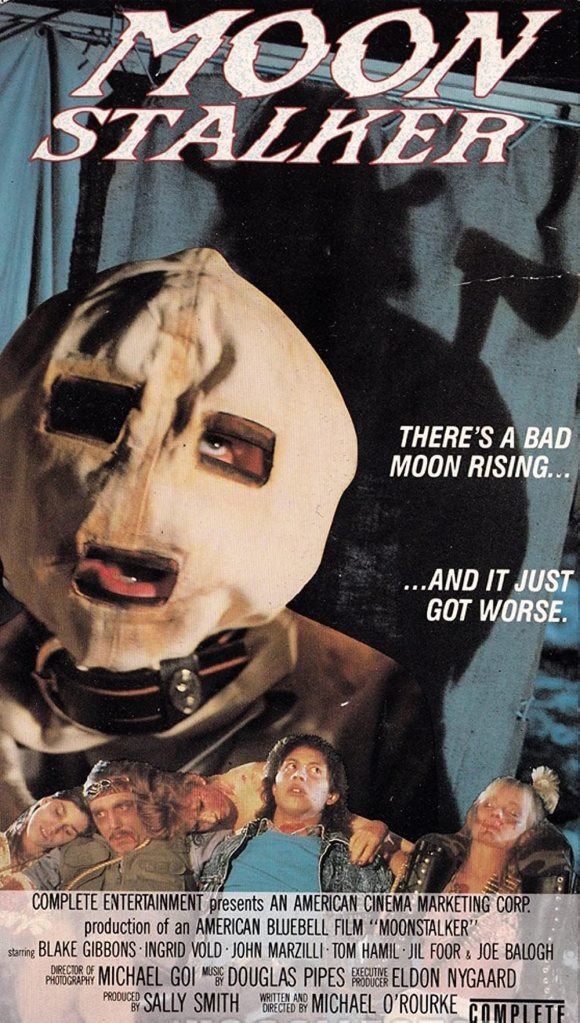
Moonstalker (1989)

Directed by Michael S. O’Rourke [Other horror films: Deadly Love (1987)]

Moonstalker may not be a great movie; it’s pretty cheap, and it’s not overly memorable, but I’ve always had a bit of a soft spot for it. For a late 80’s slasher, Moonstalker may not be the type of film you go back to often, but it can be a bit fun.

The story isn’t anything all that unique – a maniac runs around a campsite and kills people. At first, the maniac wears a mask (which is featured on the VHS cover, which, on a side-note, always struck me as a good cover), but that doesn’t last long, as the killer soon dons a Maniac Cop look, being a bulky man wearing sunglasses and a hat. The mask is cooler, but whateves, I can accept change.

Few of the scenes here are great, but there are a few okay kills, such as a quality impalement toward the finale, along with a decent amount of chopped off arms and limbs. Someone gets a throwing knife in their face, which was fun. There’s not much in the way of gore, but for a lower-budget slasher from this time period, I can take it.

I didn’t mind Joe Balogh (Demons 3/Black Demons, Hollywood’s New Blood, Hitcher in the Dark, and Monstrosity) as the lead, and in fact, I thought his story went to an almost interesting place. Jill Foors was okay, Alex Wexler had some moments, and John Marzilli was funny as a hardcore camp counselor, but aside from Balogh, it’s hard to say anyone stands out. Oh, and though I don’t remember her character, I wanted to mention Sioux-z Jessup because it’s a cool name.

Really, there’s not a whole lot to Moonstalker. It starts off with a family on vacation falling prey to the killer, and then the killer attacks a nearby camp, and that’s pretty much the extent to the movie. It rarely gets more complicated than that – there’s no mystery, and only marginal suspense. Even so, I know when I first saw the movie, I thought it was sort of fun, and I still feel much the same way. Plus, it was filmed entirely in snowy Nevada, so that was sort of cool.

It’s not a movie that I suspect many would find great (though the 80’s synth soundtrack is pretty damn phat), and it’s not among the best of late 80’s slashers (Intruder has to be up there), but it’s reasonably fun, and I personally have a good time with it.

7.5/10

Paura nella città dei morti viventi (1980)

Directed by Lucio Fulci [Other horror films: Una lucertola con la pelle di donna (1971), Non si sevizia un paperino (1972), Il cav. Costante Nicosia demoniaco, ovvero: Dracula in Brianza (1975), Sette note in nero (1977), Zombi 2 (1979), Gatto nero (1981), …E tu vivrai nel terrore! L’aldilà (1981), Quella villa accanto al cimitero (1981), Lo squartatore di New York (1982), Manhattan Baby (1982), Murderock – Uccide a passo di danza (1984), Aenigma (1987), Zombi 3 (1988), Il fantasma di Sodoma (1988), Quando Alice ruppe lo specchio (1988), La casa nel tempo (1989), La dolce casa degli orrori (1989), Un gatto nel cervello (1990), Demonia (1990), Hansel e Gretel (1990), Voci dal profondo (1991), Le porte del silenzio (1992)]

Known best as City of the Living Dead, this Lucio Fulci film is one that I’ve been looking forward to for a while. I’ve only seen it once, and it’s been over ten years since that occasion, so this is one I definitely wanted to revisit. As it stands, though, I think the movie is just okay.

Lucio Fulci is a director that I appreciate, but a lot of the work I’ve seen from him doesn’t generally impress me too much. I quite enjoy The Beyond, and both Don’t Torture a Duckling and The New York Ripper are hella fun, but sometimes his films don’t hit the right spots, and while I enjoyed bits and pieces of City of the Living Dead, this is a good example of that.

Overall, it’s probably more cohesive in my view than The House by the Cemetery, which is a positive. I sort of liked the final ten minutes – the final scene leaves quite a bit up to interpretation, but given this is the first of the Gates of Hell trilogy, I can dance to that tune. The base story isn’t bad, and I did like how it took an hour for Carlo De Mejo and Christopher George to finally meet up.

It’s the gore here that’s of primary interest. There are a few disturbing scenes here, but the sequence in which a poor woman regurgitates her organs has to be one of the most sickening scenes I’ve seen in recent times. The special effects are decent – sometimes the brains look a bit bleh, and the power drill scene seemed a bit janky, but City of the Living Dead did have enough gore to keep things moderately interesting, not to mention the maggot showers.

Also, despite the name, it’s sort of hard for me to see this as a zombie movie. Sure, zombies appear, but it’s nothing at all like Zombi 2 – here, the zombies teleport, crush someone’s skull, take some of their brain matter, and move on. It’s a much more supernatural take on zombies, which fits in with the tone of the movie, and definitely felt unique, but it’s sort of hard for me to fully enjoy it.

One thing I did enjoy was the sequence in which a woman wakes up in a casket after having been buried. People thought she was dead, of course – they weren’t being dicks. It’s a tense moment, as another character is slowly walking out of the cemetery, occasionally stopping, as he thinks he hears banging and screaming from a grave behind him. It’s stretched out wonderfully – at times, it feels like he’s actually leaving the cemetery, and the buried character, behind. That was a quality tense sequence.

Christopher George (Whiskey Mountain, Graduation Day, Day of the Animals, Mortuary, Pieces, and Grizzly) was okay, but I can’t say I thought he had a lot of character. In fact, I think that holds true for a lot of the performances here – Carlo De Mejo, Janet Agren (Rat Man, Eaten Alive, and Panic), Catriona MacColl (The Beyond and The House by the Cemetery) and Giovanni Lombardo Radice (Cannibal Ferox, Cannibal Apocalypse, and House on the Edge of the Park) were all fine, but none felt well-developed, especially in Radice’s case, as he felt like such a random character.

Obviously, different people have different takes on Fulci films. I know some people who rather love this particular movie. For my part, though, it feels somewhat confused, the plot not particularly well thought out, the finale somewhat impressive, but again, nowhere near as great as The Beyond. I still enjoy this more than The House by the Cemetery, but I do feel it’s a bit below average, at least with having seen it twice.

6.5/10

Slugs, muerte viscosa (1988)

Directed by Juan Piquer Simón [Other horror films: Escalofrío (1978), Misterio en la isla de los monstruos (1981), Mil gritos tiene la noche (1982), Los nuevos extraterrestres (1983), The Rift (1990), La mansión de los Cthulhu (1992)]

Slugs, muerte viscosa, commonly shortened to Slugs, is a pretty fun movie. There’s not many mollusk-based movies out there, and this Spanish addition probably does as much as can be done to make the plot palatable, and it’s worth seeing.

This is a movie I’ve heard about for years (though I never knew it was based on a book from 1982 titled Slugs, written by Shaun Hutsun, until I watched this one), and reception tends to be positive, which I can understand. It’s a quick-paced movie, it doesn’t take long at all to get into the slug action, and there’s more than a few enjoyable sequences spread throughout the film.

The finale here, for instance, had a pit of water filled with slugs which, of course, someone unfortunately fell into. A bedroom floor was covered with slugs, which led to some more deaths. A greenhouse blew up – quality explosive sequence, and in fact, there’s a lot of explosions toward the end, and it’s just a lot of fun.

While I wouldn’t call the movie overly gory, there are a few sequences which might be more disturbing, such as a man’s lunch being ruined by some parasites because he accidentally ate a slug. It’s a glorious sequence. The special effects throughout are all quite strong, actually, so Spain definitely came to play when they made this.

Most of the performances aren’t particularly noteworthy, though. Michael Garfield and Philip MacHale were fine, but they didn’t make that large an impression. John Battaglia was amusing at times, and Santiago Álvarez came through at the end, but again, no real lasting impressions. I did think that Kim Terry was a bit weak, but she didn’t appear too often, so that’s not a problem.

Oh, and a character wanted to declare a health emergency, and the reply he got was “You ain’t got the authority to declare ‘Happy Birthday.’ Not in this town.” I laughed quite a lot at that, and there were a few other humorous moments (“And what exactly do you do?”), but a lot of the film is played straight, which you might not necessarily expect from a killer slug movie.

As I always say, if it’s not mollusk, it’s not right, and Slugs is mollusk. It’s not a great movie, but it does have a lot going for it. I personally prefer the wormy goodness of Squirm, but Slugs is a solid movie worth experiencing at least once if you’re a fan of 80’s horror.

7.5/10