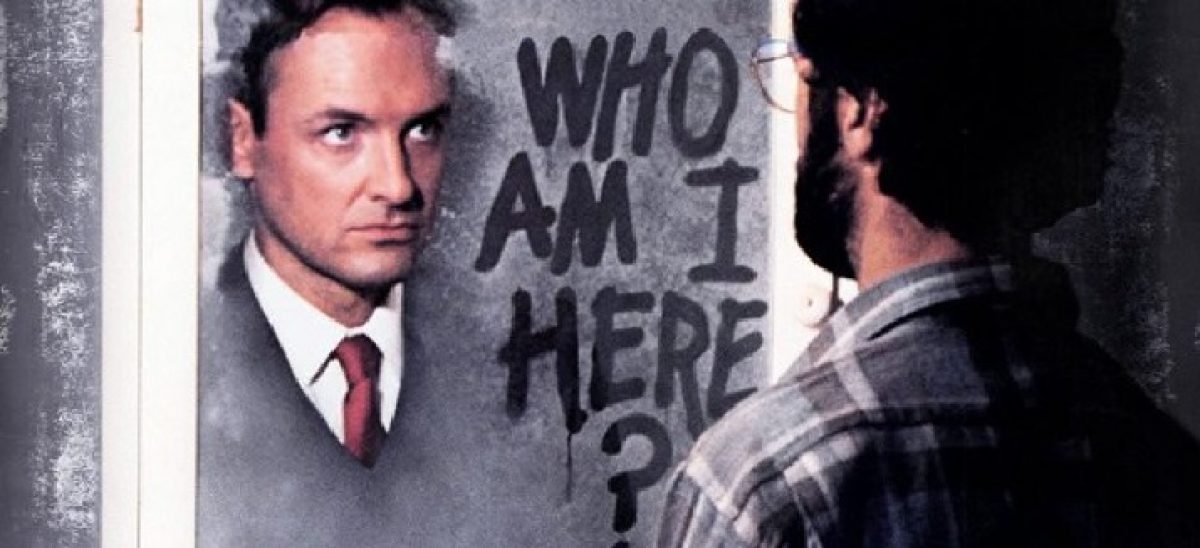
House of the Long Shadows (1983)

Directed by Pete Walker [Other horror films: Die Screaming Marianne (1971), The Flesh and Blood Show (1972), House of Whipcord (1974), Frightmare (1974), House of Mortal Sin (1976), Schizo (1976), The Comeback (1978)]

Despite the stellar cast of this one, I didn’t care that much for House of the Long Shadows when I first saw it. Well, I thought it was okay, but I didn’t think it was particularly great. I generally feel the same way now – it’s a solid movie in many aspects, and again, the cast is stellar, but I also think it runs a bit long, and it’s not a movie I’d revisit all that often.

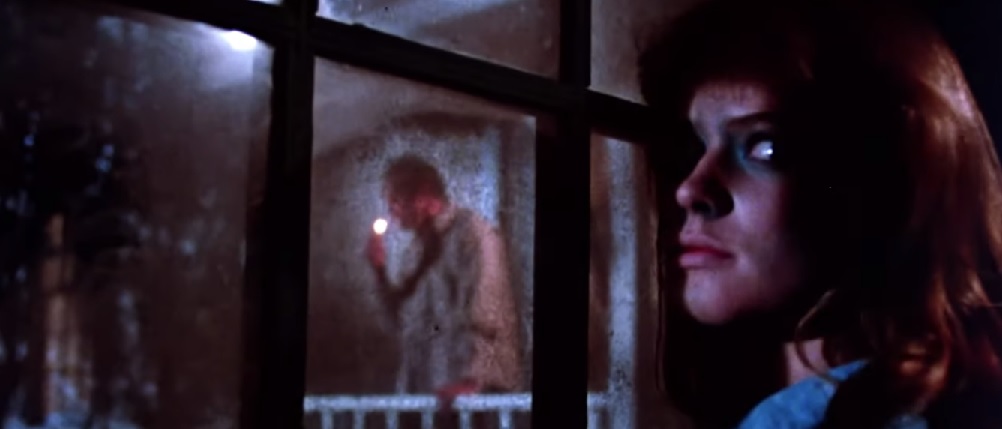
Based on a 1913 novel by Earl Derr Biggers titled Seven Keys to Baldpate (which was later turned into a play, and made into multiple movies), the story follows Desi Arnaz Jr.’s character’s attempt to write a book to win a bet in the deserted mansion at Bllyddpaetwr (Welsh for the win), though he finds that the mansion is not quite as deserted as he was told. It’s a decent idea, but like I said, I feel like it’s a bit long (the movie runs for an hour and 42 minutes), and though the story is okay, I don’t know if it’s enough to carry the film.

Look at that cast, though – true, Desi Arnaz Jr. is the main star, and you could argue Julie Peasgood is a co-star, and neither one is particularly well known (though both do perfectly fine), but look at the others: Peter Cushing (The Abominable Snowman, The Masks of Death, The Skull, The Creeping Flesh, Frankenstein and the Monster from Hell), Vincent Price (Witchfinder General, The Tomb of Ligeia, The Fly, Tower of London ’39 and ’62, Cry of the Banshee), Christopher Lee (I, Monster, The Two Faces of Dr. Jekyll, The Virgin of Nuremberg, Curse III: Blood Sacrifice, Circus of Fear), and John Carradine (Crowhaven Farm, The Nesting, The Unearthly, Curse of the Stone Hand, Revenge of the Zombies).

Obviously, all four are giants of the genre – I’ve long been a fan of Vincent Price and Peter Cushing, and both Lee and Carradine are always decent too. In this movie, I actually do think that Christopher Lee’s character is the most interesting, but Price gives a lot to the movie also. Peter Cushing is a little more limited here, and John Carradine (who was around 77 at the time this was filmed), while fun, doesn’t have that much to do either. Still, it’s great to see the four of them in a single movie, despite the fact I don’t think the movie’s great.

Other performances worth mentioning include Sheila Keith (Frightmare, House of Whipcord), Richard Todd, Louise English, and Richard Hunter. I don’t think any of them add as much as Price, Cushing, Carradine, or Lee, but then again, how could they?

The story is reasonably fun. It’s worth mentioning, at this point, that the movie does have a somewhat light-hearted tone to it. The finale is almost whimsical, and while the humor is never over-the-top, the light-hearted nature is obvious throughout. And speaking of the finale, while I don’t know if it was executed entirely well, I can sort of appreciate it. It does seem a little bit ludicrous, but at least it was different.

As far as the kills go, there were two that I thought stood out – in one, a woman is washing her face, but unfortunately the water in the basin was replaced with corrosive acid, and that doesn’t do wonders for the woman’s complexion. In another, a character is killed with a battleax – we don’t see the kill, but we do see the attack through silhouettes, which looked pretty damn cool. The movie harkens back to the old dark house mystery days, but there are a few scenes here that does remind us it takes place in the 1980’s.

For the cast alone, I think it’s a movie worth watching, and generally, it’s regarded pretty well. Having seen it twice, it’s not something I personally love, but I suspect many would be happy with this one, and they’re not without reason.

7/10

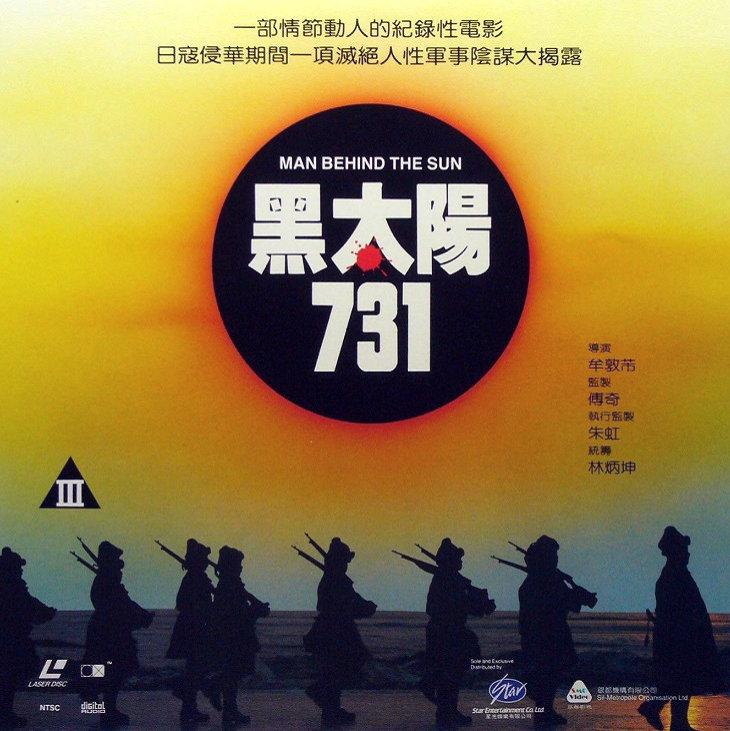
Hei tai yang 731 (1988)

Directed by Tun-Fei Mou [Other horror films: Xiang Gang qi an 5: Jian mo (1977), Die xian (1980), Da se (1980), Huet luen (1995), Hei tai yang: Nan Jing da tu sha (1995)]

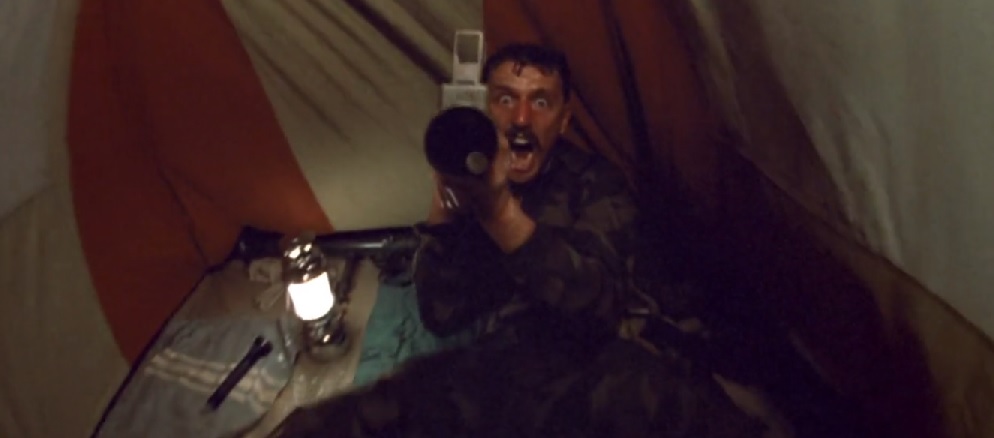
Among one of the most disturbing films I’ve ever seen, Hei tai yang 731, better known as Man Behind the Sun, is not a movie I’ll soon forget. It’s far from a pleasurable viewing experience, and I can imagine that it’d only attract a niche looking for extreme cinema.

Much like Threads, this movie isn’t horror in the conventional sense – it follows the experiments and troops of Unit 731, a Japanese biological and chemical warfare research lab, during the Second Sino-Japanese War. In gruesome detail, we see various human experimentation and how it impacts both the victims and the perpetrators, including young boys who have been conscripted into the Youth Corp.

Naturally, whereas Threads dealt with the theoretical impact of nuclear warfare, this deals with historical material. As to the authenticity displayed here, I will fully admit to not knowing anything about this period of Japanese history, so I can’t say. This is a movie from Hong Kong, so if they show the Japanese is a more negative light than reality, that wouldn’t be surprising. I have no doubt, though, that the information displayed toward the end – that the central scientist of this facility was later acquired by the United States government after they granted him immunity – is accurate, as that’s just how the American government works.

Because of the nature of this film – possessing an almost documentary-type feel at times – it’s not an easy one to judge. It’s not easy to judge anyway, given the material they deal with here, but I can say that while it’s pretty well-made, it’s definitely not a movie that I suspect many people would want to throw on any type of annual playlist.

Let’s get to the main point. Most people who hear about this movie, or perhaps read about it online, have probably done so due to the gruesome content here. Somewhat ironically, the scene in which a cat is thrown into a pit of rats – which seems to be among one of the most distressing sequences for people – is actually one of the least disturbing parts of the film for me. Related, as disgusting and off-putting as the decompression scene in, it wasn’t as bad as I’d had built up in my mind.

When it comes to the disturbing content, there is one scene that comes to mind, and it’s a scene that I don’t think I’ll ever forget. During some hypothermia testing, a woman is bound with her arms straight out, cold water being poured over them repeatedly. The woman is then brought into a lab and her arms are placed into a vat of warm water (well, 15 degrees Celsius, which is around 59 degrees Fahrenheit). After a few moments, her arms are pulled out of the water, and the skin just sort of sloughs off.

There are a lot of disturbing scenes here – a man has his arms quick-frozen, and then shattered off, people are tied to crosses in a field for some bomb testing, and lose limbs, a baby is buried under some snow, a young boy is harvested for his organs in graphic detail – but that arm scene was among one of the most sickening things I’ve ever seen. I rewatched it for accuracy to write this review, and felt a bit sick to my stomach after having done so.

Gang Wang is the only performance that really matters. Playing a character who is committed firmly to the Japanese army, and who sees the prisoners (or as he calls them, Maruts) as merely ways to improve the efficiency of their army by perfecting biological warfare methods, Wang does well with such a disturbing role. Some of the younger kids and other military generals do fine, but this isn’t a movie where performances are going to matter that much, to be honest.

Like I said, this is far from a conventional horror movie, and in fact, I know some may even find it insensitive to label it as such. It’s no doubt exploitative and certainly, at times, tasteless, and more so, Man Behind the Sun is not at all a fun movie to watch. It’s a movie that will stick with me, but you better know what you’re getting into if you want to give this one a watch.

6/10

Firestarter (1984)

Directed by Mark L. Lester [Other horror films: Class of 1999 (1990), Blowback (2000), Sacrifice (2000), Pterodactyl (2005), Groupie (2010), Poseidon Rex (2013)]

While not an amazing movie, Firestarter is a pretty decent watch. Perhaps it’s because the finale is so explosive that I can forgive how the film seems to drag at times, but it’s a generally solid movie with some good performances and special effects.

I’ve read the Stephen King novel once before, and enjoyed it well enough. I’ve not read it recently enough to compare it to the film, but I think most of the salient points came across pretty well. Actually, the idea is somewhat similar to Carrie – a young girl must learn to control her potentially destructive powers – and both the book and this movie do a good job with the idea.

Having seen this before, I forget how well Drew Barrymore (Cat’s Eye) did here, despite being as young as she was. There were a few patchy moments, as far as her performance went, but overall, it was a pretty good job. Of course, Martin Sheen (The West Wing, The Dead Zone, The Little Girl Who Lives Down the Lane, Grey Knight) was great to see here, and George C. Scott (The Changeling, The Exorcist III) did well as an atrocious individual.

Art Carney only had a scene or two to shine, but shine he did. David Keith (Hangman’s Curse, 2002’s Carrie, Succubus: Hell-Bent, Deadly Sins) consistently reminded me of another actor, perhaps Patrick Swayze, so that’s never a bad thing. Freddie Jones (Frankenstein Must Be Destroyed) had a decent scene, Moses Gunn (Bates Motel) doesn’t do much, but gets blown up with the best of them, and I appreciated a small appearance of Antonio Fargas, who I am very familiar with, having seen almost every episode of Starsky and Hutch.

The finale is when things really pick up. Not that beforehand things weren’t interesting, but the finale is what it’s all about, and it’s certainly a fun time. You get houses and barns being lit aflame or blown up, fireballs flung at people, trails of fire chasing people, helicopters blown up – and the best part, there’s not a single innocent person there, so they can all roast and it’s a-okay. The special effects look quite decent, and like I said, the finale is fun, in the same way the finale of Carrie is a good time.

Even so, it’s not a movie that I’d go out of my way to watch all that often. Having seen it twice now, it’s a good movie, but it’s not a personal favorite. I can definitely appreciate it, though I still think the ending is just a bit on the sudden side.

Quite simply, Firestarter’s a good movie, but I don’t think it’s great. Still, though, no doubt it’s one of the better films based off King’s work in the 80’s, I’d have to say.

7.5/10

Howling III (1987)

Directed by Philippe Mora [Other horror films: The Beast Within (1982), Howling II: Stirba – Werewolf Bitch (1985), Communion (1989), I was a Communist Werewolf (2021)]

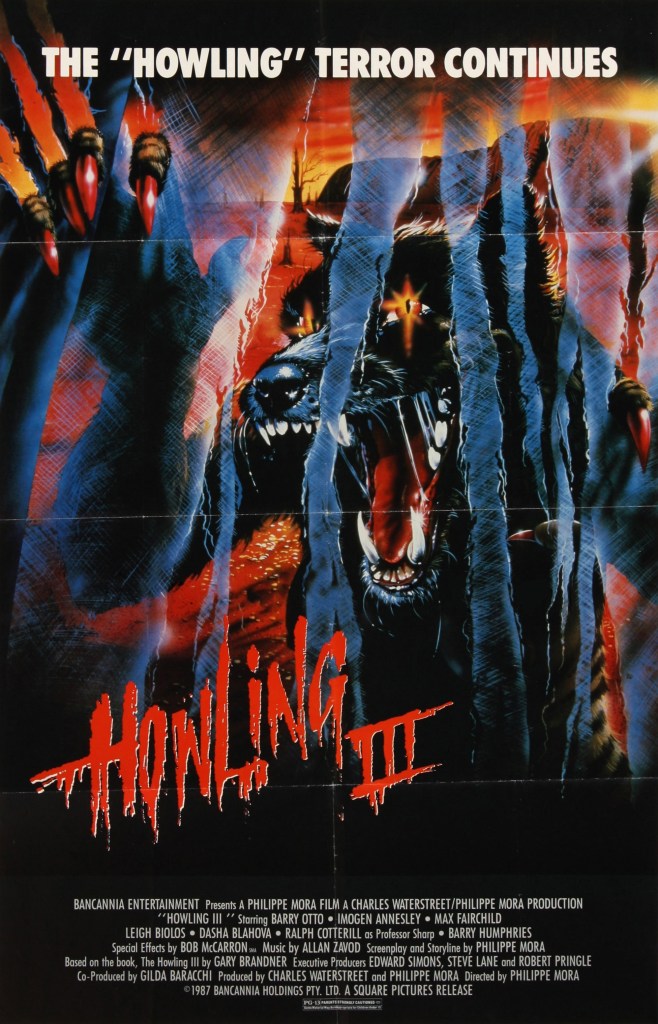
For the first ten minutes or so, I found Howling III a mess. Not that portions past the first ten minutes weren’t messy, but things did stabilize a bit. Even so, while this movie certainly had some interesting ideas, along with a couple of strong elements, I can’t say that I necessarily found it all that enjoyable.

It’s such a wild story, though. You have werewolves in Australia, a Russian werewolf ballerina defecting to Australia, a young woman wanting to escape her life in her Australian werewolf tribe, and falling in love with a human, all while an American is coming over to Australia to find evidence of the existence of werewolves.

First off, this has nothing to do with the first two movies of the series. There is a reference made by one of the werewolves of a possible group of Lycanthropes in California, but that’s as close as this movie gets to making a connection. Thematically, the final scene is quite similar to how the first movie ended, so there’s that, but for this most part, this is very much a stand alone sequel.

As stated, the story is wild enough, but what’s really interesting is the approach they take to the werewolves in the film. At first, as expected, they’re generally an antagonistic force, but as the main character (Barry Otto) is an anthropologist, he’s interested in purely studying these creatures as opposed to causing them harm, putting him in conflict with the military. It doesn’t help matters that he falls in love with a half-human/half-werewolf, and that’s when things get more fascinating.

Obviously, I don’t want to divulge the end of this one, but it’s just odd. The final 15 minutes took me on a trip I really didn’t expect, and, save a single scene, it’s almost entirely void of what people would generally call ‘horror.’ We follow the lives of four characters, and their offspring, as they live for 15+ years in the wilderness, eventually being found out and brought back into the modern world. It was such an odd, and oddly wholesome, finale, and that final scene in Otto’s classroom was almost emotional.

I don’t know Barry Otto, but I pretty much liked his character from beginning to end. Imogen Annesley was solid, reminding me personality-wise of Louise Jameson’s Leela from Doctor Who. Though his character had his ups and downs, Ralph Cotterill (The Survivor) turned out a solid performance also. Lee Biolos was an oddly decent, upstanding character, and Frank Thring was the MVP. He didn’t get a lot of screen-time, and he wasn’t important to the plot, but I loved his fun character.

Burnham Burnham (Dark Age) was decent, though I wish his character had a bit more to do. Max Fairchild’s character has an interesting route – you sort of expect him to be the main antagonist, especially toward the finale, but that never really happens. His character arc just strikes me as odd. The only main performance to not really leave an impression on me was Dagmar Bláhová’s, though toward the end, I could at least appreciate her.

Though the movie is almost an hour and 40 minutes long, I don’t know if I’d go as far as to say it ever dragged. It’s not a conventional werewolf movie, in many aspects, plus it’s Australian, so it does have an odd vibe to it, but boring isn’t one of the sins Howling III commits.

I do think I could have done without some of the more humorous portions. There’s not a lot, but toward the end, for instance, with the three werewolf nuns watching the television program – that’s something I didn’t need. I also could have done without some of the body-horror elements, such as that kangaroo-like pouch. I get the point, but I didn’t enjoy those portions at all.

In the end, though, Howling III is a very flawed film. I do think it’s better than the atrocious second movie, though – it may be low praise, but it’s what I’ve got. Certainly the finale of this one did carry with it some decent emotion, save the final scene, and if they had been able to expand that to the rest of the film, perhaps the final product would have been better. It might not have been horror – more a wholesome day-in-the-life of a werewolf community – but at least more consistent.

Really, it’s an odd movie. It can be entertaining, and it does have some strong portions, but I still find Howling III a decent bit below average. That said, this is one that I’ll ruminate on, as it does have the potential to move up, I think.

5.5/10

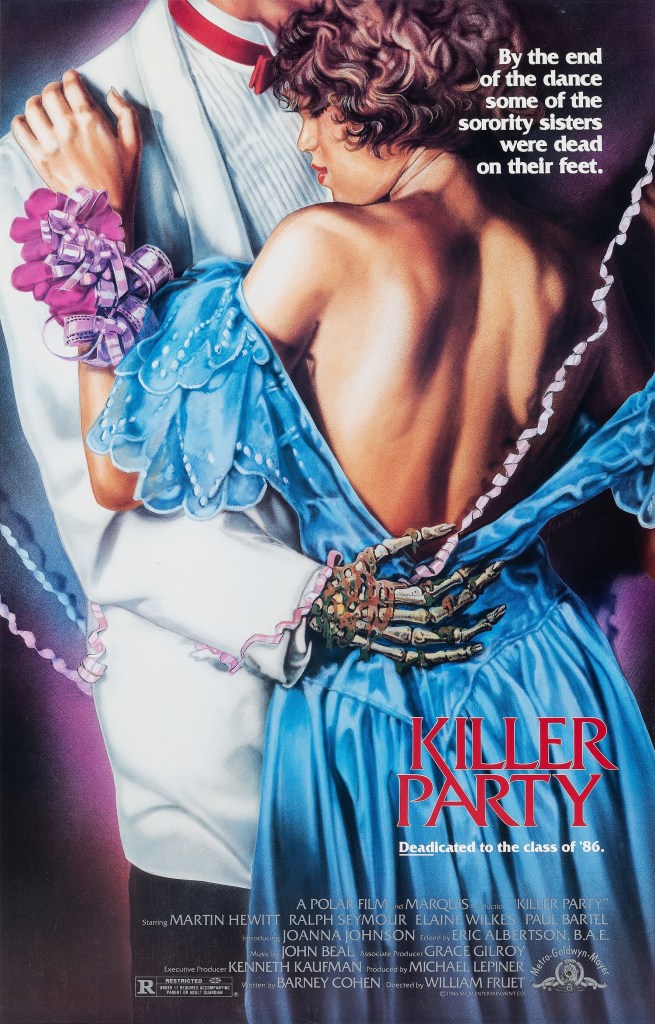
Killer Party (1986)

Directed by William Fruet [Other horror films: Death Weekend (1976), Cries in the Night (1980), Spasms (1983), Blue Monkey (1987)]

I have to admit that I came out of this one feeling misled. I’m not blaming anyone, but I was under the impression this was a slasher, and while there are slasher aspects, it primarily feels more like a precursor to Night of the Demons, and that’s when it’s not feeling like a mess.

Apparently this movie was edited to hell by the MPAA, and you can tell, because the kills in this movie, while they have potential, are pretty weak. The movie is strongest for that perhaps ten minute period when the slasher feel is at it’s peak, but even so, most of the kills are weak, and honestly, the whole of the movie is the same.

Look, I hate sororities and fraternities. I refer to this in my reviews of Pledge Night, Final Exam, and American Horror House, and in Killer Party, pledges are told to recite sexually suggestive phrases in class (getting one girl thrown out), frat boys assault women (big shock) as they throw bees at them while in a hot tub, and film them as they frantically try to get in the house, in towels or nude, so quality sexual harrasment. That alone should have sent them to jail, I felt.

I hate fraternities and sororities. I can’t stand them. Abusing and humiliating people, and then acting like brothers and sisters for life afterwards strikes me as utterly ridiculous and dehumanizing. And unfortunately, we have to deal with abusive sorority aspects for the first 50 or so minutes of the movie.

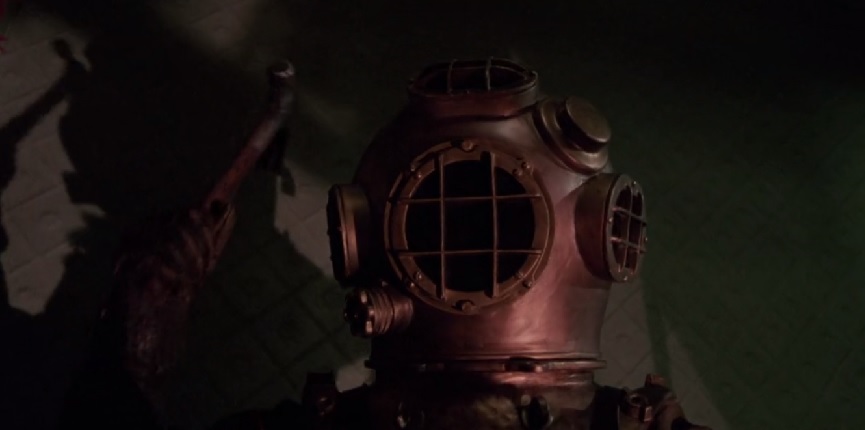
Once we get past that, we have what seems to be demonic possession, and I just didn’t care at that point. The slasher portions – with a killer wearing an old-fashioned diving suit – had potential, but the supernatural aspects don’t do anything but repel me. It’s also worth mentioning there’s a few comedic elements thrown in, and I didn’t care for those either.

None of the leads really moved me. Joanna Johnson was fine, Sherry Willis-Burch and Elaine Wilkes were also okay, and Martin Hewitt (Alien Predator) had no character. Ralph Seymour (Just Before Dawn) does have character, but I don’t care for it, and Paul Bartel (Eating Raoul, Piranha) was at least amusing, but gets little focus, given he’s a professor of a university.

Maybe I just wasn’t feeling this. I didn’t care for any of the characters (and to be clear, it’s not like they gave us many reasons to care for any of them), the kills were weak, the supernatural aspects disappointing. Night of the Demons isn’t a favorite of mine, but it’s at least fun, and I just didn’t have that much fun here. Perhaps that will change if I see this in the future, but at the moment, I find it quite below average.

5/10

Deadly Friend (1986)

Directed by Wes Craven [Other horror films: The Last House on the Left (1972), The Hills Have Eyes (1977), Stranger in Our House (1978), Deadly Blessing (1981), Swamp Thing (1982), Invitation to Hell (1984), The Hills Have Eyes Part II (1984), A Nightmare on Elm Street (1984), Chiller (1985), The Serpent and the Rainbow (1988), Shocker (1989), The People Under the Stairs (1991), New Nightmare (1994), Vampire in Brooklyn (1995), Scream (1996), Scream 2 (1997), Scream 3 (2000), Cursed (2005), My Soul to Take (2010), Scream 4 (2011)]

Deadly Friend is a Wes Craven movie I’ve not really heard much about, and after seeing it, I can’t say I’m surprised. It’s not an awful film, though – I just think it’s largely mediocre and will end up a pretty forgettable affair.

Based on a 1985 novel by Diana Henstell titled Friend, the story here deals with an intelligent young man who uses his knowledge in much the same way Frankenstein did back in 1931. Of course, it takes something like forty minutes to get to that point, and I can honestly say I wasn’t sure where the movie was going based off the first third, so there’s that.

Even so, I think I enjoyed the first third more than the rest of the movie – once a character dies and is essentially resurrected, I have to admit that I lost a lot of interest. Part of this is I was sort of hoping the antagonist force would have been the robot BB (in a horror version of Short Circuit), which I thought could have been decent, but the Frankenstein-esque route they took didn’t really do much for me at all.

It’s also worth mentioning that, based on a little reading, that the final product isn’t one that Craven is happy with – he wanted more a supernatural love story, whereas the studio wanted blood, as to match Craven’s previous work (such a A Nightmare on Elm Street), which naturally messed up Craven’s hopes for the film.

That said, I can’t say that I’d have enjoyed a more PG version much more than this one, and in fact, the scene in which a basketball is launched at someone’s head, and said head explodes, is the stand-out scene in the movie to me, especially in the latter portions, when I didn’t care for much that was going on.

To delve into this a little, the main character (Matthew Labyorteaux) brings back to life a friend and potential love interest. He’s depressed, and tries to fix her, and so he does what he can, re-animating her. However, he didn’t seem to have a plan past that point – unless he moves off on his own with his corpse bride locked away in the basement, there was zero chance that others, such as his mother, wouldn’t find out about it. It’s that lack of forward-thinking, especially from what we see as a very intelligent character, that bothered me quite a bit.

Grief hits people differently, to be sure. But if you’re going to bring back someone from the dead, try to have an actual plan to follow if it actually works. Just Jiggy’s advice.

Otherwise, Matthew Labyorteaux (Little House on the Prairie) made for a fine lead. I didn’t care where his story went, but he had a solid performance. Kristy Swanson’s (Swamp Shark, Mimesis Nosferatu, Killer Under the Bed) performance was captivating, at least while she actually had character. Others, such as Michael Sharrett, Russ Marin, and Anne Twomey, failed to make much of an impact.

Really, I think the biggest issue here is that, as decent as I found the beginning (save the annoying robot in the form of BB), I just don’t care where the story goes. There are some okay scenes (such as that basketball one), but it’s just not a movie I found overly enjoyable, nor do I think it’ll really stand out much in my memory.

5.5/10

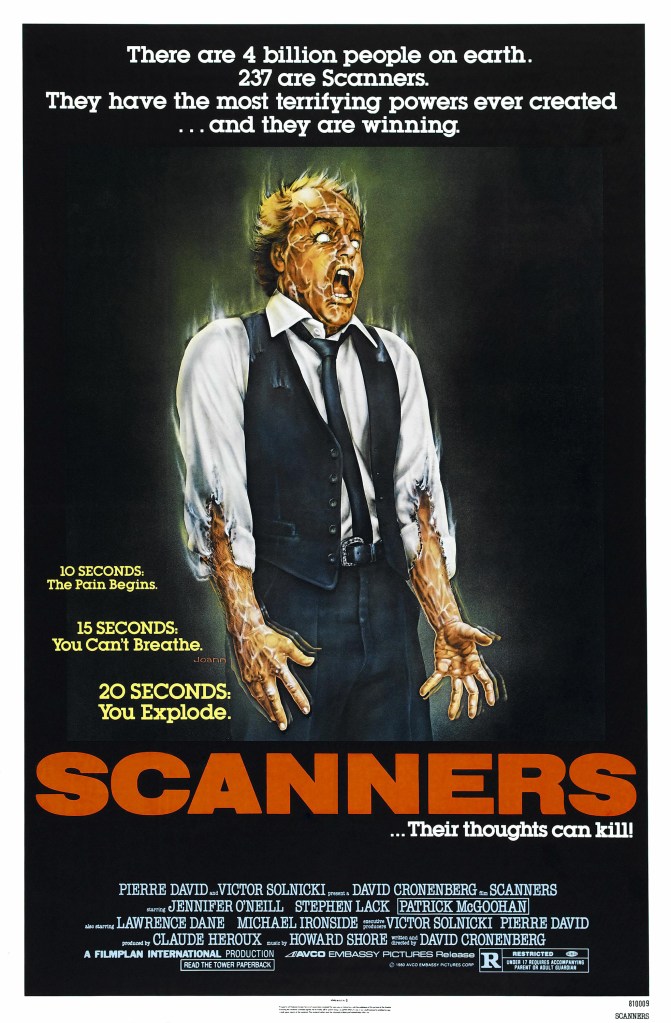
Scanners (1981)

Directed by David Cronenberg [Other horror films: Shivers (1975), Rabid (1977), The Brood (1979), Videodrome (1983), The Dead Zone (1983), The Fly (1986), Dead Ringers (1988), Naked Lunch (1991), eXistenZ (1999), Crimes of the Future (2022), The Shrouds (2024)]

David Cronenberg has always been a director I’ve had a bit of a mixed record with. While it’s true I enjoyed films such as Shivers and Rabid, others, such as The Brood and Videodrome, are ones I found it difficult to dig into. Scanners is a classic I’ve never had the urge to see, partially due to that mixed record, but after having seen it, I do think it’s one of his better films.

By no means, though, do I find it fantastic – it’s a pretty solid story with a wide scope (not dissimilar to Videodrome, albeit infinitely more sensible), quality action sequences, an interesting idea, and, of course, very solid special effects.

I knew the basics of the story going in, and I have to admit to being pleased that I could actually follow everything along. Some of Cronenberg’s films can veer toward the complex, such as Videodrome and The Brood, and while this one does deal with large topics, pretty much everything makes sense, which is a relief (as it was a worry of mine, and one of the reasons I put off watching this for so long).

Admittedly, the horror aspects here are couched heavily in science fiction, which probably isn’t a surprise, but it is worth mentioning. Many of the more action-packed sequences feel like, well, an action movie, or perhaps a thriller, as opposed to horror, and in fact, I think it’s by the quality special effects alone that allow this entry into the genre.

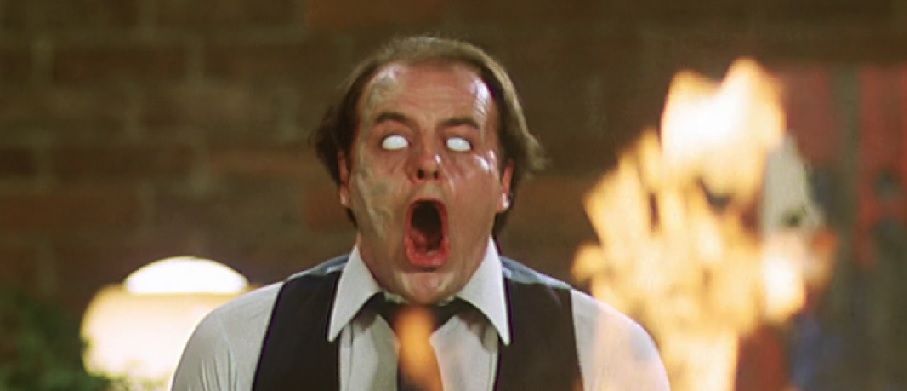
Everyone, and I mean everyone, knows about the scene in which someone’s head explodes. Even before I was born, I knew about the scene, and I think it’s fair to say that even if people don’t realize what movie it’s from, or recognize the name ‘Cronenberg,’ they know the scene too. And it’s a good scene, but what’s great about Scanners is that it’s not even the most gruesome scene – the telepathic duel, of sorts, during the finale was some grisly stuff, and led to a final moment that I rather liked, so there’s some good stuff here.

To be fair, much of the other action tended to be more generic and tame, even scenes that you might expect a bit more from (such as the shotgun massacre). Again, it feels like it’s an action movie at times, which is fine, because it works with the story, but disappointing even so. However, I did really enjoy the computer sequence, in which Stephen Lack’s character scans ConSec’s computers – that was some enjoyable, explosive action.

Somewhat amusingly, I don’t think Stephen Lack is the stand-out here. His performance was decent, but by the nature of his character, he sort of lacked many expressive capabilities. Patrick McGoohan, on the other hand, played a pretty complex character, and while it wasn’t easy to get a read on him, I loved his performance.

As for the other performances worth mentioning, Michael Ironside (Hello Mary Lou: Prom Night II, Visiting Hours, The Next Karate Kid) was solid, though not as in-focus as you might think, Jennifer O’Neill (The Psychic, The Reincarnation of Peter Proud) seemed almost pointless, but otherwise did fine, and Lawrence Dane (Of Unknown Origin, Rituals, The Clown Murders, Happy Birthday to Me) made for a solid character with an exciting end.

I’m surprised that I enjoyed Scanners as much as I did, but it’s certainly a pleasant surprise. It’s not exactly the type of movie I’d generally go out of my way to see, but it was pretty enjoyable at the time, and from the action to the special effects, it’s definitely a movie worth seeing for a nice mix of genres.

7.5/10

Threads (1984)

Directed by Mick Jackson [Other horror films: Demons (2007)]

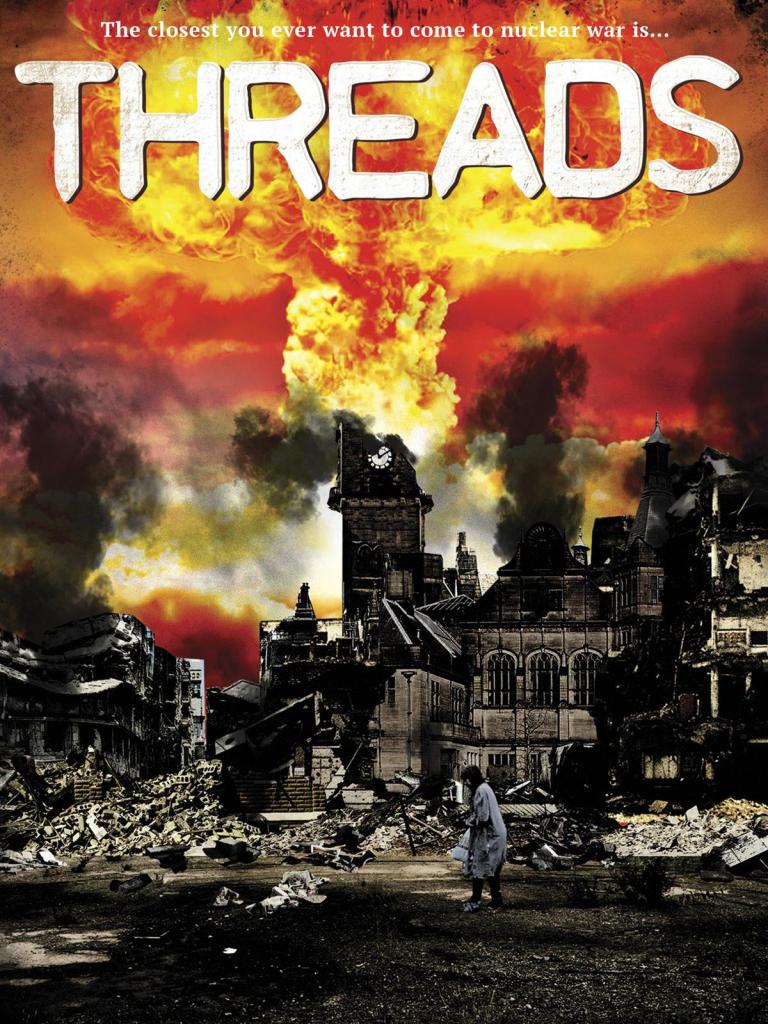
In a conventional sense, referring to this classic television movie as a horror film may not strictly be accurate. At the same time, there are few movies I’ve personally seen that feel quite as stark, bleak, and devastating as Threads does, so counting it as one seems rather fair to me.

To be sure, there have been plenty of films that touched on the horrors of nuclear weaponry, such as Godzilla and Genocide; the difference is that Threads takes a realistic approach to the idea, and instead of causing a monster to roam the countryside, we have widespread starvation, death, looting, radiation sickness, deformities, and atrocities committed by the military. This movie is not for the light-hearted, and with as much an impact it made on me, I can only imagine the impact it made back during the Cold War.

In a way, it’s hard to take a step back. The film feels like a documentary, with some somber narration by Paul Vaughan, slowly showing the audience the build-up to the bombs being dropped, and the horrific aftermath, not just days and weeks, but the widespread effects up to 13 years following the attacks (including a rise in leukemia and cataracts, due to the increased UV rays).

The despair is made all the worse because the characters the film focuses on, primarily a working class couple from Sheffield, have absolutely no way to prevent any of this; like most people on the planet, we live our lives and try to get by, and if a nuclear war should break out between multiple countries, we don’t have a say whatsoever, and so we’re doomed to starve to death (and that’s if we survive the initial blast and the fallout) as crops won’t grow and babies are born dead and deformed.

What’s interesting is that the stark nature present in this film doesn’t end with the final shot (a fantastic final shot, I should add); there’s two minutes of credits, but while the names are coming on the screen (including many scientists who helped with the authenticity, including Carl Sagan), there’s no music. It’s just silence during the credits, and I have to imagine that was done to give people some time to sit, think, and take in what they witnessed.

Aside from Paul Vaughan (the narrator), there’s not too many important cast members. Karen Meagher and Reece Dinsdale felt authentic in their roles, and Harry Beety, while it’s slightly more difficult to feel bad for him given his powers under the Emergency Powers Act, did quite well too. That said, none of the three are really what I’d call the focal point – it’s true we spend a lot of time with Meagher’s character, but the overall picture of a pre-bomb and post-bomb Sheffield is far more important than any individual person.

It’s also worth mentioning that while this film is close to two hours long, and the first bomb doesn’t fall until about 48 minutes in, it never feels dull. In fact, I was captivated through the build-up, what with the USSR and the USA’s conflicts pushing into Iran, tensions growing, all leading to the devastation we soon see. For someone who has long held an interest in politics, I was tuned in from the beginning, and as depressing as the movie was, I did find it rather worth watching.

That said, this is not always an easy movie to get through, especially once the bombs drop and the after-effects are fully realized. There’s plenty of rather disturbing imagery and scenes, such as an older woman who is embarrassed at having made a mess in her bed to a middle-aged woman holding the burned-out husk of what we could imagine was her child. People are shot for looting, locked in make-shift prisons, others are starved and count themselves lucky to be eating rat or possibly radiated sheep.

Threads is a stark and somber film of what nuclear weapons could lead to. Many extras involved in this film were also involved in the Campaign for Nuclear Disarmament, and I’ve long thought it wise to remove these types of weapons from the possible arsenal of any country. After watching a movie like this, no matter how alarmist it might seem to some, I find it difficult to believe many would walk away with a different take on the viability of a weapon that could cause effects even half as atrocious as shown here.

Again, this isn’t a conventional horror film, but I definitely think it counts; it’s more than that too, though, and as disturbing as the film is, I think it’s definitely one of the highlights of the 1980’s. I may not want to watch it again any time soon, and it may not be that enjoyable an experience, but I can’t deny it was a solidly-made film and certainly eye-opening insofar as the horrors of nuclear warfare are concerned.

8/10

Phantom of the Mall: Eric’s Revenge (1989)

Directed by Richard Friedman [Other horror films: Stephen King’s Golden Tales (1985, segment ‘The Old Soft Shoe’), Scared Stiff (1987), Doom Asylum (1987), DarkWolf (2003), Born (2007)]

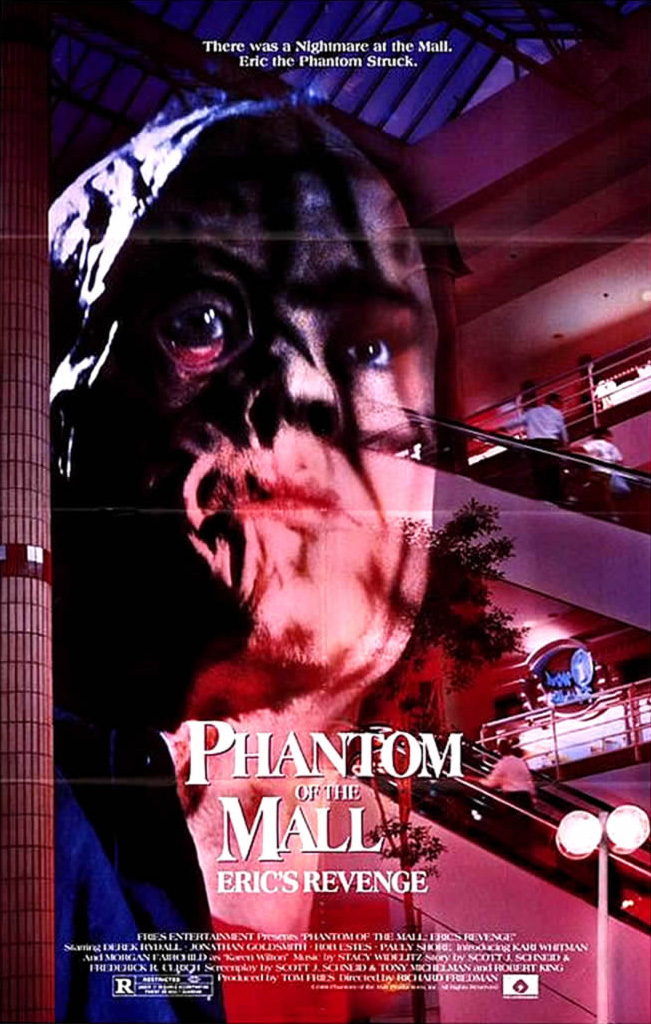
Despite the somewhat silly title, I can say that Phantom of the Mall: Eric’s Revenge is a decent movie. It’s probably not great, but I’ve seen it twice now, and I do find it a rather fun film with a lot going for it.

The story here is about what you’d expect, being a modern-day (at least modern-day to the late 1980’s) adaptation of The Phantom of the Opera. There’s little here that’s likely to amaze anyone, but the mystery is decent, some characters and their motivations hidden well, and come the finale, we’re mostly satisfied with how everything has gone down.

Oh, and if you’re wondering why the mall in this movie may look familiar, it’s apparently also where Chopping Mall was filmed, so there’s another element of fun.

As far as performances go, the only one I didn’t really care for was Gregory Scott Cummins (Watchers III, Click: The Calendar Girl Killer, Hack-O-Lantern), and that’s more due to the nature of his character than to the actual performance.

Otherwise, the cast is pretty strong throughout the board.

Kari Whitman was never really in much, or at least much I’ve seen, but she made for a solid lead, not to mention sympathetic. Her friends, played by Kimber Sissons, Pauly Shore, and Rob Estes (Uninvited), were all decent – in fact, while Shore’s character was sort of the odd, goofy guy, he knew how to get serious. Derek Rydall (Popcorn, Night Visitor) was tragic, and knew how to do a spinning kick with the best of them.

Jonathan Goldsmith (Blood Voyage) was good as a scummy individual, Morgan Fairchild (American Horror House, The Initiation of Sarah) also good as a scummy individual, being the mayor of the town. Actually Fairchild and Goldsmith worked well together, and related, I was happy with where the movie took their characters. Other familiar faces include Ken Foree (Leatherface: The Texas Chainsaw Massacre III, From Beyond, Dawn of the Dead) and Tom Fridley (Summer Camp Nightmare, Jason Lives: Friday the 13th Part VI), along with a small cameo of Brinke Stevens (Blood Reaper, The Ritual, Spirits).

The kills here were never really gory – this isn’t Intruder, or anything so enjoyable. However, most of the kills were at least decent, from a decapitation and a snake in a toilet to someone being thrown out a window and impaled, not to mention someone meeting the business end of a flamethrower. There’s a lot of decent kills here, and it keeps you entertained.

Also quite nice is the fact that this movie moves at a great pace. It’s an hour and a half, but it doesn’t really feel it, and though I will say there was a small sense of dragging around the hour and ten minute mark, the finale was actually pretty solid and satisfactory.

Phantom of the Mall: Eric’s Revenge is a pretty enjoyable movie, albeit not really that special. If you’re into slashers, I can’t think of a good reason not to give this one a shot. It has a good classic feel, along with a power ballad titled ‘Heart of Darkness’ by Stan Bush that keeps popping up. Again, it may not be special, but I think it does a lot of what it was trying to do.

7.5/10

Hospital Massacre (1981)

Directed by Boaz Davidson [Other horror films: N/A]

Known in some parts as X-Ray, Hospital Massacre is a serviceable slasher. It does have a bit of a cheap feel, but it also hits most of the notes well enough. I don’t think it’s anywhere near one of the greats, and on the whole, might lean more toward below average, but if you’re a fan of slasher films, it’s at least worth one whirl.

I’ve seen this either once or twice, and I enjoyed it well enough. In part, that’s due to it combining the location of a hospital (as Halloween II and Visiting Hours did) with the holiday of St. Valentine’s Day (My Bloody Valentine). This movie doesn’t feel quite as good as Halloween II or My Bloody Valentine, of course, but it’s at least better than Visiting Hours.

One problem I have with this film is just how aggravating the focal plot is. A woman (Barbi Benton) goes into a hospital to pick up some test results, but a mysterious individual switches the results out, causing the doctors to think that she’s deathly ill. She has no symptoms, but they effectively keep her there against her will, refuse to disclose what they believe is wrong with her, and act as though she’s having seizures when she becomes understandably annoyed.

It’s almost like Bedlam, actually, only nowhere near as dramatic or aggravating, but even so, the fact that none of the doctors even came close to disclosing the results of her tests just bugged the hell out of me. Even if you’re sick, hospitals can’t force you to stay; you can leave without the physician’s approval (the exception, I imagine, being rather contagious diseases). But apparently she didn’t get those rights, and it just bugged me something awful.

Naturally, I appreciate how this movie clearly shows that it’s the good ole’ days. Not only does a character smoke in the hallway of a hospital, but she also smokes in a hospital room as a patient. Never once is she asked to put the cigarette out, and it just goes to show that it really was a different time. Oh, and they were also fumigating a floor, but still had patients on the floor beneath, which also felt rather odd.

Another thing that I sort of liked, while rather unrealistic, was the setting. Being a horror film, the hospital was laughably empty. A woman could go running and screaming down a couple of hallways, and no doctors, nurses, patients, or other administrators seemed to be nearby to ascertain what the nature of her displeasure was. I get it – a lot of slasher movies do this – but it just felt ridiculous. Still, horror films set almost entirely in hospitals, which are creepy places to be even in the best of health, have a charm to them.

This might just be me, but another ridiculous aspect was how every character was treated as a suspect. There’s the ex-husband, who has been playing with a switchblade all day, who is mysteriously missing when Benton’s character calls him. There’s a janitor leering creepily at her. There’s a doctor with some scaples in his drawer, and it’s just all so silly and over-dramatic.

Get this: the killer has heavy breathing, which has been demonstrated throughout the film. When one of the doctors is looking through records, and he hears a noise, using his flashlight, he looks around the dark room (this, on a side-note, is one of the darkest hospitals I’ve seen, and I’ve seen The Power). It’s quiet, until he turns around and – all of the sudden – there’s heavy breathing and a hatchet to his head. Again, while the kill was okay, it just felt silly.

In fact, I’ll give the film credit for decent kills overall, even the final one, which had okay effects. None of the kills are really Tom Savini level, but there’s the hatchet to the head, someone gets drowned in chemicals (reminding me a little of the boiling water in My Bloody Valentine), another gets had with an electric orthopedic saw. There’s a bit of blood splatter, but it’s never really gory. Even so, the kills weren’t half bad.

To be honest, I can’t say any of the performances wowed me. Barbi Benton made for an okay lead, but I never felt that strongly one way or the other about her. Jon Van Ness (Tourist Trap) wasn’t really that important, Charles Lucia (Syngenor) was sort of generic, Jimmy Stathis (The Black Room) virtually pointless. I’ll give you that John Warner Williams has a presence to him, and Bill Errigo (who apparently died in 1988 at the age of 37) could wear a bowtie with the best of them, but otherwise, the cast was just okay.

In the right situation, I think that Hospital Massacre (or X-Ray, if you prefer) would make for a fine viewing. I don’t think it’s special, but I also don’t think it’s that harmful. A bit of the plot set-up does annoy me, but I can also admit that if I were in a different mood, this might come across as a better movie.

For the time being, though, I think I’ll rate it just a bit below average. It’s not bad, but a bit weak in it’s execution, and when you compare it to other slashers from around the same time, I don’t know if it would really stand out that well.

6.5/10