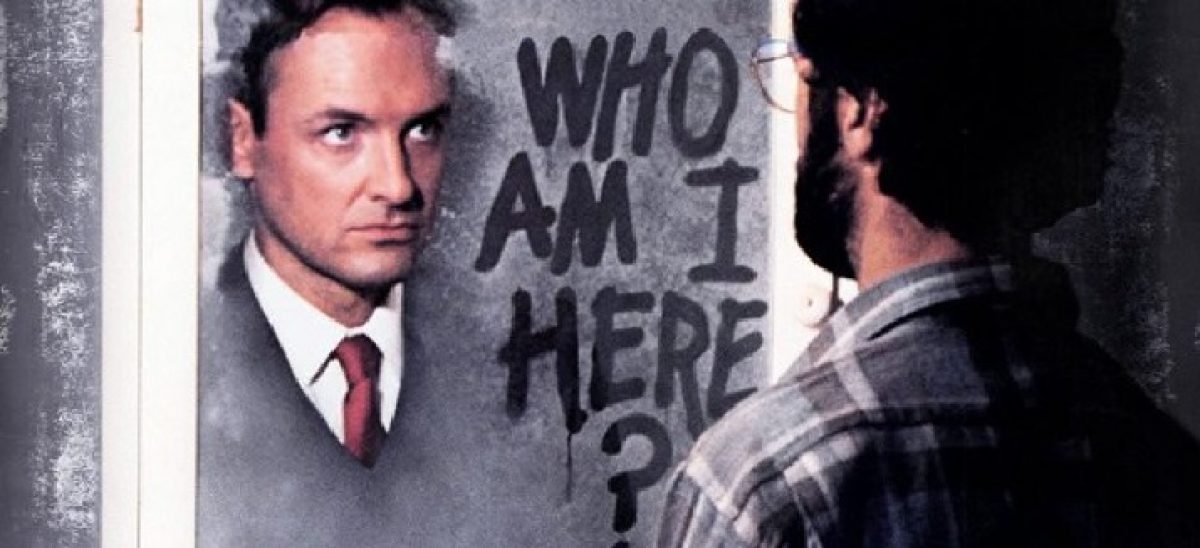
Videodrome (1983)

Directed by David Cronenberg [Other horror films: Shivers (1975), Rabid (1977), The Brood (1979), Scanners (1981), The Dead Zone (1983), The Fly (1986), Dead Ringers (1988), Naked Lunch (1991), eXistenZ (1999), Crimes of the Future (2022), The Shrouds (2024)]

David Cronenberg is a director I have a difficult time with. I respect much of the work I’ve seen from him, and Videodrome is no exception, but few of his movies are films I’d actually call enjoyable, and again, Videodrome is no exception.

It’s not for lack of trying, either – I’ve now seen Videodrome something like four, perhaps five, times. I’ve consistently not loved it, and though many of the visual elements are great, and certainly some of the ideas within the movie are worthy of praise, as a whole package, this movie feels more like a mess.

To be fair, much of this is due to the fact that I simply don’t understand exactly what’s going on. “Long live the New Flesh” is a fun saying and all, but what exactly is the “new flesh,” and how does Bianca O’Blivion’s “new flesh” differ from Barry Convex’s “new flesh”? Brian O’Blivion is interesting, no doubt, and I found his appearance on the talk show quite amusing, but his philosophical ramblings, devoid of any practicality, wasn’t my idea of a good time.

Certainly, science fiction that challenges the viewer with new and sometimes befuddling concepts isn’t something that need be a problem. Much like Triangle, though, I just don’t get exactly what’s going on in this movie (and especially toward the end, which I guess isn’t really the end for Woods’ character, just the end of his arc in his current flesh?), and when a movie has great special effects but a troublingly confusing story, that’s a bit of an issue for me.

Like I said, this isn’t something I went into blind – it’s a movie that I’ve seen multiple times. I was actually hoping for a bit more enlightenment this time around, since before now, I’ve not seen this one in quite a long time. Nothing doing, though, which, while that might be a shortcoming on a personal level, I can’t pretend that doesn’t impact my views on the film.

I don’t have that much to say about the performances. I think that James Woods is decent here (and during the talk-show about violence on television, I tended to agree with everything he was laying out), though not really a stand-out performance. Debbie Harry played one of the more interesting characters (for the screen-time she had), and I certainly wouldn’t have minded learning more about Jack Creley’s Brian O’Blivion, but others fell somewhat flat, such as Sonja Smits and Peter Dvorsky. Overall, there wasn’t much to be amazed by as far as the actors and actresses go, but that’s not really a big issue, as that’s not really what this movie was going for.

What it was going for, or at least by far the most memorable thing about the film, was the special effects, which were pretty solid throughout. Obviously there are some very striking scenes (such as a head going into a television screen, and a man poking his hand into a slit in his stomach), and it’s certainly impressive, but I can’t say that it necessarily made up for any of the perceived issues I had with the story.

In many ways, Videodrome is a cult classic that just never did it for me. I certainly respect the film, but like many of the Cronenberg movies I’ve seen (The Brood being the first that comes to mind), the focus on body horror just doesn’t appeal to me. In fact, I think it’s fair to say that the only Cronenberg movie I actually enjoyed was Shivers, also known as They Come From Within, though of course that may change once I finally get around to watching Rabid or Scanners.

Videodrome is a movie that’s worth checking out if you’re a fan of classic horror or science fiction, and especially if you enjoy off-the-wall movies that make you think. It’s just not something I’ve ever really liked, and as such, have to throw it a below average rating, no matter how much that damns me in the eyes of some.

5.5/10

This is one of the films covered by Fight Evil’s podcast. Listen below as Chucky (@ChuckyFE) and I discuss Videodrome.

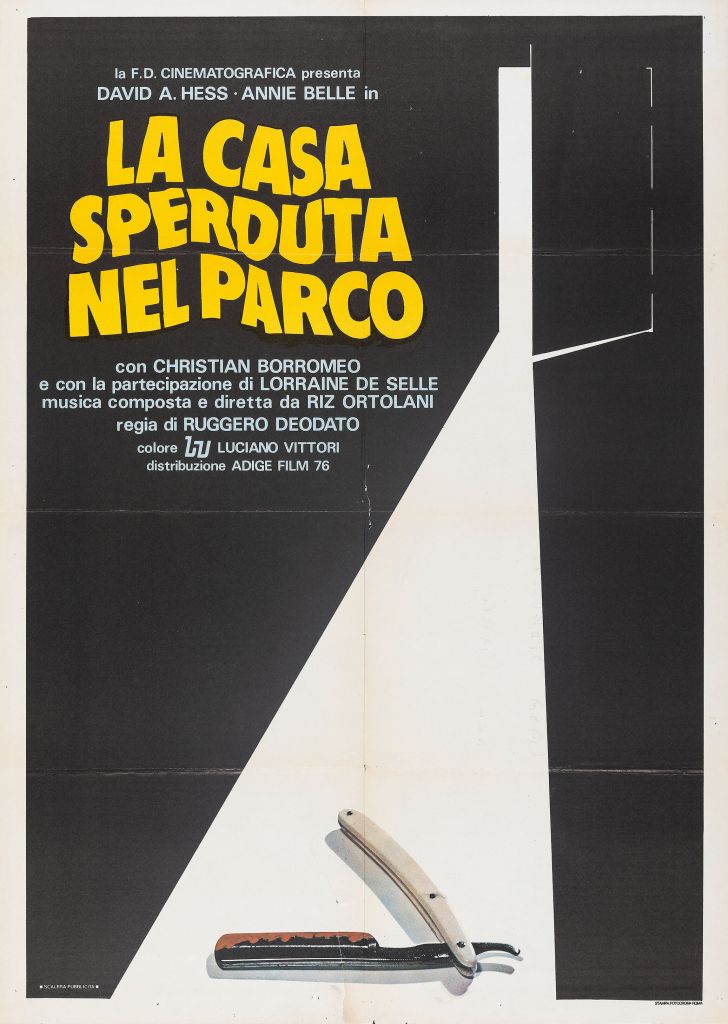
La casa sperduta nel parco (1980)

Directed by Ruggero Deodato [Other horror films: Ultimo mondo cannibale (1977), Cannibal Holocaust (1980), Inferno in diretta (1984), Camping del terrore (1986), Un delitto poco comune (1988), Minaccia d’amore (1988), Vortice mortale (1993), The Profane Exhibit (2013, segment ‘Bridge’), Ballad in Blood (2016), Deathcember (2019, segment ‘Casetta Sperduta in Campagna’)]

In many ways, this Italian movie (generally known under the title House on the Edge of the Park) is a by-the-numbers exploitation flick, and there’s not much here that’s overly surprising (even for a video nasty). At the same time, if you’re a fan of exploitation films, there’s no reason not to check this out, even if it is a little shallow.

For the majority of the film, some rich, rather snobby, people are humiliated, raped, and otherwise under attack from David Hess’ Alex and Giovanni Lombardo Radice’s Ricky. Hess, best known for The Last House on the Left, does a fantastic job, and for his role, Radice does pretty decent too. Few of the other characters really stood out, save Gabriele Di Giulio (who had The Purge’s Rhys Wakefield swag), Annie Belle, and Brigitte Petronio, but everyone did at least okay.

None of the rape sequences here were as revolting as the scenes from I Spit on Your Grave, but there’s an in-universe reason for that, as we find out toward the finale, so that’s probably not a problem (and certainly not something I’d complain about). Speaking of the end, it was nice for this movie to throw a little bit of a twist to us – it didn’t entirely make up for just how dull much of the previous time was spent, but it did throw a bit of meat into the story, and the ending itself was pretty decent.

That said, I just can’t see House on the Edge of the Park being a movie I go back to all that often. It’s well-made and well-acted for what it is, but what it is is a by-the-number exploitation film, and while maybe fun for drive-ins, and certainly possessing some foreign appeal (the soundtrack here was, as the kids say, dope af), it’s not something I particularly loved. It did get better toward the end (some solid nudity from the attractive Petronio helped), but I still think it’s a bit below average.

Certainly, though, if you’re into exploitation movies, and you’ve not yet seen this one, it’s worth a watch.

6/10

This is one of the films covered on Fight Evil’s podcast. If interested in hearing Chucky (@ChuckyFE) and I discuss House on the Edge of the Park, listen below.

Fright Night Part 2 (1988)

Directed by Tommy Lee Wallace [Other horror films: Halloween III: Season of the Witch (1982), It (1990), Danger Island (1992), Vampires: Los Muertos (2002)]

Despite being a big fan of the first movie, I’ve never once really wanted to see this one, partly because I am such a big fan of the first. I knew that this had returning characters, but I wasn’t really sure where this one was going to go, and I just knew that while the first movie was fantastic, the second probably couldn’t compete.

After having seen it, I can sort of say I was correct, because I did find this film below average, but to my surprise, I did find this a bit better than I thought it would have been.

A big reason for this is the return of Roddy McDowall in the role of Peter Vincent. He’s just as fun here as he was in the first movie, and it’s obvious that he really cares for the well-being of Charley (William Ragsdale, also returning from the first movie). The two of them share some solid scenes, and while nothing is really too emotionally-moving, it was nice seeing the pair of them again. As far as love interest is concerned, Amanda Bearse was dropped entirely in favor of Traci Lind, which was a move I was okay with, as Lind has a very attractive look (especially wearing those glasses – hubba hubba).

One move I didn’t much care for was having the antagonists being a group of vampires (as opposed to just a single vampire and his assistant, as the first film had). Having four vampires here, led by Julie Carmen’s Regine, wasn’t something that really interested me, and led to most of the more comedic scenes (such as that pointless bowling sequence, and the whole of Jon Gries, a character I really didn’t like). In relation, Ernie Sabella’s character was another one that, while a twist was present, I thought was unnecessary. The best I can say about these antagonists is that Brian Thompson was there, who I know as the Alien Bounty Hunter from The X-Files.

Story-wise, Fright Night Part 2 is decent. It’s not great, but I liked Charley seeing another vampire attack, alerting Vincent, and then finding out that it happened during a vampire-themed party. Vincent in particular during that sequence seemed to be having a fun time (at least until he pulled out his trusty mirror). Lind’s character development throughout was somewhat fun, and the scene in which she goes to the state institution was perhaps her highlight.

I’ll give the movie a few mores props for both the music and special effects. The music they use here isn’t too far removed from the first film, and has that wonderfully 80’s synth feel to it. Definitely brought with it a solid vibe. The special effects were pretty solid throughout too, and though I didn’t care for some of the vampire characters, I can admit they did some cool things with them toward the finale.

All-in-all, though, Fright Night Part 2 isn’t anywhere near as good as the first film. It’s still okay, and it’s not nearly as much a degrade as I was honestly expecting, but I much preferred the story of the first movie to this one. The antagonists here were probably my biggest issue, and I think the best thing this movie did was drop Amy for Traci Lind’s Alex. Not a great film, in my view, but certainly not a disastrous one.

6/10

This is one of the films covered by Fight Evil’s podcast. Listen below as Chucky (@ChuckyFE) and I discuss Fright Night Part 2.

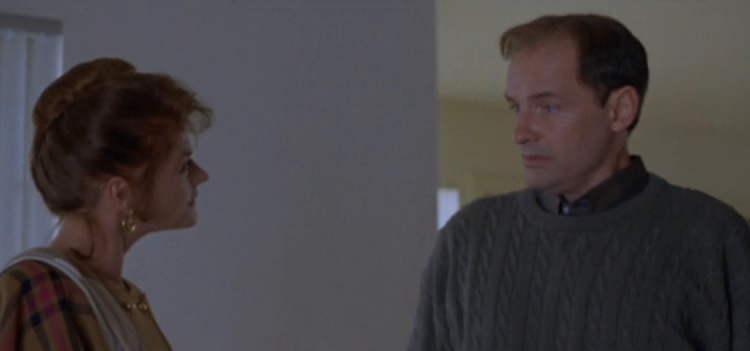
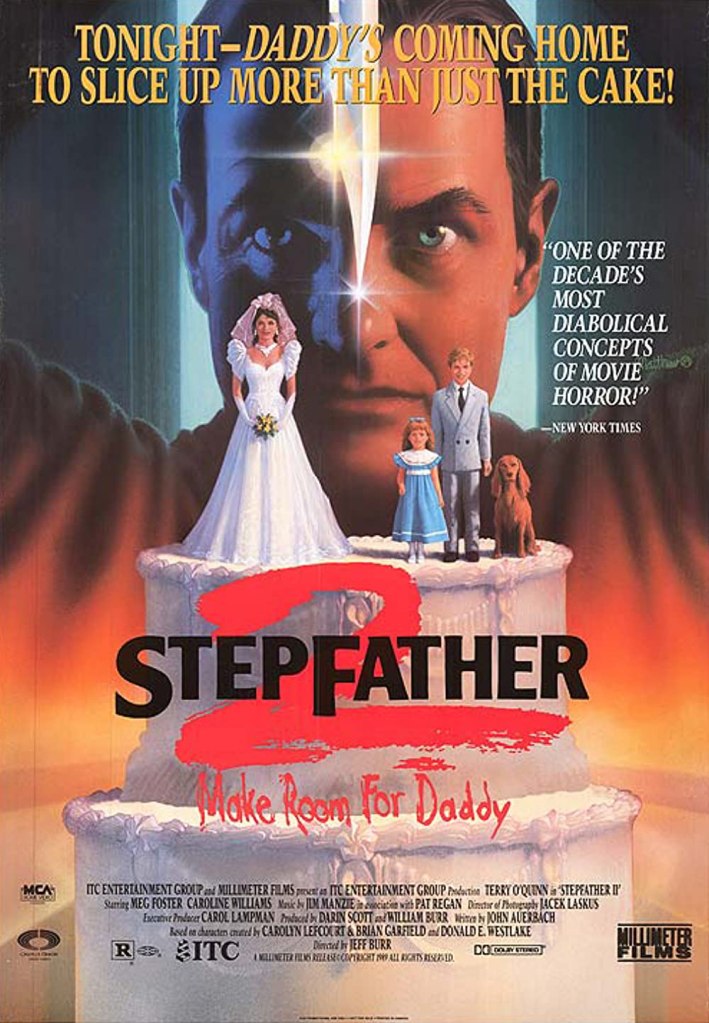
Stepfather II (1989)

Directed by Jeff Burr [Other horror films: The Offspring (1987), Leatherface: Texas Chainsaw Massacre III (1990), Pumpkinhead II: Blood Wings (1993), Puppet Master 4 (1993), Puppet Master 5 (1994), Night of the Scarecrow (1995), The Werewolf Reborn! (1998), Phantom Town (1999), Straight Into Darkness (2004), Frankenstein & the Werewolf Reborn! (2005), Devil’s Den (2006), Mil Mascaras vs. Aztec Mummy (2007), Resurrection (2010), Puppet Master: Blitzkrieg Massacre (2018), American Resurrection (2022), Carnage Collection – Puppet Master: Trunk Full of Terror (2022)]

While not near as good as the first movie (which I have heaped praise upon, and will continue to do so), Stepfather II is still a solid film worth watching, especially if you’re a fan of the first one.

Terry O’Quinn puts in another great performance as the Stepfather, and again, while his scenes were stronger in the first movie, he does a very good job here. He just nails it, from that small scene where he’s listening to the snap-crackle-pop of the Rice Krispies to his musing about the importance of tradition (“If more people stuck with tradition, there’d probably be a lot happier people and a lot fewer divorces”).

I mentioned this in my review for the first film, but I’ll do it again – I find the character of the Stepfather so damn interesting. His old-fashioned view on the world, his desire for the perfect family, but at the same time, how easily he dispatches those who disappoint him and optimistically moves on, hoping to finally find that perfect home, family and all. His origins are hinted at a bit in this one, with him mentioning his father, but we still don’t get that much, which I’m actually fine with. He’s great as is, and O’Quinn really brings him to life. If only it weren’t for that whistling and wine…

Meg Foster is also good here, as is the guy playing her son, Jonathan Brandis, but neither one is quite as captivating as Jill Schoelen (who appeared in flashback form at the beginning, on a side-note). I didn’t notice until just now, amazingly, but Brandis played young Bill Denbrough in the It mini-series. Looking at him now, it’s not clear how I missed it, but there you go. Meg Foster is certainly solid, but again, I wasn’t quite as engaged with her character.

The only other performance to mention is Caroline Williams, who played Stretch in The Texas Chainsaw Massacre 2. She was one of the few things I liked in that movie, and she was similarly pretty enjoyable here, though I probably would have approached the situation she found herself in somewhat differently.

Much like the first movie, the kills here aren’t great. A character getting strangled had some suspense to it, to be sure, and seeing this one guy get pummeled to death was oddly satisfying, but kills were never the strong points for these movies. Perhaps O’Quinn’s breakout of the mental institution was the best sequence, but I digress. The lack of memorable kills never really bothered me with the first film, and it doesn’t bother me now. I would say the overall story, though, isn’t quite as engaging, partially because of the characters.

Stepfather II isn’t near as good as the first movie, but then again, few movies are. This is still a surprisingly solid sequel, and despite it not being great, it’s an enjoyable watch, and if you enjoyed the first one, I can’t imagine this coming across as a big let-down.

7.5/10

This is one of the films covered on Fight Evil’s podcast. Listen below to hear Chucky (@ChuckyFE) and I discuss Stepfather II.

The Dead Next Door (1989)

Directed by J.R. Bookwalter [Other horror films: Robot Ninja (1989), Zombie Cop (1991), Kingdom of the Vampire (1991), Shock Cinema Vol. 3 (1991), Shock Cinema Vol. 4 (1991), Ozone (1993), The Sandman (1995), Polymorph (1996), Witchouse II: Blood Coven (2000), Witchouse 3: Demon Fire (2001), Deadly Stingers (2003)]

This is one of those movies that I’ve wanted to see for quite a long while, but didn’t honestly know that much about. Virtually all I knew about this before going in was that it was a lower-budget zombie movie. I didn’t know, though, how inept it was.

Which is interesting, actually, as I’ve generally heard okay things about The Dead Next Door. I never really heard that many people praise it, but the few times it’s been brought up, people seemed to enjoy it. I can admit that the special effects are somewhat impressive, and the gore is pretty good for a movie of this budget, but everything else is rather lackluster.

It’s a bit of a shame, because the story had potential. It wasn’t amazingly creative or anything, but there were inklings of interest strewn across the plot. Due to a combination of unremarkable characters and some terrible acting, though, even the short run-time of 80 minutes is more a struggle than anything to get through.

Obviously, the lower budget on it’s own didn’t bother me too much. We’re talking Redneck Zombies-level budget here, and it really showed at times (such as some truly awful shots, and they even threw some blood on the camera, which is something I thought only newer bad movies did), but that wasn’t the main concern at all. A low budget, I can deal with. But the stilted and sometimes laughably atrocious acting? It’s a bit harder to swallow.

It’s possible that Bogdan Pecic was the worst, but it’s hard to pinpoint for certain when Robert Kokai (who wore sunglasses during night scenes, which tells you all you need to know about his character) and Roger Graham were also terrible. To be fair, I thought that Jolie Jackunas was almost okay, but overall, we’re talking some really ridiculous acting here. The one-liners were bad enough, but when half the characters are named after famous horror directors/writers (such as Romero, King, Carpenter, and Raimi), it was a hard sell.

Jennifer Mullen and Maria Markovic were both okay, but Markovic’s subplot was entirely wasted. I mean, toward the end, things were falling apart anyway, but even so, they didn’t have a better way to conclude her character’s story? And speaking of which, the one guy who becomes a zombie, with the quote “I’m a zombie now, man” – yeah, I could have done without that exchange. Or really, that whole unnecessary ending, which was just ridiculous.

None of this is to say the movie can’t be amusing in the right setting, because when a movie is this inept, it most certainly can. I mean, these people have been living in a world with zombies for years, now, and they still leave themselves easily open to getting bit? For being a squad of zombie hunters, we’re talking truly inept soldiers, which I guess is a common theme here.

To be sure, the special effects are still mostly solid. I can’t say too much really stands out, but there was a guy getting ripped apart which was pretty satisfying to watch, given the character in question was a major asshole. Still, if you’re watching for just the special effects, may God be with you.

Kudos to the delivery of this line (it’s just as ridiculous as it sounds): “No, it’s not true! It is my religion that is right!” Brought to us by Jon Killough, with the most tepid outburst imaginable.

The Dead Next Door wasn’t really what I was expecting, and while I don’t regret watching it, I can easily say that it wasn’t a movie I could imagine wanting to see again without copious amounts of weed and alcohol accessible nearby. It’s amusing, in it’s own way, but boy, it’s not necessarily an easy movie to get through.

4/10

This is one of the films covered by Fight Evil’s podcast. If you want to hear Chucky (@ChuckyFE) and I discuss The Dead Next Door, here you go, brahs.

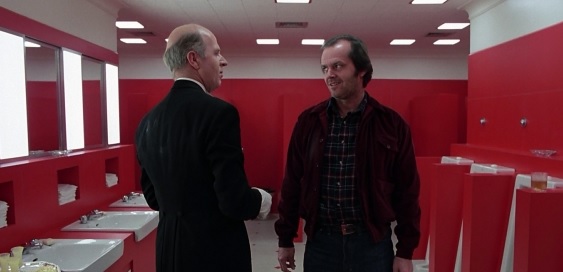
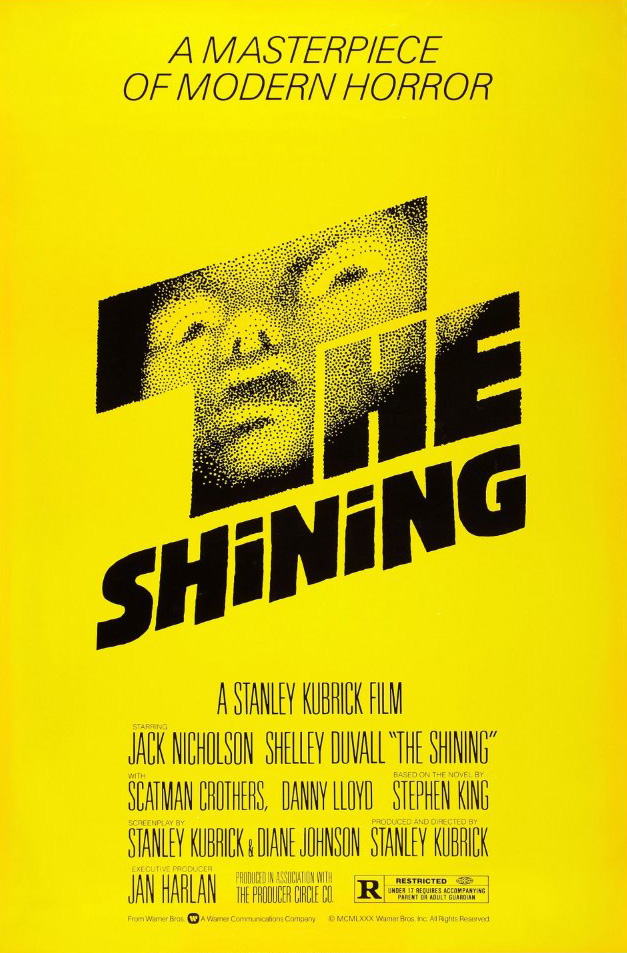
The Shining (1980)

Directed by Stanley Kubrick [Other horror films: N/A]

I don’t want to spend a long time on this. I just want to get in and get out, while still being 100% honest about my views.

I don’t like the Shining. At all.

At best, I find the movie around a 5/10, certainly below average and definitely not a movie I’d want to watch too often. Now, to put my views in context, I don’t dislike the movie because it deviates from the novel. I’ve not read the novel as of yet, so unlike my views on the 1990 It mini-series, the book has nothing to do with it.

The concept in The Shining is interesting, but there are far too many unanswered questions come the end (Who was that old woman? Who was in that bear suit? Why was there a bear suit? Why was Torrence in that picture at the end? What was the use of ‘Tony’ at all? Why did Windy see those skeletons at the end, and that flood of blood meant what, exactly?) and I frankly didn’t enjoy much of this.

I’ll give it that Jack Nicholson does well here, though elements of his character bother me (such as the idea that he literally didn’t write a single word of his novel, and just automatically went into his “All work and no play makes Jack a dull boy” repetition). He did decent here. I didn’t like Shelley Duvall at all, though (she pretty much bothered me throughout the whole of the film), and Danny Lloyd did nothing for me (I don’t hold that against him, as he was a kid). And I gotta say, Scatman Crothers doesn’t do much for me either.

Both Philip Stone and Joe Turkel were good, but without an explanation as to exactly what they are (ghosts of previous people who do the hotel’s manipulation is my guess). Regardless, it goes back to unanswered questions, and while I know that the book might touch of some of these, the fact that the movie just doesn’t bother is something I find a problem with.

A lot of people love this movie. That’s cool. You do you. But I’ve seen this three, maybe four times now, and I never loved it, never liked it, never really enjoyed it. It’s a struggle to get through, and once I do, the best I can say about it is that it finally ended. The Shining isn’t a movie I enjoy.

And since I’ve probably pissed off some people already, let me just throw this in: the 1997 mini-series version of The Shining is a lot better in my eyes, and actually worth watching.

As for this one? Yeah, I can do without.

5/10

Inferno in diretta (1984)

Directed by Ruggero Deodato [Other horror films: Ultimo mondo cannibale (1977), Cannibal Holocaust (1980), La casa sperduta nel parco (1980), Camping del terrore (1986), Un delitto poco comune (1988), Minaccia d’amore (1988), Vortice mortale (1993), The Profane Exhibit (2013, segment ‘Bridge’), Ballad in Blood (2016), Deathcember (2019, segment ‘Casetta Sperduta in Campagna’)]

Commonly known under the title Cut and Run, this Italian movie is somewhat styled after the cannibal movies popular five years prior. Ruggero Deodato directed two of them (Jungle Holocaust and, most famously, Cannibal Holocaust), and came back to do this one, but it’s a surprisingly tame affair.

Make no mistake, if you watch the uncut version of this one, you’re going to get a lot of solid gore (such as a quality decapitation and, perhaps the best scene, a man being pulled apart by the legs), but there’s no cannibalism whatsoever in the movie, and I can’t help but feel the movie’s not near as gritty as it should be.

That may not even be the biggest problem, though. Portions of the story were sort of interesting, but I have to admit to losing interest around halfway through, and Richard Lynch didn’t engage me in the least, especially during his inane philosophical ramblings toward the end. Lynch (who was far better in Bad Dreams) wasn’t a great antagonist, but even the best antagonist here (Michael Berryman) disappeared halfway through the film, and when he popped up again, it was somewhat pathetic.

I just didn’t care that much for the plot. I liked the attacks by the native tribes (that opening sequence was on point), and Berryman made for a very scary opponent (I last saw him in Deadly Blessing, but I’d put this performance perhaps second only to The Hills Have Eyes), but I didn’t much find interest in Willie Aames or Valentina Forte at all. Lisa Blount (Prince of Darkness) was fine, but I wasn’t impressed by Leonard Mann and definitely not by Karen Black.

The gore here was great (and, again, I highly recommend the uncut version), but that’s really all that was great. The jungle setting was good, but why watch a watered down movie like this when you can just go to Jungle Holocaust, Mountain of the Cannibal God, or hell, even Man from Deep River (which I didn’t even care that much for)?

Cut and Run is an okay movie. I think it’s certainly below average, but I’d still recommend it to fans of the classic Italian cannibal movies, even though, in my opinion, this couldn’t quite capture the same vibe of them.

6/10

This is one of the films covered by Fight Evil’s podcast. Listen below as Chucky (@ChuckyFE) and I discuss Cut and Run.

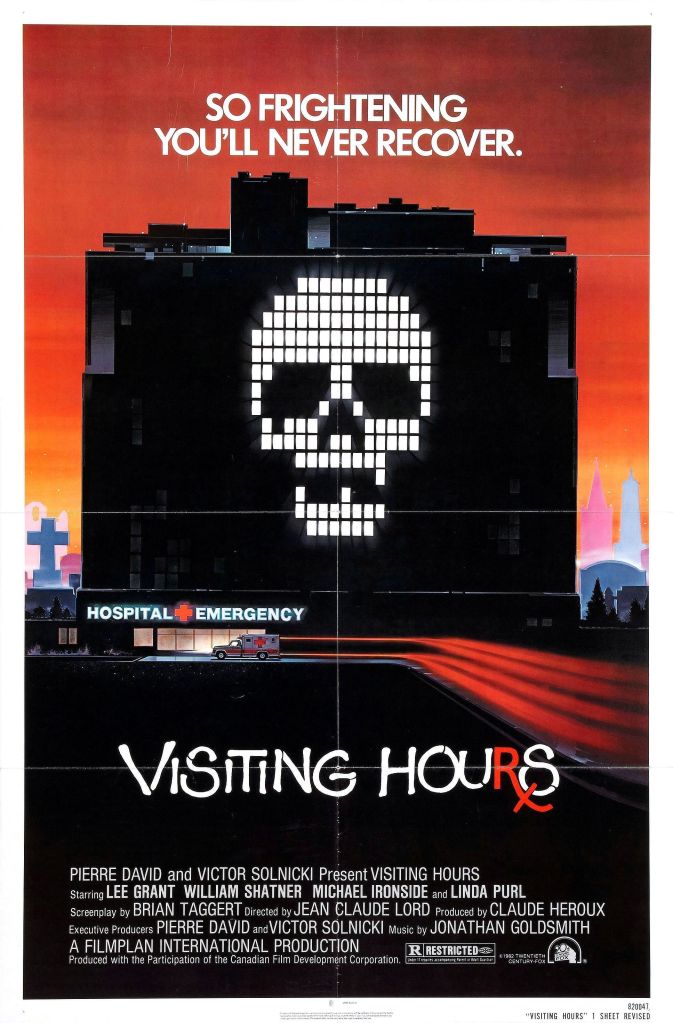
Visiting Hours (1982)

Directed by Jean-Claude Lord [Other horror films: The Vindicator (1986), Summer House (2008)]

I’ve seen this perhaps three times now, and I could swear that I enjoyed this a decent amount the last time I saw it. I still think it’s an okay slasher movie, but boy, this isn’t the forgotten B-flick I remember it being.

Hospital-based slashers always interested me, mainly because I just find the idea of a killer chasing someone around a brightly-lit (or rather dimly-lit, depending on the realism) place of healing rather amusing. Halloween II is of course the best one, but Hospital Massacre (also known as X-Ray, which, on a side-note, is a God-awful title) has a little charm too. I enjoy the chase scenes in this film toward the end, but a lot of the time, Visiting Hours just sorta drags.

The cast is solid, for what it’s worth. Sure, William Shatner was pretty much a waste (I think the best horror film I’ve seen him in was Kingdom of the Spiders, and that wasn’t even good because of him), but star Lee Grant was decent, and Linda Purl too. Michael Ironside (Hello Mary Lou: Prom Night II) probably made the best impression, as a woman-hating psychopath. He certainly had persistence, I’ll give him that.

Overall, Visiting Hours’ story is okay, but it takes side-tracks that don’t really do it for me (such as Ironside’s character beating up a woman but not killing her, or going after Purl’s character). I enjoyed seeing Ironside’s mostly-silent killer try to outmaneuver the police to finish off his victim, but the extra stuff felt more like filler to me than anything else.

I have no objections to the kills, though I don’t think any particularly stood out. The setting, as I sort of alluded to, is on point, and I think the final twenty minutes are perhaps my favorite in the film (along with the opening attack). Also, I like the little snippets of the killer’s past that show why he’s enraged with strong women who stand up to abusive men (some context: Lee Grant’s character is an outspoken feminist journalist), which made the film slightly more interesting.

In the end, though, Visiting Hours is just okay, and a moderately-below average slasher that does some things well, but might lean toward the tedious side (and it doesn’t at all help that the movie’s an hour and 45 minutes). It’s still worth a watch, but it’s not near as good as I recalled it being.

6/10

This is one of the films covered by Fight Evil’s podcast. Listen below as Chucky (@ChuckyFE) and I discuss Visiting Hours.

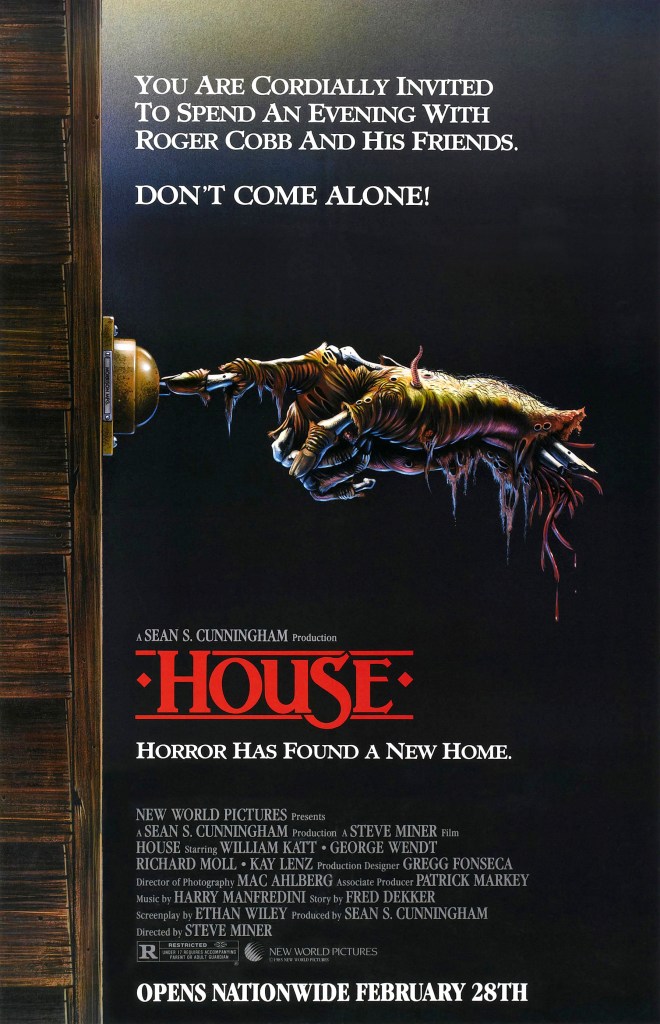
House (1985)

Directed by Steve Miner [Other horror films: Friday the 13th Part 2 (1981), Friday the 13th Part III (1982), Warlock (1989), Halloween H20: 20 Years Later (1998), Lake Placid (1999), Day of the Dead (2008)]

House holds a special place in my heart. It’s not an overly special movie, but it’s a movie I remember very vividly seeing bits and pieces of as a kid, and though it’s not particularly frightening nowadays, this movie really scared me when I was younger.

To tell the truth, some scenes here still got my heart racing, as pathetic as that might be to admit. While the comedy did occasionally veer to too silly a level, it’s the scares here that stood out, such as that ghoul woman attempting to abduct the child or the multitude of monstrous hands attacking the protagonist from the mirror.

Really, I find the whole concept of House intriguing. The main character (played by William Cobb) is dealing with both the trauma of his experiences in Vietnam along with his recently losing his son, who has gone missing. The house in question, which contains within it different dimensions (or something akin to that – it’s not much touched on), looked quite grand, and the whole mirror sequence onward were true quality to see again.

Cobb did sometimes get a bit goofy, but he was still a very solid main character, and I enjoyed the conclusion, which ended somewhat like the first A Nightmare on Elm Street. None of the side characters really added as much as you’d hope for (be it George Wendt or Mary Stavin), but as the movie’s really a personal journey for Cobb’s character, I think that could be excused. Richard Moll made for a solid antagonist, though.

The way House was put together really works, too. With many flashbacks to Cobb’s time in Vietnam setting up the conclusion, and plenty of ghoulish attacks (that overweight ghoul perhaps being the most memorable) and adventures (Cobb’s journey into the mirror onward), the movie really came together wonderfully, and though I wish a few things were added to the end, and some of the humor stripped down, the film’s enjoyable whether or not there’s a blot of nostalgia over it.

Sure, some of the special effects seem a bit goofy, and the comedy sometimes becomes a bit much, but there are some decently funny lines and scenes in here too, and the multiple issues that Cobb’s character deals with works even ignoring the comedic overlay. It’s a movie that scared me as a kid, and seeing this again after some time, it’s a movie I really enjoy now.

8/10

This is one of the films covered by Fight Evil’s podcast. Listen below as Chucky (@ChuckyFE) and I discuss this one.

Criminally Insane 2 (1987)

Directed by Nick Millard [Other horror films: Criminally Insane (1975), Satan’s Black Wedding (1976), Doctor Bloodbath (1987), Death Nurse (1987), Cemetery Sisters (1987), Death Nurse 2 (1988), Dracula in Vegas (1999), The Turn of the Screw (2003)]

The 1975 Criminally Insane would never win any awards, but I liked it well enough for it’s pure grind-house aesthetic. This sequel, though, has to be among one of the worse straight-to-video horror flicks of the late 1980’s (and no doubt there’s plenty of competition).

Partially, this is due to the fact that a third of the film is made up of flashbacks from the first film (mostly in the form of Ethel’s dream sequences). I enjoyed the first film, but just reusing various scenes (sometimes multiple times) in order to pad the already short running time (this clocks in at about 70 minutes) is just weak sauce. It’s not as bad as Puppet Master: The Legacy, but it is definitely weak.

With the story we’re given, though, of Ethel being moved into a halfway house following budget cuts to mental institutions, it’s okay. I mean, don’t get me wrong, it’s really, really dry, boring as all hell, and leads only to a collection of weak kills and stilted conversations (the tea conversation between Ethel and some guy she was trying to kill, for instance), but hey, they tried.

As it is, the movie actually could have been fine if only they had cut back on the amount of flashbacks they inserted and instead added a bit more story and maybe character background (also, there’s a scene here which indicated there are four patients at this halfway house, but we only ever see three). I mean, Priscilla Alden came back for this, and the least you could do for her is give her a script worth shooting.

Honestly, this film is pretty much an insult. Some of the conversations here are amusing (for all the wrong reasons), but there’s really not much charm at all to be found here. The quality is that of a homemade movie from the 1980’s, and the very dull sets and stilted dialogue just make the whole affair laughable.

I can’t think of any good reason to go out of your way to seek this out. The first movie, as I said, was pretty enjoyable for it’s time, but this one is just beyond pathetic, as the IMDb rating (a hefty 1.9/10 at the time of this writing) can attest to. I don’t rate it quite that lowly, if only because I was personally amused at some of this, but boy, talk about a poor film.

4/10