The Little Shop of Horrors (1960)

Directed by Roger Corman [Other horror films: The Beast with a Million Eyes (1955), Day the World Ended (1955), It Conquered the World (1956), Not of This Earth (1957), Attack of the Crab Monsters (1957), The Undead (1957), War of the Satellites (1958), The Wasp Woman (1959), A Bucket of Blood (1959), House of Usher (1960), Creature from the Haunted Sea (1961), The Pit and the Pendulum (1961), The Premature Burial (1962), Tales of Terror (1962), Tower of London (1962), The Raven (1963), The Terror (1963), X (1963), The Haunted Palace (1963), The Masque of the Red Death (1964), The Tomb of Ligeia (1964), Roger Corman’s Frankenstein Unbound (1990)]

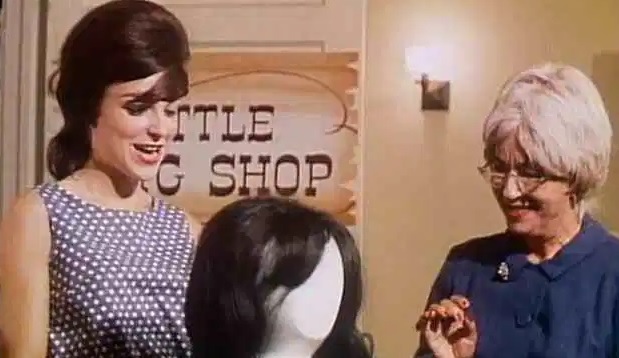
A somewhat classic movie, The Little Shop of Horrors is a rather black comedic horror film that is probably more enjoyable than it should be, though it’s not altogether amazing.

Being a Roger Corman movie, it would shock no one that the film is really campy at times, and the humor is, more often than not, over-the-top. This is evident in multiple scenes, such as the ones starring the dentist, or any scene with Myrtle Vail (also in A Bucket of Blood, from 1959). Hell, even the carnivorous plant is over-the-top, with his constant clamoring to be fed and his silly voice.

Performance-wise, Jonathan Haze does decent as the main character, and Jackie Joseph as his love interest, but there are more interesting and amusing faces here. Mel Welles, who played a foreign florist shop owner, cracked me up with most of his lines (he also appeared in one of Corman’s earlier movies, Attack of the Crab Monsters). Also, there are two faces that I just love to see, being a young Dick Miller (following his starring role in the aforementioned A Bucket of Blood, also directed by Corman) and a younger Jack Nicholson (this is his sixth credit, and fourth movie). Also, if you’re into the JFK assassination, the name Karyn Kupcinet may mean something to you, and she appeared in this movie also as an annoying teenager.

If you can stand a goofy plot, The Little Shop of Horrors may be worth looking into. There’s not really any gore of note (this isn’t H.G. Lewis), but there are some body parts being fed to a carnivorous plant, so occasionally the film comes across as more graphic than you might expect for the age. I don’t find The Little Shop of Horrors an amazing movie, but I’ve seen it quite a handful of times, and have been consistently entertained.

7/10

This is one of the films covered on Fight Evil’s podcast. Listen below as Chucky (@ChuckyFE) and I discuss this one.

House of the Damned (1963)

Directed by Maury Dexter [Other horror films: The Day Mars Invaded Earth (1962)]

This one seems to have flown almost completely under the radar, and in fact, ever since I’ve known this movie existed, despite the promise the plot shows on IMDb, it’s never been classified in the ‘horror’ genre [though after this review was first written, it has since been categorized as such]. After having seen the film finally, I can dispel that and say it’s definitely horror, and not only that, but also a pretty decent one, all things considered.

What works well in this rather short film (clocks in around an hour and two minutes) is the creepy vibe it happens to possess. The setting, an old, large house on a hill, looks great, and the black-and-white brings with it additional charm. But there are some legitimately spooky scenes, one in which a man, walking on his hands (as he has no legs) crawls into a room and steals the keys to the house. They filmed that well, because I found it actually somewhat chilling.

The characters, those who appear for more than a few minutes, anyway, work out good too. Ron Foster does a pretty decent, if not perhaps somewhat unremarkable, job as the lead character, and playing his wife, Merry Anders (from the criminally-forgotten 1960 flick The Hypnotic Eye) provides a solid performance also. I could take or leave Erika Peters, but Richard Crane (The Alligator People) comes across well.

Extra interesting note: House of the Damned does contain a somewhat early appearance of Richard Kiel, who many may know from a couple of James Bond movies, but I always remember from the comedy Happy Gilmore. He’s a hell of a lot younger here, playing a mute giant, but he definitely has the same face and brings a good presence to the film.

If this had been done in the 1940’s, I suspect that it’d feel a bit less stellar, if only because old dark house films like this were all the rage back then. By the early 1960’s, though, they’d fallen out of favor, and because of that, this seems made during a somewhat unique time period for a movie of this nature. This doesn’t make House of the Damned any better, by any means, but I do think it allows the film to stand out a bit more (though given the fact not many people seem to know this one, perhaps only I got the memo).

House of the Damned isn’t likely to blow anyone away, but I did occasionally find the vibe really creepy, and the house was such a good, quality setting. A few good red herrings, along with a satisfactory conclusion (which I admittedly saw coming miles away, but I still appreciated it), I rather enjoyed this one. It’s short, charming, and definitely a film that I think more people should at least know about.

8/10

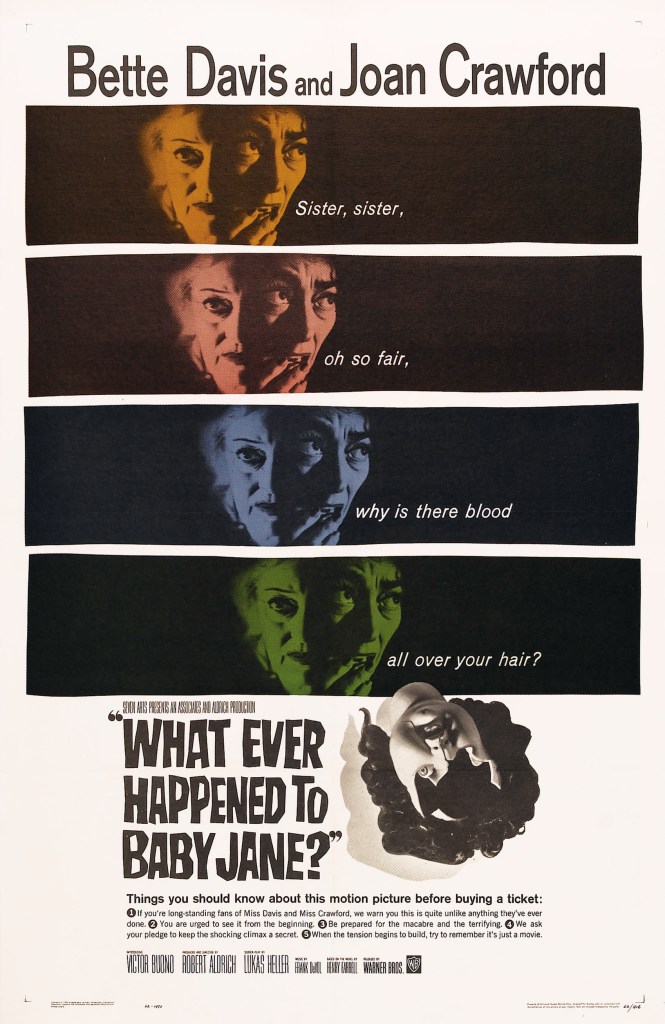
What Ever Happened to Baby Jane? (1962)

Directed by Robert Aldrich [Other horror films: Hush…Hush, Sweet Charlotte (1964)]

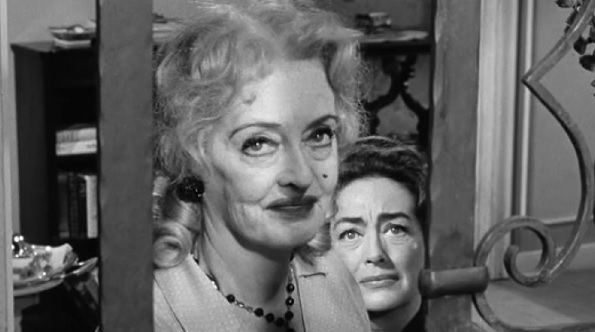
It’s been some many years since I first saw this movie, but I’m happy to report that, with a rewatch, this classic movie has lost exactly none of the magic. With a strong cast, an engaging story, and a rather dreary and helpless atmosphere, What Ever Happened to Baby Jane? is an utterly amazing movie.

A lot of the reason this movie works are the performances involved. Both Joan Crawford and Bette Davis do a fantastic job, Crawford as a wheelchair-bound character in a desperate situation, Davis as a long-faded former star, who’s slipping into deeper mental instability, probably not helped by her heavy drinking. Along with an early role from Victor Buono (perhaps most well-known as King Tut from the 1966 Batman series) rounding out the main cast, you can see the movie has a lot going for it already.

These three did a decent amount for the genre too, which I think’s worth mentioning. Davis later appeared in such films as Hush…Hush, Sweet Charlotte (which I think makes a great double feature with this one, if you have five hours free), Scream, Pretty Peggy, and Burnt Offerings. For Crawford, she appeared in Strait-Jacket, I Saw What You Did, and Berserk. While Buono was more well-known for Batman, he did appear in both The Strangler and Lo strangolatore di Vienna (also known as The Mad Butcher).

Strong cast aside, the story here is deeply engaging. On the surface, it’s not overly complex, but they throw in a few surprises, and the relationship examined between the sisters brought a lot of emotion to the movie (especially regarding Davis’ performance, who’s character was both often heinous and often heartbreaking).

I suspect the biggest issue that some people would have with this film, or at least the largest hurdle they’d have before watching it, would be the length. At two hours and fourteen minutes, What Ever Happened to Baby Jane? is a long movie, but I personally don’t think any scene needs cutting, and I think the whole film is rewarding, especially the somewhat tonally different finale on a bright, sunny day on the beach.

The black-and-white is crisp in the film, and I think it helps loan the film some additional atmosphere (which the film certainly isn’t lacking on, but even so, every little bit plays it’s part). The suspense here is very solid, and with the story and cast, I can’t think of a good reason not to recommend this one.

9/10

Devils of Darkness (1965)

Directed by Lance Comfort [Other horror films: Daughter of Darkness (1948)]

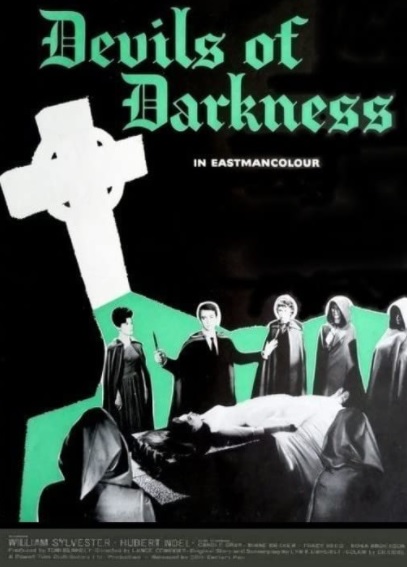
I went into this one pretty blind, not overly sure what to expect. Unfortunately, though this British vampire movie possesses some charm, overall, I struggle to believe that Devils of Darkness will end up being that memorable.

As such, the plot itself is somewhat decent and moderately intriguing, dealing with members of a vampire-led cult attempting to retrieve something of their masters’ from an unsuspecting man, and the mysterious deaths around the man are somewhat interesting. When Scotland Yard gets involved, things become even more interesting. But despite all of this, I don’t think the movie ends up being great.

There’s no doubt some cool things here, such as a somewhat suspenseful reflection-off-water scene near the beginning (and speaking of the beginning, I did appreciate how we got eight minutes of opening before the title and credits came up), along with blood coming from a portrait. A few red herrings around Tracy Reed’s character, too, come into play. But there wasn’t anywhere near enough to keep things moving along at a brisk enough pace.

As a leading character, William Sylvester does pretty good, and I sort of liked Hubert Noel’s vampire character. But other than Tracy Reed, who wasn’t necessarily great, most of the cast is pretty forgettable, which certainly doesn’t help matters any.

Ultimately, Devils of Darkness has the occasional atmosphere that you might be looking for from a 60’s vampire film, but it’s not done nearly as well as Hammer was able to, so why go for a cheap knock-off if you can pick up the real thing? Might be worth checking out a single time, but I wouldn’t really expect to fall in love with this one. At least the color looks moderately nice.

5.5/10

The Gruesome Twosome (1967)

Directed by Herschell Gordon Lewis [Other horror films: Blood Feast (1963), Two Thousand Maniacs! (1964), Monster a-Go Go (1965), Color Me Blood Red (1965), A Taste of Blood (1967), Something Weird (1967), The Wizard of Gore (1970), The Gore Gore Girls (1972), Blood Feast 2: All U Can Eat (2002), The Uh-Oh Show (2009), Herschell Gordon Lewis’ BloodMania (2017, segments ‘Gory Story’ and ‘The Night Hag’)]

H.G. Lewis is a personal favorite director of mine, despite not having seen all of his horror output as of yet. Both Blood Feast and Two Thousand Maniacs!, despite their flaws, are rather enjoyable. The Wizard of Gore is somewhat nonsensical, but still fun. I never cared much for Color Me Blood Red, and generally consider that my least-favorite of his.

Luckily, The Gruesome Twosome is a bit more enjoyable than the disappointing Color Me Blood Red, but it’s still quite a rocky film for only being an hour and ten minutes, isn’t that right, Napoleon?

The biggest issue here, by far, is the padding throughout the film. I’d say that 18 minutes easily could have been cut out without much issue (including that atrociously amusing opening, a ten-minute sequence of a character following someone they suspect is a killer, and a couple of beach party and slumber party scenes), but no, you have to suffer through those scenes honestly to get to the good stuff.

And the gore itself is pretty solid – I mean, c’mon, we’re talking about H.G. Lewis, aren’t we, Napoleon? There’s a solid throat-slitting with an electric knife, an enjoyably messy scalping, and while possibly gratuitous, a scene in which the killer’s digging through a woman’s entrails (for some reason). I mean, sure, it more often than not looks fake, but we’re talking about 60’s horror, so I applaud Lewis for his heavy use of gore.

Being a film from the Godfather of Gore, much of the acting is either subpar or wildly ridiculous. Gretchen Wells, as the main character, didn’t really make much an impression on me, nor did co-star Rodney Bedell. In his limited screen-time, Chris Martell did well as the mentally-subnormal killer, but it’s really Elizabeth Davis’ performance that’d leave a mark on you. As a kindly old woman who often talks to her stuffed wildcat Napoleon, and makes flighty, poetic comments from time-to-time, a lot of screen-time is spent on Davis, which I was cool with, as her character was so fun. It’s a shame no one else came close to her, isn’t that right, Napoleon?

I don’t think that many people, even horror fans, would go out of their way to see this one unless they were already fans of H.G. Lewis, which is probably a good thing, as it’s not his best release. Certainly a gory proto-slasher that’s better than Color Me Blood Red, The Gruesome Twosome isn’t really anywhere near as enjoyable as Blood Feast, Two Thousand Maniacs!, or The Wizard of Gore, especially due to the unnecessary padding throughout the film. If you’re an H.G. Lewis aficionado, though, and you’ve not yet seen this, give it a shot. It could certainly be worse, isn’t that right, Napoleon?

6/10

The City of the Dead (1960)

Directed by John Llewellyn Moxey [Other horror films: Circus of Fear (1966), The House That Would Not Die (1970), A Taste of Evil (1971), The Night Stalker (1972), Home for the Holidays (1972), The Strange and Deadly Occurrence (1974), No Place to Hide (1981), I, Desire (1982), The Cradle Will Fall (1983)]

You want a movie with some atmosphere? The City of the Dead’s got it, in spades.

Using a Psycho-esque character switch that came as quite a surprise, The City of the Dead had a bit of bang for it’s buck. The plot is interesting enough, what with a young student going to study Satanism by traveling to the small town of Whitewood and taking a room at The Raven’s Inn, only to discover she bit off more than she can chew, but when something happens to our focal character, there’s a time-skip, and more horror ensues.

Of course, the idea of a small New England town being almost entirely dedicated to the dark side of Satanism (because of course, while this movie makes no mention of it, there’s plenty of perfectly good Satanists, more ratio-wise, I would bet, than Christians) was unique, and while I thought that many of the townspeople were being pretty obvious about their ill-intent, I guess that doesn’t bother those who wander into the town.

The cast here is superb. Related, this is a British production, but everyone spoke in American accents, so one might be fooled into thinking this an American-made picture. And speaking of which, while the original title is The City of the Dead, when released in the U.S.A., the title was changed to Horror Hotel (which, in my view, is quite a worse name), so there’s your random fact for the day.

Onto the cast, it’s Christopher Lee who stands out the most as a professor of Satanic studies, and one who takes his research seriously (his argument with a science professor, played by Dennis Lotis, was somewhat interesting). Playing the interested student was Venetia Stevenson, who was quite good, and seemed a lot more self-possessed than many women in the genre at the time. Taking off to the town of Whitewood alone was a nice touch, though it didn’t end as well as she may have hoped. Lotis wasn’t in much else, but he does well here as Stevenson’s concerned brother, as does Tom Naylor, playing her fiancée.

Actually, that brings to mind one thing that rather annoyed me. After a long absence of communication to either her brother or fiancée, Stevenson’s character is presumed missing. Obviously, both men are concerned. And both go up to Whitewood to investigate. But do they share a ride and work together to discover her whereabouts? Of course not. It’s not clear why one or the other didn’t bring up ‘Hey, I’m going to Whitewood, want to tag along,’ but I’m guessing it has to do with foolish ideas of manliness. Either way, the fact that both went up separately just bothered me to no end.

The other two cast-members worth mentioning are Betta St. John and Norman MacOwan. St. John was sort of an interesting individual, as she took the role of the main female character after Stevenson exited stage right, and she worked well with Lotis’ character, all things considered. MacOwan played an elderly priest with no congregation (get better employment, brah, cause you suck at your current job), and he did decent, though the whole ‘Christianity is superior to other valid religions without good reason’ gets really old, not that this is the only movie in the horror genre that makes that antiqued claim. Still, MacOwan was pretty fun.

It’s true that the ending of this one is pretty much the most generic thing about the movie, but it still works out reasonably well, and the fact that the final scenes take place in an old graveyard certainly help with the atmosphere the movie worked so well with (the hotel scenes with Stevenson in the first half were solid enough, and this brings it into overdrive). Overall, I wouldn’t say that The City of the Dead is a perfect movie, but for fans of beautifully-done black-and-white 60’s horror, this one would very likely be well-received.

8/10

Night of Bloody Horror (1969)

Directed by Joy N. Houck Jr. [Other horror films: Women and Bloody Terror (1970), The Night of the Strangler (1972), Creature from Black Lake (1976)]

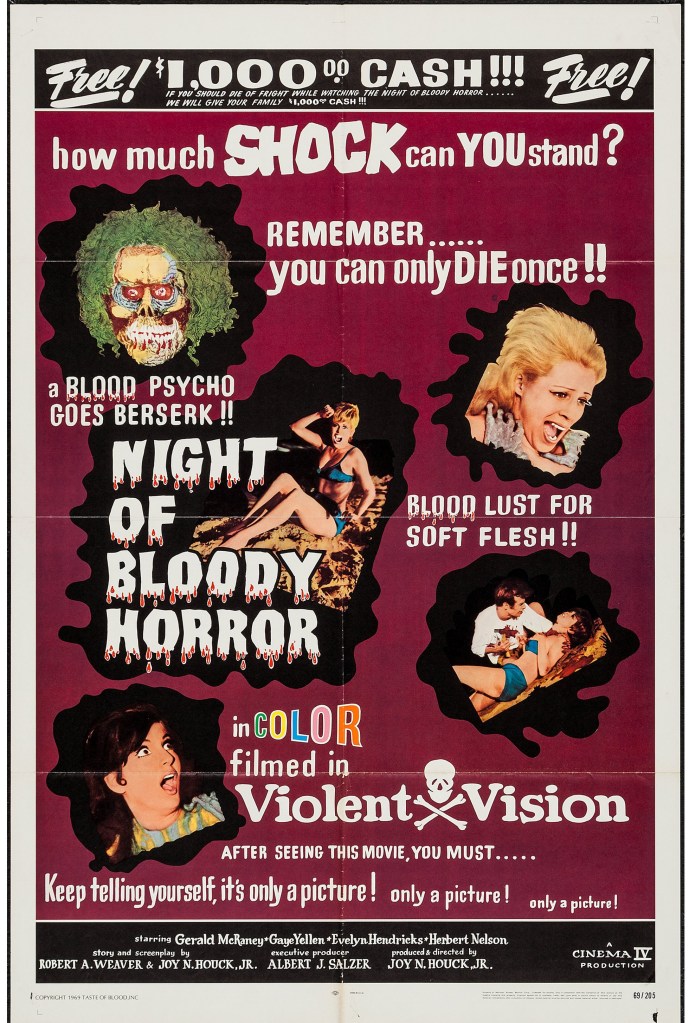
This proto-slasher isn’t without potential, but unfortunately, the quality of the widely-available print leaves a hell of a lot to be desired, so despite some decent scenes in the film, along with a solid finale, much of the film is almost intolerably mediocre.

Gerald McRaney, an actor I don’t know (though this is his first of many roles) did decent as a young man potentially breaking down. Playing his long-time doctor, Herbert Nelson does well also. We don’t particularly see a lot of Evelyn Hendricks, but she had some okay time in the limelight. Pretty much no other characters really mattered, as they appeared for just a few minutes before getting killed.

My problems with Night of Bloody Horror notwithstanding, the kill scenes are all decent. There’s an individual getting stabbed in the eye with a needle, someone taking an ax to the chest, and another getting their hand chopped off. I wanted more build-up to these scenes, you know, with some actual tension, but the scenes themselves are good.

I get the sense that this was partially inspired by Psycho, one of the most well-known proto-slashers, but despite the fact Night of Bloody Horror managed to get made in color, it doesn’t come close to outshining it’s spiritual predecessor. A lot of this, in my view, has to do with both how muddy the color can sometimes be, along with the rather muffled sound of much of the audio.

There was a movie that came out a few years after this, on a side-note, titled Three on a Meathook; also, Scream Bloody Murder (Fred Holbert starring), and both of these films, along with being proto-slashers, share a lot in common with Night of Bloody Horror. Of the three, though it came first, Night of Bloody Horror is probably my least favorite. Even when I first saw it, I wasn’t overly impressed, and now, while I see that it has potential, it just doesn’t really work that well.

5.5/10

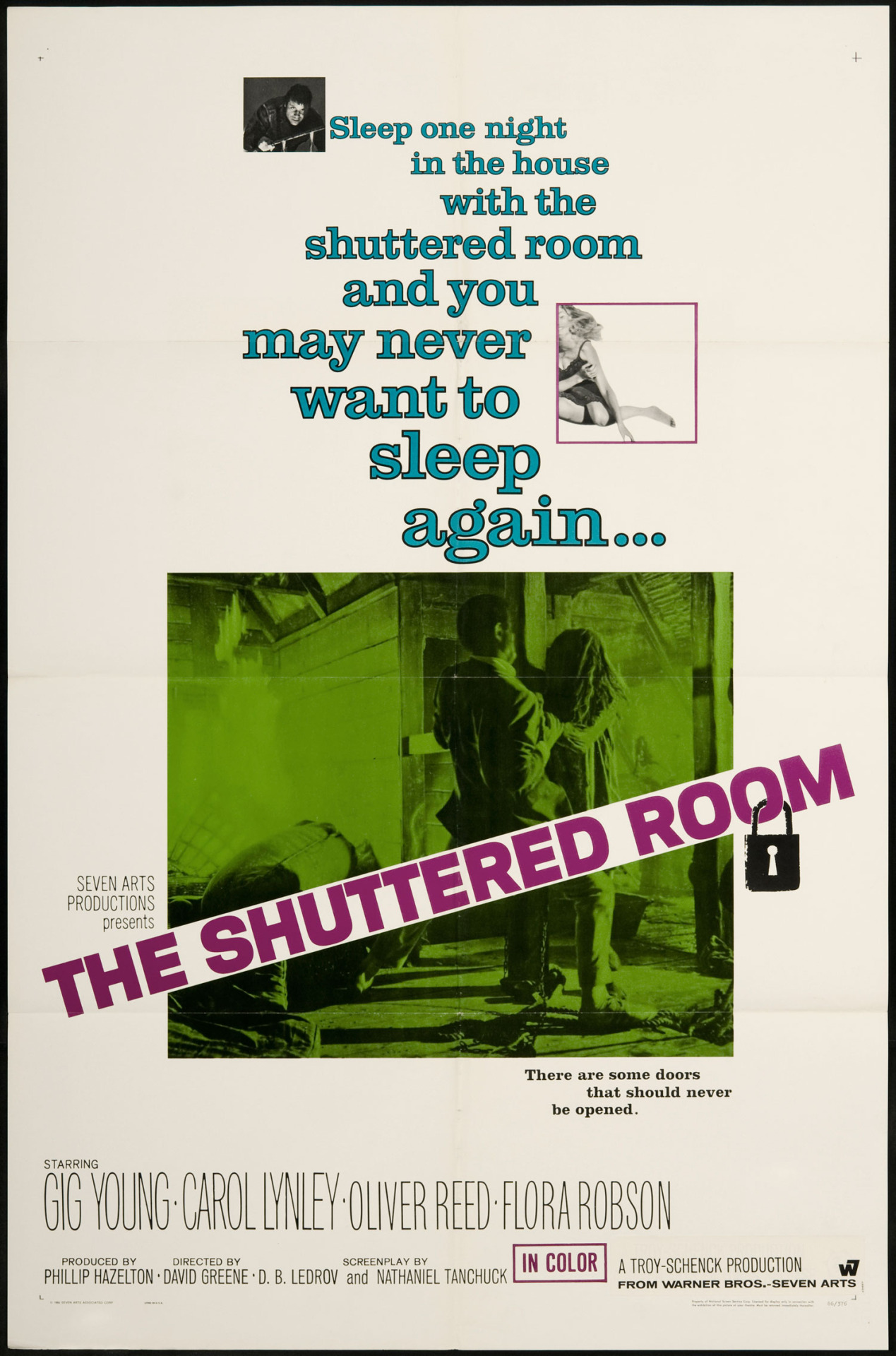
The Shuttered Room (1967)

Shuttered Room

Directed by David Greene [Other horror films: What Ever Happened to Baby Jane? (1991)]

This was a pretty solid watch for the most part, with good atmosphere and suspense, though a bit lighter on horror than I’d have preferred, especially for a movie over an hour and a half long.

The plot is fun, made additionally enjoyable by the setting. Not only are the two main characters on an island off the coast of an undisclosed state (though this is a British film, it takes place in the USA), the focus of the horrors take place in an abandoned mill, which was suitably creepy and run-down.

Unfortunately, there weren’t as many kills as I was hoping. The opening scene was rather engrossing, and so indeed was the rest of the film, but none of the death scenes really grabbed me all that much. The small amount of blood seen was a welcome sight, and occasionally there was a sense of brutality that was never really touched on, as necessary as I thought it was (more on this shortly). It’s really the atmosphere, the moody and ominous feeling throughout, that allows this movie a higher rating than the kill scenes themselves.

Now, this next part was something I wasn’t initially going to speak about, but it was a prevalent theme throughout the film, so if this seems out of place, I apologize.

Taking place on a moderately small and out-of-touch island, some of the male locals have rather backwards views on appropriate behavior and actions toward women they’re unfamiliar with. Multiple times throughout the movie, these men chase and sexually harass, with the intent to rape, Carol Lynley’s character. Of course, being the inbred pieces of trash they are, as soon as she rejects their affection or tries to defend herself against the unwelcomed touches, they get angry at her, only making them want to mess with her more. It’s sexist male entitlement at it’s finest, and I’ve rarely seen locals as undeserving as life as these assholes, especially with their actions toward the end of the film.

The point that’s more important to the movie is that only one of the five of the characters displaying these sickening and backwards actions (which far too many of my male peers would see little problem with) ends up dying. The movie had a solid opportunity to dispatch, with as much brutality as legal in the UK at the time, these utterly unlikable characters. But only one of them dies, and it was too quick to bring much pleasure. Talk about a wasted potential.

Gig Young and Carol Lynley’s characters both were done well. I loved Young’s brawling sequences, defending his young wife against the rapists that populate the island, and they struck me as more authentic than I’d have expected. Lynley, while her character was certainly afraid, never really fell into the whole ‘hysterical woman’ trope, which I appreciated.

Oliver Reed’s character was detestable, and he did quite well in that roll. It may be worth mentioning, too, that Reed has probably done the most for the genre, starring in such horror films as The Curse of the Werewolf (1961), Captain Clegg (1962), Paranoiac (1963), Blue Blood (1974), Burnt Offerings (1976), The Brood (1979), Venom (1981), Spasms (1983), Alan Birkinshaw’s The House of Usher (1989), and Severed Ties (1992), along with having smaller roles in a handful of other flicks. It’s an impressive horror resume, and if his acting in this film is any indication, it’s clear to see how he attained these many roles.

My biggest gripe with The Shuttered Room, despite all that is does right, is the lack of kills, instead focusing on the rapey locals. Certainly, that’s a horror in itself, but I’d have preferred more about the mysterious figure killing people at the mill as opposed to seeing Lynley’s character being continually assaulted. Still, the movie has a great moody feel, and the color is pretty crisp, which is a plus for a film from a decade that hadn’t fully embraced color yet. A solid 60’s flick, this is one that I would tepidly recommend.

8/10

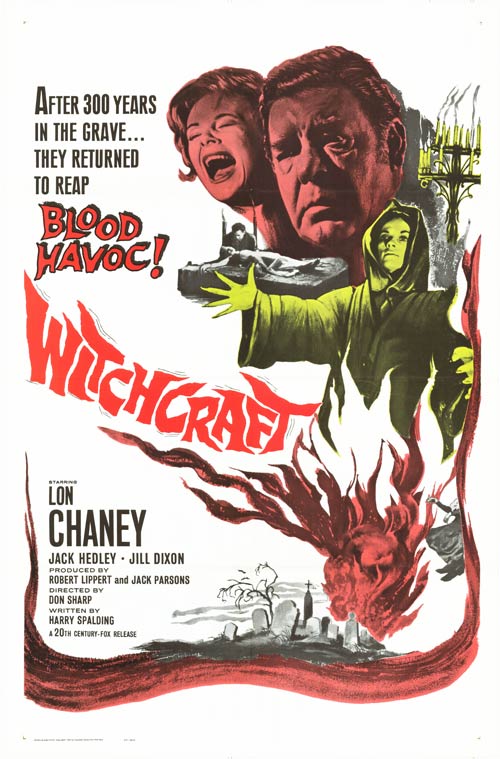
Witchcraft (1964)

witch

Directed by Don Sharp [Other horror films: The Kiss of the Vampire (1963), Curse of the Fly (1965), The Face of Fu Manchu (1965), Rasputin: The Mad Monk (1966), The Brides of Fu Manchu (1966), Psychomania (1973), Dark Places (1974), To the Devil a Daughter (1976), What Waits Below (1984)]

This is a moderately fun black-and-white British production, but I couldn’t help but feel as though something was missing.

The story’s set-up, being a long-standing family feud, was pretty good, and generally, the story was perfectly fine, though I thought it went down a really expected path past a certain point. The crisp black-and-white rendered some of the sequences rather creepy, especially the graveyard scene near the beginning.

As far as the performances go, most of the fun comes from Lon Chaney – though it’s over twenty years since he graced the screen as The Wolf Man, he stills does a good job playing a menacing character. As a lead, Jack Hedley does a fine job also, though he’s not near as mesmerizing as Chaney is. Most others are somewhat pedestrian.

Like I said, though, the story goes down a somewhat predictable path, and while I wasn’t expecting a twist, or anything like that, I was sort of hoping they’d eschew expectations somehow. The whole “this family is good, the other is bad” doesn’t make for an overly-captivating family feud film, in my view.

There are still some creepy scenes through, not to mention some rather suspenseful ones (I rather liked some of the driving sequences – I thought they did that pretty well), but for a flick from the classic decade that is the 1960’s, I expected a bit more out of it. If anything, see it for Lon Chaney. Otherwise, you’re not missing much.

6/10

La lama nel corpo (1966)

Murder Clinic

Directed by Elio Scardamaglia [Other horror films: N/A] & Lionello De Felice [Other horror films: N/A]

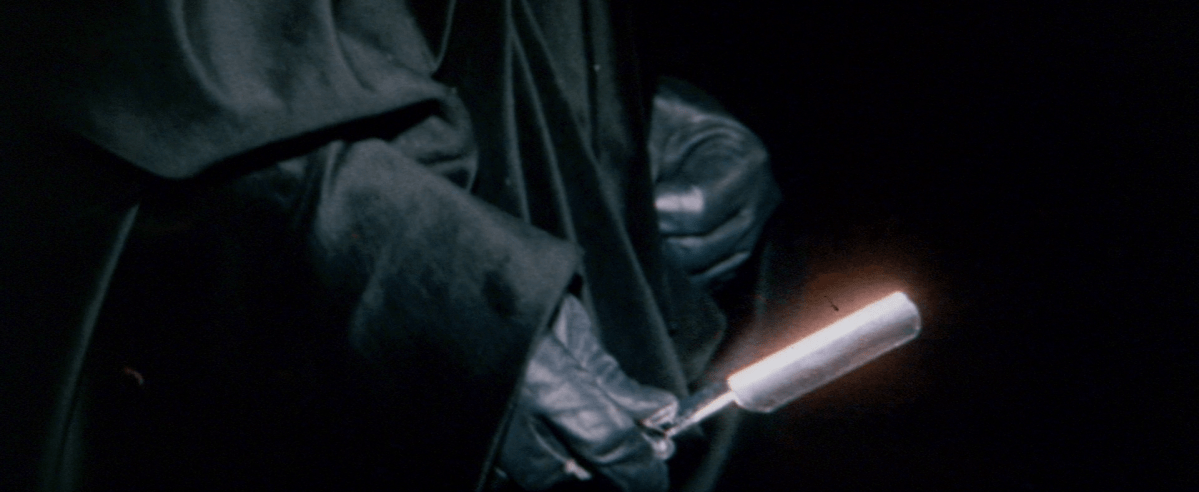
This early giallo (originally titled La lama nel corpo, and seems best to be known as The Murder Clinic) lacks the flair of many others that come later, yet ends up having a pretty fun and ominous vibe all the same.

While the film lacks the style of earlier entries such as Blood and Black Lace (part of this may be due to the fact that this is Elio Scardamaglia’s, the director, one and only film), the film does have a decent amount of suspense, mystery, and, of course, potential suspects, to offer. It was a bit sluggish at the beginning, but picks up nicely around the twenty minute mark.

Unfortunately, there’s not that much in the way of gore, another thing that slightly sets it apart from its peers. The kills themselves are good, at least when we see them on screen, but it’s not at all a gory film, which was a bit of a shame.

William Berger did exceptionally well as a doctor with more than a few problems. He had a solid screen presence, and I rather liked his complex character. Some of the film’s charm too has to go to Mary Young and Barbara Wilson, especially considering that this is Wilson’s sole film, and just the second of only two films Young was in. Given the lack of experience with the both of them, they really brought something to this movie.

The atmosphere could have been a bit thicker than what it ended up being, admittedly. And like I said, the gore wasn’t really strong at all. But still, you have a fun mystery, a lot of suspects, a few twists, a few surprising deaths, so even though this film lacked the class of many giallos that followed suit, I thought that it was well worth watching.

7.5/10