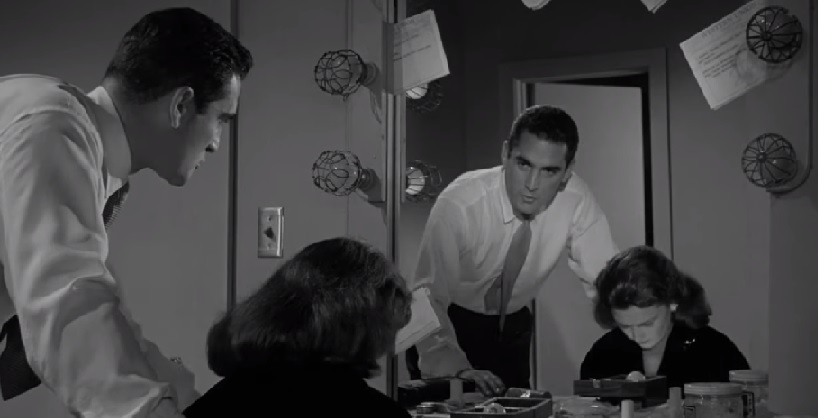
Carnival of Souls (1962)

Directed by Herk Harvey [Other horror films: N/A]

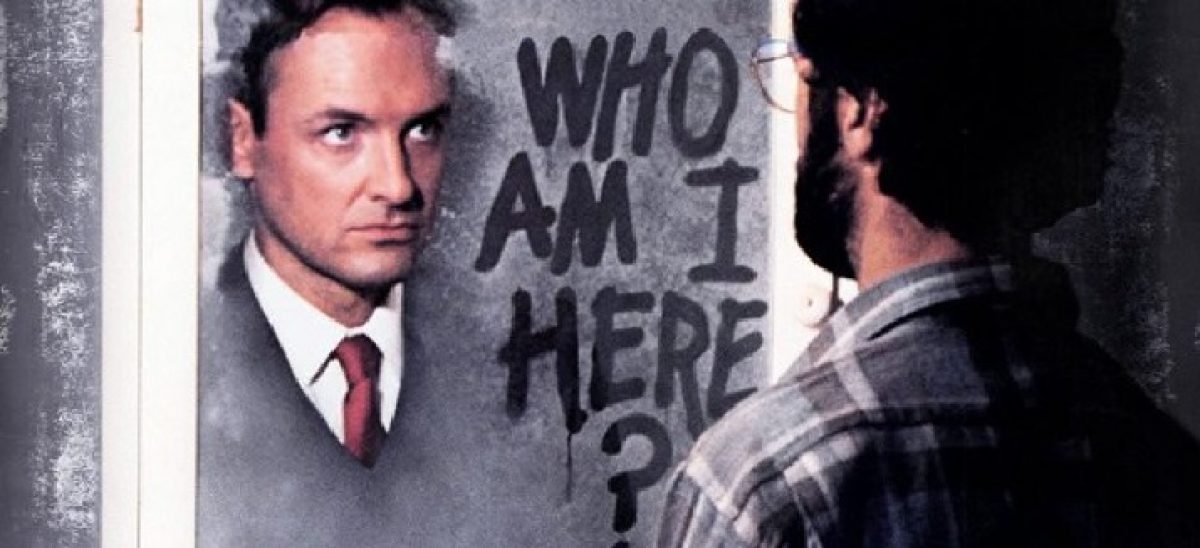
From a modern-day perspective, Carnival of Souls may seem a bit pedestrian, as the ending seems quite easy to predict. Truthfully, though I’ve seen this once or twice before, I don’t love it myself, though that has little to do with the finale. I don’t doubt Carnival of Souls is a classic, but certainly tastes may vary.

Oh, and this review will have spoilers in it.

I’m not sure exactly where my hang-ups with this one arise from. The atmosphere and suspense are top-notch, and in fact, it’s probably one of the most atmospheric movies of the 1960’s, an amazing feat given the lower budget nature of this film. The suspense needs no explanation – there are multiple scenes throughout that pack a punch, and all without scare chords, which is a nice change of pace compared to more modern-day movies.

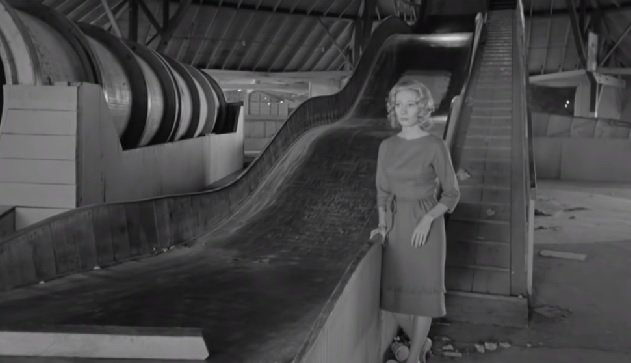
Even so, I can’t say that I’m not occasionally bored during this. The story is engaging enough, especially the abandoned pavilion that Candace Hilligoss’ character has a sinister attraction to, but because Hilligoss’ character is sort of hard to relate to, she doesn’t always make the most interesting protagonist.

There’s also the question of what’s actually happening at some points during the movie. Given the finale, I don’t quite know what’s happening during some scenes, and it’s not easy to expand on without spoiling anything, so warning, HERE THERE BE SPOILERS:

At the end, it’s revealed that the main character died due to the automobile accident at the beginning of the film (which took place in Kansas), and everything after was her soul attempting to move on. In one of the final scenes, we see her body in a car being pulled from the water.

We also see a police officer, minister, and doctor examining the last place she was seen after moving to Utah. She didn’t move to Utah until after she died, so therein lies my confusion. If she died, her physical body still in the car that went underwater, then I’d think everything after wouldn’t be reality as those alive know it. But it seems that her spirit is actually a physical form that moved and interacted, however frigidly and ineffectively, with the people she met in Utah.

All of this could have been solved if they had just removed the scene in Utah, as then the only relevant, real-world scene would be the car, with her body, being dragged up in Kansas. But they do show that she was apparently in Utah, so she apparently has two physical bodies, which is one more than I have, so in a way, that’s impressive. Even if it’s a Limbo situation, I wouldn’t think that would have an impact on the actual reality others live in and perceive.

I know this is a classic, but this point doesn’t seem nit-picky to me; it just seems logical. It doesn’t mean that the movie isn’t atmosphere or possessing of an occasional uneasy, dreamlike quality. It’s just something that bothered me when I first saw this movie, and something that still bothers me today.

Otherwise, though Candace Hilligoss’ character isn’t easy to relate to, the film is decent. It feels like an extended episode of The Twilight Zone, and as I said, it does have some pretty creepy and suspenseful scenes throughout to keep your engagement going.

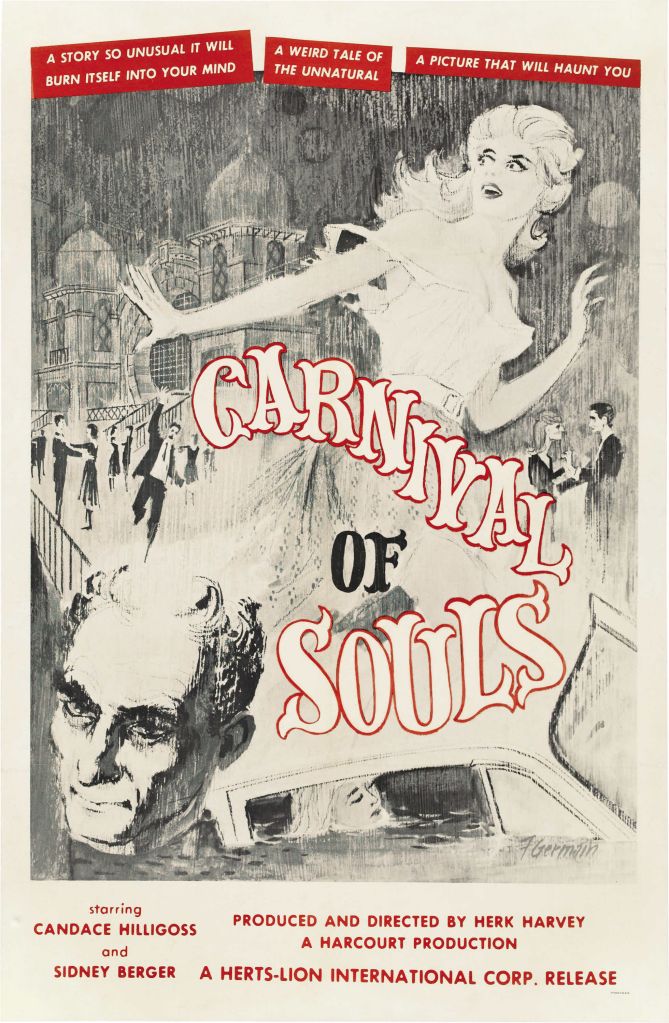
Though I didn’t understand Candace Hilligoss’ character, I do think she gave a pretty stellar performance, and not only that, but she was about the only cast member who truly mattered. Sidney Berger did well as a pushy, annoying guy, and both Art Ellison and Stan Levitt are calming voices in what otherwise is a howling storm, but when it comes down to it, Hilligoss’ performance pretty much stands far above anyone else’s.

Naturally, Carnival of Souls is a classic, and there’s good reason for that. It’s not a classic that I’ve ever loved, but I have good friends who do indeed see the movie as a masterpiece. It’s decent, but as far as personal enjoyment goes, I don’t even know if this is something I’d give an above-average score. Plenty of things work, but some story elements befuddle me, so while many others may give this one a higher rating, I have to go with what I truly feel, for better or worse.

7/10
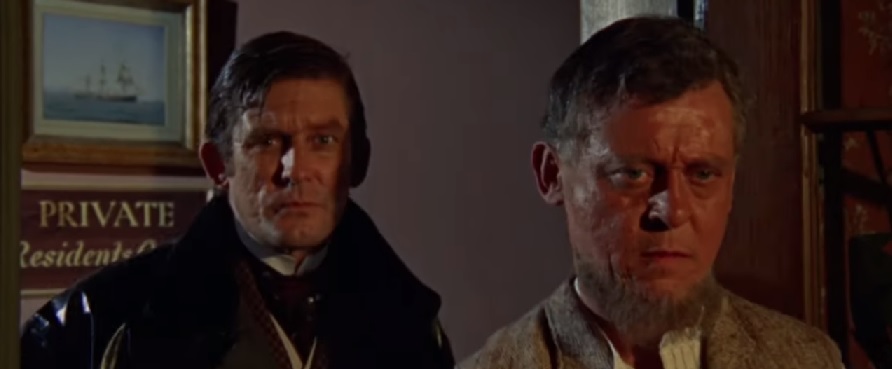
Twice-Told Tales (1963)

Directed by Sidney Salkow [Other horror films: The Last Man on Earth (1964)]

I’ve long heard of this film, and remember the title primarily due to the quality alliteration, and as it turns out, Twice-Told Tales is a pretty good film. I mean, it’s an anthology that stars Vincent Prince in all of it’s stories, so perhaps that shouldn’t come as a great surprise, but even so, I was rather entertained by the film.

Twice-Told Tales comprises of three stories, each one based on works of Nathaniel Hawthorne, being ‘Dr. Heidegger’s Experiment’, ‘Rappaccini’s Daughter’, and ‘The House of the Seven Gables.’ I regret to say that I’ve not read any of the source material – in fact, I have very limited exposure to Hawthorne’s writings, and the only writings from him I can swear to have read would be the short story “Young Goodman Brown.”

Despite my lack of experience with Hawthorne’s work, I can say that each of the three stories here are pretty solid. All have a rather classic horror feel, the second segment, ‘Rappaccini’s Daughter,’ perhaps being the most experimental and daring. Given the film is about two hours, each segment lasts forty minutes, which I do think causes minor dragging at times – certainly this isn’t the fast-paced horror that modern-day audiences might be used to. Even so, I found it rather worth it.

I think that, while all three stories are decent, the strongest is the last segment, being ‘The House of the Seven Gables.’ Amusingly, it’s not an easy choice, though, as ‘Dr. Heidegger’s Experiment’ is a very strong segment, and has some of my favorite performances and characters in the whole of Twice-Told Tales. That said, while ‘The House of the Seven Gables’ (which is definitely a title I recognize from cultural osmosis, but before watching this, I couldn’t tell you what it was pertaining, as my hombre Serge from Beverly Hills Cop says) is a bit slow at the beginning, come the finale of the story, things pick up beautifully, and it’s a wildly fun time reminiscent of House of Usher.

When it comes to ‘Rappaccini’s Daughter’, I’m torn. I didn’t dislike it, but it certainly felt like the weakest of the three segments, though of course I appreciated the horrors of botany being displayed some years prior to The Revenge of Doctor X/Body of the Prey/Venus Fly Trap. I think the main issue I have is that, while the finale of the story was decent, there weren’t really any ompf moments, which the other segments definitely had. I do think, because of this, that it was well-placed as the middle story, as it allows the film to both begin and end on higher notes.

Naturally, Vincent Price is the glowing star here – in all three stories, he does wonderfully, and I think he especially shines in both the first and final story. Price has long been a favorite actor of mine – from classics such as House on Haunted Hill and Pit and the Pendulum to films such as Theatre of Blood and The Oblong Box, he rarely does poorly, and this film showcases his great talent. My second-favorite performance here would be Sebastian Cabot (Journey to Midnight), as I found his performance in the first story rather poignant, and I thought he worked fantastically with Price.

Others who warrant a mention include Jacqueline deWit, Joyce Taylor (13 Frightened Girls, Beauty and the Beast), Abraham Sofaer, Richard Denning (Creature with the Atom Brain, Target Earth, Day the World Ended, The Black Scorpion, Creature from the Black Lagoon), and Brett Halsey (Demonia, Return of the Fly). Admittedly, Halsey takes a little while to really make a positive impression on me, as portions of his performance seemed weak, but the others listed were fun from beginning to end.

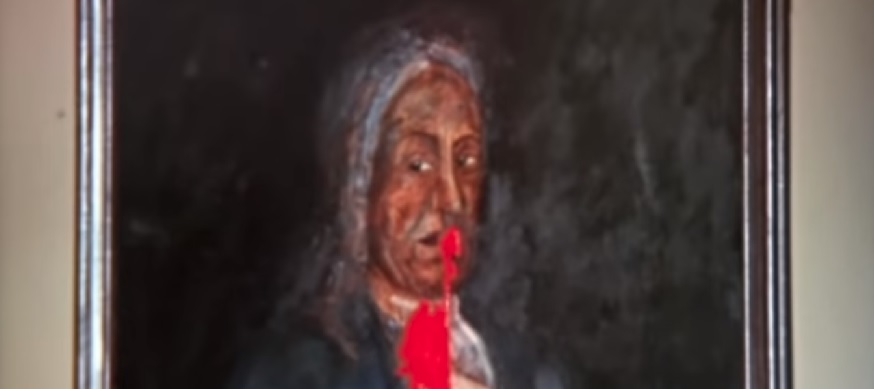
There were a few portions of the film that really stood out – naturally, given how much I enjoyed the first segment, a lot of that finale kept me really happy. Even more, though, would be the finale of ‘The House of the Seven Gables’, which, as I said earlier, was just wild. There was a house that was seeping blood from the ceiling and walls, blood coming from a portrait, all made more effective due to the fact this film is in color (which isn’t always a given when it comes to 60’s horror). Oh, there’s also a floating skeleton arm that attacks someone in the final story, which was of great value also.

All-in-all, while it’s possible that Twice-Told Tales runs a bit long, it’s an overall solid film, and if you’re a fan of either classic horror or Vincent Price, then it’s definitely worth keeping an eye out for. I don’t know if it’ll impress others as much as it impressed me – and to be sure, I wouldn’t exactly call the movie amazing – but I do think many would get a kick out of it.

7.5/10

The Flesh Eaters (1964)

Directed by Jack Curtis [Other horror films: N/A]

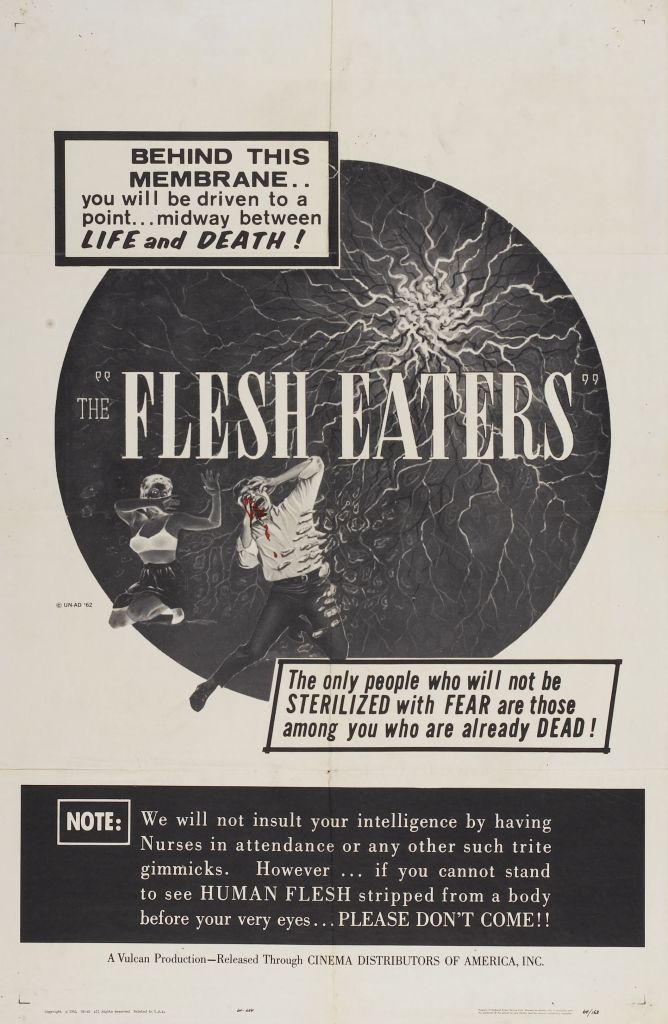
Though it pains me to say it, I don’t think The Flesh Eaters is a great film. It’s certainly notable in some aspects, and it can be reasonably fun, but the final third of the film never did much for me, and portions do drag. Even so, it’s worth seeing at least once for the special effects.

I have a little history with the film. Way back in the day, I saw this multiple times playing on AMC – I probably watched this two times, perhaps three, so it was a bit of an odd favorite. It’s not been unpleasant revisiting it, by any means, but I definitely don’t think it’s as strong as I used to.

I love the plot, though, dealing with glowing organisms in the water that can strip flesh to the bone, and people trapped on an island having to contend with the microscopic entities. This movie’s surprisingly gory at times – it’s in black-and-white, but even so, it can provide a good time.

During the pre-credit opening (definitely an earlier example of this), a couple goes for a swim that doesn’t end well. That’s a tame opening, but it’s a good portent of what’s to come. A man in a motorboat gets some water splashed on him, and his face rather melts, and there’s also a scene in which someone drinks a beverage with the microscopic organisms in it, and it eats out of him from his stomach, in beautifully gory fashion. Earlier films did have more gore than you might expect – look at Fiend Without a Face – but The Flesh Eaters is a surprisingly bloody film at times.

Otherwise, the special effects aren’t great, but that has more to do with the route of the story than anything else. See, for the first two-thirds of the film, the microscopic glowing organisms are all they have to deal with, but events occur that create a giant monster out of the organisms, so instead of millions of small things, there’s one large monster (technically, two, but I wanted to simplify things), and at that point, things feel a bit more on the generic side.

Byron Sanders made a solid lead, and he had that typical strongman physique. In fact, I’m sort of surprised he wasn’t a bigger name, as he had great looks. Barbara Wilkin made for a decent, inoffensive love interest, Rita Morley had some great scenes as her character was an alcoholic (in fact, Morley might be one of the strongest performances here), and as an antagonist force, Martin Kosleck (The Frozen Ghost and House of Horrors) was a bit generic, but overall decent.

Funnily enough, it’s the one with the least acting experience that I dug the most. Ray Tudor plays this random beatnik who rafts onto the island halfway through the film, and he has the kookiest dialogue, man. I mean, he speaks the word, man, about the power of love. You speaking my language, Max? That character was a hoot, and Ray Tudor did a great job with it.

Despite my nostalgia at seeing the movie again for the first time in a long time (for detailed context, I watched this on October 25th, 2021, and last saw it around 2010, if not earlier), I don’t think The Flesh Eaters is a great film. It’s decent, but it’s a bit slow at times, and the finale is a lot more generic than anything previous in the film. I think it evens out to about average, but I know plenty out there enjoy it more than I do, so if you’re into 60’s horror, this is definitely a movie to look into.

7/10

Matango (1963)

Directed by Ishirô Honda [Other horror films: Ishirô Honda [Other horror films: Gojira (1954), Gojira no gyakushû (1955), Jû jin yuki otoko (1955), Godzilla: King of the Monsters! (1956), Sora no daikaijû Radon (1956), Godzilla (1957), Tokyo 1960 (1957), Bijo to ekitai ningen (1958), Daikaijû Baran (1958), Half Human: The Story of the Abominable Snowman (1958), Gigantis: The Fire Monster (1959), Mosura (1961), Varan the Unbelievable (1962), King Kong vs. Godzilla (1963), Mosura tai Gojira (1964), Uchû daikaijû Dogora (1964), War-Gods of the Deep (1965), Furankenshutain tai chitei kaijû Baragon (1965), Furankenshutain no kaijû: Sanda tai Gaira (1966), Gezora, Ganime, Kameba: Kessen! Nankai no daikaijû (1970), Gojira tai Hedora (1971), Godzilla (1977), Godzilla 1985 (1985), Gojira vs. Desutoroiâ (1995), Gojira tai Megagirasu: Jî shômetsu sakusen (2000)]

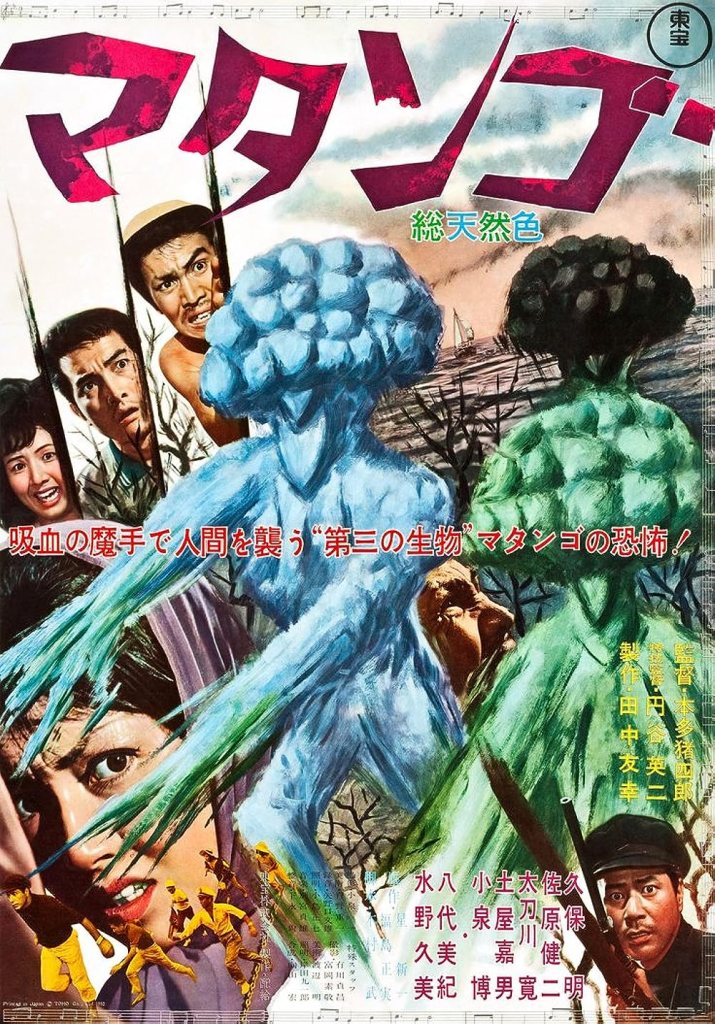
Matango, or Attack of the Mushroom People (which is a pleasantly provocative title) is a quality Japanese movie, rife with beautiful colors and people horrifically transformed into mushrooms. It’s never been a favorite of mine – I think it moves a bit slow for much of the runtime – but the final twenty minutes or so are hauntingly nightmarish, and it’s worth the watch for that.

Based on a short story by William Hope Hodgson titled ‘The Voice in the Night’, the film follows a group of people who shipwreck their yacht, and are trapped on an island filled with mist and mushrooms, and little else. It should go without saying that the mushrooms may not be the healthiest thing in the world to eat, but given their desperation and hunger, they don’t have a lot of choice, and some succumb to the springy-textured temptation.

Before that point, though, we’re treated to a lot of infighting amongst the group – the captain is getting on peoples’ nerves, one of the women is actively flirting with multiple men, putting people on edge, and there are power struggles popping up as to who should lead the group, and what their plan of action should be.

It’s not uncommon in a movie like this, and in fact, it reminded me of Goke, Body Snatcher from Hell, which I saw earlier this month. In that Japanese movie, much like this one, a group of people find themselves in a desperate situation, and morals break down, leading to danger and tension throughout.

For a sociological look at things, that approach is fine. You can also see much the same type of things in various zombie movies (28 Days Later… comes to mind), and it’s certainly realistic. I don’t mind it here, but I do think the film moves terribly slow, and it’s not until about 35 minutes in that I’m really intrigued. Once they find an old shipwreck covered in fungus, things improve, but getting there is a little bit of a struggle.

Honestly, none of the performances really stood out to me. I sort of liked Miki Yashiro’s character, and she had a creepy scene at the end, but saying she added much would be a hard case to make. Akira Kubo was perfectly fine, albeit generic. Yoshio Tsuchiya was fine as an antagonist, but again, he doesn’t particularly stand out.

What makes Attack of the Mushroom People worth seeing it the slow, creeping atmosphere and the eeriness of the concept. I didn’t read much of the Odyssey back in school, but the story of the lotus eaters always freaked me out, and that’s the type of thing this movie has to offer. Once people consume the mushrooms, they slowly transform, and never want to leave the island. Oh, and they live in this creepy mushroom-filled area – it’s color, it’s atmopshereic, and it’s, as the kids say, creepy as fuck.

Attack of the Mushroom People has never been a movie I loved, but that’s not because it’s bad. It’s just that much of the human element before the titular Mushroom People come about doesn’t interest me that much. Their drama is just not my cup of tea. Once things get moving, though, it’s a really good film, and the final twenty minutes are fantastic. Definitely a Japanese classic worth checking out.

7.5/10

Der Würger von Schloß Blackmoor (1963)

Directed by Harald Reinl [Other horror films: Die Bande des Schreckens (1960), Die unsichtbaren Krallen des Dr. Mabuse (1962), Der Teppich des Grauens (1962), Zimmer 13 (1964), Der unheimliche Mönch (1965), Die Schlangengrube und das Pendel (1967), Ein toter Taucher nimmt kein Gold (1974)]

Known as The Strangler of Blackmoor Castle in the USA, this German film was quite fun. It had a lot going for it, especially the mystery and the atmosphere, along with the setting, and it’s probably one of the better krimis out there.

I’ve known about krimis for a long time, though I’ve only seen one (1967’s Creature with the Blue Hand, or Die blaue Hand). Short for Kriminalfilm, it’s a subgenre of German crime movies, popular from 1959 to around 1972. Many of the movies are based on works by Edgar Wallace, and most, from my understanding, involve mystery of some sort. I suspect many of them aren’t horror – the first krimi, titled Der Frosch mit der Maske (Face of the Frog), sounds far more like a spy/crime film than anything else – but some definitely are, including this one.

The best way to describe krimis, I think, is comparing them to gialli – both generally involve mysteries, a lot of potential suspects, a masked killer with black gloves. Just like how that’s not true of all gialli, it’s certainly not true of all krimis, and to be sure, there are differences – krimis started a bit earlier (the first krimi was 1959, the first giallo 1963), the violence is a lot lighter, and it’s a lot less artistic.

All of this is to say that I’ve only seen two krimis, the first one (again, Creature with the Blue Hand) so long ago I barely remember it, but if The Strangler of Blackmoor Castle is any indication of other films in the genre, I’d say krimis are an untapped resource for horror fans, as this movie was great.

In many ways, it felt a bit like one of those old dark house mystery movies – something like The Bat Whispers, The Cat and the Canary, or Night of Terror. There’s murders being committed around a castle, a diamond-cutting conspiracy, a cache of long-missing diamonds, and secret passages galore. It has a lot of the staples I love, and it does it beautifully.

The killer looked a lot like the killer from Blood and Black Lace – he didn’t have the hat, but they wore a black ski mask and a nice coat. Also, the killer knew how to get things done – yes, as the title says, strangling does occur, but there’s also a healthy dose of decapitation, one scene in particular which was great (imagine a motorcycle and a wire strung out on a bridge, and you’ll get the picture). It’s a black-and-white film, and certainly not a bloody one, but entertaining all the same.

And speaking of entertaining, I thought many in the central cast were great. Walter Giller’s character in particular was a lot of fun (he played a Scottish lord, always wearing a kilt), but Karin Dor (Dark Echo, Hand of the Gallows, and Room 13) made a very solid lead, and Rudolf Fernau was great as her uncle. Dieter Eppler had a sinister aura, always sneaking about, Hans Reiser’s character popped up at all the right times to make him suspect, and Harry Riebauer made a good Scotland Yard detective.

The film is just fun throughout – toward the end, pretty much all of those who could be the murderer are in a single room when devastating news is revealed, which was a fun set-up. There’s a marsh that police officers are chasing the murderer through – they have to use planks and ladders to cross the murky lands. And there’s also one of the best hiding places I’ve ever seen for hidden valuables, which was fun also.

Krimis are a subgenre I’ll have to look into more. I’ve heard this may be the best one, which I can believe, but plenty of others, including The Door With Seven Locks (Die Tür mit den 7 Schlössern, 1962), The Sinister Monk (Der unheimliche Mönch, 1965), and The Hunchback of Soho (Der Bucklige von Soho, 1966), sound intriguing, and provided I can find them in German with English subs, I’ll need to give them a look.

If you’re a fan of the occasional giallo, or want to see what West Germany was up to in the 1960’s, I can scarcely think of a better way than to give The Strangler of Blackmoor Castle a chance.

8/10

I tre volti della paura (1963)

Directed by Mario Bava [Other horror film: I vampiri (1957), Caltiki il mostro immortale (1959), La maschera del demonio (1960), Ercole al centro della Terra (1961), La ragazza che sapeva troppo (1963), La frusta e il corpo (1963), 6 donne per l’assassino (1964), Terrore nello spazio (1965), Operazione paura (1966), 5 bambole per la luna d’agosto (1970), Il rosso segno della follia (1970), Ecologia del delitto (1971), Gli orrori del castello di Norimberga (1972), Lisa e il diavolo (1973), The House of Exorcism (1975), Schock (1977)]

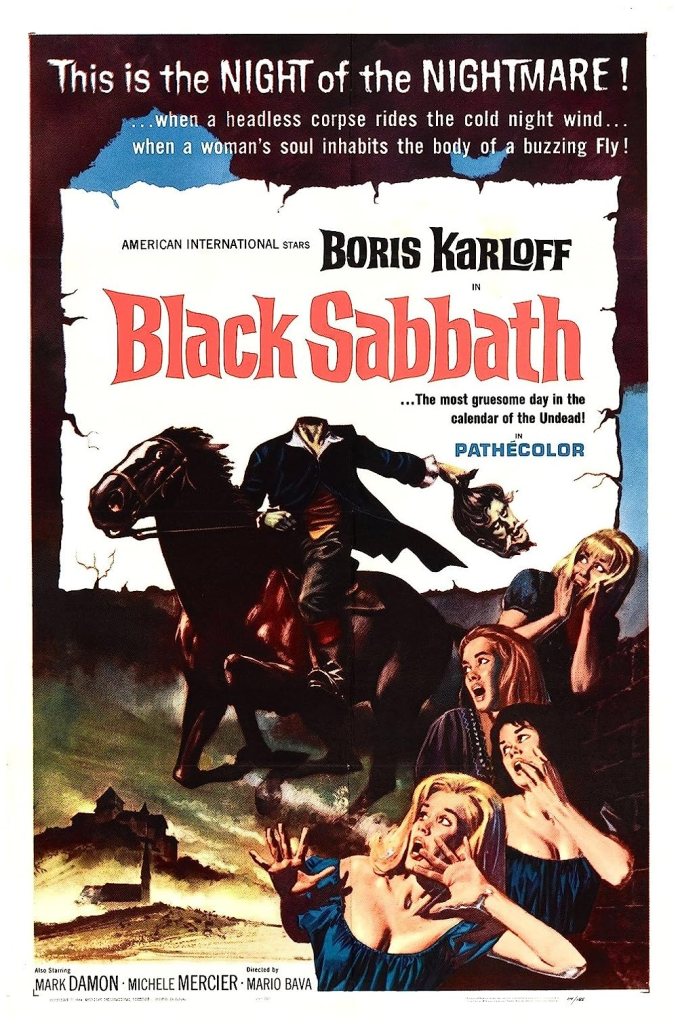
Infinitely better known under the title Black Sabbath, this Italian anthology has never really impressed me. Of course, I’ve only seen it twice now, so that may change with future viewings, but right now, it just doesn’t seem that great a movie.

What possibly might impact that conclusion is that I’ve seen only the American print. Both versions contain the three same stories – ‘The Telephone’, ‘The Wurdulak’, and ‘The Drop of Water’ – but the stories are in a different order in the American copy, along with edits being made to the stories, most prevalent in ‘The Telephone.’

I don’t know if I’d like the movie anymore with the original print, but I can say that as I believe ‘The Telephone’ is by far the weakest segment here, I’d definitely be open to seeing the story done differently. ‘The Wurdulak’, which is the final story in the American print, isn’t that bad, but it does run on a bit long, and possesses a bunch of annoying character mistakes that make it quite hard for me to sympathize with them, not to mention having somewhat melodramatic dialogue (“All I know is that I love you”).

The true winner of this film, as far as the segments go, is ‘The Drop of Water’, which is unfortunate, as it’s the segment that opens the American copy, meaning that after the story is done, there’s little to look forward to. ‘The Drop of Water’ is sweet and simple, and is a masterclass in suspense. From the moment we first see the dead body of the medium to the final scene, it’s a very thrilling story, and a pleasure to watch.

It’s also a pleasure to see Boris Karloff introduce the stories (though I would have liked it if he also had some closing dialogue), and not only that, but he was also in ‘The Wurdulak,’ playing a beautifully threatening role (though that one piece of dialogue – “Can’t I fondle my own grandson?” – was dated terribly). Jacqueline Pierreux was amazing in ‘The Drop of Water,’ and while some of his choices bothered me, I thought Mark Damon did decently in the final story. It may partially just be the story, but Michèle Mercier didn’t really impress me in ‘The Telephone.’

Obviously, Black Sabbath isn’t without it’s strengths, which is evident by the amount of people who call the film a classic. No doubt that it looks nice – the color is rather fresh for an early 1960’s movie, and the portions of the film that it gets right, it really gets right. It’s just that it doesn’t happen often, and though the film might be better in the original Italian print, I can’t imagine my views changing significantly.

In short, despite it’s classic status, it’s not really a film I enjoy save for ‘The Drop of Water,’ and there are so many other horror films from the 1960’s that I’d rather watch.

6/10

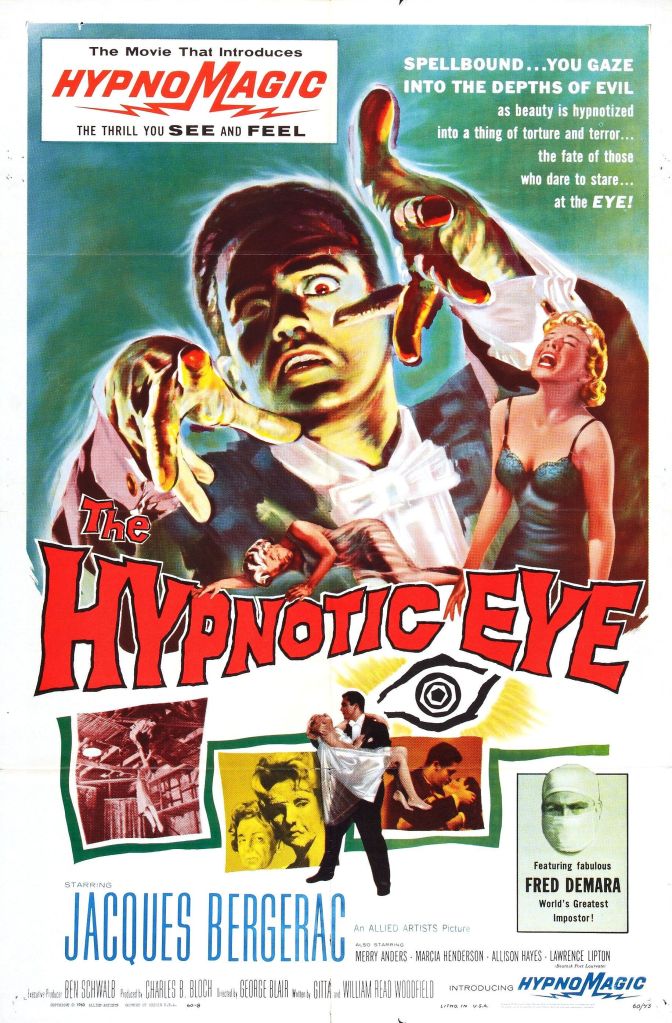
The Hypnotic Eye (1960)

Directed by George Blair [Other horror films: Spook Chasers (1957)]

While primarily a pretty decent movie, I have to say that The Hypnotic Eye occasionally feels as though it’s dragging. There’s some sidesteps the film takes that go on a bit longer than you might hope, and while the main story is good, I think things could have been a bit tighter.

I do adore the main plot, though, which deals with the mysterious disfigurements women have been doing to themselves (such as sticking their faces in a fan blade, or drinking lye, or washing their face in acid), possibly (and most certainly) due to post-hypnotic suggestions given by less-than-scrupulous hypnotists.

In fact, hypnotism, which has been featured in past horror films, such as The Magician and Svengali, probably hasn’t been as terrifying as shown in this film for some time. No doubt, it’s black-and-white, and generally quite tame, but there are a few scenes that are somewhat disturbing, such as one featuring a woman who has been blinded. Actually, the concept sort of reminds me of a far cleaner version of The Wizard of Gore, made ten years later by H.G. Lewis.

Despite enjoying the base plot, what with a police detective investigating the mystery after a personal friend disfigured themselves in a similar manner as 11 others, there’s a decent bit of time that’s spent on material not that engaging. The beat poem was mercifully quick (and yet, it felt much longer), but a good 15 minutes follows a woman around who has been hypnotised, and not that much happens (she goes out, has a nice dinner, dances, listens to poetry, and necks like a wild nymph).

There’s also the whole audience being hypnotized at the end – I don’t doubt that the movie-makers planned for the real-life audience watching the movie to participate also. This consists of examples like “Put your hands in front of you, and interlock your fingers. You can’t pull your hands apart, no matter how hard you try. You try, you’re failing. You can’t.” It’s not just once or twice, but five different versions of the exact same trick are utilized, and it got old long before that. I’m just trying to say I’d have liked more investigation and less audience participation

Joe Patridge was fine as the lead, though he didn’t have quite as much to do as I’d have hoped. Guy Prescott was pretty good also, and I did quite like his warning against hypnotism, as corny as it was, during the final scene of the film. Somewhat amusingly, I don’t think that the hypnotist, played by Jacques Bergerac, stood out that well. I guess he looked the part, but he didn’t really seem to have much in the way of personality. Others were in the same boat, such as Marcia Henderson and Allison Hayes (The Undead, Zombies of Mora Tau, The Disembodied, The Unearthly), who didn’t really peak until the end.

Personally, I remember the film being a little more fun the first time I saw it. Not that it’s a bad movie now, as it can be a reasonably entertaining film, but even at just eighty minutes, it feels as though it drags here and there, which is never a good sign. It’s still fine, but ultimately feels a bit more average than I personally wished it did.

Still, The Hypnotic Eye is still a bit of a treat, if only because early 60’s horror is mostly exemplified by Psycho and miscellaneous Roger Corman and William Castle movies, so this is an okay change of pace, and not a bad way to spend a little time on.

6.5/10

The Reptile (1966)

Directed by John Gilling [Other horror films: Escape from Broadmoor (1938), Mother Riley Meets the Vampire (1952), The Gamma People (1956), The Flesh and the Fiends (1960), The Shadow of the Cat (1961), The Night Caller (1965), The Plague of the Zombies (1966), The Mummy’s Shroud (1967), La cruz del diablo (1975)]

This Hammer film does quite a lot right, and though sometimes compared to films such as The Gorgon, I’ve always tended to find this film a wee bit better.

Filmed back-to-back with The Plague of the Zombies (which explains why so much of the setting is familiar), the story here is quite fun. Once we find out exactly what’s going on in this small Cornish village, it’s not that much a surprise, but the story and mystery are still pretty decent, and also has good suspense here and there.

Personally, I think one of the biggest drawing points would be the engaging characters. Dr. Franklyn (played by Noel Willman) was such a complex and interesting individual, and I sort of wish he had a bit more time toward the end to fully explain his part in things. Playing his daughter Anna was Jacqueline Pearce, who had some mystery behind her. The barkeep, an individual named Tom (Michael Ripper), has to be one of my favorite sidekick characters, and though he’s rather gruff at first, ends up being quite lovable.

Of course, the characters wouldn’t matter much without the performances. Ray Barrett made a solid lead character, and his investigations into his brother’s death, with the help of Jennifer Daniel (his wife) and the aforementioned Michael Ripper. I loved Ripper (The Mummy’s Shroud) in the film; even better was Noel Willman, who isn’t an actor I really know (both he and Jennifer Daniel also appeared in The Kiss of the Vampire), but his performance was great. Marne Maitland, John Laurie, and Jacqueline Pearce were limited in how much they contributed, but they still did well.

Unlike The Gorgon, I thought the effects here were decent, especially the make-up on the snake-like antagonist. It had a similar vibe to Cult of the Cobra – what with a secret group of snake people tying into the plot – but The Reptile had a pretty scary design for their makeup, and being in color, it looked all the better. Well, that, and it wasn’t near as dull.

Really, it’s quite a solid movie. There’s a decent amount of mystery, suspense, and atmosphere (that sequence in which Ripper and Barrett were digging up bodies in the rain comes to mind), making The Reptile very much a film that fans of classic horror, and Hammer horror, may want to take a look at.

8/10

Kyuketsuki Gokemidoro (1968)

Directed by Hajime Satô [Other horror films: Kaidan semushi otoko (1965), Kaitei daisensô (1966)]

Commonly known under the catchy title Goke, Body Snatcher from Hell, this Japanese film is a vibrant and occasionally interesting movie. It has solid anti-wars themes, and a fantastic ending, but it’s also not the most engaging film out there.

I’ve seen this one twice now, and I guess one of my main issues with the film isn’t even entirely with the film itself. The production company, Shochiku, have certainly made worse films (X from Outer Space) and less coherent films (The Living Skeleton), so this one is certainly a palatable movie. Comparing it to other Japanese movies from the time, though, such as Matango from just five years earlier, and even The H-Man from ten years earlier, and it just doesn’t hold up.

No doubt the story has some strong elements, but I don’t think one of them is the space vampire. The special effects around the silvery slime using human beings as hosts is great, and the way to get into the body (via a vertical slit in the forehead) is classy, but that was really the least interesting portion of the film.

More so, the movie’s about what people will do when placed in an exceptionally stressful situation. To be sure, it was stressful before the alien – people on an airplane have to deal with both a hostage takeover and an unrelated bomb threat (talk about getting on the wrong flight), and that was all during the ten minute cold open before we even get the movie’s title. And so we have this group of people from different walks of life trying to survive from threats on multiple sides.

Of course, some of these individuals are more antagonistic, such as the hijacker (Hideo Kô) and this asshole of a politician (Eizô Kitamura), and others are more the generic hero, such as co-pilot (Teruo Yoshida). Others are the flies in the ointment, such as the psychiatrist (Kazuo Katô) who is more interested in seeing how people react to the situation than anything else.

Performances all around are pretty decent. Like I said, Teruo Yoshida tends to be a bit on the generic side, but there’s others, such as Kazuo Katô, Hideo Kô, Masaya Takahashi, Nobuo Kaneko, and Kathy Horan who bring plenty of flavor to the film.

What’s more striking is the somewhat heavy-handed anti-war message the film carries. There’s an American woman who is going to pick up her dead husband from Vietnam, and she does occasionally get emotional about the stupidity of war. Another suggests that because of mankind’s tendencies to fight unnecessary wars, it’ll attract the attention of alien lifeforms, making us an easier target (reminding me of the Nine Inch Nails song ‘The Warning’, which is a banger).

At the same time, I like to think that most people would be against war. I mean, obviously not those who support capitalism – capitalism without war is untenable – but most people, I think, wouldn’t have a problem saying that war is a negative thing, and if it can be avoided, it should be. I suspect few knew that better than Japan, as they were still recovering from the devastation the USA caused their country with the atomic bombs in Nagasaki and Hiroshima.

I also want to add that, without giving anything away, I loved the hell out of the conclusion. I’ve seen this before, as I said, but I honestly didn’t remember much in the way of details, and so the finale here really hit the right spot in about three different ways (none of which I can fairly expand on). It was the finale that kept on giving, and the final shots were A+.

Goke, Body Snatcher from Hell is a nice-looking movie. The color schemes, especially during the opening (an airplane flying in a blood-red sky is rather striking). It’s just that, funnily, the so-called “Body Snatcher from Hell” is the least-interesting portion of the film, and while there’s enough here to keep things going at an okay pace, and the message is a solid one, when I think of other Japanese horror films, it’s just not quite as good or as memorable.

7/10

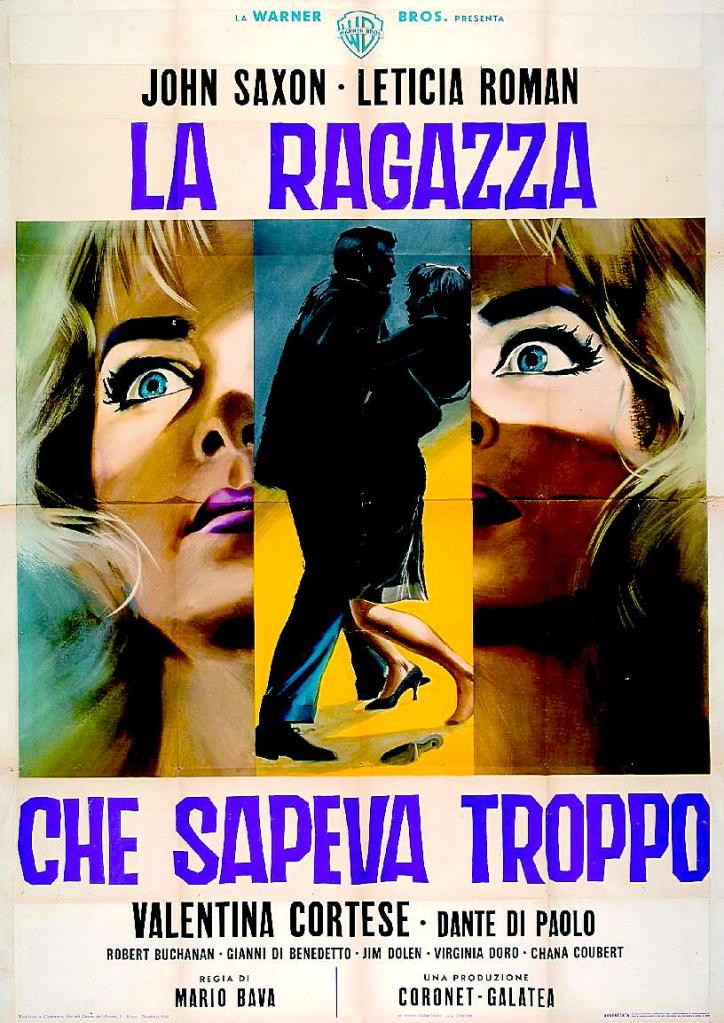
La ragazza che sapeva troppo (1963)

Directed by Mario Bava [Other horror films: I vampiri (1957), Caltiki il mostro immortale (1959), La maschera del demonio (1960), Ercole al centro della Terra (1961), I tre volti della paura (1963), La frusta e il corpo (1963), 6 donne per l’assassino (1964), Terrore nello spazio (1965), Operazione paura (1966), 5 bambole per la luna d’agosto (1970), Il rosso segno della follia (1970), Ecologia del delitto (1971), Gli orrori del castello di Norimberga (1972), Lisa e il diavolo (1973), The House of Exorcism (1975), Schock (1977)]

Known under both The Evil Eye and The Girl Who Knew Too Much, this Italian classic directed by Mario Bava is often considered one of the earliest gialli. In truth, while I don’t mind that claim to fame, it’s nowhere near as memorable as the following year’s Blood and Black Lace, and while an okay movie, I don’t know if La ragazza che sapeva troppo really stands out that well.

A giallo it may well be, and there are certainly familiar elements here (an American witnesses a murder and attempts to figure out who the mystery killer is), but there are also quite a few missing elements. For one, the film’s nowhere near as vibrant, a big reason being the movie’s black-and-white. The killer also doesn’t wear any type of face covering. No doubt the mystery is decently solid, but it doesn’t quite feel what you might expect after seeing later gialli.

One small thing that did take some getting used too was the use of interior thoughts. Sort of like first person narration, though it’s just the thoughts going through some character’s minds. It doesn’t pop up too often, and mostly revolves around the main character played by Letícia Román, but it was somewhat interesting, and occasionally seemed an odd choice.

Personally, seeing a younger John Saxon (A Nightmare on Elm Street, Tenebre, My Mom’s a Werewolf, Black Christmas) was a big selling point, but I can’t say his character made a huge impression on me. Letícia Román made an okay lead, but some of her character’s decisions were pretty sketchy. I did rather like Dante DiPaolo here, and Valentina Cortese (Un’ombra nell’ombra) did pretty well, especially around the finale.

From my understanding, some versions of the film (under the title ‘The Evil Eye’) have removed some scenes and added a bit of comedy not apparent in the original. Given this is the version I believe I watched, I can say that tonally, it seemed sometimes inconsistent. None of the comedy is over-the-top by any means, but the movie just felt a bit whimsical at times, and I don’t think that was a great decision. Also, the ending (what with a random murder on ski lift-type things) just felt sort of ridiculous.

Obviously, Mario Bava was one of the most important Italian horror directors of the 1960’s. Before this film, he was behind films like Black Sunday and Hercules in the Haunted World (along with films he wasn’t credited for, such as Caltiki and Lust of the Vampire), and while Black Sunday is well-appreciated, I think he hit his stride later on, Blood and Black Lace being one such example. Blood and Black Lace has some similarities to this, to be sure, but it feels more polished, and being in color, feels so much more like the gialli I’ve grown to love.

All of this is to say that La ragazza che sapeva troppo is an okay film, and it’s certainly watchable, but I don’t think it’s a particularly great movie. If you’re interested to see how gialli got their start, it’s worth a watch, but otherwise, I can’t say this film has that much to offer, at least the print I happened to see.

6.5/10