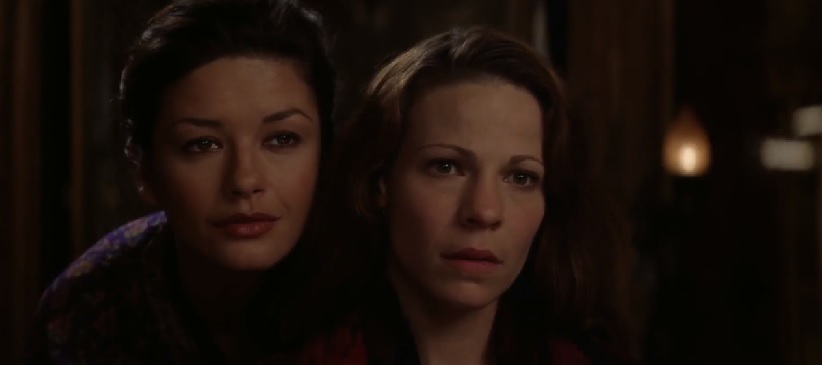
Tenement (1985)

Directed by Roberta Findlay [Other horror films: Take Me Naked (1966), Mnasidika (1969), Janie (1970), The Altar of Lust (1971), The Slaughter (1971), Angel Number 9 (1974), Snuff (1975), A Woman’s Torment (1977), Mystique (1979), The Oracle (1985), Lurkers (1987), Blood Sisters (1987), Prime Evil (1988), Banned (1989)]

Tenement is a film I’ve seen perhaps three times now, maybe even four. At first, I didn’t care for it – it was far too gritty and the antagonists far too disorganized for my liking – but after taking a few other chances with it, I have grown to respect what this movie was going for.

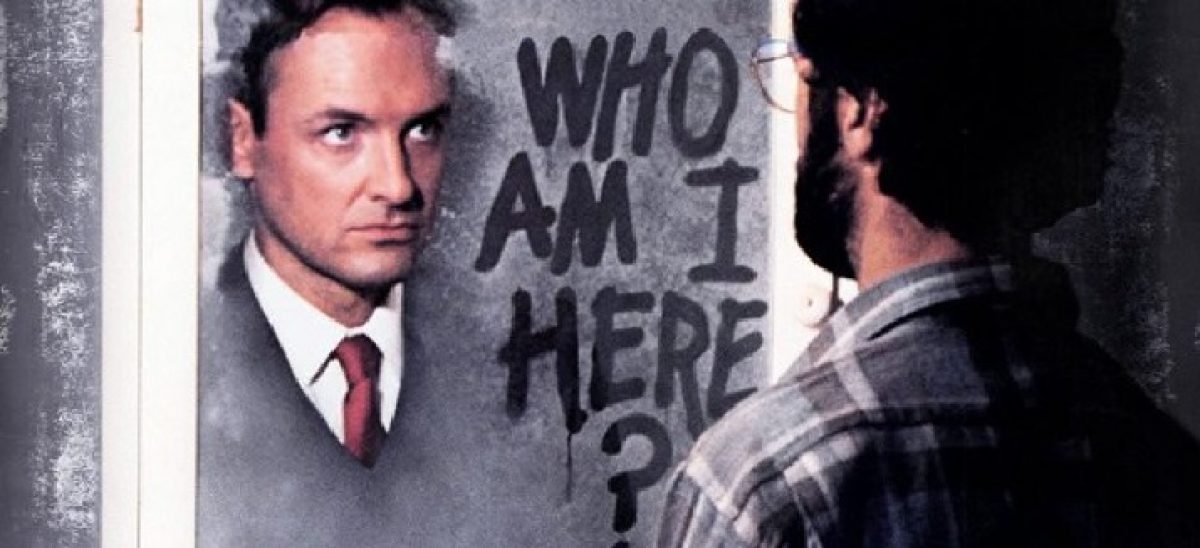
Also known under the titles Slaughter in the South Bronx and Game of Survival, and a hybrid of action/crime/horror, Tenement is very much a product of the 1980’s. Filmed in New York City (and taking place in the Bronx), this movie shows just how terrible urban decay can touch communities. It’s a dirty, gritty film, with a bit of a grindhouse feel to it, so it’s definitely not a movie for everyone.

It’s also quite violent, and in fact, was rated X by the MPAA solely for violence, which is generally uncommon. To hardened horror fans, there’s not much here that’s really shocking, but much of it is pretty decent, from throat slittings to electrocutions to injecting rat poison into one’s veins. There’s a lot of violence here, and it generally keeps up a good pace.

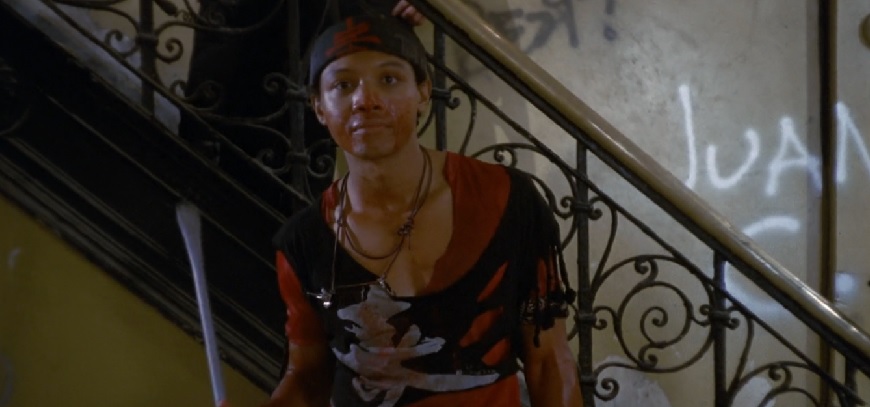
One of the things I had issues with, when I first saw this one, was the antagonists. It’s a group of seven gang members, and as they go after the tenets in the building, floor by floor, I feel they do it in such a disorganized way. That might sound silly – these seven people are likely all high on cocaine, angel dust, and God knows what else, so it makes sense they wouldn’t be aiming for efficacy – but it stood out to me when I first watched it, and I admit it bothered me.

To be fair, I first saw this when I was no older than 14, if I had to guess, and likely didn’t have much experience with gritty exploitation movies. Certainly after having seen my fair share of those, the fact that the antagonists here are a bunch of drugged-up lunatics doesn’t dissuade me quite as much.

We are sort of thrown into this movie, which has a decent amount of characters, with little in the way of introduction. Of the tenets, we have Sam Washington, Ruth Edelstein, Rojas, Carol, Poppo, Mr. and Mrs. Wesley, Anna, her three children (Anita, Charlie, and Maria), Mr. Gonzales, and Leona and her daughter, Jeanne. Some of these names are only said once, and the DVD copy I have doesn’t have captions, so it took a bit to figure out who was who, which could be annoying.

Related, the seven members of the gang are Chaco, Rudy, Chula, Hector, Sal, Monk, and Nines. I swear, they didn’t call Nines by name until the final 15 minutes, and we’re not really introduced to any of these people on an individual level, so it took a while to match up the names with the faces.

And I understand, when there’s this many characters in a movie, it’s hard to go into too much backstory. I personally kept hoping that they’d mention that Washington had been to Vietnam or something, just because he sort of felt the type, but we don’t really learn much about anyone aside from the surface of their lives. It makes sense, but it also feels a wee bit shallow.

Joe Lynn made for a solid lead. He’s not been in many things, and apparently died just a handful of years later in 1987, at the age of 40, but he did well here. Mina Bern was fun as a scrappy, older woman who wasn’t averse to beating gang members with a baseball bat. Walter Bryant had some good scenes toward the end, Larry Lara was annoying throughout, and Alfonso Manosalvas seemed a nice guy. Others playing tenets worth noting are Angel David, Corinne Chateau, and Rhetta Hughes, who I personally really liked, but she doesn’t last all that long.

Of the seven gang members – Enrique Sandino (Chaco), Dan Snow (Rudy), Karen Russell (Chula), Paul Calderon (Hector), Nick Iacovino (Sal), Joe Montefusco (Monk), and Manuel Cotto (Nines) – only three honestly stand out, being Sandino, Snow, and Russell. Sandino definitely had a striking and threatening aura, despite him having no real character. Karen Russell looked cool, I guess, and Dan Snow (The Toxic Avenger) had a tough feel to him, though that may not have entirely panned out.

I think that fans of 80’s exploitation – movies like Class of 1984, Ms. 45, Savage Streets, Naked Vengeance, and Siege (or Self Defense) – would have a pretty good time with Tenement. I don’t think it’s a great movie, but I do find it consistently entertaining, and there is some solid tension throughout the film, so it may be worth checking out.

7.5/10

Saw 3D (2010)

Directed by Kevin Greutert [Other horror films: Saw VI (2009), Jessabelle (2014), Visions (2015), Jackals (2017), Saw X (2023)]

Boy, as a long-time Saw fan, I have a lot to say about this one, and I only hope I can keep my rambling to a minimum.

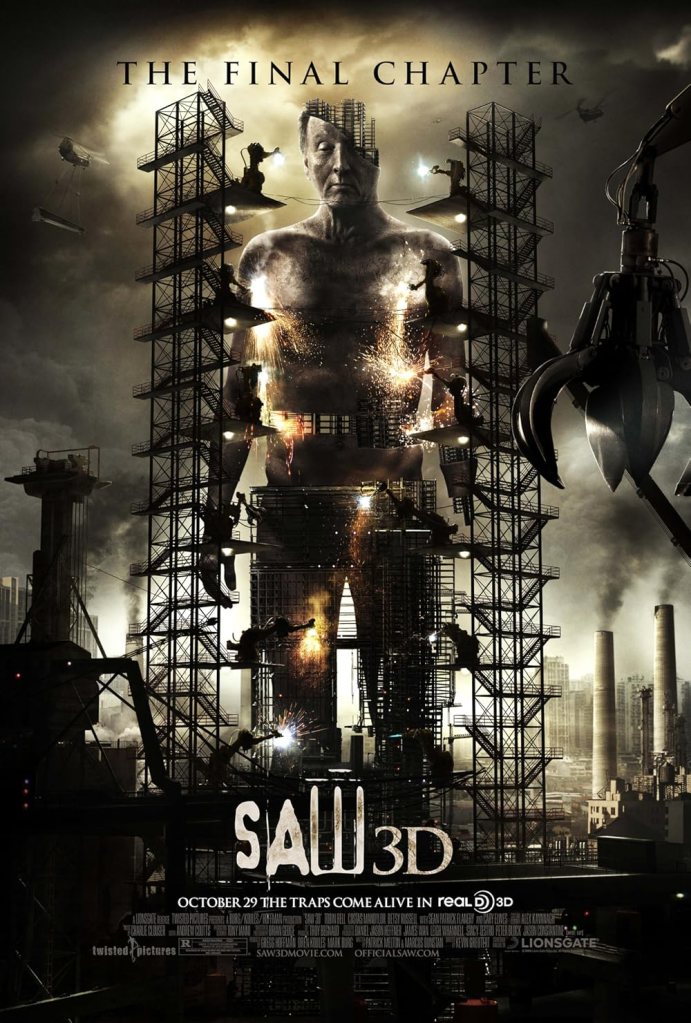
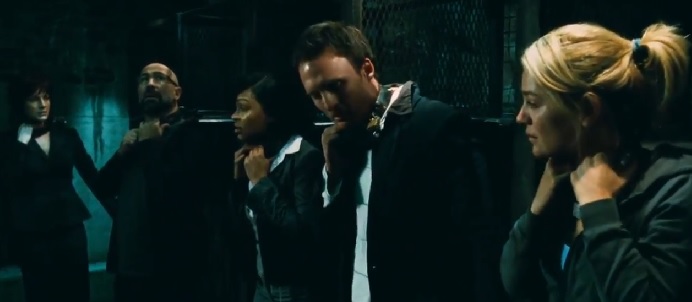
Saw 3D, also known under the title Saw: The Final Chapter, is quite a disappointing film. There’s plenty of reasons why, but I also want to be clear right now: I will be giving some spoilers to this movie in order to cover it to the best of my ability, so if you’ve not seen Saw 3D, do not read further.

Firstly, let’s discuss the 3D – it’s terrible. I know around this time, 3D movies were coming out like crickets on a quiet night, but just because it was a trend doesn’t mean Saw had to follow suit. The 3D added absolutely nothing to the movie, and though you could say it’s one of the film’s smaller sins – the story and structure and execution of twists far worse – it’s still emblematic of the problems Saw 3D has.

Let’s talk turkey, though, ‘turkey’ being my code-word for plot. Following the events of the last movie, Mark Hoffman is on the warpath, his prime target being Jill (who, if you didn’t know, attempted to kill Hoffman, and while it just ended up disfiguring him, you can tell he’s none-too-pleased). Jill then decides to go to the police, specifically Internal Affairs detective Matt Gibson (Chad Donella). Why Matt Gibson? I don’t really know, as he’s never been mentioned, let alone appeared, until this movie.

While Jill is trying to ensure her survival against an angry Hoffman, a self-help speaker (Sean Patrick Flanery), who has been amassing fame and wealth by speaking about his survival of one of Jigsaw’s traps, is placed in a new game. Like William Easton in Saw VI, he’s forced to go through a bunch of traps, attempting to help his friends and staff from grisly fates, and face the lies that brought him to where he is now.

In theory, that portion of the film should at least be suitable, but it’s really not. The sixth film had some really solid portions during the game, but here, it feels largely weak. There’s a portion where he has to talk a blindfolded friend over planks, so the friend doesn’t fall to his death. Tense, perhaps, but not particularly great. Sure, someone has their eyes and mouth at risk of spikes, but I didn’t feel a whole lot of care for anyone involved.

Perhaps the most interesting trap, at least in this section, was one in which a woman was tied down, and the key to unlock her was on a fishhook that’s in her stomach. Flanery’s character has to pull the fishing line from her mouth, doing God knows what type of internal damage, all while any speaking, or screaming, will ensure that the woman’s throat gets pierced by spikes. I’m not saying this is a great execution, but at least it’s something. The idea of having a fishhook pulled through your innards is not what I’d call a fun time. Some props, though, to that pulling-teeth section.

Perhaps because of the 3D nature, though, some of the movie feels really over-the-top. There’s a group of survivors from Saw traps (and we see some familiar faces), and as one woman recounts her survival story (of a trap previously unseen), it seems almost goofy. The trap with two men and the woman they’re both in a relationship with, set up in the middle of a busy city center, seemed far too ridiculous to feel real. Oh, and that dream sequence – I say again, dream sequence – of Jill’s, where she’s caught by Hoffman and killed by some silly train thing, was so fucking cringe boys.

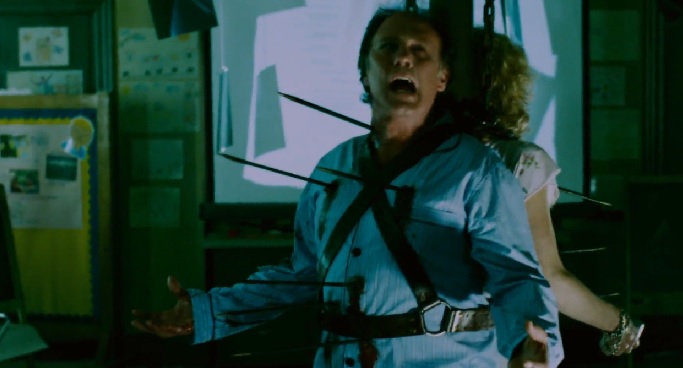
However, the most over-the-top award goes to that junkyard trap. A bunch of racists are placed in a complicated trap. It looks painful – a man’s glued to a seat of a car, and has to pull forward, tearing the skin from his back in large chunks, to potentially free them all – but given the victims are racist, and the movie wants to show some carnage, it comes as absolutely no surprise that things go the way they go.

Onto perhaps the most important thing here, though, I need to speak about Lawrence Gordon (Cary Elwes). Ever since the end of the first movie, and the fact that he wasn’t mentioned as dead in the follow-up film, I’ve been of the opinion that Gordon survived. I even thought it likely that he was blackmailed by John to help him out with some of the traps. I know others out there thought the same thing – I have no idea of the percentage of Saw fans who would proudly claim “I believe Gordon is alive,” but I can say that others thought people like me distasteful.

Well, as it turns out, Gordon did survive. That in itself isn’t a big spoiler, because the movie opens showing how he was crawling from the bathroom following the events of the first film, and how he cauterizes his stump (which looked painful as FUCK). The real spoilers of his character come later on, but I think they’re executed particularly poorly. It hurts most, because Gordon’s return was something I had been hoping for for many years, and they bring him back in an execution as shoddy at this? More than anything – the 3D, that stupid fucking dream sequence, the over-the-top junkyard trap – this pissed me off something awful.

I appreciated Costas Mandylor in Saw VI, but I have to say that he’s starting to feel a bit OP. He’s not John – he used inferior blades and knives in the past, and he doesn’t have the Godlike omniscience that John did, and yet he’s like Hannibal Lecter the way he massacres through people. Actually, I started wondering if he had some military training in the past, and though this might be a small thing, if they had mentioned that indeed, he was in the Special Forces for a stint, I would have found Hoffman’s role here more believable. That said, I did appreciate his plan to break into the police department – solid stuff.

Betsy Russell’s Jill here feels sort of weak, in comparison. She honestly only got a few moments to shine in the last film, but here, it’s like she’s completely out of her depth. I’ll admit that I found Chad Donella (Final Destination) amusing at times, though he seems a far cry from the threat posed by Peter Strahm. Sean Patrick Flanery (The Evil Within, Lasso, Kaw, Mongolian Death Worm) did fine, but his character struck me as somewhat pointless, truth be told.

The most exciting face for me to see, of course, is that of Cary Elwes (The Alphabet Killer, Hellgate, Psych:9), but I don’t really think they do justice with his character, which is a damn disappointment, given how long I’ve waited for this.

I’m not going to say that Saw 3D is a terrible movie, but I can say that I think it’s the first movie in the series that’s below average. It’s not an utter disaster, but given how great the first movie is, and how sequels generally did well to keep the standards high, this was just a major let-down, especially as a long-time fan of the series.

6/10

Saw VI (2009)

Directed by Kevin Greutert [Other horror films: Saw 3D (2010), Jessabelle (2014), Visions (2015), Jackals (2017), Saw X (2023)]

In my review for the film, I said that Saw V felt largely like set-up for the following film, and while I didn’t hate it, it wasn’t quite up to the Saw standard I look for. I have to say, though, after revisiting this one, if that is indeed accurate, then perhaps some sins can be forgiven, as I found Saw VI a wholly delightful experience.

Before touching on character motivations or the politics clearly on display here, I wanted to talk about the gore. I thought the fifth film largely felt lacking insofar as the gore and traps went. To be clear, the gore itself isn’t necessary – the first film took a far more psychological approach to the story, and it remains my favorite of the franchise – but the fact that the traps in the previous film felt weak was distasteful, to me.

That’s not the case here. An insurance executive (Peter Outerbridge) is forced through a series of traps because of the fact he’s a piece of shit, and he’s forced again and again to make difficult choices and face pain that, if he attempted to get insurance, would be classified as a pre-existing condition. And the traps, and effects, are great here.

Many of the traps are themed around his atrocious existence – at first, he’s pitted against someone, and whoever takes the most breaths gets their sides crushed in. It wasn’t pleasant. He then has to choose whether or not an older woman or younger man live – based on his company’s policy, he should go with the healthy young man. The steamy feelings he has toward his company’s lawyer (Caroline Cave) get personified by the steam of a boiler room, in a painful-looking time.

The carousel, which is perhaps one of the more memorable ideas in the film, isn’t overly gory, but it’s a great concept. Six employees are spinning around, and he has to choose two that live. Enter all the arguing and bickering that’d you’d expect. By this point, Outerbridge’s character is beyond broken, and it’s great to see him get a taste of his own medicine (medicine that he doesn’t have to worry about being denied coverage on).

Oh, and the opening is one of the strongest in the series – two predatory lenders are forced to give their pound of flesh. Whichever one of them gives the most flesh survives. It’s a bloody, painful sequence, as a more robust man begins carving off his stomach while a petite woman attempts to hack her arm off. It was a delightfully gory opening.

As you can tell by the targets in this film – predatory lenders and those who work in the sickening insurance industry – the politics of Mr. Kramer aren’t hard to see. In fact, we get some more flashbacks of John’s life, as he’s denied coverage on an experimental treatment that could have helped him, and was warned that going out-of-system would cause the company to drop him entirely. That, in fact, leads to this great line: “You think it’s the living who will have ultimate judgment over you because the dead will have no claim over your soul. But you may be mistaken.”

As someone who despises the American healthcare industry and people who get rich by giving people loans they can never possibly repay, it was great to see victims of these traps who legitimately deserved it. And given that the traps here were some of the bloodiest, it makes it all the more playful.

Lastly, on gore, there’s a death toward the end that just has to be seen. It involves a body getting injected with flesh-eating acid, and it – well, just watch it for yourself. That was a damn good sequence, and gooey to boot.

Saw V spent a lot of time on the cat-and-mouse game between Mark Hoffman (Costas Mandylor) and Agent Peter Strahm (Scott Patterson). Throughout that film, Hoffman was attempting to frame Strahm for Hoffman’s actions, and aggravatingly, it seemed to have worked to an extent. Well, this movie gives us some new insight into that, including a surprise return of a character, and leads to some beautifully tense scenes.

See, the FBI has concerns about Strahm being one of John’s successors, and they’re looking deeper into it. They have some old voice recordings they’re trying to unscramble, and at the audio lab, we’re given a hell of a tense scene between Hoffman and two FBI agents who clearly suspect his involvement. It’s a great sequence, and one I remember fondly from when I first saw this in theaters.

Costas Mandylor is great here. His character got some additional depth in the previous film, but this movie really shows how far he’ll go in order to survive. Mark Rolston (Scanner Cop, the ’96 Humanoids from the Deep) annoyed me in the fifth movie, but he comes in clutch here. Tobin Bell is back with some great insights into his philosophy, and I love seeing it.

Betsy Russell (who first appeared as an unnamed vision in Saw III) plays a larger part in this film than she has previously. In the fifth film, we see her get a large box from John’s will, and here, we finally see what’s in it. Oh, speaking of drawn out revelations – remember that scene in Saw III where Amanda’s reading a letter addressed to her and crying? Well, that’s finally explained in this movie, so buckle up, bois.

Otherwise, Peter Outerbridge (Haunter) was great in his role. Despite despising his character and everything he stands for, I do think he brought some good emotion to the role, and I can’t help but feel bad for the guy at times. Samantha Lemole (who first appeared, unnamed, in the fifth movie) had a good scene or two, and Devon Bostick (Dead Before Dawn 3D), despite limited screen time, kinda goes hard though.

There’s a lot in Saw VI to like. A few sequences are odd – such as the brief sequence early on showing a blurry Amanda and Cecil driving (which may only be in the unrated cut) – but overall, the movie is quite strong. The twists here are mostly decent, and the gore is certainly worth it. I really believe this to be among one of the best movies in the first seven of the series.

8/10

Saw V (2008)

Directed by David Hackl [Other horror films: Into the Grizzly Maze (2015)]

Ever since I first saw Saw V, I thought it was noticeably lacking. It’s not a bad movie, but you can very much tell it’s a part of a bigger picture, more so than with any of the previous films. Certainly the gore is okay here, and you could probably watch this stand-alone if you don’t mind being confused, but I do think of the first five movies, it’s the weakest.

I should also say that while I strive to not spoil anything in my reviews, I do have to touch on some major spoilers for the fourth movie, and so I state here: if you’ve not seen the fourth movie, then this review may not be for you.

We find out, at the end of Saw IV, that Detective Mark Hoffman is an accomplice of John’s. Much like how Saw III fleshed out Amanda and John’s working relationship through flashbacks, we’re shown in this film how Hoffman came to be one of John’s underlings. We also follow Hoffman present day, as he finds himself in a dilemma.

For those of you who have seen Saw IV, you know that the finale of that film and the finale of Saw III take place during the same time period and at the same location. Many important figures are there, among them Hoffman, FBI Agent Peter Strahm, John himself, Amanda, SWAT guy Rigg, Detective Eric Matthews, Lynn, and Jeff. It’s a crowded time, brahs. The point is, though, that of all the people there, Hoffman was supposed to be the only one to survive (well, technically, John could have survived, but trusting Amanda to not kill Lynn and set off Jeff to not kill John is madness, brahs).

Hoffman wasn’t the only survivor (and to be clear, I’m discounting Jeff and Lynn’s daughter) – Agent Strahm managed to survive. And following events that shortly follow, he becomes deeply suspicious of Hoffman’s actions. Apparently Hoffman has been involved in the Jigsaw case from the beginning (we, as an audience, don’t see this – Hoffman only pops up in a brief scene in Saw III, and we never hear people like Detective Tapp or Kerry mention him beforehand), and being the last of a dying breed, Hoffman could get away clean.

Much of the film is a game of cat-and-mouse. Strahm all but tells Hoffman that he’s suspicious of him, and because of that, Hoffman tries to cover his tracks and frame Strahm for the crimes he’s committed, all while trying to focus on another game that John had set up before his untimely demise.

The thing with the Saw films is that I can’t review them in my typical way. It’s impossible. There’s too many plot and story elements that need to be delved into, and so, despite the fact I rarely dive into the plots of film as much as I have in the paragraphs above, I don’t really see a choice, because for movies like this, you need that information for the whole picture.

One thing I did want to note – I’m delighted that we saw both a picture of Detective Tapp and Sing (both from the first movie). The first Saw sometimes feels so disconnected from the ones that follow, so it warmed my heart to see Sing and Tapps’ faces. Obviously, we’d seen references to Lawrence Gordon in the previous films, and this movie does show more detail regarding the events of the first three movies vis-à-vis Hoffman’s involvement, but it’s great to see the classics representin’.

I guess a lot of this can be boiled down to the fact that much of this film feels like set-up for future films, not to mention it can feel like filler. There’s traps in the film, and people fighting for their survival, but I’m far more interested in what happens to the main characters than I am the random people we see in traps here.

And honestly, the traps aren’t great. Part of it does work thematically, and the final test for the group, which deals with a saw and a toll of blood, is pretty solid, and rather gruesome to boot. The compressing finale was beast also. The rest, however – well, the pendulum at the beginning was okay, but it’s impact is lessened by the nature of whom built it. Otherwise, we don’t have many interesting pieces of gore here – far more of the film is focusing on filling in backstory and the cat-and-mouse aspects than it is the traps.

To be fair, it probably had to come to a point where the movies took more a focus on the increasingly complex story they’re trying to tie together. In the beginning, it wasn’t that bad – there was a guy named John who wanted to play games. But now, John has friends like Amanda and Mark over, and even John’s plans have plans.

Scott Patterson made a decent focus, though I wish his character would have approached some of these things differently. It’s nice to see Costas Mandylor’s character fleshed out. Tobin Bell, as always, is a pleasure to see. Less plot-relevant individuals I rather enjoyed include Carlo Rota, Julie Benz (Locusts: The 8th Plague, Satan’s School for Girls, Havenhurst), and Greg Bryk (Bloodthirsty, Living Death).

Oh, and I wanted to give props to John for another favorite quote of mine: “Killing is distasteful… to me.” In fact, John’s arguments with Hoffman over the philosophy of rehabilitation was all kinds of fun, so though I do think this is the weakest film of the first five, don’t let that deter you from giving it a go.

Certainly Saw V does move the overall story along, and though I think it could have used some work, it’s not a bad movie at all. Compared to the others, though, it does feel decidedly average to me.

7/10

Dark Tower (1987)

Directed by Freddie Francis [Other horror films: The Brain (1962), The Day of the Triffids (1963), Paranoiac (1963), Nightmare (1964), The Evil of Frankenstein (1964), Dr. Terror’s House of Horrors (1965), Hysteria (1965), The Skull (1965), The Psychopath (1966), The Deadly Bees (1966), They Came from Beyond Space (1967), Torture Garden (1967), Dracula Has Risen from the Grave (1968), Mumsy, Nanny, Sonny & Girly (1970), Trog (1970), Gebissen wird nur nachts – das Happening der Vampire (1971), Tales from the Crypt (1972), The Creeping Flesh (1973), Son of Dracula (1973), Tales That Witness Madness (1973), Craze (1974), Legend of the Werewolf (1975), The Ghoul (1975), The Doctor and the Devils (1985)] & Ken Wiederhorn [Other horror films: Shock Waves (1977), Eyes of a Stranger (1981), Return of the Living Dead: Part II (1988)]

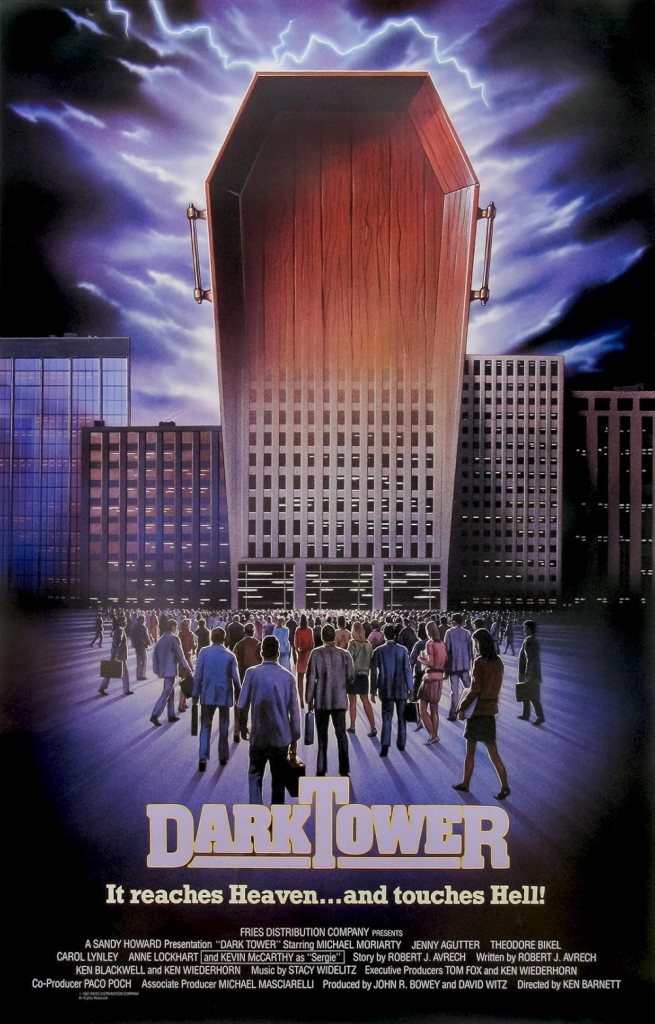
I’ve wanted to see Dark Tower for some time now. The idea of a haunted high-rise appeals to me, and I thought it might be an interesting idea to play around with. Sadly, though, I don’t think that Dark Tower is the best execution of this idea.

This is likely known by those involved with the movie, too. I’m not someone who delves into behind-the-scenes information, but I did notice that the original director of this one (Ken Wiederhorn) was replaced by well-known Freddie Francis. And yet, when the movie starts playing, we’re told it’s directed by Ken Barnett; apparently Francis wanted his name removed from the film because he was dissatisfied. I should also mention that he never again directed another movie.

It’s not all bad, though – Dark Tower was filmed in Barcelona, Spain, so anytime we see outside shots, we see some beautiful structures and buildings older than the hills. Despite being in English, the film does possess a foreign flavor throughout, which is nice. It doesn’t make the film altogether that much more interesting, but it’s nice all the same

And while many of the deaths here aren’t too memorable there’s always potential. Early on in the film, a window wiper falls from his scaffolding, perhaps pushed by a malevolent spirit. After being possessed by the same spirit, another takes part in a mass shooting, which was at least filmed well. On the other hand, there was a very weak elevator death – I’d personally stick with De lift or Damien: Omen II.

In the finale, we did see someone get electrocuted, and another get impaled. Well, technically, we didn’t see this individual get impaled, but even so. Unfortunately, though, the finale – or, if I’m being honest, the last twenty minutes – seemed a bit of a mess. Here’s just a small example – three characters go to the haunted building (Michael Moriarty, Kevin McCarthy, and Theodore Bikel), and for some forsaken reason, they split up. No reason was given – we see these three characters enter an elevator, and the next we see of them, they’re in completely different rooms (if not floors).

I liked the idea of this movie, but it definitely felt a bit choppy at times. I appreciated aspects of the finale, and while there’s not really a twist, we do learn more about Jenny Agutter’s character. I had thought that it might have gone in the direction it did, and I was happy that they did so. It didn’t really make the ending much better, but it was at least good in concept.

At first, I did think the movie would follow Jenny Agutter (The Survivor, Child’s Play 2, Dominique), but instead we largely followed Michael Moriarty (A Return to Salem’s Lot, Troll, Blood Link, The Stuff, Q). I was surprised, but okay, with this – it’s not that Agutter wasn’t decent, but Moriarty was more interesting to me (though at times, I have to say that his delivery wasn’t stellar).

I think that Theodore Bikel (I Bury the Living) is easily the most enjoyable performance in the film – despite the movie seeming somewhat lifeless, all of his scenes had character. Lastly, Kevin McCarthy (The Sleeping Car, Piranha, Invasion of the Body Snatchers) appeared, but we never really got a great hang on his character.

Dark Tower can be an okay movie to watch, but it’s definitely a far cry from good, and while aspects were at the very least interesting, I can’t say it’s a movie that will really stick out in my mind, at least not with the rather lack-luster execution managed with this movie. Just a shame, in my view.

5.5/10

Saw IV (2007)

Directed by Darren Lynn Bousman [Other horror films: Saw II (2005), Saw III (2006), Repo! The Genetic Opera (2008), Mother’s Day (2010), 11-11-11 (2011), The Devil’s Carnival (2012), The Barrens (2012), Angelus (2014), Tales of Halloween (2015, segment ‘The Night Billy Raised Hell’), Alleluia! The Devil’s Carnival (2016), Abattoir (2016), St. Agatha (2018), Death of Me (2020), Spiral: From the Book of Saw (2021), Cello (2023)]

I think that Saw IV is the first Saw movie which really isn’t up to par. Don’t get me wrong, I still think it’s an above-average film, but both the second and third are better, and naturally, the first is God. Saw IV is still a fun and twisty time, filling in more backstory on John’s character, but it’s not exactly stellar.

Certainly the idea of focusing on Rigg (Lyriq Bent), the SWAT guy who’s appeared in the last two movies, and looking at the aftermath of the second film (much like aspects of the third movie did) was a fun one. It’s also tragic, in that it brought back Eric Matthews (Donnie Wahlberg), who looks like he’s been through Hell following the opening of Saw III. It’s not a bad plot, but the twists here, or at least some of them, have a been-there, done-that feel to them.

In fact, this movie can feel at times like Saw II, which isn’t a bad thing, but while the endings of both the first and second Saw films stunned me, I don’t think the finale of this one has quite the same impact. I don’t mean to say that the ending here isn’t surprising, it’s just that it has more a familiar quality to it, in some aspects.

I’m not someone who spoils movies in my reviews – I try to make them as inclusive as possible, save a few exceptions (A Nightmare on Elm Street); I’ll carry on that trend here, and avoid discussing the finale in detail. What I can say is, though, that one of the twists is really quite good (despite feeling somewhat similar), and puts the film into a whole new perspective. In fact, I saw this one in theaters, and I distinctly remember, waiting in line to see the movie, that the audience in theaters before us came out confused by what they’d seen, and I can understand that. The movie plays with the audience a bit, as a good Saw movie should, and that should only be expected.

The third movie hinted at more backstory from John, and this movie filled us in quite a bit. We learn of a miscarriage suffered by his wife; we learn, in fact, that he had a wife. He wasn’t all flowers and roses before both the cancer diagnosis and the loss of his child, but one could assume he was happier, and after that was stripped away, his life philosophy changed drastically.

We learn a lot of this from Jill (Betsy Russell), who we see briefly in the third movie, as she’s being interrogated. She goes into a lot of John’s history, and we in fact see his first trap, aimed at the man who caused the miscarriage of his wife’s child. We also learn that aside from those we already know, John may have another accomplice in the wings.

Two FBI agents – Agents Peter Strahm (Scott Patterson) and Lindsey Perez (Athena Karkanis) – come to assist the police in the capture of those responsible for these ongoing crimes. By this point, with Matthews missing for some time, and Kerry being out of the picture following the events of the previous film, Officer Hoffman (Costas Mandylor), who first appeared briefly in Saw III, is the last one standing. I appreciate how this film throws more characters into the mix, and though sometimes it takes a while to flesh them out, you can usually trust the series to do so.

Lyriq Bent was one of the focuses here, but I don’t think that quite makes him the star. A lot of focus is given on Scott Patterson also, as he tries to unravel John’s past via Betsy Russell’s character. Russell (Camp Fear, Mandrake, Cheerleader Camp) had some good scenes, but being in an interrogation room for most of them sort of limits what she can bring to the table. I wish we got a little more Athena Karkanis, and thinking of Donnie Wahlberg hurts too much.

Tobin Bell doesn’t get quite as much material here as he did in previous films, but it’s great getting a look into what makes his character tick. We get to learn a bit about Costas Mandylor’s character too – certainly more than we did from his brief appearance in the third film, anyways – and others, like Louis Ferreira (Hello Mary Lou: Prom Night II, The Marsh), all played their roles.

I don’t know if most of the traps here are quite up to par. Toward the beginning, we get a trap that involves two people – one has their mouth sewn shut, the other has their eyes sewn shut – and no tape player to be seen. They just gain consciousness,and without any explanation given, must find a way out of the predicament they find themselves in. It looked cool – I’m not sure where it was filmed, but kudos to the scouting agency – but it also felt somewhat thin.

In fact, many of the traps are dependent on multiple peoples’ participation. This isn’t new – in the first film, Zep’s game was explicitly tied to that of Gordon’s, and the whole point of many of the traps in the third film was to force Jeff’s character to risk his own pain to save others. Still, at some point, I feel like all of this micromanaging may be a bit much, even for someone like John.

The spike trap was decent, in which man and wife were bound together by some painful spikes. The trap toward the end, which involved multiple characters we know, was fun too, and those ice blocks hurt me in ways people aren’t meant to be hurt. Overall, though, the gore here didn’t seem too gnarly, the best example perhaps being the face-blade trap (Cecil’s “I don’t have a fucking soul” is a classic quote). Well, save the opening, that is.

See, this film opens on a scene of an autopsy, and it goes into grisly detail about what goes down in the final surgery of one’s bodily existence. Sure, the body looks a bit rubbery at times, but seeing the skull removed, the brain placed in a pan, the rib cage spread open, the stomach cut into – no one can say that this movie didn’t open with a bang. It might be fair to say that somewhere along the way, the movie lost that bang, but the finale still had elements of fun to it.

I’ve never disliked Saw IV, but I’ve never thought it represented the best of the series. It’s a perfectly solid follow-up, and I enjoyed how they delved more into John’s character, but at least of the first four films, I do think it’s among the weakest, while still holding on to a perfectly respectable score.

7.5/10

Zipperface (1992)

Directed by Mansour Pourmand [Other horror films: N/A]

I’ll be honest: I wasn’t expecting much from Zipperface. It’s not just the 3.3/10 this currently sports on IMDb – ever since I first heard of this movie back in late 2009/early 2010, I was under the impression it wasn’t good. I’ve still wanted to see it, though, ever since I first heard about it, but I didn’t expect anything particularly great. Like Heavy Metal Massacre, I wanted to see it, but knew, in my heart, it wouldn’t be worth it.

I was wrong – Zipperface is worth it.

True, the movie’s not exactly stellar, but based on what I was thinking coming in, it did way over-exceed my expectations. The plot – about a guy in BDSM leather stalking and killing prostitutes while the police investigate the murders – isn’t exactly Earth-shattering, and the effects could have used some work, but they struck gold with the characters.

Naturally, it’s important to not overstate this, so I want to say that the movie has it’s problems. Some of the dialogue and acting is subpar, and perhaps some of the finale is silly, but I also think it’s important to be honest, and honestly, I had a hell of a lot of fun with this.

You have to understand where I was coming from, though. I knew this was an early 1990’s slasher, but I didn’t know it was a slasher in which the killer was a character known to us. I thought it was going to go the Slumber Party Massacre or Final Exam route, and have a completely random killer. In this movie, however, the identity of the killer is a mystery, and boy howdy, we’re given a lot of suspects.

It could be a police officer (Richard Vidan), side-lined to desk duty after his performance slips. It could be the mayor’s PR assistant (Timothy D. Lechner), who has some surprises up his sleeve. It could be a photographer (Jonathan Mandell) who burned pictures after the police questioned him, or a shifty religious figure (Christopher Dakin), or the mayor’s husband (Bruce Brown), or hell, the mayor herself (Trisha Melynkov), though admittedly, that would have been a stretch.

The point is, we’re given a lot of suspects, and I’ll be honest, while I thought I knew who the killer was, I wasn’t confident, which was wise, as I was incorrect. Naturally, we’re given a lot of red herrings, each of them pointing to a specific person, and just as I love that type of thing in gialli, I loved it here, and they did it well. I know this film had a lower budget, but props to the story.

Props too to the performances. Some were shaky, sure, but like I said, I had a lot of fun watching this one, and I suspect that they had a lot of fun making it. Dona Adams (in her sole role) made for a fair lead. She had some cringy dialogue (“I can’t stand women being referred to as chicks, broads, or babes!”), but she was generally quite good. David Clover was better – at first, I thought he’d be one of those misogynist cops who’d be pissed to be partnered with a woman, but he grows to be a really solid, supportive, and nice guy.

As the mayor, Trisha Melynkov is as aggravating as mayors can be in movies like this, but there’s also more to her. Richard Vidan (Scarecrows, Zombie Infection) cracked me up as an obviously sexist cop with a chip on his shoulder. Timothy D. Lechner had a few funny scenes, Laureen E. Clair and Jillian Ross had some suspenseful moments, and Bruce Brown, who didn’t do that much, made an impression at times too. Oh, and Jonathan Mandell was a sensual brah.

Speaking of which, there was a scene in which Mandell’s character, who happens to be a photographer, was seducing the lead, police detective Ryder (played by Dona Adams) during a photoshoot. And honestly – that scene was great. The photoshoot itself was a lot a fun (it was nice seeing Adams’ character actually having fun), and the music playing was quite nice. I went into that scene cringing, but I ended up appreciating it.

I also appreciated a scene in which two prostitutes go out to a John, only to run amok of the killer. It was played in a way that most people would suspect Zipperface’s arrival, but it still held some quality suspense early on. It ended with a somewhat poor decapitation, but honestly, I’ve seen far worse decapitations in my time, so I don’t think it was a big issue.

Aside from the decapitation, I don’t think many scenes here were necessarily memorable. Someone got stabbed in the back with a machete, someone got strangled, someone got run over by a car, and someone got suffocated with a whip (related, someone got whipped by, well, a whip, and it didn’t draw blood, so I was impressed) – none of these scenes were great, but I think the fact that none were terrible, and none detracted from the film, is good in it’s own way.

I was surprised by Zipperface. Slashers were few and far between in the early 1990’s, and I really wasn’t expecting much from this, but I had a pretty solid time with it. Most people would likely see it as below average (though I have to admit, that average rating of a 3.3/10 on IMDb hurts me physically, nor do I remotely understand it), but I’m not most people. It may be a movie that doesn’t work for many; I can say, however, that it worked its magic on me.

7.5/10

Saw III (2006)

Directed by Darren Lynn Bousman [Other horror films: Saw II (2005), Saw IV (2007), Repo! The Genetic Opera (2008), Mother’s Day (2010), 11-11-11 (2011), The Devil’s Carnival (2012), The Barrens (2012), Angelus (2014), Tales of Halloween (2015, segment ‘The Night Billy Raised Hell’), Alleluia! The Devil’s Carnival (2016), Abattoir (2016), St. Agatha (2018), Death of Me (2020), Spiral: From the Book of Saw (2021), Cello (2023)]

Much like the second film in this franchise, Saw III takes a look back, filling in some information relevant to the events of the first film. I don’t think this one is quite as good as the second, but it’s still a solid film, and one that I’ve always enjoyed.

I think part of not caring about it quite as much is the increased focus on Amanda (Shawnee Smith), which does make sense, given that John’s (Tobin Bell) cancer is so bad that he’s practically bed-ridden. Personally, though, Amanda seems almost like Harley Quinn at times – she’s not quite as insane, but boys, she ain’t stable, neither. I get that John doesn’t have a plethora of options (or does he?????), but a man of his patient nature having to work with someone like Amanda saddens me.

Still, the movie and it’s two-pronged focus is fun. On the first prong, you have Amanda abducting a doctor, Lynn (Bahar Soomekh). in order to keep John alive and comfortable, as his health is failing. Meanwhile, you have a random man, Jeff (Angus Macfadyen), who is grieving (poorly) over the loss of his son, forced to go through Jiggy’s traps and face his insatiable thirst for revenge.

It’s a fun plot, and especially once all the pieces are placed together, and you see the whole picture, it becomes even funner. I also appreciate the route they take for the twists – many are simply ways to interpret sentences. John’s time with Lynn and Amanda have plenty of clues to the finale, as do the careful messages that John leaves for Jeff. It’s nothing as bombastic as the twist to the first movie (and honestly, what really could be?), but it’s fun, and the finale here can be quite shocking with your first viewing.

Tobin Bell did great in the second film, and I think he does a stellar job here too, despite the fact (or perhaps because of) his character’s entirely bed-bound. He has a lot of emotion to display, and he does a great job with it, despite his character’s failing health. His anger at doctors (prompting a reference to Lawrence Gordon), and his forceful “Look at me!,” is genuinely delightful.

When it comes to emotional performances, though, Bell’s not alone. By far, this is Shawnee Smith’s best performance in a Saw film. Her character goes through the emotional wringer, and though she’s cuckoo for cocoa puffs, or, as the kids are saying nowadays, cray-cray, you can’t help but feel a little bad for her. True, Bahar Soomekh doesn’t have quite as much emotional material to work with, but playing a grief-stricken father, Angus Macfadyen (She Rises) was the bee’s knees.

We do get some more returning faces here too – both Dina Meyer and Lyriq Bent appear, shaken over the fallout from Saw II, but neither are focused on much (and you have to wait until Saw IV to really see more of Bent). Costas Mandylor, who later becomes quite an important character in the franchise, appears here briefly, but doesn’t do much. We do see, in the opening, some more Donnie Wahlberg, which was nice (albeit painful – those foot scenes, tho).

Also, we get images of a woman that John sees while going toward the light – we don’t know who this woman is to John, but it leads into more exploration of his backstory in future movies. On a side-note, it’s interesting to see what’s revealed when in these films. I’ve seen the first seven Saw movies (still have not seen Jigsaw or Spiral, not to mention Saw X), but it’s been a while for some of them, and seeing when certain connections and revelations are brought to light is interesting. For example, I expected to see John eat that tape he was covering in wax at some point, as I remember that scene so clearly, but I suspect that’s perhaps shown in a future film.

As far as the traps go, well, I can say that the worst would likely be the twisty boi, or the Rack, a personal favorite of John’s. It’s all the worse because the guy in the trap can’t do anything to escape – his fate is entirely in another’s hands. However, personally, I wouldn’t want to drown in liquified rotten pig entrails, and that sequence has always been the toughest for me. That opening with the chains looked hella unfun, and that ribcage trap struck me as unfair.

Oh, and perhaps the magnum opus of the film is the surgery sequence. See, John has cancer, and in it’s advanced stages, his brain is compressing against his skull. To give John some relief, Lynn first cuts John’s scalp open, cleans off his skull, and using both power drills and a bonesaw, cuts a portion of his skull off. This is all shown in pretty good detail, and though it doesn’t sicken me near as much as those awful pig carcasses, it was very well done.

I also appreciated the flashbacks to the events of the first films. Well, technically predating the events of the first film, but it comes to the same. We see the bathroom that Lawrence and Adam are trapped in being set up, and I just love seeing more of that classic time. As someone who really enjoys the story in these films, even when it ends up somewhat complicated, I love the use of flashbacks to flesh things out, and this one does that well.

Lastly, kudos for John’s apology to Lynn regarding Amanda’s aggressive behavior, which goes, “I apologize for her behavior. She swims in my sea.” I forgot how poetic John could be, and I dug that.

Saw III does have a cleaner focus than the second movie did, and unlike the second film, does a decent job giving most of the focal characters some depth, but at the same time, I don’t think it’s quite as strong as the second. To be certain, I don’t think it’s much weaker – both are probably deserving of the same rating, which will be reflected in, well, my rating – but if I had to say which one edges out a victory, I’d lean toward the second. Still, this is a solid entry, and that finale was hella fun brahs.

8/10

Saw II (2005)

Directed by Darren Lynn Bousman [Other horror films: Saw III (2006), Saw IV (2007), Repo! The Genetic Opera (2008), Mother’s Day (2010), 11-11-11 (2011), The Devil’s Carnival (2012), The Barrens (2012), Angelus (2014), Tales of Halloween (2015, segment ‘The Night Billy Raised Hell’), Alleluia! The Devil’s Carnival (2016), Abattoir (2016), St. Agatha (2018), Death of Me (2020), Spiral: From the Book of Saw (2021), Cello (2023)]

It shouldn’t come as a surprise that I enjoy Saw II – I didn’t take the moniker ‘Jigsaw’ for no reason – and watching it again for the first time in at least six years, I can say it’s definitely a fun movie to revisit.

Given I’ve seen it as many as six times, there’s no longer any shocks to be found in the multiple little twists, but that doesn’t make the story any less enjoyable. In fact, seeing the set-up and playful dialogue for these twists may even add a little something, and I can say that I had a blast with this one.

This wasn’t always the case. When I first saw the movie, I didn’t love it. I suspect it’s because I was such an admirer of the first movie, and its more limited scope (focused on only three characters, really), and then this one throws us in a house with a bunch of characters, few of whom really get depth to them. It’s just a bit jarring.

It’s also true that, save a reference or two, the events of the first film aren’t really brought up here. Sure, we saw the flashback with Lawrence Gordon’s name, and naturally, the bathroom from the first movie takes prominence in the finale of this one, but the fact that, for instance, Detectives Tapp and Sing aren’t mentioned at all, even though Detective Kerry (Dina Meyer) appears here, seems odd.

However, I’ve grown to really appreciate this one. I can’t say I enjoy it as much as I do the first movie, but I do love the story here. You combine that with the performances and the gore, and you have a pretty good time.

Donnie Wahlberg (Dead Silence) does beautifully as an aggressive cop who is the perfect picture of police brutality. Shawnee Smith (The Stand, The Blob, I Saw What You Did) returns, and is much more involved here than she was in the first film. Related, Dina Meyer (Starship Troopers, Bats, Crazy Eights) pops up here too, though she doesn’t bring quite as much plot relevance as some may hope. Oh, and Lyriq Bent’s (Acrimony) here also as an aggressive SWAT guy – he doesn’t really do or add a lot, but he becomes important later…

As for many of the people trapped in the house – well, only a handful really get their characters explored. Honestly, Erik Knudsen (Darker Than Night, Stickman) had the most depth, and even he didn’t have a ton. Otherwise, Timothy Burd (The Hexecutioners) was interesting, lurking about but never doing much, Glenn Plummer (Teeth and Blood, The Day After Tomorrow, VooDoo Curse: The Giddeh) seemed to have potential, and Franky G was fine as a generic, aggressive asshole, but others, such as Emmanuelle Vaugier (The Fear: Resurrection, House of the Dead 2) and Beverley Mitchell (Toxin, The Lost Episode) didn’t really make a deep impression.

Of course, Tobin Bell always makes an impression (well, nearly always – he didn’t do a ton to help The Sandman, not that many could have), and he was great here as well. He had some solid dialogue, and we even delved a bit into John Kramer’s past, which I appreciated. As the sequels go on, we delve more and more into his past, along with the backstories of others, and it’s done well here.

As for the best trap, well, I have to admit I’ve always found the syringe pit absolutely horrifying. That scene pisses me off anyway, as it wasn’t meant for Amanda, but that’s beside the point. That pit looked awful (and that whole room striking, given the significantly different color tones), and I wouldn’t care for a dip in it. Otherwise, that furnace looked hella hot, and that safe place that John mentioned was, as the kids say, #trolly.

I also think a special mention can go to that razorblade box – such a simple solution, but a drug-addled mind leads to an unnecessarily gruesome death, so kudos there.

There’s a lot to like in Saw II, and though I may not have appreciated everything with the first viewing, all of the subsequent ones have been of quality. It’s a solid movie, and though it’s different than the first one in some ways, Saw II is a great sequel, too.

8/10

Playing with Dolls: Havoc (2017)

Directed by Rene Perez [Other horror films: The Dead and the Damned (2011), Demon Hunter (2012), Alien Showdown: The Day the Old West Stood Still (2013), The Snow Queen (2013), The Dead the Damned and the Darkness (2014), The Burning Dead (2015), Playing with Dolls (2015), Playing with Dolls: Bloodlust (2016), Little Red Riding Hood (2016), The Obsidian Curse (2016), From Hell to the Wild West (2017), The Dead and the Damned 3: Ravaged (2018), Cabal (2020), Cry Havoc (2020), Legend of Hawes (2022), The Vampire and the Vigilante (2024)]

I’ve had the misfortune of sitting through both the first and second movies in the Playing with Dolls series. Neither one was something I’d personally call a good time, but I was told that the third is a better film. IMDb ratings back that up – the first has a 2.6/10, the second a 2.5/10, and this one, a 3.7/10. The question then, of course, becomes whether this movie is actually better.

And the answer is: Yes and no.

As far as an engaging story goes, I’d have to admit that they do a better job here. See, a woman and her maid are going up to her husband’s cabin to surprise him, and meet the husband’s mistress; said mistress didn’t even know the guy was married. So because of that emotional material, certainly this portion of the film is at least watchable – some of the acting is just terrible, of course, but the material itself is still entertaining.

On the other hand, absolutely nothing about the horror aspects of the film are better. We still have the killer – apparently called Havoc – who we know next-to-nothing about. He seems to enjoy ripping spines out, as he does that more often. We still have Richard Tyson (in a single scene), who is another character we know next-to-nothing about. I’ll give the movie mild props for changing things up a little – instead of the killer following Tyson’s directives, he breaks out of captivity and hunts on his own. It doesn’t change a damn thing, but at least it’s different?

This movie had pretty much the same problems the previous movies did. Sure, the production value looks nice, and they try insofar as the gore’s concerned, but I can’t describe how disinterested I am in a killer I know nothing about chasing down women and interrupting conversations that I actually find mildly interesting. When I say that the horror aspects of Havoc are the worst parts, I’m not at all lying brahs.

Not that the performances here really bring weight to the aforementioned emotional material. Nicole Stark (Little Red Riding Hood) was generally weak throughout, Wilma Elles little better, and Kyle Clarke largely a non-entity. I did sort of like John Scuderi’s character, but I don’t think he leaves near as much an impact as one would to tilt this film in a positive direction.

As I often say, though, bad performances rarely destroy movies for me. With what these actors and actresses had to work with, I don’t blame them at all for whatever performance they happened to give. You can’t make gold out of toxic sludge; the performances could have been stellar, and it wouldn’t at all have made up for the failures of the plot and dialogue.

I’ll give Havoc one last kudo for the opening of the film. Don’t get me wrong, most of it was absolute shit, the type of thing I’ve come to expect from director Rene Perez. It was, however, filmed in the Lake Shasta Caverns – an underground network of caves in northern California. That was a nice filming location, and though what was actually filmed there was pointless drivel, it did at least look unique.

Is Playing with Dolls: Havoc a better film than it’s predecessors? Sure. There’s some mildly entertaining emotional drama going on, and there’s actually an ending here that didn’t make me want to slit my wrists. Given how much I despised the first few movies, though, that praise can only do so much. So sure, it’s better, but this film is still a long ways from good, and still not a movie I’d recommend even to fans of slashers.

4.5/10