Der Würger von Schloß Blackmoor (1963)

Directed by Harald Reinl [Other horror films: Die Bande des Schreckens (1960), Die unsichtbaren Krallen des Dr. Mabuse (1962), Der Teppich des Grauens (1962), Zimmer 13 (1964), Der unheimliche Mönch (1965), Die Schlangengrube und das Pendel (1967), Ein toter Taucher nimmt kein Gold (1974)]

Known as The Strangler of Blackmoor Castle in the USA, this German film was quite fun. It had a lot going for it, especially the mystery and the atmosphere, along with the setting, and it’s probably one of the better krimis out there.

I’ve known about krimis for a long time, though I’ve only seen one (1967’s Creature with the Blue Hand, or Die blaue Hand). Short for Kriminalfilm, it’s a subgenre of German crime movies, popular from 1959 to around 1972. Many of the movies are based on works by Edgar Wallace, and most, from my understanding, involve mystery of some sort. I suspect many of them aren’t horror – the first krimi, titled Der Frosch mit der Maske (Face of the Frog), sounds far more like a spy/crime film than anything else – but some definitely are, including this one.

The best way to describe krimis, I think, is comparing them to gialli – both generally involve mysteries, a lot of potential suspects, a masked killer with black gloves. Just like how that’s not true of all gialli, it’s certainly not true of all krimis, and to be sure, there are differences – krimis started a bit earlier (the first krimi was 1959, the first giallo 1963), the violence is a lot lighter, and it’s a lot less artistic.

All of this is to say that I’ve only seen two krimis, the first one (again, Creature with the Blue Hand) so long ago I barely remember it, but if The Strangler of Blackmoor Castle is any indication of other films in the genre, I’d say krimis are an untapped resource for horror fans, as this movie was great.

In many ways, it felt a bit like one of those old dark house mystery movies – something like The Bat Whispers, The Cat and the Canary, or Night of Terror. There’s murders being committed around a castle, a diamond-cutting conspiracy, a cache of long-missing diamonds, and secret passages galore. It has a lot of the staples I love, and it does it beautifully.

The killer looked a lot like the killer from Blood and Black Lace – he didn’t have the hat, but they wore a black ski mask and a nice coat. Also, the killer knew how to get things done – yes, as the title says, strangling does occur, but there’s also a healthy dose of decapitation, one scene in particular which was great (imagine a motorcycle and a wire strung out on a bridge, and you’ll get the picture). It’s a black-and-white film, and certainly not a bloody one, but entertaining all the same.

And speaking of entertaining, I thought many in the central cast were great. Walter Giller’s character in particular was a lot of fun (he played a Scottish lord, always wearing a kilt), but Karin Dor (Dark Echo, Hand of the Gallows, and Room 13) made a very solid lead, and Rudolf Fernau was great as her uncle. Dieter Eppler had a sinister aura, always sneaking about, Hans Reiser’s character popped up at all the right times to make him suspect, and Harry Riebauer made a good Scotland Yard detective.

The film is just fun throughout – toward the end, pretty much all of those who could be the murderer are in a single room when devastating news is revealed, which was a fun set-up. There’s a marsh that police officers are chasing the murderer through – they have to use planks and ladders to cross the murky lands. And there’s also one of the best hiding places I’ve ever seen for hidden valuables, which was fun also.

Krimis are a subgenre I’ll have to look into more. I’ve heard this may be the best one, which I can believe, but plenty of others, including The Door With Seven Locks (Die Tür mit den 7 Schlössern, 1962), The Sinister Monk (Der unheimliche Mönch, 1965), and The Hunchback of Soho (Der Bucklige von Soho, 1966), sound intriguing, and provided I can find them in German with English subs, I’ll need to give them a look.

If you’re a fan of the occasional giallo, or want to see what West Germany was up to in the 1960’s, I can scarcely think of a better way than to give The Strangler of Blackmoor Castle a chance.

8/10

Il gatto a nove code (1971)

Directed by Dario Argento [Other horror films: L’uccello dalle piume di cristallo (1970), 4 mosche di velluto grigio (1971), Profondo rosso (1975), Suspiria (1977), Inferno (1980), Tenebre (1982), Phenomena (1985), Opera (1987), Due occhi diabolici (1990, segment ‘The Black Cat’), Trauma (1993), La sindrome di Stendhal (1996), Il fantasma dell’opera (1998), Non ho sonno (2001), Il cartaio (2003), Ti piace Hitchcock? (2005), La terza madre (2007), Giallo (2009), Dracula 3D (2012), Occhiali neri (2022)]

Known primarily under the title The Cat o’Nine Tails, I had to say that this Dario Argento film started out strong, and remained strong for a good portion of the hour and 50 minute runtime, but aspects of the finale just didn’t sit well with me.

It’s a mostly engaging mystery – I love how a newspaper reporter (James Franciscus) and a blind man (Karl Malden) were working together in order to solve some mysterious deaths. I liked the relationship of respect they had, and of course, having a blind character working as a detective is a unique choice, and he did fantastically.

Following up on the nine leads was somewhat less than satisfactory. I guess my main problem is that of the five scientists (played by Emilio Marchesini, Tom Felleghy, Aldo Reggiani, Horst Frank, and Tino Carraro), only a couple of them got any real focus, and without a clear distinction of character, which I’m not sure we got all that well, distinguishing between some of these individuals is a bit more difficult, and also lacks somewhat of a personal touch, given we don’t know all of them, at least to any real degree.

That’s not to say that the mystery wasn’t good, but I have to say, I don’t think it was near as engaging or interesting as what we get from films like The Black Belly of the Tarantula, Deep Red, or The Case of the Bloody Iris. It just lacked a bit of the personal touch, so while time mostly flew by (which is good, given the film’s runtime), I don’t know if the finale was entirely worth it.

Regardless, that doesn’t take away from both Karl Malden’s (Phantom of the Rue Morgue) and James Franciscus’ (The Last Jaws) performances. I thought the both of them did a great job, especially Malden. I liked what we got from Horst Frank (The Head, Eye in the Labyrinth) and Emilio Marchesini, but I don’t think either character was that fleshed out, and we only got surface level stuff. I wasn’t overly fond of Catherine Spaak’s character, but at least Franciscus’ character liked her.

Part of the mystery here involved some genetics testing regarding unusual chromosome distribution. I don’t know the modern-day science behind this – it sounds as though it’s something that was debunked years ago. The movie doesn’t spend too much time on this, but it’s part of solving the mystery, and it was definitely unique, so I thought I’d mention it.

I also wanted to say that the sequence in which both of the main characters were almost killed was pretty solid. Technically Malden’s was off-screen, and we only learn about it from a phone call, but Franciscus’ milk gets poisoned, and we’re treated to some solid tension as to whether or not he’ll figure that out before drinking it.

Few of the kills here really did that much for me, and that’s primarily because this film lacks the flair of later Argento works. Most of the kills are competent, but few really stand out (save for someone being pushed in front of a train and one of the final scenes in which someone falls down an elevator shaft). Many of them are done through first-person view, which does give a little something extra, but they’re not always the most exciting (some just consist of simple strangling).

When all is said and done, The Cat o’Nine Tails is an okay giallo, but compared to so many others (including some of Argento’s own films, such as Deep Red, Four Flies on Grey Velvet, and Phenomena) around the time, it just felt sort of weak.

7.5/10

La dama rossa uccide sette volte (1972)

Directed by Emilio Miraglia [Other horror films: La notte che Evelyn uscì dalla tomba (1971)]

Known under the evocative title The Red Queen Kills Seven Times, La dama rossa uccide sette volte is a giallo that has a decent amount going for it. Possessing a great mystery, fun plot, and memorable killer, it’s a very solid film, and one of the better gialli I’ve seen.

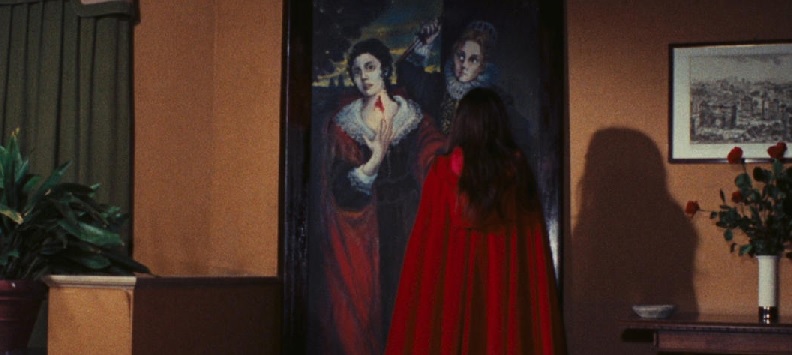
Firstly, I love the set up and the legend of the Red Queen, based on the painting seen in the opening. The Red Queen is killed by her sister, the Black Queen, and so the Red Queen returns from the dead to get her revenge, killing six innocent people, and for the seventh and final victim, the Black Queen, her sister. All of which is a long way to say that, indeed, The Red Queen Kills Seven Times.

It’s quite possibly among one of my favorite titles of a giallo.

In other news, the plot largely revolves around mysterious murders involving some sisters, a castle, a curse, a will, and some mixed-up identities, not to mention secret deaths and blackmail. It’s just a lot of fun all the way through, and like all great gialli, there’s a lot of viable suspects, and figuring out the mystery provides a good time. As it is, I don’t 100% love the finale – I wanted a little more oompf – but it was still quite well-done.

One thing this film succeeds in that few gialli really do is creating a memorable design of the killer. The Red Queen’s design is great – a woman in a red cape and hood, with a maniacal laugh every time she kills someone (and surprisingly, that laugh never once gets old). It’s a great killer, one that you’d expect from some 80’s slasher, and not that many gialli showcase great designs (as so many instead show black gloves and trenchcoats, which, to be fair, has it’s own charm).

Barbara Bouchet (The Black Belly of the Tarantula) made a solid lead, and had some great scenes, especially during her flashbacks. Really, though, most performances are solid, from Sybil Danning, Fabrizio Moresco, and Nino Korda to Ugo Pagliai, Marina Malfatti, and Pia Giancaro. Rudolf Schündler was nice to see, and while generic, Marino Masé (Contamination) certainly looked the part of a detective.

Directed by Emilio Miraglia (who also made the excellent The Night Evelyn Came Out of the Grave), The Red Queen Kills Seven Times isn’t a particularly gory giallo. There are some solid kills, such as a woman being tricked into climbing a fence, but then impaling herself on the spikes, or a good stabbing in the back of a van, but the kills here aren’t near as important as the mystery and occasional atmosphere, the same of which could fairly be said of The Night Evelyn Came Out of the Grave.

Also, portions here and there of the film take place in a castle. By no means is the castle necessarily central to the plot, but some of the better scenes take place in and around it, and it’s a very solid setting when it pops up, and gives the film a little Gothic spice, as Italian horror did often in the 1960’s.

The Red Queen Kills Seven Times was a pretty good movie. I don’t know if it’s good enough to make my top five gialli at the moment (with films like Deep Red, The Case of the Bloody Iris, and the early The Murder Clinic, it’s hard to crack the best of the subgenre), but it’s definitely a solid film, and with that great killer, isn’t a movie that’ll be forgotten.

7.5/10

Die Schlangengrube und das Pendel (1967)

Directed by Harald Reinl [Other horror films: Die Bande des Schreckens (1960), Die unsichtbaren Krallen des Dr. Mabuse (1962), Der Teppich des Grauens (1962), Der Würger von Schloß Blackmoor (1963), Zimmer 13 (1964), Der unheimliche Mönch (1965), Ein toter Taucher nimmt kein Gold (1974)]

Most commonly known as The Torture Chamber of Dr. Sadism, this German film is quite a disappointment. To be sure, I’ve seen it once before, but I didn’t remember just how uneventful and dull so much of this movie tends to be.

The basic story here is that two people (and their plus ones) are going to an old castle. Once there, a count who has been dead for 35 years comes back from the dead to exact his revenge (as the two people at the castle are descendants of those who led to the Count’s execution). Some spooky things happen, and the Count is defeated.

I can’t say exactly how long it took them to reach the castle, but I can say the trip took at least 40 minutes. Sure, there’s some creepy scenery on the way there, and I’ll touch on that, but it’s entirely uneventful and honestly doesn’t do much but perhaps give some meager atmosphere. Once they’re at the castle, it still takes a bit of time for anything to actually happen. In fact, in my opinion, things finally started moving at 55 minutes into the film, leaving just 25 minutes left.

Those 25 minutes, though, saving one sequence, were also on the dull side.

To be frank, no performance here did anything for me. Lex Barker as the lead felt quite uninspired, Karin Dor (The Terrible People, The Carpet of Horror, The Strangler of Blackmoor Castle, Dracula vs. Frankenstein, and Dark Echo) was dull, and though I hate to say it, Christopher Lee was also pretty unexciting, as though his heart wasn’t really in this.

Yes, a few good sequences take place (God, you’d hope so, as the same story that spawned this film also spawned the fantastic 1961 The Pit and the Pendulum), two of them on the long ride to the castle. The horse-drawn carriage passes through a forest, and the trees here have body parts, such as arms and legs, seemingly sticking out of them. That did look creepy, as did another forest which had a lot of hanged men on every tree.

At the castle, there was a pretty quality sequence where a ledge was slowly being taken from Dor’s character, and with each inch receding into the wall, the closer she was to falling into a pit of snakes. That was good stuff. The pendulum, however, was sort of weaksauce – the guy just threw a rock at it, knocked it into oscillation, and it perfectly severed the ropes holding his body down without cutting him.

I can’t express how much I wish I liked this one. I took four years of German in high school, and so feel an affinity with the country and it’s films, especially horror. The Torture Chamber of Dr. Sadism is just dull, though. It was underwhelming when I first saw it, and it still is. It might have some hokey fun every now and again, but to be honest, I was bored most of the time.

4/10

Die Säge des Todes (1981)

Directed by Jesús Franco [Other horror films: Gritos en la noche (1962), La mano de un hombre muerto (1962), El secreto del Dr. Orloff (1964), Miss Muerte (1966), Necronomicon – Geträumte Sünden (1968), The Blood of Fu Manchu (1968), Der heiße Tod (1969), Marquis de Sade: Justine (1969), The Castle of Fu Manchu (1969), Paroxismus (1969), De Sade 70 (1970), Il trono di fuoco (1970), Nachts, wenn Dracula erwacht (1970), Les cauchemars naissent la nuit (1970), Vampyros Lesbos (1971), Sie tötete in Ekstase (1971), Jungfrauen-Report (1972), Drácula contra Frankenstein (1972), Der Todesrächer von Soho (1972), La fille de Dracula (1972), Dr. M schlägt zu (1972), Les démons (1973), La comtesse noire (1973), La maldición de Frankenstein (1973), La nuit des étoiles filantes (1973), Los ojos siniestros del doctor Orloff (1973), Al otro lado del espejo (1973), La noche de los asesinos (1974), Les possédées du diable (1974), La comtesse perverse (1974), Les gloutonnes (1975), L’éventreur de Notre-Dame (1975), Sexorcismes (1975), Frauengefängnis (1976), Jack the Ripper (1976), Un silencio de tumba (1976), In 80 Betten um die Welt (1976), Die Marquise von Sade (1976), Greta – Haus ohne Männer (1977), Die Liebesbriefe einer portugiesischen Nonne (1977), Die teuflischen Schwestern (1977), Der Ruf der blonden Göttin (1977), El sádico de Notre-Dame (1979), Mondo cannibale (1980), El caníbal (1980), La tumba de los muertos vivientes (1982), La mansión de los muertos vivientes (1982), Revenge in the House of Usher (1983), El tesoro de la diosa blanca (1983), Macumba sexual (1983), Sola ante el terror (1983), Sangre en mis zapatos (1983), Mil sexos tiene la noche (1984), El siniestro doctor Orloff (1984), Lilian (la virgen pervertida) (1984), La esclava blanca (1985), Faceless (1987), Killer Barbys (1996), Tender Flesh (1997), Mari-Cookie and the Killer Tarantula (1998), Lust for Frankenstein (1998), Vampire Blues (1999), Dr. Wong’s Virtual Hell (1999), Helter Skelter (2000), Vampire Junction (2001), Incubus (2002), Killer Barbys vs. Dracula (2002), Snakewoman (2005), La cripta de las mujeres malditas (2008), La cripta de las mujeres malditas II (2008), La cripta de las condenadas (2012), La cripta de las condenadas: Parte II (2012)]

Commonly known under the title Bloody Moon, Die Säge des Todes is a tedious film. Aspects of it are worth seeing, such as the generally decent kills, but boy, do the plot and characters really grate on me after a time.

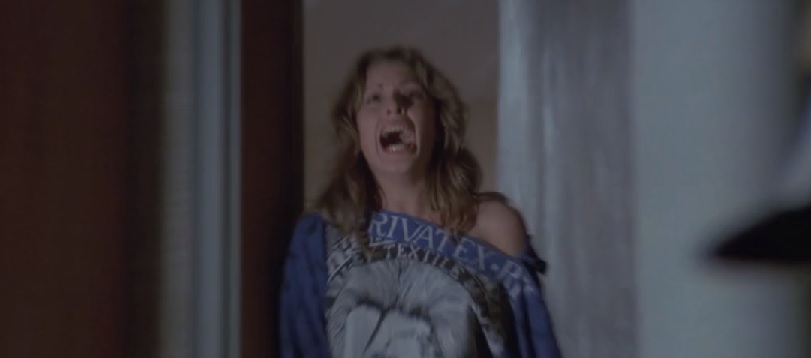
There are so many plot issues that it’s hard to fully delve into. For instance, a young woman is running and screaming that a killer is after her, and her friends laugh it off. Or that same girl running from the killer again, only to see a silhouette figure in front of her – she should know it’s not the killer, as, well, the killer is behind her. So you would think she would run to the figure for potential safety.

She doesn’t.

So part of the issue is that the central character, Angela (played by Olivia Pascal) very quickly becomes hysterical at everything. She sees a friend get murdered, but when she tries to show someone else the body, it disappears, so for a time, she was convinced she was dreaming. She spends much of the next day searching for the murdered girl. Then someone saves her from a snake, but because she didn’t see the snake, only a bloody pair of shears, she’s convinced that guy is the murderer.

My point is that it doesn’t take long for this character to become scared and suspicious of every little thing, and it sort of gets old, especially when it leads to terrible, illogical decisions that keep happening throughout the movie. It’s hard to state just how many times in the movie I was bothered by plot points like this, and that goes a long way to making this not as fun an experience as you might hope.

I can’t hold that too much against Olivia Pascal. I’m sure she did what she had to do with her role. Nadja Gerganoff was a more interesting character, but we never really get to understand that much about her. It’s similar with Christoph Moosbrugger, and while Peter Exacoustos’ character was perhaps one of the most sensible in the movie, even he made more mistakes than you’d hope for.

Obviously, this isn’t a problem with this movie alone, as plenty of horror films have characters that make bad decisions. It just seemed so much more prominent here, and it’s quite possible that wasn’t helped by shoddy dialogue and a somewhat poor dubbing job. On the plus side, the setting of this movie is rather beautiful. I’m not sure where this was filmed, but it had a unique look to it, and the scenes on the dock were quite lovely.

What the film tries, and mostly succeeds, in doing right would be the kills. Centerpiece among them, I’d argue, would be the decapitation of someone with a saw blade (and in fact, the original title of this film translates to Saw of Death). It looked excruciatingly fake, but that’s half the fun. Someone was stabbed through the neck, another stabbed through the chest, and even another killed with a power saw (or at least that’s what I think it is – think an ultra-thin chainsaw). The kills here are decent, and if that’s your main interest, then Bloody Moon is worth seeing.

And personally, this is a movie that I’ve wanted to see for a long time. Being a Jesús Franco movie, I wasn’t necessarily expecting much, and ultimately, I may have ended up enjoying it about as much as I thought I would. Because of plot elements and characters that drove me up the wall (not to mention the least-surprising ending I’ve ever seen in a movie), it’s not a film I liked that much, but at least for the gory elements, it’s worth experiencing once.

6/10

Die Hinrichtung (1976)

Directed by Denis Héroux [Other horror films: The Uncanny (1977)] & Géza von Radványi [Other horror films: N/A]

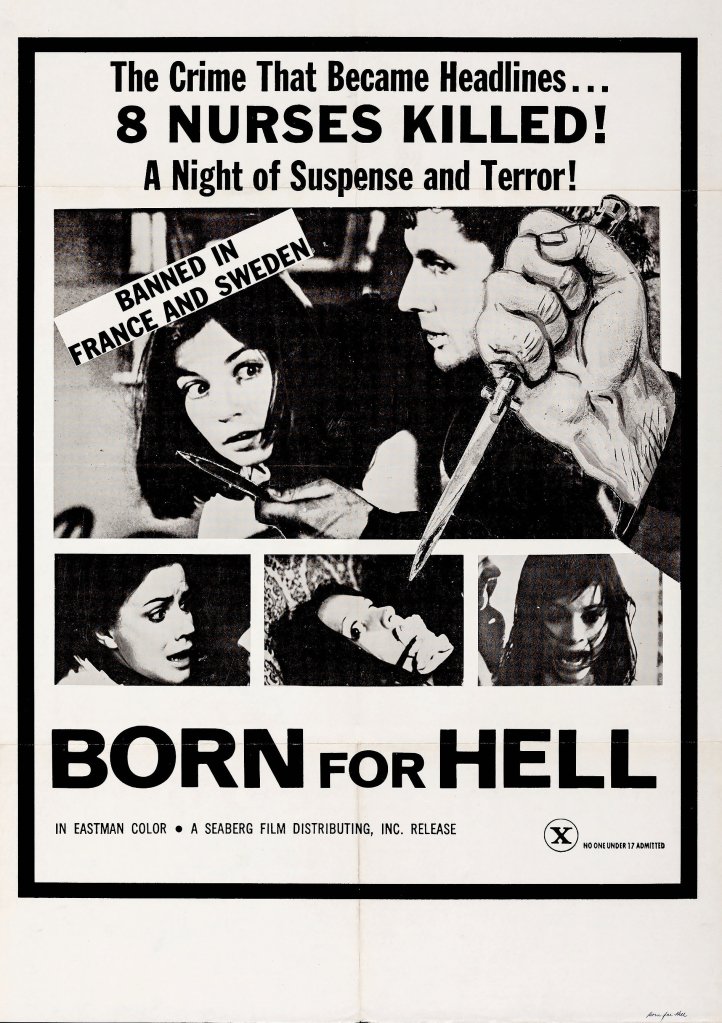
Known under such titles as Naked Massacre and Born for Hell (probably the best title for this one, if it were up to me), Die Hinrichtung is a gritty, raw experience. It’s not altogether exciting, but I do find the premise somewhat fascinating, and though the movie isn’t great, I do think there’s a little here to be interested in.

I first saw this film around ten years ago from a cheap print on the Mill Creek Entertainment’s Chilling Classics 50-movie pack. Honestly, while the print has issues, the audio quality is decent, and the movie is still certainly watchable (which is not something that can be said for all the movies in the same collection). I didn’t remember too much in way of specifics about the movie, which partially made this one a movie I was more interested in revisiting.

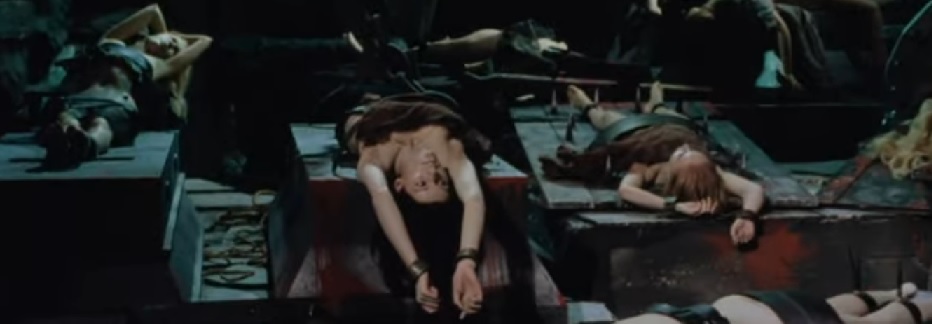
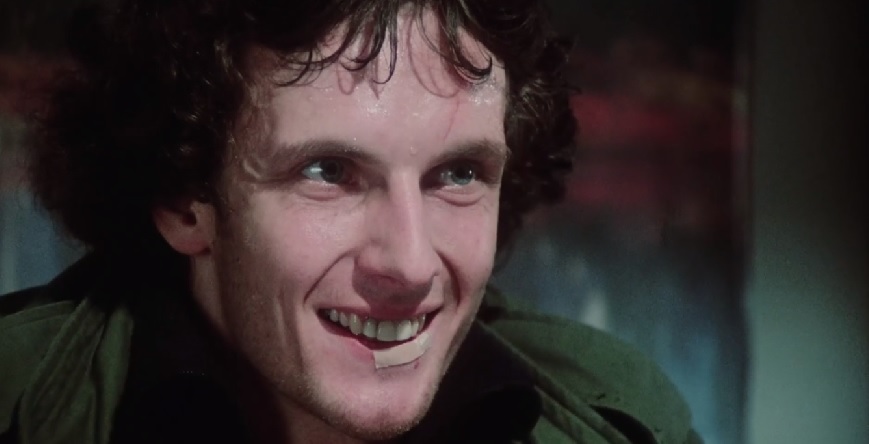
Following a disillusioned American who fought in Vietnam, and taking place during The Troubles in Belfast, there’s a lot of commentary on violence here. This American (played by Mathieu Carrière) has had a troubled life – a hard upbringing, a wife who left him, and some mental issues – and left one warzone for another. He doesn’t snap in a PTSD type of way – this isn’t Forced Entry (thank God). But he desperately wants to get home, and doesn’t have the money to do so. And what better way to get money than by trapping a house of nurses and torturing them?

Based partially off the Richard Speck murders, this movie has that gritty exploitation feel without really going out of the way to show too much explicit violence. The sexual violence, while definitely present, is toned down, and there’s not that much in the way of gore (and in fact, the bloodiest scene is a self-inflicted cut toward the finale of the film). It does have that gritty atmosphere, and of course a little nudity thrown in, but this movie isn’t really near as grueling as others from around the same time, such as I Spit on Your Grave, The Last House on the Left, or the aforementioned Forced Entry.

I don’t know Mathieu Carrière, but I thought he did a pretty fine job with his character. He’s occasionally charming, always desperate, and his performance is solid. None of the nurses stand out particularly well, but some, such as Carole Laure, Leonora Fani, and Christine Boisson all add a little oomph with their characters and traumatic predicaments.

The movie isn’t exactly quick-paced, but personally, I don’t think I ever really got bored. That said, I can certainly understand the somewhat lukewarm reception this has received (at the time of this writing, the movie possesses a 5.1/10 on IMDb with 696 votes). It’s probably worth seeing if you’re a fan of gritty 70’s exploitations, even if this is a bit tame, but for a casual horror fan, there may not be a lot here to really interest you. It’s worth mentioning that the version I saw was the same Mill Creek copy, though, so the uncut version likely has more to it.

As for me, I can say that I found the setting (Belfast) and the killer’s history interesting. I don’t think that made this a great movie, but I do think it felt substantially different from a more, shall we say, base exploitation flick, and though I do find the film below average (with the conclusion being perhaps one of my favorite portions), I definitely think I’d find it in me to watch again.

6.5/10

Il trono di fuoco (1970)

Directed by Jesús Franco [Other horror films: Gritos en la noche (1962), La mano de un hombre muerto (1962), El secreto del Dr. Orloff (1964), Miss Muerte (1966), Necronomicon – Geträumte Sünden (1968), The Blood of Fu Manchu (1968), Der heiße Tod (1969), Marquis de Sade: Justine (1969), The Castle of Fu Manchu (1969), Paroxismus (1969), De Sade 70 (1970), Nachts, wenn Dracula erwacht (1970), Les cauchemars naissent la nuit (1970), Vampyros Lesbos (1971), Sie tötete in Ekstase (1971), Jungfrauen-Report (1972), Drácula contra Frankenstein (1972), Der Todesrächer von Soho (1972), La fille de Dracula (1972), Dr. M schlägt zu (1972), Les démons (1973), La comtesse noire (1973), La maldición de Frankenstein (1973), La nuit des étoiles filantes (1973), Los ojos siniestros del doctor Orloff (1973), Al otro lado del espejo (1973), La noche de los asesinos (1974), Les possédées du diable (1974), La comtesse perverse (1974), Les gloutonnes (1975), L’éventreur de Notre-Dame (1975), Sexorcismes (1975), Frauengefängnis (1976), Jack the Ripper (1976), Un silencio de tumba (1976), In 80 Betten um die Welt (1976), Die Marquise von Sade (1976), Greta – Haus ohne Männer (1977), Die Liebesbriefe einer portugiesischen Nonne (1977), Die teuflischen Schwestern (1977), Der Ruf der blonden Göttin (1977), El sádico de Notre-Dame (1979), Mondo cannibale (1980), El caníbal (1980), Die Säge des Todes (1981), La tumba de los muertos vivientes (1982), La mansión de los muertos vivientes (1982), Revenge in the House of Usher (1983), El tesoro de la diosa blanca (1983), Macumba sexual (1983), Sola ante el terror (1983), Sangre en mis zapatos (1983), Mil sexos tiene la noche (1984), El siniestro doctor Orloff (1984), Lilian (la virgen pervertida) (1984), La esclava blanca (1985), Faceless (1987), Killer Barbys (1996), Tender Flesh (1997), Mari-Cookie and the Killer Tarantula (1998), Lust for Frankenstein (1998), Vampire Blues (1999), Dr. Wong’s Virtual Hell (1999), Helter Skelter (2000), Vampire Junction (2001), Incubus (2002), Killer Barbys vs. Dracula (2002), Snakewoman (2005), La cripta de las mujeres malditas (2008), La cripta de las mujeres malditas II (2008), La cripta de las condenadas (2012), La cripta de las condenadas: Parte II (2012)]

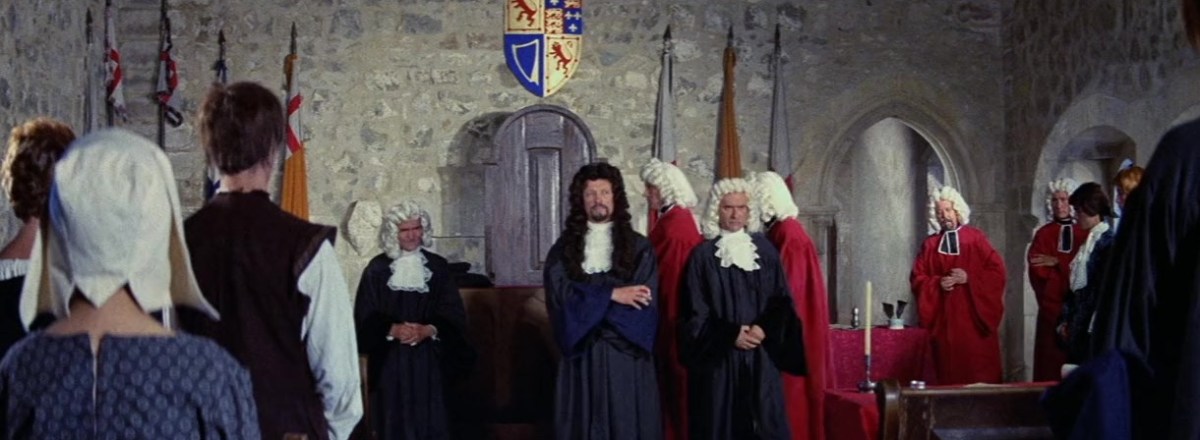
This Jesús Franco film didn’t really do a whole lot for me. While there are some solid scenes of torture every now and again, much of the film came across as a historical drama, and were it not for Christopher Lee (playing the sinister Judge Jeffries), I would have liked this film a lot less.

Widely known as The Bloody Judge, I really appreciate, as a moderate student of history (a minor of mine in college) the historical nature of the film, though I am slightly put off by how it overshadows any and all of the horror aspects (which come primarily from the torture sequences).

Of course, this film isn’t without it’s positives. Christopher Lee does great in his role (though I don’t think the conclusion insofar as Jeffries was concerned was that satisfactory), and Hans Hass Jr., Milo Quesada, and Maria Rohm stand out also. Also, there was a solid sequence at the end once William of Orange came ashore. Alas, the ending played out somewhat quickly, which gave it a somewhat anticlimactic feel.

Personally, I think the biggest problem with this film is it’s meandering plot. The basic plot, in which the son of a Lord is looking to get married to the sister of a woman killed for being a witch and escape out of England is all well-and-good, but at an hour and forty minutes, I will admit to having stopped caring past a certain point. Loved the torture sequences (though none were overly over-the-top), and every scene with Lee, but much of the film just wasn’t my cup of tea.

As it is, when it comes to historical horror films, I already have the 1968 Witchfinder General to fill the void. If you see this for any reason, it should be Lee’s solid performance as a despicable judge killing innocents in the name of God and country. Truth be told, I was hoping for more than I got from this. The Bloody Judge may work for you, but it didn’t do a lot for me.

5.5/10

La corta notte delle bambole di vetro (1971)

Directed by Aldo Lado [Other horror films: Chi l’ha vista morire? (1972), L’ultimo treno della notte (1975), Il Notturno di Chopin (2013)]

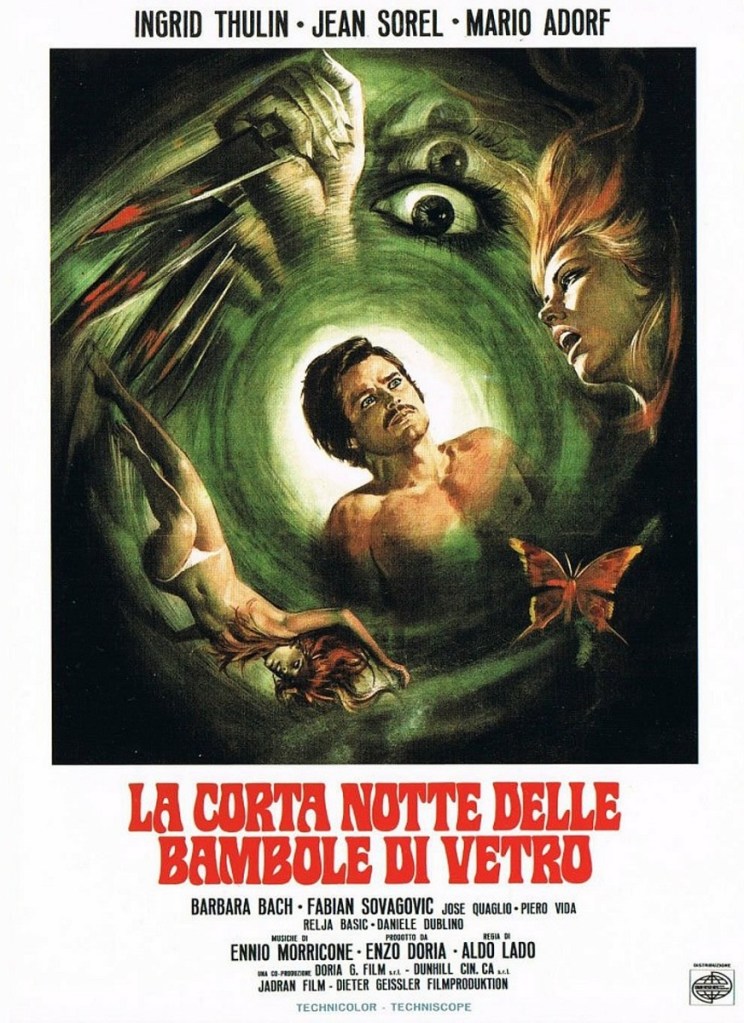
This Italian giallo, widely known as Short Night of Glass Dolls, was a decent film for much of the run-time, but toward the end, it sort of went into a somewhat incoherent mess.

The mystery here is pretty good, and enjoyable to watch unfold. A young woman disappears without a trace in Prague, and her lover, an American journalist, attempts to find her. It’s typical for a giallo, but that doesn’t make it any less fun. It’s made better by the setting, and more so, the time period, as this took place when then-Czechoslovakia was a Communist state behind the Iron Curtain.

Because of that, there is a bit of anti-USSR material strewn throughout the film, and even toward the conclusion, though I don’t think it’s terribly over-troubling. It does lead to a more oppressive feel, and much of the going-ons have a very conspiratorial feeling to them. Problematically, the conclusion doesn’t explain what’s going on nearly as well as I’d have liked, and honestly, I’m at a loss right now as to what actually happened, and why. It’s just not made clear, as far as I could tell.

Worth noting, most of the main story is told via flashback, and the present-day material, luckily, is decently engaging. Still, I don’t care much for the conclusion they had there, either, though it certainly possessed a somewhat bleaker feel than some audiences might be used to.

I’m not trying to harp too much on the movie, because much of it is really engrossing. It’s not until the final ten minutes or so that the movie, in my opinion, falls apart. It’s just rather noticeable because my enjoyment level went down so much as the ending unfolded, and I felt that given how good the film was before, it was rather unfortunate.

I liked much of the principal cast of this film. Jean Sorel took a little bit, but he grew on me as the film went on. Playing a friend of his, I thought that Mario Adorf did well with his more care-free, fun-loving character. Lastly, playing the woman who goes missing, Barbara Bach did well as a beautiful, semi-mysterious woman.

For a giallo, La corta notte delle bambole di vetro is extraordinarily tame. There’s little to no gore, and many of the staples you might expect from the subgenre, such as first-person view from the killer, or black gloves, are absent. The mystery is certainly here, and like I said, it’s done well, but this movie feels really toned down, and if you’re expecting a run-of-the-mill giallo, then you’ll likely to be disappointed.

I will admit to being disappointed by this one, if only because the conclusion (to both the flashback and present-day stories) were so unsatisfactory. I can live with little gore, because the story was otherwise engaging, but what draws me to giallos is how everything’s pieced together nicely at the end, and I definitely didn’t get that feeling here. For what this movie is, it’s okay, but I’d definitely temper your expectations before jumping in.

6/10