Directed by Anthony Waller [Other horror films: An American Werewolf in Paris (1997), Nine Miles Down (2009)]
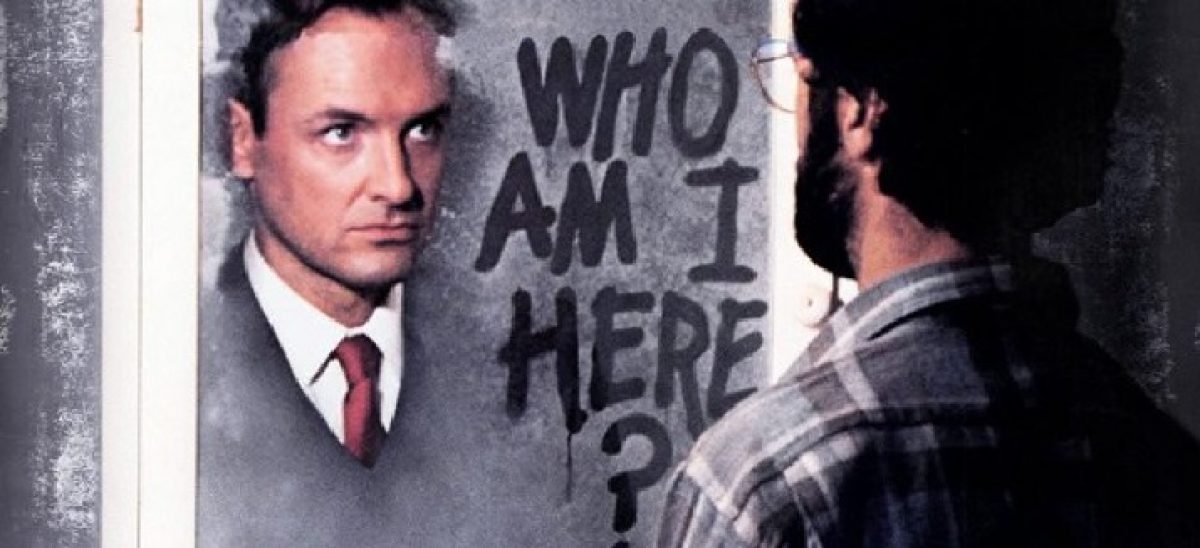
This is a pretty mixed ride, and much of that due to the fact the film sort of switches up genres toward the end, going from a tense slasher-esque flick to an almost black comedy/crime movie.
That’s not entirely fair, though – the comedy, most of it black, wasn’t terrible, but given the first two-thirds of the film, I thought it was going a bit far. It’s going from horror to crime that bothered me, and although it made sense story-wise, I didn’t care for the shift.
Most of the movie is quite suspenseful. A long chase scene as a mute woman attempts to outwit two people who she saw murder someone. That sequence, especially the ending, was well-done, and the follow-up scene was too an elongated, albeit more peaceful, sequence, wrought with both confusion and frustration.
There wasn’t a bunch of gore here, but what there was ended up being fine. The biggest selling point, by far, is the suspense anyway, which the film does really well. But the last third of the film felt a lot like a crime movie, and the triumphant ending doesn’t erase the distaste I rather had of that portion.
Russian actress Marina Zudina (who is somewhat well-known in her home country) does really well here, playing a mute character in a rather dangerous situation. Fay Ripley and Evan Richards, though, contributed most of the black comedy, and like I said, I could have done without that addition. Really, Zudina should get the most props, by far – her performance here is excellent.
I like a lot of things about this movie. Like I said, the slasher-portion of the film is tense as hell, and until the movie shifts to a crime-feel, the movie was on it’s way to a way above average score. As it is, the final thirty minutes really didn’t do much for me, so while I still recommend the film, especially for 90’s horror, I wouldn’t call Mute Witness amazing.
Directed by Herschell Gordon Lewis [Other horror films: Two Thousand Maniacs! (1964), Monster a-Go Go (1965), Color Me Blood Red (1965), A Taste of Blood (1967), The Gruesome Twosome (1967), Something Weird (1967), The Wizard of Gore (1970), The Gore Gore Girls (1972), Blood Feast 2: All U Can Eat (2002), The Uh-oh Show (2009), Herschell Gordon Lewis’ BloodMania (2017, segments ‘Gory Story’ and ‘The Night Hag’)]]
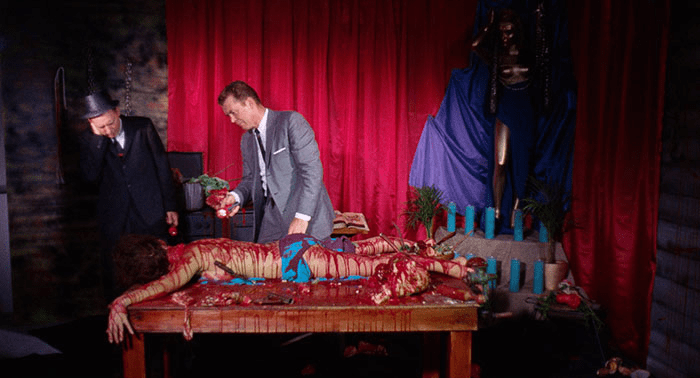
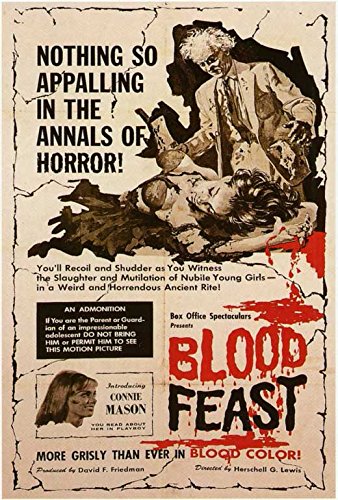
H.G. Lewis’ first splatter flick is trashy, stilted, and overall, a rather awful film. And I love every second of it.
The gore isn’t as heavy here as it is in later films of his (such as The Wizard of Gore, a personal favorite of mine), but for the 1960’s, the gore is rather shocking, and it helps that the film’s in color (which wasn’t a given during this tumultuous time period), giving the murder sequences additional good effect.
The story itself feels stagy, and the performances mostly stilted. William Kerwin (Two Thousand Maniacs!, A Taste of Blood, God’s Bloody Acre, The Shadow of Chikara, Whiskey Mountain) was very generic in his role, and had little character. His girlfriend, played by Connie Mason (who was also in Two Thousand Maniacs!), was little better.
Mal Arnold was ridiculous as Faud Ramses, and overly hammy, which was sort of charming. Kudos mostly go to Gene Courtier, though, who gave one of the worst performances I’ve ever seen in a film. These performances led to, as I said, a more stagy feel, which was amplified by the very cheap look of the sets in the film. It wasn’t necessarily a terrible thing, but it definitely stuck out.
The first of the ‘Blood Trilogy’ (followed by Two Thousand Maniacs! and Color Me Blood Red in 1964 and 1965), Blood Feast isn’t a great movie, or even a good one. The effects, as gory as they are, look pretty bad, even by contemporary standards. The acting is pretty terrible, and the plot’s paper-thin. Given all of this, though, Blood Feast is still a classic in many ways. It had a lot of heart, and pretty graphic imagery for the time. H.G. Lewis improves with his follow-up to the trilogy, but Blood Feast alone is moderately compelling, if you don’t mind some shoddy film-making.
Directed by Roze [Other horror films: Speak No Evil (2013)]
I saw this once before, and it didn’t do much for me. Alas, it’s much the same now, and while I won’t say it’s god-awful, I will say that there’s little here of any interest to me.
Much like the expedition in the movie, the plot is pretty bare bones. Three people go hunting, tensions mount, stuff happens, and suddenly one of them snaps and starts trying to kill the others. I didn’t catch why exactly one of the characters suddenly become the antagonist (though it does lead to the ending scene, which is perhaps the best part of the film), so there could have been a better way to explain that.
Really, Deadfall Trail is an odd film. It’s very stark, minimalist, with a pretty realistic tone, which in a way is nice, but at the same time, it’s not very fun. At all. Sitting through this one is really a chore, as it takes a while for any action to pop up, and when it does, it’s not the most enthralling stuff (because, like I said, this film takes a rather naturalistic, realistic approach).
It was sort of cool to see a bunch of survivalist techniques (reminding me a little of the 1997 adventure film The Edge), but that wasn’t enough to interest me. Shane Dean did pretty well in his gruff role, but with the type of film that it was, his performance, as solid as it occasionally was, wasn’t enough.
I really don’t know what more to say about this one – it was just dull, without much to really cause it to be noteworthy. The vibe was interesting, and the horror elements almost muted until the end (if you discount some scary visions), so I’d probably not recommend this, nor would I watch it a third time.
Directed by Ari Aster [Other horror films: Midsommar (2019), Beau Is Afraid (2023)]
This movie, which has gotten a decent amount of praise since it’s release, certainly had a strong sense of tension, suspense, and unease. However, it also seemed to lack some coherence toward the end.
Which isn’t to say that there aren’t tons of explanations online – I’m sure there are. But the movie needs to stand for itself, and I won’t say that I wasn’t put off by the route this movie took. It was interesting, but I wanted more explanation than we ever really got.
Much of the movie feels more like a tense and uncomfortable family drama following the death of a family member, and these scenes are done well. When the horror elements begin showing up more, they’re also mostly done well. Many leave you guessing exactly where this movie is going (and that’s something that’s true up toward the end of the film, actually). As for the conclusion, though, I’m not sure I find it all that satisfactory, at least in how it was presented.
The cast was solid throughout, especially Gabriel Byrne, Alex Wolff, and Toni Collette (and to be fair, these three make up most of the screen-time anyway). Collette’s increasingly erratic behavior as the film goes on is a sight to behold, and for as young as his is, Wolff’s performance here is pretty decent (although at times I felt he overacted a bit).
Hereditary is a bit difficult to talk about right now, having just finished it twenty or so minutes ago (at the time of this writing, of course). I’m still trying to digest some of it. But my first impression is that it seems like the type of movie you’d need to watch again to better appreciate it, and though the tone of the movie is great, and there’s an utterly shocking scene relatively early into the film that I applaud, given it’s over two hours long, and I wasn’t really sold on the conclusion, that’s not something I see myself committing to. For now I’d rate this somewhere around average, though it had potential to be more.
Directed by Alan Beattie [Other horror films: N/A]
This flick feels so much more a product of the 1970’s than it does the 1980’s, and that, in part, drives the enjoyment that can be derived from the movie.
While sometimes lacking the style of other slasher whodunit’s, Delusion still has a fun story that both maintains mystery and suspense. The kill scenes are a bit weak, I admit, and calling this a slasher is a wee bit of a stretch, but it certainly possesses many of the elements you might expect. As I said, it feels more like a 70’s film, and that’s due to the dryer nature of the content, the whole feel of the film, and the first-person narration.
First-person narration is something I’ve mostly seen from the 1970’s, be it Let’s Scare Jessica to Death or Death Bed: The Bed That Eats. It’s sort of cheesy, of course, but at the same time, I think there’s charm in that approach to storytelling. It helps that I watched a VHS rip that was a bit scratchy and blurry – I could easily believe this to be from a decade earlier.
Patricia Pearcy does pretty good in this one. Though she appeared previously in 1976’s Squirm, she hasn’t really been in that much, which is a shame, as I think she does well in this film, particularly near the conclusion. Leon Charles (who died the shortly after this film came out) did really good as a sort of fatherly figure butler here, and ended up perhaps my favorite character. Luckily, being one of Joseph Cotton’s final movies, it does well for him, and he character got some work in at the end. Lastly, both David Hayward and John Dukakis made favorable impressions also.
Reviewing this film wouldn’t be complete without mentioning the ending. I will fully admit to having been deeply surprised during the conclusion, and I loved the film all the more for it. I didn’t see it coming, and it left me more than a little pleased once the credits started rolling.
This doesn’t seem to be a widely-spoken about film, either under the name Delusion or The House Where Death Lives (which even I will admit is a more eye-catching title). It’s a shame, because while I wouldn’t call this film a classic, and I know some of the cheesy aspects might turn some off, I had a really fun time with this.
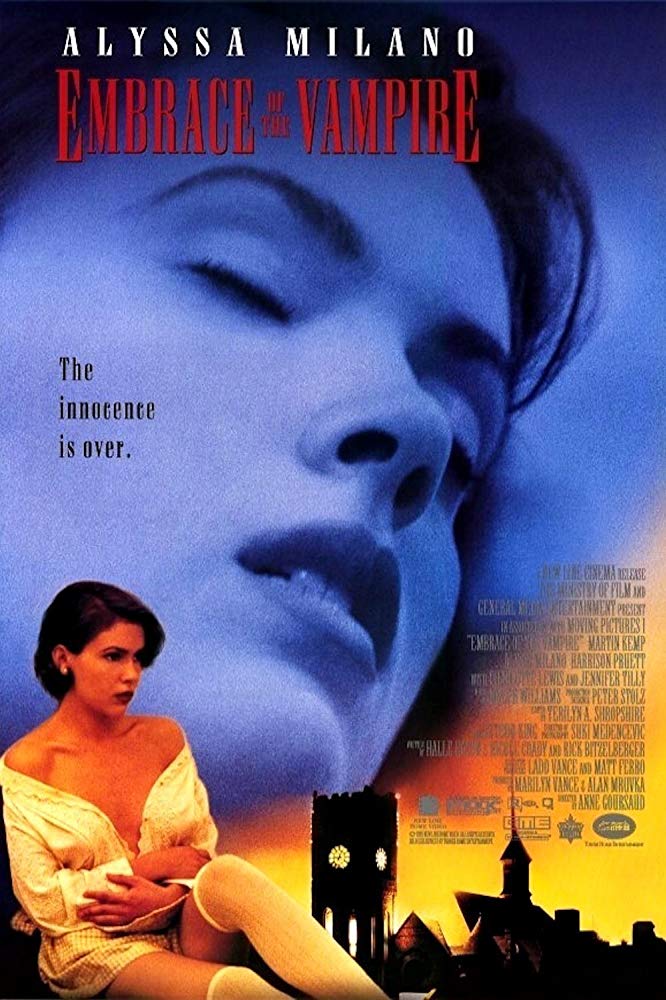
Directed by Anne Goursaud [Other horror films: N/A]
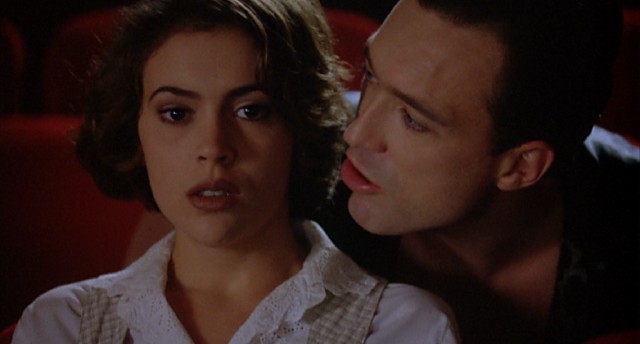
Some years ago, I saw a film called Embrace the Darkness, from 1999. It was a slow-moving, softcore erotic vampire seduction flick. If I had to guess, I would say that it ripped off this movie, which has most of the same elements, to my lamentation.
A vampire must seduce an innocent and virginal girl in three days or his long lifespan will finally be at an end. Personally, I can’t imagine this plot being done in an engaging way. The nudity throughout the film, from a party orgy to a lesbian seduction scene (complete with some 90’s R&B tunes), doesn’t make up for the fact that the movie is so damn sluggish. The few kills we do get aren’t overly impressive, and really, aside from the nudity, I can’t imagine why anyone would go out of their way to see this.
Admittedly, it does has Jennifer Tilly, who is appropriately attractive here. And while I don’t know either of them, the main character, played by Alyssa Milano, and Charlotte Lewis, were both pretty cute, and their nude scenes didn’t go amiss. But long-winded sensual seduction sequences don’t make for that enthralling a film, so the performance of Martin Kemp doesn’t do much for me (especially his over-dramatic dialogue).
The one plus this has over Embrace the Darkness is the fact that this is just about an hour and a half, instead of an hour and forty-five minutes. But it still drags, and while the story might be competently done, and the nudity itself was welcomed, I just couldn’t get into it at all, and wouldn’t much recommend it.
Directed by M. Night Shyamalan [Other horror films: Signs (2002), The Village (2004), The Happening (2008), The Visit (2015), Old (2021), Knock at the Cabin (2023)]
I didn’t really know what to expect going into this one, but I am happy to say that this movie did not disappoint at all.
The story is pretty simple, and the cast small (in a manner of speaking), but it was told in a very tense and heart-racing way. The three kidnapped girls (Anya Taylor-Joy, Haley Lu Richardson, and Jessica Sula) all did pretty well, and worked hard to get out of the situation they were in. Taylor-Joy’s character, though, was tragic, in that even if she happened to get away, her nightmare was far from over. And while I can’t begin to praise James McAvoy’s performance here enough, suffice it to say that it’s perhaps some of the best and most diverse acting I’ve ever seen.
My one issue with the movie is that the whole beast personality comes off as a bit ridiculous. Sure, some of the things that he can do are pretty creepy (that wall thing, for instance), but it really felt a bit much, especially toward the end. I also sort of wish we got looks into a few other personalities, though the few we did get nuggets of (such as the historian) were pretty interesting.
Split’s a movie done well. Taylor-Joy (who I’ve seen previously in The VVitch) did amazing with her role, and I think she has a lot to offer the genre. M. Night Shyamalan obviously has a sketchy history, though I will fully admit to enjoying both The Visit and The Village. He did an amazing job here, and really, this is a moderately easy contender for top horror film of the last five years. If only that last personality wasn’t as unrealistic as I felt it was. On a final note, while this is related to the 2000 film Unbreakable, but you definitely don’t need to see that film to enjoy this (as I certainly haven’t).
Directed by Andy Muschietti [Other horror films: Mama (2013), It (2017)]
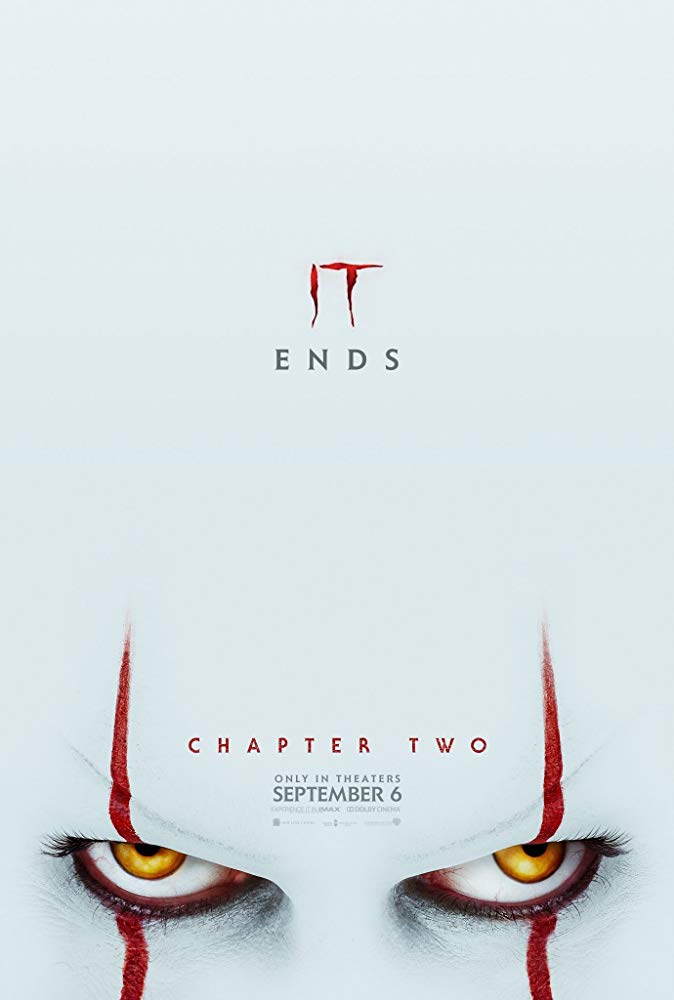
Being an almost three-hour movie, and with a lot of new additions compared to both the source novel and 1990 mini-series, there’s a lot in It Chapter Two to try and digest even now.
I think that one of the highlights of the film is during the flashbacks to when they were kids, especially the clubhouse scene. It’s just nice seeing the young cast coming back and giving more solid performances. Related, I appreciated how they led to these flashbacks, pointing out that the first movie didn’t cover everything the Losers went through, and revealing new information to the audience via these new flashbacks, which was a fun technique.
That leads into a journey to collect tokens (not too different from the Walking Tours in the book, mostly), which was okay. I didn’t love it, nor understand the importance of some of the tokens, but it made sense in the context of preparing for some Native American ritual in order to defeat Pennywise (which itself is something a bit new and somewhat unnecessary in my view).
As far as performances go here, the clear standout is Bill Hader as Richie. He gives a fantastic performance throughout, often bring levity to dark situations, as he did as a kid. A great scene was his joke in the clubhouse, which was entirely tasteless and entirely Richie. Also, toward the end, he has a breakdown of sorts, and the emotions coming from him are almost overwhelming in their sincerity. Just utterly fantastic.
Related, I thought that Eddie’s actor, James Ransone (most well-known for Sinister), was also pretty spectacular. He really did feel like a grown-up Jack Dylan Grazer, and his character was a lot of fun, especially his conversational repertoire with Hader. The third best adult performance was probably Mike’s Isaiah Mustafa, who gave a solid, somewhat manic at times, performance, and didn’t really feel too far removed from Tim Reid’s in 1990. Andy Bean as an adult Stanley Uris was great too, though I wish he appeared more.
As for Jay Ryan, Jessica Chastain, and James McAvoy, there were decent, but weren’t really that amazing. I did like McAvoy’s performance at times, especially regarding the Georgie surrogate, and he really comes across as unhinged at times (understandably so, if truth be told), but he didn’t blow me away, nor did Ryan or Chastain. For the life of me, I couldn’t see Ryan as an adult Jeremy Ray Taylor, which hurt his character a bit for me, and Chastain, while appearing reasonably similar to her childhood version of Lillis, just didn’t bring enough to wow me.
Seeing Sophia Lillis, Finn Wolfhard, Jack Dylan Grazer, and Wyatt Oleff (who played one of my favorite characters in the first chapter) again was great. I wish we had more flashbacks of the times they spent together that were missed from the first film, but what we got worked out just fine.
Some scenes I like include, but at not limited to, the opening sequence (which was in the books, and I was nice to finally see that put onto film), Pennywise’s encounter with a little girl during a football game, young Ben’s encounter with Beverly at summer school, and finally seeing Paul Bunyan attack Richie (as he did in the book, but wasn’t included in the 1990 mini-series). Admittedly, Pennywise’s singing in that last scene took me aback, but it made sense in context.
Also, kudos to Stephen King’s appearance in the film, along with the snatch of Bill’s writing we saw toward the end of the film, which was almost taken word-for-word from the original novel, page 769 in my paperback copy. Just a small thing, but that paragraph was almost one of my favorite’s from the novel, so it was nice to see the nod to it. And King’s joke about how his stories end? Fun times.
So what doesn’t work? Well, they add something new to Richie’s character that I don’t think was necessary, though I don’t hate it as I suspect some viewers will. The heavy use of CGI was a bit daunting at times, especially toward Beverly’s encounter with It as an adult and the whole of the finale. The vision cave sequence didn’t do a lot for me, and the final recitation of Ben’s haiku just felt so Hollywood.
Another thing – Henry Bowers coming back didn’t really change anything about the events of the movie – sure, both Eddie and Mike got hurt, but unlike the book and the 1990 version, Mike is still able to accompany them down into the sewers, so what did Bowers accomplish? Lastly, the way that they defeat Pennywise in the end just felt ridiculous to me, and if I could have one thing in this movie changed, it would be that, because it definitely was done better in the book and, dare I say, the 1990 mini-series.
A few scenes felt something out there, such as Eddie’s encounter in the basement of the pharmacy, or portions of the final encounter (the final form was okay, in a CGI-riddled way, but the 1990 version did a better job following the source novel), but over time, I’m guessing that these scenes will do more for me.
There are a few things I wish the movie had added from the book, including the downfall of Derry during an epic storm as the group confronts Pennywise. In the book, that was such a great sequence, seeing outside characters who we’ve heard and seen throughout the book dying, or nearly escaping death, and seeing just how screwed up Derry is like to be following Pennywise’s demise.
Also, writing out the important parts that Audra and Tom play in the book is an interesting choice. Obviously, Tom wasn’t any more important in the 1990 version than he was here, but Audra was reduced too, which I’m personally okay with (her love story with Bill in the novel is perhaps the least engaging part of the book for me, though she does has a really creepy interaction with Pennywise). That said, leaving these two out but bringing in Henry Bowers just felt off to me, especially since, as aforementioned, Bowers didn’t really accomplish anything.
Like I said at the beginning, there’s a lot to digest in this movie, especially as a fan of the source novel and the 1990 mini-series, not to mention the first chapter. As it stands, I can say that the first chapter probably felt more ordered, because at times, Chapter Two can come across as a bit messy (perhaps by design). Having Pennywise go after the Losers in somewhat psychological ways (which was played up more here than in the novel) brought a little something new, as did other factors, that I’m not exactly sure yet how I feel about.
My theater performance was pretty stellar, though, so that’s good.
I can’t say many things for certain right now, but I can say that I think the first movie was better. I’ll need to see this a few more times before I come to a final conclusion, but as it stands now, divorcing myself from the rare experience of seeing a movie in theaters, I’ll give this one an average rating.
7/10
This movie was covered on the Fight Evil podcast, episode #14, so if you want to hear Chucky (@ChuckyFE) and myself discuss this, check it out.
Directed by Ben Samuels [Other horror films: 6:15 (2015)]
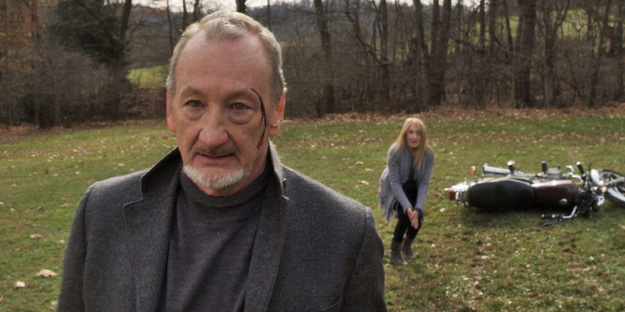
Despite quite an interesting premise, a strong performance by Robert Englund, and pretty solid atmosphere, ultimately, Kantemir isn’t able to fully reach for the heights it aimed for.
The setting is good, an old fashioned mansion, which assists with the dreary atmosphere. Because the movie battles with ideas such as what reality really is, it adds sort of a creepy layer to the film.
In New Nightmare, toward the end, Heather Langenkamp (playing herself, of course), goes back to her house, only to run into John Saxon, who calls her ‘Nancy.’ That scene was always damn creepy to me, and that’s the type of thing that happens a lot in this movie, as these actors go in and out of character, losing their grip on reality. It’s done well, but it’s not enough to fully hold my interest.
As I said, Englund has a strong performance here (and to be honest, without his presence, not only would this not be even a decent movie, I probably wouldn’t have bothered watching it). He does a good job as the lead character (and I can’t say I’ve seen many films with him as the star), and toward the end, when everything’s unraveling, he really shows off his abilities. Daniel Gadi was almost hilariously serious and contemplative in his role, and didn’t really come off feeling like a real person. Diane Cary and Justine Griffiths add to the film also, though I don’t really think either is particularly noteworthy.
The idea behind the film, like I alluded to, was interesting. But also like I said, it wasn’t enough to fully captivate me. After forty minutes in, it’s not that hard to guess where the movie’s going, and it pretty much travels the expected path (including the entirely obvious conclusion).
Were it not for a somewhat stylish feel, solid atmosphere, and Englund’s presence, Kantemir probably wouldn’t be worth much. As it is, it’s not an amazing movie, or even that good. However, I think it’s palatable, at least for a single viewing, and if you’re an Englund fan, and don’t mind movies that are a bit more meta (Resolution, or Berberian Sound Studio), you might get more out of this than I did.
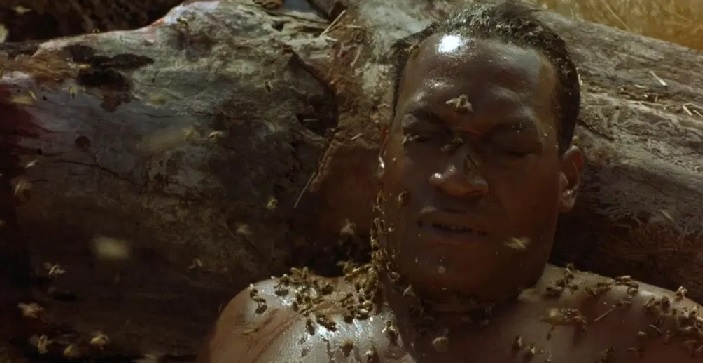
Generally speaking, this movie is okay. It’s certainly nothing special, and doesn’t really add much that the first Candyman didn’t bring forth, but you could do much worse than this.
Moving away from Cabrini-Green to New Orleans was a perfectly acceptable choice, though again, it doesn’t really do that much aside from give a new setting to the story. Otherwise, this movie is pretty similar to the first one, only dealing with Candyman on a slightly more personal level.
While there are some worthwhile sequences (I enjoyed the full flashback of Candyman’s origin, especially with the hand being sawed off), there lacks much of the almost-dreamy feel of the first film. Luckily, it does keep that catchy musical theme, but that’s not enough to make up for what feels to be an uninspired sequel.
Kelly Rowan did fine as the main character, though didn’t possess the same strength I got out of Madsen. It was nice to see Michael Culkin come back, and at least connecting the first two movies, though he didn’t really have a chance to do much. William O’Leary was probably the weakest performance here – he just didn’t jibe well with me. Voicing the Kingfish, Russell Buchanan was pretty fun throughout, and of course, Tony Todd had a strong presence here, and pretty much blows everyone else out of the water, though he was more threatening in the first film.
There were some pretty questionable special effects near the end, but overall, this movie does a decent job at avoiding too many special effects failures. It doesn’t do much to make the movie better, but at the very least, it’s a point in the positives for the film.
Personally, I think the first Candyman is a classic of 90’s horror, which is one of the weakest decades for the genre since the 1940’s. This sequel, while not atrocious by any means, seems wholly unnecessary. I’ve seen it perhaps three times now, and I’ve thought the same thing each time I finished it. Not bad, but not that good, and it’s nothing compared to the first film.










 Jiggy's Horror Corner