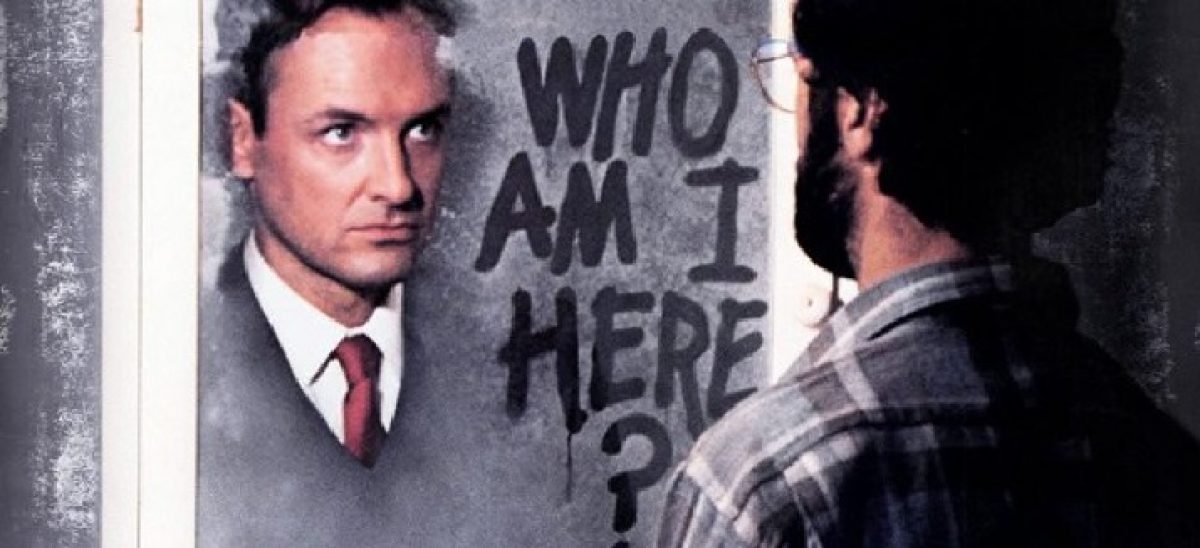
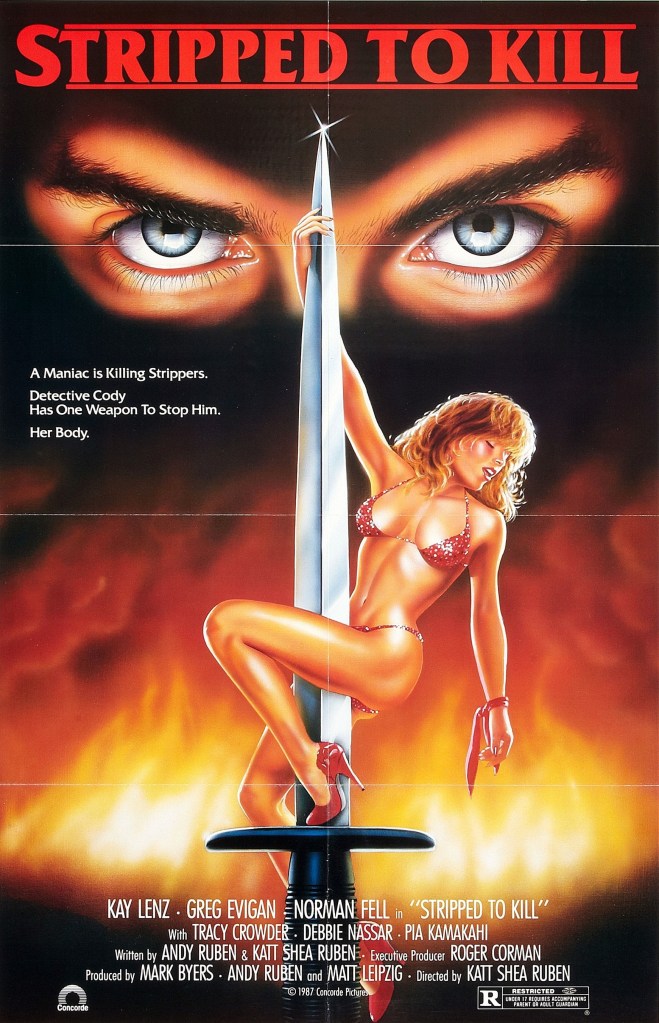
Stripped to Kill (1987)

Directed by Katt Shea [Other horror films: Stripped to Kill 2: Live Girls (1989), Dance of the Damned (1989), The Rage: Carrie 2 (1999)]

I first saw this one about two years ago at the time of this writing, and I thought it was decent. I think the flaws here are pretty easy to see, but at the same time, Stripped to Kill does possess some of that 80’s charm that makes the experience feel a bit better.

The main problem here, in my opinion, is a lot more time is spent on strippers’ dances then on the kills. What kills we do get are pretty decent, such as a woman being doused in gasoline and lit ablaze, or another one garroted and drug under a truck for some time. But instead of additional interesting kills, we get strippers stripping, which has it’s minor appeal, but gets a bit old, especially mixed with generally generic 80’s pop and rock.

What makes the movie stand out regardless, though, is the somewhat interesting mystery and conclusion. Admittedly, a female cop going undercover as a stripper (which has got to break at least some police codes, I’d think) is an interesting enough plot, but throw in a mysterious killer, a few red herrings (Mr. Pocket was a very decent character, and I really liked how that played out), and a generally fun finale, and you have my interest. I enjoyed the mystery here, and with the decent characters, it did make the film worth watching despite the repetitive strip sequences.

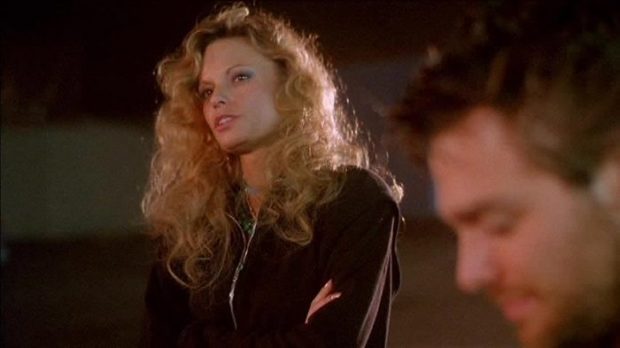
Kay Lenz was fantastic here. She’s not an actress I really know (though she was in the classic horror-comedy House), but I loved her character. Instead of looking down on the strippers, walking in their shoes shows her that they’re just people, and some rather pleasant. She was cute too, and I’d watch her strip sequences anytime. Lenz also had a very solid performance toward the end, a very emotional one, so she certainly brought something to this movie.

Greg Evigan’s (from DeepStar Six) character was another story. His sexist nature (and the way he looked down on the profession of stripping despite enjoying the performances) was difficult at times to deal with, and while I admit he was pretty fun, his character sometimes rubbed me the wrong way. It doesn’t help that, as a police officer, he harassed and was physically violent toward multiple people. A few other performances I liked include Pia Kamakahi and Diana Bellamy (who’s character, while only getting a few appearances, never failed to crack me up).

Stripped to Kill isn’t a great movie. As a slasher, it pretty much fails, but at the same time, I can’t deny I really like the mystery here, and while some stripping scenes got repetitive, I didn’t really mind rewatching this one, and what’s more, I could see myself giving this another viewing in the future.

7/10

This is one of the films that was covered on Fight Evil’s podcast. If you’re interested, listen below as Chucky (@ChuckyFE) and I discuss this film.
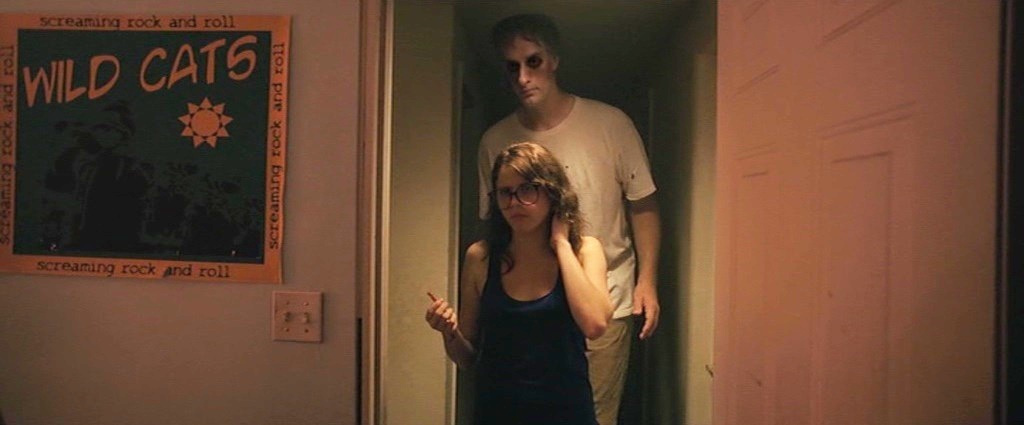
It Follows (2014)

Directed by David Robert Mitchell [Other horror film: N/A]

Something of a modern-day classic, It Follows is certainly a memorable movie with plenty of creepy scenes, even if there’s something to be desired insofar as the origin of the ‘it’ is concerned.

There’s not too many performances here that really stand out one way or the other. Most of the main actors and actresses do just fine (such as Lili Sepe, Maika Monroe, and Keir Gilchrist), but didn’t really blow me away. Gilchrist, on a side-note, later starred in 2015’s Dark Summer, a somewhat disappointing film overall, but not altogether terrible. It was Olivia Luccardi’s performance I enjoyed the most, though I kept hoping for a bit more from her character.

Which leads to the crux of my problem with the film, which is that we never learn what exactly the entity that ‘follows’ is. Not only do we not learn what the entity is, but more problematic, none of the characters even come up with any ideas, nor seem to care. Luccardi’s character was a reader, and the first time I saw this, I kept hoping that she’d eventually run into something that matched this creature’s modus operandi, but we got nothing.

If you can get past that, and I by-and-large can, you have a pretty enjoyable and occasionally rather creepy film. Some of the music used worked quite well, creating an uneasy atmosphere, and given that the being here is invisible to most people, there are some decently subtle scares here also, and at times, the film feels pleasantly disorienting.

Overall, It Follows is a solid film, probably an easy top ten movie in 2014, but having seen it twice, it’s not a movie I necessarily love. I enjoy the film quite a bit, and if a sequel deigns to explore the background of the malevolent entity, I’d be all in. As far as this one goes, the film’s good, but I need more information to fully sate me.

7.5/10

This is one of the films covered on Fight Evil’s podcast, so if you’re at all interested, listen below as Chucky (@ChuckyFE) and I discuss the film.

Night School (1981)

Directed by Ken Hughes [Other horror films: N/A]

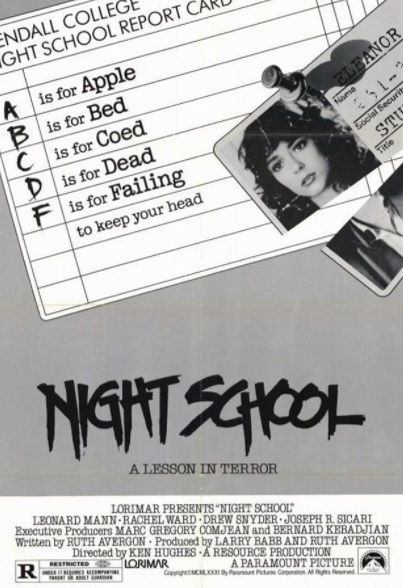
This is one I’ve seen once before, and I don’t recall particularly enjoying it the first time around. Seeing Night School again confirmed, at least to me, that it’s certainly no classic of the 1980’s, but at the same time, it does have some pretty decent kills.

Putting the kills aside for the time being, Night School doesn’t strike me as that memorable a movie. The plot’s decent for a slasher flick, and we get some solid suspects and a bit of procedural detective work, but there’s not a lot here that strikes me as inspired.

The main character (Leonard Mann) was fine, as was his partner (Joseph R. Sicari), but I don’t really think many other cast members stood out, save for Drew Snyder and perhaps Rachel Ward. Annette Miller was sort of funny the few times she appeared, but really, as far as the cast goes, there’s not a lot that’s offered.

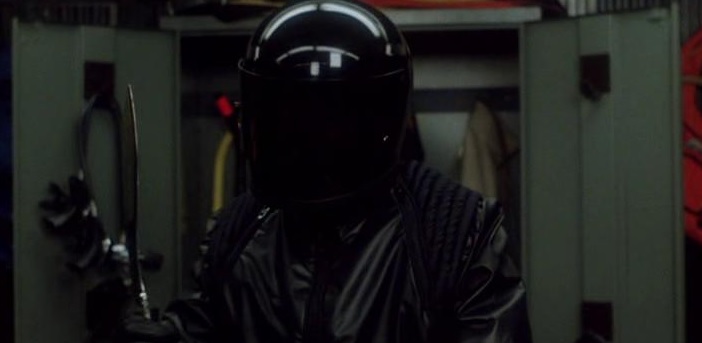
If anything puts this movie on the map, it’s the kills. The best was probably the locker room attack (which concluded with the killer throwing a severed head into an aquarium), but the diner sequence was pretty good also. When Night School leaned that way, it could be pretty suspenseful, so credit where credit is due.

Unfortunately, I don’t think credit’s due that often. The ending is about what you would expect, and while there are some good things strewn throughout the film, there’s not enough here at all to really think that highly of it overall. Honestly, while it may be worth a single watch, I don’t think Night School is worth too much more.

6/10

This is one of the films covered on Fight Evil’s podcast. If interested, listen as Chucky (@ChuckyFE) and I discuss this one below.

Triloquist (2008)

Directed by Mark Jones [Other horror films: Leprechaun (1992), Rumpelstiltskin (1995), Scorned (2013)]

So, it’s hard right now for me to resist the urge to write an all caps review of how terrible this movie is, because I want to try and retain some modicum of professionalism. That said, Triloquist is one of the worst horror movies I have ever seen, and if I had a choice to watch this again or kill myself, I’d been grabbing for the rope in a heartbeat.

That might sound like an exaggeration, but I’m not entirely sure that it is.

Directed by Mark Jones, who brought us the decently enjoyable classic Leprechaun, Triloquist is a horrible experience from beginning to end. It starts off reminding me of Seed of Chucky, only, get this, worse (and my seething hatred for Seed of Chucky isn’t something that I thought would have competition).

Narration by the dummy. Narration that’s supposed to be funny. The dummy often talks about how hot Paydin LoPachin’s tits are, because that always gets a laugh. Honestly, pretty much everything in this movie was cringe-worthy, but the dummy’s dialogue (not to mention voice) has to be the worst part of this.

Paydin LoPachin’s performance was terrible. She was trying so hard to be an even more crazy Baby Firefly, but she didn’t display an ounce of Sherri Moon Zombie’s talent. She’s attractive, but as she had zero nude scenes, all that concerned me was her atrocious dialogue, annoying personality, and the fact she’s entirely unlikable.

Also, I love how, for some reason, LoPachin’s character never says ‘ventriloquist’ – it’s always ‘triloquist,’ because… yeah, no reason. A+++++++++ choice, amiright???????

Let’s talk about Rocky Marquette – wait, no, as he barely did anything aside from look mentally challenged, it’s not fair to comment on him one way or the other.

At least we got some good music, amiright?

That’s a joke – the music here was, again, terrible. Everything in this movie was terrible. Everything. Every little thing. Every scene, every line of dialogue (save a single line near the beginning that made me chuckle), and everything else too.

Horror-comedies that are far more focused on the comedy aspect couldn’t interest me less. A movie like Arachnophobia or Scream? That’s a perfectly balanced ratio of horror:comedy. But when a movie gets too focused on the humor, especially the idiotic humor presented here (and other movies have done it too, such as Nightmare Sisters and Seed of Chucky), I lose all interest.

Seed of Chucky was a terrible movie with very few redeeming factors. I gave it a 2/10, and that’s being generous. Triloquist had no redeeming factors. Nothing. This is one of the worst movies I have ever seen, period.

0/10

This is one of the films covered on Fight Evil’s podcast. If interested in hearing my outrage, listen below as Chucky (@ChuckyFE) and I discuss this one.

Meridian (1990)

Directed by Charles Band [Other horror films: Crash! (1976), Parasite (1982), The Alchemist (1983), Ragewar (1984, segment ‘Heavy Metal’), Pulse Pounders (1988), Crash and Burn (1990), Trancers II (1991), Doctor Mordrid (1992), Dollman vs. Demonic Toys (1993), Head of the Family (199mas6), Hideous! (1997), The Creeps (1997), Blood Dolls (1999), Puppet Master: The Legacy (2003), Dr. Moreau’s House of Pain (2004), Decadent Evil (2005), Doll Graveyard (2005), The Gingerdead Man (2005), Petrified (2006), Evil Bong (2006), Dead Man’s Hand (2007), Decadent Evil II (2007), Dangerous Worry Dolls (2008), Evil Bong 2: King Bong (2009), Skull Heads (2009), Evil Bong 3: The Wrath of Bong (2011), Killer Eye: Halloween Haunt (2011), DevilDolls (2012), The Dead Want Women (2012), Puppet Master X: Axis Rising (2012), Ooga Booga (2013), Unlucky Charms (2013), Gingerdead Man vs. Evil Bong (2013), The Haunted Dollhouse (2013), Trophy Heads (2014), Evil Bong 420 (2015), Evil Bong: High 5 (2016), Ravenwolf Towers: The Feature (2016), Evil Bong 666 (2017), Puppet Master: Axis Termination (2017), Evil Bong 777 (2018), Puppet Master: Blitzkrieg Massacre (2018), Deadly Dolls: Deepest Cuts (2018), Death Heads: Brain Drain (2018), Vampire Slaughter: Eaten Alive (2018), Bunker of Blood: Chapter 6: Zombie Lust: Night Flesh (2018), Bunker of Blood: Chapter 8: Butcher’s Bake Off: Hell’s Kitchen (2019), Corona Zombies (2020)]

I went into this one with lower expectations, but was pleasantly surprised at first. But then the movie kept going down paths I didn’t much care for, and come the end, I found Meridian a somewhat tedious and difficult film to fully enjoy.

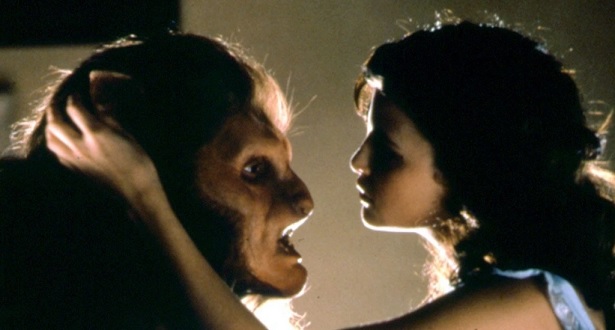
Of course, being a Full Moon flick, Meridian does have some charm to it, and it also boasts some decent performances from both Sherilyn Fenn and Charlie Spradling, not to mention Hilary Mason, and though some of the ideas themselves were interesting, the movie evolves into a messy romantic flick à la Beauty and the Beast, and not a particularly worthwhile version.

The main idea and setting here are both fine. The two girls seeing the traveling magic troupe was solid, and the variety of troupe members was admirable (which led, on a side note, to a scene that reminded me a lot of the 1932 Freaks, in which a dwarf is walking down a table and pouring wine in peoples’ cups). It’s true that dinner sequence, followed by a drug-induced rape scene, held a certain engagement to it, but then the movie spirals into unenjoyable territory.

What’s the main issue, then?

After Fenn’s character is raped, she falls in love with the individual who raped her. That alone pissed me off, if truth be told. Drugging women then raping them, and then having one of the women in question subsequently fall for one of the guys involved is beyond the pale, and past that point, I couldn’t bring myself to care for Fenn’s character, nor Malcolm Jamieson’s (he played a pair of twins, Lawrence and Oliver). And once this happened, it only left one central character to root for, being Spradling’s, but funnily, past this point, she only appears sporadically, and is of little importance to the rest of the story.

I’ll admit that both Sherilyn Fenn and Charlie Spradling were pretty attractive, which is definitely true during their nude sequences (Spradling being my preferred of the two). I don’t know Fenn from anything, but Spradling was in both the disappointing Mirror Mirror and the promising Puppet Master II. I liked her character here, quite a lot more than I liked Fenn’s, but like I said, past a certain point, she doesn’t really add much, aside from occasionally being seen working on uncovering a supposedly plot-important painting. Hilary Mason was fun, and there’s a somewhat cool twist involving her character, but much like Spradling, she doesn’t do that much.

Malcolm Jamieson was a fine actor here, but I didn’t care for either of the characters he played (and their on-screen conversations were just melodramatic to the extreme), and ultimately, while he probably did a perfectly fine job, I just didn’t care much for him, much of which can be put on the route that Meridian went.

I knew next to nothing about this movie before watching it, and that’s good, because I already went in with somewhat low expectations, so if I knew where this one went, it would have been even harder to get through this one. Meridian is somewhat interesting, and it definitely could have been a good film (another Full Moon feature, Subspecies, came out the following year, and is pretty good), but this one just doesn’t have what I’d hope for.

5.5/10

This is one of the films covered on Fight Evil’s podcast. If interested, listen to Chucky (@ChuckyFE) and I discuss it below.

The Dead Pit (1989)

Directed by Brett Leonard [Other horror films: The Lawnmower Man (1992), Hideaway (1995), Man-Thing (2005), Feed (2005)]

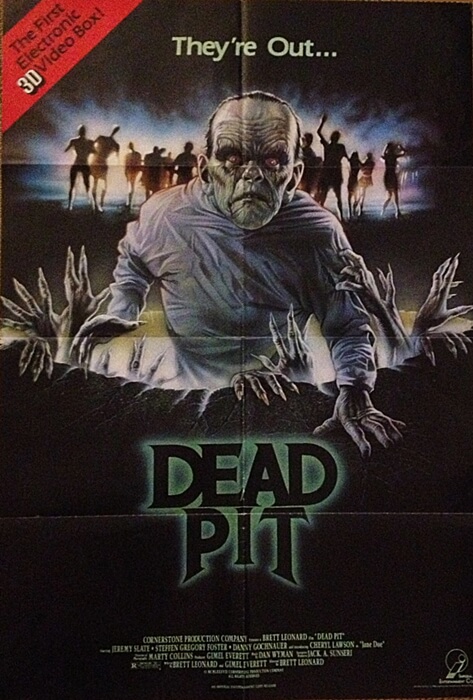
The Dead Pit is an interesting movie, and I don’t think it’s spoken about near as much as it should be. Far be it for me to call it a classic, I will say that, though I’ve only seen it twice now, it’s an extremely fun and somewhat unique experience from the late 1980’s, and by-and-large, I love it.

Star Cheryl Lawson was never really in much, and her only other venture into the horror genre was The Vineyard (1989), but she did reasonably well here, and she got topless once, so who would complain? Seriously, I thought her performance here was good, and she worked well with Stephen Gregory Foster (who himself is a bit of a nobody, but his character here was by far the best). Jeremy Slate was solid in his role, and while he didn’t do much, I liked Danny Gochnauer’s look in the movie.

There’s a lot of atmosphere here, and the opening sequence, a nine-minute origin story to the titular dead pit, was fantastic, and really brought the intrigue into the movie quick. After we finally get the title (in a really hideous text, making it one of the more questionable things in the movie), we’re introduced to a creepy old psychiatric hospital, a seemingly demonic, insane doctor, and a pit of bodies hidden in the basement of one of the old buildings. Talk about a great set-up.

There’s only one place where the movie starts feeling a bit drowsy, and that’s when it turns from an almost slasher/demon type-story into a typical zombie movie. It doesn’t finish off that way, and the ending itself is pretty solid (along with an expected, yet still cool, flashback reveal), but still, a generic zombie massacre, even if it comes with okay gore, didn’t really gel with me, though it makes complete sense in the context of the story.

Another thing I liked here, and that was the color scheme. There are times when green and red lights are used to good effect, and while it’s not nearly as artsy as something Argento might do, it still brought a little flare to the film.

I don’t hear The Dead Pit brought up that often, which I think is a shame, because while a few parts might be hokey (the glowing eyes, for instance), it has a lot going for it, and I genuinely think it’s a solid movie, and one of the better flicks from the late 1980’s.

8.5/10

This is one of the films covered on Fight Evil’s podcast, so if interested, listen below as Chucky (@ChuckyFE) and I discuss this one.

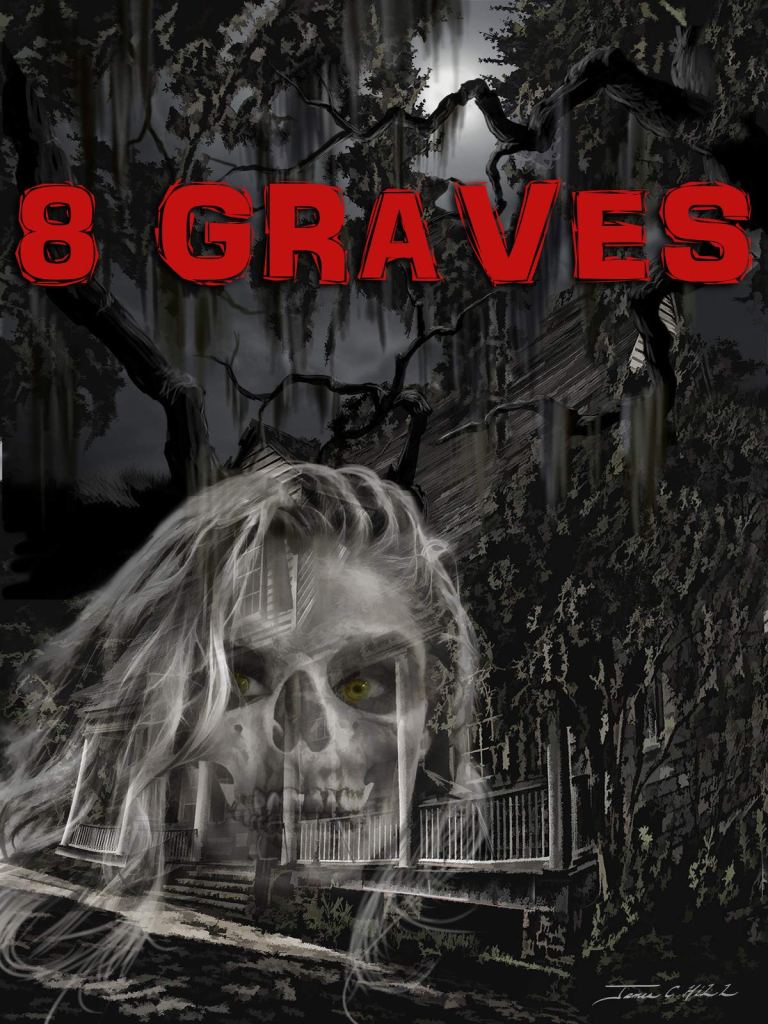
8 Graves (2020)

Directed by Gus Smythe [Other horror films: N/A]

Filmed in South Carolina, 8 Graves is a film that I wished I could have enjoyed more, as I do think the base story had promise (it wasn’t the most original, but hey, there was some potential), but due to the conclusion and somewhat weak special effects, I don’t think it’d be an easy one to recommend.

What really gives this film more life than it otherwise might have had is the strong central cast. While arguably Jessica Slaughter and Valarie Kobrovsky are more generic fare, the other four central women were quite solid. Perhaps my favorites were Judit Fekete and Sims Holland (who didn’t seem to be credited on the copy of the film I saw, but is listed on IMDb), who were solid individually, but also shared a decent and realistic bond toward the end.

I was sort of expecting a little more from Jennifer Olympia Bentley’s character, especially given her somewhat contentious relationship with Andrea Catangay’s character, but we never really got that much focus on Bentley (though what we did get made her a more personable individual). As for Catangay, she was sometimes zany, sometimes bitchy, and one of the more memorable performances of the film. Lastly, John R. Brennan did decently with his short screen-time as a rather scummy character.

Holding back 8 Graves, though, would be the lackluster special effects. Sometimes they do okay – look at the aftermath of the fan scene – but the ghosts here generally look somewhat iffy, whether it be the pool sequence or a car being crushed by spirit power (I really thought that was overkill – the character was suffocating anyways, so having the car be crushed seemed unnecessary).

I also have to admit that the conclusion seemed a bit janky. I don’t have a problem with the two spirits having a score to settle with each other (that is, until they don’t and start working together just as soon as the last surviving characters make a run for it), but one of the spirits wanting the baby just seems ehh, which definitely isn’t helped by the somewhat silly ending. It should almost be mentioned that, at times, the audience gets the point-of-view of the ghosts, which means a lot of shaky camerawork, and I just personally don’t know how much that added to the suspense.

As often happens with newer films (and it seems that, on a side-note, this has been in production for some time, as it’s Facebook page was created back in 2009), I didn’t know what I was getting into with this one, and I did enjoy some elements (such as the beautiful South Carolina setting and many of the actresses involved), but overall, I found it a bit more lacking than what I was hoping for.

5.5/10

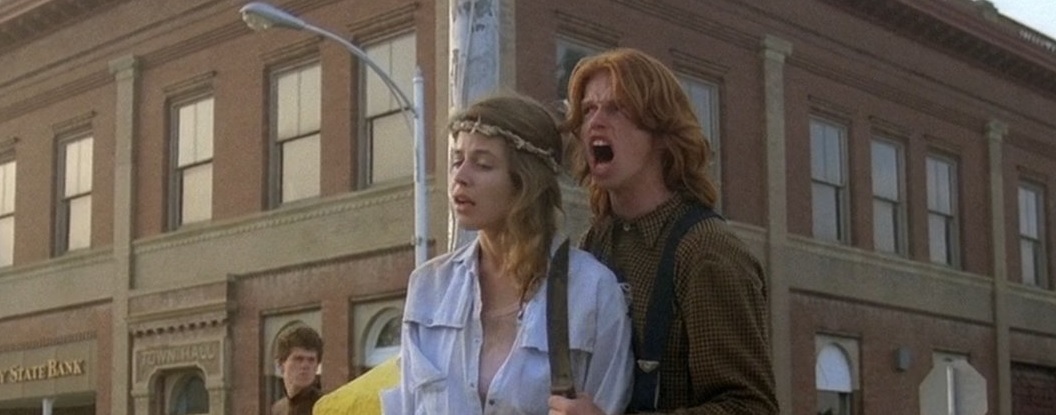
Children of the Corn (1984)

Directed by Fritz Kiersch [Other horror films: Surveillance (2006), The Hunt (2006)]

In some aspects, Children of the Corn has aged somewhat poorly, and it’s not necessarily the best translation of one of King’s short stories (from Night Shift, a copy of which was shown on the dashboard of the main characters’ car at one point) to a full-length film, but despite this, Children of the Corn is a very solid attempt, and one I’ve loved since childhood.

Let’s start with two things – the opening of the film and the music. It opens with a massacre in a diner by the youth of a small town, and a violent massacre at that, with plenty of scythes and the like. And that haunting music, a choir of sorts, belies the notion of the children’s innocence. That is a fantastically effective opening, period. End of story.

Now, few scenes really compete with that sequence, but later in the film, there is another pretty good scene in which a mechanic is being tormented by the Gatlin kids, and ends up getting entirely messed up. These kids know no mercy, thanks to the beast that is Malachai (Courtney Gains).

I want to touch on the interesting concept of the King story, and of this movie, then onto a small examination of the relationship between Malachai and Isaac, as it certainly impacts my view of the film.

Pray tell, why did kids kill adults at the beginning? Interestingly enough, the youth of Gatlin rallied beyond young child pastor Isaac, who held secret meetings in the corn, and decried the depravity of adults. The adults of this small Nebraska town were generally Baptist, but that’s not old school enough for Isaac, who believes that once you’re past a certain age, any hope of salvation is gone.

The solution? Kill off all the adults, form a new religion worshipping ‘He-Who-Walks-Behind-The-Rows’ (in a small farming community, you can see why that title would have appeal), and sacrifice everyone who turns of age for the sake of their soul. Realistically, a small town, even in Nebraska, couldn’t disappear off the map (though apparently, it wasn’t on the map to begin with) – even if you can ignore out-of-town relations, the IRS want their taxes, not to mention eventually the Census.

Still, the idea’s damn cool.

The relationship between Malachai and Isaac (John Franklin) is an interesting one – Isaac is the clear spiritual leader, but Malachai has a strong following, and is seen as doing more for their faith (it doesn’t hurt that he’s more of a hard-liner than Isaac, as music and games are forbidden, but Isaac lets that pass at times). Them Gatlin kids ain’t got no time for Isaac’s ‘mercy,’ and so turn to Malachai. That scene where Malachai revolts against Isaac’s authority (screaming ‘seize him’ didn’t get Isaac anywhere) is another one that pulls this movie to higher grounds.

Also, when he’s holding Burt’s wife (Linda Hamilton) at knife-point in the center of a dead town, crying out for the Outlander, again, fantastic scene.

Of course, it’s not all good, as the movie is somewhat drenched in the aura of the 1980’s, especially the somewhat cheesy conclusion and final scene. Believe you me, the original short story was so much better, and this waters it down just as bad as the adaptation of Cujo did. Also, it does take a little bit for the movie to get going, as a lot of the first half of the film are the two main characters (Peter Horton and Linda Hamilton) looking for any signs of life from the aforementioned dead town, but personally, I thought it had solid atmosphere.

And on that note, while I wasn’t really blown away by either Horton or Hamilton (Hamilton, of course, soon becoming famous for her role in The Terminator movies), both John Franklin (Isaac) and Courtney Gains (Malachai) were fantastic, and I can’t applaud their performances enough.

I think the idea behind this movie (and story) is better than the final product, and I wish this movie touched more upon the religious views of the kids, but still, Children of the Corn has a lot going for it, and while I’d never say it’s perfect, I don’t really understand the hate this one sometimes get. But again, maybe some of my viewpoints are drenched in nostalgia. Still, I find this a very solid movie, and always have a quality time with it.

8.5/10

This is one of the films covered on Fight Evil’s podcast, so if interested, you can listen to Chucky (@ChuckyFE) and I discuss this one below.

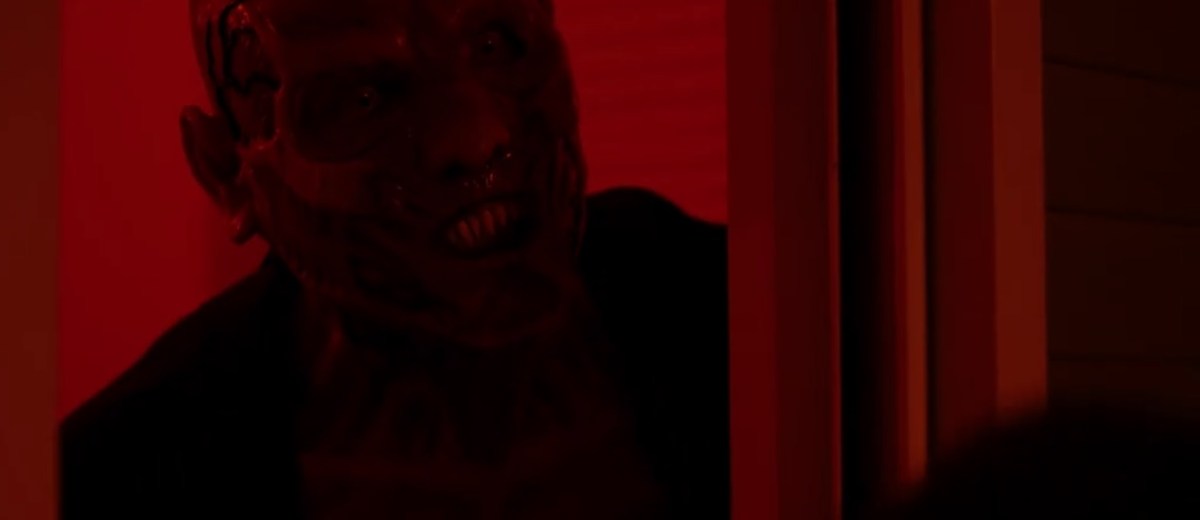
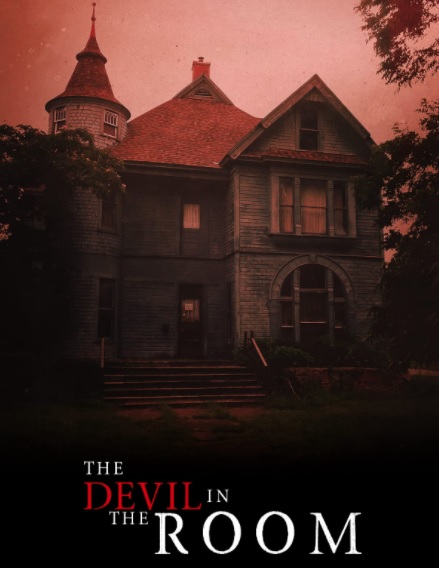
The Devil in the Room (2020)

Directed by Sami Cunningham [Other horror films: The Haunting of the Suicide House (2019)] & Brendan Rudnicki [Other horror films: The Unseen (2017), The Whitlow House (2018), The Abducted (2018), The Haunting of the Suicide House (2019), Into the Forest (2019), The Haunting of the Morgan Estate (2020), The Girl in Cabin 13: A Psychological Horror (2021), The Haunting of the Murder House (2022)]

Clocking in at just over an hour, The Devil in the Room doesn’t appear to have much going for it, on the surface. I think it does well with what it has, though, and ends up, if not a particularly memorable film, certainly a palatable one.

To me, the film seemed somewhat influenced by Insidious, which was a film I didn’t enjoy that much, but as this one is both shorter and a bit more focused, I think it went over better for me. The demon/devil thing was a bit shoddy-looking, but the vibe was appreciated, and it helped that the film dealt with grief in a pretty solid way.

Look, none of the performances were necessarily great, but for a lower-budget film, I do think that Skye Coyne did a good job as a woman who recently lost her sister to suicide. She had plenty of emotional material to deal with (and when just how guilty she feels she is comes fully to light, you can’t help but feel bad for her). Bryan Jager was a little shaky at first, and I don’t think his character got a great conclusion, but I ended up enjoying him, and Isaac Gonzalez Rossi did as well as I think his character could have allowed.

I will admit that toward the end, while I liked the excursion into the dream world (which felt like a low-rent version of Insidious’ The Further), the way that Coyne’s character confronts her demons isn’t too dissimilar from the conclusion to A Nightmare on Elm Street, which didn’t necessarily hurt the film, but it did make the ending to this one a little unsatisfying.

More than anything, though, I feel like I need to defend this. As of this writing, the movie has a 3.0/10 on IMDb (courtesy of 70 votes total), and this movie is definitely not deserving of that. It’s not a great movie, but given the limited budget, I thought they did a great job dealing with the emotional aspects of the story, and the jump scares, while rarely really effective, were still palatable in their usage.

The Devil in the Room isn’t likely to win any award, but for a lower-budget film, I definitely found it decent and, at only an hour, it’s not asking that much of the viewer, so if it sounds like it might be your thing, give it a try.

7/10

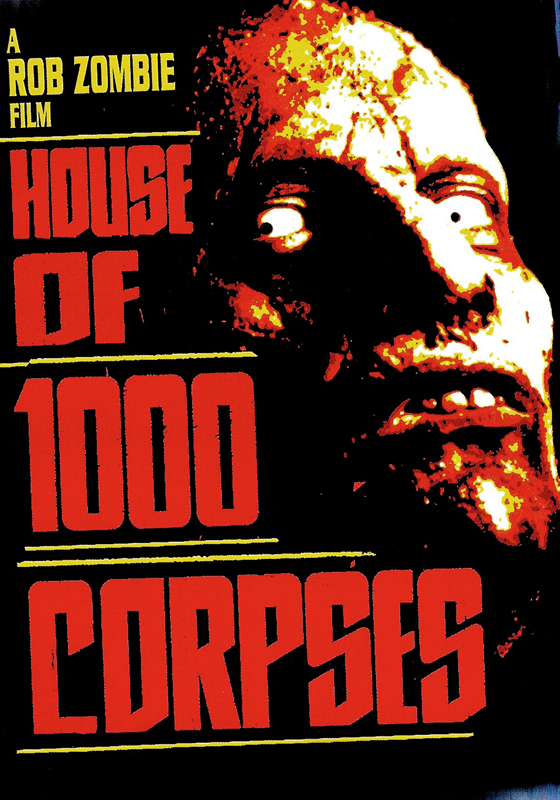
House of 1000 Corpses (2003)

Directed by Rob Zombie [Other horror films: The Devil’s Rejects (2005), Halloween (2007), Halloween II (2009), The Haunted World of El Superbeasto (2009), The Lords of Salem (2012), 31 (2016), 3 from Hell (2019)]

Rob Zombie’s debut horror film is a controversial one with very mixed views. I saw this three times without being impressed by it, but in recent years, I’ve come to find that it’s actually quite compelling, and the story here, while the basics aren’t that original, has a very harrowing and memorable route.

I don’t know if I’d call House of 1000 Corpses artsy, but I would say that the movie, in many ways, is an experience. I know some people don’t care for the utterly random cuts (the skunk ape who had lurid relations with a woman was the most striking, but who can forget the random black guy screaming ‘This is hell’ in front of a shack with a lot of religious ramblings on it?), old movie inserts, random ramblings of Firefly family members (both Otis and Baby), scenes in negative coloring, a portion in which a nude Baby is pleasuring herself with a skeleton, and the other random, psychedelic stuff thrown into the movie (such as the split screen portions, sometimes split into not just two, but three screens), but damn, I do think that all added a little something to this movie. Was it overkill? To each his own, but while I didn’t like it the first few times around, I’ve grown to appreciate it.

What’s equally as trippy as all of that are the final twenty or so minutes of the film, starting with the industrial metal funeral procession to the burial pit, followed by a tape recorder repeating ‘Bury me in a nameless grave,’ after having been lowered over the pit in a hanging coffin. From there, we have a harrowing encounter with zombies (?), Doctor Satan, his many experiments, and a cybernetic creation known as the Professor.

And though more conventional, the slow motion scene after a shed of dead bodies is found, leading to a tense shootout, all with Slim Whitman’s ‘I Remember You’ playing during the carnage is a lot of fun, and sticks out as a stand-out scene.

Honestly, the gore here isn’t really that heavy. I think the worst of it is a brief scalping, because the dismemberment scene was pretty quick, and while the razor blade scene wasn’t without gore, there wasn’t a whole lot of it. I liked the skinned flesh being used as a suit (courtesy of Otis), but again, it’s more disturbing than it is bloody. That said, while it’s not an all-out gorefest by any stretch of the imagination, House of 1000 Corpses is pretty damn freaky, as it possesses plenty of uneasy scenes, and throw in the trippy snippets throughout the film and the whole of the conclusion, I stand by my statement that the movie’s harrowing.

The four main characters are all okay, though none of them are near as striking as anyone in the Firefly family. Rainn Wilson (who is recognizable as a character from The Office, despite me never having seen a single episode of the show) was perhaps my favorite of the bunch, but I also sort of liked Jennifer Jostyn, despite a somewhat iffy attitude throughout. Chris Hardwick has an unbridled enthusiasm which I appreciated, and Erin Daniels is the forgettable one.

You won’t find too many forgettable members of the Firefly family, save for R.J. (Robert Allen Mukes), who was still threatening in his own right. I’d say Otis (Bill Moseley, who previously appeared in Texas Chainsaw Massacre 2 and the Night of the Living Dead remake) is the most memorable, as his pseudo-philosophical rants and sadistic nature really bring a lot to the film. Sheri Moon as Baby is really annoying at times, but it fits with her personality, and she lip-syncs with the best of them. As Mother Firefly, Karen Black (of Trilogy of Terror and Burnt Offerings) is enchanting in her own right, and feels like a more subdued version of Baby, which was definitely appreciated.

The other family members don’t matter near as much. Tiny (Matthew McGrory) was cool to look at, but due to the nature of his character, didn’t add a whole lot to the film, and Dennis Fimple was just here to tell lewd jokes and flip off Otis. It’s Sid Haig (who’s relationship with the family is never really made clear) who, despite his very little screen-time, really stands out as an amusing and somewhat likable guy (the opening to this film, on a side-note, is great). The only other cast member I wanted to mention was Tom Towles, who I thought did pretty good as a police officer.

Personally, I understand why some people don’t care much for the style of this movie, because, like I said, for quite some time, I was one of them. It’s somewhat artsy, at times a bit much, but I really think it feels like a unique experience, and at the moment, this is a movie I find myself enjoying again and again with each rewatch.

8.5/10

This was covered on Fight Evil’s podcast, so if interested, you can check out Chucky (@ChuckyFE) and I discuss this one below.