Suspiria (1977)

Suspiria

Directed by Dario Argento [Other horror films: L’uccello dalle piume di cristallo (1970), Il gatto a nove code (1971), 4 mosche di velluto grigio (1971), Profondo rosso (1975), Inferno (1980), Tenebre (1982), Phenomena (1985), Opera (1987), Due occhi diabolici (1990, segment ‘The Black Cat’), Trauma (1993), La sindrome di Stendhal (1996), Il fantasma dell’opera (1998), Non ho sonno (2001), Il cartaio (2003), Ti piace Hitchcock? (2005), La terza madre (2007), Giallo (2009), Dracula 3D (2012), Occhiali neri (2022)]

This stylistic flick is a lot of fun, and while it doesn’t live up to Argento’s previous Deep Red, Suspiria is a solidly atmospheric flick.

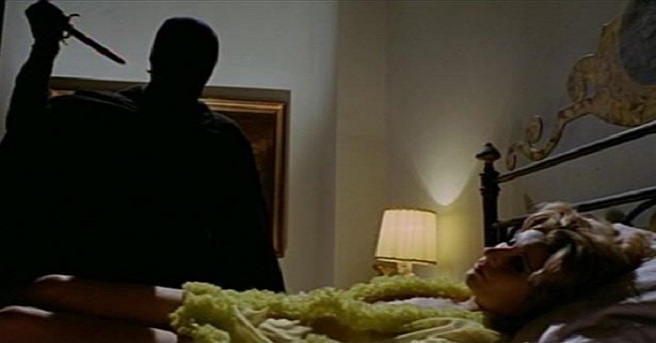
Witches aren’t something that are dealt with too commonly in horror, so Argento going that route proved a wise move, especially as he was able to craft a movie of this atmosphere, with both moody tension and good gore (when the film deigned to go that direction). The gore is quite good, mostly in the first murder sequence, but the razor-wire room is fun also.

Jessica Harper wasn’t a big name before this film, and really didn’t become that big of a name after it, which is a bit of a shame, as I thought she did really well here. Unfortunately, while it’s not that big a deterrent, none of the other actors/actresses involved were that memorable, but it doesn’t leave that much a negative impact.

The artistic style this movie has can’t really be matched, what with amazing color schemes and music composed by Goblin. Really, just for these aspects alone, disregarding the story, the movie would probably be a must see (and I generally see a lot more compliments about the style of the film over the content, to be sure). All-around great use of camera, lighting, and music to bring a creepy vibe to this one.

While certainly not my favorite horror film of the 1970’s (I don’t know if it’d even make my top 25), Suspiria has a lot of character, and certainly, if you can find an uncut version, even if it is dubbed, to watch, I think that you’ll probably have a good time. Even after three, maybe four viewings myself, I still find the film quite fun, and I only wish the ending was a bit more conclusive.

8/10

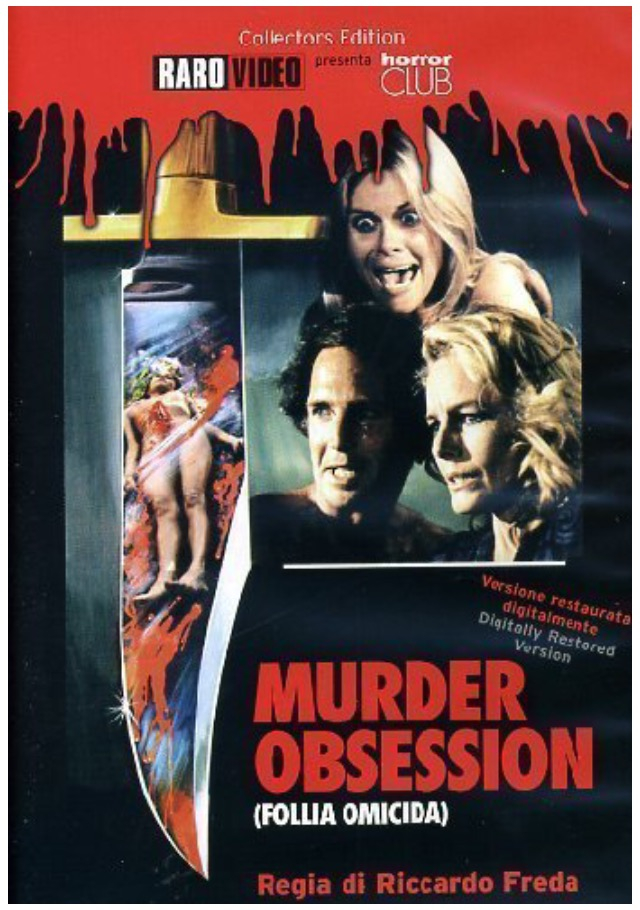
Murder Obsession (1981)

Murder Obsession

Directed by Riccardo Freda [Other horror films: I vampiri (1957), Caltiki il mostro immortale (1959), Maciste all’inferno (1962), L’orribile segreto del Dr. Hichcock (1962), Lo spettro (1963), L’iguana dalla lingua di fuoco (1971), Estratto dagli archivi segreti della polizia di una capitale europea (1972)]

For a late entry into the giallo subgenre, Murder Obsession isn’t terrible. It’s just not that great.

When it pops up, the gore is decently solid. A good throat-slitting with a chainsaw was the stand-out scene, but there’s a few others strewn about within the last thirty minutes or so. As always, the multitude of suspects made it a bit more fun, but to be honest, the conclusion was generally pretty meh.

Which is the biggest concern with this movie. Oh, the meandering plot and sluggish pacing didn’t help, nor the fact that the first murder doesn’t take place until an hour has gone by, but the ending isn’t that satisfactory. I do like how we got two different possible chains of events, told by two different characters, but it was moderately obvious which one was the one that really happened. Lastly, one of those dream sequences went on far too long – I don’t think we need a ten-minute dream (complete with one of the fakest-looking spiders in the history of cinema) when three minutes would have sufficed.

Stefano Patrizi made for an interesting lead character, what with his uncertainty over his past actions. His character was actually sort of a dick a lot of the time, but like I said, that makes him a bit more interesting. John Richardson (who has been in a quite a few horror films, such as Black Sunday, Frankenstein ’80, Torso, Eyeball, and Nine Guests for a Crime) had a great screen presence, though his character didn’t end up doing that much for me. Silvia Dionisio does moderately well, but past the halfway point of the film, she doesn’t appear that much. Finally, Anita Strindberg was generic through a lot of the film, but really picked up her performance toward the end.

Directed by Riccardo Freda (who was behind 1963’s Lo spettro, a favorite of mine, along with a few other 70’s horror flicks), Murder Obsession lacked some of the mystery I’d have preferred for a giallo. There was no shortage of suspects, but like I said, it was somewhat obvious where it was going. Not a bad film, but for a giallo, this doesn’t really stand out much.

6/10

La lama nel corpo (1966)

Murder Clinic

Directed by Elio Scardamaglia [Other horror films: N/A] & Lionello De Felice [Other horror films: N/A]

This early giallo (originally titled La lama nel corpo, and seems best to be known as The Murder Clinic) lacks the flair of many others that come later, yet ends up having a pretty fun and ominous vibe all the same.

While the film lacks the style of earlier entries such as Blood and Black Lace (part of this may be due to the fact that this is Elio Scardamaglia’s, the director, one and only film), the film does have a decent amount of suspense, mystery, and, of course, potential suspects, to offer. It was a bit sluggish at the beginning, but picks up nicely around the twenty minute mark.

Unfortunately, there’s not that much in the way of gore, another thing that slightly sets it apart from its peers. The kills themselves are good, at least when we see them on screen, but it’s not at all a gory film, which was a bit of a shame.

William Berger did exceptionally well as a doctor with more than a few problems. He had a solid screen presence, and I rather liked his complex character. Some of the film’s charm too has to go to Mary Young and Barbara Wilson, especially considering that this is Wilson’s sole film, and just the second of only two films Young was in. Given the lack of experience with the both of them, they really brought something to this movie.

The atmosphere could have been a bit thicker than what it ended up being, admittedly. And like I said, the gore wasn’t really strong at all. But still, you have a fun mystery, a lot of suspects, a few twists, a few surprising deaths, so even though this film lacked the class of many giallos that followed suit, I thought that it was well worth watching.

7.5/10

Profondo rosso (1975)

Deep Red

Directed by Dario Argento [Other horror films: L’uccello dalle piume di cristallo (1970), Il gatto a nove code (1971), 4 mosche di velluto grigio (1971), Suspiria (1977), Inferno (1980), Tenebre (1982), Phenomena (1985), Opera (1987), Due occhi diabolici (1990, segment ‘The Black Cat’), Trauma (1993), La sindrome di Stendhal (1996), Il fantasma dell’opera (1998), Non ho sonno (2001), Il cartaio (2003), Ti piace Hitchcock? (2005), La terza madre (2007), Giallo (2009), Dracula 3D (2012), Occhiali neri (2022)]

I saw this some years back; I couldn’t have been any older than 14 or 15. And I liked it – I hadn’t had much experience with either giallos or Argento’s work, but I liked it. Seeing Deep Red for the second time, it not only lived up to my recollection, but far surpassed them.

There’s nothing I don’t like about this movie, and if I had to nitpick, I guess I’d say that they should have made the blood look a bit more realistic than it did. But even so, at two hours and seven minutes, never once did I lose focus in the movie or interest in finding out who the killer was (like I said, I’d seen this before, but it’s been so long that I forgot who was behind the brutal murders).

The kills are actually a little weak at times, but there were also some classics here, such as the graphic finale (absolutely loved it), along with the death of another character toward the end. Even the first current-day death was decent, what with being hacked to death by a cleaver. I just wish there had been a few more deaths, but that’s not so much a complaint as wishful hoping.

Italian band Goblin composed the score to the film (they also did Suspiria‘s a few years later), and it was magnificent. Some fun electronic progressive Italian-synth tunes can’t go wrong. The movie already had an artistic feel to it, due to masterful cinematography, but the music helped elevate to even higher heights. And that haunting children’s song? That won’t soon be out of my head.

I won’t get deep into the actors as I sometimes (perhaps too often) do – the fact of the matter is that there’s not one performance that I would have preferred removed. There was a little overacting at times, but given how well everything else worked, it wasn’t much noticeable. David Hemmings was amazing as the main character, and while aspects of his character were troubling (his antiquated sexism, for instance), he was very compelling in his role. So too was Daria Nicolodi – while she wasn’t as important to the story as I thought she might be, her presence helped a great deal (the car scenes added some light humor to the film, which was somewhat welcomed).

Most of this film is the main character trying to remember an important thing he witnessed at a scene of a murder. He slowly pieces together clues, we get a few red herrings, along with a few fun flashbacks, and eventually, after a lot of investigation, we finally have our answer. I loved that – the scenes at the old house were all fun and suspenseful despite mostly being safe, and the discoveries made, along with how he went clue to clue, were all so fun also.

I have no complaints about this film. It helped that I was able to find a beautiful copy online, in original Italian with English subs. Call me a snob if you want, but if I had watched this dubbed, I don’t think it would have made the same impact. As it is, this is a fantastic movie, and easily a favorite of mine now. Dario Argento didn’t disappoint with this one.

10/10

2019 – Dopo la caduta di New York (1983)

2019

Directed by Sergio Martino [Other horror films: Lo strano vizio della signora Wardh (1971), La cado dello scorpione (1971), Tutti i colori del buio (1972), Il tuo vizio è una stanza chiusa e solo io ne ho la chiave (1972), I corpi presentano tracce di violenza carnale (1973), Morte sospetta di una minorenne (1975), La montagna del dio cannibale (1978), L’isola degli uomini pesce (1979), Il fiume del grande caimano (1979), Assassinio al cimitero etrusco (1982), American risciò (1989), La regina degli uomini pesce (1995), Mozart è un assassino (1999)]

I’ve never seen either Mad Max or Escape from New York (non-horror films are not really my thing, generally speaking), but I have to imagine this Italian movie, known in the US as 2019: After the Fall of New, is quite a bit like those films. A fantastic action/science fiction/horror medley, this film is a lot of fun, and comes highly recommended.

Post-apocalyptic movies can sometimes not quite work out, but this one does, due to multiple factors, being the fun cast of characters, the soundtrack, the heavy gore, and just general fun of the action. Primarily, if you’re looking for an action-filled flick, this is it. Plenty of brawl sequences, some gun play, interesting weapons, and further helping this along is the strong gore throughout the film. Two of my favorite instances being a rather brutal eye-gouging and a multiple-person decapitation – those aside, other sequences of splatter can be found, and the special effects are decent enough to back up the ambitious gore.

A small note on the soundtrack – it’s filled with a bunch of fun Italian electronic tracks. It’s a funky soundtrack, and certainly added a little something special to the film.

Michael Sopkiw does pretty damn good as the main character, and he has a fun presence also. The same can be said for most of the cast, but in particular, Valentine Monnier, Romano Puppo, Louis Ecclesia, and George Eastman, brought most of the fun to the film. I do wish that there had been more scenes of the three central characters (Sopkiw, Puppo, and a Paolo Maria Scalondro) in what was left of New York, but what we got was still action-packed amusement.

Brought to us by well-known director Sergio Martino (if I tried to list his better-known additions to the genre, this paragraph would be at least three lines longer, so lucky, they’re listed above), 2019: After the Fall of New York is a lot of fun, and if you’re a fan of post-apocalyptic films, gory Italian movies, or just having a good time, this is a movie I’d recommend looking into.

8.5/10

L’ossessa (1974)

L'ossessa

Directed by Mario Gariazzo [Other horror films: Occhi dalle stelle (1978), Play Motel (1979), Schiave bianche – Violenza in Amazzonia (1985)]

Having not seen this one in what has to be at least six years, I was taken aback by how out there the beginning was, only to be disappointed by the last two-thirds of the film as it went down a predictable route.

Made following the success of The Exorcist, L’ossessa (known under plenty of alternative titles, including Eerie Midnight Horror Show, Enter the Devil, and The Sexorcist), actually starts off in a moderately unique and creepy fashion. Stand-outs sequences include a rather brutal (and weird) crucifixion of the main character, along with quite a suspenseful scene on some stairwells, that sequence perhaps being one of the more tense 70’s scenes I’ve witnessed in a while. The wooden carving coming to life near the beginning was off-putting also.

There wasn’t much gore to speak of (even though the crucifixion was brutal, there wasn’t tons of blood present), and special effects overall were pretty poor, but at the same time, I think they were able to work with what they had to craft the type of movie they set out to.

Stella Carnacina did great as the main character, and you really felt for her at times. Her parents, played by Chris Avram (Bay of Blood perhaps being his biggest work in the genre) and Lucretia Love, both did well, despite somewhat bad dubbing for the pair of them.

Luigi Pistilli, who has been in not only Bay of Blood, but other Italian classics such as The Case of the Scorpion’s Tale, The Iguana with the Tongue of Fire, and Your Vice Is a Locked Room and Only I Have the Key, went all-out as the exorcist priest, and despite not having appeared until near the end of the film, made one of the best impressions. Finally, playing the devil, Ivan Rassimov (Planet of the Vampires, All the Colors of Dark, and Man from Deep River being his best-known films) probably laughed evilly a bit too much for my liking, but still obviously had fun with his performance.

The dubbing, as I touched on earlier, was pretty atrocious (I prefer subtitles when possible anyhow). It wasn’t helped by the fact that the audio quality for the most common print of the film can come across as awfully muddy at times. Still, it didn’t entirely cancel out some great lines of dialogue about how “there’s no such thing as incest,” and “masochistic tomfoolery.” Much of the dialogue was a hoot, despite the poor dubbing (or maybe because of it), and in a way, that added a bit of charm. Nice also were some of the Etruscan tombs, which were rather threatening.

L’ossessa’s biggest problem is that the final two-thirds of the film are pretty predictable and aren’t really all that interesting, especially compared to the wild ride we got for the first thirty minutes. Certainly, once the possession is clear, there’s not really a whole lot to look forward to (trying to seduce the priest attempting to exorcise her was fun, but not enough to cut it). I liked it more this time around than when I first saw it, and it can occasionally be both amusing and creepy, but I can’t see it being one I go out of my way to watch in the future.

6/10

Maciste all’inferno (1925)

Maciste

Directed by Guido Brignone [Other horror films: N/A]

Provided you’re in the right mood, this early Italian flick may be a hell of a lot of fun.

A small note, first: Maciste is one of the earliest reoccuring characters in the history of cinema, and is very well-known throughout Italy. A Hercules-type figure, Maciste is a man of much physical and moral strength. Played by actor Bartolomeo Pagano, Maciste appeared in over 25 silent films from 1914 to 1926 (Maciste all’inferno being one of the last ones).

The plot of this movie is about as simple as it sounds: being of strong moral fiber, King Pluto (or the Devil) takes it upon himself to tempt, and damn, Maciste, in order to destroy his morality. And once Maciste gets taken down to Hell, which happens about twenty minutes in, we’re in for a fun time.

It may sound a serious melodrama, of sorts, which certainly aren’t uncommon insofar as silent cinema is concerned, but Maciste all’inferno is a lot of fun. It’s an hour and five minutes of fantastic special effects (that hold up to this day), fist-fighting brawling action (seeing Maciste brawl with the legions of Hell is damn fun), and amazing fantasy, albeit certainly dated. It didn’t take itself seriously, and what we have is a light-hearted (though certainly, there’s still some real drama at points), often fun flick.

There were some really great scenes in this movie, from multiple decapitations (and after one of these, a demon re-attaches his head, which was creative), to all-out brawls between two factions of Hell, to a scene with Maciste flying on a dragon over the depths of Hell. Some things looked a little hooky, but was it fun? Hell yeah (pun certainly intended).

The main problem I had was a subplot that seemed to come out of nowhere. Wanting to usurp King Pluto’s place, another demon named Barbariccia led a revolt in order to satisfy his “revenge.” Perhaps it just flew by me, but I have no idea what exactly he wanted revenge for. It was a cool bunch of sequences, but still, I felt I was missing context, which may well have to do with the version I watched.

About the copy of the film I watched: there’s a 95-minute version of this movie out there, which can be found online, but I opted for the shorter 65-minute version, for two reasons. Most importantly, the alternative version was in it’s native Italian with French captions. I speak neither Italian nor French, and would look very idiotic trying to. Secondly, it uses the score of the French progressive/death metal band Gojira. While I have nothing against Gojira’s music, it’s not the type of stuff I want to listen to while watching a silent movie.

Still, even the shorter version of Maciste all’inferno was a lot of fun (and probably more digestible if you’re not into silent films), and everyone involved seemed to have a good time. One of Italy’s earliest-surviving horror films (though no doubt this could also simply be called either a fantasy or action flick), Maciste all’inferno was a deeply enjoyable watch the first time around, and it was no different this time.

8.5/10

Dolls (1986)

Dolls

Directed by Stuart Gordon [Other horror films: Re-Animator (1985), From Beyond (1986), Daughter of Darkness (1990), The Pit and the Pendulum (1991), Castle Freak (1995), Dagon (2001), Bunker of Blood: Chapter 5: Psycho Sideshow: Demon Freaks (2018)]

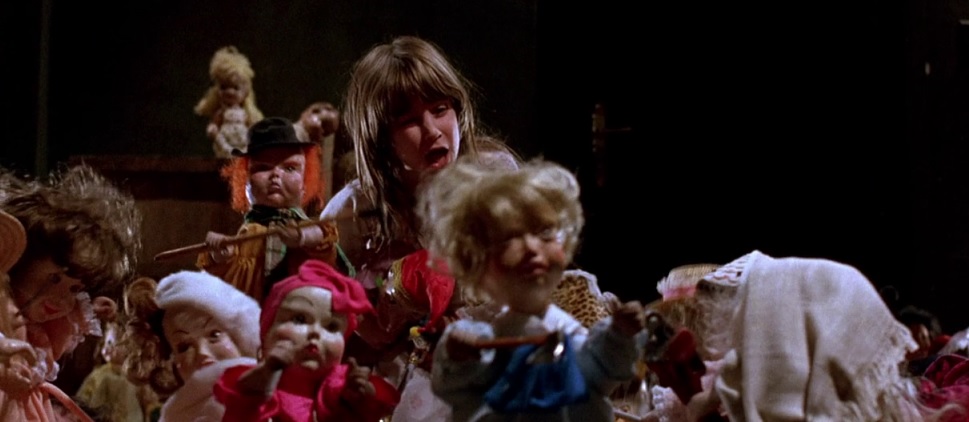
Seeing this movie a second time really solidified what I felt the first time around: while certainly corny at times, with some overacting afoot, Dolls has a lot of feeling to it.

There were some atrocious characters in the film (Bunty Bailey’s Isabel, Carolyn Purdy-Gordon’s Rosemary, and Ian Patrick Williams’ David), but the heart of the film lie in Judy, Ralph, and the elderly couple Hilary and Gabriel.

Played by Stephen Lee, Ralph was a great character, and while at times he was played up a bit much as the comic relief, I really enjoyed how he was able to connect with Judy (Carrie Lorraine) better than her father or step-mother ever could. And of course, Hilary Mason does wonderful as a witch-type old woman. While Ralph was a great character, though, the true stand-out is Guy Rolfe’s performance as Gabriel.

Charismatic and often kindhearted, Gabriel was a real treat, who spoke with respect to those who deserved it. In many ways, his placement of importance on kids’ and their wonder really reminded me, oddly enough, of a Willy Wonka-type character. Who couldn’t love that?

In relation, this movie had a strong fantasy feel throughout, which, while at times I find bothersome in a horror flick, really worked out well here. Stuart Gordon did a great job balancing the two, and while overall I think Paperhouse is a better fantasy/horror blend, Dolls is damn enjoyable also.

There were creepy scenes throughout, some subtle, some not so, and the kills were both memorable and, at times, brutal (I enjoyed the dolls attacking one of the characters in waves, but the firing squad death has to be my favorite – the slow motion worked really well there). The stop motion effects were pretty good looking, so kudos to that department also. Lastly, the music throughout the film was deeply enjoyable. Sometimes suspenseful, sometimes fantastical, those who worked on the score did a really great job. High quality all around.

Dolls isn’t by any means the perfect film, but it does possess occasionally poignant scenes and overall comes across as a feel-good movie, despite the violence. It harkens back to the creativity of childhood, and questions why we lost the wonder most of us once had. It’s a pleasant watch, in short, and I’d certainly recommend this to any interested party.

8.5/10

La bestia uccide a sangue freddo (1971)

La bestia uccide a sangue freddo

Directed by Fernando Di Leo [Other horror films: N/A]

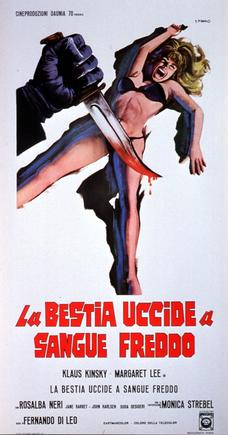
La bestia uccide a sangue freddo, more popularly known as both Asylum Erotica and Slaughter Hotel, is an Italian movie that came as something as a disappointment. What I was hoping would be a decent giallo with good kills turned out to be more a soft-core pornographic flick.

There’s a lot of nudity in this one, folks. Self-fondling, lesbianism, nymphos, a little bit of everything besides male nudity. 😛 The story’s simple enough: at a secluded clinic for women, a killer proceeds to whack off quite a few people. With various suspects and red herrings, will they discover who is behind these heinous acts?

Well, that’s not completely accurate. It’s not until 75 minutes into the movie that anyone knows there’s a killer on the loose, and once the police get there, there’s only ten minutes left in the movie. In fact, the whole ending seemed rather rushed. Not that it’s a bad thing – rushed action is better than no action at all, and to tell you the truth, I got tired of the sex and self-fondling a few minutes into the first sequence. But they keep on coming (wink wink).

And when we do get kills, they’re not overly inspired. Sure, the crossbow kill was pretty cool, and the iron maiden death was decent, but everything else just fell flat. For Pete’s sake, there’s a bloodless decapitation in the movie. We can’t have such an utter lack of gore like this and expect much of the kills to be memorable. For most of the film, I was just bored with the red herrings and consistent nudity, truth be told. While the ending was rushed, along with the explanation of why the murderer is offing people, at least we got some type of payoff for our troubles. A pretty tedious flick, but if a lot of nudity’s your thing, give it a go.

6/10