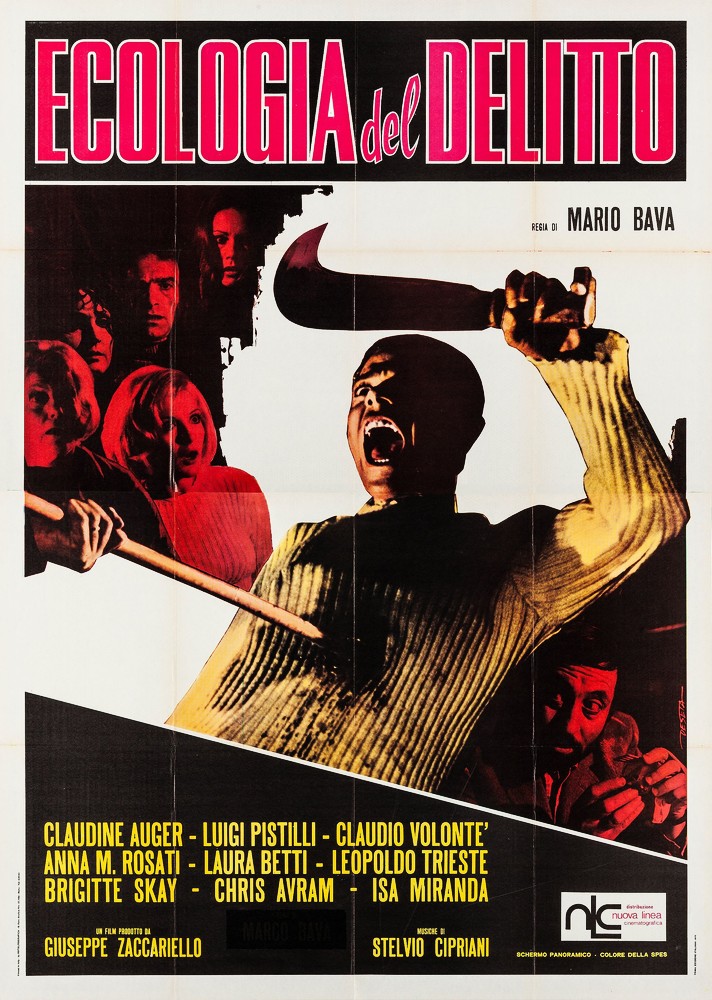
Ecologia del delitto (1971)

Directed by Mario Bava [Other horror film: I vampiri (1957), Caltiki il mostro immortale (1959), La maschera del demonio (1960), Ercole al centro della Terra (1961), La ragazza che sapeva troppo (1963), I tre volti della paura (1963), La frusta e il corpo (1963), 6 donne per l’assassino (1964), Terrore nello spazio (1965), Operazione paura (1966), 5 bambole per la luna d’agosto (1970), Il rosso segno della follia (1970), Gli orrori del castello di Norimberga (1972), Lisa e il diavolo (1973), The House of Exorcism (1975), Schock (1977)]

Likely better known under titles such as Bay of Blood and Twitch of the Death Nerve, this Mario Bava film has been a movie I’ve been wanting to see for a long time. I came into it trying to temper my expectations, because I didn’t want to be disappointed (and I’ve heard some less-than-stellar reviews of this one), and I came out quite fascinated.

My expectations were somewhat simple – a bloody giallo with a decent mystery. Well, I don’t know if the mystery itself is that great, but the approach to the story is what really sold it to me, and I don’t know how many movies I’ve seen that had such an interesting final thirty minutes.

It starts off normal enough, with some murders happening around a bay (a fantastic setting, but I’ll touch on that shortly), and we’re introduced to a lot of characters, each with their own objectives and goals, so it felt as most gialli do. Once we’re let in on some secrets in the final thirty minutes though, the whole film becomes quite kinetic in a way I’ve not seen before.

And what I mean by kinetic is this: there are a bunch of people at the bay – an insect lover (Paul) and his medium wife (Anna), another man (Albert) and wife (Rennie), a guy who lives in a shack on the bay (Simon), and another guy who has a house nearby (Frank) – and about halfway through, things start getting wild. Paul pops in on Albert’s car, asking where Anna went – his wife went down to the shack, to speak to Simon. Later, Albert sees Paul run out of a house where a body was, and Rennie was one of the potential victims.

Needless to say, I may not be able to explain things well, but the point is this: a lot of things are happening, and at that point in time, we keep switching to different characters, giving us different perspectives all in this very close-knit area (most of the film takes place very close together, and I loved that), and it just felt so energetic and fun.

It’s hard to talk about great performances, because I thought all of the central characters did well. My favorite two would have been Leopoldo Trieste and Claudio Camaso (who has an interesting, and rather tragic, personal history). Laura Betti (A Hatchet for the Honeymoon) struck me as a bit stereotypical in her medium role, but others, such as Chris Avram (The Killer Reserved Nine Seats, L’ossessa), Luigi Pistilli (The Iguana with the Tongue of Fire, Your Vice Is a Locked Room and Only I Have the Key, A White Dress for Marialé), and Claudine Auger (The Black Belly of the Tarantula) were all solid.

Naturally, a big talking point about the film would be the gore, and the gore is quite solid throughout. I loved the double impalement, along with some throat slittings and someone getting stabbed with a spear, but I think the finest moment was a beautifully-choreographed decapitation – I saw the set-up, and was quite happy with the follow-through. A Bay of Blood certainly has some fine violence in it, and I dug it.

This film isn’t really comparable to most gialli I’ve seen, as it’s shorter and a bit more base in it’s intent, feeling at times like a classic 80’s slasher. Flashbacks are used to great effect toward the finale, but the story still comes across less like The Case of the Bloody Iris and more like Friday the 13th, which isn’t a bad thing whatsoever, as I suspect this might be a more digestible film for those who don’t want to spend an hour and a half with a more complex story.

If I’m being honest, I sort of expected to be disappointed with A Bay of Blood, but I wasn’t. It started off a little shaky (as great as those first kills were, things felt a bit average for a period of time), but about halfway in, it really grabbed me, and I loved most things about the final thirty minutes (even the off-the-wall, hilariously random final sequence). Definitely a fun time.

8/10

I tre volti della paura (1963)

Directed by Mario Bava [Other horror film: I vampiri (1957), Caltiki il mostro immortale (1959), La maschera del demonio (1960), Ercole al centro della Terra (1961), La ragazza che sapeva troppo (1963), La frusta e il corpo (1963), 6 donne per l’assassino (1964), Terrore nello spazio (1965), Operazione paura (1966), 5 bambole per la luna d’agosto (1970), Il rosso segno della follia (1970), Ecologia del delitto (1971), Gli orrori del castello di Norimberga (1972), Lisa e il diavolo (1973), The House of Exorcism (1975), Schock (1977)]

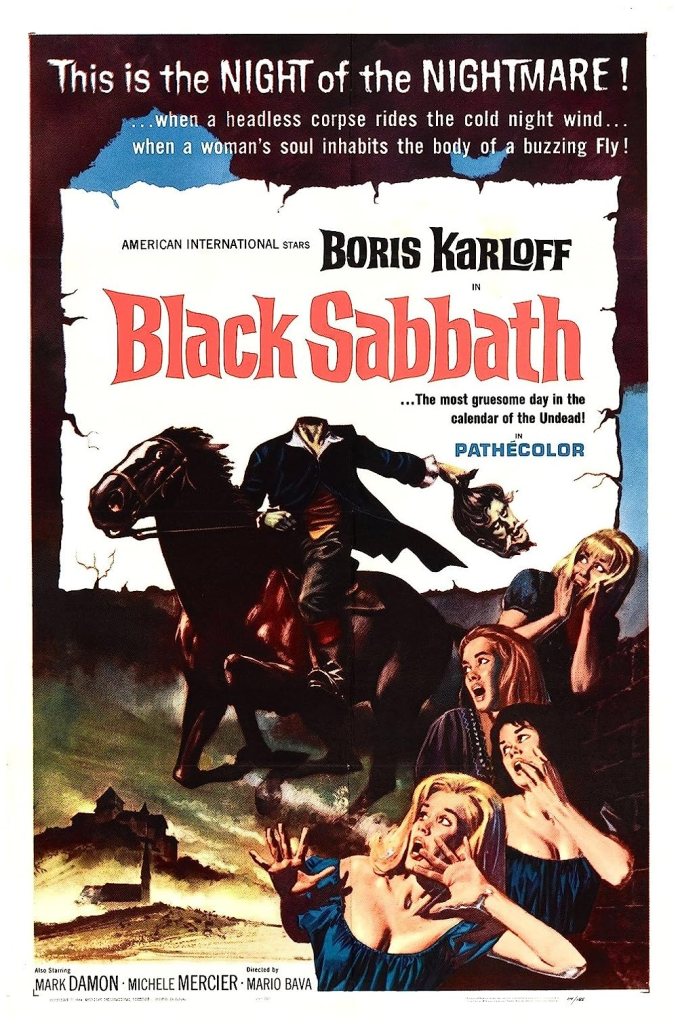
Infinitely better known under the title Black Sabbath, this Italian anthology has never really impressed me. Of course, I’ve only seen it twice now, so that may change with future viewings, but right now, it just doesn’t seem that great a movie.

What possibly might impact that conclusion is that I’ve seen only the American print. Both versions contain the three same stories – ‘The Telephone’, ‘The Wurdulak’, and ‘The Drop of Water’ – but the stories are in a different order in the American copy, along with edits being made to the stories, most prevalent in ‘The Telephone.’

I don’t know if I’d like the movie anymore with the original print, but I can say that as I believe ‘The Telephone’ is by far the weakest segment here, I’d definitely be open to seeing the story done differently. ‘The Wurdulak’, which is the final story in the American print, isn’t that bad, but it does run on a bit long, and possesses a bunch of annoying character mistakes that make it quite hard for me to sympathize with them, not to mention having somewhat melodramatic dialogue (“All I know is that I love you”).

The true winner of this film, as far as the segments go, is ‘The Drop of Water’, which is unfortunate, as it’s the segment that opens the American copy, meaning that after the story is done, there’s little to look forward to. ‘The Drop of Water’ is sweet and simple, and is a masterclass in suspense. From the moment we first see the dead body of the medium to the final scene, it’s a very thrilling story, and a pleasure to watch.

It’s also a pleasure to see Boris Karloff introduce the stories (though I would have liked it if he also had some closing dialogue), and not only that, but he was also in ‘The Wurdulak,’ playing a beautifully threatening role (though that one piece of dialogue – “Can’t I fondle my own grandson?” – was dated terribly). Jacqueline Pierreux was amazing in ‘The Drop of Water,’ and while some of his choices bothered me, I thought Mark Damon did decently in the final story. It may partially just be the story, but Michèle Mercier didn’t really impress me in ‘The Telephone.’

Obviously, Black Sabbath isn’t without it’s strengths, which is evident by the amount of people who call the film a classic. No doubt that it looks nice – the color is rather fresh for an early 1960’s movie, and the portions of the film that it gets right, it really gets right. It’s just that it doesn’t happen often, and though the film might be better in the original Italian print, I can’t imagine my views changing significantly.

In short, despite it’s classic status, it’s not really a film I enjoy save for ‘The Drop of Water,’ and there are so many other horror films from the 1960’s that I’d rather watch.

6/10

Il gatto a nove code (1971)

Directed by Dario Argento [Other horror films: L’uccello dalle piume di cristallo (1970), 4 mosche di velluto grigio (1971), Profondo rosso (1975), Suspiria (1977), Inferno (1980), Tenebre (1982), Phenomena (1985), Opera (1987), Due occhi diabolici (1990, segment ‘The Black Cat’), Trauma (1993), La sindrome di Stendhal (1996), Il fantasma dell’opera (1998), Non ho sonno (2001), Il cartaio (2003), Ti piace Hitchcock? (2005), La terza madre (2007), Giallo (2009), Dracula 3D (2012), Occhiali neri (2022)]

Known primarily under the title The Cat o’Nine Tails, I had to say that this Dario Argento film started out strong, and remained strong for a good portion of the hour and 50 minute runtime, but aspects of the finale just didn’t sit well with me.

It’s a mostly engaging mystery – I love how a newspaper reporter (James Franciscus) and a blind man (Karl Malden) were working together in order to solve some mysterious deaths. I liked the relationship of respect they had, and of course, having a blind character working as a detective is a unique choice, and he did fantastically.

Following up on the nine leads was somewhat less than satisfactory. I guess my main problem is that of the five scientists (played by Emilio Marchesini, Tom Felleghy, Aldo Reggiani, Horst Frank, and Tino Carraro), only a couple of them got any real focus, and without a clear distinction of character, which I’m not sure we got all that well, distinguishing between some of these individuals is a bit more difficult, and also lacks somewhat of a personal touch, given we don’t know all of them, at least to any real degree.

That’s not to say that the mystery wasn’t good, but I have to say, I don’t think it was near as engaging or interesting as what we get from films like The Black Belly of the Tarantula, Deep Red, or The Case of the Bloody Iris. It just lacked a bit of the personal touch, so while time mostly flew by (which is good, given the film’s runtime), I don’t know if the finale was entirely worth it.

Regardless, that doesn’t take away from both Karl Malden’s (Phantom of the Rue Morgue) and James Franciscus’ (The Last Jaws) performances. I thought the both of them did a great job, especially Malden. I liked what we got from Horst Frank (The Head, Eye in the Labyrinth) and Emilio Marchesini, but I don’t think either character was that fleshed out, and we only got surface level stuff. I wasn’t overly fond of Catherine Spaak’s character, but at least Franciscus’ character liked her.

Part of the mystery here involved some genetics testing regarding unusual chromosome distribution. I don’t know the modern-day science behind this – it sounds as though it’s something that was debunked years ago. The movie doesn’t spend too much time on this, but it’s part of solving the mystery, and it was definitely unique, so I thought I’d mention it.

I also wanted to say that the sequence in which both of the main characters were almost killed was pretty solid. Technically Malden’s was off-screen, and we only learn about it from a phone call, but Franciscus’ milk gets poisoned, and we’re treated to some solid tension as to whether or not he’ll figure that out before drinking it.

Few of the kills here really did that much for me, and that’s primarily because this film lacks the flair of later Argento works. Most of the kills are competent, but few really stand out (save for someone being pushed in front of a train and one of the final scenes in which someone falls down an elevator shaft). Many of them are done through first-person view, which does give a little something extra, but they’re not always the most exciting (some just consist of simple strangling).

When all is said and done, The Cat o’Nine Tails is an okay giallo, but compared to so many others (including some of Argento’s own films, such as Deep Red, Four Flies on Grey Velvet, and Phenomena) around the time, it just felt sort of weak.

7.5/10

Phenomena (1985)

Directed by Dario Argento [Other horror films: L’uccello dalle piume di cristallo (1970), Il gatto a nove code (1971), 4 mosche di velluto grigio (1971), Profondo rosso (1975), Suspiria (1977), Inferno (1980), Tenebre (1982), Opera (1987), Due occhi diabolici (1990, segment ‘The Black Cat’), Trauma (1993), La sindrome di Stendhal (1996), Il fantasma dell’opera (1998), Non ho sonno (2001), Il cartaio (2003), Ti piace Hitchcock? (2005), La terza madre (2007), Giallo (2009), Dracula 3D (2012), Occhiali neri (2022)]

Earlier this month, I watched Tenebre for the first time, leaving Phenomena as one of Dario Argento’s most popular works that I’d not yet seen, and now that I have, I can say that Phenomena was a very solid time, which, if I’m being honest, sort of surprised me.

It’s not that I was expecting to hate it, but I thought mixing in some subplot of the central character being able to control insects (which isn’t exactly what’s going on, but my limited knowledge of the film did lead to that misconception) would be too off-putting. Well, as my parents said, I’m wrong 95% of the time, and so was the case here, as this was a delightfully fun film for it’s hour and 50 minute runtime, partially due to the solid performances.

Jennifer Connelly (Dark Water) did a fantastic job as the lead, and her character was wonderfully brave and strong throughout the film. Of course, seeing Donald Pleasence (Halloween, The Flesh and the Fiends, The Mutations) warmed my bitter heart, and seeing him with a monkey was even better. Other than these two, both Daria Nicolodi (Deep Red) and Federica Mastroianni did well also.

The story here was about what you’d expect from a giallo – mysterious killings are happening in Switzerland, and insects lead to identifying the killer. Okay, well, the second part might be more unique, and I was skeptical myself, but I dug how they approached it (because if Pleasence was involved, how could it be a bad idea?), and though the movie is a lengthy one, it never really felt like it was dragging at all.

Also, the soundtrack is killer. I’ll be honest – when I saw both Iron Maiden and Motörhead among the “special musical artists,” in the opening credits, I wasn’t sure. I love Iron Maiden, but I didn’t know if their music would suit a movie like this, and again, I was wrong, as the soundtrack is just excellent, especially the piece titled ‘Phenomena’ by Claudio Simonetti, which is just insanely catchy, and definitely going onto my iTunes.

I will say I made a mistake attempting to eat during portions of the film. Somewhat early on, police detectives brought a rather maggotty decomposed head to be examined, and it didn’t shy away from showing the head in detail. In fact, larvae and maggots were a common sight, especially toward the end – that bathroom scene was hard enough, what with maggots on a bar of soap and a towel – and especially with that pit. You know the pit. I know the pit, and I wish I didn’t. In fact, I’ll go ahead and say I’d rather be thrown into the syringe pit in Saw II rather than the pit at the end of Phenomena.

So yeah, the movie can be a bit off-putting at times, but it never fails to be entertaining, and given the length of the film, the fact that it never once felt as though it was dragging is an impressive feat itself. The kills were somewhat scarce at times, but when they did pop up, we got some quality decapitations and stabbings, and though it’s not as impressive as past Argento works, it wasn’t shabby whatsoever.

In fact, I think this ranks pretty highly for me when it comes to the films I’ve seen by Dario Argento. I still need to see some of his films, of course – The Bird in the Crystal Plumage, The Cat o’Nine Tails, and The Stendhal Syndrome are among them. I’ve seen most of his major works, though, and I think this is pretty good. It may not be as flashy as Suspiria, but I liked the plot more. Tenebre is a movie I personally expected to like more than I did (I enjoyed it, but I was hoping to love it), and though I’d usually enjoy the straight-up giallo more, Phenomena had a better finale.

All of this is to say that among the Argento works I’ve seen, I think Phenomena is my second-favorite. Let’s be real – I gave Deep Red a 10/10, so that’d be exceptionally difficult to beat. Phenomena is a great movie, though, and I enjoyed it far more than I’d have anticipated.

8.5/10

La dama rossa uccide sette volte (1972)

Directed by Emilio Miraglia [Other horror films: La notte che Evelyn uscì dalla tomba (1971)]

Known under the evocative title The Red Queen Kills Seven Times, La dama rossa uccide sette volte is a giallo that has a decent amount going for it. Possessing a great mystery, fun plot, and memorable killer, it’s a very solid film, and one of the better gialli I’ve seen.

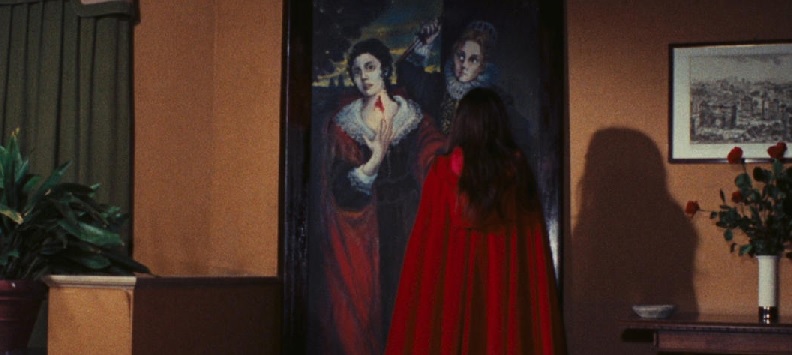
Firstly, I love the set up and the legend of the Red Queen, based on the painting seen in the opening. The Red Queen is killed by her sister, the Black Queen, and so the Red Queen returns from the dead to get her revenge, killing six innocent people, and for the seventh and final victim, the Black Queen, her sister. All of which is a long way to say that, indeed, The Red Queen Kills Seven Times.

It’s quite possibly among one of my favorite titles of a giallo.

In other news, the plot largely revolves around mysterious murders involving some sisters, a castle, a curse, a will, and some mixed-up identities, not to mention secret deaths and blackmail. It’s just a lot of fun all the way through, and like all great gialli, there’s a lot of viable suspects, and figuring out the mystery provides a good time. As it is, I don’t 100% love the finale – I wanted a little more oompf – but it was still quite well-done.

One thing this film succeeds in that few gialli really do is creating a memorable design of the killer. The Red Queen’s design is great – a woman in a red cape and hood, with a maniacal laugh every time she kills someone (and surprisingly, that laugh never once gets old). It’s a great killer, one that you’d expect from some 80’s slasher, and not that many gialli showcase great designs (as so many instead show black gloves and trenchcoats, which, to be fair, has it’s own charm).

Barbara Bouchet (The Black Belly of the Tarantula) made a solid lead, and had some great scenes, especially during her flashbacks. Really, though, most performances are solid, from Sybil Danning, Fabrizio Moresco, and Nino Korda to Ugo Pagliai, Marina Malfatti, and Pia Giancaro. Rudolf Schündler was nice to see, and while generic, Marino Masé (Contamination) certainly looked the part of a detective.

Directed by Emilio Miraglia (who also made the excellent The Night Evelyn Came Out of the Grave), The Red Queen Kills Seven Times isn’t a particularly gory giallo. There are some solid kills, such as a woman being tricked into climbing a fence, but then impaling herself on the spikes, or a good stabbing in the back of a van, but the kills here aren’t near as important as the mystery and occasional atmosphere, the same of which could fairly be said of The Night Evelyn Came Out of the Grave.

Also, portions here and there of the film take place in a castle. By no means is the castle necessarily central to the plot, but some of the better scenes take place in and around it, and it’s a very solid setting when it pops up, and gives the film a little Gothic spice, as Italian horror did often in the 1960’s.

The Red Queen Kills Seven Times was a pretty good movie. I don’t know if it’s good enough to make my top five gialli at the moment (with films like Deep Red, The Case of the Bloody Iris, and the early The Murder Clinic, it’s hard to crack the best of the subgenre), but it’s definitely a solid film, and with that great killer, isn’t a movie that’ll be forgotten.

7.5/10

La ragazza che sapeva troppo (1963)

Directed by Mario Bava [Other horror films: I vampiri (1957), Caltiki il mostro immortale (1959), La maschera del demonio (1960), Ercole al centro della Terra (1961), I tre volti della paura (1963), La frusta e il corpo (1963), 6 donne per l’assassino (1964), Terrore nello spazio (1965), Operazione paura (1966), 5 bambole per la luna d’agosto (1970), Il rosso segno della follia (1970), Ecologia del delitto (1971), Gli orrori del castello di Norimberga (1972), Lisa e il diavolo (1973), The House of Exorcism (1975), Schock (1977)]

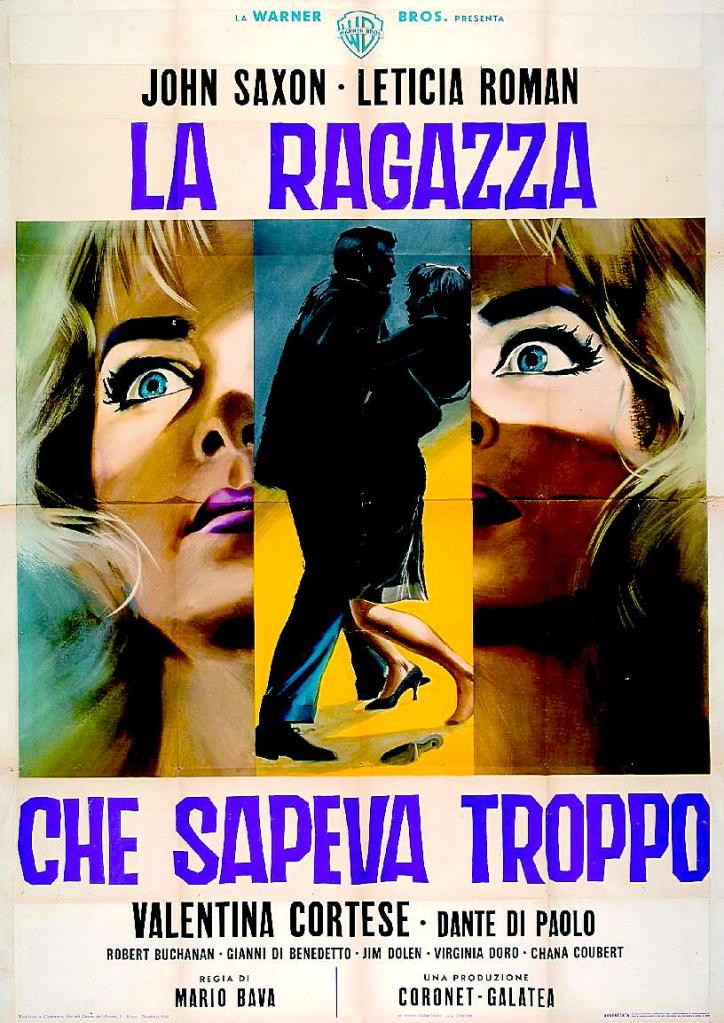
Known under both The Evil Eye and The Girl Who Knew Too Much, this Italian classic directed by Mario Bava is often considered one of the earliest gialli. In truth, while I don’t mind that claim to fame, it’s nowhere near as memorable as the following year’s Blood and Black Lace, and while an okay movie, I don’t know if La ragazza che sapeva troppo really stands out that well.

A giallo it may well be, and there are certainly familiar elements here (an American witnesses a murder and attempts to figure out who the mystery killer is), but there are also quite a few missing elements. For one, the film’s nowhere near as vibrant, a big reason being the movie’s black-and-white. The killer also doesn’t wear any type of face covering. No doubt the mystery is decently solid, but it doesn’t quite feel what you might expect after seeing later gialli.

One small thing that did take some getting used too was the use of interior thoughts. Sort of like first person narration, though it’s just the thoughts going through some character’s minds. It doesn’t pop up too often, and mostly revolves around the main character played by Letícia Román, but it was somewhat interesting, and occasionally seemed an odd choice.

Personally, seeing a younger John Saxon (A Nightmare on Elm Street, Tenebre, My Mom’s a Werewolf, Black Christmas) was a big selling point, but I can’t say his character made a huge impression on me. Letícia Román made an okay lead, but some of her character’s decisions were pretty sketchy. I did rather like Dante DiPaolo here, and Valentina Cortese (Un’ombra nell’ombra) did pretty well, especially around the finale.

From my understanding, some versions of the film (under the title ‘The Evil Eye’) have removed some scenes and added a bit of comedy not apparent in the original. Given this is the version I believe I watched, I can say that tonally, it seemed sometimes inconsistent. None of the comedy is over-the-top by any means, but the movie just felt a bit whimsical at times, and I don’t think that was a great decision. Also, the ending (what with a random murder on ski lift-type things) just felt sort of ridiculous.

Obviously, Mario Bava was one of the most important Italian horror directors of the 1960’s. Before this film, he was behind films like Black Sunday and Hercules in the Haunted World (along with films he wasn’t credited for, such as Caltiki and Lust of the Vampire), and while Black Sunday is well-appreciated, I think he hit his stride later on, Blood and Black Lace being one such example. Blood and Black Lace has some similarities to this, to be sure, but it feels more polished, and being in color, feels so much more like the gialli I’ve grown to love.

All of this is to say that La ragazza che sapeva troppo is an okay film, and it’s certainly watchable, but I don’t think it’s a particularly great movie. If you’re interested to see how gialli got their start, it’s worth a watch, but otherwise, I can’t say this film has that much to offer, at least the print I happened to see.

6.5/10

Frankenstein ’80 (1972)

Directed by Mario Mancini [Other horror films: N/A]

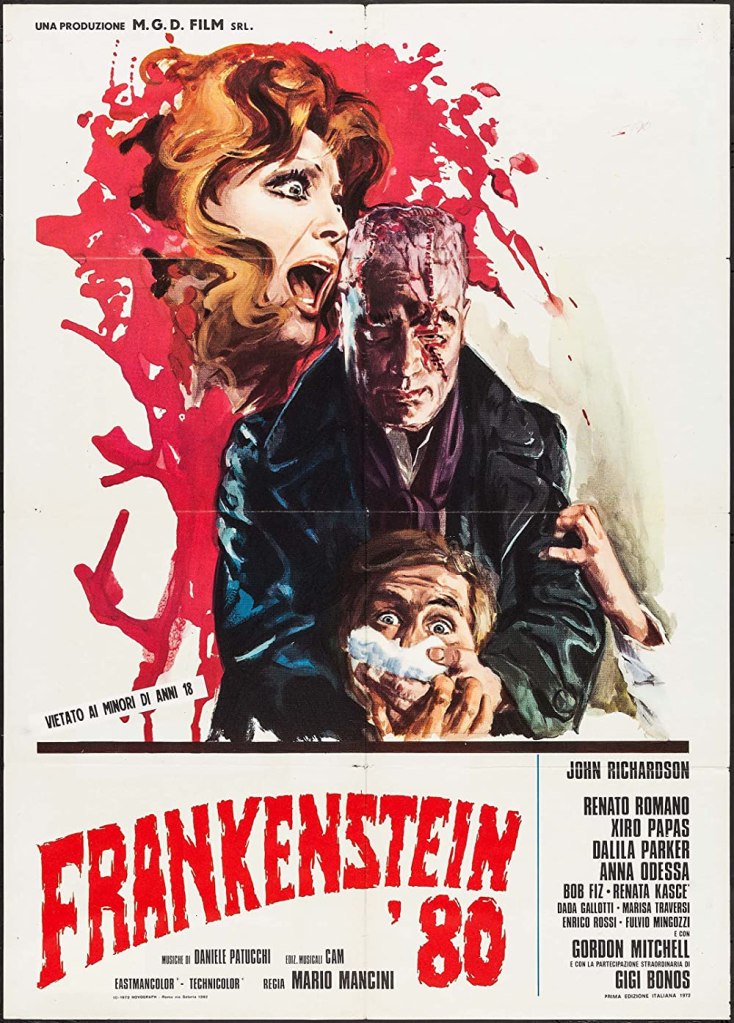
This Italian film isn’t really anything special, especially when you consider how rough the most common print of this film is. Even so, I’ve always found it on the more decent side of things, and though it probably doesn’t rise above average, Frankenstein ‘80 is a fun, trashy little movie.

Why it’s called Frankenstein ‘80, I don’t know. The ‘Frankenstein’ part makes sense – in the film a Dr. Otto Frankenstein creates a living being made of men, and christens it Mosaico (not a bad name, if I do say so myself). Where the ‘80 comes from, though, I’ve no idea. The body count is decent, but it’s not that high.

The print I own is from the Pure Terror 50 disc set from Mill Creek. It’s a rough print, as many of Mill Creek’s releases are – it’s sometimes blurry, the dubbing is so-so, and the aspect ratio may not be accurate (given the credits at the beginning of the film are cut off on both sides, which looks horrid). Even so, the nudity is intact, and the film itself isn’t too choppy, but this is a movie that might benefit from a higher definition release (and may already have one; I’m not exactly what you’d call up-to-date when it comes to Blu-ray releases).

Admittedly the story feels a little bit aimless for the final thirty minutes – at this point, Mosaico has escaped from the lab he was kept in and goes on a killing spree. Not that we don’t get kills throughout the movie, because we do, but it’s ramped up a bit, and throws in some more blood and nudity for good measure.

I liked John Richardson (Eyeball, Torso, and Black Sunday) as the lead, playing a reporter, and even more, I really liked how he was able to get the police chief, played by Renato Romano, on his side, and began working with him. Romano’s character even compliments him at the end of the film, which is a relationship I don’t see too often between police and reporters. Romano’s character was goofy at first, but I grew to like his irascible style, and I’m happy he finally got his cigarette in the final scene.

Gordon Mitchell (Dr. Frankenstein’s Castle of Freaks and Blood Delirium) did well as Frankenstein. We never really got much character from him, but we have enough background information to fill in the blanks. Playing the creature was Xiro Papas (The Beast in Heat, The Devil’s Wedding Night, and Sex, Demons and Death) who did a great job, especially given he wasn’t exactly the most emotive creature we’ve seen. Dalila Di Lazzaro (Flesh for Frankenstein) was probably the most generic of the main cast, but that’s mostly because at the end, her character annoyed me, as she was screaming as the monster was attacking a friend of hers, and instead of leaving the house to get help, she just stood there, screaming. Always a good use of one’s time in a situation like that.

None of the kills are the highest caliber, but for a Frankenstein movie, that can’t come as too much of a shock. Someone gets a hatchet to the face, others get strangled, someone gets their head bashed into a bathroom wall (which supplied some nice blood splatter), and another gets their throat slit. None of these are great scenes, but they’re mostly serviceable, and I can’t say any were bad.

That’s really how I feel about Frankenstein ‘80 as a whole. Even with the rough print, I enjoyed it the two times I’ve seen it, and though it’s by no means a stellar film, I do think it’s decent, and if you want an Italian horror from the early 1970’s that’s not a giallo, then check this one out.

7.5/10

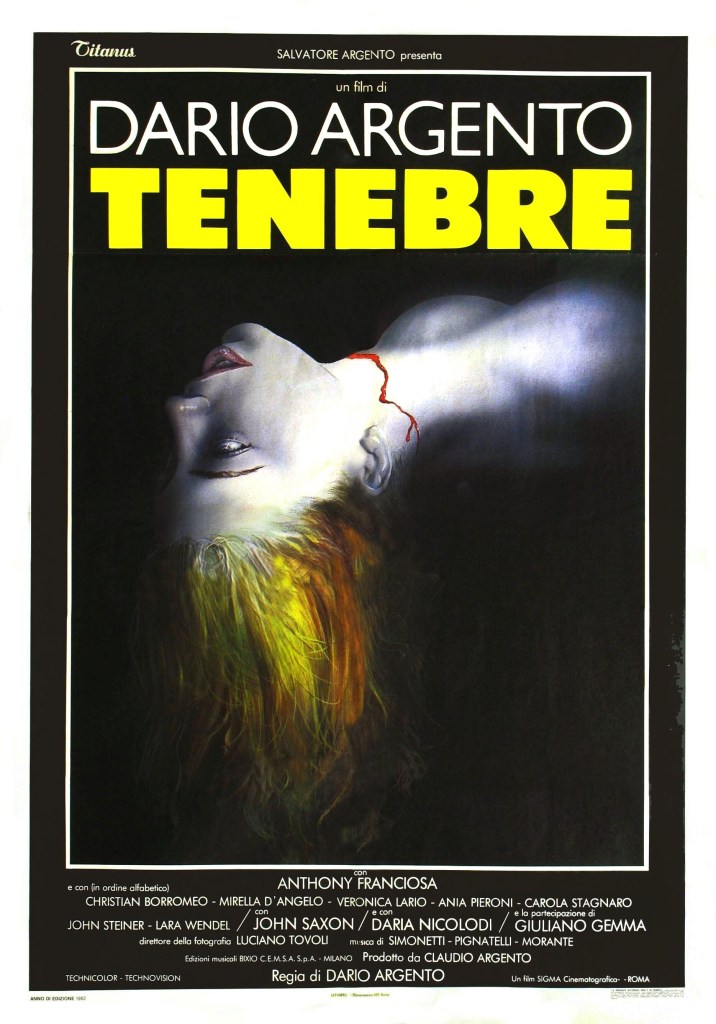
Tenebre (1982)

Directed by Dario Argento [Other horror films: L’uccello dalle piume di cristallo (1970), Il gatto a nove code (1971), 4 mosche di velluto grigio (1971), Profondo rosso (1975), Suspiria (1977), Inferno (1980), Phenomena (1985), Opera (1987), Due occhi diabolici (1990, segment ‘The Black Cat’), Trauma (1993), La sindrome di Stendhal (1996), Il fantasma dell’opera (1998), Non ho sonno (2001), Il cartaio (2003), Ti piace Hitchcock? (2005), La terza madre (2007), Giallo (2009), Dracula 3D (2012), Occhiali neri (2022)]

Dario Argento is a director that I’ve long appreciated, and while Tenebre isn’t the most famous work of his I’ve not seen up to this point (Phenomena is still a film I’ve not taken the time to witness yet), it is one of his bigger ones. Finally seeing it, I enjoyed quite a bit about it, but I also don’t think it’s quite up there with the big boys.

And by “big boys,” I primarily mean Deep Red, which is not only my favorite Argento movie, but among one of the 24 or so horror films I rate a 10/10. Tenebre isn’t that good – I feel the ending, while pretty solid, could have done with a bit more explanation, and I’d have liked to see a bit more information given on some of the characters – but it’s still a perfectly solid film.

I’ll say this much – I never guessed the killer. That took me completely by surprise. Maybe it shouldn’t have, but the fact that I can watch gialli and still be taken for a ride just shows how much I love this subgenre of horror, and Tenebre is a good giallo.

Anthony Franciosa (Curse of the Black Widow, Death House, and Julie Darling) isn’t a name I recognize, but he played a pretty strong lead, bolstered by quality performances from Giuliano Gemma and Daria Nicolodi (Phenomena, Le foto di Gioia, Schock, Paganini Horror). I was expecting a bit more from Christian Borromeo’s (La casa sperduta nel parco and Estigma) character, and Veronica Lario’s character didn’t quite connect to me, but whateves. Other good performances include John Saxon (A Nightmare on Elm Street, Black Christmas, etc.), Carola Stagnaro (Minaccia d’amore), Mirella D’Angelo (Maya), and Lara Wendel (Killing Birds: Raptors, I frati rossi, La casa 3).

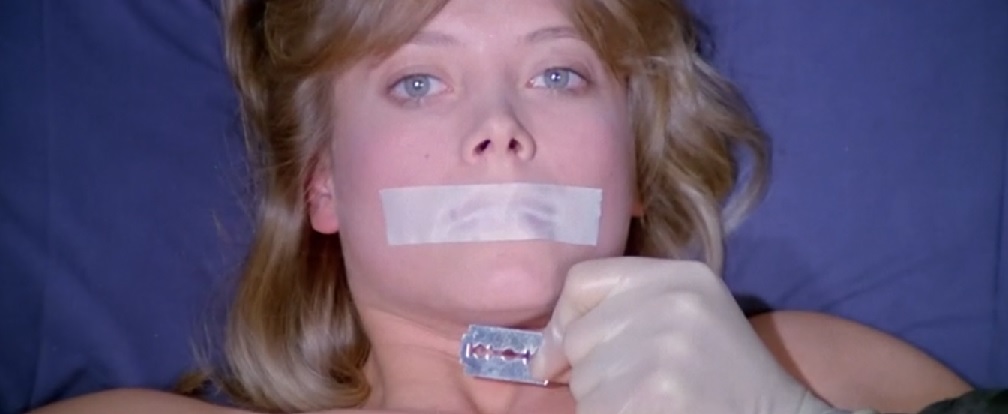
Of course, the kills here were pretty good. Someone’s arm got chopped off, which caused quite the blood spray, which I found amusing at the time. Murders by straight razor and ax were the flavors of the day, and even attacks by terrifying dogs. Perhaps one of my favorites deaths, though, is one done in a public square – a quick stab to the gut. Reminded me of a kill in The Case of the Bloody Iris, and if something reminded me of that one, then that’s a point to the film’s favor.

Even so, as good as the kills were, as fun as the mystery was, and as bitching as the soundtrack was (apparently recorded by three of the four members of the then-disbanded Goblin), I still felt like something more could have been tacked on. I especially was hoping for more from Lario’s character. Part of the reason I love Deep Red is that if you pay attention during the beginning, you get an important clue. Here, I don’t know if there’s anything comparable. I’m not saying the finale comes out of nowhere, but I can’t imagine too many accurately guessed the answer to this one, so in that way, it’s a bit of a let-down.

Tenebre is still a great movie. I don’t think it’s Argento’s best, but I did enjoy a lot about it, and during future viewings, I’m wondering if more will click into place. As for now, it’s definitely above average, but I don’t think it’s quite as good as many others may think.

8/10

Perché quelle strane gocce di sangue sul corpo di Jennifer? (1972)

Directed by Giuliano Carnimeo [Other horror films: Quella villa in fondo al parco (1988)]

Commonly known under the title The Case of the Bloody Iris, and perhaps sometimes known as What Are Those Strange Drops of Blood Doing on Jennifer’s Body?, this giallo is a great example of why I love the subgenre. There’s a fun story here with a lot of suspects and decent kills, and so Perché quelle strane gocce di sangue sul corpo di Jennifer? is a giallo done right.

It’s the mystery of the story that always drew me to gialli. I love slashers in which there are multiple reasonable suspects for who the killer is, but of course, not all slashers have that bent (such as The Slumber Party Massacre, Halloween, and Final Exam). Gialli, though, pretty much has to possess that element, and while it’s not always done well, when a giallo has all the pieces come together, it’s a damn good time.

Here, for instance, there’s no dearth of potential killers. When a young woman moves into an apartment building and multiple people around her start getting killed, sure, it could be the possibly gay photographer (Oreste Lionello), or maybe the mysterious man living in the nearby apartment, or the architect of the building (George Hilton) or the old professor (George Rigaud), or perhaps his lesbian daughter (Annabella Incontrera)? Oh, and let’s not forget the main character’s husband (Ben Carra), who is obsessed with getting her back.

The Case of the Bloody Iris has a pretty good mystery, and I was going back-and-forth on who I thought the killer might be (one of my guesses, though, was indeed correct), and when there’s not a clear-cut answer, I just love it. Come the finale, everything is pieced together nicely, red herrings are dealt with in reasonable and realistic manners, and everything just works.

Plenty of the performances here were great. There’s the lead, Edwige Fenech (from many Italian classics, such as Five Dolls for An August Moon, The Strange Vice of Mrs. Wardh, All the Colors of the Dark, Your Vice Is a Locked Room and Only I Have the Key, and Strip Nude for Your Killer), who did a very good job playing a character who feels as though she’s in constant danger. George Hilton (The Strange Vice of Mrs. Wardh, The Case of the Scorpion’s Tail, All the Colors of the Dark, and The Killer Must Kill Again) didn’t have a ton of personality, but made for a good suspect.

I loved Giampiero Albertini as the police commissioner, and his stamp-collecting antics, not to mention his conversations with subordinate Franco Agostini were of good quality. Paola Quattrini played a hilarious roommate of Fenech’s, and all her scenes were golden. Annabella Incontrera (So Sweet, So Dead and The Crimes of the Black Cat) was amusing as an overly seductive lesbian neighbor, and like Quattrini’s character, I enjoyed her everytime she was on screen. Ben Carra, Carla Brait (Torso), George Rigaud (Horror Express and Love Brides of the Blood Mummy), Maria Tedeschi, and Oreste Lionello (4 Flies on Grey Velvet) all gave the film some good extra flavor.

There are only a few what I’d call stand-out kills, and one of them was pretty mild, being a steam pipe being turned on as someone was walking by, and this caused some awful burn damage (and death). One of the better kills, though, was a quick stab to the stomach in broad daylight, and also in a crowd. Just filmed in a quality manner (with the killer’s POV), and I dug it.

I also dug the simple design of the killer, the typical black-masked look, complete with a hat, trench coat, and gloves. Even when the killer just popped up in the main character’s apartment without harming her, it was pretty creepy, so kudos there.

Admittedly, it did take The Case of the Bloody Iris about 15 minutes to really start making an impact, but once it did, and I felt more engagement, I found this giallo quite a rewarding experience, and would definitely recommend it, especially for that killer finale. #LovedIt.

8.5/10

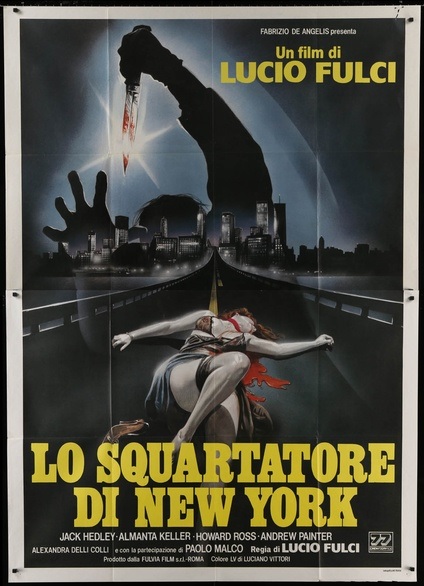
Lo squartatore di New York (1982)

Directed by Lucio Fulci [Other horror films: Una lucertola con la pelle di donna (1971), Non si sevizia un paperino (1972), Il cav. Costante Nicosia demoniaco, ovvero: Dracula in Brianza (1975), Sette note in nero (1977), Zombi 2 (1979), Paura nella città dei morti viventi (1980), Gatto nero (1981), …E tu vivrai nel terrore! L’aldilà (1981), Quella villa accanto al cimitero (1981), Manhattan Baby (1982), Murderock – Uccide a passo di danza (1984), Aenigma (1987), Zombi 3 (1988), Il fantasma di Sodoma (1988), Quando Alice ruppe lo specchio (1988), La casa nel tempo (1989), La dolce casa degli orrori (1989), Un gatto nel cervello (1990), Demonia (1990), Hansel e Gretel (1990), Voci dal profondo (1991), Le porte del silenzio (1992)]

When it comes to Lucio Fulci’s work, I’ve seen a fair amount of his better-known output. The New York Ripper, or it’s funner original title, Lo squartatore di New York, is one that I just hadn’t gotten to before. Finally taking the time to watch it, I can say I had a great time with it.

It’s a sleazy, grimy movie, with a lot of sexual situations and violence. It’s not playing for laughs (unless you, like me, cracked up during the shrieks of quacking the killer let out), and it can sometimes feel a bit bleak and occasionally almost aimless. In other words, it’s gritty fun.

Not that there’s not a story, because I actually think this has a decent plot, but it’s hard to pin-point a main character (characters played by Jack Hedley and Almanta Suska fit the bill), and there are some random side-steps (such as dealing with a woman named Jane who gets into more than a few sexual situations) that just give an interesting flow to the movie.

Most of the main performances here were decent. It’s true that some, such as Almanta Suska, Howard Ross (Five Dolls for an August Moon), and Jack Hedley (Witchcraft), failed to make a big impression on me, but I did like both Paolo Malco (The House by the Cemetery and You’ll Die at Midnight) and Andrea Occhipinti (who starred in A Blade in the Dark the following year). Occhipinti doesn’t peak until later on in the movie, but Malco, whose character we never really get too much information on, is fun as a straight-laced psychologist with fun magazine habits.

Being a Lucio Fulci film, what many may find of paramount importance is the gore, and I have to say I did love the kills in this film. You had a broken bottle stab an unfortunate woman’s vagina. And that wasn’t even the most violent scene, as we also see someone’s nipple get cut in half (in a close-up), along with someone’s eye and eye-socket come in contact with a razer-blade. This movie wasn’t playing around, and I dug the gore throughout.

Among the work of Fulci I’ve seen, I do think I enjoyed this a bit more than Zombi 2, if only because I enjoy slashers on average more than zombie movies. It’s been so long since I’ve seen The Beyond and City of the Living Dead, I can’t accurately rate either one, but I can say that with as much fun as I had with The New York Ripper, I think Don’t Torture a Duckling is still better (and for those wondering where The House By the Cemetary fits in, well, it’s not among his higher-caliber works).

I’ve wanted to see The New York Ripper for a long time, and having finally done so, I found it quite a gritty and gory film. It’s not Fulci’s best, but it is a pretty solid time, and I’d definitely recommend it to horror fans of all stripes.

8/10