The Dinner Party (2020)

Directed by Miles Doleac [Other horror films: Demons (2017), Hallowed Ground (2019), Demigod (2021)]

I had some qualms going into this one, among them, I admit, the two-hour run-time, but based on what little I knew (and more so, what I anticipated), I thought The Dinner Party could pull out a victory.

That is not what happened whatsoever.

For most part, I found large portions of the movie tediously pretentious. Certainly that may have far more to do with the characters within the film than the style of movie-making in of itself, but regardless, I haven’t seen a film with conversations as pretentious as this possibly ever.

And if you’re wondering what I mean, the set-up is such where a couple is invited to a dinner party with a group of wealthy elitists, who proceed to discuss, with passion, their favorite plays and operas, doling out plots and names that would make most working men cringe. Obviously, these people can enjoy whatever entertainment they desire, but listening to debates over operas felt entirely disengaging, especially as it’s not just a couple of minutes, but goes on for close to forty, and takes up a large part of the beginning.

Among conversations of Puccini’s Tosca (Sebastian’s second-favorite opera) and Verdi’s Rigoletto (apparently a play about the fickleness of women), we also get a rather lengthy (eight minutes total) tarot game in order to decide who gets to pick music. It’s not nearly as fun as it might sound (personally, it doesn’t sound fun to me at all, but different strokes for different folks, I guess), and just adds to the tedious nature of the first half. A five minute conversation about Bluebeard and his wives was okay, and I guess learning about Alban Berg’s Wozzeck was educational, but this type of conversation taking large chunks of time, again, made the film so tedious.

Unfortunately, the second half is little better, though certainly the quota of action is upped, which does prevent the movie from being, as the kids call it, a total borefest. The violence and related special effects aren’t bad – in fact, while lower-budget in some ways, the movie generally looks nice – but the story just doesn’t work. These elitists keep one of the couple alive and proceed to torture them psychologically, which doesn’t really go anywhere, and just becomes generic in it’s approach. There was an okay decapitation, though.

Sure, the movie tries to throw in a surprise or two near the end, much of it regarding Lindsay Anne Williams’ character, but it didn’t really make any impression on me because by the time she goes into her origin, I was probably too far gone to care. Also, I hated the ending, but I guess this movie has consistency in how much I just didn’t give a damn about it. Also, if that cop surprised anyone, I’ll eat sneakers up in this bitch.

I wasn’t really happy with anyone in the cast, but that really has more to do with the pretentious characters they play as opposed to their performances in and of themselves. I guess that Alli Hart does okay as the lead, and certainly both Bill Sage and Miles Doleac have some charm. Sawandi Wilson is just another pretentious douchebag. Mike Mayhall’s controlling character was pretty hateable, so I guess Mayhall did well. Lindsay Anne Williams was eh, and Kamille McCuin, while naked her first time on-screen, didn’t do much for me either.

The story wasn’t without potential – I even liked the small, interspersing scenes of Haley’s background scattered throughout the film, and the second half of the film definitely could have been something worth something, but The Dinner Party didn’t go that route. I mean, I guess the title wasn’t lying – we do get lengthy scenes of a dinner party, so kudos there?

If you like pretentious dinner parties, this movie may be for you. If you want a horror movie of quality, though, while this certainly had decent production value, I’d recommend you perhaps look elsewhere.

4/10

This is one of the films covered by Fight Evil’s podcast. If you want to hear Chucky (@ChuckyFE) and I tackle this pretentious piece of trash, listen below.

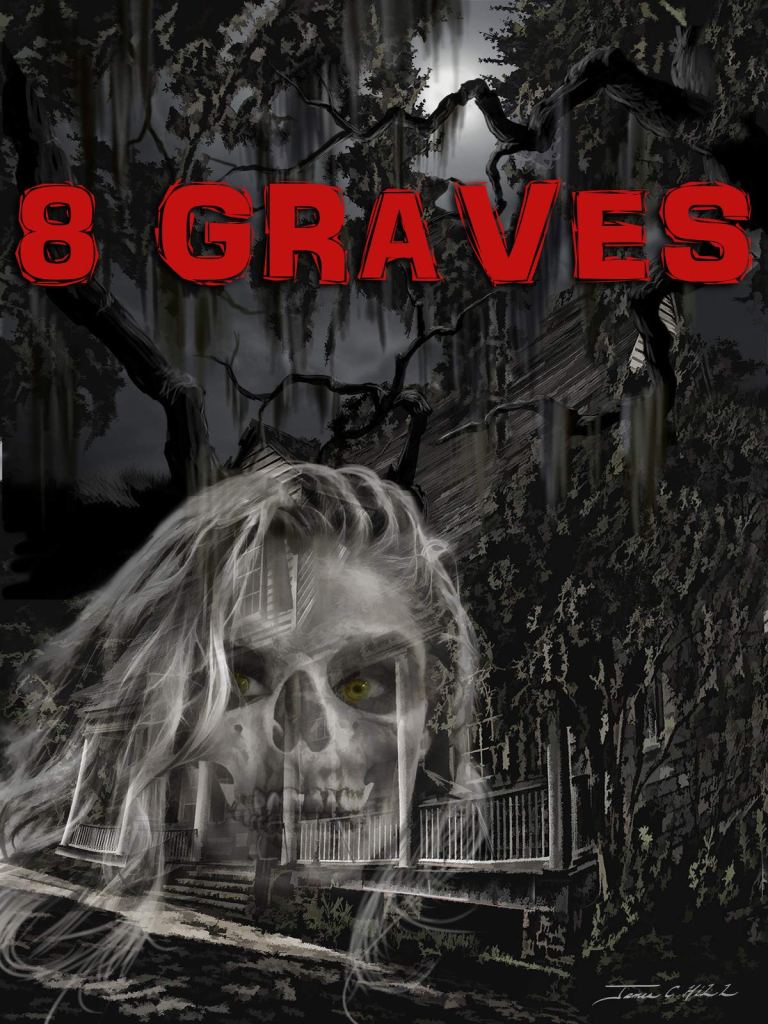
8 Graves (2020)

Directed by Gus Smythe [Other horror films: N/A]

Filmed in South Carolina, 8 Graves is a film that I wished I could have enjoyed more, as I do think the base story had promise (it wasn’t the most original, but hey, there was some potential), but due to the conclusion and somewhat weak special effects, I don’t think it’d be an easy one to recommend.

What really gives this film more life than it otherwise might have had is the strong central cast. While arguably Jessica Slaughter and Valarie Kobrovsky are more generic fare, the other four central women were quite solid. Perhaps my favorites were Judit Fekete and Sims Holland (who didn’t seem to be credited on the copy of the film I saw, but is listed on IMDb), who were solid individually, but also shared a decent and realistic bond toward the end.

I was sort of expecting a little more from Jennifer Olympia Bentley’s character, especially given her somewhat contentious relationship with Andrea Catangay’s character, but we never really got that much focus on Bentley (though what we did get made her a more personable individual). As for Catangay, she was sometimes zany, sometimes bitchy, and one of the more memorable performances of the film. Lastly, John R. Brennan did decently with his short screen-time as a rather scummy character.

Holding back 8 Graves, though, would be the lackluster special effects. Sometimes they do okay – look at the aftermath of the fan scene – but the ghosts here generally look somewhat iffy, whether it be the pool sequence or a car being crushed by spirit power (I really thought that was overkill – the character was suffocating anyways, so having the car be crushed seemed unnecessary).

I also have to admit that the conclusion seemed a bit janky. I don’t have a problem with the two spirits having a score to settle with each other (that is, until they don’t and start working together just as soon as the last surviving characters make a run for it), but one of the spirits wanting the baby just seems ehh, which definitely isn’t helped by the somewhat silly ending. It should almost be mentioned that, at times, the audience gets the point-of-view of the ghosts, which means a lot of shaky camerawork, and I just personally don’t know how much that added to the suspense.

As often happens with newer films (and it seems that, on a side-note, this has been in production for some time, as it’s Facebook page was created back in 2009), I didn’t know what I was getting into with this one, and I did enjoy some elements (such as the beautiful South Carolina setting and many of the actresses involved), but overall, I found it a bit more lacking than what I was hoping for.

5.5/10

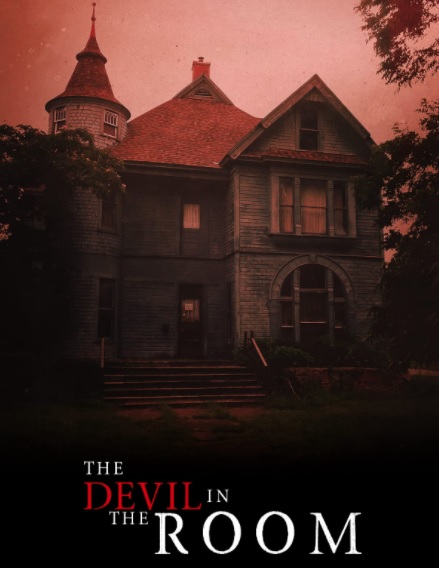
The Devil in the Room (2020)

Directed by Sami Cunningham [Other horror films: The Haunting of the Suicide House (2019)] & Brendan Rudnicki [Other horror films: The Unseen (2017), The Whitlow House (2018), The Abducted (2018), The Haunting of the Suicide House (2019), Into the Forest (2019), The Haunting of the Morgan Estate (2020), The Girl in Cabin 13: A Psychological Horror (2021), The Haunting of the Murder House (2022)]

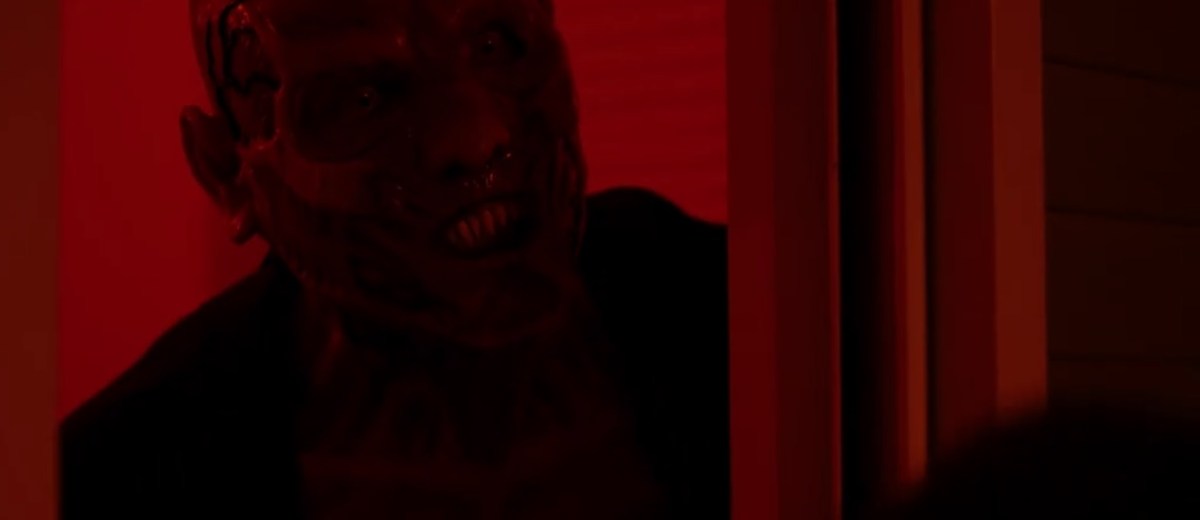
Clocking in at just over an hour, The Devil in the Room doesn’t appear to have much going for it, on the surface. I think it does well with what it has, though, and ends up, if not a particularly memorable film, certainly a palatable one.

To me, the film seemed somewhat influenced by Insidious, which was a film I didn’t enjoy that much, but as this one is both shorter and a bit more focused, I think it went over better for me. The demon/devil thing was a bit shoddy-looking, but the vibe was appreciated, and it helped that the film dealt with grief in a pretty solid way.

Look, none of the performances were necessarily great, but for a lower-budget film, I do think that Skye Coyne did a good job as a woman who recently lost her sister to suicide. She had plenty of emotional material to deal with (and when just how guilty she feels she is comes fully to light, you can’t help but feel bad for her). Bryan Jager was a little shaky at first, and I don’t think his character got a great conclusion, but I ended up enjoying him, and Isaac Gonzalez Rossi did as well as I think his character could have allowed.

I will admit that toward the end, while I liked the excursion into the dream world (which felt like a low-rent version of Insidious’ The Further), the way that Coyne’s character confronts her demons isn’t too dissimilar from the conclusion to A Nightmare on Elm Street, which didn’t necessarily hurt the film, but it did make the ending to this one a little unsatisfying.

More than anything, though, I feel like I need to defend this. As of this writing, the movie has a 3.0/10 on IMDb (courtesy of 70 votes total), and this movie is definitely not deserving of that. It’s not a great movie, but given the limited budget, I thought they did a great job dealing with the emotional aspects of the story, and the jump scares, while rarely really effective, were still palatable in their usage.

The Devil in the Room isn’t likely to win any award, but for a lower-budget film, I definitely found it decent and, at only an hour, it’s not asking that much of the viewer, so if it sounds like it might be your thing, give it a try.

7/10

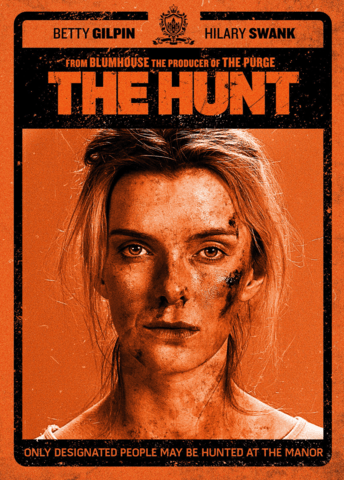
The Hunt (2020)

Directed by Craig Zobel [Other horror films: N/A]

I knew very little about The Hunt aside from the fact I heard it was political, and being a political creature myself (I’ll get my hot take out of the way: look into third parties, as it’s the only thing that can save us), that didn’t turn me off at all, and while the base idea of this film isn’t original, I did find it quite a decent film with a decent amount of strong points throughout.

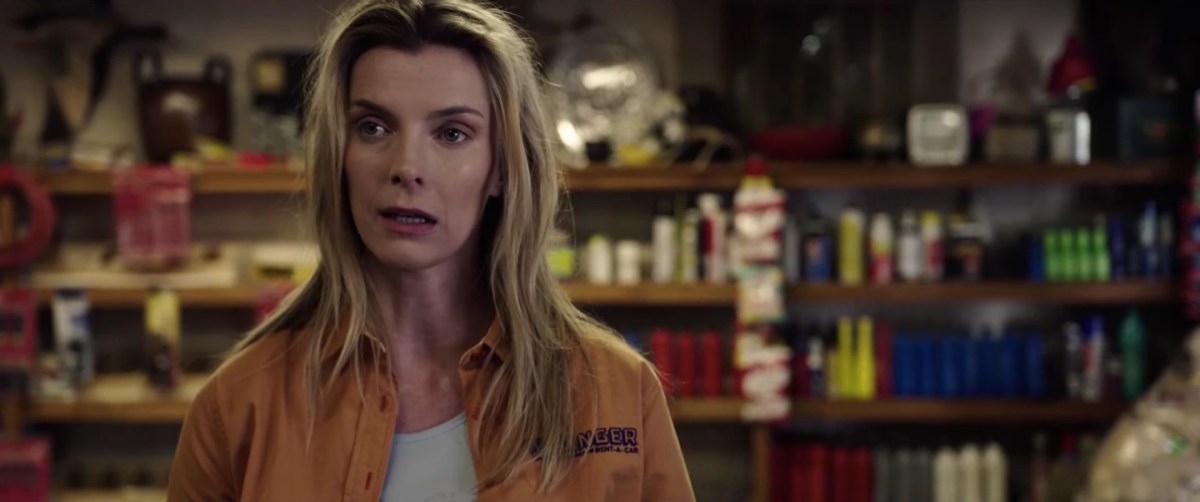
The way there was no clear-cut main character until about 25 minutes into the film was sort of amusing. At first, it looks like Emma Roberts (We’re the Millers) would be the lead, but wait, no, it’s Justin Hartley (which I would have been okay with, as he seemed a decent guy). Then misfortune befalls him, and Ike Barinholtz seems to take the main stage. And finally, we get to Betty Gilpin, and she makes a pretty good lead. I thought rotating through the characters until we got to the actual lead was a fun idea, but it does lead to one issue I had.

There’s a lot of characters in this movie. About 12 are the “hunted” ones, and somewhere around seven, if not more, are the ones doing the hunting, and we only really get to know five of these characters overall, and that might be stretching it. I would have liked to know more about some of the hunters than just Athena (Hilary Swank), so that did sort of bother me.

Gilpin does a really good job with her role, and of course Swank (who I know from some random stuff, such as The Next Karate Kid and Freedom Writers) was nice to see here. Hannah Alline, who appeared in two scenes, consistently reminded me of someone (and it just now hit me – it’s Deborah Ann Woll, or Karen from Daredevil), which is probably why she stood out to me, and Amy Madigan (who I recognized from two episodes from Criminal Minds’ second season) was fun in the short time she had. Lastly, while Wayne Duvall’s character remains a bit of a mystery, Duvall was still decent with what we had.

Some comedic influences appear throughout the film, and I think they’re mostly well-done (such as the lengthy fight at the conclusion and Swank’s aversion to being thrown through a glass door), with a good mix between amusing and suspenseful. There’s also a little flashback near the conclusion that fills the audience in a little more on what’s actually going on, which I appreciated (though I wish it could have been longer).

I guess I’ll also say that, while I am a far-leftist (and while I despise Trump, I also despise Obama and Biden), I don’t hate conservatives as some liberals may. I work with many conservatives (in northeast Indiana, there’s not a lot of political diversity), and I understand why many of them supported Trump and why they vote the way they do. The political division is no doubt terrible right now – Republicans hate Democrats, Democrats want Republicans thrown into jail for treason – and this movie parodies that beautifully, which is probably why it has been deemed somewhat controversial (though I really don’t think much of the actual content warrants that label).

Hunting humans isn’t an original idea. The Most Dangerous Game from 1932 dealt with the idea, as did Bloodlust! (1961), Turkey Shoot (1982), and Naked Fear (2007), not to mention plenty of others that I don’t know but am sure exist. The Hunt adds a little political spin on it (technically, Turkey Shoot had a political spin also, but this spin is more accessible to a modern-day audience) and has some clever moments (such as obfuscating the main character and the flashback near the end).

While not overly gory, there are deaths by spike pit and grenades (you have to remember to pull the pin, though), so if that’s your go-to desire, there’s a bit here to keep you happy. The Hunt isn’t really that special of a movie, but I did think it was decently fun, and likely a smidge above average.

7.5/10

Camp Twilight (2020)

Directed by Brandon Amelotte [Other horror films: N/A]

Watching this via digital screener prior to it’s release was nice (I do a podcast with a friend on Fight-Evil, and we reviewed it there), and Camp Twilight does have some quality names and a decent level of production behind it, but when all of the gloss is rubbed away, it’s just another slasher with a lack-luster killer and kills that aren’t that memorable.

Felissa Rose (Sleepaway Camp) is nice to see here, and though her character is way too upbeat at times, it reminds me of her role in Sleepaway Camp II, and I can’t complain about that. Steven Chase was decent as one of the few really competent adults there. Tracy Lear was pretty awful, but I think that was sort of the point, and more than anything else, I think she was just there because people wanted a well-endowed woman around.

As for the six younger characters, most everyone did fine. I think the best performance came from Hayleigh Hopkins, and I wish that we had seen more of her than we did. Certainly Dondre Tuck (who was one of the few actual decent guys here) and Harris Sebastian were great too, as I hated Sebastian’s character with a passion, and it takes a decent performance to do that. I thought Cougar MacDowall was reasonably scummy, and both Brooklyn Haley and Angela Gluchowski add something special too.

The thing is, as decent as most of the cast is in Camp Twilight, the story itself is generally played out. I like seeing a mysterious killer going around and killing kids as much as the next man, but few of the kills here were really worth it (there was a solid ax-throwing kill, but even that seemed tame to me), and the little twists they threw in didn’t spice things up enough (and in fact, I thought one of the twists was both unnecessary and really irrelevant to the story). Also, the last 15 minutes was a cliché “This is why I committed these murders” speech to the last survivors, which also felt sorta ridiculous.

What you have with Camp Twilight is what you have with a lot of modern-day slasher films, being a competently-made movie with pretty solid production value, some attractive women, and an okay (but played out) story. Even the ending they tacked on struck me as pointless. It’s a fine movie to rent, but I don’t think it’s going to be a new-age classic despite some of the names involved.

6/10

This is one of the films covered on Fight Evil’s podcast. If you’re curious as to what Chucky (@ChuckyFE) and I thought about this one, listen below.

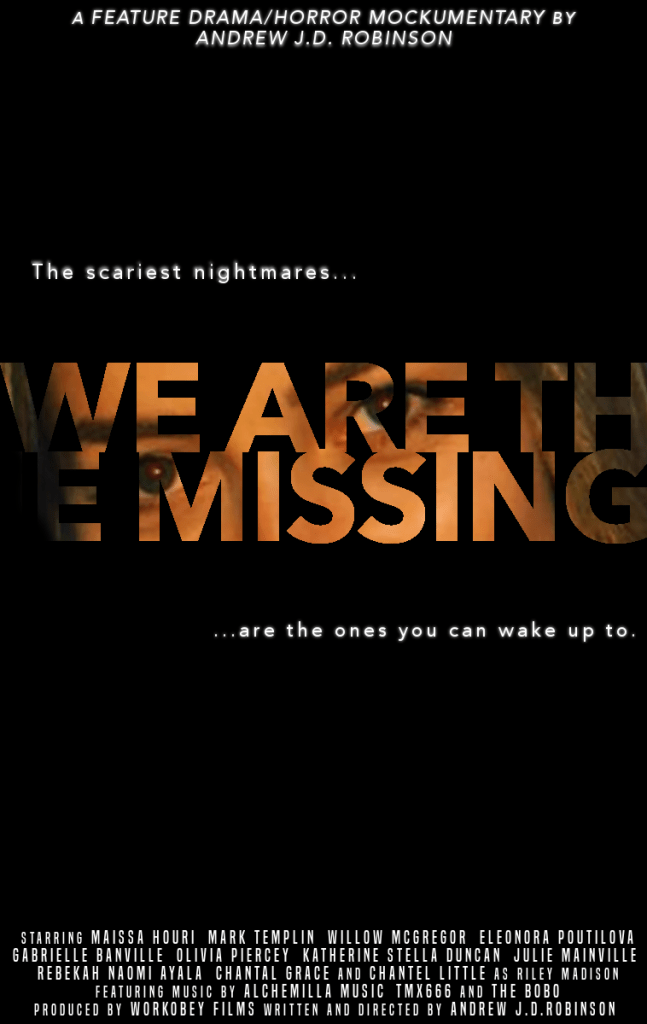
We Are the Missing (2020)

Directed by Andrew J.D. Robinson [Other horror films: The Monster Pool (2015, segment ‘One Giant Lepus’)]

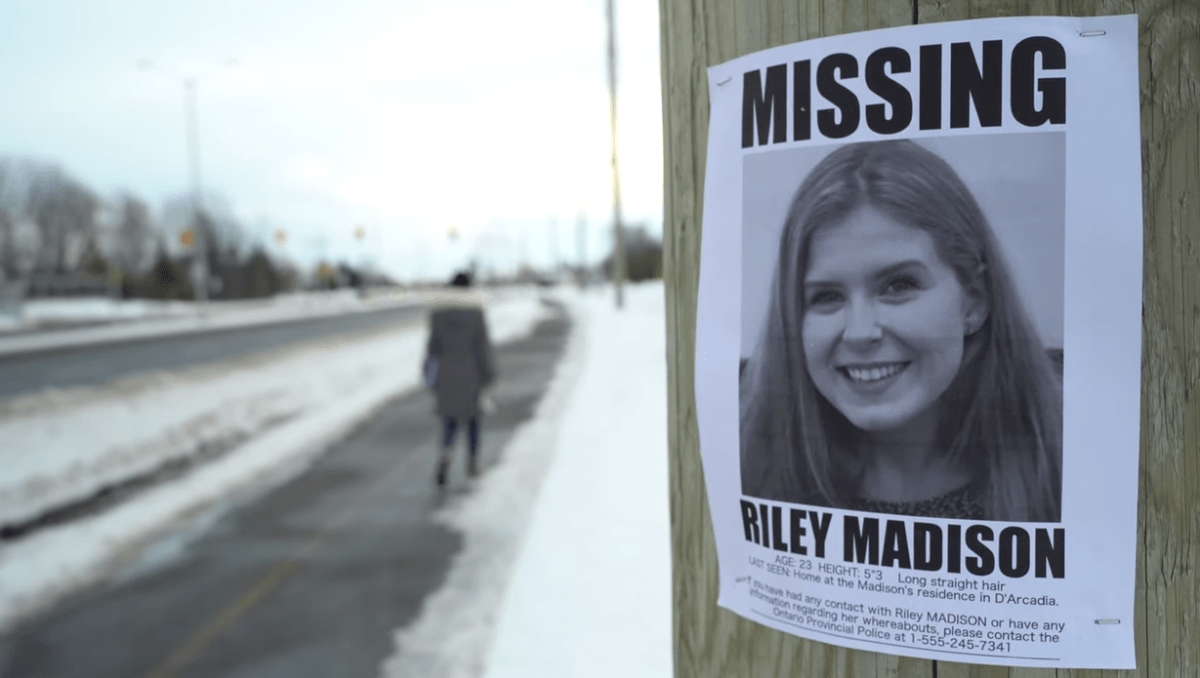
In the vein of such films like The Poughkeepsie Tapes, Lake Mungo, and Hell House LLC, We Are the Missing is a fake documentary focusing on a young woman who went missing, and the impact it has on her community. Well, at first, anyway – the scope is pulled back a bit around 40 minutes in, but suffice it to say that this movie is well-made, though may not entirely be that memorable.

The documentary feel was pretty authentic throughout. At times, it felt like I was watching a lower-budget version of Searching (2018), and the acting here was generally pretty decent, and probably more stable than what we got from The Poughkeepsie Tapes. Some portions were maybe a bit problematic (an almost four-minute montage of police calls about an hour into the movie, for example), but overall, this felt as authentic as expected.

There are two issues that really sort of irked me, I have to admit. This first one may be a bit nitpicky, but then again, no one ever accused me of not picking apart movies, so there you go.

Firstly, the time-frame is somewhat confusing, at least to me. This is evidenced by a goof near the ending of the film. I won’t belabor the point, as I did mention this to Andrew Robinson, the director, who did admit that it was a mistake. Even so, it was something I noticed, and something I thought I should point out. At this juncture, I also want to make clear that I watched this movie upon request, which I am always happy to do should anyone out there be interested.

To move away from my shameless self-promotion, though there’s another thing that stood out – during the montage of police calls, multiple people state that “no one believes them” about their experiences with what seem to be ghosts. If this thing is going on all over the city, though, even a large city (and another individual even said that people quit coming to work or leaving their houses because of it), I find it hard to take in that “no one” believed so many of these people.

Even if it’s a big city, if a 5% chunk of people are reporting these experiences (and it does indeed seem wide-spread), and if people are actively staying home and avoiding work, then I would think only a minority of individuals would still remain skeptical. It ties into someone said at the end, about how this tragedy pulled people together – as far as I could tell, most people suffered through this alone.

If I was in a city which was going through mass disappearances and unexplained experiences, I would be around as many people every day and night as possible as opposed to locking myself up alone in my house. I would throw a block party (which the local authorities would be inclined to approve, as safety would likely been seen as more likely in large numbers). What I wouldn’t do is stay in my small apartment alone and make videos. I’d want to be with people, and if this city is a bigger city (and it certainly looks it), that shouldn’t at all be a problem to organize.

Also, the lack of national media presence, at least referenced national media presence, seemed odd. If half a hundred people disappeared over such a short time-span, then I’d expect the area to be crawling with media outlets of all types, but that doesn’t really seem evidenced in what we see.

Here’s the main question, though – do any of these issues really harm the movie? Mostly, not so much. Sure, I do think the way these people react to this incident (bolting themselves inside as opposed to saying in large groups) is unwise, but large groups of people do unwise things all the time (just look at presidential elections in the USA). None of this takes away from both the subtly disturbing atmosphere and the authentic feel of the film, which I think are some of We Are the Missing’s highlights.

I can’t say that this movie will have a high amount of rewatchability (though some, for sure, may exist), which is a bit of an issue. Look at Hell House, LLC – that movie, you could watch as many as three times and notice new things each time. This film has a different focus, of course, and one more worldly (missing people as opposed to Halloween haunted houses), but even so, if there’s not much bringing people back for a second watch, it’s hard to call it a great movie.

This is a good movie, though. Obviously we’re not left with an actual answer here, which is to only be expected, and it leaves the viewer with the potential thought that this may easily happen again in a new city at a new time. The atmosphere and authenticity work well to this end.

Prior to giving this my final rating, I did want to give some props to my two favorite performances, being Mark Templin (Riley’s father) and Willow Mcgregor (Mackenzie). Good performances in a movie like this are of paramount import, so I’m glad that these two especially were here.

I don’t think anyone would honestly claim that We Are the Missing is breaking any new boundaries, but it is a competently made film in this style, and while overall I found the film around average, I do think that there’s a lot of potential here. Give it a watch (it’s free on YouTube, so why not?) and see how it goes, though, because the authenticity here alone is worth the watch.

7/10