Bluebeard (1944)

Directed by Edgar G. Ulmer [Other horror films: The Black Cat (1934), The Man from Planet X (1951), Daughter of Dr. Jekyll (1957), The Amazing Transparent Man (1960)]

Having seen this one about three times now, I have to admit that it’s never done much for me. The story is fine, and John Carradine does particularly well in it, but overall, Bluebeard just doesn’t impress me.

Generally, the plot’s perfectly enjoyable. I sort of like the brief side-step they took with the portrait subplot, which added a bit more meat to the film, and the conclusion’s pretty decent also. Carrdine’s presence here really brings life to the antagonist of the film, so that’s a plus.

Somewhat unfortunately, Carradine’s about the only performance here who really glowed. Jean Parker and Teala Loring were virtually indistinguishable to me, and Ludwig Stössel, while an interesting character, had a bit of an accent to him, and was hard, at times, to really decipher.

Which may not really be his fault, as the audio and visual quality of this film has somewhat faltered over the last eighty years. The most common print has pretty bad audio, and it’s not uncommon for some of the dialogue to be drowned out by background music. The black-and-white is a bit muddled, and while it’s not overly distracting, it is noticeable. Even if you can look past that, though, I’m not convinced that the film is all that enthralling.

Bluebeard is a story that’s been made multiple times within the genre, the earliest version, titled Barbe-bleue, is from 1901 (and, for a short from such an early period of cinematic history, it’s not that bad). Maybe that’s part of the issue – this movie, at 70 minutes, just feels too drawn out, and while some of the film is perfectly solid, after having seen it multiple times, it’s continually let me down.

If you see this for any reason, let it be for Carradine, who is fantastic, especially toward the end of the film. His character’s sanity toppling toward the end as he recounts the origins of his crimes was pretty spectacular, in a Poverty Row type of way.

This said, ultimately, Bluebeard isn’t one of those 40’s movies I’d go out of my way to recommend. It might be okay for a single viewing, but I don’t think multiple viewings will do much for you, no matter how fun Carradine is here. By no means a god-awful film, I do feel it’s below average, and pretty much always have.

6/10

We Are the Missing (2020)

Directed by Andrew J.D. Robinson [Other horror films: The Monster Pool (2015, segment ‘One Giant Lepus’)]

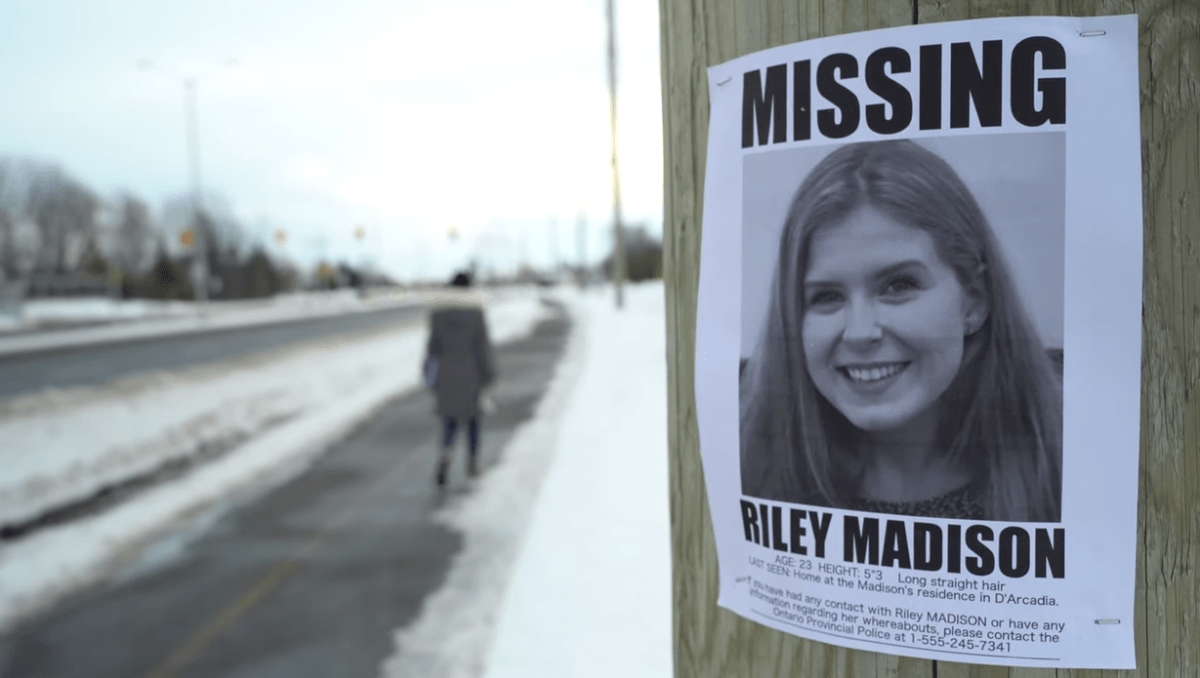
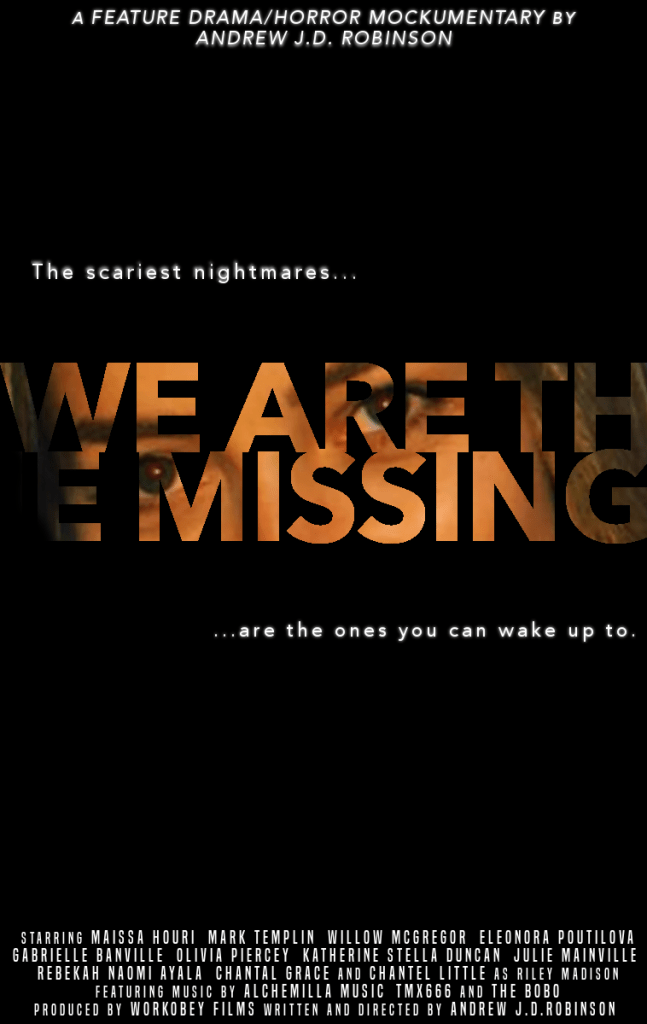
In the vein of such films like The Poughkeepsie Tapes, Lake Mungo, and Hell House LLC, We Are the Missing is a fake documentary focusing on a young woman who went missing, and the impact it has on her community. Well, at first, anyway – the scope is pulled back a bit around 40 minutes in, but suffice it to say that this movie is well-made, though may not entirely be that memorable.

The documentary feel was pretty authentic throughout. At times, it felt like I was watching a lower-budget version of Searching (2018), and the acting here was generally pretty decent, and probably more stable than what we got from The Poughkeepsie Tapes. Some portions were maybe a bit problematic (an almost four-minute montage of police calls about an hour into the movie, for example), but overall, this felt as authentic as expected.

There are two issues that really sort of irked me, I have to admit. This first one may be a bit nitpicky, but then again, no one ever accused me of not picking apart movies, so there you go.

Firstly, the time-frame is somewhat confusing, at least to me. This is evidenced by a goof near the ending of the film. I won’t belabor the point, as I did mention this to Andrew Robinson, the director, who did admit that it was a mistake. Even so, it was something I noticed, and something I thought I should point out. At this juncture, I also want to make clear that I watched this movie upon request, which I am always happy to do should anyone out there be interested.

To move away from my shameless self-promotion, though there’s another thing that stood out – during the montage of police calls, multiple people state that “no one believes them” about their experiences with what seem to be ghosts. If this thing is going on all over the city, though, even a large city (and another individual even said that people quit coming to work or leaving their houses because of it), I find it hard to take in that “no one” believed so many of these people.

Even if it’s a big city, if a 5% chunk of people are reporting these experiences (and it does indeed seem wide-spread), and if people are actively staying home and avoiding work, then I would think only a minority of individuals would still remain skeptical. It ties into someone said at the end, about how this tragedy pulled people together – as far as I could tell, most people suffered through this alone.

If I was in a city which was going through mass disappearances and unexplained experiences, I would be around as many people every day and night as possible as opposed to locking myself up alone in my house. I would throw a block party (which the local authorities would be inclined to approve, as safety would likely been seen as more likely in large numbers). What I wouldn’t do is stay in my small apartment alone and make videos. I’d want to be with people, and if this city is a bigger city (and it certainly looks it), that shouldn’t at all be a problem to organize.

Also, the lack of national media presence, at least referenced national media presence, seemed odd. If half a hundred people disappeared over such a short time-span, then I’d expect the area to be crawling with media outlets of all types, but that doesn’t really seem evidenced in what we see.

Here’s the main question, though – do any of these issues really harm the movie? Mostly, not so much. Sure, I do think the way these people react to this incident (bolting themselves inside as opposed to saying in large groups) is unwise, but large groups of people do unwise things all the time (just look at presidential elections in the USA). None of this takes away from both the subtly disturbing atmosphere and the authentic feel of the film, which I think are some of We Are the Missing’s highlights.

I can’t say that this movie will have a high amount of rewatchability (though some, for sure, may exist), which is a bit of an issue. Look at Hell House, LLC – that movie, you could watch as many as three times and notice new things each time. This film has a different focus, of course, and one more worldly (missing people as opposed to Halloween haunted houses), but even so, if there’s not much bringing people back for a second watch, it’s hard to call it a great movie.

This is a good movie, though. Obviously we’re not left with an actual answer here, which is to only be expected, and it leaves the viewer with the potential thought that this may easily happen again in a new city at a new time. The atmosphere and authenticity work well to this end.

Prior to giving this my final rating, I did want to give some props to my two favorite performances, being Mark Templin (Riley’s father) and Willow Mcgregor (Mackenzie). Good performances in a movie like this are of paramount import, so I’m glad that these two especially were here.

I don’t think anyone would honestly claim that We Are the Missing is breaking any new boundaries, but it is a competently made film in this style, and while overall I found the film around average, I do think that there’s a lot of potential here. Give it a watch (it’s free on YouTube, so why not?) and see how it goes, though, because the authenticity here alone is worth the watch.

7/10
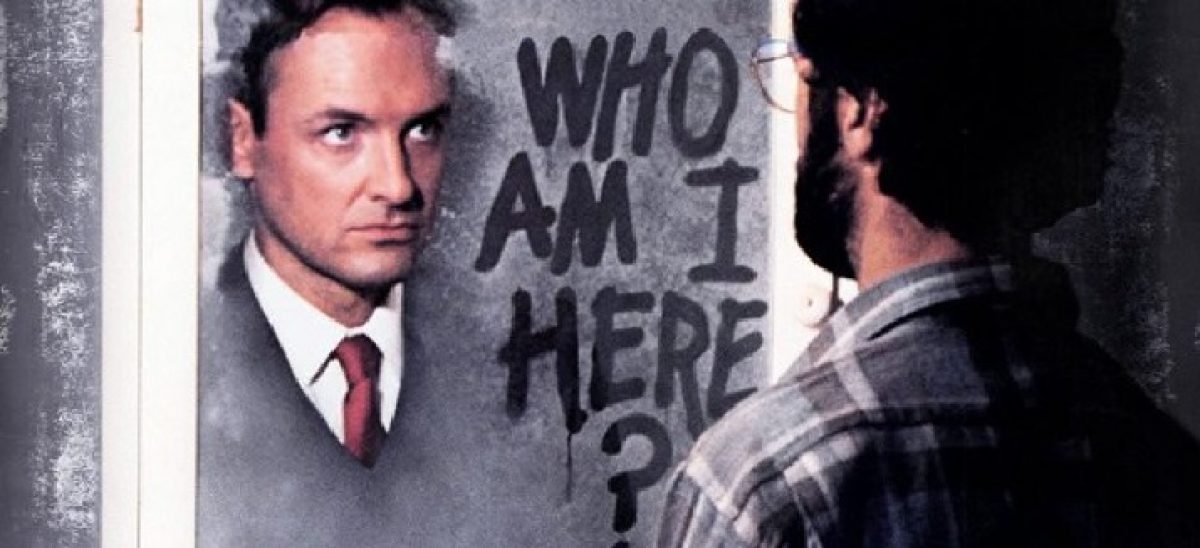
Ozone: The Attack of the Redneck Mutants (1986)

Directed by Matt Devlen [Other horror films: Tabloid (1989)]

This low-budget flick is not nearly as fun as the title would lead you to believe. In fact, it’s a pretty damn dry and boring film, and there’s very little here that’d be worth seeking it out for.

Does the movie occasionally boast some solid, low-budget gore? Sure, but it’s pretty sparse, and ultimately not really worth it. In the first half of the film, there was really only one scene worth watching (it was decently gory, luckily), but everything else was just utterly pointless filler (the highlight of which was an old woman chasing a chicken around her kitchen, cackling).

Let me let you all in on a secret: When the height of entertainment in the first half of a movie is an old woman chasing a chicken around a kitchen, cackling, you know that the film has problems.

The pitiful performances didn’t help much. Blue Thompson was the best of the bunch, which really, really isn’t saying anything. Scott Davis whined way too much, and Brad McCormick was just a ridiculous caricature of a hillbilly (though nothing so over-the-top as Redneck Zombies did, thank God).

Of course, nobody’s coming to this film because of the potentially solid acting – it’s for the low-fi gore. And I will admit, for a lower-budget film, the special effects and gore are decently effective. It’s nowhere near as good as Nathan Schiff, but it’s still decent. The problem is, save for the one aforementioned scene in the first half of the film, most of the movie just follows pretty uninteresting characters in extraordinarily dull ways.

We watch this farmer’s wife do some dishes and iron a few shirts as she looks to the window, where her husband’s outside giving water to their dog. We see an older woman knead some dough and chase a chicken. We see a wanna-be country singer (god, was her accent something else) get ready to go to her singing engagement (which takes place at the small general store). All of this is done without dialogue, and it’s more than a little boring.

Ozone: The Attack of the Redneck Mutants is nowhere near as fun as the title makes it sound. It was a painfully joyless experience, and the occasionally good gore (which including a tongue getting pulled out, an eyeball removed, and of course intestines being ripped from the stomach) doesn’t excuse this film’s unfortunately dry feel. Even if you are a gore-hound, there’s almost nothing about this one to recommend. It was just poor movie-making.

3.5/10

La corta notte delle bambole di vetro (1971)

Directed by Aldo Lado [Other horror films: Chi l’ha vista morire? (1972), L’ultimo treno della notte (1975), Il Notturno di Chopin (2013)]

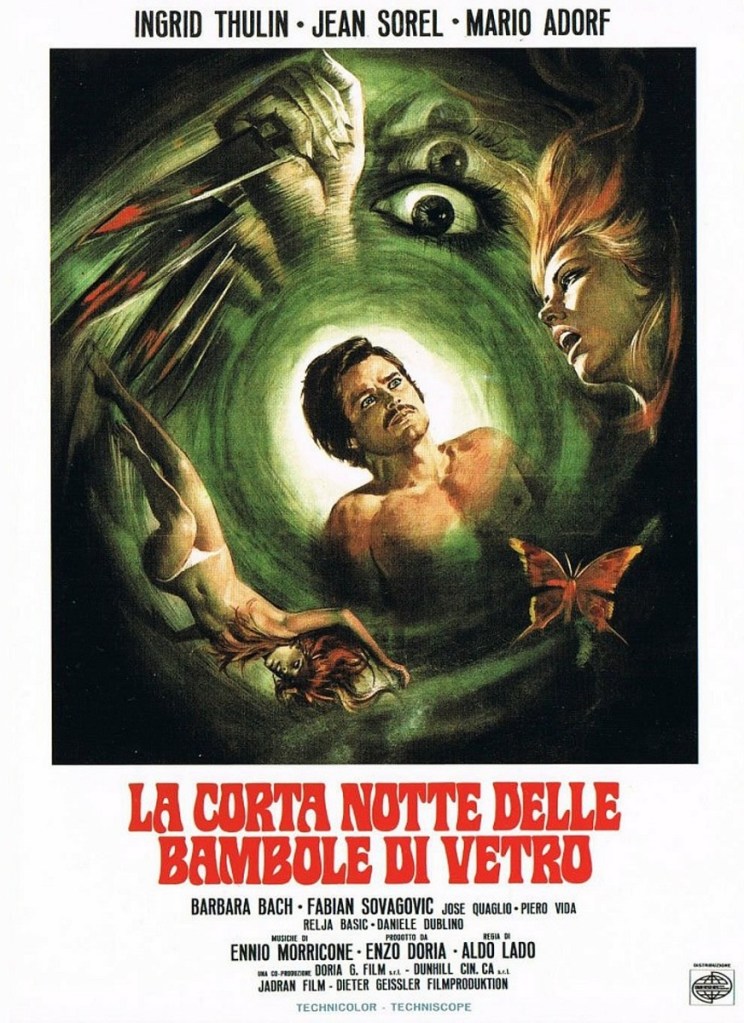
This Italian giallo, widely known as Short Night of Glass Dolls, was a decent film for much of the run-time, but toward the end, it sort of went into a somewhat incoherent mess.

The mystery here is pretty good, and enjoyable to watch unfold. A young woman disappears without a trace in Prague, and her lover, an American journalist, attempts to find her. It’s typical for a giallo, but that doesn’t make it any less fun. It’s made better by the setting, and more so, the time period, as this took place when then-Czechoslovakia was a Communist state behind the Iron Curtain.

Because of that, there is a bit of anti-USSR material strewn throughout the film, and even toward the conclusion, though I don’t think it’s terribly over-troubling. It does lead to a more oppressive feel, and much of the going-ons have a very conspiratorial feeling to them. Problematically, the conclusion doesn’t explain what’s going on nearly as well as I’d have liked, and honestly, I’m at a loss right now as to what actually happened, and why. It’s just not made clear, as far as I could tell.

Worth noting, most of the main story is told via flashback, and the present-day material, luckily, is decently engaging. Still, I don’t care much for the conclusion they had there, either, though it certainly possessed a somewhat bleaker feel than some audiences might be used to.

I’m not trying to harp too much on the movie, because much of it is really engrossing. It’s not until the final ten minutes or so that the movie, in my opinion, falls apart. It’s just rather noticeable because my enjoyment level went down so much as the ending unfolded, and I felt that given how good the film was before, it was rather unfortunate.

I liked much of the principal cast of this film. Jean Sorel took a little bit, but he grew on me as the film went on. Playing a friend of his, I thought that Mario Adorf did well with his more care-free, fun-loving character. Lastly, playing the woman who goes missing, Barbara Bach did well as a beautiful, semi-mysterious woman.

For a giallo, La corta notte delle bambole di vetro is extraordinarily tame. There’s little to no gore, and many of the staples you might expect from the subgenre, such as first-person view from the killer, or black gloves, are absent. The mystery is certainly here, and like I said, it’s done well, but this movie feels really toned down, and if you’re expecting a run-of-the-mill giallo, then you’ll likely to be disappointed.

I will admit to being disappointed by this one, if only because the conclusion (to both the flashback and present-day stories) were so unsatisfactory. I can live with little gore, because the story was otherwise engaging, but what draws me to giallos is how everything’s pieced together nicely at the end, and I definitely didn’t get that feeling here. For what this movie is, it’s okay, but I’d definitely temper your expectations before jumping in.

6/10

Shaun of the Dead (2004)

Directed by Edgar Wright [Other horror films: Last Night in Soho (2021)]

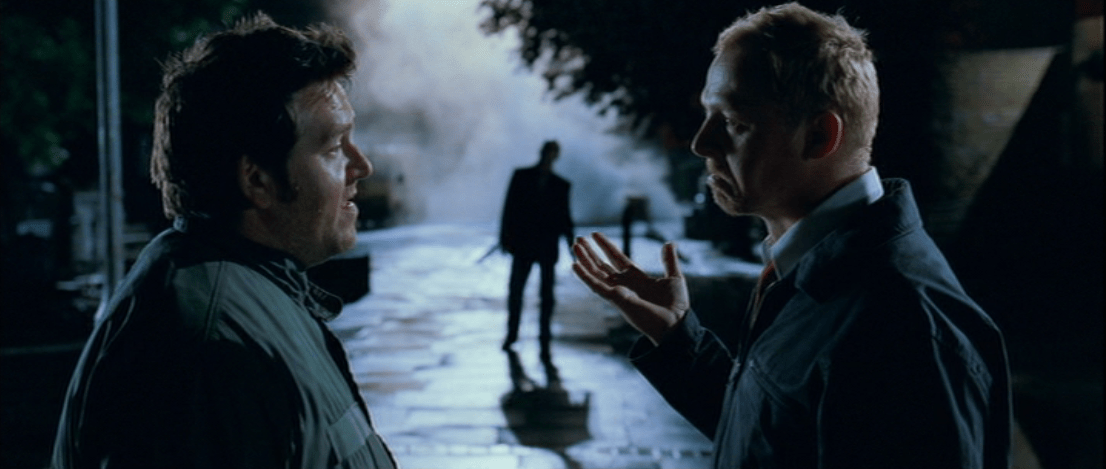
Often called one of the greatest zombie-comedies, Shaun of the Dead is an undeniably fun film. It never gets too silly (which is one of my personal pet peeves when it comes to comedy-horror films), and is just a good movie to throw in when little else is going on.

Much of the reason this works is because of Simon Pegg, who does great as the unmotivated, titular Shaun. His was a rather enjoyable performance throughout. Much of the time, I didn’t care for Nick Frost’s character, but as an actor, he did well. Most others were enjoyable also, such as Bill Nighy (who had one of the few emotional scenes in the film), Kate Ashfield, Lucy Davis, and Penelope Wilton (who’s cheery ‘Hello’ always cracked me up). Hell, we even got a cameo of Martin Freeman before he became the star he now is.

Of course, the story’s fun, the style is solid (love the quick cuts used constantly), and I do enjoy the scenes of Pegg walking to and from his apartment, as they bring a very localized feel to the film. I don’t have any real big complaints, aside from a few portions that felt a bit much (such as the end, which was a tad more goofy than I’d have hoped for).

Generally, though, there’s a reason that this movie is held to such high regard, and though it’s not perfect, it is an enjoyable, potentially brainless, film that is pretty well worth seeing. There’s even a little gore, as one of the characters gets his legs and arms ripped off by a horde of zombies, so there’s a little something here for many horror fans.

I don’t necessarily love Shaun of the Dead, but I’ve seen it multiple times, and it’s never failed to amuse. Stand-out scene was probably the “Don’t Stop Me Now” Queen sequence in the pub. “Kill the Queen” indeed.

8/10

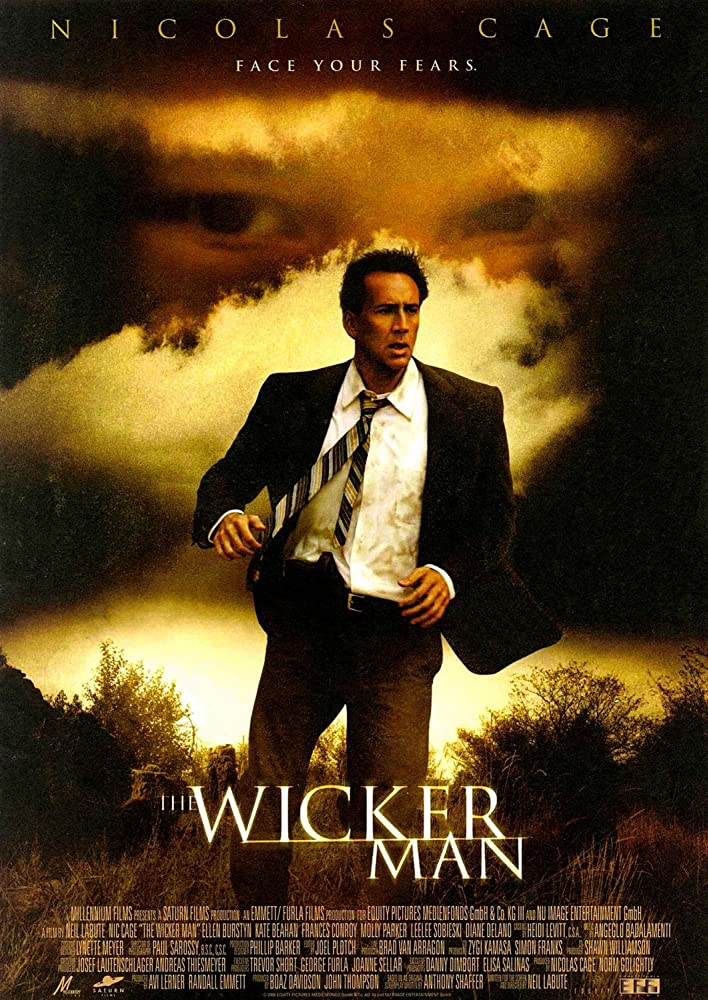
The Wicker Man (2006)

Directed by Neil LaBute [Other horror films: House of Darkness (2022), Fear the Night (2023)]

Even to this day, I don’t think the original Wicker Man gets the respect it so totally deserves. It’s a classic that really has a lot going for it. This remake isn’t altogether dissimilar, but for entirely different reasons.

I have to get this off my chest first, though: I just cannot take Nicholas Cage seriously. I just can’t. I love his character in National Treasure, but as an actor, Cage is a hard person for me to see in serious light – I think Next (2009) was the only time I remember his character coming across as a bit more normal, for lack of a better word.

Because of his presence, what really is an interesting and almost mostly-well written story (even with it being a remake of a far better film) just comes across as silly much of the time. It’s not just some of Cage’s more questionable lines, either, be it ‘What’s in the bag, a shark or something,’ or his yelling at the end about ‘goddamn honey.’ His actions are just as ridiculous, such as that scene where he punches out one of the women without comment, or kicks another one (while wearing a bear costume) into a wall.

If they had gone for someone a bit more generic, but brought less unintentional camp into the film, it’s possible The Wicker Man wouldn’t be as memorable, but I also think it wouldn’t be nearly as panned as it has been.

I have little complaints about others in the film. While few of them really stood out, Kate Beahan was moderately decent in her role. While by no means a big actress, Leelee Sobieski was nice to see, as I know her from starring in the 2006 British film In a Dark Place. Even James Franco has a small (and unexpected, as when I first saw this, I had no idea who Franco was) appearance at the end. Otherwise, no one really did much for me, aside from Cage, who I’ve already spoken extensively about.

The Wicker Man is a hard movie to talk about because of the fact that Cage’s performance overshadows so much of the actual story, which, like I said, is decently enjoyable. I rather loved the conclusion (though, as always, I thought the original did a better job), and generally, I think the story’s both somewhat interesting and fun.

Truth be told, this is a difficult one to rate. It feels really ridiculous at times, but I cannot pretend that I wasn’t amused or engrossed with the story playing out on-screen. On one hand, I think it could have been shortened by at least ten minutes, but on the other, that’d mean ten minutes less of Cage’s antics.

Love him or hate him, ultimately, this is the Nicholas Cage show, and while I really didn’t care for what his presence did to an otherwise pretty interesting plot, this is one that I’d watch again just due to the sheer amusement it brings forth.

6/10

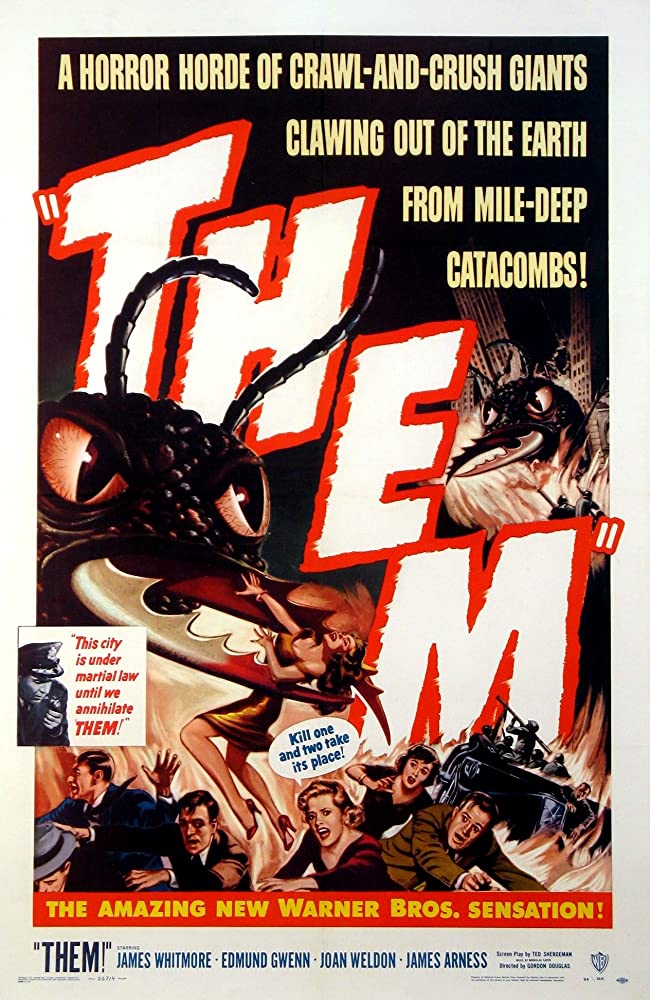
Them! (1954)

Directed by Gordon Douglas [Other horror films: Gildersleeve’s Ghost (1944), Zombies on Broadway (1945), The Fiend Who Walked West (1958)]

I’ll be honest and say that I don’t have that much to say about this film. It’s a classic for a reason, and though I’d not seen Them! in many years since this most recent rewatch, it’s clear to me that this will likely always been considered a classic, despite some personal dislikes in the latter half of the film.

There was little to criticize insofar as the performances went. Both James Arness and James Whitmore were great co-leads, and Joan Weldon made for a solidly strong woman, especially during the excursion into the anthill. Personally, though, it’s Edmund Gwenn who I suspect will stick with me the longest, as I rather loved his absent-minded portrayal (and gave us some of the few comedic scenes this film had).

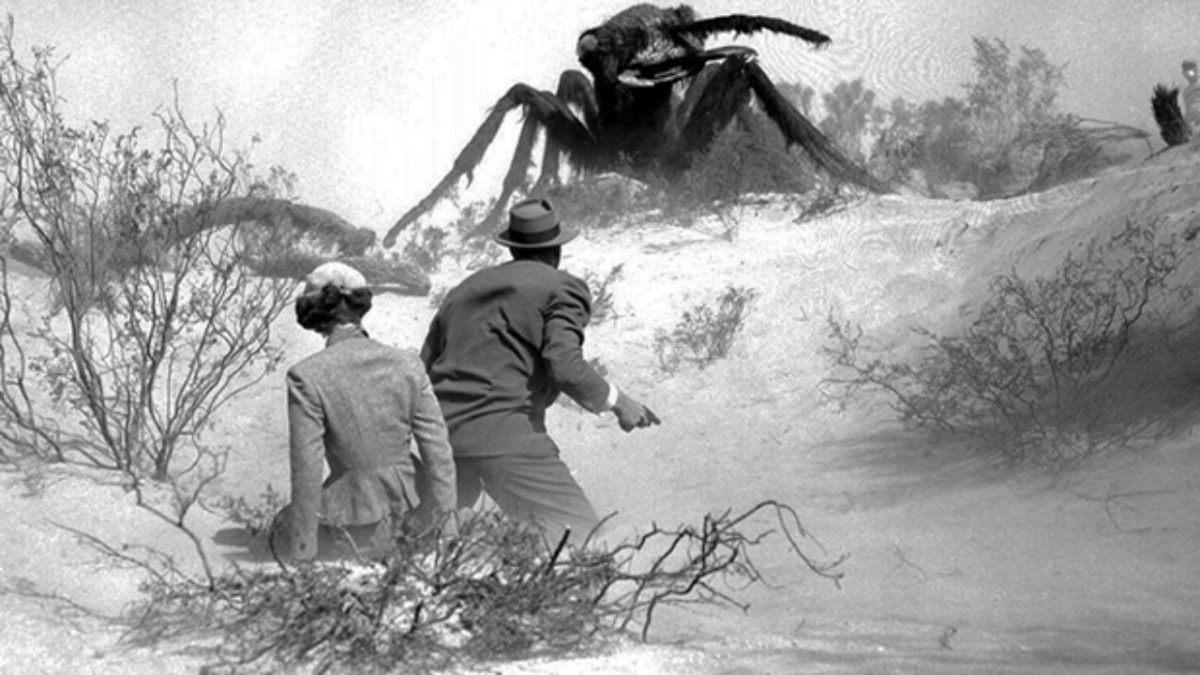
As far as the horror goes, there were some good, suspenseful sequences near the beginning that definitely had a creepy vibe to them, though after the point in which we saw the first ant (a great scene in itself, actually), I think they somewhat quickly lost the terrifying vibe. It had a more epic feel, to be sure, but the ants themselves lost something in that transition.

Which is a small shame, because while the shift makes a lot of sense story-wise, I didn’t care that much for it. Oh, I enjoyed the investigation portions quite a bit (and they sometimes reminded me of what you might see on Dragnet), but going for a wider scope, a more disaster movie type plot, sort of makes the film lose a little of what it had before.

None of this is to say I don’t like the movie, it’s just that I didn’t love the second half of the film. It was still great, especially the sequences that took place in the sewer system, but I didn’t love it. Even so, Them! remains one of the better giant insect movies, perhaps one of the best, of the 1950’s. It has great performances, a fun story and setting (once they left New Mexico for California, though, I thought it lost a little of the magic), and fantastic effects for the time period. There’s a lot to enjoy about this film, so give it a shot if you’ve not already.

8/10

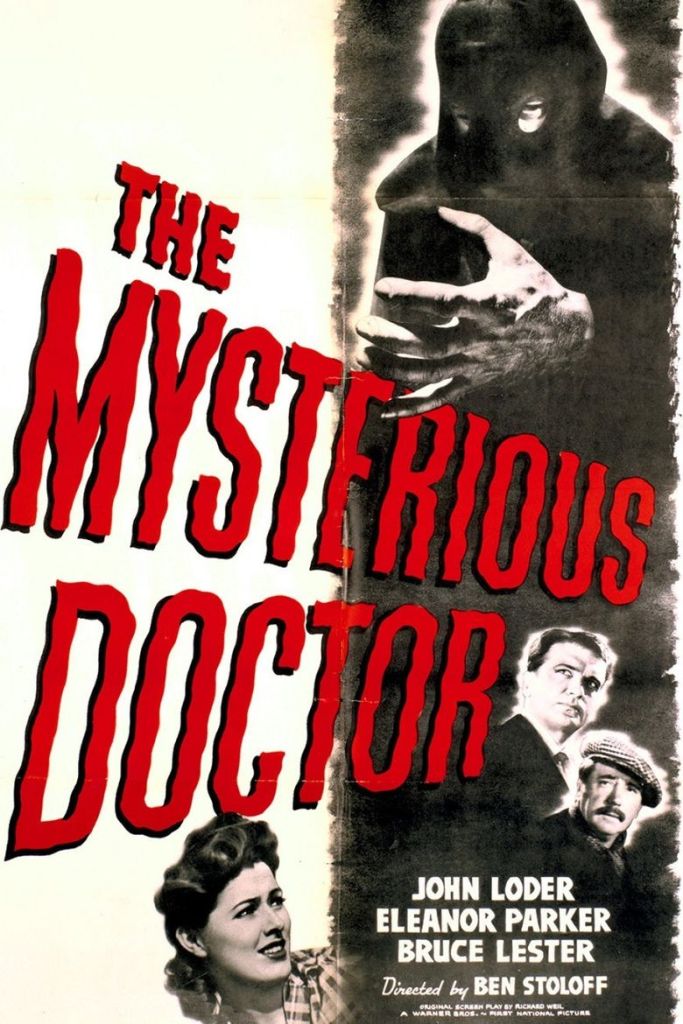
The Mysterious Doctor (1943)

Directed by Benjamin Stoloff [Other horror films: Night of Terror (1933), The Hidden Hand (1942)]

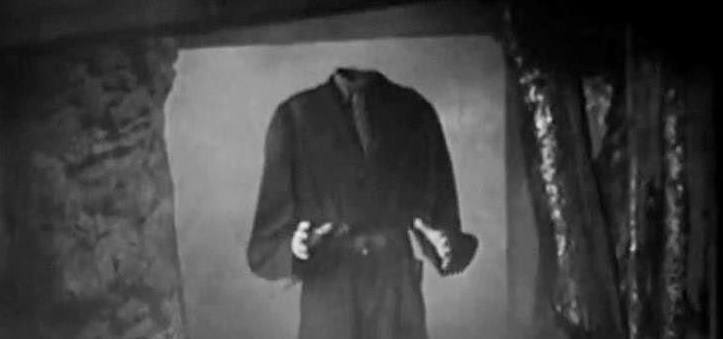
This short quickie (hovers around 57 minutes in total) is a delightful little film with a pretty fun premise (headless ghost haunts a tin mine, while a mysterious doctor arrive in town and arouses suspicions of the townsfolk), and while certainly a lower-budget film, I thought it was appropriately atmospheric.

Most of the performances hovered around average, with not many individuals standing out. Matt Willis did a pretty decent job with his sympathetic character, whereas Lester Matthews and John Loder (both some of the main actors) felt pretty cookie-cutter. I did appreciate Elanor Parker’s strong female character, which wasn’t necessarily common for the time period.

For some reason or another, though, I can’t think of too much to say for this one. I loved both the atmosphere and much of the setting (the ground mist over the moors was always a fun look to me), and the headless ghost, while obviously fake, had charm to the design.

The whole movie, despite it’s lower budget, had a lot of charm, in fact. It’s a shame that The Mysterious Doctor isn’t more widely available, because while it’s not a great movie, I do think that it’s a minor classic for the time period, and I will admit to really enjoying the entirely anticipated conclusion. I’ve seen this before, but it’s been so long, much of it felt new to me, so the ending had the punch I was hoping for. It’s nothing amazing, guys, but it may well be worth a look.

7.5/10

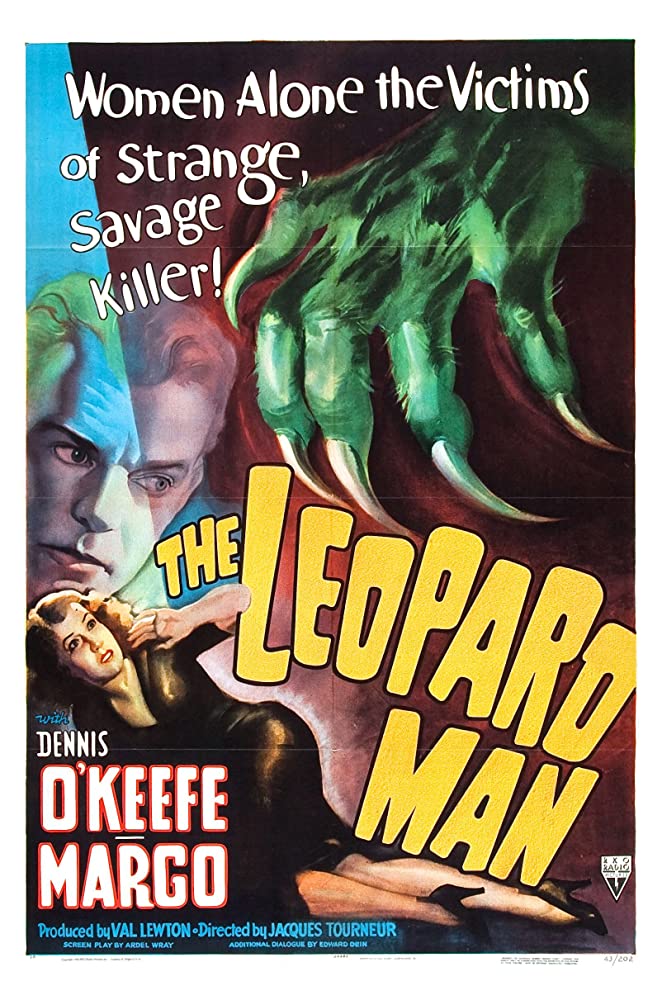
The Leopard Man (1943)

Directed by Jacques Tourneur [Other horror films: Cat People (1942), I Walked with a Zombie (1943), Night of the Demon (1957), The Comedy of Terrors (1963), War-Gods of the Deep (1965)]

Often moody and rather atmospheric, this early 40’s film has a lot to offer fans of classic horror. There’s a plot that keeps you guessing, some characters who actually feel human, and great suspenseful sequences throughout.

While I suspect nothing about the film would shock fans of the genre today, the plot overall is pretty fun, and also a bit unique, what with the main characters (Dennis O’Keefe and Jean Brooks) feeling guilty about the escape of a leopard in their possession, subsequently causing the death of a teenage girl. It gives the film a pretty somber tone, which pretty much lasts the whole of the film, including the conclusion.

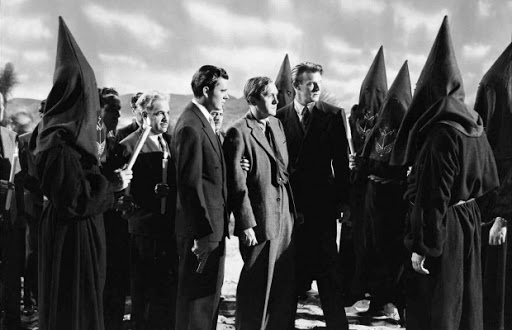
Speaking of which, the conclusion was damn fun, especially the scene during the procession of monks, which including chanting and pretty intimidating men in hoods. Pretty much everything about the ending was a lot of fun, though I sort of wish there was a bit more oompf.

The suspense was great in this one, and we even got what’s now the ordinary shot of a person yelling, banging on a door, then seconds later, blood pouring from the bottom of the door. It definitely wasn’t shocking by today’s standards, but for 1943, that struck me as surprisingly racy.

I saw this for the first time something like five years ago, perhaps as many as seven or eight, and it always stuck with me, because it certainly seems like a movie ahead of it’s time. Very little around this same time period had the same feel as this one, so The Leopard Man is definitely a memorable film.

Aside from O’Keefe (who also starred in You’ll Find Out, from 1940, which I saw just a few days before this writing) and Brooks, the only other performance to really stand out here was James Bell, who played a somewhat interesting character. From the face alone, Bell isn’t an actor I know that well, though he did appear in another horror classic, I Walked with a Zombie, which is a film I’ve not actually seen up to this point [edit: though I have now]. Abner Biberman was decent, as was Margaret Landry in her short sequence, but ultimately, O’Keefe, Brooks, and Bell are the only three who really made a difference.

The only downside of The Leopard Man was that some of the padding (which itself is somewhat amusing, given the film’s just an hour and six minutes) struck me as a bit much. One of the final kills, while certainly welcomed, had a longer set-up than I was hoping for, and I felt just a bit bored during that sequence.

This said, otherwise The Leopard Man is a pretty enjoyable and forward-thinking film, and I think that from a modern-day perspective, this has a lot to offer horror fans. If this one has escaped your notice, I’d certainly recommend taking a look.

8/10

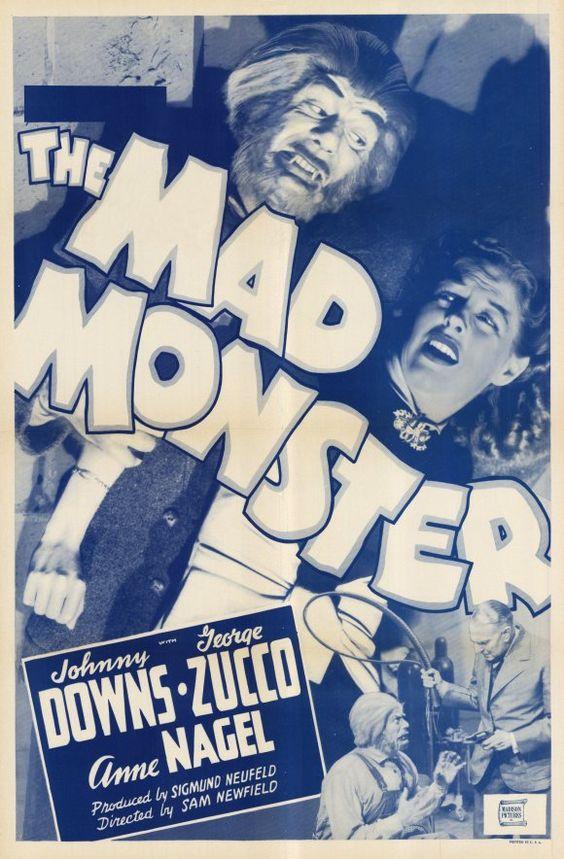
The Mad Monster (1942)

Directed by Sam Newfield [Other horror films: Dead Men Walk (1943), The Monster Maker (1944), The Flying Serpent (1946), Gigantis: The Fire Monster (1959)]

I think I was much too harsh on this when I first saw it. The Mad Monster’s certainly on the lower spectrum of 40’s horror flicks, but I don’t know if it’s entirely bottom of the barrel, and you could still get some entertainment value out of it.

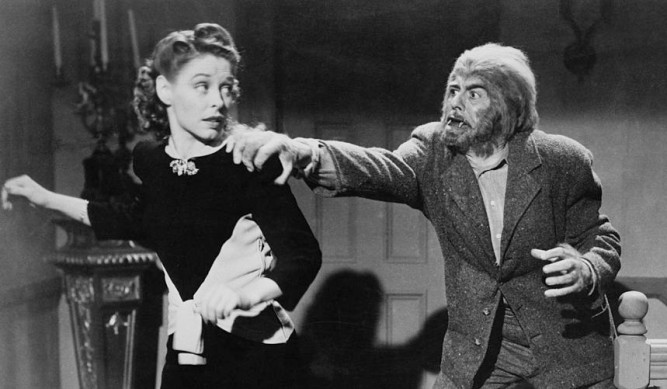
Being an early werewolf movie (released a year after the classic The Wolf Man), this film lacks the more supernatural origin of the werewolf (such as a curse) and instead relies on a scientifically-created wolf man: a simple-minded handyman (played by Glenn Strange), who a scientist (George Zucco) uses to extract revenge on those who deemed his scientific ideas mad.

In all fairness, as Zucco’s first scene has the scientist seeing visions of the four scientists scorning him for these same ideas, and Zucco replies to them in a tone that reaches shouting before long, one could probably forgive those who find Zucco’s character mentally unbalanced.

Zucco gives a pretty good performance here, as it is. Zucco appeared in a fair amount of B-level horror films in the 1940’s before his retirement from acting, and while this performance isn’t his most memorable, it is a good portrayal of a truly mad scientist. Glenn Strange did great in his simple-minded role, and I thought he was perhaps the real stand-out here. Anne Nagel and Johnny Downs were both decent in their roles, though Downs didn’t really have all that much to do until the ending, and Nagel almost never had anything to do.

Another thing that positively stood out were portions of the setting, especially the mist-covered marshlands where some of the action took place. It had a suitably creepy vibe, despite the cheapness of the film, and I’ve personally always liked how swamps look, especially in black-and-white. I wish more of the horror sequences had taken place in such a setting, though.

When all’s said and done, The Mad Monster certainly pales in comparison to some of the classics of the 1940’s, and really, would probably only appeal to fans of the lower-end B movies of the time period (such as The Monster Maker, coincidentally directed by the same guy). I enjoyed it more this time around than when I first saw it, but ultimately, there’s so many more memorable and just plain better movies out there than this one. I did appreciate the victim choices, though, so kudos there.

6/10