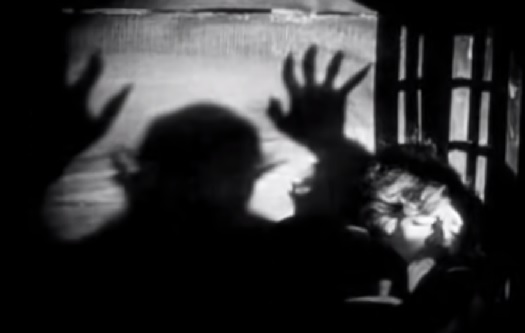
Nosferatu, eine Symphonie des Grauens (1922)

Directed by F.W. Murnau [Other horror films: Satanas (1920), Der Bucklige und die Tänzerin (1920), Der Januskopf (1920), Schloß Vogelöd (1921) Faust: Eine deutsche Volkssage (1926)]

I can’t say for sure, but this may be only the third time I’ve seen this German classic. There’s not a specific reason for this, aside from maybe the fact the print I own on DVD is a bit rough (thanks Mill Creek), but it’s also true that while I enjoy some ideas and aspects about Nosferatu, I’ve never really loved it as a whole.

Throwing in the whole plague sub-plot was a nifty idea, I think. Especially given that I’m writing this while many are still on moderate lock-down due to Covid-19, the diseases’ impact on the characters (while somewhat negligible as far as the story is concerned, and does more to help with the ominous atmosphere, to be honest) brought a bit of reality to the film. That scene in which bodies are being taken out through the narrow streets in particular was an effective one.

Count Orlac himself (played by none other than Max Schreck) didn’t have that much in the way of character, but definitely made his presence known. He was awkward as fuck, but everyone has their vices, and hey, I don’t have a castle in the land of phantoms, thieves, and ghosts, so maybe he’s doing something right. Schreck was great here, be him creeping up stairs or standing ramrod straight in a split second (both highly effective scenes).

I couldn’t help but feel for both Gustav von Wangenheim (who was also in Schattan – Eine nächtliche Halluzination) and Greta Schröder, as both of their characters went through the wringer. I felt legitimately dismayed as Schröder’s unhappiness at being away so long from her husband, and I enjoyed both of their performances, though I do think the ending maybe could have been extrapolated on a bit.

The print I watched this time around was pretty nice (it was on TCM, so could you imagine anything but?), with a nice tint, solid score, and all-around pleasant presentation. I just wished the inter-titles had been in German as opposed to English, but that’s a personal preference which has no impact on my enjoyment.

Overall, I don’t doubt at all that Nosferatu is a classic, and rightfully so. The effects were pretty good for the time, and some scenes, like I said, still increase suspense to this very day. It’s just never been a personal favorite of mine (The Cabinet of Dr. Caligari was always more my vibe).

7.5/10

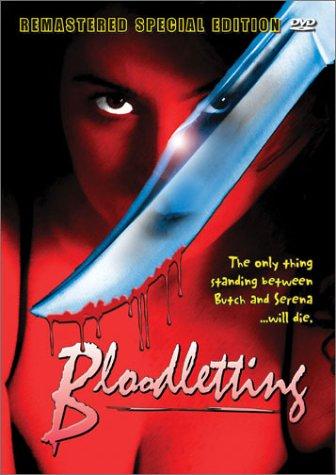
Bloodletting (1997)

Directed by Matthew Jason Walsh [Other horror films: The Witching (1993), I’ve Killed Before (1995)]

Filmed in Ohio, this rather low-budget horror-comedy, revolving around a serial killer and a young woman who wants to learn how to kill, is pretty terrible. I mean, it’s bad, from dialogue to story. I’ll be damned if it’s not a hell of a lot of fun, though, and while certainly below average, I’ll admit that I did dig this one.

If there’s one main complaint, it’s that the film didn’t need to be almost an hour-and-a-half. They could have shown some restraint and kept it around 70 minutes or so – there were definitely a few sequences that could have been trimmed a bit. I also wasn’t that fond of the ending (or more specifically, one of the twists, as it was), but I mean, for the most part, this movie is what you’d expect going in.

The dialogue is hilariously awful. I think that James L. Edwards, who plays the serial killer, has some of the best lines, and his hammy over-acting is just a pleasure to watch, but certainly Nina Angeloff (“A threesome?! Far-fucking out!”) and Ariauna Albright get plenty of terrible dialogue too.

By no means is this a dig at them as actors or actresses or at the movie’s script – it was clear that Bloodletting knew exactly what it was aiming for, and personally, as a fan of low-budget horror, I had a blast for a large amount of the time, and much of that is directly related to that lovable, horrible dialogue.

I don’t know James L. Edwards or Ariauna Albright from anything else (though the pair of them have been in quite the variety of lower-budget horror in the 90’s and 2000’s), but I thought they worked well together in this film as a bit of a messed up couple. Edwards, like I said, was my favorite performance of the film, but Albright did a great job too, and she was attractive to boot. The only other performance that I suspect I’ll remember was Nina Angeloff’s, who’s exaggerated southern accent (her character’s name was Bobbie Jo) was just heaven.

Sometimes the movie did focus a bit too much on the blossoming relationship, as it was, between the main characters as opposed to random kills. The kills we got weren’t great, to be sure, but the special effects were definitely okay for the budget, plus a – wait, maybe I shouldn’t spoil it. Let’s just say that maybe, if you’re lucky, a baby meets a terrible end via shotgun.

Yeah, that happened, and it was awesome, as it’s a taboo that few horror films seem to stoop to. Call me an edgelord all you want, but I was #ThereForIt.

Anyhow, Bloodletting was a lot more fun than I ever expected. I do wish it was a bit shorter, but beggars can’t be choosers, else wise winners become the losers. At least that’s what Gandhi said.

6.5/10

Zombie Tidal Wave (2019)

Directed by Anthony C. Ferrante [Other horror films: Boo (2005), Headless Horseman (2007), Hansel & Gretel (2013), Sharknado (2013), Sharknado 2: The Second One (2014), Sharknado 3: Oh Hell No! (2015), Sharknado 4: The 4th Awakens (2016), Forgotten Evil (2017), Sharknado 5: Global Swarming (2017), The Last Sharknado: It’s About Time (2018)]

As you can possibly imagine from the title, Zombie Tidal Wave is another in a fine-line of Syfy originals. It even stars Ian Ziering, of Sharknado fame. And you know what? It’s actually not bad. Well, it is bad, but it’s still almost an okay time.

Combining their love for natural disasters and hideous zombies, Syfy outdid themselves with a zombie tsunami (which, on a side-note, it a phrase said by one of the characters, and I for one do not know how Syfy passed on the chance of using that as their title), and it even happened twice. In fairness, I didn’t think that looked too ridiculous, and the zombies themselves (who bleed blue blood and can only be defeated by electrical shocks) didn’t look terrible, but quality special effects were still obviously not the focus for Zombie Tidal Wave.

For whatever else Ziering has done, I thought he did an okay job in this one. He was the action-oriented leader, which, yeah, is both expected and rather generic, but he did it well. Cheree Cassidy didn’t really get enough screen-time to make an extraordinarily educated opinion one way or the other, but she did fine, I guess. Angie Teodora Dick and Tatum Chiniquy both impressed me (as much as any performances can impress me in a movie like this), and I thought Chiniquy did better than Cassidy (who played her mother), so you go, girl.

Not all performances were good, though. I didn’t understand Randy Charach’s character – he was labeled a ‘crazy loner’, but honestly, aside from being a bit standoffish, he didn’t seem that much a nutjob at all. I don’t know what they were trying to do with his character, but I don’t think they did it. Shelton Jolivette was way too much a comedic relief character, and I would have been okay if they dropped him entirely. And though I can appreciate them trying to throw in a character with depth, Erich Chikashi Linzbichler didn’t do it for me.

Throughout, the film is pretty generic as far as both zombie movies and disaster movies go, and combining them isn’t as much a win as Syfy would probably hope, but it’s still a decent movie to throw on and enjoy if you don’t really have much else to do. Below average no doubt, but passable.

6/10

Children of the Damned (1964)

Directed by Anton Leader [Other horror films: N/A]

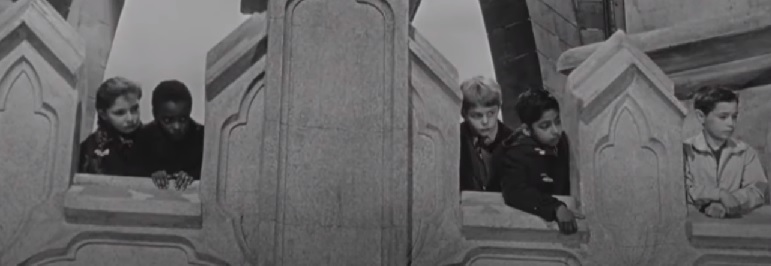
Yeah, this didn’t do it for me. It’s a shame, because after revisiting the 1960 Village of the Damned, I was moderately happy, but this one was just lacking something that made that first film special. Not that Children of the Damned is a bad film, necessarily, and not that I particularly enjoyed Village of the Damned, because I didn’t, but Children of the Damned is not a film that I really got much out of whatsoever.

I’ll give it moderate props for looking at the children through the lens of the arms’ race (each of the six children are from different countries, so for instance, obviously the USSR wouldn’t want their ‘weapon’ being taught in the UK), and it lent a somewhat unique political climate to the film (which was partially played with in the first movie, but this is far more explicit), but it didn’t make for an exciting time.

That’s honestly my main problem. A few of the scenes were a little creepy, but once the children got together in an abandoned church and held off the military with their super intellect and by virtue of holding a woman captive, I pretty much tuned out. I mean, I wasn’t in the least bit interested, and nothing past that point, be it the arguments as to whether or not the kids should be destroyed to the finale, made any impact whatsoever.

I wouldn’t say that Alan Badel or Ian Hendry stood out (because even now, reading the characters names, I forget who’s who despite just having finished this), but they probably made more of an impression than anyone else, which isn’t saying much.

Honestly, I don’t have anything else. Maybe I just wasn’t in the right mood for this. Maybe it’s something that I’ll grow to appreciate the next time I see it, if I ever do. Whatever the reason, while enjoying revisiting Village of the Damned, this one fell flat for me.

5/10

The Lodger (1944)

Directed by John Brahm [Other horror films: The Undying Monster (1942), The Mad Magician (1954)]

I’ve been well-aware of this film for years and years – it used to play on AMC what seemed like every week – but it took until now to see it, and I definitely found it an impressive film.

The story of Jack the Ripper is one that I’ve seen in a few other films, from the 1927 The Lodger: A Story of the London Fog and the 1953 Man in the Attic, and this is probably the best one. Man in the Attic was very enjoyable, and went a very similar route as this one, but since this came first, I’ve gotta give this more credit.

We don’t see any over-the-top murders or gore, of course, given this film is from the mid-1940’s, but we do get some very suspenseful scenes and occasionally great moments leading up to what one can imagine are brutal murders. Great use of setting too – I loved those scenes where the police and civilians were enclosed in a small portion of Whitechapel trying to trap Jack the Ripper in the mist, but just unable to do so. Great, great scenes there.

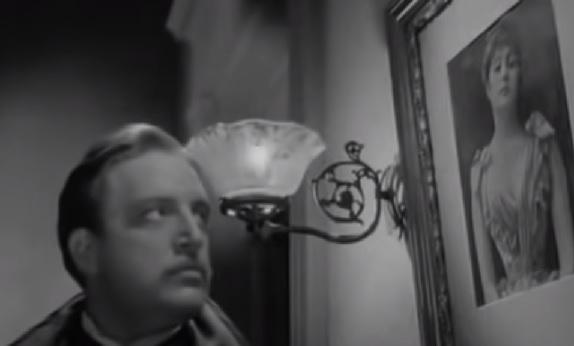
I don’t know if it’s his slightly larger frame, or just his imposing physique, but Laird Cregar reminded me a lot of Victor Buono, so it should go without saying that his performance was top-notch. The sad thing is, as some of you may know, Cregar died in late 1944 at the extraordinarily young age of 30, his final movie Hangover Square being released after his death. With less than twenty roles, I think it’s a damn shame he died that young, especially since he could have had a long-lasting career in horror had he survived into the 1950’s, 1960’s, and into the 1970’s. Cregar was great here, and it’s just a shame.

Cedric Hardwicke (The Ghoul) was solid, and he had one of the more reasonable characters in the film. As his wife, Sara Allgood was fine, though not necessarily stellar (not that really a whole lot would be expected from a character like hers). Merle Oberon does pretty well in her role, and I like her interactions with Cregar’s character, as they always had an undercurrent of growing suspense. Lastly, George Sanders (Village of the Damned and The Picture of Dorian Gray) was a wee bit generic to really stand out, but got more character in the end, so he turned out well.

I was impressed with just how suspenseful this one became at times, and I was also drawn into the whole “is the Lodger actually Jack the Ripper” plot-line as more and more possible coincidences occurred. The Lodger is a strong film, and definitely a highlight of the 1940’s, so I’m glad that I finally took the time to watch this.

8/10

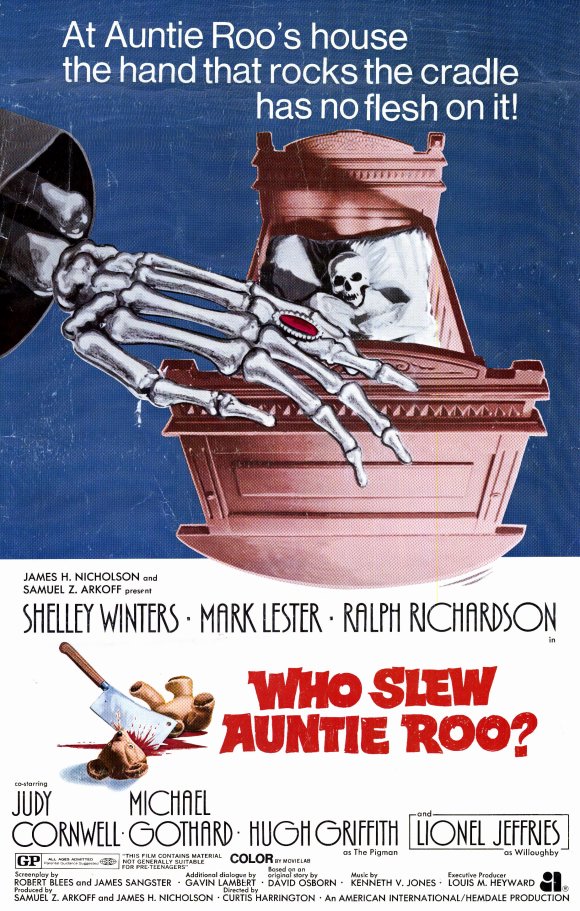
Whoever Slew Auntie Roo? (1972)

Directed by Curtis Harrington [Other horror films: Night Tide (1961), Queen of Blood (1966), How Awful About Allan (1970), What’s the Matter with Helen? (1971), The Killing Kind (1973), The Cat Creature (1973), Killer Bees (1974), The Dead Don’t Die (1975), Ruby (1977), Devil Dog: The Hound of Hell (1978), Usher (2000)]

I didn’t know a lot about this before I went into it, so it mostly came as a nice little surprise. Though it’s more subtle in it’s approach of horror, I thought the film had a decent amount to offer, so even though it’s not a classic, per se, it likely won’t be an easy movie to forget.

The plot here was so original, which helped a lot. Following a pair of orphans (brother and sister) as they encounter a mentally-unstable woman who thinks the girl is a reincarnation of her deceased daughter, plus it’s British? This movie was original and a decent amount of fun despite the somewhat dry feel.

For younger individuals, Mark Lester and Chloe Franks (The House That Dripped Blood, Tales from the Crypt) did a great job. Franks was probably more forgettable, but Lester got more screen-time anyways (plus he was marginally older), so that just makes sense. Shelley Winters (Tentacles, The Initiation of Sarah, The Devil’s Daughter, A Patch of Blue – guess which one doesn’t fit in?) was also superb in her role, and you felt sympathetic for her despite the fact she was bat-shit insane. Michael Gothard (Lifeforce) played a dick, and I loved it, and Ralph Richardson popped up again (I saw him earlier the very day I watched this one in The Ghoul from 1933), which was fun.

It’s a pretty tense story, and though you sort of know where it’s going to go, there’s still a level of uncertainty. Heck, I expected the kids to get out of it using a far different method from what actually happened, which goes to show that, to some extent, Whoever Slew Auntie Roo? can keep you guessing.

There’s also the occasional passages from Hansel and Gretel that Lester’s character reads during some voice-overs which really helps set the tone and give us some insight as to how, as a young kid, he sees this situation (not that Winters’ is simply insane, but also a witch). It’s a dark film in some ways, as you would expect a movie where kids are held against their will to be, but it’s not near as bleak as it could have been, which is probably a positive (I was even smiling at the end, happy with the conclusion).

I doubt this movie is going to make a big impact on many people, but it was a pleasant viewing, and even occasionally held a nice Christmas charm to it.

7.5/10

Body Snatchers (1993)

Directed by Abel Ferrara [Other horror films: The Driller Killer (1979), The Addiction (1995), Siberia (2019)]

This is the third version of Invasion of the Body Snatchers (the original from 1956 being a long-time favorite of mine, and the 1978 version is a favorite of others), and despite somewhat lukewarm expectations, it wasn’t that bad. It wasn’t great – I think the movie failed to feel as epic as the 1956 version did – but it was a decent way to pass the time.

Part of the reason being the setting shifting from the whole of a sleepy town to a military base. I didn’t mind the military base setting, but it didn’t really carry the same wide-spread panic and paranoia that made the original film so great.

The main cast was decently strong. It’s true that I wasn’t much moved by Terry Kinney (I probably could have been, but I think his character was under-utilized) or Meg Tilly (One Dark Night and Psycho II); Forest Whitaker, and, though he was nice to see, R. Lee Ermey (The Texas Chainsaw Massacre) were also somewhat pointless.

Otherwise, though, Gabrielle Anwar (Crazy Eights) was pretty good as the main character. She was cute in a bratty way, and bratty in a cute way, so no complaints here. Christine Elise (Child’s Play 2) was fun in her few scenes, Billy Wirth a solid side-character. If Anwar hadn’t done as well as she did, the movie probably wouldn’t have really made an impact, but she did well.

This said, it doesn’t allow the film to possess anymore of a wide-spread feel. For the last thirty minutes or so, things just felt like they were moving a bit far (and the last five minutes, far too fast). The suspense beforehand was definitely preferable to the action that it become. I thought the voice-over by Anwar’s character was a bit hokey, but whateves, it was fun.

Body Snatchers isn’t going to become a favorite, but I had an okay time with it, and I enjoyed the multiple actors and actresses I recognized popping up (even if their character were of little relevance to the plot, such as Whitaker’s character). It’s an okay science-fiction/horror hybrid, but not much more.

7/10

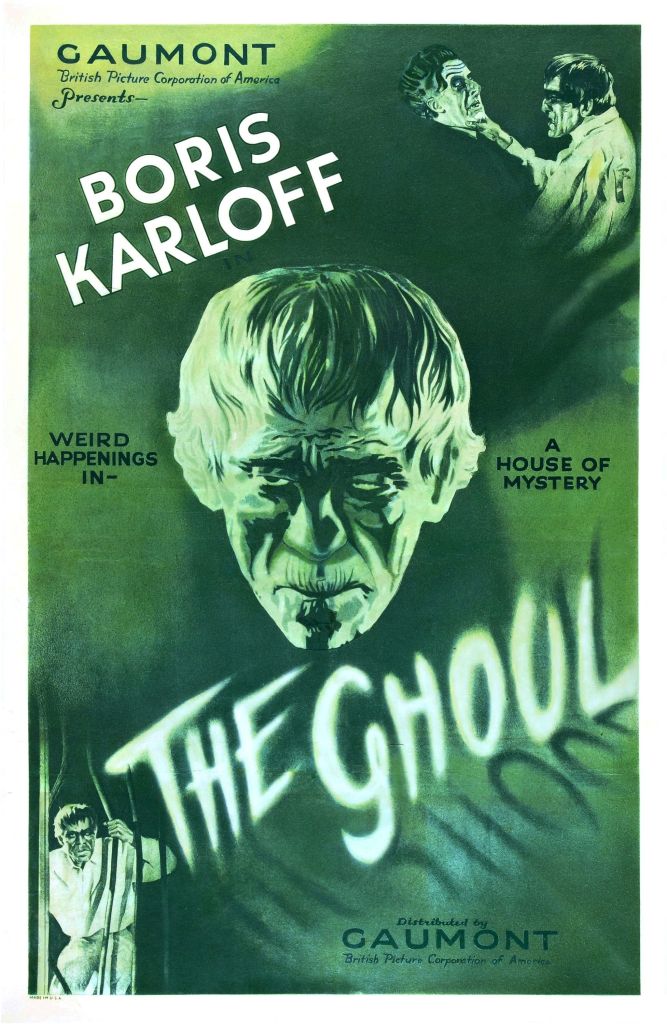
The Ghoul (1933)

Directed by T. Hayes Hunter [Other horror films: The Crimson Stain Mystery (1916)]

This creaky British film isn’t one that really stuck with me the first time I saw it, and after revisiting it, while The Ghoul is a decent movie in the vein of many of the horror films back there, with a solid mystery and a large amount of suspects, I don’t think it’s necessarily memorable.

It was occasionally a bit dark at spots throughout the film, which did help with the atmosphere along with prolonging the mystery, so that wasn’t a huge issue. The setting itself wasn’t really original, but you don’t always expect originality during this period of horror.

Boris Karloff didn’t really have that much screen-time, so though he was nice to see, he didn’t really amount to that much here. Cedric Hardwicke and Ernest Thesiger (Bride of Frankenstein) were both good as men with somewhat mysterious goals, which can also be said for Harold Huth and Ralph Richardson. Kathleen Harrison was good comic relief, and Dorothy Hyson and Anthony Bushell made for fine, though unmemorable, leads.

To be honest, while the movie can certainly be fun, and there are plenty of amusing lines of dialogue, a lot of this doesn’t seem like the type of stuff that’ll last, even if the mystery and the characters make it an occasionally-enjoyable movie to watch.

I have a decent time watching The Ghoul in the moment, but it’s not really any more than that, which is sort of disappointing, but there you go.

6/10

Dementia 13 (2017)

Directed by Richard LeMay [Other horror films: Blood Bound (2019)]

I wasn’t really expecting much from this remake, but I was pleasantly surprised, at least for a bit. It certainly had the chance to be an okay slasher/mystery, but it sort of loses my interest as soon as overt supernatural events come into play.

To be clear, I wasn’t the biggest fan of the original Dementia 13. I thought it made for an okay proto-slasher, and it did have a better, more gloomy atmosphere than this did, but there was room for improvement. This movie looks like it’s going in that direction, but then throws in ghosts and such, which is not what I call an improvement at all. It could have remained a grounded slasher-mystery and I’d have been content, but that ending, along with the small supernatural stuff sprinkled in along the way, just spoils everything, as Sansa would say.

Before it shoots itself in the head, though, Dementia 13 is okay. I thought most of the performances were decent, the film had a few hints of humor throughout, and the setting was pretty good. It didn’t have the same charm or ominous nature the original did, but it was doing well for itself.

Steve Polites had virtually no character. To be honest, it took me a little bit to figure out he wasn’t a child of the mother and actually one of the daughter’s husbands, which isn’t anything against him as an actor, but his character just didn’t have much to give us. Ana Isabelle was pretty stereotypical, which I’m guessing was called for in the script. She was attractive, though, so there’s that. Lastly, on the negative side, Julia Campanelli didn’t really do much for me, and came across as generic.

The others did reasonably well, though. Channing Pickett had the good-girl look down solid, Christian Ryan had a somewhat predictable but fun arc, Roland Sands made for a decent red herring, and Donal Brophy needed more character, but he was pretty solid the time he was on-screen. Marianne Noscheze and Ben van Berkum were my favorite characters here. Noscheze started off being a bit of a brat, but Berkum’s character throughout was good humor value.

Most of the kills here weren’t really that great, and I don’t think that this would have been a new-age classic had they gotten rid of the unnecessary supernatural elements, but I do think it could have been a decently enjoyable and competent slasher that I wouldn’t hesitate to revisit.

With the addition of ghosts (which is something that horror remakes don’t need to do – the 1999 House on Haunted Hill wasn’t any better than the original because they added ghosts, and the same is definitely true for this), though, just makes the film ultimately blah, and not really worth going out of your way for, which is a damn shame.

5.5/10

The Night Flier (1997)

Directed by Mark Pavia [Other horror films: Fender Bender (2016)]

I have a bit of a history with this movie, which I’ll get into in detail shortly, but for now, I’ll suffice it by saying that I think The Night Flier is a deeply underrated film, and it’s probably one of the creepiest and best vampire films of the 1990’s, and one of my personal favorite vampire movies of all time (even beating out Fright Night).

Before I go onto the aspects of the film, though, that make this so, let me tell you a story of a young boy named Michael. And for those who don’t know, Michael is my actual name.

Back when I was a kid, my family briefly lived in a small village in New York (the village being Penn Yenn, though that’s neither here nor there as far as the story goes). It was a decently nice house, with both a cellar and an attic, and it seemed large. From the foot of the stairs, you could crouch down and see the television screen clearly, which I did a few times.

And one of the times I did this, my parents were watching The Night Flier (which, if you don’t know, is based off a short story by none other than Stephen King). My parents owned this on VHS, were up late watching it, and I happened to catch some snippets of it.

And it fucking terrified me.

I don’t know all of what I saw when I was a kid. Did I get to the ending and see the vampire in full? I don’t really know. I remember a few scenes I saw (such as the woman getting a perm and watching her husband being killed with a faraway look on her face), but whatever I saw frightened me, so much so that, after my family moved to Indiana, I actually threw the VHS tape down into the basement of the new house, destroying it (which I obviously deeply regret to this day, not only because it’s embarrassing to admit, but because this movie doesn’t have many cheap releases).

So in short, I have a bit of a history with this movie. And sure, that nostalgic value does add a little something to my love of this film, but I like to think that even if I didn’t have experience with this movie while I was a kid, I’d still love it.

First off, that music is amazing. It’s very somber, almost peacefully so, and it lends the film a very dark feel that I think the atmosphere delivers on. This movie has a few funny lines, but there’s very little camp here (which isn’t something that can be said about many King adaptations from the 1990’s), and the atmosphere as a whole is stark and bleak, which of course works well with the conclusion of the film (a conclusion I rather adore).

There’s only four cast members that really matter, being Miguel Ferrer, Julie Entwisle, Dan Monahan, and Michael H. Moss. Ferrer (who had previously been in the mini-series The Stand) did great as the do-anything-for-a-story character, and he was a dick through-and-through, and also, because of that, often entertaining. Entwisle (who was only in a single other film, and married Mark Pavia, the director of this movie) was great as the young, optimistic journalist that gets her spirits crushed entirely. You can’t help but root for her in some form.

Many people can do sleazy, and Monahan (who hasn’t done much in the movie industry past this) does a great job with an upbeat, slimy guy. He plays Ferrer off Entwisle, Entwisle off Ferrer, and doesn’t care as long as he gets that story. He’s also hella entertaining to watch. And though Moss, who plays the killer named ‘The Night Flier’ (which is such a cool name), doesn’t appear until the end, he most definitely leaves his mark.

I also can’t get enough of how The Night Flier was structured narratively. Many of the kills are seen via flashback when Ferrer’s character is interviewing someone, which really helps with the idea that as we’re learning about the gruesome and mysterious crimes as the audience, Ferrer’s character is hearing it for the first time also. There’s even a few dreamy sequences, the most notable one being in the spectacular finale, but another one appears during one of the many flashbacks.

Some of my love for this movie is no doubt nostalgia, but I’ve seen it multiple times in the last few years, and I think it’s a legitimately good movie on it’s own merits, nostalgia be damned. A fantastic film, and one of the most underrated horror films in the history of the whole genre.

But that’s just the humble opinion of a small boy who was frightened by this movie.

10/10