Trick ‘r Treat (2007)

Directed by Michael Dougherty [Other horror films: Krampus (2015)]

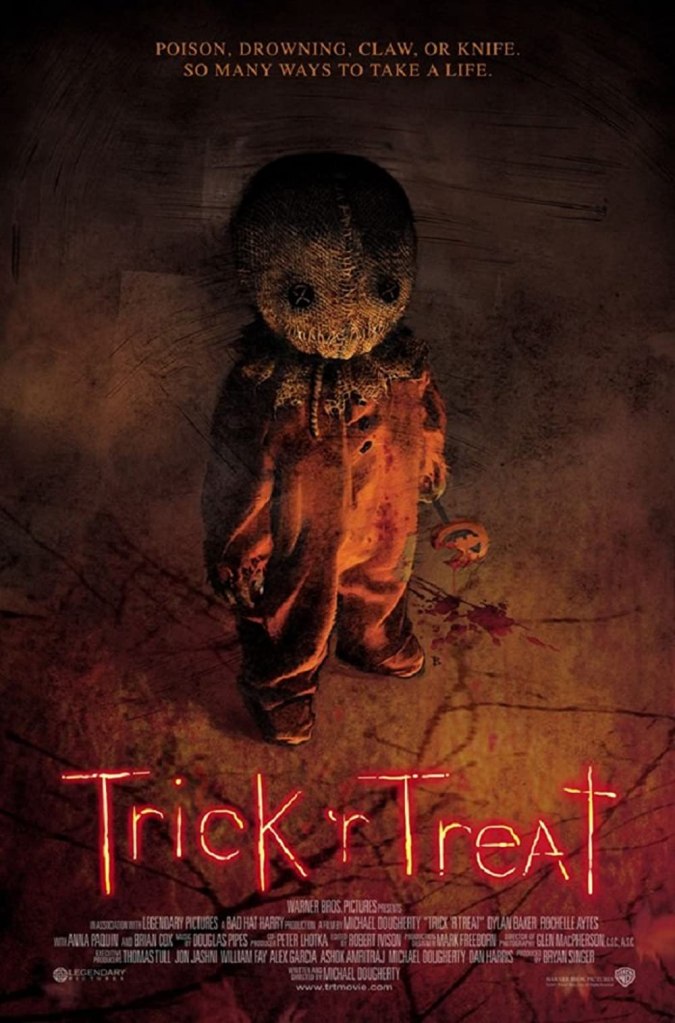
Perhaps one of my favorite horror anthologies, Trick ‘r Treat is a pure treat every time I see it. I love the way the multiple stories here interweave yet also have their own strong individual feel and engage with different genres (whether it be serial killers, zombie children, killer principals, werewolves, what have you). A very strong film, Trick ‘r Treat sets the bar very high.

Following the jumbled timeline throughout the movie can be fun, though it’s not even necessary in some cases. If you missed the couple from the opening bumping into a young woman looking for safety from a serial killer, you didn’t miss anything important, but it was a nice little scene (and the pair also pop up in a smaller cameo later).

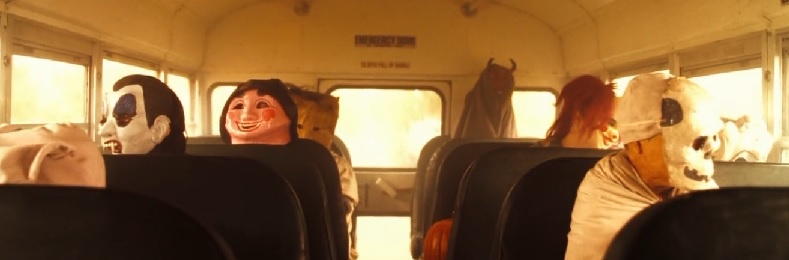
The film has a very comic-book influenced feel (not too dissimilar from Creepshow), which goes well with the style and multiple subgenres the movie deals with. The atmosphere is top-notch (especially during the Halloween School Bus Massacre segment as it takes place in that creepy quarry, and the flashback in that segment had a great mood too), and while the special effects aren’t generally special, I do think the music is quite note-worthy at times (such as during the werewolf transformation), and the whole of the film has a fantastic Halloween vibe that few movies (aside from, of course, Halloween, Halloween III, and Halloween 4) can really match.

It’s hard to pin-point the best performance. I was always partial to Anna Paquin (X-Men, Blue State, and as for horror, Darkness and Scream 4) as I really loved her character, finding her so much more attractive than her sister and friends. Playing her sister is Lauren Lee Smith (who was in the terribly dated show Mutant X that I actually saw a handful of episodes from), who’s character was a bit of an annoyance, but she did share a few good moments with Paquin’s character. Samm Todd and Jean-Luc Bilodeau were solid.

Dylan Baker was a lot of fun in his segment, and while I can’t say if I recognize him from the weaksauce comedy Head of State, the great Spider-Man 2, or even Fido, but I do recognize him, and his role here is great. Britt McKillip was bratty, but fun (and her eye roll after being chastised for using a bad word is totally a mood). Of course Brian Cox (The Autopsy of Jane Doe, The Ring, and most memorably for me, X2) was great here (and his character had some nice depth to him).

As for the best segment, I personally lean toward the Halloween School Bus Massacre, as that back-story behind the massacre was both brutal and interesting, the atmosphere at the quarry is fantastic, and the fact that you can’t at all fault Rhonda (Samm Todd) for her actions. I enjoyed the Surprise Party, though some of the dialogue is a bit on-the-nose (which may not be that noticeable on a first-time watch, but there you go). The Sam-centrict story with the demonic thing fighting Cox was fun, and even more fun was Dylan Baker’s segment (with some quality humor added), but neither one had that oompf Halloween School Bus Massacre did.

Which isn’t to say that those segments bring down the film, because as everything here is interconnected in some way, the whole of the movie is pretty solid. It would have been sort of nice to get a little idea of what Sam actually was (I’m leaning toward a vengeful personification of traditional Halloween), but it definitely wasn’t necessary in order to enjoy the film.

Special effects throughout are great, with the spotlight really going to the zombie kids at the bottom of the quarry. The werewolf transformation sequence (matched with that music) makes for a great time, and the long fight between Sam and Brian Cox had a lot of solid stuff going on. What makes all of this better is how digestible it is, as the story goes for just 78 minutes (with credits, the movie’s listed as 82 minutes), and it’s done so beautifully.

Trick ‘r Treat is a fantastic film. It amazes me just how good it actually is, and for a Halloween night, or any night, it’s a great choice, with fun, interwoven tales that really carry with them the essence of the holiday.

9/10

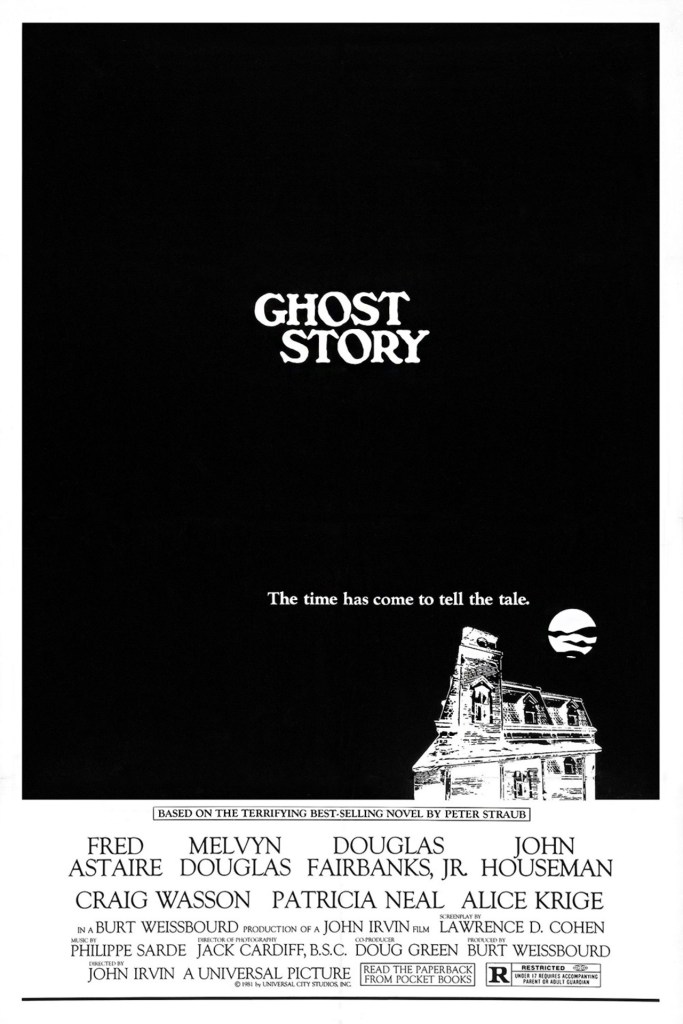
Ghost Story (1981)

Directed by John Irvin [Other horror films: Haunted: The Ferryman (1974), Dot.Kill (2005)]

I have to admit that I wish I liked this one more than I do. I’ve seen it once before, but didn’t remember too much about it aside from the general idea and a few scenes. And damn it, just that alone was enough for me to consider the movie good, but after seeing it with fresh eyes and keeping my expectations in check, I need to be honest and admit that I think Ghost Story had potential but ultimately faltered.

The cast is stellar here, my favorites being the old-timers in the Chowder Society, being Fred Astaire, Melvyn Douglas, Douglas Fairbanks Jr., and John Houseman. I don’t particularly know any of these actors well (Melvyn Douglas being the potential exception, as I’ve seen him in The Old Dark House, The Vampire Bat, and The Changeling), but I think they work fantastically off each other. They strike me as life-long friends, and to quote Icona Pop, “I love it.”

Elsewise, we have Craig Wasson and Alice Krige. Wasson, of course, was Neil in Dream Warriors (he looks different enough here that if you didn’t catch on to this fact, I wouldn’t blame you), and he was certainly decent in that film, but here, he doesn’t really make a huge impression (even during his extended flashback). As for Krige, I definitely dug her character in the flashback (along with feeling rather bad for her), but for most of the film, she doesn’t especially overwhelm with personality.

I think many of the film’s better scenes take place during the Chowder Society flashback in the latter half of the film, and much of what came before felt somewhat plodding, especially Wasson’s flashback, little of which really interested me (and there wasn’t much of an ommpf at the end to even make the sequence worth it). I mean, the location was great – a small, New England town enshrouded in snowfall – but the story, while occasionally atmospheric, just fell flat, and the whole subplot with the escaped asylum patients didn’t do a thing for me.

Certainly I respect the way they decided to tell the story here, what with multiple flashbacks with some tense scenes in-between during the present-day, but I can’t help but think that if we had seen a bit more of the younger Chowder Society (Ken Olin, Kurt Johnson, Tim Choate, and Mark Chamberlin), things would have maybe smoothed out a bit (not that any of those four are near as good as their older counterparts, but those sequences were still enjoyable and, near the ending, tragic). That said, it still made for a fine idea, it’s just the execution felt a bit weak.

And alas, I think that could really be said for the whole of the film. I wish I could enjoy the film more than I do, but it just runs on too long with too little content of interest, and ultimately, I think Ghost Story, while it has some strong points, ultimately ends up only of moderate interest.

6/10

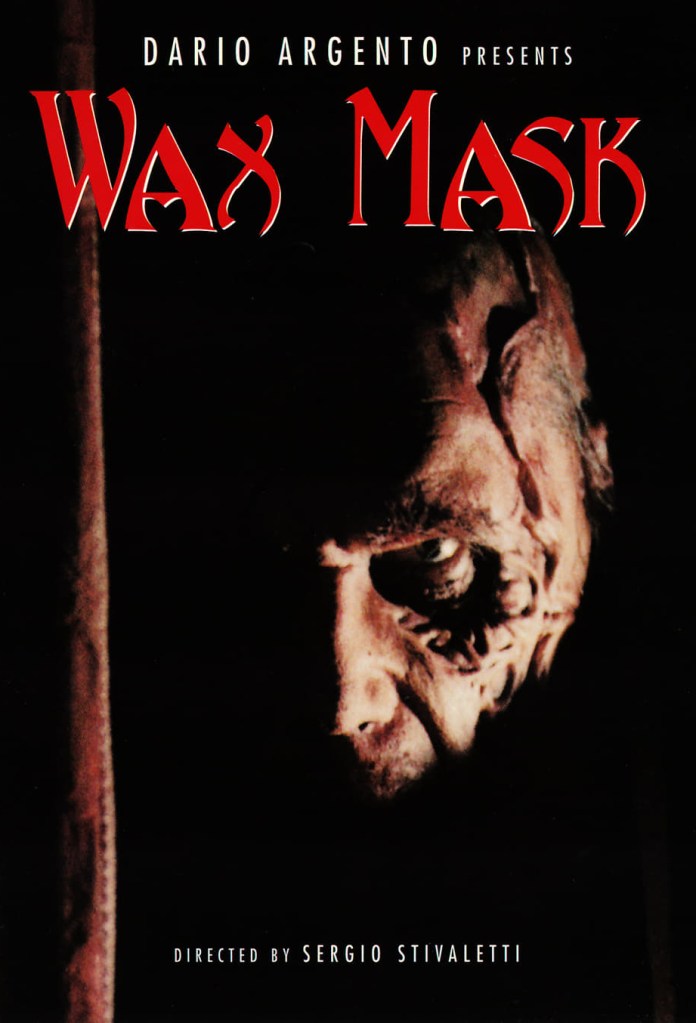
M.D.C. – Maschera di cera (1997)

Directed by Sergio Stivaletti [Other horror films: I tre volti del terrore (2004), Rabbia furiosa (2018), The Profane Exhibit (2018, segment ‘Tophet Quorom’)]

This late 1990’s Italian movie, commonly known as Wax Mask, was a movie I’ve been looking forward to watching ever since I first heard about it. Part of it was because a giallo from that time period would be interesting to begin with, but a bigger draw was simply the fact that I’ve seen very few Italian horror movies from the 1990’s, and virtually none from the late 1990’s (though let’s be honest, aside from Argeto’s 1998 Phantom of the Opera, are there any Italian horror films from the late 1990’s?), and so I was intrigued.

After seeing it, though, more than anything, I thought it was failed potential and a little bit of a mess.

Certainly there were some behind-the-scenes factors that led to such a product. Lucio Fulci was intended to direct this, but he died shortly before filming, so it was given over to Sergio Stivaletti (who had done a lot of special effects works for Italian horror, but hadn’t directed up to that point). Even before then, I’ve heard it said that Argento (who pitched the idea to Fulci to begin with) and Fulci had different visions of the movie, so even if Fulci had directed it, it may not have been much better (especially given that great plots aren’t really Fulci’s strong point).

No matter what happened leading up to the movie, though, the final product is what we have to judge, and though it’s gotten decent reception, and I personally wanted to enjoy it far more than I did, I found it quite underwhelming.

Without a doubt, there were some really strong points here – heck, even re-imaging Mystery of the Wax Museum/House of Wax in an Italian giallo setting was laudable. The gore and special effects throughout are fantastic (and the idea that the figures are still alive behind the wax somewhat terrifying). Well, mostly fantastic – when the museum is on fire at the end, it looks pretty damn amateur. The opening was pretty strong. There were even some fine character-driven moments, and elements of the ending were welcome, at least in the context of the story.

Even at an hour and 40 minutes, though, I felt Wax Mask was missing something, that spark that makes it a fully enjoyable watch. Not that it wasn’t competent enough to get something out of, but the ending, for instance, left something to be desired, along with the whole backstory behind the killer. Also, and it may not come as a big surprise that I took issue with this, the whole metal skeleton thing just felt too fantastic and almost gaudy, especially from a movie I was thinking would be in the purely realistic realm.

Performances here are a mixed bag. I do sort of like both Robert Hossein and Umberto Balli. Aldo Massasso I definitely enjoyed, as his character was one of the few characters that actually seemed like an all-around solid guy. Romina Mondello I’m more torn on – at times, she felt like a throwback to the period of horror where women were portrayed more weakly, and I don’t know if I really felt satisfied with her. Riccardo Serventi Longhi was never great either, though I wonder if the horrible dubbing job has more to do with my perception of his performance than his actual performance. Either way, that was hideous dubbing.

Wax Mask was an okay movie, but something just didn’t fully jibe with me, and while I never had a horrible time with it, it never got to the point where I was really engaged and into the film. Having seen it only once, it’s possible that I’ll grow to appreciate this more with future viewings, but for the time, I found it below average, though clearly possessing the potential to do more.

6/10

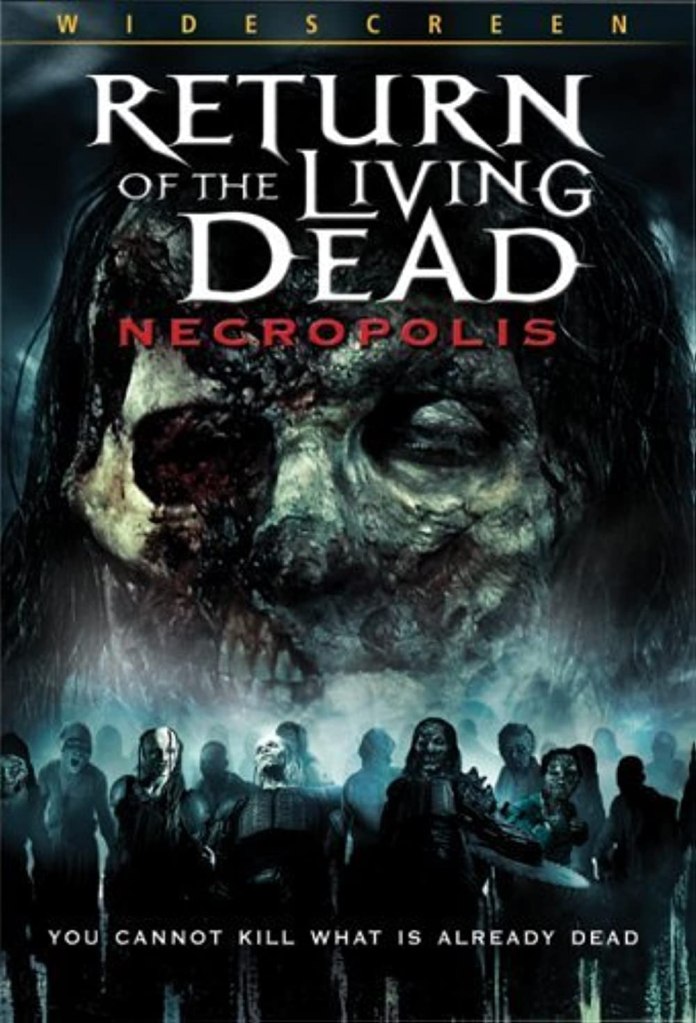
Return of the Living Dead: Necropolis (2005)

Directed by Ellory Elkayem [Other horror films: They Nest (2000), Eight Legged Freaks (2002), Return of the Living Dead: Rave to the Grave (2005)]

One of two Return of the Living Dead sequels from 2005 (the other being Rave to the Grave), Necropolis isn’t nearly as fun as I recall it being. Not that it’s as painfully terrible as the third movie was, but it was plenty cringy toward the end, and it was far from a memorably okay movie.

When I was a kid, though, I remember this being a blast. I only saw it once, but I do recall enjoying a decent amount of this. I entirely forget about the terrible uber-soldier zombie things at the end, which is probably good, because if I remembered that before watching this one again, I would have approached this with much more trepidation. As it is, nostalgia didn’t help much at all, and while I thought some portions were okay (in an early The Perfect Score-type way), Necropolis was pretty shabby.

Peter Coyote, as the antagonist, was pretty damn weak. So were most others, though, so he fits in fine. Amusingly, there’s something like seven different teen characters (eight if you count main character Julian’s younger brother Jake, played by Alexandru Geoana), and not many are memorable. Sure, Aimee-Lynn Chadwick is cute (she wears glasses, guys – how could anyone think otherwise?), Elvin Dandel had a little character (and Dandel also appeared in Headless Horseman and Pumpkinhead: Blood Feud), and John Keefe occasionally had an expressive face, but there’s not a hell of a lot going on with the cast.

Though much in the same vein as Chadwick, there are two other reasonably attractive actresses, being Diana Munteanu (“Hey, big boy”) and Jana Kramer. Kramer isn’t a humongous name; aside from being a character in One Tree Hill (which isn’t a show I’m not remotely familiar with), I’ve not seen her in anything. She is, however, a country singer, and while I’m not personally a big modern-day country fan, I do quite enjoy her song “I Got the Boy.” It’s sort of amusing to see that ten years before that song, she was in a movie of this type of quality.

I do love that quality motorbiking montage, though – it seems so incredibly dated (much like that beautiful hacking scene, which is slightly only more updated than the Jurassic Park hacking sequence). Like I mentioned earlier, a lot of this (especially around the break-in scene) reminded me of The Perfect Score, which came out a year earlier, and is a much more enjoyable film, especially given that this movie has an uber-soldier zombie much like the third movie had, which is always a questionable choice.

When I was a kid, Return of the Living Dead: Necropolis had the same type of charm possessed by Fido, and I don’t know exactly why I thought that. After seeing it again, it’s nowhere near good, and Fido is by all means a better film. The zombies here were weak, as was the story, and it didn’t have an emotional punch like you’d hope (even with a somewhat surprising death of a younger character). I hated the third film more (deal with it, brahs), but this is still a pretty underwhelming movie.

5.5/10

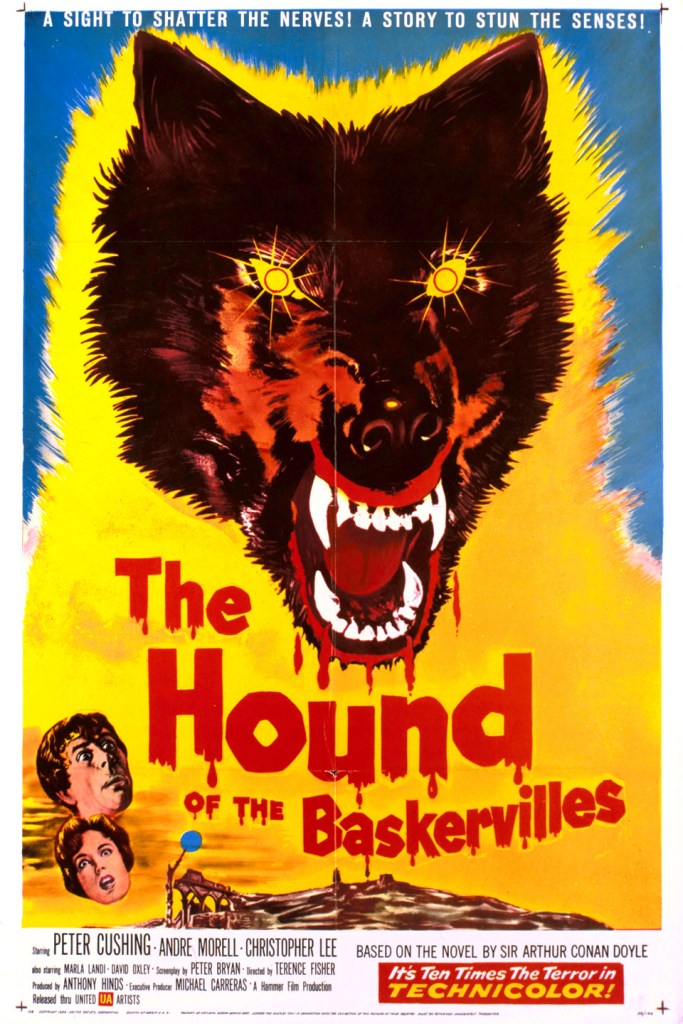
The Hound of the Baskervilles (1959)

Directed by Terence Fisher [Other horror films: Three’s Company (1953, episodes ‘The Surgeon’ & ‘ Take a Number’), The Curse of Frankenstein (1957), Dracula (1958), The Revenge of Frankenstein (1958), The Man Who Could Cheat Death (1959), The Mummy (1959), The Stranglers of Bombay (1959), The Brides of Dracula (1960), The Two Faces of Dr. Jekyll (1960), The Curse of the Werewolf (1961), The Phantom of the Opera (1962), The Horror of It All (1964), The Gorgon (1964), The Earth Dies Screaming (1964), Dracula: Prince of Darkness (1966), Island of Terror (1966), Frankenstein Created Woman (1967), Night of the Big Heat (1967), The Devil Rides Out (1968), Frankenstein Must Be Destroyed (1969), Frankenstein and the Monster from Hell (1974)]

The last time I watched this, I made a small mishap, and by that, I mean I watched it the same day as six other adaptations of this Sherlock Holmes story (specifically, the 1914 and 1929 silent films, the 1937 German version, the classic 1939 movie, the 1972 American television movie and the 1983 British television movie), and didn’t try to review the last three until the end of the day, when they all got mixed up in my mind.

So I had to take a step back, accept defeat, and watch this one again (not that it’s any hardship, believe me) in order to properly get my bearings on the film. And I think that I’ve come to a conclusion in doing so: I prefer the 1939 version just a bit, which, given the cast of this Hammer classic, might surprise some.

Now, it’s still a great film, and if you’re interested in some classic Sherlock Holmes, you’d be hard-pressed to find many films better, but I just don’t think that Christopher Lee was the appropriate actor for Henry Baskerville. Lee is, in many ways, an equal to Cushing – both are actors I enjoy immensely. Those cast in the same role in earlier films (such as Peter Voß and especially Richard Greene) had a younger look, whereas Lee is only slightly younger than Cushing, and doesn’t really look it.

My point is that, for the role of Henry Baskerville, I think a younger actor works better. I certainly have no qualms with Lee, and I do rather enjoy his performance in the film. I just don’t think he feels much like the character he’s supposed to be portraying, which is my biggest issue with the film.

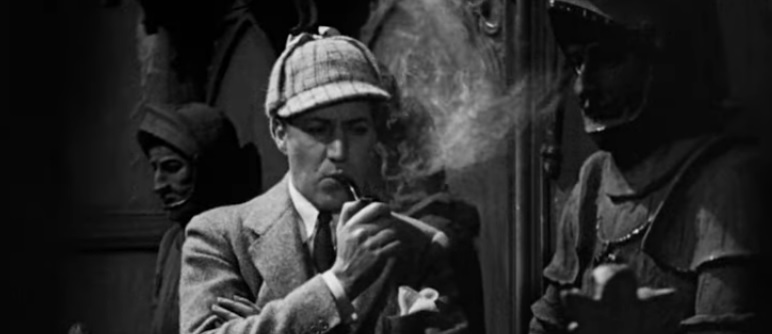
Otherwise, the cast is splendid; I loved Basil Rathbone as Holmes, but Peter Cushing is just as good. I think that Rathbone was a bit more fun (for instance, there’s no scene of Holmes trolling Watson while in disguise here), but both are great. André Morell (The Plague of the Zombies, The Mummy’s Shroud, Behemoth the Sea Monster, and The Shadow of the Cat) does decent as Watson. He’s not as bumbling as Nigel Bruce’s, but also not as straight as Fritz Odemar’s rendition.

Marla Landi, playing the daughter of Stapleton (himself played by Ewen Solon) was a nice addition, giving us a character different from what he had before. Ewen Solon (Jack the Ripper) was rather different from what Morton Lowry gave us (when it comes to Stapleton, I think my favorite performance was Fritz Rasp, from the 1929 version). Francis De Wolff (The Two Faces of Dr. Jekyll) was solid as Mortimer, Miles Malleson (The Brides of Dracula and Dead of Night) okay comedic relief as the Bishop, and John Le Mesurier made for a good Barrymore (for some reason, the 1939 version of the character was named Barryman, but every other version has been Barrymore).

The color gives a great sense of life to the moors. I don’t know if they ever look quite as creepy as they did in foreboding black-and-white via the 1939 movie, but they do look decent here. Also, the ending of this one is a bit different from previous adaptations – it still worked quite well, and I commend it for trying something a bit different.

One thing I did find somewhat amusing was the absence of the cane scene. Present in both the 1937 and 1939 movies, Holmes looks at Dr. Mortimer’s cane and deduces a great many things about him, an early way to lend credibility to his craft. That scene is indeed replaced here with something else. Another thing – the attempted murder of Baskerville in London – was changed here to instead come from a tarantula bite.

Otherwise, much is the same – there’s Holmes going to Baskerville Hall after others have left, the sub-plot with the escaped convict remains intact, the missing boot of Baskerville, along with a missing painting. If you’re familiar with the story, you’ll find most aspects here.

Another thing you’ll find, at least in small amounts, is some blood. During the opening origin of the curse, a woman gets stabbed with a curved blade (they have curved. blades.), and later on, we see the aftermath of what looks like a ritualistic killing which leaves little to the imagination. It’s Hammer at it’s finest, and it’s all the better that this story finally got made into a color film.

The Hound of the Baskervilles has always been a solid story, and while I prefer the 1939 version, this movie is no slouch. I’d certainly recommend it to fans of classic cinema, and if you’ve not seen either the 1939 version or this one, do yourself a favor and do so.

8/10

The Hound of the Baskervilles (1939)

Directed by Sidney Lanfield [Other horror films: N/A]

Perhaps one of the most famous versions of the story, the 1939 Hound of the Baskervilles is a fantastic movie that has a great cast, a quality moody atmosphere, and the most well-rounded mystery of the adaptations thus far.

So to put this in context, the same day I watched this version, I also watched the two silent versions (1914 and 1929) along with the 1937 German talkie. All of those had their strong points, of course, but along with the 1959 Hammer adaptation, this version is one of the strongest out there, and it really shows.

The setting, being the British moors, are great in all the movies, but it’s not really until this one when they really start to pop and stand out. That scene in which the butler is signaling from the castle (or, in this movie Baskerville Hall) to a mysterious person across the moors really shows just how eerie (and captivating) the landscape is, even in black-and-white.

And that cast – Basil Rathbone (Son of Frankenstein, The Black Sleep, The Black Cat from 1941, and Queen of Blood) does a fantastic Sherlock Holmes, and though I thought that Bruno Güttner did well in the 1937 version, Rathbone here takes the cake, especially with that impersonation of the salesman on the moors – while he had done a similar thing in multiple versions before (1929 and 1937), this is the first time he’s intentionally ran into Watson in disguise, which leads to a decently amusing scene.

On that note, playing Watson, Nigel Bruce was decent. I will admit to thinking more of Fritz Odemar’s 1937 version, as this one is more of the bumbling side-kick, but he’s still a good character. Morton Lowry isn’t a name I know, but he does pretty swell as Stapleton, and though he lacks some of the most interesting aspects of previous actors who’ve taken the part, his performance at the end was strong. Henry Baskerville was never a character I much cared for, but Richard Greene (The Black Castle) does a great job with him here, and really gives the character more life.

John Carradine played Barryman (a replacement of the previous adaptations’ Barrymore) and did so well, though I don’t feel he’s as distinctive as the character’s been in the past. Lionel Atwill is really the first actor to give prominence to Dr. Mortimer, and him being a big name in the genre (Island of Lost Souls and The Strange Door), he’s nice to see. Playing Frankland (a character who had a small role in the beginning of the 1929 version, but wasn’t really seen in any others), Barlowe Borland was pretty fun, in a cantankerous way.

Of course, being a film from this time, much of the dialogue is pretty pithy and amusing, and while that holds true for the 1937 German version, it’s a bit more memorable here. And likewise, that scene in which Sherlock Holmes is examining the cane, and using deductions to find out about the doctor, was both in this version and the 1937 version. I think it’s a good scene in both, but because this dialogue felt a bit more close to me, I’d give this one the edge.

And that ending reference to Sherlock Holmes’ heroin use – just beautiful.

When it comes to this story, I do believe this is one of the most enjoyable versions out there, and if you’re a fan of classic horror, you should do yourself a favor and check this gem out.

8.5/10

Der Hund von Baskerville (1937)

Directed by Karel Lamac [Other horror films: De spooktrein (1939)]

Ah, finally, after having watched the 1914 and 1929 silent versions, I get to hear speaking once again. It’s in German, sure, but it’s also subtitled, so no problems there. This is a pretty good version of the story, but compared to many other versions, I have a hard time believing it really stands out.

Certainly the quality of the print I viewed wasn’t great – it seemed like some VHS rip, which of course has charm to it, but it would have been nice to see a little cleaner print. Even so, that doesn’t negatively impact the film, especially since I’m just glad the copy was in German with English subtitles thrown on.

The movie itself follows the main traditions the 1929 version did – Holmes not accompanying Watson to Baskerville castle, the escaped convict on the moors, and actually having a strong role for Watson (unlike the 1914 version) – and it did so competently enough, but I still think that some parts could have been trimmed (such as the somewhat unnecessary opening regarding the origins of the curse).

I will give it that this version has my favorite Sherlock Holmes thus far (compared to the 1914 and 1929 versions). Here, Holmes is played by Bruno Güttner as a rather analytic and none-too-sensitive Holmes, which is the type of Holmes I like. He has the confidence that 1914’s Alwin Neuß had, but he also had that analytic character trait (case in point: by looking at a cane, he can tell quite a bit about Doctor Mortimer) that wasn’t really shown in either of the previous versions I’ve seen today. What makes this even more impressive is that Güttner’s only been in a total of three films.

They also did Watson pretty well, and better than they have up to this point, having a Fritz Odemar portray him. Here, he doesn’t really come across as a pointless side-kick but a deductive individual of his own right (and investigative, as seen by his opening scene in which he’s looking at the ash remains of 117 types of cigarettes and cigars for comparison of some sort). Not that Odemar was perfect, but I did quite like his performance here.

Fritz Rasp appeared as Barrymore, and though he lacks the character the 1914 Andreas Van Horn got, he did a fine job, and related, Rasp was also in the 1929 version playing Stapleton. Here, Stapleton was played by Erich Ponto – Ponto did a decent job, and I sort of liked his seemingly-weak physique, but he sort of lacked the pache that the previous two Stapleton’s (Friedrich Kühne and Fritz Rasp) brought to the table. And as for Henry Baskerville, well, Peter Voß did okay, but his character has never really impressed me, and it’s no different here.

I think the mystery and horror elements were generally done pretty well here, and while the quality of the film wasn’t great, most of the scenes on the moor weren’t too marred, and the sinister aura that you’d hope to find among the most thrilling of those scenes was present still.

While both of the silent versions were also German films, it’s nice to see a version of the film with sound so I can hear the dulcet tones of the German language. As you can imagine, the cast of this film is somewhat insular (especially compared to the cast of the 1929 version, which had an American and an Italian in leading roles), with this being made during a somewhat bad time for the country, but it’s still an okay version of a good story, and sticks to the necessities, and comes out fine.

7/10

Der Hund von Baskerville (1929)

Directed by Richard Oswald [Other horror films: Der Hund von Baskerville, 3. Teil – Das unheimliche Zimmer (1916), Der Hund von Baskerville, 4. Teil (1916), Nächte des Grauens (1917), Das Bildnis des Dorian Gray (1917), Unheimliche Geschichten (1919), Nachtgestalten (1920), Cagliostro – Liebe un Leben eines großen Abenteurers (1929), Unheimliche Geschichten (1932)]

Though this came out 15 years after the 1914 adaptation, I think it’s arguably on equal grounding. Certainly this version of The Hound of the Baskervilles improves on some levels than the earlier silent movie, but at the same time, I think a few things were holding it back from making more of an impact.

One thing I did appreciate was a more traditional version of the story, and by that, I mean the version of the story I’m accustomed to. Here they brought in some elements that were missing from the 1914 version, including Watson and Holmes appearing and then disappearing for a good portion of the story (this classic element of the plot couldn’t have happened in the 1914 version, as, in unique fashion, Holmes actually went to investigate the case without first being summoned by Henry Baskerville, so the classic, “I can’t leave London, but take Watson with you,” line was absent).

Worth mentioning is that while Watson did appear in the 1914 version, he was such a non-entity that he wasn’t even credited.

It’s not that this addition instantly make the movie better, by any means, but it certainly was nice to see, as I was wondering at what point that sub-plot would make it into the movies.

What really gives this film a different and potentially more powerful aura is the strong atmosphere, especially in the opening sequence with the elder Baskerville being terrified of the howls coming from the stormy night, and the group of friends around him mostly laughing the superstitions off. The storm is great, the tension is great, and the film kicks off with such a fantastic atmosphere. I can also add that the black-and-white looked quite crisp, and helped in that endeavor (and yes – while the 1914 version was tinted, this version is in black-and-white).

It should also be said that this version isn’t complete – some sequences are missing, and to get around that, this reconstruction summarizes the missing moments while giving us stills of the characters introduced during those scenes (such as Fritz Rasp’s Stapleton and Betty Bird’s Beryl). Some might be bothered by the missing scenes, and I hope they turn up at some point, but I thought they did a pretty good job working with what they had, and it was certainly more watchable and engaging than the TCM restoration of London After Midnight, so there’s that.

If that’s one last issue I have, it’s that I didn’t care all that much for Carlyle Blackwell, who played Sherlock Holmes (at least in comparison to the 1914’s Alwin Neuß). It’s not that Blackwell gave a particularly poor performance – he most certainly didn’t – but he was younger and a bit more handsome than I usually expect from a Sherlock Holmes, and while far from perfect, I did think the 1914 rendition done by Neuß was better.

No complaints about the rest of the cast, though – playing Stapleton, Fritz Rasp brought a quality quiet insanity with him that wasn’t really in the 1914’s Friedrich Kühne’s version. Obviously Rasp and Kühne were going for different things – Kühne a traditional, mustache-twirling fiend and Rasp a mentally-unstable psychopath – but both had solid respective performances, and here, I thought Rasp did great.

As Henry Baskerville, Livio Pavanelli did decently, though he wasn’t anything special. Playing his love interest was Betty Bird, who did get more character than Baskerville’s love interest in the 1914 version (and that character, Lyons, does appear here, though in a different way), was likewise just okay. The butler Barrymore (Andreas Van Horn in the 1914 movie), played by Valy Arnheim, lost a bit of story that he previously had, but also gained a little something with the added escaped convict on the moors subplot, and Arnheim did well with that.

And lastly, playing Watson, George Seroff was pretty strong throughout most of the film, though his character gets overshadowed by Holmes (as one can naturally expect) by the end, and so he doesn’t leave all that much of an impact.

The conclusion presented here is quite a bit more action-packed than what we got 15 years ago, and it’s all a decent amount of fun (albeit I couldn’t help but notice Watson, as it seems he always is, is treated a bit like a doddering fool at times), and the use of shadows and other film techniques such as flashbacks, slow camera-swivels and close-ups make this film far more technical than what the 1914 version managed (though with a difference of 15 years, one would certainly hope that’s the case).

When all is said and done, Holmes said it best: “Supernatural dogs do not leave footprints,” and while this movie was enjoyable to watch, I can’t say that it’s the pillar of silent horror despite having many strong elements present.

7.5/10

Der Hund von Baskerville (1914)

Directed by Rudolf Meinert [Other horror films: N/A]

Being the first adaptation of the only Sherlock Holmes story really considered horror, this early German production has been a film I’ve long wanted to see, and luckily it came out as a special feature on Blu-Ray on the 1929 Der Hund von Baskerville disc set, so now I’ve finally seen it.

And it’s not too shabby. Oh, it’s not great – this is far from the finest version of the story out there (which I suspect is the 1959 version, but I need to revisit that first before committing to that) – and this version is focused far more on the suspense (the mystery aspect isn’t really relevant here, oddly enough) than on the horrors of the hound, but given that this came out 1914, I doubt anyone could find that deeply surprising.

Certainly there’s plenty of amusing things in the film to keep your interest, especially since the audience is pretty much told who the culprit behind the attacks is, along with why, pretty early on in the film. From a scene in which a character blows up a mailbox to prevent a letter from being sent to the ludicrous-yet-fun central focus of the movie, much of this German silent is a hoot.

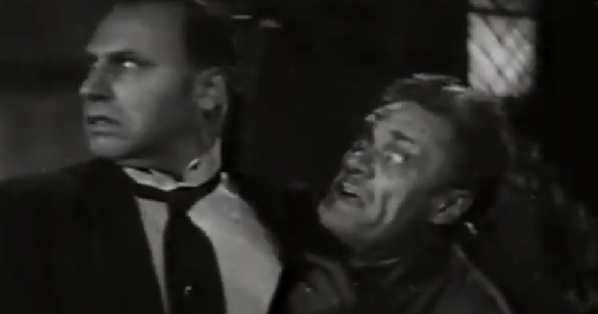
Afraid for his life due to the curse of the Hound of the Baskervilles, Henry Baskerville (Erwin Fichtner) sends for the famous Sherlock Holmes (Alwin Neuß), but due to the mailbox being blown up by a sinister character (Friedrich Kühne), the letter doesn’t get there. Instead, the sinister character impersonates Holmes in order to get close to Baskerville and kill him. Once the real Holmes finds this out, he eventually impersonates the other guy, and the FakeHolmes and RealHolmes meeting toward the end just cracks me up.

Another quality sequence is RealHolmes’ first action sequence, in which he notes that a bomb has been placed within the castle, and alerts Baskerville. While the fuse is getting closer to the explosive, a calm Holmes, unperturbed that in twenty seconds he, along with the castle, will be blown up, asks for a light. Baskerville looks at him like he’s insane, and the woman he’s courting (Hanni Weisse) has long since fainted. Undaunted by this, Holmes just shoots the lit fuse, and upon picking it up, uses that to calmly light his cigarette.

By no means is this version of the story fantastic, but as I said, it is decently fun, and I personally found the ending satisfying, especially for Barrymore (Andreas Van Horn), a character who was given the short stick for much of the film. Alwin Neuß makes for a fine Holmes, one that’s certainly confident and, showcased when he just fucks with the other guy and impersonates him, has a bit of a trolly nature to him. Friedrich Kühne makes for a solid antagonist, and he and Neuß work well together.

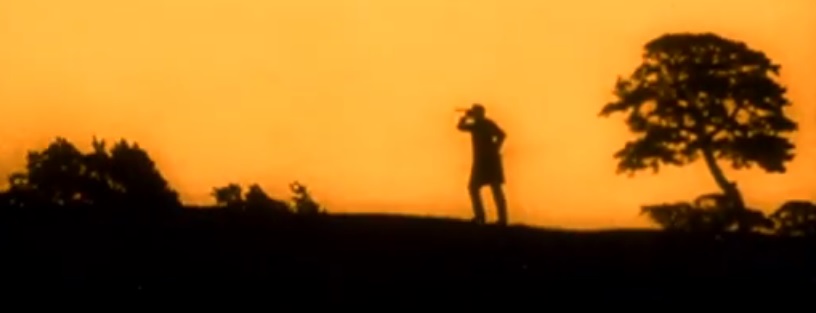
I do wish we saw more of the hound – even an attack that I was hoping for (set up beautifully, with a character and the hound in silhouette in preparation) was instead foiled by the reaction of the horses to the hound – but again, this is 1914, and the “fiery hound” as this film describes it, will have other chances to strike terror in the hearts of men.

As it was, Der Hund von Baskerville made for a pleasurable viewing experience, and I for one am just ecstatic that it’s been found and put back together so beautifully (the score and tinting are masterfully done), so even if it lacks the thrills you’d hope, it’s still the earliest rendition of the story possible, and a fine silent film to watch.

7.5/10

Wilderness Survival for Girls (2004)

Directed by Eli B. Despres [Other horror films: N/A] & Kim Roberts [Other horror films: N/A]

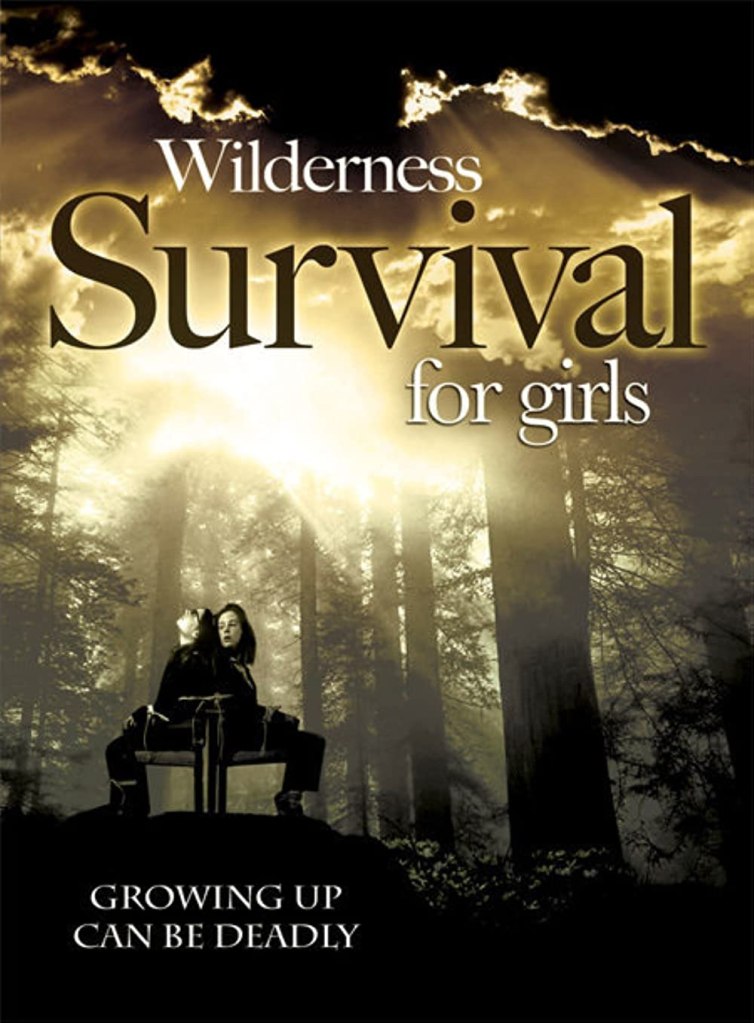
After years of wanting to see this, I really didn’t expect something this atypical. Not that Wilderness Survival for Girls is a bad movie or anything, but it’s not really the type of movie I was expecting, and I think that some people, if they go in with the wrong preconceptions, may walk away from this rather disappointed.

I didn’t expect the film to be anywhere near as low-budget as it was, for one thing. This doesn’t hurt the movie, because, as you all may know, I enjoy quite a few low-to-no budget films, but I was just somewhat taken aback by exactly how amateur this film came across.

What is more important, and definitely far more crucial, to my final verdict is the plot, and I’ll say that I was expecting something significantly different, but it’s also worth saying that this movie did have some feeling and heart which helped it break past what could have been a somewhat dull affair.

And to be clear, I guess I should briefly discuss my expectations – I thought this was a slasher. Why? I don’t know – I guess that, to me, it sounded like one. Some teens go to a cabin and get stalked and killed off by some mysterious figure? Typical slasher stuff, I thought.

Boy, was I wrong. Instead, we follow these three young women who go to this cabin and just hang out for forty minutes or so. They joke around, show off some skin, give the audience a clear view of their varying personalities, and show the small cracks in the friendship, and also sprinkle in a few small, implied character traits that pop up later. They also get high, because these three know how to have a good time.

There’s nothing horror about any of this so far, to be clear. I guess at one point, the three think they see some mysterious guy watching them, but at best, it’s mildly suspenseful, and doesn’t lead anywhere at that time. What it lacks in horror, though, this first half of the film makes up for in giving us three very fleshed out characters, and I love that. These aren’t your average women of horror – these three have a lot of character and personality, and I dig it.

It helps that the performances are great. We have Clea DuVall, Natasha Lyonne, and Velma. Okay, that’s my attempt at a joke, but Jeanette Brox reminded me throughout of Clea DuVall (circa How to Make a Monster) with her somewhat dorky, timid character. Megan Henning, with her glasses and attitude, got me thinking Velma. And the carefree, lower-class character played by Ali Humiston had Natasha Lyonne’s look and attitude from American Pie down beautifully. The three work great together, and the friendship felt authentic.

In many ways, a lot of this film feels more liking a coming-of-age drama with the three teens, unsure of their futures (two of them are going to college while one isn’t), unsure of their sexualities, unsure of love, just hanging out and candidly talking about things such as drugs, sex, masturbation, and their problems. It might be dull to some, but like I said, I think it gives a lot of character to consider, and it all plays in once the action starts ratcheting up.

Not that the movie is ever really inundated with action; once a mysterious man comes to the cabin and the girls, afraid and also high, tie him up believing him to not be cut of clean cloth, the movie certainly becomes more suspenseful, but there’s really only a few distinct moments of actual action. We got a lot of character from the girls, and now we examine this random guy who may or may not be a threat, and based on what the girls have to work with, it could definitely go either way.

If you’re going into this movie expecting some run-of-the-mill slasher plot, like I was, you will definitely be surprised. For some, the movie may not be their cup of tea. Once I got past my slight confusion, though, I was drawn into the characters and the dilemma they faced, and I felt for the characters when they talked about feeling unloved, or when they go for the person they love and are knocked down, or when they bite back and forth over personalities (Debbie telling Ruth’s character that Kate has called her stupid was a heart-breaking, yet very real, very real conversation).

Do I think that the movie is a masterpiece? No, not really. And like I said, I think it has the potential to turn some horror fans off. For me, though, Wilderness Survival for Girls was a pleasant surprise, and what it lacked in the slasher feel I was expecting, it more than made up for in fully-formed characters and great, real dialogue. This is definitely a movie that, while I didn’t love, I won’t be forgetting.

7.5/10