Old Strangers (2022)

Directed by Nick Gregorio [Other horror films: N/A]

I didn’t have much expectations going into Old Strangers. I liked the idea of the plot, and just went in hoping for the best. After seeing this, while I don’t think the film’s great, I definitely don’t think it’s that bad, either.

The plot is what pulled me toward this one – three friends meet up at a secluded cabin in a mountain town, and run across something “dark and terrible in the deep woods.” I had no idea where exactly the movie was going – it could have been some werewolf story, perhaps another monster of some kind. Maybe dangerous plants, maybe some alien parasites. Truth be told, “dark and terrible” does not a descriptive quality make.

Because of that vagueness, I feel I can’t touch too much on the actual details here. The good thing about that is Old Strangers is a short film – it runs for just an hour and two minutes – so if you want to figure out what that “dark and terrible” thing is, it won’t take too much of your time.

I can say, though, that there are minor elements of body horror here, a little bit of slasher, and a little bit of unknown organisms. We are given a clearer picture toward the end insofar as the nature of the evil is concerned, which was nice, but it’s also fair to say that given the film was quite short and limited in scope, it doesn’t quite have as much meat as one may like.

There’s no doubt, though, that the film looked quite nice. Truth be told, when I watch a lower-budget film on Tubi, I expect, well, lower-budget camera-work. That’s not the case here, as Old Strangers had rather solid cinematography. I was actually surprised by some of the shots and techniques (such as a timelapse, which looked rather nice) used here. There was even a sequence which showed a meteorite flying through space, which didn’t look amazing, but certainly felt ambitious.

Performances were also pretty good. My personal favorite was Ted Evans, as I liked his style, and he seemed a cool guy, but Madeleine Humphries made for a fair focal point. Colton Eschief Mastro didn’t get quite as much time to shine, but he was good with what he had, and director Nick Gregorio even popped up in a scene. I actually expected to see his character again toward the end, just to tie a few more things together, but as the man said when he looked into the used Monopoly game, “no dice.”

Like Last the Night, the movie is very much of the time period. These three friends are escaping the quarantine they’ve been under, and before getting together, all got tested, showing each other the results before removing their face masks. When they’re interacting with a police officer, their face masks stay on, only to be taken off once a character points out they’re standing six feet apart. There’s also references to Airbnb and Kanye West’s amusing 2020 presidential run. It’s a product of it’s time, and so feels fresh, while also keeping with a traditional sense of suspense and science-fiction fun in the latter half of the film.

There’s a lot to appreciate about Old Strangers, despite the lack of depth I’d have personally preferred. The movie looks damn nice, and while it was short, what with the performances, plot, cinematography, and honestly, many aspects, it stood out quite nicely. My one concern is that I feel it could have had a bit more to it, and because of that, won’t end up being that memorable, ultimately. Still, if you want an okay time, I don’t think checking this one out would be that poor an idea.

7/10

Behemoth the Sea Monster (1959)

Directed by Eugène Lourié [Other horror films: The Beast from 20,000 Fathoms (1953), The Colossus of New York (1958), Gorgo (1961)]

I have to say, I forgot how decent portions of this film are. Better known by the title The Giant Behemoth, Behemoth the Sea Monster is a decent film. I don’t think it necessarily stands out among other giant creature movies from the late 1950’s, but it is decent.

Personally, I love how hard they hit on the dangers of radiation from atomic testing in the beginning, having a marine scientist (Gene Evans’ character) warn of the dangers, which was nice, and I only wish people listened and dismantled the bombs back then instead of going through the Cold War for thirty more years. Like Godzilla did before, this film is a nice argument against atomic weaponry, and I appreciated it.

Things moved pretty quick for most of the film. I will admit that toward the final twenty minutes, during the beast’s attacks in London and the commission trying to come up with some way to defeat it, I did feel it dragged a bit. Partially, I think, because, as fun as the scenes of the rampaging behemoth were, some of them were a bit on the repetitive side.

Of note-worthy performances, there’s really only three, and even though they did well, it’s not as though any of the three were exceptionally memorable. Gene Evans (Peopletoys) and André Morell (The Plague of the Zombies, The Hound of the Baskervilles, The Mummy’s Shroud, The Shadow of the Cat) worked well together, especially during the first half of the film when they still had some disagreements, and though he really only got one scene, I loved Jack MacGowran’s (Dance of the Vampires) exuberance.

Admittedly, but unsurprisingly, the behemoth was a bit on the hokey side, but if I’m being honest, I found it more charming than anything else. Seeing it flipping over a ferry or destroying a helicopter, not to mention all of the cars it smashed, was a decent amount of fun, and though, as I said, I do think some of the attacks toward the end were a bit longer than need be, I still appreciated the creature.

If I’m being honest, I wasn’t looking forward to revisiting this one. All I remember from my first time seeing this is thinking that it was a poor man’s Beast from 20,000 Fathoms. It’s actually decent fun, at least near the beginning, but I do think it tapers off a little. Ultimately, I think it falls somewhere around average, but if you’re a fan of late 50’s horror, it’s worth seeing.

7/10

Mold (2022)

Directed by Michael Crum [Other horror films: Cypress Creek (2014), Anna (2017), Fall of Grace (2017), Lake Fear 3 (2018), Anna 2 (2019)]

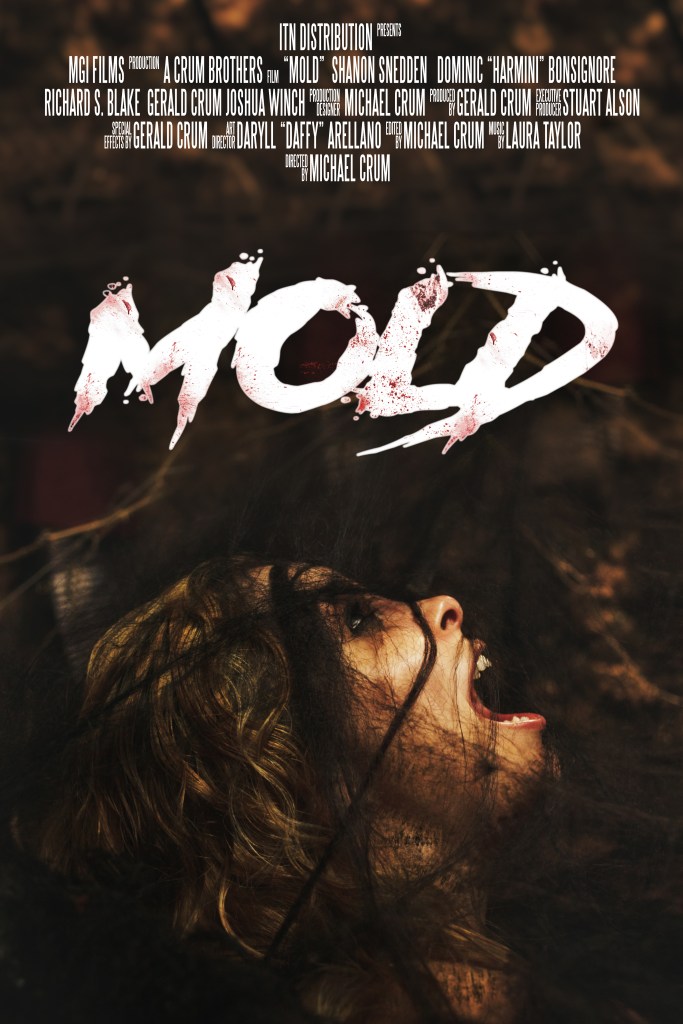
To be frank, I was expecting far more from Mold than what I got.

Admittedly, that’s my fault. When I read about this movie on IMDb, I was sort of hoping for something like Splinter. I didn’t know that instead, it’d be a mix of body horror and monster movie, and unfortunately, neither of those sub-genres do much for me (especially the body horror aspect).

At first, though, things are okay. There’s some decent cinematography, interesting lighting at times, and some occasionally solid sequences. For instance, there’s a random softball scene that was solid (though it also didn’t tie into anything, as far as I could tell, and for a scene so dramatic, to not have it relate to anything else in the film, just felt bizarre beyond words).

Despite those positives, I couldn’t get into this past the first 25 minutes. Once the first mold monster pops up, I was outtie. See, there’s three main characters – one is sort of trapped in his apartment for a good portion of the film. The other two are trapped in another apartment. To add to the joy, these mold monsters (yes, there are multiple, and no, we never learn a thing about their origins) primarily hunt by hearing. They don’t seem to have sight, but they can hear with the best of them, so the characters don’t often speak.

And it was just awful. For large portions of the film, there was absolutely minimal dialogue, which, perhaps in better hands, could have been quite suspenseful, but personally speaking, I was bored out of my fucking mind. I was mentally gone by the end of this, and given that I thought the first twenty minutes really did have promise, it was a damn disappointment.

Oh, and along with large swaths being free of dialogue, the last two-thirds of the film had some dark scenes at times. It was sometimes hard to tell what was actually going on, and that didn’t do Mold any wonders either.

I don’t have much to say about the cast. My favorite character was played by R. Steven Blake – this guy didn’t get much screen-time, which is a tragedy, as his stereotypical gay persona was a lot of fun. Honestly, he was the one fun thing in the film, and he appears the least, which was #disappoint. Leads Gerald Crum (Anna, The Ouija Experiment 2: Theatre of Death, Blood Vow) and Shanon Snedden (Cypress Creek) did very little for me, though I thought they had potential, and I never cared for Harmini’s character. Harmini, on a side-note, seems to be a rapper from Texas, so if you’re curious as to why he just has the one name, well, there you go.

One thing I will admit to appreciating, aside from the few aspects I listed above, is that a public domain movie appears here, and it’s not Night of the Living Dead, which was a nice surprise. Instead, we get some action from The Screaming Skull, which is a movie that I swear I’ve seen around three times, but I’m not positive I’ve ever gotten through it without falling asleep. Still, it was nice to see a random public domain film like that utilized as opposed to more popular options.

More than anything, Mold was just tedious to get through. The large portions with minimal dialogue were tough to watch and keep focus on, and honestly, I just feel really disappointed about this one. It had promise, but it couldn’t do anything with it, at least in my opinion.

4/10

Desolation Wilderness (2011)

Directed by Robby Massey [Other horror films: N/A] & Derek Mungor [Other horror films: You Are Not Alone (2014)]

Desolation Wilderness is a difficult film. On the one hand, I found it decently engaging in it’s experimental, somewhat free-form style, but on the other, it’s hard to get a feel on the conclusion, especially as it doesn’t feel much like a conclusion.

Which I’m sure is partially the point, or perhaps not, as the film may not have wanted to make any point. The base story is solid – two friends go to a secluded cabin to record an album, and slowly things deteriorate (be it reality, mental stability, who can say?), and come the final 15 minutes or so, some things happen.

It’s obviously not a conventional movie, which I rather dug early on – the friends driving up to the cabin was a pretty intriguing sequence in some ways (with great cinematography). Also worth mentioning, most of the film is black-and-white, save for the final ten minutes, which is color. As to whether that signifies something, I couldn’t say, but I can only imagine the film lends itself to a lot of interpretations, which, to quote the Vimeo page for the movie (which may not even be up anymore, so I’m happy I saved this quote), seems to be the point:

“Robby Massey and Derek Mungor conceived of a picture, which wouldn’t present the viewers of its ideas, but invite them to develop their own based wholly on their subjective experiences. Aided by Ralph Jimenez and Darren Orlowski, they approached each sequence in the picture both with an open mind — ready for improvisation and direction based on feeling — and a careful attention to detail — making each choice carefully as to not reveal too much of a discernible theory. Robby Massey and Derek Mungor’s respective theories, in fact, were purposely not revealed to the other until well after the picture was finished — a choice made to insure true misdirections and no solid through-line. (The true through-line, as it is, possibly will never be revealed.)”

No doubt such an approach to a film is fascinating, and Desolation Wilderness is a unique experience, but because so much is left to interpretation, there’s a decent amount about the finale that’s incoherent. I get it – creative expression – and again, I’m not really the intended audience for movies of a more experimental bent – but I would be lying if I said that I didn’t want something – one thing – to be a bit more clear-cut.

Most of the creepiest things in the film don’t pop up until pretty late. You do have what I believe to be a leech early on, and there are some unsettling moments here and there (bolstered by somewhat awkward conversations at different times), but the creepiest stuff, including some messed up television programming, comes in at the end. There’s also some elements of what I take as mental deterioration – the two of them at one point don’t know when the last time they ate or sleep, nor how long they’ve been there – and I dug that.

Personally, it’s a hard movie to truly get a handle on. I appreciated it a lot more than many other more experiment films (ones that come immediately to mind include Eraserhead and Multiple Maniacs), and I thought both Robby Massey and Derek Mungor did a great job, and it gives you something to chew over, but I don’t know if it’s necessarily something I’d enjoy watching again.

What I can say is that Desolation Wilderness is a unique film, and I’d recommend it to people who want something more atypical. I can’t say that it’d appeal to conventional horror movie fans, and I can’t even say this was intended as a horror movie, but it’s definitely something different.

5.5/10

The Cheerleader Sleepover Slaughter (2022)

Directed by Christopher Leto [Other horror films: If I Can’t Have You… (2010), The Housewife Slasher (2012), Die Die Delta Pi (2013), Rough Cut (2013), Theatre of the Deranged II (2013, segment ‘My Aunt is Coming to Town’), Crazy Lake (2016), Sammy Slick: Vampire Slayer (2023), Psycho Science (2024)]

I was careful to approach this one with mild expectations. From the first time I saw the title, I wanted to give this one a go, but I also knew that the chances it’d be a good movie were somewhat slim. Luckily, though, my hesitation wasn’t borne out, and while The Cheerleader Sleepover Slaughter certainly had some flaws, I thought it was a decently fun movie.

For a lower-budget independent film, I thought the production value looked quite nice. It reminded me a bit of Truth or Double Dare (TODD), albeit with quite a bit more feeling. This was apparently filmed in Florida (in New Port Richey and Oldsmar, specifically), which was fun. While I was watching it, I got the sense it was a coastal community, but I was thinking the Northeast, perhaps in Maine or Massachusetts, so I was half right.

To be fair to those who didn’t care for this one, it is true that there’s some obvious padding here. Given the total length of the movie is just an hour and two minutes, it’s not like they padded the hell out of it, but there were two scenes which definitely could have been cut down – we see the cheer squad performing their moves during a game, which is something like a two-and-a-half minute sequence, and we also get two minutes of a ‘twerk off.’ Certainly I can imagine worse ways to spend time, but even so, that sequence didn’t just look ridiculous, but also felt longer than necessary.

It’s also true that the movie doesn’t really reinvent anything. There’s nothing new or innovative here. I did appreciate the opening titles of the film – it’s designed as though the cast and crew were in a yearbook, so that was cute – but everything here’s been done before. The kills weren’t great, the finale was just so-so, and given the film’s so short, it’s not like we got a whole lot of understanding on the characters we had.

And boy, were there characters.

I’m not great with faces. If I don’t know the actor or actress, I’m screwed, and so I often keep a handwritten list of the characters and, if possible, any attributes I can link to them (for instance, black wavy hair, or straight bleach blonde hair). It’s quite useful when watching slasher films that can have 8+ different people who, to me, all look quite similar.

Here, we have Lisa (Indica Jane), Summer (Mikayla Kane), Ali (Vera Marlowe), Renee (Sydney Spaulding), Kelly (Aja Toombs), Brandy (Sydni O’Nan), Marcy (Sushii Xhyvette Holder), Kayla (Michelle Jones), and Lori (Taylor Herd), and for the guys, we had Jason (Jayden Leto), Joe (Collin O’Neill), and Bo (Beux Leto). True, the film did start out with a cheerleader roll call, with each of them calling out their names, but it still took a while to fully separate some of these characters.

On that note, it’s hard to say that there was any one stand-out performance. I really did like Jayden Leto here; I found his character fun, not to mention sassy. Taylor Herd made for a decent focus, though I’d have preferred if a bit more of her character had been delved into. The others all did well (though I think that Aja Toombs did have one bad piece of dialogue), but I don’t think any of them made a giant impression.

Oh, another thing I felt may be worth mentioning. While there’s not a ton of nudity in this film, there are a couple of spicy portions that may be of interest to the lads out there, not to mention the ladies who lean toward the ladies. I’ve largely felt I’ve grown past the point where I point out nudity in a film, but in this case, should that be something you look forward to in a movie with both “Cheerleader” and “Sleepover” in the title, you probably won’t be disappointed.

Here’s another thing that I learned throughout the course of writing this review: there’s a piece of dialogue toward the finale that rang a bell to me, dealing with murders at a sorority house. The dialogue was quite specific, and I was sure it was a reference to something. After looking through Christopher Leto’s other films, I noticed that he was one of the directors behind Die Die Delta Pi, a movie which I saw back in 2017. This movie appears to be a loose sequel. To be sure, if you’ve not seen Die Die Delta Pi, I can’t imagine you’d dislike this film any more, but it does give a piece of added context, and I’m at least glad I have vague memories of the film.

Certainly there have been better independent slasher films. One that I always have to mention is Don’t Go to the Reunion, which I found great. Still, The Cheerleader Sleepover Slasher had a lot of charm to it, and despite the padding and lack of interesting kills, I had a decent time with this one. It’s nothing mind-blowing, but if you enjoyed Bring It On: Cheer or Die, then I think this would work for you also.

7/10

Körkarlen (1921)

Directed by Victor Sjöström [Other horror films: The Wind (1928)]

I won’t mince words – it’s hard for me, personally, to argue that this Swedish classic is a horror film. No doubt it’s a great film, but horror? That’s not an easy case to make for me, but luckily, I have liberal definitions of the genre, and while this might be straddling the line, ultimately I think it can fit.

Obviously, as anyone who has seen The Phantom Carriage (the title it’s best known under) knows, it’s primarily a morality tale. Many films we call horror from the 1910’s generally were – look at Der Student von Prag (the dangers of making deals with the Devil) and The Avenging Conscience (or, as the subtitle states clearly, Thou Shalt Not Murder). Both of those have clearer horror elements than this one has, and were it not for a scene in which a drunk man, in anger, was using an ax to chop a door down to get to his wife, I might not even personally count it.

Whether or not it counts in the genre though is a discussion I don’t want to get deep into. I’m a firm believer that films are subjective – if someone watches this film and sees it as a horror film, that’s not my business, and same as if someone watches it and sees only a supernatural melodrama. I personally think it leans horror, and I can only base the movies I add to this blog based on my personal feelings, so there you go.

Now, I did have some issues with the message of this movie (which, on an interesting sidenote, is apparently based off a novel by Selma Lagerlöf to warn of the dangers of consumption, the term used for tuberculosis at the time), and if you know some of my leanings, you may already know them. A point of the film is that those who are wasting their lives drinking need to repent (Jesus is the only option given – I wonder, if people repent to Allah, if that would count), and seek salvation.

I won’t harp on this. I know it was a different time, and to this day, the majority of the people worldwide believe in some God or gods. I don’t – to my knowledge, there’s no logical reason to accept the belief in a deity of any kind, nor if one did exist, would we need to seek “salvation.” The fact that I’m an atheist, and have been for most of my life, doesn’t mean I don’t see the beauty of the film, nor the emotional impact toward the finale, but it does turn me sour to some of what the film was pushing.

Regardless of that, I can’t deny the narrative was beautifully-structured. Using flashbacks within flashbacks and stories within flashbacks, this is a bit more complicated than one first might expect when they notice the film came out in 1921. It’s definitely a joy to see, and though the film is around an hour and 50 minutes, you’d be surprised by how quick the time goes by, a testament to the engaging story.

Among the most important performances are those given by Victor Sjöström, Tore Svennberg, and Astrid Holm. Sjöström (who also directed the film) had a fantastic emotional range, and did an amazing job playing a character who is so often despicable. On the flip-side, we have Astrid Holm, who was probably one of the most angelic characters seen in film. Tore Svennberg looks good as the driver of the phantom carriage, and his performance was solid.

The base idea around the phantom carriage – a carriage that goes around to pick up the souls of the deceased – was wonderfully-realized. Using double exposures, the spirits in the film just look amazing, and I’d put it against any modern-day special effects. It’s just damn impressive, and holds up to this day.

Though the horror within Körkarlen is limited, it’s still a classic worth seeing, and given that Sweden has never been one of the go-to countries for foreign horror (Germany, France, the United Kingdom, and Italy are hard to beat), horror fans should be happy with what they get. Classic movie fans should be overjoyed – The Phantom Carriage, despite personal misgivings with elements of the message, is a well-made and quite beautiful film, one very much worth experiencing.

8.5/10

Eight Legged Freaks (2002)

Directed by Ellory Elkayem [Other horror films: They Nest (2000), Return of the Living Dead: Necropolis (2005), Return of the Living Dead: Rave to the Grave (2005)]

While not necessarily an amazing movie, simply put, Eight Legged Freaks is a fun one. It’s a decent mixture of humor and suspense, and while there might be a couple of silly scenes, for the most part, they do a good job of trying to keep things even.

I think one reason this works would be the characters, many of which are quite good. Some movies give you protagonists that just don’t cut it, and may be difficult to connect with, but the characters here are mostly grounded enough, and some of them are more memorable, at least more memorable than what you might expect from a movie like this.

Kari Wuhrer (Hellraiser: Deader, Thinner, Final Examination) and David Arquette (Scream, Ravenous, Riding the Bullet) make good leads, Wuhrer’s character reminding me a bit of Elisabeth Shue from Piranha. Doug E. Doug’s character was a lot of fun, what with being a conspiracy theorist, and for a younger actor, I liked Scott Terra. Rick Overton had a bit of a rough start, being mainly comedic relief, but I grew to enjoy him, and of course, we have a younger Scarlett Johansson to keep things interesting.

Honestly, a lot of the CGI is quite iffy, but I don’t really think it takes much away from the film. Personally, I dug seeing the different types of spiders attack – who doesn’t like the trapdoor spiders taking out ostriches, or the hella cool motorbike chase with the jumping spiders? So if the effects have aged poorly at times, I don’t think that makes Eight Legged Freaks any less entertaining.

I also liked the background story about whether or not the townspeople should agree with selling their land, given the town’s desperate economic situation. It makes the final scene a bit more emotionally satisfying. The fact Leon Rippy’s character never got comeuppance (at least on screen – I like to think that he wasn’t re-elected as mayor) was sort of troublesome, but most of the finale was pretty solid and, again, fun.

And really, that’s what Eight Legged Freaks has to boast. It’s not a great movie, but if you’re looking for something that’s not too deep, it can be a pretty fun time. For a more comedic and less terrifying spider adventure than what you could get from Arachnophobia, this movie is worth it.

7.5/10

La dama rossa uccide sette volte (1972)

Directed by Emilio Miraglia [Other horror films: La notte che Evelyn uscì dalla tomba (1971)]

Known under the evocative title The Red Queen Kills Seven Times, La dama rossa uccide sette volte is a giallo that has a decent amount going for it. Possessing a great mystery, fun plot, and memorable killer, it’s a very solid film, and one of the better gialli I’ve seen.

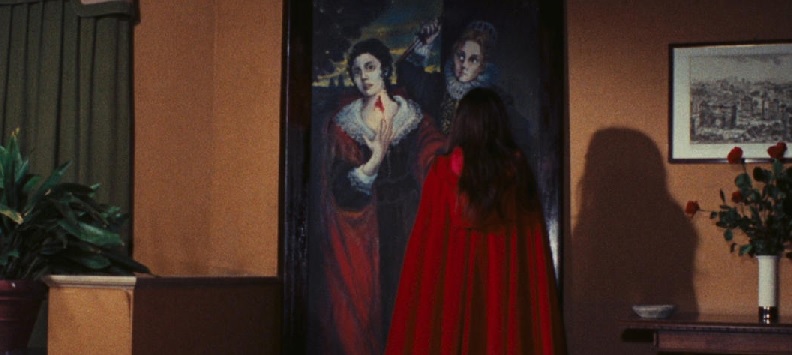
Firstly, I love the set up and the legend of the Red Queen, based on the painting seen in the opening. The Red Queen is killed by her sister, the Black Queen, and so the Red Queen returns from the dead to get her revenge, killing six innocent people, and for the seventh and final victim, the Black Queen, her sister. All of which is a long way to say that, indeed, The Red Queen Kills Seven Times.

It’s quite possibly among one of my favorite titles of a giallo.

In other news, the plot largely revolves around mysterious murders involving some sisters, a castle, a curse, a will, and some mixed-up identities, not to mention secret deaths and blackmail. It’s just a lot of fun all the way through, and like all great gialli, there’s a lot of viable suspects, and figuring out the mystery provides a good time. As it is, I don’t 100% love the finale – I wanted a little more oompf – but it was still quite well-done.

One thing this film succeeds in that few gialli really do is creating a memorable design of the killer. The Red Queen’s design is great – a woman in a red cape and hood, with a maniacal laugh every time she kills someone (and surprisingly, that laugh never once gets old). It’s a great killer, one that you’d expect from some 80’s slasher, and not that many gialli showcase great designs (as so many instead show black gloves and trenchcoats, which, to be fair, has it’s own charm).

Barbara Bouchet (The Black Belly of the Tarantula) made a solid lead, and had some great scenes, especially during her flashbacks. Really, though, most performances are solid, from Sybil Danning, Fabrizio Moresco, and Nino Korda to Ugo Pagliai, Marina Malfatti, and Pia Giancaro. Rudolf Schündler was nice to see, and while generic, Marino Masé (Contamination) certainly looked the part of a detective.

Directed by Emilio Miraglia (who also made the excellent The Night Evelyn Came Out of the Grave), The Red Queen Kills Seven Times isn’t a particularly gory giallo. There are some solid kills, such as a woman being tricked into climbing a fence, but then impaling herself on the spikes, or a good stabbing in the back of a van, but the kills here aren’t near as important as the mystery and occasional atmosphere, the same of which could fairly be said of The Night Evelyn Came Out of the Grave.

Also, portions here and there of the film take place in a castle. By no means is the castle necessarily central to the plot, but some of the better scenes take place in and around it, and it’s a very solid setting when it pops up, and gives the film a little Gothic spice, as Italian horror did often in the 1960’s.

The Red Queen Kills Seven Times was a pretty good movie. I don’t know if it’s good enough to make my top five gialli at the moment (with films like Deep Red, The Case of the Bloody Iris, and the early The Murder Clinic, it’s hard to crack the best of the subgenre), but it’s definitely a solid film, and with that great killer, isn’t a movie that’ll be forgotten.

7.5/10

Satan Place: A Soap Opera from Hell (1988)

Directed by Scott Aschbrenner [Other horror films: N/A] & Alfred Ramirez [Other horror films: N/A]

A rather low budget anthology horror film, Satan Place: A Soap Opera from Hell is certainly an experience. It’s far from a good movie, but it can be reasonably entertaining, if you’re into SOV horror from the 1980’s.

Of the four stories (‘Disposable Love’, ‘Say Goodnight, Sophie’, ‘Too Much TV’, and ‘Sally Satan’), the most entertaining is either ‘Disposable Love’ or ‘Too Much TV.’ Both have decent special effects (or what passes as decent for a film of this quality), and while the first story may be more quotable (“What the FUCK is for dinner?”), ‘Too Much TV’ has some amusing performances and is a wild story.

Now, to be sure, this isn’t a good movie. The framing story is a bit of a mess, and the conclusion to the sequence, being ‘Sally Satan’, is probably the weakest of the bunch (though it does feature an okay-looking demon). There’s still fun to be had overall – in the third story, both Psycho and Texas Chainsaw Massacre are referenced (the latter from an in-universe short called Missouri Mop Massacre – “You can’t stop him, and he doesn’t do windows”) – but it’s definitely not a movie most people would go into and have a good time with.

For some of the better performances (or perhaps more apt, most amusing), you have Warren Andrews, Hollis Wood, Mark Rackstraw (as classy TV host Dick Slasher), and Lisa Hatter. It’s a campy and low budget movie, so expecting any real great performances might be unrealistic.

The gore isn’t too shabby. It stands out most during the first story, ‘Disposable Love’, a big portion of which is about a husband who accidentally kills his wife, and so chooses to cut up her body and put it down a garbage disposal. There’s okay gore here (such as a zombie-type thing cutting open their stomach and feeding their organs to a poor hombre), especially toward the story’s finale. Also, in ‘Too Much TV’, there’s a decent throat-slitting.

Much like the 1982 film The Toxic Slime Creature, this is a film that popped out of nowhere for me. Until about a month ago (which would be September 2021 – this is being written mid-October 2021), I’d never heard of this. And it’s not great, of course. It is, however, entertaining at times, and though it’s a movie I have a hard time imagining I’ll see again anytime soon, I can’t hate it. I don’t love it, but I can’t hate it.

5.5/10

Dead of Night (1945)

Directed by Alberto Cavalcanti [Other horror films: The Halfway House (1944), Dead of Night (1945)], Charles Crichton [Other horror films: N/A], Basil Dearden [Other horror films: N/A], & Robert Hamer [Other horror films: N/A]

While a classic of both British horror and anthology horror, I have to admit that Dead of Night has never been a film I think about too often. It’s a decent film, and possesses both a solid framing sequence and a few solid stories, but overall, I think the movie is just okay.

It’s not the first anthology horror, of course – even if you’re hesitant about counting Waxworks (which I could understand), there’s the 1919 German film Unheimliche Geschichten (or Eerie Tales). Like many anthology films, it’s uneven, much like Dead of Night tends to be, but there is plenty to appreciate about this one.

The framing sequence is pretty good, and even a bit more involved than many framing stories you’d later see in Amicus films (Tales from the Crypt, Torture Garden, The Vault of Horror). It’s a good framing sequence with a fun conclusion and decent ideas, which is definitely not something you see in every anthology (though I like the film overall more, compare the framing story of Screamtime to this one).

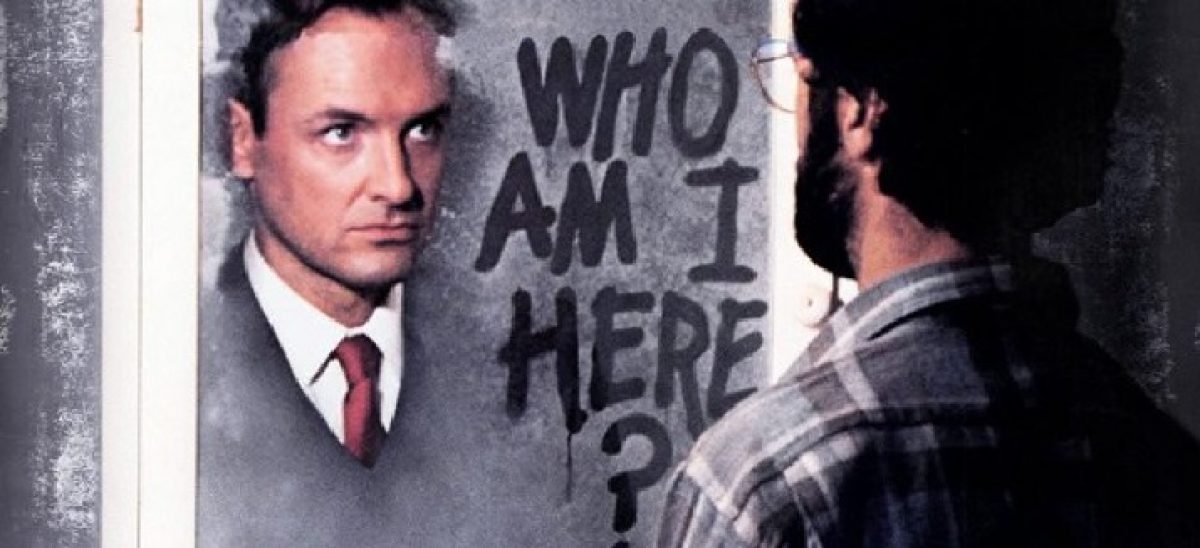
Of the five stories (‘The Hearse Driver’, ‘The Christmas Party’, ‘The Haunted Mirror’, ‘The Golfer’s Story’, and ‘The Ventriloquist’s Dummy’), I’d say only two are quite good, being ‘The Hearse Driver’ and ‘The Ventriloquist’s Dummy.’ ‘The Hearse Driver’ is really simple, but I enjoyed how it went, and it had a great Twilight Zone vibe to it. ‘The Ventriloquist’s Dummy’ is a longer story, but the ending to it, reminiscent of both Psycho and Pin, was quality.

And to be fair, ‘The Haunted Mirror’ isn’t shabby. It’s just that I wanted a bit more meat. I don’t know where the additional protein would have been derived from, but it was a solid story, and I just wanted a bit more. It’s also within reason to say ‘The Christmas Party’ is okay, though it’s somewhat derivative and more spooky than scary, and I feel like the story’s been done better.

‘The Golfer’s Story’ isn’t without potential, but as anyone who has seen the movie knows, it leans toward a more comic tone. There’s a ghost who can’t properly disappear, and he and the man he’s haunting have to try and make the best of the awkward situation, especially as the man is getting married, and doesn’t want to make sweet love to his new wife in front of a ghost. We’ve all been there, guys. For a comedy story, I guess it’s okay, but I didn’t care for it, as I’m not one who wants silly stories mixed up with his horror.

Somewhat amusingly, there’s no performances, save Michael Redgrave’s, that really stood out. Redgrave did great in ‘The Ventriloquist’s Dummy’, and it’s probably a big part as to why that story is one of the most memorable things of the film. Frederick Valk and Sally Ann Howes are decent, but when it comes to great performances, it’s really just Redgrave and maybe Miles “‘Just room for one inside, sir,’” Malleson.

Anthology horror films are hard to get right, because so often, there’s a story or two that just cut it. It’s the same with Dead of Night – the framing story is solid, and it does possess some good segments – but overall, Dead of Night is just okay. I thought it the first time I saw it, and I’ve thought it each time I’ve seen it since.

6/10